
The Minimum Viable Burrito Protocol Realigning Your Morning
Why Healthy Burritos Don’t Stick
You want to believe a burrito with spinach and egg whites counts as discipline. It doesn’t. The real reason most breakfast burritos fail isn’t ingredient quality—it’s macronutrient timing. Your body doesn’t care about the story you tell yourself. It responds to protein quantity, fat ratio, and carbohydrate type in sequence. A burrito with 12 grams of protein and 30 grams of refined carbs triggers a blood sugar spike and crash by 10 AM. You then eat again. The mechanism is straightforward: insufficient protein forces your body to seek energy elsewhere within hours.

Standard nutrition advice says “add more vegetables.” That’s incomplete. Vegetables provide fiber and micronutrients, but they don’t solve the core problem. Your burrito must contain a minimum of 30 grams of complete protein to create satiety that lasts until lunch. The fat content matters equally—10 to 15 grams of fat slows digestion and stabilizes blood glucose. Carbs should come from whole grains or legumes, not flour wraps with added sugar. This isn’t opinion. This is how macronutrients interact with your nervous system.
The Three Energy Layers
Sustained energy follows a hierarchy from biochemistry, not preference. Think of your breakfast burrito as a three-stage fuel system: immediate carbohydrates, structural protein, and metabolic fat. Most people reverse this order or skip layers entirely. The immediate layer is 15 to 20 grams of carbohydrates from oats, sweet potato, or legumes—fuel your brain needs to function in the first two hours. This layer depletes predictably. Without the second layer, you crash.

Protein is the structural layer. Your muscles, enzymes, and neurotransmitters require amino acids constantly. Thirty grams of complete protein—from eggs, Greek yogurt, turkey, or cottage cheese—binds to the carbohydrates and slows their absorption. Fat is the metabolic layer: 10 to 15 grams from avocado, cheese, or olive oil keeps hunger signals quiet. Protein binds the carbs. Fat extends satiety. Stack all three into your burrito construction sequence, and your energy becomes predictable for five to six hours. Skip any layer, and you’re eating again by mid-morning.
The Protein Breakfast Burrito Beyond Bodybuilder Bro Science
Protein Timing And Source Quality
You want to believe that when you eat protein matters more than how much you actually eat. It doesn’t. The real mechanism comes from biochemistry: muscle protein synthesis responds to total daily protein intake and training stimulus, not meal timing windows. One study won’t change your physique. Consistency over weeks will.
Quality protein sources matter because digestibility and amino acid profile directly affect how your body uses them. Eggs, Greek yogurt, and ground meat all deliver complete amino acid profiles your muscles recognize. Cheap protein powder with poor mixability wastes freezer space. You’re paying for absorption rate and satiety, not marketing claims about “optimal timing.”
Avoiding The Protein Pitfalls Everyone Ignores
Most people undersell protein in their burritos because they fear dry texture. Wrong problem. The real issue is that wet fillings like salsa and sour cream separate during freezing, then leach into the tortilla when you reheat. Your burrito falls apart at the seam, not because of protein quantity.
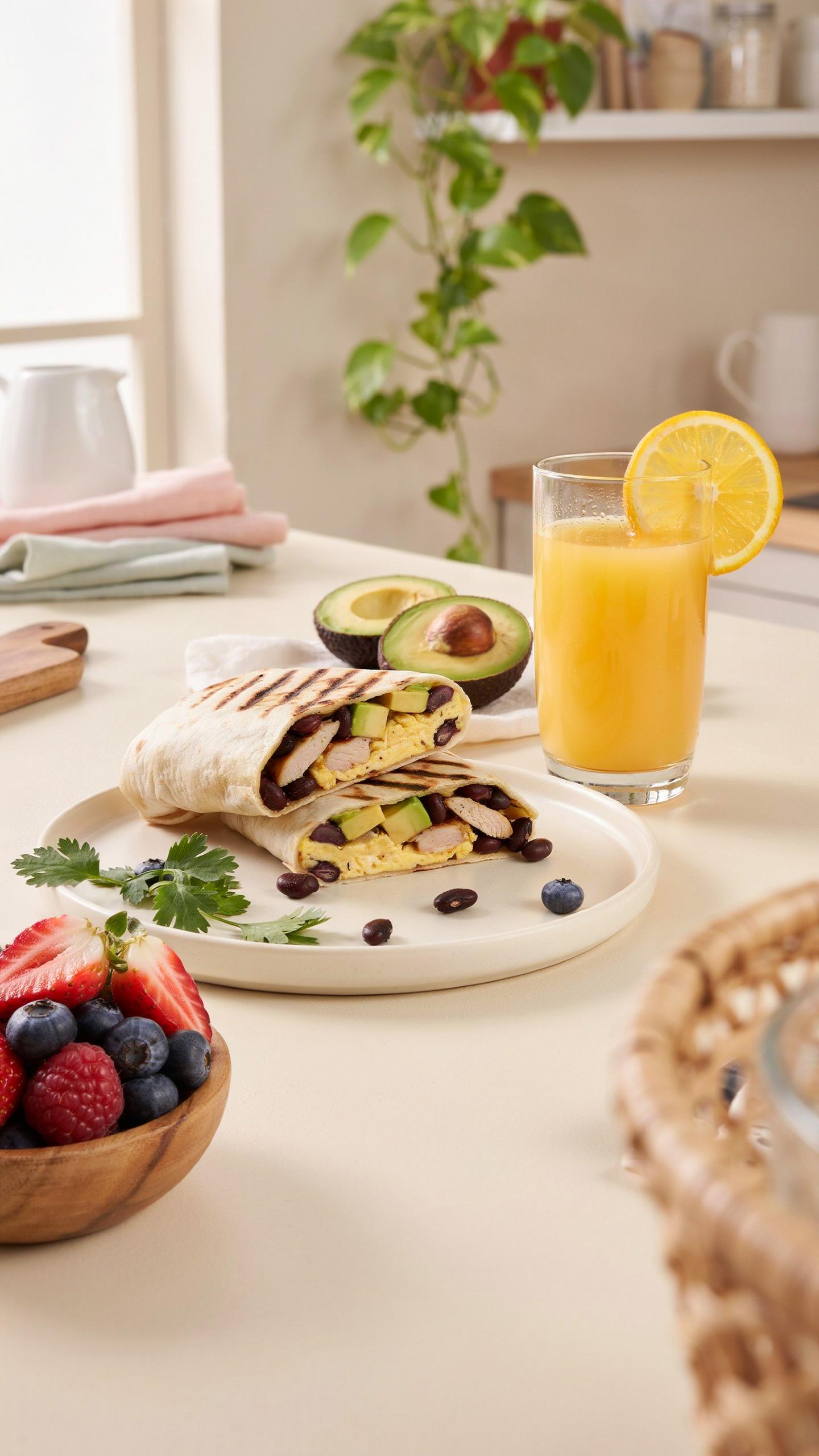
Add your protein source first to the tortilla, then layer dry components before wet ones. This keeps structural integrity intact through freeze and reheat cycles. Raw egg won’t work here because freezing denatures it unpredictably. Pre-cooked ground turkey or scrambled eggs hold texture through temperature change. Your filling ratio should run 30 to 40 percent protein by weight, which means roughly 25 to 35 grams per burrito depending on size.
Meal Prep Breakfast Burritos High Protein The Cognitive Load Reduction System
Remove The Decision Tax
You don’t actually care about saving time. You care about not thinking about breakfast. Every morning decision drains mental bandwidth before work even starts, and you know it costs you focus on what matters. Neuroscience calls this decision fatigue. A frozen burrito removes the variable. You grab it, heat it, eat protein. The mechanism works because your brain stops processing options the moment prep is done.
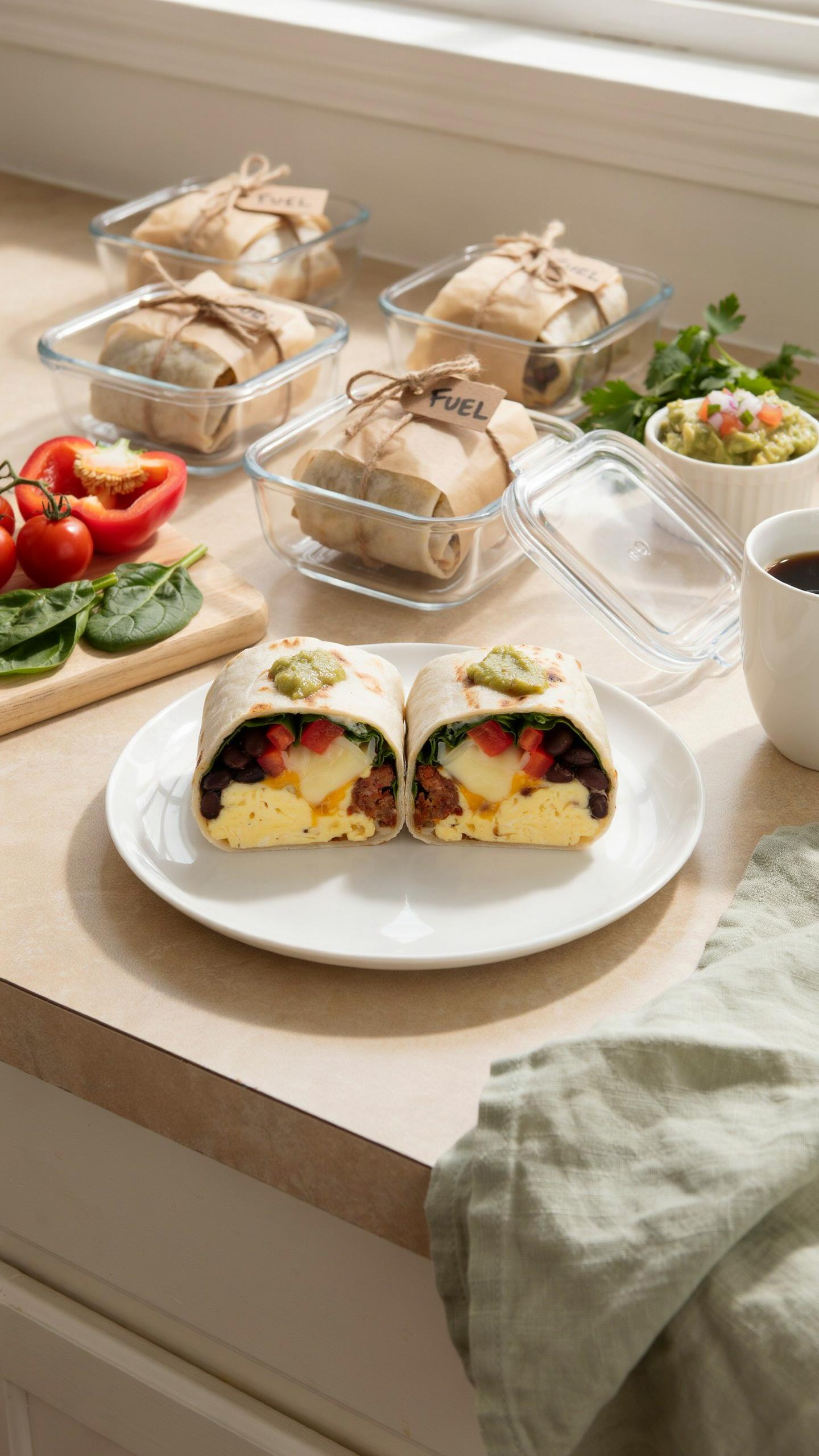
Batch cooking freezes decisions, not just food. When you make eight burritos in one session, you eliminate seven separate decisions about macros, ingredients, and execution. The cognitive load shifts from daily to weekly, concentrating mental effort where it has the highest ROI. This is why successful people automate breakfast entirely. They’re not optimizing for time per se. They’re optimizing for mental clarity when it matters most.
Stack The Prep In One Block
Common advice says meal prep means cooking every few days. That’s wrong. You lose momentum and reset friction each time. Batching for mental bandwidth means one unbroken prep session. Block two to three hours on Sunday. Assemble all burritos in sequence. Your brain enters a production rhythm. Efficiency compounds. Mistakes drop because you’re not context switching between meal prep and five other tasks.
The real advantage isn’t the hour you save during the week. It’s the absence of prep decisions grinding against your working memory every morning. Lay out all ingredients before touching a pan. Make the same burrito eight times in a row, not eight different ones. This removes variation and turns the task automatic. By the third burrito, your hands know the formula. Your brain is free. That’s the system.
Healthy Breakfast Burrito The Gut Brain Axis Optimization
Fermented Foods Lock In Nutrient Absorption
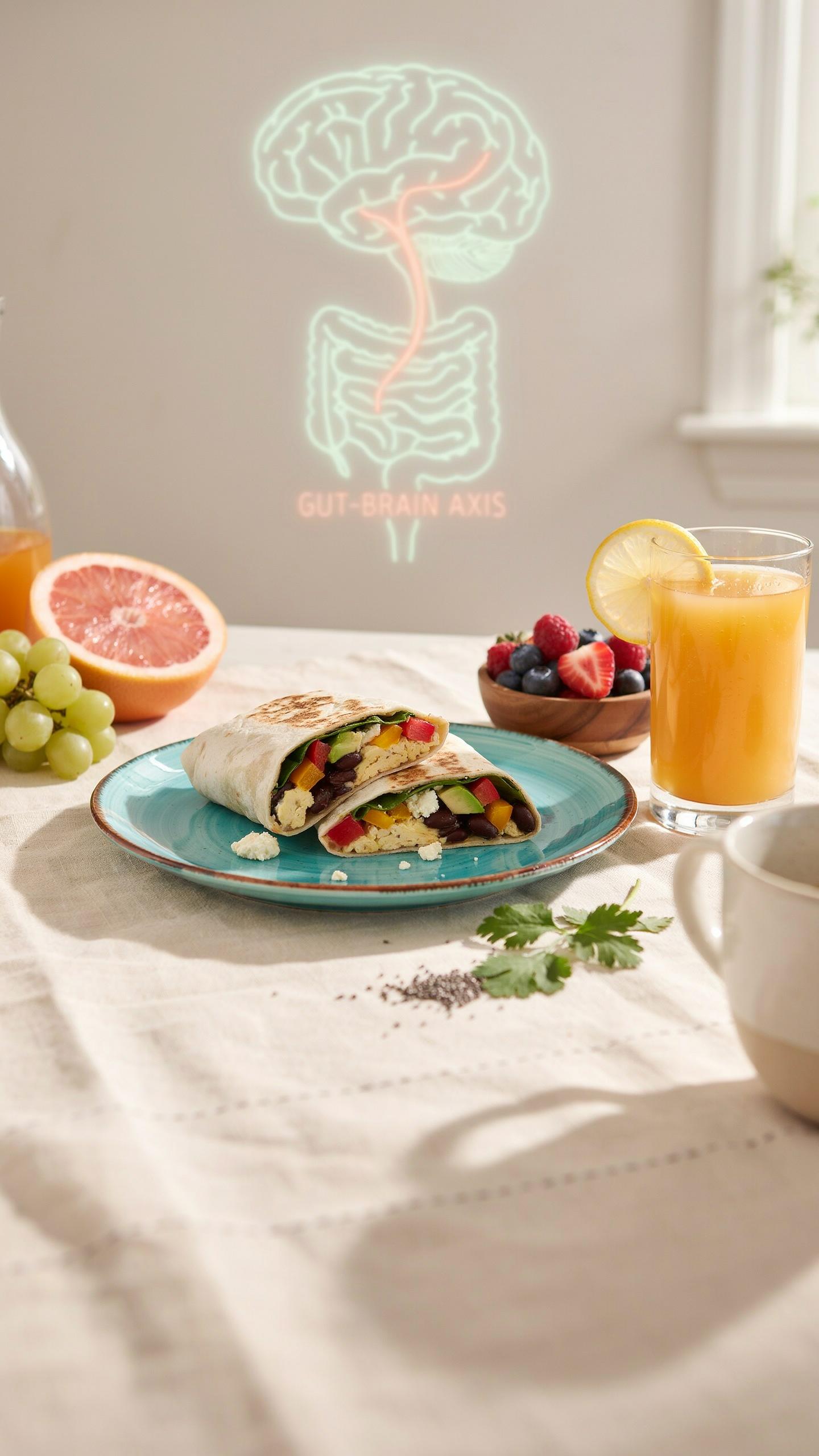
You want better energy and mental clarity without admitting you’ve been eating like a teenager. The mechanism is straightforward: fermented foods colonize your gut with lactobacillus and bifidobacterium strains that increase short-chain fatty acid production, which directly signals your vagus nerve and regulates dopamine release. This isn’t wellness theater. It’s neurobiology embedded in your burrito fillings.
Add sauerkraut, kimchi, or plain Greek yogurt to your burrito prep. A quarter cup of fermented content per burrito is enough to shift your bacterial population over two weeks of consistent consumption. The acid environment these foods create also improves mineral bioavailability from your egg and cheese components. Freeze them separately from the burrito itself. Layer them cold against the warm burrito just before eating to preserve bacterial viability.
Fiber Sequencing For Stable Blood Sugar
Everyone says eat more fiber and then wonders why they still crash. The problem is timing and source. You need a dual-fiber strategy: soluble fiber slows glucose absorption, insoluble fiber feeds your microbiome and extends satiety. Black beans or pinto beans deliver both in one component. They lower glycemic response by roughly 20-30 percent compared to a burrito without them.
The execution matters more than the ingredient. Layer your beans directly against the protein and eggs so the soluble fiber coats the carbohydrates and slows their transit. Add a quarter cup of beans per burrito. Include a whole grain tortilla, not a white one. This combination creates a staggered glucose release that keeps your prefrontal cortex functional for six to eight hours. Test this by measuring your energy at hour four. If you’re still sharp, your fiber sequence is working.
Protein Breakfast Burrito Recipe The Leverage Point Ingredients
The Components That Actually Move The Needle
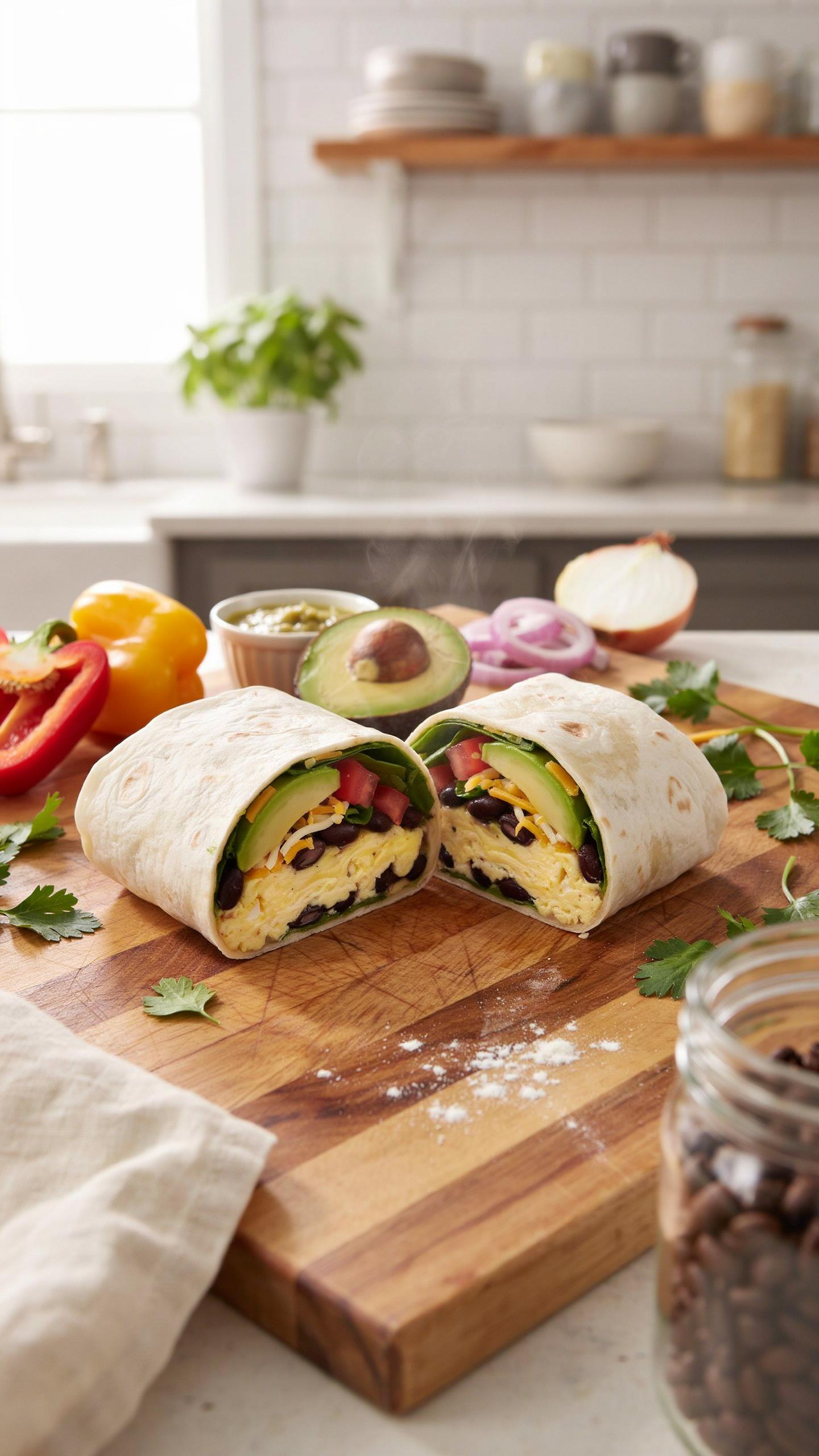
You want to feel like you’re optimizing without actually changing your routine. That’s the real reason you’re reading ingredient lists instead of just cooking. Here’s the mechanism: in systems design, a leverage point is the one variable that shifts the entire output without requiring proportional effort. Your burrito has maybe three of these. Eggs provide 6 grams of protein per large egg and cook in under five minutes. Cheese adds 7 grams per ounce with zero prep time. Black beans contribute 4 grams per half-cup and come canned, ready to use. These three ingredients alone account for 17+ grams of protein per burrito before you add meat or other components. Stack them intentionally and you’ve solved the protein problem without complexity.
- Whole eggs (large): 6g protein per egg, cooks fast, provides fat for satiety and burrito structural integrity when scrambled slightly before wrapping.
- Cheddar or Mexican blend cheese: 7g protein per ounce, melts into scrambled eggs, no prep required beyond shredding if buying block cheese.
- Black beans (canned): 4g protein per half-cup, requires only draining and warming, absorbs seasoning and holds moisture during freezing and reheating.
- Ground turkey or 93/7 lean beef: 22g protein per 3.5 ounces, brown once and portion into burritos for the week, reduces daily cooking to reheating only.
- Greek yogurt (optional base layer): 5g protein per 2 tablespoons, creates moisture barrier between tortilla and other ingredients, prevents sogginess during freeze-thaw cycles.
Most meal prep guides list 10+ ingredients to make burritos sound special. You don’t need them. Tortilla, eggs, cheese, beans, and one protein source cover everything. Rice is filler that dilutes protein density per burrito and takes longer to prepare. Skip it. Salsa, hot sauce, or a simple lime-salt seasoning are optional flavor boosters that cost almost nothing and take seconds to add.
The Silent Killer: Ingredient Sequencing
Everyone stacks ingredients randomly and wonders why their burrito falls apart during reheating. The order matters because you’re essentially creating a structure that survives freezing and thawing without separating. Lay your tortilla flat. Apply a thin base layer of Greek yogurt or a small amount of refried beans first. This acts as an adhesive and moisture barrier. Top with scrambled eggs next, then cheese while eggs are still warm. Add your cooked protein after. Finish with black beans as your last filling layer before rolling. Warm ingredients set up against the tortilla. Cold, wet ingredients go on top so they don’t soak through the wrap.
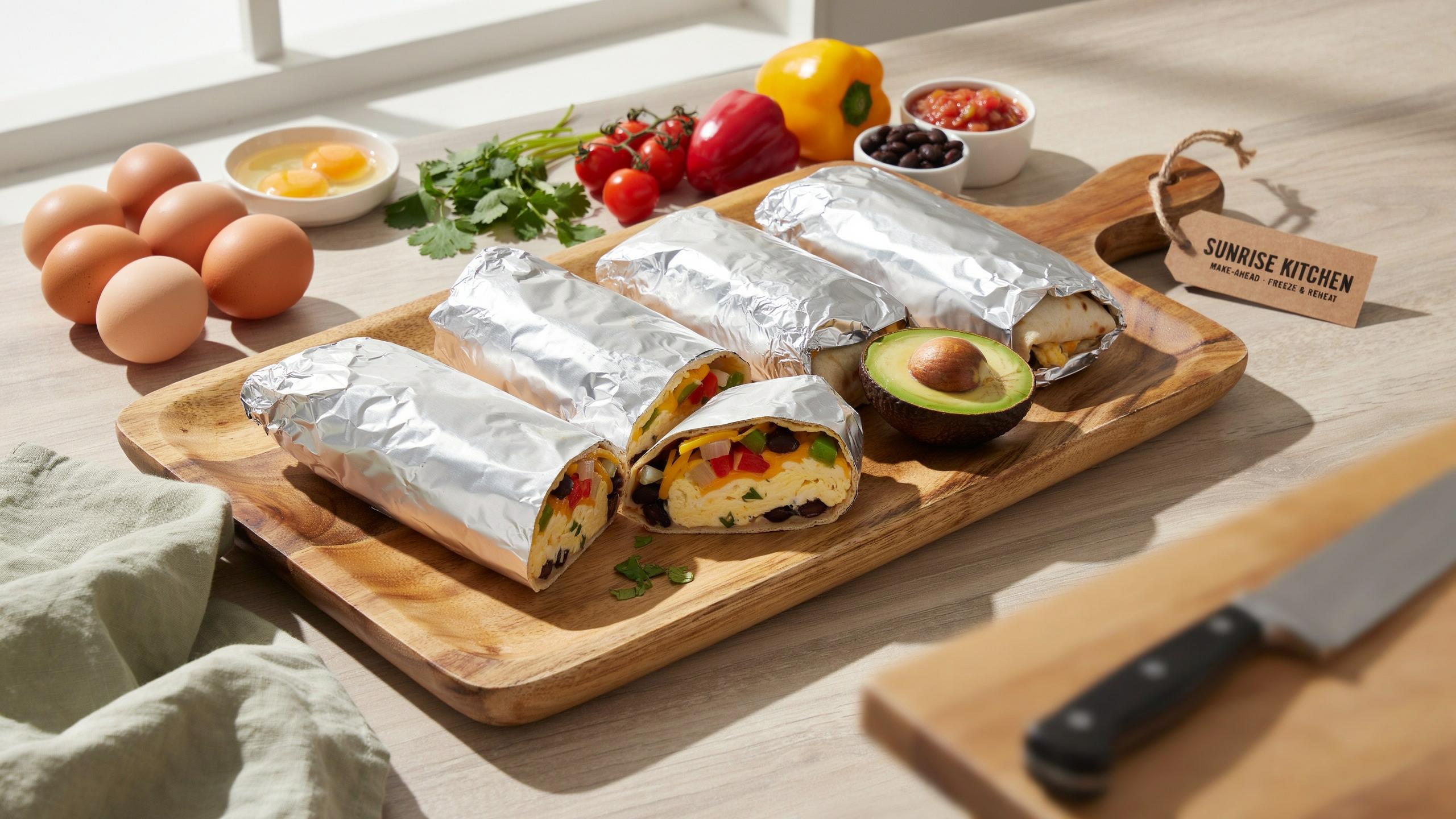
Tortillas crack during freezing if exposed to direct cold. Wrap each burrito tightly in foil first, then plastic wrap, then place in a freezer bag. This triple layer protects against freezer burn and prevents the tortilla from becoming brittle. When reheating, unwrap completely, place on a microwave-safe plate, and heat for 90 to 120 seconds on 50% power. Full power causes uneven heating and toughens the tortilla exterior. The low-power method thaws and warms simultaneously without sacrificing texture.
Protein Breakfast Burrito Meal Prep The Freezer To Fuel Workflow
How Ice Crystals Change Your Burrito
You want to believe freezing doesn’t matter because it feels like a cheat code. It is. Thermodynamics governs what happens to your burrito at every temperature point, and most people ignore the mechanism entirely. Water expands roughly 9 percent when it freezes. In your burrito’s fillings, ice crystals form and rupture cell walls in eggs, cheese, and vegetables. Slow freezing creates larger crystals and more damage. Fast freezing minimizes crystal size and cellular breakdown.
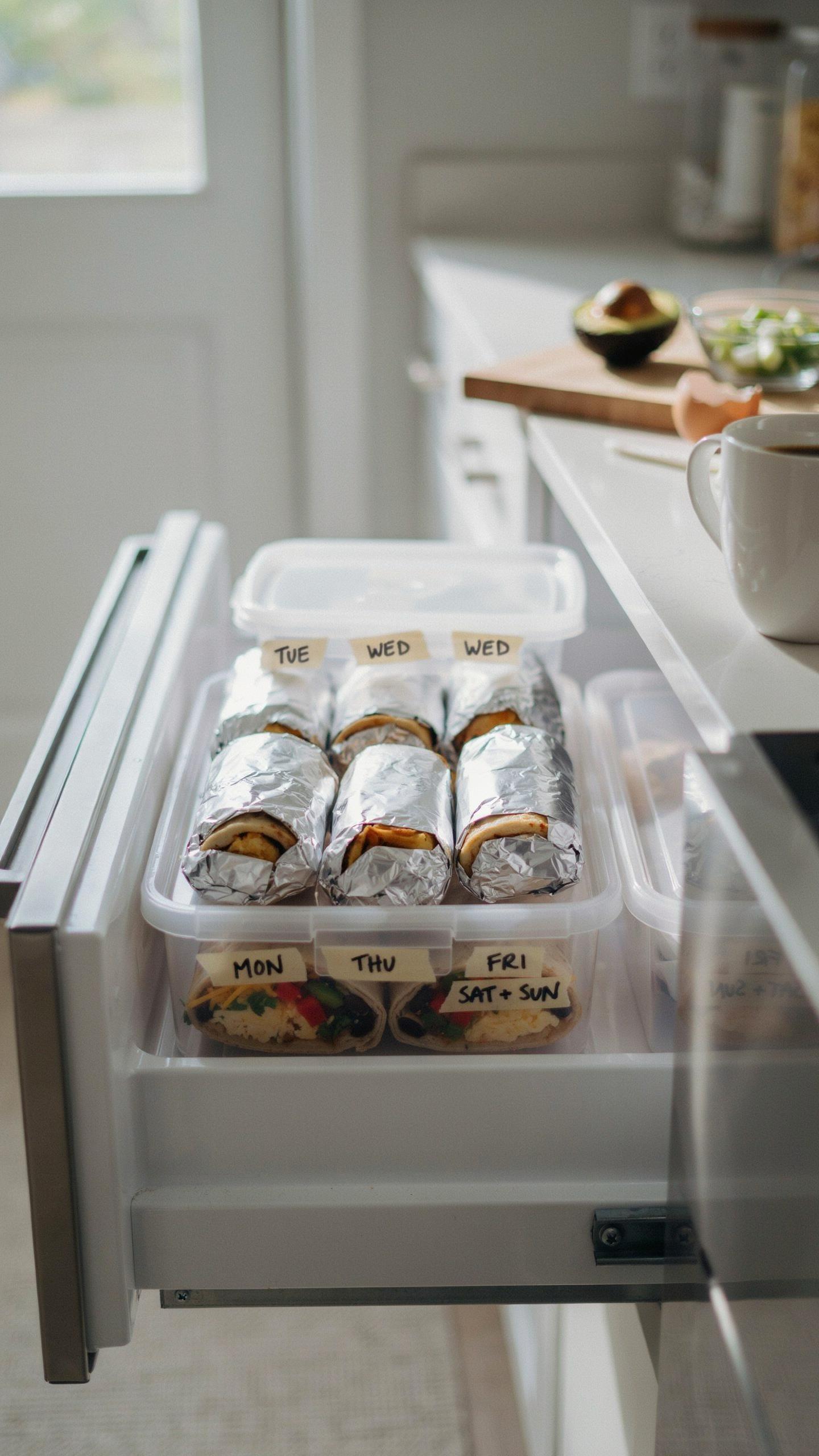
Spread burritos on a sheet pan uncovered for two to three hours at negative 4 degrees Fahrenheit before wrapping and bagging them. This accelerates the freezing process past the danger zone where ice crystals grow largest. Wrap each burrito individually in foil first, then place in a freezer bag to prevent freezer burn. The foil layer insulates against temperature fluctuations. Reheating matters equally: microwave from frozen at 50 percent power for four to five minutes, rotating halfway through. This prevents hot spots that overcook outer layers while the center stays cold.
Texture And Nutrient Retention During The Freeze Cycle
The common advice says frozen food loses nutrition. Wrong. Freezing stops enzymatic degradation the moment it happens, which preserves micronutrients better than refrigeration over five days. What actually breaks texture is ice crystal damage and dehydration during storage. Your burrito’s tortilla loses moisture, becoming brittle when thawed. Egg proteins denature unevenly if you reheat too fast or too hot, turning rubbery.
Protein integrity survives the freeze if you control reheating. Dairy-based fillings like cheese and Greek yogurt perform better than egg whites alone because fat acts as a protective barrier against crystal formation. Vegetables with high water content, like tomatoes, should go on the outside layers rather than directly against the tortilla. Wrap the entire burrito in a damp paper towel before reheating to restore surface moisture during the microwave cycle. This single step prevents the tortilla from cracking apart when you unwrap it.
The Antifragile Burrito Strategy Adapting To Disruption
Why Dietary Diversity Actually Works
You want permission to eat the same thing every day without feeling like you’re missing something. That’s the real fear. But evolutionary biology says your body adapted to survive on variable inputs, not repetition. Think of your burrito prep like an organism’s genetic diversity: the more protein sources you rotate, the more metabolic pathways you activate, the less your system downregulates a single nutrient absorption pattern.
Most meal prep advice tells you to lock in one recipe and scale it. Wrong. Your digestive enzymes are like muscles—they atrophy when they face only one stimulus. Ground turkey demands different acid profiles than eggs or Greek yogurt. Rotating proteins every three to four days keeps your gut’s enzymatic toolkit active. This isn’t optimization theater. It’s basic physiology.
Building Slack Into Your System
Disruption doesn’t announce itself. Your freezer fails. Your schedule fractures. Your gut rejects what worked last week. The burrito that survives these shocks is the one you designed with options, not constraints. Build three base recipes, not one. Each uses the same tortilla and basic structure but swaps the protein and one vegetable component.
The mechanism is simple: when you can reach for burrito A, B, or C without planning, you actually stick to the protocol instead of abandoning it for takeout. Adaptability isn’t flexibility. It’s having predetermined alternatives so your decision-making collapses under real friction. Prep one batch of each recipe every two weeks. Rotate consumption. When life breaks your routine, you still eat.
Breakfast Burritos Recipe The Efficiency Multiplier Add Ons
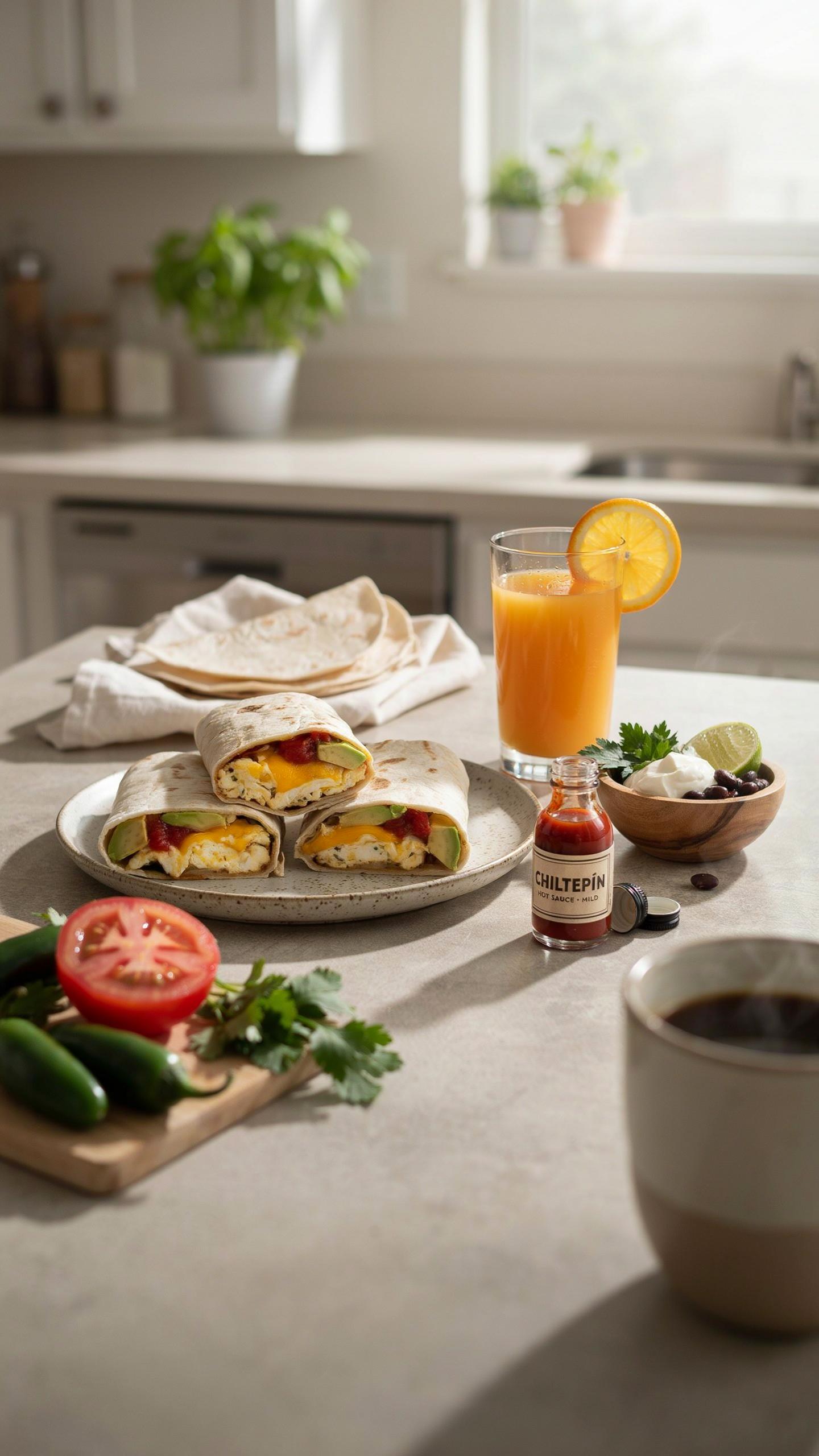
The Micronutrient Stack That Actually Moves The Needle
You want to believe a burrito is complete at 40 grams of protein. It isn’t, and you know it. What you’re really after is the metabolic leverage that turns protein into actual muscle and stable energy instead of just calorie bulk. That leverage is micronutrients. Think of micronutrient density the way structural engineers think of load distribution: spread the stress across multiple systems or watch one fail. Eggs alone carry B12, choline, and selenium. Throw in cheese and you get calcium and vitamin K2. But most people stop there and wonder why they feel flat by 10 AM.
Add two specific layers: one vegetable that provides both magnesium and folate (spinach, bell peppers), and one mineral-dense carb (sweet potato, black beans). Magnesium regulates cortisol and muscular contraction. Folate drives methylation cycles that power energy production. Without these, your protein sits there doing less work than it could. Prep this intentionally during your burrito assembly, not as an afterthought. The difference shows up in hunger patterns, not just lab work.
Adaptogens As Stress Buffer, Not Performance Theater
The adaptogen market sells you a story about superhuman resilience. The actual mechanism is simpler and less sexy: adaptogens modulate your HPA axis response, which means they lower how hard your body fights itself when cortisol spikes. In burrito terms, this matters because most people eat breakfast while in a minor stress state. Your nervous system hasn’t downshifted yet. An adaptogen in your burrito doesn’t give you energy. It stops your system from burning energy fighting phantom threats.
Reishi powder (1/4 teaspoon per burrito) and cordyceps (1/8 teaspoon) work through different pathways: reishi dampens hyperarousal, cordyceps supports mitochondrial ATP production during the morning cortisol peak. Mix either directly into your egg mixture before cooking, or sprinkle into the cheese layer where they’ll dissolve into the warm filling. The effect compounds over weeks, not hours. Most people quit after three days because they’re waiting for a sensation. You won’t feel it. You’ll just notice you don’t crash at 11 AM.
Your true obstacle isnt the recipe its the illusion that sustained effort isnt a system

Most people fail at meal prep because they treat it like a one-time event instead of a repeating process. You don’t need motivation. You need a Sunday ritual that runs on autopilot. Pick one day this week. Buy eggs, cheese, and tortillas. Make five burritos. Freeze them. Eat one tomorrow. That’s not meal prep. That’s the beginning of a system that compounds. Stop waiting for the perfect moment. The system builds itself once you start.