
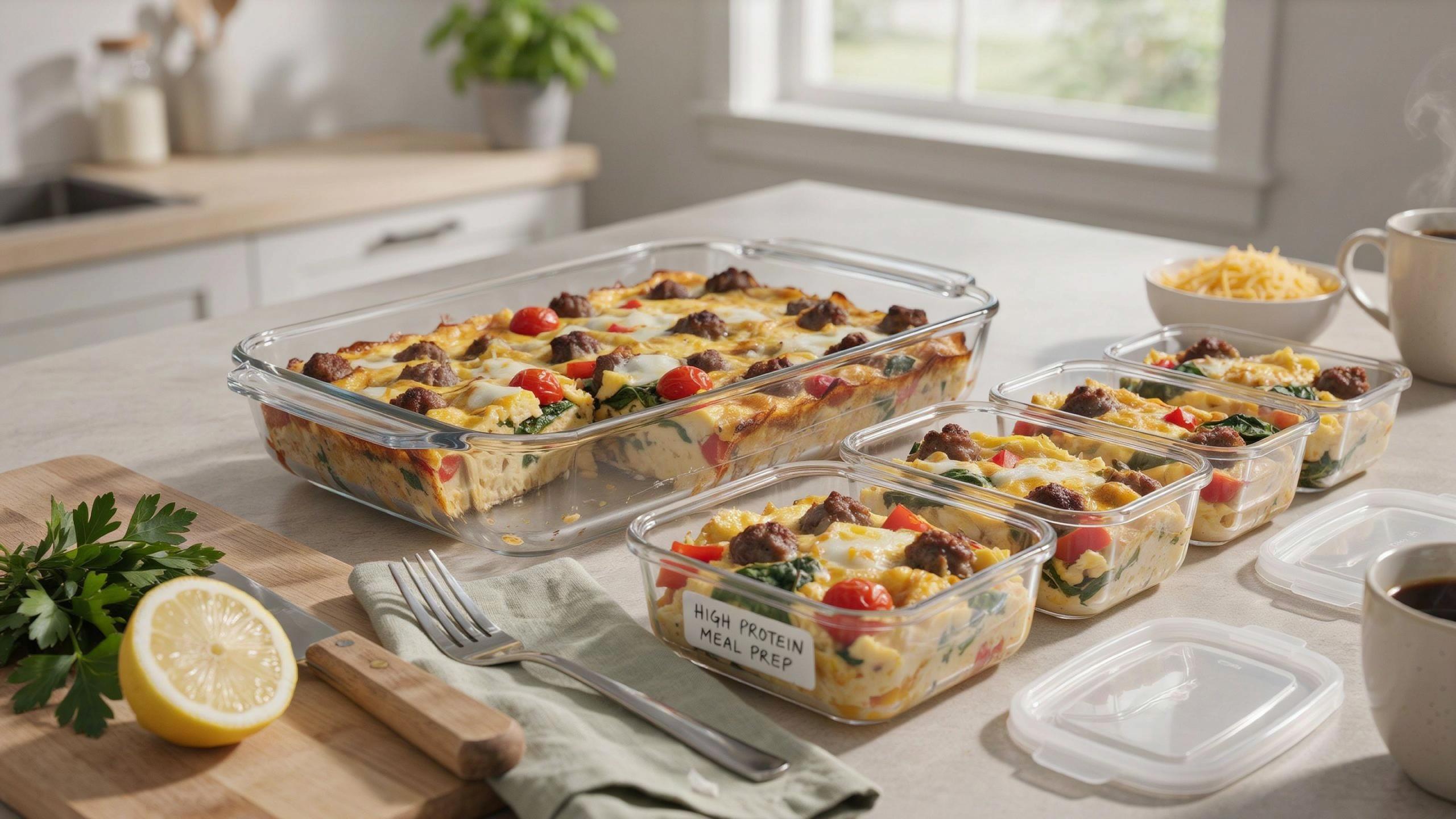
The Cognitive Offload Protocol

Where Your Willpower Actually Goes
You want meal prep to work because you’re tired of failing at consistency. The real problem isn’t laziness. It’s that every morning you face seven micro-decisions about breakfast, and each one drains the same mental resource you need for actual work. Economics calls this “decision fatigue.” With a high protein breakfast casserole, you eliminate the decision entirely. Sunday becomes your only choice point. Monday through Friday, you execute a script.

A casserole sitting in your fridge isn’t motivation. It’s automation. Your brain stops negotiating with itself at 6 AM because the negotiation already happened. You cut portion size debates, protein calculations, and ingredient gathering into a single weekly ritual. The cognitive load transfers from daily scattered moments to one concentrated session where you’re fresh enough to think clearly. This shift matters more than the actual nutritional content.
Time Becomes Renewable
The common advice says meal prep saves you thirty minutes daily. That’s mathematically true but strategically useless. Those thirty minutes don’t stack into one usable block. What matters is that you reclaim decision-making capacity, not clock time. One hour of focused casserole assembly on Sunday costs less mental energy than seven days of breakfast negotiations. You spend an hour once instead of five minutes scattered across seven mornings.

Your actual time gain compounds through what you do with the mental space you freed. A casserole removes the friction that turns breakfast into a productivity leak. No hunting for ingredients. No plate assembly. No “should I eat this or something else.” You walk to the fridge, portion out your predetermined meal, and move to work. The mechanism is simple: reduce decision points per day, concentrate effort into one batch session, protect your executive function for tasks that actually move your life forward.
High Protein Breakfast Casserole Meal Prep The Minimum Viable Effort
What Actually Goes Into The Pan
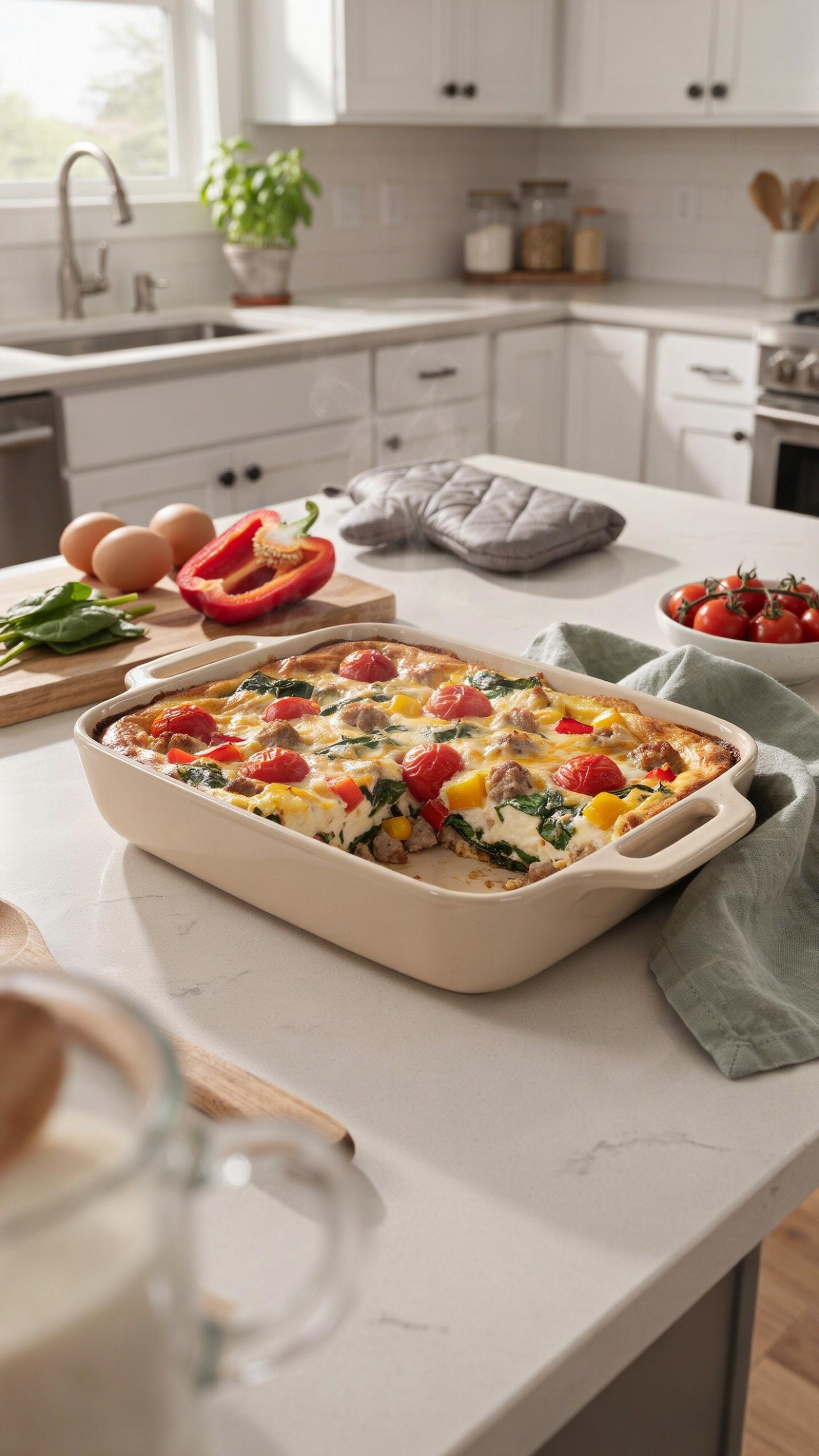
You want to believe there’s a secret ingredient that makes this work. There isn’t. What you’re really after is permission to stop overthinking breakfast, and this section gives you that. The mechanism is simple: protein coagulates around fat and starch in heat, creating a unified structure that stores for days without separating. That’s the entire physics of it.
The core ingredients do one job each. Eggs provide the binder and bulk protein. Cheese adds fat for satiation and flavor stability. Meat (sausage or bacon) contributes additional protein and prevents the casserole from tasting institutional. Vegetables are optional but add volume without adding calories. Bread or potatoes create structure. That’s it. No Greek yogurt substitutes, no egg white isolation, no trending add-ins. These five categories work because they’ve worked for forty years.
Build Once, Portion Five Times
Assembly line thinking comes from manufacturing, where batch processing beats individual unit creation every time. Apply the same principle here: prepare all ingredients at once, combine them once, bake once, portion five times. This cuts decision fatigue and eliminates the morning choice that drains willpower.
Mix your raw ingredients in one bowl before the baking dish touches heat. Whisk eggs with cream, add shredded cheese, fold in cooked meat and diced vegetables, layer with bread cubes, pour over top. Bake at 350 degrees for 35 to 40 minutes until a knife inserted in the center comes out clean. Cool for 10 minutes, cut into five equal portions, store in airtight containers. You’re done for the week.
Beyond Taste Engineered For Sustained Output

Protein Timing And Satiety
You want to feel full so you don’t eat garbage at 11am and undo your discipline. Here’s the mechanism: protein doesn’t spike insulin the way carbs do, so your blood sugar stays flat longer. That flat line means your brain doesn’t send hunger signals. A high protein breakfast casserole front-loads amino acids your body uses to build satiety hormones like peptide YY and GLP-1. Eat 35-40 grams of protein in one sitting, and you’ve essentially turned off the appetite switch for hours.
Most breakfast advice treats protein as decoration. It’s not. Protein is the load-bearing structure of your meal. A casserole format solves this because you can layer eggs, cottage cheese, and Greek yogurt into one dish without thinking about portions every morning. You hit your protein target automatically. The casserole sits in your stomach longer than toast or cereal, slowing gastric emptying. That delay keeps you satiated until lunch without the 2pm energy collapse.
Stable Energy Curves, No Crash
Energy management is a physics problem: input determines output stability. Protein and fat create a lower glycemic load than refined carbs, so blood glucose rises gradually instead of spiking. No spike means no compensatory insulin surge. No surge means no crash. A high protein breakfast casserole with eggs, cheese, and vegetables creates a sustained energy curve because the macronutrient ratio favors slow glucose release. You stay cognitively sharp for four to five hours straight.
The timing matters. When you eat matters. Morning casserole consumption front-loads your daily protein intake when your body is most receptive to muscle protein synthesis. You don’t waste amino acids. You also prevent the afternoon energy dip that kills productivity and sends you hunting for sugar. Prepare your casserole in a 9×13 dish, portion it into five servings, and eat one at 7am every day. Same input produces the same stable output. No guesswork, no decision fatigue, no crash.
The Healthy Breakfast Casserole Trap What Youre Missing
Where Sugar Hides In Plain Sight
You want to believe your casserole is clean because the label says “natural.” That’s the real problem here. Most breakfast casseroles marketed as healthy contain 12 to 18 grams of sugar per serving, buried in milk, yogurt, fruit, or added syrups. The mechanism is simple: manufacturers swap fat for sugar because sugar costs less and makes the product taste better without requiring skill. Your body processes that sugar the same way it processes candy. The protein you eat becomes secondary to the insulin spike you just triggered.
Read ingredient lists in order of weight, not marketing language. A casserole with whole milk, eggs, and meat has no reason to list added sugars at all. If honey, maple syrup, brown sugar, or fruit concentrate appear in the first five ingredients, you’re eating dessert for breakfast. This matters because post-meal blood sugar crashes sabotage satiety within two hours, making you hungrier than if you’d eaten nothing. Build your casserole around eggs and meat first, then add dairy and vegetables. Sugar should not appear on your ingredient list at all.
Quality Protein Sources Change The Math
Economics teaches diminishing returns: the tenth unit adds less value than the first. Apply this to breakfast casserole. Using standard grocery store eggs and ground pork delivers baseline protein. Using pastured eggs and grass-fed beef changes the amino acid profile and micronutrient density per gram. One is cheaper. The other works harder for your body.
Most people optimize for volume, not quality. They add an extra egg to hit a protein target instead of upgrading the eggs they already use. Pastured eggs contain more choline and omega-3s. Grass-fed beef contains more conjugated linoleic acid and iron. Your meal prep casserole sits in the fridge for four days. Buy protein sources that hold nutritional integrity that long. Check your local farmer’s market or use a delivery service. Cost per meal rises by maybe a dollar. Satiety and performance gains justify the difference.
Protein Egg Casserole The Biological Efficiency Play
Why Whole Eggs Beat Egg Whites Alone
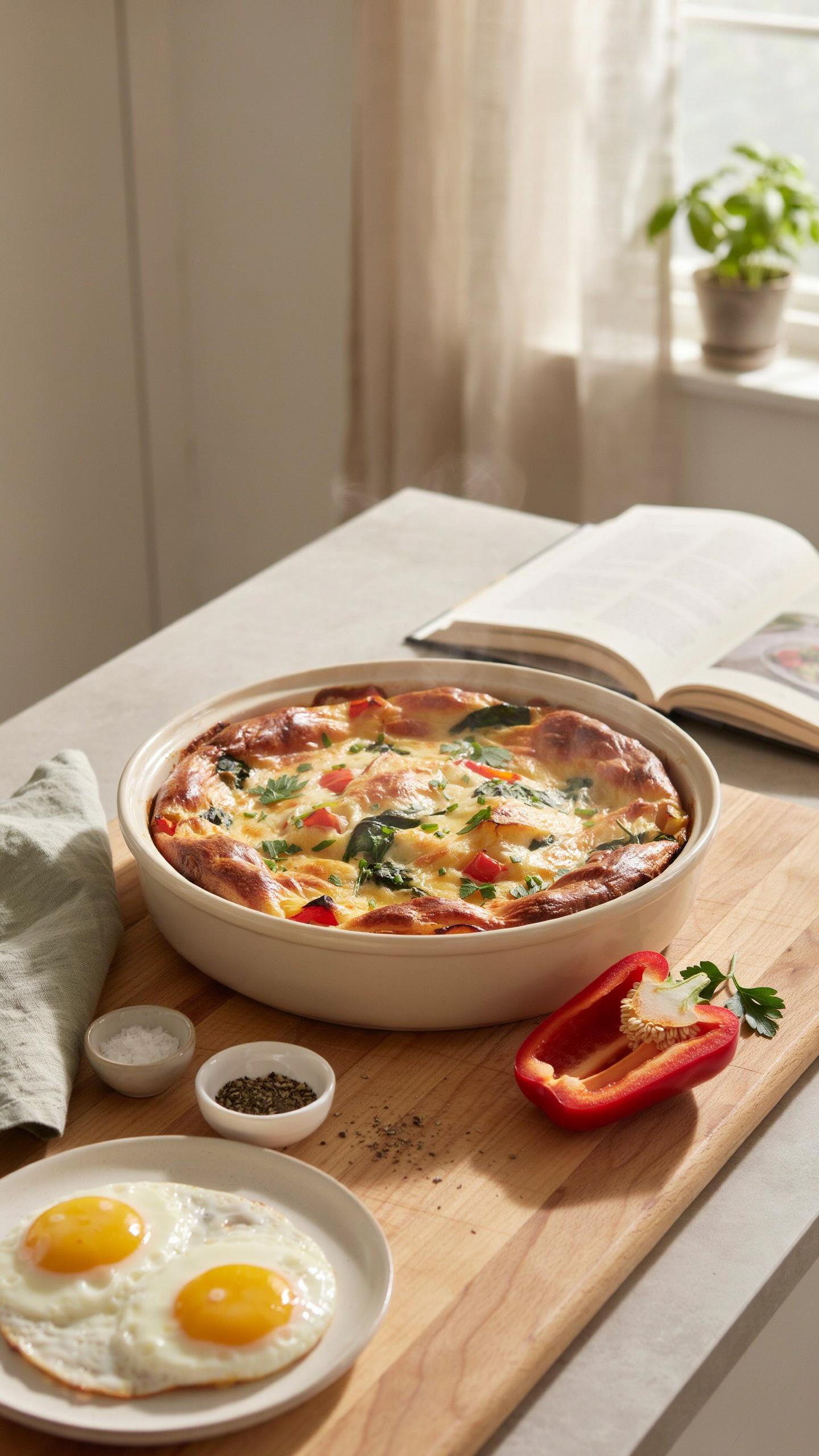
You want the muscle-building results without the work, and that’s exactly why this matters. Biology doesn’t care about your preferences. Whole eggs contain all nine essential amino acids in ratios that match human muscle synthesis almost perfectly, while egg whites alone force your body to compensate with amino acids from elsewhere or waste the partial profile. This isn’t theory—it’s how protein utilization actually works at the cellular level.
The yolk isn’t extra. It’s the mechanism. Egg yolk contains choline, lutein, and fat-soluble vitamins that improve amino acid absorption in your gut. A casserole built on whole eggs absorbs and delivers to muscle tissue more efficiently than one padding numbers with whites. When you meal prep a casserole and reheat it, the fat emulsion stabilizes during storage, meaning the amino acid delivery remains consistent across five days of eating the same dish.
Complete Amino Acid Stacking In One Dish
Muscle synthesis requires all nine essential amino acids present simultaneously—that’s the constraint biology imposes. Eggs provide the foundation, but a casserole that adds Greek yogurt, cottage cheese, or milk creates amino acid redundancy across different sources. This overlap ensures that even if digestion varies day to day, your muscles still get what they need to repair and grow.
The practical move: stack protein sources that each contribute the full amino acid profile rather than chasing variety for its own sake. A casserole with eggs, Greek yogurt, and a hard cheese creates a complete amino acid environment that lasts through storage and reheating. Your body doesn’t know it came from a casserole—it only knows whether the amino acids showed up in the right ratios when you need them most.
Easy High Protein Breakfast Bake The Set And Forget System

Why Batch Cooking Actually Works
You want to believe meal prep saves time. The real mechanism is constraint removal. You’re not gaining hours—you’re eliminating the decision tax that kills compliance. Batch cooking uses the economics principle of decreasing marginal cost: the first casserole requires setup, ingredients, and attention. The second casserole uses the same oven, same cleanup, same mental overhead. One additional unit costs almost nothing to produce.
Make two casseroles minimum in a single session. The time investment per meal drops by 40 percent. You freeze one, refrigerate one. Five days later, breakfast is waiting. No negotiation. No skipped meals. The system works because it removes friction at the moment friction matters most—when you’re tired and hungry before 8 AM.
Texture Wins On The Reheating
Most advice says reheat in the oven. That’s incomplete. Oven reheating is correct only if you understand why: it distributes heat evenly without overcooking the protein edges. Microwave heating creates steam pockets that turn a firm casserole into wet scramble in ninety seconds.
Set your oven to 325 degrees. Place the casserole slice on a sheet pan with a small water glass beside it. Heat for eight to twelve minutes. The water glass creates ambient steam, preventing the eggs from drying out while the cheese and edges firm up. This is the only protocol that preserves both moisture and structure from refrigerated storage.
The Shelf Life Multiplier Maximizing Your Investment

Containers That Actually Preserve Your Casserole
You want to believe your leftovers last longer than they actually do. The real mechanism is oxygen exposure. Glass containers with airtight seals reduce oxygen contact, which slows oxidation of fats in eggs and cheese. Plastic containers that don’t seal properly are expensive trash—they let moisture escape and air seep in, degrading texture and protein quality within days instead of weeks.
Borosilicate glass containers with silicone gasket seals outperform everything else for casserole storage. The material doesn’t absorb odor or stain, and the seal actually holds. Stainless steel containers work if they have proper gasket closure, but they’re harder to see into when you’re deciding what to eat. Avoid flimsy plastic takeout containers—they’re single-use failures masquerading as storage solutions.
Freeze Thaw Cycles That Prevent Texture Collapse
Thawing mechanics matter more than people admit. Using principles from materials science, freeze-thaw cycling causes ice crystal expansion that damages cell walls. You minimize this damage by thawing slowly in the refrigerator, not at room temperature. A casserole thawed overnight in cold air loses far less structural integrity than one rushed under hot water or nuked aggressively.
- Refrigerator thaw overnight: Move casserole from freezer to fridge 12-14 hours before eating. Ice crystals shrink gradually, water reabsorbs into the protein structure, texture stays firm.
- Portion before freezing: Cut casserole into individual servings, freeze each in separate containers. Thawing smaller portions takes 4-6 hours, reducing cumulative ice crystal damage.
- Never refreeze after thawing: Once thawed, bacteria multiply exponentially within four hours at room temperature. Eat thawed casserole within 24 hours or discard it.
- Freezer temperature at 0F or below: Colder storage halts bacterial growth and slows oxidation. Most home freezers sit at zero or slightly below, which preserves casserole safely for 8-12 weeks.
- Skip microwave thaw for texture: Microwaves heat unevenly, creating hot spots that cook edges while centers stay frozen. Uneven heating causes protein to tighten and squeeze out moisture.
Label containers with the freeze date and contents. After thawing, reheat your casserole at 350F for 15-20 minutes covered with foil to restore moisture and prevent surface drying. This timing prevents the protein from compacting further and keeps the casserole edible across your entire meal prep window.
Beyond The Recipe Customizing For Peak Performance

Swapping Ingredients For Your Actual Goal
You want to feel like you’re optimizing without actually changing your life. The real mechanism is this: most people add ingredients without removing anything, which kills the protein-to-calorie ratio they claim to want. Substitution forces trade-offs. Swap cottage cheese for half the eggs and you keep protein density while cutting saturated fat. Replace whole milk with unsweetened almond milk and you drop fifty calories per cup without touching the protein count. The casserole doesn’t care about ingredient loyalty, only macros.
Different goals require different cuts. If you’re chasing muscle, lean ground turkey replaces sausage and preserves protein while cutting fat by thirty percent. For fat loss, use egg whites for sixty percent of your eggs and add a tablespoon of nutritional yeast per serving for umami so the casserole doesn’t taste like punishment. If you’re minimizing grocery spend, substitute Greek yogurt for some cottage cheese since it costs less and holds the same protein load. The variable isn’t the casserole. The variable is what you remove to make room for what you add.
Building Flavor Without Recipe Bloat
Most casserole advice piles on ingredients until you’re buying fifteen things to feel like you did something special. That’s execution theater. Flavor isolation comes from biochemistry: salt amplifies existing tastes, acid cuts through richness, fat carries fat-soluble compounds that taste good. Your high-protein casserole needs exactly one of these mechanisms per batch, applied early.
Use two teaspoons of smoked paprika in the base and you eliminate the need for bacon, saving two hundred calories and adding depth. Add two tablespoons of hot sauce to the cheese layer and acid does the work that cheese-on-cheese usually does. A quarter teaspoon of cayenne per six servings creates perception of complexity without tasting hot. Prepare these swaps when you portion the casserole into containers, not before baking. This keeps you flexible across batches and prevents decision fatigue from killing your meal prep consistency.
The Breakfast Casserole Protein ROI
What You Actually Gain Beyond Macros
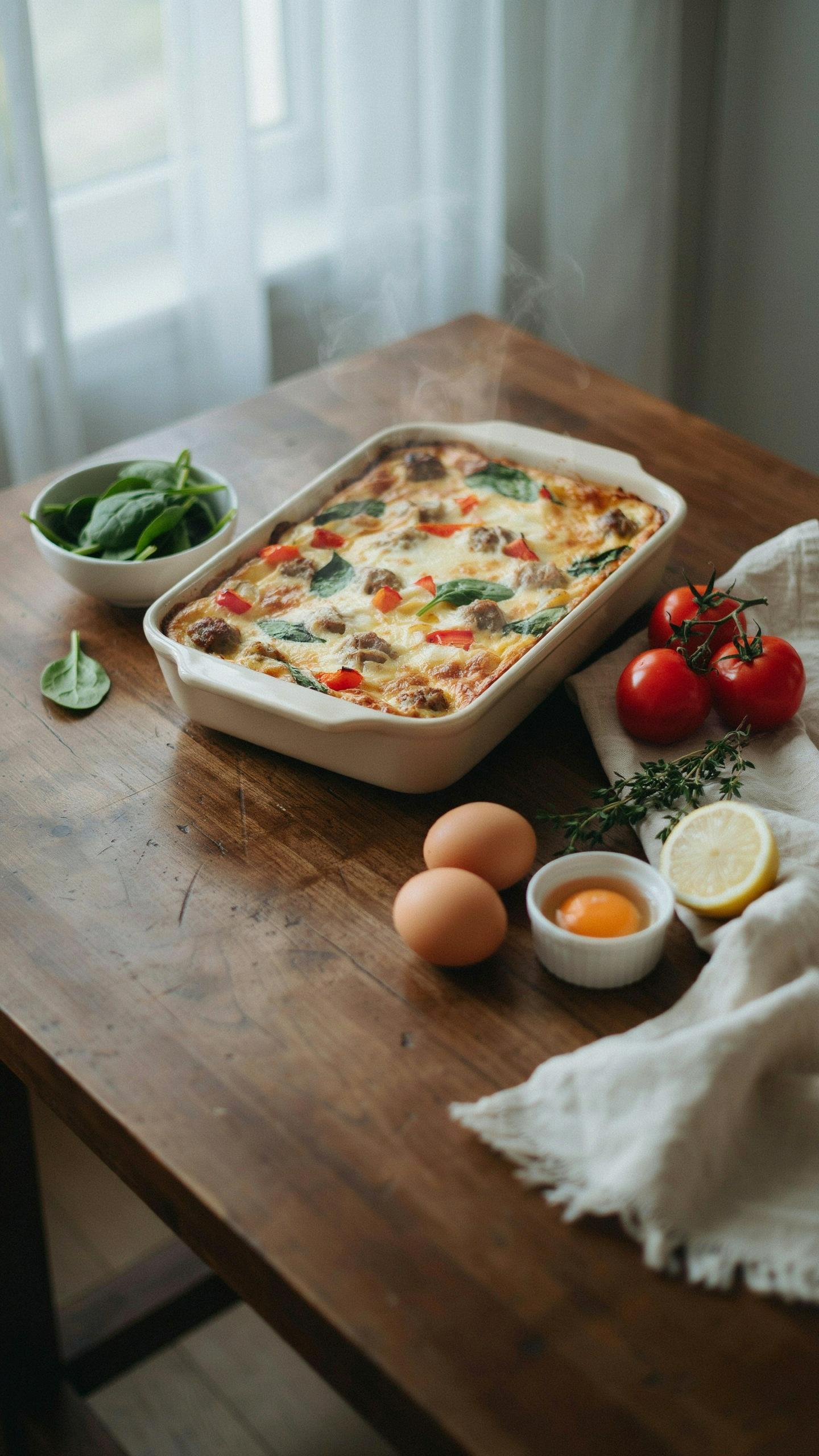
You want to know if this is worth the Sunday prep work. That’s the real question underneath. The mechanism is simple: a high protein breakfast casserole doesn’t just move protein grams. It stabilizes blood glucose for four to six hours, which kills decision fatigue before it starts. No blood sugar crash means no 10 AM hunger spike that derails your whole day.
The compounding effect shows up in focus, not just appetite. When glucose stays steady, your prefrontal cortex doesn’t fight for fuel. You make clearer decisions on work that matters. You don’t autopilot into snacking. One casserole batch removes the variable from five mornings.
Where Your Freed Time Actually Goes
Everyone says meal prep saves time. They’re right but vague about why it matters. Think in terms of economics: you’re converting fixed costs into marginal costs. Sunday’s two hours of prep work eliminates five micro-decisions during the week, each one burning attention units you need elsewhere.
The real move is reinvesting that attention into your actual work or skill development. You don’t save time and drift. You save time and redirect it to the activity that compounds. One casserole batch gives you back ten to fifteen minutes each morning. Over five days that’s an hour of uninterrupted focus on what generates money or builds capability. That’s the only math that matters.
Your true obstacle isnt the recipe its the mental energy you squander on predictable problems

Most people never make a high protein breakfast casserole meal prep because they’re waiting for permission to be imperfect. They want the flawless execution before they start. Build one this weekend. Badly if you need to. You’ll learn more from one failed casserole than from reading another optimization guide. The shift happens when you realize that feeding yourself matters more than performing breakfast perfectly.