
The Skillet System Beyond Recipes
Why Recipes Fail You
You want permission to stop thinking about dinner. That’s the real reason you’re here, not because you love cooking. A recipe is instructions for a single meal. A system is a decision tree that eliminates choices. The difference matters because your brain burns out on micro-decisions, and recipes force you to make them every time you cook. A system removes that friction by establishing fixed inputs and outputs you can repeat without consulting a page.
Economics calls this “reducing transaction costs.” In skillet meal prep, transaction costs are the mental load of planning, shopping decisions, and execution steps. When you systematize, you cut those costs to near zero. You show up, execute the same sequence, and get protein on a plate. The mechanism works because consistency beats novelty every time for actual results.
The Real Payoff Of One Repeatable Process
The consensus says “batch cooking saves time.” That’s true but incomplete. The actual payoff is compound adherence. When you remove the friction of deciding what to cook and how to cook it, you stick with the protocol longer. Longer adherence means sustained protein intake, which means you actually build muscle instead of planning to build it. This compounds over months. You’re not optimizing one meal. You’re eliminating the reason people quit before results show.
A repeatable skillet system forces you to nail three variables: protein source consistency, heat management, and seasoning ratios. Once those three lock in, cooking becomes mechanical. Your hands know the sequence. Your palate knows what done tastes like. Your prep time drops because you’re not reading, measuring twice, or second-guessing technique. Cook the same skillet meal sixteen times this month. By week four, speed increases and quality stabilizes because execution has become automatic.
Protein Skillet Meals The Unsexy Truth Of Efficiency
One Pan Cuts Your Actual Prep Time
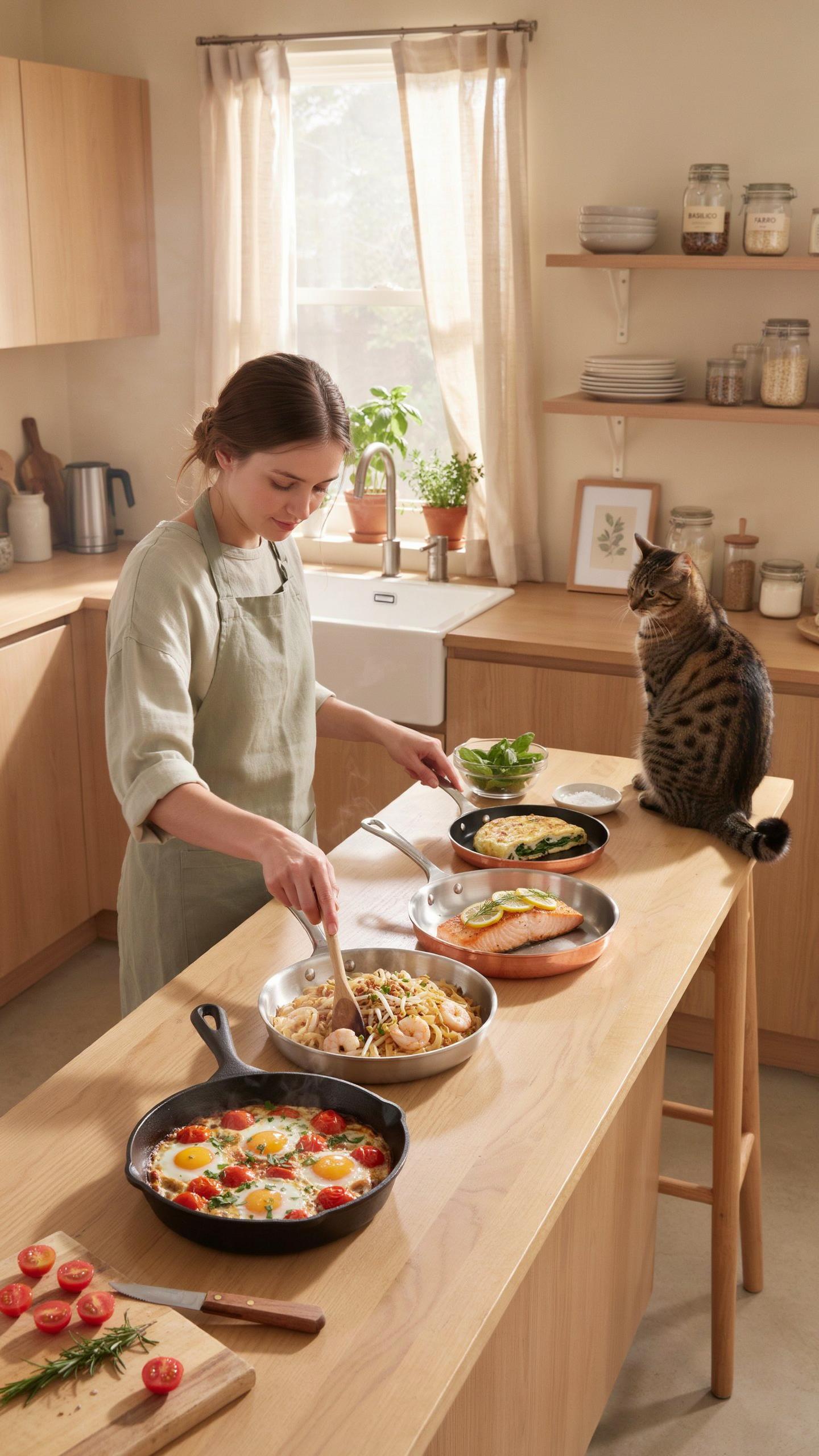
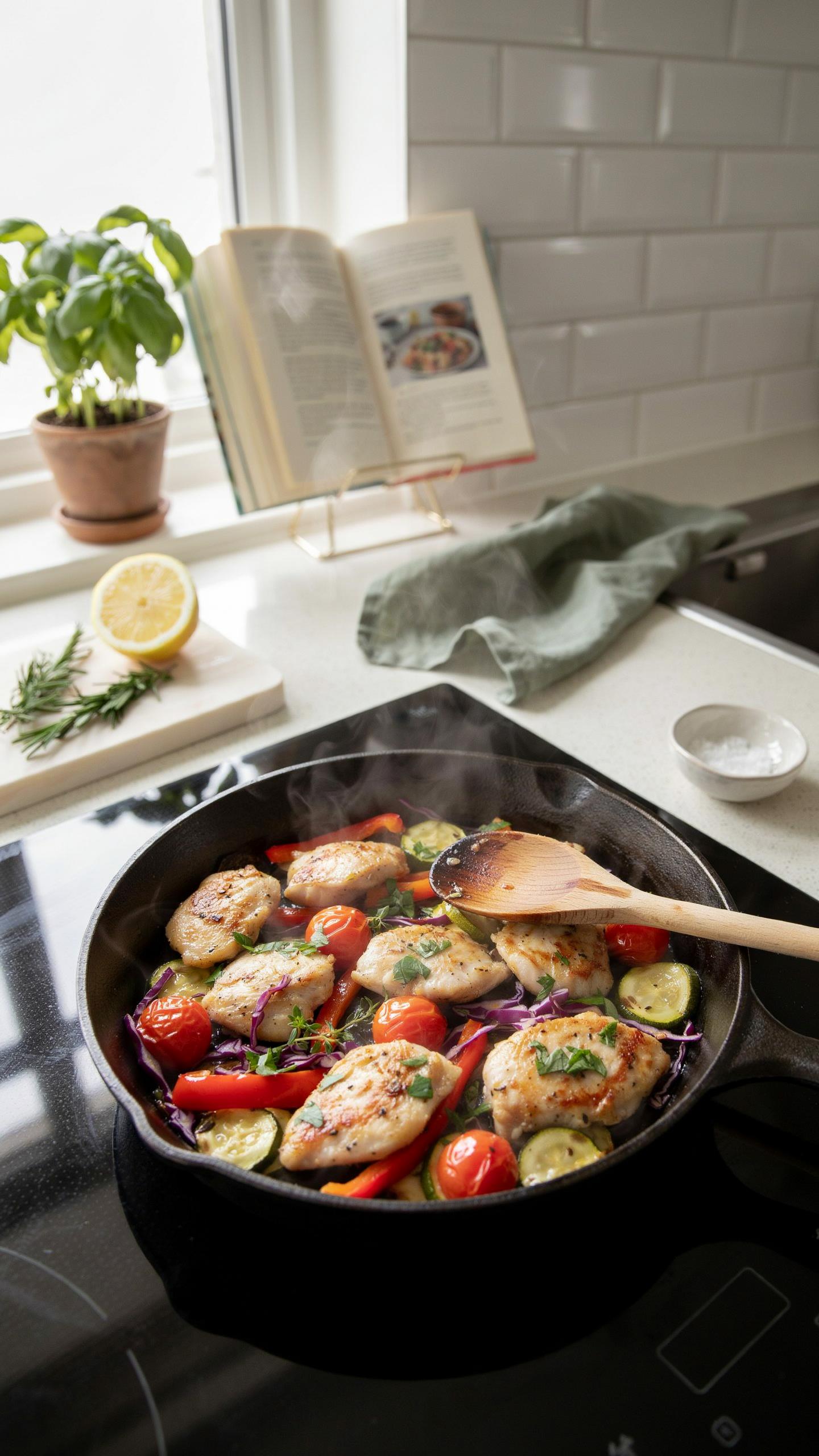
You want meal prep to feel simple so you stick with it. The real mechanism is geometric: one pan reduces decision friction at every stage. Economics calls this “transaction cost reduction” applied to cooking. Each additional pan, cutting board, or vessel demands a choice, a wash, a storage decision. Single-skillet meals eliminate those parasitic decisions entirely. You brown protein, add vegetables, add sauce, finish. One tool. One cleanup. The time saved isn’t dramatic per meal, but compounds across a week into hours reclaimed.
The efficiency compounds backward too. Grocery shopping becomes simpler when you buy for one cooking method. Ingredient prep requires no mental switching between techniques. Your brain stays in one mode, which means faster execution and fewer mistakes. You move through the process on autopilot, not context-switching between pan searing and sheet pan roasting. This is why people who meal prep consistently choose skillet meals first, even if they won’t admit the real reason: they work because they demand almost no cognitive load after the first two minutes.
The Hidden Sinks Nobody Mentions
Most meal prep advice ignores what actually kills momentum: the tasks between cooking and storage. You don’t fail because cooking is hard. You fail because you forgot to let food cool before containers go in the fridge, or you’re searching for matching lids at 10 p.m., or you’re deciding which portions go where. Complex recipes multiply these friction points exponentially. Each additional cooking step, sauce component, or finishing technique adds a decision node. Skillet meals compress all variables into one outcome, eliminating the dead time where most people quit.
The compound effect of “hidden” tasks explains why people abandon meal prep entirely after two weeks. A sheet pan dinner with four components requires cooling time management, multiple storage containers, label decisions, and reheating variability across components. A skillet meal cools uniformly, stores in three containers, requires zero label confusion, and reheats evenly because protein and vegetable density remain consistent. The mechanism is process architecture, not willpower. Simplify the non-cooking tasks first, and compliance becomes automatic.
The Minimum Viable Prep Protocol For High Protein Dinner
What Actually Goes In The Skillet
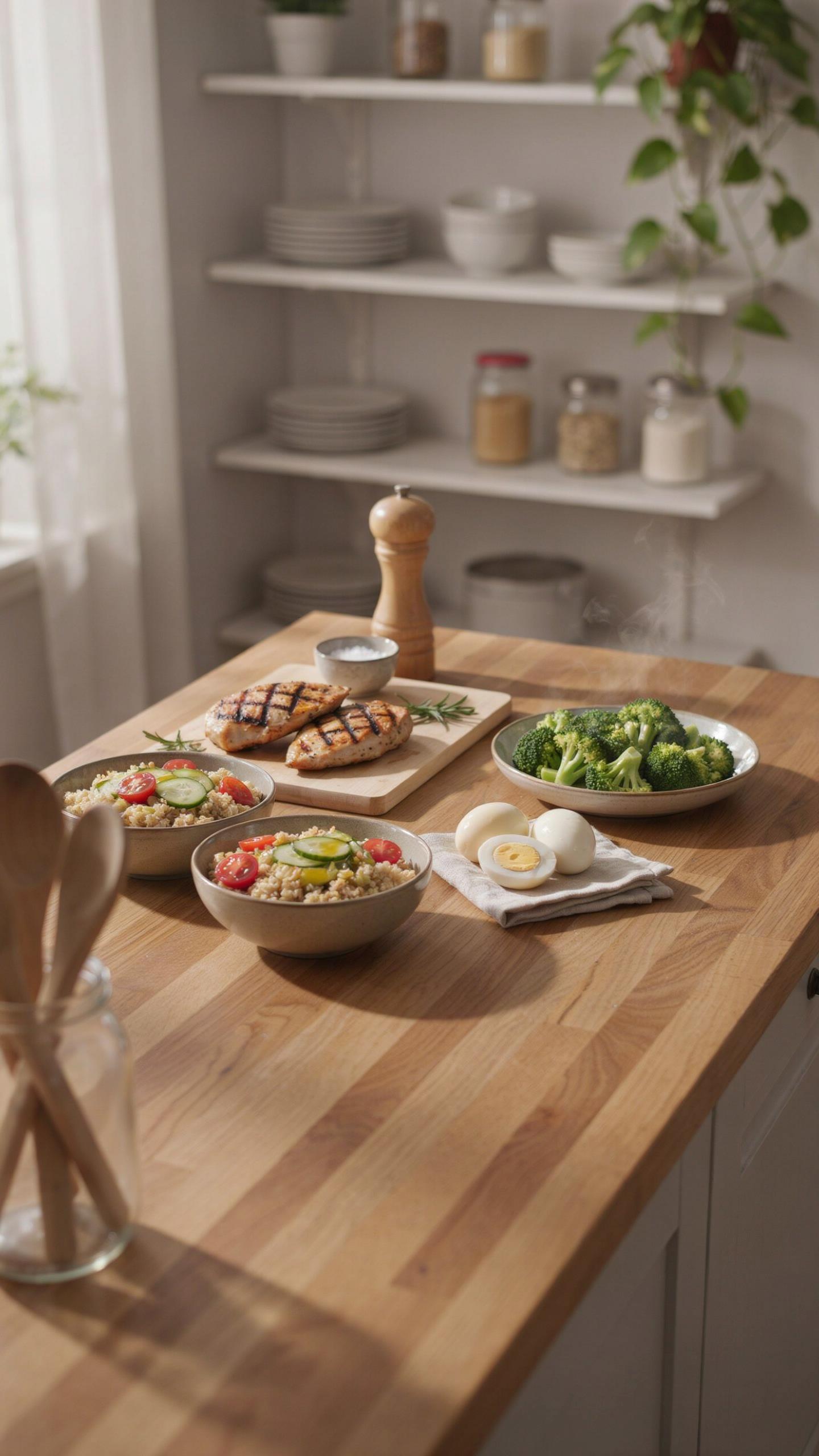
You’re drawn to this section because you want permission to skip the complicated stuff. Here it is: most high protein skillet meals fail because people overthink the architecture when the mechanism is brutally simple. Borrowed from systems design, think of constraint propagation: remove one weak component and the entire meal collapses. Your protein is the constraint. Everything else exists to prevent it from being boring or dry. That means one protein source, one fat vehicle, one vegetable category, and one flavor anchor. Nothing more.
Ground beef, chicken thighs, or eggs form the foundation. Pan fat comes from butter, oil, or rendered meat. Vegetables stay in one family: either cruciferous (broccoli, cauliflower), allium (onion, garlic), or nightshade (peppers, zucchini). The flavor anchor is salt, acid from tomato paste or lemon, or umami from soy sauce or Worcestershire. You build the meal from these four slots, not around a recipe. This constraint is what makes prep work actually feasible.
Source For Speed, Not Instagram
The common advice says “buy quality organic grass-fed whatever.” That’s incomplete. You source for prep friction, not virtue signaling. Frozen chicken thighs cook faster than fresh because you don’t thaw. Ground beef from a single package eliminates portioning waste. Canned tomato paste has longer shelf life than fresh tomatoes and requires zero prep. Pre-cut vegetables from the grocery store cost more per pound but save the actual bottleneck: your knife time on a Sunday night.
The real mechanism is this: cheaper ingredients force you to spend time. Expensive prepared components force you to spend money. You pick your constraint. For meal prep, time is the real scarcity. Buy the frozen broccoli. Buy the pre-minced garlic in the jar. Buy ground beef in bulk from a warehouse club and portion it yourself into freezer bags. The single highest-leverage move is eliminating any ingredient that requires more than two minutes of prep work before it hits the skillet.
Low Calorie Chicken Maximizing Protein Minimizing Effort
Which Cuts Actually Deliver
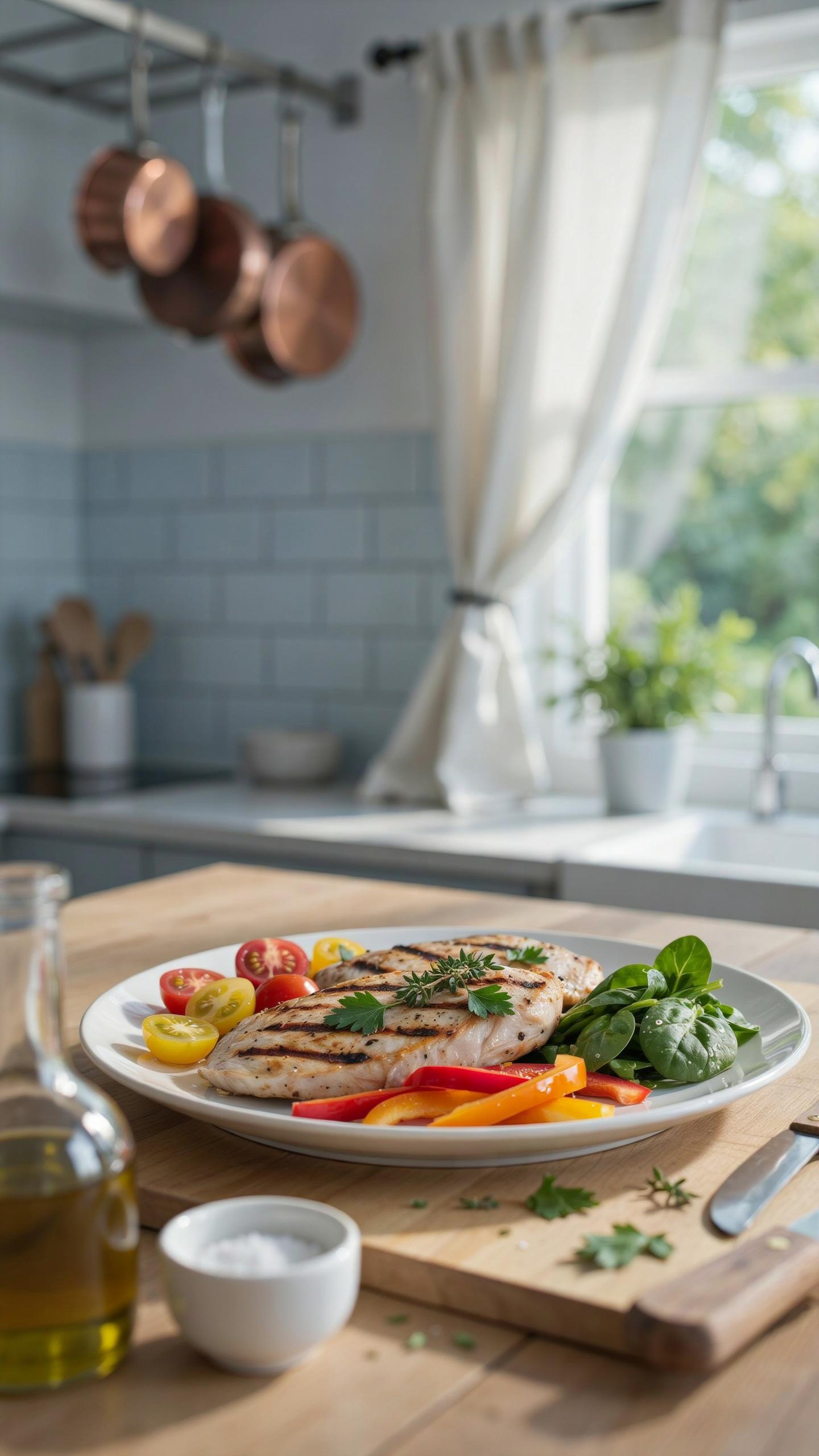
You want the protein number on the label to justify the meal prep time you’re about to invest. That’s the real motive here, and it’s sound. Chicken breast contains roughly 31 grams of protein per 100 grams cooked, while thighs sit around 26 grams. The difference matters when you’re scaling across five days of meals. Breast is the obvious play because the math is cleaner and the fat content lower, but thighs cook faster and stay moister in a skillet without babysitting.
Ground chicken at 85/15 leanness sits between both options at about 28 grams per 100 grams. The trade-off: it requires more active seasoning and binding in a skillet because it lacks the structural integrity of whole cuts. For meal prep specifically, whole breasts win because they reheat predictably and don’t dry into chalk after three days in the fridge. Buy skin-on, bone-in when possible. You’ll pay less per pound, and removing them before cooking takes ninety seconds.
High Heat Sealing Without Protein Breakdown
Protein denatures around 160 to 170 degrees Fahrenheit. Most advice tells you to bake chicken low and slow, which is wrong for skillet meal prep. The mechanism here is borrowed from food science: Maillard reaction creates a structural seal that actually protects internal protein from overdrying during storage. You want a screaming hot skillet with oil at or near smoke point, sear the chicken hard for two to three minutes per side at medium-high heat, then drop the burner to medium to finish the cook through.
The Maillard reaction creates that brown crust. That crust acts as a moisture barrier. When you refrigerate the chicken for reheating, that seal keeps the interior from becoming a hockey puck. Never cover chicken in the skillet while it finishes cooking. Steam releases upward, moisture stays in the meat, and you avoid the texture trap that kills meal-prepped chicken. Cook to 165 degrees internal temp minimum, pull it off heat, and let it rest five minutes before portioning.
Healthy Vegetable Skillet Meal The Nutrient Density Leverage Biology
Why Satiety Actually Works
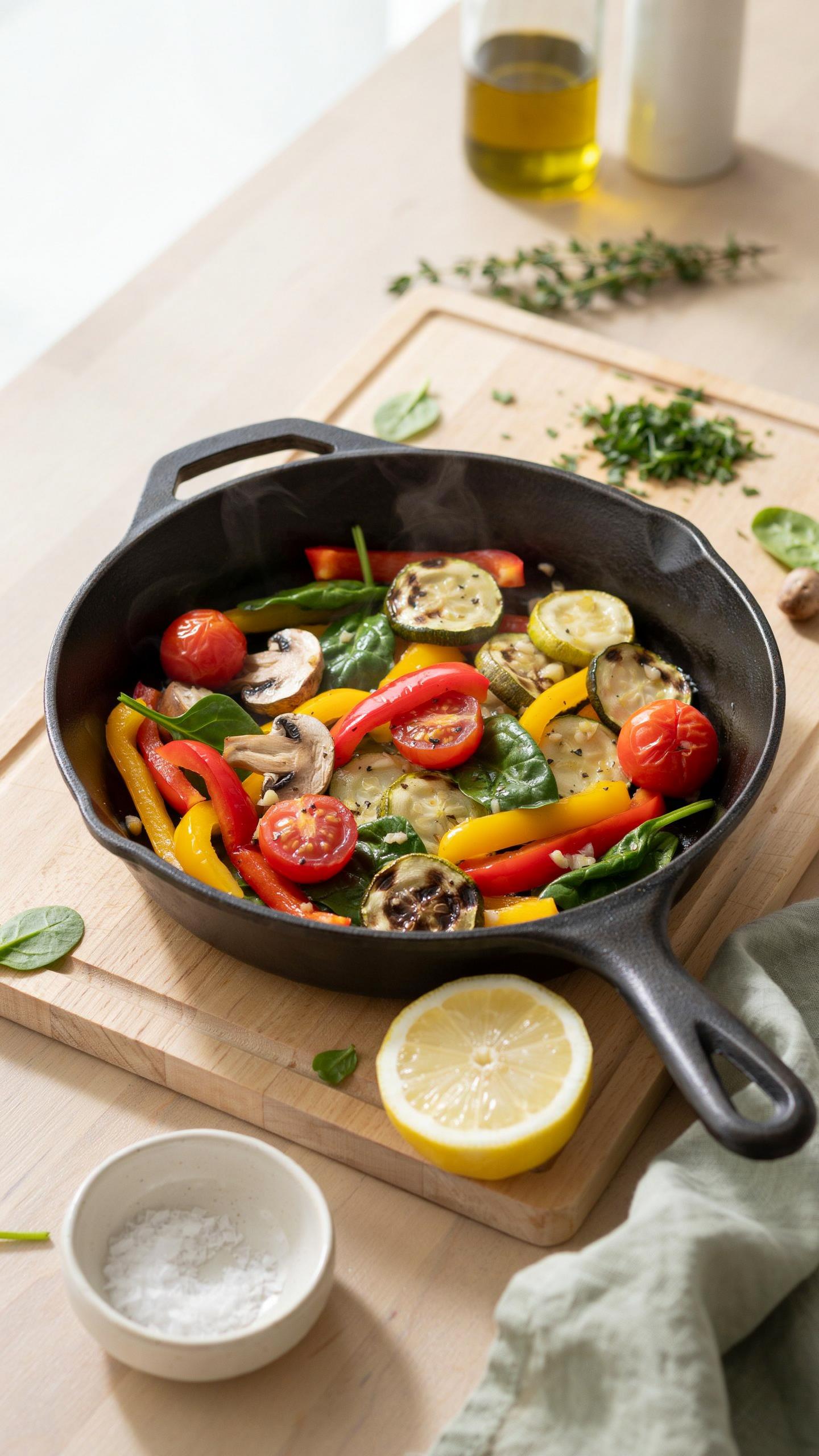
You want to feel full longer so you stop thinking about food. That’s the real reason you’re reading this. Here’s the mechanism: in biology, nutrient density describes the concentration of micronutrients per calorie consumed. Your satiety signals don’t fire on calorie count alone. They fire when your body detects sufficient micronutrient intake, particularly fiber, minerals, and B vitamins. A skillet with 400 calories of protein, fat, and fibrous vegetables triggers fullness faster than 400 calories of processed carbs because your nervous system reads micronutrient density, not calorie density.
The practical implication shifts your entire skillet design. Stop loading vegetables as flavor padding. They’re the satiety engine. Vegetables with high micronutrient concentration per serving create the hormonal cascade that makes your brain register completion. This is why a 10-ounce steak with broccoli keeps you satisfied longer than a 12-ounce chicken breast with rice, despite similar protein totals. The vegetable component controls your hunger signal for the next four to six hours.
Vegetables That Compress Micronutrients Into Servings
Most advice tells you to “eat more vegetables.” Useless. What matters is which vegetables pack the highest micronutrient load relative to serving size. Cruciferous vegetables, dark leafy greens, and alliums deliver concentrated fiber, folate, and mineral content that actually triggers satiety. A cup of raw spinach delivers more iron, magnesium, and folate than a cup of raw iceberg lettuce, yet both feel like “salad.” Your skillet prep should prioritize density, not volume.
Build your skillet around vegetables that compress nutrients into small physical spaces. Broccoli crowns, Brussels sprouts halved, kale chopped, and garlic minced all deliver disproportionate micronutrient returns per tablespoon of actual space on your pan. This matters during meal prep because compact vegetables leave room for protein and fat without ballooning portion size. Cook these at high heat to concentrate flavors and maintain fiber structure. The mechanism is simple: nutrient density determines satiety, and vegetable selection determines nutrient density.
Easy High Protein Meals Avoiding Decision Fatigue
The Weekly Rotation System
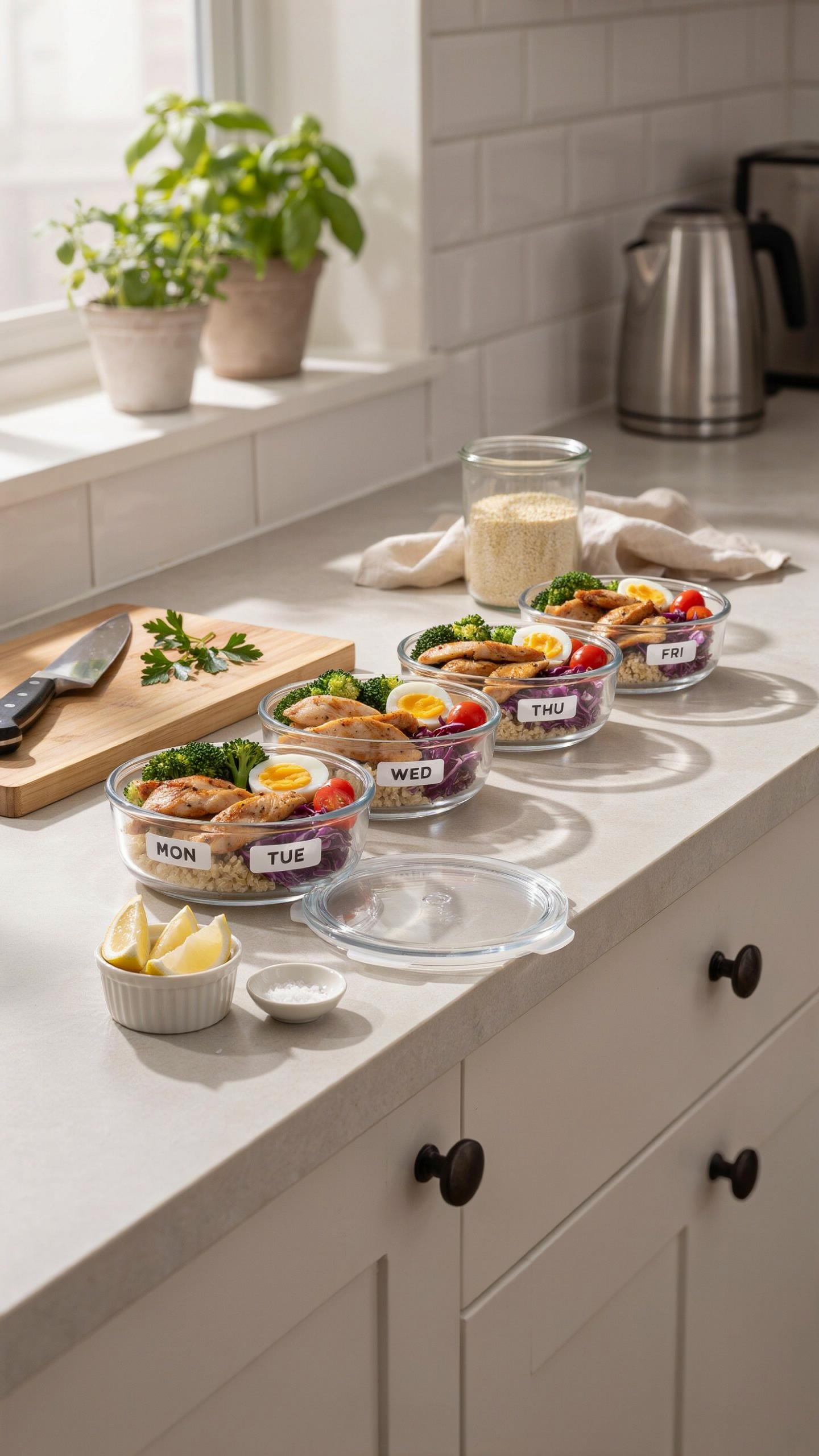
You’re hoping a structured meal plan will finally make you consistent. Here’s what actually happens: you want to feel in control, so you search for the perfect plan instead of running the one that works. The mechanism is choice paralysis. Economics calls this the paradox of selection. Apply it to skillet meals and you get this: define three to five core rotations and cycle them weekly. Monday is ground turkey with peppers and rice. Wednesday is chicken thighs with broccoli and sweet potato. Friday is beef with mushrooms and cauliflower. You repeat this cycle. Same proteins, same prep time, same macros each week.
The psychological shift matters more than the meals themselves. When you remove the decision of what to cook, you remove the friction that kills consistency. You buy the same ingredients every Sunday. You prep the same way every time. Your brain stops negotiating and starts executing. This is why restaurant chains work and home cooks fail. One removes choice. The other drowns in it. Write your three rotations down. Print them. Tape them to your fridge. That’s your protocol.
Ingredient Swaps Within The Same Template
Common advice says to get creative with variations. That’s wrong. Creativity kills prep momentum. What actually works: build one template with fixed slots for interchangeable parts. Take the skillet base: one protein, one vegetable, one starch, one fat. Ground beef slots into the protein position. So does ground turkey, chicken breast, or lean pork. Broccoli slots into the vegetable position. So does bell pepper, zucchini, or green beans. The structure stays identical.
One template repeated with ingredient swaps feels like variety without requiring new decisions. You’re not learning new recipes every week. You’re substituting within boundaries you’ve already set. Buy two protein options per rotation cycle instead of five. Buy two vegetable options per rotation instead of five. The skillet cook time stays forty minutes or less. The macros stay consistent because you’re using the same portions and ratios. Store your template as a photo on your phone. Label each slot. When you shop, you know exactly which ingredients fit which positions.
The Always Ready System For Meal Preps Idea
Cook Protein And Vegetables In Batches
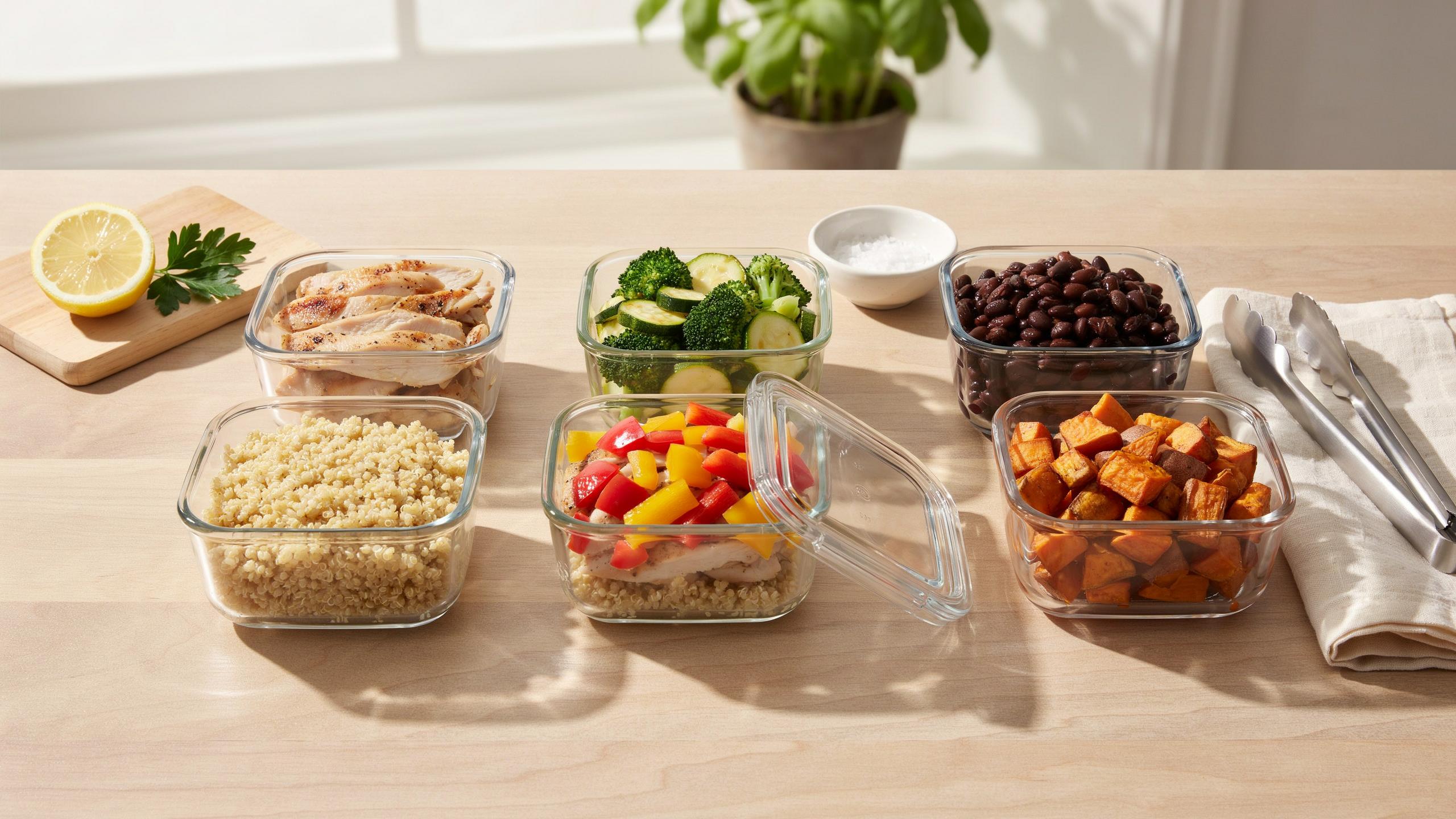
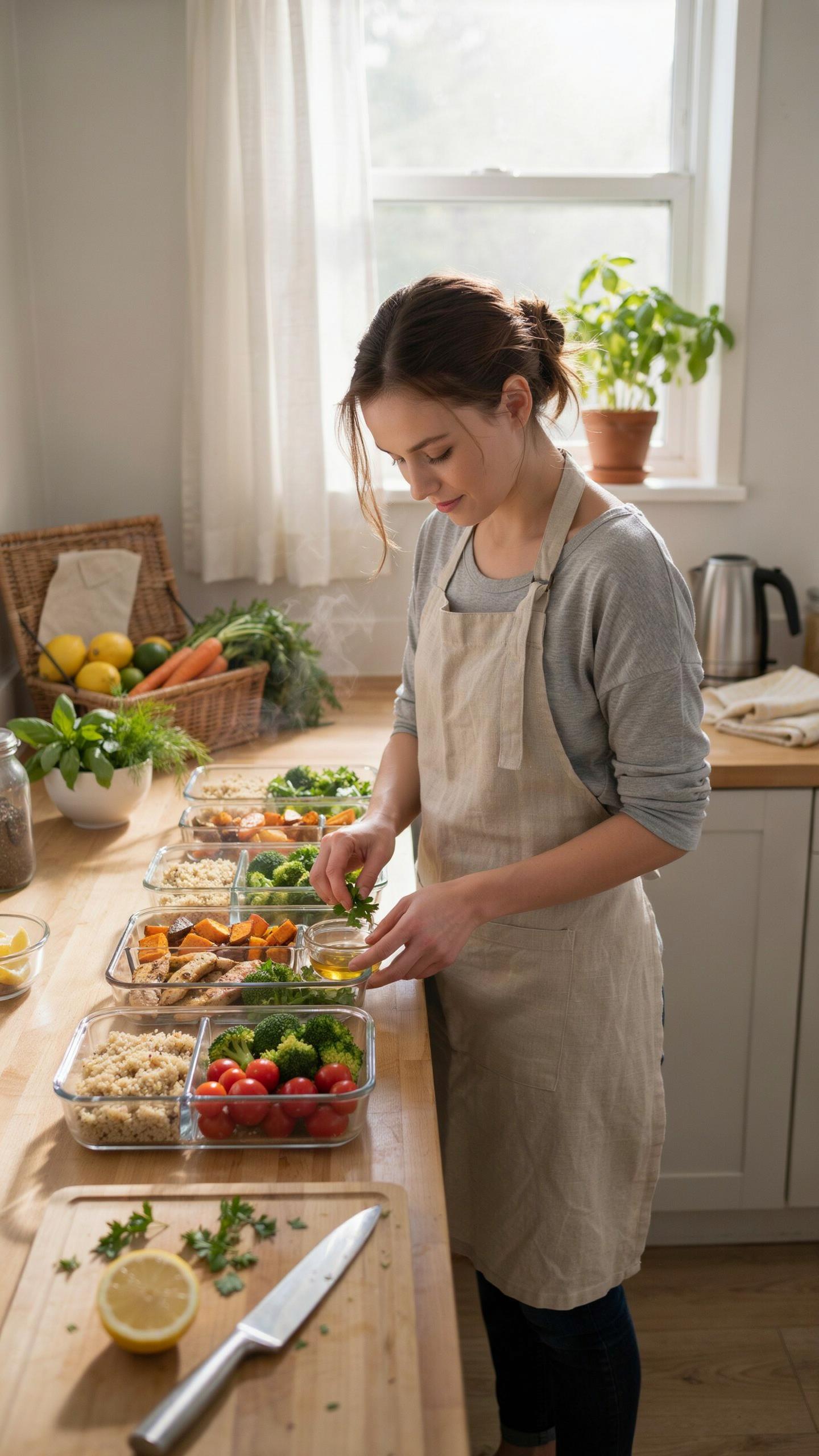
You want this system because you’re afraid of failing before you start. The mechanism is simple: batch cooking eliminates decision friction. Cooking everything at once means you’ve already won the hardest part. Boil chicken breasts together. Sear ground beef in one session. Roast vegetables on sheet pans simultaneously. This isn’t about being efficient in theory. It’s about removing the excuse to order delivery on Wednesday.
The volume matters because of supply chain thinking from logistics: inventory turns over faster when you have standardized components ready. Cook two to three pounds of protein per session. Use one large skillet for vegetables. The time investment is front-loaded, not spread across the week. You prepare once. You eat four to six times. This ratio is what separates people who meal prep from people who talk about meal prep.
Store Everything For Maximum Shelf Life
Most storage advice is incomplete garbage that leads to waste. The real mechanism is oxygen exposure and temperature stability. Airtight containers slow oxidation. Glass containers maintain temperature better than plastic. Store protein on the bottom shelf of your refrigerator where it’s coldest, separated from raw meat. Cooked vegetables last longer when stored dry, not swimming in liquid. Moisture breeds bacteria faster than air does.
Two practices matter most: portion into individual containers immediately after cooking while food is still warm, and label everything with the cooking date. Cooked chicken stays safe for three to four days. Ground beef lasts the same window. Pre-cooked vegetables keep four to five days if stored properly. The container itself is the protocol. Once food hits that container sealed and dated, the timeline starts. No guessing. No sniffing. The container date tells you when to eat it.
Cheap Dinner Ideas With Chicken Cost Benefit Analysis Of Ingredients
Proteins That Scale Without Breaking The Bank
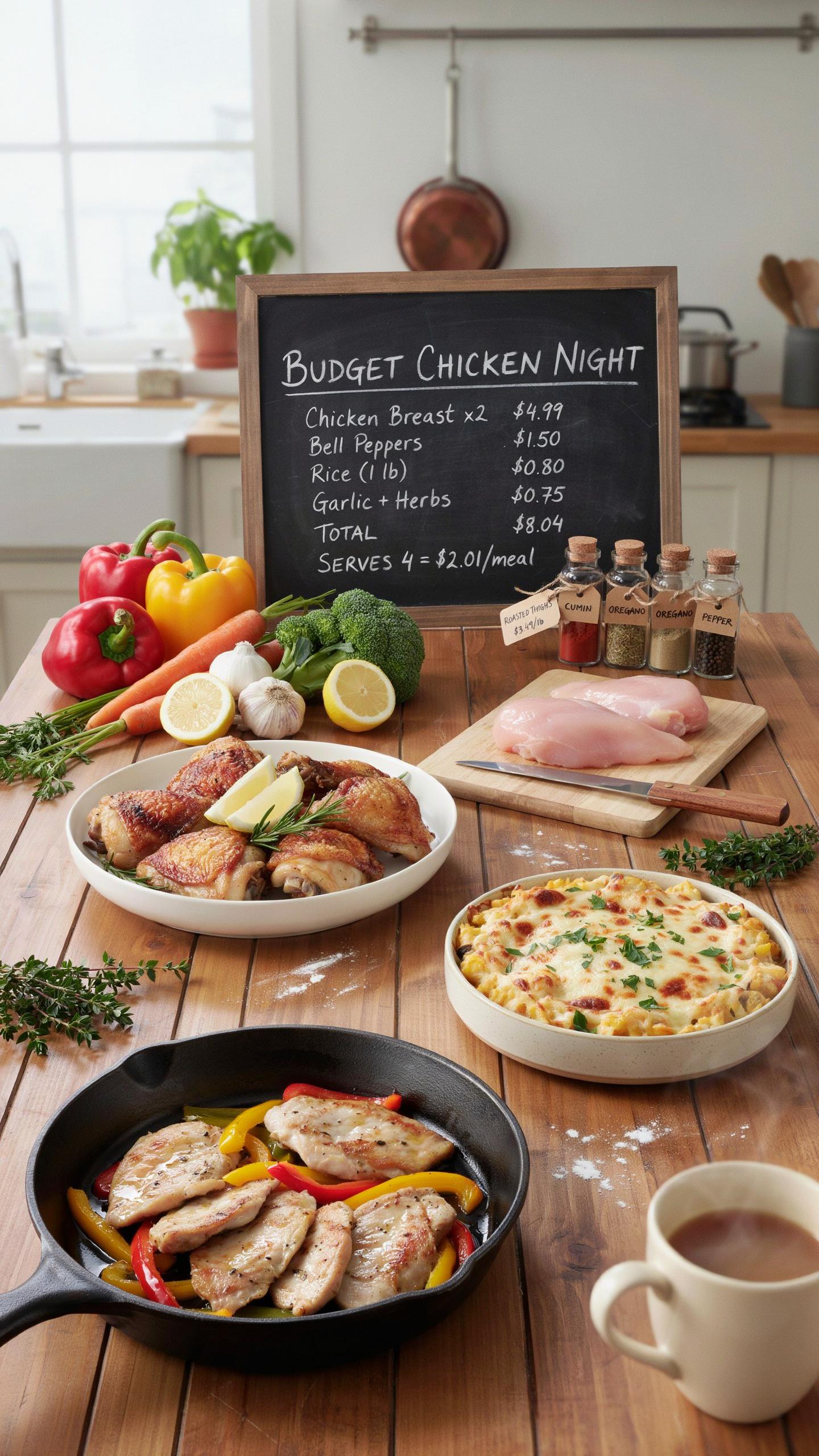
You want cheap chicken dinners because you’re afraid you can’t afford to eat well. The mechanism is simple: protein density per dollar determines whether meal prep becomes sustainable or collapses after two weeks. Chicken thighs beat breasts on cost. Ground chicken beats both. The math is inescapable. A pound of thighs runs 40-60 percent less than breasts while delivering more fat, which means more flavor and fewer dry meals that you’ll skip.
- Chicken Thighs: 15-18 grams protein per 3.5 ounces, cheaper per pound than breasts, higher fat content prevents dryness in storage.
- Ground Chicken (Thigh Blend): 17-20 grams protein per 3.5 ounces, cooks faster than whole pieces, absorbs skillet flavors efficiently.
- Chicken Drumsticks: 12-14 grams protein per 3.5 ounces, lowest cost per pound, excellent for bulk cooking in cast iron.
- Eggs: 6 grams protein per egg, $0.20-0.35 per egg depending on bulk purchase, extends protein volume without expanding budget.
- Canned Tuna (In Water): 20 grams protein per 3 ounces, shelf stable, requires no cooking, emergency protein when fresh inventory runs low.
The real play is buying five-pound packs of thighs or ten-pound bags of ground chicken from warehouse stores. Per-unit cost drops 15-25 percent compared to grocery store packaging. You freeze what you don’t cook immediately. This removes the deadline pressure that kills meal prep consistency.
Produce Economics In Real Time
Bulk buying produce fails because people treat it like a moral obligation instead of a logistics problem. Buy only vegetables that store longer than five days raw or cook down to volume in the skillet. Root vegetables and frozen options move the needle. Fresh spinach wilts. Frozen spinach doesn’t. Onions last three weeks in the pantry. Bell peppers last two weeks refrigerated.
The skillet demands vegetables that don’t release excess water during cooking, which dilutes flavor and creates soggy texture on day four of storage. Buy onions in five-pound bags. Buy garlic by the bulb, not the jar. Buy frozen broccoli and snap peas because you’ll use them. Skip the premium salad mixes. That money evaporates into waste. Store your cooked meals in glass containers with loose lids for the first 24 hours so condensation drains instead of soaking back into the food. Switch to sealed lids on day two.
Healthy Dinner Recipes Air Fryer Under Utilized Tools
Why The Air Fryer Actually Wins Here
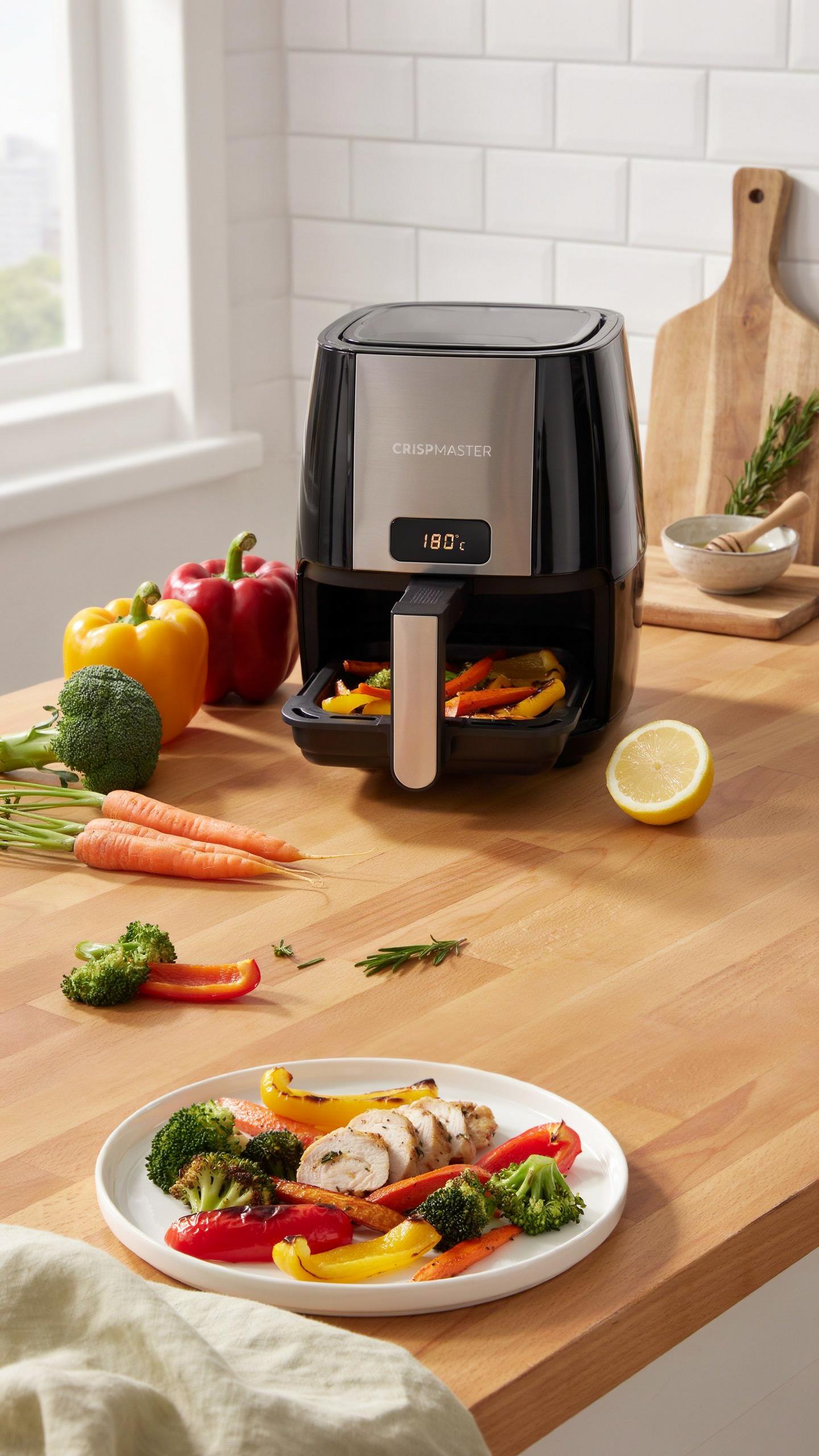
You want the air fryer because it sounds modern and efficient, but you’ll actually use it because it solves a specific texture problem that skillets create. The mechanism is simple: air fryers use convection heat at high speed, which browns protein surfaces faster than skillet oil while cooking the interior at a controlled rate. A chicken breast hits a golden crust in eight minutes instead of twelve, and you get crispness without babysitting the pan or adjusting heat.
This matters for meal prep because texture degrades during storage. Proteins that finish in a skillet stay slightly soft when reheated. Air fryer proteins maintain their structural integrity because the initial maillard reaction goes deeper, creating a protective layer that resists moisture loss over three to four days in the fridge. Cook your protein in the air fryer, finish assembly in the skillet with vegetables and sauce, and you get both speed and storage durability.
Cook Multiple Proteins At Once
Everyone treats the skillet as the only option because it’s what their parents used, but this creates a bottleneck. A standard air fryer basket holds two pounds of chicken thighs or ground beef while your skillet handles one pound max without crowding. You prep four dinner containers instead of two in the same time window because you’re not cooking in sequential batches.
The constraint isn’t cooking time, it’s oven or heat source capacity. Buy an air fryer that matches your meal prep volume, not your daily appetite. If you’re prepping four dinners, you need a basket that processes enough protein in one cycle to fill them all. This shifts your prep from a scattered two-hour session into one focused forty-minute block where you cook everything at once, then portion and sauce.
Lunch Ideas Chicken Repurposing Reinvention
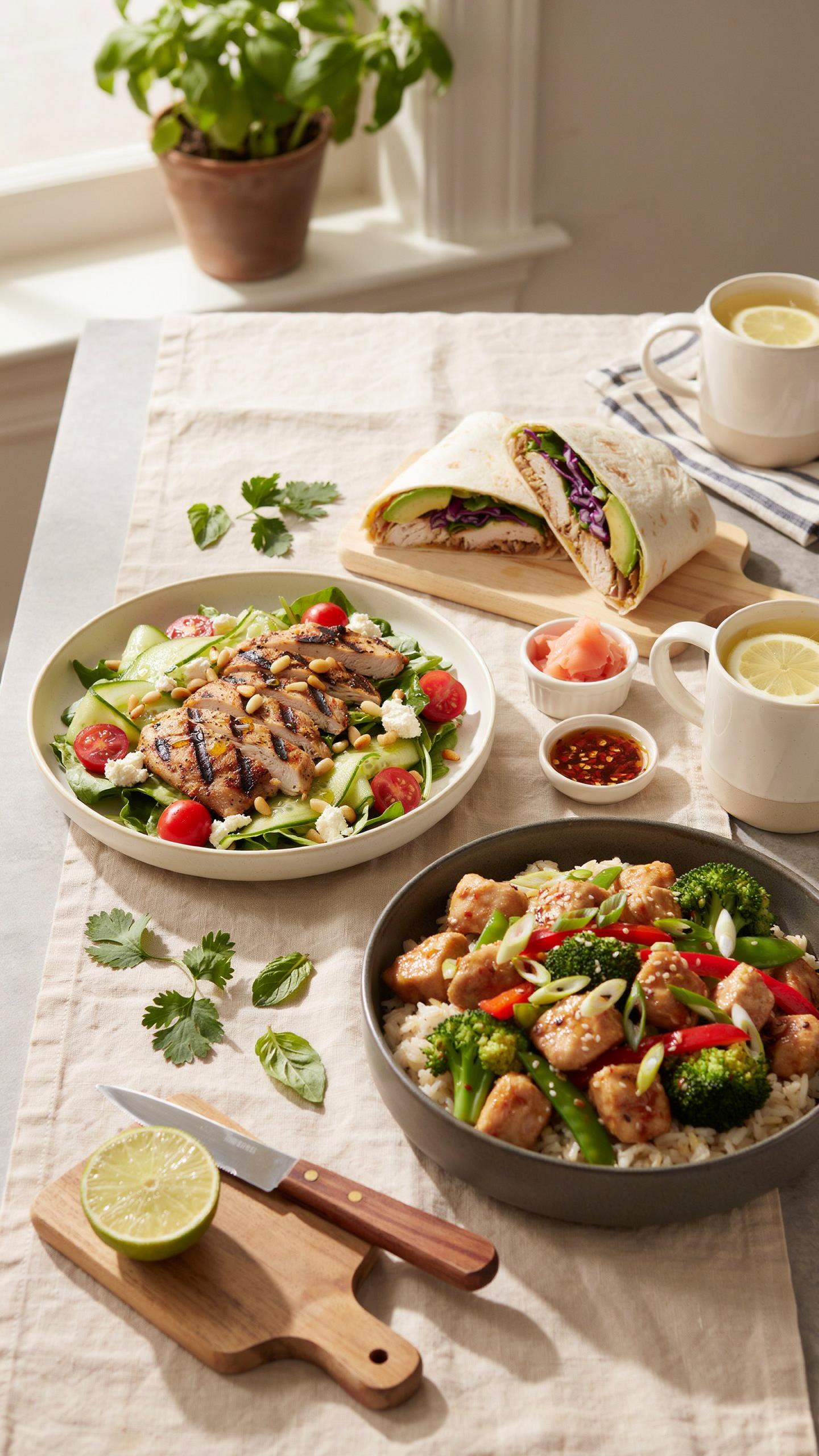
Turn Yesterday’s Protein Into Tomorrow’s Meal
You want to feel smart about not wasting food, but the real mechanism is this: your brain detects repetition and shuts down dopamine before your fork hits the plate. The solution isn’t inspiration. It’s structural variation. A skillet of chicken thighs with peppers and onions becomes three distinct meals through texture and flavor pairing changes, not through recipe creativity. The chicken stays the same. The context changes.
Day one, you eat it hot from the skillet with rice. Day two, shred the cold chicken, add acid via lime juice and hot sauce, wrap it in a tortilla. Day three, dice it fine, mix with mayo and celery, serve on bread. Same protein source. Different neural pathway each time because your mouth experiences different sensations. This is how you extend a single batch from three days of eating to five days without your brain flagging it as repetition.
Breaking The Cycle Before It Starts
The generic advice says add spices or try different sides. That’s incomplete. Real meal prep fatigue isn’t about boredom with flavor. It’s about decision fatigue compounded by texture monotony. You’re eating the same thing the same way, and your nervous system knows it. The fix is mechanistic: change the delivery system and the state of the protein itself, not just the seasonings around it.
Cook your base skillet once per week. Portion it into thirds. Consume one third as served. Transform the second third into a different texture (shredded, diced, crumbled). Keep the final third plain and refrigerated for spontaneous pairings. This removes the burden of deciding what to do with leftovers and replaces it with a protocol. You’re not creating meals. You’re executing a predetermined sequence. That distinction kills fatigue because it kills choice.
The only thing stopping your consistency isnt lack of motivation but a faulty system

You don’t need better willpower. You need friction so low that skipping high protein skillet meal prep becomes harder than doing it. Cook one batch this Sunday. Not tomorrow. Not next week. This Sunday. Put it in your calendar like a non-negotiable meeting. The meal prep doesn’t change your life. The decision to stop deciding does.