
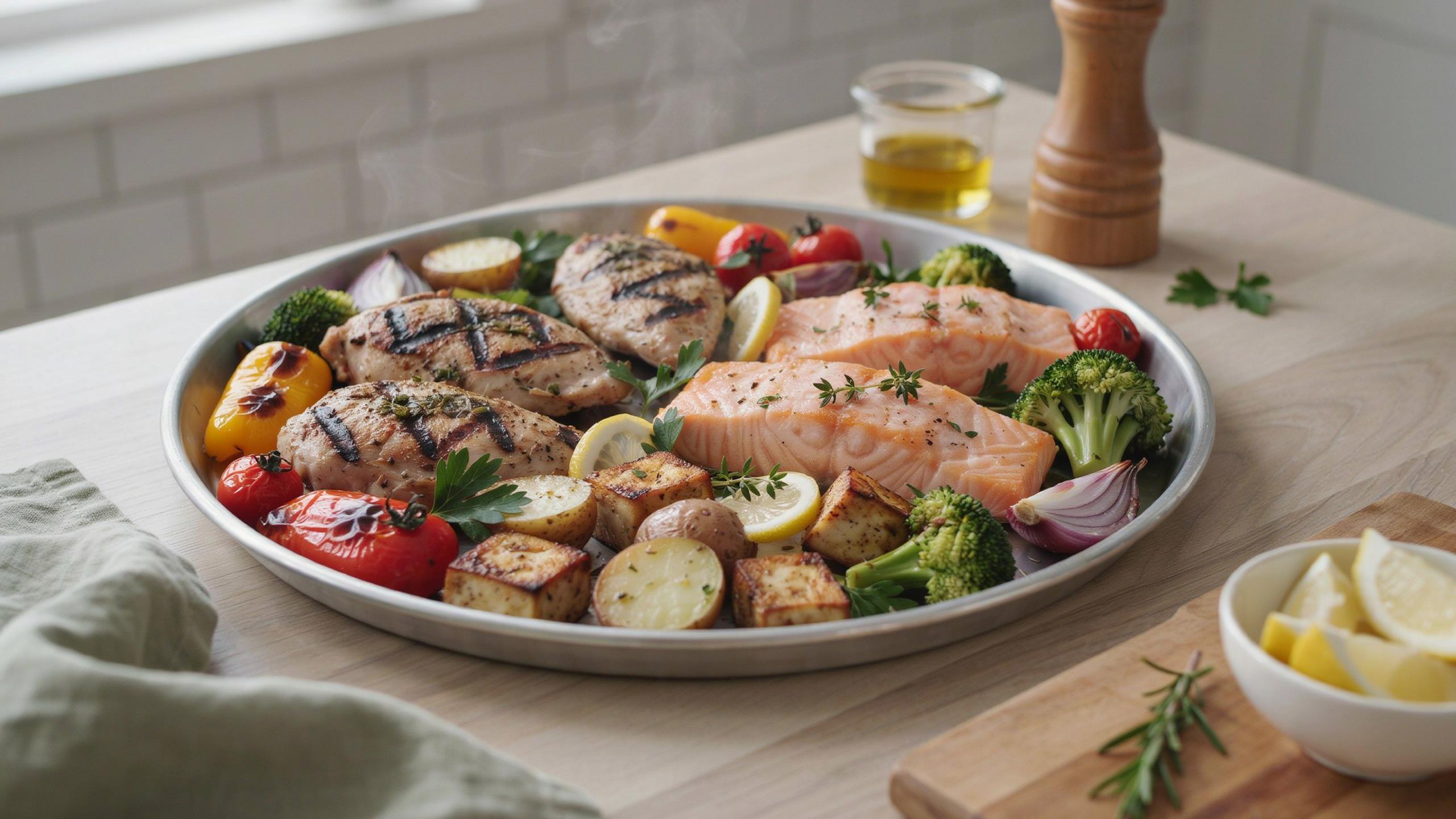
The Cognitive Offload Protocol High Protein Sheet Pan Dinners
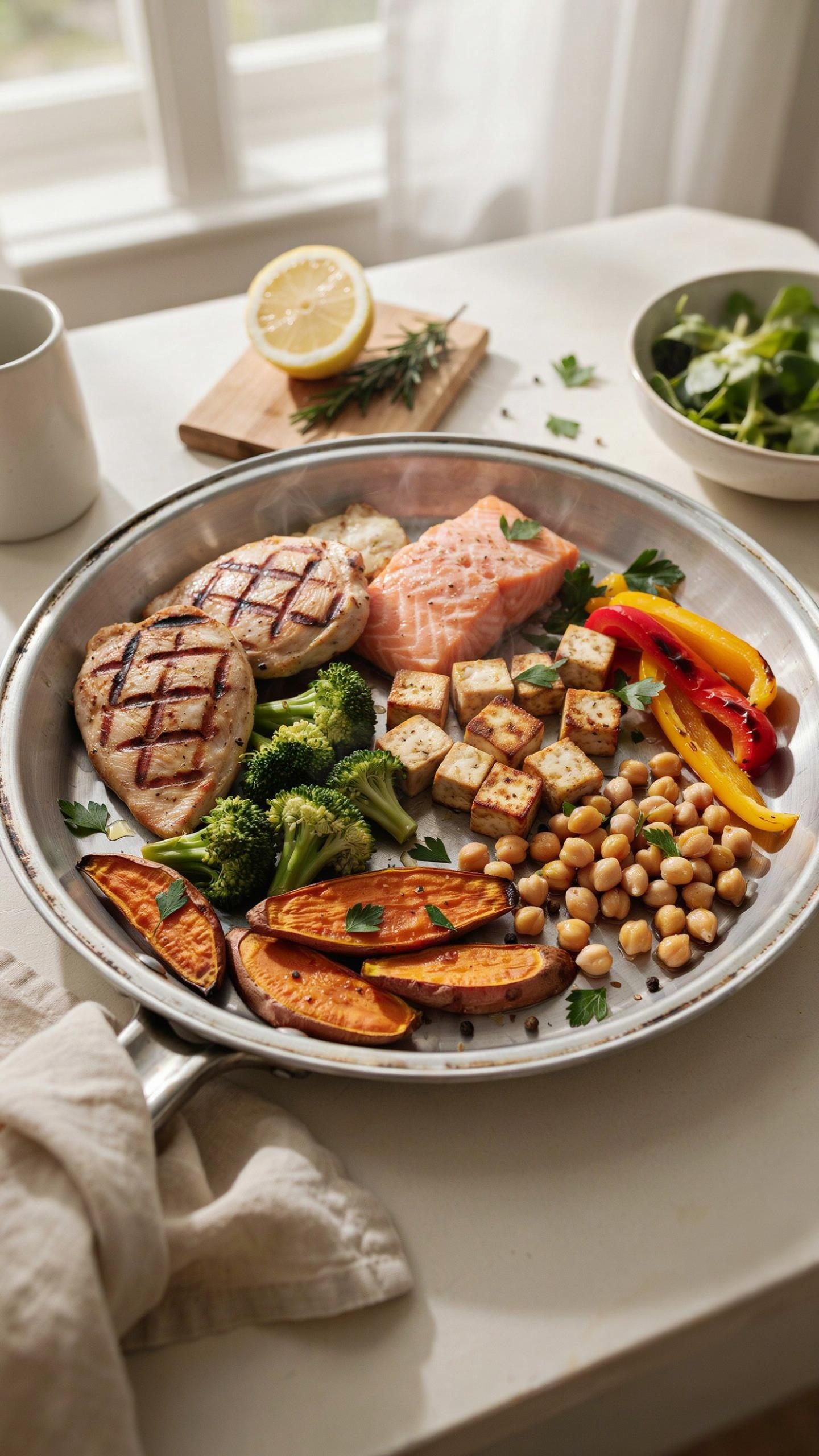
Eliminate The Decision Tax Before It Starts
You’re not actually worried about nutrition. You’re worried about making the wrong choice at 6 PM when you’re tired and your willpower is spent. Decision fatigue is real, and every food choice you face depletes the same mental resource you need for work. Sheet pan dinners work because they collapse the entire decision tree into a single template: protein, vegetable, fat, seasoning, oven.

The mechanism here comes from behavioral economics. Think of your daily decisions like a depletion curve. Each choice, no matter how small, moves you down that line. High protein sheet pan meal prep removes the nightly fork in the road. You’ve already decided on Monday. Execution on Thursday requires no cognitive load. This is why template-based systems outperform willpower-based systems every single time.
Automate Your Fuel Supply
Most advice about meal prep misses the actual problem. It tells you to cook on Sunday and feel accomplished. That’s not the goal. The goal is removing the option to fail. Your body performs best with consistent protein intake, consistent meal timing, and consistent macros. Automation makes consistency effortless instead of heroic.

Sheet pan dinners automate the supply chain for high-performance fuel. You cook four identical dinners on one day using one sheet pan, one oven cycle, minimal cleanup. For the next four days, you eat the same meal. Your body doesn’t need variety. It needs predictable fuel delivery. When you remove the variability, you remove the friction. Cook once. Eat four times. Your performance compounds because your recovery stays constant.
Sheet Pan Dinners Protein Maximizing Nutrient Density
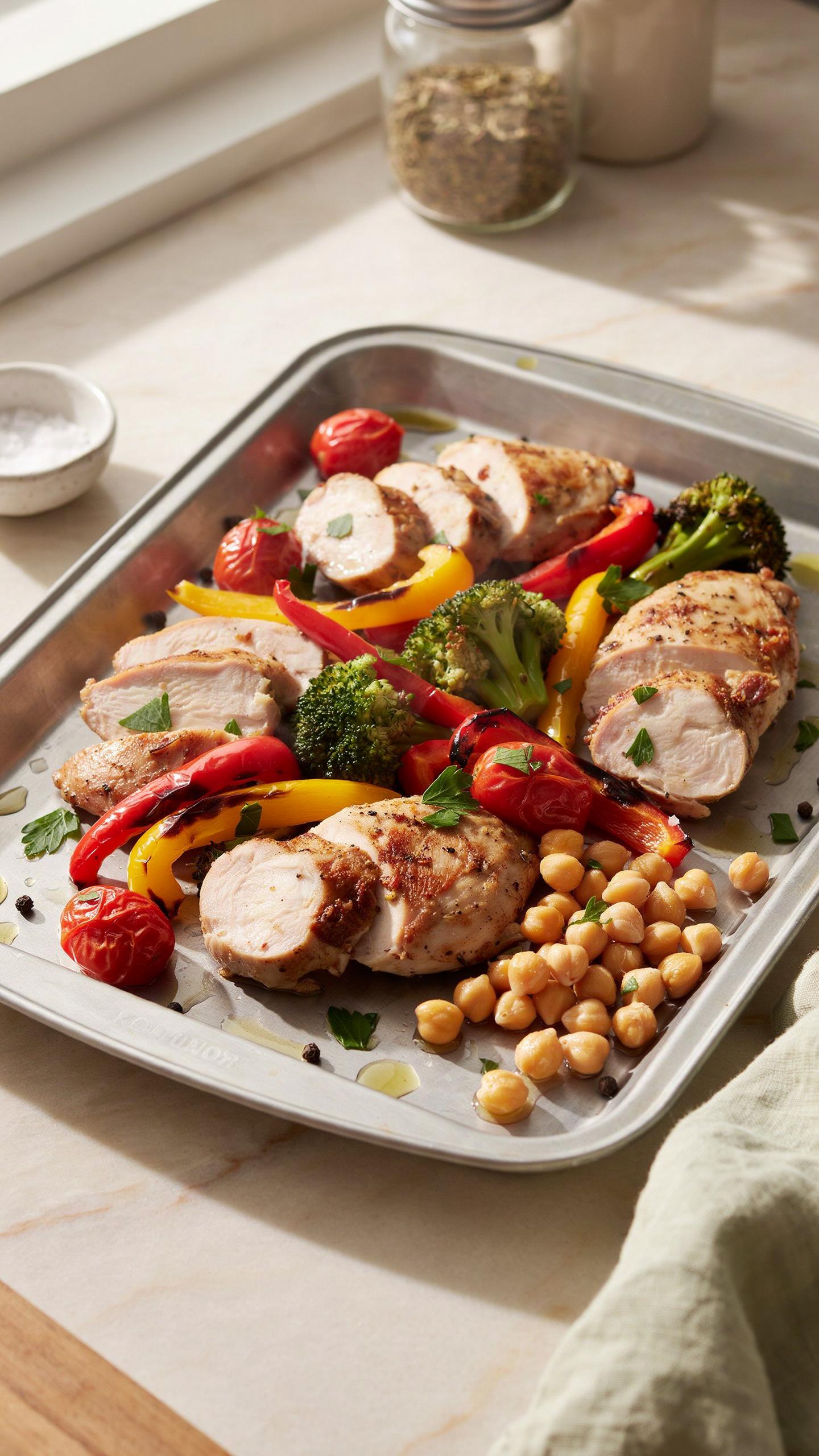
Protein Sources That Actually Satiate
You want protein to feel full longer. That’s the real reason you’re reading this. The mechanism is simple: amino acid composition drives satiety more than total grams alone. Your body measures completeness of the amino acid profile, not just quantity. Incomplete proteins leave your hunger signals running because your brain registers the nutrient gap.
- Chicken thighs: Higher fat content than breast, superior amino acid absorption rate, more forgiving during sheet pan cooking without drying out.
- Eggs: Complete amino acid profile, highest biological value of any whole food, cook evenly on sheet pans when baked at moderate temperatures.
- Ground beef 80/20: Retains moisture during batch cooking, contains creatine and carnosine naturally, cheaper per gram than leaner cuts.
- Salmon: Omega-3 density reduces inflammation, complete protein with all nine essentials, fat content prevents protein denaturation on high heat.
- Greek yogurt or cottage cheese: Casein protein digests slowly for sustained satiety, mixes into sheet pan sauces without separating, doubles protein per serving versus standard yogurt.
The mistake most people make is equating protein quantity with satiety. Two meals with identical protein grams perform differently based on amino acid ratios and how your gut absorbs them. Prioritize sources your body absorbs efficiently first, then count grams. Your sheet pan works best when the protein source doesn’t require constant attention or precise temperature control to avoid degradation.
Calories Versus What Your Body Actually Uses
This distinction separates people who lose fat from people who gain muscle while thinking they’re eating right. Nutrient density is the total micronutrient load per calorie consumed, not the calorie count itself. A 300-calorie portion of salmon contains more bioavailable nutrients than 300 calories of processed chicken nuggets. The sheet pan format forces you to see the actual food, so you build this intuition faster than with packaged meals.
When you meal prep sheet pan dinners, you’re stacking multiple nutrient categories into one cooking event: complete protein, micronutrient-dense vegetables, and fat-soluble vitamin carriers all on one surface. The calorie count matters only after you’ve hit your micronutrient targets. Most people reverse this and stay perpetually deficient while hitting calorie goals. Cook protein and vegetables together on the same sheet to ensure you consume them as a unit, not as separate choices where the vegetables get skipped.
The Minimum Viable Effort Sheet Pan Cooking Method

Choose Proteins And Vegetables That Cook At The Same Rate
You want this to feel effortless because you’re secretly afraid you’ll abandon meal prep the moment it feels like work. The real mechanism here is borrowed from chemistry: reaction rates. In cooking, proteins and vegetables have different densities and water content, which determines how fast heat penetrates them. Chicken breast, salmon, and lean ground turkey all finish in 18-22 minutes at 425°F. Root vegetables like Brussels sprouts, broccoli, and bell peppers also hit that window. Mismatched cooking times force you to pull items mid-cook or eat something overcooked. One protein-vegetable pairing works instead of building a complicated orchestration.
The math is simple: fewer variables equals fewer failures. When everything on the pan finishes simultaneously, you set a timer, walk away, and come back to done food. This is why “throw it all on a pan” advice fails most people. They pair chicken with leafy greens or delicate asparagus that burns before the protein reaches safe temperature. Pick dense vegetables that match your protein’s cook time, season aggressively at the start, and you’ve solved 80% of the execution problem before heat ever touches the pan.
Build A Three Step Prep Protocol, Then Repeat It
The common advice here is wrong: “organize your workspace” and “read the recipe first” miss the actual bottleneck. Your bottleneck is decision fatigue during prep, not confusion about steps. A protocol removes decisions by making them once, then reusing the same sequence every time. Step one: portion protein and arrange on the sheet pan. Step two: cut vegetables to uniform size and scatter around protein. Step three: season, drizzle oil, and slide into the oven. You do this same three-step sequence for every sheet pan meal you make. Your hands know the motion. Your brain stops working halfway through week two.
This repeatable protocol compounds over time. By week four, your prep time drops 30-40% because muscle memory replaced conscious thought. The protocol also prevents the chaos of grabbing whatever vegetable exists and hoping it works. You buy the same vegetables each week because they fit your protocol. You buy the same proteins because they fit your protocol. You season the same way every time. When consistency replaces improvisation, meal prep stops feeling like a hobby and starts feeling like a system you own rather than one that owns you.
Beyond Recipes Engineering High Protein Sheet Pan Meals
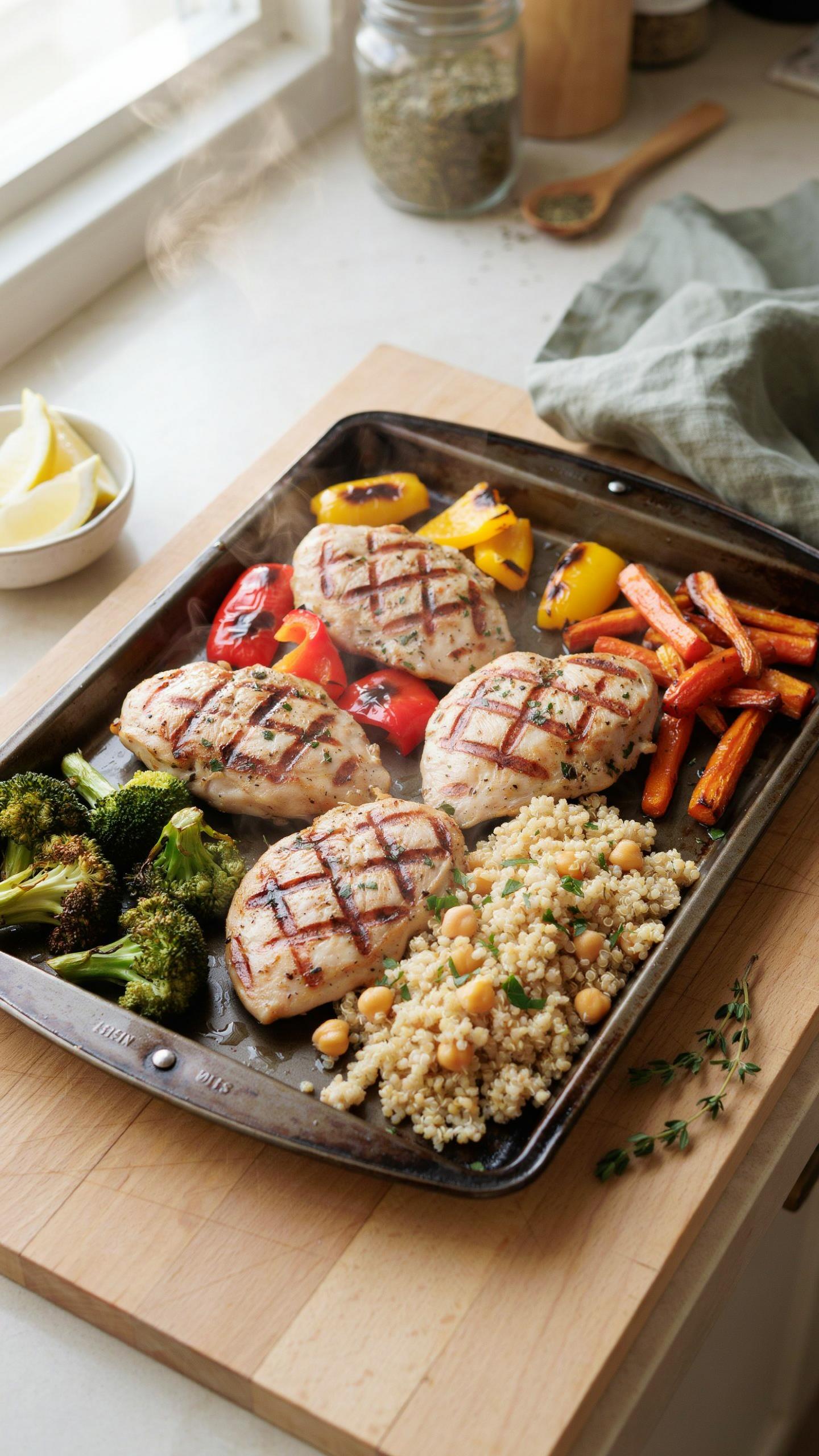
What Nature Knows About Batch Efficiency
You want this section to validate that you’re doing meal prep “right.” The real mechanism is simpler: nature doesn’t optimize one thing at a time. It stacks functions. A leaf absorbs sunlight, transpires water, and photosynthesizes simultaneously on the same surface. Your sheet pan works the same way. Protein, vegetables, and fat cook together under one heat source, creating a closed system where rendered juices become sauce and residual heat finishes everything evenly.
Most meal prep advice treats components separately: cook protein here, roast vegetables there, combine later. That’s friction. The sheet pan’s actual edge is convergence. One pan, one oven cycle, one temperature, one cleanup. You’re not following a recipe. You’re engineering a system where every variable serves multiple purposes. The chicken browns while seasoning the pan; the pan’s surface heat crisps the exterior while the oven’s convection cooks the interior; vegetables absorb rendered fat as they soften. Stack functions and you reduce time, energy, and failure points.
The Data Loop You Actually Need
Everyone tells you to “adjust recipes based on results.” That’s too vague to act on. Real feedback means measuring what changes between batches and isolating the variable that moved the outcome. In engineering, this is iteration: you change one input, measure the output, then decide whether to lock that change or test again. Your sheet pan meals demand the same rigor.
Track three specifics across batches: internal protein temperature at the thickest point, vegetable texture the next day after storage, and how much liquid remains at the end of cooking. These numbers tell you whether you need to adjust oven temperature, cut vegetables smaller, or reduce seasoning liquid. Write these down. Not feelings like “it turned out better.” Numbers. After four batches you’ll see the pattern. Then stop testing and execute the locked formula every week. That’s how you stop burning time on endless tweaking.
Sheet Pan Dinner Ideas Deconstructing Culinary Inertia
Why Most People Abandon Sheet Pan Meals
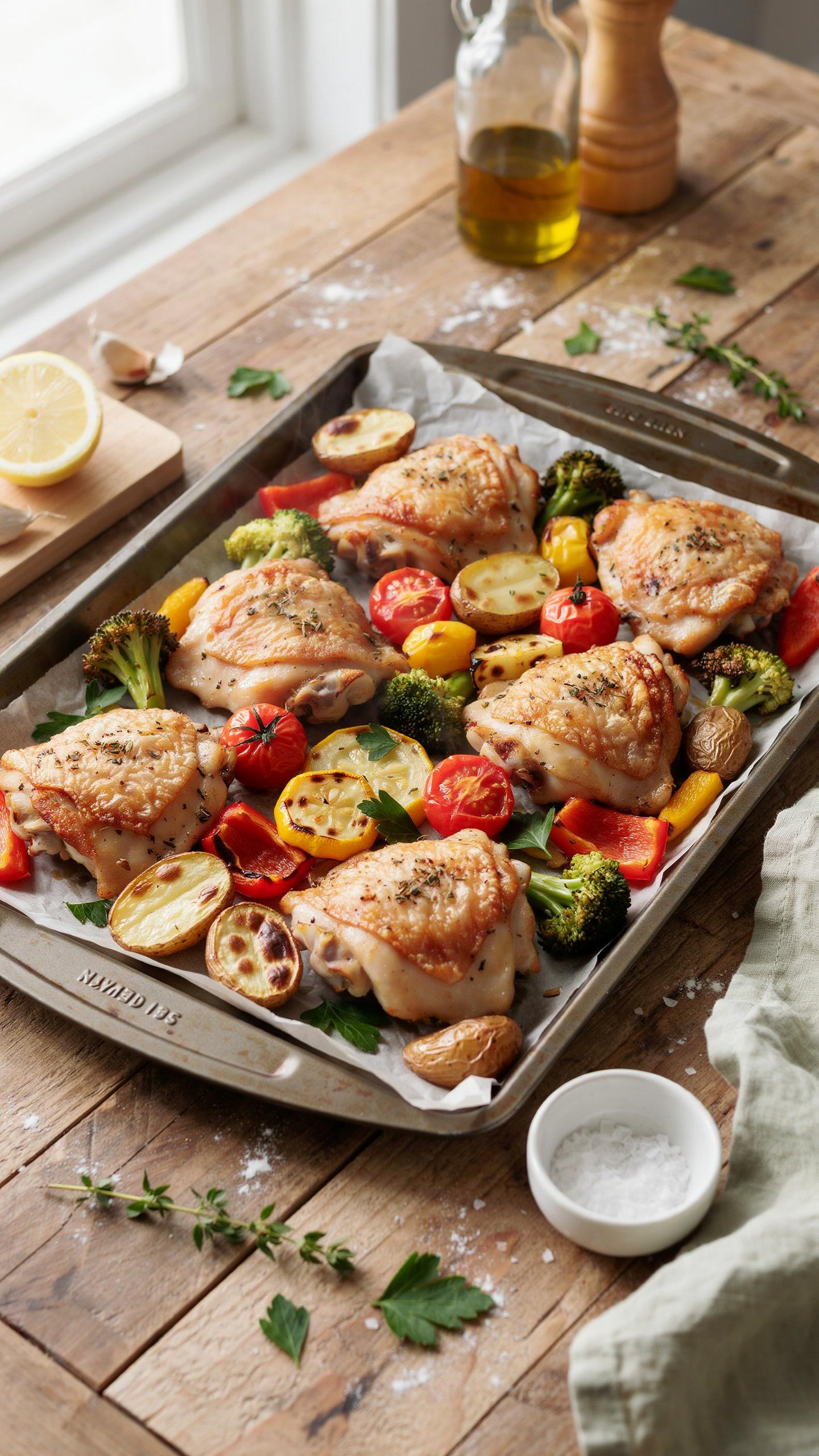
You’re afraid you’ll get bored eating the same thing. That’s not actually the problem. The real mechanism is friction: every meal you cook demands a decision about protein, vegetables, seasoning, and timing. Most people treat each dinner as a standalone problem instead of a system. You’re burning decision energy on repetition when you should be burning it on refinement. Sheet pan meals fail not because they taste bad, but because people don’t know how to evolve them.
The solution isn’t variety for its own sake. It’s building a decision framework that reduces choices without reducing quality. Pick one protein base (chicken thighs, ground turkey, salmon). Pick your vegetable slots (cruciferous, root, allium). Establish your seasoning template. Now every meal takes five minutes to assemble instead of twenty spent wandering your kitchen wondering what to make. The boring part becomes automatic, freeing you to actually improve the execution.
The Feedback Loop That Sticks
Iterate is borrowed from biology, but the principle applies directly here: organisms adapt based on environmental feedback. Your sheet pan dinners adapt based on what you actually ate, what stayed good through the week, and what your body responded to. Most meal prep advice ignores this. People build a plan in theory, execute it once, then abandon it when reality doesn’t match the fantasy. You need to log what worked and what didn’t, then adjust the next week’s batch based on that data.
The protocol is simple: after each meal, note one thing. Temperature performance. Texture degradation. Hunger patterns three hours after eating. Seasoning retention. Protein satiation levels. One variable per week. This transforms sheet pan dinners from a static recipe into a living system that improves with evidence. After eight weeks, you’ve optimized for your actual body and actual schedule, not a generic template that works for nobody.
The Strategic Batching Imperative Sheet Pan Dinner Recipes
Time Boxing Your Prep Into Blocks
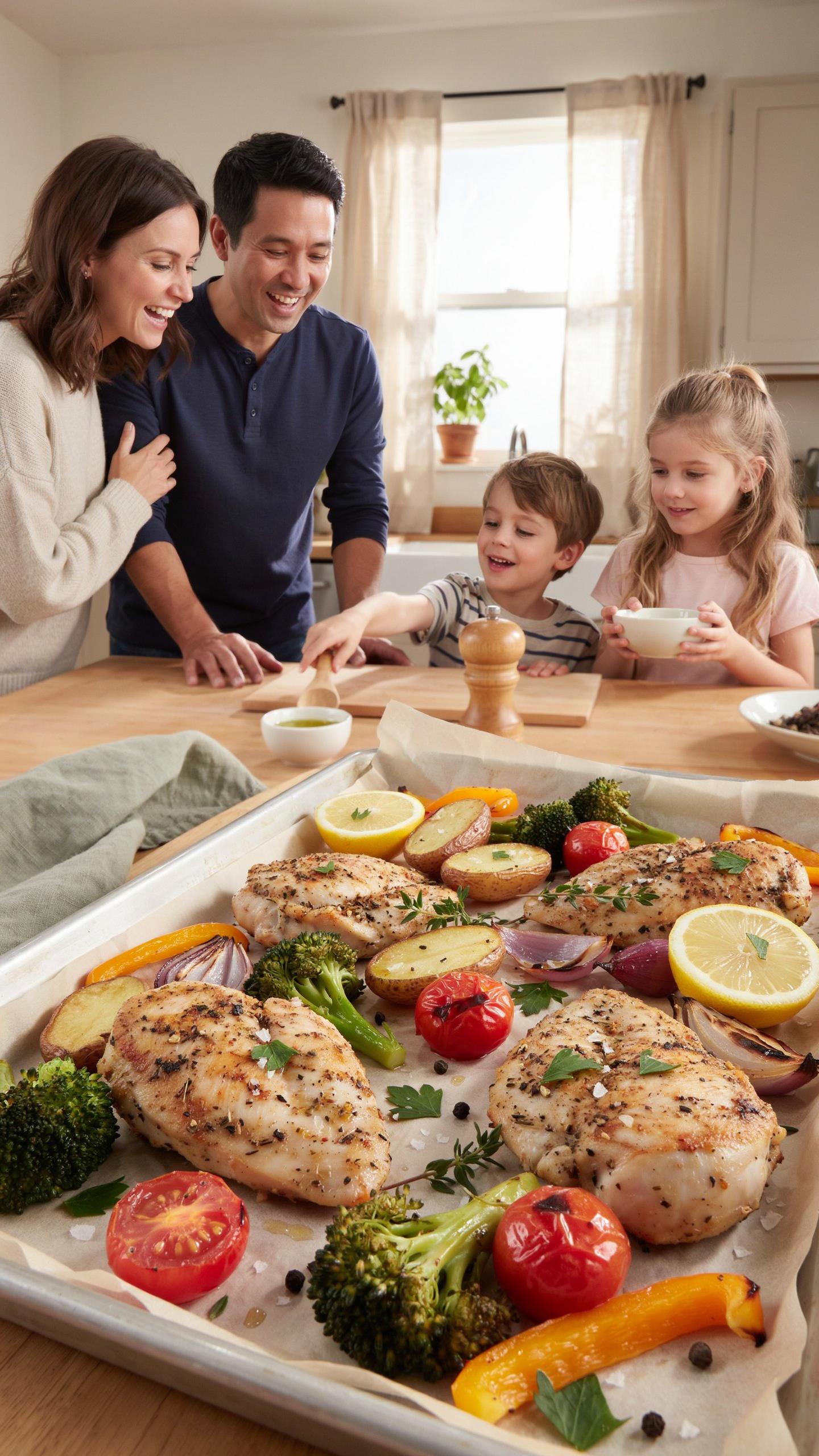
You want to believe meal prep is effortless, but that’s denial dressed as motivation. The real mechanism here borrows from project management: batching is a constraint that forces efficiency. When you set a hard time window for prep, you eliminate decision fatigue and prevent the creep that turns a two-hour session into four hours of inefficiency. You move faster when the clock matters.
Set a specific prep window: 90 minutes to prepare three sheet pan dinners. This timeframe forces you to arrange your station before you start, gather every ingredient on the counter, and move without hesitation. You execute the same cuts, same seasoning ratios, same oven temperatures across multiple pans. The repetition trains your hands. Speed compounds when you’re not switching mental modes between chicken and salmon to vegetables and seasonings. Prep becomes mechanical, which is precisely the point.
Storage Integrity Beats Container Marketing
The advice that matters: use glass over plastic for sheet pan leftovers. Plastic absorbs oil and protein residue, degrades faster, and traps moisture that ruins texture. Glass containers let you see what’s inside without opening, reducing repeated exposure to air that ages protein. Seal containers while food still holds residual heat, then refrigerate immediately to lock in moisture before condensation forms inside.
Stack containers vertically in your fridge, not horizontally. This maximizes space and makes grab-and-go effortless on busy mornings. Label each container with the protein type, prep date, and the five-day window before safety becomes questionable. When storage is frictionless, you actually eat what you prepared instead of defaulting to takeout because the food became invisible in the back of your fridge.
High Protein Dinner The Antidote To Nutritional Drift
The Default Option Trap
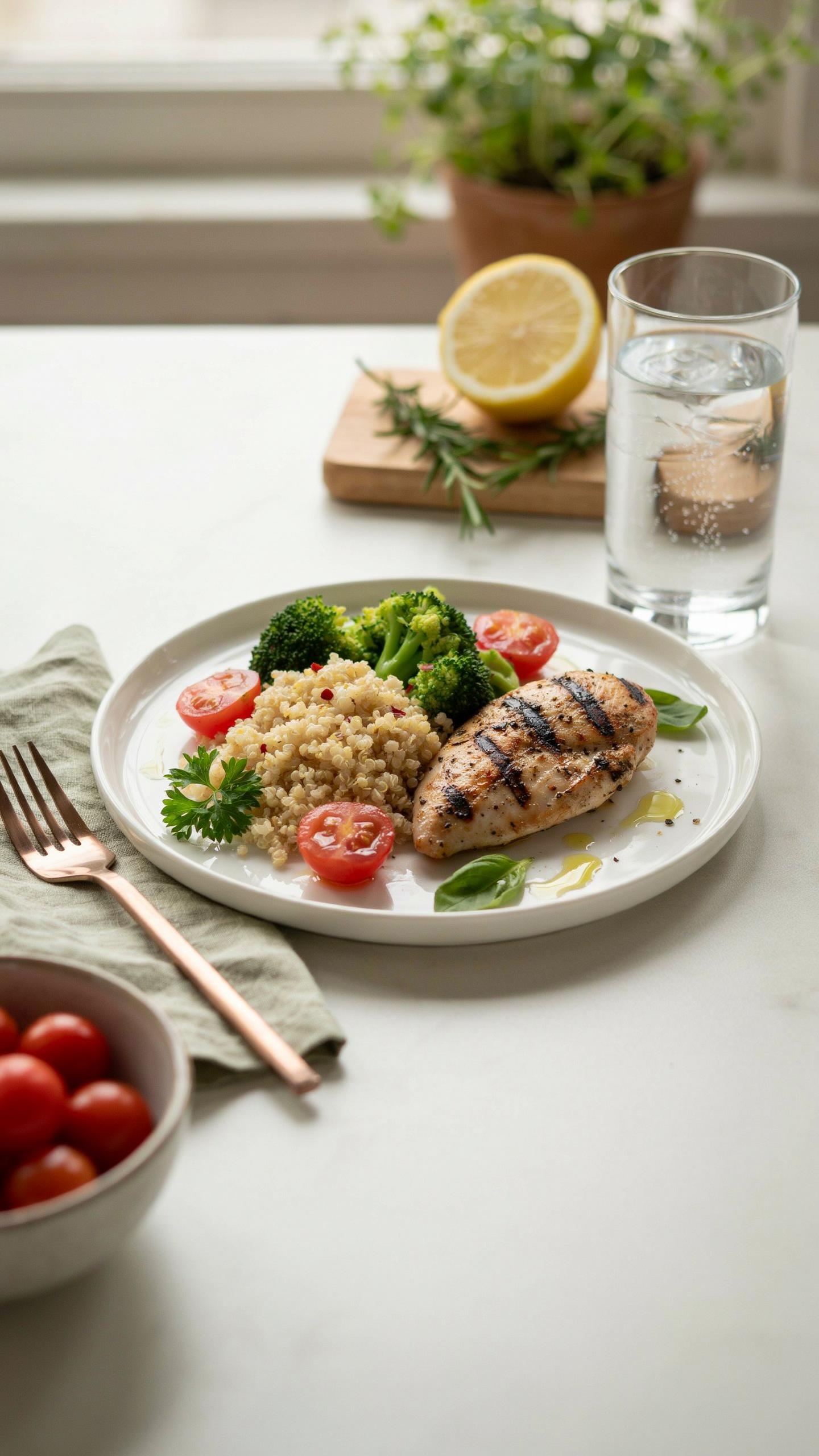
You want to believe a frozen dinner or takeout container counts as a meal plan because admitting it doesn’t means you’ve wasted money and time. The mechanism is simple: convenience foods are engineered to hit taste targets while minimizing protein density. A sheet pan dinner forces you to own the macros. When you assemble chicken, vegetables, and seasoning yourself, you control the protein-to-filler ratio. Restaurants and manufacturers profit by inverting this ratio. They load carbs and fat because they’re cheap. You load protein because it keeps you full and builds muscle. These are opposite incentives.
The trap closes because default options feel like they satisfy hunger. They don’t. They trigger insulin spikes that crash two hours later, leaving you reaching for more food. Sheet pan dinners use a different mechanism entirely. You’re not fighting biology by eating foods engineered against satiety. You’re aligning with it. A chicken thigh with roasted Brussels sprouts and olive oil holds protein density long enough to block hunger hormones for four to six hours. The convenience food industry depends on you not noticing the difference.
Fullness Is A Signal, Not A Feeling
Biology, not marketing, determines when you stop eating. Your gut releases peptide YY and glucagon-like peptide 1 when protein and fat hit your intestine. These hormones tell your brain to stop forking food into your mouth. Ignore this signal, and you’ll eat past satiety every time. The standard advice is to “listen to your body,” which is vague and useless. The real mechanism is protein density per calorie. A sheet pan dinner with four ounces of salmon, a cup of broccoli, and two tablespoons of olive oil delivers roughly forty grams of protein in five hundred fifty calories. Compare that to a pasta primavera at the same calorie count that lands fifteen grams of protein. Your satiety hormones respond to the macros, not the volume. One meal keeps you full for six hours. The other leaves you hungry in ninety minutes.
When you meal prep sheet pan dinners, you standardize this signal across the week. You’re not relying on willpower or hunger management hacks. You’re removing the variable. Every dinner sends the same clear message to your body: stop eating. The protocol is straightforward. Build every sheet pan around a protein target of thirty to forty grams per serving. Add vegetables for volume and micronutrients, not calories. Use fat as your calorie adjustment tool. When you hit this formula consistently, hunger becomes a non-factor, and adherence stops being a battle.
The Kitchen As Command Center For Sheet Pan Dinners
Arrange Your Space Like An Assembly Line
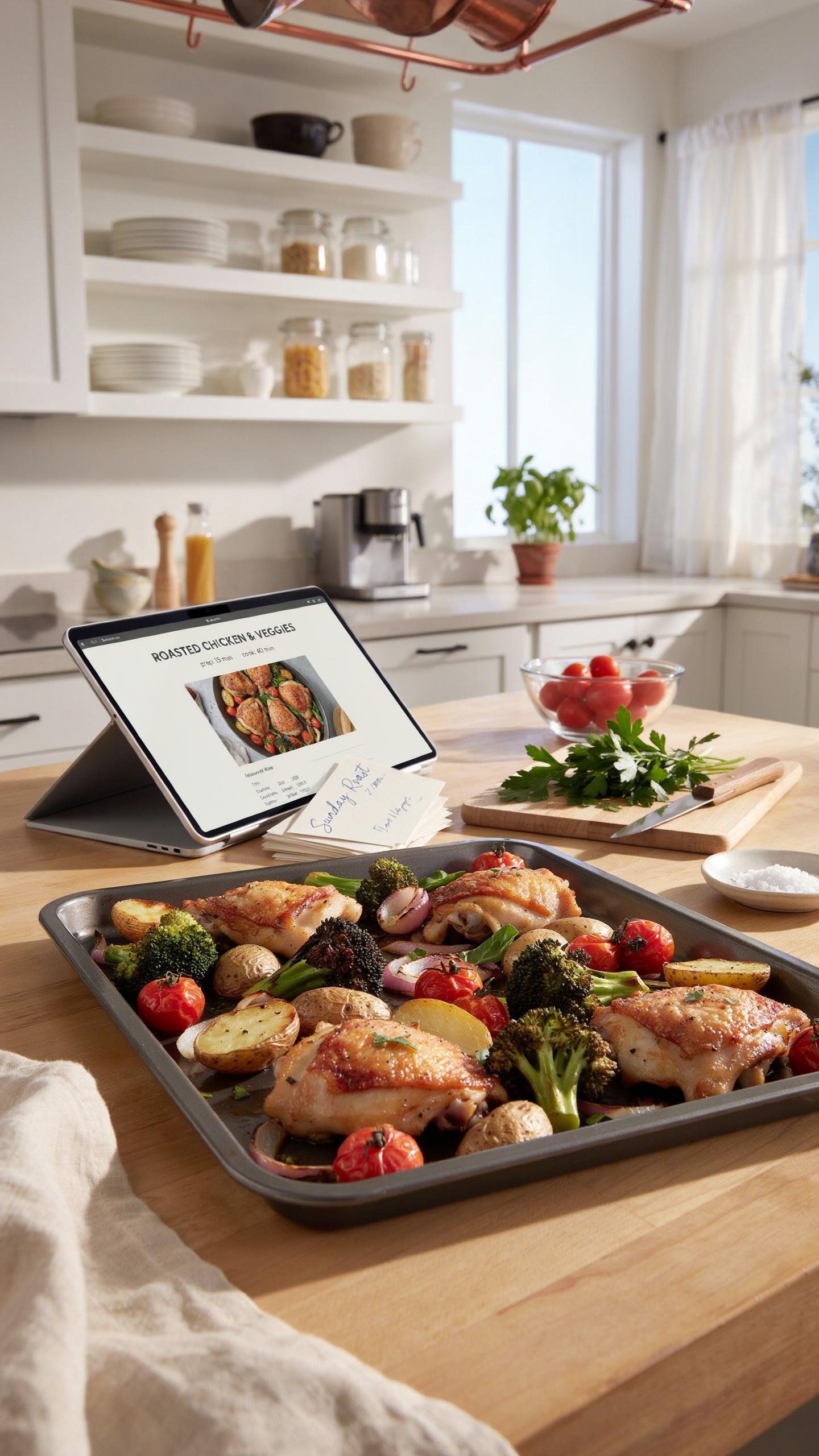
You want to feel organized and in control, so you think buying more containers and labels will fix it. It won’t. The real mechanism is ergonomic sequencing: you eliminate wasted movement by positioning prep tasks in the order you actually execute them. Your dominant hand travels the shortest distance. Ingredient zones sit between storage and your cutting surface. Raw protein never crosses paths with cooked food. This isn’t about aesthetics. It’s about reducing cognitive load so your body moves on autopilot.
Most kitchens waste space by treating prep like a maze. You need linear flow. Position your sheet pans near the oven. Keep your protein and vegetables within arm’s reach of your prep station. Your seasoning station comes next, then your storage area for cooled meals. One person moving through this sequence loses zero seconds to backtracking. The setup takes ten minutes. It saves you forty minutes across four meal prep sessions.
The Tools That Actually Compress Your Timeline
Forget aspirational gadgets. You need tools that eliminate the single biggest time sink in sheet pan prep: uneven cooking caused by poor size standardization. Buy a kitchen scale accurate to point-one pounds. Buy sheet pans with consistent depth and material composition, not mismatched vintage ones. Buy a commercial-grade cutting board with a raised edge and feet. Buy metal measuring spoons you can read without squinting. These aren’t nice-to-haves.
- Digital Kitchen Scale (0.1 oz precision): Standardizes protein portions instantly. Eliminates the guesswork that causes some chicken to overcook while other pieces remain undercooked in the same batch.
- Heavy-Gauge Aluminum Sheet Pans (half-size): Conduct heat uniformly. Prevent warping that creates hot spots. Two pans per person in your household covers rotation seamlessly.
- Silicone Baking Mats or Parchment: Speeds cleanup to seconds. Eliminates stuck protein that wastes time scrubbing and forces you to throw away salvageable meals.
- Sealed Glass Storage Containers (rectangular): Stack efficiently in fridges. Lock in moisture and prevent cross-contamination between proteins and vegetables during the week.
- Instant-Read Meat Thermometer (1-second readout): Removes guesswork about doneness. Prevents overcooking that wastes expensive protein and kills meal prep consistency week to week.
You stack these tools strategically. Your scale sits next to your prep zone. Your sheet pans stand vertically in a single rack to grab one without disturbing others. Your containers stage near your cooling area so you transfer hot meals immediately after cooking. One protocol: weigh, cut, season, load pan, roast, cool, store. Break this sequence and you lose efficiency gains. Follow it exactly and you prep four dinners in ninety minutes, not three hours.
The real obstacle isnt time its your undeveloped capacity for strategic selfprovisioning

You don’t have a cooking problem. You have a decision problem. Most people sabotage themselves by treating meal prep as a chore instead of leverage. Sheet pan dinners work because they collapse three decisions into one: what to cook, how to cook it, and when to eat it. Pick one protein, one vegetable, one seasoning tonight. Roast it Sunday. You just removed the friction that keeps you eating garbage for the next week. Build your system before motivation abandons you.