
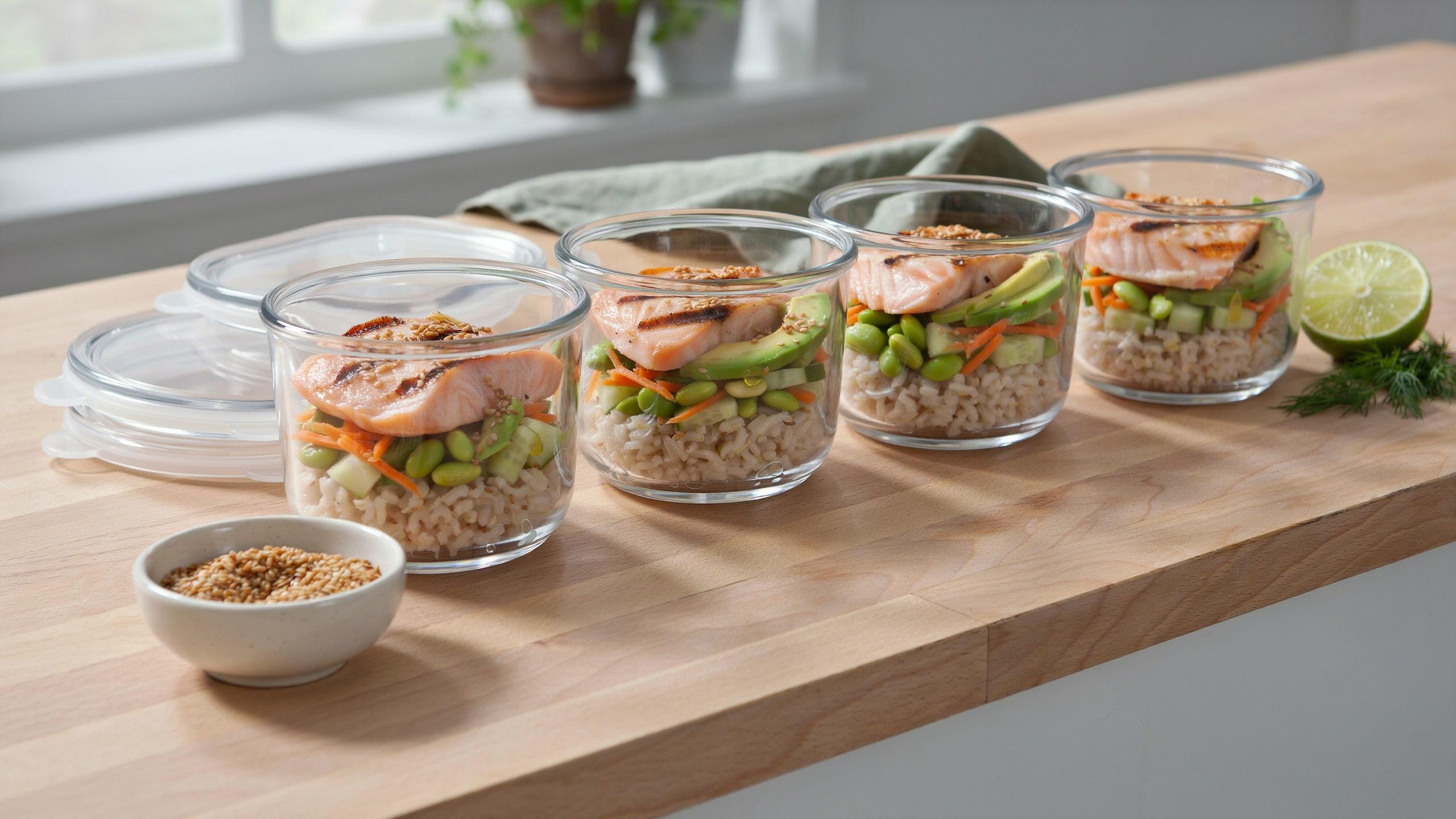
The Cognitive Load Fallacy Of Meal Prep

Why Conventional Meal Prep Fails Your Brain
You want meal prep to feel like control, but it actually manufactures the opposite. The real problem: traditional meal prep advice treats decision-making as something you solve once on Sunday, then forget. That’s not how your brain works. Each salmon rice bowl you grab from the fridge still requires you to decide if it’s the right choice for that day’s energy level, schedule, or appetite. You haven’t eliminated decisions. You’ve just hidden them.

The mechanism is cognitive load from economics. Every choice consumes mental resources, even small ones. Most meal prep systems fail because they create uniform containers that demand constant micro-decisions about portions, sides, or whether today’s bowl still fits your needs. A proper salmon rice bowl system doesn’t try to pre-decide everything. It pre-structures the variables instead, leaving only the meaningful choice: eat it or don’t. The rest gets locked in.
Minimizing Decision Points, Maximizing Autonomy
Stop thinking of meal prep as “making meals ahead.” Reframe it as removing friction from the one decision that matters: whether you eat protein and carbs today. Every other variable gets standardized. Salmon weight stays the same. Rice portions stay the same. Vegetables get prepped the same way every time. This isn’t boring. It’s liberation. You stop negotiating with yourself about the details.

Autonomy doesn’t come from infinite choices. It comes from removing the noise so you can focus on what actually varies: your hunger, your schedule, your energy needs. When you prep salmon rice bowls the same way every week, you train your brain to stop evaluating the meal itself and start evaluating only whether you need to eat. That’s the protocol: identical prep method, identical portions, identical timing. The autonomy lives in whether you grab the bowl, not in how the bowl gets made.
The Salmon Bowl Anti Optimization Protocol
One Protein, Infinite Permutations
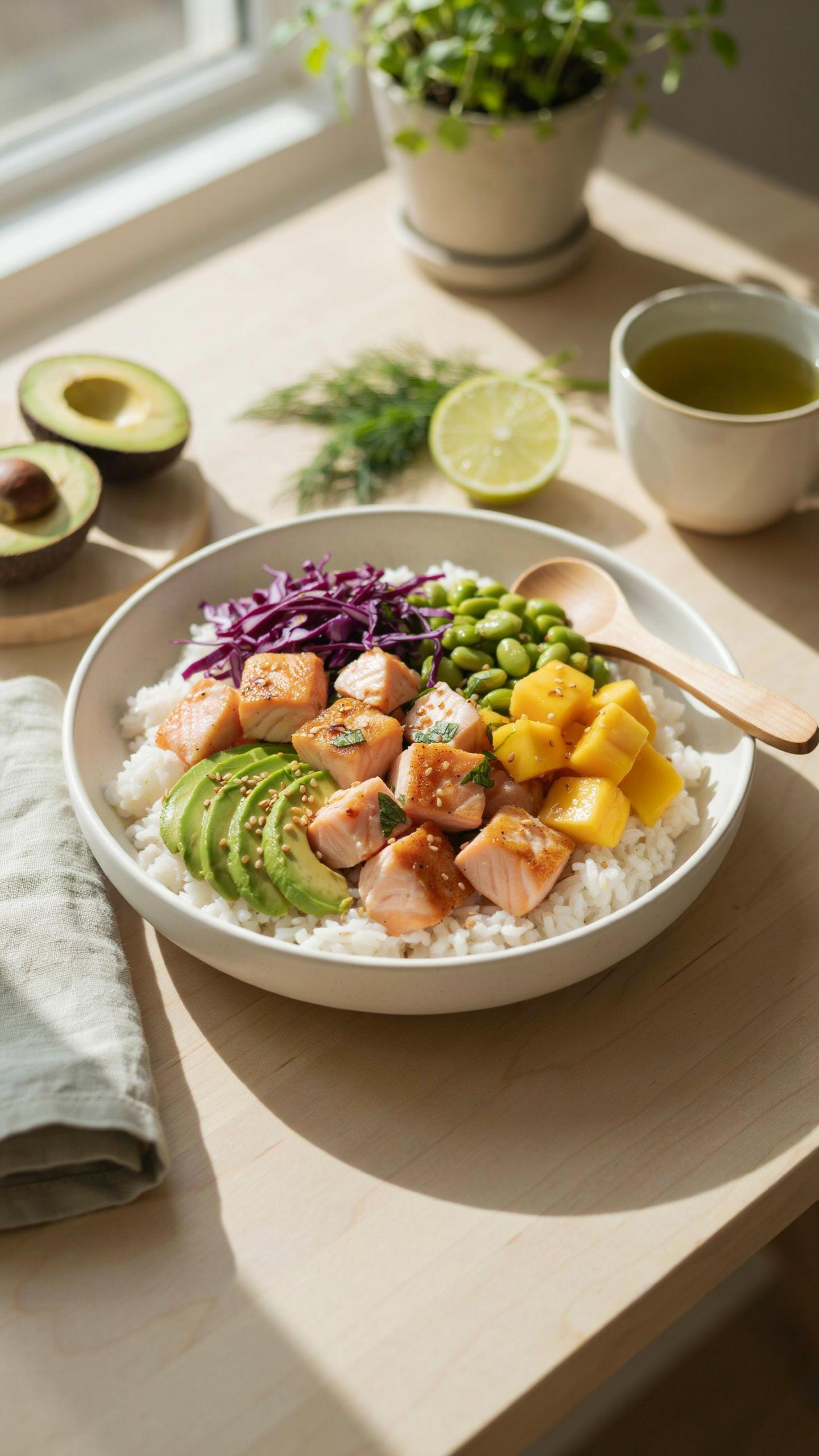
You want meal prep to feel effortless because you’re afraid repetition signals failure. The real mechanism is constraint-based flavor design: lock one protein, rotate everything else. Salmon doesn’t need variety to stay interesting. It needs accompaniment variety.
Cook one batch of salmon for the week. Portion it into five containers. Then build five different bowls around it. Tuesday’s bowl gets ginger scallion rice with cucumber and sesame. Friday’s bowl gets cilantro lime rice with avocado and jalapeño. Same protein. Completely different eating experience. This eliminates the decision fatigue that kills meal prep compliance.
Streamline Components, Not Shortcuts
The common advice is wrong: don’t meal prep everything the same day. You’ll burn out or cut corners on cooking temperature. Instead, batch prep individual components on a rolling schedule. Cook rice Sunday. Roast salmon Monday evening. Prep vegetables Tuesday morning. This approach keeps quality consistent and prevents the Sunday meal prep spiral where you’re exhausted by step three.
Build a three-day rotation for vegetables. Cucumber and avocado store five days raw. Roasted broccoli and carrots store four days. Fresh herbs last three days. Sauces last five days in glass containers. Stack components by shelf life, not by meal. When you grab containers Friday, you’re combining fresh vegetables with properly stored proteins, not nursing sad, oxidized greens.
Deconstructing The Healthy Salmon Lunch Bowl
Nutrient Density Over Calorie Math
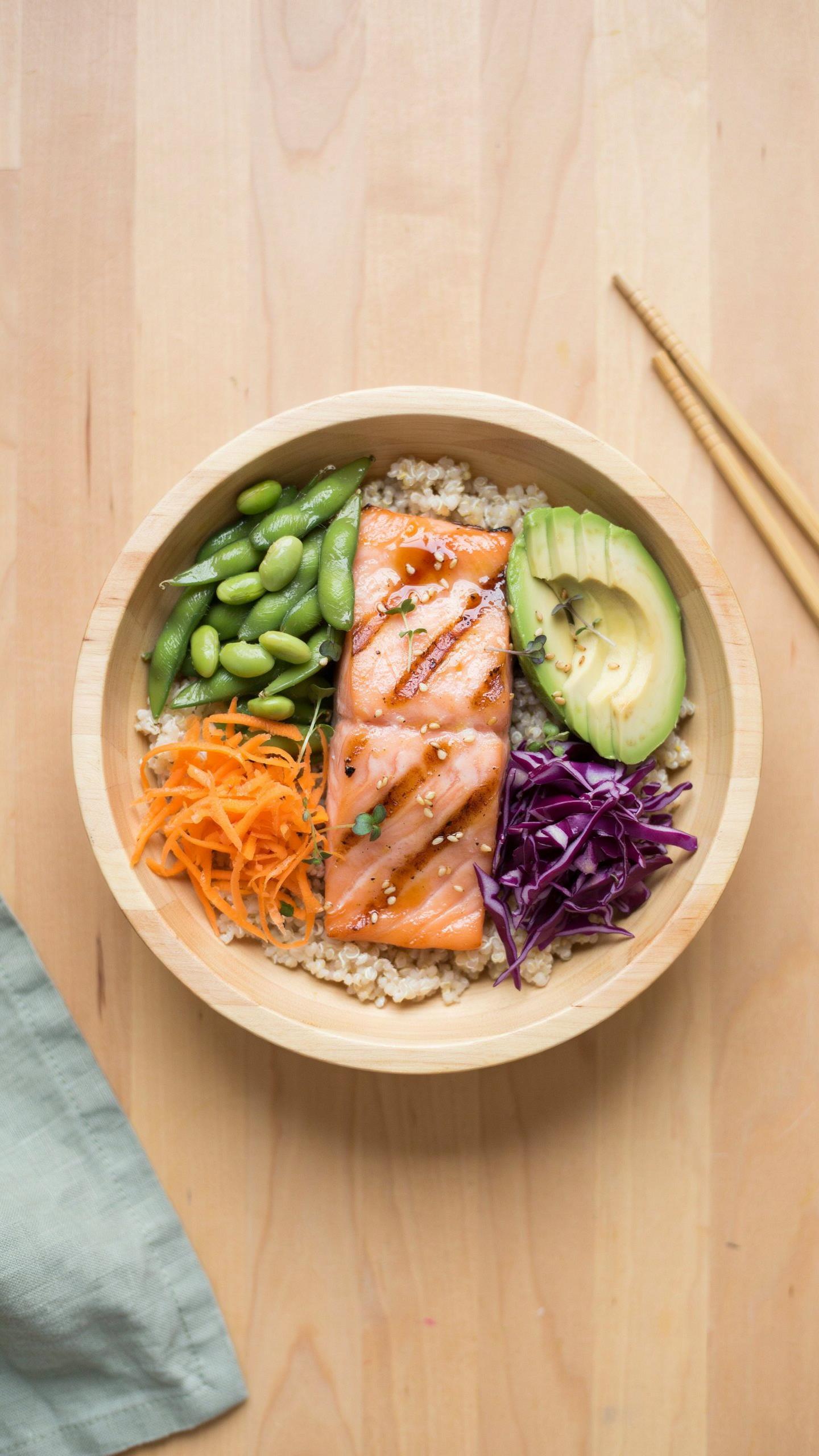
You care about this because you want proof that you’re doing something right. The real mechanism is simple: your body runs on micronutrient availability, not calorie totals. A 500-calorie salmon bowl with complete amino acids, omega-3 fatty acids, and B vitamins sustains you differently than 500 calories of refined carbs. Calorie counting misses the point entirely. It measures energy quantity, not metabolic efficiency.
Salmon rice bowls work because they stack micronutrient density without bloating calorie counts. Salmon delivers all nine essential amino acids plus selenium, vitamin D, and EPA/DHA in a single protein source. White or brown rice provides glycogen replenishment and resistant starch depending on your preparation method. The vegetables and fats magnify nutrient absorption rates your body actually uses. This combination creates sustained satiety and stable energy without the crash-and-refuel cycle.
Strategic Carbohydrate And Fat Timing
Pairing carbohydrates with fat slows glucose absorption, which sounds technical but means your blood sugar stays stable for hours instead of spiking then crashing. Economics calls this the law of diminishing returns, but applied to your energy levels: adding more calories without macronutrient balance gives you less return on your investment. Most meal prep advice ignores this completely.
Your salmon rice bowl should contain roughly 40-50 grams of carbs from rice, 25-35 grams of protein from salmon, and 10-15 grams of fat from both the salmon and added oils or nuts. This ratio prevents the mid-afternoon collapse that kills productivity. The mechanism works because fat delays gastric emptying, slowing how fast your digestive system processes the meal. You prepare your bowls once on Sunday, portion them correctly, and you’ve eliminated the decision tax that derails most people by Wednesday.
Engineered Taste The Salmon Bowl Flavor Matrix
Sauce Architecture And Topping Ratios
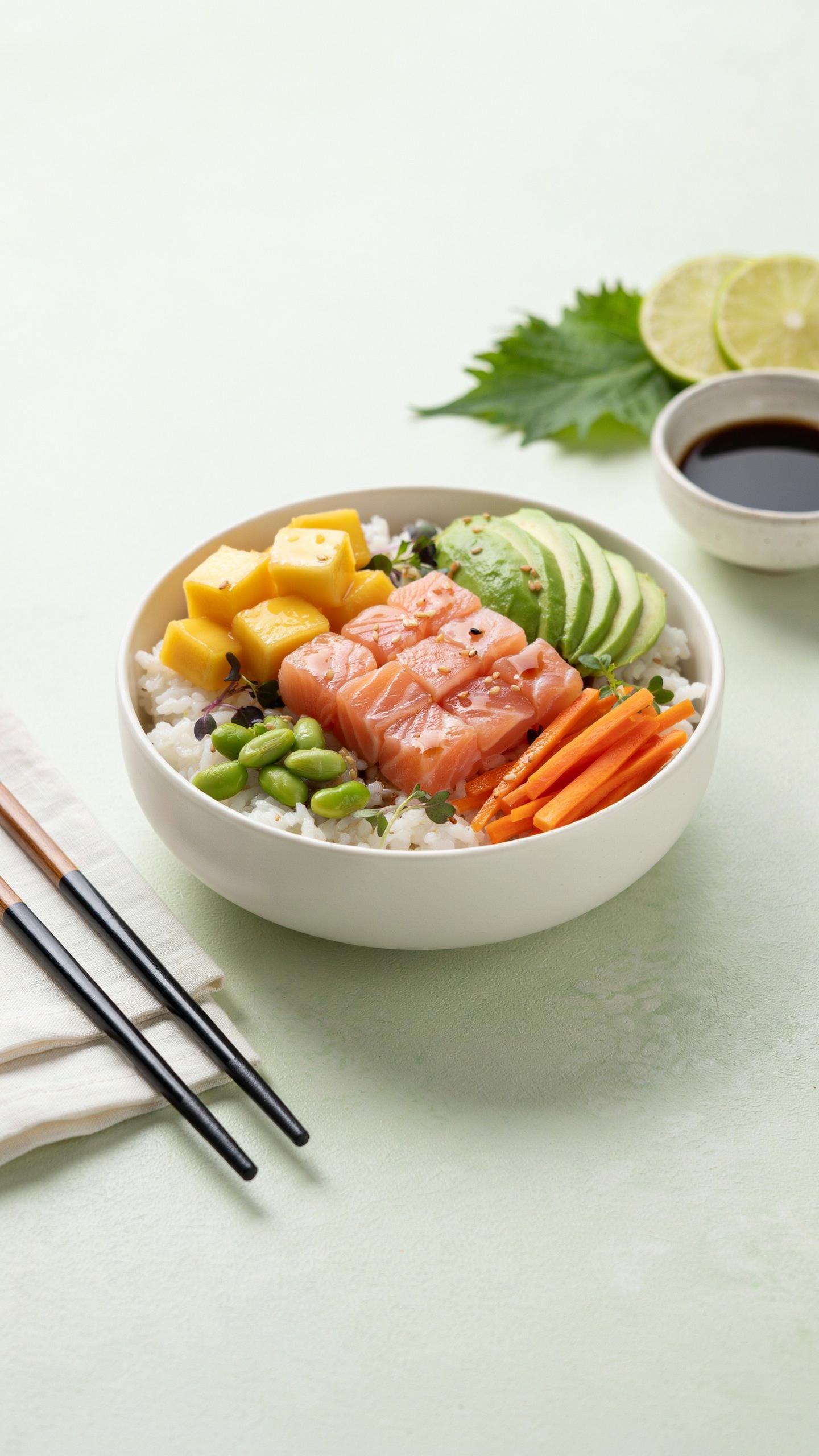
You want people to think you put effort into this. That’s the real reason you care about flavor layering. But the mechanism is simpler than you think: mixology teaches us that balance comes from understanding ratios, not ingredients. In a cocktail, one part spirit to three parts mixer works because the proportions create stability. Your salmon bowl works the same way. The sauce isn’t decoration. It’s the delivery system for every other flavor to register.
Most people dump sauce and hope. They don’t calibrate. The actual move is treating your sauce base as the volume control for what comes next.
- Soy-Mirin Base (2:1 ratio): Two parts soy sauce to one part mirin creates umami depth without sweetness dominating. This ratio stays stable across batch sizes and prevents over-salting the grains.
- Acid-to-Fat Proportion (1:3): One part acid (rice vinegar or lime juice) to three parts oil (sesame or neutral) prevents the bowl from tasting thin or harsh while keeping moisture balanced.
- Ginger-Garlic Saturation (1 teaspoon per 4 servings): One teaspoon minced fresh ginger and garlic combined per four bowls distributes evenly without overpowering rice or salmon texture.
- Topping Weight Distribution: Heavier items like avocado and cucumber (40% of toppings by volume) anchor lighter elements like microgreens, preventing flavor fragmentation across bites.
- Sesame Seed Finish (½ teaspoon per bowl): Toasted sesame provides structural crunch and fat-soluble flavor compounds that bind other tastes together rather than compete for attention.
Prep your sauce in a single batch, then portion it into small containers. This prevents over-application during the week and keeps flavor consistent across all five meals. The ratio stays your variable, not the volume.
Umami Layering: Building Flavor Depth
Umami isn’t mystical. It’s glutamate and nucleotides triggering specific taste receptors. You stack sources of these compounds in a salmon bowl, and each layer prevents the bowl from reading as one-note. Salmon provides inosinate (one umami pathway). Soy sauce adds glutamate (different pathway). When both hit your palate, they compound rather than cancel.
The lazy version spreads everything flat on rice. The actual version builds vertically. Place rice first. Lay salmon skin-side up on top so residual heat from warm grain extracts oils into the base layer. Then vegetables, then sauce. This order means each component absorbs flavor from below while contributing its own. Finish with nori strips and sesame seeds last, which prevents them from softening into the sauce and losing their textural integrity that signals quality to your brain.
The Ergonomics Of Salmon And Rice Preparation
Cook Salmon In Batches, Not One At A Time
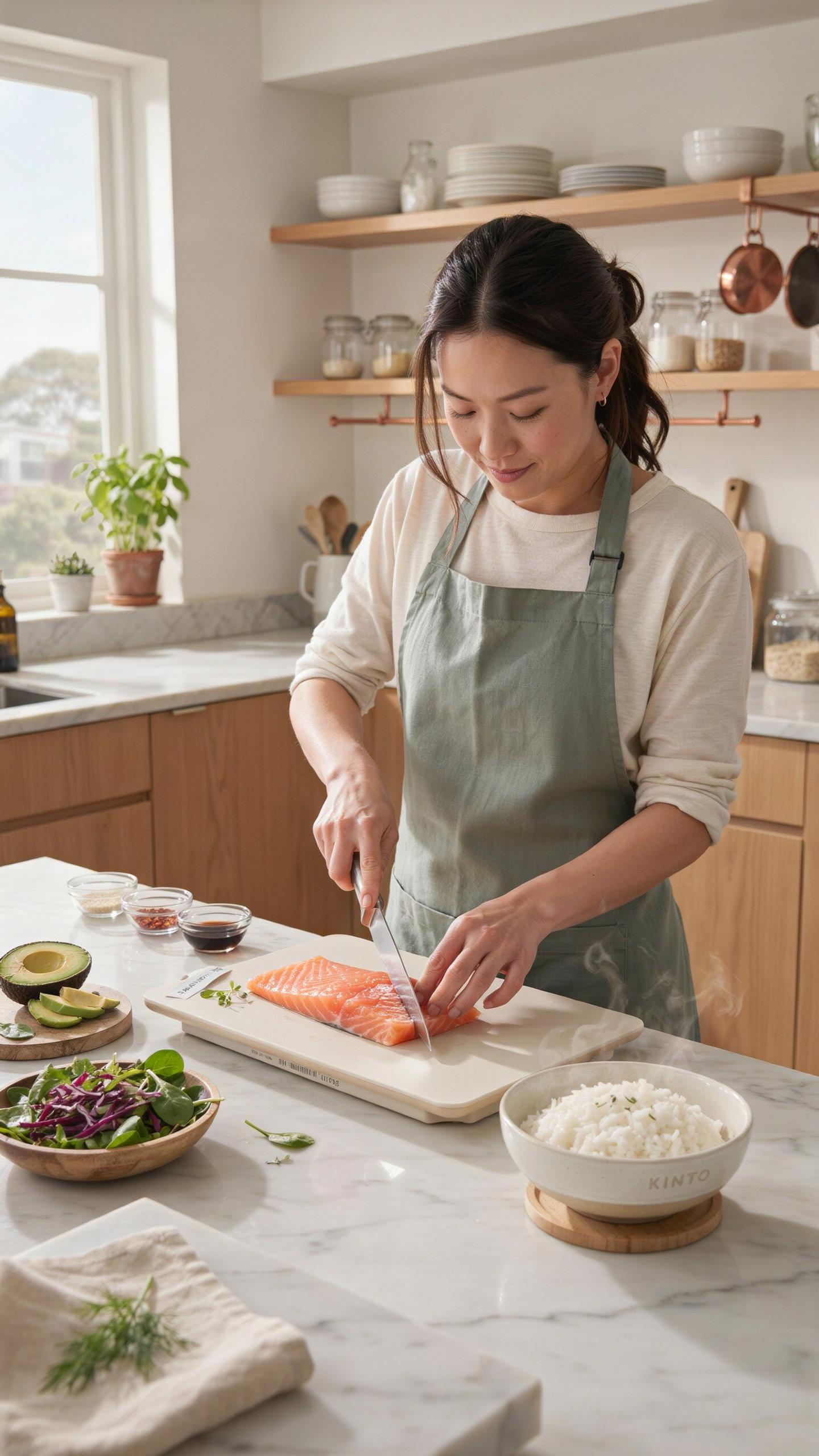
You want to feel productive without actually being productive. That’s why most people cook salmon fillets individually. Here’s the mechanism: batch cooking uses thermal momentum. Your oven reaches temperature once. You load multiple fillets on sheet pans and cook them simultaneously at 400°F for 12-14 minutes. This is production engineering applied to your kitchen. You go from four separate cooking cycles to one.
The standard advice to “just bake it” misses the load capacity issue. Most home ovens fit two full sheet pans side by side. Buy skin-on salmon fillets around 5-6 ounces each. Line each pan with parchment. Season with salt and pepper only. Bake both pans at the same temperature in the same time window. You cook 8-10 fillets in one operation instead of fumbling through four separate batches.
Rice Cooker As A Passive System
Most people treat a rice cooker like an active appliance they need to monitor. It’s not. A rice cooker is a thermostat that stops heating when water reaches a specific temperature. Use a 2:1 water-to-rice ratio by volume. Add jasmine or sushi rice. Hit start. Walk away. The machine maintains temperature automatically once water boils off. This passive system removes decision-making from the process entirely.
The timing works in your favor with salmon. Salmon takes 12-14 minutes at 400°F. Rice cookers typically run 15-18 minutes on standard settings. Start the rice cooker first, then put the salmon in the oven. By the time both finish, you transfer hot salmon to a sheet pan to cool slightly while rice sits in the cooker’s warm mode. Stack your rice cooker prep in the same time window as your oven work.
Beyond The Bowl Extending Healthy Dinner Ideas With Salmon
When Leftovers Become Strategy
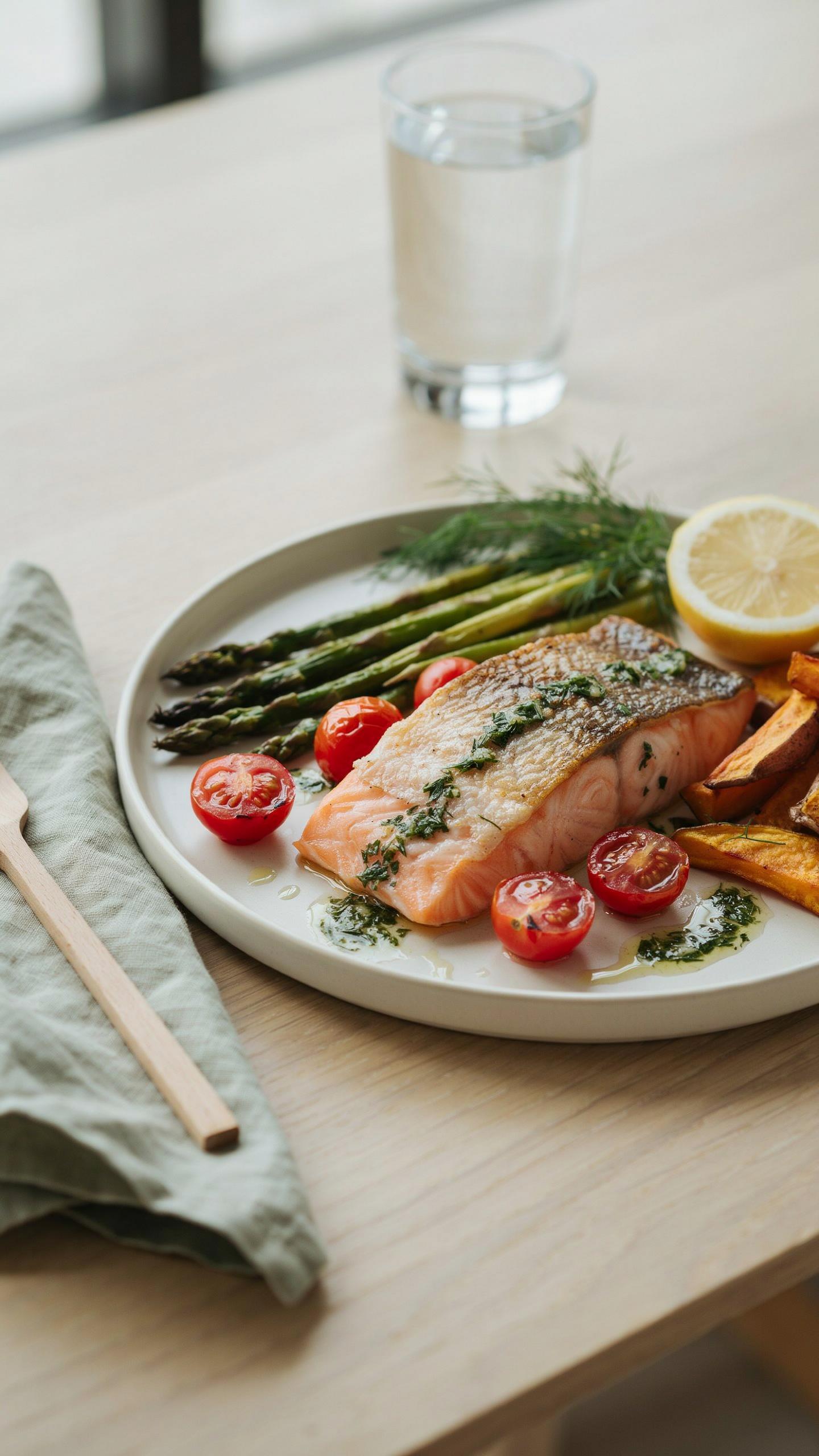
You want to feel smart about not wasting food, but the real mechanism is this: most people treat leftovers as failure instead of raw material. Salmon rice bowls are built for deconstruction. The proteins, starches, and vegetables don’t need to stay together. Cold salmon flakes into salads. Rice becomes fried rice the next night with a different protein ratio. Vegetables get thrown into soups, grain bowls, or eaten straight from the container with hummus. You’re not repurposing scraps. You’re extracting maximum utility from a single prep session.
The constraint forces better design. When you know your bowl components must work independently, you cook each one differently than if they’ll stay married on the plate. Salmon gets slightly less seasoning because it’ll carry other flavors later. Rice stays slightly firm to survive reheating without turning to mush. Vegetables get roasted with minimal oil so they don’t get greasy when cold. Leftover awareness actually makes your initial meal prep better. It’s a forcing function that improves every iteration before you even think about day two.
Building Blocks Across Cuisines
Economics calls this elasticity of demand: the ability of a single input to satisfy multiple end-states without significant modification. Your salmon rice bowl components are elastic. The same white rice works as a sushi base, a stir-fry foundation, or a grain for a burrito bowl. Roasted broccoli fits into a Thai curry, a Mediterranean grain salad, or a breakfast hash. Salmon adapts to Japanese, Mexican, Mediterranean, and American frameworks without tasting forced.
The cost comes from standardizing on components that have genuine cross-cultural flexibility. Generic “seasoned” rice locks you into one flavor profile. Plain steamed rice with quality salt works anywhere. Roasted vegetables with zero sauce beat pre-sauced options. Unseasoned salmon is blank canvas. You’re not building four separate meals with salmon rice bowls. You’re building a modular system where Sunday’s prep becomes Tuesday’s sushi bowl, Thursday’s burrito, and Saturday’s soup base. Store components separately. Always.
The Iterative Design Of Your Salmon Bowls System
Daily Tweaks For Peak Enjoyment
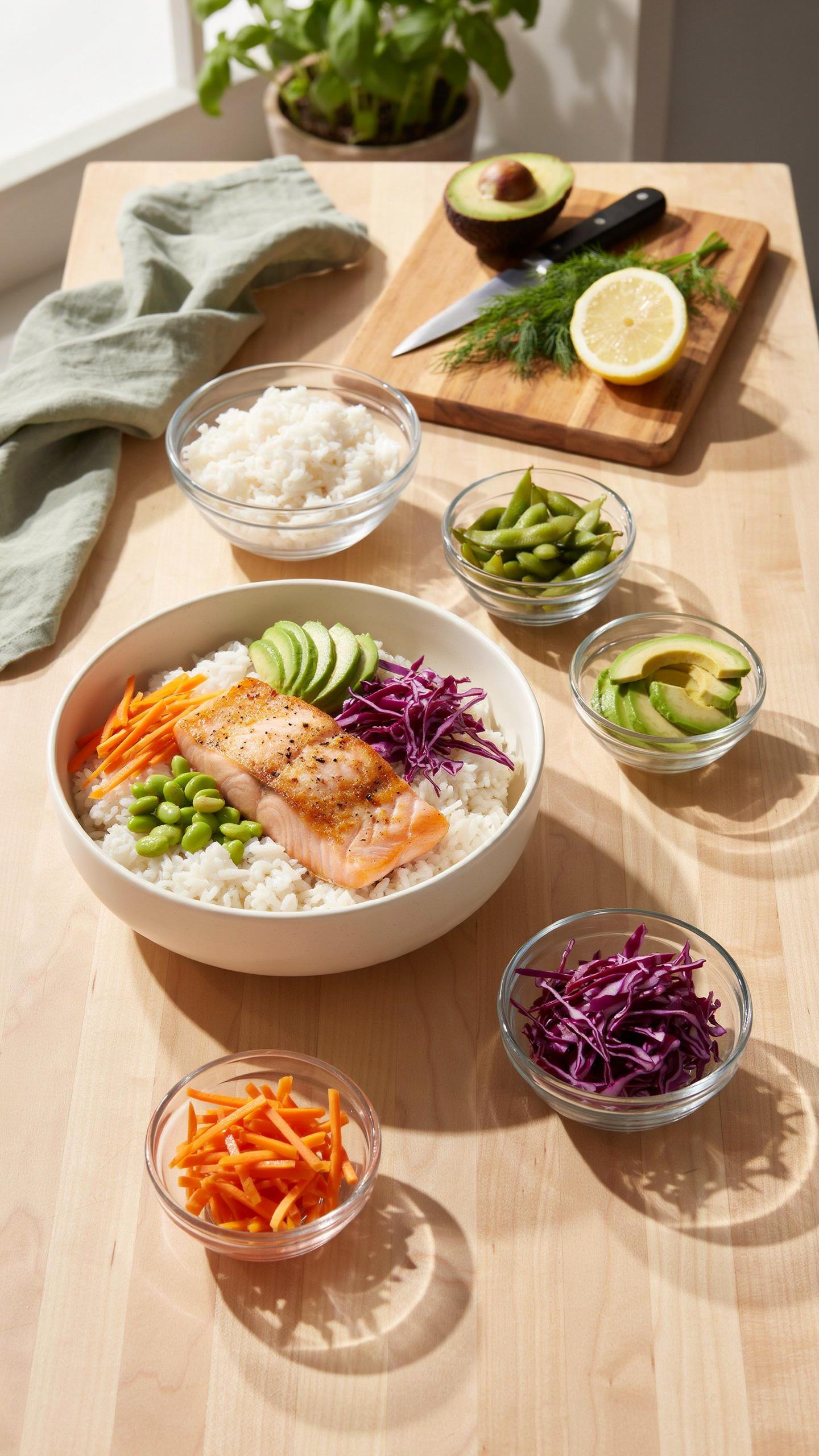
You want to feel like you’ve got this dialed in without admitting you’re just chasing the feeling of control. The real mechanism here is feedback loops from systems design: you’re creating a closed loop where each meal tells you what to adjust next. Most people prep once and eat the same thing all week. That’s not optimization. That’s surrender.
Track three variables across your week: how you feel two hours after eating, how hungry you get before your next meal, and whether you actually finish the bowl or leave rice behind. These signals cascade into the next week’s prep. If you’re starving by hour three, your protein or fat ratio is wrong. If you’re leaving rice, portion sizes need cutting. If your energy dips, your salmon oil oxidized during storage or your rice is stale. Each bowl becomes data.
The protocol is simple: eat bowl one on Monday, adjust bowl two by Tuesday based on Monday’s feedback. Change one variable per iteration. Salmon amount, rice type, vegetable choice, sauce ratio. Not everything at once. By Friday, you’ve run four experiments instead of eating the same mistake five times. By week three, you’ve found your actual requirements instead of guessing what “balanced” feels like.
Minimum Viable Variety Without Overthinking
The consensus trap is that meal prep requires rotation to avoid boredom. False. Boredom isn’t the problem. Monotony with the wrong meal is. Build variety at the constraint level, not the component level.
You need exactly three anchor proteins across eight weeks: wild Alaskan salmon, Atlantic farmed salmon, and canned salmon. The difference matters because fat content and storage life vary. Wild has higher omega-3 density and lasts four days refrigerated. Farmed lasts five and has higher total fat. Canned lasts weeks and costs less but loses texture. Rotate these in two-week blocks. Your palate doesn’t notice repetition when the nutritional profile shifts underneath.
For grains and vegetables, pick one rice type per month and two vegetable combinations per week. White rice stores longer and pairs well with acid-forward sauces. Brown rice requires more chewing and reads as “whole grain” to your brain even if the caloric difference is minimal. Rotate between broccoli with ginger sauce one week and cucumber with sesame the next. The simplicity prevents decision fatigue. Your only real choice is whether you eat it or skip it, and the constraint removes that option by accident.
The iteration stops when you can execute prep in under ninety minutes and consume every bowl without thinking about whether you want to eat it. That’s when the system works.
Mastering The Art Of Sustainable Salmon Meal Prep
Remove The Friction Points First
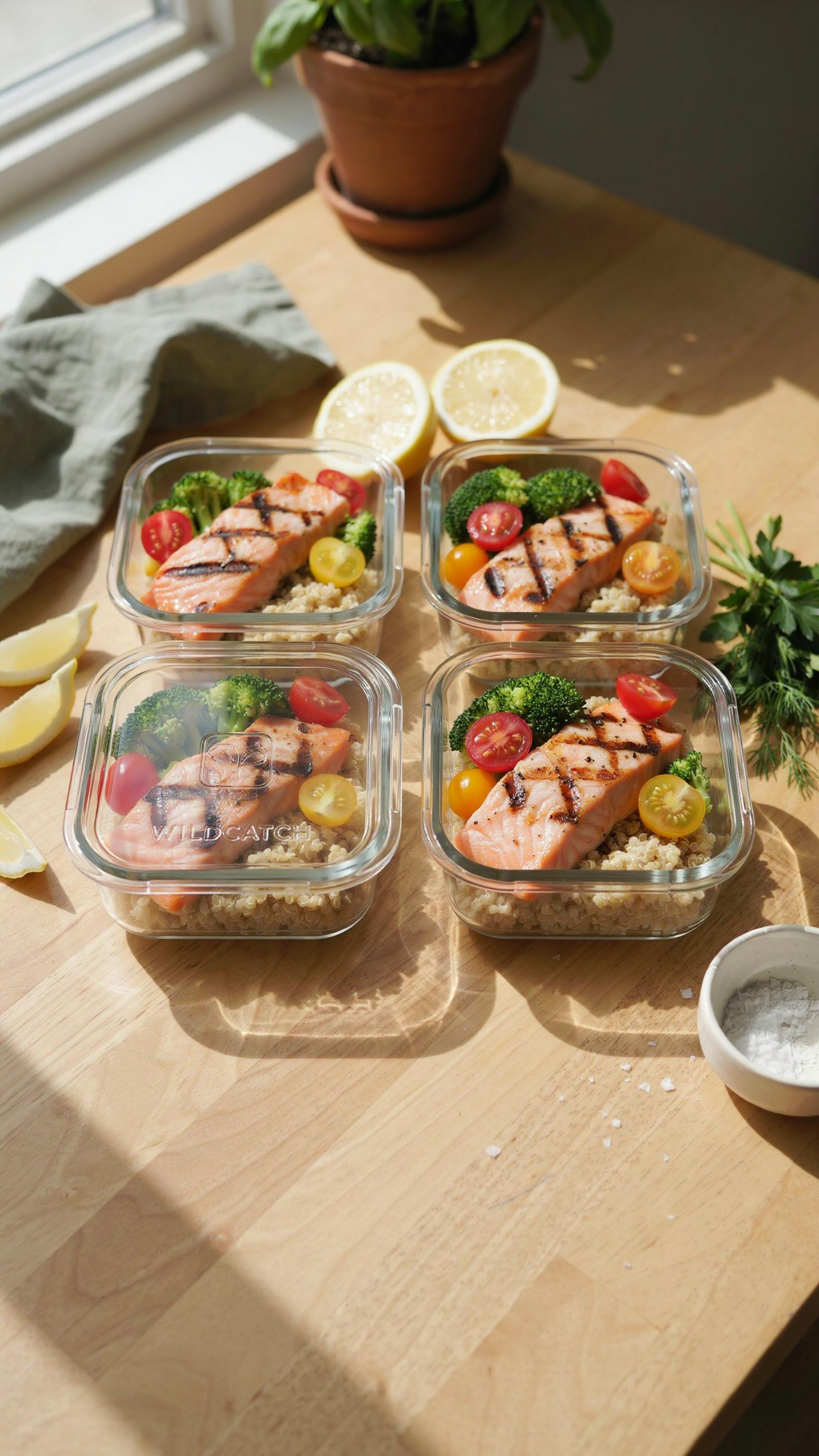
You want this to work because consistency feels like control, and right now your kitchen is designed to make consistency fail. Behavioral economics calls this friction: the accumulated small resistances that kill behavior before willpower enters the room. Your salmon prep fails not from lack of discipline but from decision fatigue stacked into your workflow. Every extra step between intention and execution is a friction point that compounds.
Map your actual prep process and isolate where you stop. Is it because you can’t find your sheet pans? Because your salmon thaws in the fridge and you forget about it? Because your rice cooker sits buried under other gear? Remove each blocker before week one starts. Thaw salmon the night before in a designated spot on your middle shelf. Keep prep containers stacked and visible. Store rice in a labeled container at eye level. These aren’t motivational tricks. They’re structural changes that make the path of least resistance align with your goal.
Build Systems That Don’t Require You
Consistency is a system problem, not a character problem. The advice to “just stay committed” is garbage because commitment erodes under repetition. You need protocols that run without your input. Sunday becomes automatic only when every step is externalized into process, not memory.
Dedicate one specific time and location for prep. Gather all ingredients and tools before you start. Cook rice in the same vessel every week. Season salmon with the same ratio every time. Pack bowls in the same order. This removes the micro-decisions that drain energy and introduces variation. Write your exact portion sizes on a sticky note and attach it to your prep station. When prep becomes procedural rather than thoughtful, you hit week twelve without friction. The mechanism is simple: reduce cognitive load, increase compliance.
Your real obstacle isnt time management its the invisible energy drain of constant lowstakes decisions

Every morning you decide what to eat. Then lunch. Then dinner. Each decision bleeds mental bandwidth you could spend on work that matters. Salmon rice bowl meal prep kills this. You make one decision Sunday, execute it once, then stop thinking about food for seven days. Your brain stays sharp for what actually builds your life. The difference between people who win and people who don’t isn’t discipline. It’s removing the friction that makes discipline necessary.