
The Illusion Of Efficiency Why Most Salmon Meal Prep Is A Net Loss
The Convenience Trap
You want to believe meal prep saves time. That’s the real pitch you’re buying into, and it usually doesn’t work. The mechanism is simple: you front-load labor to save micro-decisions later, but salmon spoils faster than chicken, so your actual prep window compresses. You gain nothing if you’re throwing out half the batch by Wednesday.
Most advice says cook once, eat all week. This ignores the biology of salmon. Oil oxidizes. Moisture accumulates. Texture degrades daily. You’re not saving time, you’re just deferring the moment when you realize your meal tastes like cardboard and you order takeout instead. The real move is shorter batch prep cycles.
Culinary Boredom Kills Adherence
Eating the same salmon recipe five times destroys compliance faster than any willpower deficit. Economics calls this diminishing marginal utility, and it applies directly here: the seventh salmon fillet tastes worse than the first, not because it’s cooked worse, but because your brain has already extracted the reward signal. You stop showing up.

The dropout rate from monotonous meal prep is higher than most people admit. You prep on Sunday, eat with energy Monday and Tuesday, then Wednesday hits and you rationalize skipping a meal or pivoting to something else. The prep fails not because salmon is bad, but because repetition breaks motivation. Build variation into your prep protocol itself, not just your shopping list.
The Dan Koe Principle Engineered Consistency Over Forced Compliance

Flavor First Strategy
You want meal prep to work because you’re afraid consistency will break without it. The real mechanism here is taste. Most meal prep fails because people treat food as fuel, not experience. In economics, there’s a concept called “elasticity of demand”—how much people actually want something at a given price point. Salmon meal prep has natural elasticity: you either crave it or you don’t. The variable isn’t willpower. It’s whether your salmon tastes good enough to want again.
Season aggressively before baking. Use salt, black pepper, and a fat-soluble flavor compound like olive oil or ghee. Bake at 400 degrees Fahrenheit for 12 to 15 minutes depending on thickness. The goal is moist flesh with a slight caramelized exterior. Undercooked salmon tastes mushy and metallic. Overcooked salmon tastes like cardboard. Get this one step right, and you’ll actually look forward to eating your prep instead of choking through it.
Minimal Viable Effort Maximum Enjoyment
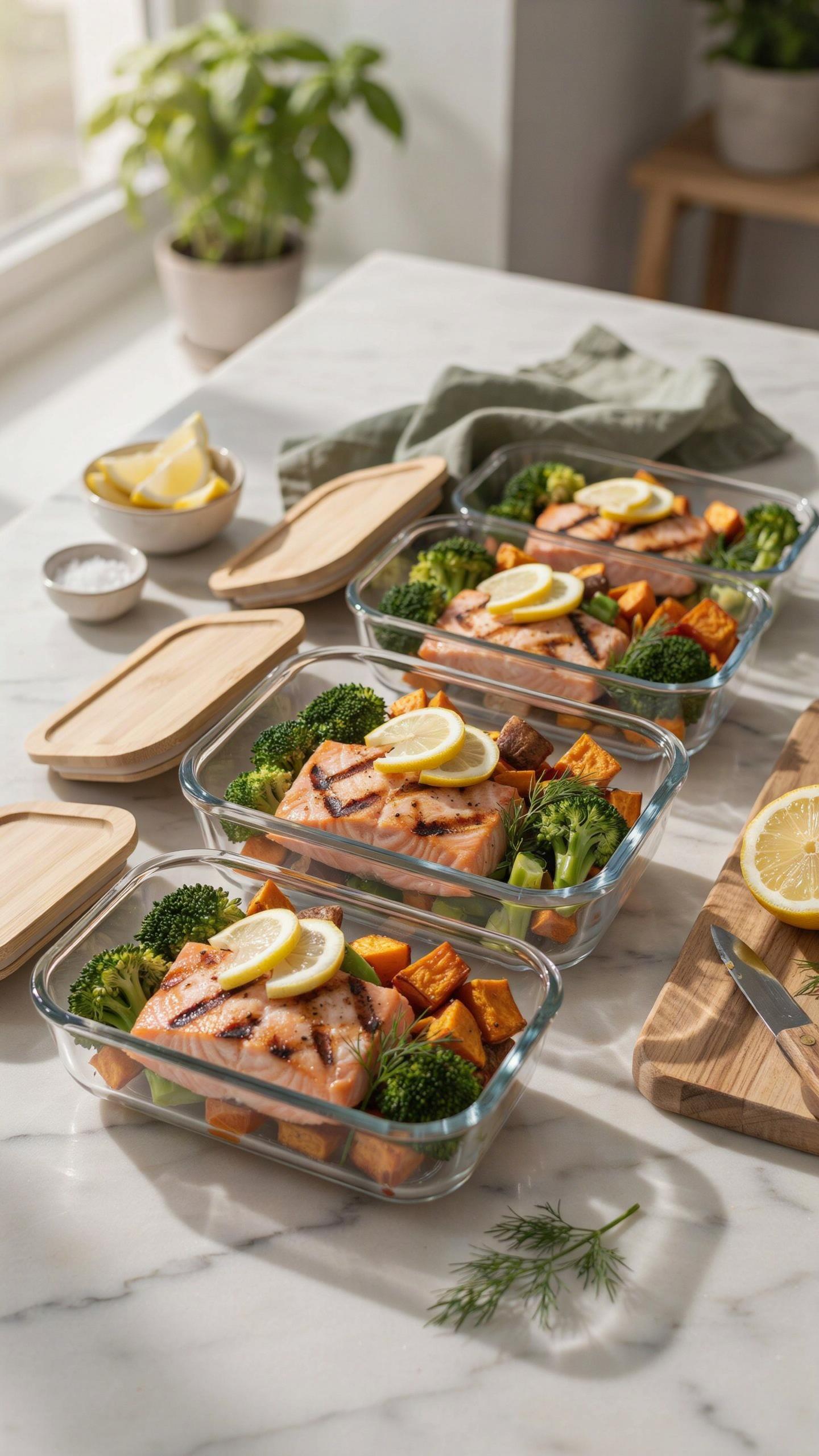
One container per day eliminates the friction between intention and action. You open the fridge and the meal exists, ready to eat. Most prep advice says to portion everything into containers immediately after cooking, which creates a psychological tax: the work doesn’t feel done until you’ve completed the entire assembly line. Wrong approach. Cook all your salmon at once on Sunday. Let it cool completely. Store it whole or halved in one airtight container. Portion and pair with sides only when you’re about to eat.
This removes decision fatigue and the false urgency of “I need to pack everything now.” You cut a piece of salmon, grab your carbs and vegetables, eat. The protocol is: cook bulk salmon once per week, cool it fully before storing, portion as needed daily. This takes fifteen minutes of active work instead of ninety minutes of assembly. Your compliance rate climbs because you’re not burning out before the week starts.
Deconstructing The Healthy Meal Prep Myth What Salmon Really Offers
Omega 3s: Brain Fuel, Not Just Muscle
You want salmon because it sounds smart. That’s the real reason. But the mechanism everyone skips is this: omega-3 fatty acids function as neurotransmitter precursors, not just anti-inflammatory agents. Borrow a term from neurobiology—signal transmission—and apply it to your meal prep. Salmon delivers EPA and DHA, which your brain uses to build cell membranes that fire faster. Most people think omega-3s just reduce inflammation. Wrong. They’re structural building blocks for cognitive speed.
When you eat baked salmon across the week, you’re not getting a slow, diffuse benefit. You’re stacking substrate for neural efficiency. Three to four ounces of salmon contains roughly 1.5 to 2 grams of omega-3s per serving. The effect isn’t dramatic day-to-day, but by day four or five of consistent intake, focus sharpens. Store your prepped salmon in airtight containers on the bottom shelf of your fridge. The cold slows oxidation of those fatty acids, preserving their structural integrity until you eat them.
Protein Leverage: Satiety And Focus
Protein satiety is an economics problem: you’re trying to maximize fullness per calorie spent. Salmon solves this more efficiently than lean chicken because the fat content triggers cholecystokinin release faster, signaling fullness to your brain sooner. A six-ounce fillet of baked salmon delivers roughly 35 to 40 grams of protein plus 15 grams of fat. That fat matters. It slows gastric emptying, extending satiety through the afternoon without the blood sugar spike that carbs alone produce.
The secondary mechanism is neurotransmitter stability. Protein provides amino acids that build dopamine and norepinephrine, the chemicals that control focus and motivation. When you prep salmon for the week, you’re essentially pre-engineering your afternoon mental state. One meal can sustain cognitive output for four to six hours. Portion your salmon into single servings immediately after baking while still warm. This prevents you from reheating the whole batch multiple times, which degrades both texture and nutrient density.
The Salmon Protocol Engineered Consistency

When Your Palate Becomes Your Feedback System
You’re reading this because you’re afraid meal prep becomes punishment, not routine. The mechanism here is cybernetics: a self-regulating system that survives only when it detects and corrects deviation. Your taste buds are sensors. Ignore them, and the entire system collapses by Wednesday.
Most advice treats palatability as weakness. It’s not. Salmon’s fat content shifts between seasons and sources. A batch that tastes rich in winter tastes waxy in spring. The fix: you taste every prep day, note what changed, and adjust one variable. Lemon juice masks oxidation. Caramelizing the skin adds contrast. Lowering oven temperature by 25 degrees prevents the dense, chalky texture that kills compliance.
Steady State Requires Deliberate Variation
Homeostasis in biology means stable internal conditions within a narrow band. Your meal prep operates the same way: you need consistency without monotony, or you’ll abandon the system entirely. This isn’t balance. This is engineering predictability through controlled variables.
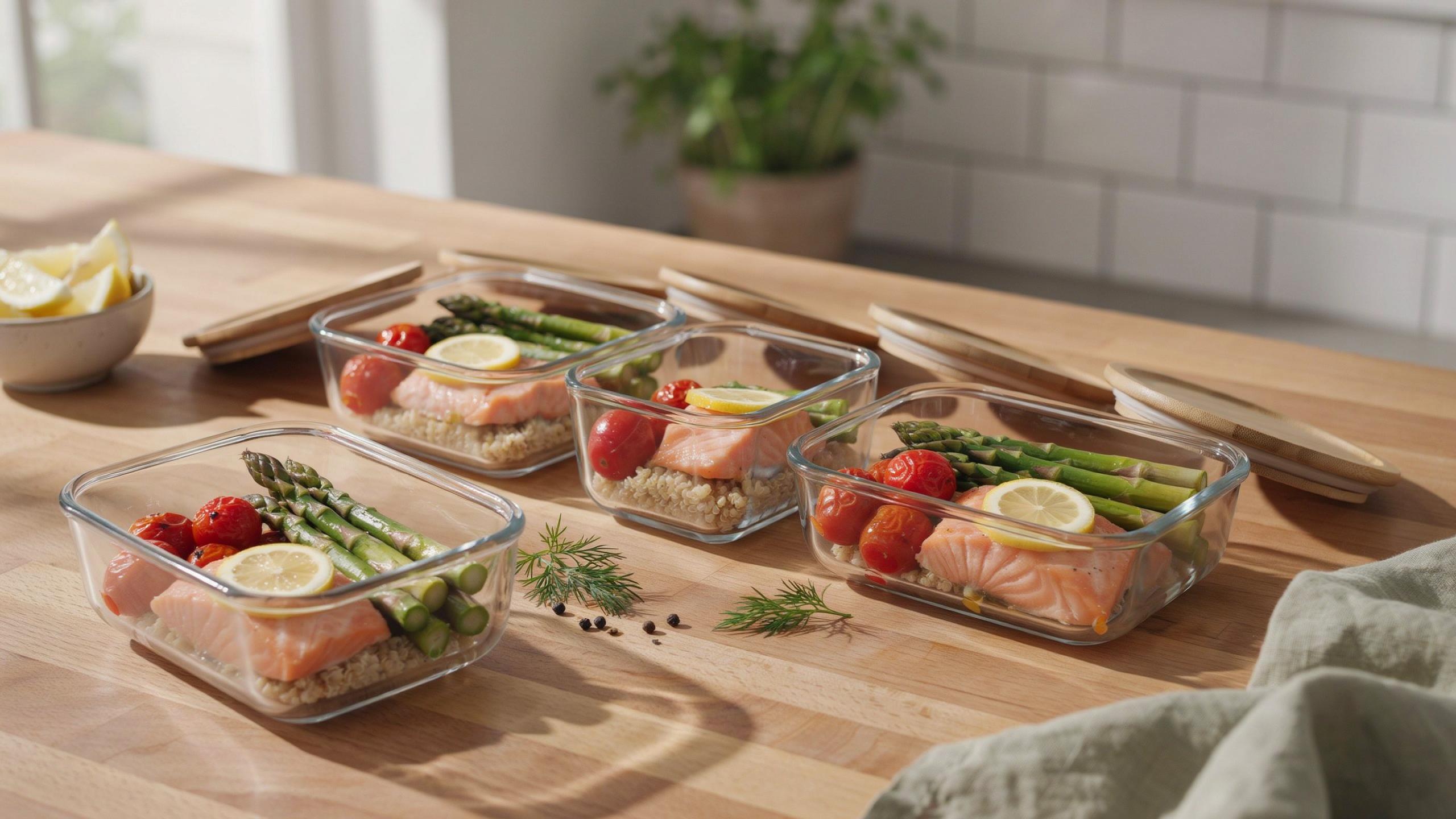
The mistake is making five identical meals. Make three rotations. Salmon with roasted asparagus and lemon one week. Salmon with green beans and dill the next. Salmon with broccoli and garlic in the third. Your macros stay identical. Your dopamine doesn’t crater. You rotate back to the first, and it feels novel again. Store each rotation in separate containers, labeled by date. This prevents decision fatigue and the accidental reach for takeout when you open the fridge.
Oven Baked Salmon Recipes Beyond Lemon Dill
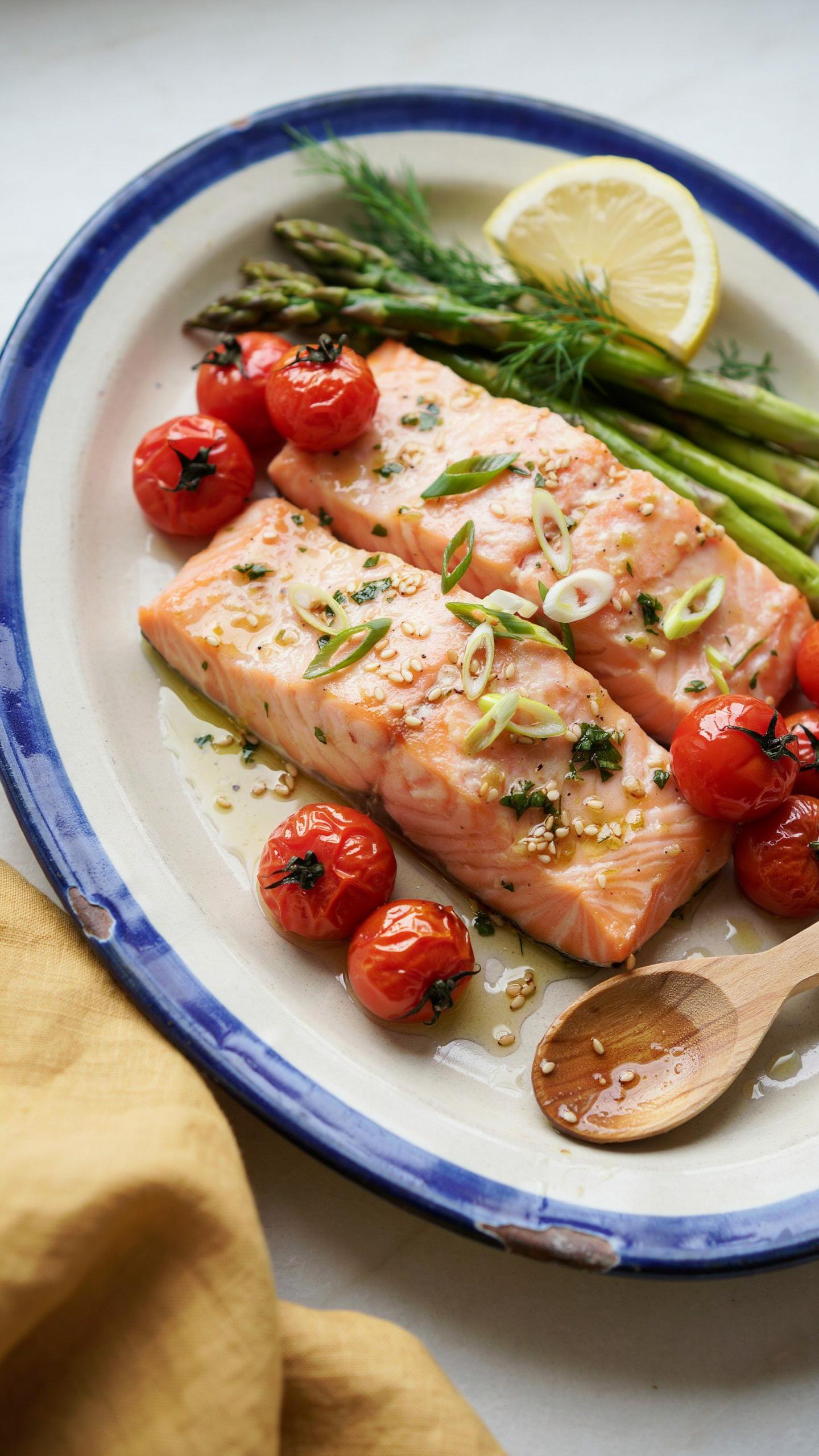
Flavor Profiles: Global Inspiration
You want to feel adventurous without actually taking risk. That’s the real pull here. The mechanism is simple: your palate adapts to repetition within 72 hours, so rotating flavor families keeps salmon interesting across your week without adding prep complexity.
Japanese preparations use miso and soy to exploit umami saturation—the same taste receptor doesn’t fatigue as quickly when you layer salt, fermentation, and glutamates. Mediterranean approaches layer acid and fat together, which triggers different taste pathways than herb-forward Nordic styles. Mexican-inspired preparations use chile and lime to activate pain receptors alongside flavor receptors, creating perceived intensity without complicated technique. The rotation works because you’re not chasing novelty for its own sake—you’re strategically preventing sensory adaptation, which is what actually kills meal prep adherence.
Spice Blends: Pre Made Power Ups
Pre-made blends aren’t a shortcut. They’re insurance against decision fatigue during prep day. You buy them once, store them for months, and eliminate the variable of hand-mixing ratios wrong and wasting salmon.
- Dukkah: Egyptian hazelnut and seed blend. Toast lightly before applying to salmon skin. Adds textural contrast and fat-soluble vitamin density without heat.
- Za’atar: Levantine mix of sumac, thyme, and sesame. Acidic structure cuts through salmon’s richness. Apply post-bake to preserve brightness and prevent flavor flattening during storage.
- Garam Masala: Indian warming spices without heat dominance. Cinnamon and cardamom amplify umami perception. Use sparingly—quarter teaspoon per fillet prevents flavor from overwhelming salmon’s structure.
- Berbere: Ethiopian red chile and fenugreek blend. Heat builds gradually rather than spiking immediately. Pairs with higher-oil salmon cuts like belly portions.
- Chinese Five Spice: Star anise, clove, cinnamon, Sichuan pepper, fennel. Licorice notes complement oily fish. Combine with soy sauce and ginger for cohesive flavor architecture.
Storage matters more than sourcing here. Blends lose potency after six months of exposure to air and humidity. Buy quantities you’ll use in one prep cycle, store in airtight containers away from heat, and apply them directly from fridge-cold salmon—the moisture won’t activate the spices prematurely like room-temperature application does.
Optimized Oven Baked Salmon The 1 Pan Power Play
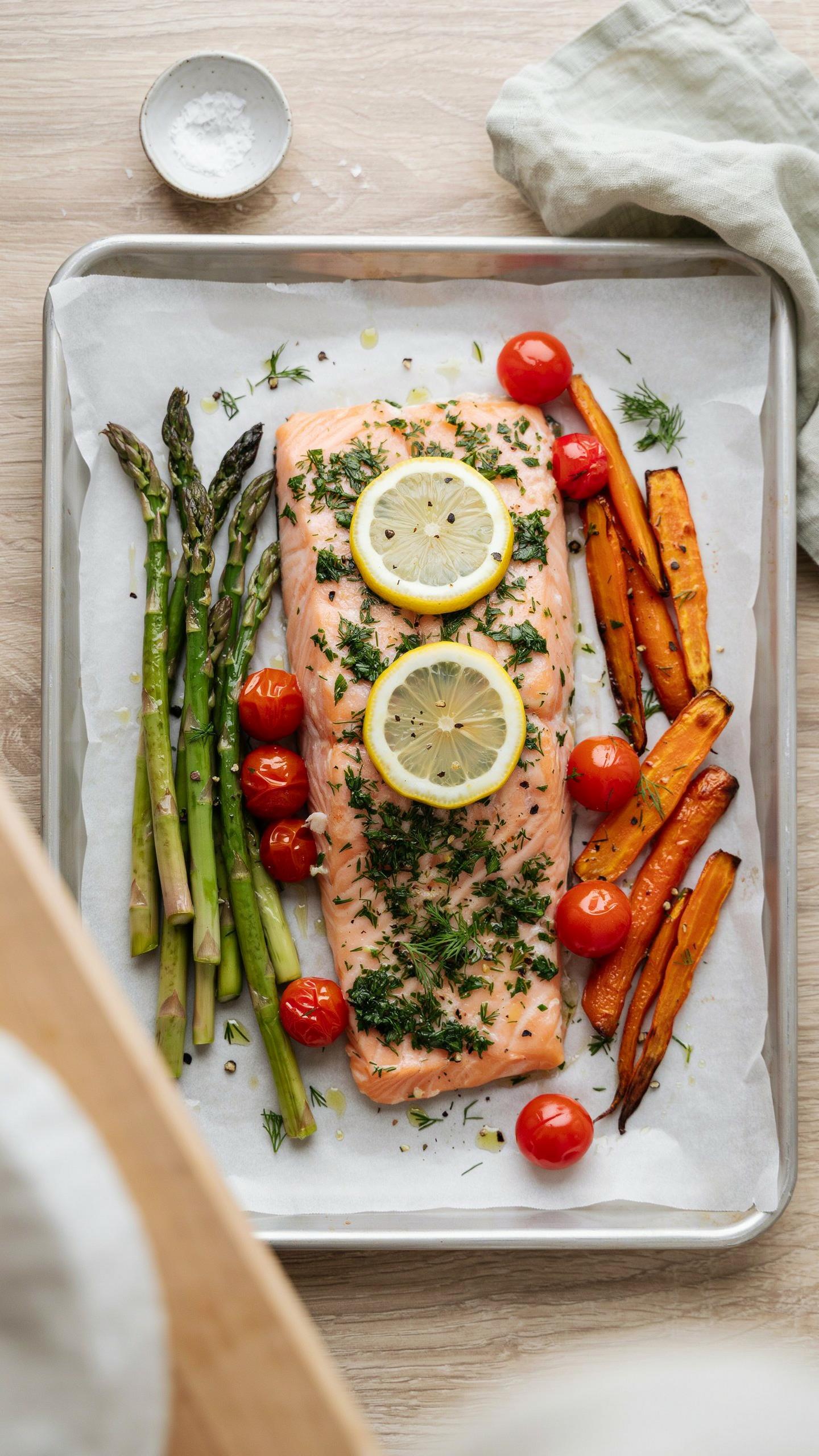
Single Sheet Mastery
You want this section because cleanup friction kills consistency, and consistency is what actually separates people who meal prep from people who talk about it. The mechanism is simple: one sheet pan reduces decision points. You don’t choose between a baking dish, a cast iron, parchment, or foil. You eliminate the variable. Sheet pans are standardized, stackable, and transfer heat uniformly across their surface. This matters because uneven heat distribution causes some fillets to dry while others undercook.
Lay parchment on your sheet pan before anything touches it. This single step removes oil residue cleanup entirely and prevents salmon skin from sticking. Line the pan lengthwise so edges hang over. After cooking, fold the parchment and discard. The pan itself needs only a quick rinse. You’re trading five minutes of scrubbing for ten seconds of disposal. Do this every time you prep.
Perfect Flake Every Time
Temperature control operates on the same principle as structural engineering: load-bearing capacity depends on consistent material integrity. When salmon flesh hits 145 degrees Fahrenheit, the proteins denature uniformly and water releases at a predictable rate. Below that, you get raw centers. Above that, you get flaking and dryness. The mechanism is moisture retention, not flavor.
Set your oven to 400 degrees Fahrenheit. Place salmon skin-side down on parchment. Bake for 12 to 15 minutes depending on fillet thickness. Check doneness at 12 minutes by inserting a fork at the thickest point and twisting gently. The flesh should separate into flakes without resistance. If it resists, add two more minutes. Remove from heat immediately when the fork meets zero resistance. Carryover cooking continues for another 30 seconds after removal, so pull before it feels fully done.
Salmon Bake Variations Never Eat The Same Meal Twice Almost
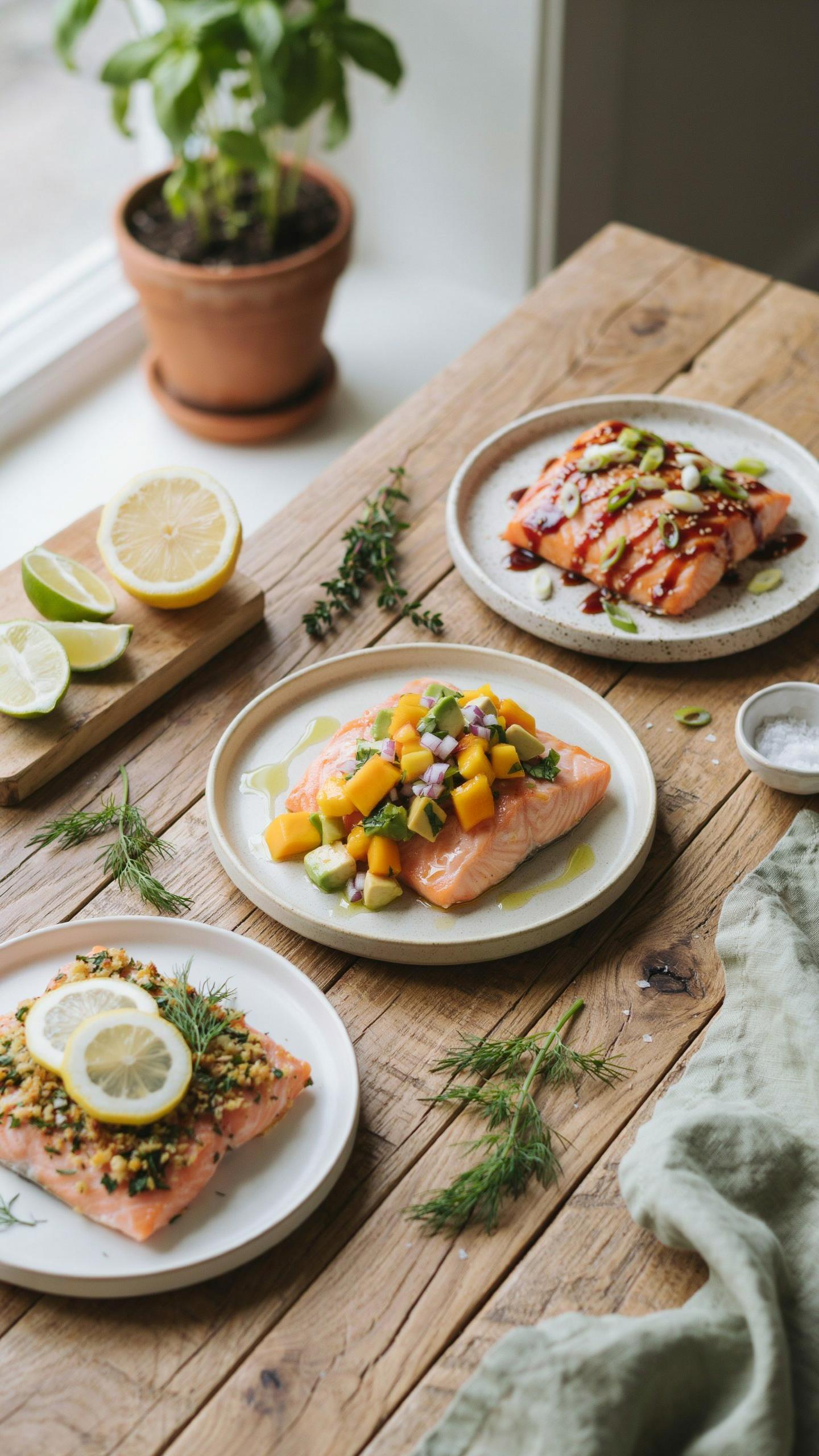
Swap Ingredients By Season, Not Mood
You want to feel like meal prep is interesting so you’ll actually stick to it. Here’s the mechanism: your palate adapts to repeated flavors within 3-4 days. The fix isn’t complexity. It’s systematic rotation of supporting ingredients while the salmon base stays identical. Winter calls for root vegetables and acid. Summer calls for fresh herbs and brightness. Spring demands asparagus and lemon. Fall takes Brussels sprouts and garlic. The seasonality isn’t romantic. It’s economics. In-season produce costs 40% less and tastes sharper because it didn’t travel 2000 miles.
The real constraint isn’t flavor variety. It’s prep time staying flat. Swap one vegetable, not five. If you baked salmon with broccoli Monday, Wednesday uses the same salmon temp and cook time with green beans instead. Thursday switches to zucchini. Same sheet pan. Same 12-minute bake at 400 degrees. Your knife work stays identical. Your muscle memory compounds. The only variable is the vegetable’s density, which doesn’t matter because you’re roasting, not steaming. Batch seasonality into quarters. Don’t freestyle every meal.
Build Texture Opposition Into Each Plate
The common advice is to add crunch somewhere. That’s incomplete. Texture contrast works through sensory adaptation, which neuroscience calls habituation. Your mouth stops registering texture after repeated exposure to the same mouthfeel. Salmon is soft protein plus fat. Most people plate it with soft roasted vegetables. That’s sensory monotony dressed as a meal. Opposition requires at least two conflicting textures on every plate.
Crunch comes from raw elements added after cooking. Nuts work. Toasted seeds work. Raw sliced almonds scattered over warm salmon interrupt the softness and reset your palate mid-bite. Creaminess comes from acids that soften texture perception. A drizzle of tahini thinned with lemon juice over hot salmon creates the perception of richness without adding saturated fat. The tahini doesn’t need to be warm. The contrast matters. Store nuts separately. Add them at plate time, never during bake. Stir tahini into lemon juice five minutes before eating. Temperature difference amplifies the contrast.
The Baked Salmon With Asparagus Fallacy Side Dish Over Complication
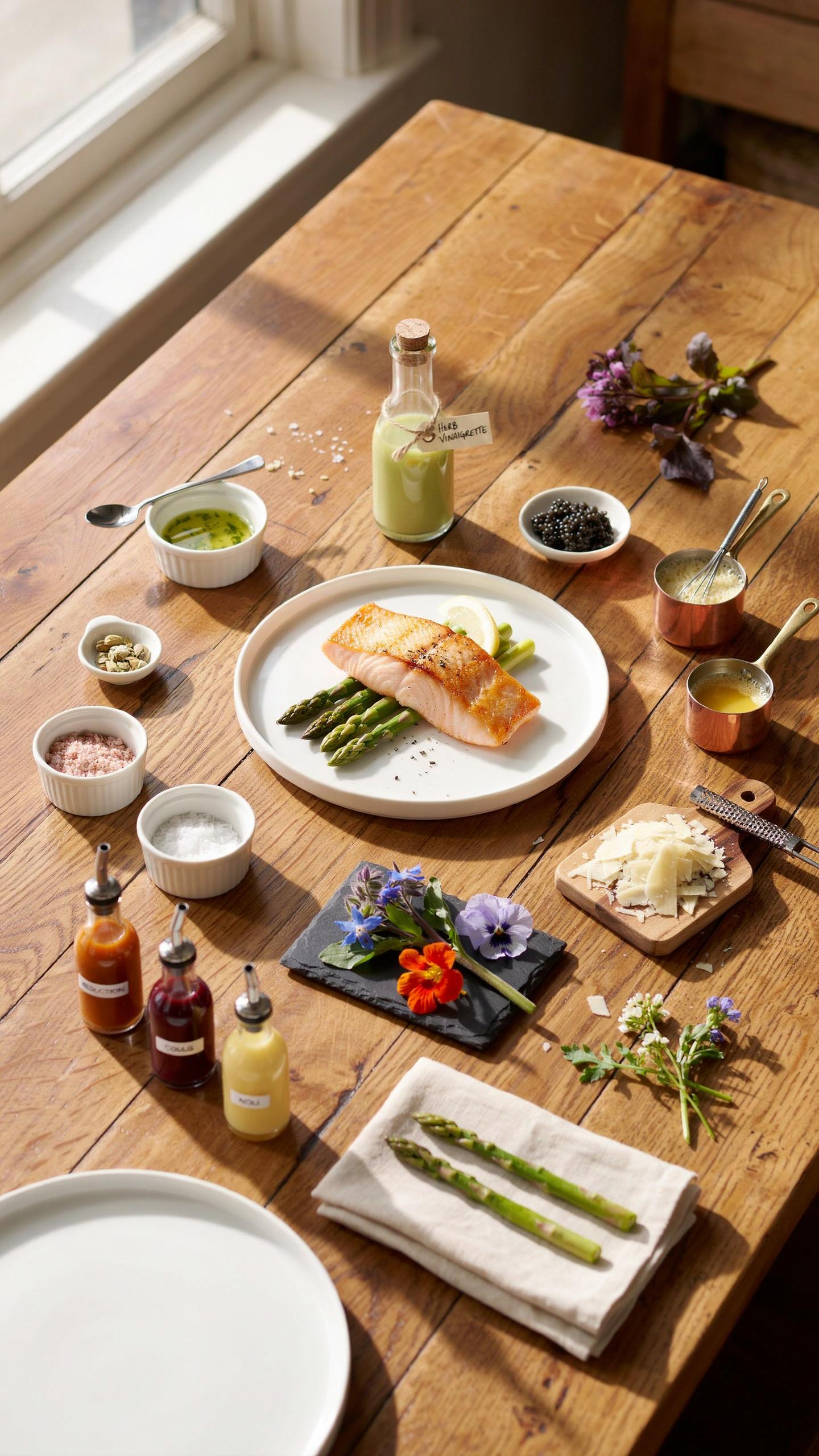
Complementary Nutrition, Not Instagram Balance
You want to believe side dishes matter because then your meal prep feels intentional instead of transactional. Here’s the mechanism: your body doesn’t process salmon and asparagus as separate entities. It processes macronutrient ratios. Borrow from nutritional biochemistry: substrate availability is what drives cellular energy production. Salmon delivers protein and omega-3 fatty acids. Asparagus adds fiber and micronutrients. But most people pair them wrong, chasing visual variety instead of metabolic utility.
The real pairing logic is simple. Salmon contains roughly 25 grams of protein and 2.5 grams of omega-3s per 100-gram fillet. Pair it with something that won’t compete for your digestive effort or spike blood sugar unnecessarily. Roasted vegetables like broccoli, Brussels sprouts, or green beans work because they’re low-calorie, fiber-rich, and require minimal prep time. Skip anything starchy unless you’re training hard that day. The side dish’s job is completion, not complexity.
Strategic Simplification Wins Every Time
Most meal prep advice treats side dishes like decoration. That’s incomplete. The truth is this: every additional component adds prep time, storage space, and waste. One side dish per week. That’s your constraint. Pick asparagus or broccoli or Brussels sprouts. Master it. Cook it once, portion it once, eat it five days straight. Your brain resists this because repetition feels boring. Your body doesn’t care about boring. It cares about consistent micronutrient intake and stable energy.
Here’s the protocol: roast 2 pounds of your chosen vegetable with olive oil, salt, and pepper at 425 degrees for 15 minutes. Portion into five containers alongside your salmon. Done. No sauces, no “flavor experiments,” no justifications. This removes the decision fatigue that kills meal prep consistency. When you have one system, you execute it. When you have three side dish options, you procrastinate. Simplification isn’t laziness. It’s resource allocation.
Advanced Salmon Meal Prep Building Your Culinary Operating System
The Core Components That Actually Matter
You want this to work so you stop thinking about what to eat. That requires building a system, not just cooking salmon once. Systems thinking comes from operations management: you need to identify your rate-limiting step, then optimize backwards from there. For salmon prep, that step is cooling time. Hot salmon releases moisture. Moisture breeds bacteria. Speed matters less than temperature control.
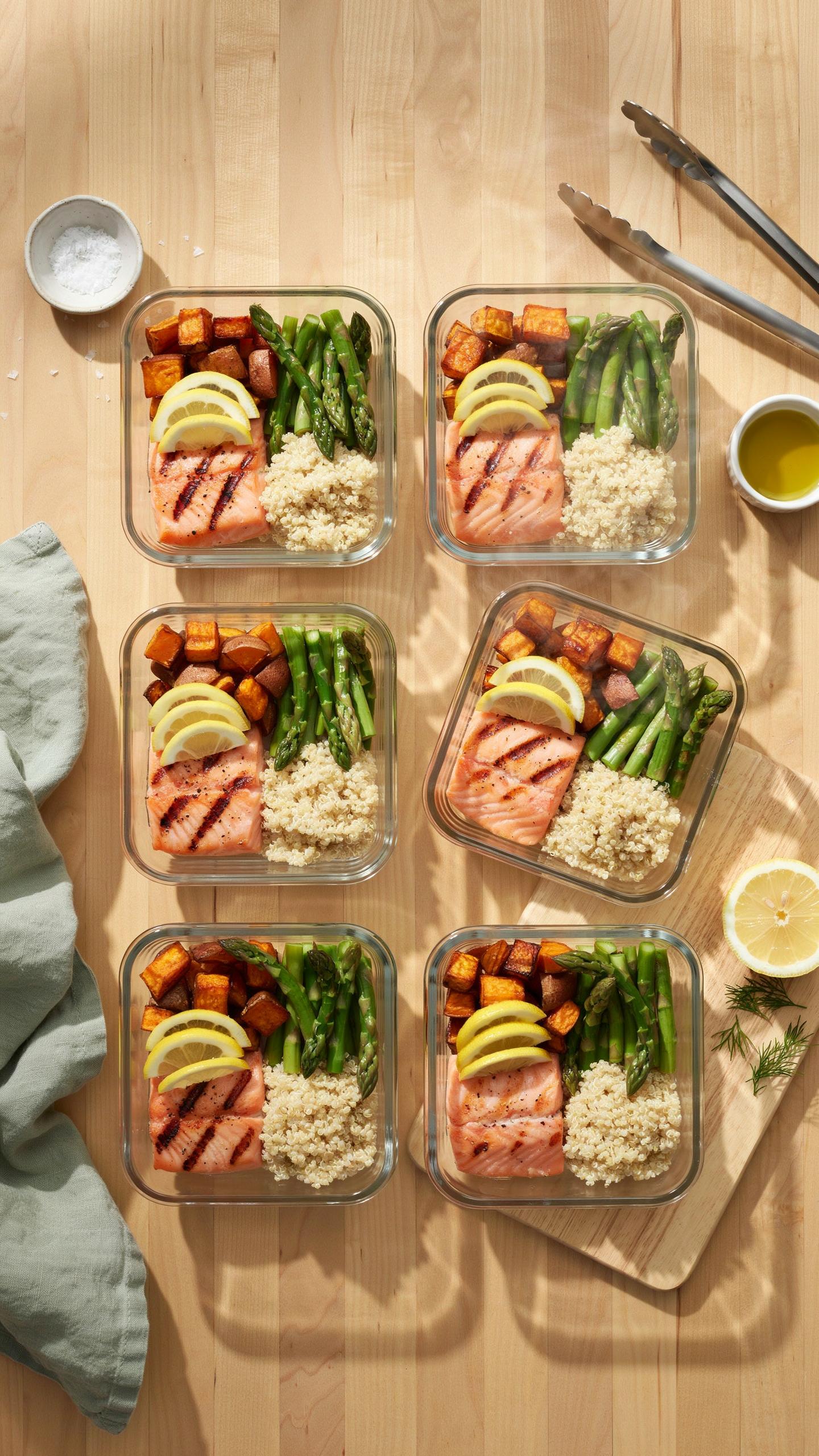
- Protein batch: Cook 4-6 salmon fillets at 400°F for 12-14 minutes until internal temp hits 145°F. This is your non-negotiable anchor.
- Carbohydrate batch: Roast potatoes or rice simultaneously at the same temperature. They finish when salmon finishes. Same oven, same timing.
- Vegetable batch: Broccoli, asparagus, or Brussels sprouts roasted in a separate pan. Cook for 10 minutes starting after salmon goes in.
- Cooling protocol: Spread all components on sheet pans in a single layer. Never stack hot salmon. Room temperature takes 15-20 minutes before refrigeration.
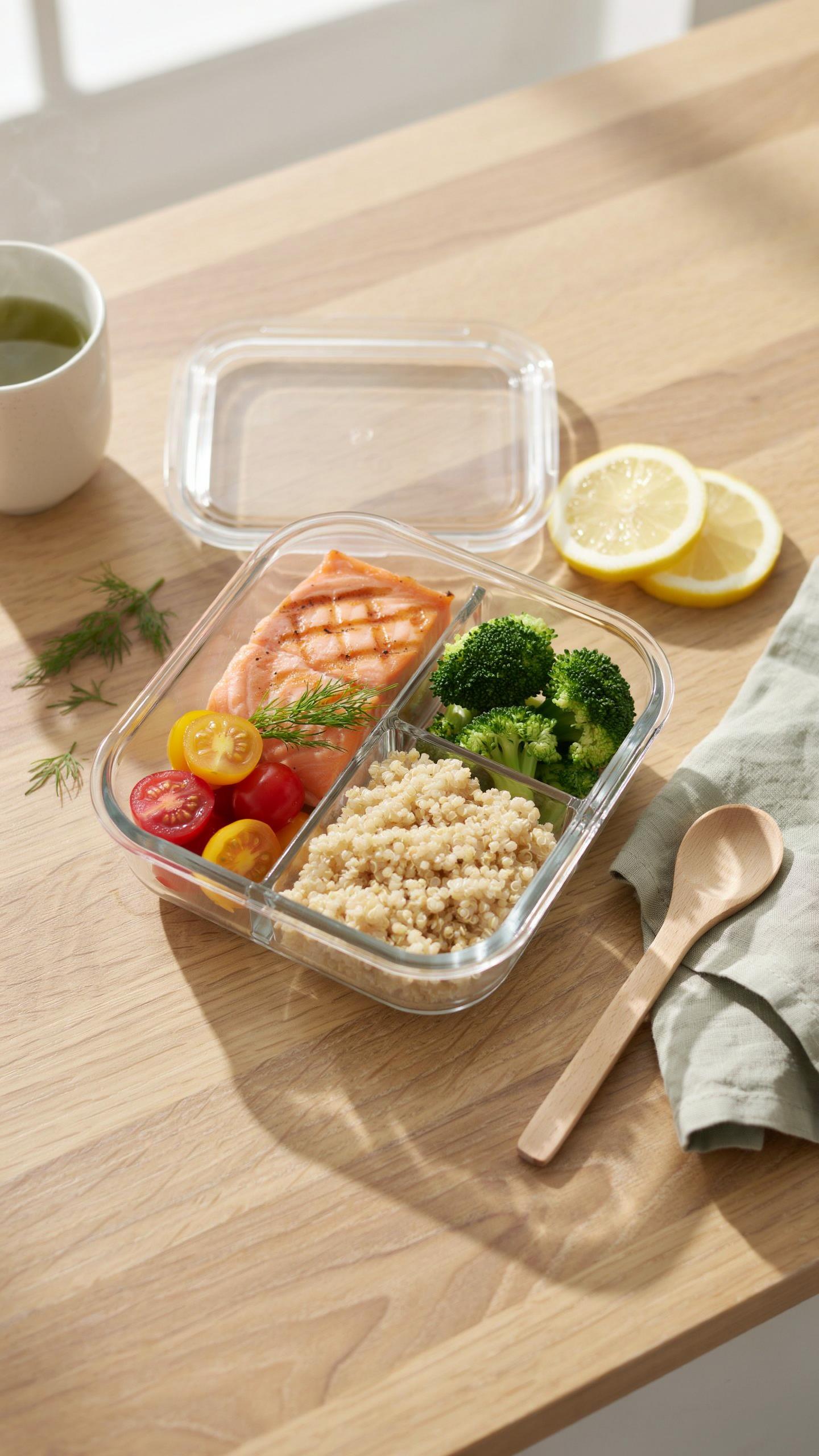
- Portioning system: Use identical glass containers. Three oz salmon, one cup carb, one cup vegetable per container. Uniformity cuts decision fatigue.
Once components cool, they go into containers that seal properly. The difference between a system that works and one that fails is this: you batch one time per week, portion immediately after cooling, then execute the same meal five times. No variation, no willpower required, no grocery store decisions mid-week.
Storage That Preserves Quality Without Guessing
Most people mess this up because they confuse “frozen longer” with “frozen better.” Raw salmon stays viable for two days in a fridge at 40°F. Cooked salmon lasts four to five days if you eliminate one variable: air exposure. Your container choice determines everything else. Glass containers with airtight seals beat plastic because glass doesn’t absorb odor or degrade salmon’s structural integrity over multiple heat cycles. Store cooked salmon on the coldest shelf, which is typically the back of the bottom rack, not the door where temperature fluctuates.
Freezing extends life to three weeks, but only if you freeze within two hours of cooling to room temperature. Use freezer-safe containers with minimal headspace. Label every container with the date you cooked it. Remove one meal at a time and thaw it in the refrigerator for twelve hours before eating. The mechanism here is preventing ice crystal formation that damages cell walls: slow thawing in cold storage beats fast thawing at room temperature.
The true barrier isnt execution its the selfimposed complexity that sabotages your sustained health

You don’t need a meal prep system. You need permission to keep things stupid simple. Baked salmon, rice, broccoli. Three ingredients. Sunday afternoon. Done. Most people fail because they’re waiting for the “perfect” approach instead of doing the obvious one. Pick one Sunday in the next two weeks and commit three hours to it. Stop planning and start cooking. Your future self doesn’t care about optimization; they care that lunch is already made.