
The Cognitive Load Delusion Why Quick Isnt Always Smart

Decision Fatigue Compounds Faster Than You Think
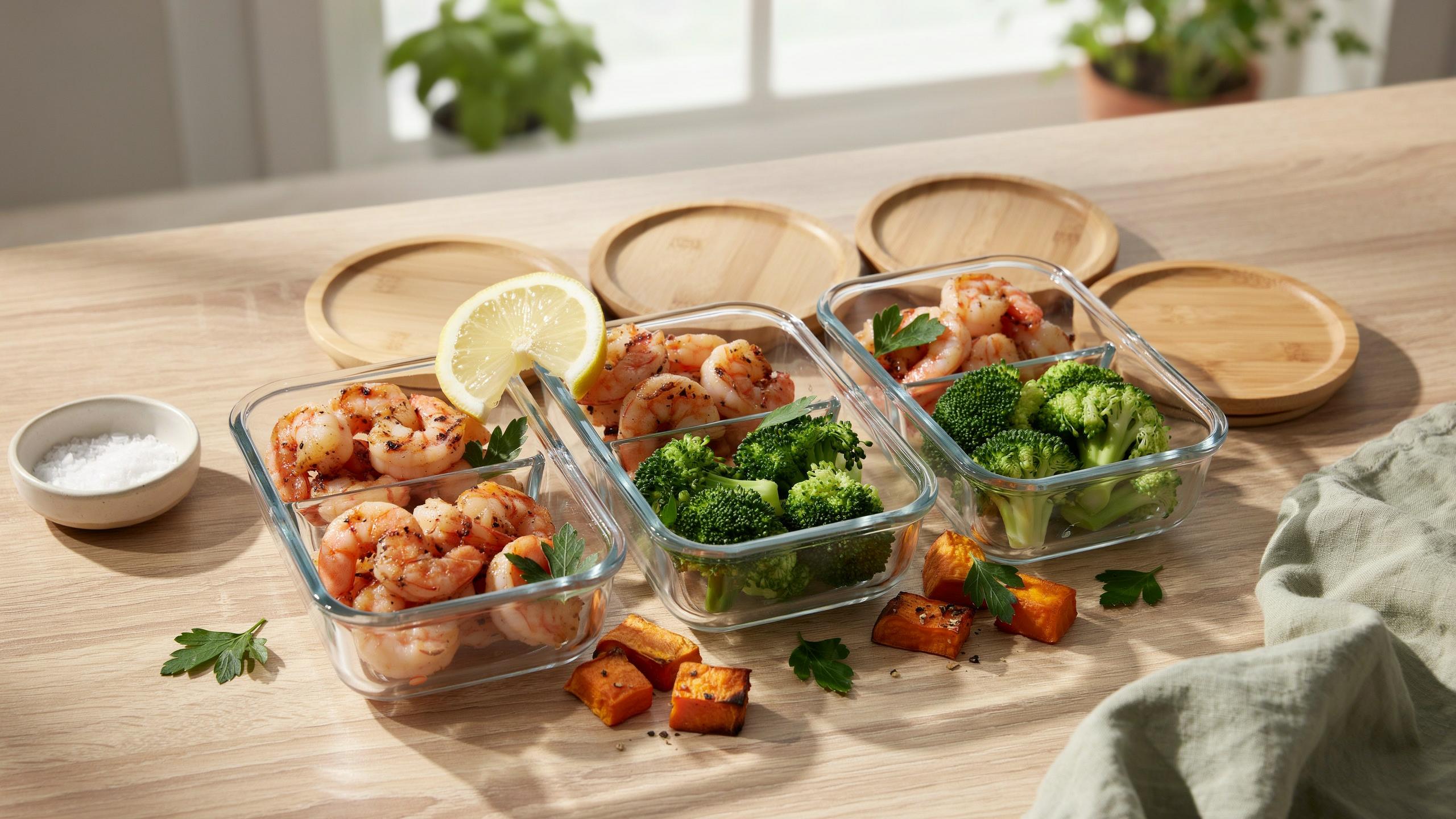
You want meal prep to save you time, but what you’re really avoiding is the shame of ordering delivery again. Here’s the mechanism: every food choice you make depletes your decision-making capacity for the day. Economists call this ego depletion. With shrimp meal prep, you eliminate that depletion by removing the choice entirely. You cook once, you eat the same thing five days. Your brain stops negotiating with itself at 6 PM when hunger hits and willpower collapses.

Most people frame meal prep as convenience. Wrong. It’s decision architecture. When you batch-cook shrimp with consistent seasoning and portions, you’re not just cooking. You’re installing a default. The default wins every single time because it requires zero willpower to execute. Without that architecture, “quick dinners” become quick decisions made under cognitive stress, which almost always means high-calorie takeout or processed shortcuts masquerading as meals.
The Scattered Meal Economics
Economics teaches opportunity cost: what you gain by choosing one thing is measured by what you lose by not choosing another. Scattered meals destroy your nutrient timing and force you to overcomplicate dinner each night. When you prep shrimp in bulk, you reclaim hours of mental bandwidth that scattered meal decisions steal from you. Those hours have real value, whether you redirect them toward work, recovery, or actually enjoying your food instead of optimizing at the last minute.
The trade-off is simple: invest three hours on Sunday cooking shrimp in bulk, or lose thirty minutes every evening re-deciding what protein to make. Scale that across a month and you’ve recovered fifteen hours of your life. Those hours compound into projects you actually finish, sleep you actually get, or training you actually complete. The protocol: cook two to three pounds of shrimp once weekly, portion into five containers, pair with pre-cooked rice or vegetables. That’s the only decision you need to make.
Shrimps Underrated Power A Protein Payload
The Protein To Calorie Ratio That Actually Matters
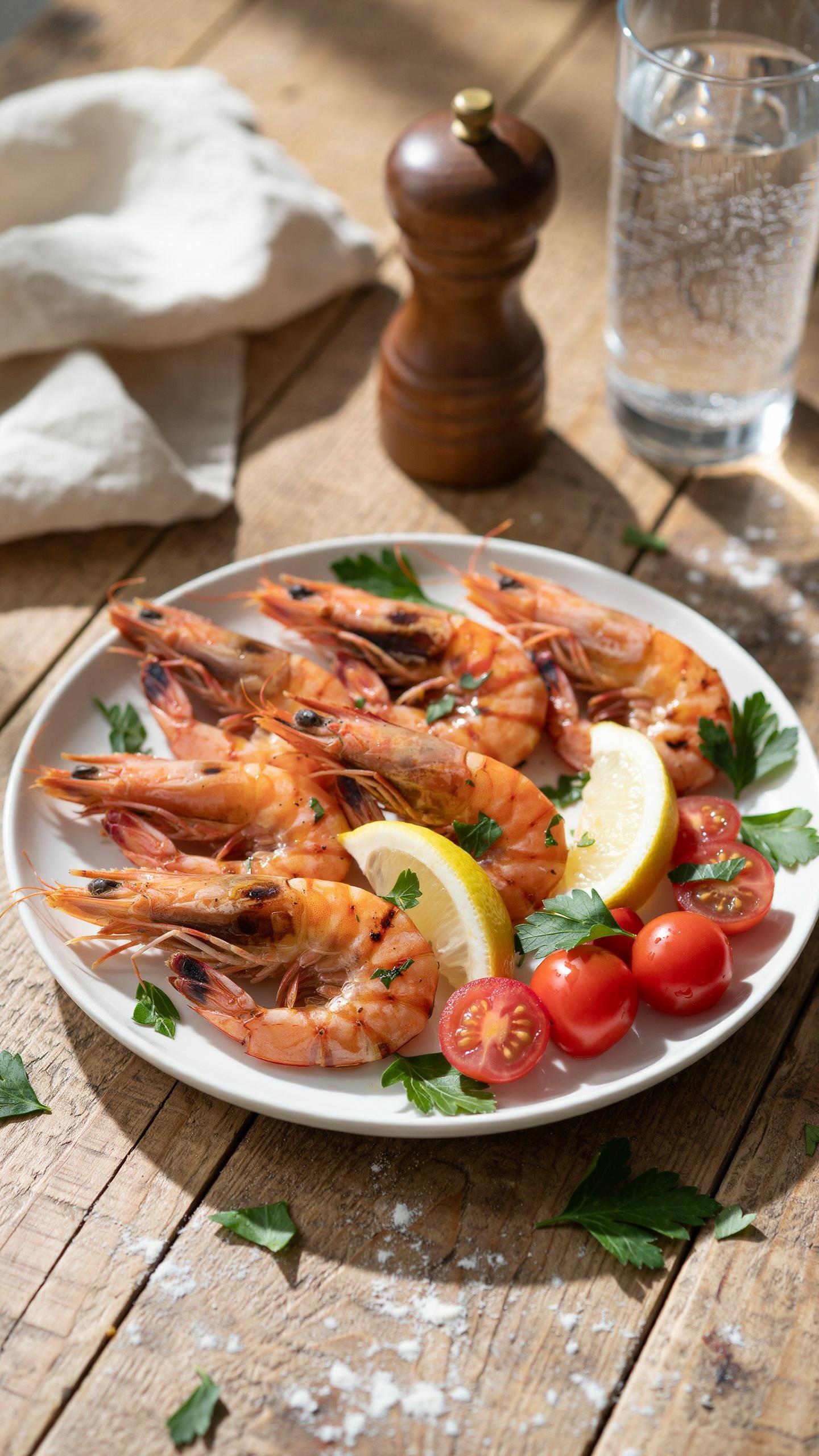
You want the nutritional shortcut that makes your body composition change without the mental math. Here it is: shrimp operates on a thermodynamic principle called nutrient density, where you extract maximum protein output from minimal caloric input. A 3-ounce serving delivers 20 grams of protein for roughly 100 calories. Compare that to chicken breast at similar protein levels but higher total volume required, and shrimp wins on efficiency. You’re not paying metabolic rent on excess fat or carbs.
The mechanism is straightforward: shrimp’s protein-to-weight ratio is among the highest of any protein source. This means your meal prep yields more usable amino acids per container, which directly reduces prep volume and storage space. When you’re building a repeatable system, this matters. Smaller containers mean easier stacking, faster cooling, and fewer spoilage risks in a crowded fridge. The math compounds across a week.
The Micronutrients Most People Miss
Shrimp contains selenium, which your thyroid needs to function at baseline metabolic rate. Most meal prep conversations stop at protein and calories, which is incomplete. A 100-calorie serving of shrimp delivers approximately 30 percent of your daily selenium requirement, plus B12 for energy metabolism and iodine for hormonal regulation. These aren’t optional nutrients. They’re foundational.
Beyond the headline minerals, shrimp delivers astaxanthin, a carotenoid that functions as an antioxidant in cellular repair. You won’t feel it immediately, but systematic recovery from training improves when micronutrient intake reaches sufficiency. Store-prepped shrimp retains these compounds effectively when frozen within 24 hours of cooking. The protocol is: cook, cool completely, portion, freeze same day. Micronutrient degradation slows dramatically at freezing temperatures, protecting your investment.
The 3 Tier Shrimp Meal Prep Protocol
Cook Shrimp Once, Eat Three Ways
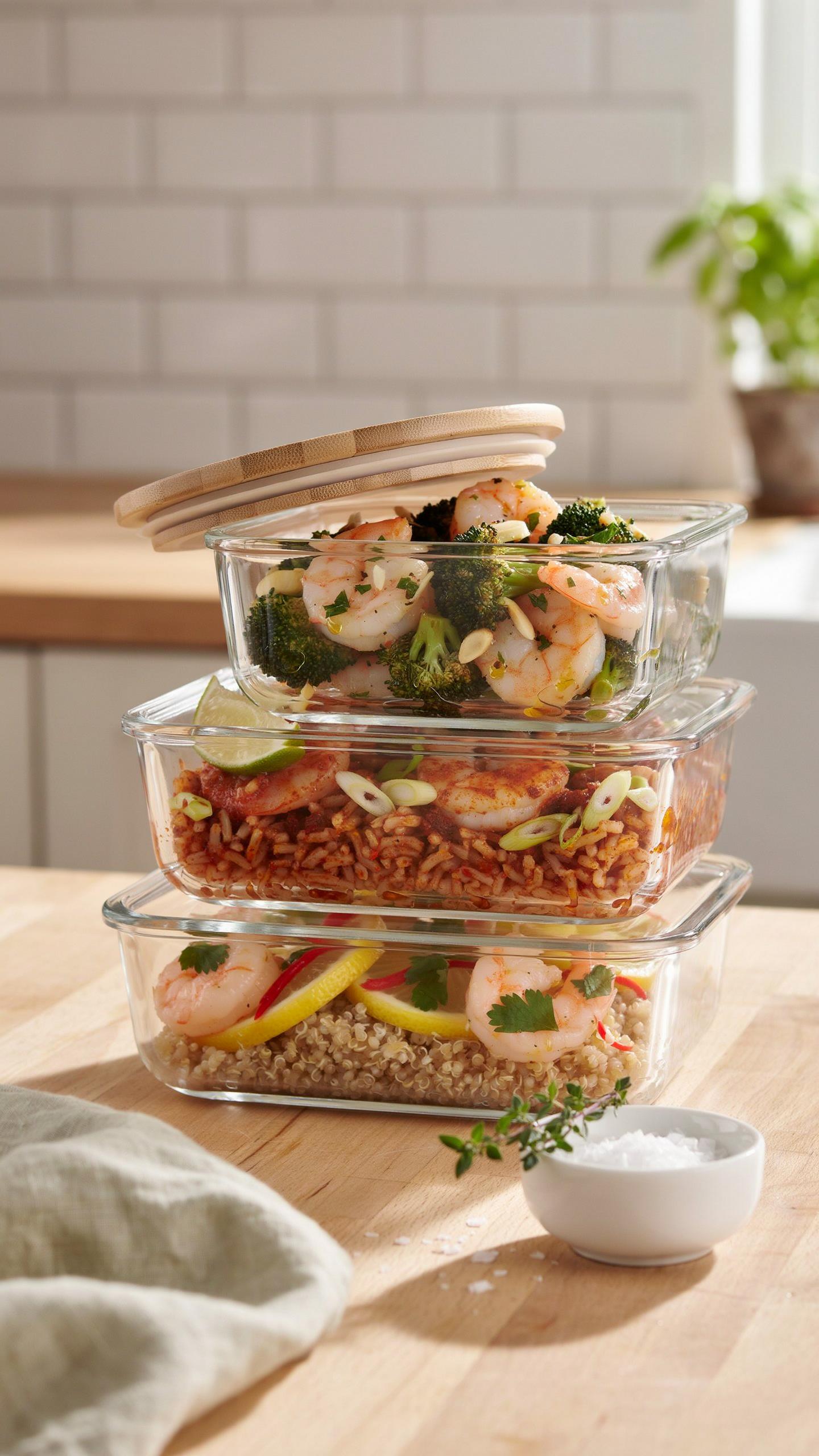
You want to feel productive without actually doing the work three times over. That’s the real reason you’re reading this. Economics calls this “scaling efficiency” – doing one unit of labor and extracting maximum output. Cook a single five pound batch of shrimp, then split it into three distinct flavor profiles that taste nothing alike. You’ve now created the illusion of variety while cutting your prep time by two thirds.
The mechanism is simple. Raw shrimp takes twelve minutes to cook properly in salted water. Season it plain, season it cold, and you’ve got a neutral base that absorbs any sauce or acid you pair it with later. This removes the constraint that kills most meal prep: flavor fatigue from eating the same seasoned protein five days straight.
Mix And Match Across Five Days
Common meal prep advice says “season everything the same and eat it.” That’s lazy advice that ensures you quit by Wednesday. Instead, batch your plain shrimp and build three component systems around it: a lemon garlic oil base, a soy ginger base, and a harissa tomato base. Each base requires five minutes to make and stores for four days.
Pair each base with different carbs and vegetables to create distinct meals from one protein source. Monday and Tuesday hit the garlic oil with rice and broccoli. Wednesday and Thursday flip to the soy ginger with noodles and bok choy. Friday uses the harissa with farro and roasted peppers. You’re not eating the same meal five times. You’re rotating three separate dinners that all start from shrimp cooked the same way.
Flavor Engineering Escaping Bland Health Dinner Recipes
The Spice Blend That Actually Stays Consistent
You want your meal prep to taste the same on day one and day five because reheating disappointment kills compliance. The mechanism is simple: spices lose potency over time when exposed to air and heat, so consistency requires you to build a spice blend before you cook, not season individual batches.
Mix your spices in a small bowl first. Combine cayenne, smoked paprika, garlic powder, and black pepper in fixed ratios by weight, not eyeballing. Store this blend in an airtight container. When you cook your shrimp batch, add the entire blend at once during the sear, not in stages. This ensures every portion receives identical flavor distribution. The heat of the pan locks the spices into the protein immediately, preventing degradation before storage.
Salt And Acid Do The Real Work Here
Seasoning science tells you that salt and acid are the two variables that actually trigger flavor perception, not complexity for its own sake. People think layering spices creates depth. That’s incomplete. Salt amplifies everything already present. Acid cuts through richness and creates contrast.
For shrimp meal prep, use two-stage seasoning. Salt the shrimp before cooking, letting it sit for two minutes so the salt penetrates. During the sear, add acid from lemon juice or rice vinegar to the pan itself, not after cooking. The heat activates the acid, bonding it to the shrimp’s surface. This combination survives reheating because both salt and acid are stable compounds. Acid-forward seasoning tastes fresher on day five than spice-heavy recipes because acid doesn’t deteriorate with heat exposure the way aromatic oils do.
The Minimum Viable Product Meal Prep Cybernetics Model
Track What Actually Happens To Your Batches
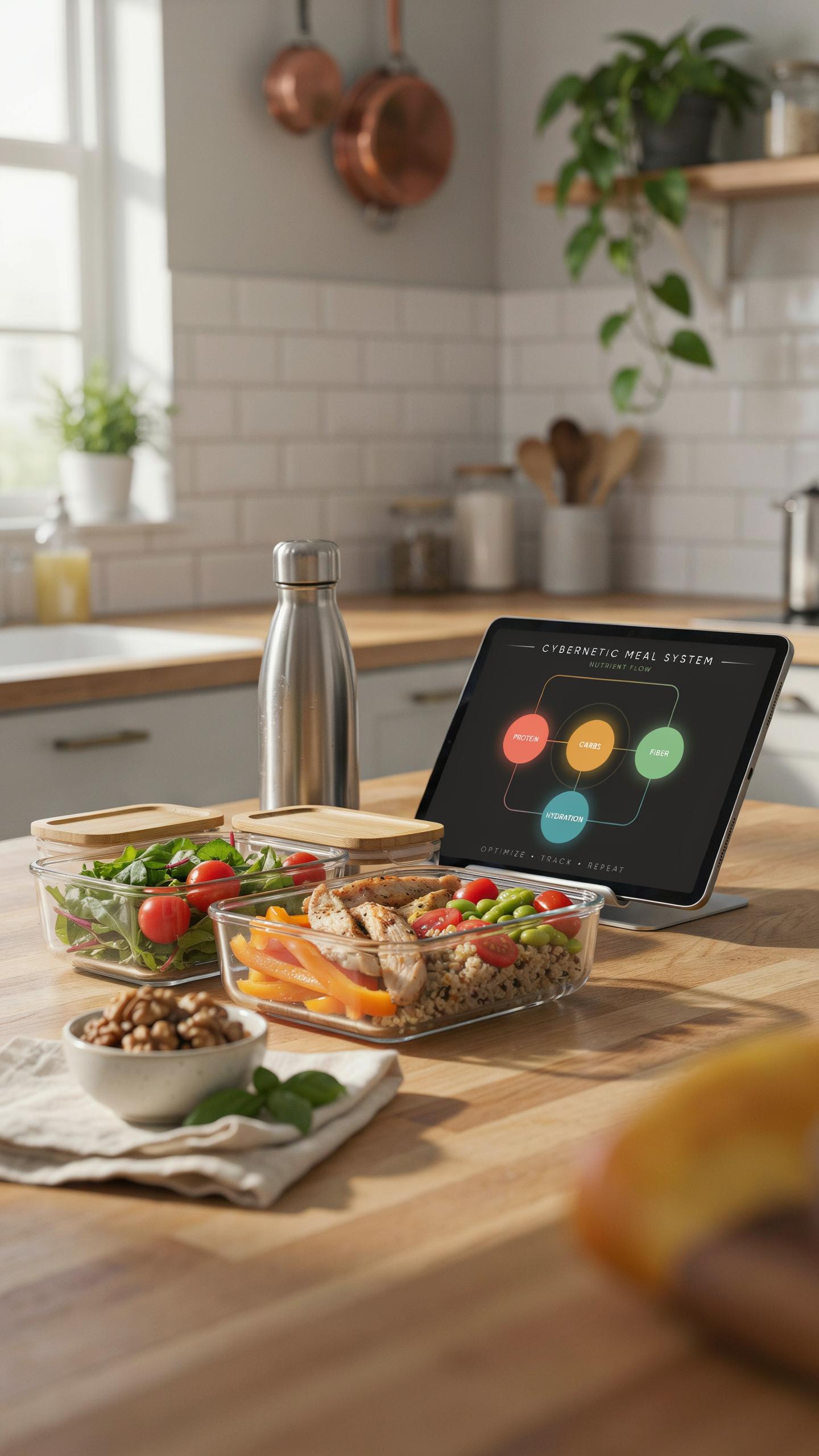
You want permission to skip the obsessive planning phase and just start. Here’s the mechanism: cybernetics treats any system as a feedback loop where output gets measured, compared to intent, then adjusted. Your shrimp meal prep is a system. You measure nothing, you improve nothing.
Cook one batch of five pounds. Write down: cook time, seasoning ratios, storage container type, how it tastes on day one and day four. This data point is worthless alone. The second batch becomes valuable because you now have a delta. Did the shrimp dry out faster in glass or plastic? Did lemon juice preserve texture better than hot sauce? You’re not guessing anymore. You’re reading your own system.
Refine Your Recipe, Don’t Restart It
Most people throw out a batch and start completely different next time. Wrong. You have a working protocol. Change one variable. If you cooked shrimp at medium-high heat for four minutes last week and it came out rubbery, drop to medium heat for four minutes this week. Don’t switch proteins, don’t change your rice, don’t flip your entire approach. A single change teaches you something. Ten changes teach you nothing.
Iterative design means your third batch beats your second, which beats your first. You’re compounding marginal gains on a system that already works. Season your shrimp identically to last time, but reduce storage time before freezing by six hours. Did that stop the ice crystal formation? You now own that answer. Protocol tightens through constraint, not chaos.
Smart Storage And Reheating Preserving Shrimp Recipes Healthy
Containers And Cold Chain Control
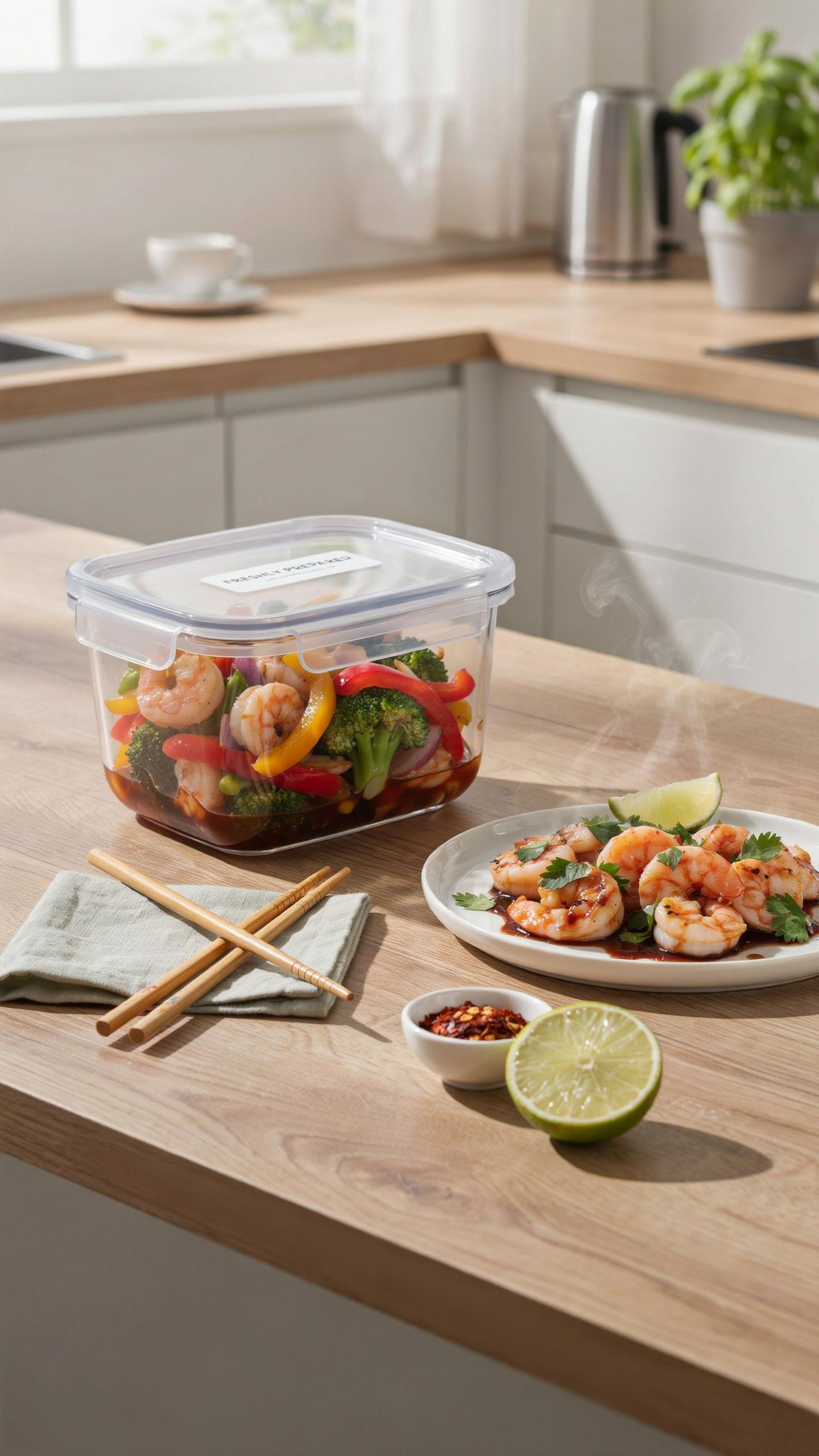
You’re worried your meal prep will spoil before Wednesday and waste money. The real mechanism is osmotic pressure—moisture migrates out of shrimp cells into air space, drying the meat and inviting bacterial growth. Airtight containers stop this. Glass works better than plastic because it doesn’t absorb odors or degrade, but either beats open storage. Temperature control means 40 degrees Fahrenheit or lower, checked with a thermometer, not guessed.
Shrimp stored correctly lasts three to four days in the refrigerator. Stack containers on the coldest shelf, usually the back of the lowest level where temperature stays most consistent. Don’t store shrimp above raw meat or vegetables that drip. Moisture accumulation inside the container signals a seal failure—replace it immediately. The goal is zero air exchange between the container and the fridge environment.
Reheating Without Texture Loss
Everyone says microwave shrimp, then acts shocked when it turns rubbery. The problem is uneven heat distribution and carryover cooking that tightens muscle fibers past the point of recovery. Low, slow methods preserve the structure you paid for. Stovetop reheating in a pan with a splash of water over medium heat takes four to five minutes and restores moisture. The shrimp reaches safe temperature without aggressive protein denaturation.
Oven reheating at 275 degrees Fahrenheit for six to eight minutes works if you’re batch-reheating multiple containers. Arrange shrimp on a sheet pan in a single layer, cover loosely with foil. Microwave is acceptable only as a last resort—use 30-second intervals at 50 percent power, stirring between cycles. Store reheated shrimp separately and consume the same day. Never reheat more than once.
Dynamic Pairings Elevating Meal Prep Recipes With Shrimp
The Carb And Fat Foundation
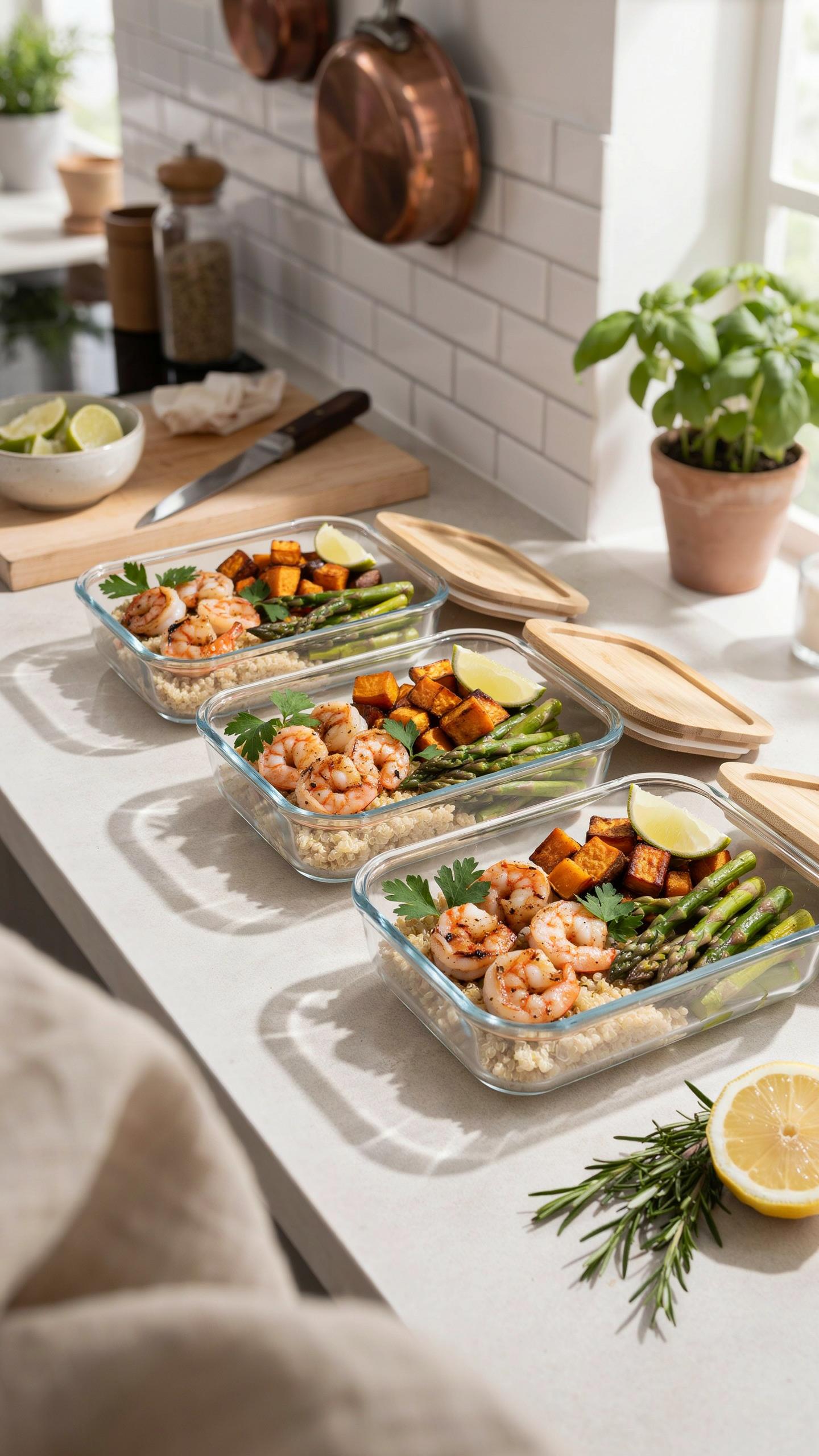
You want your shrimp meal to feel complete without thinking about what you’re missing. The mechanism is simple: shrimp alone leaves a metabolic gap. It’s pure protein with minimal fat and zero carbs. Your body needs the other two macros to actually use that protein and sustain energy between meals. Pairing shrimp with intentional carbs and fats isn’t about balance mythology. It’s about building a meal that doesn’t create hunger signals two hours later.
White rice, jasmine rice, and sweet potatoes are the carb anchors that work. They raise serotonin without spiking blood sugar unpredictably. Add olive oil, avocado, or coconut oil to the shrimp itself during prep. The fat slows digestion, stabilizes satiety, and makes fat-soluble vitamins bioavailable. This is nutritional engineering, not guessing.
Vegetables That Stack Nutrients
The typical meal prep advice treats vegetables like filler. Wrong. Certain vegetable combinations unlock nutrient absorption that shrimp alone cannot deliver. Shrimp contains selenium and choline, but those nutrients work better when paired with foods containing vitamin C and folate. This is basic biochemistry: micronutrients function as cofactors for one another. Pick vegetables strategically, not for color or volume.
- Broccoli: Sulforaphane compounds enhance liver detoxification while providing folate to complement shrimp’s choline content.
- Bell Peppers: High vitamin C content improves iron absorption from shrimp while adding enzyme diversity to the meal.
- Asparagus: Glutathione and folate synergize with shrimp’s selenium to support antioxidant defense at the cellular level.
- Spinach: Lutein and zeaxanthin work alongside shrimp’s astaxanthin for eye health; oxalates are minimal if cooked.
- Snap Peas: Provide resistant starch that feeds beneficial gut bacteria while adding vitamin K for bone metabolism support.
Prep these vegetables the same day as shrimp to maximize nutrient stability. Steam or roast at moderate heat, never boil. Store in separate containers from the shrimp to prevent moisture transfer that degrades texture. Container composition matters: glass prevents chemical leaching that plastic allows over five days.
The Shrimp Meal Prep ROI Beyond The Plate
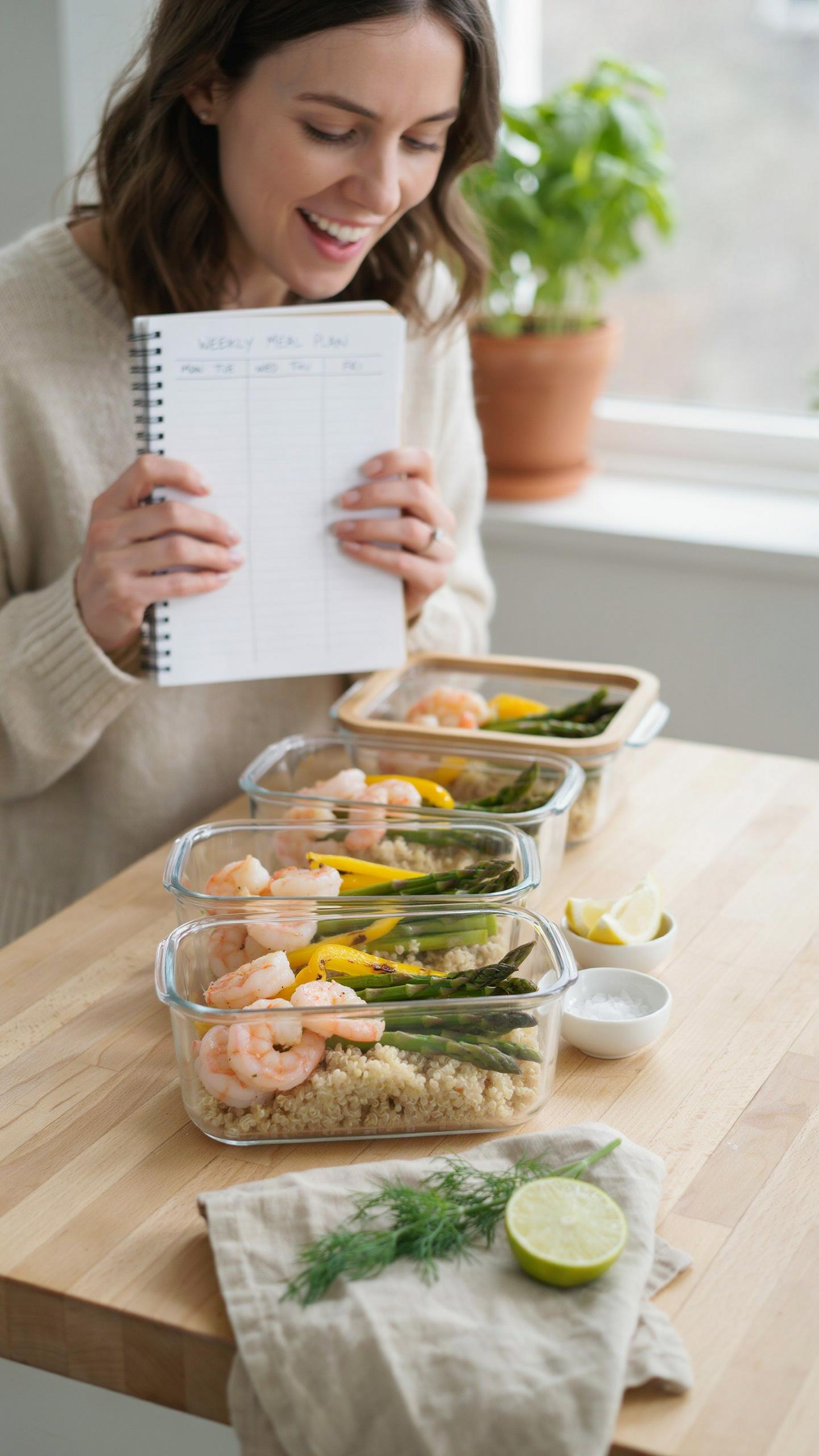
Time Saved, Energy Gained
You care about this because you’re running low on both and pretending you’re not. The real mechanism here is decision fatigue reduction. Every night you don’t decide what to eat, you preserve cognitive bandwidth for work, relationships, or recovery. Shrimp preps compress your daily food decision from three separate choices down to one: grab the container. That’s not convenience. That’s resource allocation.
Two hours of prep work on Sunday eliminates roughly fifteen minutes of daily friction across the week. That’s ninety minutes reclaimed. Most people waste this time scrolling or standing in front of an open fridge. With shrimp already portioned and cooked, your evening transitions from deliberation to execution. You eat faster, digest easier, and maintain stable blood sugar without the metabolic spike that comes from rushed takeout decisions.
Mental Clarity And Focus Benefits
The common advice says meal prep reduces stress. That’s lazy framing. What actually happens is you remove a variable from your environment. Behavioral economics calls this reducing cognitive load. Your brain stops running a background process about tonight’s dinner. Shrimp preps work because protein stabilizes dopamine and blood glucose simultaneously, which means your mental performance doesn’t crater at 6 PM when hunger signals hit hard.
When protein intake stays consistent across the week, your prefrontal cortex doesn’t compete with your hunger drive for resources. You think clearer. You make better decisions. You don’t snack at 4 PM out of desperation. Prepared shrimp in your fridge isn’t just food. It’s a guardrail against the decision-making collapse that happens when your body runs on fumes. Keep your containers visible on the shelf. Visibility triggers consumption. Consumption maintains homeostasis. Homeostasis protects focus.
The true obstacle isnt time but the absence of a defined repeatable process

You already know shrimp cooks in minutes. You already know protein matters. What you’re missing is the trigger that makes you actually do it. Pick one day this week. Buy shrimp. Season it. Cook it. Portion it into three containers. That single cycle breaks the resistance. Repeat it twice and you’ve built the thing people call discipline, which is really just a system that removes decision-making. Shrimp meal prep works because you stop thinking about whether to start and simply start the machine.