
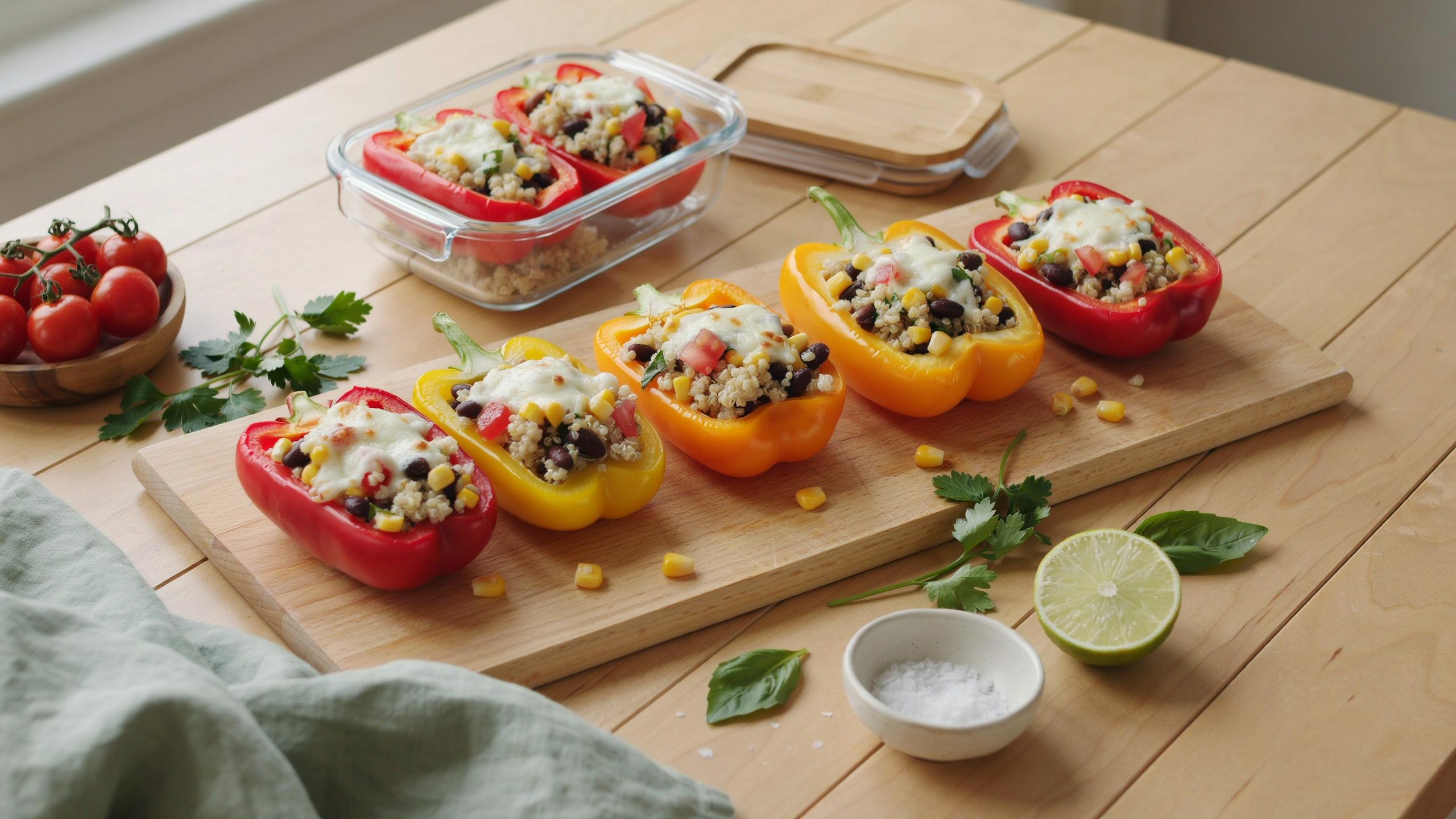
Beyond Healthy The Bio Optimization Of Protein Stuffed Peppers
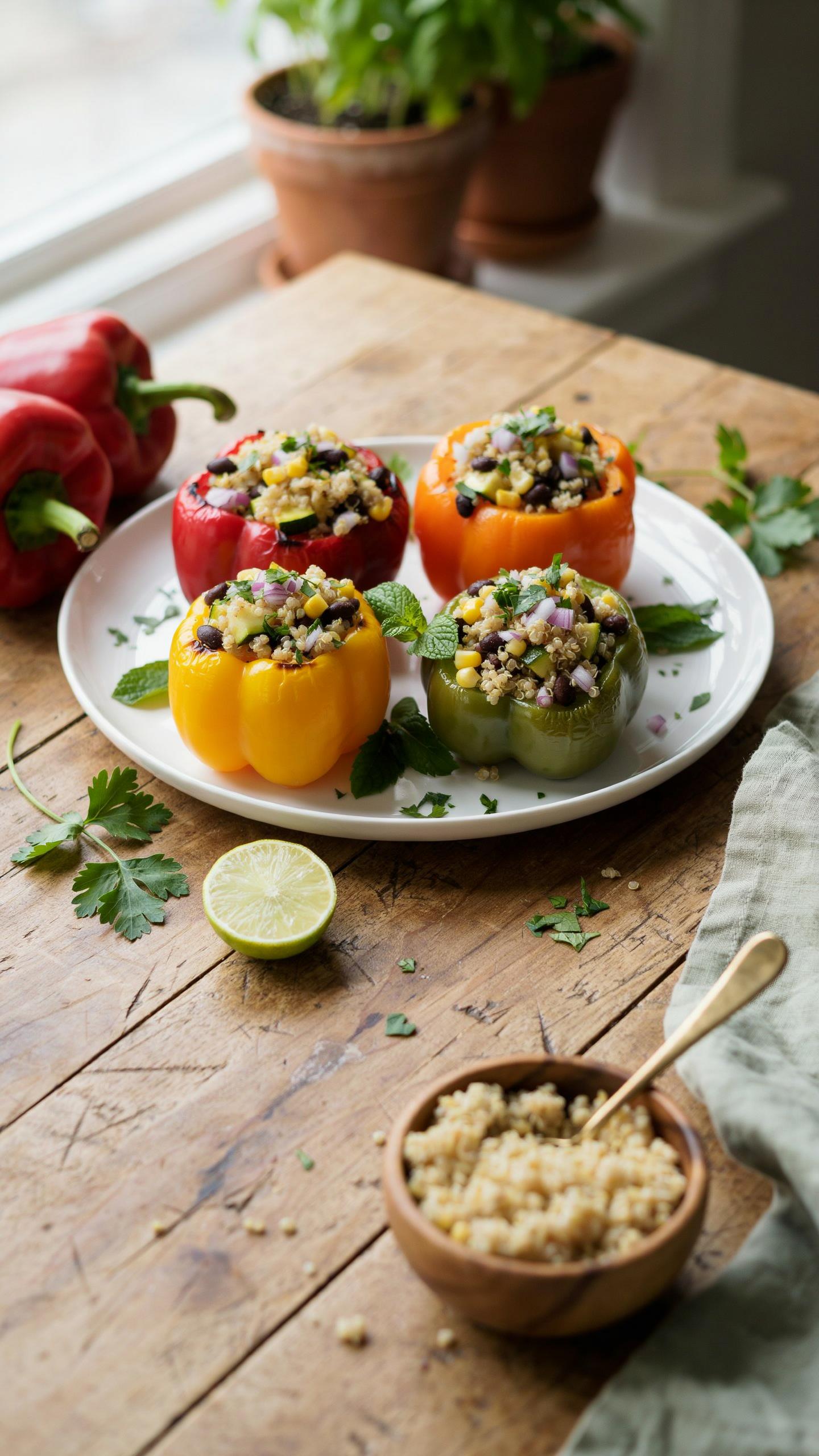
Nutrient Density Beats Macro Counting
You’re reading this because you want permission to stop obsessing over numbers. Here’s the mechanism: your body doesn’t optimize for macros in isolation. It optimizes for micronutrient availability and insulin response simultaneously. Stuffed peppers aren’t just protein containers. They’re nutrient delivery systems. The pepper itself contains vitamin C, which enhances iron absorption from your meat. The fiber moderates glucose spike. The combination matters more than any single macro hitting a target.
Most macro-focused approaches miss this entirely. They treat protein, carbs, and fat as independent variables. They’re not. When you prep stuffed peppers with ground beef, rice, and peppers, you’re stacking nutrient synergies. The vitamin C from the pepper increases the bioavailability of the iron in the beef. The soluble fiber slows carbohydrate absorption. Your micronutrient status determines how effectively your body uses that protein for muscle protein synthesis. Dial in nutrient density first. The macros will follow naturally.
Protein Is Non Negotiable For One Reason
Muscle tissue requires constant protein turnover. Not for growth. For maintenance. Your body breaks down muscle daily, and without sufficient protein intake, it stays broken down. You lose strength, metabolic rate, and resilience. Stuffed peppers solve this because they’re a vehicle for consistent protein delivery across multiple meals. One pepper contains 25-35 grams of protein depending on your meat ratio. That’s a meaningful contribution to daily protein targets.
The common advice says “eat enough protein.” It doesn’t explain why this matters for meal prep specifically. Consistency beats perfection. When you prep five stuffed peppers on Sunday, you remove decision fatigue from protein intake during the week. You’re not choosing between fast food and cooking at 8 PM. The meal exists. You eat it. Your protein intake stays stable. Stable protein intake preserves muscle mass, maintains satiety between meals, and stabilizes blood sugar. Your prep protocol is simple: portion ground meat and filling into five peppers, bake, cool, and refrigerate. Consistency compounds.
The Stuffed Bell Peppers High Protein Myth Convenience Vs Efficacy
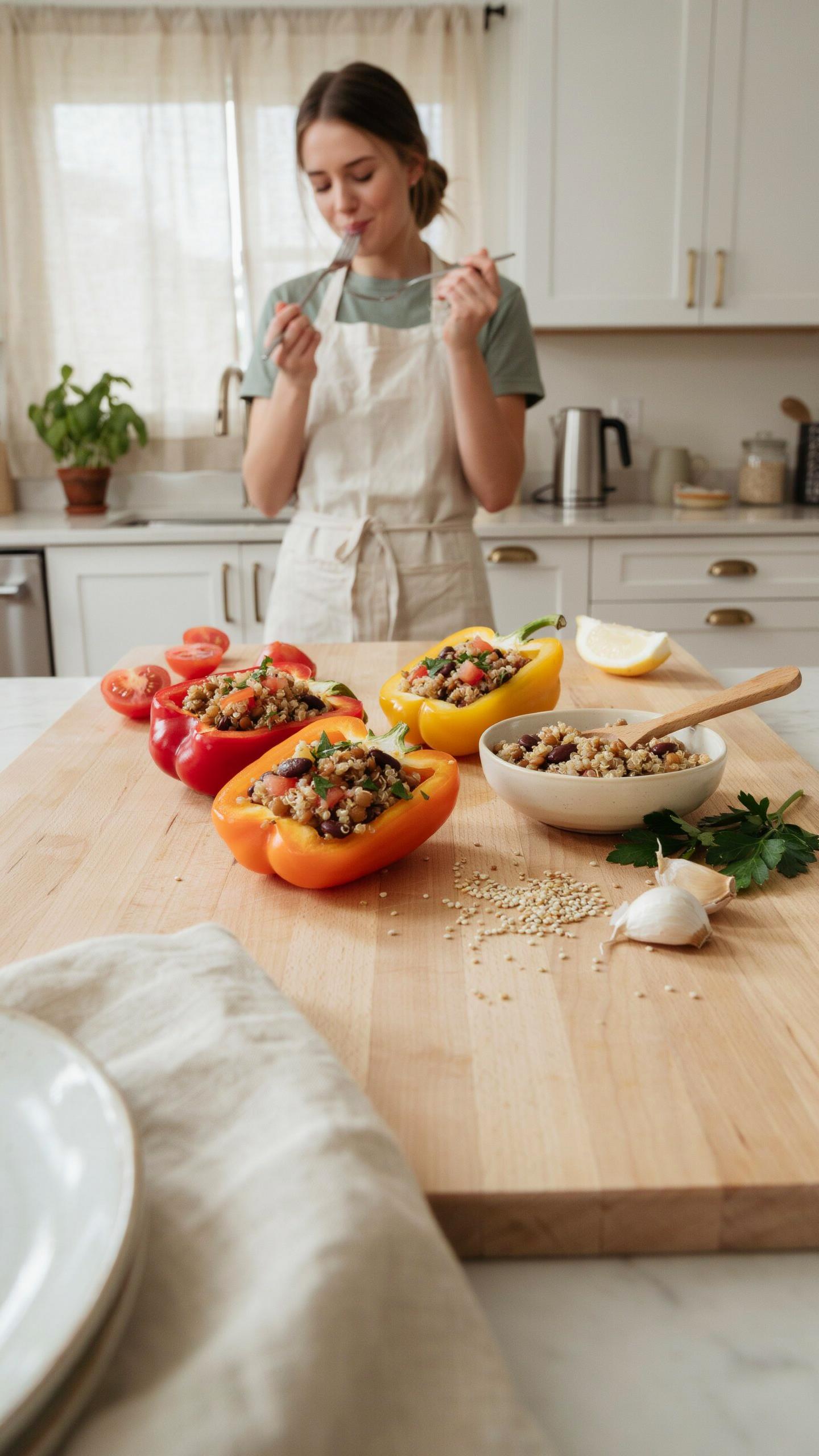
Time Saved Is Wasted If Energy Tanks
You want meal prep to feel like a win without actually changing how you eat. That’s the real trade-off nobody names. Thermodynamics applies to meal prep the same way it applies to engines: energy input must match energy output, or the system fails. You can batch-cook peppers on Sunday and feel productive for three days, but if the macros don’t align with your training or daily expenditure, you’ve optimized for optics, not results. Convenience is worthless if compliance dies on day five because the meal doesn’t fuel you properly.
The mistake is treating stuffed peppers as a meal prep hack rather than a strategic vehicle for hitting protein targets. Most people fill peppers with ground meat and rice, call it done, then wonder why they’re hungry two hours later. That’s not a meal prep failure. That’s a macronutrient imbalance masquerading as a convenience win. The pepper becomes an excuse to do less thinking, not less work. If you’re prepping five days of meals but undershooting protein by 15 grams per serving, you’ve created compliance friction, not eliminated it.
The Filling Formula Nobody Adjusts
Cutting corners on the actual fill is where most meal prep breaks down, and the fitness industry won’t say it plainly: the pepper itself is nearly nutritionally irrelevant. It’s 92 percent water and 3 grams of protein per medium pepper. You’re buying convenience packaging, not nutrition. Where people fail is treating the filling like a formula instead of a target. They use ground beef at 80/20, pair it with white rice, add sauce, and call it protein-forward. But 80/20 ground beef is 20 percent fat by weight, which means your protein-to-calorie ratio drops hard. One ounce of 80/20 beef gives you 5 grams of protein and 8 grams of fat. That math doesn’t win.
The protocol that works requires one adjustment: use 93/7 ground beef or ground turkey, or layer in Greek yogurt as a binder instead of relying on fat for texture. This simple swap raises your protein density without adding volume or prep time. Skip the rice filler entirely if your goal is protein efficiency. Replace it with cauliflower rice, which absorbs the filling flavor without competing for calories. Your peppers go from 25 grams of protein per serving to 32 to 35 grams. That’s the difference between a meal that holds you four hours and one that doesn’t. The change takes the same prep time. You’re just being precise about what goes inside.
The Zero Friction Fueling System High Protein Stuffed Pepper Meal Prep
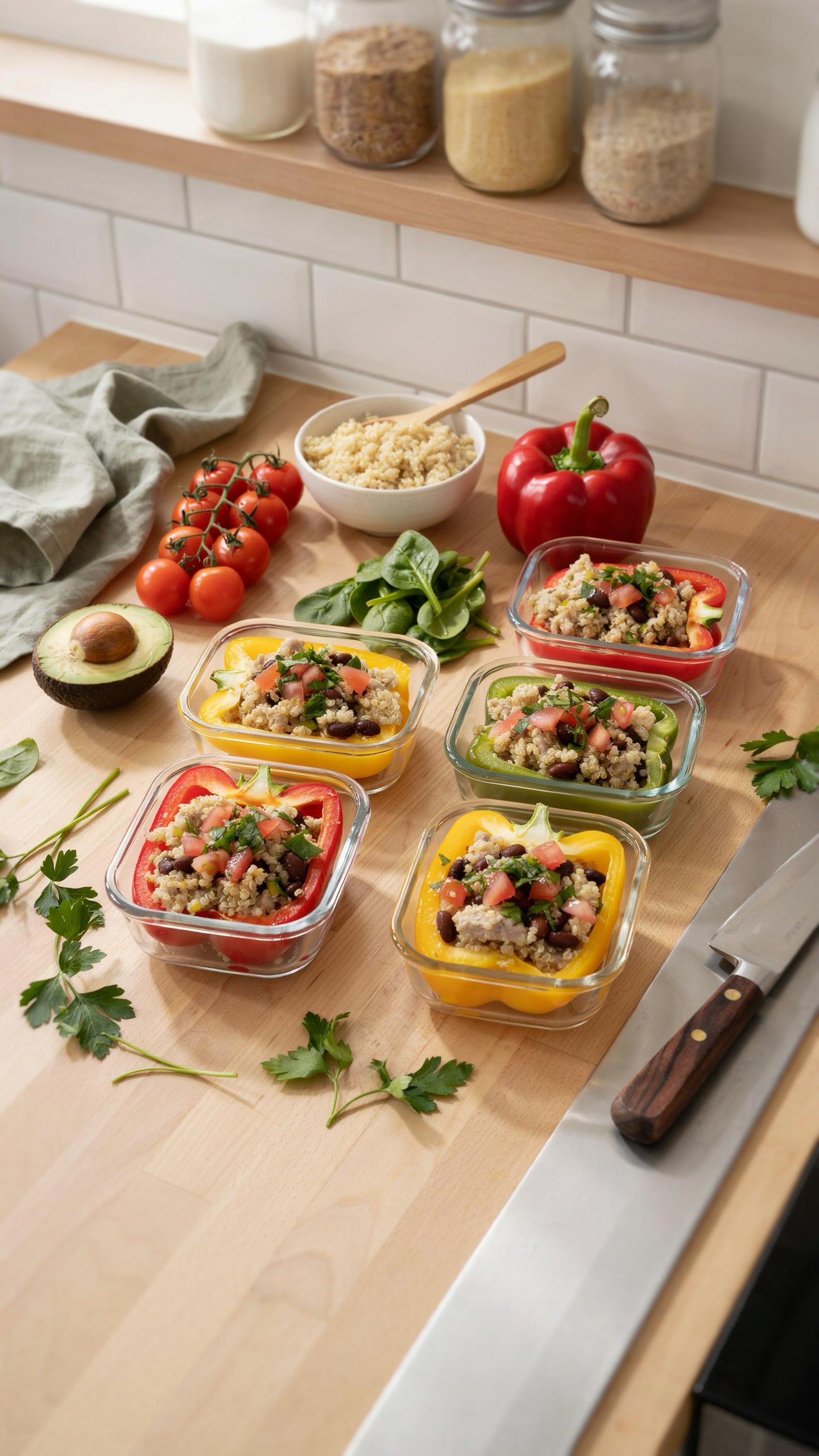
Pick Ingredients That Don’t Fight Each Other
You want meal prep to feel like a system, not a chore. That’s the real fear driving this section: you’re betting your consistency on whether you’ll actually execute it. The mechanism is simple. Use ingredients that tolerate the same storage conditions and cooking method without degrading. Ground beef, rice, and bell peppers all survive five days in a fridge at the same rate. They reheat together without texture collapse. Don’t mix ingredients with conflicting shelf lives or moisture profiles.
Ground meat is the foundation because it absorbs seasoning, compresses into peppers efficiently, and maintains protein density across storage windows. Bell peppers hold their structure through multiple reheats when you don’t overcook them initially. Rice or cauliflower rice acts as a filler that stabilizes the filling and prevents the meat from drying out. Cheese adds fat to preserve moisture. Tomato sauce binds everything while its acidity prevents bacterial growth. The goal isn’t variety. The goal is predictable output across repetitions.
Batch Sequence For Maximum Output
Military logistics call this “economies of scale” applied to a single recipe. Buy five pounds of ground beef instead of cooking in small batches. Brown it once. Season it once. You’ll produce eight stuffed peppers in the time it takes to produce two using conventional cooking. Start with prep: wash and halve all peppers first. This takes fifteen minutes for eight peppers and breaks the mental friction of starting. Then brown the meat in one large skillet. While it cools, combine all dry ingredients in a bowl. Mix the cooled meat with rice, spices, and binder. Fill all peppers on a clean surface. Bake everything simultaneously on two sheet pans.
- Prep Station First: Wash, halve, and deseed all peppers before touching any protein. This creates a visual finish line and removes decision fatigue mid-process.
- Brown Meat In One Batch: Cook all ground beef together in your largest skillet. Partial browning is acceptable. You’re going to finish cooking in the oven anyway.
- Dry Ingredients Bowl: Combine rice, spices, cheese, and breadcrumbs in one large bowl before mixing with meat. Eliminates multiple ingredient grabs.
- Assembly Line Filling: Arrange peppers in rows on your work surface. Fill each one completely before moving to the next. Use an ice cream scoop for consistency and speed.
- Two Sheet Pans Simultaneous: Bake all peppers at once rather than rotating batches. Oven space is free. Your time is not.
Batch cooking stuffed peppers means you’re not deciding whether to prep tonight. The decision happens once during the shopping phase. You execute the same workflow every week. The peppers reheat in forty five seconds in a microwave at work. No excuses. No friction. No choice.
Low Carb High Protein Stuffed Peppers The Unfair Advantage
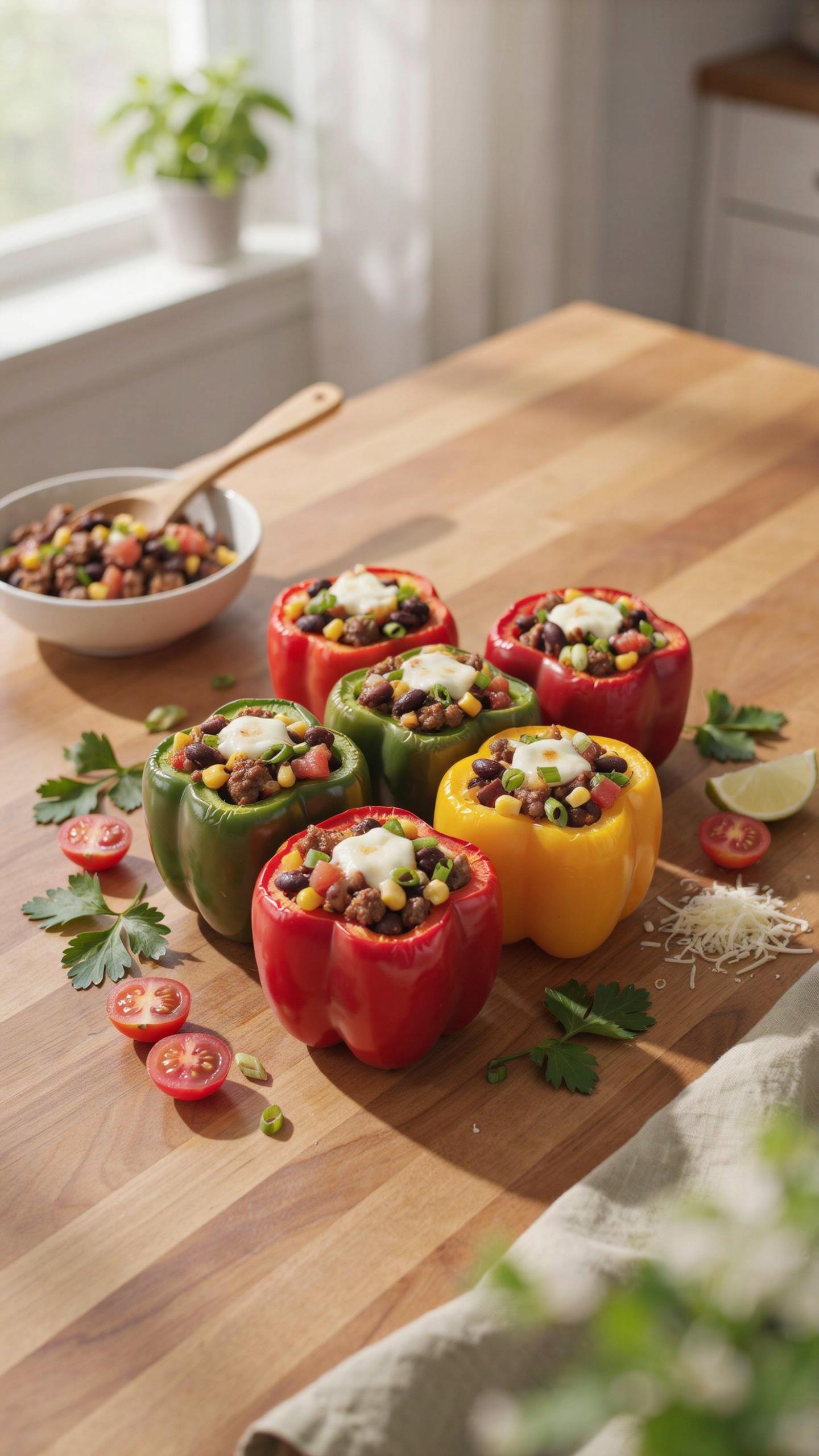
Your Body Runs On Different Fuel
You want this because you’re tired of the energy crash at 3 PM and you know everyone else is too, but nobody admits it. Here’s the mechanism: biology calls it metabolic flexibility. A low-carb, high-protein stuffed pepper shifts your body from glucose dependency to fat adaptation. When carbs drop and protein rises, your liver produces ketones as backup fuel. Your cells stop riding the blood sugar roller coaster. The result is steady state energy instead of spikes and crashes.
Most meal prep advice ignores this entirely and just counts calories. That’s incomplete. A 400-calorie stuffed pepper built on ground beef, egg, and cheese hits differently than 400 calories of rice and chicken breast because it changes which metabolic pathway fires up. Your pancreas stays calm. Insulin doesn’t spike. Fat becomes available as fuel instead of stored. This is why people report mental clarity before they report weight loss on this approach.
Energy Without The Crash
Sustained energy requires stable blood glucose and steady fuel delivery. Low-carb stuffed peppers with high protein accomplish both. The protein slows stomach emptying, which means nutrients release gradually. The fat content extends satiety and provides dense calories your brain recognizes as fuel. No spike means no crash. You stay sharp for 4-5 hours instead of 90 minutes.
Most people blame willpower when energy crashes. They don’t blame the meal. A stuffed pepper prepped on Sunday with ground turkey, ricotta, and minimal carbs keeps your prefrontal cortex online all afternoon. Your focus doesn’t fragment. Your hunger doesn’t ambush you at 4 PM. That stability compounds when you repeat it five days straight through meal prep. The mechanism is simple: eliminate the fuel swing, eliminate the cognitive decline that follows it.
The Protein Stuffed Peppers Protocol A Strategic Playbook
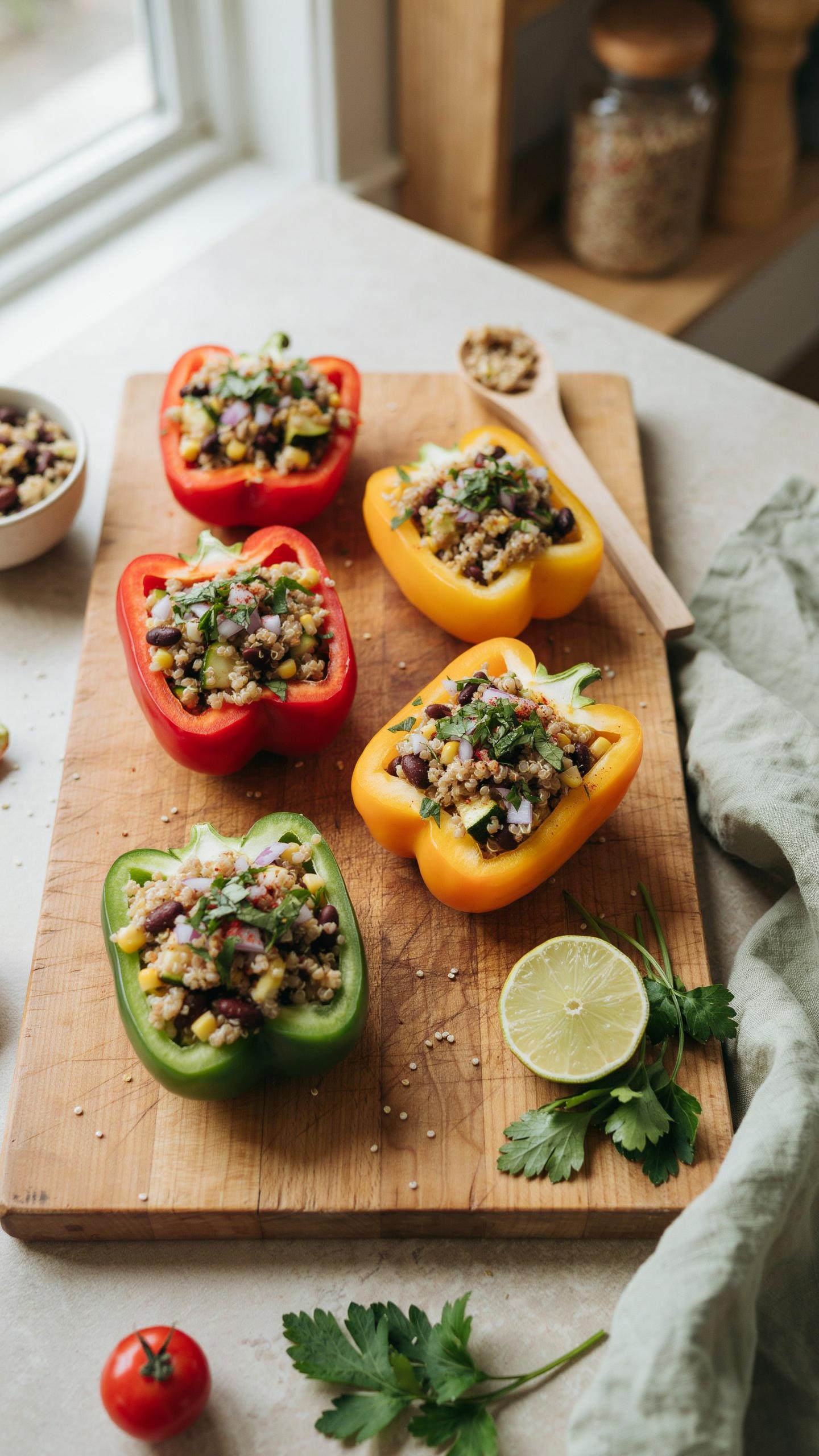
Batch Preparation As Operational Efficiency
You want to feel like you have your life together. Here’s the mechanism: military logistics wins wars not through heroic individual effort, but through predictable systems that scale. Supply lines are to armies what batch prep is to your protein intake. You cook once, eat six times. The difference between success and failure isn’t willpower, it’s whether you’ve eliminated the daily decision.
Structure your prep day around one continuous workflow: wash and halve all peppers first, brown all ground meat second, mix all filling third, stuff all peppers fourth, bake all peppers fifth. This is not multitasking. This is specialization applied to your kitchen. You move through one phase completely before starting the next, which cuts your total time in half compared to making two or three peppers individually.
Kitchen Setup Determines Output
Most people treat their kitchen like a reactive space. You move through it when hunger strikes. That’s the wrong frame. Your kitchen is a production facility now, and production facilities don’t work without pre-positioned resources and clear workflow zones. Set up three stations: prep zone with cutting board and peppers, cooking zone with stove and ground meat, assembly zone with filling, seasoning, and baking sheet. Distance matters because every step you eliminate saves five minutes across a full batch.
Stock your assembly zone before you begin. Bowls of cooked ground meat, measuring spoons of seasonings, grated cheese, hot sauce, olive oil. Nine out of ten people interrupt their workflow to search for something mid-prep. You don’t. Once you start stuffing peppers, nothing should require a trip to the pantry. Fill your baking sheet in a single unbroken motion, then transfer straight to the oven. This rhythm is where efficiency lives.
Bell Pepper Recipes Beyond Basic Elevating Your Intake
Flavor Profiles That Keep You Compliant
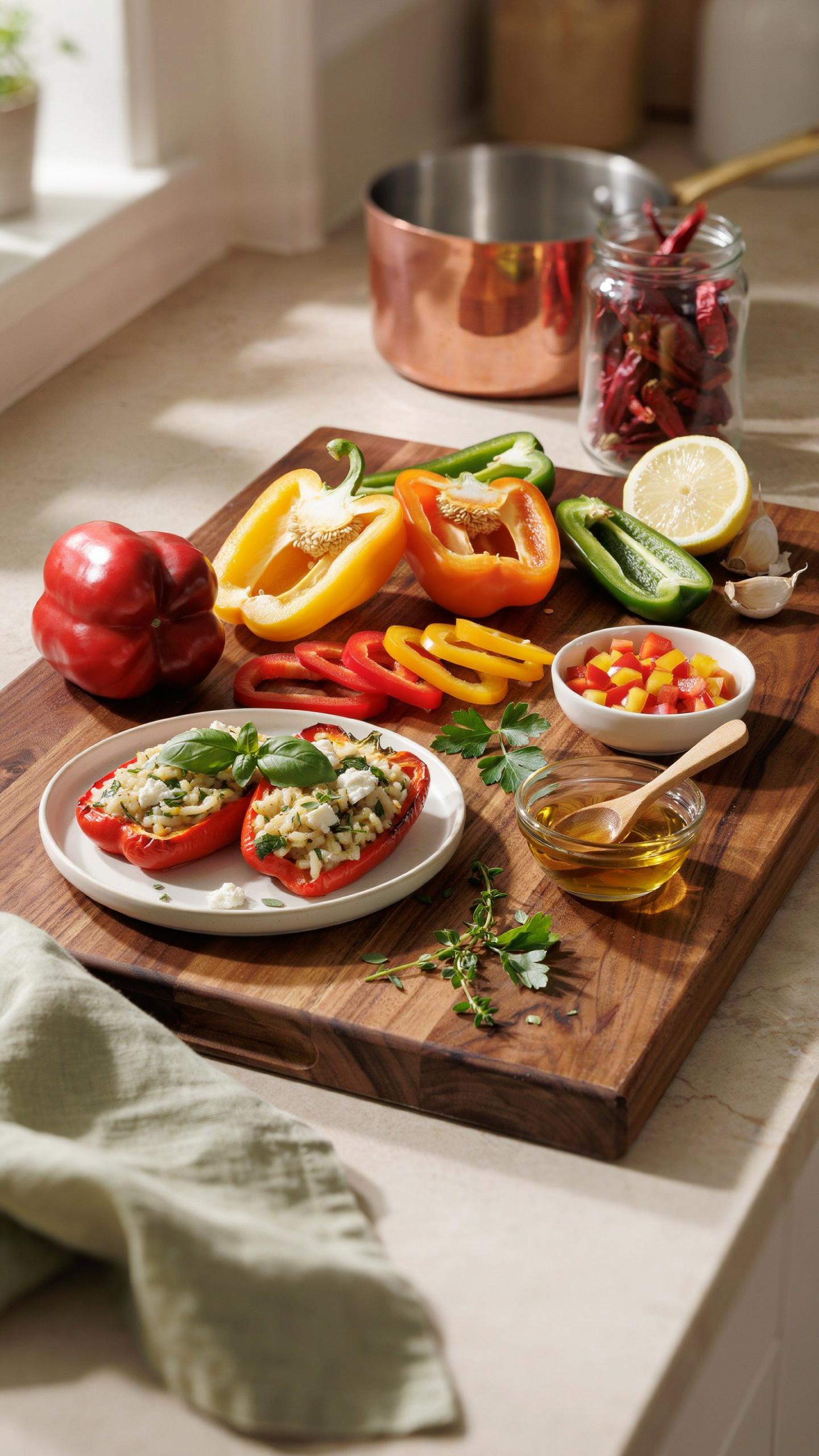
You want to feel like you’re not eating the same thing twice because repetition feels like failure. The real mechanism is sensory adaptation: your brain stops registering flavor intensity after three to four exposures to the same combination. This isn’t weakness. It’s neurology. When taste signals flatten, you unconsciously eat less or abandon the meal plan entirely.
The fix is deliberate flavor architecture across your week. Don’t rotate proteins alone. Rotate the flavor base itself. Mediterranean one day (tomato, oregano, feta), Mexican the next (cumin, jalapeño, chorizo), Asian the third (ginger, soy, sesame). Your palate resets between rotations because each combination triggers different taste receptors. You stay compliant because your brain perceives variety even though the protein count stays constant.
Stopping Flavor Fatigue Before It Starts
Generic meal prep advice says “just eat it anyway.” That’s how people quit. Flavor fatigue isn’t a mental problem you overcome through discipline. It’s a sensory problem you prevent through design.
The mechanism is simple: umami and salt amplification. High protein peppers benefit from layered umami sources because they create perceived flavor complexity without adding calories. Beef broth instead of water in the rice base, soy or miso in the sauce, aged cheese in the filling. These compounds signal satisfaction to your brain faster, which means you finish the meal satisfied instead of pushing through it. The protocol is one umami anchor per recipe, plus one fresh acid element (vinegar, lime, lemon) added fresh on eating day to interrupt adaptation patterns.
High Protein Dinner Dominance Your Evening Power Play

Muscle Recovery Happens When You Sleep
You want dinner to be the final decision of your day, not another thing you optimize for status. Here’s the mechanism: muscle protein synthesis peaks during sleep, but only if amino acids are available in your bloodstream when cortisol drops and growth hormone rises. A high protein stuffed pepper meal at dinner floods your system with leucine and other essential amino acids right before this window opens. The timing matters more than the total daily protein because your body can only synthesize so much muscle tissue per meal anyway.
Stuffed peppers work because they deliver 25 to 35 grams of protein per serving in a format that digests slowly. Ground beef or turkey mixed with rice or lentils creates a meal with both fast and slow-digesting proteins, keeping amino acid levels elevated through the early sleep cycle. Your muscle fibers don’t repair themselves while you’re eating or training. They repair themselves when you’re unconscious and your body prioritizes recovery over everything else.
Sleep Quality Depends On Digestion Timing
The common advice says eat protein anytime. That’s incomplete. Digestion itself requires energy and triggers blood flow to your gut, which interferes with the deep sleep stages where growth hormone secretion peaks. Eating a stuffed pepper at 7 PM gives your body roughly three hours to move it through the initial digestive phase before you sleep at 10 PM. This isn’t about fasting before bed. It’s about the specific window where protein is absorbed without disrupting sleep architecture.
A stuffed pepper meal preps well because the vegetable fiber slows gastric emptying just enough to maintain steady amino acid delivery without spiking insulin before sleep. Refined carbs spike insulin, suppress melatonin production, and fragment REM sleep. The pepper’s fiber and the protein both suppress ghrelin, your hunger hormone, so you actually sleep without waking at 2 AM wanting food. The prep step that matters most is portioning your meals so dinner happens at the same time every night, because circadian rhythm consistency determines whether your body even activates growth hormone during sleep.
Healthy Bell Peppers Stuffed Dissecting The Healthy Label
The Word Healthy Means Nothing
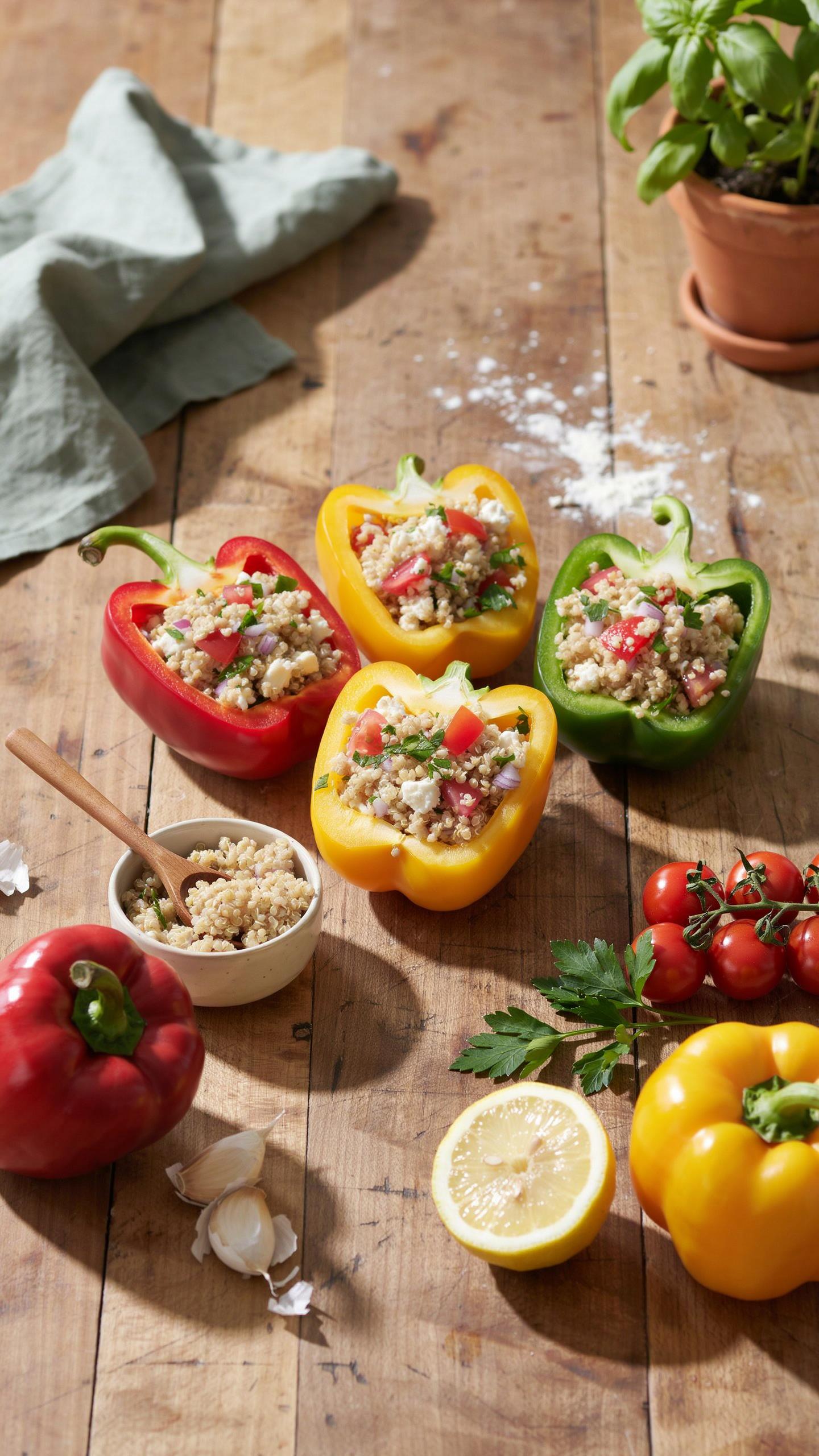
You want the label “healthy” on your meal prep because it signals you’re making good choices without having to think hard about whether you actually are. Here’s the mechanism: “healthy” is a marketing term, not a nutritional standard. The FDA has no legal definition for it. A stuffed pepper is healthy relative to what? Compared to a gas station hot dog, sure. Compared to your actual goals and constraints, maybe not.
Stop using the word as your decision filter. Replace it with specificity: total protein grams per serving, fiber content, micronutrient density, and whether it fits your calorie budget. A stuffed pepper with 35 grams of protein, 8 grams of fiber, and 320 calories is measurable. “Healthy” is a feeling you’re paying for. The real work starts when you define what your body needs, not what the culture says sounds virtuous.
Dogma Disguised As Nutrition Science
Most nutrition advice treats food like a moral statement instead of a fuel delivery system. You’ve heard it: eliminate carbs, go keto, eat only whole foods, avoid processed anything. This is backwards thinking. Dogma prioritizes purity over outcomes. What matters is whether stuffed peppers hit your protein target, maintain satiety between meals, and fit your schedule so you actually eat them consistently.
The mechanism here is simple: adherence beats perfection. A meal prep you complete beats a theoretically perfect meal prep you abandon. Use ground beef, ground turkey, or plant-based protein depending on cost and availability in your area. Add rice, cauliflower rice, or both. Season aggressively. If it delivers protein and you eat it four days running, the dogma was wrong about what you needed. Consistency is the only nutritional variable that compounds.
Clean Eating Stuffed Peppers The Purity Principle
Where Your Protein Actually Comes From
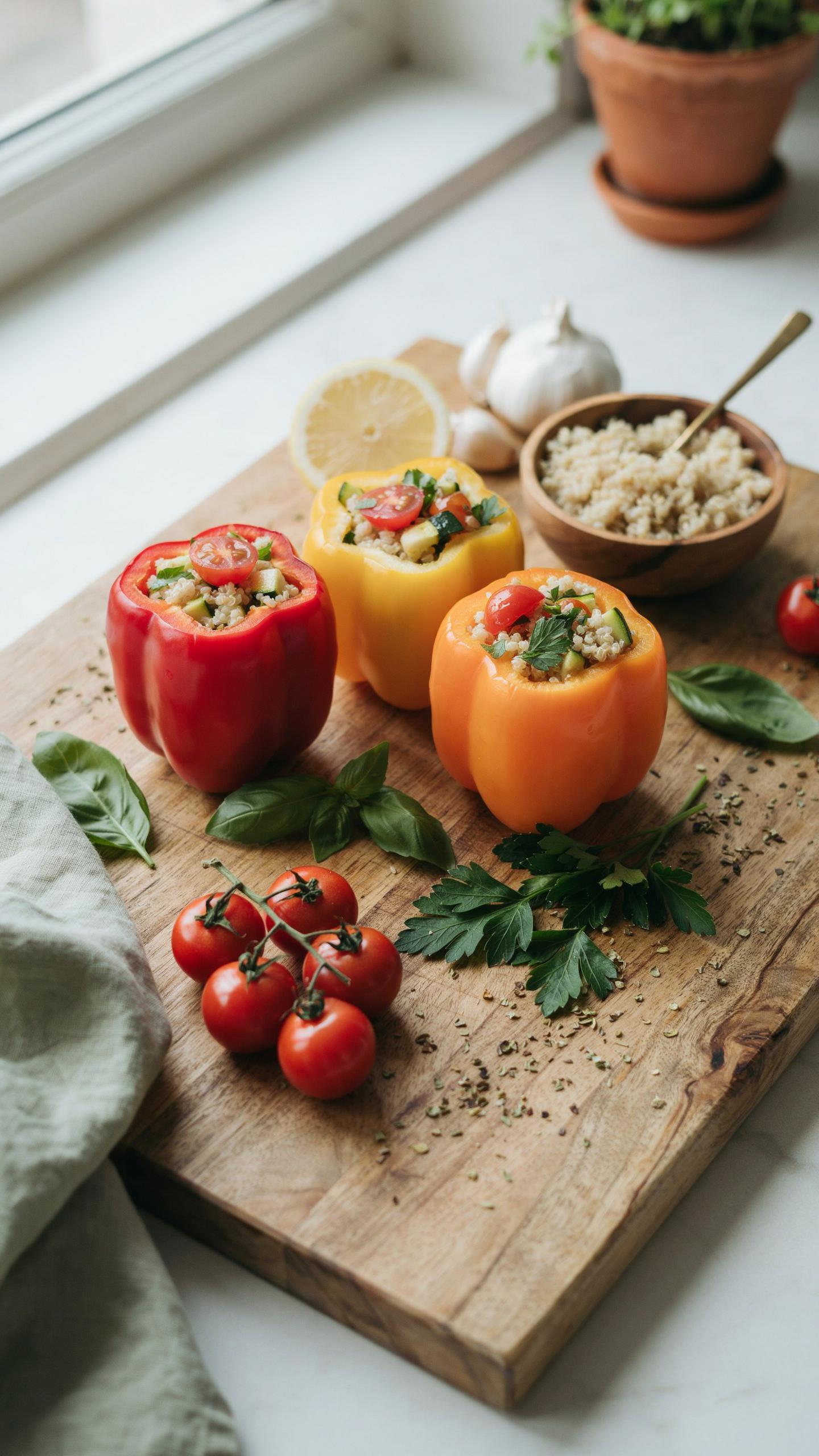
You want to believe your food is clean because it makes you feel superior to people eating processed garbage. That feeling is real, but it’s not the mechanism that matters. The mechanism is bioavailability: how much of the protein you consume your body actually absorbs and uses. Ground beef from a grass-fed cow has a different amino acid profile than conventional grain-fed beef, and your digestive system extracts nutrients differently based on the animal’s diet and how the meat was handled post-slaughter.
Most people source their stuffed pepper protein without understanding what they’re actually buying. They see the label and stop thinking. Grass-fed ground beef costs more, yes, but the nutrient density per ounce is measurably higher. Conventional beef works fine for meal prep, but if you’re optimizing, the source changes your results. The real question isn’t moral purity, it’s metabolic efficiency: which protein source gives you the most usable amino acids per dollar and per storage day.
Oxidation Is The Silent Saboteur
The common advice about clean eating is incomplete. People talk about ingredients but ignore what happens to those ingredients between purchase and consumption. Oxidation destroys protein quality over time, especially when ground meat sits in your fridge. This is basic chemistry. Fat oxidizes first, creating rancid compounds that degrade the remaining amino acids and create compounds your body has to process as stress.
Store your stuffed peppers in airtight glass containers and freeze them within 48 hours of assembly. If you prep on Sunday and eat Wednesday, you’ve already lost measurable protein quality through oxidation. The container matters: glass is inert, plastic leaches compounds into high-fat foods, and open storage accelerates rancidity. Label with the assembly date, not the freeze date. This single protocol step determines whether your meal prep is actually clean or just cheaper than takeout.
The Replicable System Scaling Your Success With Healthy Stuffed Bell Peppers
Cook Once, Eat Multiple Times
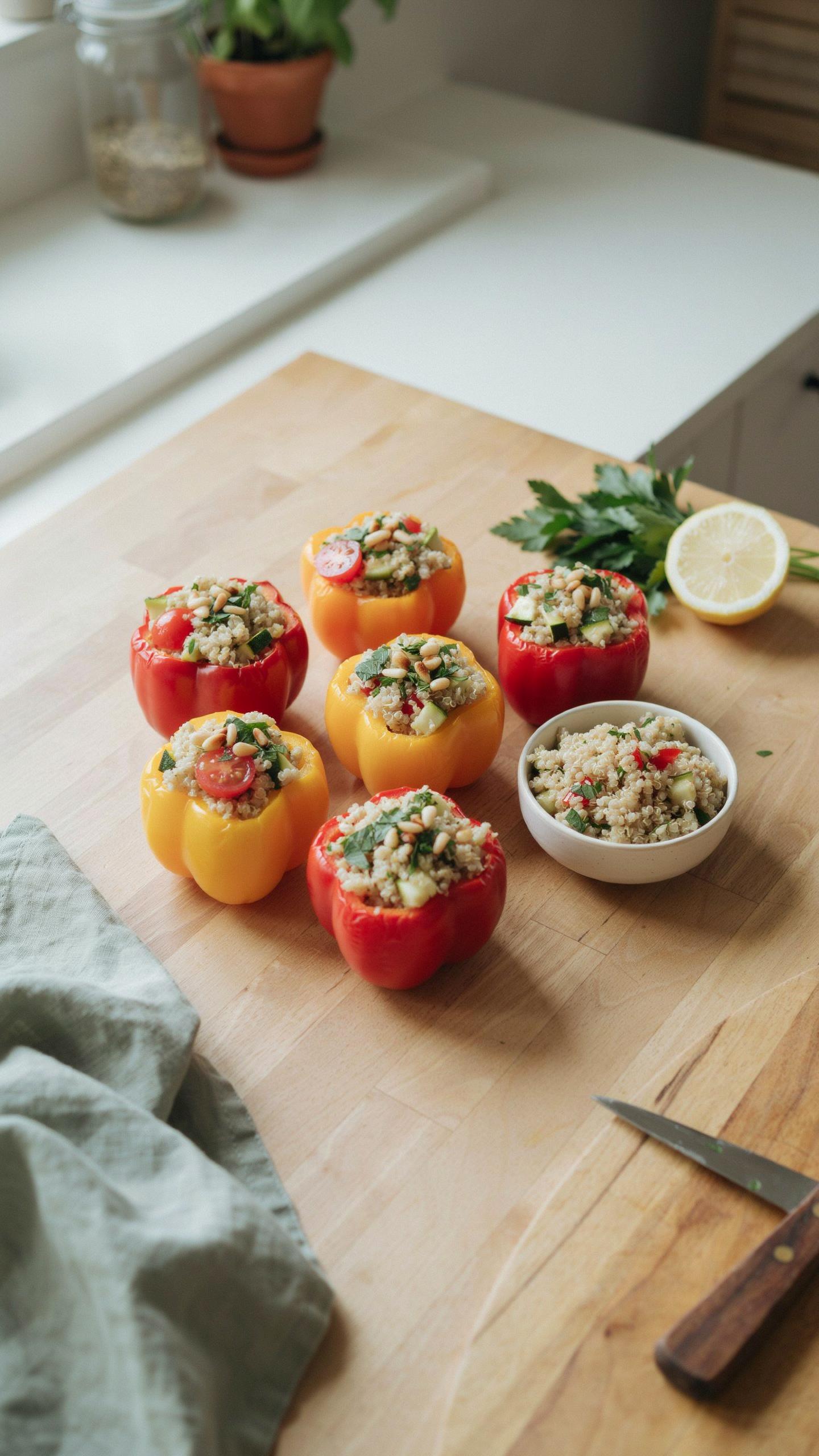
You want to believe that meal prep saves time because you’re avoiding decision fatigue during the week. The real mechanism is batch processing: treating your kitchen like a production line instead of a restaurant. You prep ingredients in stages, not recipes. One cutting board holds all peppers. One pan holds all protein. One oven runs one temperature. You eliminate setup and cleanup cycles that devour thirty minutes per meal.
The math is brutal and simple. Cooking three meals individually takes three setups, three cooking phases, three cleanups. Cooking twelve peppers at once takes one setup, one cooking phase, one cleanup. You save two hours minimum per week. The protein browns faster in volume because heat distributes evenly across the pan. Peppers roast uniformly at 375 degrees for thirty-five minutes regardless of quantity. Stack them tight. They steam each other and cook through.
Airtight Storage Determines Shelf Life
Container choice matters because moisture controls bacterial growth, not freshness feelings. Glass containers with rubber seals outperform plastic because they don’t absorb oil or odor and maintain humidity levels without sweating condensation inside. Stuffed peppers last five days refrigerated in airtight conditions because the cooked protein and filling create a stable environment that resists decomposition. The pepper itself softens slightly by day four, but the filling remains safe and edible.
Freeze half your batch on day two if you want to extend availability to three weeks. Layer them flat in freezer bags first, then stack containers once frozen solid. This prevents the pepper from getting crushed under weight. Thaw in the refrigerator overnight before reheating at 325 degrees for twelve minutes covered. Reheating at lower temperature prevents the cheese topping from browning too much while the interior warms through. This is your protocol.
The real obstacle isnt your diet its your undisciplined approach to fueling your ambition

You don’t need another meal prep strategy. You need to stop treating nutrition like optional self-care and start treating it like infrastructure for your work. High protein stuffed peppers aren’t trendy. They’re a decision. Pick one day this week, buy your peppers and ground meat, and batch cook six of them right now. Not tomorrow. Today. Everything else in your life flows from whether you actually fuel yourself or keep making excuses. Stop waiting for motivation and build the system that runs without it.