
The Set And Forget Fallacy Of High Protein Meal Prep

Why Meal Prep Fails Without Friction Design
You want to believe that cooking once solves eating forever. That’s the real appeal here, not nutrition. The mechanism is borrowed from systems design: entropy. Your chili doesn’t degrade because it sits in the fridge. Your adherence degrades because friction increases daily. You open the container Tuesday and it’s less appealing than it was Monday. By Friday, you’ve convinced yourself eating out is reasonable.

The common advice says “just portion it” and expects discipline to carry you seven days. That doesn’t work because eating the same meal repeatedly triggers psychological satiation faster than nutritional science acknowledges. Your brain stops wanting the thing, even if your body needs the protein. You need friction reduction built into the meal itself, not willpower management. That means texture variation, temperature changes, and seasoning rotation across the week.
The Cost Of Eating Inconsistently
Inconsistent protein intake doesn’t just waste the prep work. Muscle protein synthesis responds to regular stimulus, not sporadic doses. Miss Thursday and Friday eating high protein, then binge Sunday, and you’ve signaled your body to store less muscle and more energy as fat. That’s the metabolic cost nobody names plainly when they talk about “just eating more protein.”

Your adherence compounds or collapses depending on the first three meals. If Monday and Tuesday go perfectly, you’re anchored to the pattern. If you break it Wednesday, recovery is slower than starting fresh. The protocol matters more than the recipe: cook Saturday, consume Monday through Thursday with zero deviation, then reassess. This removes decision fatigue and trains your nervous system into the habit. Treat it as non-negotiable as brushing your teeth, not as flexible self-optimization.
Behavioral Economics Of High Protein Meal Prep

Remove Friction From The Decision Point
You want meal prep to feel automatic because you’re terrified of making bad food choices when you’re tired. The mechanism here is commitment devices—a term from behavioral economics meaning you lock yourself into a choice before willpower fails. High protein chili meal prep works because you’ve already decided. The pot sits in your fridge. No negotiation required.
Most people understand this wrong. They think commitment means motivation or discipline. It doesn’t. It means you physically eliminate the competing option. When Sunday’s chili is portioned and ready, the friction to eat it drops to zero while the friction to order takeout spikes. You’re not stronger. The environment did the work. Batch your chili, portion it immediately into containers, and remove the bulk pot from sight. That’s the protocol.
Structure Your Environment To Default Toward Protein
Choice architecture is the economist’s term for how you arrange options to influence behavior without restricting freedom. With high protein chili meal prep, you’re designing a food environment where the healthy choice requires zero friction and the unhealthy choice requires deliberate effort. Most people get this backwards and design their environment to punish themselves instead.
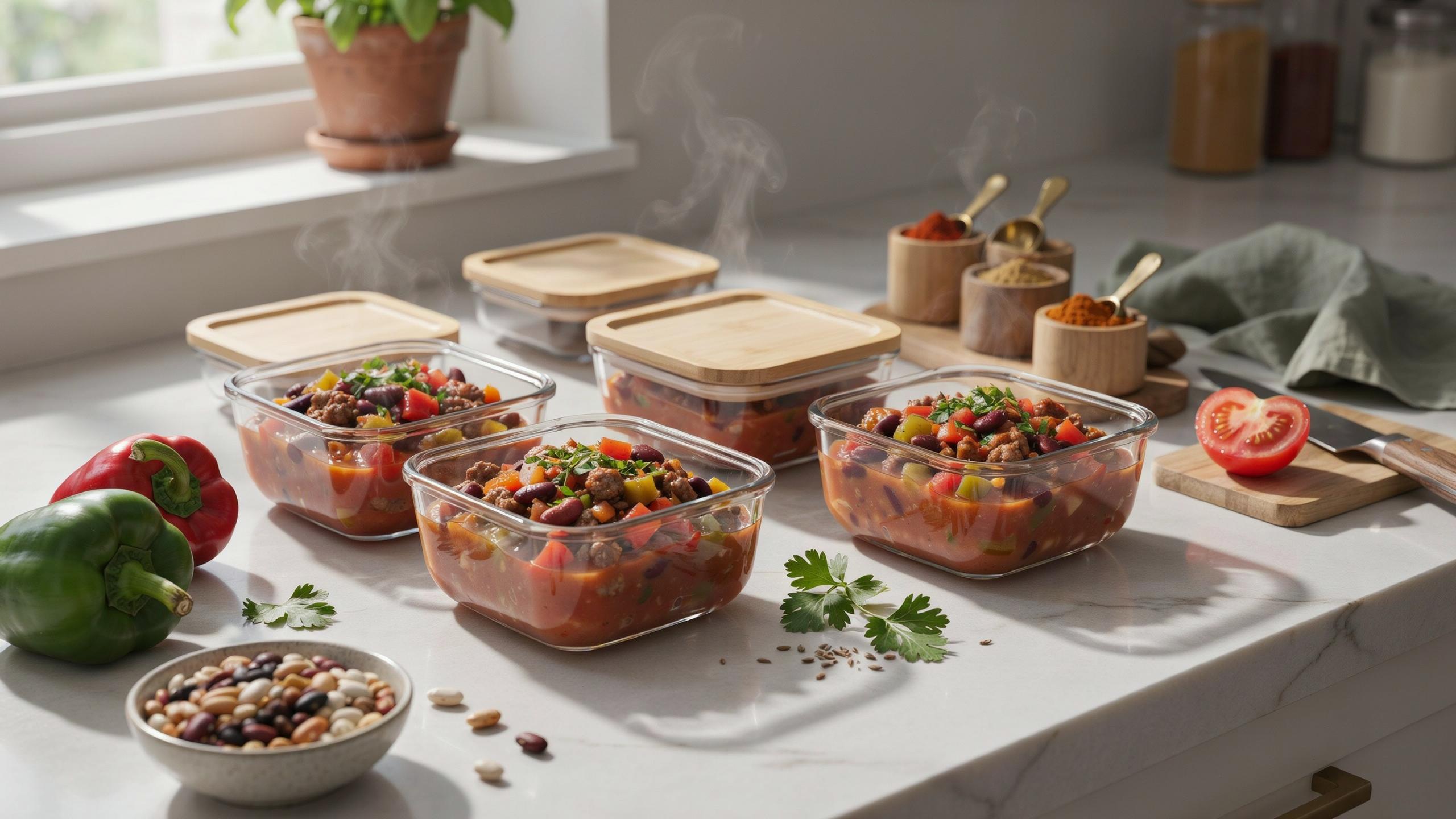
The chili containers sit at eye level in your fridge. Nothing competes for that space. Snacks and processed food live in a separate drawer or cabinet. You can still access them, but you’ve added a step. You’re not relying on willpower to choose protein over junk. You’ve architected the choice itself so that grabbing chili is the path of least resistance. Prep a minimum of four days’ worth of portions in matching containers. Stack them front and center.
Protein Leverage The Real Mechanism Of High Protein Chili
How Protein Suppresses Hunger Signals
You want to feel full without thinking about food. That’s the real reason you’re here. The mechanism is biological, not willpower-based. Protein triggers satiety through cholecystokinin (CCK), a hormone your gut releases when amino acids hit your intestines. This isn’t marketing. CCK signals your brain directly: stop eating. High protein chili floods your system with amino acids, forcing the signal early and hard.
The common advice says “eat more protein” like it’s obvious. It misses the timing layer. When you eat chili with ground beef, turkey, or beans as the base, you’re not just adding calories. You’re creating a physiological state where hunger hormones stay suppressed for hours. Ghrelin, the hunger driver, drops measurably. Your next meal urge doesn’t hit because your gut is still signaling fullness. This is why high protein chili meal prep works across entire weeks without craving spikes.
Strategic Protein Sources For Maximum Satiety
Satiety isn’t about total protein grams alone. It’s about which proteins your body processes slowest. Economics has a concept called elasticity of demand: how much input you need to shift output. Protein satiety works the same way. Lean ground beef and turkey create slower digestion than chicken breast because of fat content and fiber interaction. Beans add both protein and resistant starch, which extends the satiety window further. Your chili base determines how long you actually stay full.
Most people treat all protein sources as interchangeable. They’re not. Ground beef at 80/20 ratio paired with kidney beans and lentils in chili creates a digestion curve that lasts five to seven hours. Chicken breast alone drops that to three to four. The fat, the fiber, the amino acid profile, the particle size all matter. Store your meal prep portions in containers with protein variety across batches. Cook some batches with beef and beans, others with turkey and lentils. Rotate them through your week. This prevents your system from adapting to a single protein source and maintains consistent satiety.
The Minimalist Chili Protocol Easy Healthy Chili
What Actually Goes Into The Pot
You want this to feel effortless so you actually execute it. That’s the real motive here. The mechanism is simple: nutrient density per ingredient means fewer inputs to manage and track. Biology recognizes this as metabolic efficiency—you’re not wasting digestive energy on filler. Strip the recipe to what delivers protein, fiber, and micronutrients without redundancy.
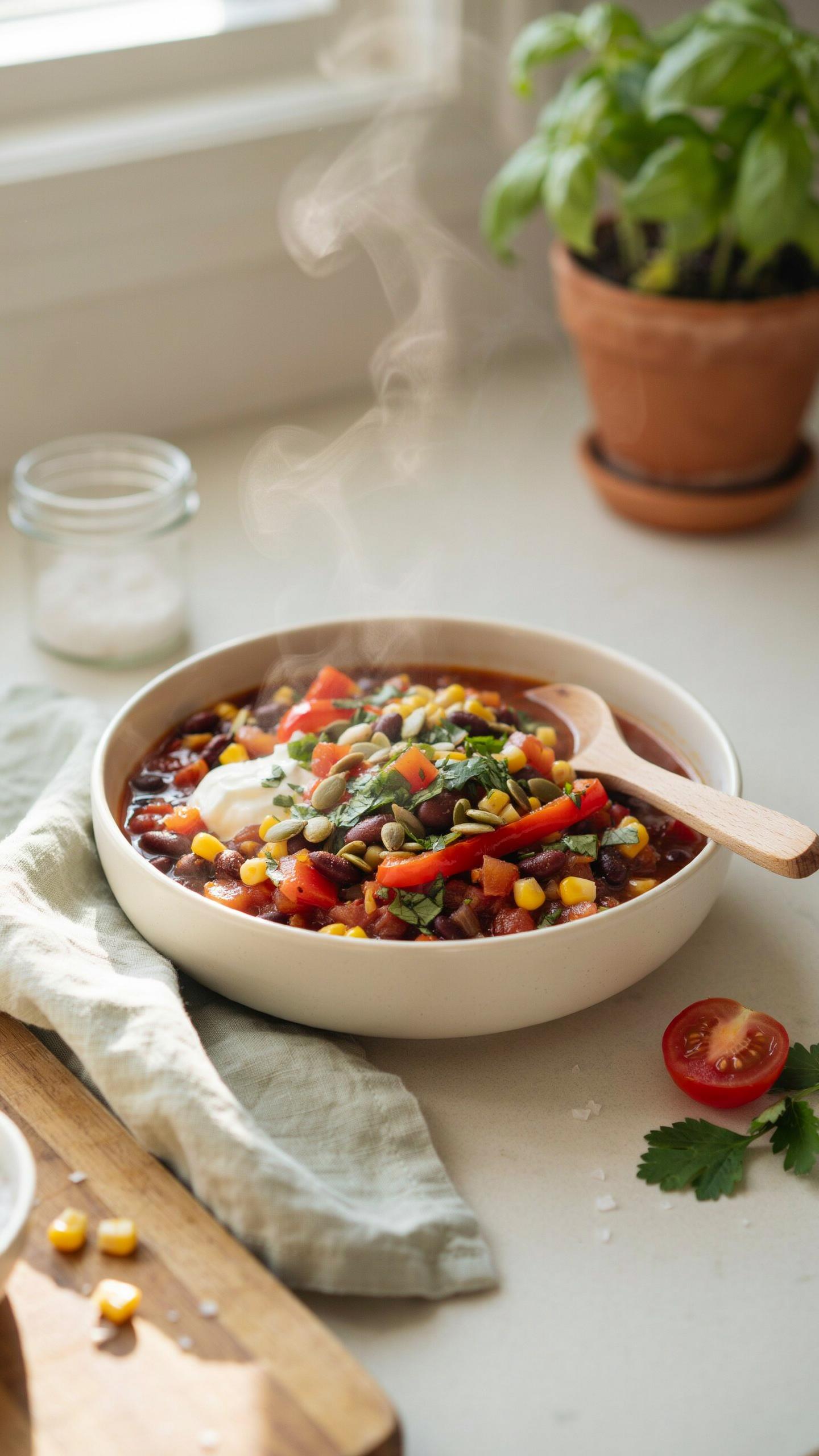
- Ground beef or turkey (85/15 or leaner): Primary protein source. Two pounds provides roughly 100 grams protein across a week’s portions without excess fat requiring drainage.
- Canned kidney beans or black beans (low sodium): Delivers fiber and secondary protein. Two cans cover carb needs and create texture without additional cooking steps.
- Canned tomato sauce or crushed tomatoes: Base for flavor and lycopene. One 28-ounce can provides consistency and acidity to balance richness from meat and beans.
- Onion and garlic: Aromatics that build flavor foundation fast. One medium onion and three cloves minced create depth without requiring special prep or storage.
- Chili powder, cumin, and salt: Spice profile that works across five to seven days without staleness. Two tablespoons chili powder and one tablespoon cumin establish the base seasoning ratio.
The common advice here is bloated. Most recipes add peppers, celery, carrots—ingredients that add water weight and prep time for minimal nutritional return. You don’t need them. Keep the ingredient list to what actually moves the needle on protein and satiation.
Cook Once, Eat All Week
Most people overcomplicate the execution phase. Brown the meat in a large pot over medium-high heat while dicing your onion. Five minutes of browning matters—it creates surface flavor through the Maillard reaction. Add the onion and garlic to the same pot once the meat’s done, stir for two minutes, then dump in your tomato sauce, beans, and spices.
Simmer covered on low heat for thirty to forty minutes. This isn’t about tenderness—it’s about letting the spices integrate and the liquid reduce slightly so portions hold together in containers. Stir twice during the cook. Pour into glass containers once cooled, seal, and refrigerate. Each batch makes six to eight servings depending on portion size. This is your week solved in one ninety-minute window.
Avoiding The Meal Prep Rut Healthy Chili Recipe Crockpot
The Constraint Becomes The Tool
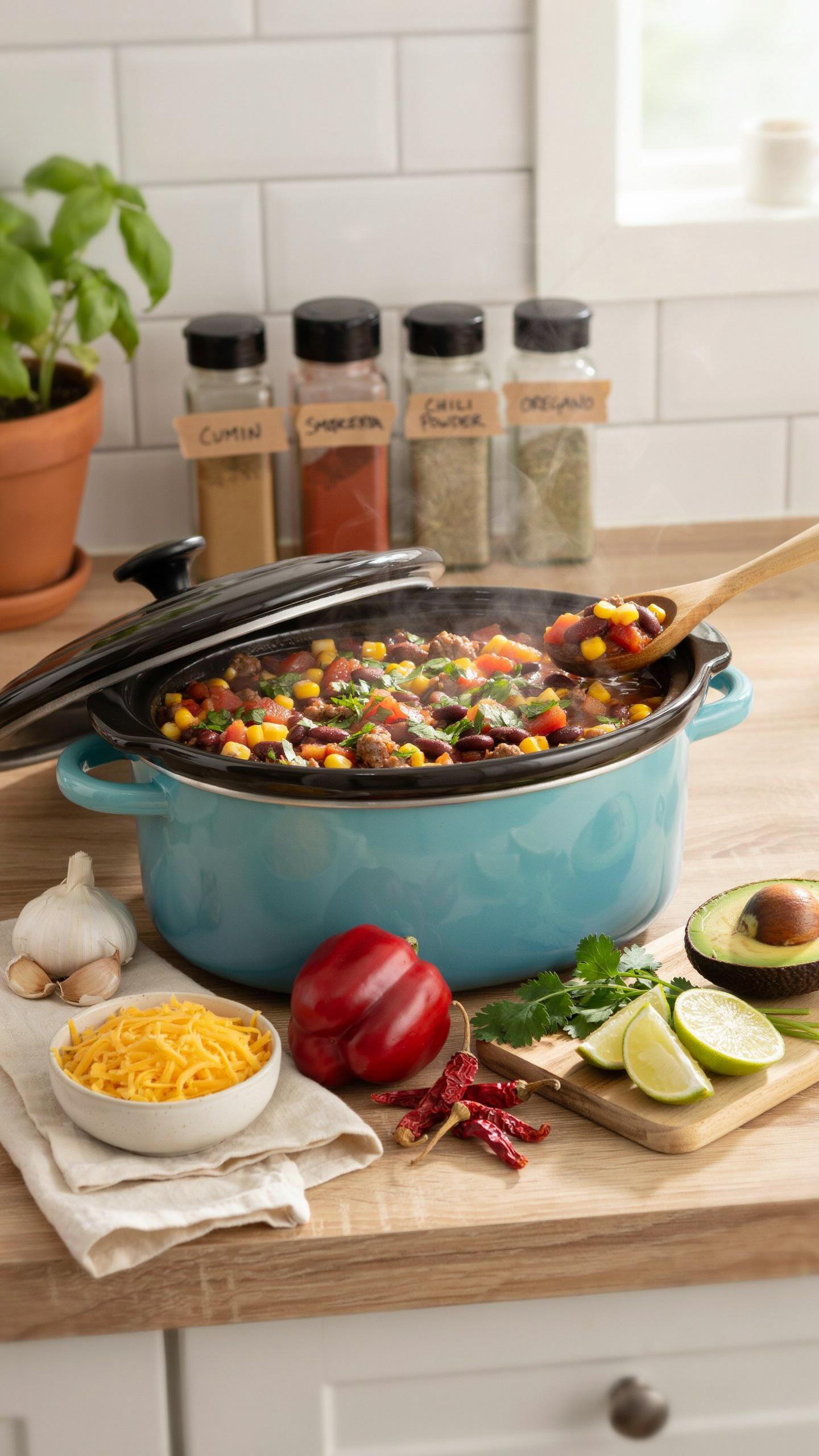
You’re afraid of boredom derailing your consistency. That’s the real problem nobody names. But here’s the mechanism: a crockpot doesn’t just cook chili slower—it creates flavor layering that lets you alter perceived taste without changing base ingredients. Different bean ratios, spice timing, and protein sources still emerge from the same vessel. Economics calls this leverage: maximum output variation from fixed inputs. One base recipe, three distinct meals.
The crockpot’s long cook time breaks down connective tissue and melds spices in ways stovetop doesn’t replicate. Add kidney beans in hour one and black beans in hour four, they taste different despite identical cooking. Adjust cumin versus chili powder by fractions. Swap ground beef for ground turkey. Same ten-hour cook cycle produces entirely different sensory experiences. This isn’t trick psychology. It’s chemical reality.
Batch Cooking For Protein Density Shifts
Stop treating protein as a fixed number. The real move is shifting protein sources while keeping prep time constant. Your crockpot holds five pounds of meat whether it’s 93/7 ground beef, ground turkey, or a beef and bison blend. Each changes macronutrient density and meal satiety without adding steps.
Cook one batch with grass-fed beef one week, 97/3 turkey the next, then ground chicken thighs the third. Same chili container. Same seasoning profile. Different digestive impact and micronutrient spectrum. Your body won’t plateau on taste or nutrition. The crockpot’s passive heat means you’re not adjusting technique—just swapping raw proteins before the timer starts. One protocol, infinite protein rotation.
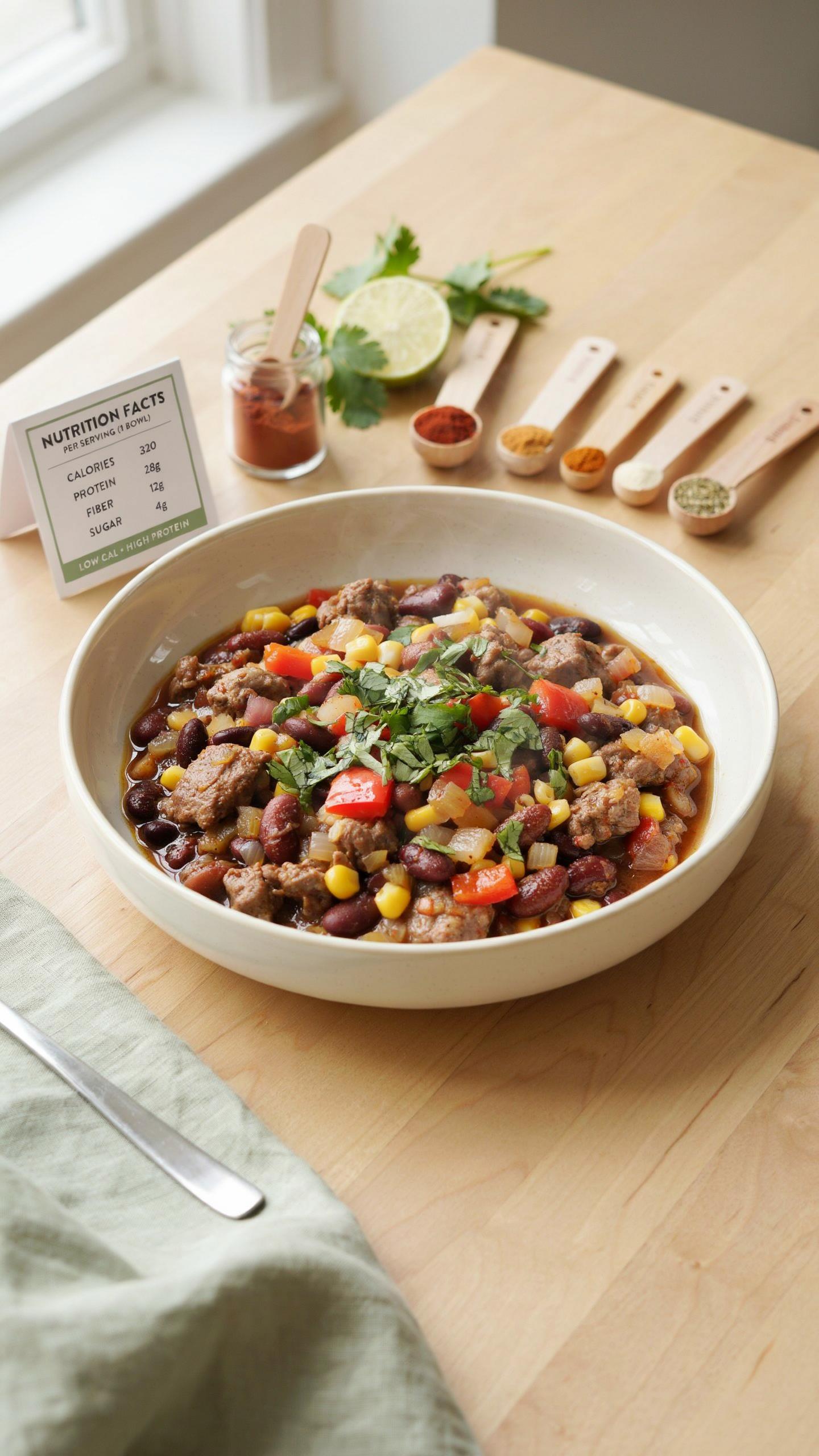
Calorie Density Not Restriction For Low Calorie High Protein Chili
Nutrient Richness Over Empty Volume
You want to feel like you’re eating a lot without admitting you’re counting calories. Here’s the mechanism: nutrient density is thermodynamics applied to food. A calorie from beans behaves differently in your body than a calorie from oil because of protein’s thermic effect and fiber’s metabolic cost. Beans force your digestion to work harder, burning more energy to process them. That’s the real advantage, not the illusion of portion size.
Ground turkey or lean beef at 90 percent matters because the protein-to-calorie ratio shifts the math. When you build chili around legumes and lean meat instead of oil and refined carbs, you get more satiety per calorie consumed. The mechanism isn’t willpower. It’s biochemistry. Your hormones respond differently to thirty grams of protein than thirty grams of starch. Structure your recipe around this, and restriction becomes irrelevant because you’re actually full.
Fiber Creates Fullness Without The Calorie Cost
Most diet advice treats fiber like a bonus ingredient. Wrong. Fiber is the primary mechanism for feeling full without overeating. Beans contain both soluble and insoluble fiber, which expand in your stomach and slow gastric emptying. This isn’t theory. This is how your nervous system signals satiety. A bowl of chili with two cups of beans generates far more fullness than two cups of broth with meat because the fiber volume and water absorption create physical stretch in your stomach.
When you meal prep chili, the fiber compounds over the week because you’re consuming it consistently. Day one through day five, your digestive system adapts to the volume, and your hunger signals stabilize. The protocol is simple: use kidney beans, black beans, or pinto beans as your base, aim for at least forty percent of the recipe’s volume from legumes, and don’t reduce beans to hit a calorie target. The fullness comes from the structure, not from eating less.
The Feedback Loop Healthy Chili Recipe For Performance
How Your Body Signals What Works
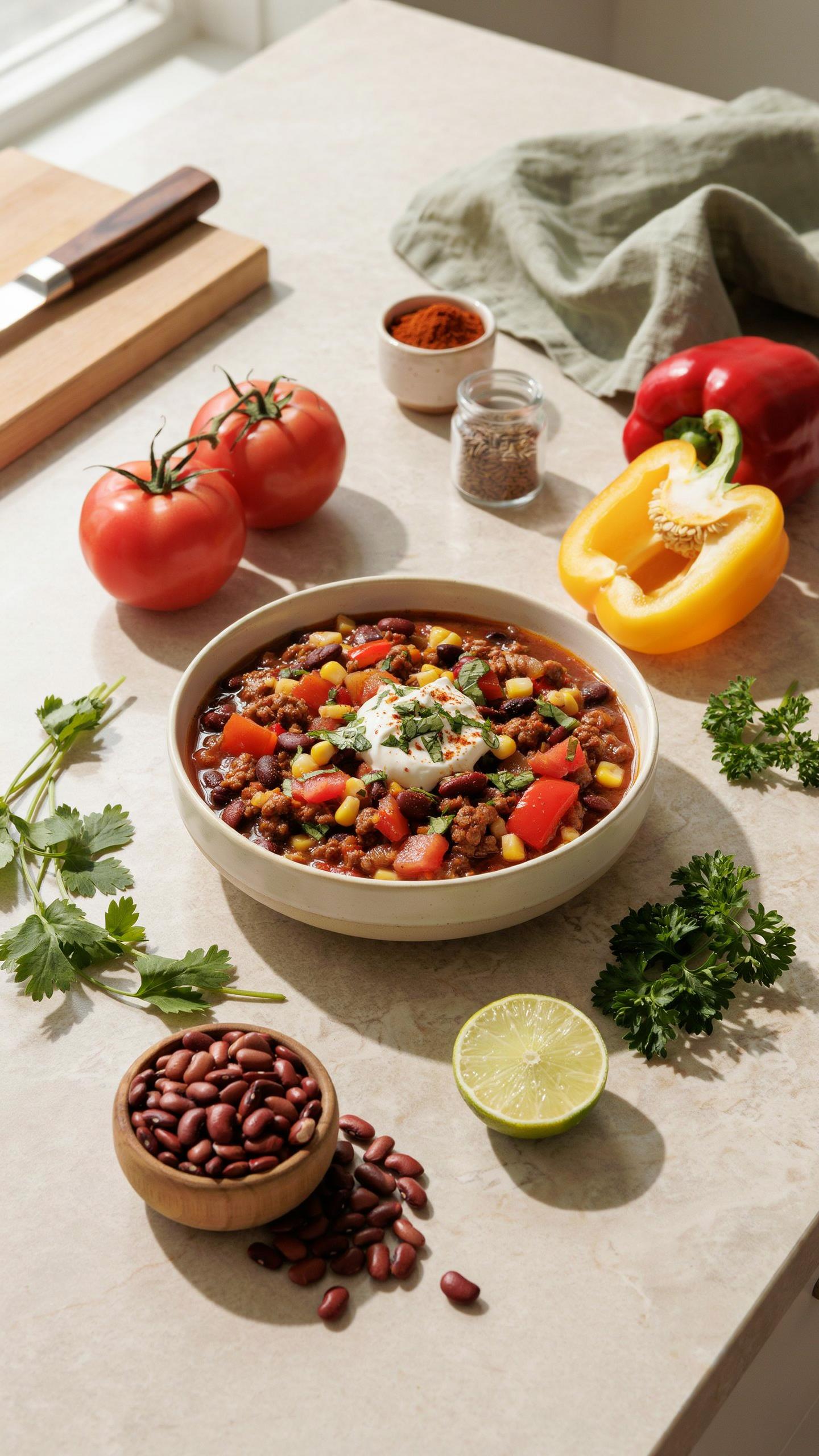
You want to believe meal prep is set it and forget it. It isn’t. Your real motive here is avoiding the work of paying attention, but that’s exactly what separates people who stick with protein intake from people who don’t. Think of your nervous system as a feedback mechanism from biology: it sends constant signals about satiation, energy stability, and mental clarity. Your chili’s job is to move those signals in one direction only.
Track three things for one week after eating your chili: sustained energy until the next meal, mental focus quality in hours two through four, and hunger timing. Don’t use an app. Write it down. Most people skip this because it feels clinical, but you’re collecting data on whether your protein-to-fat-to-carb ratio actually works for your body. Some people need more fat to stay full. Others crash on high fat intake. Your chili won’t know until you tell it what happened.
Adjusting Ingredients Based On What Happens
People tell you to tweak recipes for taste. That’s backwards. Adjust for physiological outcome first, flavor second. If you’re hungry ninety minutes after eating, your protein isn’t high enough or your fat ratio is off balance. If you crash at hour three, you likely have too many refined carbs from tomato products or not enough fiber from beans. If you feel sharp and full for four hours, you’ve found your ratio. Write that ratio down. That’s your template.
The mechanism is straightforward: you’re running an N of 1 experiment across five days of identical meals. Energy dips tell you to raise protein or lower simple carbs. Sustained focus tells you the ratio works. When your chili creates that four-hour window of stable energy, stop changing it and just cook it. Most people abandon chili meal prep because they change it every week chasing novelty. Stability beats perfection every time.
Beyond The Chili Scaling Your High Protein System

The Protein Base Template
You want to know this works beyond chili because you’re terrified of building a system that only solves one problem. Here’s what actually matters: chili succeeds because it combines a protein anchor with a vehicle for flavor and volume. This is borrowed from systems thinking in manufacturing, where the “anchor component” determines the entire output quality. Your chili’s ground beef or turkey is that anchor. Once you understand this mechanism, you apply it everywhere.
The same logic works for grain bowls, pasta dishes, and sheet pan meals. You start with a calculated protein amount, build flavor around it, then add volume through vegetables or legumes. A chicken breast in a burrito bowl operates identically to ground beef in a pot. The protein quantity stays your target. The method changes. You’re not inventing new recipes, you’re reproducing the same structural principle across different formats.
Design Your Prep Space For Compliance
People talk about meal prep motivation like it’s psychological. It’s not. You skip meal prep because your kitchen layout forces you to hunt for tools, containers, and ingredients every session. This is a friction problem, not a willpower problem. Redesign the space to eliminate decisions.
Dedicate one shelf in your refrigerator exclusively to meal prep containers. Store your ground meat, beans, and broth in the same drawer so you never dig through the entire fridge during prep. Keep your largest pots and sheet pans in the most accessible cabinet. Stack your containers vertically so grabbing one doesn’t require moving six others. Every extra movement is a failure point. Reduce movement, increase compliance.
Your real obstacle isnt lack of time or knowledge its a failure to engineer your environment for inevitable success

You don’t need another recipe. You need to buy the ingredients today and set a Sunday cooking block on your calendar right now. The chili works. Your brain doesn’t. Make the decision once, eliminate the friction, and watch compliance follow. Stop treating meal prep like motivation and start treating it like infrastructure. You either design your environment or your environment designs you.