
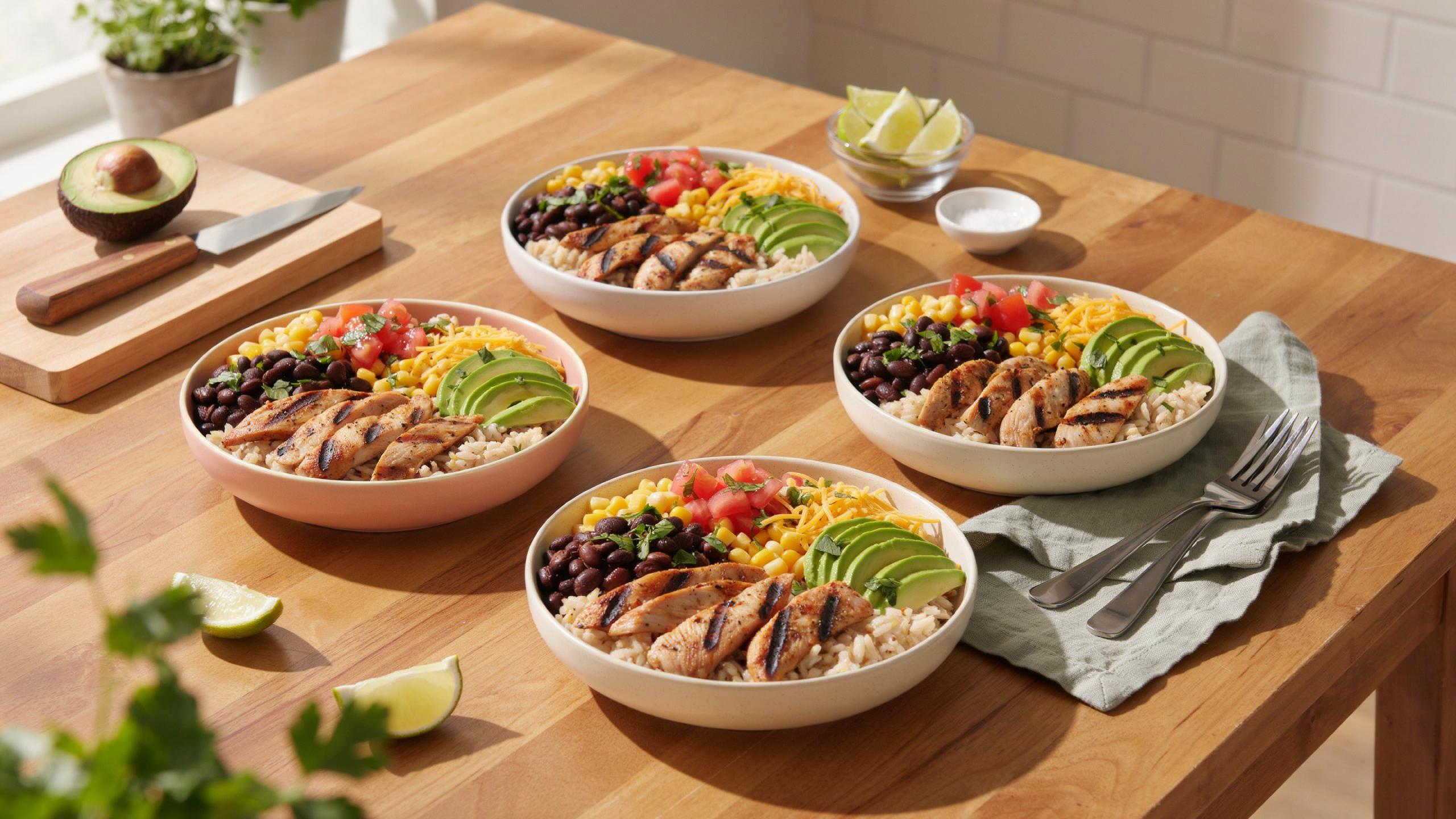
The High Protein Burrito Bowl Fallacy Beyond Basic Macros
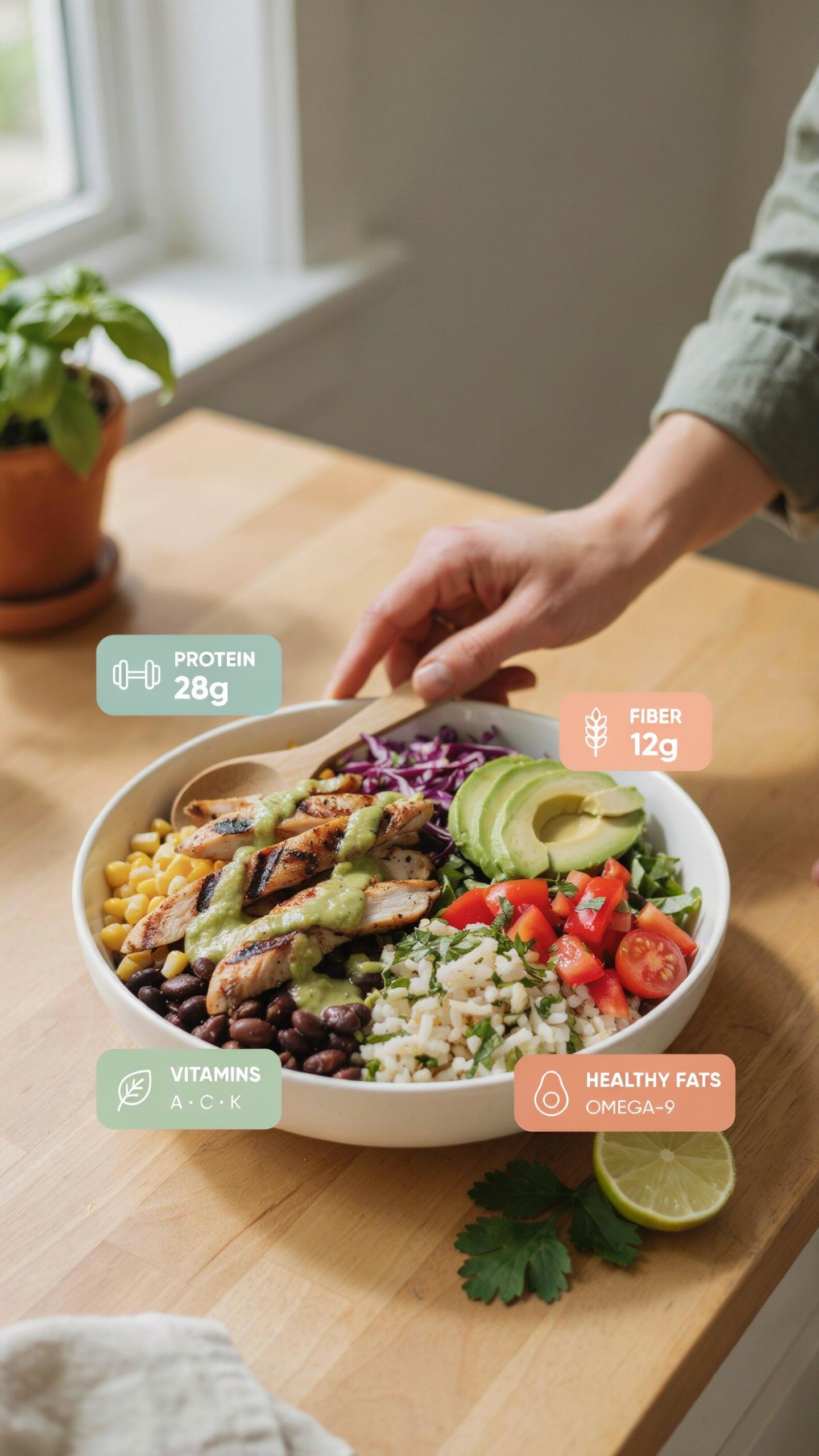
Why Most Protein Advice Misses The Point
You want to know if you’re eating enough protein because you’re afraid you’re wasting your effort. Here’s what actually matters: protein itself doesn’t build muscle. Muscle damage plus protein plus progressive overload builds muscle. The fitness industry inverted this. They made protein the variable when it’s actually just the raw material. You can eat 200 grams daily and still gain nothing if your training doesn’t demand adaptation. The burrito bowl gets blamed for results that training caused or failed to cause.
The real mechanism comes from biology. Your body synthesizes muscle protein when two conditions align: mechanical tension in the gym and sufficient amino acids available afterward. Protein timing within a meal prep window matters less than total weekly intake and consistency. Most advice fixates on hitting 30 grams per meal because studies showed protein synthesis peaks around that number in isolation. Reality: your body doesn’t think in single meals. It tallies weekly totals. A burrito bowl with 40 grams at lunch and 25 grams at dinner works identically to splitting them differently, provided training stayed constant and total intake stayed consistent.
Nutrient Timing: Optimizing For Sustained Energy
Sustained energy isn’t about carbs and protein timing around workouts. It’s about blood glucose stability throughout the day. Load your burrito bowl heavy on protein and fiber first, then add carbs and fat. This sequence slows glucose absorption. Spike your blood sugar at 6 PM and you crash by 8 PM, killing your evening and next-morning performance. Protein stabilizes this. Add 35 to 45 grams per bowl alongside legumes or brown rice, and glucose enters your bloodstream gradually instead of like a fire hose.
The practical protocol for meal prep: structure every bowl with protein as the foundation, not an afterthought. Layer grilled chicken or ground turkey first. Add black beans or pinto beans for fiber and secondary protein. Then rice or cauliflower rice. Then fat from avocado or olive oil. Then vegetables. This order physically slows digestion and prevents energy crashes that derail evening productivity. Prepare five bowls Sunday evening using this exact sequence, and your energy stays predictable Monday through Friday.
The One Pan Deception True Efficiency In Dinner Meal Prep
Batch Cooking: Leveraging Time And Energy
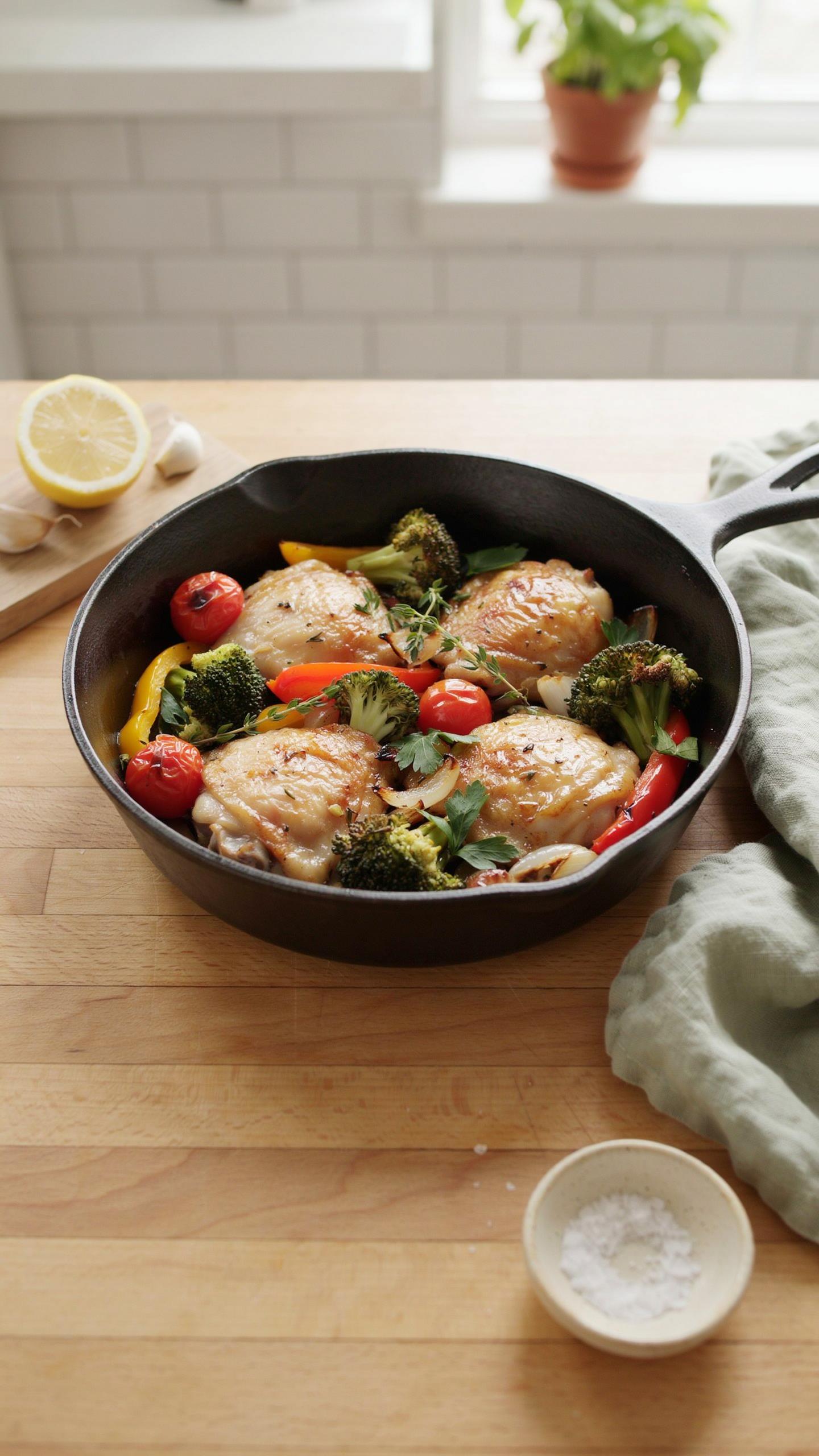
You want to believe one pan solves everything because cleanup feels like progress. It doesn’t. The real mechanism comes from thermodynamics: you’re fighting against heat loss and uneven cooking when you stack proteins, starches, and vegetables in one vessel. Batch cooking inverts this problem. You cook each component at its optimal temperature and time, then combine them cold. Your oven holds steady heat for forty pounds of chicken breast. Your stovetop maintains the precise simmer rice needs. Your grill creates the Maillard reaction on beans that a pan never reaches.
The efficiency gain isn’t about fewer dishes. It’s about cooking once, eating six times. One session of heat and attention generates twelve meals instead of six. You’re not saving time per meal. You’re amortizing your effort across more servings. Cook three pounds of ground beef with spices on Sunday. Cook six cups of rice in a rice cooker while the beef finishes. Roast three sheet pans of peppers and onions at 425 degrees. You’ve completed the protein, carb, and vegetable components for twelve bowls in ninety minutes. Assembling and packing takes another thirty.
Strategic Ingredient Prep For Minimal Effort
The common advice says “prep everything ahead,” which creates waste and oxidation. Chop your peppers three days early and they brown at the edges. Soak your beans and they absorb water unevenly. Real prep strategy means doing the irreversible steps only: cooking proteins, grains, and legumes. You do the reversible steps—dicing, slicing, measuring—the day you assemble. This cuts spoilage and saves you from eating degraded food.
Focus your prep session on the components that take actual time: protein seasoning and cooking, grain cooking, bean soaking or cooking if starting from dry. Assign one cooking vessel to each. While your protein finishes, measure and portion your toppings into separate containers. Cilantro, lime, onion, and cheese go into small portions you grab during assembly. The bowl itself gets built on assembly day with hot protein over cold grain. You eat better food, spend less time, and discard nothing.
The Protein Power Playbook Sourcing And Selection
Quality Protein Sources That Actually Matter
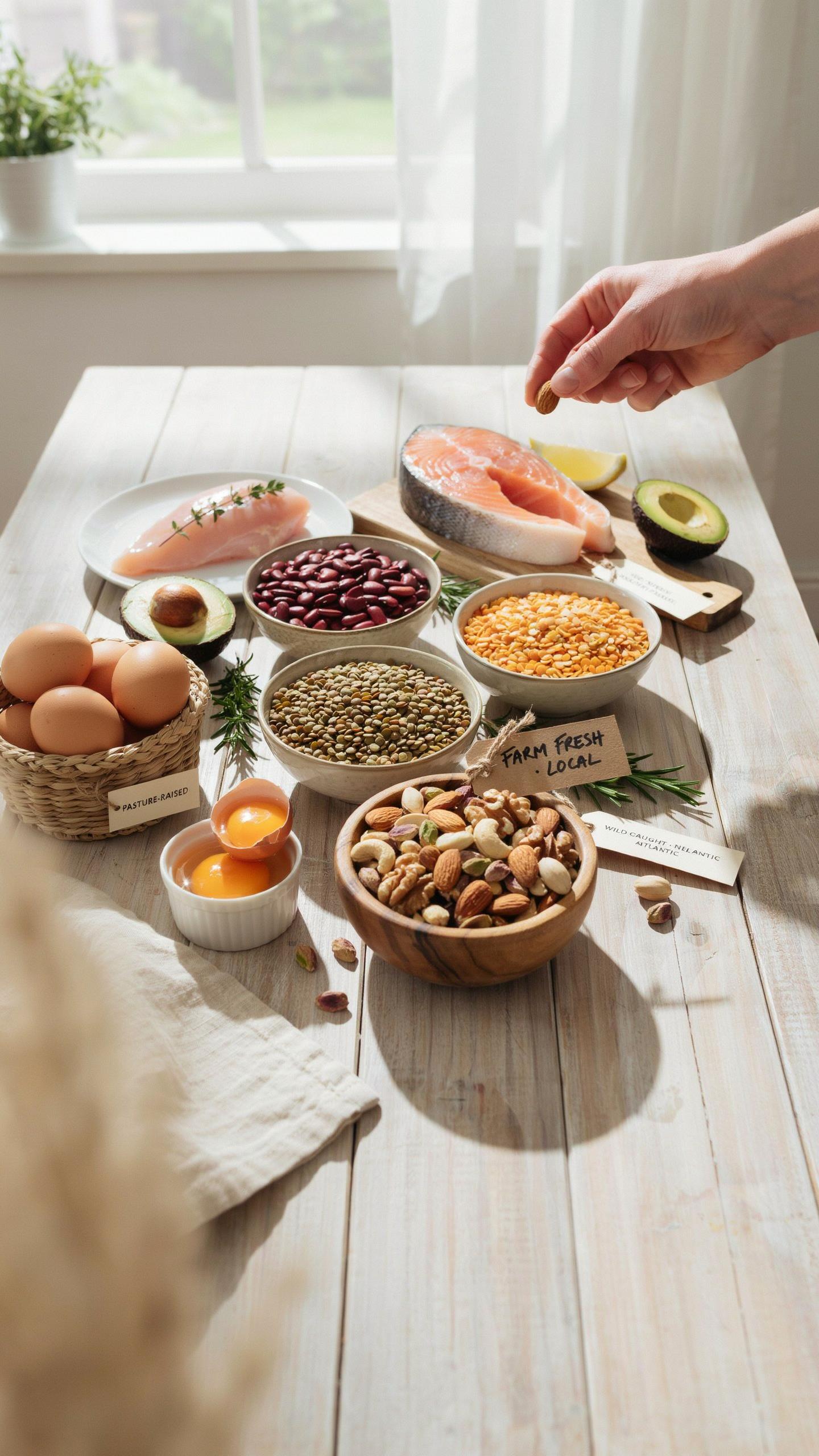
You want to believe cheap protein works the same as expensive protein because spending less feels like winning. It doesn’t. Borrowing from biochemistry, think of protein synthesis like a lock-and-key mechanism: your body needs all nine essential amino acids in the right ratios to build muscle. Incomplete proteins leave gaps. Chicken breast, ground beef, Greek yogurt, and canned fish deliver all nine amino acids in usable amounts. Eggs work too. These aren’t status symbols—they’re the only sources worth your meal prep time because they trigger muscle protein synthesis efficiently.
The math is brutal here. A burrito bowl with 30 grams of protein from chicken thigh builds muscle differently than 30 grams from textured vegetable protein. Chicken contains leucine at concentrations that directly activate mTOR, the cellular mechanism that starts muscle growth. Most plant proteins don’t hit this threshold without eating double the volume. You meal prep for results, not to feel morally superior about your choices. Pick sources your body actually uses.
Avoiding Cheap Protein Traps And Filler
Common advice says “just hit your protein target and you’re done.” Wrong. Most people confuse total protein grams with usable protein, then wonder why they’re not building muscle despite hitting their macros. Fillers like textured vegetable protein, wheat gluten, and certain protein powder blends pad your numbers without delivering the amino acid profile your body needs. They’re cheap because they’re incomplete. A burrito bowl loaded with TVP feels full but leaves your muscle-building machinery running idle.
Processed deli meats and budget ground beef often contain 20-30% water weight and binders. You’re paying protein prices for filler weight. Buy whole cuts, grind your own beef if you’re serious, or stick with canned tuna and chicken breast. Store brands of Greek yogurt work fine—the protein content matches premium brands. The real trap isn’t the brand name. It’s mistaking volume for value. Choose proteins with under 5% carbs per serving to keep your bowl’s macros clean and your meal prep efficient.
Your Burrito Bowl As A Feedback Loop Cybernetic Optimization
Measure What Matters, Adjust What Breaks
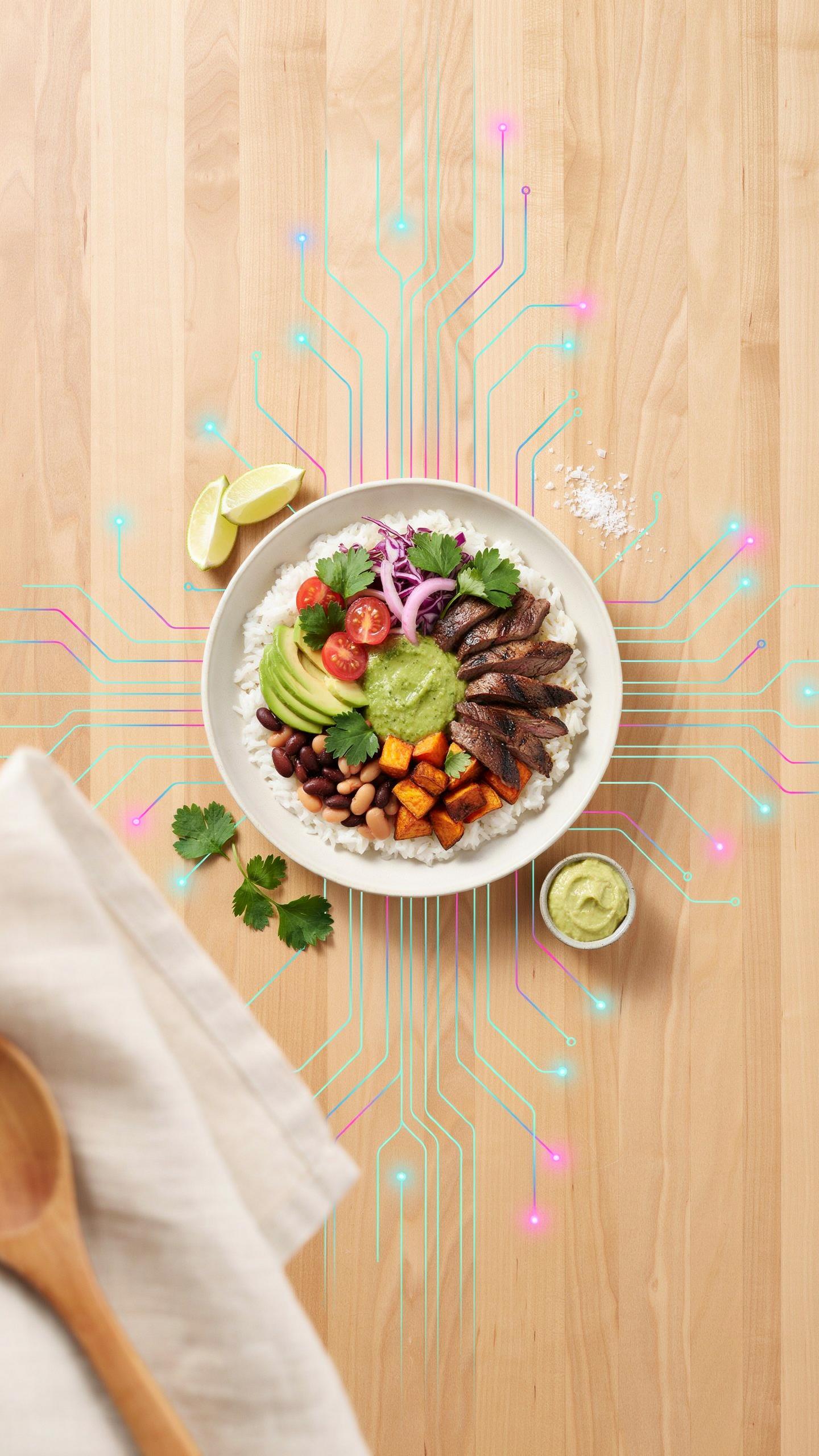
You want to believe your meal prep works because you planned it once. It doesn’t. Cybernetics, the study of systems that self-correct through feedback, reveals the real mechanism: you build a burrito bowl system by measuring outputs, identifying drift, and making micro-corrections weekly. Most people skip the measurement phase entirely and wonder why their protein intake collapses by week three.
Track three metrics for seven days before any adjustment: grams of protein per bowl, actual cost per serving, and how full you stay four hours post-meal. Write these down. Don’t estimate. When you hit day eight, compare week one to week two. If protein dropped from 45g to 38g because rice portions crept up, you’ve found the lever. If you’re hungry two hours in, your fat content is too low. Adjust one variable at a time, then measure again for another week.
Evolve Your Formula Through Iteration
Generic meal prep advice tells you to build a bowl and eat it forever. That’s how you burn out. Evolution happens through small, deliberate changes based on what your body and schedule actually demand, not what a recipe card promised.
Establish a baseline bowl for two weeks. Then test one change per week: swap black beans for pinto, increase chicken from 6oz to 7oz, try a different salsa, change your rice to quinoa. Document how each change affects satiety, digestion, and how fast you can prep. Some changes stick because they work. Others fail and you reverse them. After four weeks of iteration, your bowl isn’t generic anymore. It’s optimized to your metabolism, your kitchen time, and your budget. The protocol is simple: baseline, test one variable, measure, decide, hold for a week before the next test.
Flavor Without The Fuss Mastering The Burrito Bowls Recipe
Minimalist Spice Blends Maximum Impact
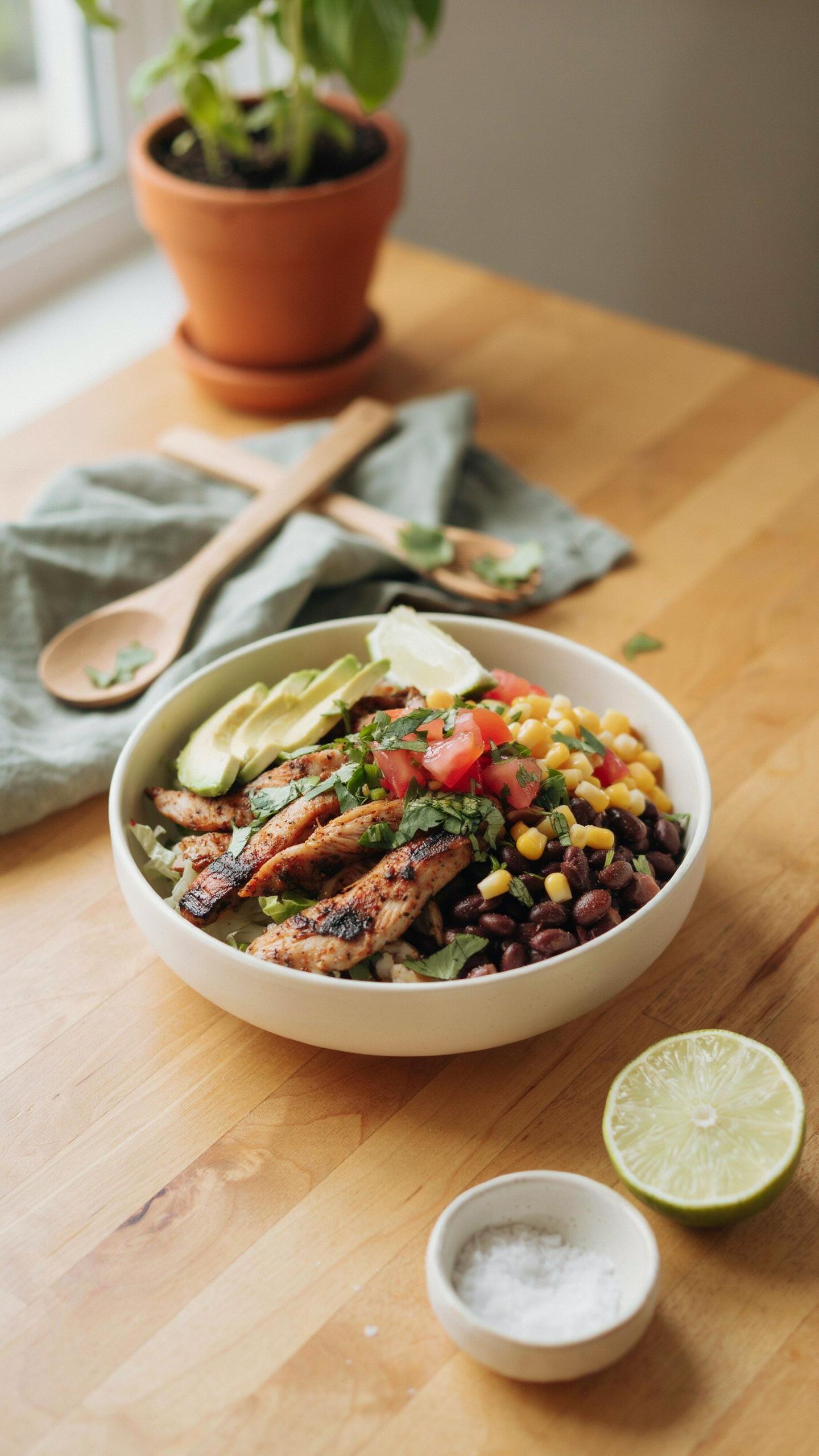
You want to taste impressive without admitting you’re eating the same bowl five times. The real mechanism here is signal compression: in information theory, you transmit the most distinct message through the fewest possible channels. Apply that to seasoning. Instead of eight spices competing for dominance, you build depth through layering timing and heat application, not ingredient count.
Toast your base spices dry before adding them to the protein. This single step multiplies perceived complexity because heat unlocks volatile compounds that raw spices never release. Cumin and coriander toasted for ninety seconds hit different than raw. You need two spice blends maximum: one for the protein, one for the grain base. The protein blend carries heat and smoke. The grain blend carries earthiness and brightness. They work independently but read as cohesive because they share one anchor spice, usually cumin at about one teaspoon per four servings.
The Secret To Sauces That Elevate Not Overwhelm
Most meal prep guidance drowns your bowl in sauce and calls it strategy. That’s wrong. The actual principle is restraint through contrast. Your sauce should coat thirty percent of the bowl’s surface, not drown it. Two tablespoons per serving is the hard ceiling. If your sauce needs more volume to taste good, it’s underflavored, not insufficiently generous.
Build sauces on acid and fat in a 1:1 ratio by weight. Lime juice or vinegar provides the acid. Olive oil or avocado oil provides the fat. Emulsify them with one tablespoon of Greek yogurt or sour cream per quarter cup of sauce. This suspension prevents separation and creates mouthfeel without cream-based heaviness. Add your spices to the fat first, then introduce the acid. The fat carries flavor more efficiently than liquid alone. Your sauce stays bright across five days of storage because the acid preserves the bowl’s structural integrity and prevents protein oxidation, which dulls everything it touches.
The Storage Protocol Keeping Your Chicken Burrito Bowl Fresh
Container Selection Beyond Basic Plastic
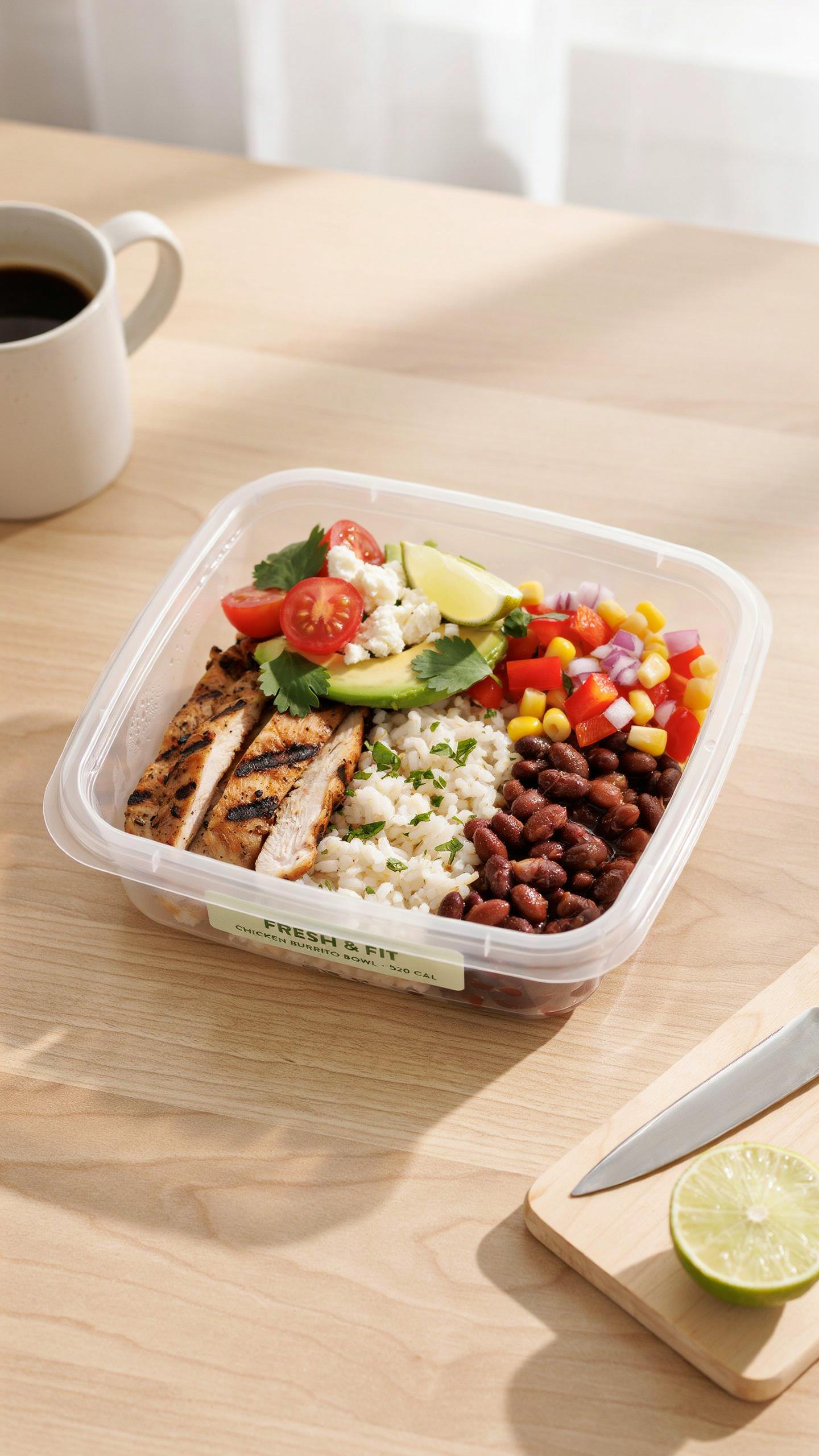
You want your meal prep to look intentional because you’re paying attention to details most people ignore. The real mechanism here is oxygen exposure and temperature conductivity. Cheap plastic containers let oxygen migrate through the material itself over time, not just at the seams. Glass containers with silicone gasket seals stop this cold. The gasket creates an actual barrier, not just a loose fit. Borosilicate glass handles temperature swings without warping, so moving from freezer to microwave doesn’t degrade the seal. Stainless steel compartment containers work too but don’t let you see spoilage signs visually.
Tupperware-style disposable containers fail because they’re designed for single use and the lids flex under pressure. This flex creates micro gaps where moisture and air exchange. If you’re prepping five meals at once, invest in six identical glass containers with matching lids. The uniformity matters because you’ll actually use them consistently. Stack them tight in your fridge with lids facing the same direction. The cost upfront is three times higher than plastic, but they last five years. That math is obvious once you stop treating meal prep like a temporary experiment.
Refrigeration Techniques For Extended Freshness
The conventional wisdom says store everything together at 40 degrees, and that’s incomplete. Temperature consistency matters more than the exact number. Your fridge door fluctuates five to ten degrees every time you open it. The back of the shelf stays stable. Store your burrito bowls on the middle shelf toward the back, not on the door. Cool the bowls to room temperature before refrigerating them. Hot food raises the internal fridge temperature, forcing the compressor to work harder and creating temperature swings that accelerate bacterial growth on other foods.
Separate the components when possible, especially if your bowl includes wet salsa or guacamole. The rice and beans hold up for five days; the avocado oxidizes in two. Store acidic components like lime juice and salsa in their own sealed containers, then assemble the bowl forty minutes before eating. This extends the lifespan of the entire meal from five days to seven. Most people don’t separate components, so their “meal prep bowls” get soggy and brown by day three. They blame the process. The process is fine. They just skipped the separation step.
Low Calorie Chicken The Underrated Powerhouse
Why Lean Protein Actually Wins
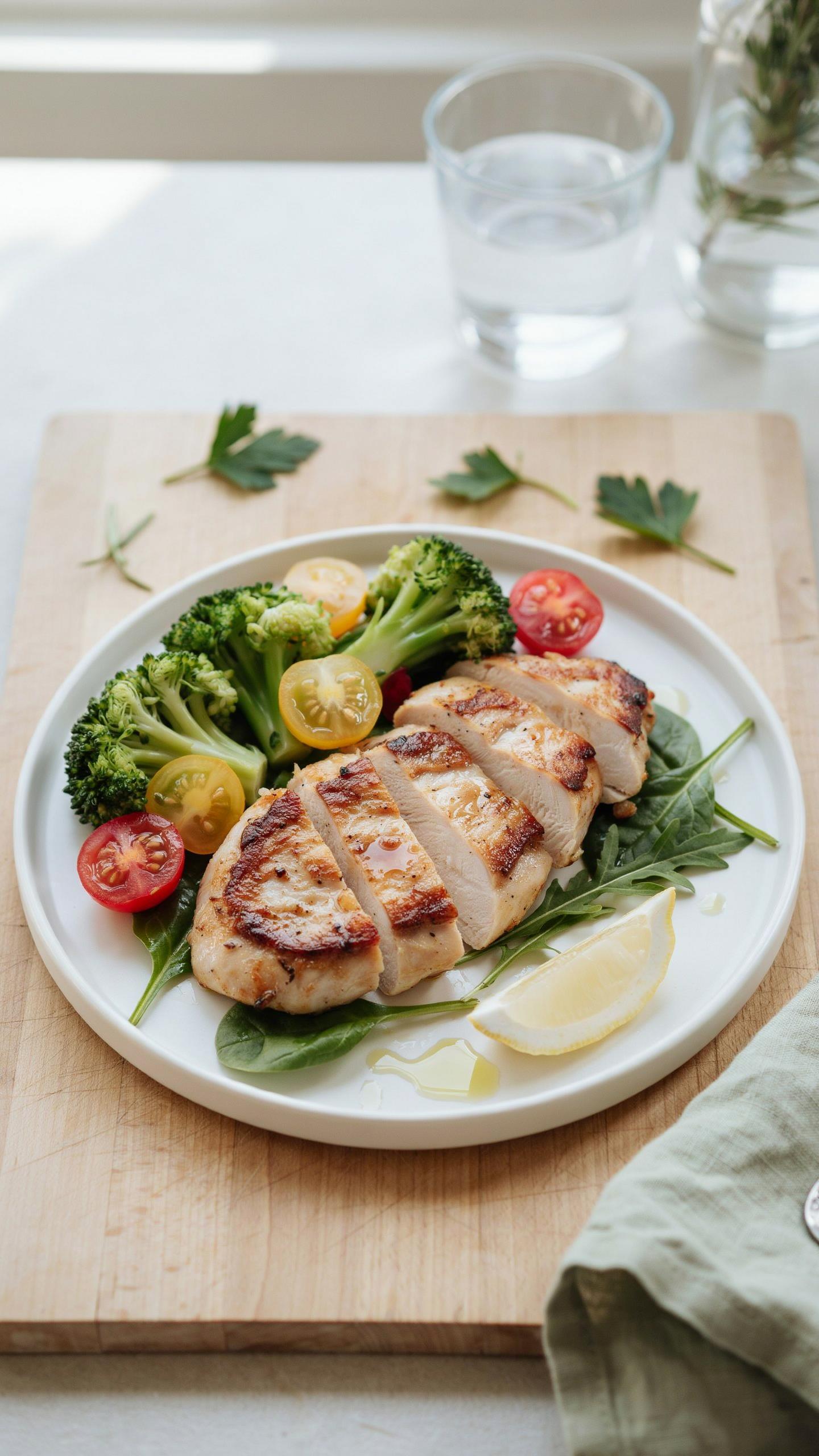
You want chicken because it fills you up without the calorie tax. Lean protein works like compound interest in your body: each gram of chicken triggers greater thermic effect than carbs or fat, meaning your metabolism burns calories just digesting it. Skinless breast contains roughly 31 grams of protein per 100 calories cooked. That density is the actual mechanism you’re after, not motivation or willpower.
The satiety game is won by volume, not restriction. Chicken breast expands your meal’s physical mass without inflating calories. A 200-calorie chicken portion looks massive next to 200 calories of rice. Your stomach doesn’t count macros, it registers fullness through stretch receptors. This is why lean protein prevents the afternoon collapse that derails meal prep compliance. Cook chicken in bulk with basic seasoning, then portion into your bowls immediately after cooling.
Building Meals That Actually Keep You Full
Volume isn’t magic if your bowl looks empty next to your hunger. Layer your base: start with shredded chicken (4-5 ounces per bowl), then add bulk from zero-calorie vegetables. Peppers, lettuce, tomatoes, and radishes add mass without meaningfully changing calorie count. Aim for vegetables to occupy roughly 40 percent of the bowl’s visual real estate. This creates the satiety anchor that makes protein actually stick around in your system.
The fiber from vegetables works alongside protein to extend digestion time. Pair 6 ounces of chicken with 2 cups of mixed vegetables in each prep container. Add a controlled carb source like black beans or brown rice at the end of the week, before serving, to prevent sogginess during storage. This sequence prevents the typical meal prep failure where everything becomes mushy by Wednesday, which kills compliance faster than hunger ever does.
The Anti Boredom Strategy For High Protein
Build Your Base Grid First
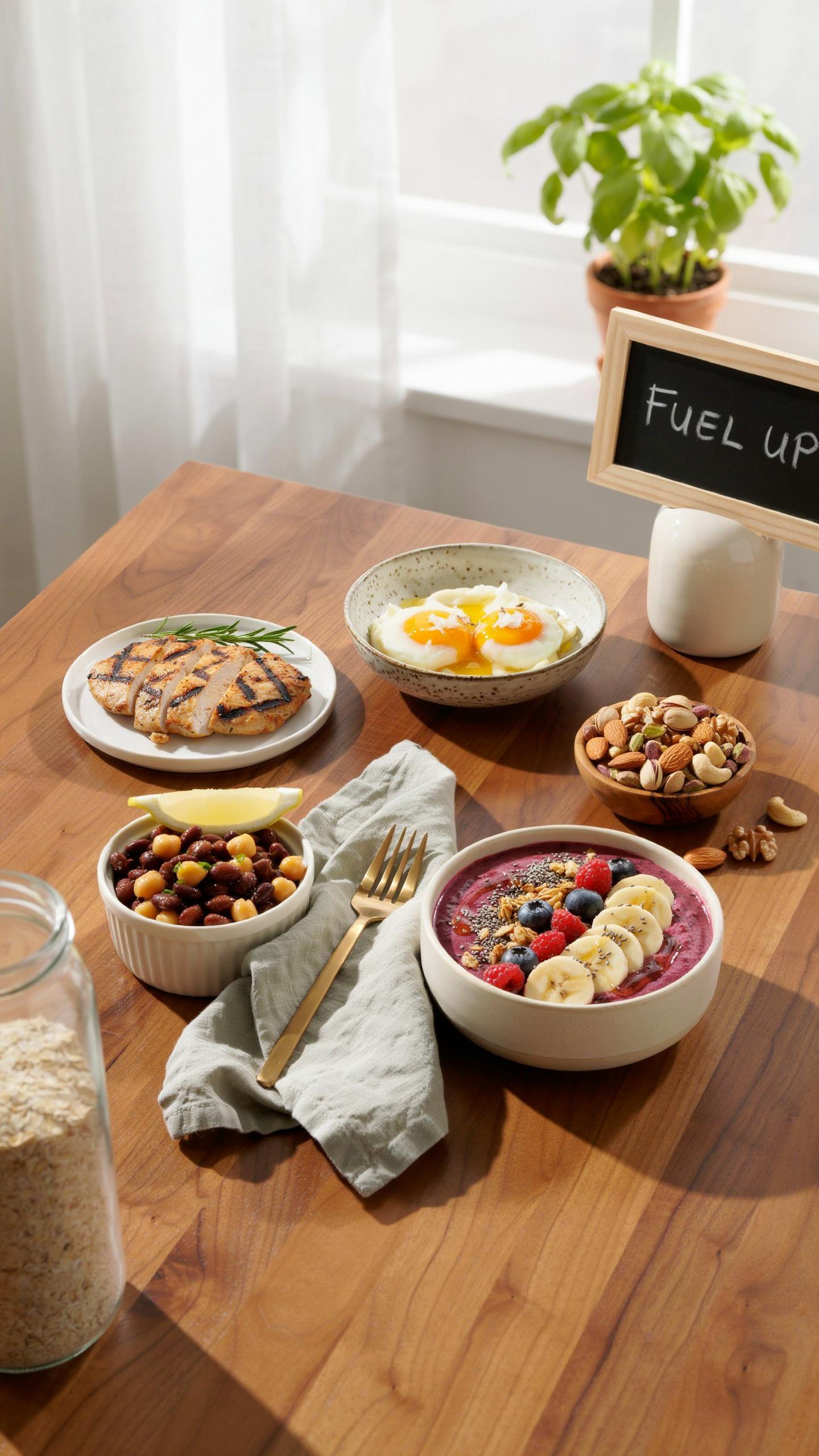
You’re afraid meal prep will trap you in monotony, eating the same bowl five times and hating yourself by Wednesday. The real mechanism is constraint-based creativity: the fewer undefined variables you have, the more combinations you can actually execute without decision fatigue. Think of it like a design grid in graphic design—you don’t remove boundaries to get freedom, you set them strategically so variation becomes simple math instead of chaos.
Start by locking three components: your protein source, your grain, and your base vegetable. Don’t rotate these weekly. Chicken, rice, and black beans stay constant. This removes the cognitive load of choosing from unlimited options. Now every other element becomes a lever you can pull without rebuilding the entire bowl from scratch.
- Protein anchor: One primary source per week. Chicken, ground turkey, or canned tuna. Consistency lets you focus variation elsewhere without mental overhead.
- Grain foundation: Rice, quinoa, or farro. Pick one per week. This stabilizes macros and meal prep logistics, not flavor.
- Vegetable constant: Black beans, pinto beans, or lentils. The legume stays. It’s your protein multiplier and caloric ballast.
- Fresh vegetable slot: Rotation happens here. Bell peppers, corn, or zucchini week one. Broccoli, cauliflower, or asparagus week two.
- Sauce and topping layer: Cilantro lime, chipotle crema, or salsa verde. This is where you engineer flavor without changing macros or prep time.
The mechanics work because you’re batching prep work on the stable components while micro-dosing novelty through toppings and sauces. You make one big batch of chicken and rice. You prep one fresh vegetable. Then you hit variation through condiments that take seconds to apply. You’ve engineered choice without chaos.
Flavor Rotation Without Reshuffling Ingredients
Most meal prep advice says rotate everything. That’s backward. Rotating ingredients wastes prep time because you’re learning new cooking times, storage windows, and flavor pairings each week. The real play is keeping ingredients static while rotating the cultural flavor profile they map to.
Take your locked chicken, rice, and beans base. Week one, you build toward Mexican: cilantro lime, cotija cheese, jalapeño. Week two, you shift toward Mediterranean: lemon, feta, oregano. Week three, you go Asian-inflected: soy sauce, sesame oil, ginger. Same protein, grain, and legume. Different seasoning logic. The bowl reads completely different because sauce and spice architecture changed, not the substrate.
This works because human taste perception depends on context and seasoning more than raw ingredients. Your brain perceives chicken and rice as boring when the sauce says nothing. It perceives the same meal as exciting when the sauce tells a coherent flavor story. You’re not rotating ingredients—you’re rotating narratives using a fixed ingredient set. Build your rotation schedule around three sauce bases, then commit them to a weekly rhythm.
The Dinner Meal Prep Investment Time Vs ROI
Calculating Your Culinary Time Investment
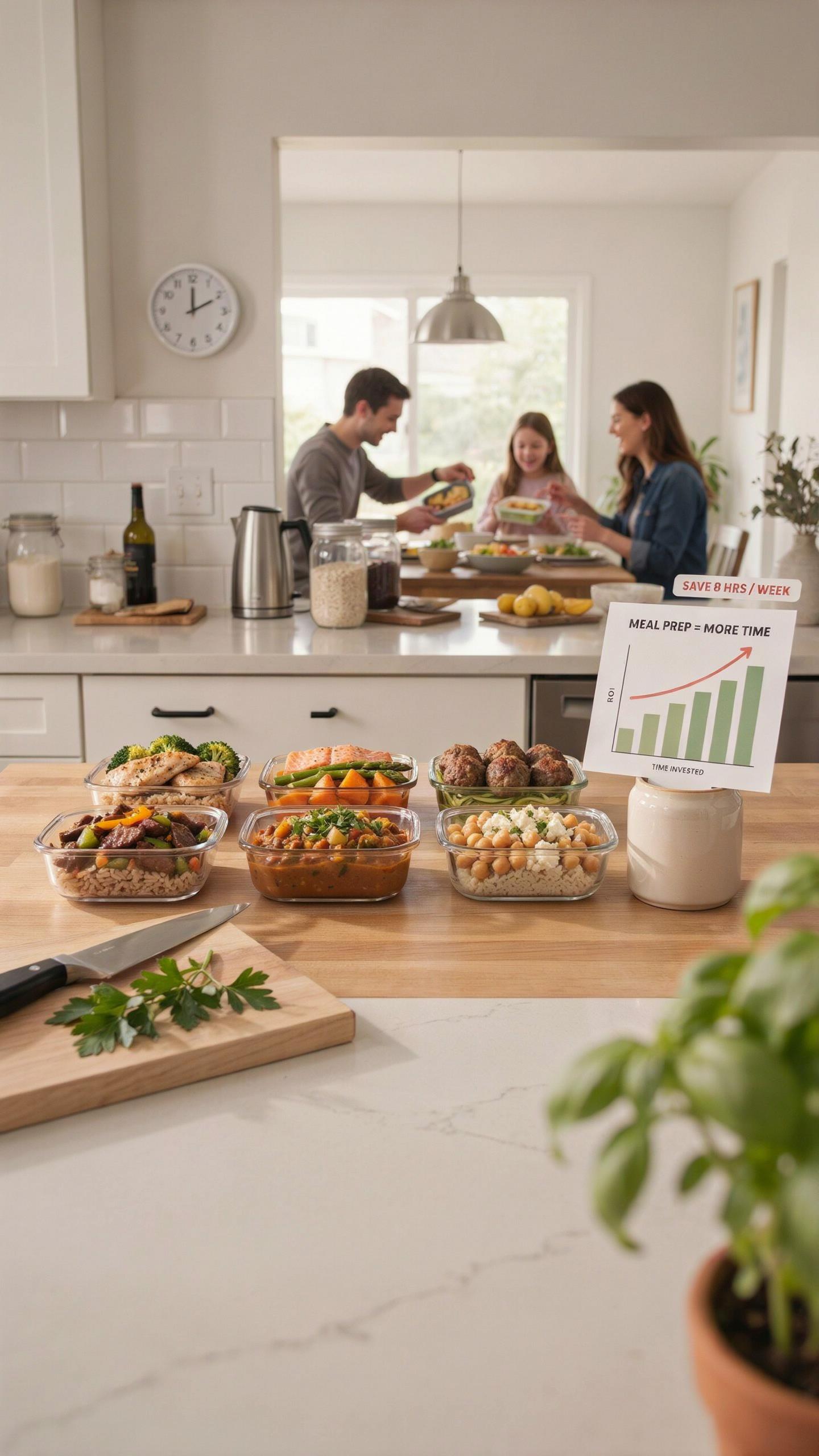
You’re wondering if prepping is worth it because you’re afraid the time cost kills the benefit. It doesn’t, but only if you measure it right. Economics calls this opportunity cost: what you give up by choosing one action over another. With burrito bowls, you’re not comparing prep time to cooking time. You’re comparing one focused cooking session to five separate dinner decisions, shopping trips, and 20-minute cooking sprints. That’s the real trade.
A single prep session takes 90 minutes for five bowls. That breaks down to 18 minutes per bowl spread across one block of time. Cooking dinner daily costs 20 minutes per night plus decision fatigue beforehand. Over five days, you spend 100 minutes plus mental overhead. Prep wins on pure time. More important: batch cooking eliminates the decision paralysis that makes people order takeout at 6 PM when they’re tired.
Long Term Gains: Health, Focus, And Energy
Consistency beats perfection in any system that compounds. Five predictable bowls with 35-40 grams of protein per serving stabilize your blood sugar and appetite hormones across the week. Your energy doesn’t spike and crash. You don’t hit the 3 PM slump as hard. Focus improves because your brain isn’t signaling for fuel every two hours. This isn’t motivation talk. This is biochemistry.
The real ROI lives here: when you remove the dinner question from your daily loop, you reclaim decision-making bandwidth for work that matters. You’re not managing hunger or scrolling through delivery apps. Your cortisol stays lower because you’re not stressed about what to eat. Protein stability in burrito bowls sustains satiety into the next morning, which delays breakfast cravings and shortens your eating window. Container your bowls Monday evening, and you’ve already solved the weakest part of most people’s nutrition strategy for the entire work week.
The real obstacle isnt a lack of time its your refusal to optimize your food environment

You don’t need motivation. You need friction removal. Buy your chicken and rice today. Cook it Sunday. Stack five bowls in your fridge. When hunger hits at 6 PM, you eat protein instead of scrolling DoorDash. That’s the whole game. Your future self doesn’t care about your good intentions, only your systems. Make the high protein burrito bowl the path of least resistance, and you’ll stop thinking about dinner altogether.