
The Cognitive Load Alleviation Protocol

Decision Fatigue Dies When You Batch Cook
You care about this because you’re exhausted by choosing what to eat every single day, and that exhaustion is eroding your discipline faster than poor willpower ever could. The mechanism here comes straight from decision fatigue research in behavioral economics: each choice drains a finite mental resource. Every morning you negotiate with yourself about lunch. Every evening you’re negotiating about dinner. By the time you actually need willpower, you’ve already spent it.

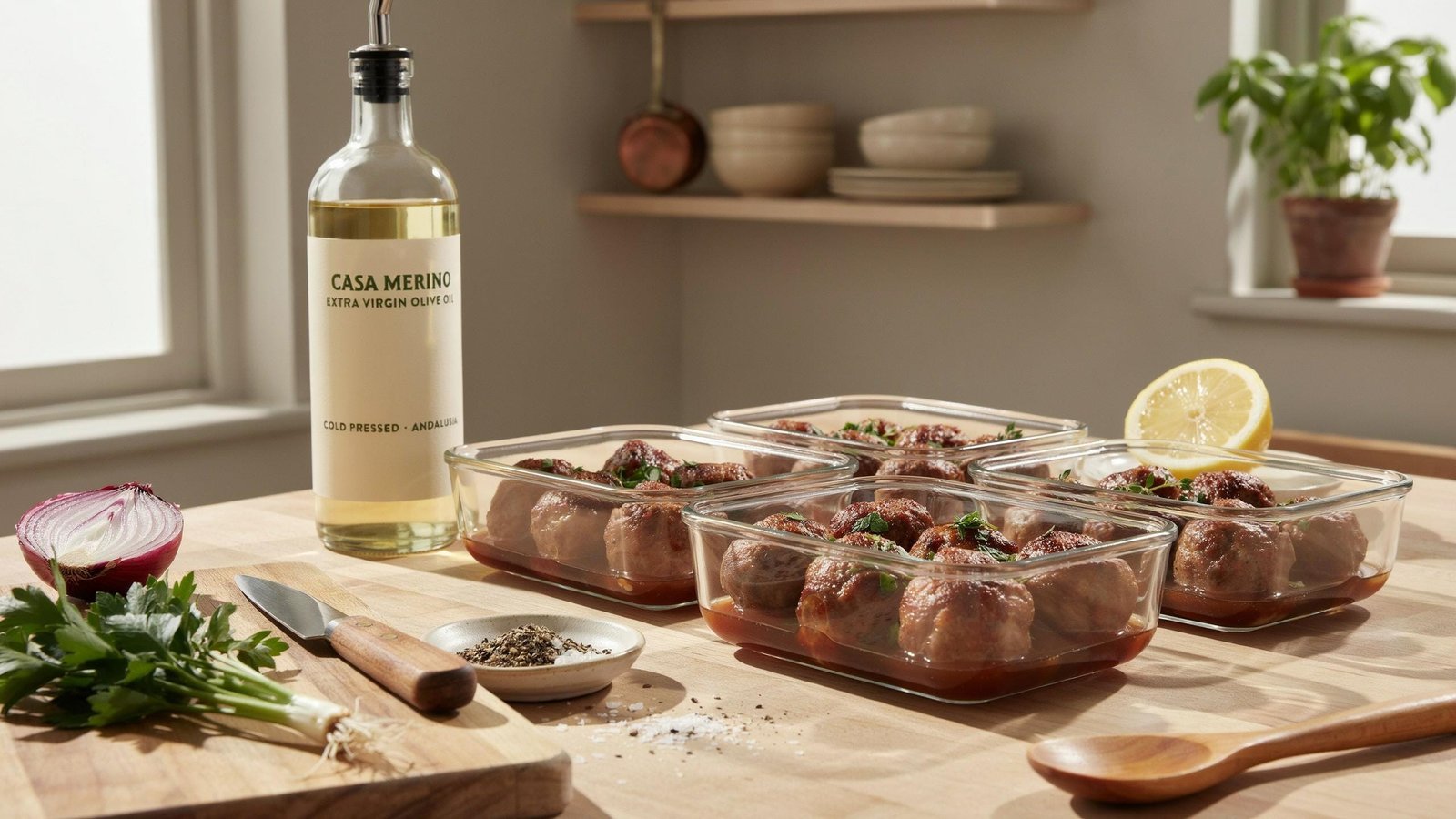
Meatballs solve this by collapsing the decision architecture into a single event. You cook fifty of them on Sunday. You portion them into containers. The choice vanishes. For the next five days, you open the fridge and grab protein instead of standing there negotiating with yourself about whether pasta sounds better than chicken. You’ve pre-decided everything while your brain still had fuel.
Pre Commitment Locks Future You Into Compliance
The common advice says meal prep saves time. Wrong. Meal prep saves compliance. Pre-commitment is a behavioral tool that forces your future self to follow through on decisions your current self made while sober and rational. When meatballs are already cooked and portioned, you can’t suddenly decide to order takeout instead. The friction is gone in the wrong direction. The easy path is now the healthy path.

This works because willpower isn’t a character trait you either possess or lack. It’s a limited resource that depletes throughout the day. By eliminating the daily food choice through bulk meatball prep, you preserve mental bandwidth for decisions that actually matter to your work, your relationships, your progress. The container of meatballs on Tuesday afternoon isn’t motivation. It’s architecture.
High Protein Meatball Meal Prep Beyond Basic Sustenance
Leverage Nutrient Timing For Energy Stability
You want meatballs to feel like a productivity hack instead of just food. The mechanism is nutrient timing from sports physiology: spacing protein intake across meals stabilizes blood glucose and prevents the energy crash that kills focus. Your body doesn’t store protein like it stores carbs, so distributed intake matters more than total daily grams.
Meatballs are strategically positioned here because they’re protein-dense, portable, and digestible enough to sit well between meals without causing the bloat that prevents work. A 4-ounce serving delivers 20 to 24 grams of protein depending on your lean-to-fat ratio. Eating one or two meatballs every 4 to 5 hours sustains stable glucose better than loading protein into two large meals, which spikes and crashes your energy state repeatedly throughout the day.
Consistent Protein Sharpens Decision Quality
Mental clarity is downstream of consistent amino acid availability to your brain, particularly for dopamine and serotonin production. Protein fluctuations create decision fatigue because your prefrontal cortex demands steady neurotransmitter supply to function. Most people ignore this and wonder why their thinking gets fuzzy mid-afternoon.
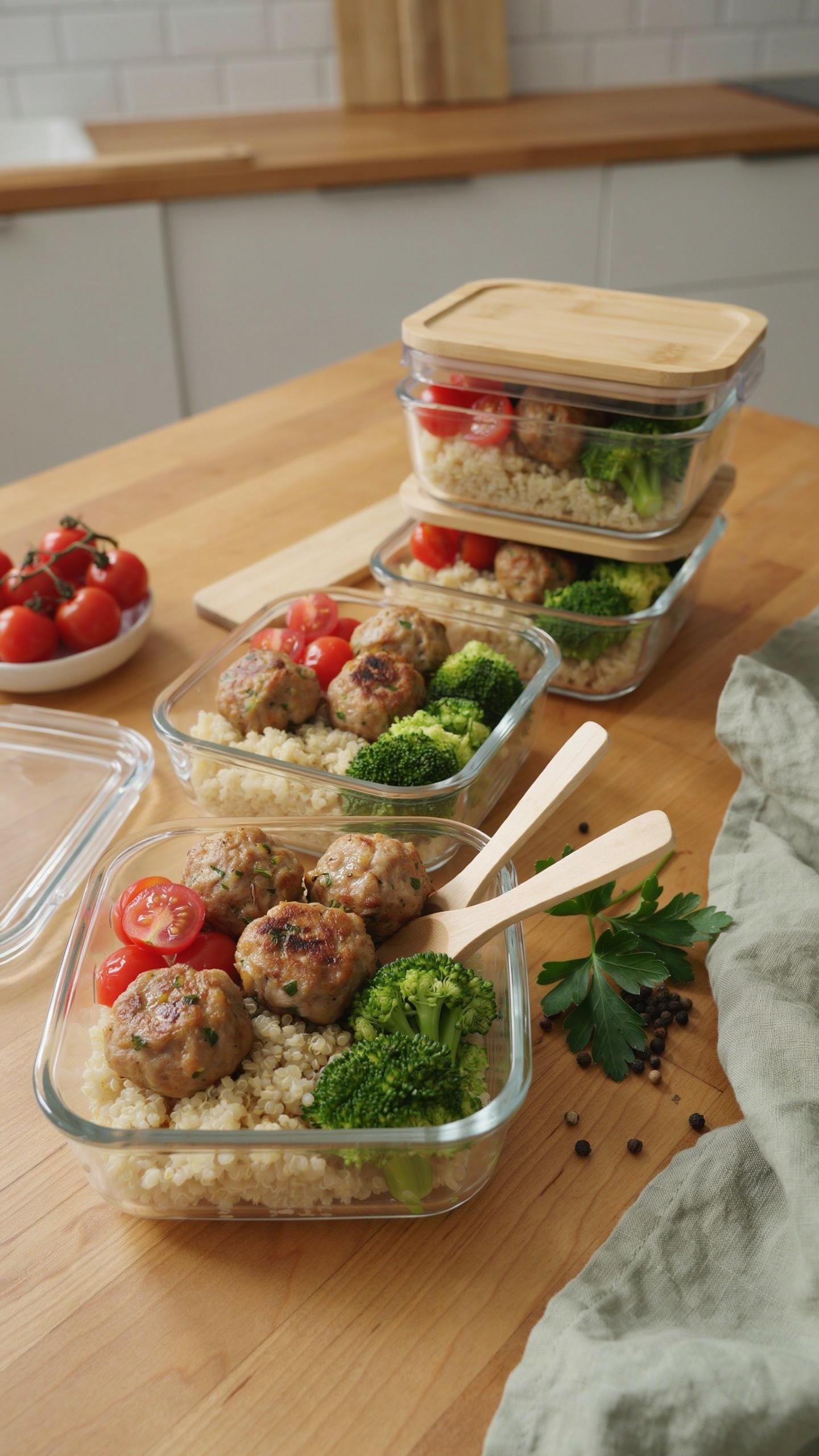
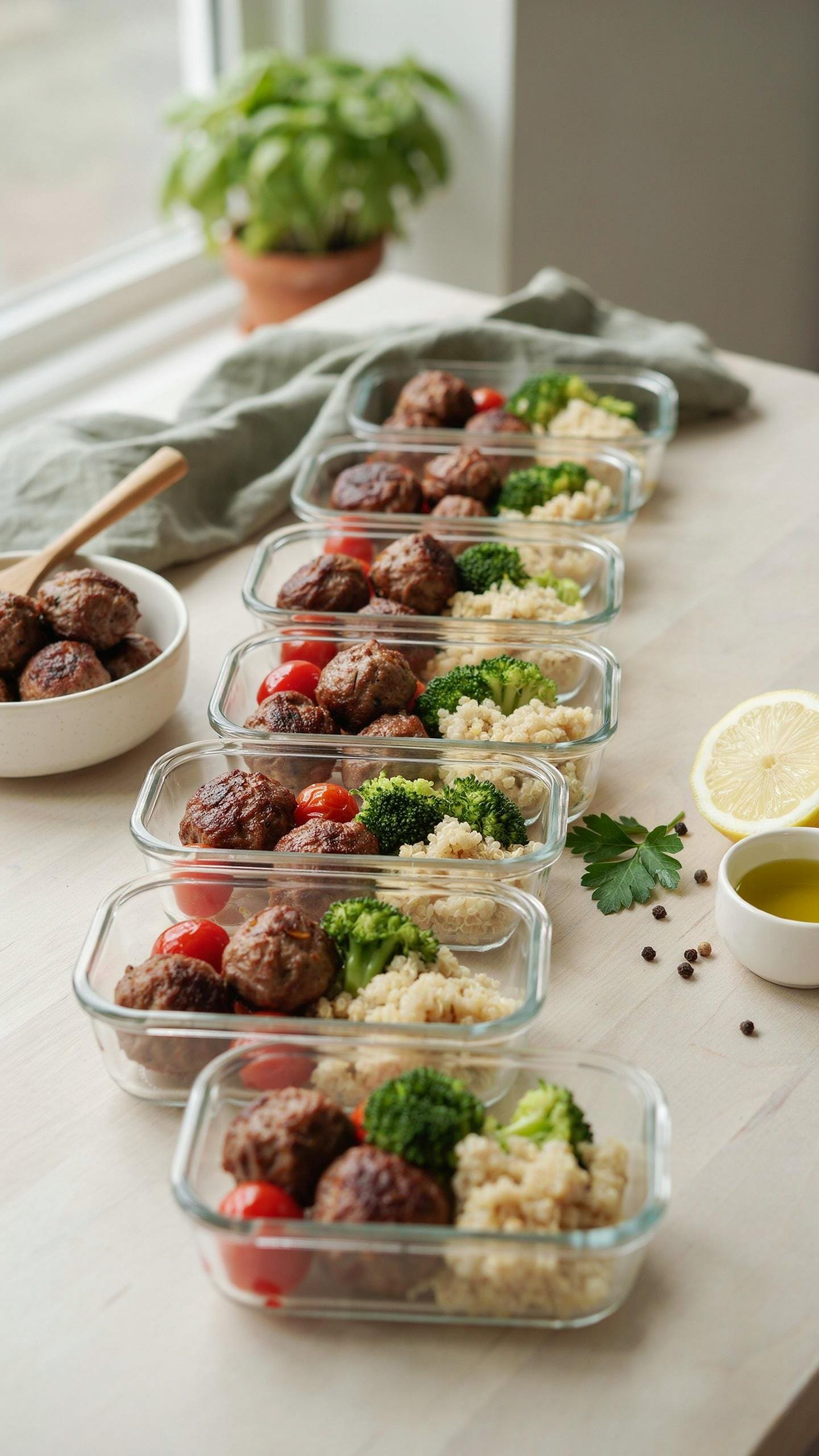
Meatball meal prep solves this by removing the friction between protein need and protein access. When meatballs are already portioned and refrigerated, you grab them instead of skipping meals or reaching for carbs that spike and crash. Your brain maintains steady operation because you’ve made the high-protein choice the easiest choice. The protocol is simple: batch-cook on Sunday, portion into glass containers, grab two containers before work, eat one every five hours.
The Minimum Viable Effort Meatball Methodology

Stop Shopping Like You’re Confused
You want to believe meal prep is noble. Really you just don’t want to waste money on ingredients that spoil before you use them. The real mechanism here is supply chain friction. Ground beef, eggs, and breadcrumbs sit in your fridge with expiration dates. You either use them or you don’t. The fix is sourcing ingredients that move fast and survive storage, then buying only what fits your actual prep schedule.
Buy ground beef from bulk sections at warehouse clubs. Eggs come in dozens and last weeks. Panko and parmesan sit in your pantry indefinitely. Stop treating meatball ingredients like groceries and treat them like supplies you rotate through predictably. Your sourcing decision determines whether you prep twice a month or scramble weekly because half your ingredients turned bad.
Cook Once, Portion Twice
Batch cooking isn’t about motivation or willpower. It’s about thermodynamic efficiency. You heat your oven once. One sheet pan, one mixing bowl, one cleanup cycle handles thirty meatballs instead of ten. Economies of scale apply directly to your kitchen labor.
Mix all your ground beef with eggs, breadcrumbs, salt, and parmesan at once. Roll balls. Bake at 400 degrees for fifteen minutes on sheet pans lined with parchment. Cool completely. Portion into containers. The mechanical work stays identical whether you’re making ten meatballs or fifty. Your time per meatball drops dramatically.
- Ground beef to binder ratio: Use 90/10 or 85/15 beef. Mix one egg per pound of meat with half cup panko. Too much binder makes them dense and rubbery.
- Sheet pan strategy: Line with parchment. Space meatballs one inch apart. They cook evenly and don’t stick. One oven cycle handles two full pans simultaneously.
- Temperature protocol: 400 degrees for exactly fifteen minutes produces cooked centers without surface drying. Check the largest ball with a meat thermometer at 160 degrees internal.
- Cooling before storage: Let meatballs sit on the pan for five minutes. Transfer to a wire rack. This stops carryover cooking and prevents condensation in storage containers.
- Container stacking: Use shallow rectangular containers, not deep ones. Stack meatballs in single layers separated by parchment. They thaw evenly and don’t crush under weight.
Refrigerated meatballs last five days. Frozen meatballs last three months. Your freezer becomes your inventory buffer. Cook when your schedule allows, not when your hunger demands it. The protocol doesn’t change whether you batch on Sunday or Wednesday. Only the timing of when you need them shifts. Execute the same mixing, rolling, and baking sequence every time you cook, and you eliminate decision fatigue from the process entirely.
Precision Fueling Meatball Lunch Ideas For Peak Performance
Building Meals That Actually Sustain Energy
You want to feel sharp at 3pm instead of crashing because you think eating matters more than it does. It doesn’t. The mechanism is glycemic load combined with protein distribution. A meatball meal without carbohydrate context creates a blood sugar spike followed by a hard drop. Add the right carbs and fat in the right ratio, and your energy stays flat for hours.
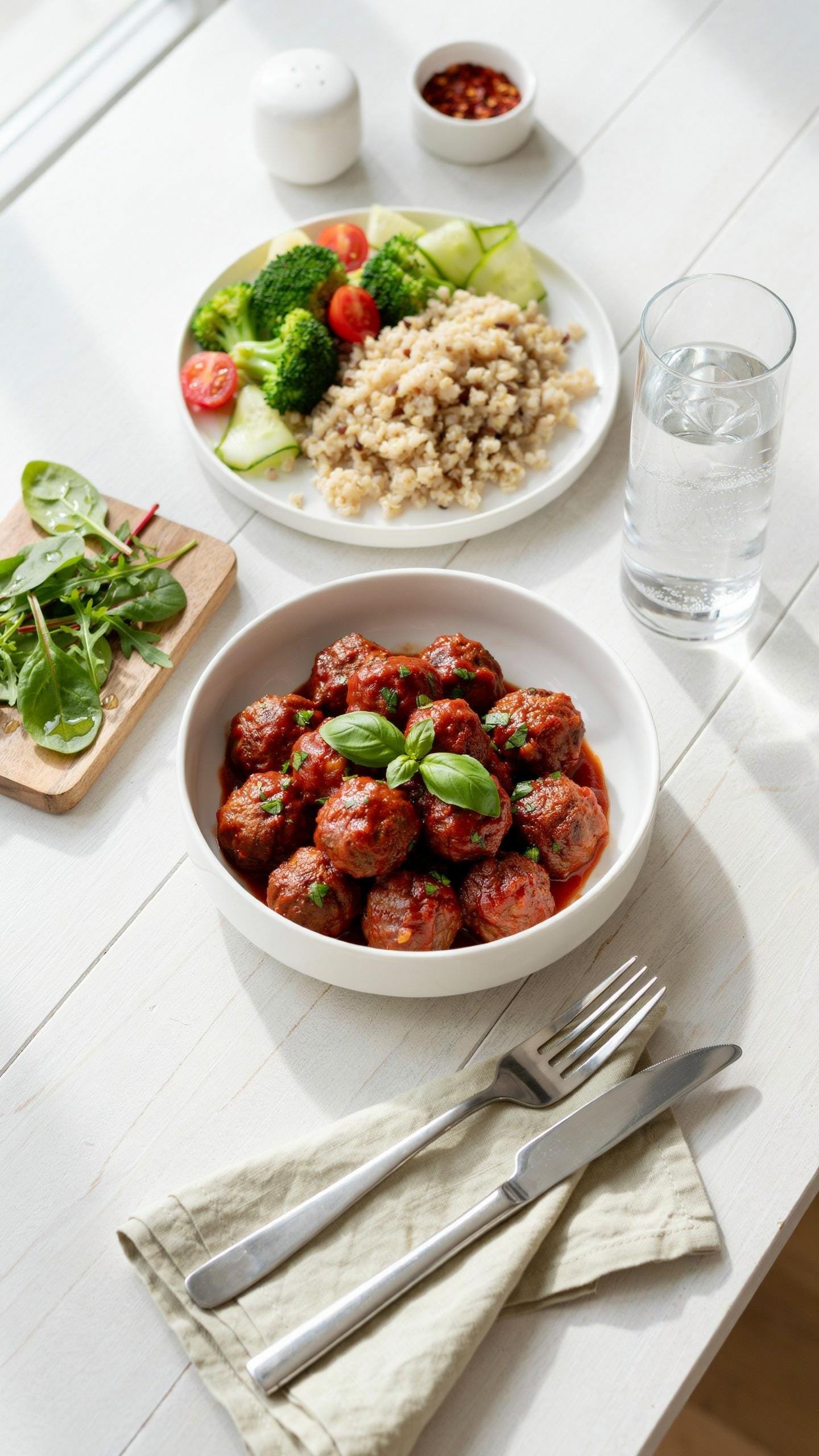
Most meatball lunch advice ignores this and just stacks protein on a plate like it’s some kind of achievement. The real move is pairing your meatballs with foods that slow glucose absorption. Rice, sweet potato, or legumes work. Pair 150 grams of meatballs (roughly 35 grams protein) with 80 grams of cooked rice plus a vegetable that contains fiber. This combination keeps insulin response moderate and sustained. Meal prep these in containers where the components don’t blur together by day four.
Portion Strategy For Consistent Output
Energy consistency requires the same fuel input at the same intervals, not motivation or willpower. Your body runs on portions, not feelings. The protocol is simple: 150 grams of cooked meatballs per lunch, every time.
Calculate backward from your daily protein target. If you need 150 grams of protein daily across three meals, meatballs at lunch should deliver 35 to 40 grams. That’s roughly 150 grams of cooked meatballs. Pair this with 80 to 100 grams of cooked carbohydrate and 15 grams of added fat through olive oil or sauce. Weigh portions once during prep. Use the same container every time. Your brain stops negotiating when the decision is already made by the system.
Engineering Your Environment For Meatball Meal Prep Success
Track What Actually Happens, Not What You Plan
You want to believe a meal prep schedule works because you designed it well. That’s the real reason you’re reading this. The mechanism from cybernetics that matters here is the feedback loop: a system only improves when output data gets compared against input assumptions, then fed back to adjust the next cycle.
Most people meal prep meatballs once, freeze them, and never measure whether they actually ate them or wasted them. This is planning without feedback. Start tracking three variables weekly: how many meatballs you prepped, how many you actually consumed, and how many spoiled. After four weeks, patterns emerge. Maybe you overestimate consumption by thirty percent. Maybe certain sauce pairings get abandoned. Adjust batch size and recipe accordingly next cycle.
Design Your Kitchen Space For Repetition
Self-regulation in a system happens when constraints force the right behavior without willpower. Your kitchen should make meatball prep the path of least resistance, not a production problem that requires motivation each time.
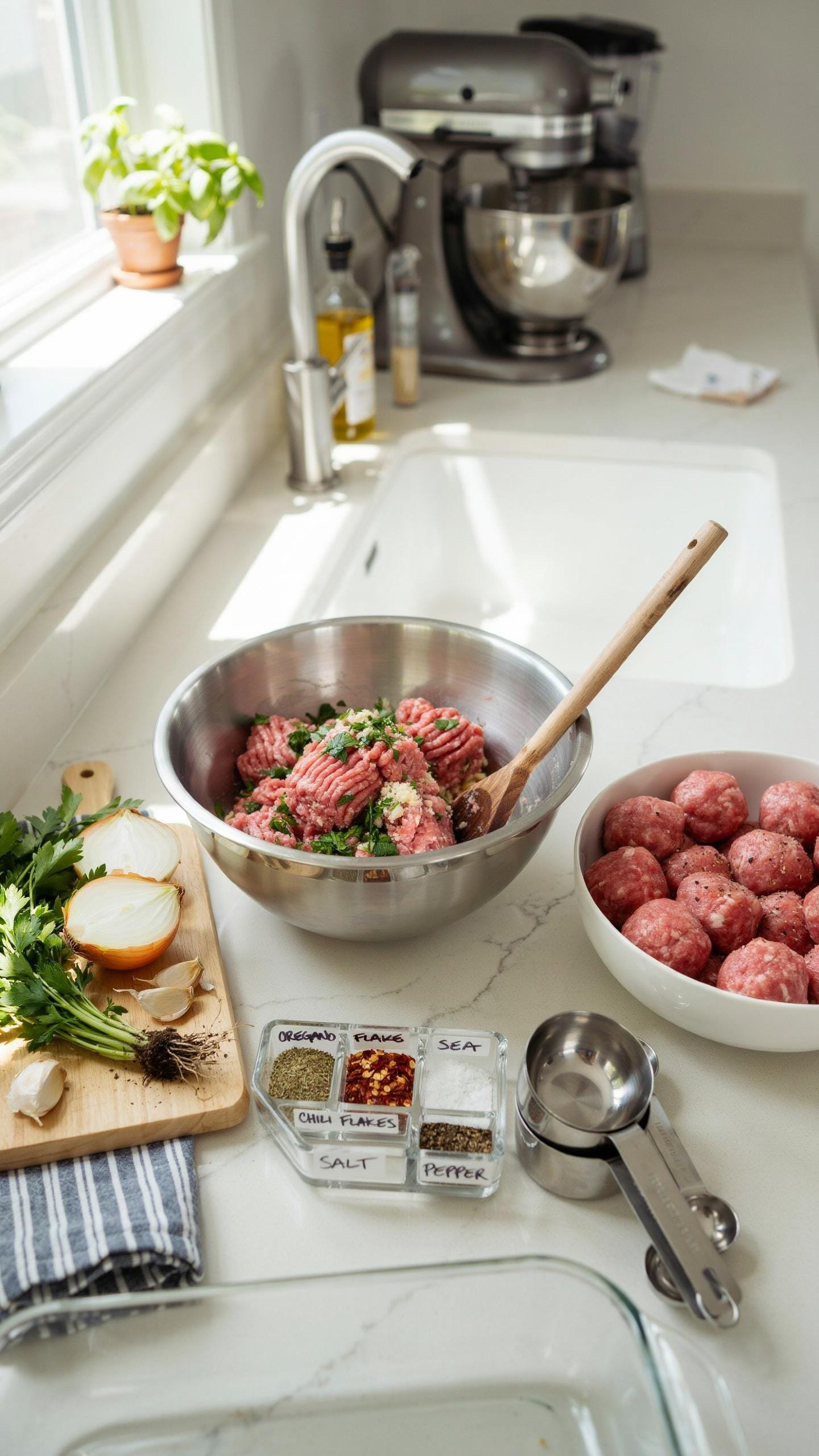
Arrange your workspace so raw ingredients, mixing bowl, and baking sheet sit in a line. Store seasoning blends in one spot. Keep your scale visible and accessible. This reduces decision fatigue and setup friction. When everything needed for meatballs sits at arm’s reach in the same location, you actually use the system. When ingredients are scattered across the fridge and pantry, you skip prep and order takeout instead. Environment determines behavior, not intention.
Mastering The Meatball Dinner A Ritual Of Efficiency

From Freezer To Table In Five Minutes
You care about this because you want to feel like you have your life together without actually spending two hours cooking on a Tuesday. Here’s the mechanism: batch cooking only works if retrieval is faster than cooking from scratch. Think of it like inventory turnover in manufacturing—your frozen meatballs are dead capital until activation speed matters more than storage cost.
Pull your meatballs from the freezer straight into a skillet over medium-high heat with a lid. No thawing. No prep. They go from frozen to hot in six to eight minutes because the surface area-to-mass ratio accelerates heat transfer through the meat. Your sauce—whether marinara, teriyaki, or cream-based—reaches eating temperature simultaneously. The ritual takes five minutes total because you eliminated every decision point upstream.
The Evening Routine Multiplier
Most advice tells you to reheat and serve, which misses the actual time leak: decision fatigue. You need a reheating protocol so automatic it requires zero thought. Use the same skillet, same heat level, same sauce every time. Your brain stops treating dinner prep as a task and starts treating it as a reflex.
Store meatballs and sauce separately to prevent sogginess and maintain texture consistency across the week. When you eat Tuesday’s batch, they taste identical to Thursday’s because nothing degraded. Reheat by placing eight to ten frozen meatballs directly into a covered skillet with half a cup of sauce at medium-high heat. Set a timer for seven minutes. Plate over rice, pasta, or greens. The mechanism is repetition eliminating friction, not motivation eliminating laziness.
Protein Meal Prep Meatballs Beef And Beyond
Why Multiple Proteins Matter More Than You Think
You want the metabolic edge without overthinking it. That’s the real reason this section exists. The mechanism: protein variety changes amino acid ratios and micronutrient density per calorie. Beef alone gives you iron and B12, but pork adds thiamine, and chicken brings different fat profiles. Rotating proteins prevents nutritional blind spots while keeping your body from adapting to a single amino acid pattern. Your muscles don’t care about loyalty to one source.
Mixing proteins also solves a hidden adherence problem. Eating identical meatballs six days straight triggers sensory fatigue, which kills compliance faster than hunger ever could. Your brain stops registering the meal as food worth eating. Beef-pork blends, beef-turkey variations, or beef-lamb combos shift texture and fat content enough to keep the stimulus fresh. Prep three different batches on Sunday and rotate them across the week. This isn’t optimization theater—it’s the difference between finishing your prep and abandoning it by Wednesday.
The Flavor Profile As A Compliance Variable
Everyone talks about “keeping meals interesting” like it’s optional seasoning advice. Wrong. Flavor is a compliance mechanism, borrowed from behavioral economics. What economists call “preference satiation”—the declining pleasure from repeating the same stimulus—applies directly to meatballs. Your brain releases less dopamine each time you eat the same flavor, making adherence harder. Kill this through systematic variation in your prep formula.
Season your first batch with Italian herbs, garlic, and Pecorino. Make the second batch Mediterranean with cumin, coriander, and lemon zest. Build the third around Asian profiles using ginger, soy, and sesame oil. Keep the protein ratio identical across all three, but change everything else. Store them separately and alternate daily. This single protocol transforms meal prep from a compliance problem into a system that reinforces itself. Your brain anticipates variety instead of dreading repetition.
The Discipline Multiplier Why Meatball Meal Prep Matters

Small Wins Build Unstoppable Momentum
You want proof you can change. That’s the real reason you’re reading this. Most people never prep a single meal because they’re chasing transformation instead of consistency. Meatball meal prep works like compound interest in physics: small repeated force applied in the same direction produces exponential results over time. You cook twelve pounds of ground beef once. You portion it. You repeat weekly. The action itself stays identical, but your brain learns that you follow through on commitments.
The mechanism is repetition, not motivation. You don’t feel like prepping meatballs every Sunday. You do it anyway because the protocol is fixed. No decision fatigue. No willpower required. After four weeks, your nervous system stops treating it as effort and starts treating it as routine. That shift from willpower to automation is where discipline compounds. Your kitchen becomes the training ground for saying yes to yourself.
Discipline Leaks Into Everything Else
Common advice says willpower is limited, so don’t waste it. That’s incomplete. Willpower doesn’t deplete from use; it depletes from decision-making. Meatball prep eliminates a decision. One less negotiation with yourself every day. That freed attention goes somewhere. You notice it first in the gym: you have more energy. Then at work: you’re sharper in meetings. Then in conversations: you’re more present. The discipline didn’t travel. You just stopped bleeding willpower on nutrition choices.
Here’s what actually transfers: the evidence that you execute. Once you see yourself completing a full week of meal prep, your brain accepts that you’re someone who follows through. That identity shift rewires how you approach everything else. You start that project you’ve delayed. You send the email you’ve been avoiding. You hit your protein target without thinking about it. The meatballs are the proof. Everything else follows from knowing you can commit to something and see it through to completion.
Your biggest obstacle isnt the recipe its your internal resistance to systematic selfmastery

You already know meatballs work. You know protein matters. What you don’t do is batch them on Sunday. That gap between knowledge and action defines your body. Stop waiting for motivation. Buy ground beef today. Mix it. Freeze it. The person who executes imperfect systems beats the person who plans perfect ones every single time.