
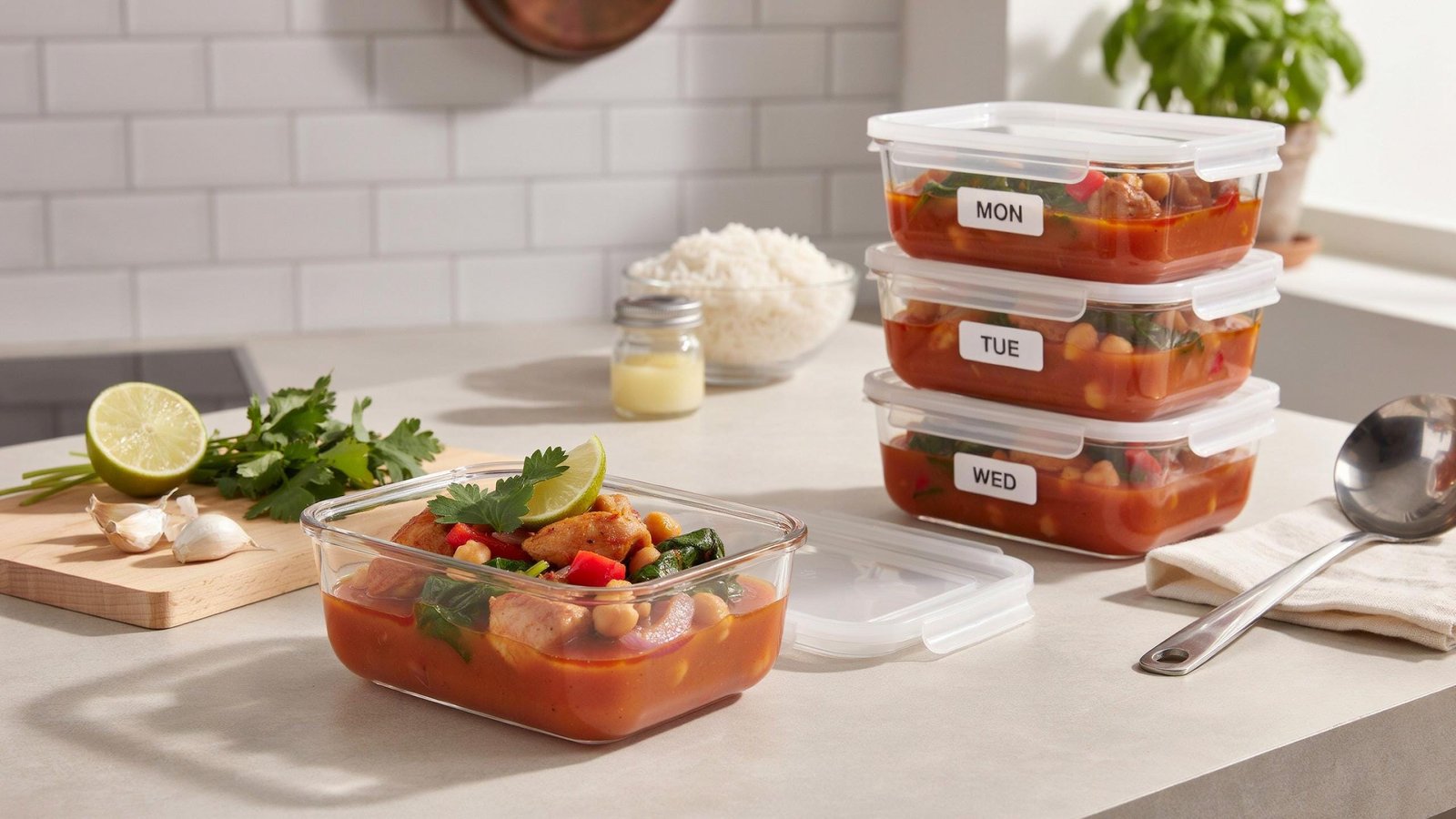
The High Protein Curry Fallacy Beyond Just Macros
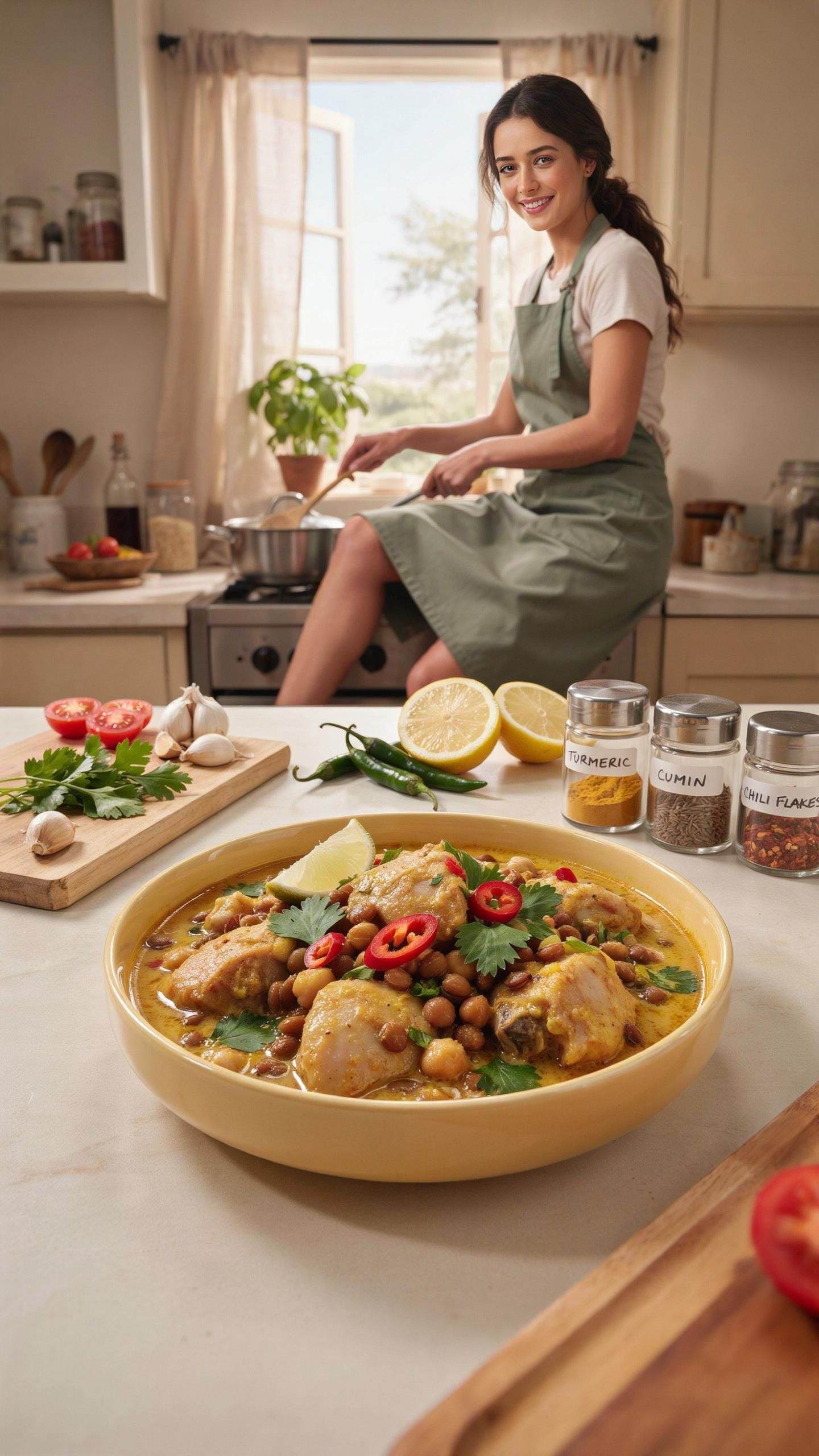
Protein Counting Won’t Save Your Meal Prep
You want the protein number to justify the effort, to prove this isn’t just another recipe you’ll abandon. Here’s the mechanism nobody states plainly: hitting a protein target means nothing if the curry tastes like punishment, and taste determines whether you actually eat it. Most high protein curry advice treats protein as a standalone variable. It isn’t. Protein works inside a flavor system. Get the system wrong and your macros become irrelevant.
The real problem is treating curry like a math equation instead of a cooking problem. You can dump whey powder into anything and hit 40 grams of protein. That’s not meal prep. That’s self-sabotage that tastes bad. The spice ratios, fat content, and acid balance determine whether your body absorbs nutrients efficiently and whether you crave it enough to actually finish your containers. Flavor-building compounds like capsaicin in chilies and volatile oils in cumin aren’t marketing fluff. They’re digestive triggers that improve bioavailability of the protein source you chose.
Flavor First, Then Protein Integration
In chemistry, there’s a concept called “solubility”—the degree to which a substance dissolves into another medium. Your protein source must dissolve into the curry’s flavor profile, not sit as a separate component people tolerate. Chicken absorbs spices differently than lentils. Ground lamb carries cumin differently than tofu. The protein doesn’t adapt to the curry. The curry must be built around the protein’s flavor baseline.
Start with your fat base. Ghee or coconut oil carries spice compounds better than water-based cooking. Toast your spices in the fat first, for 90 seconds, until the kitchen smells sharp. This blooming step isn’t decoration. It breaks down the spices’ cellular walls and makes the flavor soluble in the liquid phase coming next. Add your protein source after the spice bloom, not before. Your curry will taste three times more potent because the protein absorbs the released oils instead of diluting them. The protein integrates into the dish instead of occupying it.
The Flavor Stratagem Crafting Depth In High Protein Curry
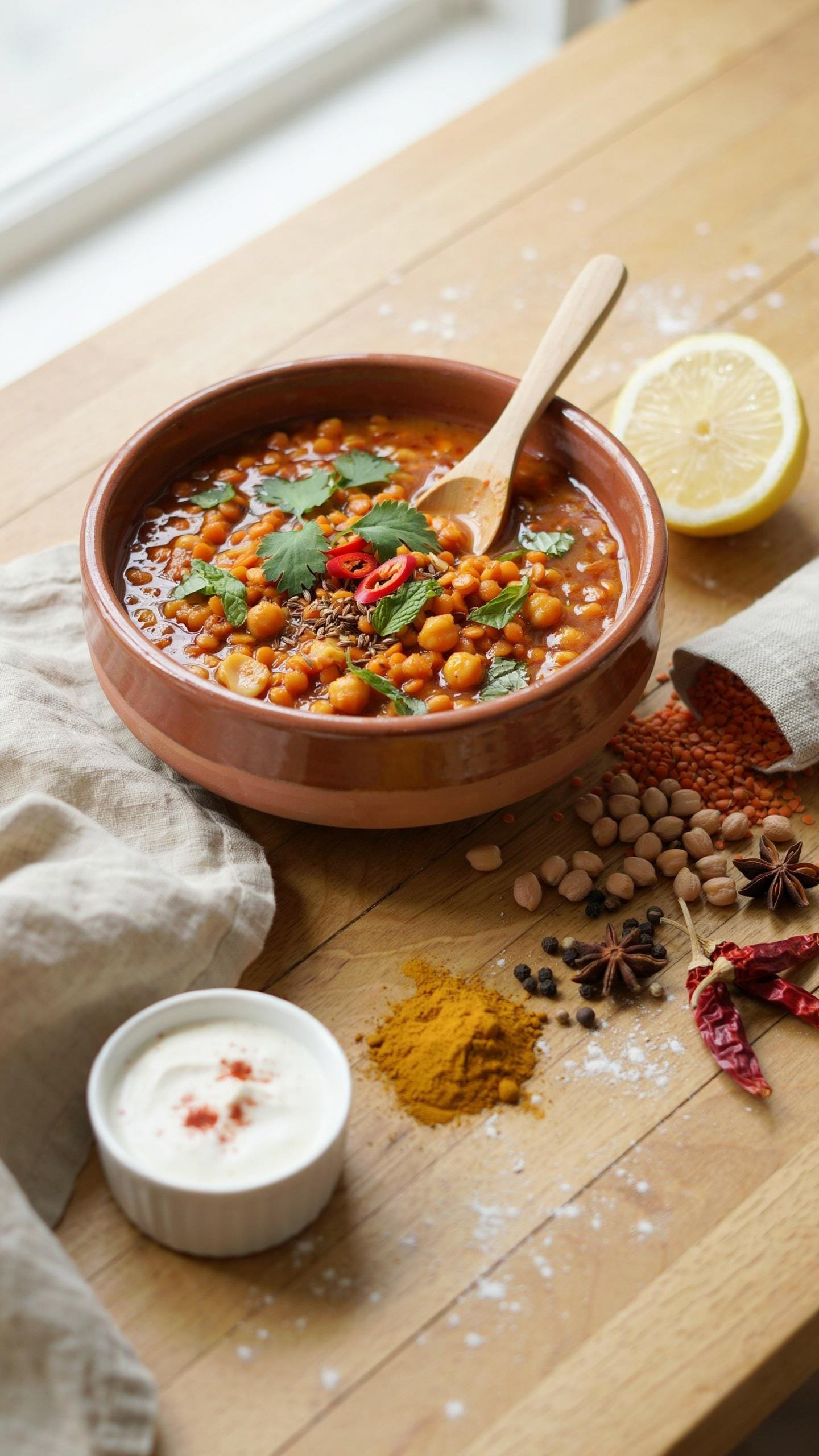
Layering Aromatics And Spices For Complexity
You want your curry to taste expensive so people think you’re competent in the kitchen. The real mechanism is timing and temperature control, not ingredient count. Aromatics follow a heat hierarchy. Blooming whole spices in oil first, then adding ground spices, then finishing with fresh aromatics creates flavor layers that frozen curry actually preserves better than fresh preparations because the spices continue to marry during storage.
Toast cumin, coriander, and fenugreek seeds in dry pan until fragrant, roughly 60 to 90 seconds. This breaks down their cell walls and releases volatile oils. Add them to hot ghee or oil immediately, let them sizzle for 20 to 30 seconds, then add your protein. Ground turmeric, chili powder, and garam masala follow after the onions soften. Fresh ginger and garlic go in last, just before the tomato base, because their heat compounds become harsh if cooked too long. This sequencing survives freezing intact because the structural bonds formed in spice oils are stable at sub-zero temperatures.
Umami Bombs: Natural High Protein Flavor Enhancers
Food chemistry teaches us that umami is actually glutamate concentration, and high protein curries already contain it through legumes, dairy, and meat. Add tomato paste, not fresh tomatoes, because cooking reduces water and concentrates glutamate by 5 to 10 times. One tablespoon of tomato paste delivers more umami punch than a full can of crushed tomatoes diluted in liquid.
Coconut milk contains natural fats that carry fat-soluble flavor compounds, making your curry taste richer on less seasoning. Greek yogurt stirred in at the end adds casein protein plus lactic acid, which brightens perception of spice without adding salt. Fish sauce or soy sauce, used at a whisper level (half teaspoon per serving), triggers umami receptors without making the curry taste fishy or salty. Freeze your curry with these elements already integrated so they bond during thaw cycles, not during reheating. The compound butter or ghee you add before freezing acts as a flavor sealant that prevents oxidation of the spices during storage.
The High Protein Source Matrix Strategic Selection
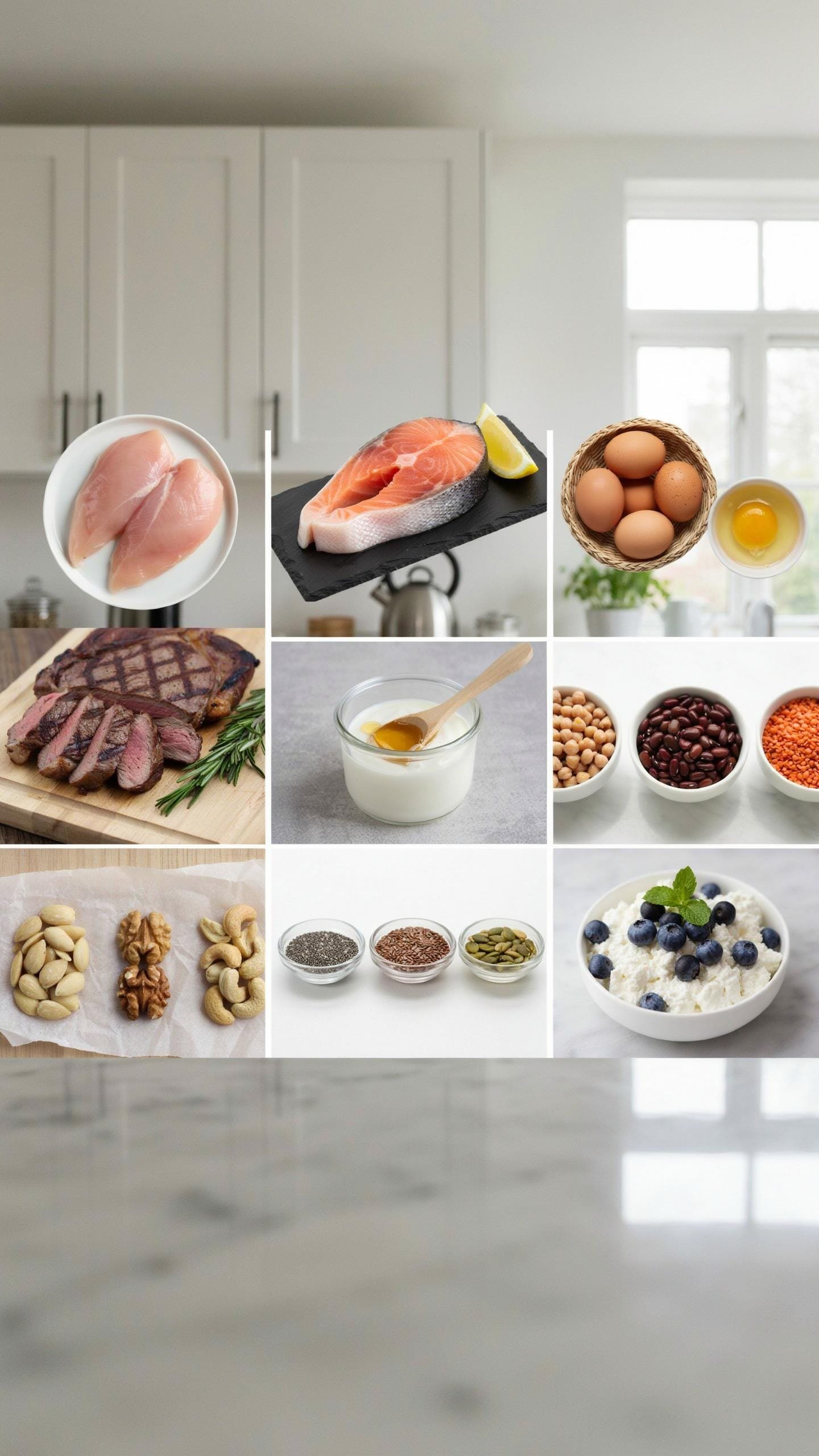
Chicken Breast Protein Density And Freezer Stability
You want chicken because it’s cheap and predictable, not because some influencer told you so. Here’s the mechanism: chicken breast contains roughly 31 grams of protein per 100 grams cooked, with minimal fat interference. This matters for curry because fat oxidizes during freezer storage, turning rancid. Lean protein stays stable for 3 months frozen without flavor degradation. Buy bone-in, skin-on thighs instead if you prefer juiciness, but accept the protein-to-weight tradeoff.
The actual move is cooking chicken to exactly 165°F internal temperature before freezing, not after. Undercooking creates bacterial survival risk during thaw cycles. Overcooking dries it out, making reheating in curry sauce pointless. Cube chicken into 1-inch pieces, cool completely on a sheet pan before portioning. This prevents ice crystal formation that destroys texture. Freeze in portions matching your curry batch sizes, never as one solid block.
Legumes And Paneer For Vegetarian Protein Loads
Common advice says legumes work fine in curry. They don’t, not for meal prep freezing. Dried beans absorb water continuously even at freezer temperatures, turning mushy after two weeks. Canned chickpeas and lentils cooked to firmness, then cooled and frozen separately, hold structure better. Paneer works because it’s a pressed solid with minimal water content. Buy full-fat paneer, cube it, and freeze on a sheet pan before adding to curry containers.
The combination approach works harder than single sources. Mix paneer cubes with cooked chickpeas at a 60-40 ratio by weight. This gives you 18 grams protein per 100 grams while maintaining texture through freeze-thaw cycles. Don’t cook paneer into the curry base before freezing. Cook curry sauce, cool it, add paneer cubes, then freeze. This prevents the paneer from absorbing oil and becoming slick during storage. Reheat at medium heat, never high, or paneer becomes rubbery.
The Simplicity Protocol Easy Chicken Curry Recipe Blueprint
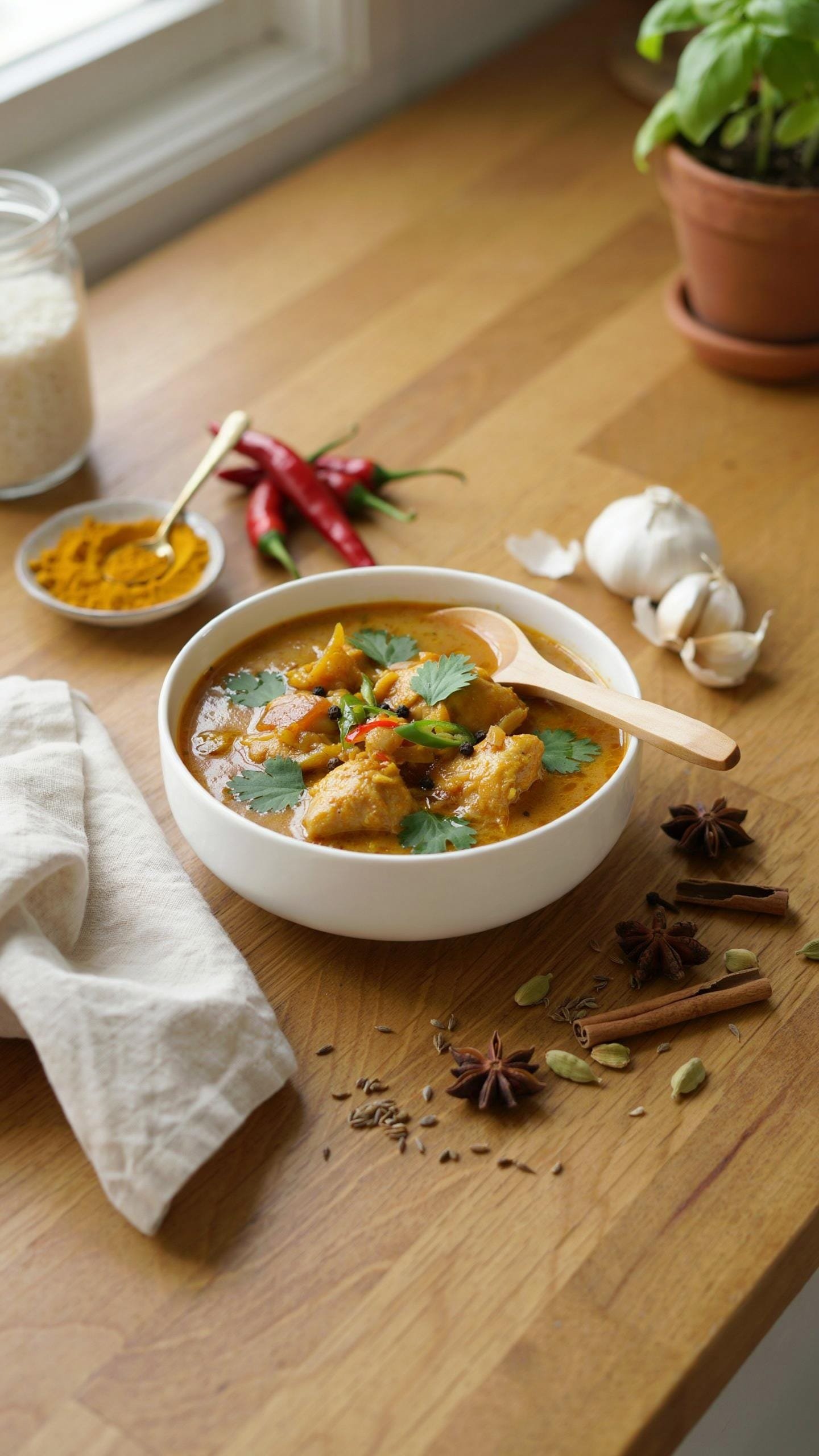
What Actually Matters In Your Ingredient List
You want the shortcut that doesn’t sacrifice results—that’s what pulls you here. The real mechanism is constraint. Fewer ingredients force you to maximize what each one does, which means better flavor density per component and faster execution. Most curry recipes bloat their ingredient lists to sound impressive, then sit uncooked in your pantry.
You need chicken thighs (not breasts—thighs stay moist during freezing and reheating), onions, garlic, ginger, curry powder, coconut milk, and salt. That’s your foundation. Tomato paste adds acid and depth. Everything else is optional flavor—add it only if you already have it on hand. This isn’t minimalism for virtue. It’s ruthless efficiency disguised as simplicity.
Cook Steps That Actually Save Time
- Dice onions and sauté in oil until translucent: Start the flavor base immediately. This takes 4-5 minutes and breaks down cell walls to release sweetness. Skip browning the chicken first—it’s extra heat and no payoff when you’re freezing it anyway.
- Add garlic, ginger, and curry powder for 1 minute: Bloom your spices in the hot fat. This step extracts the volatile oils that carry flavor. Dry spices added to cold liquid sit inert. This changes everything.
- Add chicken pieces and coat thoroughly: Let the spice paste coat the meat for 2 minutes. You’re building flavor architecture before liquid goes in, not after.
- Pour coconut milk and tomato paste, bring to simmer: Stir once to combine. Simmer 20-25 minutes until chicken reaches 165 degrees internally. The residual heat from simmering finishes cooking without drying anything out.
- Cool completely before freezing: Hot curry releases steam, which creates ice crystals that destroy texture. Cool to room temperature in 30 minutes, then refrigerate for 2 hours before freezing. This step determines whether your meal tastes fresh or freezer-burned on day 14.
The total active time is 12 minutes. The passive time is 30 minutes of simmering while you prep containers. One batch yields 6-8 portions depending on chicken size. Freeze in 1.5-portion containers so you reheat only what you eat—partial thawing cycles degrade quality faster than a single full thaw.
The Preservation Principle Mastering Freezing For High Protein Curry
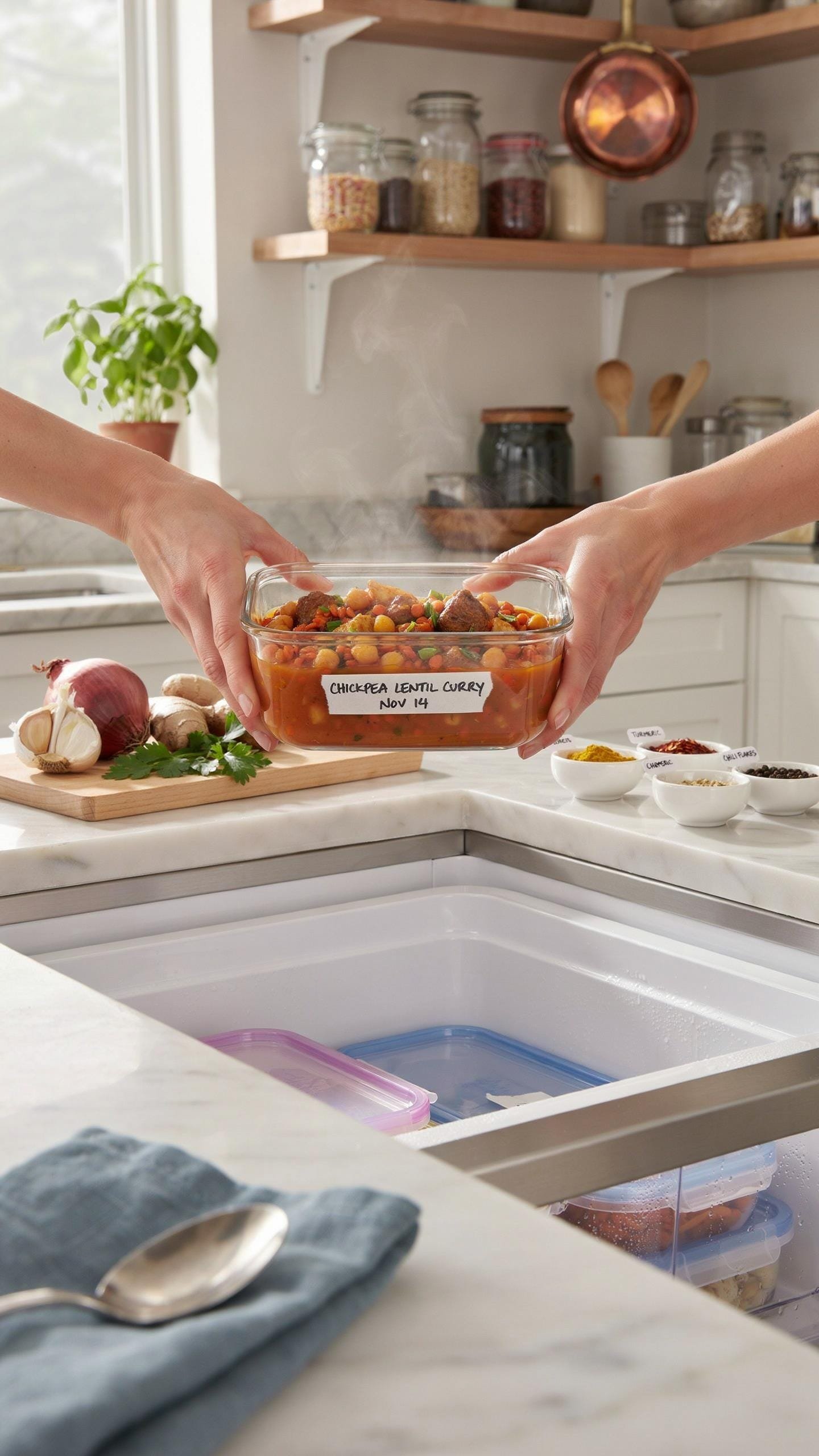
How Batching Beats Single Portions
You want to believe meal prep saves time without changing your actual cooking process. It doesn’t. Military logistics uses the concept of “staging” to reduce friction at every transfer point. With curry, staging means cooking in deliberate batch sizes that match your freezer geometry and reheating capacity, not some arbitrary amount that fits your pot.
Cook curry in portions of 1.5 to 2 pounds protein per batch. This size thaws evenly in 24 hours and reheats in 8 to 10 minutes on medium heat without protein denaturing or sauce separating. Your freezer holds more; your biology doesn’t benefit. Smaller batches age better. Freeze within two hours of cooking, when the dish is still warm, to slow bacterial growth during the temperature drop.
Reheating Without Destroying Texture
The consensus says reheat in the microwave for speed. That’s how you get rubbery protein and split sauce. Stovetop reheating on medium heat with a splash of water or broth takes 10 minutes and costs you nothing but attention.
Thaw curry overnight in the refrigerator. Place it in a heavy-bottomed pan on medium heat. Add 2 to 4 tablespoons of water or chicken broth per pound of curry to restore sauce viscosity. Stir every 90 seconds. The protein stays tender because temperature rises gradually, and the sauce reintegrates with the added liquid instead of breaking apart from direct microwave energy. Cover the pan loosely to prevent evaporation.
The Dynamic Duo High Protein Healthy Chicken Curry Meals
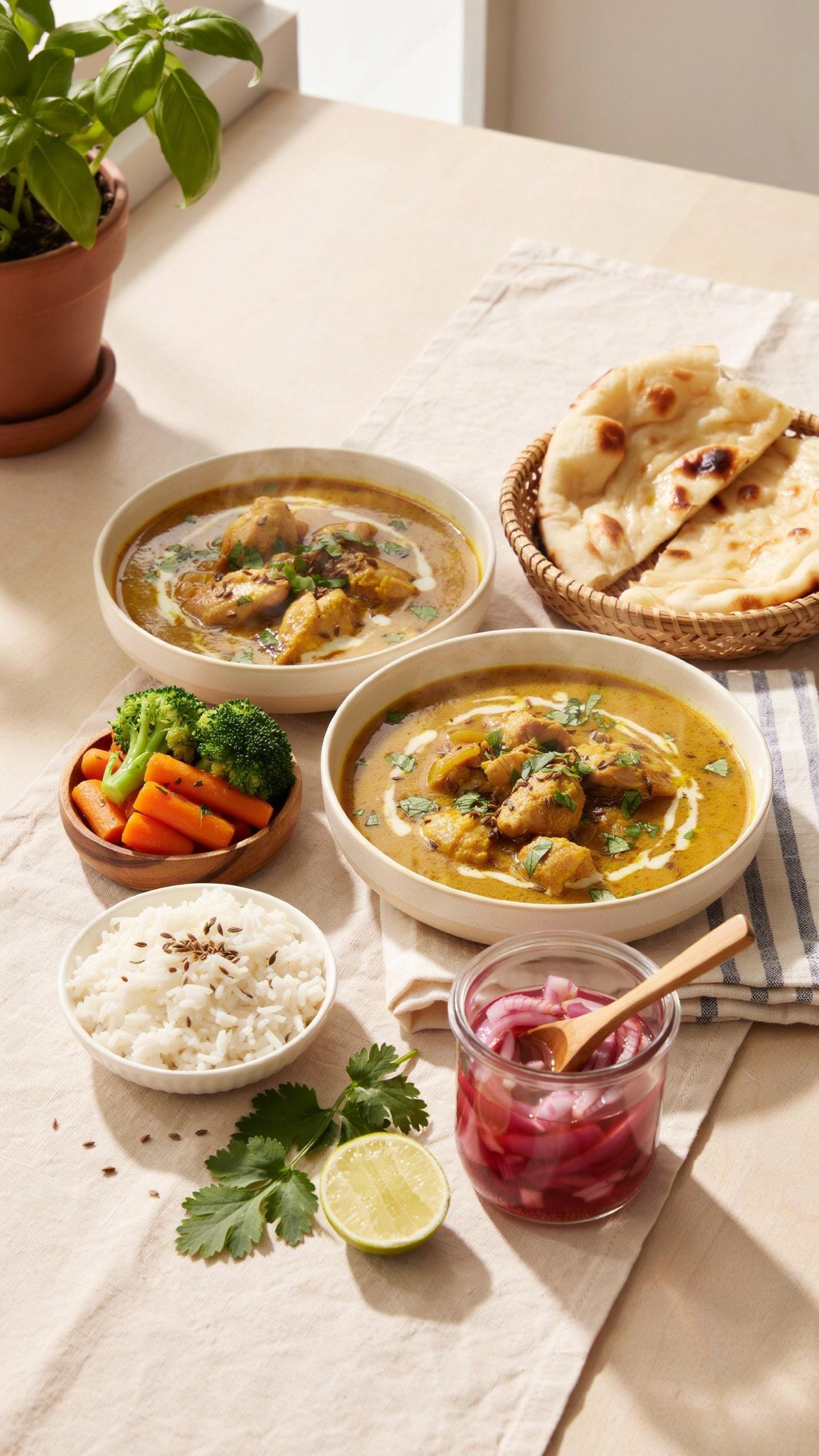
Why Protein Alone Won’t Save Your Meal Prep
You want the number on the label to justify skipping the rest of the nutrition conversation. Here’s the mechanism: protein alone doesn’t determine satiety or energy stability. Nutrient density is the ratio of micronutrients to calories. A 40-gram protein curry with zero vegetables fills your stomach but starves your cells. Chicken provides amino acids, but turmeric, ginger, and tomatoes provide polyphenols, vitamins, and minerals your body actually needs to recover and function. The protein gets your attention. The vegetables keep your hormones stable.
Most meal prep advice treats protein like a solo achievement. It’s not. A high-protein curry built on chicken, chickpeas, and coconut milk with spinach, tomatoes, and spices creates a complete nutritional vehicle. The vegetables lower the glycemic load while adding fiber. The spices contain bioactive compounds that reduce inflammation. This combination works because each component serves a specific role beyond hitting a macro target. Your frozen meal becomes preventive medicine, not just a calorie container.
Fuel Stability Through Macronutrient Architecture
Think of macronutrient balance like structural engineering: load distribution prevents collapse. Protein prevents blood sugar crashes. Fat slows digestion. Carbs provide immediate fuel. A curry with only chicken protein and broth will spike and crash. A curry with chicken, chickpeas, coconut milk, and rice creates a tiered energy release. The protein digests slower. The fat creates satiety. The carbs fuel immediately. Your energy doesn’t flatline four hours later.
The frozen curry needs all three macros intentionally stacked. Chicken alone won’t hold. Add chickpeas for sustained carbs and additional protein. Use coconut milk for fat content, which slows gastric emptying and extends fullness. Pair with rice or lentils in the freezer portion. This architecture means you don’t crash mid-afternoon and reach for sugar. Your body gets steady fuel for five to six hours. The mechanism is simple: staggered macronutrient digestion rates prevent energy volatility.
The Flavor Evolution Adapting Curry Chicken Recipes
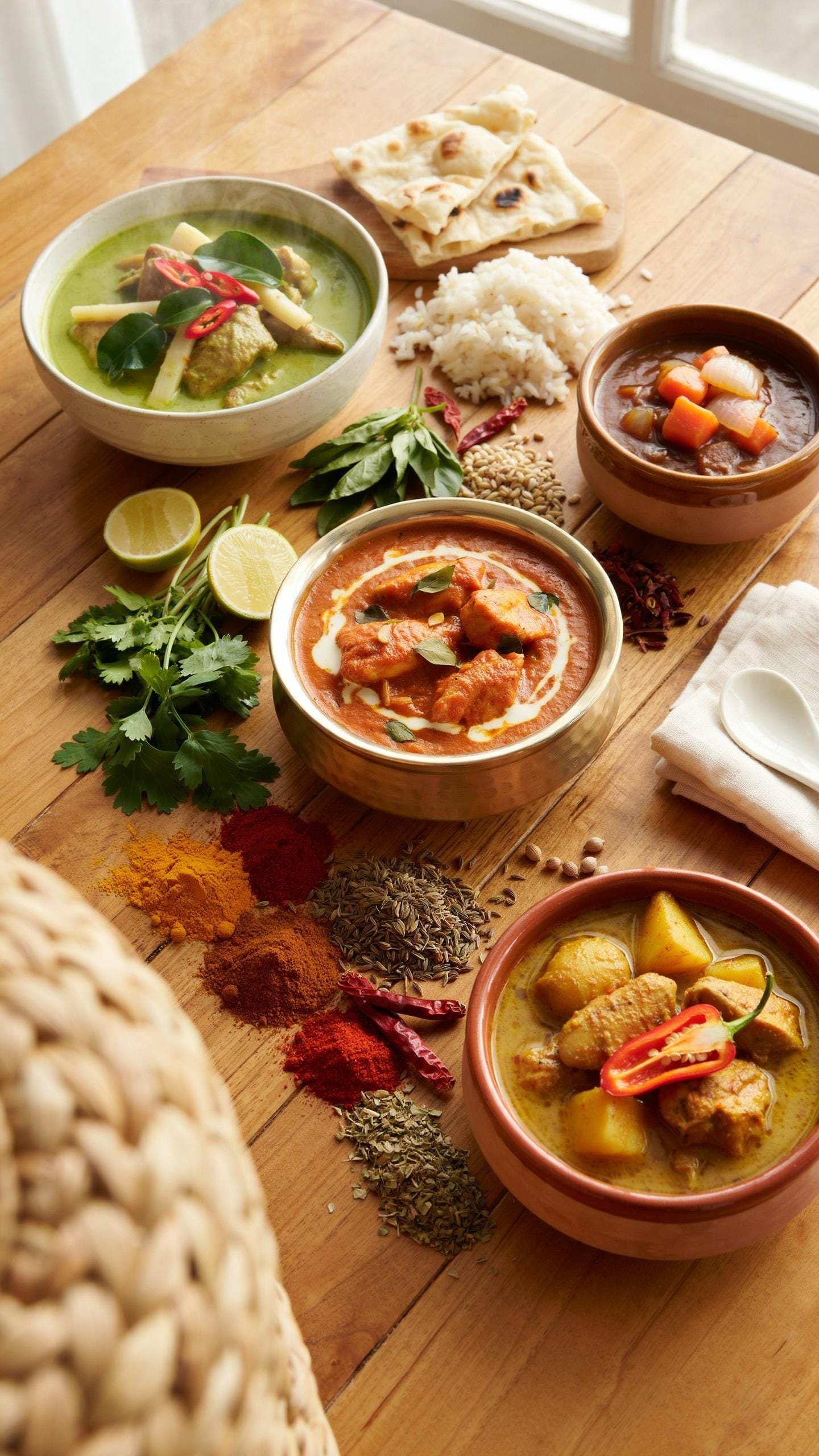
When Your Curry Tastes Flat In January
You want your meal prep to taste identical every time because consistency feels like control. Here’s what actually happens: seasonal produce changes the water content and sugar levels in vegetables, which shifts how spices dissolve and register on your palate. Tomatoes in winter contain less acid. Onions in spring have different sulfur compounds. Your curry recipe doesn’t fail. Your ingredients changed.
Adjust your acid first. Add lemon juice or vinegar in winter when tomatoes are duller. Reduce it in summer when acidity is already present. Cook aromatics longer in colder months to extract more volatile oils from onions and garlic. The spice blend stays the same, but the cooking time and acid ratio move. This is why restaurants with consistent curry use the same distributor year-round and still tweak recipes seasonally.
Rebalancing Heat Without Losing Depth
Most advice says to add more chili if you want heat. That’s incomplete. Think of spice blending like frequency response in audio engineering: each spice occupies a different sensory bandwidth. Red chili hits immediate burn. Black pepper adds delayed heat. Cumin and coriander create warmth without bite. Mixing frequencies creates perceived depth instead of one-note pain.
Build your base with coriander and cumin first. These carry the curry forward without dominating. Layer black pepper for complexity. Reserve red chili as your final volume control. When freezing, capsaicin compounds stay stable, but ground spices lose potency over two months. Increase your spice quantities by 15 percent when you’re cooking for the freezer. Toast whole spices before grinding them for your base. This locks flavor in place through freeze cycles.
The Effortless Expansion Quick Chicken Curry Meal Strategies
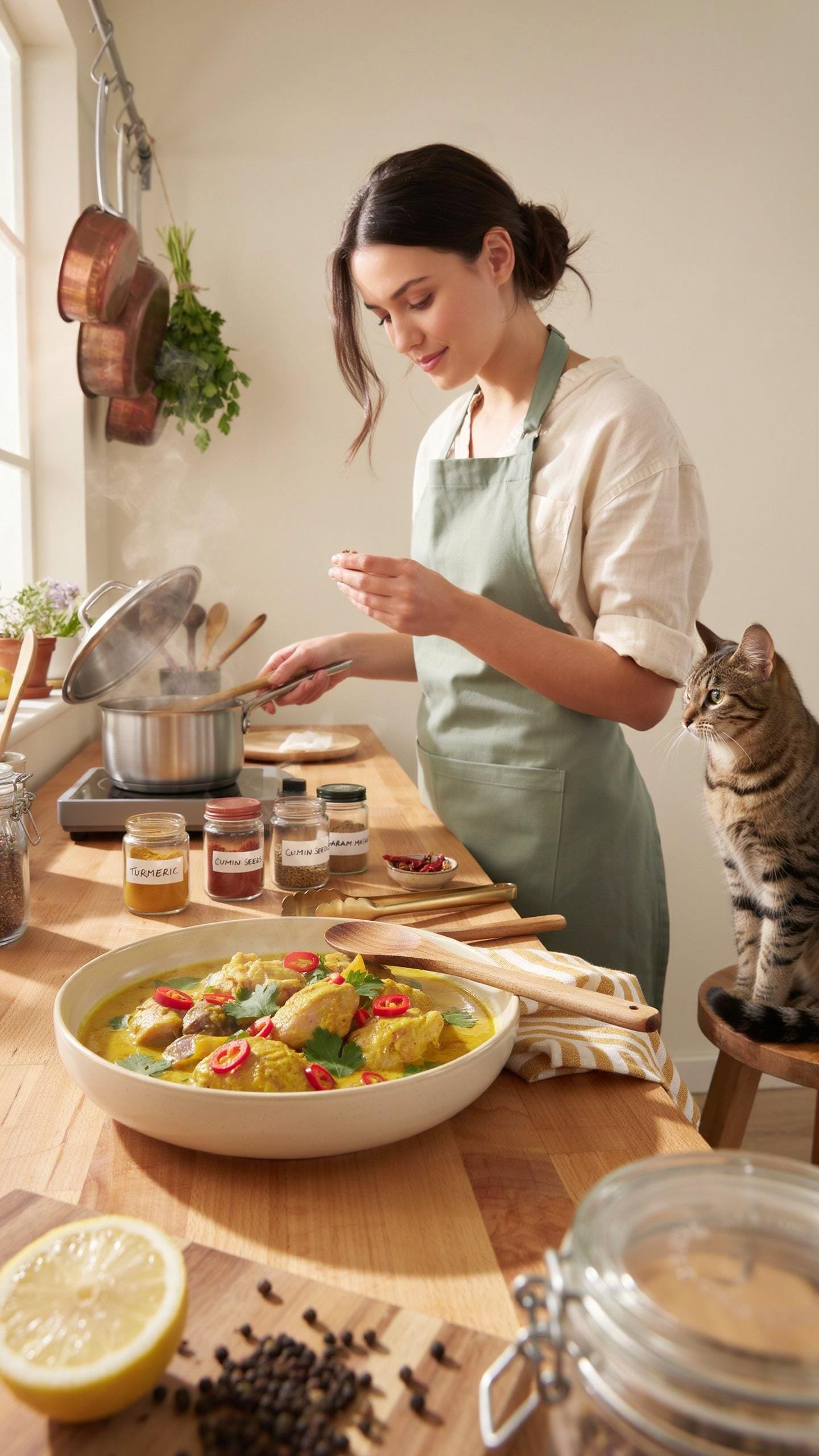
Prepped Components Cut Assembly Time In Half
You want this to feel easy so you’ll actually do it consistently. That’s the real motive here. The mechanism is simple: prep removes decision friction. Instead of cooking chicken, chopping onions, and measuring spices while hungry, you walk to your fridge and combine what’s already ready. This is batch economics applied to protein meals. You compress all high-friction work into one session, then distribute low-friction assembly across your week.
Pre-prepping means cooking chicken in bulk three days before you assemble curry. Store it in shallow containers so it cools fast and stays moist. Dice onions and garlic the night before, seal them in glass, they last four days. Toast your spice blend in a dry pan once weekly and store in an airtight jar. When you need a meal, you’re combining four components that already exist rather than building from raw ingredients.
The Base Layer Strategy For Rotation
Batch cooking foundations are not about making the same curry five times. The wrong approach wastes your effort and bores you into quitting. Instead, cook three curry bases with different spice profiles using the same protein and fat. One can be ginger-forward with turmeric, another coconut-heavy with cumin, the third tomato-based with garam masala. Each uses the same cooked chicken and onion backbone, but tastes distinct when you freeze and thaw them.
This rotation strategy keeps protein intake consistent while varying flavor stimulus. Cook each base once per two weeks instead of one curry five times. Each base needs two hours total from start to portioning into containers. You freeze in flat stacks, not round vessels, so thawing happens fast and storage takes minimal space. This shifts meal prep from a chore into a simple system you can maintain for months.
The Anti Boredom Protocol Creative High Protein Curry Uses
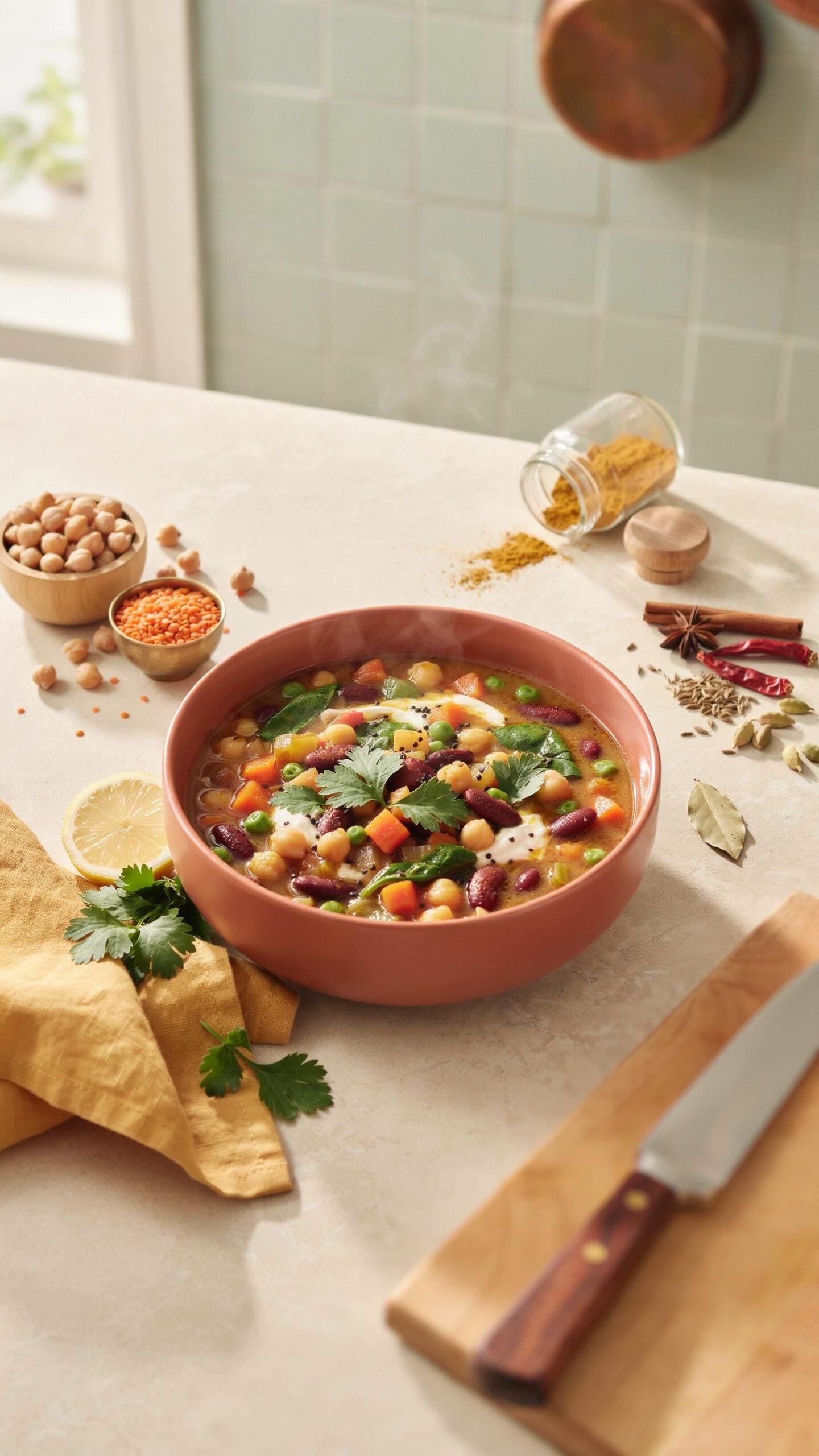
When Leftovers Stop Being Leftovers
You’re worried repetition will kill your compliance. The real mechanism is monotony triggering decision fatigue, which collapses willpower faster than any hunger signal. Your frozen curry isn’t a meal you eat four times a week. It’s a protein base that transforms into different meals through simple structural changes.
Curry transforms when you change its context, not its core. Mix cold curry with Greek yogurt and use it as a sandwich spread. Blend it into scrambled eggs. Layer it into a grain bowl with completely different vegetables than the original batch. Stir it into lentil soup. The protein stays constant. Your brain registers novelty. Compliance doesn’t crater.
Beyond Rice: Where Curry Actually Works Better
Most advice stops at rice because rice is obvious. That’s incomplete. Curry’s spice profile actually requires starch vehicles that trap moisture and fat differently. Curry on rice is familiar. Curry on sourdough is structured friction that activates your palate. Curry mixed into cauliflower rice becomes a different macronutrient ratio entirely, shifting when you eat it in your day.
Spread curry on toasted flatbread, top with shredded cheese and broil it for three minutes. Use curry as a filling for baked sweet potatoes alongside cottage cheese. Stir it into plain Greek yogurt and use as a dip for vegetables or crackers. Layer curry between sheets of phyllo dough, bake, and cut into squares. Each method changes satiety timing and meal versatility without cooking new protein.
The Systemic Chef Your Meal Prep Autonomy
Designing Your Personal Curry Production Line
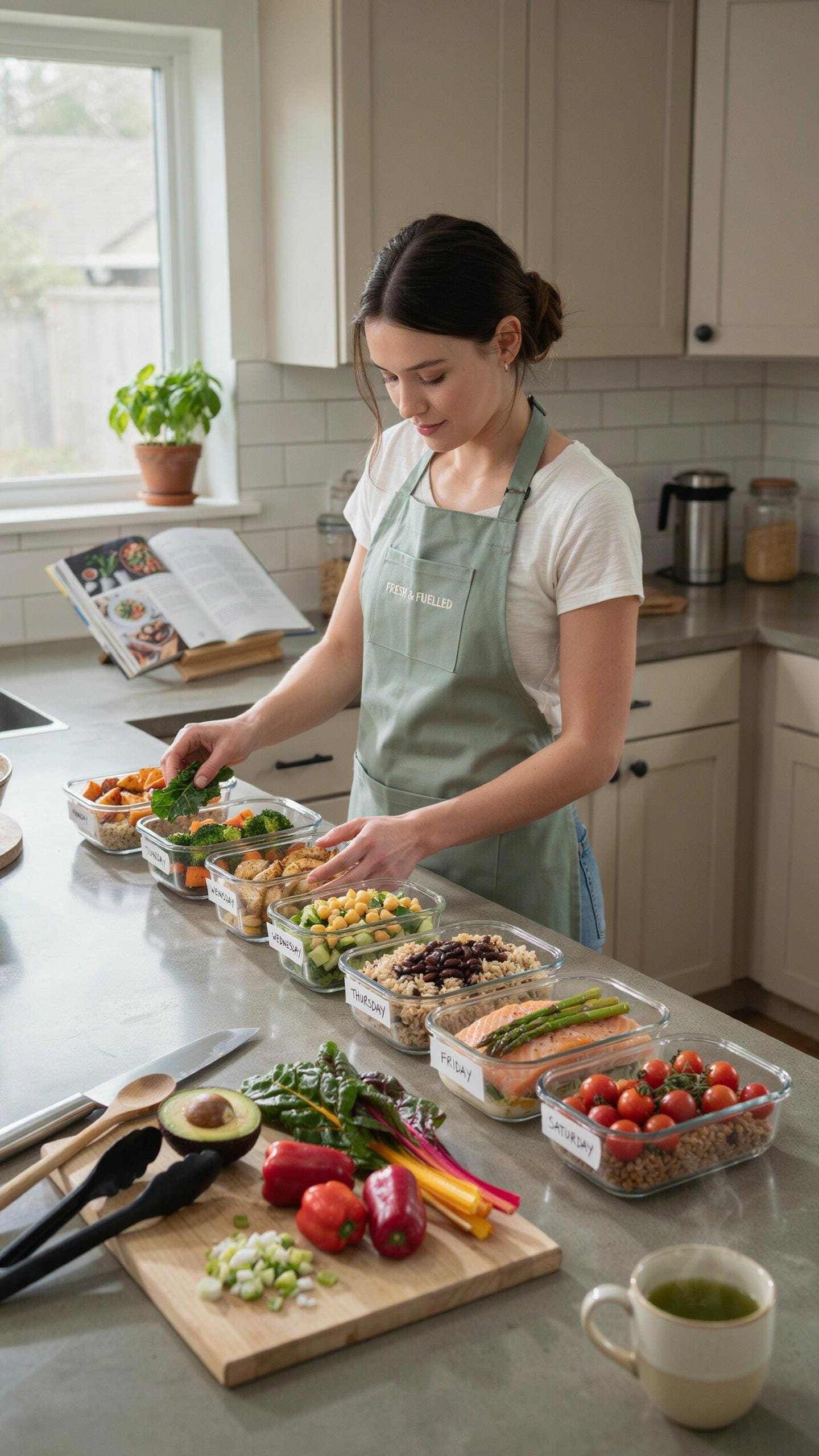
You want to feel in control of your nutrition without thinking about it every day. That’s not weakness—it’s the only scalable approach to protein intake. The mechanism is constraint-based design: you build a fixed system that removes the variable (decision) while keeping the output (protein intake) consistent.
Think of this like manufacturing. Your kitchen becomes a production floor with one product: high-protein curry batches. You define your protein source (chicken, lentils, beef), your curry base (tomato, coconut, or broth-based), and your spice ratio once. Then you repeat it. The repetition isn’t boring—it’s efficiency. You eliminate the friction that kills meal prep consistency: recipe hunting, ingredient variations, technique uncertainty.
Eating Strategy, Not Willpower Theater
Everyone preaches “find meals you enjoy” as if enjoyment solves logistics. It doesn’t. What matters is that your curry system requires zero willpower maintenance once built. You prep once per week, portion into containers, and eat from existing stock. No daily decisions about whether to prep, what to cook, or how much protein to include.
The real lever here is removing tomorrow’s choice from today’s hands. Make the curry system when your energy is high and your kitchen is clean. Freeze it in portions sized to your daily protein target. When you’re tired, hungry, or busy, you grab a container and reheat. The system works because it operates on your terms, not your mood.
The real obstacle isnt the recipe its your resistance to disciplined culinary systemization

Most people fail at meal prep because they treat cooking like a hobby instead of infrastructure. You don’t negotiate with your shower routine. You don’t “feel like” brushing your teeth. High protein curry meal prep works the same way: pick a Sunday, cook four containers, freeze them. Stop waiting for motivation. Pick one curry recipe today, buy the ingredients tomorrow, and batch cook this weekend. The difference between someone who transforms their body and someone who doesn’t isn’t willpower, it’s a system that removes the daily decision.