
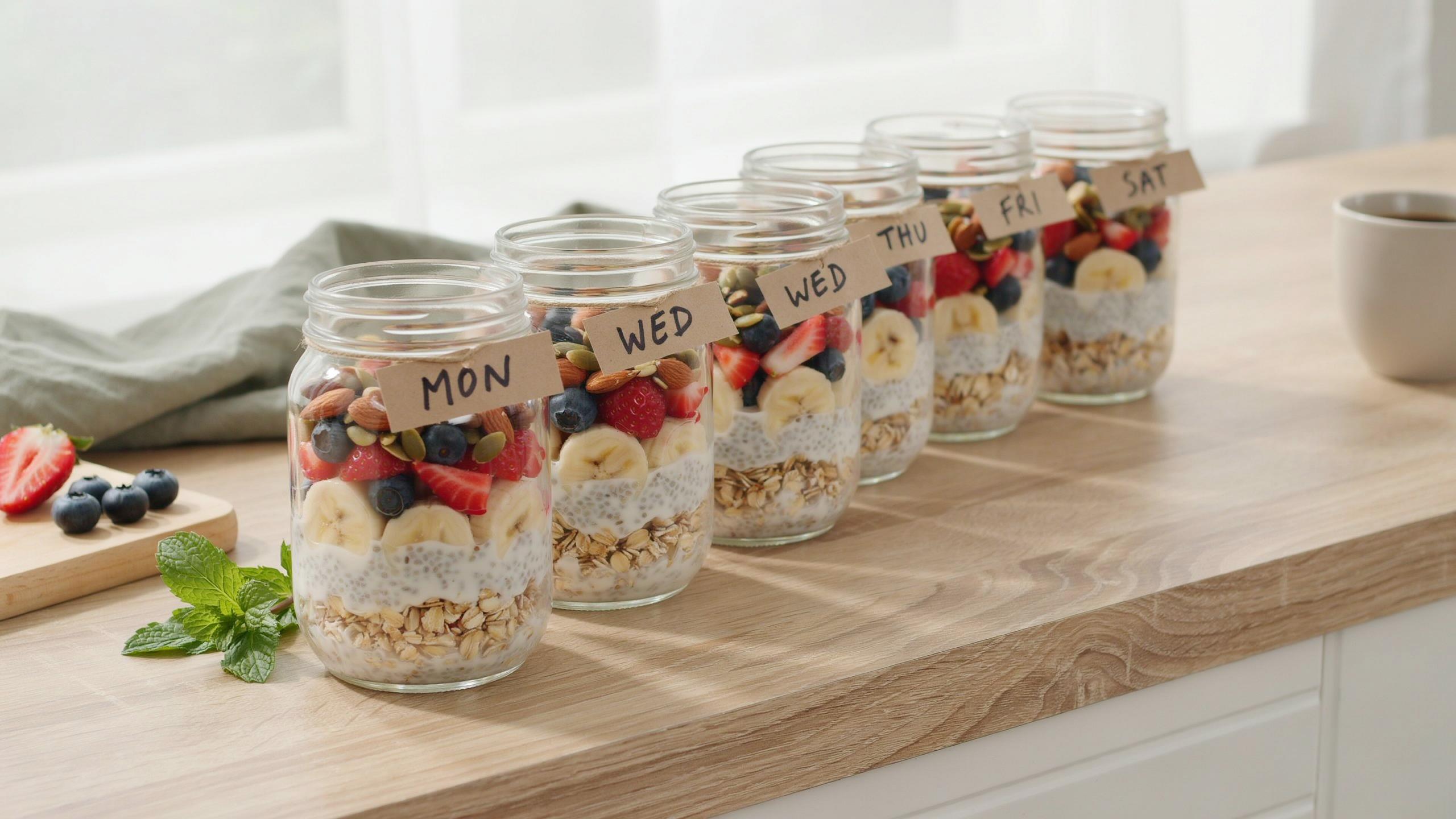
The High Protein Overnight Oats Fallacy Beyond Mere Convenience
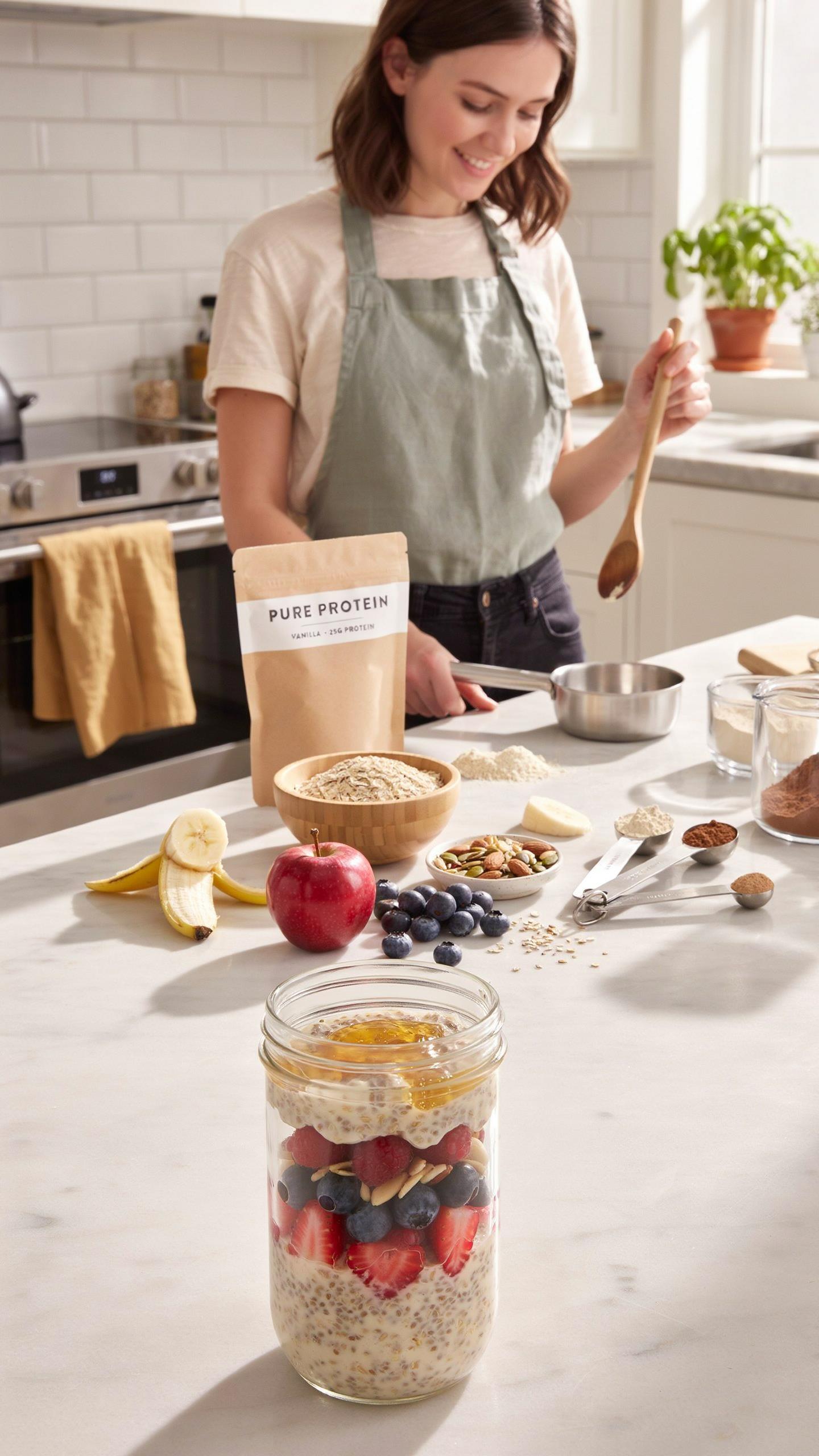
Convenience Is Not Your Real Problem
You want to believe meal prep saves time so you don’t have to think about breakfast. That’s the stated reason. The real one: you’re running from decision fatigue. Economics calls this cognitive load, and it applies here like this: every unmade choice about what to eat burns mental energy before your day starts. High protein overnight oats meal prep doesn’t actually save time. It frontloads the decision. You make one choice Sunday instead of seven choices Monday through Friday. The math looks identical on a spreadsheet, but your brain experiences it as relief.

The convenience trap sells itself because the alternative looks chaotic. Grabbing whatever is available each morning feels fast until you factor in the actual cost. You end up eating what’s easiest, not what serves your goals. Oats prepped in jars sit in your fridge as a standing decision that removes the negotiation entirely. That’s the mechanism: you’re not buying speed. You’re buying decision elimination. The prep happens once. The benefit compounds every time you open the fridge and the choice is already made.
The Real Tax Of Unreplaced Routines
People skip the math on unplanned mornings. You wake without protein ready, so you grab cereal or toast or skip breakfast entirely. That decision creates a cascade: lower protein intake means less satiety, which tanks your hunger hormones two hours later, which leads to snacking or a larger lunch, which disrupts your afternoon energy. This isn’t a willpower story. It’s a biochemistry chain reaction.

The hidden cost isn’t time lost to meal prep. It’s energy lost to hunger management that follows. A jar of overnight oats with 30 grams of protein breaks that chain the moment you eat it. Your body processes the macronutrient first. Satiety signals fire earlier. You don’t eat more at lunch because your brain got the fullness signal at breakfast. The protocol is simple: assemble five jars with oats, Greek yogurt, milk, protein powder, and fruit on Sunday. Grab one each morning. That single friction reduction compounds into weeks of stable energy and accurate calorie intake.
The Metabolic Control Protocol High Protein Overnight Oats As Fuel
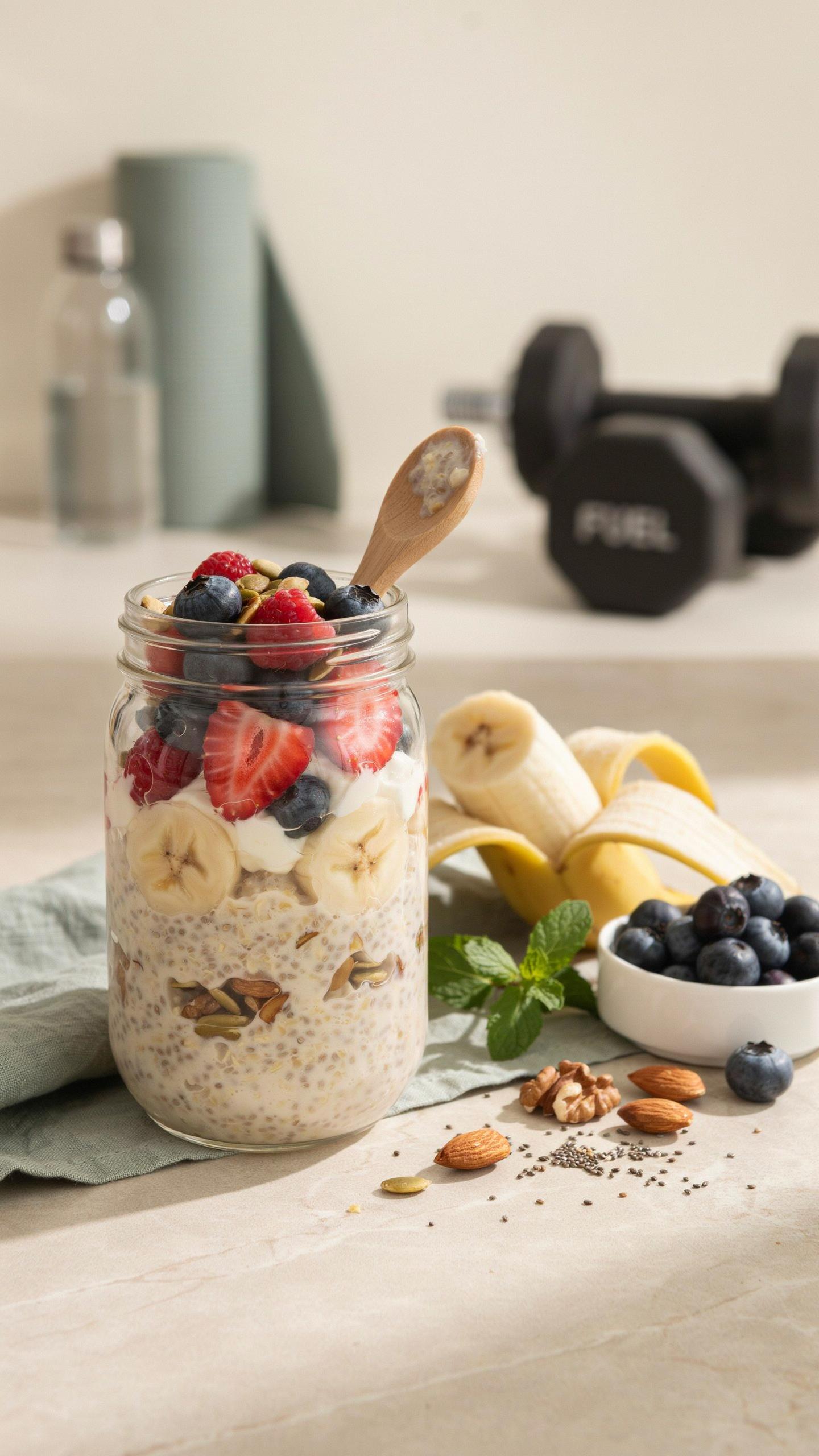
Protein Stabilizes Your Hunger Signal
You want to feel full so you stop thinking about food and get back to work. That’s the real reason you care about satiety, not some abstract wellness principle. Protein works through a specific mechanism: it triggers cholecystokinin and peptide YY, hormones that directly signal fullness to your brain. Overnight oats with 25-35 grams of protein per serving activate this response faster than carbs alone, which means you stay satisfied longer without fighting cravings.
The difference shows up in meal timing. A standard overnight oats recipe with just oats and milk leaves you hungry within two hours. Add Greek yogurt, protein powder, or cottage cheese and you extend that window to four to five hours. Protein also has the highest thermic effect of any macronutrient, meaning your body burns calories just digesting it. This isn’t motivation talk. This is caloric efficiency baked into biochemistry. Your prep protocol should hit 30 grams of protein minimum per jar to make the satiety effect reliable.
Blood Sugar Stays Level When Protein Leads
Biology terms this “nutrient partitioning,” the order in which your body processes different macronutrients. Protein consumed first slows glucose absorption, preventing the blood sugar spike that precedes the crash. Overnight oats made without adequate protein turn into a carbohydrate delivery system: oats plus milk plus fruit equals fast sugar absorption, energy peak, then the midday wall that kills productivity.
The mechanism is straightforward. Protein and fat in the oat mixture slow gastric emptying, the rate at which food leaves your stomach. This extends the window over which carbs enter your bloodstream, flattening the glucose curve instead of spiking it. A prep jar with 30 grams protein, healthy fat from nuts or nut butter, and fiber from the oats themselves keeps blood sugar stable for hours. Measure your protein source first when assembling jars, then add oats and liquid around it. The sequence doesn’t matter once mixed, but the ratio does. That ratio determines whether you crash at 2 PM or maintain steady energy until lunch.
Blueprint For Bio Optimization Essential Overnight Oats Recipe Healthy Protein
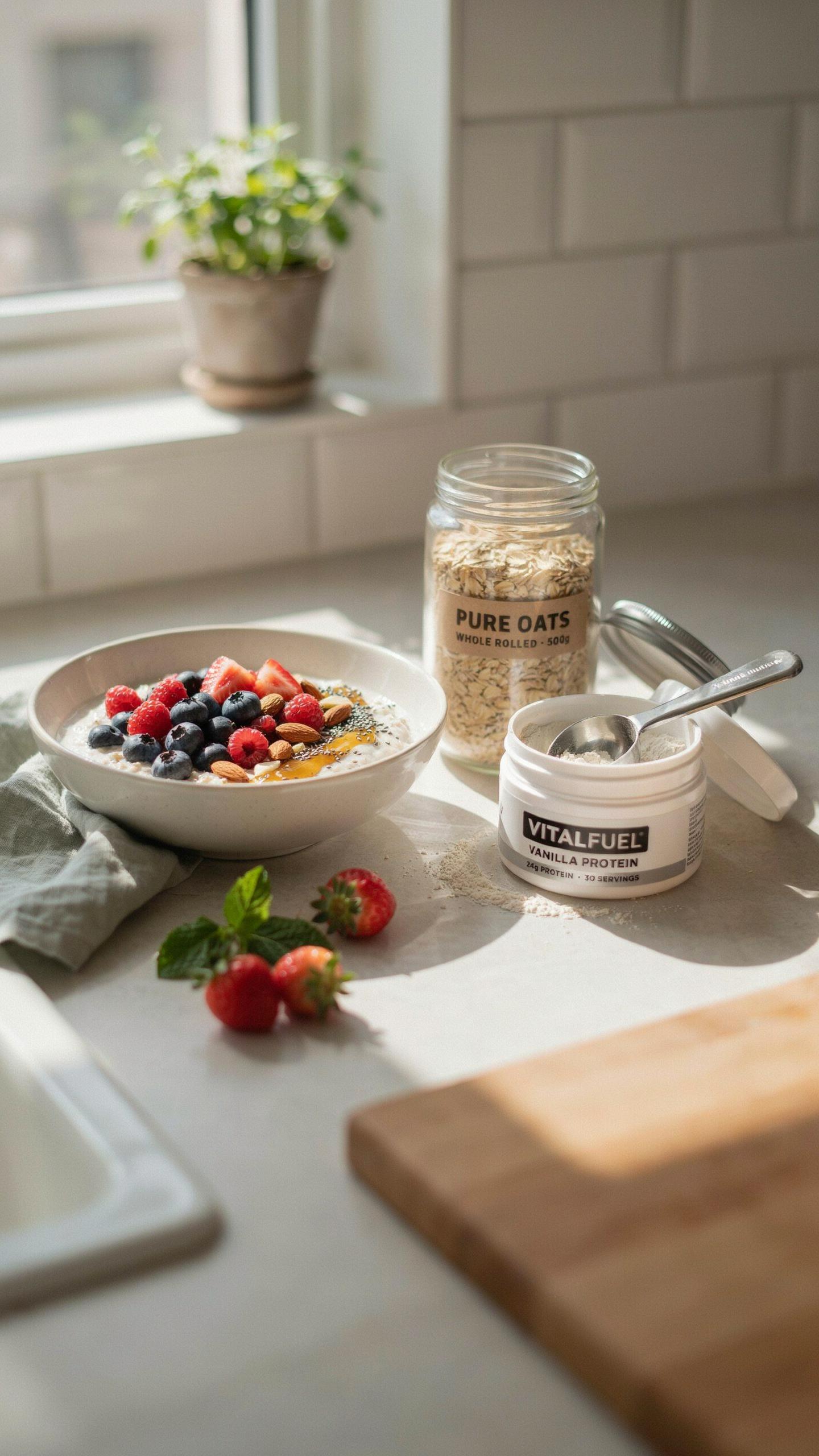
The Core Formula
You want to look like you have your nutrition dialed in without actually thinking about it every morning. That’s the real reason you’re reading this. The mechanism is simple: overnight oats work because they’re a container system. You set the ratios once, replicate them five times, and your protein intake becomes automatic instead of a decision you make when you’re tired.
The base ratio is one part liquid to one part oats by volume. Use rolled oats, not steel-cut. Steel-cut requires more hydration time and thickens unevenly. Add 30 to 40 grams of protein powder per jar to hit the threshold where satiety actually kicks in. One cup of Greek yogurt adds another 15 to 20 grams and stabilizes texture better than milk alone. The remaining volume splits between liquid (milk, almond milk, or a blend) and add-ins like chia seeds or nut butter.
- Rolled Oats: One cup per jar. They hydrate evenly overnight and hit the carb base without requiring extra cooking time or complicated timing math.
- Protein Powder: 30 to 40 grams per jar. Whey or casein work fastest for morning consumption. Plant-based protein needs extra liquid and slightly longer soak time.
- Greek Yogurt: One cup per jar. Provides protein density, bacterial cultures for digestion, and prevents the oats from becoming a dense brick by morning.
- Liquid Base: One to 1.5 cups per jar. Milk carries flavor better than water. Almond milk reduces calorie density if that matters to your goal.
- Chia Seeds or Ground Flax: Two tablespoons per jar. They absorb liquid and add omega-3 density without changing the flavor profile significantly.
Mix everything in mason jars the night before or Sunday evening for the full week. The oats hydrate completely within six to eight hours. The mixture stays stable in a refrigerator for up to five days. Temperature matters less than you think. Cold overnight oats taste better than room temperature because the cold slows down starch degradation and keeps the texture cleaner.
Protein Sources Decoded
Most people choose protein powder based on taste alone, which is why their consistency fails after two weeks. You pick it based on digestion speed and cost per gram of actual protein. This matters because the whole system breaks if you buy something you won’t finish or that leaves you hungry three hours later.
Whey protein isolate digests fastest and contains roughly 25 grams per scoop with minimal carbs. Whey concentrate costs less but carries lactose if you’re sensitive. Casein protein digests slower and sits heavier in the stomach, which works better for overnight oats specifically because the slow release matches the overnight window. Casein costs more but the satiety effect justifies it for meal prep applications.
Plant-based proteins (pea, hemp, rice blends) need higher volume to hit 30 grams per serving. They taste grittier and absorb more liquid, meaning you adjust the ratio by reducing milk slightly. They work fine if dairy doesn’t fit your digestion, but expect to spend more per jar to hit the same protein density. Greek yogurt as a protein source adds bacterial cultures that improve gut function, a secondary benefit whey powder doesn’t provide. Combine Greek yogurt with whey and you hit high protein density plus better digestion outcomes.
Cottage cheese works as an alternative to Greek yogurt for protein addition. It’s cheaper per gram but thinner, requiring you to reduce milk volume by half. Most people skip it because they hate the texture, not because it fails nutritionally. The practical move: pick one protein source and one Greek yogurt strategy, then execute it five times without variation. Consistency beats optimization every single week.
The Set And Forget System Overnight Oats Recipe Meal Prep
Cook Everything At Once, Not In Batches
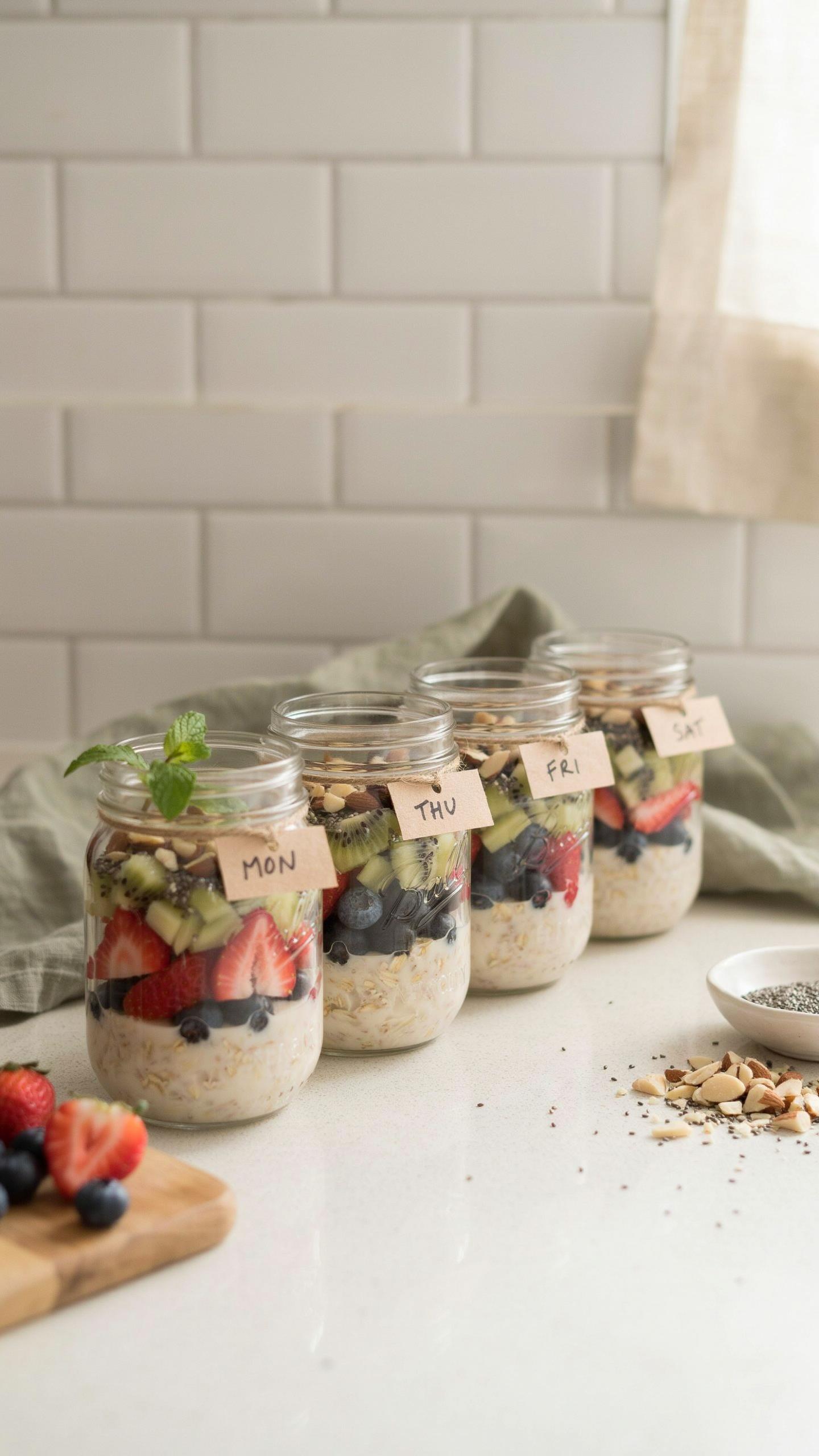
You want the psychological win of “meal prep” without admitting you’re just trying to avoid decision fatigue every morning. Here’s the mechanism: batching removes the activation energy required to repeat a task. In manufacturing, this is called setup cost reduction. For overnight oats, it means making seven jars in one session instead of one jar seven times. You eliminate the friction point that kills consistency.
The math is simple. One prep session takes forty-five minutes. Seven separate sessions take two hours because you rebuild the mental model each time. Mix your base ratio once: one cup oats, one cup Greek yogurt, one cup milk, one scoop protein powder per jar. Measure all seven at once. Add your mix-ins. Stack them in the fridge. Done. No variation between jars. No excuses on Wednesday.
Pick Containers That Won’t Leak Or Degrade
Mason jars look intentional but they’re fragile and heavy. Glass also conducts temperature poorly, so your oats stay colder longer than necessary. Clear plastic containers with tight-sealing lids work better. You want to see what you’re eating without opening it. The seal matters more than the material. A weak lid causes separation and oxidation of the protein layer within two days.
Wide-mouth containers beat narrow ones because you can actually eat from them without a spoon feeling like a utensil from a dollhouse. Stackable design saves space in a standard fridge shelf. Polypropylene (PP number 5) resists protein breakdown better than polystyrene. Buy containers that seal tight enough that you can flip them upside down without leakage. Test this before prepping seven jars.
Advanced Macro Engineering Protein Overnight Oats Recipes
Tailoring Your Macros To Your Actual Goal
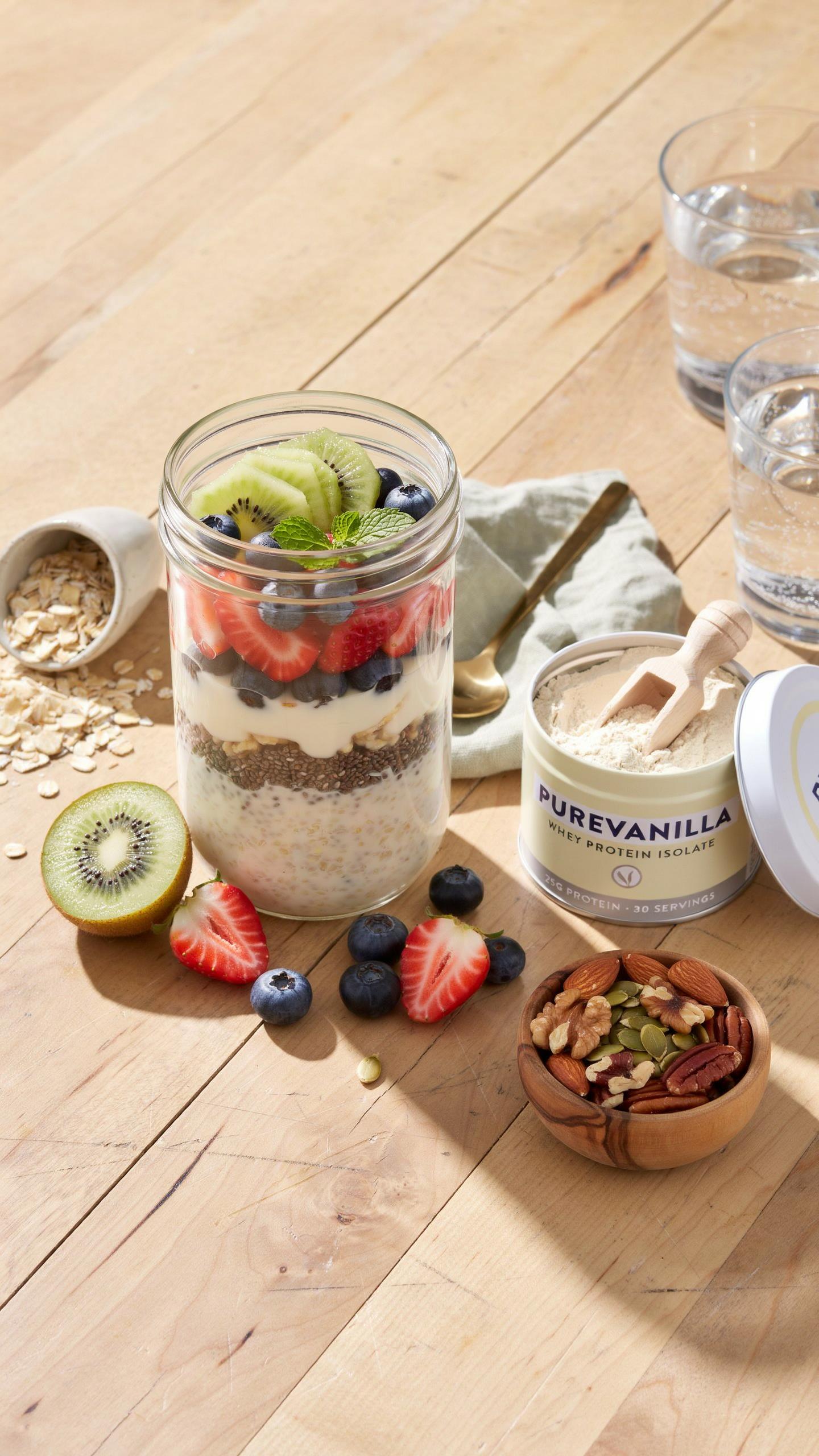
You want this section because you’re tired of generic meal prep that doesn’t move the needle on your specific outcome. Here’s the mechanism: macronutrient ratios function like load distribution in engineering. You’re not just eating protein, you’re architecting caloric intake around a goal. Your body doesn’t care about “balanced” meals. It responds to the ratio of protein, carbs, and fat relative to your training stimulus and daily activity level.
If your goal is muscle gain, protein stays high (0.8 to 1 gram per pound of bodyweight), carbs rise to support training volume, and fat sits at maintenance minimum. If your goal is fat loss, protein climbs even higher to preserve muscle during a deficit, carbs drop, and fat becomes your satiety lever. Cut your overnight oats recipe once, then calculate macros backward from your goal, not forward from a recipe you found online. That’s the actual skill.
Carbs And Fats Work Against Each Other Here
The conventional advice pretends carbs and fats are interchangeable energy sources. They’re not, especially in overnight oats. Carbs drive insulin response and refill muscle glycogen. Fats slow digestion and suppress hunger. You cannot maximize both without wasting calories or extending your digestion window past the point of usefulness.
A practical protocol: pick your primary goal for that meal. If it’s pre-workout fuel or muscle gain, carbs dominate. Use oats as your base (40 to 60 grams), add a protein source, keep fat below 10 grams from the oats themselves. If it’s satiety during a cut or a meal replacement, fat rises to 15 to 20 grams and carbs drop to 30 to 40 grams. Measure your ingredients by weight, not volume, and track the actual macros in your tracking app for two weeks to calibrate your portions to your goal.
The OODA Loop Of Nutrition Decision Cycles
Observe, Orient, Decide, Act On What You Eat
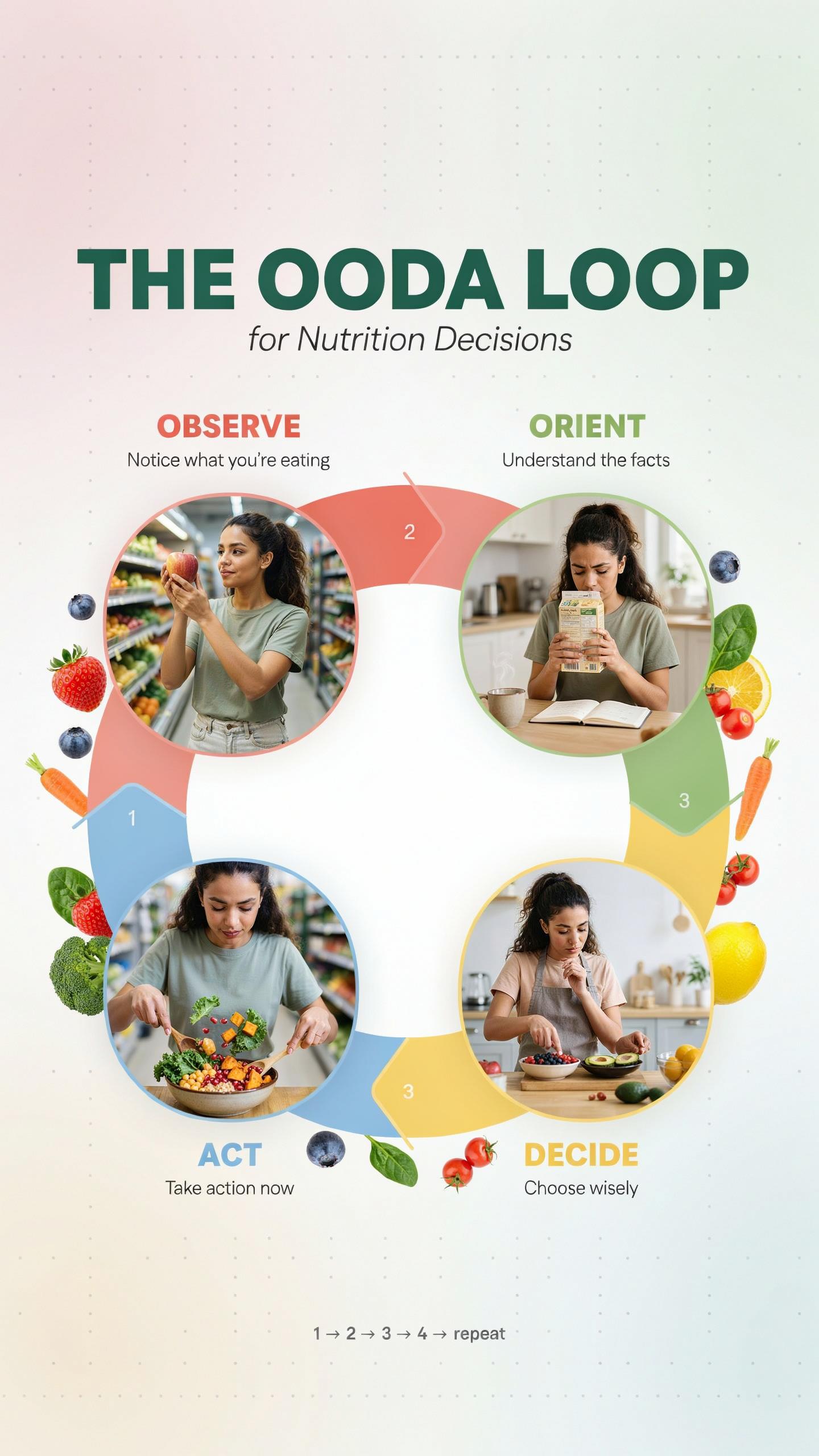
You want meal prep to feel effortless because you’re tired of friction in your own life. Here’s the mechanism: military strategist John Boyd designed the OODA loop to win dogfights, but it applies directly to nutrition. Observe your hunger patterns and protein gaps. Orient yourself against what actually works for your body, not what sounds optimal. Decide once. Act repeatedly. The person who cycles through this loop fastest makes better choices by default.
Most nutrition advice skips the observe step entirely. People jump straight to deciding what to eat based on trending macros or app recommendations. When you prep high protein overnight oats for the week, you’re running the OODA loop in reverse. You observe your protein needs. You orient against your schedule. You decide on your recipe. Then you act five times instead of five times deciding and acting separately. Compression beats willpower.
Remove The Decision Point Entirely
The common advice says meal prep saves time. That’s incomplete. Meal prep eliminates decisions, and eliminating decisions is what actually saves mental energy. When a container of overnight oats sits in your fridge, you don’t negotiate with yourself about breakfast. The choice already happened. Your brain doesn’t restart the OODA loop every morning.
Most people prep meals but leave variables open. They make five containers but grab different toppings, different portions, different timing. That’s still decision overhead. Real meal prep locks the entire input down. Measure protein powder into each container at prep time. Set the containers in the same shelf location. Consume in the same order. The friction drops to zero because the loop completes once, then execution becomes automatic. This is how you actually stay consistent.
Beyond The Bowl Extending The Protein Packed Overnight Oats Mindset
The Meal Prep Multiplier Effect
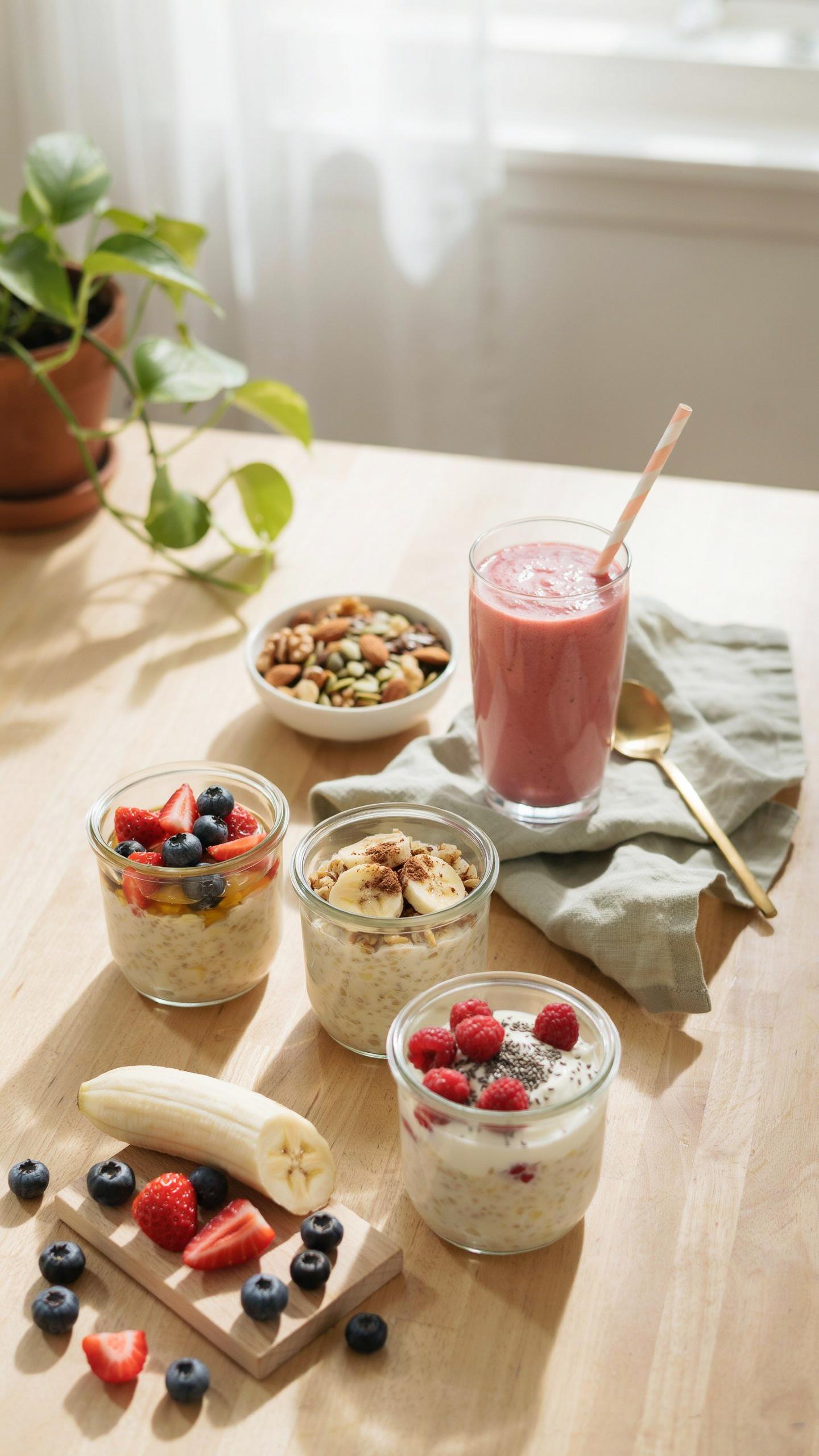
You want to believe one habit change fixes everything. It doesn’t. The real mechanism at work here is constraint stacking—doing overnight oats once proves you can execute a system, which removes the friction excuse from other meals. You’ve already solved storage, timing, and monotony tolerance. Borrowing from systems engineering, overnight oats functions as your “critical path”—the blocking task that, once optimized, accelerates everything downstream because you’ve built the operational infrastructure once.
The overnight oats framework transfers cleanly to lunch and dinner because the core variables remain identical: protein source, carb base, liquid, storage container, rotation schedule. A grilled chicken batch prepped Sunday works in mason jars exactly like your oats do. The mental load drops because you’re not learning a new system. You’re copying the one that already stuck. This is why generic meal prep fails—people treat each meal as a separate problem instead of recognizing they’ve already solved the hard part.
Discipline As A Renewable Resource
Most advice frames discipline as willpower you burn down. Wrong. Discipline is a protocol you automate, which means it actually expands the more you use it. Once overnight oats becomes mindless—grab jar, eat, repeat—that freed cognitive real estate redirects to the next bottleneck. Your body doesn’t distinguish between discipline applied to oats versus discipline applied to training or work output. The mechanism transfers.
The proactive dietary discipline that matters isn’t motivation. It’s decision removal. You eliminate the choice moment entirely by establishing a standing weekly prep window. Sunday becomes non-negotiable. You show up, prep four containers of protein, four of carbs, four of fat sources, then combine them daily based on what your training or recovery demands that week. The discipline isn’t saying no to bad food. It’s saying yes to a system before hunger, fatigue, or convenience intervene.
Common Traps And How To Avoid Them Easy High Protein Overnight Oats
The Ingredient Swap That Kills Your Macros
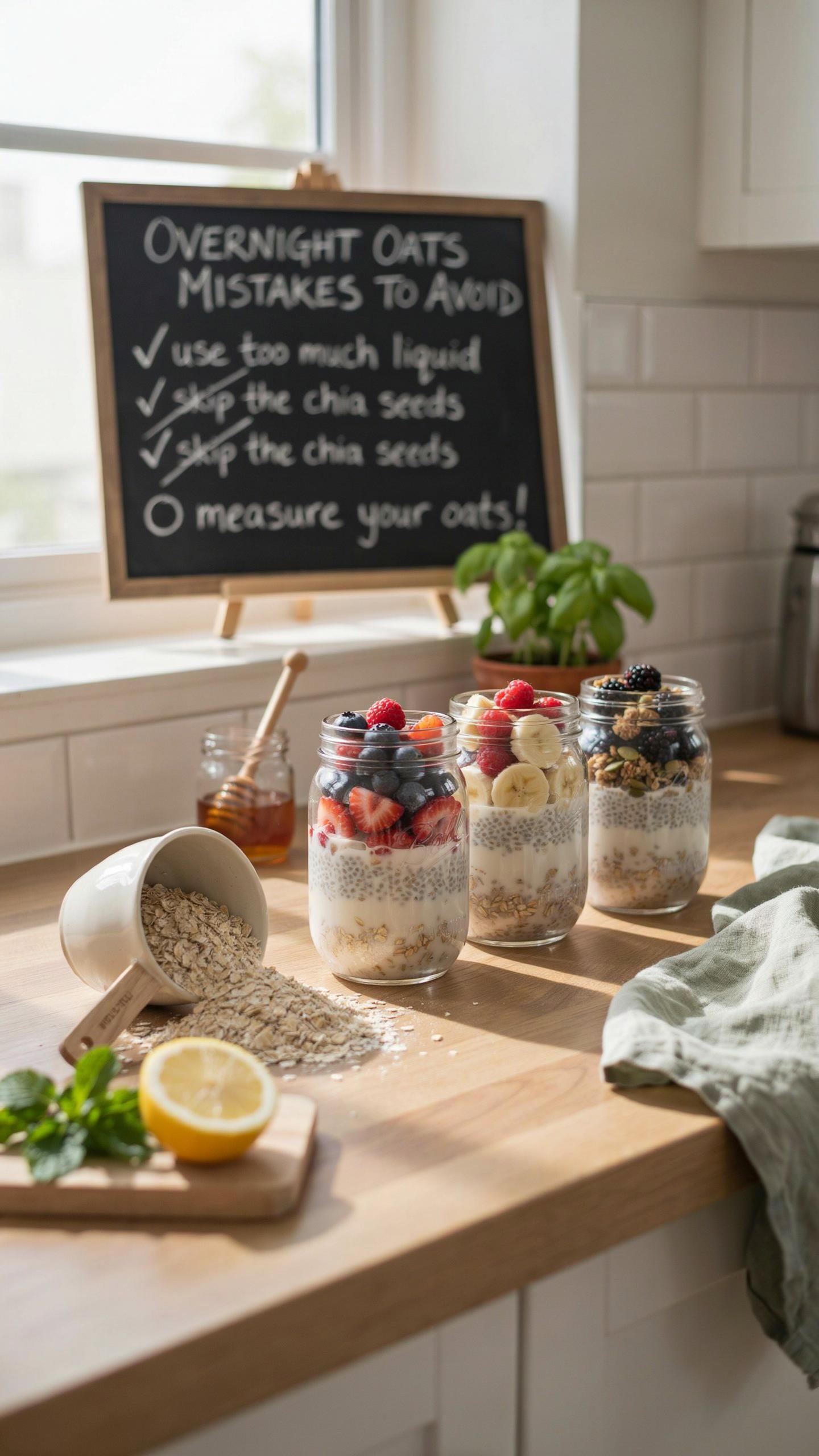
You want to believe one ingredient swap won’t matter. It will. You’re not building a salad—you’re building a macro target that stays consistent across seven jars. The protein source determines everything else. Swap Greek yogurt for regular yogurt, and you lose 10 grams of protein per serving. Swap rolled oats for instant oats, and you gain bloat without gaining satiety. The mechanism is simple: protein density compounds across the week. One bad choice on Sunday means six meals hit their target short.
Most people optimize for taste first, then wonder why their macros drift. Start with your protein anchor. Choose Greek yogurt or cottage cheese—not regular yogurt. Pick rolled oats or steel-cut oats, not instant. Measure everything the first time you make a batch. Write down the exact grams. This baseline becomes your template. When you want to experiment with flavor, you swap the add-ins, not the structure.
Flavor Fatigue And The Rotation Protocol
Taste boredom ruins meal prep faster than spoilage. You make five jars of the same flavor and eat two before your brain revolts. This isn’t weakness—it’s biology. Your taste receptors habituate to repeated stimuli. The solution isn’t willpower. The solution is a rotation system that feels fresh without requiring new recipes.
Build three distinct flavor profiles, then rotate them weekly. One profile: vanilla, cinnamon, banana. Second: chocolate, almond butter, espresso powder. Third: berries, coconut, honey. Make two jars of each. Eat them in sequence across the week, not all one flavor at once. Your brain perceives variety. Your prep time stays identical. By week three, you cycle back to vanilla, and it tastes new again because four weeks passed since your last jar.
The Compounding Effect Long Term Benefits Of Oat Recipes Healthy

Energy And Focus Compound Like Interest
You want to believe one week of eating better will fix you. It won’t. Compounding in biology works like compounding in finance: small, consistent inputs produce exponential results over time, not immediately. High protein overnight oats stabilize blood glucose by slowing digestion through fiber and protein density. Stable glucose means stable energy. After two weeks, you notice you don’t crash at 3pm. After four weeks, the crashes stop entirely. This is mechanism, not motivation.
The real gain sits deeper than energy. Sustained protein intake preserves muscle mass while your body runs on a caloric deficit, if that’s your goal. Your brain performs better on stable fuel. Overnight oats deliver both through macronutrient consistency. You prep seven jars. You eat seven identical breakfasts. No decision fatigue. No blood sugar swings. The compounding starts the moment you remove variability from your morning.
Habits Built On Friction Removal
The advice that habits stick because of willpower is incomplete and wrong. Habits stick because you remove friction. Overnight oats meal prep removes decision friction, preparation friction, and willpower friction simultaneously. You make one choice on Sunday. You execute it Monday through Friday without thinking. Friction reduction is the only reliable path to sustainable behavior change.
High protein overnight oats work because they sit in your fridge, ready. No cooking. No shopping daily. No choosing between this and fast food at 7am when you’re rushed. You eat what’s there. After three months of repetition, reaching for the jar becomes automatic. The habit survives because you engineered the environment, not because you motivated yourself harder. That’s the mechanism behind every person who claims they “finally stuck with it.”
Reclaiming Your Mornings True Freedom Through Structure

The Paradox Of Constraints
You want the morning back because you’re losing time to chaos, and chaos feels like failure. Here’s the mechanism: constraint is the opposite of limitation. It’s a container that forces prioritization. Economics calls this scarcity pricing. When you have unlimited morning time, you waste all of it. When you have 10 minutes and a prepped overnight oats jar waiting, those 10 minutes compress into action. The structure doesn’t steal your freedom—it manufactures it by removing the friction that masquerades as choice.
Meal prep overnight oats work because they collapse decision-making into a single Saturday action. You don’t negotiate with yourself about protein intake at 6 AM when the jar sits there, ready to eat. The oats already contain 25-35g of protein depending on your powder and Greek yogurt ratio. You’ve outsourced the daily decision and replaced it with execution. That’s not boring. That’s intelligent design applied to your own life.
From Reacting To Building
Most people think proactivity means willpower. Wrong. It means removing the requirement for willpower by shifting when the decision happens. You decide on Sunday, not Monday through Friday. You batch the cognitive load instead of splitting it across five separate mornings when your brain is weakest and your resistance is lowest. This is the difference between a system and a series of choices masquerading as discipline.
The overnight oats container becomes your statement of intent made physical. You see it in the fridge, grab it, and your morning unfolds on your terms instead of default mode kicking in. No drive-through. No skipped breakfast leading to 11 AM hunger crashes. No afternoon energy dip that kills your productivity window. You’ve precommitted to your nutritional baseline through preparation, not motivation.
The real obstacle isnt lack of time or recipes its your addiction to chaos disguised as spontaneity

You don’t need another recipe. You need to stop treating your nutrition like a daily decision and start treating it like a non-negotiable system. Sunday meal prep strips away the choice. No willpower required. No motivation needed. Just containers and consistency. Pick one flavor. Make five jars today. Tomorrow morning, you eat. That’s the entire mechanism. Your body doesn’t care about variety as much as it cares about protein showing up on schedule.