

The High Protein Egg Muffins Fallacy Why Your Effort Is Wasted

The Convenience Trap That Costs More Time
You want to believe that prep Sunday solves Monday through Friday. That’s the real draw here—not nutrition, but the fantasy that one session of work eliminates decision fatigue for days. But convenience is an economics term, and egg muffins are a classic case of shifting costs, not eliminating them. You trade 90 minutes of chopping and baking for scattered reheating, storage management, and the mental tax of eating the same texture four days running.

Most people frame this as a win. They’re wrong. The actual cost surfaces later: texture degradation from refrigeration, decision fatigue around monotony, and the abandoned containers that prove you quit halfway through the week. You didn’t save time. You frontloaded effort and called it solved.
The Real Price Of Chasing The Quick Fix
The advice you hear—”just batch cook and you’re done”—skips the part where sustainability requires taste variation and actual enjoyment. Egg muffins work for three days maximum before the psychological load of eating identical meals breaks compliance. You don’t fail because you lack discipline. You fail because the mechanism is broken: same protein source, same spice profile, same mouthfeel every single day creates anticipatory resistance.

The unseen cost is the replacement meals you buy when boredom kills your protocol. One Chipotle trip, one coffee shop sandwich, one pizza night—and your prep work becomes a sunk cost, not a system. The fix isn’t willpower. The fix is accepting that meal prep requires rotation built into the protocol from the start, not motivation added after failure.
The Minimum Viable Breakfast Protocol

What Your Body Actually Needs
You want permission to stop overthinking breakfast. The mechanism is simple: your body needs protein, fat, and calories in the morning to stabilize blood sugar and delay hunger. Everything else is decoration. Most breakfast advice loads you with fiber, carbs, and supplements you don’t need, then wonders why you’re hungry at 10 AM.
Egg muffins work because they compress protein and fat into a single portable unit. One muffin delivers 6 to 8 grams of protein and enough fat to trigger satiety signals in your brain. This is thermodynamics, not mysticism. You consume fewer total calories because your body hits its satiation threshold faster and stays there longer.
The Three Ingredient Rule
Common advice says “add vegetables, cheese, herbs, spices.” That’s how you create decision paralysis and waste prep time. Strip it down: eggs, protein source, fat. That’s it.
Two whole eggs plus one egg white per muffin gives you the base. Add a protein multiplier: ground meat, diced ham, or smoked salmon. Use one fat: butter in the base, cheese mixed in, or fatty meat doing double duty. Bake at 350 degrees for 20 to 22 minutes. Cook once, eat for six days. The constraint forces efficiency.
Beyond Just Protein The Macronutrient Matrix Of A Real Breakfast

Fat And Fiber Change The Game
You want to believe protein alone will fix your hunger and energy. It won’t. This is where biochemistry enters: think of macronutrients like resistance in an electrical circuit. Protein is current, but fat and fiber are the resistors that control the flow rate and duration of that energy release. Without them, you spike and crash.
Most egg muffin recipes neglect fat beyond the eggs themselves. Adding cheese, nuts, or whole milk changes absorption speed and satiety duration. Fiber from vegetables like spinach or bell peppers slows gastric emptying, meaning the meal stays in your stomach longer. This is the actual mechanism behind “feeling full.” Skip these, and you’ll be hungry two hours later regardless of protein content.
Steady Energy Beats The Morning Spike
The common advice says eat protein for steady energy. That’s incomplete. Sustained energy depends on the glycemic load of the entire meal, not one macro. An egg muffin with no carbs but loaded with fat and protein releases energy slower than marketing promises, but still faster than you need if you’re chasing all-day steadiness.
The protocol is deliberate mixing. One egg muffin contains roughly 15 to 20 grams of protein, 8 to 12 grams of fat, and 2 to 4 grams of fiber depending on ingredients. This ratio creates a gradual glucose rise without the spike. When you batch-prep six to twelve muffins, you’re not just saving time. You’re removing the friction that makes people choose something worse at 7 AM when they’re tired.
Egg Muffins Meal Prep The Automation Principle

Measuring Results To Adjust Your System
You want to believe prep effort scales linearly with results. It doesn’t. Cybernetics teaches us that systems need feedback loops to stay efficient, and your egg muffin prep is a system. Track three variables weekly: protein grams per muffin, cost per serving, and how many you actually eat versus throw away. The gap between cooked and consumed reveals the real problem.
Most people skip this step and just make more muffins. Wrong move. If you’re throwing away half your batch, the issue isn’t portion size, it’s flavor or texture boredom. Adjust your recipe based on what you’re actually finishing, not what sounds optimal. This is how you stop wasting ingredients and money while dialing in the exact formula that keeps you consistent.
Building Breakfast Into Your Default State
Self-regulating systems remove the need for willpower, and that’s what separates people who meal prep once from people who do it forever. Design your system so that eating egg muffins requires zero decisions. This means storing them in the exact spot you grab breakfast, prepped for immediate consumption, with zero added steps between fridge and mouth.
The common advice here is wrong: people recommend keeping muffins in bulk storage containers. Wrong. Use individual containers or wrap them so you can grab one without opening the main batch. Exposure to air spoils them faster and kills your consistency. When your breakfast is literally the path of least resistance, you stop relying on motivation to execute the habit.
The Grab And Go Breakfast Deception Reclaiming Your Mornings

Strategic Morning Rituals, Not Rushed Consumption
You want grab-and-go because you’re terrified of wasting time, and wasted time feels like wasted potential. But here’s the mechanism everyone misses: breakfast isn’t about speed. It’s about the first decision you make. When you prep egg muffins in bulk, you’re not buying convenience. You’re buying the absence of a decision that derails your entire day. That’s the real win.
The common advice treats breakfast like refueling a car. Wrong frame. Use systems thinking instead. A system either reinforces good behavior or punishes it. Grabbing a prepped egg muffin removes friction from the right choice. Your brain doesn’t have to negotiate between what’s easy and what’s healthy at 6 AM when your willpower is depleted. You’ve already decided. The muffin is just the artifact of that decision made when you had energy to decide well.
Eating With Intention Changes Everything
Mindful eating isn’t about chewing slowly or meditation. It’s about eating while paying attention to what you’re consuming instead of scrolling, driving, or working through it. Most people skip breakfast, then eat lunch in a fog, then wonder why their energy crashes. Egg muffins force a different pattern if you actually use them right.
Prep your muffins. Set a specific time to eat them. Sit down for five minutes minimum. Notice the protein content, the texture, the fact that you’re not hungry an hour later. This isn’t wellness theater. High protein breakfasts literally stabilize your blood glucose and reduce hunger signals. When you eat with awareness, you stop eating by accident at 3 PM. The protocol: prep on Sunday, eat at the same time each morning, no screens during eating.
Freezing Your Way To Freedom The Cold Storage Advantage For Egg Muffins
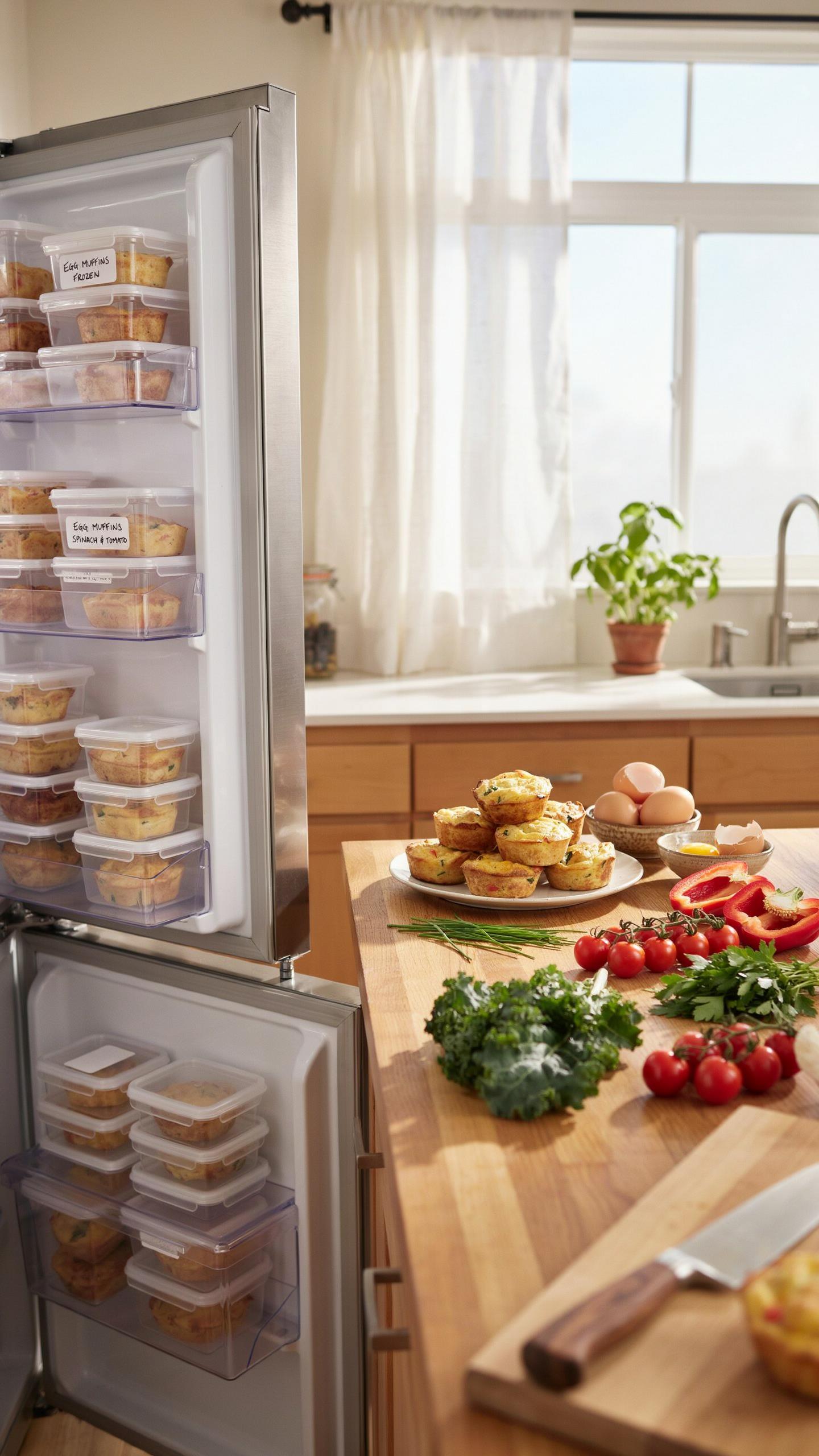
How Freezing Locks In Protein Quality
You want to believe freezing destroys nutrients so you have an excuse to buy fresh daily. It doesn’t. Freezing pauses bacterial growth and enzyme activity that actually degrades protein over time. Think of freezing as applying brakes to cellular decay. Eggs are already cooked when you freeze them, so the protein structure stays intact. Temperature below 0°F halts oxidation dead. This mechanism is why frozen egg muffins maintain their amino acid profile for months.
The real advantage sits here: frozen egg muffins beat refrigerated ones because cold storage eliminates the degradation window entirely. You cook once, freeze immediately, and restart the clock whenever you thaw. A muffin at 40°F in your fridge deteriorates daily. That same muffin at 0°F doesn’t age. Flash-freeze your muffins within two hours of cooling to room temperature, then transfer to airtight containers. This single protocol preserves protein quality and prevents freezer burn that damages texture.
Cooking Once To Eat For Weeks
Stop cooking every other day. That rhythm is friction disguised as discipline. Make one batch of 24 to 32 muffins on Sunday. Your input stays constant, but your output multiplies across an entire month. You’re applying economics here: fixed costs spread thin across maximum units. One heating cycle. One cleanup. One grocery trip. The math compounds in your favor.
Divide your batch into weekly portions and label them with dates. Thawed muffins last 3 to 4 days in the refrigerator before texture degrades from repeated condensation. Frozen muffins last 8 to 10 weeks. Grab 5 muffins Sunday night, thaw them Monday through Friday in your fridge overnight, and eat protein without thinking. No willpower required when the choice is already made and sitting in your fridge waiting.
The High Protein Egg Muffins Recipe Ingredients That Matter

Where Your Eggs Come From Matters
You want to believe egg quality doesn’t matter because cheap eggs are easier. It does matter, and here’s the mechanism: egg composition reflects the chicken’s diet. In nutritional terms, we’re talking about nutrient density and bioavailability. A chicken fed corn and soy produces a different fatty acid profile than one eating grass and insects. The protein is the same, but the micronutrient payload shifts. You’re not paying for marketing when you upgrade sources.
- Pasture Raised: Chickens access outdoor space and natural forage, producing eggs with higher omega-3 content and better nutrient density than conventional alternatives.
- Cage Free: Birds aren’t confined to battery cages but lack guaranteed outdoor access, making quality variable. Check your local producer’s actual practices.
- Conventional Grocery Store: Low cost but lowest nutrient density. Standard feed produces functional but unremarkable eggs for bulk prep work.
- Local Farm Direct: Eliminates middleman markup and lets you ask the farmer what they feed. Often costs less than branded pasture raised at retail.
- Omega 3 Enriched: Marketing term for conventionally raised birds fed flax. Better than standard but not equivalent to true pasture raised eggs.
Buying direct from a local farm typically costs the same or less than grocery store premium brands while guaranteeing actual production practices. For 24 to 30 eggs per week of meal prep, establishing one farm source removes the guesswork and locks in price.
Vegetables As Structural Protein Support
Everyone says add vegetables for nutrition. Wrong framing. Vegetables in egg muffins serve a mechanical function: they absorb and retain moisture during cooking while creating texture that keeps the final product from becoming rubbery. Broccoli and bell peppers contain water that releases into the egg matrix during heat exposure, preventing the dense dryness that kills batch meal prep.
The vegetables you choose determine storage lifespan and reheat quality. High water content vegetables like zucchini and spinach break down faster during storage, reducing texture integrity by day four. Low water density vegetables like broccoli florets and diced red peppers maintain structure through five days refrigerated. Cook vegetables slightly before mixing into egg base to remove excess surface moisture, which prevents pooling at the muffin bottom during the initial bake cycle.
Beyond The Muffin Tin Expanding Your Breakfast Toolkit
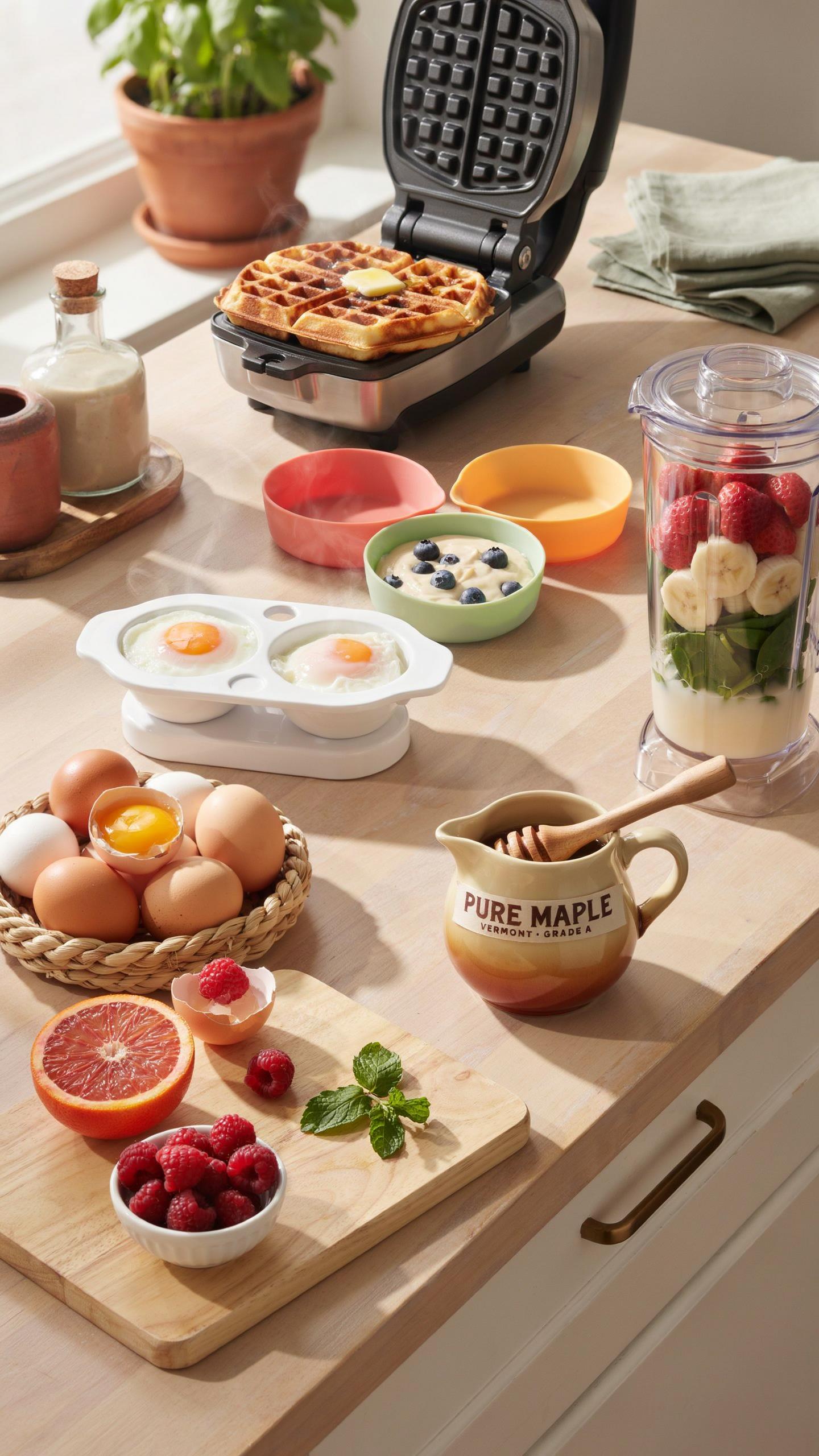
When Egg Muffins Stop Being Enough
You want permission to stop eating them every day without feeling like you’re failing at discipline. Here’s the mechanism: adaptation. Your body adjusts to repeated stimulus, so the satiety signal from egg muffins weakens over weeks. You eat the same thing, feel less full, then add snacks to compensate. The solution isn’t willpower. It’s rotating protein sources on a schedule before boredom hits neurologically, not motivationally.
Greek yogurt, cottage cheese, and canned fish require zero cooking but deliver equivalent protein density. Rotate them on a three-day cycle with egg muffins. Your digestive system stays responsive. Your hunger signals stay calibrated. You sidestep the compliance cliff most people hit around week four of any single meal prep.
Nutrient Stacking Without Extra Cooking
The common advice says “just add vegetables to your eggs.” That’s incomplete. Biology demands micronutrient variety, not just macronutrient consistency. Think of your micronutrient intake like a portfolio in finance. You can’t hold one stock and expect returns. You need distribution across asset classes. Egg muffins alone give you choline and selenium, but miss robust amounts of vitamin C, polyphenols, and minerals like magnesium and potassium.
Pair egg muffins with pre-made components: canned beans for fiber and iron, frozen berries for antioxidants, raw nuts for fat-soluble vitamin absorption. Buy them prepared. Assembly takes four minutes. The synergy between egg protein and plant compounds amplifies nutrient bioavailability. Your body absorbs more from less. Stack these on rotation days, not as replacements.
The Immutable Laws Of Sustainable Breakfast Habits

Consistency Over Intensity Wins The Long Game
You want to believe that motivation will carry you. It won’t. The mechanism that actually works comes from biology, not willpower. In systems theory, we call this “negative feedback” – your environment pushes back against deviation. Egg muffins function as negative feedback. You prep them on Sunday. They sit in your fridge. Skipping breakfast becomes friction. Eating them becomes the path of least resistance.
Most people get this backwards. They think intensity matters: cooking fresh eggs every morning, hitting macros perfectly, feeling fired up about nutrition. That’s the sprint mindset applied to something that requires distance running. One missed morning kills the streak. One “cheat day” becomes permission to quit. Consistency doesn’t require intensity. It requires a system that works when you don’t feel like working. Batch your egg muffins weekly, grab one while your coffee brews, done.
Systems Replace The Need For Willpower
Willpower is a resource that depletes. Relying on it means you lose at breakfast on days when you’re stressed, tired, or facing competing decisions. The real move is removing choice from the equation entirely. When egg muffins are prepped and stacked in your fridge, breakfast isn’t a decision anymore. It’s an automatic action. This eliminates the friction that kills most nutrition plans.
The protocol is straightforward. Sunday prep: twelve eggs, one cup cottage cheese or Greek yogurt, one cup diced vegetables, salt, pepper. Mix. Pour into muffin tins. Bake at 350 degrees for twenty-two minutes. Cool. Store in airtight containers. Monday through Friday, grab two muffins before you leave. This removes the why, the how, and the when from your morning. Your system handles it. You just execute.
The real obstacle isnt the muffin its your impulse to outsource personal responsibility to a recipe

You’ll make egg muffins once, feel virtuous, then abandon them when motivation fades. The recipe didn’t fail you. Your decision to treat meal prep like a personality trait instead of a system did. Stop searching for the perfect formula and start deciding you’re the type of person who eats protein at breakfast. Make one batch today. Freeze it. Eat one every morning for a week without negotiating. The person who executes a mediocre plan beats the person waiting for the perfect one every single time.