
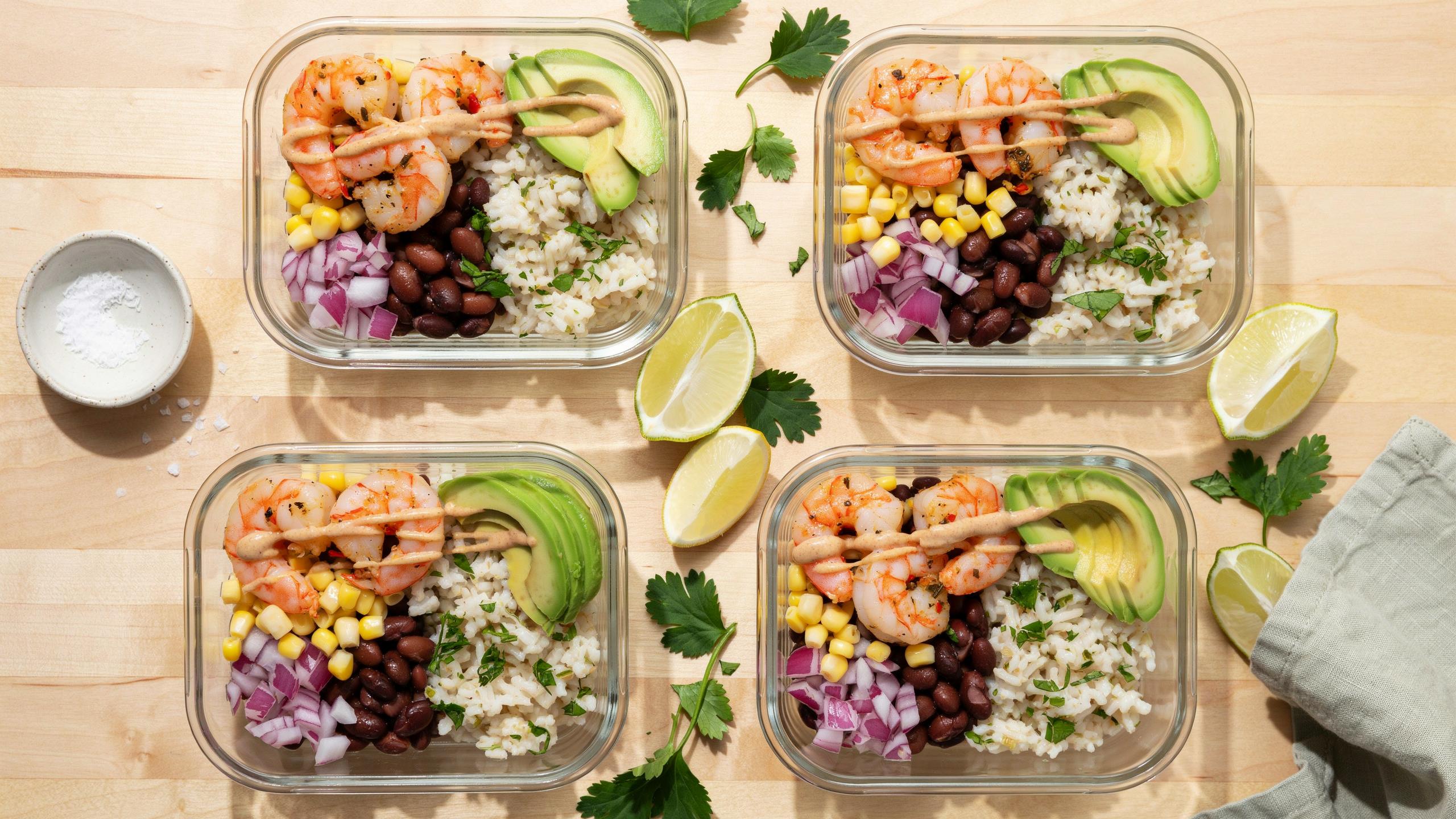
The Illusion Of Quick Why Speed Isnt The Goal

Confusing Speed With Control
You want meal prep to feel effortless because you’re running from the anxiety of another chaotic dinner. Here’s the mechanism: speed and control operate in opposite directions. Fast decisions strip away your ability to choose. When you’re starving at 6 PM with no plan, the restaurant wins. Meal prep isn’t about making dinner faster. It’s about removing the moment when hunger hijacks your judgment. The prep work happens when you’re calm, fed, and thinking clearly. That’s the actual advantage.
Shrimp tacos have a specific window. You can’t rush thawing frozen shrimp without compromising texture. You can’t skip marinating because the acid does real work on the protein. The common advice says “just throw it together.” That’s backwards. Real speed comes from respecting the time each step actually needs, then batching those steps when you have space in your schedule. Prep when conditions favor precision, not when conditions force speed.
The Cost Of Deciding While Hungry
Most people calculate meal prep time as “how long to assemble dinner.” They ignore the hidden tax: decision fatigue costs money. When you’re tired and hungry, you pick expensive options. You order out. You buy premade versions. You grab processed sides. Over a month, that compounds. A shrimp taco bowl costs roughly 8 to 12 dollars to make at home. The same meal at a restaurant runs 16 to 22 dollars before tip. Do that three times a week and you’re bleeding 500 dollars monthly.

The mechanism is neurological, not philosophical. Your prefrontal cortex shuts down when blood sugar drops. You stop weighing trade-offs. You stop caring about the plan you made. Meal prep solves this by removing the decision entirely. The shrimp is already portioned. The vegetables are cut. The lime crema waits in containers. You cook rice, assemble bowls, done. The real cost of “quick dinners” isn’t prep time. It’s the decisions you make when you’re depleted, multiplied across fifty-two weeks.
The Metabolic Architecture Of Flavor
Why Your Palate Quits Halfway Through
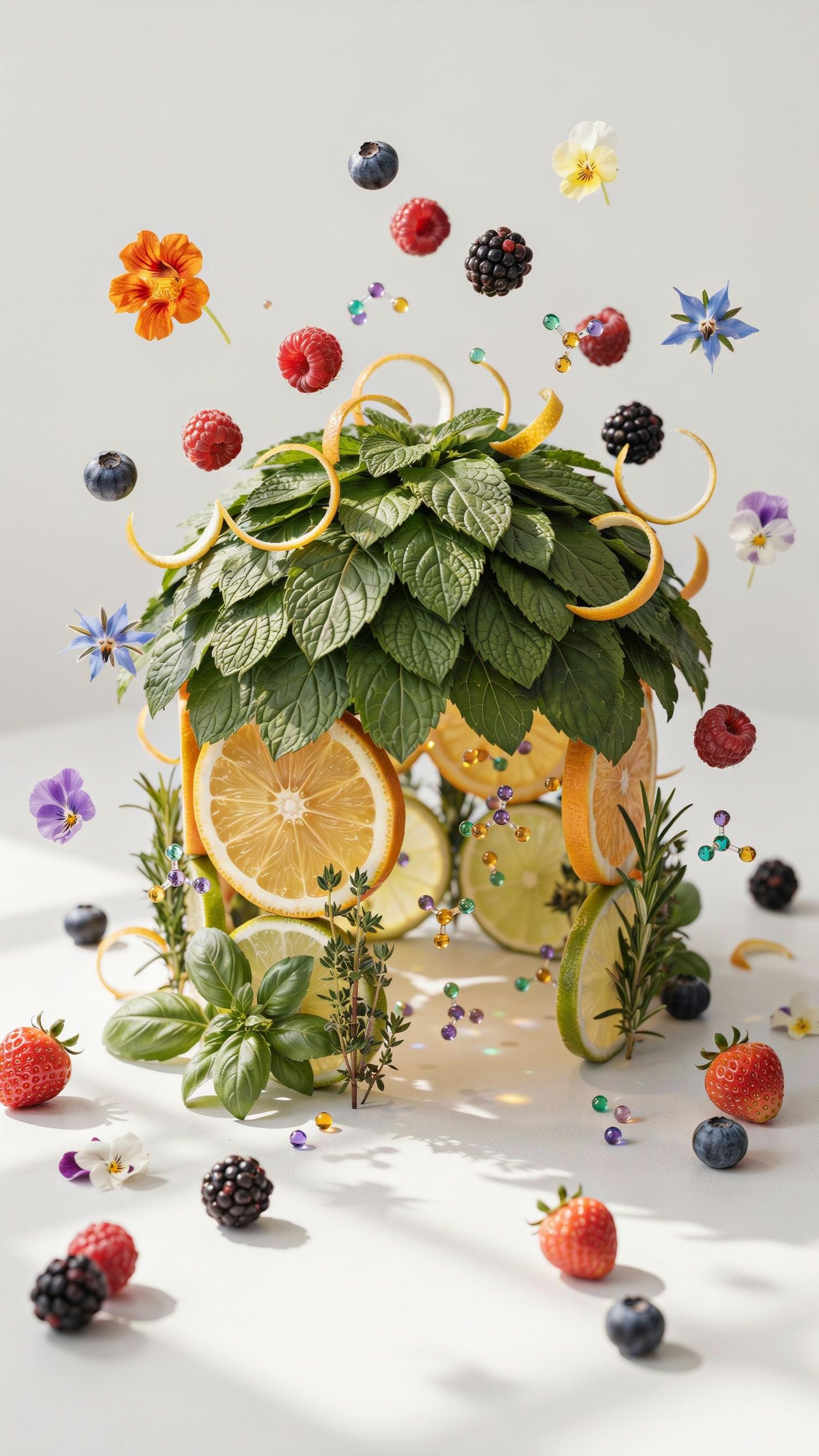
You want meal prep to feel effortless so you stop thinking about dinner. The mechanism nobody names: your taste buds adapt to repetition within minutes. Biology calls this sensory adaptation. With shrimp tacos, it means acid, fat, and heat must arrive in sequence, not all at once. Layering prevents habituation. Your mouth stays engaged because each bite introduces a different dominant signal to your sensory receptors.
The practical application is brutal in its simplicity. Acidic components like lime juice and pico de gallo belong separate from the shrimp until assembly. Creamy elements like avocado or crema sit in their own container. Chili heat lives with the shrimp during cooking, then gets amplified by fresh cilantro added cold. This stacking order forces your palate to reset between compounds instead of collapsing into numbness by your third taco.
The Structural Integrity Your Bowl Needs
Container architecture determines whether your meal survives the commute intact. The shrimp must sit in a moisture-controlled zone separate from anything absorbent. A sealed compartment prevents the cooked protein from steaming and turning rubbery. Your rice or grain base needs its own sealed section because it will leach starch and turn everything soggy if it contacts wet ingredients for more than four hours.
Compartmentalization isn’t luxury. It’s load-bearing. Position heavier components at the bottom, lighter garnishes on top. This prevents crushing and maintains texture contrast. Assemble only at eating time, which takes sixty seconds. The real win happens during storage: each ingredient stays within its optimal moisture and temperature window for up to four days. This single protocol step doubles shelf life compared to mixed bowls.
The Optimized Ingredient Matrix Mastering Shrimp Taco Recipes Easy
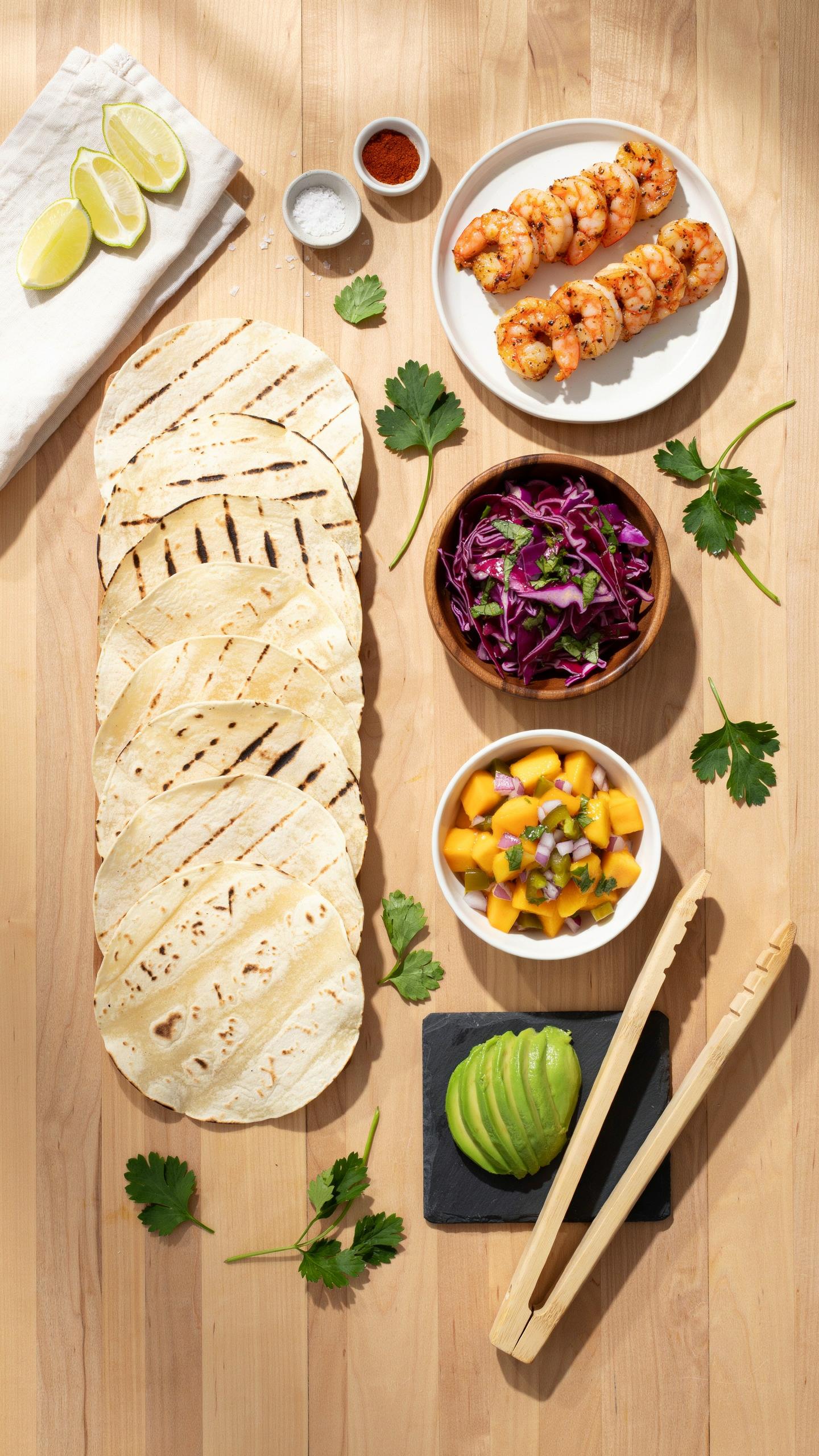
Buy Shrimp Like You’re Trading Commodities
You want to feel smart about your meal prep without actually learning anything. Here’s the mechanism: shrimp quality is inverse to storage time. Economics calls this deterioration of asset value, and it applies directly to your protein. Frozen shrimp loses quality slower than thawed. Buy frozen, thaw only what you assemble that week, and your bowls stay consistent for five days minimum instead of two.
The sourcing rule is simple: 26-30 count shrimp, previously frozen, from a supplier with high turnover. Skip the grocery store bin where shrimp sits thawed under lights for days. The freezer burn you see is just water loss, not failure. That water loss is actually protection against bacterial growth.
Prep Components As Standalone Assets
Most meal prep advice tells you to chop everything and dump it in containers. Wrong. You’ll end up with soggy slaw, mushy peppers, and shrimp that tastes like metal by day four. Treat each component as a separate inventory item with its own shelf life and prep timing. Rice prepped ahead stays dry in an airtight container for five days. Lime crema prepared the same day stays acidic and prevents bacterial drift. Cabbage shaved and stored dry lasts four days without degradation.
The mechanism is moisture control. Prep wet ingredients last, store dry components first, and assemble only at service time. Your cabbage slaw stays crisp because it never touches the shrimp juices until you’re eating it. This is why restaurant kitchens mise en place with separation, not convenience.
The Slaw Algorithm Engineering Your Slaw Recipe For Shrimp Tacos
Crispness And Flavor Infusion
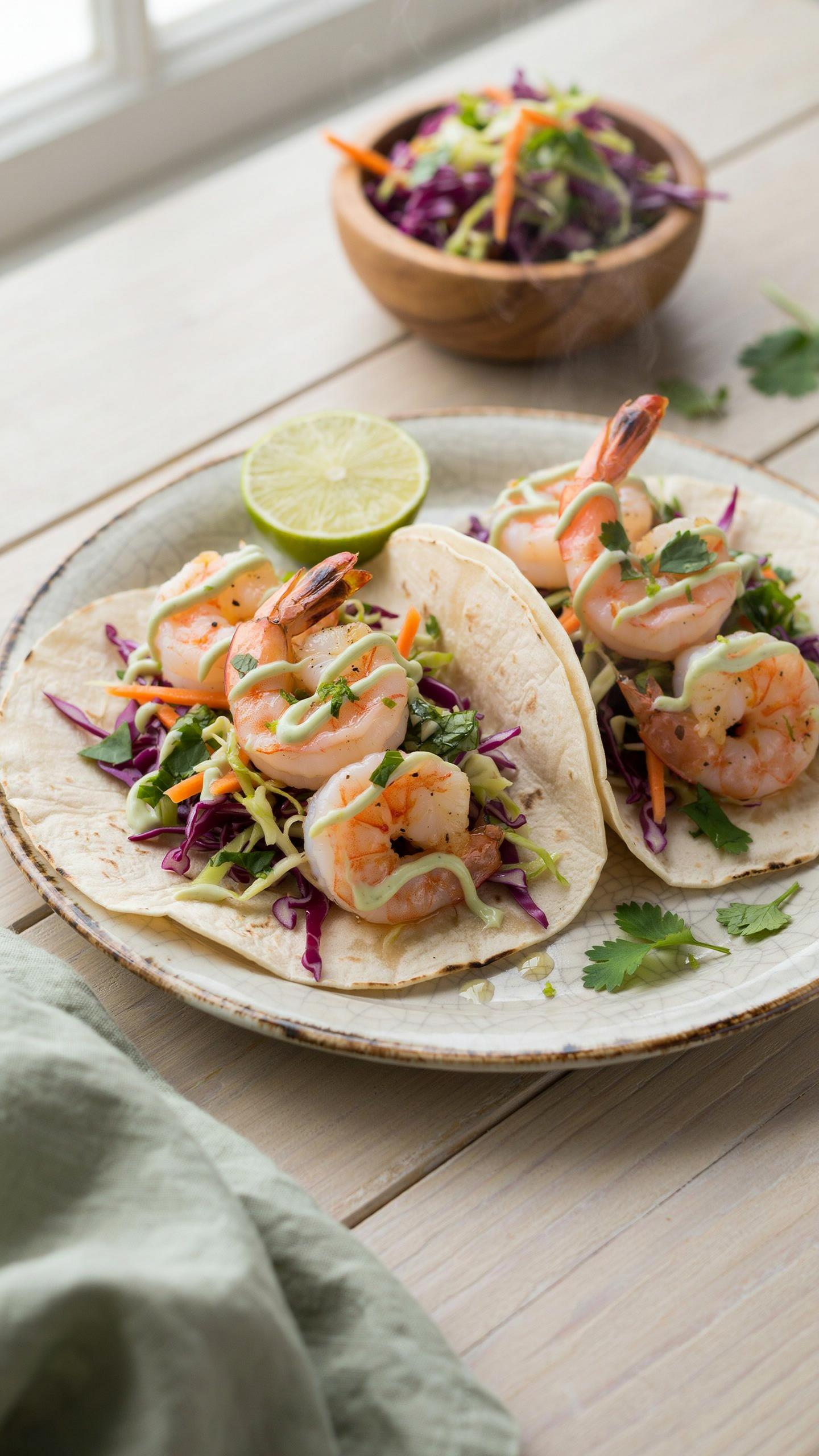
You want your slaw to stay crisp four days in the fridge instead of turning into wet garbage. That’s the real problem nobody names. Borrowed from chemistry: osmosis is the mechanism. When you cut cabbage, you break cell walls. Water molecules migrate toward salt concentration gradients. Salt the slaw thirty minutes before storage, not right before eating. The salt draws moisture out initially, then the brine reabsorbs into the cell structure, creating a firm matrix that resists breakdown.
The acid component functions differently than most people assume. Vinegar doesn’t preserve crispness through acidity alone. It lowers the pH enough to slow microbial growth, but the real work happens when acid denatures the pectin in cell walls, making them flex rather than shatter under pressure. Lime juice works faster than vinegar because citric acid has a lower pKa value. Use a 2:1 cabbage-to-lime-juice ratio by weight, add salt at 1.5% of total slaw weight, and hold it for thirty minutes before dividing into containers. The slaw tightens, not softens.
Consistent Quality Across Multiple Servings
Most meal prep guides skip batch scaling because it’s not obvious that texture consistency breaks at specific volume thresholds. You cannot make a five-serving slaw the same way you make a one-serving slaw. The surface area-to-mass ratio changes. Larger batches retain more liquid because the center stays wetter longer. Mix your slaw in a wide, shallow container, not a tall bowl. This exposes more surface area and lets osmosis work evenly across the entire batch instead of concentrating in the center.
Portion your slaw into individual containers immediately after the thirty-minute rest period, not before. If you hold the full batch longer to “let flavors marry,” the bottom layers compress from weight and become mushy. The packed shrimp and rice below each slaw layer will also leach moisture upward by gravity over time. Pre-portion into five-ounce containers the moment the slaw reaches target texture, seal them, and stack horizontally in the fridge. This stops the osmotic process and locks in consistency across all servings through reduced water movement.
The Shrimp Protocol Maximizing Shrimp Taco Healthy Potential
Heat Carryover And Protein Set Point
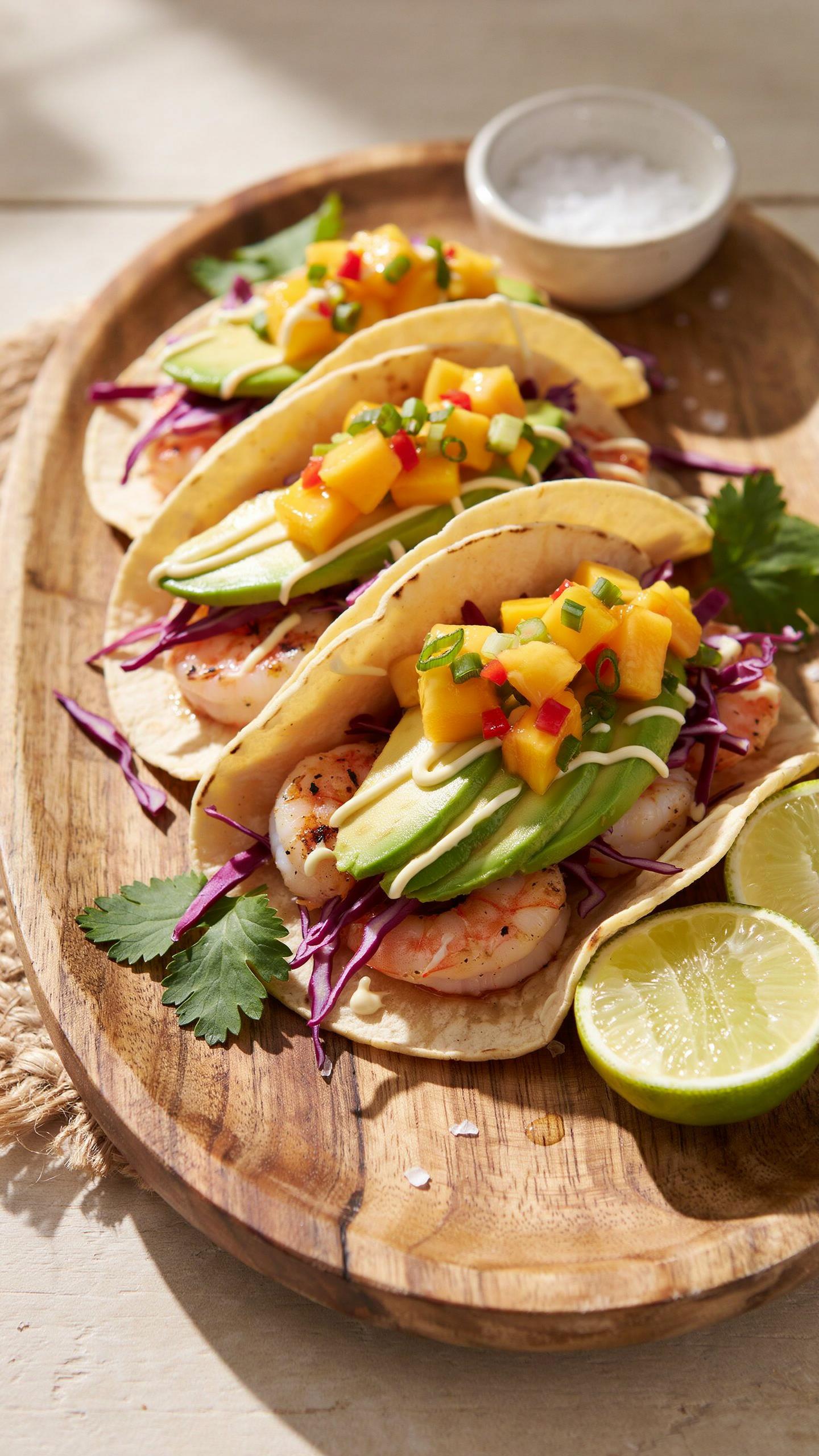
You want shrimp that looks impressive without admitting you’re afraid of rubbery, overcooked protein. The mechanism is carryover cooking: shrimp continue cooking 3 to 5 degrees after you remove them from heat. Most people ignore this and pull shrimp at 165°F internal, which lands them at 170°F on the plate. That’s the kill zone.
Cook shrimp to 140°F in the pan, then pull immediately. They’ll reach 145°F as they rest, which is the actual safe minimum for shellfish. This gives you a window of two minutes where the flesh stays opaque and tender instead of rubbery. When meal prepping, this means cooking in small batches rather than dumping a full pound in one pan, which creates temperature variance and guarantees some shrimp finish overdone while others stay underdone.
Seasoning Lock: Where Timing Beats Technique
Everyone says season before or after cooking. That advice is incomplete because it misses when seasoning actually adheres. Treat this like osmosis in biology: salt dissolves and penetrates protein structures over time. Season shrimp 15 to 20 minutes before cooking, which lets salt penetrate the muscle fibers and stay locked in during meal prep storage.
After cooking, add acid immediately. Lime juice or white vinegar stops carryover cooking while brightening the shrimp’s flavor profile in stored bowls. Seasoning after cooking tastes fresh in the moment but fades by day three of meal prep. The real move: dry seasoning before heat, acid right after. This creates flavor that compounds instead of evaporates.
The Assembly Line Blueprint Streamlining Shrimp Lunch Meal Prep
Build Your Bowl In Reverse Order
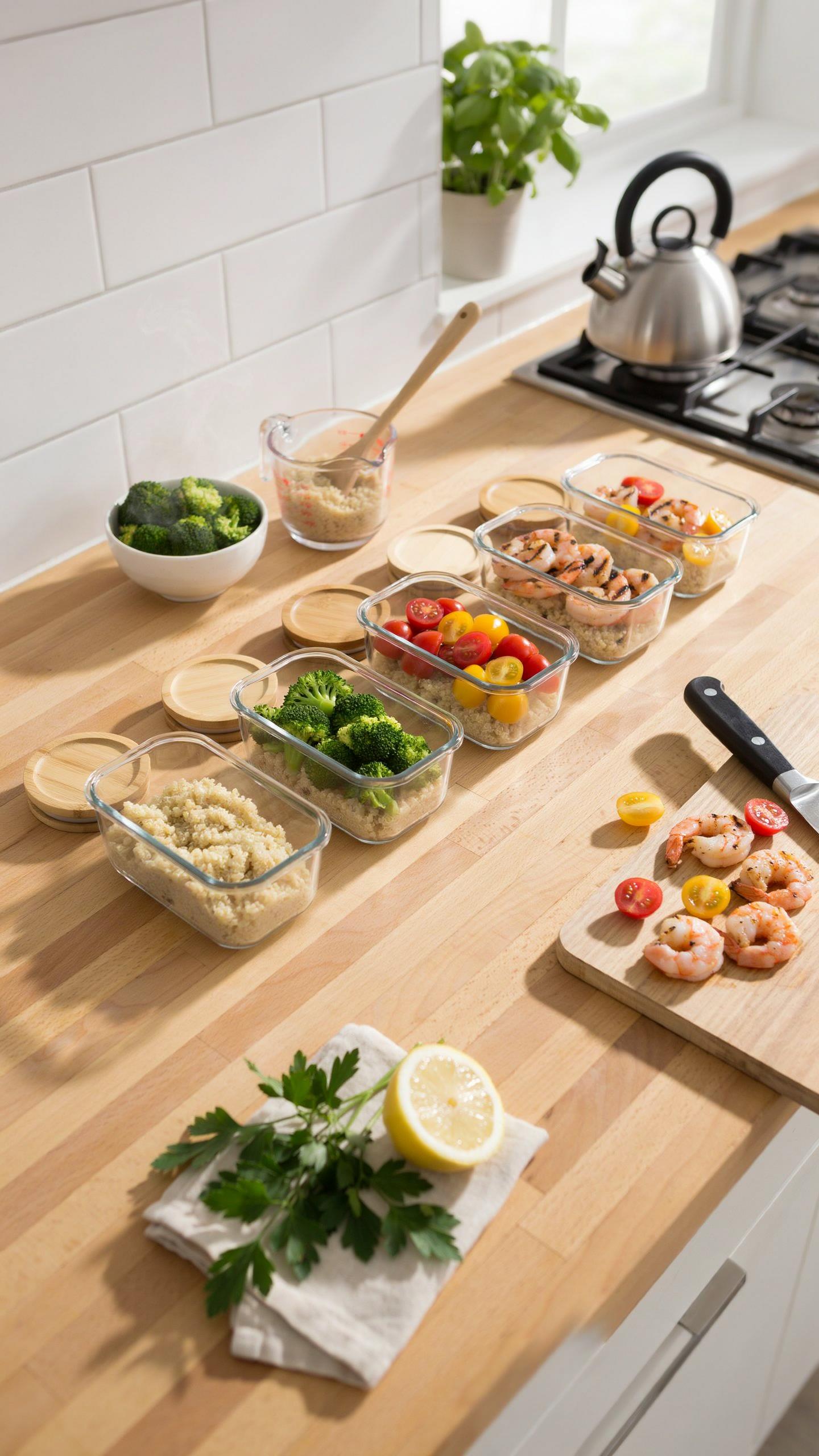
You want to feel efficient without actually thinking about efficiency. Here’s the mechanism: temperature gradient preservation. In thermodynamics, heat transfers from hot to cold. Your shrimp starts warm after cooking. Stack it last, not first, so it doesn’t transfer heat to delicate greens below and wilt them by Wednesday.
Start with your base grains or greens at the bottom. They’re insulated by the container and won’t degrade from moisture or warmth. Layer proteins and heavier components next. Place shrimp on top with minimal contact time between hot protein and cool produce. This ordering extends shelf life by two days compared to random stacking.
Pick Containers Built For This
The wrong container kills meal prep before you eat it. Glass containers with vented lids outperform sealed plastic. Vents let condensation escape instead of pooling on your bowl, which triggers bacterial growth and soggy vegetables. You need rigid walls that don’t leach, and a seal tight enough to prevent leakage during transport.
- Glass with silicone lids: Heat resistant, no leaching, vents available, expensive upfront but last five years minimum of daily use.
- Compartmentalized containers: Separate sections keep wet components away from dry ones, preventing cross-contamination of texture and flavor.
- Disposable aluminum: Good for transport if you’re trading bowls between locations, lightweight, recyclable, but less durable for repeated washing.
- Polypropylene number 5 plastic: Freezer safe, dishwasher safe, won’t warp, but check for BPA-free labeling and avoid high heat during storage.
- Prep containers with separate condiment wells: Oil and lime juice stay isolated until you eat, preventing sogginess and flavor dilution before consumption.
Portion control matters here. A container that’s 75 percent full prevents shifting during transport. Shrimp tacos in a half-full container will slide, causing the shells to break and the components to mix prematurely. Stack containers with heaviest on bottom, and never over-fill past the seal line.
Maximizing Longevity Minimizing Degradation

Temperature And Moisture Control
You want your meal to survive the week untouched because reheating shrimp twice kills both texture and your dinner momentum. The mechanism is simple: temperature stability prevents bacterial proliferation, and moisture control stops the slow decay of structural integrity. Store bowls at 40°F or below, which stops shrimp from entering the danger zone where pathogens accelerate. Use airtight containers, not loose wrap. Condensation is your enemy—it softens the tortillas and hydrates the proteins unevenly.
The real problem most people miss: they stack hot components immediately after cooking, trapping steam inside the container. Cool everything to room temperature first, then seal and refrigerate. This single step extends your effective meal window by two to three days. Shrimp stays firm, tortillas stay pliable, and your cabbage doesn’t turn into mush. Refrigerate within two hours of assembly, and consume within four days for safety.
Strategic Component Separation
Nobody talks about this because layering feels like overthinking, but it’s actually applied physics. Think of it like erosion prevention in soil conservation: you create barriers between agents that degrade each other. Moisture travels upward through stacked layers, so place wet components (salsa, lime crema, cabbage slaw) on top and drier components below. This reverses the normal stacking instinct but saves your meal.
The protocol is this: base layer gets your rice or grain foundation, then cooled shrimp, then pickled onions (the acid preserves texture), then toppings in a separate compartment or on top just before eating. Warm tortillas separately when you reheat. Sour cream and guacamole go in their own small container—they absorb flavors and break down faster when pressed against other ingredients. Store this way and everything maintains its original character.
The Culinary Feedback Loop Iterating For Superior Shrimp Tacos
Measuring What Actually Matters
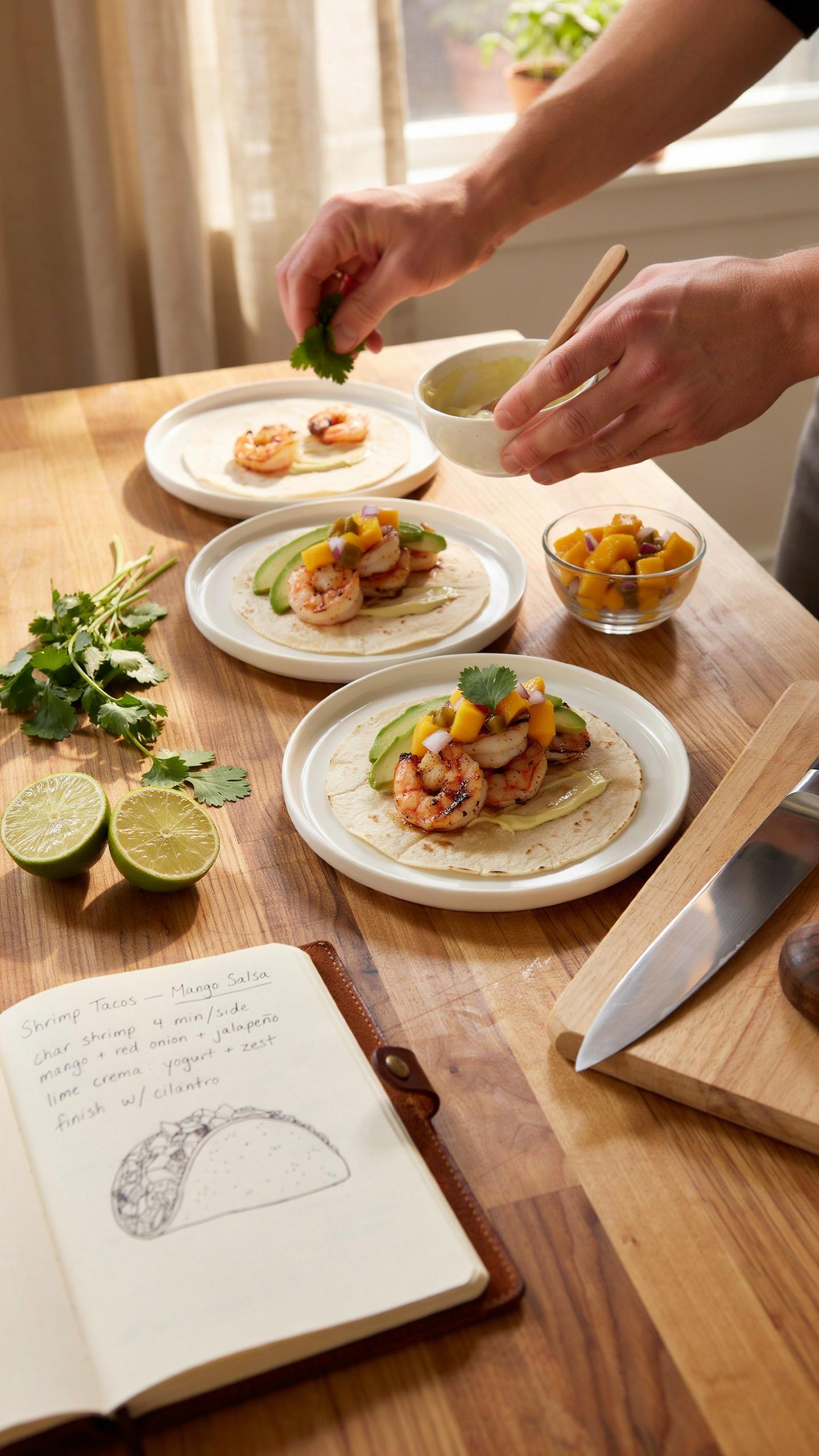
You want to know if your meal prep is working so you feel like you’re not wasting Sunday afternoon. But most people track the wrong variables. They measure effort instead of outcome. The real metric is simple: do you eat the bowls, or do they rot in the fridge? Do you hit your protein target, or does hunger derail you by Wednesday?
Track three things only. First, consumption rate: how many bowls vanish before spoilage. Second, satiety duration: how many hours pass before hunger returns. Third, preparation time per bowl. Everything else is noise. These three variables tell you whether your system survives contact with your actual life, not whether it looks good on Instagram.
Shifting Variables With Precision
Economics teaches us about elasticity, the measure of how much demand changes when you shift one input. Your shrimp taco bowl has its own elasticity. Change the lime-to-cilantro ratio and satiety duration shifts. Adjust protein-to-carb balance and consumption rate climbs or tanks. Lower prep time and you actually execute the system next week.
Run controlled experiments. Cook one batch with lime juice added post-prep, another with it mixed in immediately, and assess texture degradation after three days. Swap one salsa ingredient and measure whether you finish the bowl or abandon it halfway. Each iteration produces data. After three cycles, you’ll own the system instead of following someone else’s template. Document the winning variables and never revisit them.
Beyond The Bowl The Systemic Advantage Of Meal Prep
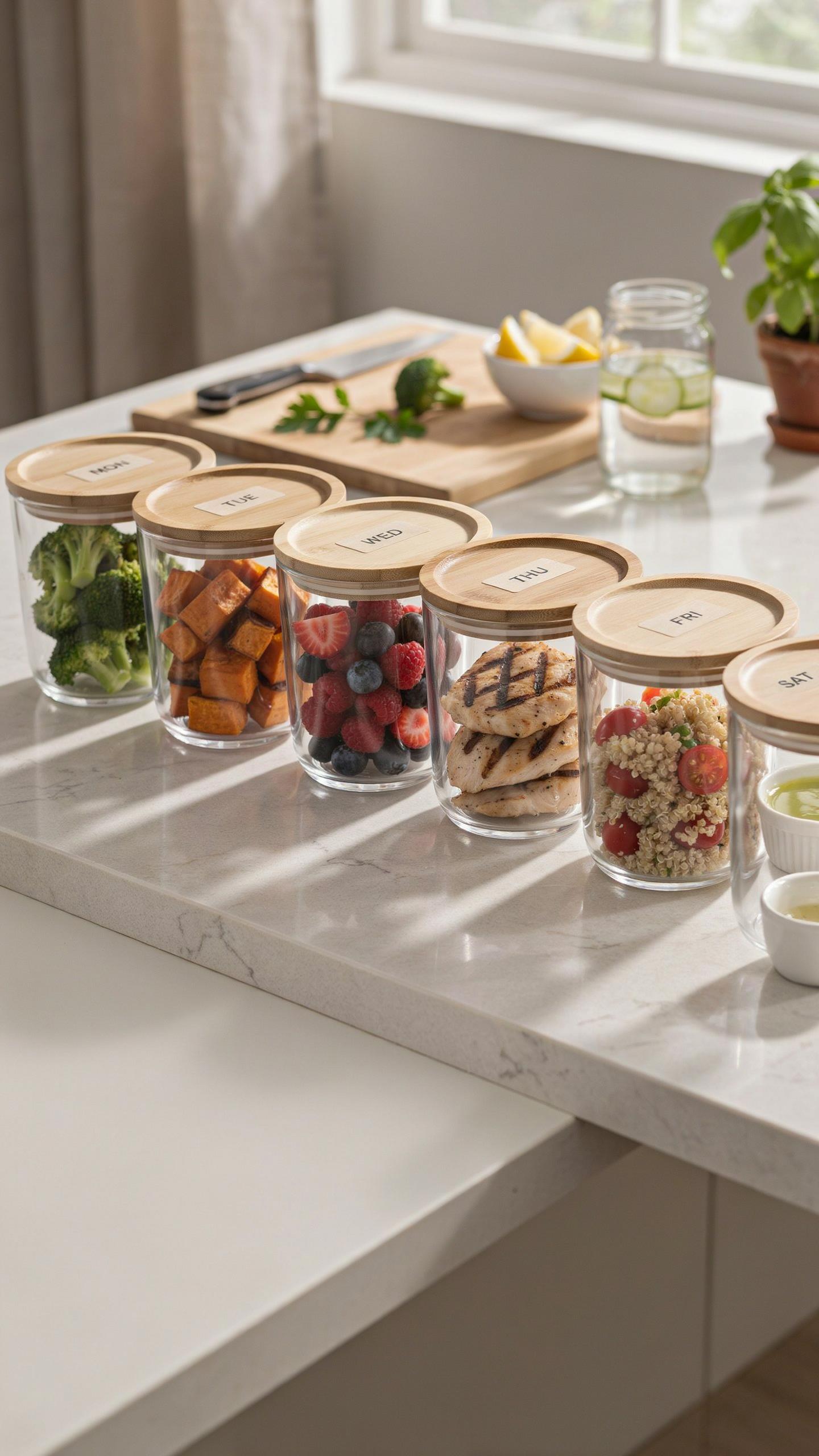
The Cognitive Real Estate You’re Reclaiming
You want this because you’re tired of making the same decision six times a week. The mechanism is simple: decision fatigue is real friction. Economics calls it “bounded rationality” – your brain treats every choice as a tax on mental resources, whether it’s selecting a dinner or closing a business deal. Meal prepping shrimp tacos eliminates that tax by moving the decision upstream, into one concentrated session. You decide once. You execute repeatedly. The cognitive load drops to zero during the week.
This isn’t motivational advice about willpower. It’s infrastructure. When you have four prepped bowls waiting, your evening brain doesn’t negotiate. No scrolling delivery apps. No half-baked decisions at 7 PM when your decision-making capacity is depleted. You eat what’s prepared. The freed bandwidth flows into work, relationships, or actual rest instead of friction masquerading as choice.
The Actual Math Of Resource Efficiency
Forget “save time and money” – that’s marketing speak. Break it into components: shrimp costs per pound, rice in bulk, and containerized portions reduce waste through predictability. You buy exactly what you’ll use because prep eliminates the gap between purchase and consumption. Money stops leaking into spoilage. Time consolidates: two hours of prep work beats twelve separate dinner sessions across the week. Energy allocation shifts from daily cooking friction to weekly concentrated effort when you’re mentally fresh.
The protocol is the leverage point. Sunday prep becomes a repeatable system. Defrost shrimp, season in batch, sear once, portion into four containers with measured rice and toppings. Wednesday dinner requires three minutes – reheat and assemble. This isn’t optimization theater. It’s the difference between meal prep that sticks and meal prep that becomes another abandoned habit.
Your real enemy isnt hunger its the unexamined chaos of your daily habits

You don’t need motivation to meal prep shrimp tacos. You need friction removal. Every decision you eliminate is energy you reclaim for what actually matters. Spend two hours Sunday chopping peppers and marinating shrimp. Buy five glass containers. That’s it. You’ve just deleted the nightly “what’s for dinner” loop that drains you. Stop optimizing your willpower and start engineering your environment instead. The difference between someone who eats well and someone who doesn’t isn’t discipline—it’s one less choice.