
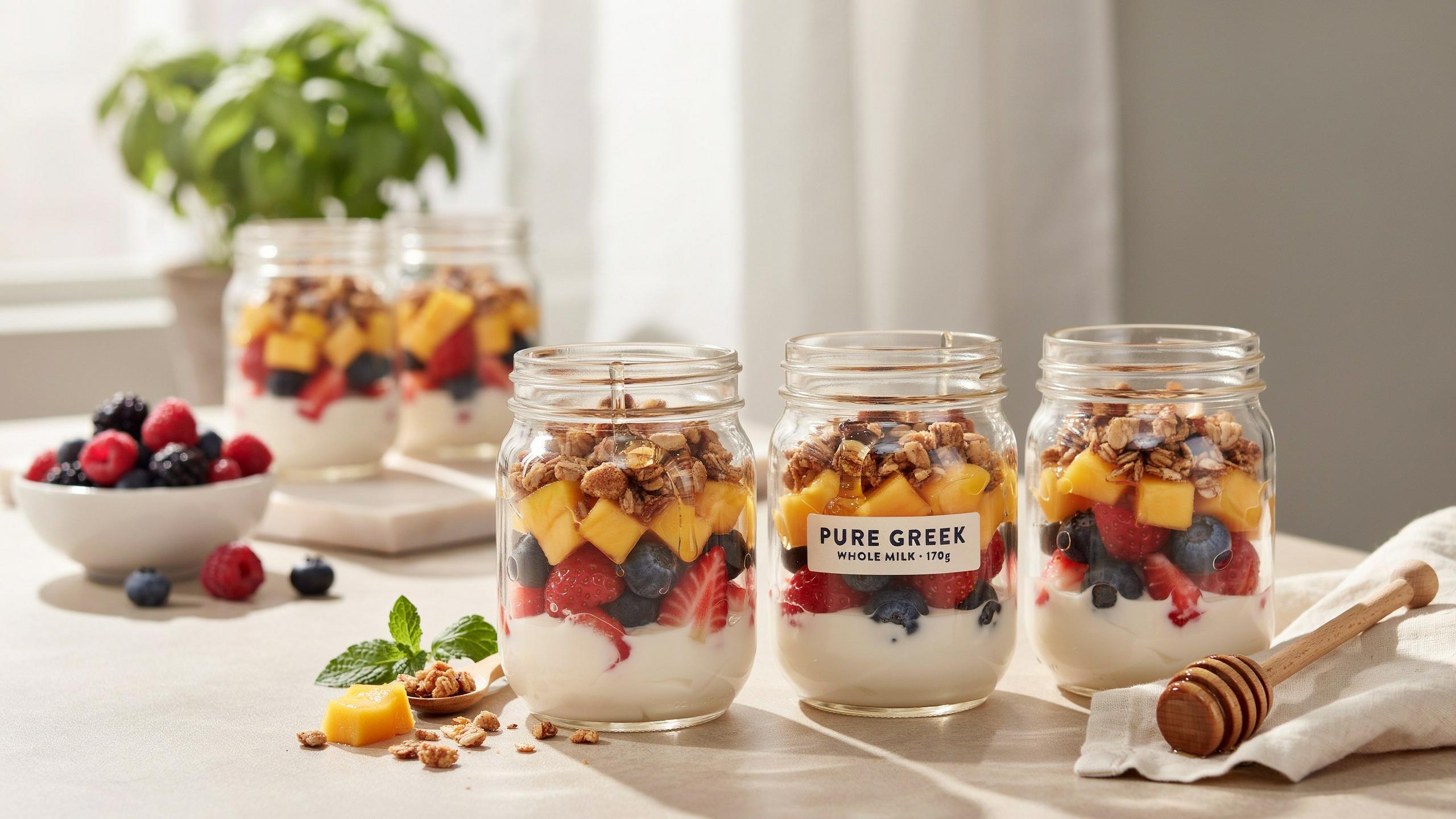
The Macro Deception Why Most High Protein Yogurt Parfaits Fail
The Sugar Trap Nobody Names
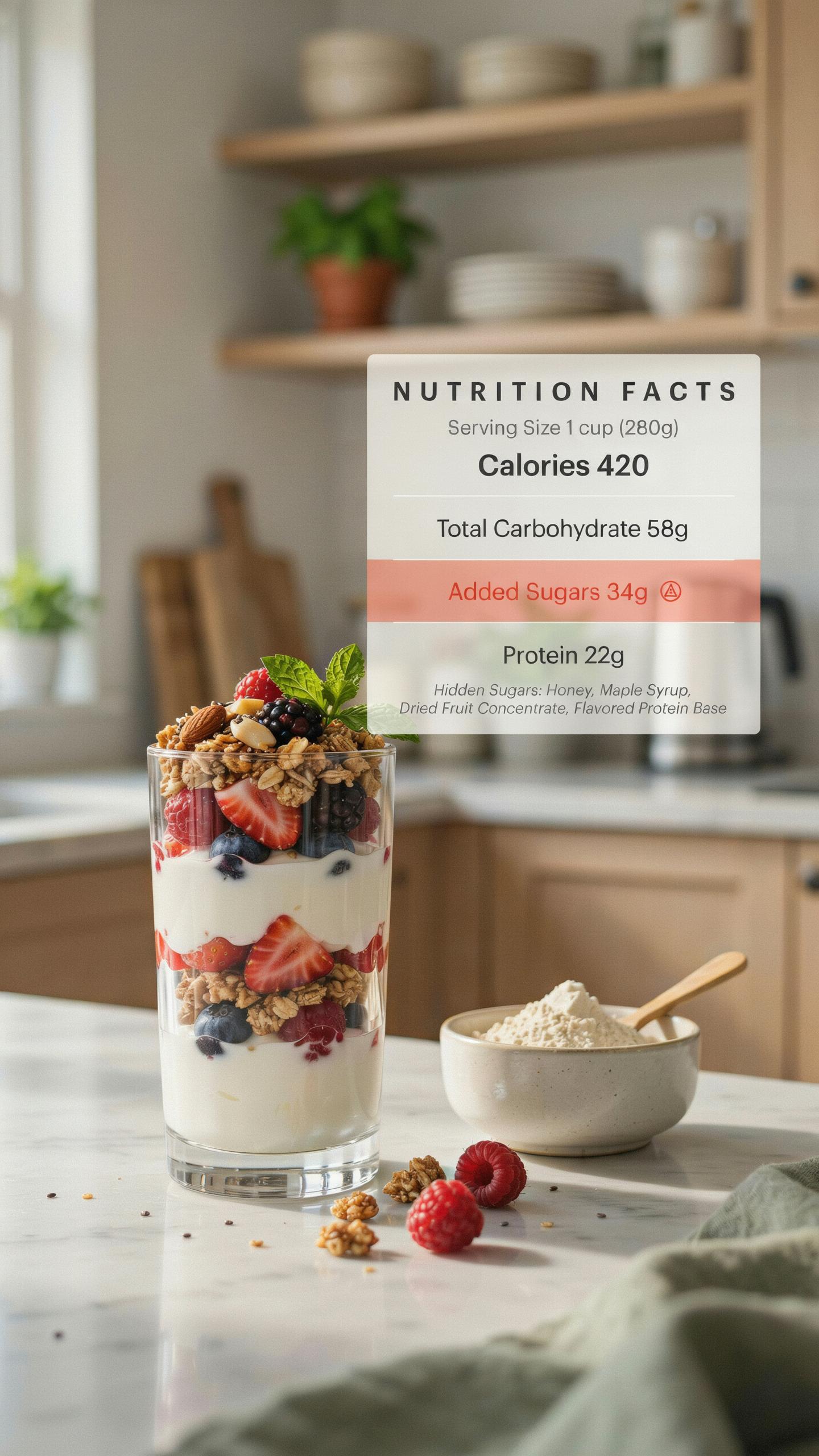
You want to believe a branded Greek yogurt parfait is a shortcut to health. That’s the real pull here—the permission to outsource thinking. The mechanism is simple: manufacturers know protein sells, so they blast the label with “20g protein” while burying added sugars in the ingredient list under multiple names. One popular brand lists 15g of added sugar per serving while marketing itself as a fitness option. The protein number is real. The sugar is equally real and equally ignored because the marketing targets your goal, not your physiology.
Most commercial parfaits use sweetened yogurt bases, honey drizzles, and granola coated in syrups. This combination spikes blood glucose, triggers an insulin response, and leaves you hungry again in two hours despite the protein. The protein does its job—it’s there. But it’s buried under a sugar load that undermines the entire point of eating it. Read past the front label claim and check the nutrition facts panel. If added sugars exceed 8g per serving, the product is designed to sell, not to sustain you.
Protein Without The Structural Foundation
Biology teaches us about homeostasis—the body’s drive to maintain balance. Your macronutrient ratios work the same way. A parfait with 25g protein but only 8g fat and 45g carbohydrates creates an imbalance that leaves you depleted and craving more food. Protein alone doesn’t build satiety. Fat slows digestion. Fiber moderates blood glucose. Carbohydrates fuel movement. Remove any one of these and the parfait becomes a blood sugar spike dressed up as nutrition. Most high protein yogurt parfaits fail because they’re protein delivery vehicles, not balanced meals.

The fix requires intentional composition at prep time. Start with plain Greek yogurt, not flavored versions. Add a fat source—nuts, seeds, or nut butter—for satiety and nutrient absorption. Layer in fiber through berries or ground flax. Control carbohydrate portions by limiting granola to a small measure or replacing it with seeds entirely. When you build the parfait in a jar yourself, you control every variable the manufacturer obscures. The result stays stable in your refrigerator for five days and keeps you full for four hours instead of two.
The Satiety Signal Building A True Healthy Parfait
The Fiber Layer Does The Heavy Lifting
You want the parfait to keep you full until lunch so you don’t spiral into snacking. That’s the real reason you care about this section. Here’s the mechanism: fiber triggers mechanoreceptors in your stomach lining, signaling fullness to your brain before calories even register. Most people treat fiber like a side note. It’s your primary tool.
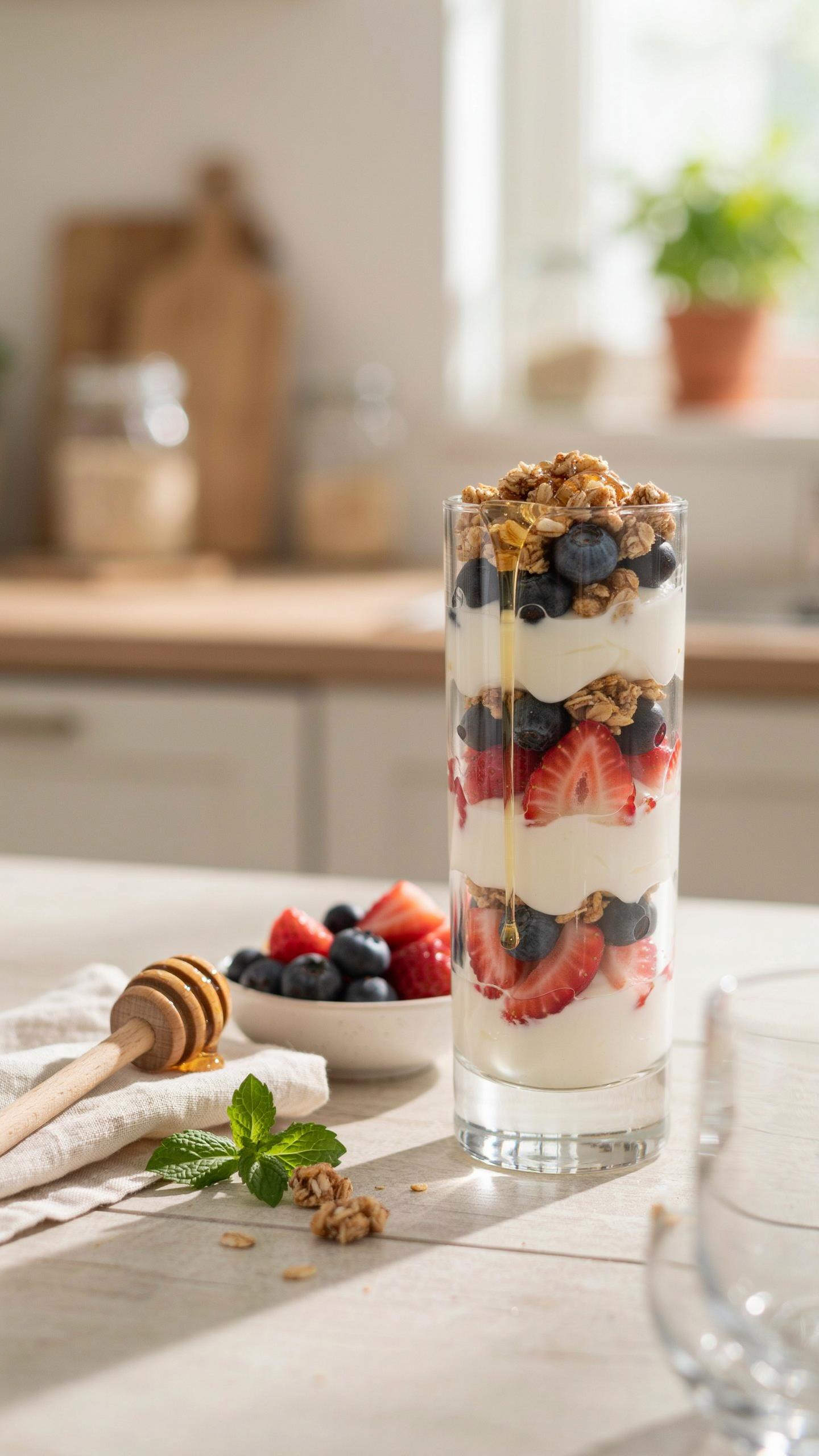
Oats, chia seeds, and ground flaxseed belong in the bottom layer of your jar. Not sprinkled on top where they disappear into yogurt. A quarter cup of oats plus one tablespoon of chia seeds creates a moisture-absorbing base that expands in your stomach and delays gastric emptying. This is biochemistry, not marketing. Layer it first, yogurt second.
Fats That Actually Signal Satiety
Hormonal biology teaches us that dietary fat triggers cholecystokinin release. This is the hormone that tells your brain you’re satisfied. One tablespoon of almond butter or a quarter cup of whole almonds per parfait jar shifts your satiety response upward without spiking blood sugar.
Most “healthy” parfaits skip fat or add it carelessly through granola. Wrong move. The fat needs to be present in meaningful amounts to activate the CCK response. Mix almond butter into the yogurt layer itself or distribute nuts evenly through the jar. The fat becomes bioavailable when it contacts digestive enzymes during consumption, not when it sits on top untouched.
The Stacking Density Method For Yogurt Parfait Recipes
Why Order Matters More Than Ingredients
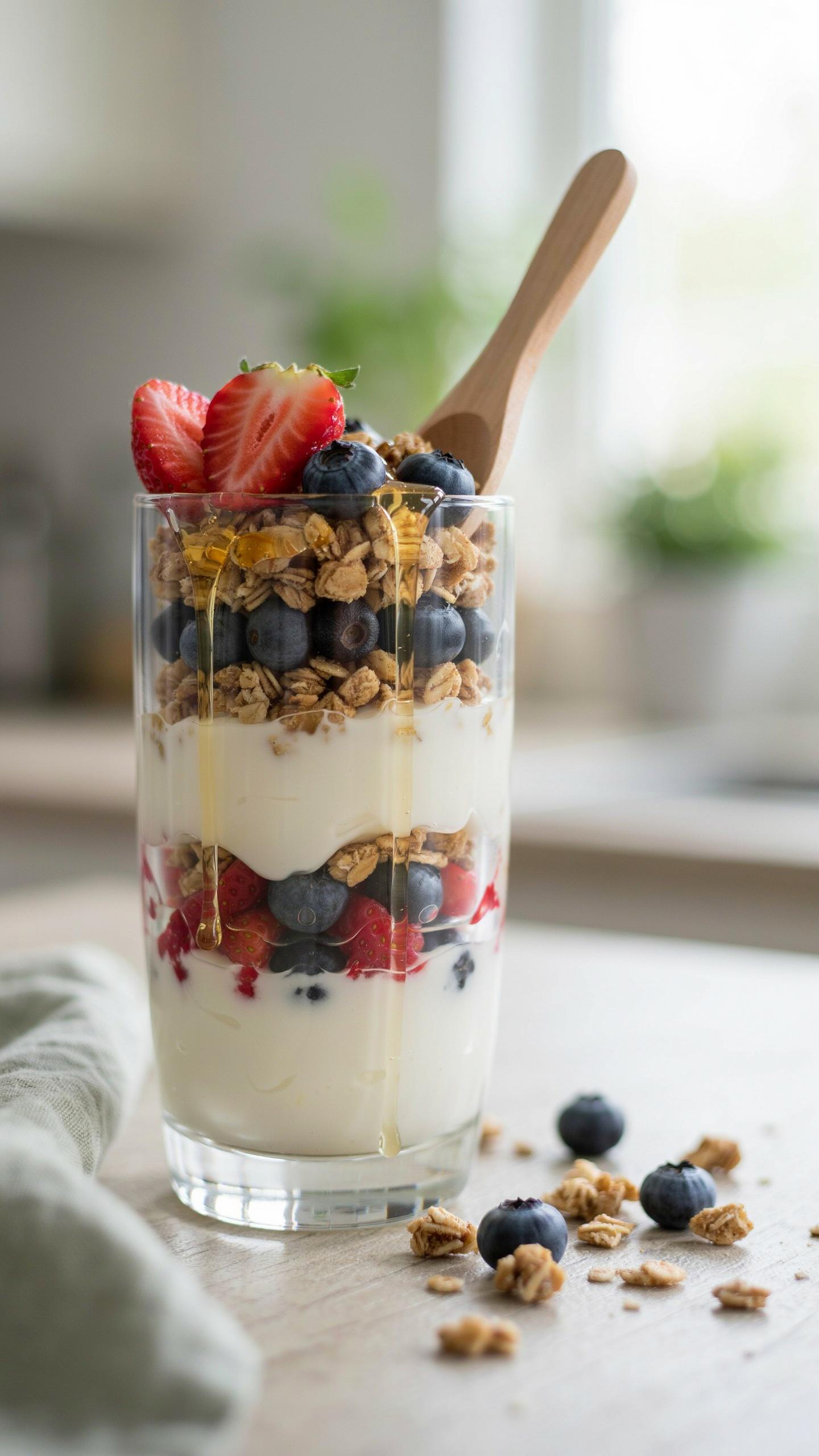
You want to believe the ingredients alone determine your result. They don’t. The sequence does. In materials science, engineers call this “stratification”—the deliberate arrangement of layers to control how stress moves through a structure. Your yogurt parfait works the same way. Moisture migrates downward. Granola absorbs it. Soggy texture kills enjoyment within hours. Most people assemble parfaits wrong because they stack wet on dry, guaranteeing failure by lunch.
The fix is counterintuitive. Start with your densest, most water-resistant layer at the bottom: granola or nuts. Then yogurt. Then fruit. Then another yogurt barrier. This inverts the usual instinct to put yogurt first. The bottom granola stays crunchy because it sits above the jar’s base, away from condensation pooling at the bottom. Fruit sits higher, releasing juice upward into the yogurt layer above it, not down into the granola. The jar becomes a moisture dam, not a drainage system.
Contrast Is The Engine Of Repeat Meals
Nobody talks about why texture variety matters for adherence. Monotony kills consistency. Your brain stops engaging. You eat the first parfait because novelty. You skip the second because it feels identical. Contrast works like a nutrient absorption mechanism—your mouth needs different signals to stay interested in the same base recipe.
Layer three distinct textures every time: creamy yogurt, crunchy grain, and chewy or soft fruit. The granola provides resistance when you bite down. Yogurt offers smoothness. Berries or dried fruit add a different density entirely. Space them vertically so you hit all three in each spoonful. Don’t mix components before assembly. Separation preserves contrast across the entire week. Your jar becomes a texture sequence, not a smoothie bowl disguised as a meal.
Beyond Berries Unconventional Parfait Recipes
The Savory Shift
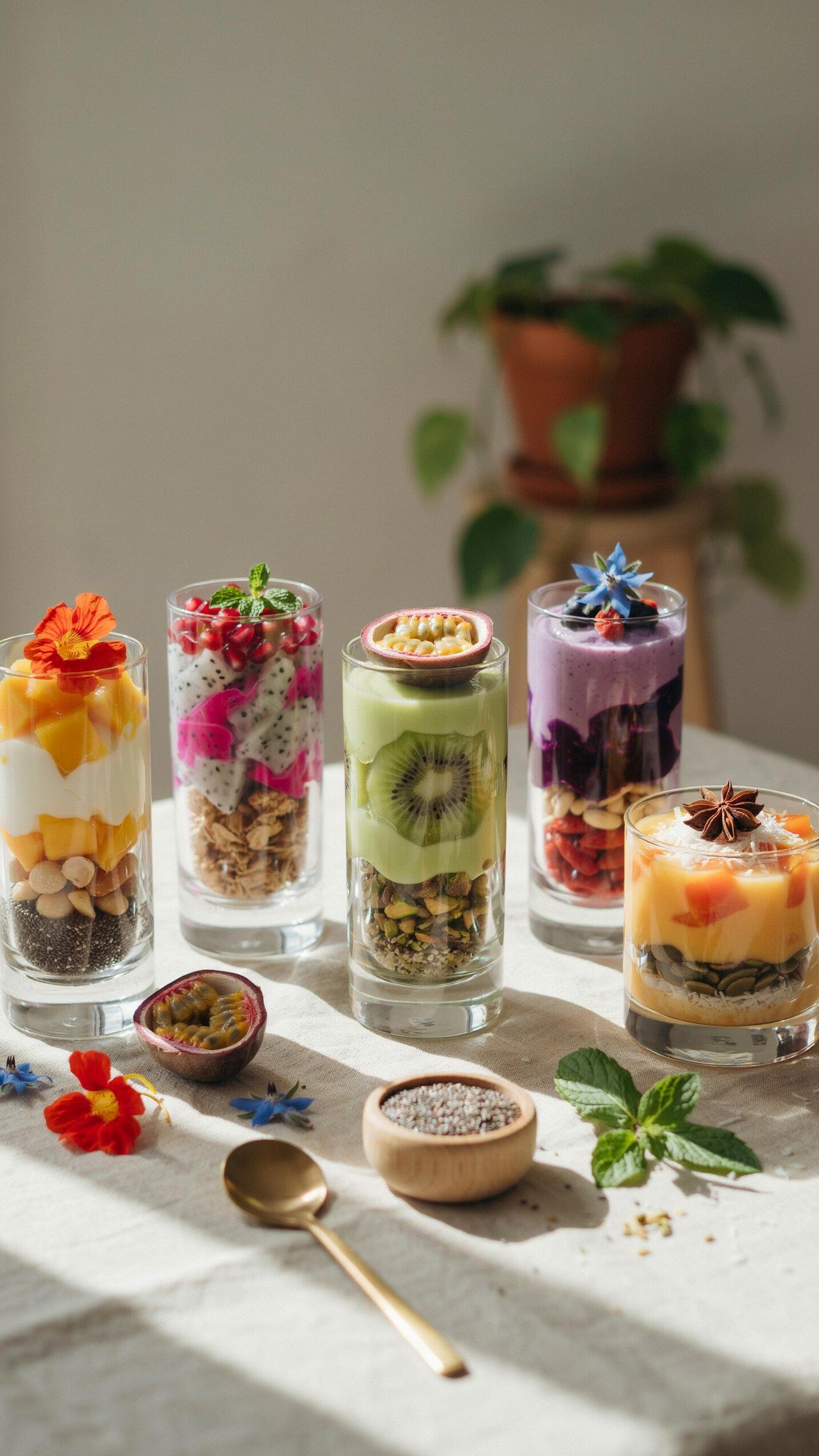
You want to look like you’ve figured something out that most people haven’t. The real mechanism here is flavor contrast: savory proteins paired with acidic yogurt trigger more sustained satiety than sweet combinations because your palate stays engaged instead of crashing. Greek yogurt acts as your base salt carrier, holding onto umami signals better than whey-based alternatives.
Start with full-fat Greek yogurt as your foundation. Layer it with roasted chickpeas, dukkah spice blend, cucumber ribbons, and pomegranate arils. Add a drizzle of tahini mixed with lemon juice. The protein density climbs past 25 grams while the fat content keeps hunger signals suppressed for hours. Prep these in jars without mixing until consumption to preserve texture contrast.
Tropical Heat And Acid
The common advice treats parfaits as breakfast vehicles for whatever’s in season. That’s incomplete. Applying flavor chemistry: acid denatures proteins slightly and slows digestion, which amplifies satiety signals your brain receives before you’ve overeaten. Mango combined with habanero pepper and lime juice creates this effect while tasting intentional rather than random.
Use frozen mango chunks paired with Greek yogurt and a quarter teaspoon of ground habanero per jar. Add passion fruit pulp for additional acid. Top with granola made from nuts and seeds you control personally. This combination sustains blood sugar stability better than fruit-only parfaits because the heat compounds demand slower consumption rates. Consume within four days of prep to maintain optimal texture and capsaicin potency.
The Metabolic Load Framework For Healthy Parfait
Blood Glucose Response Determines Everything
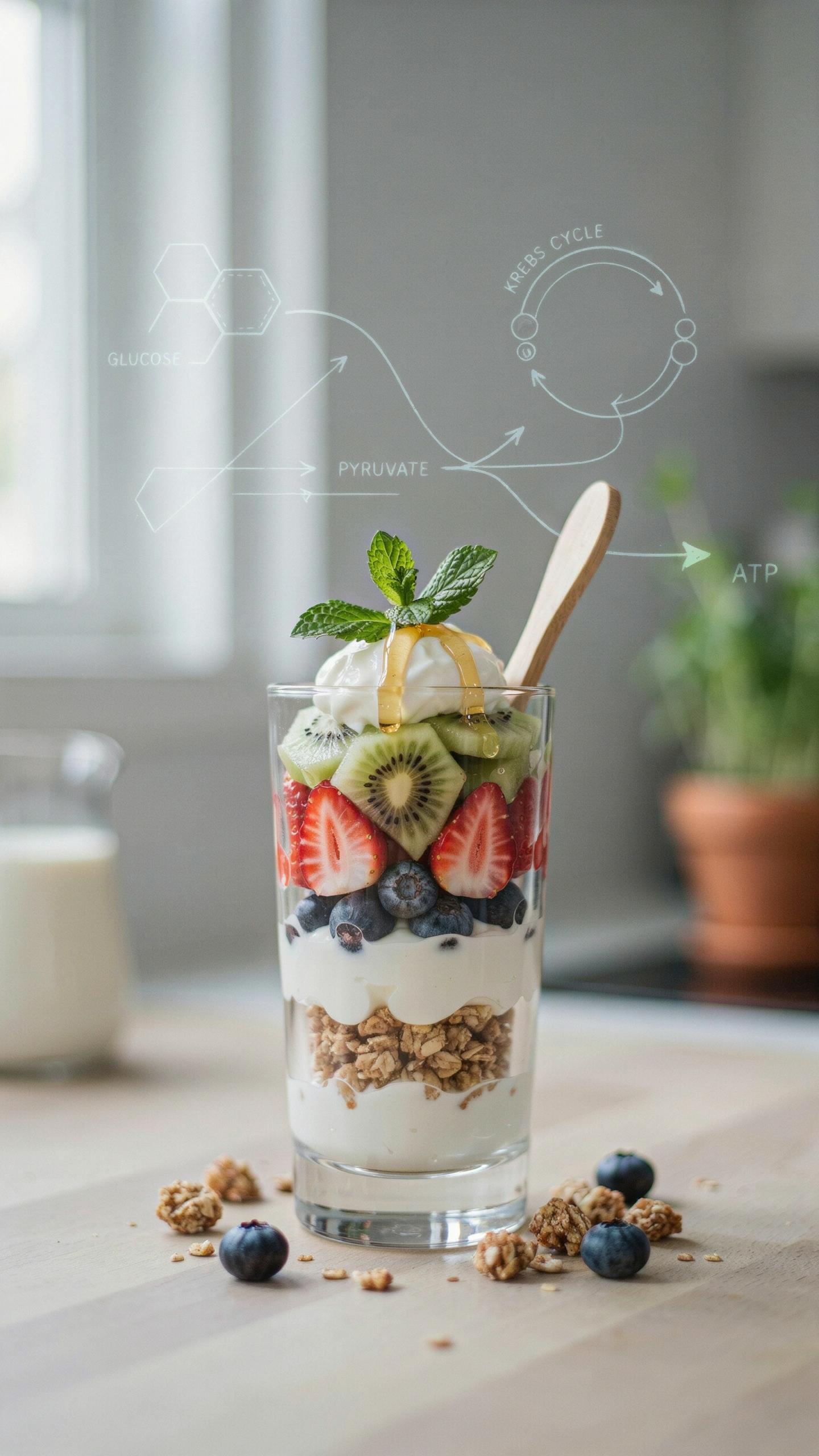
You want to feel full and not crash at 3pm, but nobody tells you that’s a glucose problem, not a willpower problem. Biology uses the term “glycemic load” to measure how fast carbohydrates spike blood sugar. In parfait construction, glycemic load is the single variable that separates a meal from a sugar delivery system. The order and ratio of your ingredients directly controls how quickly glucose hits your bloodstream.
Protein, fat, and fiber all slow glucose absorption. Yogurt alone has lactose, which raises blood sugar moderately. Add granola on top without barriers, and you’ve created a fast-digesting carbohydrate that spikes glucose in minutes. Layer your protein source first, then add fruit, then carbs on top. This physical ordering creates a fiber and protein barrier that slows sugar absorption by 20 to 30 percent compared to mixed versions.
Insulin Response Is The Real Mechanism
High glucose spikes trigger high insulin response, which is where the energy crash actually comes from. Your pancreas floods your system with insulin, blood glucose drops fast, and hunger returns. The goal isn’t to avoid carbs. The goal is to prevent the spike-and-crash cycle that makes you hungry two hours later. A parfait with 25 to 30 grams of protein per serving keeps insulin response stable because protein triggers slower, more sustained satiety signals.
Insulin response also determines whether your body stores excess calories as fat or uses them for energy. High protein intake paired with moderate carbs and fat keeps insulin in a range where your body prioritizes satiety over storage. Prep your parfaits with Greek yogurt as the base, add berries for controlled carbs, and finish with nuts or seeds. This formula keeps your insulin curve flat, your hunger suppressed, and your energy stable across the day.
DIY Protein Boosters Avoiding Processed Additives
Whole Foods Over Powder
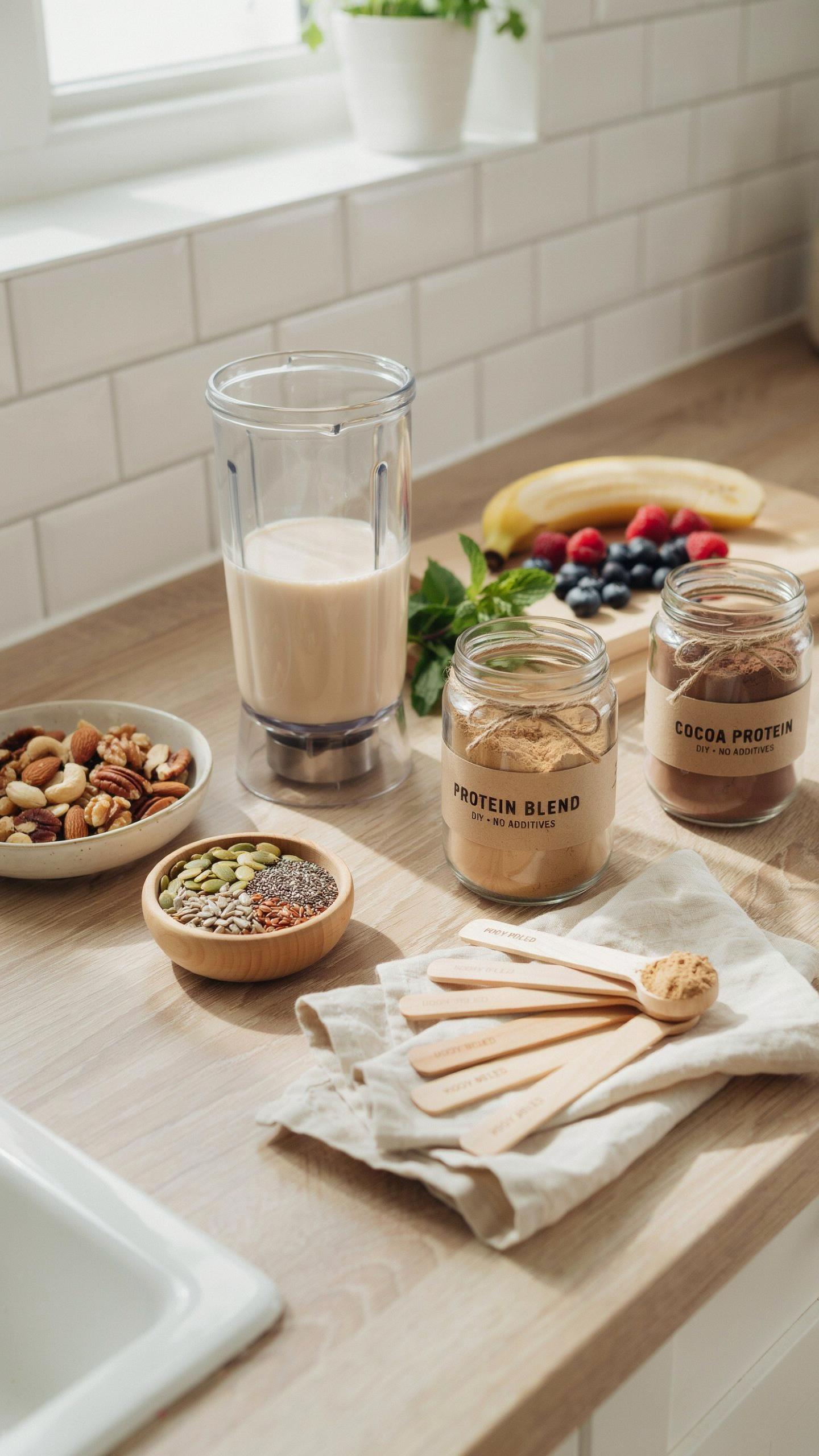
You want the status of “I don’t use artificial anything” without admitting you’re afraid of what you can’t pronounce. Here’s the mechanism: protein powder exists because whole foods are inconvenient to layer into jars. Remove the inconvenience, and the powder becomes optional.
Greek yogurt is already your base protein. Cottage cheese adds another 14 grams per half cup with minimal liquid. Nuts deliver protein plus fat for satiety. Seeds like hemp and pumpkin layer easily and don’t require blending. The shift from powder to whole foods isn’t purer—it’s just slower to digest, which means steadier blood sugar and longer fullness in your jar.
Making Your Own Nutrient Dense Toppings
The common advice is to buy granola. That’s lazy. Granola is sugar delivery dressed as health food, and most brands contain more carbs than protein per serving.
Build your own topping mix: raw almonds chopped coarse, unsweetened coconut flakes, pumpkin seeds, and a small amount of raw honey drizzled and dried. Toast the nuts and seeds at 325 degrees for eight minutes, cool completely, then store in an airtight container. You control the sweetness, eliminate the vegetable oil used in commercial blends, and cut the sugar content by half. Your parfait stays crisp for three days instead of turning soggy by day two because you’re using dry components only. Layer this topping two minutes before eating, not when you prep.
The 4 Day Rule For High Protein Yogurt Parfait Meal Prep
When Ingredients Start Losing Ground
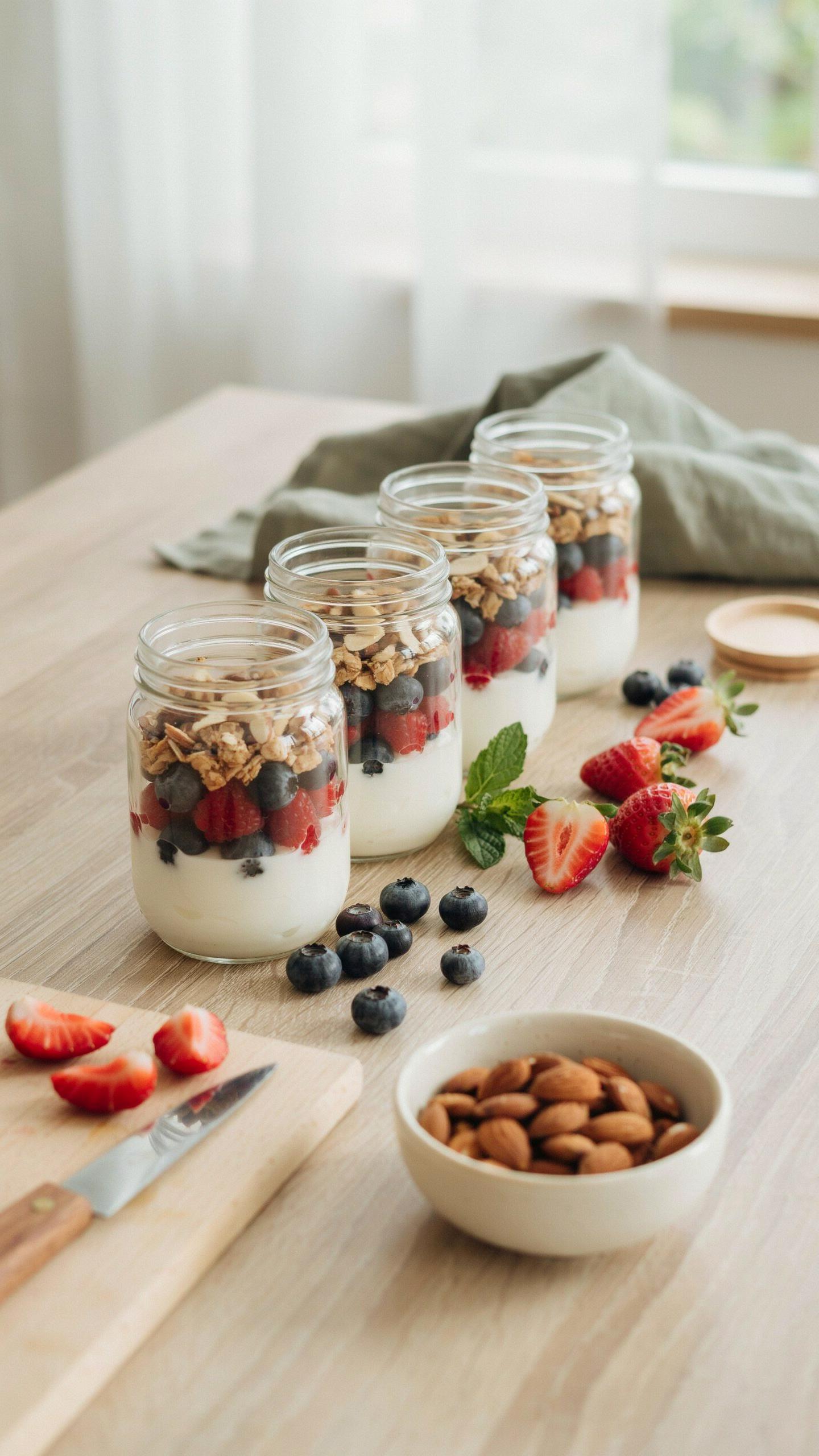
You want to believe your prep lasts the whole week because that feels efficient. The mechanism is simpler: moisture migration kills texture before bacteria kills safety. In biology, osmosis is the movement of water across a semipermeable membrane. In jarred parfaits, it’s the slow collapse of granola as yogurt’s moisture seeps upward, softening what should stay crisp. Four days is where this trade-off becomes visible.
Greek yogurt stays safely edible longer than the toppings do. Protein-dense yogurt has low pH and high acidity, which preserves it. Your granola, though, degrades within 72 hours once it contacts moisture. By day five, you’re eating paste. Temperature matters less than people think. A yogurt parfait stored at 35 degrees versus 40 degrees extends safety marginally but doesn’t fix the texture problem that actually ruins the meal.
What Actually Prevents Contamination
Most food safety advice treats jarred meals like they’re mystery boxes. They’re not. Layering order controls pathogen risk through barrier principles borrowed from microbiology. Here’s what works:
- Yogurt as Base Layer: Dense, acidic environment blocks aerobic bacterial growth. Yogurt’s low pH creates hostile terrain for most contaminants before they reach other ingredients.
- Fruit in the Middle: Blueberries, strawberries, and pomegranate stay sealed under yogurt, slowing oxidation and preventing mold spores from establishing on exposed surfaces.
- Granola On Top: Kept dry until consumption, granola never touches moisture that creates growth conditions. Store it separately and add before eating for maximum safety.
- Sealed Container Hygiene: Jars must be clean and dry before assembly. Residual moisture or food particles introduce competing bacteria that accelerate spoilage timelines.
- Consistent Cold Chain: Maintain 40 degrees or below from prep through storage. Temperature fluctuations wake dormant spores. One warm morning on a countertop adds risk disproportionate to the time gained.
The real safety mechanism isn’t complexity. It’s consistency. You follow the same protocol every time, same jar cleanliness, same temperature, same layering order. Day four is your hard stop because that’s when multiple degradation pathways converge simultaneously. Pack your granola in a separate container and add it the morning you eat. This single step extends both safety and quality another full day without complication.
The Cost Fallacy Is Your Healthy Yogurt Parfait Actually Saving You Money
When The Math Actually Matters
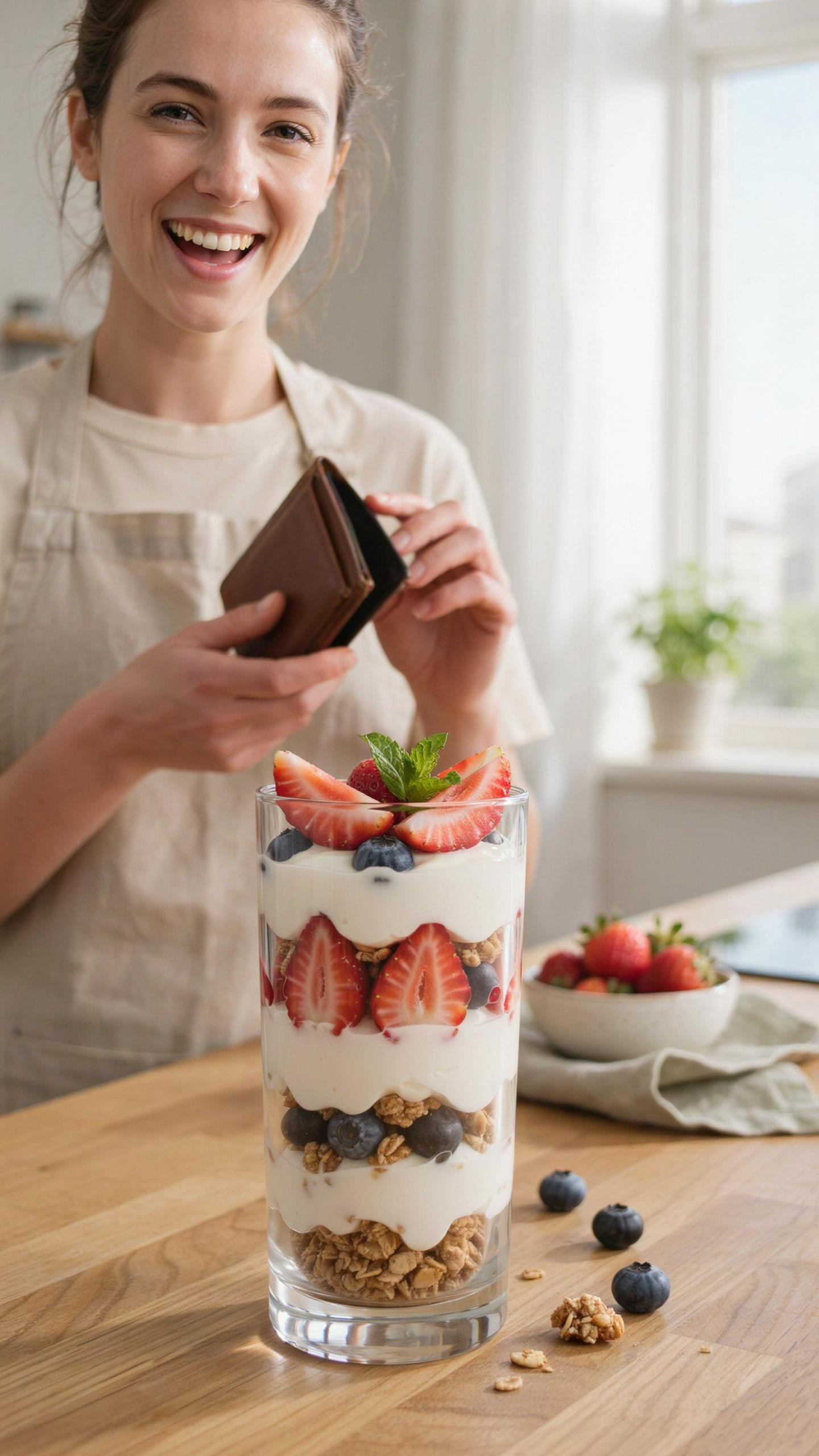
You want to believe homemade saves money because it makes you feel resourceful. Here’s the mechanism that actually determines whether it does: the cost per serving only drops below store-bought when you solve for volume and spoilage simultaneously. Most people calculate wrong by ignoring waste.
Homemade yogurt parfait prep costs roughly 2 to 4 dollars per jar depending on yogurt quality, granola brand, and fruit sourcing. Store-bought versions run 6 to 10 dollars at retail chains. The gap looks obvious. But that math breaks down the moment you factor in what you actually consume before the ingredients expire. Greek yogurt lasts 2 to 3 weeks opened. Berries last 5 to 7 days refrigerated. Granola stays fresh indefinitely but oxidizes after opening. Most home preppers buy ingredients optimistically and throw out 15 to 30 percent.
Buying Smart, Not Just Buying More
Economics teaches us about economies of scale, and yogurt parfait prep has one hard threshold: you need consistent weekly consumption to justify bulk purchasing. Buy for volume only if you eat 5 or more jars weekly without exception.
Warehouse clubs like Costco move Greek yogurt at 40 to 50 percent below standard grocery pricing when you buy the 32-ounce container. But that only works if you finish it within the expiration window. Buying one-pound containers from conventional stores costs more per ounce but you waste less. Frozen berries eliminate the spoilage problem entirely and cost 30 to 40 percent less than fresh while containing the same protein and fiber. Prepare your jars in batches immediately after shopping, then stack them at the back of your fridge to extend shelf life by days.
Beyond The Jar Integrating Parfaits Into A Holistic Diet
What Your Other Meals Actually Need To Do
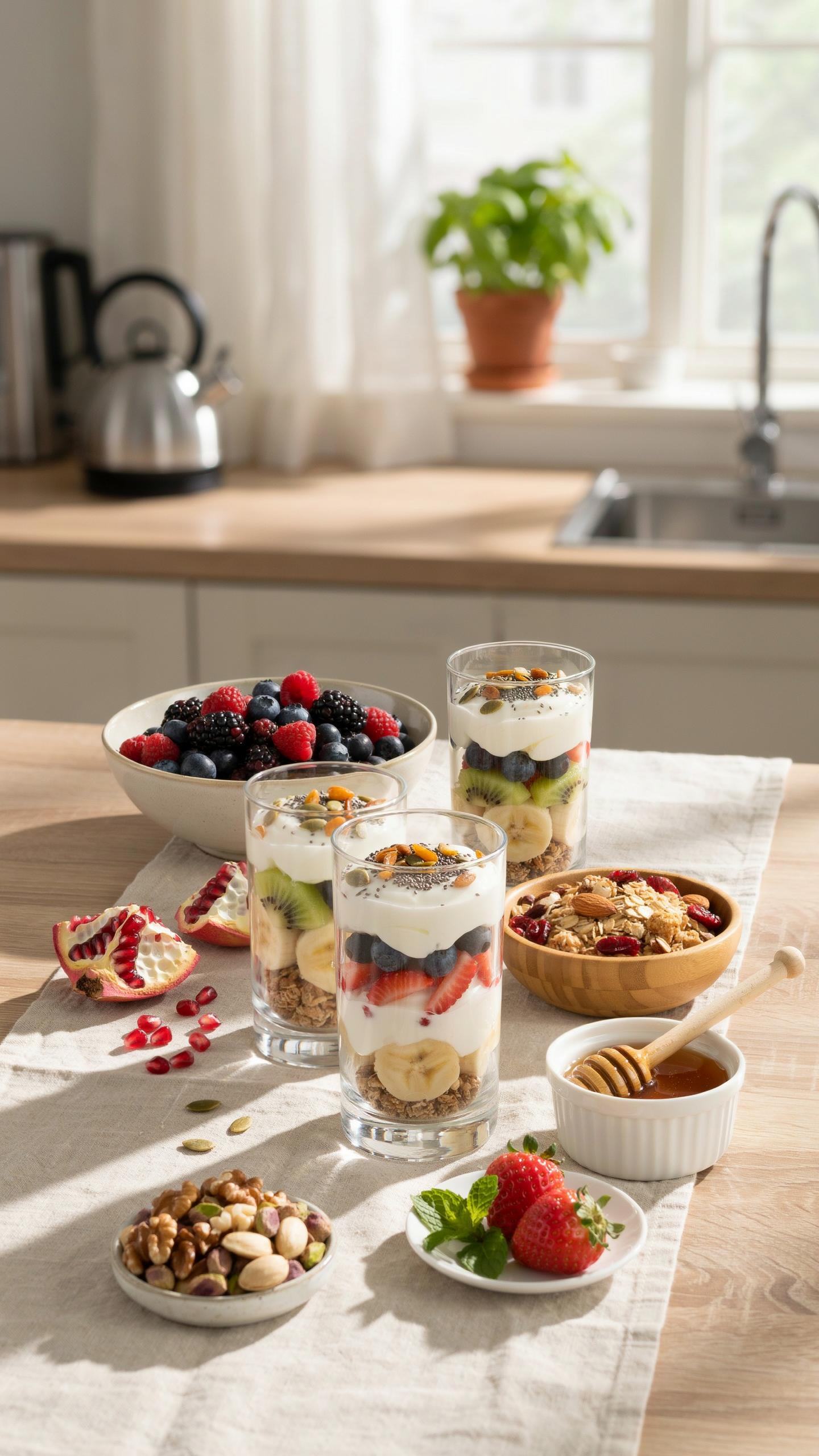
You want the parfait to do all the work because you’re tired of thinking about food. It won’t. Here’s the mechanism: a single meal, no matter how protein-dense, can’t deliver micronutrient coverage alone. Your body requires mineral and vitamin diversity that yogurt and fruit can’t fully supply. The parfait excels at one job: hitting protein and satiety targets. Everything else depends on what surrounds it.
Pair parfaits with meals that deliver what they miss. Lunch should include leafy greens, cruciferous vegetables, and a fat source for fat-soluble vitamin absorption. Dinner needs organ meats or shellfish for copper, iron, and selenium. Breakfast parfaits become a foundation, not the entire structure. This isn’t about eating more. It’s about distributing nutritional demands across meals so each one carries specific weight. The math works only when you design the full day, not one jar.
The Real Cost Of Relying On One Solution
Everyone treats meal prep like a single lever they can pull. It isn’t. Nutritional dependency on parfaits creates a hidden problem: taste fatigue kills consistency faster than willpower ever does. After two weeks of identical jars, adherence drops. You’ll skip meals or replace them with whatever’s nearby. The solution isn’t willpower. It’s variety within the system.
Build three parfait variations and rotate them weekly. Change the yogurt base, swap fruit seasonally, alternate between granola and nuts. Introduce savory options like Greek yogurt with seeds and olives on the side. This prevents the monotony trap while maintaining your prep efficiency. Consistency compounds only when the routine stays tolerable. Perfection that you abandon beats optimization you quit after month one.
The real obstacle isnt time or effort its your willingness to question what youve been sold as healthy

You’ve been conditioned to believe that meal prep requires hours, exotic ingredients, and recipe blogs longer than novels. High protein yogurt parfait meal prep destroys that lie. Buy yogurt, add granola and berries, stack it in a jar. The barrier was never logistics. It was accepting that simple works better than complicated. Stop waiting for the perfect system and build one today with three jars and whatever’s in your pantry. Complexity masquerades as sophistication, but consistency beats perfection every single time.