
Beyond Convenience The True Cost Of Unprepped Weeks

Decision Fatigue Kills Your Output
You’re not worried about convenience. You’re worried that every unmade decision about what to eat is stealing cognitive real estate you need for actual work. This is decision fatigue, and it compounds. Each day without a prepared meal forces a choice: scramble something quick, order out, or skip eating and crash later. None of these choices are neutral.

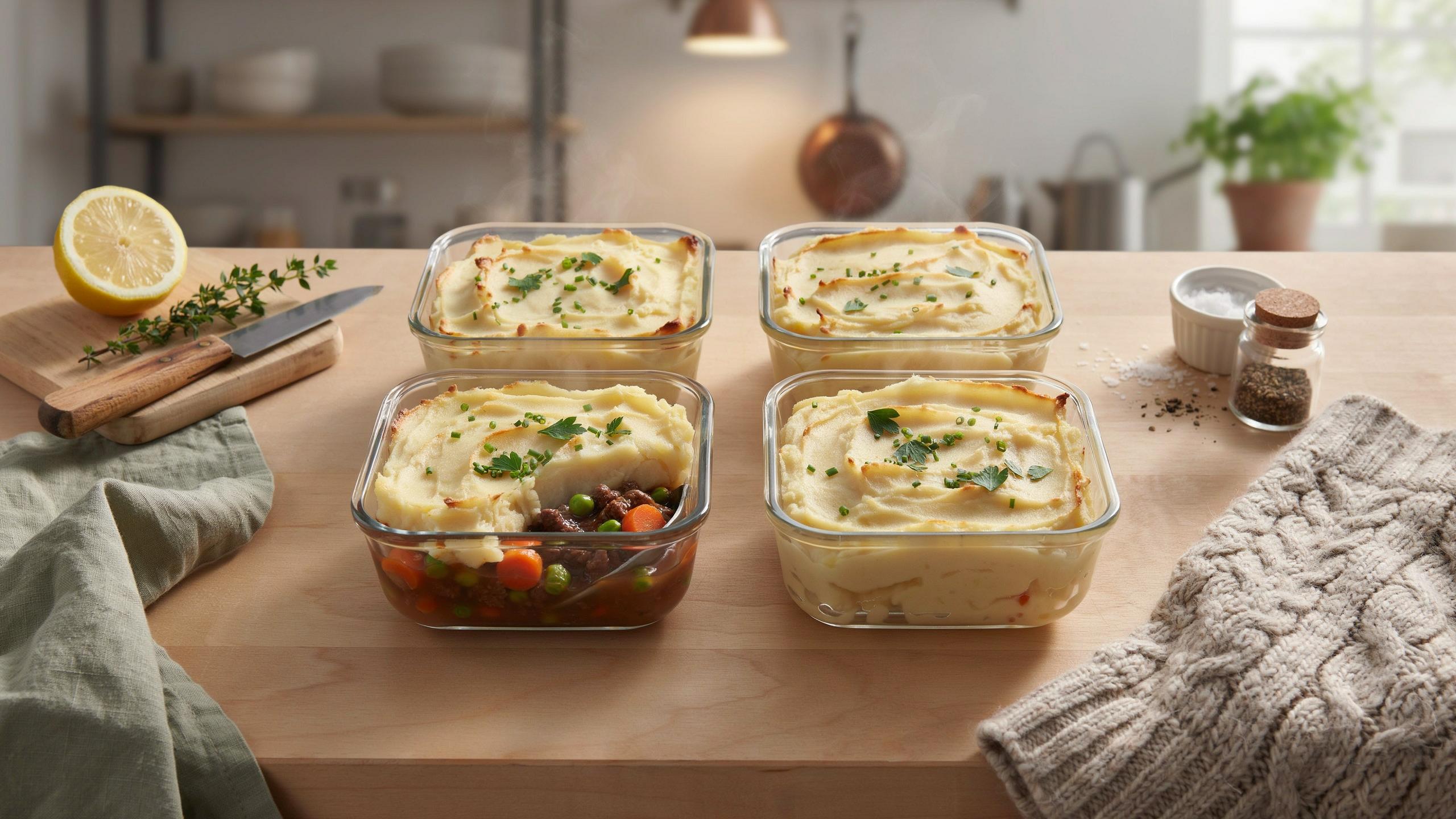
High protein shepherds pie meal prep removes this entirely. You cook once. You eat the same calculated meal five times. The decision is made. Your brain stops burning cycles on food and redirects that energy to what matters. This is why people who meal prep report sharper focus in afternoons, not because the food is magical, but because the decision tax dropped to zero.
Energy Stability Determines Your Work Window
Energy dips don’t happen randomly. They’re the direct result of blood sugar swings triggered by eating ad hoc, under-protein meals. You eat a carb-heavy lunch with no protein anchor. Two hours later your glucose tanks and your ability to focus tanks with it. You’re not tired because you worked hard. You’re tired because your fuel system failed.

A high protein shepherds pie contains roughly 35 to 40 grams of protein per serving, depending on the ground meat ratio and addition of Greek yogurt to the mash. This protein stabilizes glucose release and prevents the afternoon crash. Your work window extends because your energy doesn’t collapse at 3pm. Prep the portions on Sunday. Eat them cold or reheated through Thursday. Maintain stable output for five straight days instead of riding the energy roller coaster most people call normal.
The Apex Prep Protocol Engineering Your High Protein Shepherds Pie Advantage
Where To Source Your Protein And Produce
You want to believe that organic grass-fed beef from the farmers market makes a material difference to your results. It doesn’t. The mechanism that matters is consistency of protein content and fat ratio, not the origin story. Ground beef at 80/20 from any reliable grocer delivers 20 grams of protein per 3.5 ounce serving, predictably. Buy from one source and track the macros on the label. Switching brands weekly kills your ability to calibrate portions.
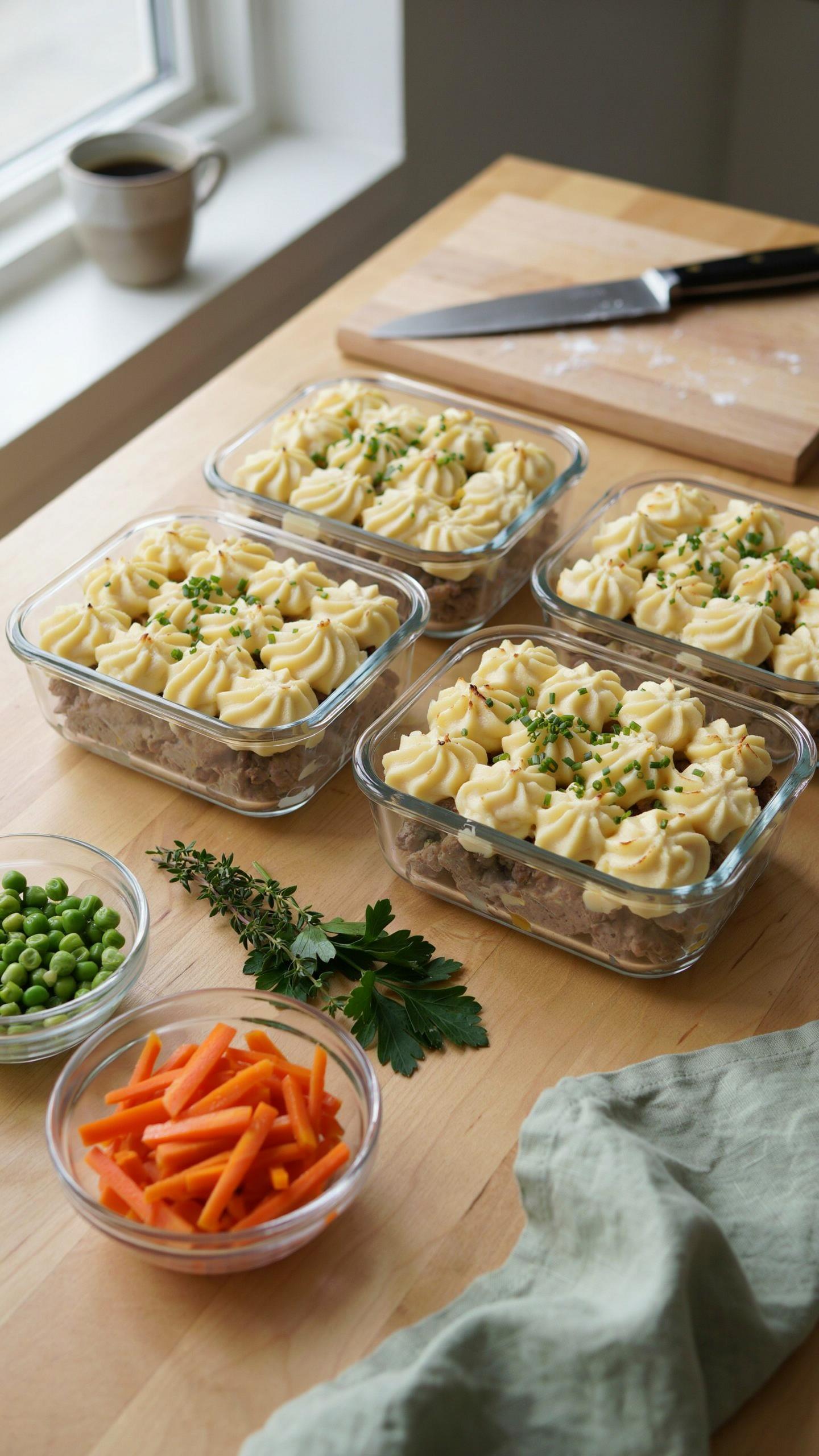
Frozen vegetables outperform fresh for meal prep because they’re frozen at peak ripeness and don’t degrade during storage. Buy carrot, pea, and corn blends in bulk from warehouse clubs. They cost 60 percent less than buying fresh weekly and spoiling half of it. Your protein matrix doesn’t care whether the peas were frozen yesterday or last week. It cares that they’re there, consistent, and didn’t waste your money.
Batch Cooking Removes The Friction Point
Most prep advice says “cook your components separately then assemble.” That’s incomplete. The real workflow isolates cooking time from assembly time, so you’re not standing at the stove watching four things brown. Sear your ground beef in two large batches over high heat for five minutes per batch, then rest it. Boil potatoes in a separate pot in parallel. This stagger removes the bottleneck. You finish searing while potatoes finish cooking, not after.
Assembly happens once everything cools to room temperature, which takes twenty minutes. Use that window to portion containers and set them on the counter. The potato-to-beef-to-topping sequence follows the same order every time: mashed potatoes first as the base layer, cooked beef mixed with cooled vegetables second, dairy topping third. Repetition builds speed. You move from 45 minutes for your first batch to 18 minutes by your fourth because your hands know the pattern.
High Protein Shepherds Pie The Unsung Bio Hacking Powerhouse
Why Protein Matters More Than You Think
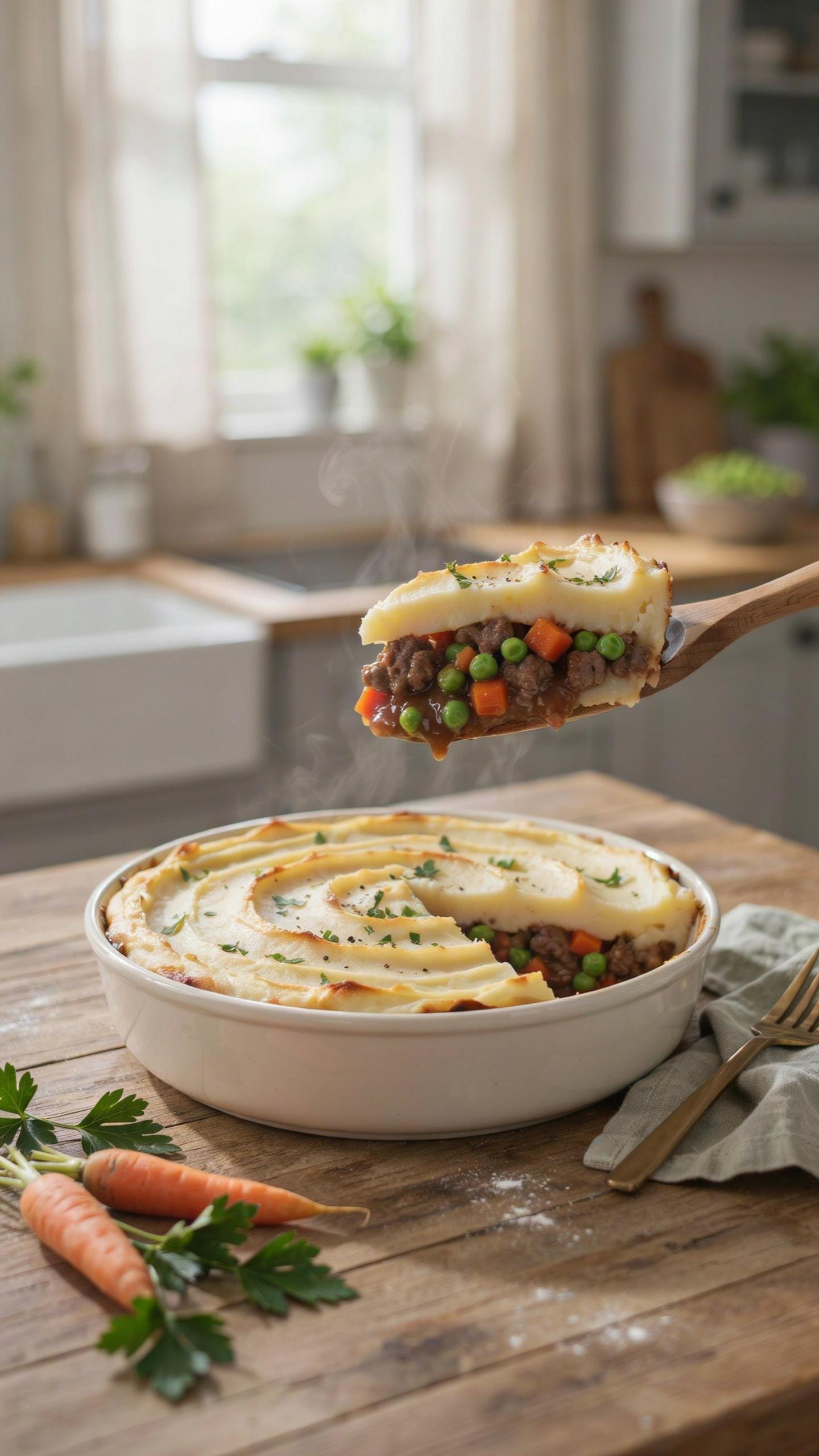
You want the metabolic edge without the constant thinking. Here’s what nobody says plainly: protein is a biological lever. In thermodynamics terms, protein carries the highest thermic effect of food, meaning your body burns more calories just processing it than it does carbs or fat. A high protein shepherds pie forces your metabolism to work harder while you’re doing nothing.
Sustained energy isn’t about feeling full. It’s about stable blood glucose and steady amino acid availability to your muscles and brain. Ground beef or lamb in your shepherds pie delivers all nine essential amino acids. Your body doesn’t store protein like it stores carbs or fat, so consistent intake across your week prevents the energy crashes that come from relying on carbohydrate spikes. Cold leftover shepherds pie at Wednesday lunch still delivers the same repair signal to your muscles that fresh preparation did on Sunday.
Calorie Density Versus Nutrient Density
The common advice says “eat less, move more.” That’s incomplete and it breaks most people. Nutrient density is the real mechanism. A 400 calorie serving of shepherds pie loaded with ground meat, vegetables, and bone broth base delivers iron, B vitamins, collagen precursors, and minerals. A 400 calorie serving of processed pasta doesn’t. Your body runs on signals, not just numbers.
When you meal prep high protein shepherds pie, you’re stacking micronutrients alongside macronutrients in one container. The potatoes provide resistant starch when cooled. The beef provides heme iron and carnitine. The vegetables contribute fiber and polyphenols. You stop hunting for a second snack two hours later because your cells actually received what they needed. Build your shepherds pie around the protein base first, then layer everything else around it.
Deconstructing The Mashed Potatoes Meal Prep Myth Flavor Without Compromise
Boost Mashed Potatoes With Protein Density
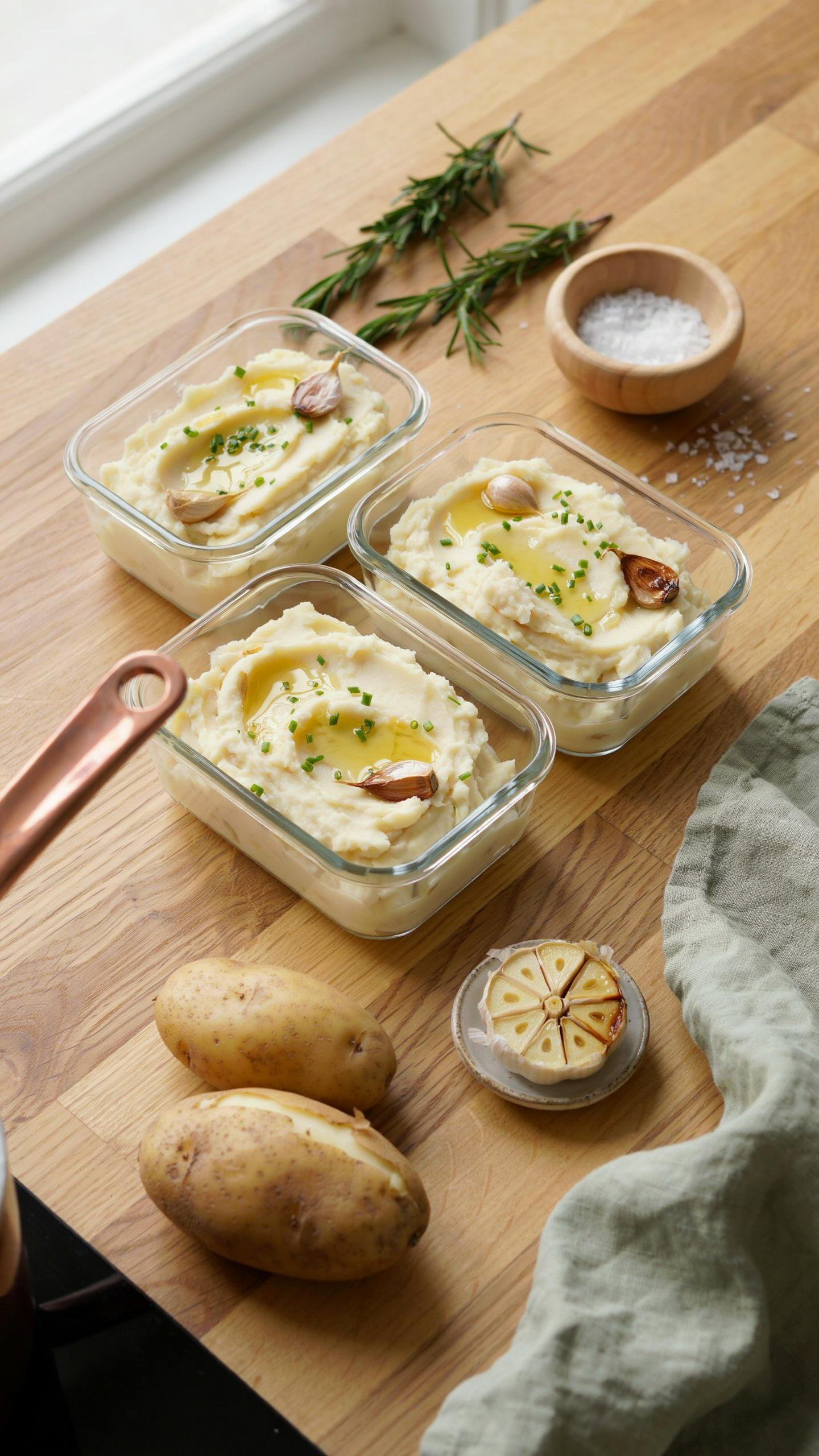
You want mashed potatoes to feel indulgent without derailing your macros. That’s not a flaw in your thinking—it’s the actual constraint that forces better food. Most meal prep advice treats potatoes as filler, a vehicle for other ingredients. The real mechanism comes from chemistry: starch gelatinization breaks down cell walls, creating a matrix that absorbs fat and umami compounds far more efficiently than raw starch. This is why your mashed potatoes taste flat when they’re just potato and water.
Cottage cheese or Greek yogurt into your mash solves this. Add 30 to 50 grams per serving—it buffers the starch, delivers casein protein that stays in your system longer, and introduces lactic acid that makes the potato taste sharper and more alive. The acid cuts through blandness better than salt alone. Mix it in while the potato is still hot so it incorporates cleanly. This method keeps the texture creamy without cream, and your protein count jumps without changing what the dish actually is.
Build Depth Through Ingredient Layering
Flavor layering is borrowed from savory cooking, not marketing. Think of it the way a sound engineer stacks frequencies: each element occupies its own sensory band so nothing cancels out. Low notes (umami, salt), mid notes (acid, heat), high notes (aromatics, texture contrast). Your shepherds pie right now probably hits one or two of these.
Umami anchors first: tomato paste cooked until it darkens, anchovy paste in the meat layer, or miso in the gravy base. These aren’t trendy—they’re the compounds that make your brain register satisfaction. Acid comes next: red wine in the meat filling, or sharp cheddar mixed into the potato topping. Then texture: crispy fried onions or breadcrumb topping on the mashed layer adds resistance your teeth needs to register the meal as complete. Layer these deliberately during assembly, not after, so they fuse during the bake rather than sitting on top like an afterthought.
Cybernetics Of The Kitchen Feedback Loops In Meal Prep

Energy Output Through Protein Ratios
You want to believe meal prep is about discipline. It’s not. It’s about removing the variable that tanks your week: energy crashes from carb-heavy, low-protein meals. Cybernetics from systems theory maps directly here. In cybernetics, a system maintains stability through feedback: input, output, correction. Your shepherds pie becomes the input mechanism. Protein intake drives sustained blood glucose and satiety. Without this feedback loop, you’re flying blind into Monday.
High protein shepherds pie works because it flattens your energy curve across the day. Ground beef or lamb delivers 25-30 grams of protein per 100 grams. That’s the load you need to prevent the 2 PM collapse that kills productivity. Layer this protein base with mashed potatoes and vegetables, and you create a meal that sustains performance for 4 to 5 hours. Most people undershoot protein in meal prep because it costs more and requires calculation. That’s the decision killing their consistency.
Staying On Target Through Portion Discipline
The common mistake here is treating meal prep portions like a suggestion. They’re not. Portion variance is deviation from your energy output target, and deviation compounds. Standard shepherds pie sits around 600 calories per serving with 35 to 40 grams of protein. If you portion by eye instead of weight, you swing 80 to 150 calories per container, which shifts your entire metabolic state for the day.
Use a food scale. Measure ground meat at 150 to 170 grams per portion. Weigh the potato topping at 120 to 150 grams. Log the result once in a spreadsheet or tracking app. This takes 90 seconds per container. After four containers, you know exactly what deviation you’re operating within. The mechanism is simple: consistent portions mean consistent energy, which means consistent output. Anything less is performance theater.
Beyond Basic Batch Cooking Scaling Healthy Meal Prep Efficiency
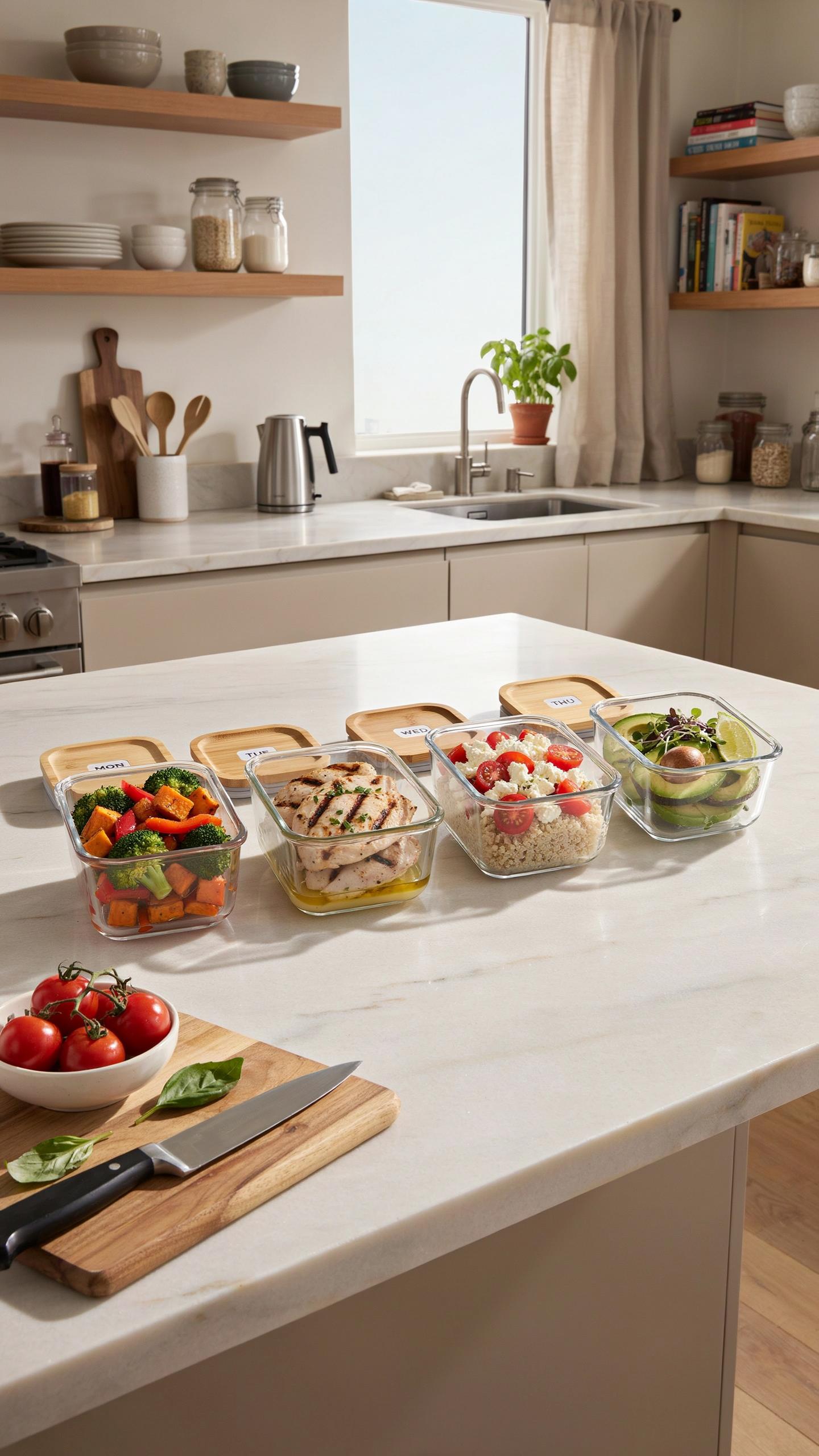
The Equipment That Determines Your Speed
You want to feel productive without actually changing how you work. Here’s what matters: batch cooking operates on constraint theory from operations management. Your bottleneck is the single slowest step, and removing it multiplies your output. For shepherds pie, that bottleneck is usually browning ground meat and dicing vegetables. A 12-inch commercial-grade skillet browns 2 pounds of ground beef in under 8 minutes versus 15 in a standard home pan. Temperature retention matters more than size.
Invest in tools that handle volume without degrading. A commercial potato ricer cuts your mashing time from 12 minutes to 3 minutes for a full batch. A food processor with a large feed tube dices 5 pounds of onions and carrots in 90 seconds compared to 20 minutes by hand. These aren’t luxuries. They’re the difference between spending 3 hours on prep versus 45 minutes. The constraint determines everything else.
Workflow Design For Repetition Without Fatigue
Most meal prep advice tells you to prep ingredients in stages, which is incomplete. Industrial kitchens use parallel processing, not sequential stages. Start your potatoes boiling before you brown meat. While meat cooks, dice vegetables. While vegetables cook into the sauce, prep your containers. The goal is zero idle time where you’re waiting for one task to finish before starting another.
Set up your workspace in a line matching your prep sequence: raw ingredients on the right, cooking stations in the middle, finished containers on the left. This reduces hand movement and mental load. Assembly becomes mechanical. You stop thinking and start executing. Load five containers while the oven preheats for the final bake. This protocol cuts total active time by 25 to 35 percent compared to finishing one pie completely before starting the next.
The Unspoken Advantage Psychological Wins Of A Healthy High Protein Dinner

One Decision Fewer Per Night
You want to feel like you have control over your life. The truth is simpler: decision fatigue is real, and dinner is where most people hemorrhage willpower they need elsewhere. Every night you stare at the fridge deciding what to eat, you burn cognitive resources that don’t come back. High protein shepherds pie meal prep works like a circuit breaker in behavioral economics, where the term “choice architecture” describes how your environment shapes decisions without you thinking about it. A prepared meal removes the choice entirely. You heat and eat. Your brain stays intact.
The mechanism is physical, not motivational. Decision-making depletes glucose in your prefrontal cortex. When you’ve already decided what dinner is, you conserve that glucose for actual work, conversations, or creative thought. Most advice tells you “meal prep saves time.” That’s incomplete. Meal prep saves your cognitive currency. The difference matters because you only have so much per day, and most people waste it on trivial decisions that feel urgent at 6pm but mean nothing by 9pm.
Reinforcement That Actually Sticks
Consistent nourishment doesn’t inspire you. It trains your nervous system. Neurobiology tells us that the brain learns through repeated patterns, not through motivation spikes. When you eat high protein shepherds pie consistently on cold weeknights, your body learns it’s safe and fed. This isn’t psychology. This is basic homeostasis. Your cortisol stabilizes. Your energy doesn’t crash at 7pm. Your mood doesn’t tank after dinner.
The pattern compounds across weeks. Your body stops sending false hunger signals because it trusts you’ll eat again soon with adequate protein. You stop making reckless food choices born from desperation. A high protein dinner isn’t a reward for being disciplined. It’s the foundation that makes discipline effortless. The concrete step is simple: prepare the same meal on the same nights each week until your body stops negotiating with you about what happens at dinner.
Troubleshooting Your Shepherds Pie Meal Prep Avoiding Common Pitfalls
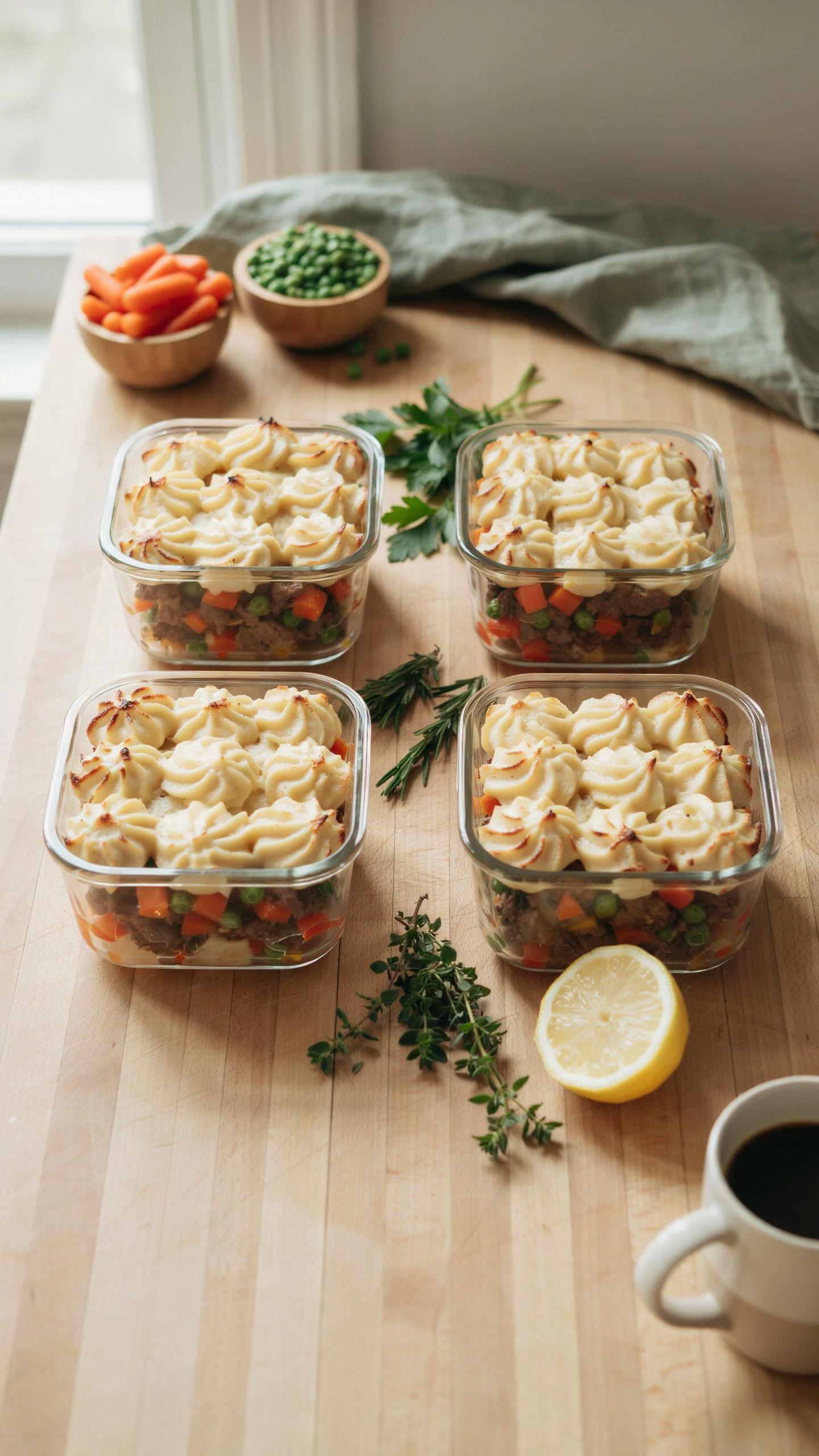
Keeping Your Prep Fresh Without Waste
You’re worried about money wasted on spoiled food. The real mechanism is bacterial growth rate, which accelerates exponentially once shepherds pie crosses 40 degrees Fahrenheit. Most people think “refrigerator equals safe,” but temperature consistency matters more than the cold itself.
Cool your shepherds pie completely before containerizing. Hot food releases steam, which condenses and creates moisture inside sealed containers. This moisture accelerates bacterial colonization. Use shallow, wide containers instead of deep ones—they cool faster and distribute heat more evenly. Store at 35-38 degrees Fahrenheit, not 40. Every degree matters. Your pie stays safe for four days maximum, not five or six. Label with the date you cooked it, not the date you plan to eat it. Freezing extends life to three months, but thaw in the refrigerator the night before, never at room temperature.
Customizing For Different Dietary Restrictions
Your macros might not match someone else’s needs, and forcing the same recipe across different diets wastes effort. The principle of variable inputs applies here—you’re building a system where one base method adjusts for multiple constraints simultaneously, like a production facility running different product lines on the same line.
- Higher protein targets (40g plus per serving): Substitute 80/20 ground beef with 93/7, add a second protein source like ground turkey or lamb, or include powdered collagen mixed into the meat layer before cooking.
- Lower carbohydrate versions: Replace the potato topping with cauliflower mash or a blend of 50/50 cauliflower and butter, which maintains texture while cutting carbs by 60 percent.
- Dairy-free adjustments: Use olive oil instead of butter in the potato topping, swap milk for unsweetened almond milk or cashew cream, and verify your beef broth contains no hidden dairy.
- Gluten concerns: Verify your beef broth is certified gluten-free, skip flour thickeners entirely and use cornstarch or arrowroot powder instead at a 1:2 ratio.
- Plant-based protein versions: Replace ground beef with brown lentils and walnuts processed to ground consistency, which delivers 18g protein per cup and maintains texture similarity.
Document which modification goes into each container immediately after cooking. One unlabeled casserole dish becomes a guessing game mid-week. Build your base recipe first, then create written protocols for each variation so you execute the same adjustment the same way every batch. This removes decision fatigue and ensures consistency.
Your Strategic Plate Mastering The Art Of High Protein Shepherds Pie
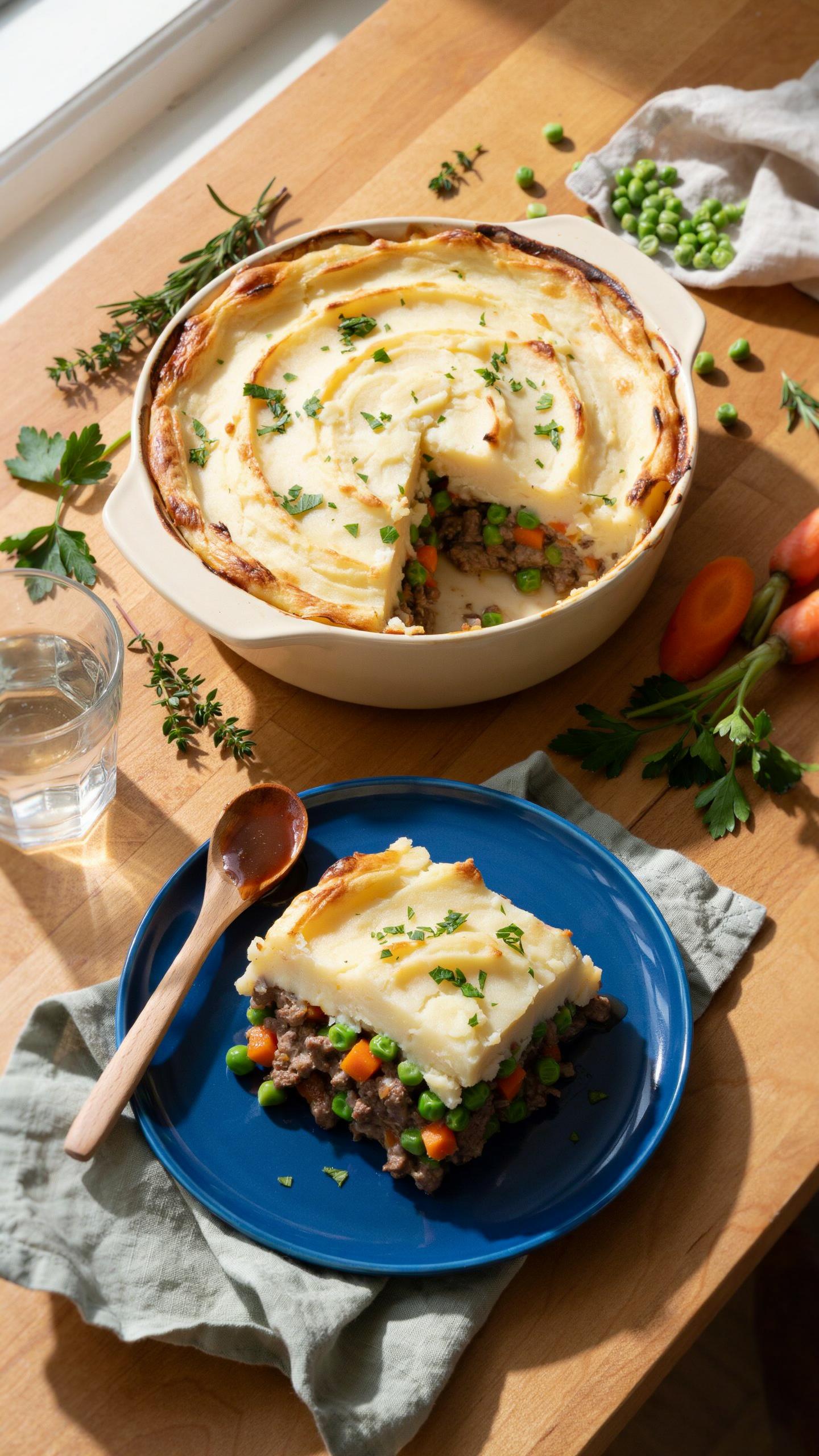
Fuel Your Week Without Decision Fatigue
You want to believe meal prep saves time. The real mechanism is decision elimination. Every meal choice you make depletes your cognitive resources for decisions that matter. High protein shepherds pie meal prep removes the daily question of what to eat and forces your body into a protein surplus that compounds over weeks. You batch cook once, then execute the same plate five times. The friction of deciding vanishes.
Biology borrows the concept of homeostasis from physics: your body resists change and defaults to equilibrium. High protein shepherds pie disrupts that equilibrium by delivering 35 to 45 grams of protein per portion consistently. Your muscles adapt to demand. Your hunger hormones stabilize. Your energy stays flat instead of spiking and crashing. Consistency beats optimization every time because your body responds to what you actually do, not what you plan to do tomorrow.
Recovery Compounds Faster Than You Think
Most people miss the actual payoff of sustained protein intake. Muscle protein synthesis doesn’t happen in the gym. It happens in the hours after you eat protein while your body rebuilds damaged fibers. High protein shepherds pie delivers that substrate daily without negotiation. A ground beef base provides complete amino acids. The potato carbs replenish glycogen depleted during work or training. You’re not eating for taste. You’re eating for adaptation.
The cognitive benefit arrives quietly and then becomes obvious. Stable blood sugar means stable mood and focus. You stop hunting for the 3 PM snack that never satisfies. You stop the mental loop of hunger and satiation swings. After three weeks of consistent high protein meal prep, your baseline energy stabilizes. Your mind quiets. This isn’t motivation or willpower. This is basic physiology: feed your body the same fuel every day and it stops throwing tantrums. On day 21, make your next batch of shepherds pie on Sunday evening, portion it into five containers, and place it in the same shelf of your refrigerator. Do not deviate from the location. Friction must stay zero.
The real obstacle isnt time or recipes its your refusal to see food as fuel for domination

You don’t meal prep shepherd’s pie because you think you’re too busy. You don’t meal prep it because you don’t actually want the body it builds. This week, buy ground beef and potatoes. Make one pan Sunday night. Eat it for three days straight. Stop waiting for permission to be serious about what you consume. Your body is either a tool you’re sharpening or a problem you’re ignoring.