
Beyond Recipe The High Protein Stew Operating System
What A Stew Actually Is
You want the formula that works every time because you’re tired of guessing whether you’ll end up with something edible or a pot of regret. Stew is a system, not a mystery. It’s a liquid extraction method borrowed directly from chemistry: you’re using heat and water to pull collagen, gelatin, and minerals from bones and connective tissue into a solvent that becomes your base. The protein doesn’t magically appear in the broth. It migrates there through a predictable process.

The common understanding of stew is embarrassingly vague. Most people think it’s just “meat plus vegetables in liquid.” Wrong. A true stew has two distinct phases: the protein-building phase where collagen converts to gelatin under sustained heat, and the flavor-locking phase where everything holds in that base. Your ratio matters. Too much liquid and you have soup. Too little and you have a braise. The difference determines your protein density per serving and whether the meal holds its structure when you reheat it four days later.
Protein Targets That Actually Work
The protein math here reveals what most meal prep advice ignores: you’re not just hitting a gram count. You’re solving for retention. Muscle tissue requires complete amino acid profiles, and stew achieves this through layering. Beef or lamb contributes leucine and creatine. Beans add lysine. Bone broth itself adds collagen peptides that support joint and gut function, which means better nutrient absorption from everything else in the pot.

Set your baseline at 1.2 to 1.6 grams of protein per pound of body weight per day, then work backward. A single serving of high-protein stew should hit 30 to 40 grams minimum. That requires roughly 8 ounces of meat per serving plus legumes or additional bone broth reduction. Cook your stew down until the liquid reduces by 30 percent. This concentrates protein density without adding ingredients. Track your actual protein per serving after cooking, not before, because water loss changes the math.
The Minimum Viable Effort Protein Soups
Bulk Frozen Protein Works Better Than Fresh
You want fresh because it feels like you’re doing something right. That’s the real reason. But frozen protein is mechanically superior for stew. When you freeze muscle tissue, ice crystals rupture cell membranes, which actually accelerates flavor absorption during the long, low heat of stewing. The protein breaks down faster. You’re not compromising quality, you’re exploiting physics.
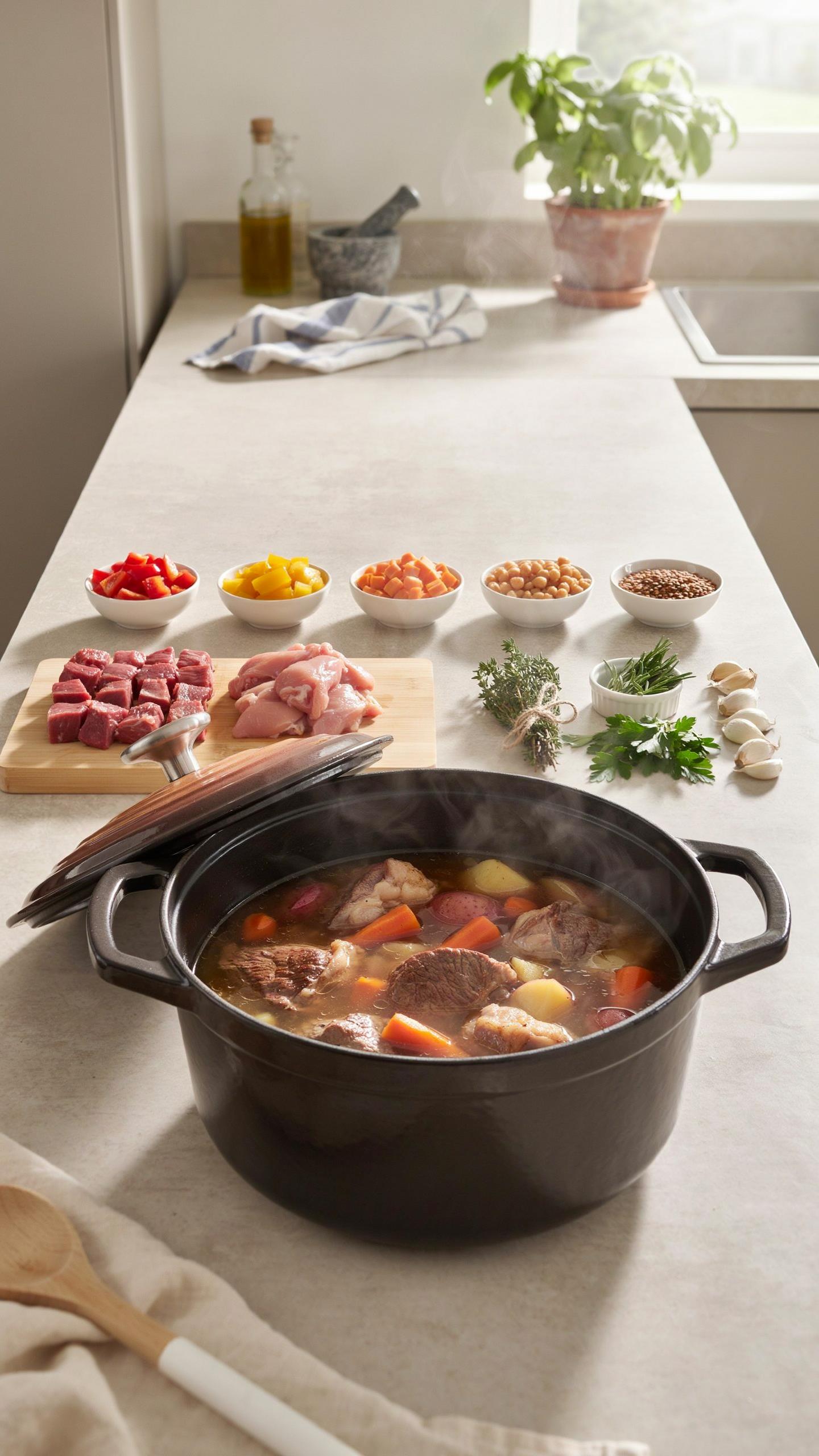
Bulk-purchased frozen chicken thighs, ground beef, or fish fillets cost 30 to 50 percent less than fresh equivalents at retail. Buy them in ten-pound cases from warehouse clubs or restaurant supply distributors. Thaw only what you’ll use for that week’s batch. The stew itself masks any textural difference between fresh and thawed protein because the cooking method dissolves connective tissue anyway. Portion control becomes automatic: grab frozen blocks, defrost overnight, cook.
One Pot Eliminates The Cleanup Trap
The common advice says use separate pans for browning, sautéing aromatics, building broth. That’s consultant thinking, not real kitchen thinking. Every extra pan is a failure point and an hour of washing. Browning everything together in one heavy pot—protein first, then onions and garlic on top of the rendered fat—changes nothing about the final stew except your time cost.
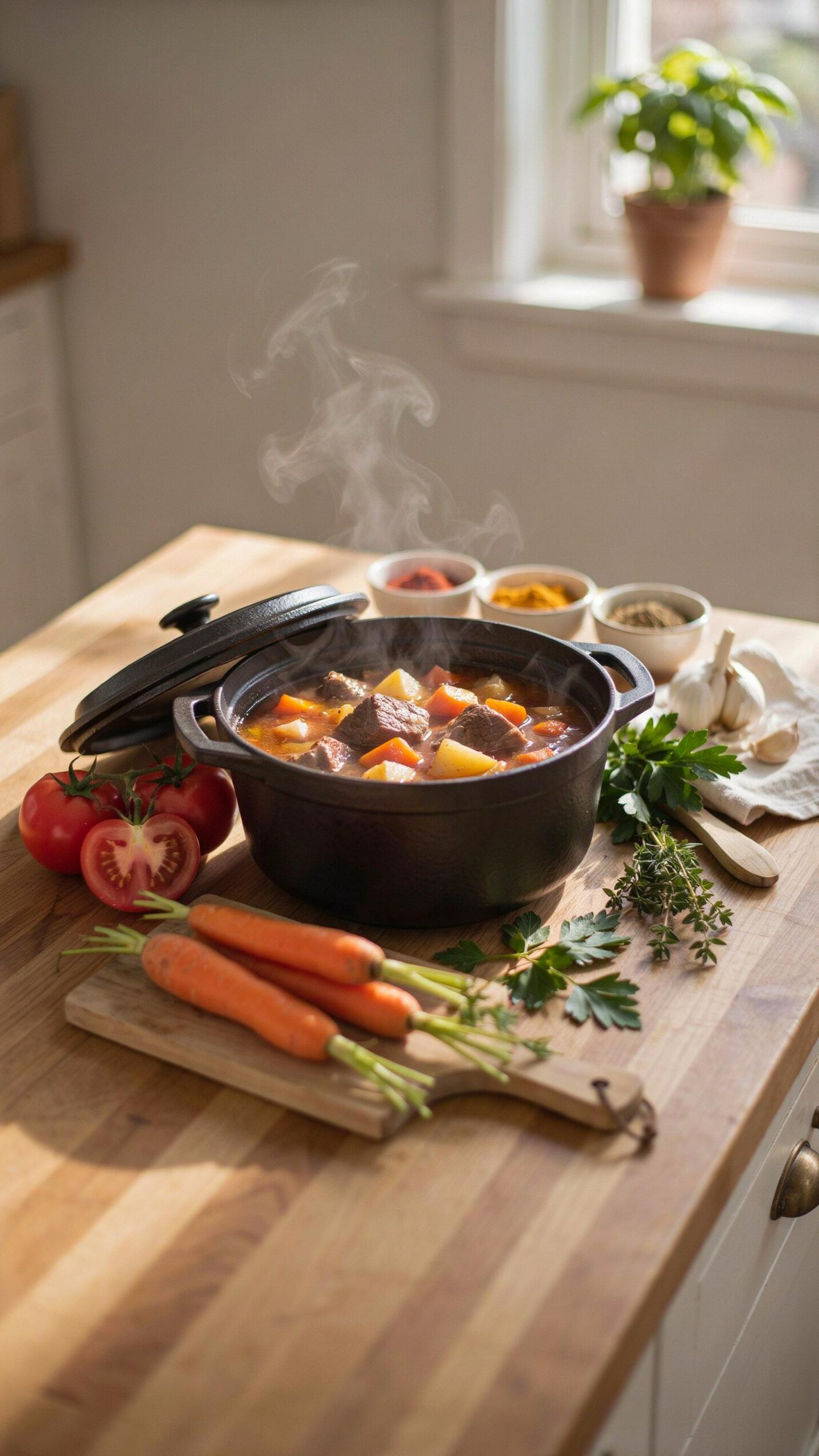
Use a Dutch oven or large stainless steel pot with a heavy bottom. Add protein, let it sear for three minutes without moving it. Add diced onion and minced garlic directly to the fat and protein. Deglaze with beef or chicken stock. Add chopped vegetables, seasoning, and liquid in one motion. Cover and transfer to a 325-degree oven for ninety minutes. One vessel, one cleanup, one decision point per batch.
The Macro Optimized Stew Matrix Low Calorie Stews For Energy
Why Caloric Density Matters More Than Portion Size
You want to eat more food without gaining weight. That’s the real motive here, and it’s not shallow. Borrowing from thermodynamics, caloric density is the energy concentration in a given mass of matter. In stew, it’s the calories per pound. A stew made from lean protein, vegetables, and broth has low caloric density. You can eat a full bowl and stay in a deficit. A stew loaded with oil, cream, and fatty cuts does the opposite: high density, fewer bites to hit your calories.
Satiety is what actually controls hunger signals, not willpower. Protein, fiber, and water volume in your stew trigger fullness hormones. A pound of low density stew fills your stomach more than a pound of dense stew because it contains more water and less fat. This is why people fail on calorie restriction alone but succeed with high protein stew meal prep. You’re not eating less. You’re eating the same volume with fewer calories packed inside it.
Build Stews From Caloric Efficiency, Not Taste Alone
Most stew advice skips the hard part: which ingredients give you protein and volume without the caloric cost. Lean cuts like sirloin tip, chuck roast trimmed of visible fat, and chicken breast deliver protein cheaply in terms of calories. Vegetables add almost nothing calorically but add weight, texture, and micronutrients. Broth is water with electrolytes, essentially free calories.
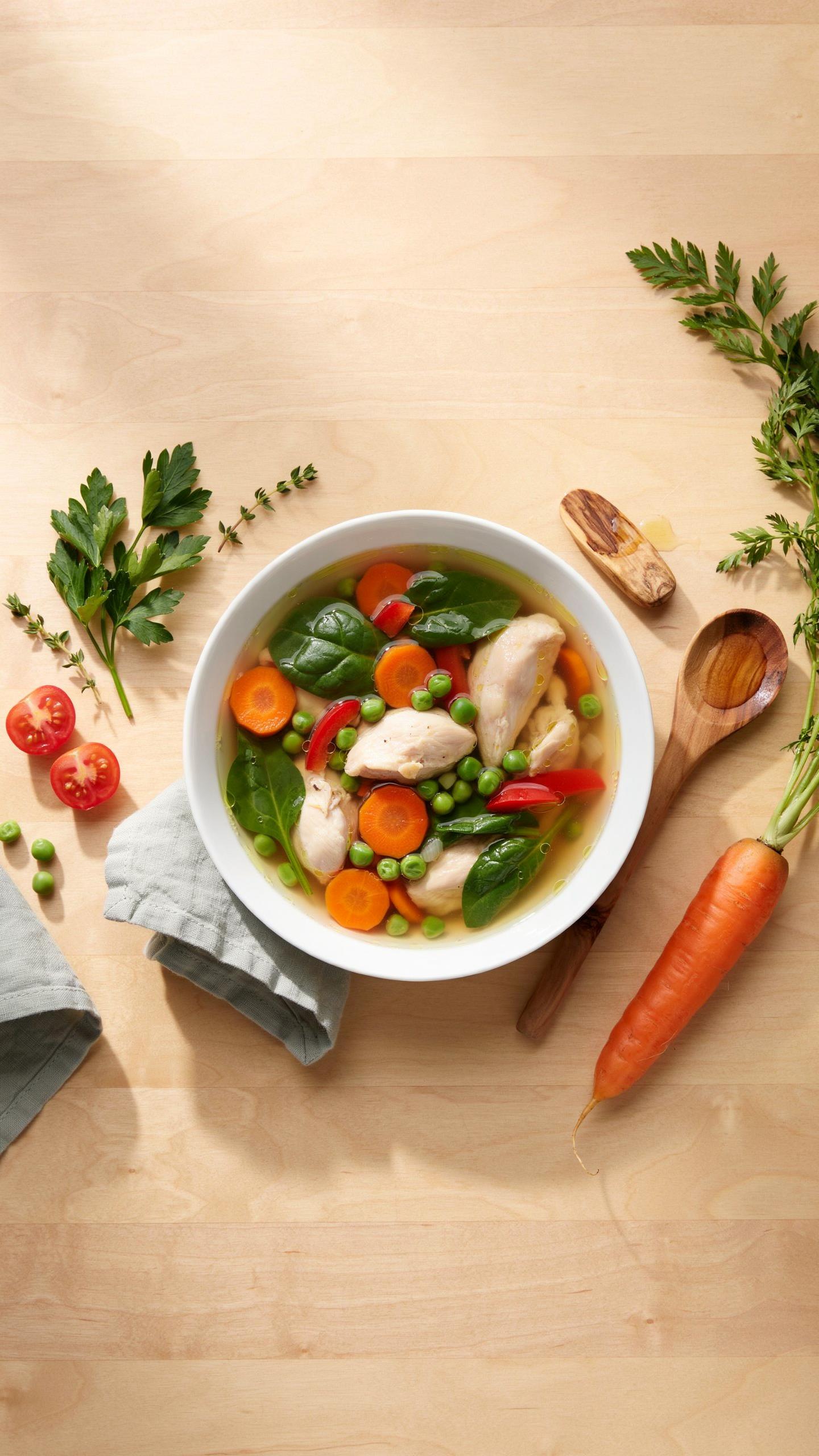
The mechanism works like this: load your stew 40 percent protein by weight, 40 percent vegetables, 20 percent broth and aromatics. A 16 ounce serving hits 30 to 40 grams of protein at 250 to 350 calories. Build batches this way every Sunday, portion into containers, and you’ve eliminated the daily decision that kills most meal prep commitments. Don’t adjust recipes for flavor first. Adjust them for the caloric structure that keeps you full and in control.
Healthy Winter Meals Strategic Seasonality In Your Stew

Winter Produce Availability: Flavor And Cost
You want to feel smart about meal prep without actually paying attention to what’s in season. The mechanism is simple: winter crops are cheaper and taste better because they’ve been selected by nature to survive storage and still deliver flavor when everything else is dead.
Root vegetables, cruciferous greens, and winter squash dominate cold-weather harvests. Carrots, parsnips, celery root, kale, and cabbage cost less in January than July because supply exceeds demand from local sources. They’re also denser in structure, meaning they hold their texture through long stew cooking without turning to mush. Protein stews benefit from this durability because the vegetables won’t compete with your meat for textural presence in the bowl.
The Umami Multiplier: Depth Without Complexity
Umami is the signal from food chemistry that tells your brain something contains protein and nutrients worth digesting. Think of it like compound interest in cooking: small additions of umami-rich ingredients stack their effect instead of replacing each other. Most people add one umami layer and call it done. That’s incomplete.
Layer tomato paste, soy sauce or miso, and bone broth as your base. Tomato paste adds glutamates. Soy sauce adds glutamates plus nucleotides like inosinate. Bone broth adds inosinate and gelatin thickness. None of these are complex to source or use, but together they create the sensation of a stew that tastes like it simmered for twelve hours when you actually built it in thirty minutes. Start with one tablespoon tomato paste, one tablespoon soy sauce, and use bone broth instead of water or store-bought stock as your liquid base.
The High Protein Dinner Fueling Tomorrow Today
Protein Timing Matters More Than You Think
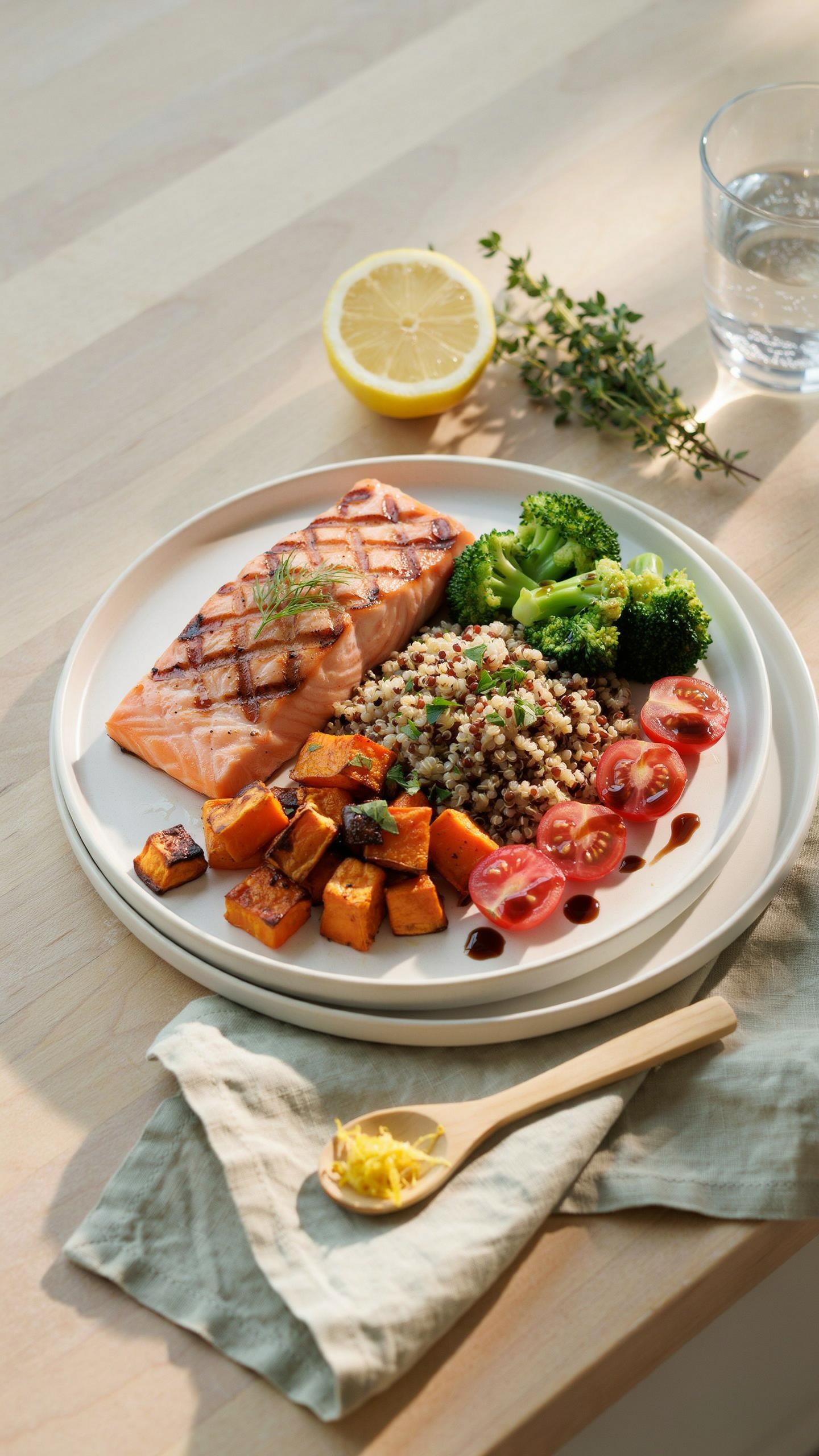
You care about this because you want proof that your effort compounds. The mechanism is straightforward: muscle protein synthesis—borrowing from exercise physiology—peaks within 24 to 48 hours after training stimulus. Eating adequate protein at dinner accelerates recovery during sleep when your body rebuilds damaged muscle fibers. This isn’t about loading protein into one meal. It’s about distributing it across the day so your body has constant access to amino acids when it needs them most.
Most people eat protein like an afterthought, then wonder why they plateau. A high protein stew at dinner supplies 30 to 40 grams of protein when your body is primed to use it. Your muscles don’t care if protein arrives at lunch or 8 PM. They care that it arrives. Consume 0.7 to 1 gram of protein per pound of bodyweight daily, split across meals, and stew becomes your most efficient delivery mechanism for a family that can’t sit through five separate chicken breasts.
Pre Portioned Servings Eliminate Decision Friction
Portion control fails because willpower is a finite resource you waste on low-stakes decisions. Neuroscience calls this decision fatigue. When stew sits in your fridge in pre-portioned containers, your brain doesn’t negotiate. You grab the container. You eat the container. No calculation, no debate, no room for the smaller serving that seemed reasonable at midnight.
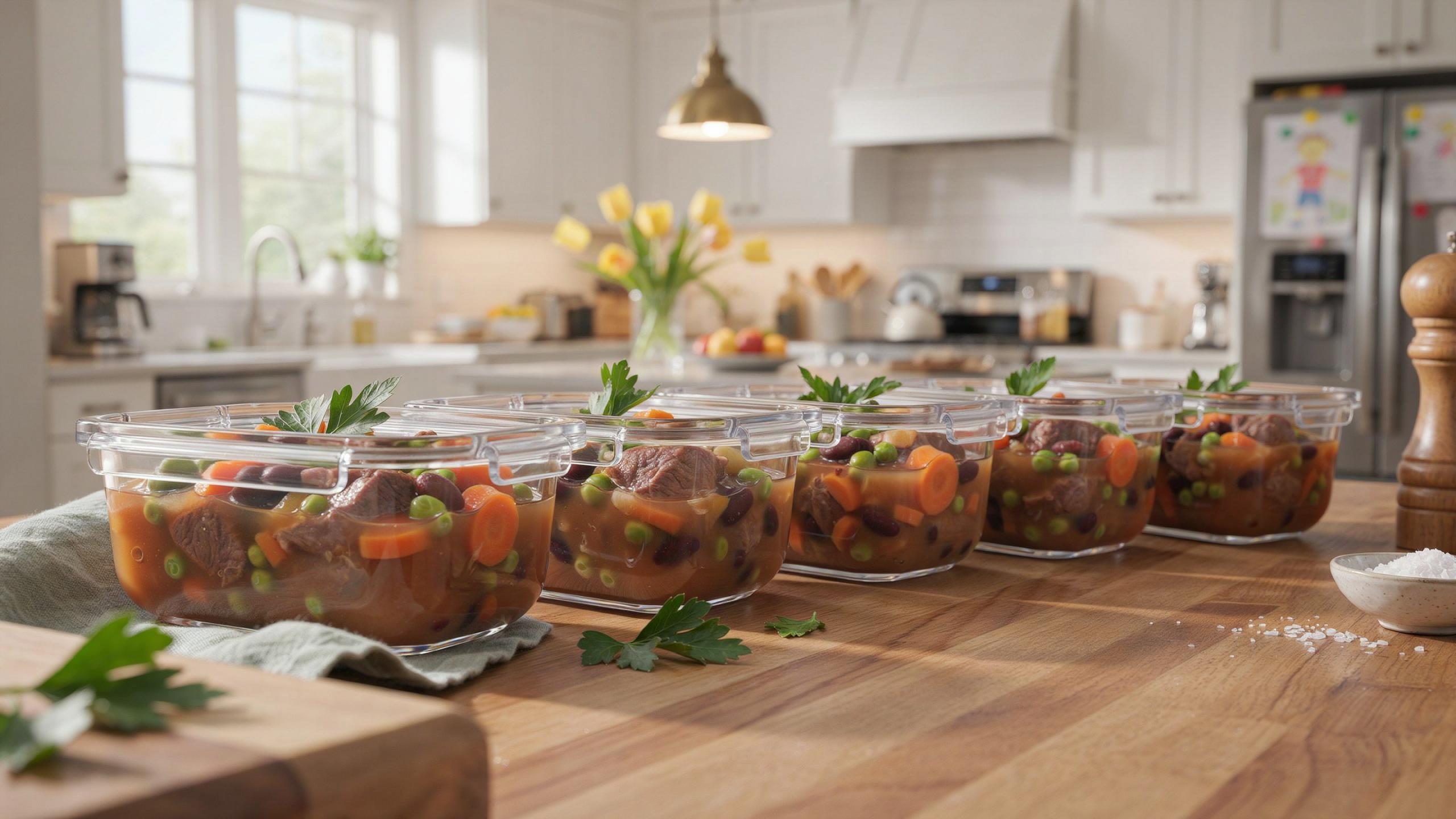
Standard serving sizes for high protein stew run 1.5 to 2 cups per meal, delivering consistent macros across the week. Divide your finished batch into glass containers on Sunday and you’ve eliminated the variable that kills most meal prep attempts: the moment you decide how much to eat. Your family eats the same portions, absorbs the same protein, and nobody needs to think about it on Tuesday.
The Set And Forget Healthy Crockpot Advantage
How Low Heat Multiplies Your Cooking Output
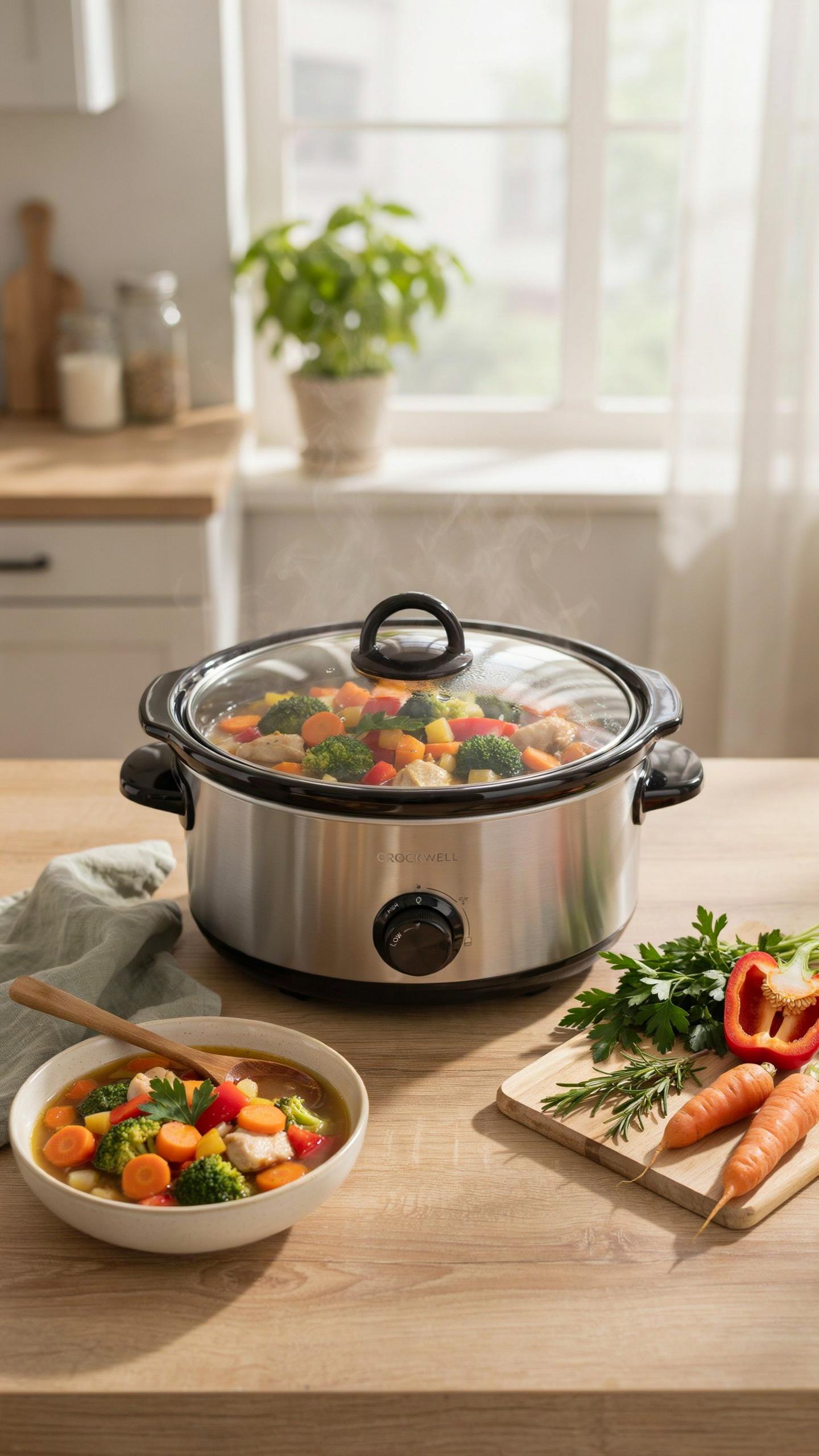
You want this section because you’re exhausted and hoping a machine will solve your time problem. It won’t. But physics will. In thermodynamics, leverage means applying force across distance to multiply output. A crockpot applies gentle, constant heat across eight to ten hours, converting tough protein fibers into gelatin without requiring your attention. This is force multiplication through time instead of temperature.
Most people treat slow cooking as passive. Wrong. The crockpot’s mechanical advantage comes from sustained low-temperature collagen breakdown. High heat denatures protein quickly but leaves it tough. Low heat hydrolyzes collagen into gelatin gradually, making meat tender while keeping it moist. You load the vessel once and extract maximum nutrition with zero active cooking time. That’s the actual mechanism nobody states.
Controlling Temperature For Protein Structure
The common advice is “just throw it in and walk away.” That misses the protein science. Temperature determines what happens to your meat. Between 160 and 180 degrees Fahrenheit, collagen converts to gelatin without overcooking muscle fiber. Most crockpots run hotter on high setting, which breaks down collagen too aggressively and dries out the stew.
Set your crockpot to low and use the full cook time recommended for your protein weight. Beef chuck needs eight to ten hours. Chicken thighs need six to eight. This isn’t arbitrary. The slower the heat penetrates, the more evenly gelatin forms throughout the meat. The result: tender texture that won’t happen in a Dutch oven on the stovetop without active monitoring. Use the low setting and respect the timeframe as a protocol step, not a suggestion.
The Dairy Free High Protein Soup Playbook
Thickening Without Cream Or Cheese
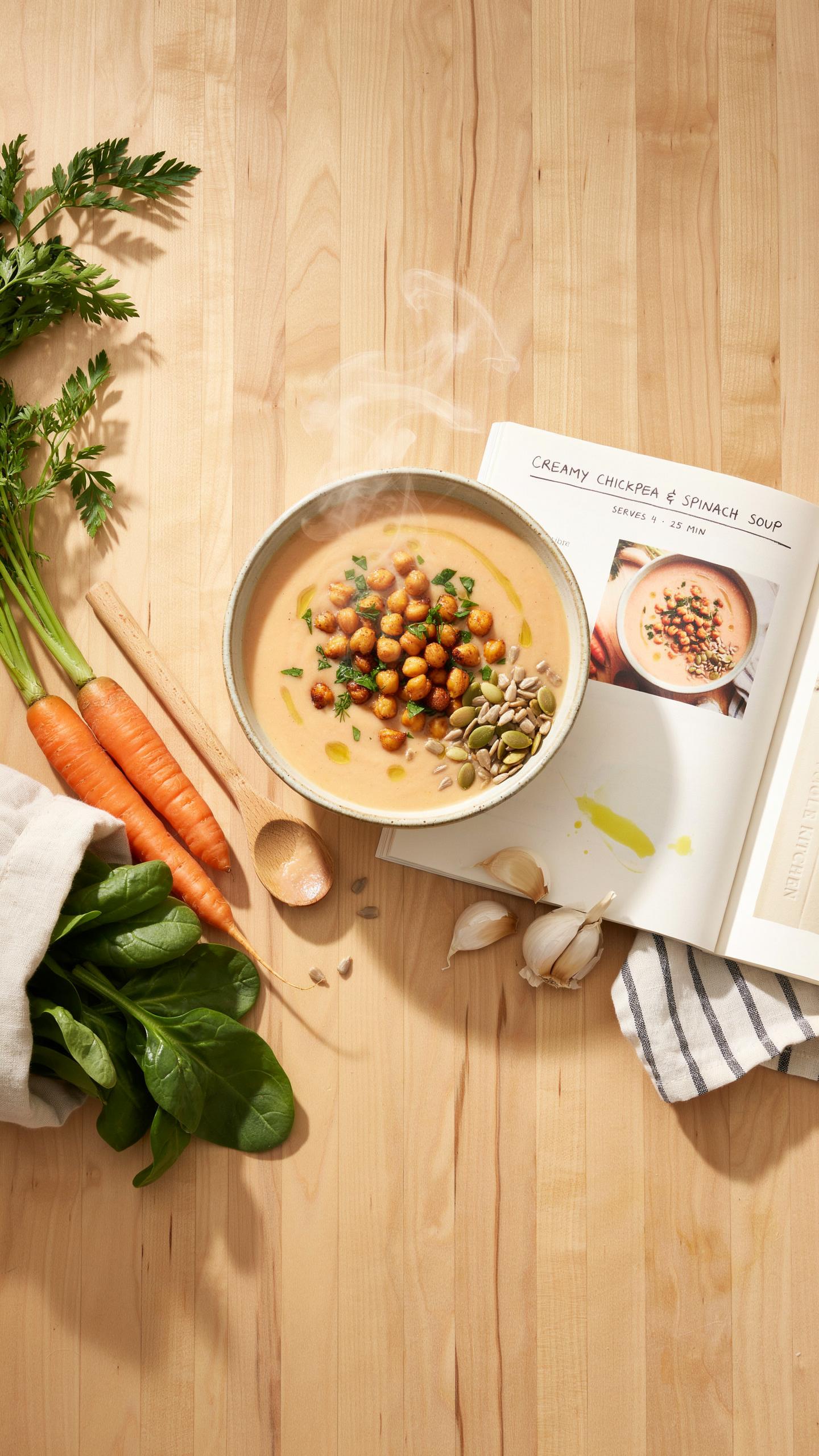
You want dairy-free stew because you think it’s cleaner or because you need to avoid it, but the real reason you care is cost control. Dairy thickeners are expensive per batch. The mechanism is simple: starch and protein both trap water and build viscosity, so you swap one for the other and engineer texture instead of buying it. You’re not losing anything—you’re just choosing your thickener intentionally.
- Bone broth reduction: Simmer stew uncovered for the final 30 minutes. Collagen breaks down into gelatin, which thickens naturally without additives. Works best with beef or chicken bones.
- Potato or root vegetable paste: Blend cooked potatoes or cauliflower into the liquid before final simmering. Starch and fiber suspend fat and protein uniformly. Add gradually to control thickness.
- Arrowroot powder: Mix 1 tablespoon per cup of liquid with cold water first, then stir into simmering stew. No aftertaste. Clears to translucent, unlike cornstarch.
- Nut butter base: Almond or cashew butter adds fat and protein while thickening. Whisk 2 tablespoons into stew 10 minutes before serving. Creates body without separation.
- Legume flour: Chickpea or lentil flour hydrates into stew and adds protein density. Sprinkle 2 tablespoons at a time while stirring. Adds mild earthiness.
The mistake most people make is using thickener as an afterthought. Batch your stew lighter than you want it, then add thickener during the final 15 minutes of cooking. This way you control the exact consistency and avoid overshooting.
Taste Development Without Dairy Richness
Cream and cheese mask weak flavor, so people use them as crutches. Remove the crutch and you have to actually build taste. The principle comes from culinary aromatics—you’re layering volatiles at different cooking stages to create perceived depth instead of perceived fat. The mechanism: fat-soluble compounds cook out early, water-soluble ones need time to develop, and acid compounds need to be added late.
Start with a hard sear on your protein and aromatics. This builds Maillard compounds that read as “savory” and “cooked,” which is what cream normally covers for. Then add tomato paste, soy sauce, or miso at the midpoint—these are umami anchors that don’t need fat to register. Finish with fresh herbs, acid (vinegar or lemon), and a pinch of salt 5 minutes before serving. Season in stages, not all at once.
Vegetable Soup With Chicken Covert Nutrient Delivery
The Stealth Vegetable Strategy
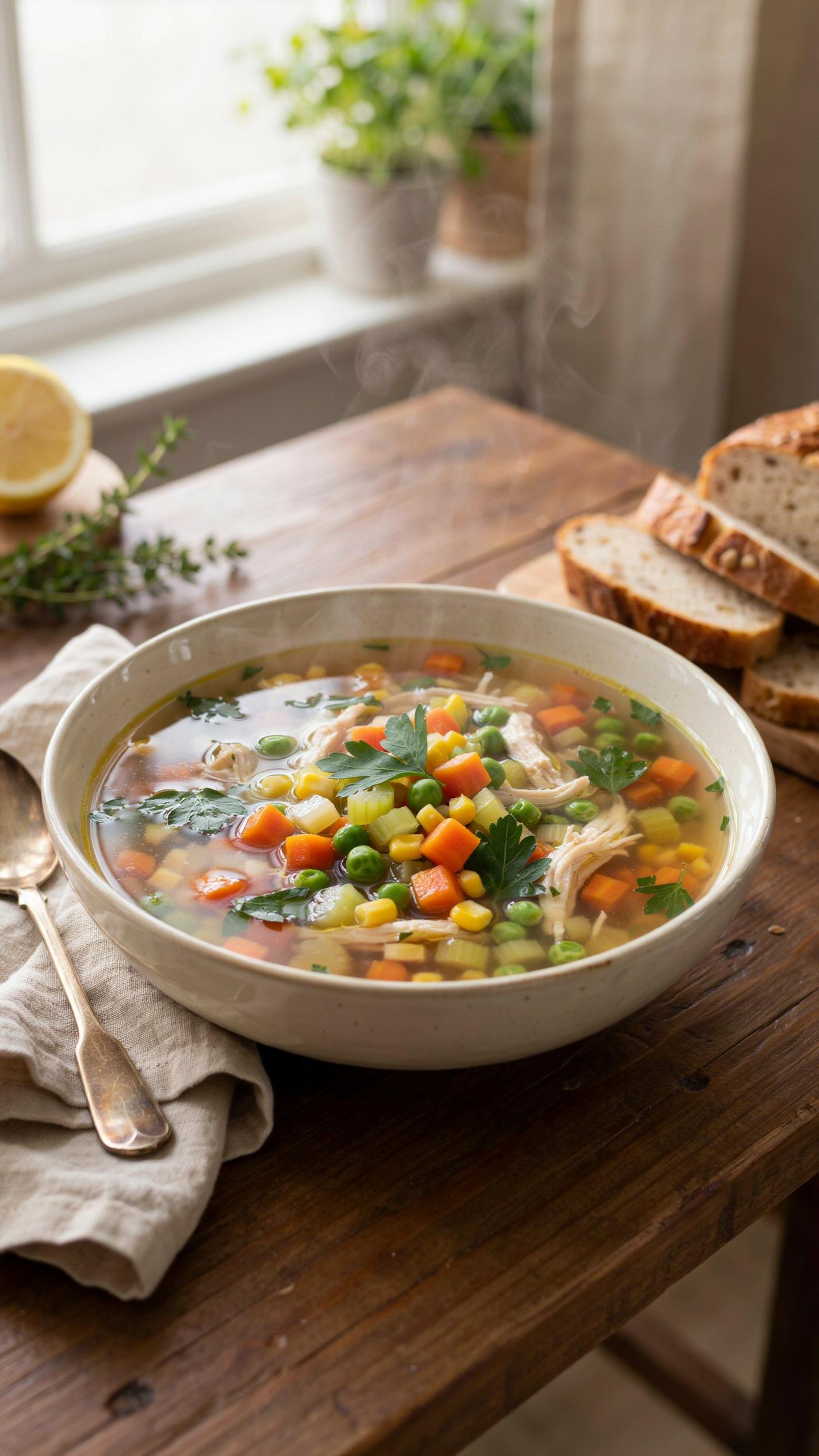
You want your kids to eat vegetables without the daily negotiation. Here’s the mechanism: chopped vegetables in stew lose their identity. They soften, blend into broth, and disappear into the protein. Texture is what triggers rejection, not taste. Remove texture, remove resistance.
The practical move is brutal simplicity. Dice vegetables small enough that they cook into the stew completely. Carrots, celery, zucchini, spinach, mushrooms all break down and thicken the broth while the chicken absorbs flavor. No detection because there’s nothing to detect. The nutrients stay intact, the compliance happens silently.
Fiber As Energy Infrastructure
Fiber isn’t decoration. Biology calls it “resistant starch” when it’s present in cooked starch, and in stew, it functions as energy scaffolding for sustained blood sugar. Root vegetables like carrots and potatoes contain soluble fiber that thickens broth while preventing the energy crash that sends kids searching for snacks two hours later.
Common advice says “add beans for fiber.” That’s incomplete. Yes, beans work, but they require soaking or canning knowledge most people skip. Root vegetables deliver the same fiber benefit passively. They soften during the cooking process, release their starch into the liquid, and create satiety without the planning overhead. Cook stew on low heat for ninety minutes minimum. The longer cook time breaks down vegetable cell walls and maximizes fiber absorption.
The Adapt Or Die Stew Customization Protocol
Know What Actually Changes And What Doesn’t
You’re reading this section because you’re afraid the stew won’t work for everyone, and that failure means wasted effort. The real mechanism is constraint mapping: identifying which variables are negotiable and which are fixed. In high protein stew meal prep, the protein base and cooking liquid are non-negotiable. They determine texture, saturation time, and whether the stew actually delivers on its protein promise. Everything else bends.
The mistake most people make is treating all preferences equally. They aren’t. A kid who won’t eat mushrooms doesn’t require a different stew—it requires different plating. A spouse who prefers less salt doesn’t require a new recipe—it requires a pinch added at the bowl, not the pot. The protocol: lock the base (protein, broth, cook time), then treat additions like modular components people can reject without collapsing the entire meal.
The Substitution System That Actually Works
Think like a systems engineer: components must maintain the same functional output. In stew terms, this means swaps must preserve protein density, liquid absorption rate, and chew consistency. Beef can become chicken or pork without architectural failure because they cook similarly and deliver comparable protein per ounce. Carrots can become celery or parsnips because they soften at similar rates and contribute texture in the same way.
The dangerous swap is protein base to vegetable base—it collapses the entire function. A vegetable-heavy stew with beans solves a different problem than a meat stew. That’s not customization. That’s a different meal. Execute the substitutions by matching three criteria: cook time alignment, texture outcome, and nutritional density per volume. This keeps the stew predictable across variations and prevents the “I made something but it’s not quite right” trap.
Your real obstacle isnt the recipe its the belief that effort equals value in the kitchen

Most people think more work in the kitchen means better results. It doesn’t. A high protein stew meal prep works because you multiply one effort into six meals. Your brain sees six days of cooking. Reality is one Sunday afternoon. Stop chasing complexity. Pick one stew recipe today, make it this weekend, eat it all week. The families winning at this aren’t the ones with fancy techniques. They’re the ones who actually started.