
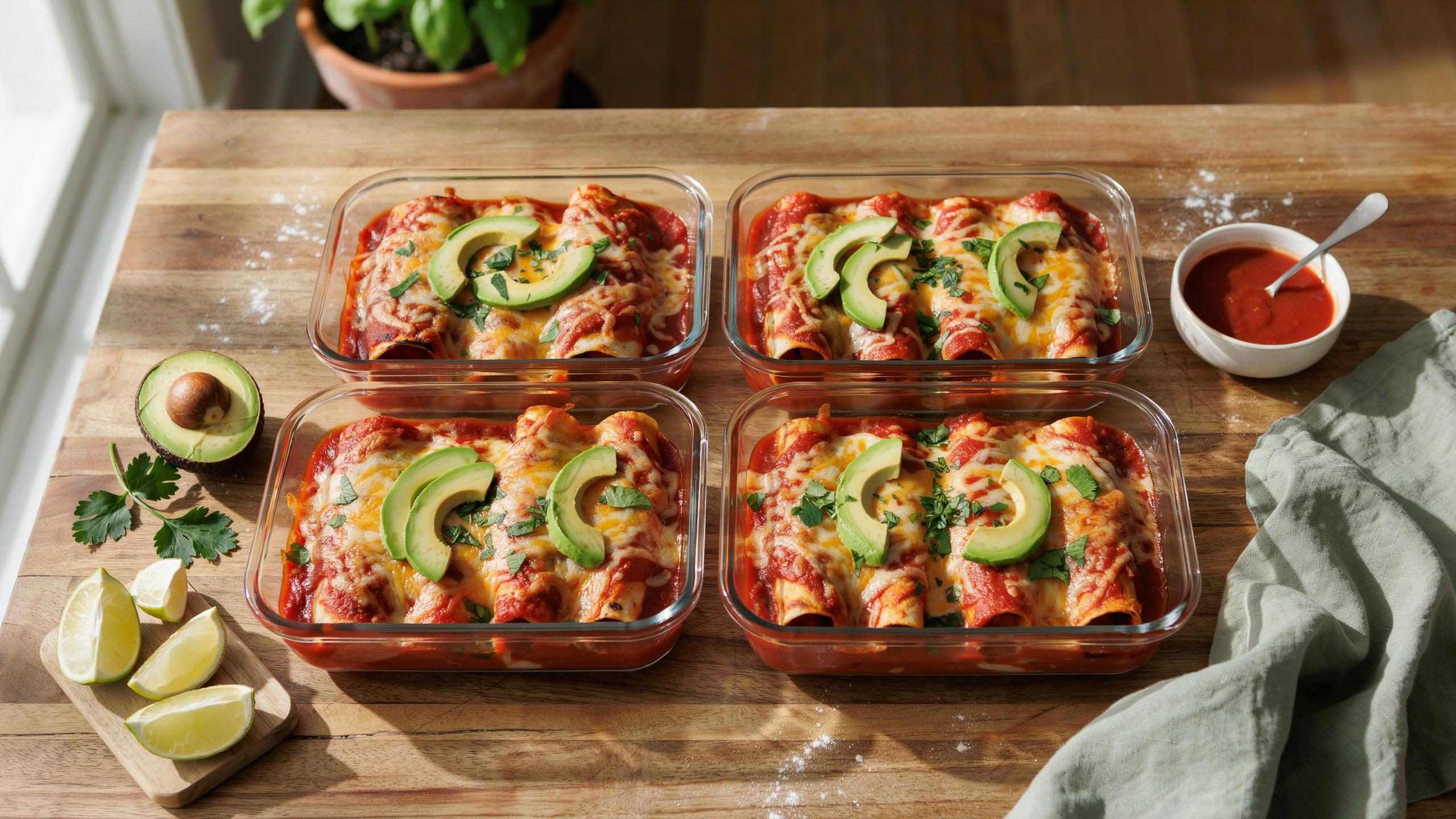
The Enchilada Efficiency Protocol
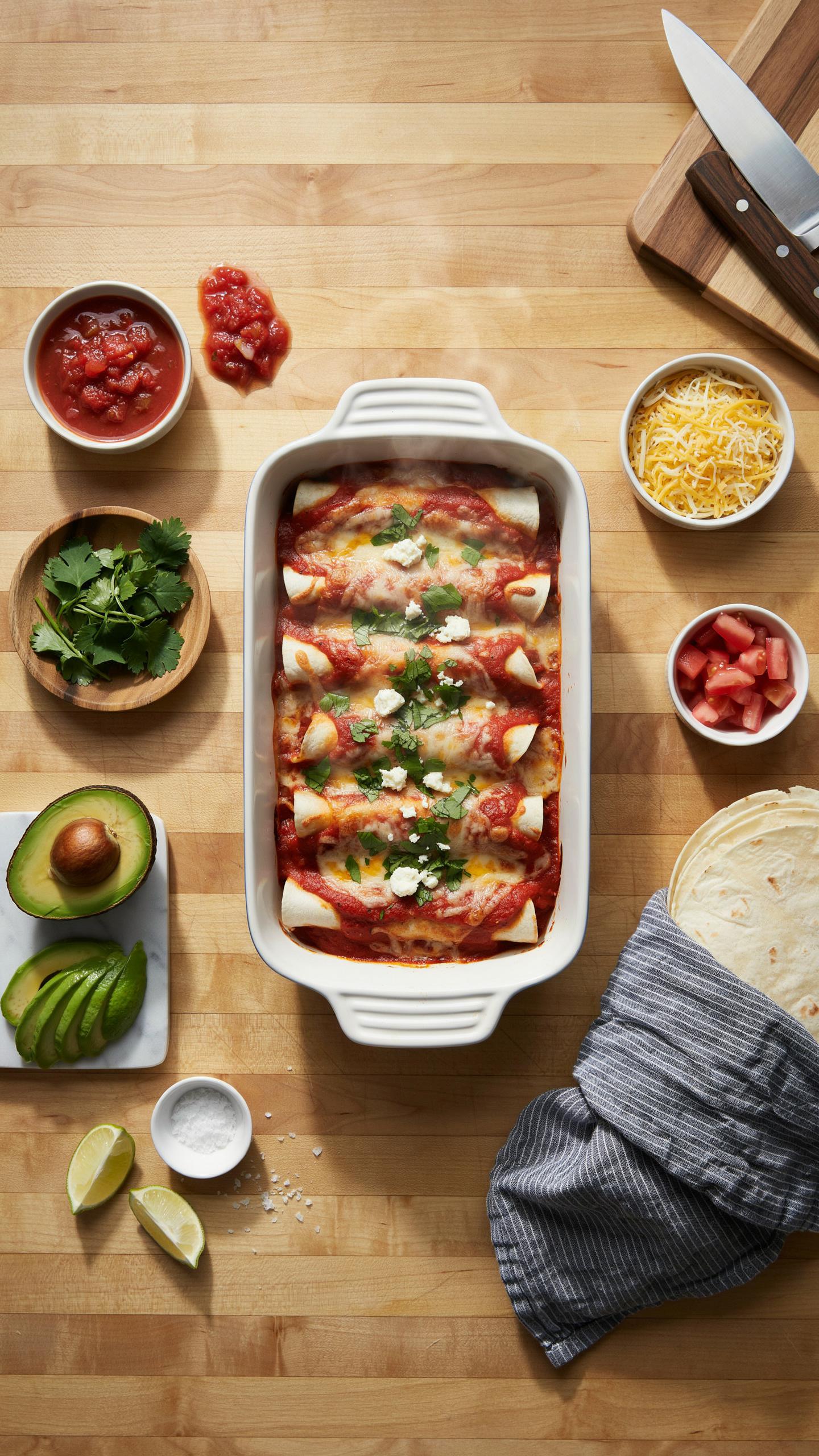
Buy Only What Scales
You want to feel organized without actually doing the math on your ingredient costs and waste. Here’s the mechanism: you’re picking ingredients based on what sounds good, not what moves through your freezer fastest. Enchilada meal prep has one constraint—your freezer space and thaw time—so reverse engineer from there. Buy chicken thighs in bulk from warehouse clubs, not grocery stores. Buy cheese in blocks, not shredded. Buy dried chiles or sauce by the can, then calculate backward to the number of enchiladas you’ll actually make in one session.

The sourcing decision that saves time isn’t about finding rare ingredients. It’s about eliminating decisions. Pick one protein source per prep session. Pick one sauce base. Pick one cheese. Stop rotating variables. Buy enough of each to fill your freezer to 80 percent capacity, not 100. You leave room for failure, accidental bulk buys, and the reality that you’ll prep again in three weeks. Your ingredient list should shrink, not expand, as you repeat this.
Stack The Protein Work Upfront
Economics calls this “batching”—grouping similar actions to eliminate setup costs. With enchilada prep, your setup cost is the oven, the pans, the seasoning, and your attention. Cook all protein at once under the same heat, same time, same seasoning. Roast five pounds of chicken thighs in a convection oven at 425 degrees for 28 minutes. Ground beef browns faster in a wide pan than a narrow one because surface area matters. Shred your chicken while it’s still warm, not cold. Cold meat resists shredding and wastes your effort.

The real efficiency isn’t in the cooking—it’s in the cooling. Hot protein cools unevenly and creates condensation in your containers, which breeds freezer burn. Spread cooked protein thin on a sheet pan and let it hit room temperature for 20 minutes before storing. This single step cuts freezer degradation in half. Your protein stays usable for eight weeks instead of five.
Beyond Chicken Unorthodox Protein Power For Healthy Enchiladas
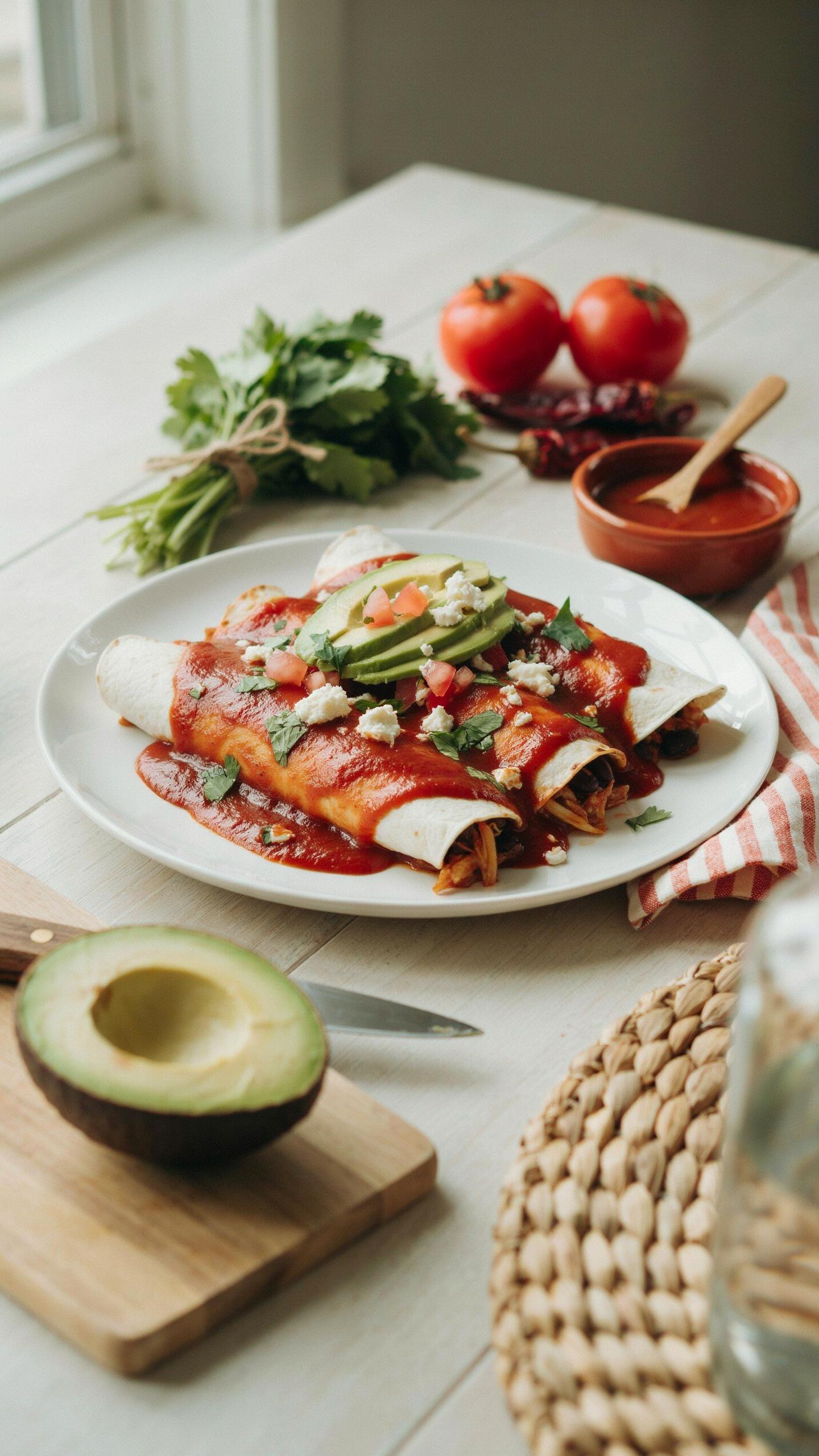
The Proteins Nobody Thinks To Use
You want to believe chicken is the only option because it’s safe, familiar, and requires zero decision-making. That’s not laziness—it’s decision fatigue bleeding into meal prep. The real mechanism is protein bioavailability: your body doesn’t care about the source, only how efficiently it absorbs and uses the amino acids. Ground turkey, lean pork shoulder, and even canned fish deliver equal or superior protein density to chicken breast while freezing better and tasting less monotonous across twelve servings.
Most people default to chicken because marketing has trained them to. Ground turkey has higher fat content, which means better texture after freezing and thawing—chicken dries out. Lean ground pork gives you better collagen breakdown during the low simmer of enchilada sauce, meaning the filling stays cohesive instead of separating. Canned sardines and mackerel pack eight grams of protein per ounce, plus omega-3s that actually stick around through the freeze-thaw cycle. The choice isn’t about morality or trendiness. It’s about which protein performs best in your specific cooking method.
Protein Density Without The Filler
Conventional enchilada recipes bloat the filling with cheese, beans, and rice to hit satisfying portions. That’s not wrong—it’s incomplete. You’re optimizing for volume instead of protein efficiency, which means eating more calories to hit your target macros. The lever here is replacement rate: substitute fifty percent of traditional fillers with a second protein source that adds grams without adding proportional weight.
Combine your base protein with Greek yogurt mixed into the filling—it adds twelve grams per half cup while creating a creamy texture that survives freezing better than sour cream alone. Layer in cottage cheese for similar results with a different mouthfeel. These aren’t garnishes or health hacks. They’re structural components that compress the protein-to-calorie ratio. When you freeze and reheat, the yogurt and cottage cheese don’t separate like cream does. Each enchilada ends up denser, more stable, and genuinely higher in usable protein per bite. Cook the base protein fully, fold in the dairy, and assemble immediately.
Freezer Fortification Engineering Longevity For High Protein Enchilada Casserole
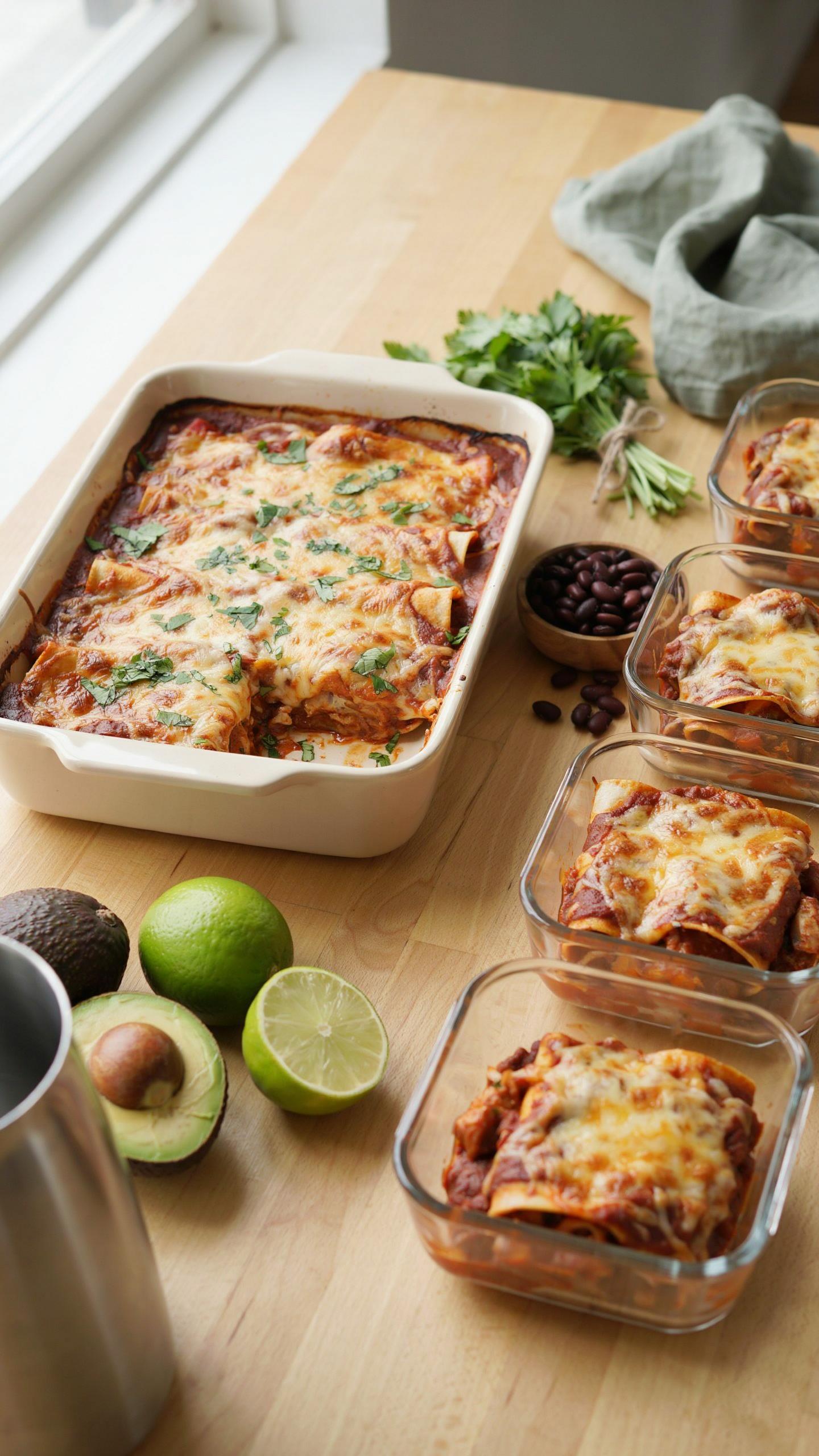
How Temperature Stops Microbial Time
You want your meal prep to last because you’re afraid of wasting money and time on food that spoils. Here’s the mechanism: freezing doesn’t kill bacteria—it halts their reproduction by removing metabolic capacity. Physics calls this state arrest. Your high protein enchilada casserole enters a holding pattern where enzyme activity and microbial growth flatten to near zero. At 0°F and below, the water in your dish transforms into ice crystals, making moisture unavailable for the biological processes that cause spoilage.
The real constraint isn’t temperature uniformity—it’s the speed of the freeze itself. Fast freezing creates small ice crystals that don’t rupture protein fibers or cheese fat structures. Slow freezing, conversely, generates large crystals that puncture cell walls and weep moisture during thaw. Spread your assembled casserole uncovered on a sheet pan and freeze it solid for four to six hours before transferring it to storage containers. This Pre-freeze step preserves texture in your chicken, beef, or bean filling far better than dumping a warm dish straight into the freezer.
Vapor Barrier Architecture Against Crystalline Damage
Everyone says use plastic wrap. That’s incomplete guidance and it costs you. Freezer burn occurs when surface moisture evaporates directly into the surrounding air, leaving dehydrated pockets in your cheese and filling. You need redundant barriers that interrupt this moisture migration path. The mechanism: multiple layers of different material densities slow vapor transmission to the point where it becomes negligible over storage time.
Use this sequence: press plastic wrap directly against the casserole surface to eliminate air pockets, then wrap the entire container with aluminum foil to create an impermeable outer seal. Foil alone fails because it punctures easily and doesn’t contact the food. Plastic alone is porous to water vapor over months. Stack them and you extend viable freezer storage from six weeks to four months without quality degradation. Label the container with the date and contents using a marker on the foil so you rotate stock properly and avoid forgotten dishes that crystallize from neglect.
The Sauce Strategy Elevating Enchiladas Healthy Not Sabotaging Them
Make Your Own Sauce At Scale
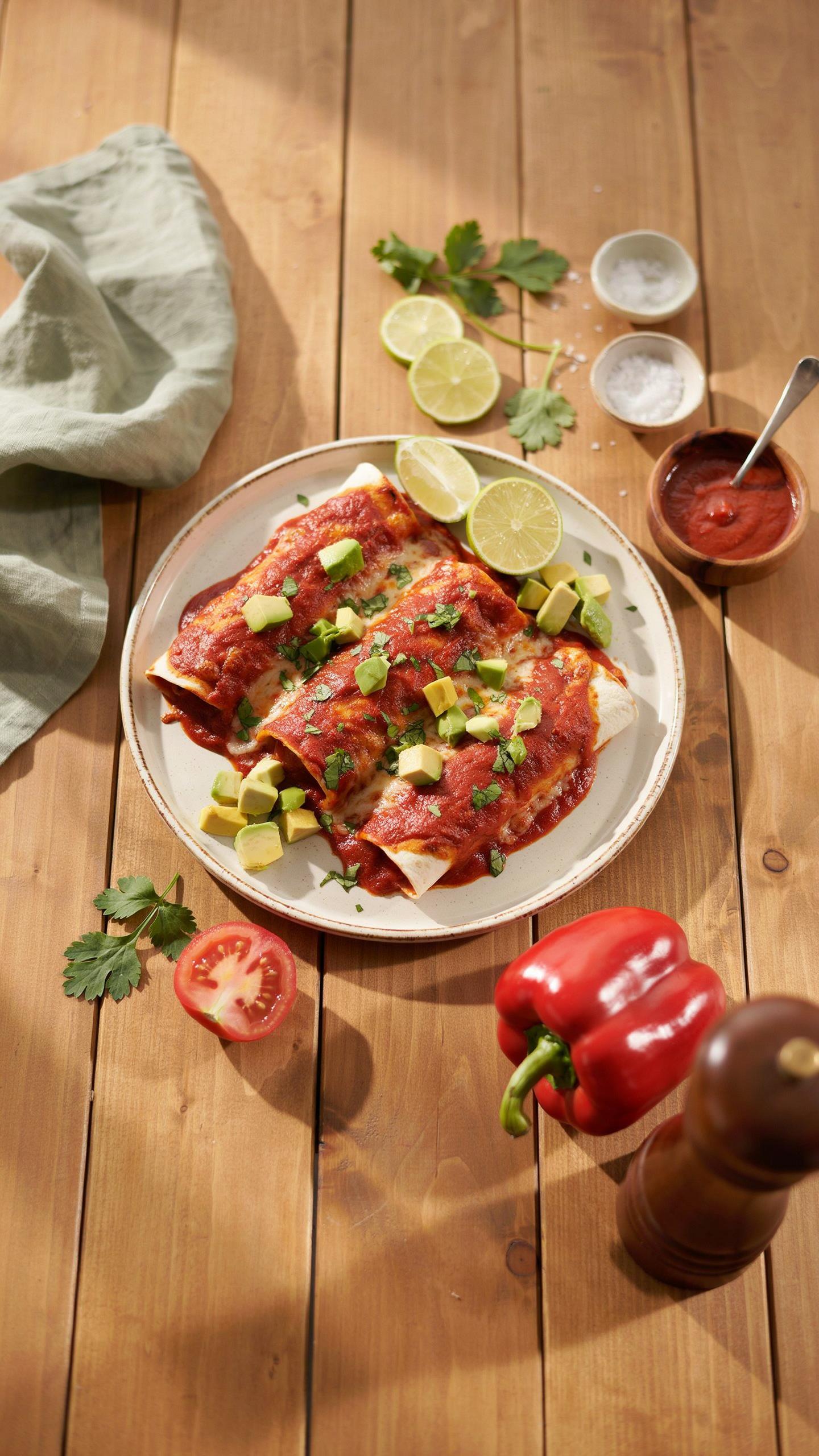
You want store-bought because it feels easier, but you’re trading control for margin. The real mechanism here is ingredient concentration. Commercial sauces hide calories in refined vegetable oils and added sugars that don’t register on your radar until you’ve consumed half the batch. When you make sauce yourself, you see exactly what goes in and you can scale it without reformulation.
The math is brutal and simple. A basic enchilada sauce needs tomato base, fat for flavor delivery, spices, and salt. Use canned fire-roasted tomatoes, a measured amount of olive oil, cumin, garlic powder, and chili powder. Cook it down for fifteen minutes. A double batch costs less than two jars of bottled sauce and delivers superior macros because you control the oil ratio. Freeze it in quart containers and you’ve solved sauce for eight meals.
Vegetables Embedded In The Base
The consensus approach is to add veggies to the filling and call it done. That’s incomplete. Vegetables in sauce dissolve and become flavor compounds that actually enhance absorption of fat-soluble vitamins while keeping the sauce texture smooth and preventing separation after freezing. This is basic food chemistry, not meal prep theater.
Blend roasted red peppers, zucchini, or spinach directly into your tomato base before it fully reduces. Start with one cup of blended vegetable per two cans of tomatoes. The fiber stays intact, carbs stay low, and you’ve added micronutrient density without changing the eating experience. Freeze test one batch to confirm the texture remains cohesive after thawing. If it separates, reduce your vegetable ratio by half a cup on the next batch.
Assembly Line Mastery Rapid Fire Enchilada Construction
The Setup That Saves Hours
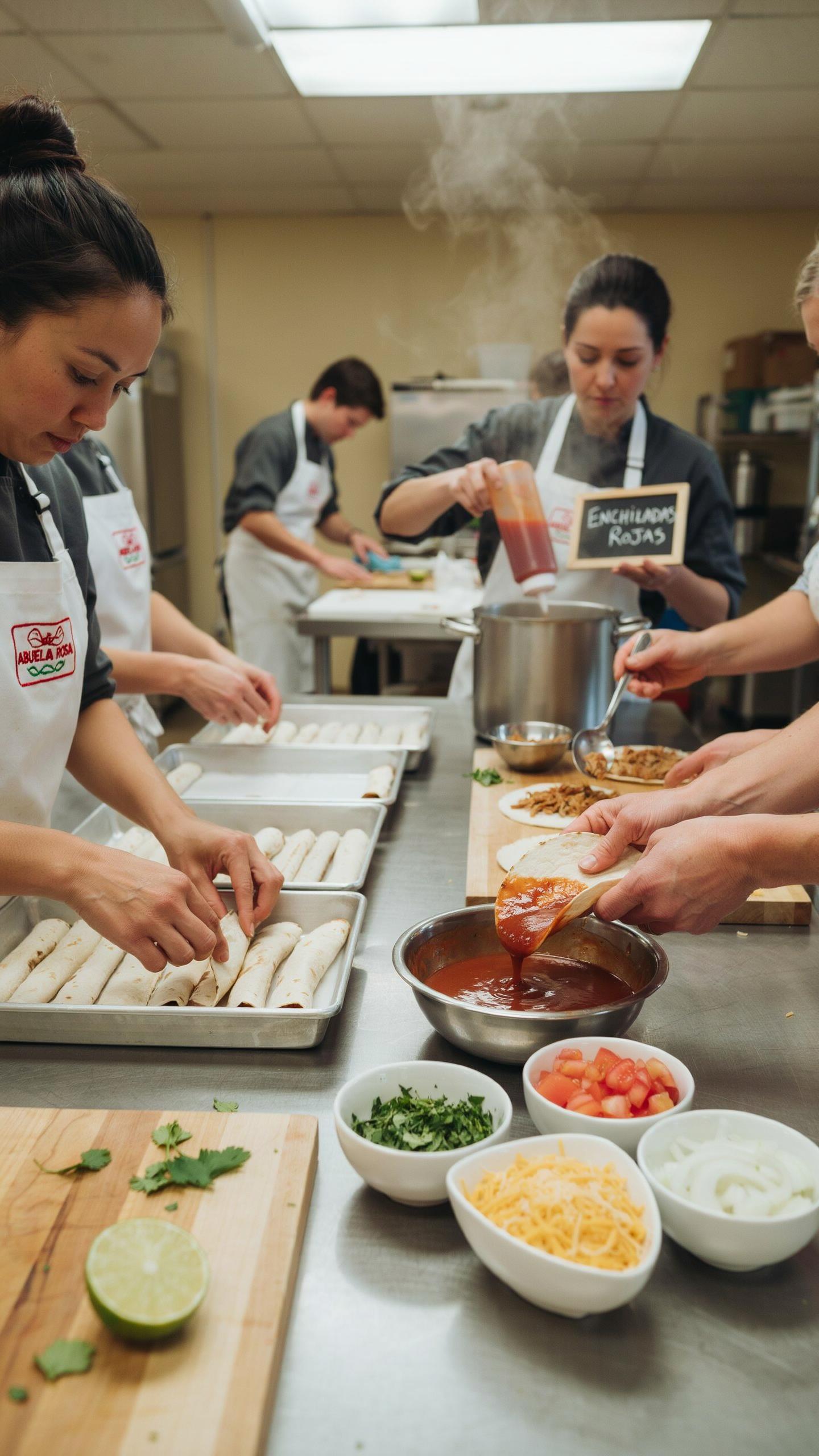
You want to feel productive without actually wasting your Sunday. That’s the real motive. Assembly line logic comes from manufacturing, where sequential positioning and task batching eliminate the friction that kills momentum. Apply this to enchiladas: you don’t sauce one, fill one, roll one. You prepare every component first, then move through a single operation across all units before advancing to the next step.
Arrange your workspace in a line. Lay out tortillas on one end, your protein and filling ingredients in the middle, your baking dish at the far end. This removes the cognitive load of searching for what’s next. Your hands know where to go. You fill twelve tortillas without stopping, sauce them all, then layer them all. The mechanism isn’t inspiration. It’s removing decision points.
The Right Tools Do The Work
Most people grab whatever’s in the drawer. Wrong. A nine by thirteen glass baking dish holds exactly twelve enchiladas without overflow. A two cup liquid measuring cup with a pouring spout eliminates sauce splatter and gives you portion control. A rubber spatula with a stiff edge scrapes the bowl clean and folds ingredients without breaking down your filling.
Get a sheet pan specifically for prep work, not cooking. Your hands move faster when ingredients sit at elbow height instead of counter height. A food scale eliminates the math of portions entirely. Weigh your chicken or beef once, divide by twelve, and stop guessing. The friction point most people ignore: a good kitchen shears cuts cooked meat faster than a knife and requires one hand instead of two. Speed compounds when you remove micro delays.
The Thaw Serve Playbook From Freezer To High Protein Dinner Recipes
Thawing Without Destroying Texture
You want the enchilada to taste like you made it today, not like something that got mangled by ice crystals. Here’s the mechanism: ice forms between muscle fibers and protein strands. When you thaw fast, those crystals expand and rupture cell walls. The chicken or beef weeps liquid. The texture turns mushy. Slow thaw prevents this.
Refrigerator thawing is the only play that matters. Move your enchilada from freezer to fridge the night before serving. This takes eight to twelve hours depending on thickness and pan size. The steady temperature lets ice melt gradually without shocking the protein structure. Room temperature thawing accelerates bacterial growth and creates texture damage simultaneously. Don’t do it.
Reheating Preserves Protein And Flavor
The common advice tells you to microwave frozen enchiladas straight from the freezer. That’s how you get rubber protein and separated cheese sauce. Thermal shock destroys both texture and moisture retention in lean proteins. The real mechanism is gentle, even heat distribution that rehydrates without overcooking the surface.
Oven reheating at 325 degrees Fahrenheit works because the heat penetrates slowly and uniformly. Cover the baking dish with foil for the first twenty-five minutes to trap steam. This moisture keeps the tortilla pliable and prevents the filling from drying out. Remove the foil and bake another eight to twelve minutes until the cheese re-melts on top. Your protein stays intact and your sauce stays cohesive because you never subjected it to the violent temperature swings that microwaves create.
Beyond Cheese Enchiladas The Macro Minded Remix
Swap Dairy For Protein Density
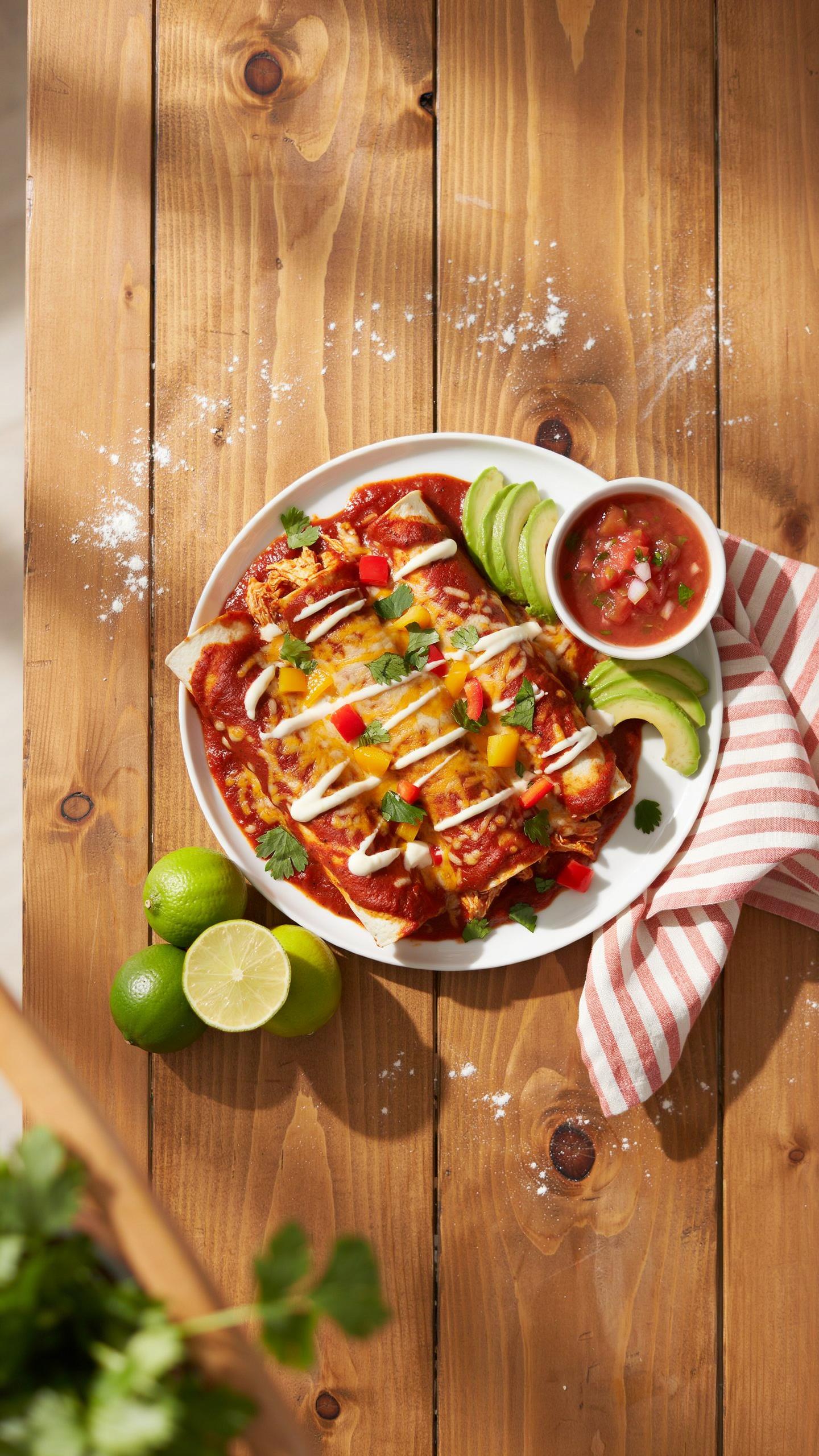
You want permission to eat enchiladas without the bloat and digestive lag that kills your afternoon. Here’s the mechanism: dairy protein comes with lactose and fat that slow gastric emptying. Non dairy alternatives let you hit protein targets without the metabolic friction. Greek yogurt based sauces, cashew cream, and plant based cheese perform differently in the enchilada matrix because they lack the casein that creates that heavy feeling.
The swap isn’t about morality. Nutritional yeast mixed into a tomato base gives you umami and B vitamins without the inflammatory load of melted cheddar. Silken tofu blended with lime and cumin creates a creamy layer that absorbs seasoning better than traditional cheese. Stack your filling with shredded chicken or lean ground turkey, then use the dairy free sauce as your binder. You hit 35 to 40 grams of protein per enchilada without the crash.
Vegetables That Increase Satiety Without Volume
Satiety isn’t about feeling full. It’s about hormonal signaling, borrowing from nutrition science. Fiber and resistant starch trigger CCK and GLP 1 release, the hormones that tell your brain to stop eating. Generic advice says add lettuce. Wrong. You need vegetables that add fiber density and nutrient load without expanding your prep time.
Black beans and pinto beans belong in every enchilada filling. They deliver eight grams of fiber per cup and cost almost nothing. Layer in roasted poblano peppers and diced zucchini before rolling. Sautéed mushrooms add umami that makes the dish taste richer while keeping calories flat. The mechanism works like this: you freeze enchiladas that hit 45 grams protein and 12 grams fiber per serving. That fiber slows glucose absorption, stabilizes insulin, and keeps you satiated for five hours instead of two.
Scaling Up Healthy Meals For Large Families And Solo Operators
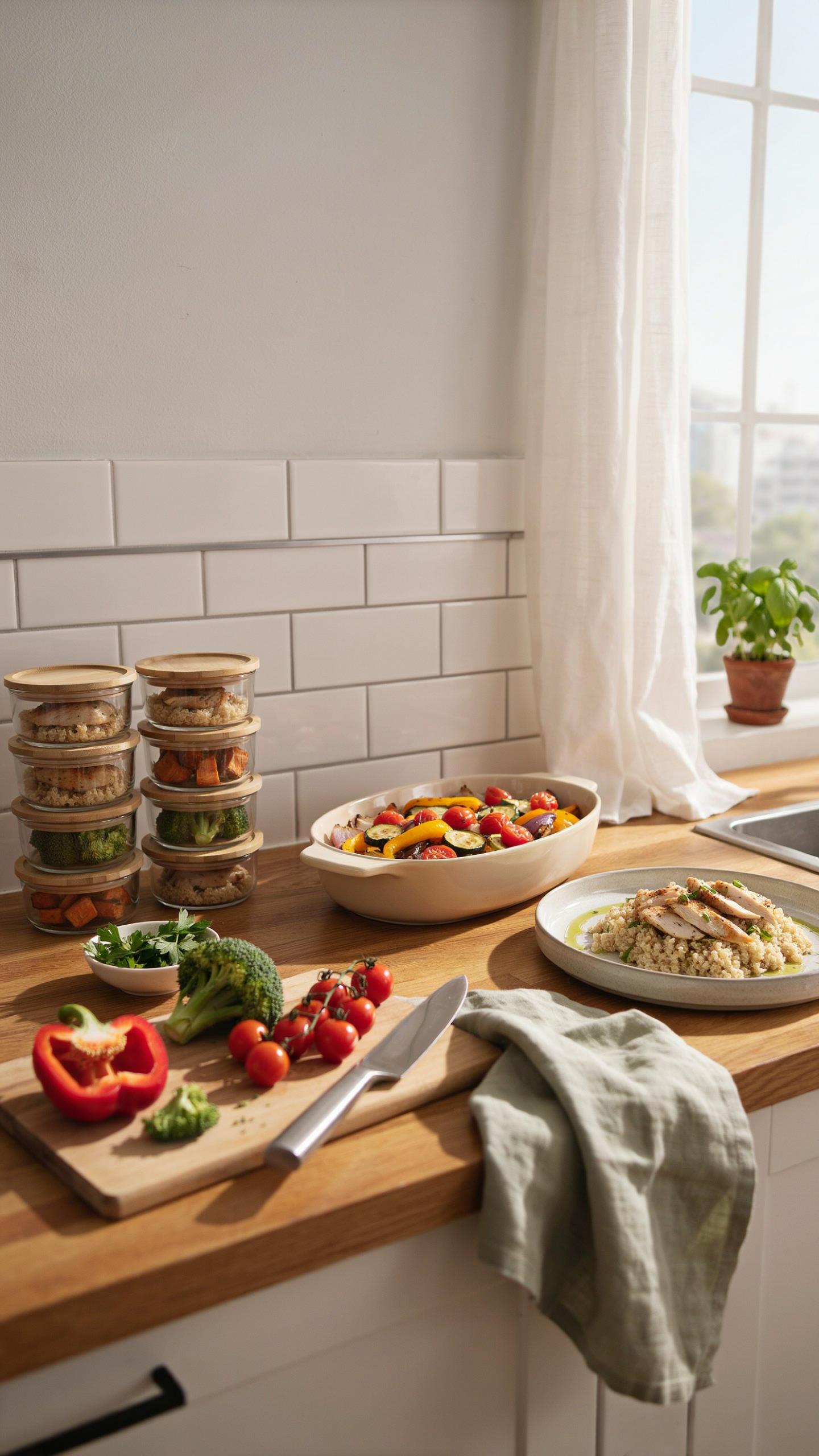
The Math Behind Batch Size
You’re asking this question because you want to feel smart about efficiency without actually doing the work to figure out what scales and what doesn’t. The real mechanism here is constraint theory from manufacturing: your bottleneck determines your output, not your ambition. With enchiladas, the constraint isn’t the filling or the sauce. It’s your baking vessel and oven capacity. A standard 9×13 pan holds eight enchiladas. Two pans fit most ovens. Bake at 350 degrees for 25 minutes per batch. That’s your system. Everything else multiplies from there.
The math works clean if you accept one rule: all ratios stay identical. Double a recipe, double every ingredient. A single batch uses one pound of ground turkey, two cups sauce, eight corn tortillas. Ten batches use ten pounds turkey, twenty cups sauce, eighty tortillas. Don’t try to optimize ratios for volume. You’ll introduce variables that break your consistency. The ingredient costs drop per unit because you buy in bulk, not because you invent new proportions. Buy your proteins and tortillas from restaurant suppliers, not retail. That’s where the actual savings live.
Tailoring Portions To Different Metabolisms
Stop treating meal prep like it’s one-size-fits-all. It isn’t. A 180-pound strength athlete needs different macros than a 130-pound office worker or a 220-pound person with different activity levels. The real work isn’t cooking more batches. It’s cooking once and portioning strategically. Make one large batch of filling and sauce. Divide it by need, not by convenience. The strength athlete gets three enchiladas and extra cheese. The office worker gets two enchiladas and more vegetables mixed into the filling. The third person gets two enchiladas, period.
Protein density solves this problem fast. High protein enchilada filling starts around 8 grams protein per enchilada with standard ground turkey. Add Greek yogurt to the filling instead of sour cream and you hit 10 to 12 grams per enchilada. Now your portions control macros without complexity. One person eats two enchiladas and hits 24 grams protein. Another eats three and hits 36 grams. Same batch, different outcomes. Label your containers with gram counts, not servings. Your freezer becomes a macro-matched system, not a guessing game.
The real obstacle isnt your schedule its your resistance to engineering simplicity

You already know high protein enchilada meal prep works. You’ve seen the photos. You’ve read the macros. What you haven’t done is decide that Sunday afternoon is worth two hours of your time. Stop waiting for motivation. Buy the ingredients today. Chop the chicken tonight. You don’t build the life you want by thinking about it on Wednesday. You build it by moving your hands on Monday.