
Beyond Basic Sustenance The Cognitive Fuel Protocol

Protein’s Role In Mental Performance
You want to feel sharp without thinking about it. The mechanism is substrate availability. Neurotransmitters like dopamine and norepinephrine require amino acids to synthesize, and your brain burns through them fastest when you’re making decisions. Low protein intake doesn’t just weaken muscles—it depletes the raw materials your prefrontal cortex needs to function. A chowder-based meal prep system solves this by delivering consistent amino acid availability without requiring decision-making about what to eat.

Protein stabilizes blood glucose in ways carbs alone cannot. When glucose spikes and crashes, cognitive performance crashes with it. A high-protein chowder sitting in your fridge removes the metabolic chaos. You’re not fighting hunger or mental fog at 6 PM because your body has had steady fuel all day. That’s not motivation. That’s basic biochemistry working for you instead of against you.
Automation Erases The Decision Tax
Most advice tells you to “plan ahead” and “stay disciplined.” That’s incomplete. The real problem is decision fatigue—the measurable decline in decision quality after making repeated choices. By batch-cooking high-protein chowder, you’re not being virtuous. You’re eliminating a low-stakes decision that drains the same cognitive resources you need for work. Economics calls this “friction reduction.” Fewer choices equals more mental bandwidth for output.

Meal prep chowder works because it’s one choice made once, not six choices made daily. You build the recipe, cook it on Sunday, portion it into containers, and your dinner decision is solved for the week. Your brain doesn’t touch the problem again until the container is empty. That reclaimed energy compounds—decisions made later in the day are sharper when earlier decisions have already been removed from the pipeline.
The High Protein Chowder Blueprint Efficiency Not Effort
Stack Protein Before Everything Else
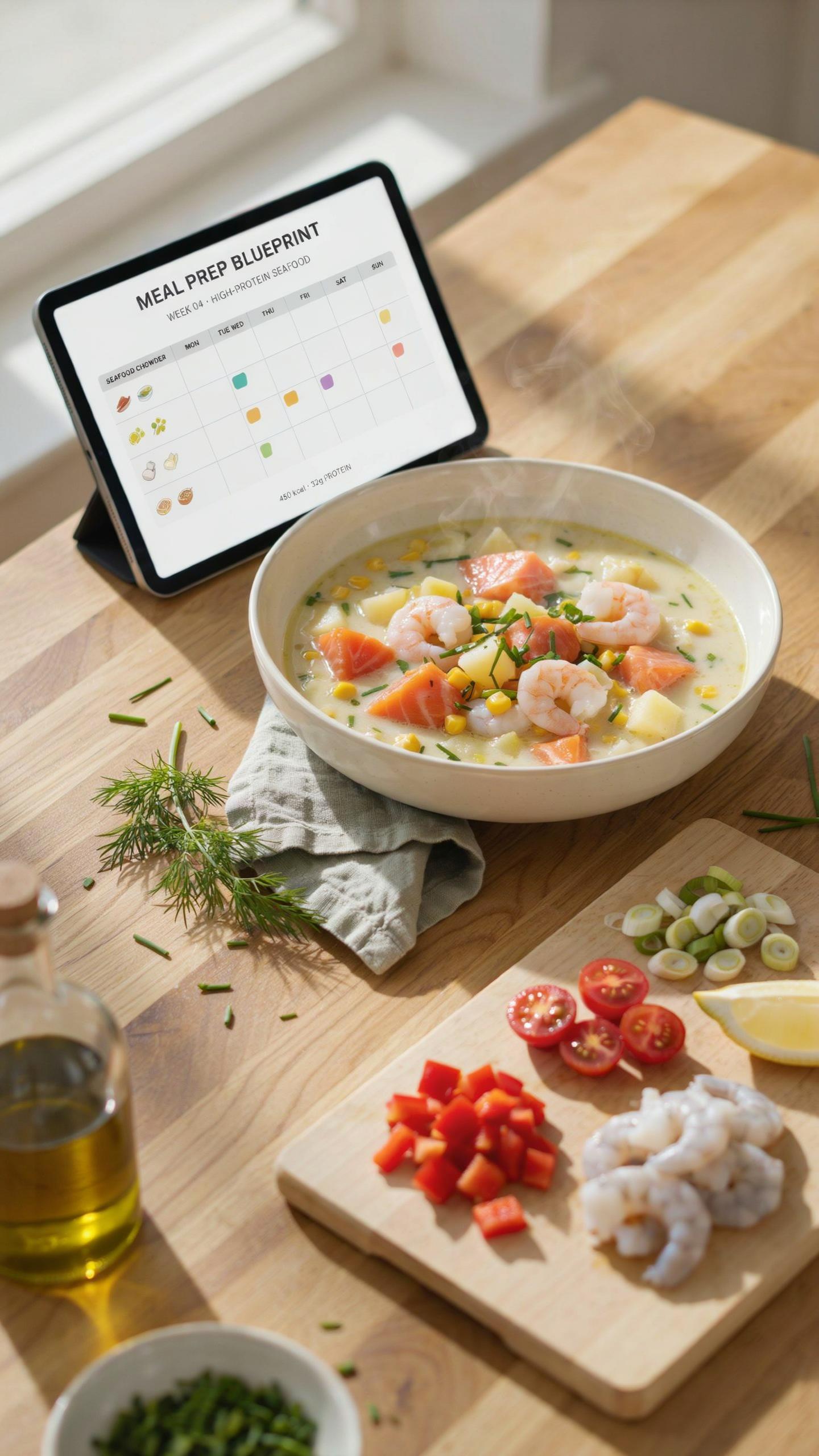
You want meal prep to feel effortless so you actually stick with it. The real mechanism is this: protein density determines satiation and muscle preservation, which means your ingredient list contracts immediately once you stop pretending vegetables are the foundation. Most meal prep advice inverts the priority. Build around animal protein first—seafood, poultry, or dairy—then layer vegetables for volume and fiber. This order cuts decision fatigue and eliminates the trap of creating a vegetable soup you’ll abandon after three containers.
Economics teaches us about constraints. In chowder, protein is your constraint—the scarce resource that controls everything downstream. A half-pound of cod or two cups of diced chicken anchors the recipe. Once that’s locked, the rest assembles itself: potatoes for carbs, cream or bone broth for calories, aromatics for flavor. You’re not calculating macros on the fly. You’re building a system where the protein portion dictates serving size, and everything else scales proportionally. This removes the guesswork that kills consistency.
Cook Once, Portion Five Times
The common advice says “meal prep takes hours.” It doesn’t. You’re confusing active time with total time. Most of a chowder’s cooking window is passive—the pot simmers while you do something else. Bring broth and potatoes to temperature for eight minutes. Add protein and cream. Simmer ten more minutes. You’ve touched the stove maybe three times. The actual labor is thirty minutes of prep: chopping potatoes into uniform cubes, dicing onions, measuring cream.
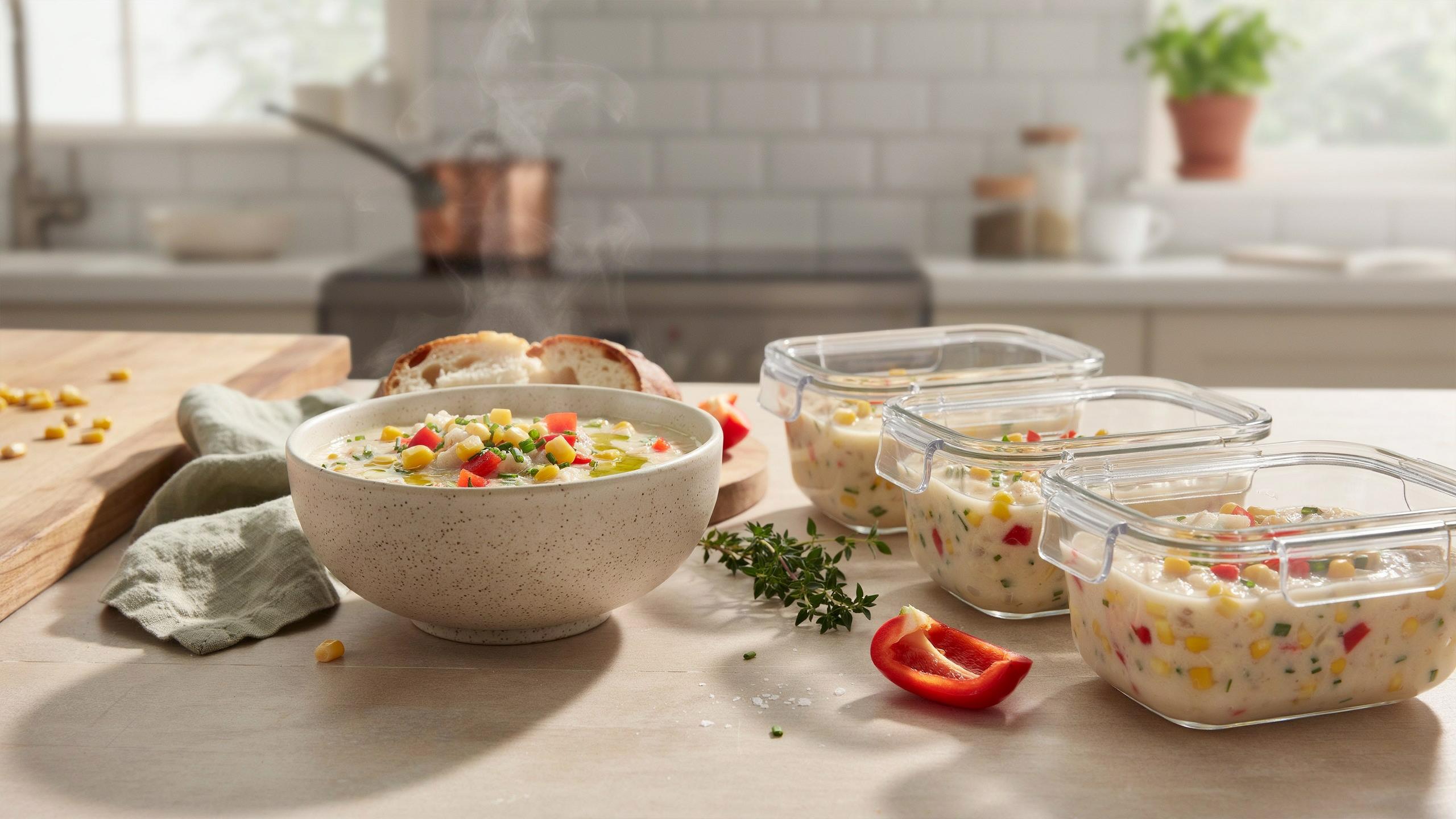
Portion immediately after the pot cools to room temperature. Don’t let it sit in the fridge first. Hot-to-container transfer prevents condensation that degrades texture over five days. Use containers that stack efficiently in your freezer. Half the chowders go to the freezer immediately. The other half goes to the fridge for the current week. This two-tier storage system gives you both convenience and flexibility. You’re not locked into eating the same meal five days in a row.
Weaponizing Flavor Making Healthy Protein Soups Irresistible
The Umami Layer Strategy
You want your high protein chowder to taste expensive so you feel justified eating it instead of takeout. Here’s what actually works: umami is the fifth taste dimension, and it’s the mechanism that makes protein-heavy broths crave-worthy instead of medicinal. Most people dump in salt and call it done. That’s incomplete.
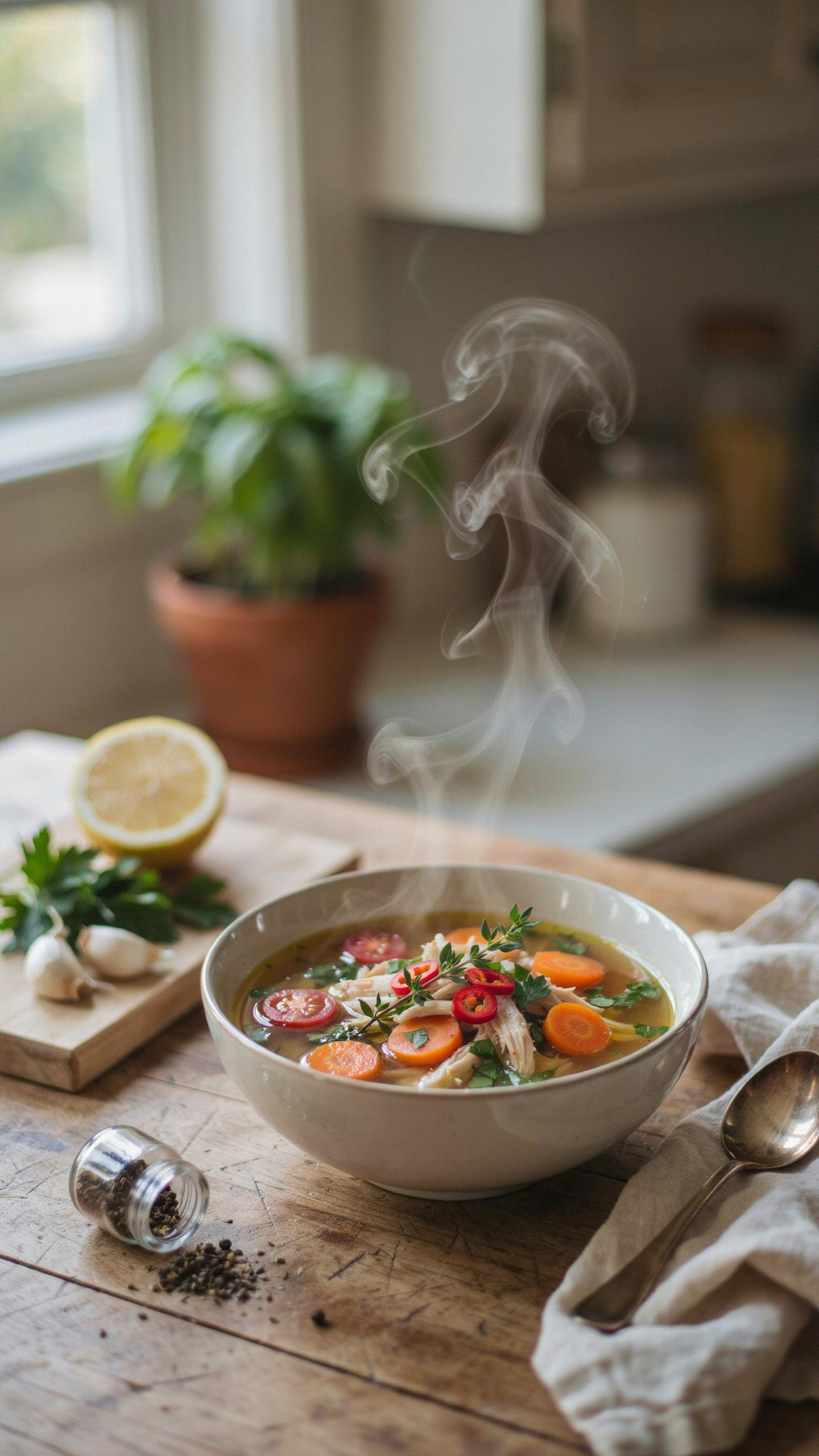
Build umami through layering, not intensity. Tomato paste caramelized in fat, fish sauce or soy sauce at 1-2 teaspoons per quart, nutritional yeast, bone broth as your base instead of water, aged Parmesan rinds simmered directly in the pot. Each adds glutamates and nucleotides your brain registers as satisfying. The spice integration works here too: smoked paprika and cayenne don’t compete with umami, they amplify it by triggering capsaicin receptors that make your palate register depth rather than heat alone.
Contrast Creates Compliance
Texture variation is why you’ll actually finish the bowl instead of three spoonfuls in. Soup texture lives in a dangerous zone: too uniform and it becomes baby food, too chaotic and it feels disjointed. The fix is strategic opposition.
Pair your soft protein base (poached chicken thigh, diced cod, or shrimp) with crunch components added at plate time: toasted breadcrumbs fried in bacon fat, crispy skin from chicken thighs you reserved, or fried shallots. Add temperature play: cold creme fraiche dolloped into hot broth creates a sensory interrupt your mouth actually wants. The chowder’s creamy middle ground becomes the anchor, not the bore. This is why you finish the meal instead of abandoning it halfway through.
The Set And Forget System For Protein Soup Recipes
Cook Once, Eat Ten Times
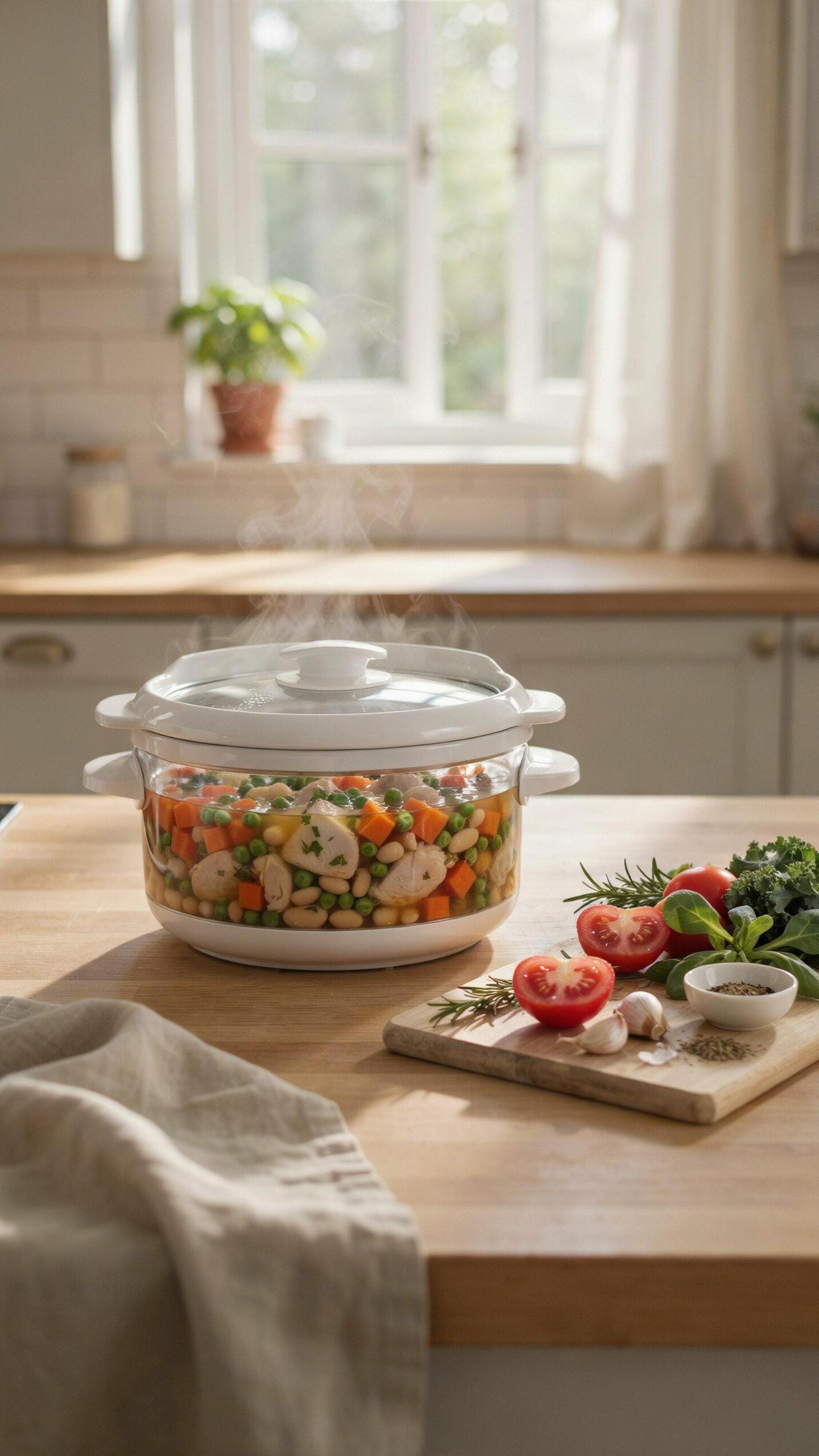
You want to feel productive without actually cooking. That’s the real appeal of batch cooking, and it’s fine. The mechanism borrowed from manufacturing is throughput: you maximize output per unit of effort by eliminating setup and teardown costs. Cook your protein and base stock together in one session, portion once, and the math compounds. You spend two hours cooking instead of fourteen hours spread across seven dinners.
High protein chowders batch better than most dishes because the base doesn’t degrade. Potatoes, cream, broth, and protein stabilize together. Cook a full 8-quart batch of clam chowder with 2 pounds of clams, 1 pound of diced chicken breast, or 1.5 pounds of shrimp. Portion into 1.5-cup containers immediately while hot. This size works because it’s substantial enough to feel like a meal but portion-controlled enough that you won’t overeat.
Freeze Smart, Thaw Faster
Most people freeze chowder wrong and blame the chowder. Dairy-based soups separate under temperature stress if you don’t account for it. Add your cream or cream base after the chowder cools to room temperature, not while hot. Freeze in flat 1.5-inch-thick containers rather than deep ones. Flat containers thaw in 8-12 hours in a refrigerator instead of 24-36 hours, and they stack efficiently. Label each container with the date and protein type.
Thaw in the refrigerator overnight, never at room temperature. Reheat low and slow: pour the thawed chowder into a pot, add 2-3 tablespoons of water or broth per cup to restore consistency, and heat to 160 degrees Fahrenheit over medium heat for 8-10 minutes. Stir occasionally. High heat breaks down the cream and can separate the soup. The protein stays intact, the broth stays homogeneous, and you get the same texture as day one.
Deconstructing Cozy Dinners Performance Not Passivity

Evening Fuel For Morning Output
You want dinner to feel relaxing because you’re afraid that optimizing it makes life transactional. Here’s the mechanism: your body doesn’t distinguish between calories eaten at 6 PM and 6 AM. Protein timing matters for muscle synthesis and recovery, not comfort. A high protein chowder eaten at night delivers amino acids during sleep when your body performs most repair work. This isn’t about feeling full. It’s about stacking recovery protocols so tomorrow’s output doesn’t suffer from last night’s poor fuel choice.
Most people reverse-engineer dinner from emotion instead of physiology. They eat what feels cozy, then wonder why they’re tired the next day. High protein chowder works because it delivers 30-40 grams of protein per serving while keeping you satiated through the evening. The viscosity and fat content slow gastric emptying, preventing blood sugar crashes at midnight. Prep a double batch on Sunday and you remove the temptation to grab carb-heavy comfort food when tired. Store portions in glass containers and reheat in 90 seconds.
Sleep Quality Through Nutrition Timing
Sleep architecture follows circadian biology: your core temperature, cortisol, and melatonin operate on a 24-hour cycle that dinner timing either supports or disrupts. A heavy meal two hours before bed triggers thermogenesis and delays sleep onset. High protein chowder eaten three to four hours before sleep avoids this trap. The amino acids reach your bloodstream without flooding your digestive system when you need rest. Protein stabilizes blood glucose overnight, preventing the 3 AM wake-up that kills sleep quality.
Protein before sleep isn’t generic advice—it’s evidence-based recovery work. Studies show that casein-rich proteins (found in dairy-based chowders) release slowly, providing steady amino acid availability through the night. The magnesium in potatoes and the tryptophan in seafood or chicken amplify sleep depth without supplements. Eating your chowder at 7 PM instead of 9 PM creates a clean metabolic window: digestion completes before horizontal rest begins, and amino acid delivery peaks during early sleep stages when muscle protein synthesis runs highest.
The Macro Engineering Of High Protein Soups Healthy
Protein Sources For Sustained Satiety
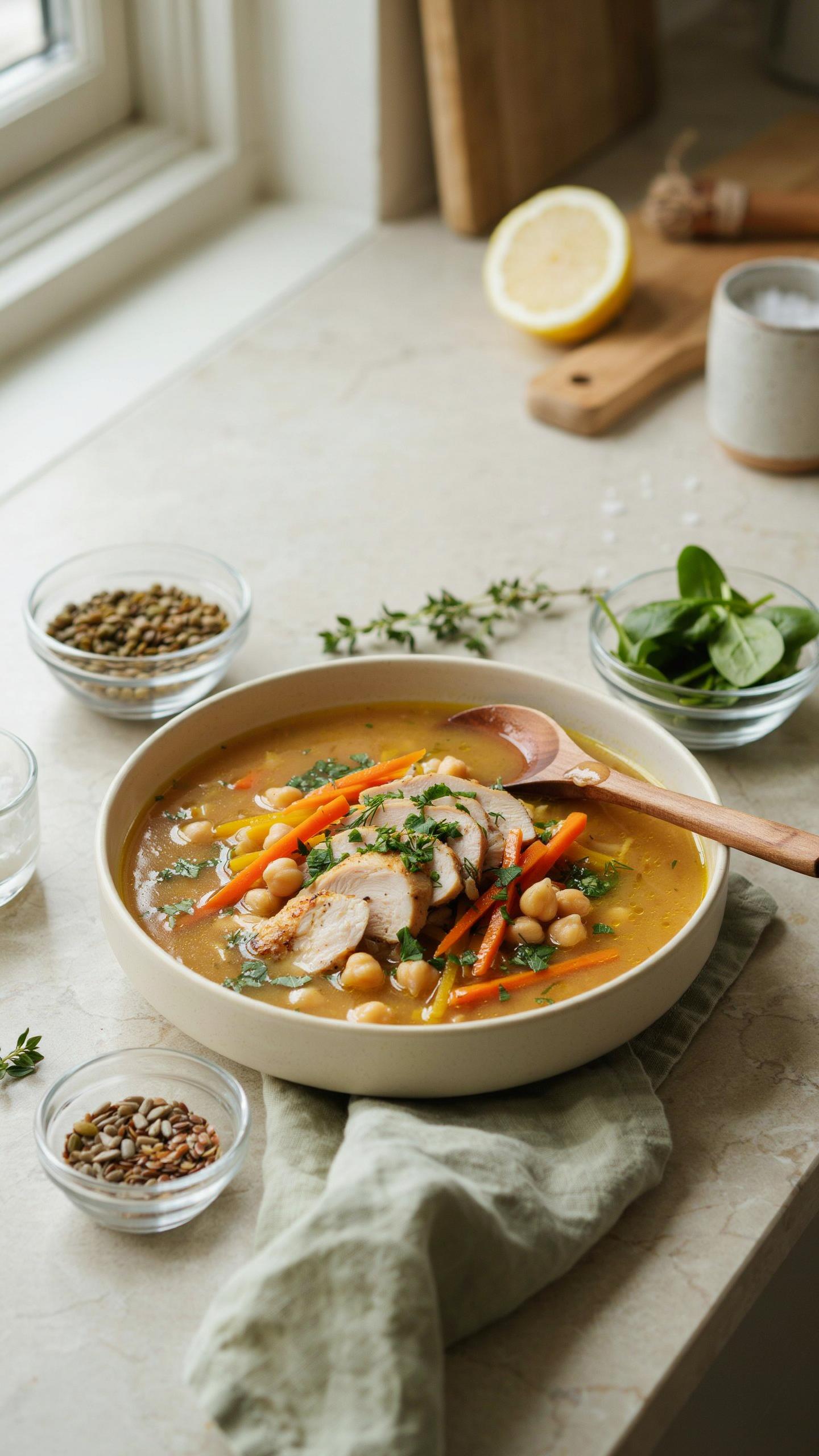
You want to feel full so you stop eating at reasonable portions and your body doesn’t cannibalize muscle while you’re in a deficit. That’s the real reason this matters. Here’s the mechanism: protein triggers cholecystokinin and peptide YY, hormones that signal fullness to your brain. Chowder’s fat content amplifies this effect. Combine this with soup’s water volume and you get maximum satiety per calorie. Fish, shellfish, and poultry work best because they dissolve slightly into broth, thickening it without added starch and maintaining a protein-to-calorie ratio that doesn’t tank.
The common advice is “just add more protein powder.” That’s lazy and wrong. Powder changes texture, dilutes flavor, and doesn’t integrate into the soup structure. Instead, use whole protein sources that cook into the broth itself. Clams and mussels release amino acids and minerals that intensify satiety signaling. Chicken thighs over breasts add collagen, which becomes gelatin and physically thickens the soup while providing additional structural protein your body processes slower than free amino acids.
Fat Balance And Carbohydrate Strategy
Biochemistry calls this nutrient partitioning: where your body directs incoming calories based on macronutrient composition. High protein soup with strategic fat keeps blood glucose stable, which prevents the energy crash that makes you hungry two hours later. Carbohydrates should come from vegetables and potatoes that thicken the broth naturally, not from added flour or cream. Root vegetables like celery root and parsnips release starches when cooked, creating viscosity and sustained energy without spiking insulin.
The fat portion requires specificity. Cream-based chowders mask inferior ingredients with richness. Instead, use stock made from bones and connective tissue, which contains collagen and fat naturally. Add butter at the end to preserve its flavor profile rather than cooking it into the base. This approach gives you satiety from multiple mechanisms: protein density, fat signaling, fiber from vegetables, and slow carbohydrate absorption. Finish with a 3:1 ratio of protein to net carbohydrates per serving to maintain the metabolic benefit.
Avoiding Common Pitfalls The Entropy Of Good Intentions

When Recipes Become Excuses
You want to feel like you’re optimizing, so you keep adding ingredients you don’t need. That’s the real trap here. High protein chowder meal prep fails not because recipes are bad, but because people treat the base formula like a canvas instead of a constraint. You add bacon, then chorizo, then three types of seafood, then wonder why you’re spending three hours on Sunday instead of forty minutes.
The mechanism is simple: more variables equals more failure points. Each ingredient adds prep time, storage complexity, and a new way the batch can go wrong. A solid high protein chowder leans on five to seven core ingredients maximum. Potatoes, onion, celery, broth, protein source, cream, and salt. Everything else is negotiable noise that kills consistency. Start there. Build from restraint, not abundance.
Boredom Is A Design Problem, Not A Willpower Problem
Your taste buds adapt faster than your meal prep system does. Serving the same chowder four times straight triggers abandonment, not discipline. The solution isn’t motivation. It’s rotation built into your framework from day one.
Pick three protein bases: chicken thighs, smoked ham, or white fish. Rotate them on a three-week cycle. Swap potatoes for celery root or parsnip once monthly. Change your cream ratio or add a single spice like Old Bay or smoked paprika. These micro-variations cost almost nothing extra but reset perception entirely. The chowder stays mechanically identical. Your brain registers novelty. Execute the rotation on a calendar, not memory.
The Leverage Principle Of Pot Pie Soup Economics
One Batch Feeds Multiple Dinners
You want to believe meal prep saves time without sacrificing quality. Here’s the mechanism: economics calls this “fixed cost amortization”—you pay the setup cost once, then distribute it across every serving. One pot of high protein chowder costs the same effort whether it feeds you twice or six times. The initial chopping, seasoning, and simmering doesn’t scale with portion count. That’s where the return compounds.
Most meal prep advice stops at “make it in bulk.” That misses the actual leverage. The real move is engineering a recipe where quality improves or holds steady after day three, not degrades. Protein-forward chowders do this because the broth deepens flavor while the protein stays stable in cold storage. You’re not sacrificing anything by eating day-five portions. You’re banking time you’ll actually use.
Scale Shifts Your Cost Per Meal
Doubling your batch size doesn’t double your work. You use the same pot, the same stove time, identical prep efficiency. Economics calls this “declining marginal cost”—each additional portion costs less than the previous one to produce. A six-serving batch costs roughly 40 percent less per serving than a two-serving batch when you factor in energy, labor, and ingredient waste.
The protocol: standardize your recipe to a single batch size, then cook that same size twice weekly instead of cooking smaller amounts daily. Buy proteins in bulk when price dips. Freeze portions in two-serving containers so you control when they enter rotation, not when they spoil. This transforms chowder from a random dinner into a predictable system that costs less per meal every time you execute it.
Tailoring For Taste Chicken Pot Pie Soup Customization
Swaps That Actually Work
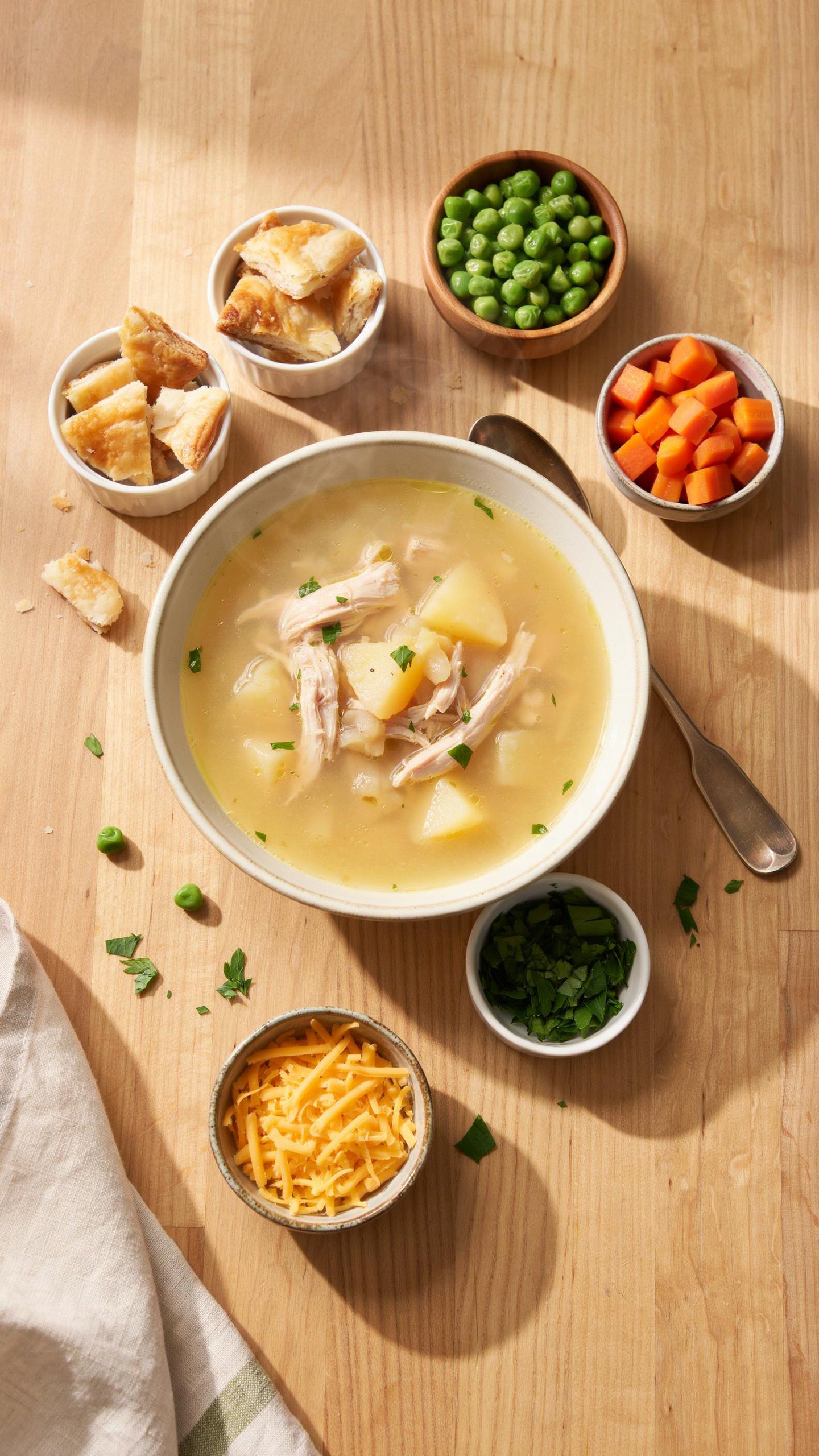
You want permission to feel smart about deviating from the recipe. That’s the real driver here. The mechanism is simple: chicken pot pie soup succeeds because of fat ratio and starch balance, not specific ingredients. Change either one carelessly and the soup breaks.
- Chicken to turkey or pork: Use the same weight. Turkey requires slightly longer cooking to reach tenderness. Pork adds richness but needs salt adjustment upward.
- Butter to ghee or avocado oil: Ghee delivers cleaner flavor at high heat. Avocado oil works but adds no flavor depth. Never substitute with seed oils under 400°F cooking.
- Cream to full fat Greek yogurt: Add after removing from heat. One cup Greek yogurt replaces one cup heavy cream by volume. Stir slowly to prevent curdling.
- Carrots to celery root or parsnips: Maintain 2:1 vegetable to protein ratio. Celery root adds mineral earthiness. Parsnips sweeten the broth slightly.
- Thyme to rosemary or sage: Use half the volume. Rosemary dominates faster. Sage works best with pork variants, not chicken.
Common advice says swap freely. Wrong. The protein content stays high only if you preserve the fat-to-protein ratio and cooking time. Lean poultry with reduced fat means the soup loses mouthfeel and satiation. Scale fat deliberately when shifting proteins, not arbitrarily.
Batch Sizing Without Waste
You either make too much and freeze mediocre texture, or too little and repeat cooking twice weekly. The real constraint is freezer capacity versus realistic consumption.
Calculate backwards from your actual eating pattern, not wishful thinking. If you eat chowder twice weekly, make two portions plus one extra. That’s three servings. Freeze in single containers so thaw time stays under four hours. Scale recipes by multiplying all ingredients by your target batch number, then divide the total by your pot capacity to avoid overflow. Dairy additions happen after reheating from frozen, never before. This prevents separation and maintains protein integration throughout the soup structure.
The Low Calorie Soup Advantage Sustained Energy Not Crash

Nutrient Density Wins The Calorie Game
You want to feel full without feeling guilty. That’s the real draw here, and it matters because most people conflate low-calorie with low-fuel. They’re not the same. High protein chowder meal prep applies a principle from nutritional biochemistry: nutrient density per unit volume determines satiation and metabolic response, not calorie count alone. A bowl with 300 calories of broth, fish, and vegetables triggers different hormonal signals than 300 calories of refined carbs. Your body recognizes the signal.
Protein and fiber in chowder activate CCK and GLP-1 receptors in your gut. These aren’t theoretical. They fire when you eat real food density, not empty calories. The result: you stay satisfied longer without the energy crash that follows sugar or processed carbs. The mechanism is straightforward. High protein chowder meal prep builds meals around this fact, not around hitting a calorie target that leaves you depleted by 3 PM.
Steady Fuel, No Metabolic Disruption
The common advice says eat smaller meals to avoid energy crashes. Wrong. The real problem is meal composition, not meal size. Metabolism doesn’t crash because you ate too much protein and vegetables. It crashes when insulin spikes and then drops hard. High protein chowder with broth-based construction prevents the spike in the first place. Your blood glucose stays stable because fat and protein slow carbohydrate absorption.
When you prep chowder with quality protein sources like cod, shrimp, or chicken, you’re building a meal that resists metabolic disruption. Each spoonful delivers steady fuel. No energy spike means no energy crash. Your focus stays intact. Your hunger stays controlled. That’s the entire mechanism at work: stable blood glucose maintains stable energy. Build your weekly meal prep around this pattern, and afternoon fatigue stops being your baseline expectation.
The real obstacle isnt hunger its the mental tax of incessant unstrategic choices

Most people fail at meal prep because they treat it like a chore instead of a system. High protein chowder meal prep removes the daily decision. You cook once. You eat well four days straight. No willpower required, no 6 PM scrambling. Pick a Sunday afternoon this week and make a double batch. That’s it. The person who eats from prepared containers wins because they stopped pretending discipline beats design.