
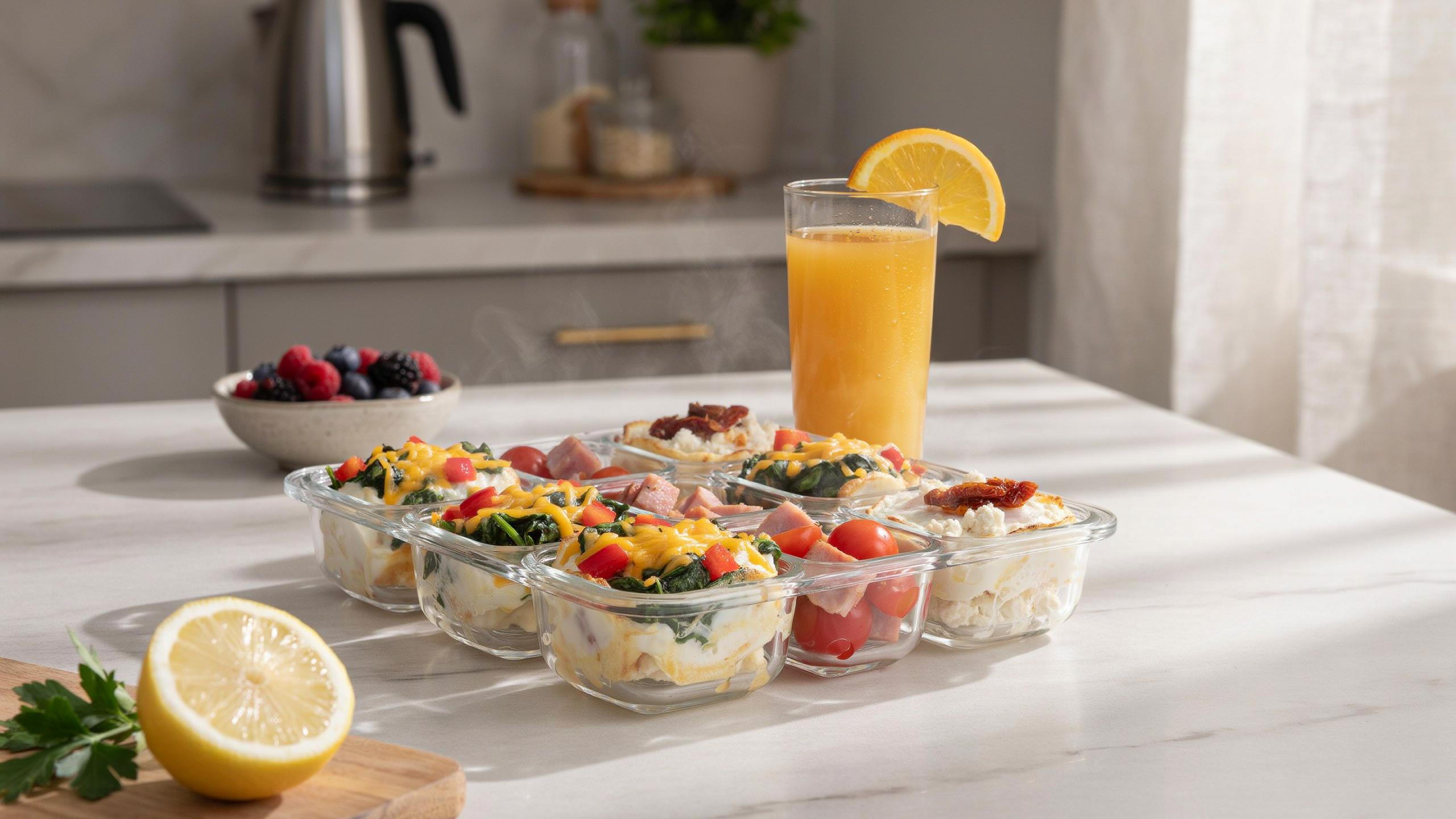
The Myth Of More Why Busy Breakfasts Fail

Decision Fatigue Kills Consistency Faster Than Time
You think the problem is time, but it’s not. The real cost is the mental load of deciding what to eat before you’ve had coffee. Every morning you face a blank slate, and your brain treats it like a problem to solve instead of something already decided. This decision drain compounds daily. By Wednesday you’re eating whatever’s fastest, which rarely hits your protein targets. Egg cups meal prep removes the decision entirely. You prep once. You eat the same thing five days running. The mechanism is simple: eliminate choice, eliminate failure.

The cost of daily breakfast decisions isn’t measured in minutes. It’s measured in willpower depletion, in the friction that makes you skip the protein and grab toast instead. Decision fatigue is real neurobiology, not motivation weakness. By the time you’re deciding breakfast, your prefrontal cortex has already burned calories on yesterday’s choices. You have less cognitive bandwidth than you think. Egg cups solve this because the decision happens once during prep, not every single morning when your defenses are lowest.
What Generic Advice Gets Wrong
Most breakfast advice sounds helpful until you actually live it. Meal prep gurus tell you to “make it convenient” or “prepare ahead of time” as if those phrases mean anything. The real problem is they hand you complexity wrapped in simplicity. They suggest rotating proteins, varying your sides, keeping things “interesting.” This is sabotage disguised as motivation. Variety kills consistency. Rotation requires planning. Interest requires decisions. None of these serve a busy person.

Egg cups meal prep works because it rejects this noise entirely. You pick one protein preparation. One egg cup size. One weekly rhythm. You repeat it for five days without deviation. This isn’t boring, it’s strategic. Your body adapts. Your shopping becomes automatic. Your prep time drops each week because you’re no longer learning, you’re executing. The mechanism is automation through repetition, not motivation through novelty.
The Minimum Viable Fuel Protocol Egg Muffin Cups Reimagined

Strip Away Everything That Isn’t Protein
You want to feel productive without actually changing your routine. The real mechanism is this: most breakfast approaches load carbs and fiber first, treating protein as an afterthought. That’s backwards. Nutrient density in egg cups means eliminating filler. Eggs, cheese, and vegetables with actual micronutrient density go in. Everything else stays out. Your body doesn’t recognize “meal prep effort” as a virtue—it recognizes caloric efficiency and satiation.
The math is simple. A standard egg muffin cup holds roughly 1.5 to 2 ounces of egg base, yielding 6 to 8 grams of protein per cup depending on yolk-to-white ratio. Add one ounce of cheese and you hit 12 to 14 grams without touching grains. One cup covers 25 to 30 percent of daily protein need before noon. This is the bottleneck most people miss: they prep volume, not nutritional density.
Protein Density Beats Portion Size
Biology has a concept called protein leverage—the body regulates total protein intake as a priority before calories. Map this onto egg cups: maximize protein per cubic inch of cup space, and satiation outlasts hunger. Don’t build bigger cups. Build denser ones. Two dense cups outperform four diluted ones on every metric that matters: hunger suppression, workout recovery, energy stability.
The mechanism is thermogenesis. Protein demands 20 to 30 percent of its calories just to digest, versus 5 to 10 percent for carbs. Egg cups formulated for 60 to 70 percent protein by weight create a metabolic advantage—your body burns harder just processing the fuel. Stop adding “healthy filler” vegetables that pad volume without payoff. Focus instead on high-protein variations: eggs plus cottage cheese, eggs plus Greek yogurt base, eggs plus bone broth reduction. Each shift compounds the density.
Preparation As Pre Computation The Egg Cups Advantage

Batching Eliminates The Morning Decision Tax
You want to believe willpower gets you to the gym before work. It doesn’t. Decision fatigue does. In cybernetics, the feedback loop is the core unit of control. With egg cups meal prep, your feedback loop is pre-loaded: the decision happens once during prep, not six times before 7 AM. You cook eggs in bulk, portion them into cups, refrigerate them. The system runs itself.
Most people treat breakfast as a daily problem to solve. Wrong frame. Breakfast is a variable you remove from the equation. When you batch-prepare eggs in cups, you compress dozens of micro-decisions into one session. No choosing how many eggs. No timing the cook. No plating. The morning becomes execution only. Your brain stays in the tank for actual priorities instead of burning cycles on what’s already decided.
The Collapse Of Morning Contingencies
You don’t prepare for chaos. You eliminate the conditions that create it. Military strategy calls this concentration of force at the decisive point. With egg cups, your decisive point is prep day. The chaos points (forgetting protein, grabbing empty stomach calories, rushing) vanish because there’s nothing left to improvise on gameday.
Pre-cooked eggs in cups sit stable in your refrigerator for three to four days. You grab one. Done. No scrambling at the stove while your coffee brews and your kid needs shoes. The system absorbs the friction. When contingencies have nowhere to hide, they stop being contingencies. You’ve moved the problem from the moment you’re least equipped to handle it to the moment you actually have time to think.
Beyond The Basics Elevating Your High Protein Breakfast

Protein And Fat Ratios That Actually Work
You want to feel full longer without thinking about food, and that’s the real reason you’re reading this. The mechanism is simple: satiety comes from combining protein with fat, not from protein alone. Biology calls this the thermic effect of food. In egg cup meal prep, you’re stacking two macros with different digestion rates, which extends the signal your body sends to stop eating.
Most people pile protein into egg cups and wonder why they’re hungry two hours later. They ignore fat entirely or treat it like a contamination. The ratio that produces sustained fullness is roughly 2 grams of fat per gram of protein in your prepared cup. This means a six-egg cup needs about twelve grams of fat from cheese, olive oil, or full-fat dairy to create the satiety your breakfast actually promised.
Taste Repetition Without Burnout
Flavor consistency beats novelty for long-term adherence, but nobody admits they need the same breakfast to work psychologically, not just nutritionally. You repeat what works because your brain stops treating it as a decision. The protocol is straightforward: lock three egg cup flavor formulas and rotate them on a seven-day cycle.
Your first formula might be cheddar and bacon, the second Swiss and ham, the third feta and spinach. Rotate these three for four weeks before introducing a fourth. This removes decision fatigue while keeping your palate from adapting to a single flavor profile. The repetition becomes invisible, and you stop abandoning meal prep because you’re sick of what you made.
The Set And Forget System For Egg Muffins Breakfast
Baking Temperature And Storage Windows
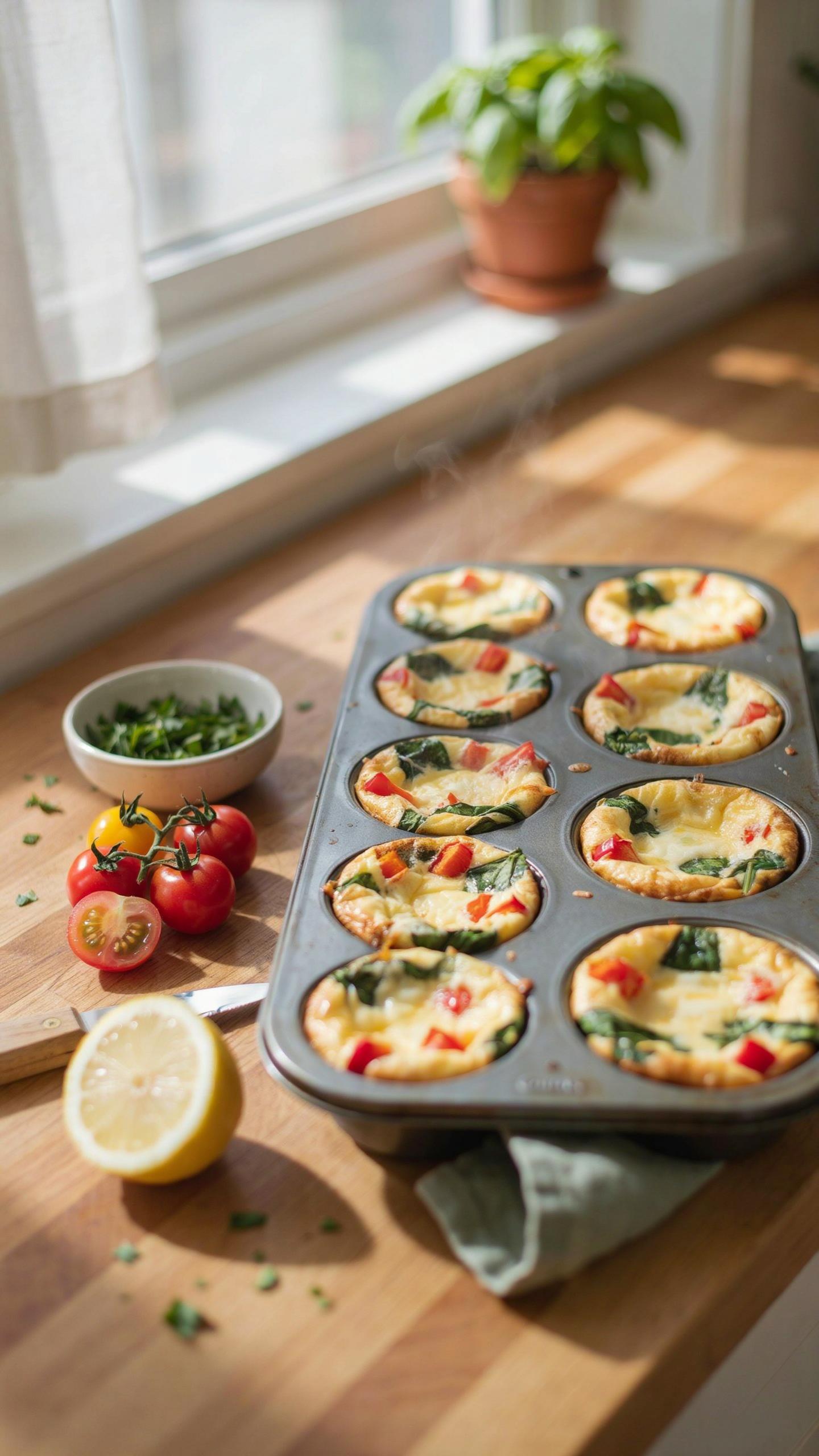
You want the security blanket of prep work without actually thinking about it. Here’s the mechanism: moisture loss. Eggs are protein suspended in water. Heat denatures the protein and drives off moisture. Stop too early and the center stays soft. Go too long and you’re eating rubber. The window is narrow, which is why most people either underbake or overcook and blame the method instead of the protocol.
Bake at 350 degrees Fahrenheit for exactly 22 to 26 minutes in a standard 12-cup muffin tin. The tops should firm but the centers should still yield slightly to pressure. Cool them completely on a rack before storing. Refrigerate in an airtight container for up to five days. Moisture migrates out of the eggs into the air and into the container plastic over time, so the four to five-day window is real. Freezing extends this to three weeks, but thawing creates condensation that softens the texture.
Scaling One Batch Into Weekly Volume
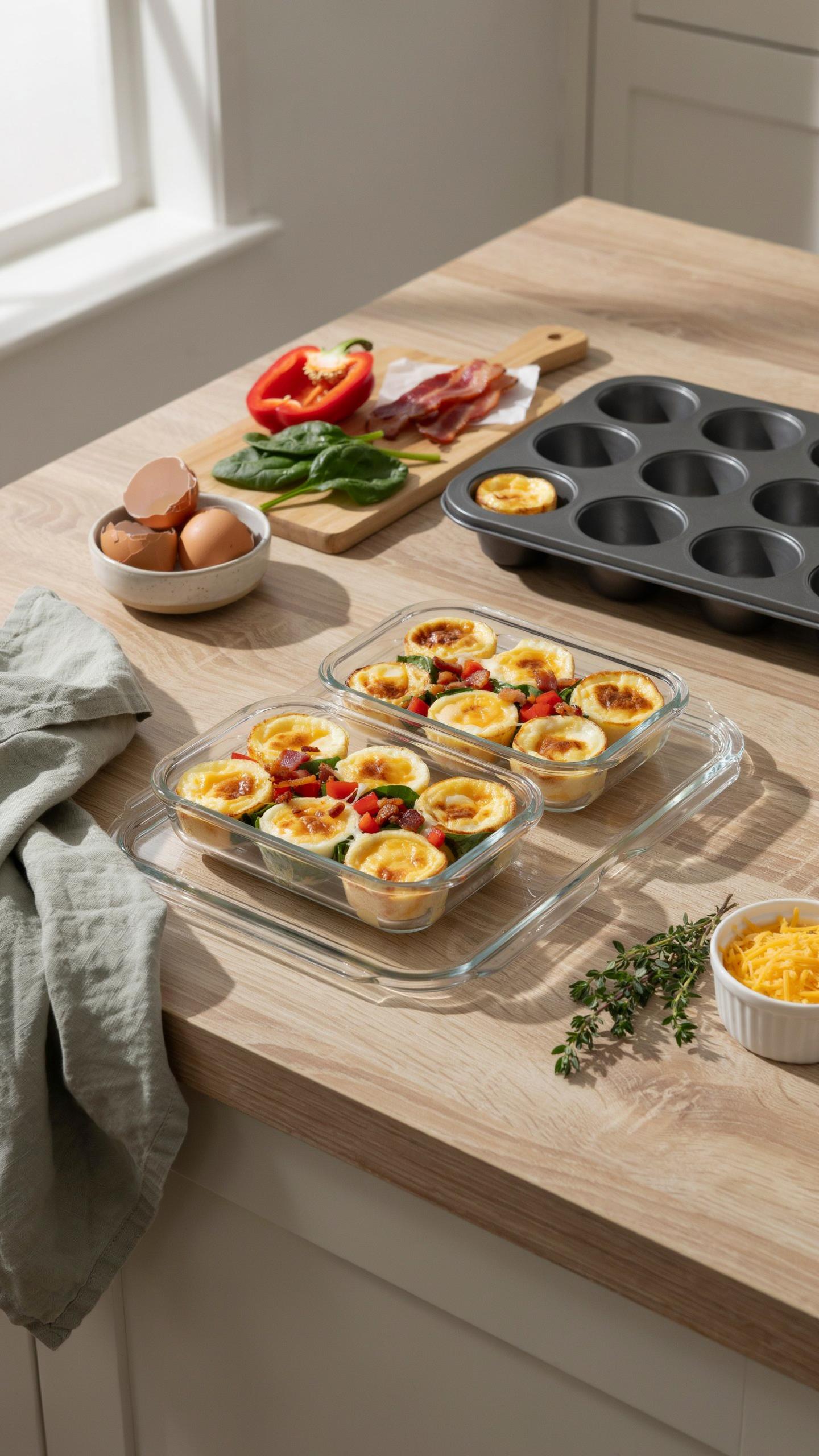
Most people prep three batches separately and call it done. That’s friction masquerading as meal prep. The actual lever is density of production: make one larger batch that yields your full week in a single oven cycle. Use a sheet pan with cavity molds or multiple standard muffin tins arranged on the same rack. Cook multiple tins simultaneously at the same temperature and time. One batch becomes 24 to 36 servings depending on mold size.
Map this to manufacturing logistics: you’re optimizing for batch efficiency. Assemble all tins with filling at once, slide them into the oven together, cool them together, portion and container them together. This eliminates the repetition tax. You spend 15 minutes of active work once instead of 15 minutes three separate times. Store in portion-controlled containers immediately after cooling. Grab one container each morning. The system removes decision friction from your breakfast.
Debunking Diet Low Carb Breakfast As A Lifestyle

Optimization Over Restriction
You want permission to eat well without feeling like you’re on a diet. The real mechanism is this: restriction triggers resistance. Your brain fights scarcity. Optimization triggers compliance because you’re building toward something, not away from deprivation. Egg cups meal prep reframes the entire game. You’re not “cutting carbs.” You’re architecting sustained energy through protein density. The shift happens in language first, then in behavior. When you portion eggs into cups the night before, you’re not rationing. You’re removing decision friction. Every morning becomes an execution, not a negotiation with yourself.
The common advice says “eat less.” That’s incomplete. You need to eat different, not just less. High protein breakfasts in egg cup portions force you to consume nutrient density first. Your body signals satiety faster. Your appetite doesn’t spike at 10 AM. This isn’t willpower. This is applied biology. When you prep six hard boiled eggs in cups Sunday night, you’ve eliminated the moment where you grab toast instead. Protocol: boil, peel, portion into cups Monday through Friday. One action Sunday removes five morning decisions.
Energy Without The Crash
Blood sugar stability isn’t about feeling good. It’s about cognitive performance and work output. This is basic endocrinology mapped onto meal timing. When you eat a carb-heavy breakfast, your glucose spikes, insulin responds, and two hours later you’re searching for the next hit. Egg cup breakfasts eliminate that cycle entirely. Six grams of protein per large egg creates a metabolic floor. Your energy stays flat for four to five hours instead of spiking and crashing. You don’t feel the difference immediately. You notice it on day five when 3 PM doesn’t wreck your focus.
Sustained energy is not motivation or discipline. It’s a measurable shift in how your nervous system functions. When cortisol and adrenaline don’t spike to compensate for a glucose drop, your decision making stays sharp. You eat less throughout the day because you’re not chasing hunger signals that don’t exist. The egg cup protocol works because portion control meets protein density meets repeatability. Buy a dozen eggs Sunday. Boil them all. Divide into seven cups, six eggs per cup. Wednesday breakfast isn’t a choice. It’s already made.
Advanced Meal Prep The Egg Cups Breakfast Expansion
Stacking Nutrients Without Complexity
You want to look like you have your nutrition dialed in without actually spending hours figuring out macros. The real mechanism is constraint-based design from industrial engineering: you force quality outcomes by limiting variables, not multiplying them. Egg cups enforce this naturally because the container size caps portion control while the form factor demands you pair proteins with other ingredients just to fill the space.
Most people think “add more foods” when they hit a nutrient wall. That’s backward. You add strategic density instead. Cottage cheese, Greek yogurt, and hemp seeds deliver protein and micronutrients in minimal volume. One egg cup holds approximately 3 to 4 ounces of base ingredient, leaving 1 to 2 ounces for complementary foods. Spinach, mushrooms, and cheese occupy space without diluting protein concentration. This is how you build a 25 to 30 gram protein breakfast that isn’t repetitive yet requires zero recipe innovation.
Breaking The Egg Monotony
Flavor fatigue kills meal prep systems faster than bad planning. The standard advice says “rotate proteins,” which is incomplete. You need to rotate the entire flavor profile, not just swap chicken for turkey. Egg cups let you control this with precision because you’re working in fixed proportions. Change the base seasoning and you change perception without changing the core structure.
- Savory Mediterranean: Feta, diced tomato, oregano, and cracked pepper in a cottage cheese base creates a salty, herbaceous profile that reads completely different from plain eggs.
- Spiced Indian: Greek yogurt with curry powder, turmeric, and cumin shifts the sensory experience while keeping protein high and prep time identical to other variations.
- Smoky American: Cheddar, bacon bits, and smoked paprika in scrambled egg base triggers nostalgia and satisfies cravings without derailing macros or morning routine.
- Sweet Protein: Vanilla Greek yogurt with berries and granola works as a legitimate protein breakfast option that breaks the savory cycle without feeling like dessert.
- Asian Umami: Miso paste, green onion, and sesame oil mixed into cottage cheese creates depth and makes you crave the breakfast instead of tolerating it.
The rotation strategy works because you prep five different flavor variations in a single session, then eat them across the week in sequence. You never eat the same version twice in a row. Your brain registers variety even though the prep method and container remain identical. Fill each cup on Sunday, store them in labeled rows, and grab a different one each morning. This removes decision fatigue and the cognitive load that kills consistency.
The Unspoken Advantage Reclaiming Morning Autonomy

Decision Fatigue Ends Before It Starts
You want this section because you’re exhausted by choices you shouldn’t have to make. Here’s the mechanism: every decision your brain makes depletes a finite resource called cognitive bandwidth. Decision fatigue is real neuroscience, not motivation theory. When you remove the breakfast decision entirely through egg cups meal prep, you preserve that bandwidth for work, relationships, and actual priorities.
Most people frame meal prep as time-saving. That’s incomplete. The real win is the collapse of a recurring decision loop. You wake up. Breakfast exists. Done. No negotiation with yourself about protein, carbs, or what’s in the fridge. No friction. This sounds small until you realize that friction compounds hourly across weeks. You’re not just saving minutes. You’re recapturing mental real estate.
The Leverage Hidden In Routine
Economics has a term called opportunity cost: what you give up when you choose one thing over another. Your morning minutes have an opportunity cost. If you spend thirty minutes building breakfast from scratch, you’ve surrendered thirty minutes of deep work, email triage, or strategic thinking. Egg cups meal prep inverts this. You spend the same thirty minutes once on a Sunday, then extract that time back fifty times over the course of the month.
The translation works like this: every simplified morning routine is capital you can deploy elsewhere. You have ten extra minutes before work because breakfast is solved. Ten minutes becomes email review. Email review becomes responding to an opportunity you’d otherwise miss. This isn’t metaphor. This is mechanical. Your breakfast system directly feeds into your leverage on everything else that matters. The protocol is simple: dedicate two hours on Sunday to fill seven egg cups. The math compounds immediately.
Your true obstacle isnt time its the illusion that complexity equates to competence

You don’t need a meal prep empire. You need six egg cups and twenty minutes on Sunday. Most people sabotage themselves by designing elaborate systems before they’ve built the habit. Egg cups meal prep works because it strips away the noise. You boil, you portion, you eat. Stop waiting for the perfect system and start with the stupidly simple one. The person who actually does egg cup prep beats the person planning their macro-optimized breakfast forever.