
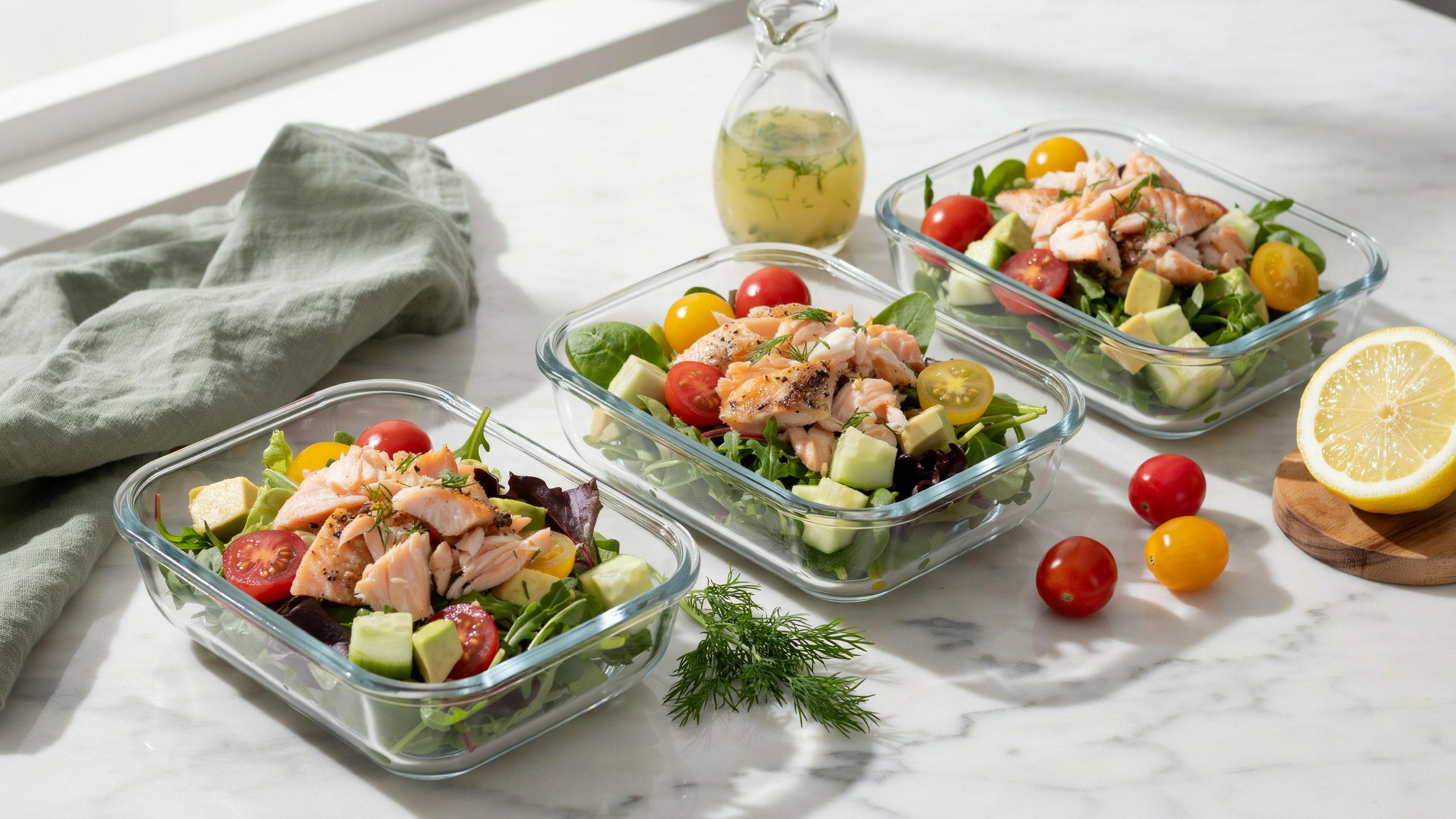
The Salmon Salad Deception Why Your Healthy Lunch Fails
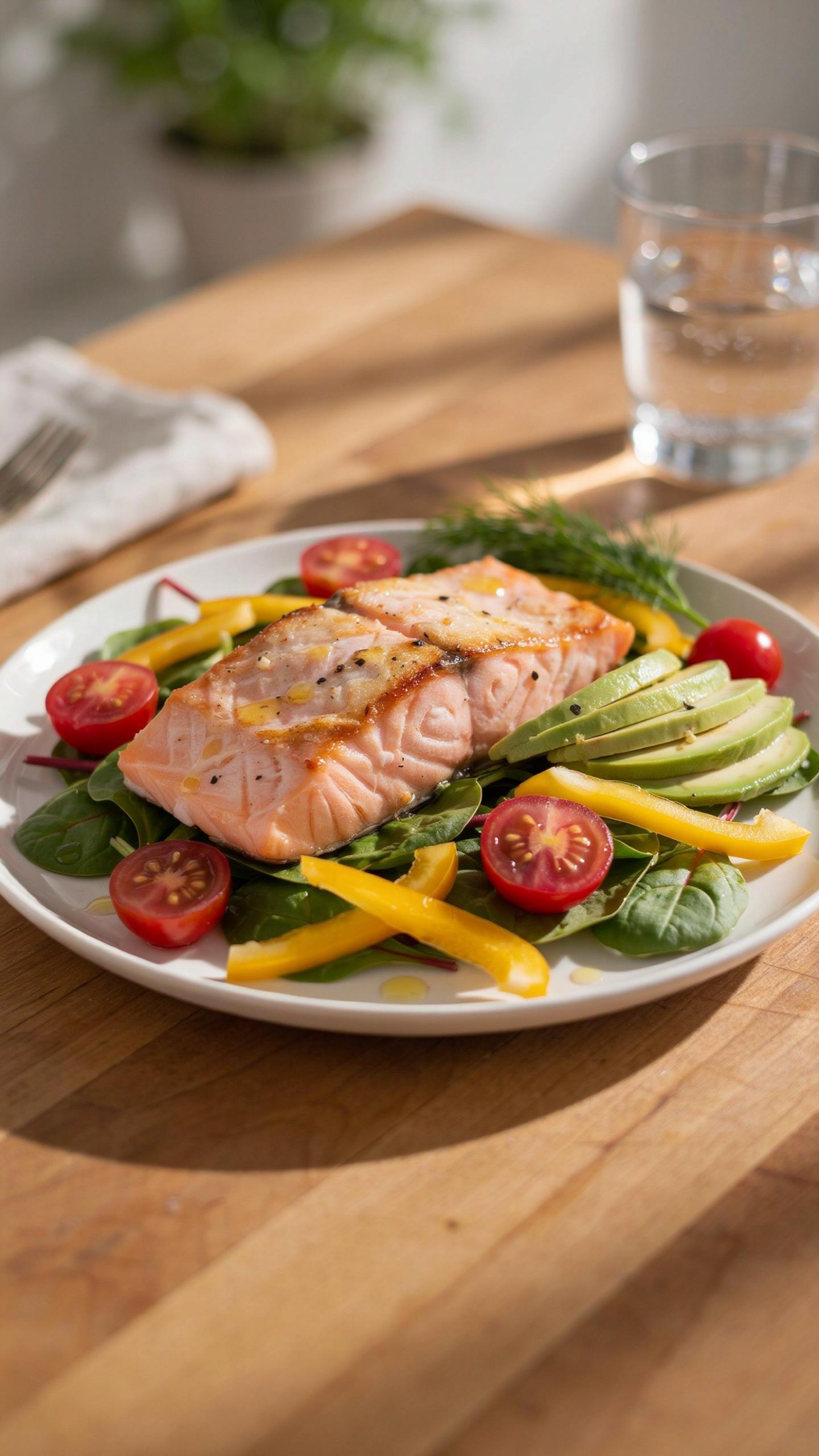
Dry Fish, Soggy Greens, Bland Flavor
You want to believe salmon salad is effortless nutrition so you can stop thinking about lunch. The mechanism that kills it is moisture management. Cooked salmon loses water naturally, then sits in a container where condensation and salad dressing accelerate deterioration. The greens wilt. The fish tastes like cardboard. You’ve built a system that guarantees failure by day three.
The culprit is timing separation, not ingredients. Most meal prep guides say prep everything at once on Sunday, then eat through Friday. Wrong. Salmon oxidizes faster than people realize. Its fat content means it develops a metallic taste after three days refrigerated. Greens collapse within two days at standard fridge temperature once dressed. You’re not actually making five lunches. You’re making one decent lunch on Monday and four inedible lessons.
Convenience Over Quality Costs More Than Time
The hidden cost framework here is economic, not nutritional. You spend less money buying pre-cooked salmon or rotisserie salmon, but you pay in quality loss and waste. Pre-cooked salmon is already at peak oxidation. It has traveled, sat in packaging, and lost structural integrity. You’re buying degraded protein and calling it efficient.

The math breaks. You spend 8 dollars on pre-cooked salmon versus 6 dollars on fresh salmon fillet that you cook yourself for twelve minutes. The convenience premium doesn’t justify the product. Then you throw away half of it because it tasted bad on day four. Cook fresh salmon yourself. Store it separately from greens and dressing. Assemble the salad the night before eating it.
The 3 Ingredient Protocol For Flaky Salmon
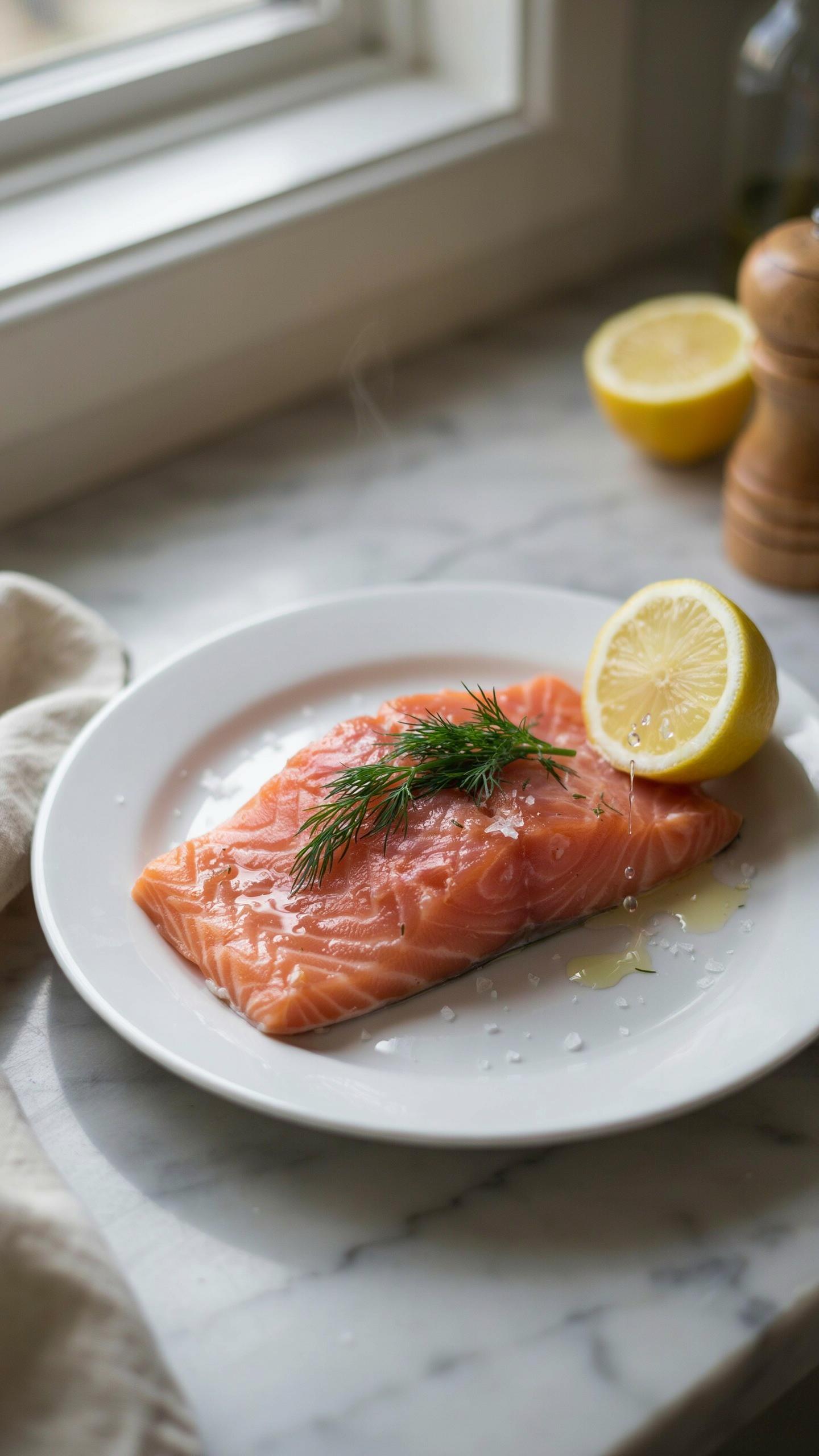
Cook Salmon In The Oven, Not The Pan
You want the salmon to look restaurant-quality in your lunch container because appearance signals competence. Here’s the mechanism: oven cooking uses ambient heat that surrounds the fish evenly, while pan searing creates temperature gradients that dry the exterior before the center finishes. Bake at 400°F for 12-14 minutes on parchment paper. The fish continues cooking slightly after removal, so pull it at 120°F internal temperature. This delivers consistent texture across every meal prep batch.
Oven cooking also eliminates the timing trap of pan work. You set a timer and walk away. No babysitting, no guessing when to flip, no ruined batches because you misjudged carryover cooking. The parchment prevents sticking without added oil, which matters for meal prep because pre-oiled containers get rancid faster. This method scales to eight salmon fillets simultaneously without skill degradation.
The Shortcut That Actually Breaks Your Meals
Everyone tells you to use canned salmon for meal prep because it saves time. They’re wrong. Canned salmon contains added salt, often exceeds 400mg per serving, and the texture breaks down completely within two days of mixing. Fresh salmon stays intact and flaky through the full week because its protein structure hasn’t undergone industrial heat processing. The time you “save” canning evaporates when you’re throwing out separated, mushy lunches by Wednesday.
The real protocol: cook fresh salmon in bulk on Sunday, portion into containers with lemon juice on top, and refrigerate dry until assembly. Lemon juice lowers the pH around the surface layer, slowing bacterial growth and preventing oxidation that makes salmon gray. Store cooked salmon three days maximum. This constraint forces you to meal prep twice weekly or accept the quality drop that makes you quit the system entirely.
Beyond Mayo Crafting A High Protein Salmon Salad Base
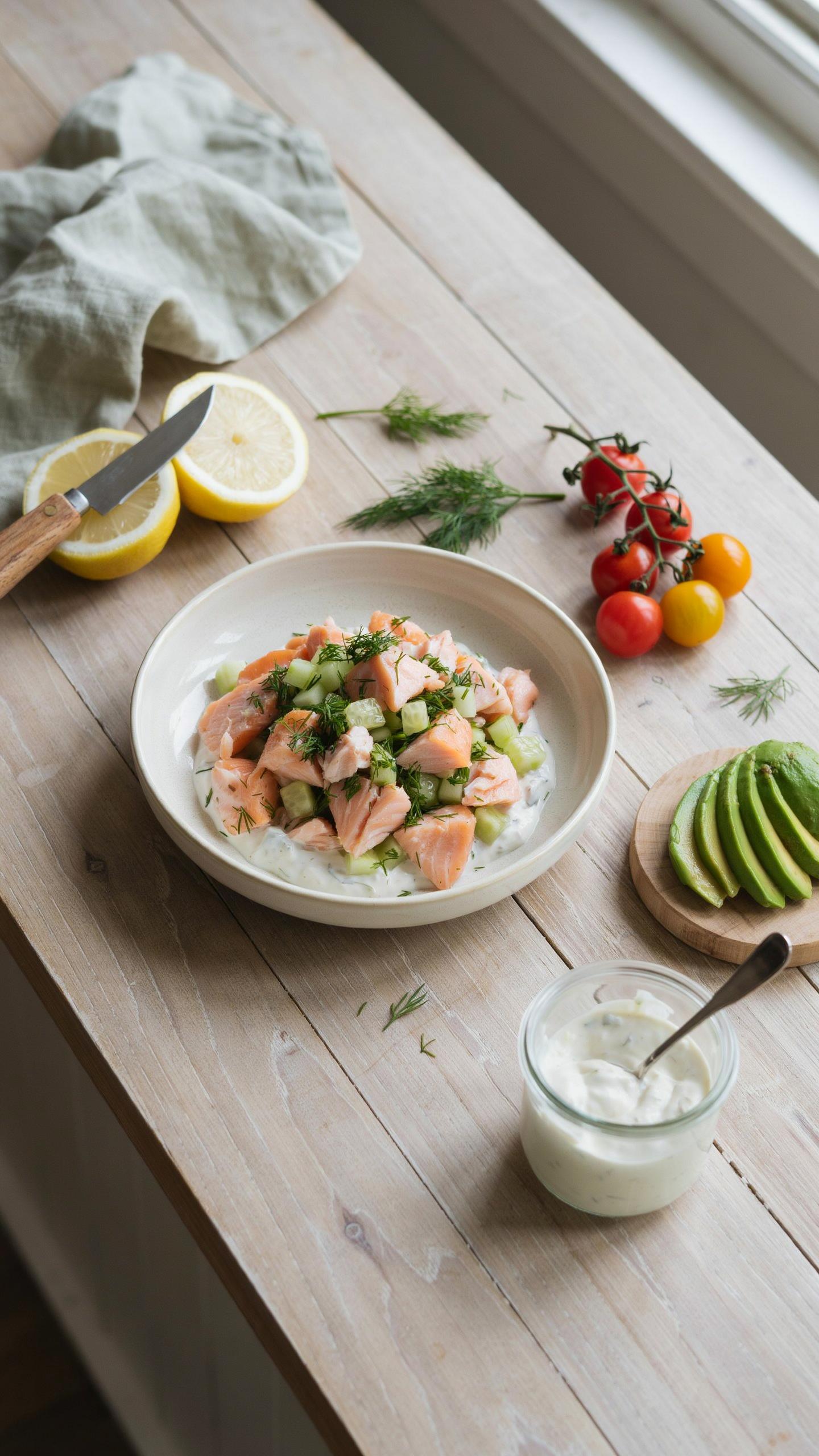
The Binder That Matters
You want mayo alternatives because you think it makes the salad healthier. That’s not the real problem. The real mechanism is this: mayo dominates the flavor profile and masks the salmon entirely. You need a binder that bonds ingredients without erasing taste. Greek yogurt does this at a 1:1 swap ratio with mayo, cutting calories by 30 percent while keeping the emulsion stable. Avocado works too but breaks down faster in storage, so it demands different timing.
The protein math changes based on your binder choice. Greek yogurt adds 2-3 grams of protein per tablespoon. Mayo adds zero. This compounds across meal prep containers. If you’re building a 30-gram protein lunch, your binder choice directly impacts whether you hit that target without adding extra salmon. Mix Greek yogurt with Dijon mustard at a 3:1 ratio. This creates acidity and tension that prevents the salad from tasting like a bland paste. The mustard is non negotiable.
Building Flavor In Layers
Taste architecture borrowed from cooking science relies on the same principle as signal processing in electrical engineering: you can’t make one strong wave work alone. You need frequency separation. Your salmon salad needs at least four distinct flavor channels hitting your palate independently. First channel: salt and acid from lemon juice or champagne vinegar. Second channel: heat from cracked black pepper or red pepper flakes. Third channel: umami from capers or a pinch of soy sauce. Fourth channel: sweetness from a small amount of diced red onion or a quarter teaspoon of honey.
The sequence of mixing determines which flavors land first on your tongue. Add acidic components to your binder base before folding in salmon. This prevents the acid from cooking the fish unevenly. Fold in vegetables last, roughly two hours before eating. This keeps texture intact and prevents water from pooling at the container bottom during storage. The onion sits on top as a garnish instead of submerged. Layer your salad greens separately from the salmon mixture until the hour before eating, or the greens wilt and you lose the contrast between crisp and creamy.
The Entropy Counter Method For Fresh Greens

Physics Of Degradation During Storage
You care about this because wilted greens feel like failure, like you wasted money and effort. That’s the real friction. The mechanism is entropy: greens degrade through moisture loss and oxidative browning the moment you cut them. Physics says systems move toward disorder. In meal prep, disorder means cellular breakdown accelerates when you expose cut surfaces and remove protective waxy layers. Spinach, arugula, and lettuce lose structural integrity faster than whole leaves because cutting increases surface area exposed to oxygen and ethylene gas they naturally release.
Temperature control becomes your primary lever. Store prepped greens at 34-38 degrees Fahrenheit, not at warmer fridge temperatures. Cold slows respiration and enzymatic degradation substantially. Keep greens dry before packing. Water clinging to leaves accelerates decomposition and creates an environment for mold. Pat them completely dry with paper towels or a salad spinner set to high speed. The drier the surface, the slower the decay clock runs.
Container Design Blocks Moisture And Air
Forget the advice about keeping dressing separate until eating. That’s incomplete. You need physical separation between wet and dry components, and you need to control the air composition in the container itself. Use airtight glass or rigid plastic containers, not bags. Containers with minimal headspace reduce oxygen exposure. The less air touching your greens, the slower oxidation happens. Layer your salad strategically: dressing on the bottom, proteins and dense vegetables next, then greens on top. This delays the soggy collapse by hours because the salad components absorb liquid gradually, not all at once.
Paper towels inside the container absorb excess moisture before it pools at the bottom. Line the container base with a folded paper towel, add a second towel as a barrier between greens and other components. Replace these towels daily if you’re prepping for a five-day rotation. The towels do real work: they pull humidity away from the lettuce and prevent condensation buildup on the lid. Pack tightly but don’t crush greens. Air pockets allow gases to accumulate. Press components together gently so they stay compact and stable through transport and storage.
Healthy Salmon Salad The Micronutrient Multiplier
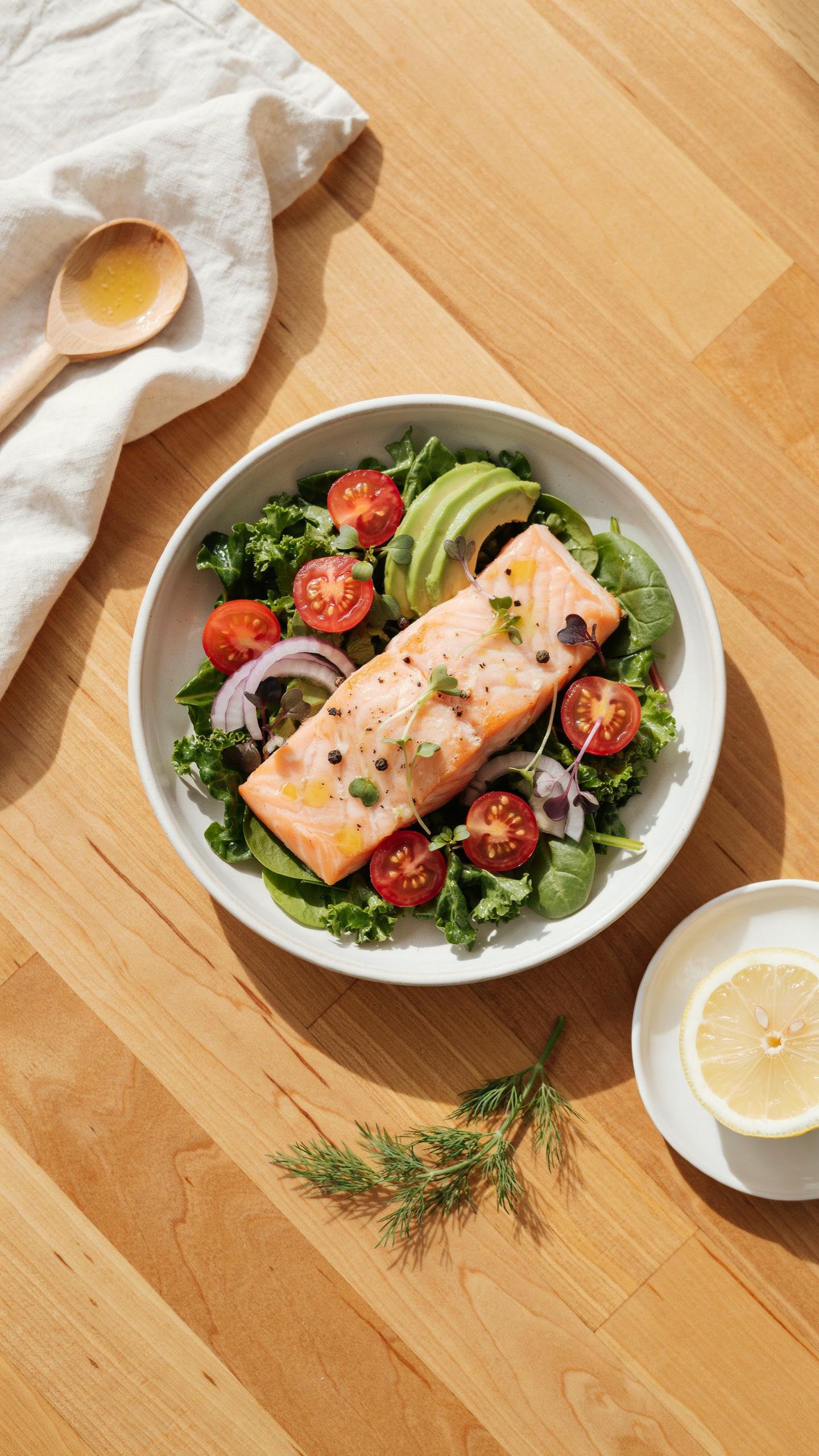
Unexpected Vegetables And Herbs Transform Nutrient Density
You want the salad to look intentional, like you know what you’re doing. The real mechanism is that most people treat vegetables as filler when they’re actually the leverage point for micronutrient concentration. Arugula, watercress, and radicchio contain glucosinolates that activate detoxification pathways in your liver. Adding dill, parsley, or cilantro isn’t aesthetic choice—it’s active ingredient addition. These herbs carry volatile compounds that reduce inflammation markers faster than the salmon protein alone.
The common advice says “add variety.” That’s lazy. Specificity matters. Dark leafy greens paired with cruciferous vegetables create a synergistic effect where compounds in one enhance absorption of compounds in the other. Red onion adds quercetin. Cucumber provides silica for connective tissue. Capers deliver a small dose of polyphenols. The protocol: build your salad base with at least three vegetable categories—leafy, cruciferous, and allium—before you add protein.
Antioxidant Stacking Without The Marketing
Biology calls this “electron donation,” and you’re doing it every time you layer antioxidant sources. Salmon provides astaxanthin, a carotenoid that crosses the blood-brain barrier. But alone, it’s underutilized. Pair it with vitamin C from bell peppers or lemon juice and you create a recycling system where spent antioxidants get regenerated instead of excreted. Add vitamin E from seeds and you’ve built redundancy into your cellular defense.
Most “antioxidant” salad advice focuses on visible color. Wrong framing. You’re measuring by mechanism, not appearance. Pomegranate arils contribute punicalagins. Beets deliver nitrates that improve blood flow during digestion. Walnuts add polyphenols that survive stomach acid. Store-bought dressings kill this effect with processing and heat. Make dressing with extra virgin olive oil and raw garlic immediately before eating to preserve polyphenol content and enzymatic activity.
The High Protein Meal Prep Playbook For Time Strapped Wins
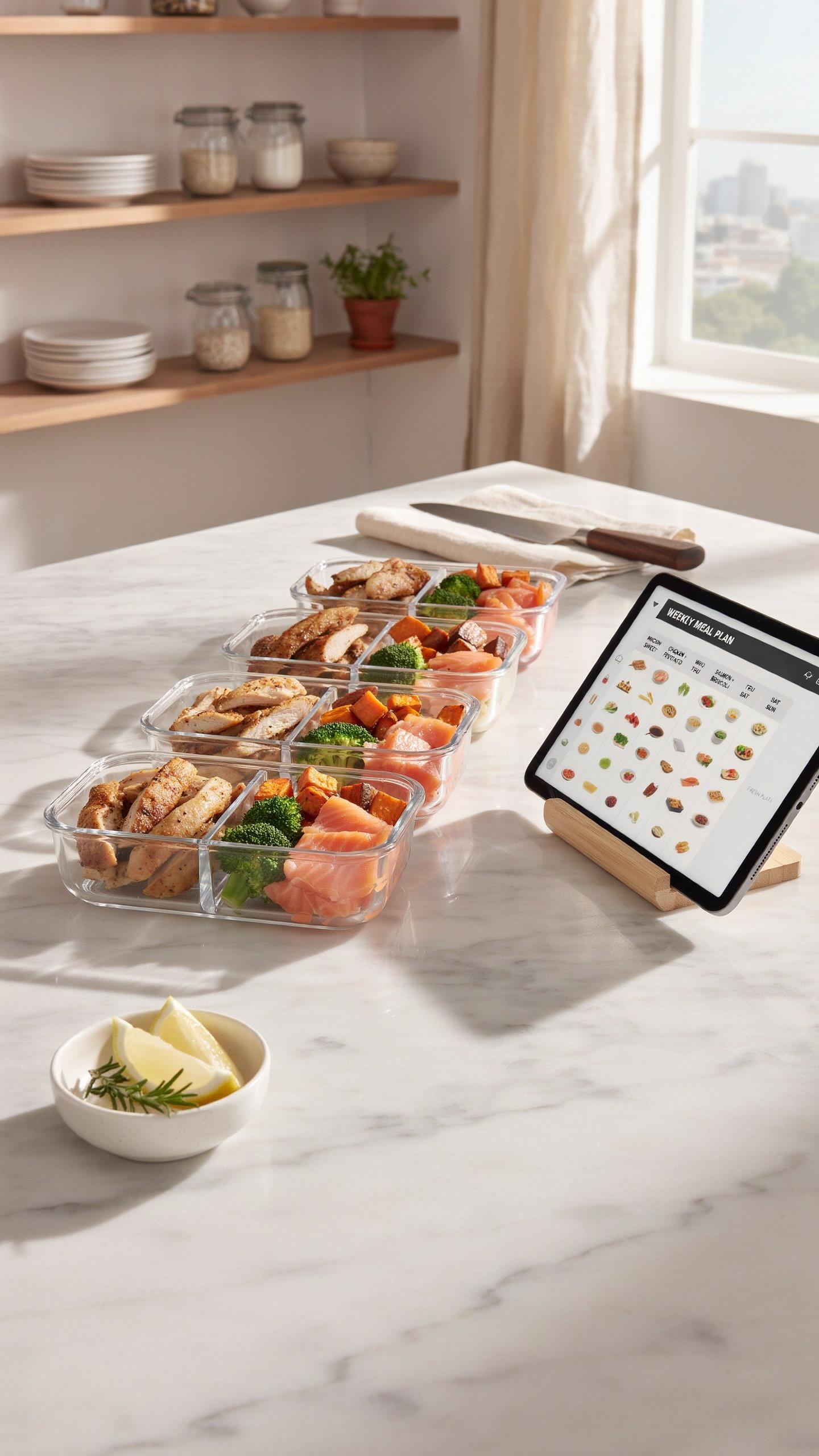
Cook Once, Eat Five Days Without Decision Fatigue
You want meal prep to feel effortless so you stop eating garbage at lunch. The real mechanism is constraint. Most people fail because they treat salmon salad prep like cooking, when it’s actually a production line. Think in terms of manufacturing efficiency: you’re minimizing setup time, changeover time, and waste between batches. Cook all salmon at once. Chop all vegetables at once. Mix all dressing at once. One decision per task, not per meal.
The numbers work. A Sunday session poaching five salmon fillets together takes thirty minutes max. Doing them one at a time across the week eats two hours. You save ninety minutes by batching. That friction reduction is what actually gets you to execute the plan instead of breaking at Thursday and ordering Thai food. The output isn’t just meals. It’s removing the decision point that kills consistency.
Portions That Keep Your Energy Stable
Salmon salad portions fail when people guess at ratios instead of treating protein intake as a dosing protocol. The standard play is four ounces of cooked salmon per salad, which delivers roughly thirty grams of protein. That number matters because it’s the threshold your body needs in one sitting to activate muscle protein synthesis. Below that and you’re wasting the meal’s purpose. Above it and you’re creating fullness without additional benefit.
Divide your total weekly protein need by five meals, then work backward to portion size. If you need one hundred fifty grams weekly, that’s thirty grams per meal. Weigh salmon portions on a scale when you divide them into containers. Measuring cups and eyeballing create the variance that tanks energy levels mid afternoon. The consistency is the product. Pack portions on Sunday. Stack containers. No variation for five days.
No More Sad Desk Lunch The Chefs Touch Salmon Salad
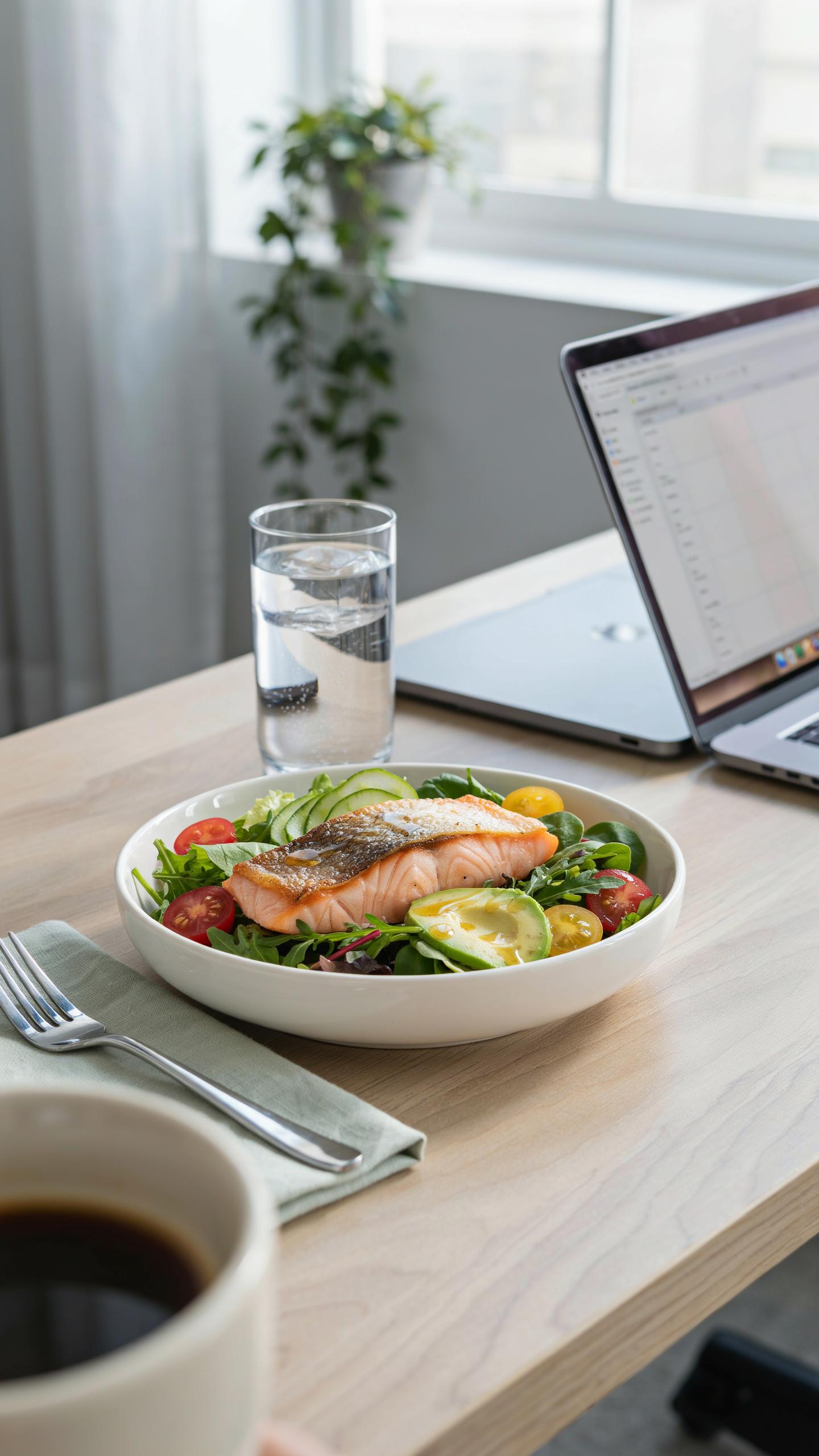
How Plating Changes What You Actually Eat
You care about this because eating something beautiful makes you feel less like you’re being punished for choosing protein over convenience. The mechanism is simple: visual contrast triggers appetite and satisfaction signals before taste even registers. Your brain categorizes food by how it looks, not the macros on the label. A salmon salad thrown into a container looks like meal prep. The same salad arranged on a plate with intentional spacing looks like a choice you made for yourself, not a task you completed.
Most people skip this step because they think presentation is frivolous when eating alone at a desk. It’s not. Color separation, height variation, and negative space don’t require extra ingredients. They require thirty seconds of intention. Place the salmon in the center, pile greens to one side, scatter your vegetables to create visual breaks. The shift from “I’m eating this because it’s efficient” to “I’m eating this because it’s mine” changes compliance rates.
Layering In What Actually Tastes Good
Texture in food design borrows from industrial design’s principle of contrast: opposing properties make each element more noticeable. Salmon salad fails when it becomes a homogeneous paste of soft protein and limp greens. You need chew, crunch, and creamy elements in the same bite to trigger satisfaction signals that override the boredom response.
Add raw vegetables that hold structure: cucumber rounds, radish slices, or celery chunks. Toast nuts separately and store them dry until assembly, never mixed in the dressing from the start. Include something creamy that isn’t just mayo-based: avocado, feta, or a tahini drizzle. The protocol is assembly order: greens down first, salmon and protein clustered, raw vegetables scattered, nuts added last, dressing applied only when eating. This prevents sogginess and keeps each component distinct on the fork.
Salmon Salad Recipes Beyond The Basic Bowl
The Container Changes Everything
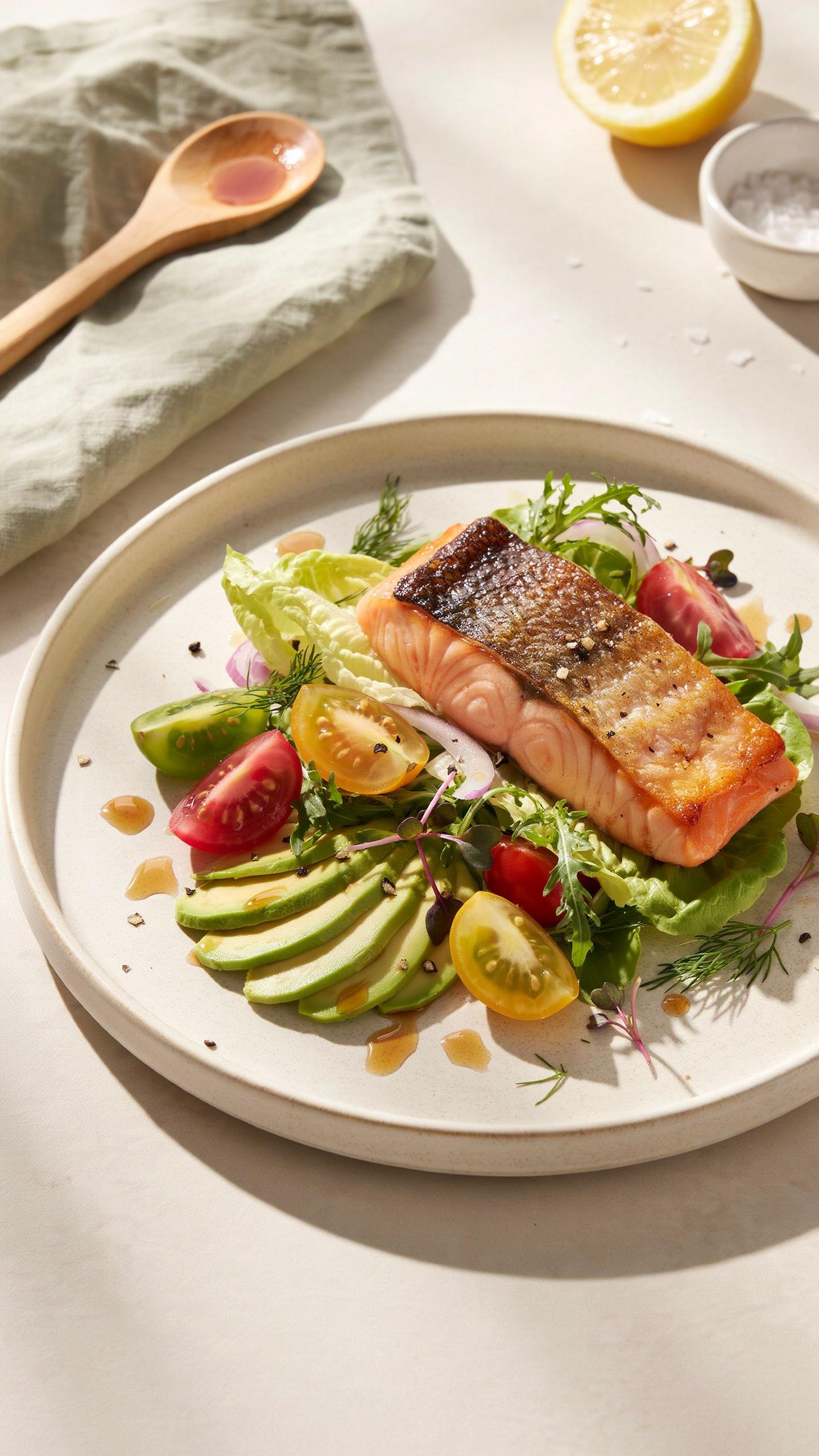
You want to feel like you’re eating something different every day without actually cooking different things. That’s the real driver here. The mechanism is simple: salmon salad’s structure lets you swap the delivery system while keeping the protein, macros, and prep work identical. A bowl feels boring by day three. A wrap feels intentional. A sandwich feels like lunch instead of diet food. You’re not reinventing the salad. You’re controlling how your brain processes the same meal.
The container also controls satiation timing. Bread or wraps slow the salad’s nutrient absorption compared to a naked bowl. Your blood sugar rises more gradually, which means you stay full longer without eating more calories. Prep remains identical—mix the salmon salad base on Sunday, then portion it into different formats throughout the week. This is pure leverage. You make one thing and get five different eating experiences.
Asian, Mediterranean, And Mexican Flavor Architectures
Flavor profiles operate like economic systems: each one has a dominant currency and supporting assets that make the whole thing work. Mediterranean uses fat as its currency (olive oil, feta, olives). Asian uses umami and acid (soy, rice vinegar, sesame). Mexican uses heat and smoke (chipotle, lime, cilantro). Salmon pairs with all three because its fat carries flavor without overpowering it.
- Mediterranean Base: Mix salmon with Greek yogurt, diced cucumber, red onion, kalamata olives, feta, and oregano. Lemon juice adds brightness. Works in wraps or on greens.
- Asian Fusion: Combine salmon with wasabi mayo, diced avocado, cucumber, pickled ginger, and sesame seeds. Soy sauce replaces salt. Nori strips add crunch and umami depth.
- Mexican Lime Chipotle: Blend salmon with chipotle mayo, jalapeño, lime juice, cilantro, and diced bell pepper. Black beans add fiber and texture without diluting protein content.
- Thai Coconut: Mix salmon with coconut aminos, red curry paste, lime juice, and fresh basil. Adds fat for satiation and distinct flavor separation from other iterations.
- Scandinavian Dill: Combine salmon with dill, capers, red onion, and crème fraîche or Greek yogurt. Lemon and black pepper finish it. Pairs with rye bread specifically.
The key is changing one primary flavor compound while keeping salmon and a creamy binder constant. This gives you architectural variety without multiplying ingredients or prep complexity. Store each flavor version in separate containers so you can grab based on what you want, not what’s convenient. Flavor coherence prevents decision fatigue during the week.
The Bio Optimization Of Your Salmon Salad Fuel
Match Your Ingredients To What Your Body Actually Needs
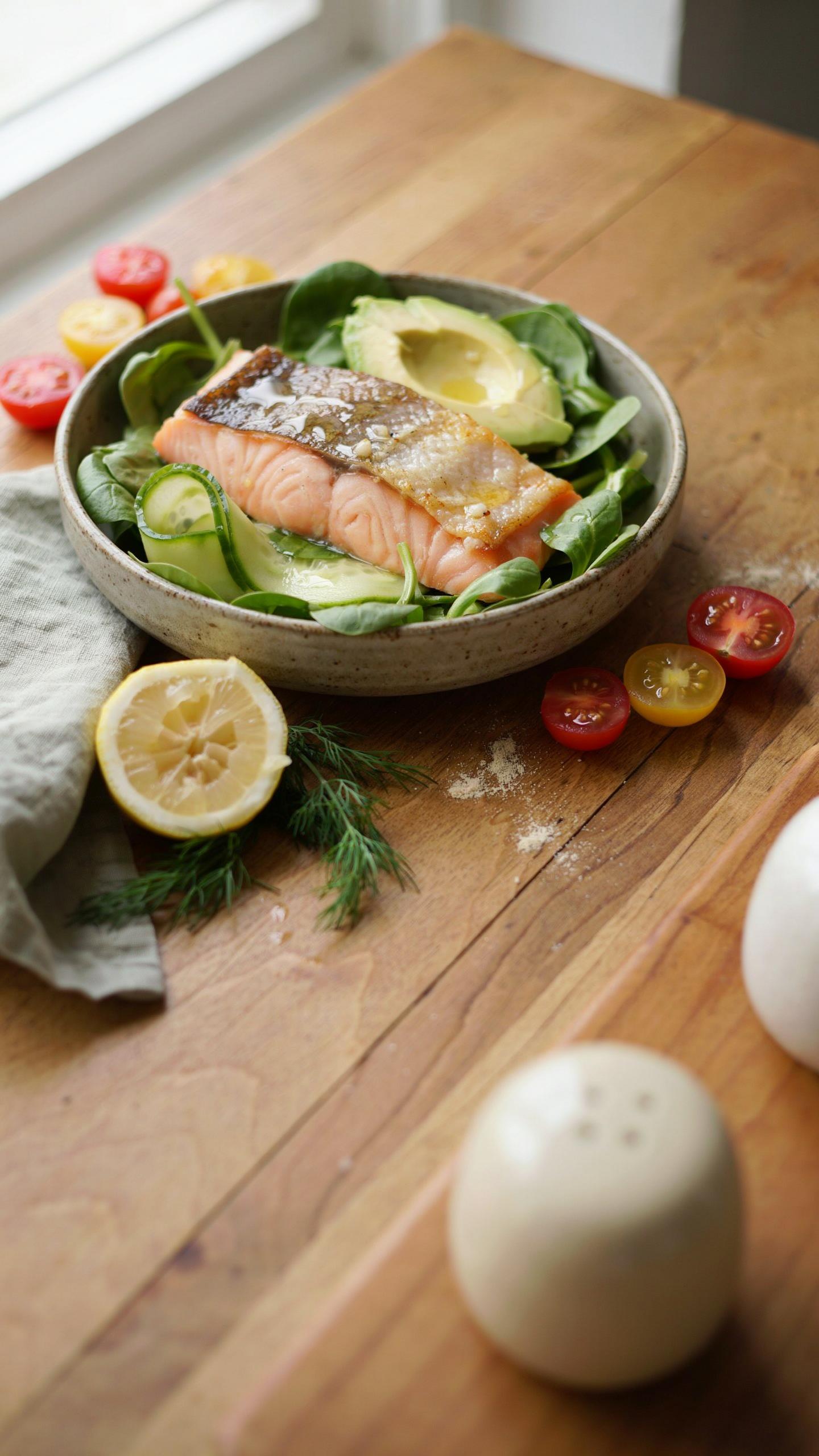
You want to feel like you’ve optimized something without doing the work to figure out what you actually need. Here’s the mechanism: your body runs on energy systems, not willpower. Biology doesn’t care about generic meal prep advice. A salmon salad works because it delivers specific macros your system can use immediately, but only if you build it around your actual output, not Instagram’s version of health.
Start by identifying whether you’re in a surplus, maintenance, or deficit. Your salmon salad composition changes based on this single variable. If you’re building muscle, you need more fat from the salmon and olive oil to support hormone production. If you’re in a deficit, the same salad becomes a vehicle for satiety, not calories. The protein stays constant around 30 to 40 grams per serving, but the supporting ingredients shift dramatically based on your metabolic goal, not on what looks balanced on a plate.
Protein And Fat Control How Long You Actually Stay Full
Satiety isn’t a feeling you chase, it’s a mechanism you engineer using endocrinology. When you eat protein and fat together in a salmon salad, you trigger cholecystokinin and peptide YY release in your gut. These hormones signal your brain to stop eating. The common advice says “add vegetables for volume,” which is incomplete. Vegetables add nothing to satiety signals. Protein and fat do the actual work.
A salmon salad with four ounces of salmon and two tablespoons of olive oil-based dressing creates a satiety response that lasts four to six hours. Swap the oil for vinegar or skip it entirely, and you’ll feel hungry two hours later despite identical protein content. The fat isn’t padding. It’s the component that extends how long you’re satisfied. Build your salmon salad with this mechanic first, then add vegetables for micronutrients and texture, in that priority order.
From Flaky Salmon Salad To Peak Performance
Eating With Intent Sharpens Your Mind
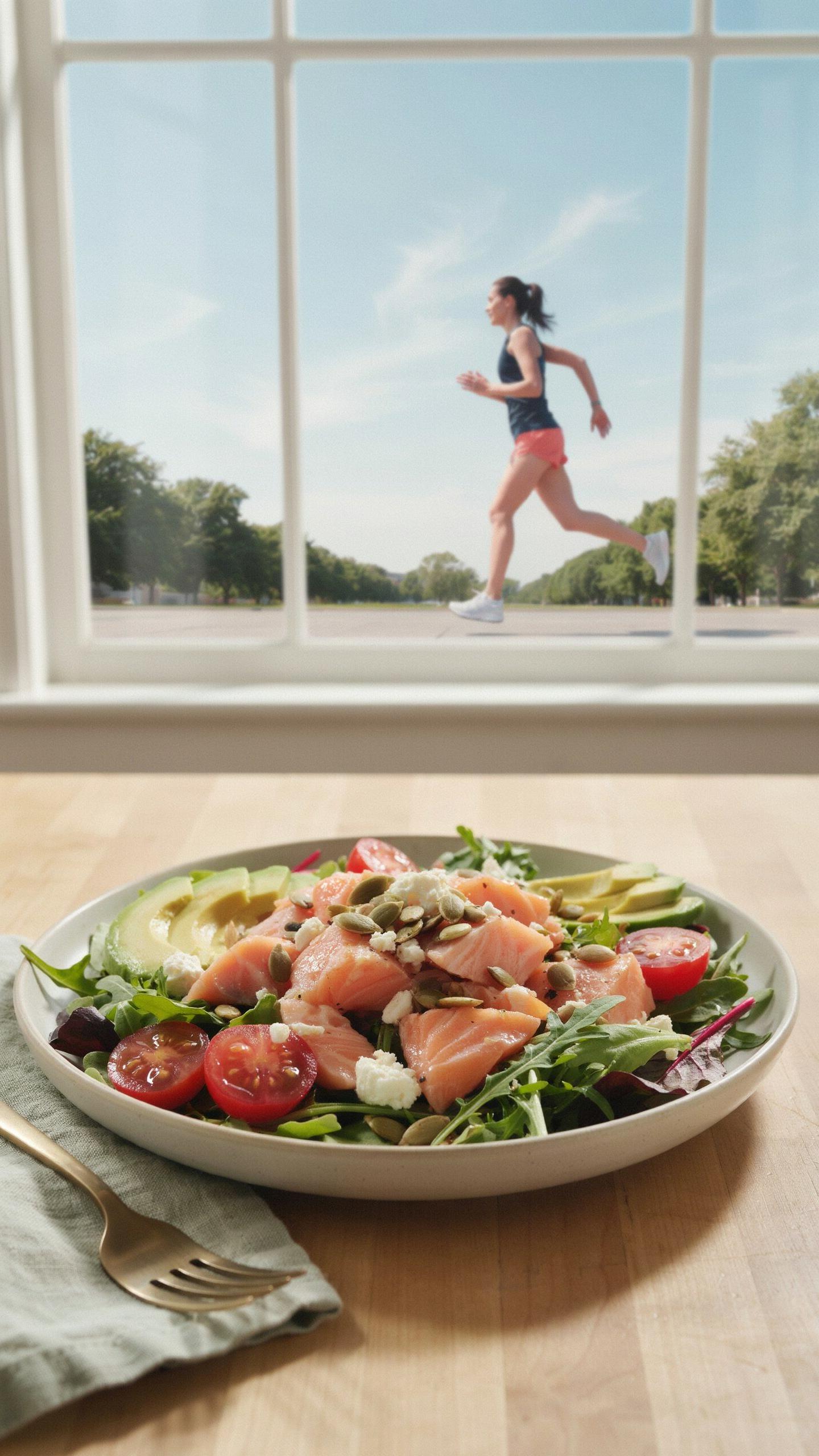
You want to believe lunch doesn’t matter to your afternoon output, but you’re wrong. The real mechanism here comes from neurobiology: your prefrontal cortex runs on stable glucose and amino acid availability. Salmon salad meal prep isn’t about willpower or discipline. It’s about removing the blood sugar volatility that tanks decision-making quality between 2 and 4 PM. Most people eat whatever’s convenient and then blame their environment for their focus collapse. The actual lever is deliberate protein and fat pairing at lunch to stabilize neurotransmitter production.
Omega-3 fatty acids in salmon directly support dopamine stability and acetylcholine synthesis, both required for sustained attention. When you prep salmon salad with a measured protein portion, greens, and healthy fats, you’re anchoring your cognitive performance for hours. Your brain isn’t scrambling to stabilize blood sugar while you’re supposed to be thinking strategically. The specificity matters: a 4-ounce salmon portion with mixed greens and a fat source like avocado or olive oil creates the neurochemical conditions for clear work. This isn’t motivation. This is biochemistry you control through prep.
Sustained Energy Without The Afternoon Collapse
The post-lunch energy crash is a design flaw in how most people build their meals, not a personal weakness. Your body follows basic energy economics: refined carbs spike insulin, which clears glucose too fast, leaving you depleted. Salmon salad flips this by anchoring lunch around protein and fat instead of carbohydrates. The omega-3s in salmon slow gastric emptying, meaning nutrients enter your bloodstream gradually rather than all at once.
Prep your salmon salad with proportional control: aim for roughly 4 ounces of salmon, 2-3 cups of greens, and a tablespoon of oil-based dressing. This ratio maintains steady amino acid and fat delivery without the glycemic spike that precedes the crash. Energy stability compounds over weeks of consistent prep. Your afternoon work output improves because your body isn’t fighting insulin fluctuations. Store portions in glass containers Monday through Thursday so the mechanism stays consistent regardless of willpower.
The real obstacle isnt the recipe its your addiction to convenience over conscious construction

You’ve been trained to believe that eating well requires zero friction. That’s a lie that keeps you weak. Salmon salad meal prep demands fifteen minutes of your Sunday. Fifteen. Buy salmon today, cook it tonight, and stop waiting for a system that does the thinking for you. Your body won’t change until you do.