
Beyond Recipes The High Protein Meal Prep Mindset Shift

Why Most Meal Prep Fails
You want meal prep to work because you’re tired of the daily friction of feeding yourself. But here’s what actually kills most attempts: people treat meal prep like a weekend project instead of a system design problem. They cook, they portion, they feel accomplished Monday morning, then watch it crumble by Wednesday because they never solved for the real bottleneck—decision fatigue on days three through five.

The mechanism borrowed from operations management is “capacity utilization.” Your willpower and attention are finite resources. Most meal preppers max out capacity on day one (cooking), leaving zero buffer for the actual hard part: sticking to the plan when you’re tired, stressed, or bored. The prep fails not because the food was bad, but because the system demanded too much cognitive load too early. You burned your decision budget before the week even started.
The True Cost Of Decision Fatigue
Every time you choose what to eat, you spend mental energy. Economics calls this “transaction cost.” In meal prep, transaction cost is the friction between having food and actually eating it. Common advice says “just prep more meals.” That’s incomplete. The real lever is reducing the number of decisions you make per day, not increasing the volume of food you cook on Sunday.
If you prep five different meals, you create decision points every time hunger hits. You pick between option A, B, C, D, or E. Your brain exhausts itself. The fix is brutal simplicity: prep two proteins, two carbs, two vegetables, then mix them in the same combinations all week. You eliminate choice without eliminating food. By Thursday, eating becomes automatic. The system works because the decision burden collapsed to zero.
The Minimum Viable Protein Protocol For Beginners

How Much Protein Do You Actually Need
You want a number because you’re afraid of getting it wrong and wasting effort. Here’s the mechanism: your body repairs muscle tissue with amino acids from protein. The amount you need depends on your body weight and activity level, not your goals. One gram per pound of bodyweight is the baseline that works. Below that, you’re leaving recovery on the table. Above that, you hit diminishing returns fast.
The math is simple because it has to be. Take your current bodyweight in pounds and eat that many grams of protein daily. A 180-pound person eats 180 grams. A 160-pound person eats 160 grams. You don’t adjust for “cutting” or “bulking” at the protocol level. You adjust calories elsewhere. Protein stays the same. This removes guessing from the equation and lets you focus on consistency, which is the only variable that matters in meal prep.
Pick Three Proteins And Stop
Most advice says “rotate your sources.” That’s how people fail at meal prep. You need monotony, not variety. Pick chicken breast, ground beef, and eggs. That’s it. These three sources cover cost, convenience, and cooking method diversity. Chicken breast is cheapest per gram of protein. Ground beef handles bulk cooking without drying out. Eggs work raw or cooked and require zero skill. Your brain has finite decision-making capacity each week. Spending it on protein selection wastes it.
The mechanism is from economics: specialization reduces friction. When you prep the same three sources every week, you stop thinking. You buy the same quantities. You use the same pans. You time the cooking the same way. After four weeks, meal prep stops being a decision and becomes a routine. A routine takes less willpower, less planning, and less time. Prep chicken in a sheet pan for 25 minutes at 375 degrees. Cook ground beef in a large skillet for 12 minutes over medium-high heat. Boil eggs in bulk and peel them cold under running water. These three methods stack into a two-hour Sunday session without overlap.
Deconstructing Easy Nutritional Meals The Component Approach
Cook Each Protein, Carb, And Vegetable Separately
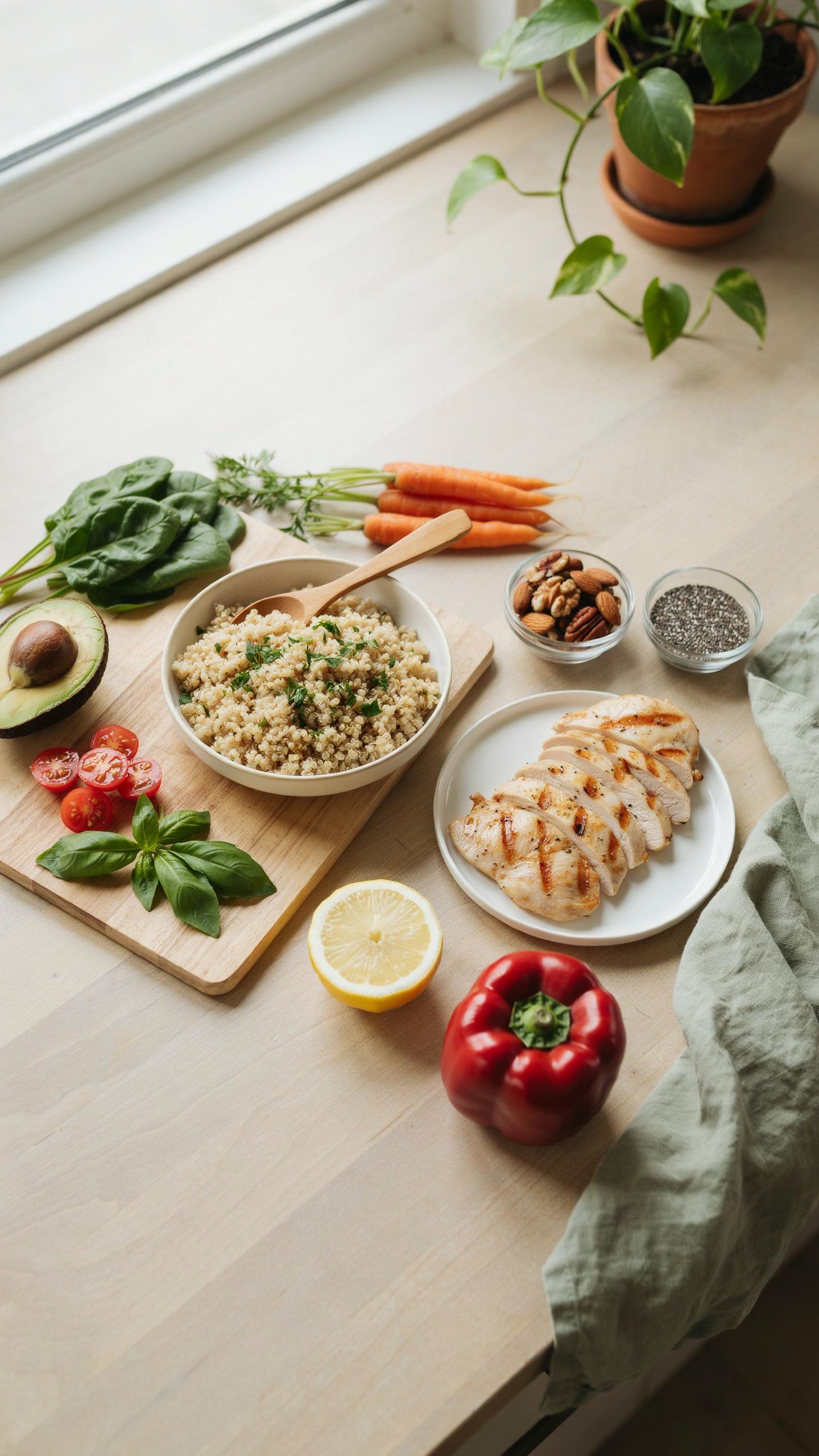
You want to believe meal prep is simple because admitting it requires systems makes you feel behind. Here’s the mechanism: treat your kitchen like a manufacturing line with distinct stations, not a restaurant that plating everything together at once. Each food type has different cook times, temperatures, and storage stability. Batching them separately lets you nail texture on protein without overcooking vegetables, and rotate components through the week without waste.
Cook your protein to target doneness, hold it. Cook your carbs to proper texture, hold it. Cook your vegetables to retention of structure, hold it. This isn’t laziness, it’s control. A chicken breast cooked to 165°F stays safe for five days. Rice cooked to al dente doesn’t turn to mush by Thursday. Broccoli steamed for five minutes stays crisp when refrigerated separately. Stack them into containers only when you eat, and your meals taste like they were made today instead of three days ago.
The Mechanics Of Quick Weekday Assembly
Assembly line logic comes from manufacturing: minimize movement, eliminate decision points, maximize output. Your kitchen becomes a prep station where you grab precooked components, portion them, and move on. Most people fail because they cook everything then try to figure out combinations while hungry and tired. You’ve already solved this. Grab container A (protein), container B (carb), container C (vegetable), container D (fat source). Four movements, five minutes, meal done.
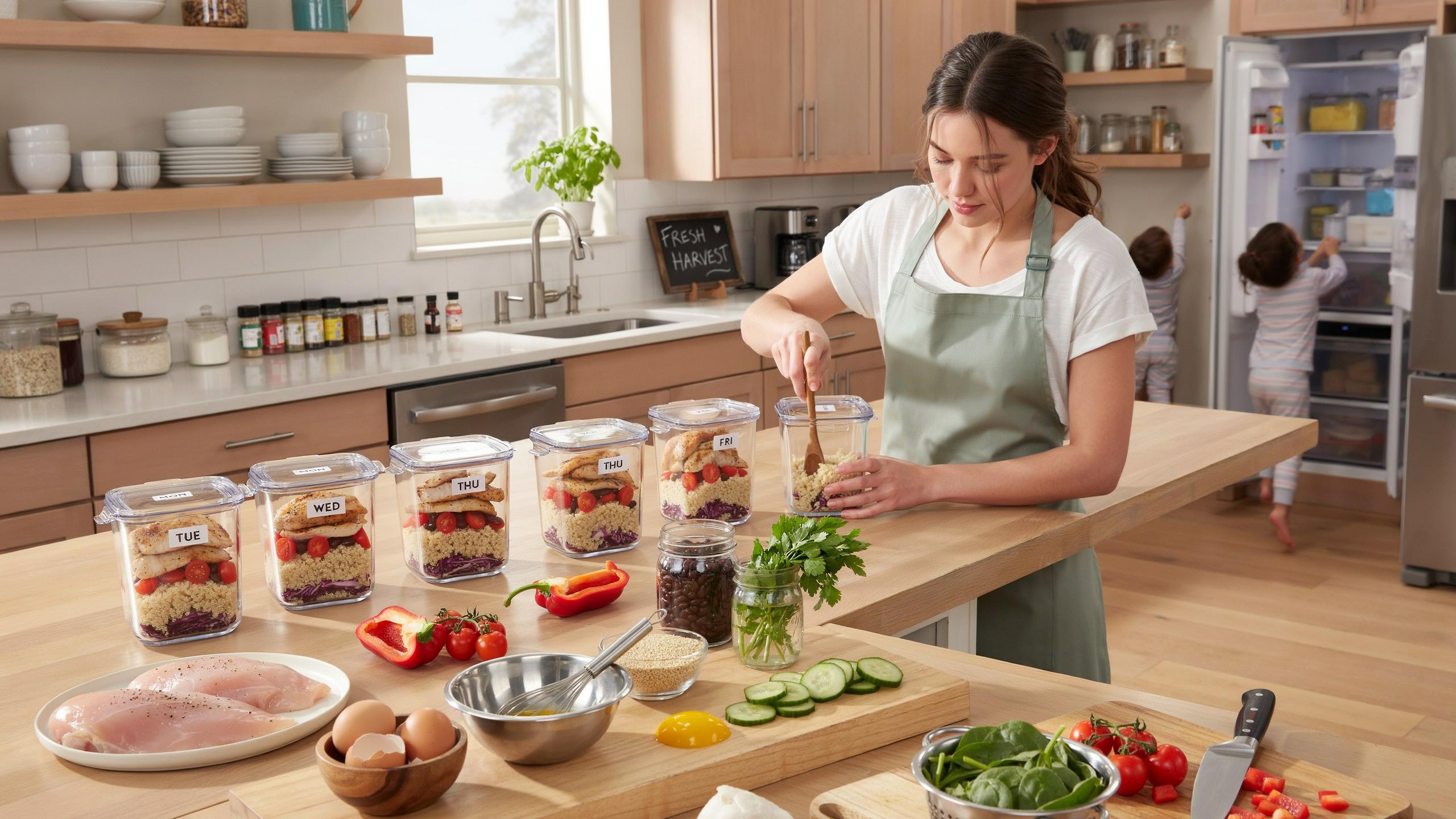
The protocol is straightforward: dedicate one day to cooking. Use four to six containers per component type. Label them with dates. Each morning or night before, grab one from each container and assemble into your meal container. No decisions mid-week. No scrambling. No takeout shortcuts because the system friction is too high. You’ve engineered the friction out of the system. Execution becomes automatic.
The Inelastic Demand Of Your Week Scheduling Your Prep

Time Scarcity Is Your Real Constraint
You want to believe consistency is a discipline problem. It’s not. Economics calls this “inelastic demand”—the thing you need doesn’t shrink when supply tightens. Your body needs protein every single day. Your schedule doesn’t care about your goals. The mechanism is simple: you have a fixed number of hours per week, and meal prep consumes a specific block of them. Most people ignore this and wonder why they quit after two weeks.
Your prep window is the hours you actually have, not the hours you wish you had. Sunday afternoon doesn’t work if you’re traveling. Tuesday evening disappears if your kid has soccer. You need to identify when you can realistically spend 2 to 4 uninterrupted hours on cooking, chopping, and storing. Write down next week. Circle the blocks that are genuinely free—not “mostly free,” actually free. That’s your prep window. Protect it like a scheduled meeting you can’t reschedule. That’s where the work happens.
Resource Allocation Determines Output
Efficiency isn’t about moving faster. It’s about removing friction before you start. Buy your proteins and vegetables the day before prep. Organize your workspace so containers, lids, and labels sit within arm’s reach. Set up your cutting board, knives, and sheet pans before you turn on the stove. Most people waste thirty minutes hunting for a storage container or a clean cutting board mid-session.
The real output multiplier is batch size and cooking method alignment. If you cook 8 pounds of chicken breast, you roast it all at once, then portion it. If you cook 3 pounds, you’re heating the oven three separate times. One oven session produces three days of protein. Pick one or two proteins per week, not five. Cook rice, sweet potatoes, or quinoa in bulk in a single pot. Store in the same container type so you don’t waste mental energy on decisions. Your job is to remove decision points, not execute perfectly.
Strategic Shopping Fueling Your Protein Packed Meals

Buy In Volume, Not Convenience
You want to feel like you’re optimizing without actually changing your behavior. The real mechanism here is economics: bulk purchasing flattens your per-unit cost, which removes the price objection that kills consistency. Buy chicken breast by the case, not the package. Buy ground beef from a restaurant supply store or Costco in ten-pound quantities. Buy eggs by the flat.
The friction point most people miss is storage space, not money. A ten-pound bag of chicken costs forty percent less per pound than buying two pounds twice weekly. But it demands freezer real estate and a defrost protocol. Commit to the freezer space first. Then build your shopping around filling it once every two weeks instead of shopping reactively.
Freeze Smart, Thaw Smarter
Storage isn’t about containers looking neat on a shelf. It’s about maintaining protein quality through the freeze-thaw cycle, which degrades texture if you skip one step. Freeze raw protein on sheet trays flat for exactly two hours, then transfer to freezer bags. This prevents one giant block that thaws unevenly and wastes time.
Label everything with the purchase date using a marker directly on the bag. Protein stays safe frozen indefinitely, but taste degrades after three months. Thaw in the refrigerator overnight, never on the counter. The difference between thawing right and thawing wrong determines whether your meal tastes like food or tastes like you’re paying a penalty for planning ahead.
Cooking With Contempt The Minimalists Guide To High Protein Meal Prep
The Tools That Actually Matter
You want the right tools because you think they’ll make you feel professional. They won’t. But they will eliminate friction, and friction is what kills meal prep consistency. The real mechanism: friction compounds. One awkward knife turn becomes ten, ten turns become a skipped prep day, skipped days become back to takeout.
You need exactly four things. A sharp chef’s knife, a large cutting board, a sheet pan, and a food scale. Everything else is theater. The knife does ninety percent of the work. A dull blade requires more pressure, more time, and creates decision fatigue before you’ve even started cooking. Invest in one decent knife and sharpen it monthly. The scale removes guessing, which removes the mental load that makes meal prep feel optional.
Speed Through System, Not Heat
The common advice says to use your oven, your stovetop, your instant pot all at once. That’s wrong. Parallel processing in kitchens doesn’t work like assembly lines because one person can’t monitor three heat sources without burning something or standing around idle. The real leverage is batching by method, not time.
Cook all your proteins using one method first. Bake chicken breasts at 375°F for 20 minutes, then grill your ground turkey, then boil your eggs. This takes one hour total instead of ninety minutes watching different timers. Your attention stays locked. Once proteins are done and cooling, move to vegetables using the same strategy: roast everything that roasts, steam everything that steams. The scale matters. Cook 8 pounds of chicken at once, not two pounds three times.
The Set And Forget System For Protein Foods
When To Cook What
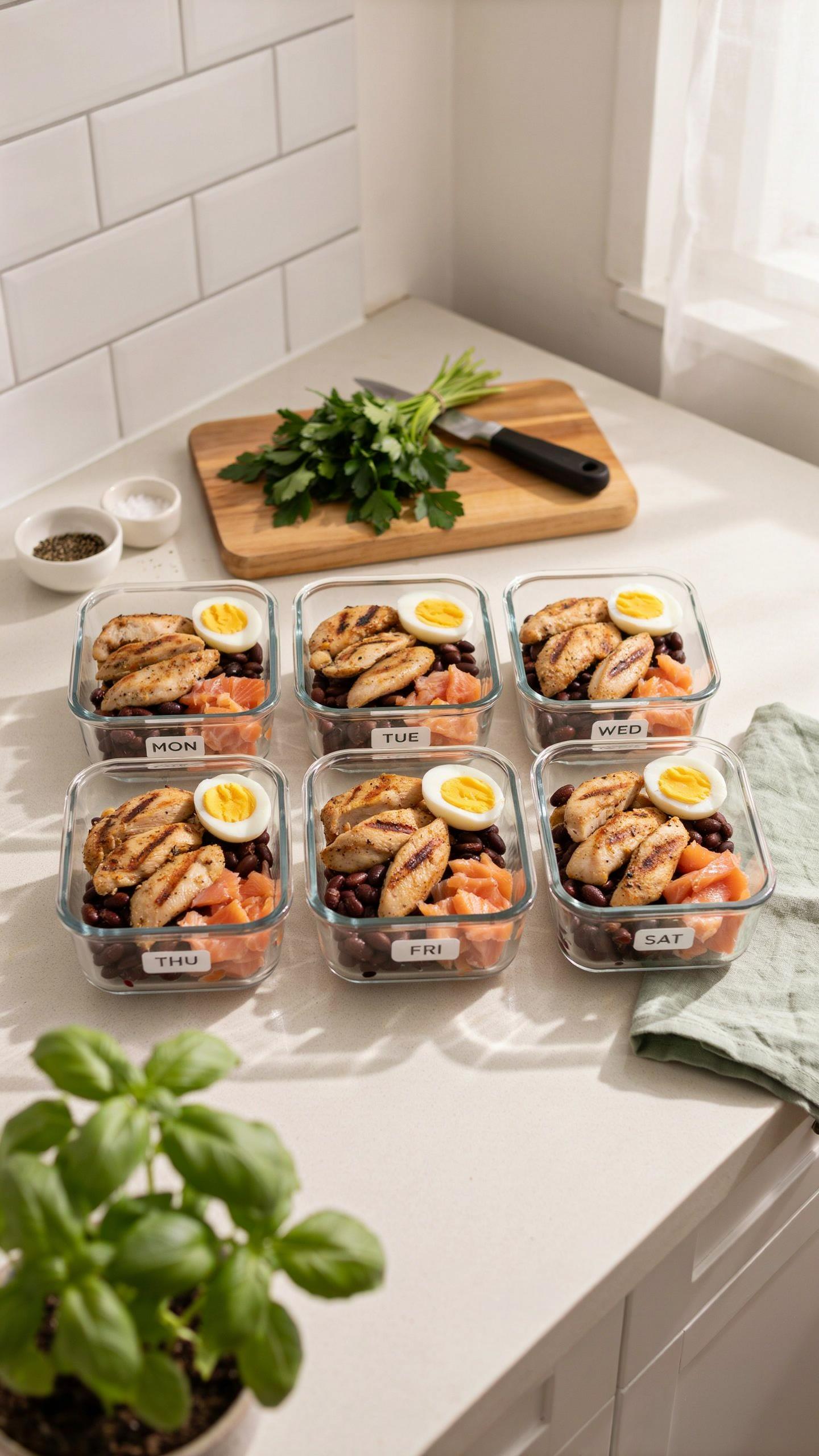
You want to believe meal prep happens once per week and then you’re done thinking about it. That’s not how biology works. Protein degrades at different rates depending on the source, storage temperature, and whether you’ve exposed it to oxygen. Cook chicken breast on Sunday and it’s safe through Wednesday. Ground beef oxidizes faster and peaks at day three. Fish peaks at day two. This matters because the timer is different for each protein, and you’re going to plan around it, not pretend it doesn’t exist.
The mechanism comes from food science, not motivation. Plan your cooking schedule backward from when you’ll eat each protein. If you meal prep on Sunday and eat chicken Monday through Wednesday, cook chicken on Sunday. If you eat ground beef Wednesday through Friday, cook it Tuesday night instead. This requires a one-page calendar showing which protein you eat each day, then marking which day you cook it. You’re not being flexible. You’re being strategic about bacterial growth windows.
Thaw First, Cook Second
Common advice says you can cook frozen protein straight from the freezer. Technically true. Practically wasteful. Frozen centers cook slower than thawed edges, creating texture inconsistency and moisture loss in the outer layers. You lose protein quality and eating experience. If you’re prepping to hit a target, you’re not settling for degraded texture.
Thaw your protein in the refrigerator the night before you cook it. This takes planning but delivers even cooking and better moisture retention. Remove what you’ll cook tomorrow from the freezer in the evening. Cook it the next afternoon. For a standard chicken breast at refrigerator temperature, plan 8 to 12 hours minimum. Label your freezer containers with the date you froze them and the intended cooking date. This removes guesswork and prevents the “should I cook this today” decision tax every morning.
Scaling Up From First Timer To Fluent Meal Prepper

The Rotation Without The Chaos
You want to look competent. You want to prove you’re not a one-trick pony doing the same chicken and rice for three months before quitting. Here’s what actually happens: most people add variety too fast and lose the system entirely. Borrow from inventory management. You need rotation depth, not rotation speed. That means picking three to four protein sources, three to four carbs, and three to four vegetables. Cycle through them on a two-week schedule. The constraint forces decision-making to happen once, not every single day.
Your first month you prep the same five meals. Month two, you swap one protein and one vegetable. Month three, you swap the carb source. This isn’t boring. This is signal clarity. You know exactly how your body responds to each swap because you isolated one variable at a time. Most people drown in choice and never learn which modifications actually work for their digestion, energy, or hunger patterns. The scaling happens through controlled replacement, not through adding ten new recipes at once.
What Actually Gets You Results Later
Nobody talks about this part because it sounds unsexy. You need a spreadsheet. Three columns: date prepped, what you made, how you felt three days in. That’s it. Not calorie counts or macros on the sheet. Just the basic facts: did the portions keep you full? Did your energy crash? Did digestion feel clean? After four to six weeks, patterns emerge that no generic nutrition article can predict for you.
When you hit month three, four, or five, this data tells you whether to scale up portions, swap proteins, or change prep timing. Most people never get there because they stop tracking after week two. The discipline isn’t in the cooking. The discipline is in the one-minute entry that turns random experience into actionable feedback. Write down what you prepped and rate your energy the next day on a simple scale. That’s your only required metric for the first three months.
Beyond The Plate Integrating High Protein Meal Prep Into Your Life
The Decision Architecture Of Your Kitchen
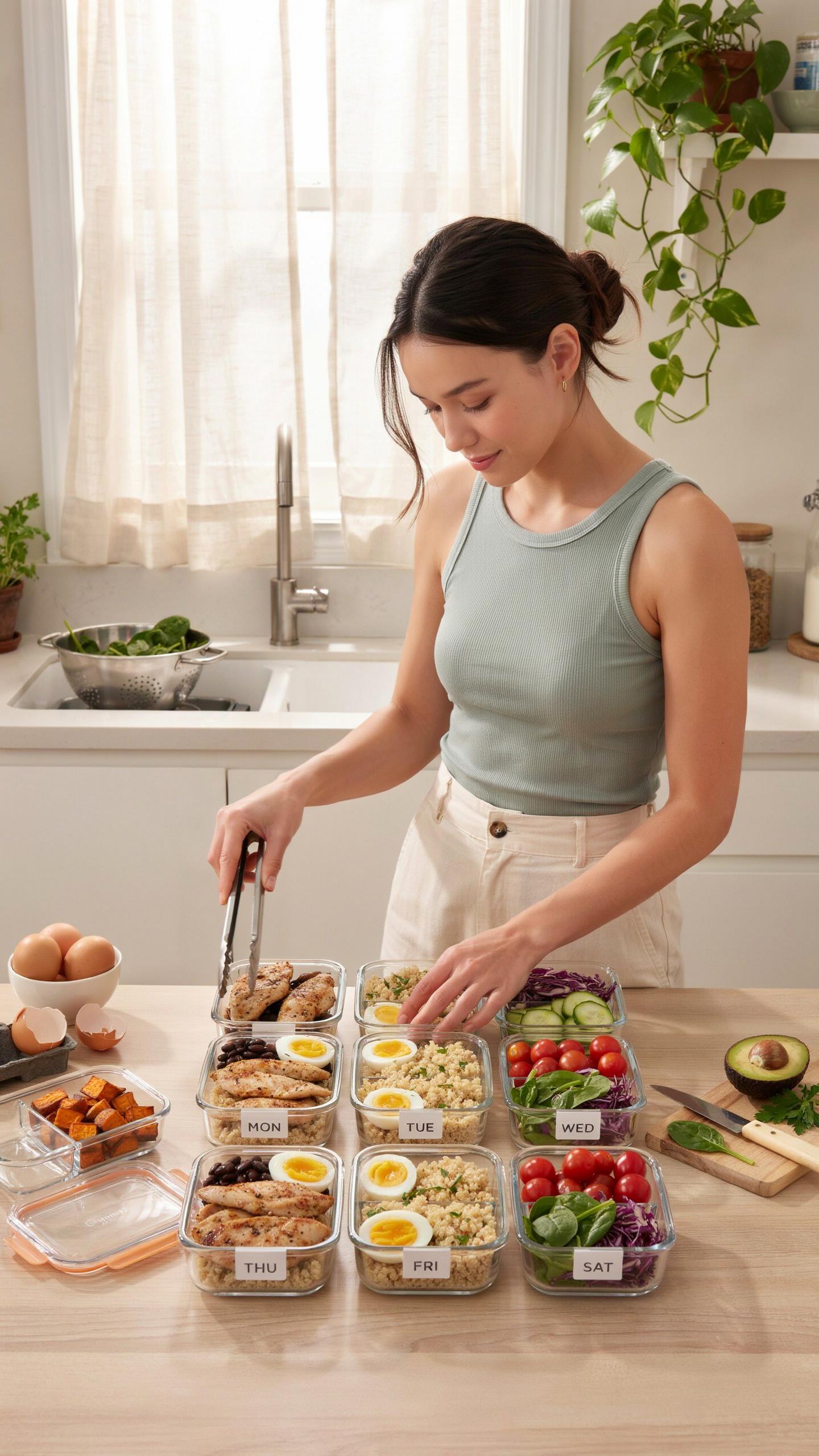
You want meal prep to feel effortless because you’re afraid consistency will break you. The real mechanism isn’t motivation. It’s decision fatigue. Every time you open your fridge without a plan, your brain burns glucose deciding what to eat. Meal prep removes that decision point entirely. You’ve already made the choice when your mind was fresh and your willpower was full.
The integration happens at the systems level, not the motivation level. You’re not trying to be disciplined. You’re building a structure that makes the disciplined choice the default choice. This is why people who meal prep don’t talk about willpower. They talk about what’s in their containers. The psychology follows the environment, not the other way around.
The Time Arbitrage That Compounds
Most advice says meal prep saves time. That’s incomplete. It doesn’t just save time on cooking. It returns cognitive bandwidth you were hemorrhaging on daily food decisions. You reclaim about 15-20 minutes per day that used to go to planning, shopping, deciding, and cooking ad hoc meals. Over a week, that’s two hours of mental space back in your control.
The energy return is steeper than the time return. Decision fatigue is cumulative. By Wednesday, you’re making worse food choices not because you’re weaker but because your prefrontal cortex is taxed. Meal prep keeps that resource intact. Sunday’s two-hour cooking session protects Monday through Friday’s decision quality. Batch your decisions once. Execute them seven times without thinking.
Avoiding The Healthy Trap Real World High Protein Meal Prep Ideas
Nutrient Density Over Trend Cycles
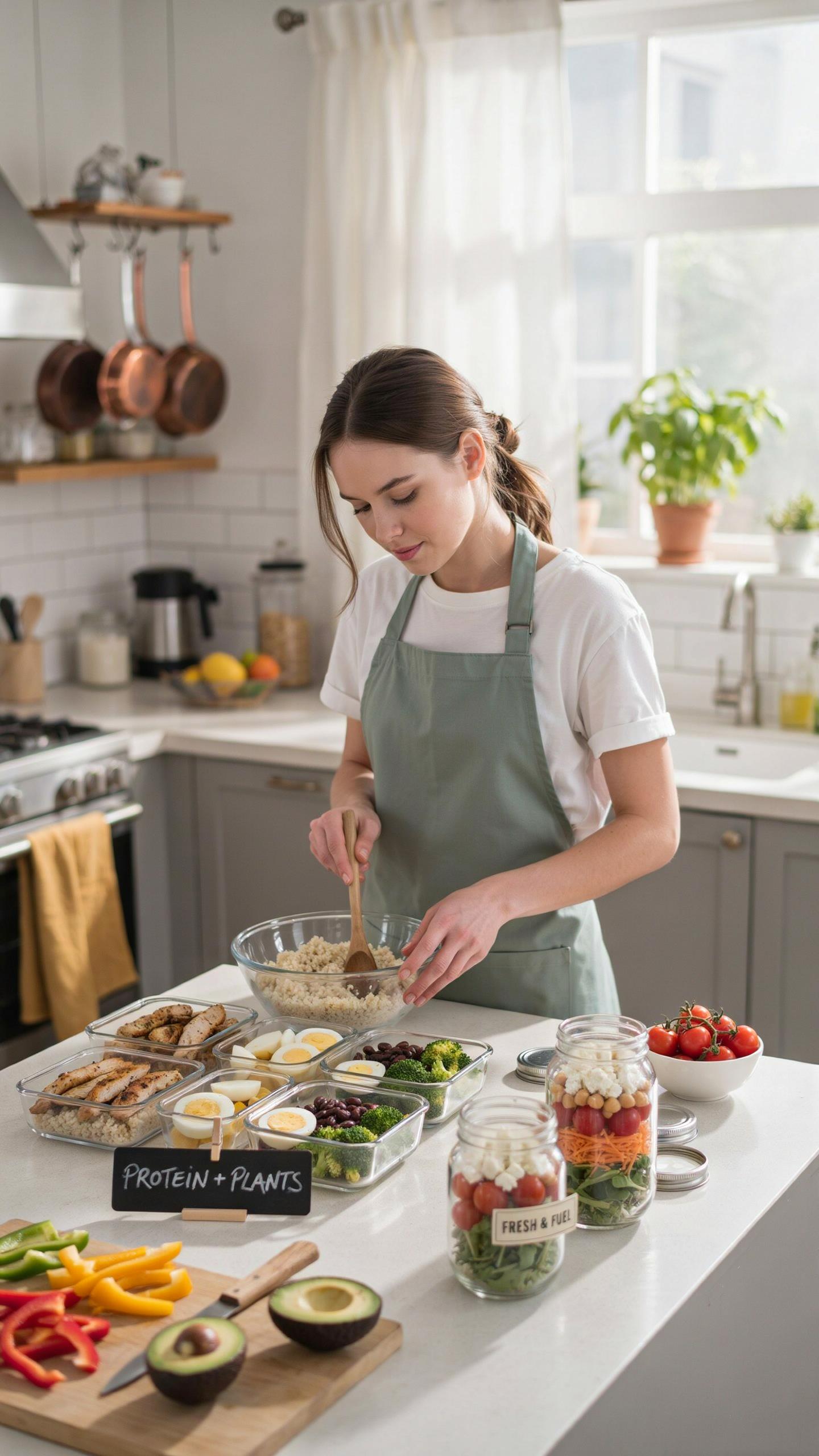
You care about this section because you’re afraid your meal prep will taste like punishment. The mechanism is simple: the food industry runs on attention cycles, not physiology. Trends die. Nutrient density doesn’t. Protein, fiber, micronutrients, and satiety are constants. They don’t change based on what Instagram celebrates this quarter. When you build around these four variables instead of chasing “superfoods” or restrictive frameworks, your prep becomes boring in the best way—it works for months without adjustment.
Stop chasing novelty in your protein sources. Chicken thighs, ground beef, eggs, canned fish, and Greek yogurt aren’t exciting. They’re reliable. They deliver complete amino acid profiles, cost predictably, and store without drama. The “healthy” trap is believing your meals need to be interesting to be effective. They don’t. Your job is to hit your macros and move on with your day.
Meals That Survive Real Schedules
- Rice and Protein Bowls: Cook rice in bulk Sunday, portion with 150g protein source and roasted vegetables. Reheats in 90 seconds. Lasts five days refrigerated without texture collapse.
- Ground Meat Sauce Base: Brown 3 pounds ground beef with onions and garlic. Freeze in portions. Add to pasta, rice, or vegetables. Works in six different meals without repetition fatigue.
- Egg Muffins: Whisk eggs with cheese and meat, bake in muffin tins. Grab cold or reheat. High protein, portable, no prep on weekday mornings.
- Slow Cooker Proteins: Dump chicken breasts or pork shoulder with broth in the morning. Shred when home. Portion into containers. Zero active cooking time during your week.
- Canned Fish Salad Kits: Pre-portion canned tuna or salmon with mayo, celery, and crackers in separate containers. Mix at lunch. No cooking required. Travels without cooling requirements.
The real bottleneck isn’t knowing what to make. It’s executing the same thing every week without skipping. Pick three proteins you tolerate. Pick three carb bases. Pick three vegetable sides. Rotate them. Your brain stops fighting the repetition after day four. By week three, you’re on autopilot. The time you save becomes time you actually have back—not a feeling, but hours per week you reclaim by removing the daily decision of what to eat.
Your biggest obstacle isnt hunger its the friction of choice

Most people fail meal prep because they overthink it. You don’t need the perfect recipe or the optimal macros. You need to remove decisions. Pick three proteins, three carbs, three vegetables. Cook them Sunday. Eat them all week. The goal isn’t variety; it’s compliance. Today, open your fridge and commit to one protein source you’ll buy this week. Everything else follows from that single decision. Boring beats broken every time.