
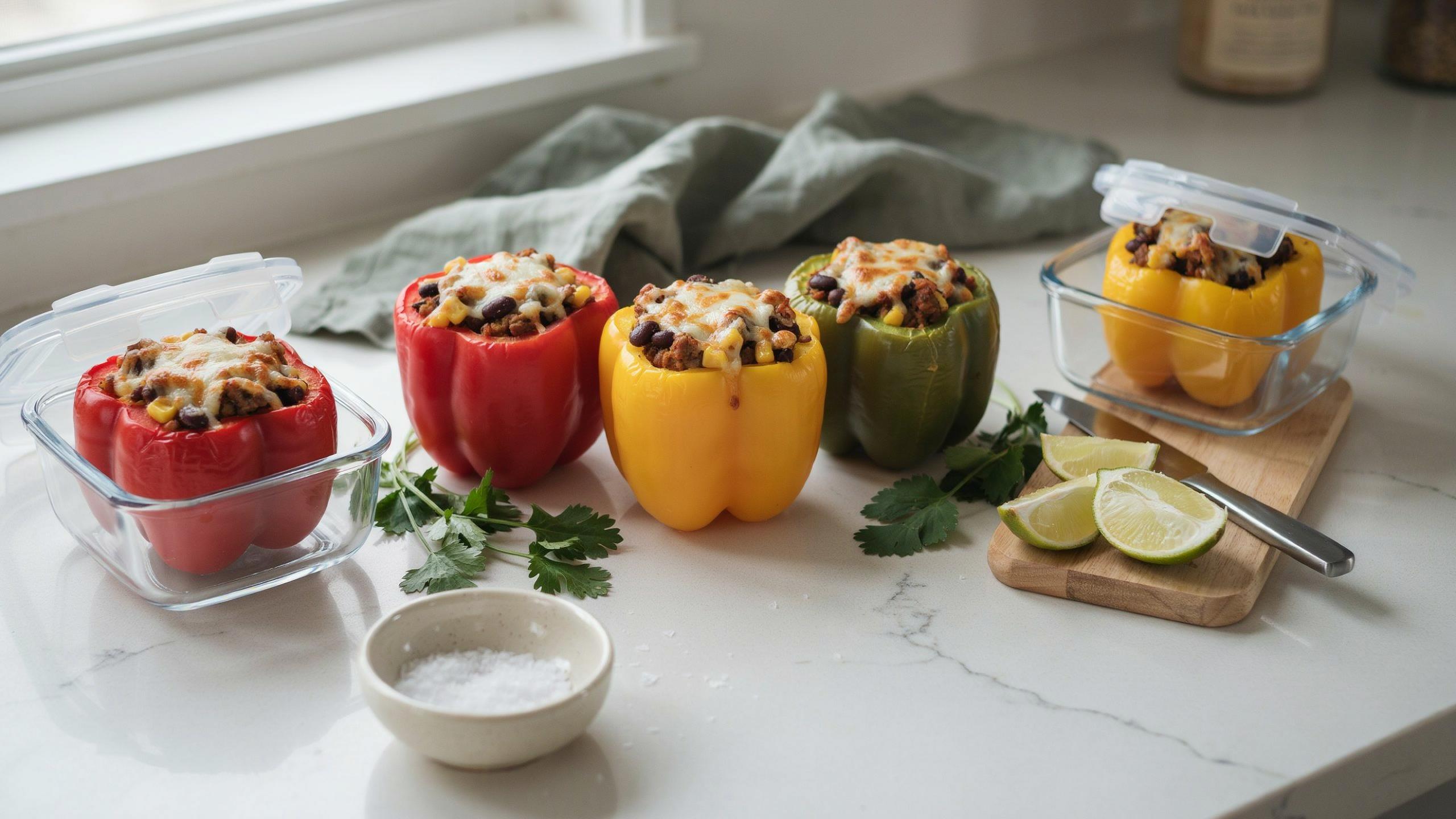
The Minimalists Manifesto Why Less Effort Equals More Flavor In Healthy Stuffed Peppers Turkey
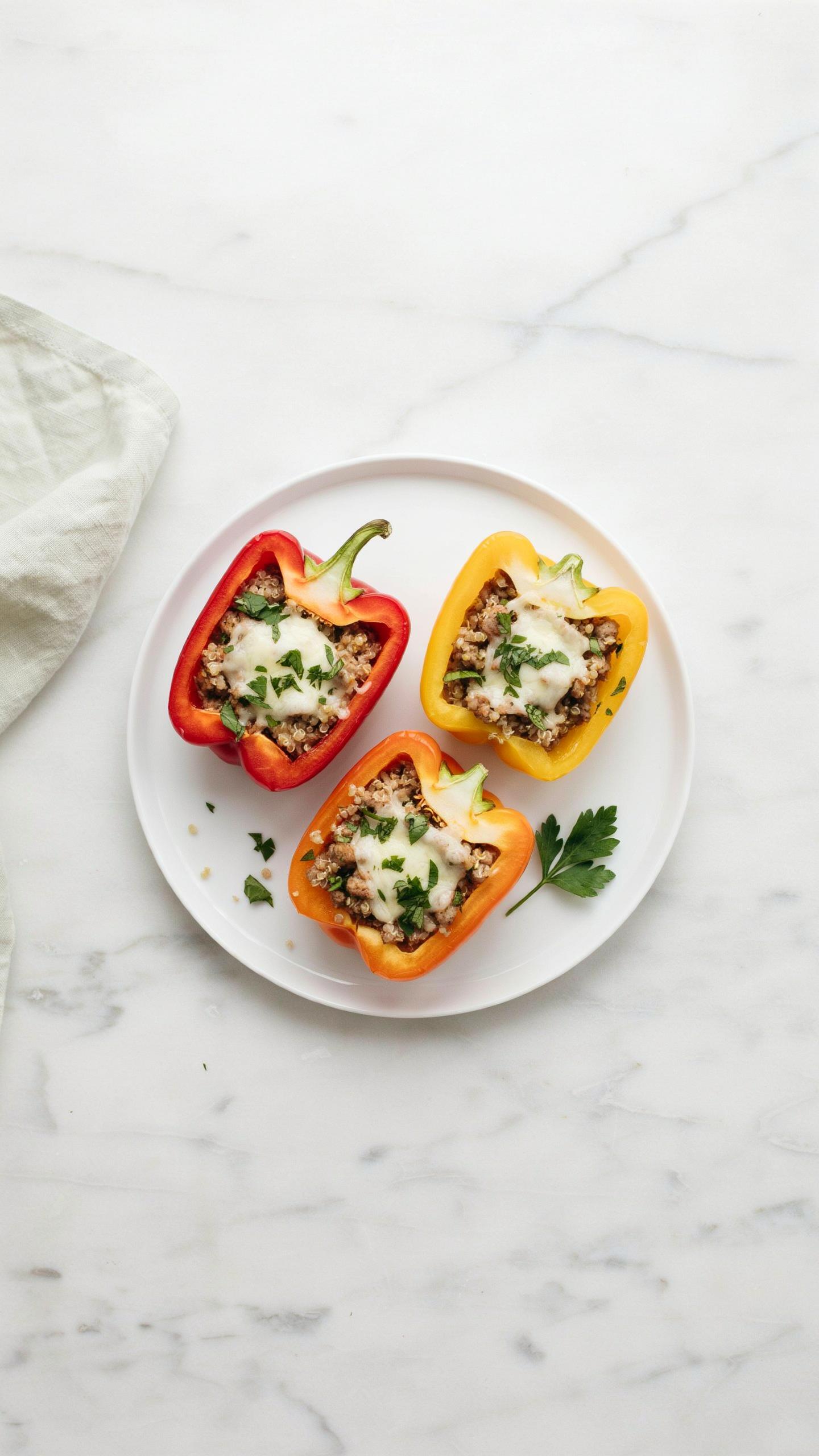
Strip Away Everything But Signal
You want this to feel effortless because you’re tired of cooking routines that demand your attention like a second job. The real mechanism is signal-to-noise ratio from information design. Most stuffed pepper recipes add ingredients that do nothing but occupy space on your ingredient list and shopping cart. Ground turkey, bell peppers, rice, tomato sauce, and seasoning. That’s the signal. Everything else is noise that dilutes flavor and extends prep time without payoff.
The common advice tells you to add onions, garlic, celery, broth, cheese, herbs you’ve never heard of, and spices in quantities that demand measuring cups. Wrong move. When you remove these, the turkey’s actual flavor emerges instead of hiding under a committee of competing tastes. Your palate notices the difference immediately. Cook ground turkey with salt and black pepper only. Add tomato sauce for acid and body. The peppers themselves provide sweetness. This isn’t minimalism for its own sake. It’s maximum efficiency.
Eliminate Steps That Signal Busy Work
The standard recipe requires you to sauté aromatics, brown the meat separately, cook rice from scratch, then assemble. That’s five distinct operations before anything touches heat. Unnecessary friction compounds over time. Cook ground turkey and rice together in one pot with water and tomato sauce, then stuff directly into raw peppers that you roast in the oven. You’ve collapsed five operations into two.

The peppers soften during the roast cycle while the filling reaches proper temperature. You gain texture contrast instead of the mushy sameness that happens when you pre-cook everything separately. One sheet pan. One pot. Both go into the oven at the same time. This protocol saves thirty minutes per batch and produces better results than the traditional method.
The Prep Ahead Payload Protocol Maximizing Ground Turkey Stuffed Peppers Efficiency
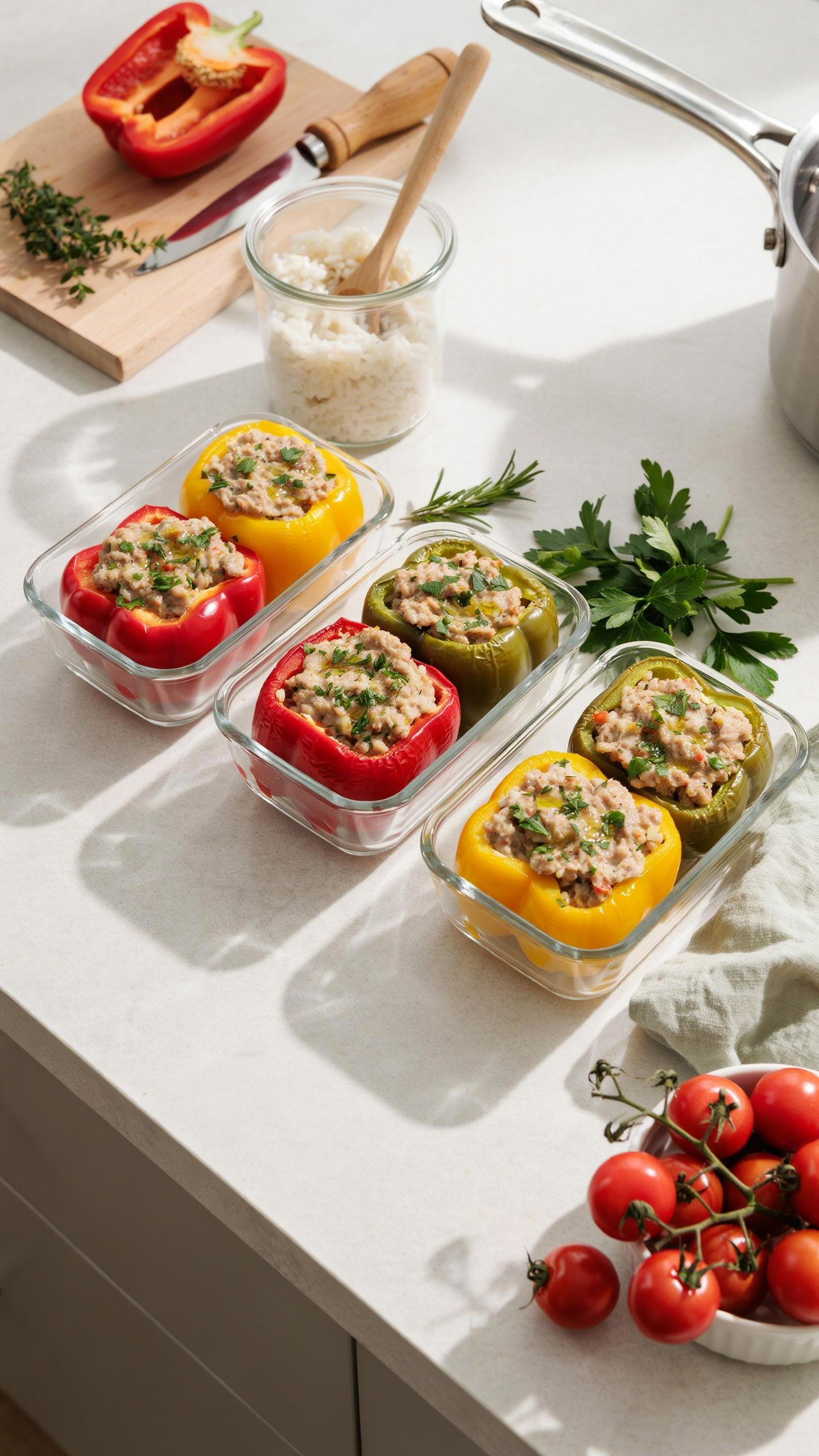
Brown Turkey, Rice, And Sauce In One Batch
You want meal prep to feel effortless, which is why you’re drawn to “dump and reheat” content. The real mechanism is batching. In manufacturing, batch processing reduces setup time and keeps quality consistent. With stuffed peppers, you cook ground turkey once, rice once, sauce once. You’re not repeating those steps for each pepper.
Brown two to three pounds of ground turkey in a large skillet over medium-high heat. Break it apart as it cooks. Once no pink remains, drain excess fat, then add your sauce base—tomato, broth, spices—directly to the pan. Simmer rice separately or add it to the turkey mixture if you want one-pot efficiency. The key is having all components ready and cooled before assembly, which cuts assembly time from thirty minutes to ten.
Pre Roast Peppers For Structural Integrity
Roasting peppers first isn’t optional theater. It’s substrate preparation, borrowed from construction: you don’t build on unstable ground. Raw peppers stay firm but can tear during stuffing and leak filling into the pan. Roasting softens the flesh just enough to flex without splitting, and it develops sugars that improve flavor without added ingredients.
Cut peppers in half lengthwise, remove seeds and stems, then place them skin-side up on a sheet pan. Roast at 400°F for twelve to fifteen minutes until the flesh softens slightly and the skin blisters in spots. Cool them for five minutes. Now stuff them without fear of tearing. Roasted peppers also hold their shape better during reheating because the cell structure has already undergone heat stress once.
Beyond The Bell Strategic Flavor Amplification For Stuffed Peppers Recipe Turkey
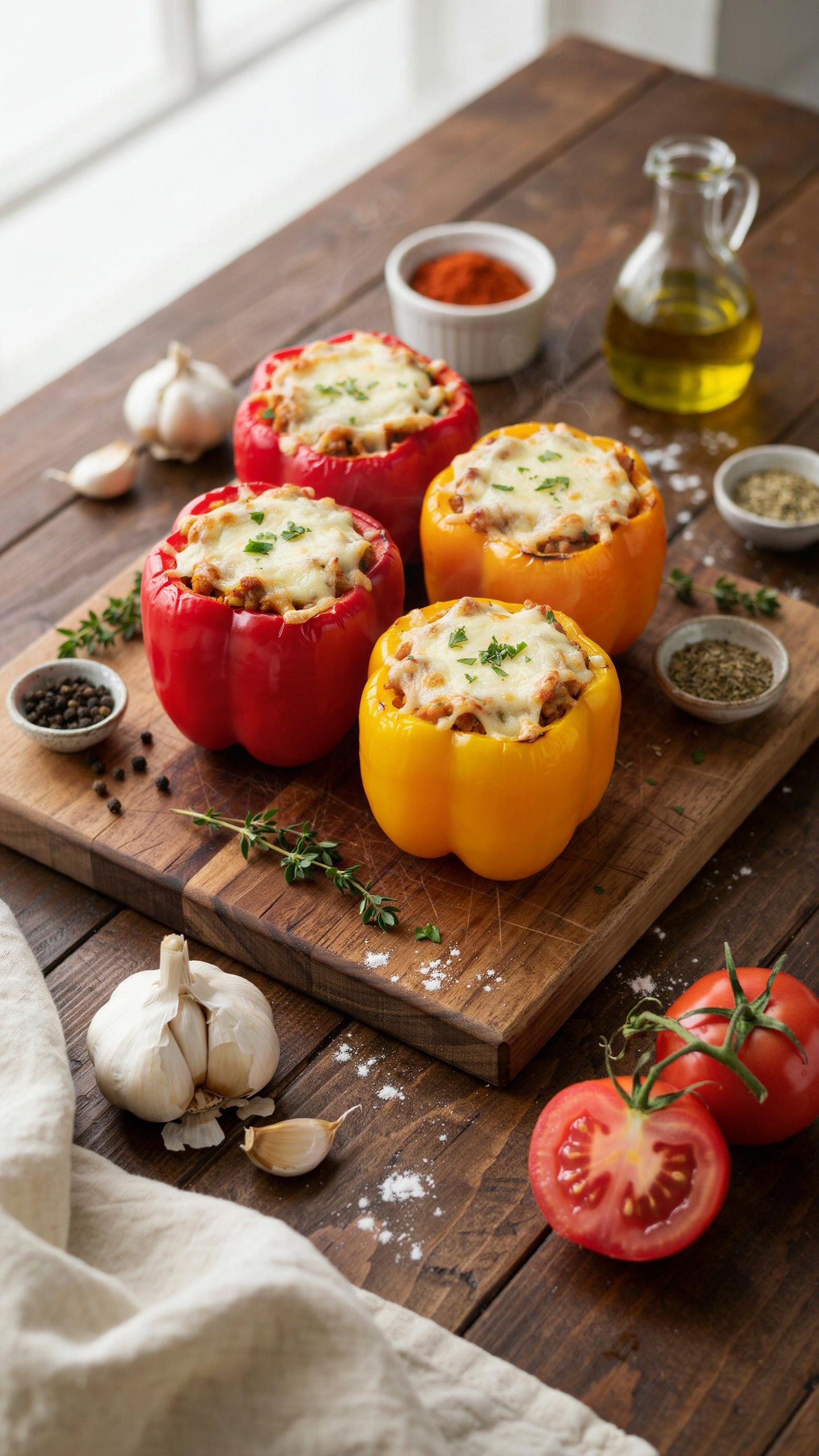
The Umami Foundation That Changes Everything
You want this to taste restaurant-quality without effort, and that’s only possible if you stop treating ground turkey like a blank canvas. The mechanism here is taste perception itself: umami receptors on your tongue respond to glutamates and nucleotides, which means three specific ingredients will make your turkey filling register as deeply satisfying instead of lean and hollow.
Mushrooms contain glutamates naturally. Tomato paste concentrates them further. Worcestershire adds both glutamates and inosinate nucleotides, which fire the same receptors twice. Add one teaspoon of tomato paste per pound of turkey and half a teaspoon of Worcestershire. Dice mushrooms fine enough that they disappear into the meat during cooking rather than announcing themselves as separate texture. This isn’t seasoning. This is compensation for what ground turkey lacks compared to beef or pork.
Spice Layering Builds Complexity Without Confusion
Most people dump their spices into the turkey raw and call it done, which is why their meal-prepped peppers taste flat by day three. The real tactic comes from flavor chemistry: volatile compounds in spices degrade over time, but blooming spices in fat before mixing them with the meat creates chemical bonds that hold the flavor stable through storage and reheating.
Toast your dried spices in the pan for thirty seconds before adding the turkey. Use cumin, smoked paprika, and garlic powder as your base layer, then add cayenne last if you want heat. The order matters because compounds with lower burn temperatures need protection. Once those spices hit hot fat, their oils activate and anchor into the meat rather than evaporating into the air. Your peppers taste intentional on day five instead of tired.
The Thermodynamic Flow Of Turkey Stuffed Peppers Dinner Assembly
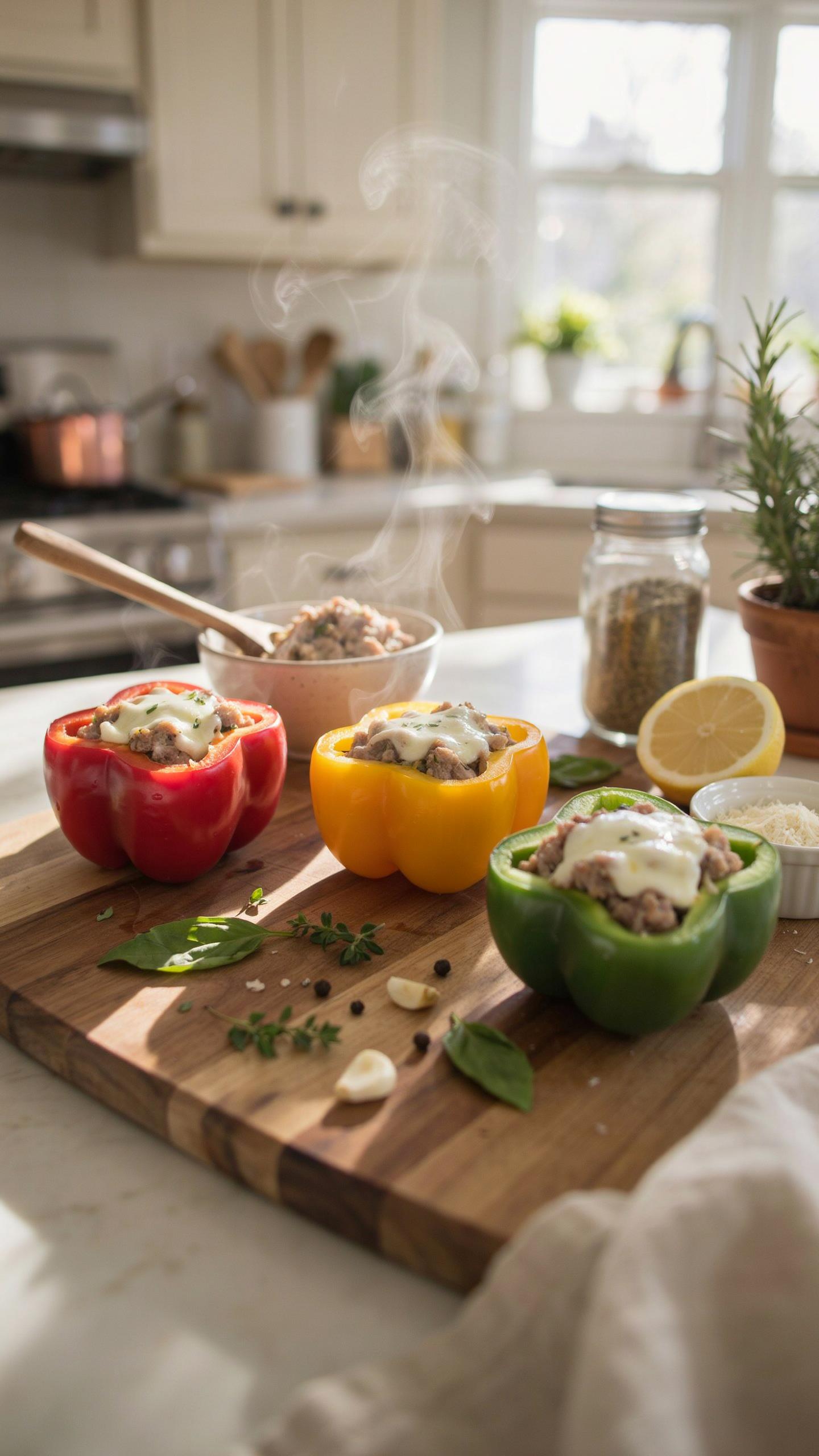
Set Up Your Station Before You Touch Meat
You want to feel organized and efficient, but what you actually need is to stop wasting minutes hunting for tools mid-assembly. Thermodynamics teaches us that energy dissipates when systems lack structure. Apply that to your prep: arrange your workspace so your hands and ingredients move in one direction without backtracking. Turkey loses temperature quickly once cooked, so every second of dead time costs you texture and food safety margin.
Lay out your cutting board, bowl for the filling, spoon for stuffing, and baking vessel in a single line. Brown your turkey first, then move directly to your peppers without cleaning or reorganizing mid-task. The physical layout determines your speed, not your skill. Group everything you need within arm’s reach before you begin.
Cool Your Filling Before Storage Happens
Everyone says let it cool, then they refrigerate hot turkey and wonder why the peppers turn soggy. Hot food creates steam inside your storage container, which condenses and waters down your meal. Cool your filling to room temperature on a sheet pan in under 10 minutes by spreading it thin. This isn’t optional if you want the peppers to maintain texture through four days of storage.
After filling your peppers, refrigerate them uncovered for the first 30 minutes, then cover with foil or a lid. This single protocol step prevents condensation from pooling on top of the filling. Your turkey stays firm, your peppers hold their structure, and your meal doesn’t degrade between Monday and Thursday.
The Bio Availability Blueprint Crafting Stuffed Peppers With Turkey For Peak Fuel
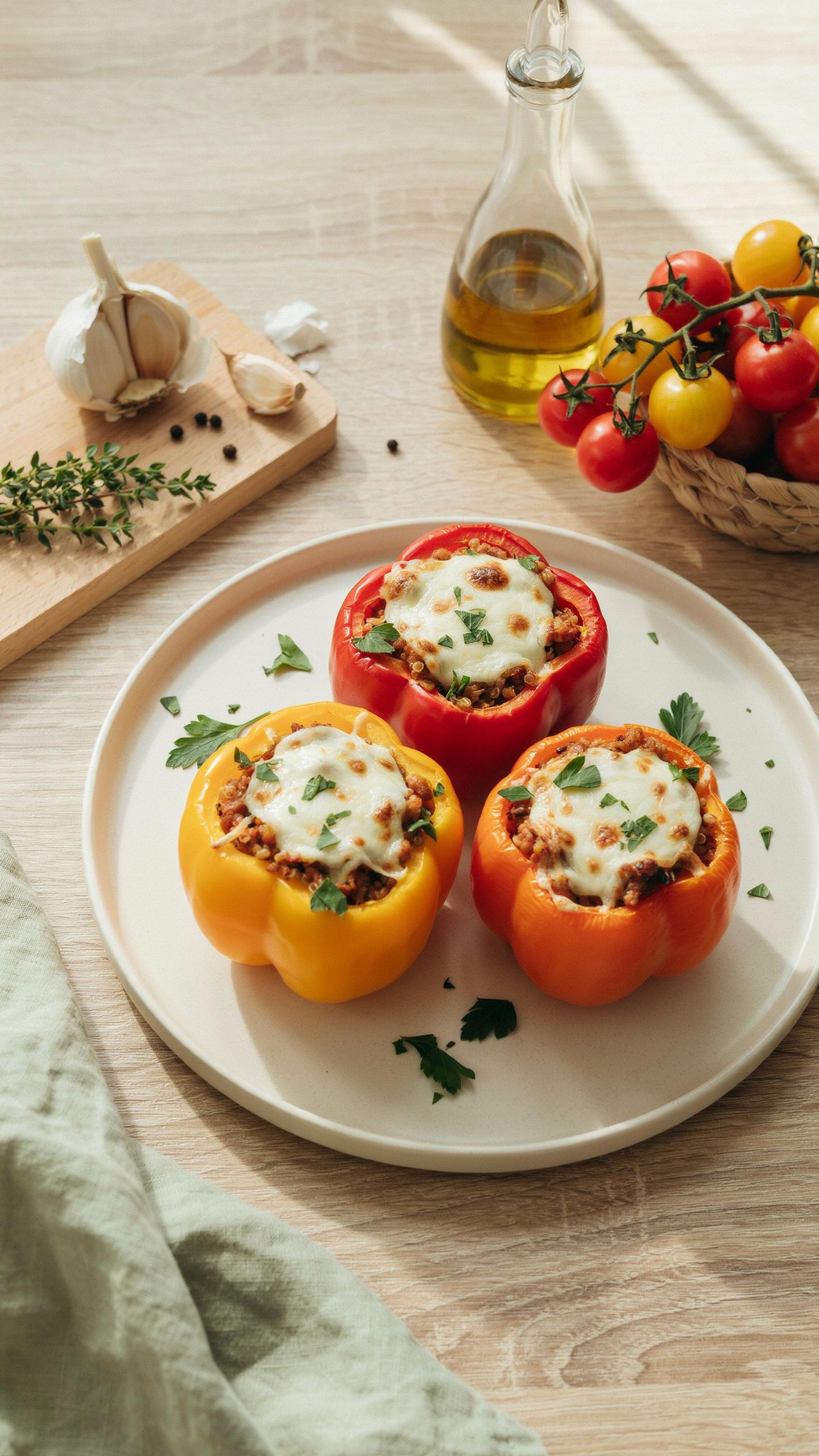
Protein, Carbs, Fats In The Right Ratio
You want to believe meal prep is just about convenience, but the real game is whether your body actually uses what you eat. In nutrition, we call this “nutrient partitioning”—where your macros go once they hit your system. Ground turkey stuffed peppers work because the ratio forces a specific outcome: sustained energy without the blood sugar spike that kills afternoon productivity.
Ground turkey brings 20 to 22 grams of protein per 3.5 ounce serving. That protein repairs muscle and extends satiety between meals. The pepper itself adds carbohydrate density without excess calories—roughly 6 grams per medium pepper. Add a binder like cooked rice or quinoa at a 1 to 2 ratio with turkey, then drizzle olive oil or mix in a small amount of ground flax. This ratio prevents the turkey from drying out during storage and adds fat that slows digestion. The result: no energy crash, no overeating at dinner.
Vegetable Variety Determines Micronutrient Coverage
Most prep advice says “add vegetables”—lazy and incomplete. Nutrient density isn’t about volume; it’s about which micronutrients you’re missing from your baseline diet. Stuff your peppers with a base of diced onion and garlic for allicin compounds, then layer in either diced tomato for lycopene or finely chopped spinach for folate and iron. Mushrooms contribute B vitamins and ergothioneine. Zucchini adds nothing special, so skip it.
Each vegetable contributes different micronutrients that turkey alone doesn’t cover. Turkey has selenium and B6, but lacks meaningful amounts of folate or vitamin A. The pepper shell itself provides vitamin C. When you prep ahead, chop your vegetables fresh but store them separately from the turkey mixture for one key reason: raw vegetables lose enzymatic activity over time, so you combine them the night before cooking or the morning of. This keeps micronutrient availability high across your entire meal prep window, which is usually five to seven days.
The Adaptation Algorithm Customizing Stuff Bell Peppers Recipe Ground Turkey Low Carb
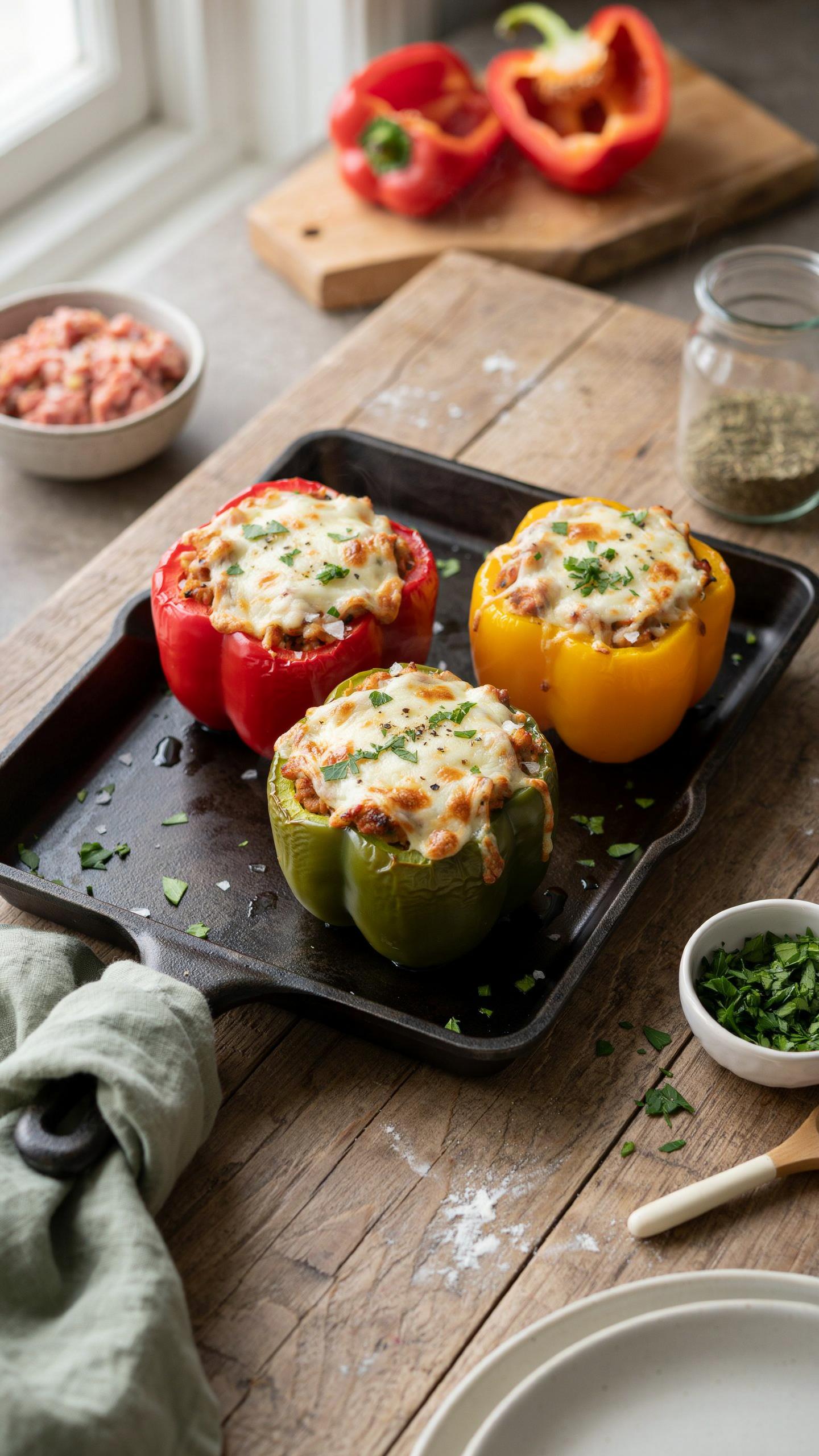
Swap The Rice Without Losing Structure
You want to feel smart about eating low-carb without actually changing your cooking method. Here’s the mechanism: traditional stuffed peppers rely on rice to absorb moisture and bind the filling. Remove it without replacement and your pepper collapses into soup. Cauliflower rice solves this, but most people use it wrong. They don’t account for the water it releases. Cook cauliflower rice separately and drain it aggressively before mixing with meat. This preserves the texture your mouth expects.
Add extra vegetables that have structural integrity. Diced zucchini, mushrooms, or celery absorb the turkey’s fat instead of creating it. A 2:1 ratio of ground turkey to vegetable filler keeps the filling compact during the 25-minute bake. The pepper walls stay firm. Your prep containers stack without leaking two days later.
Dairy Free Replacements That Actually Work
- Nutritional yeast: Delivers umami and cheese-like flavor without lactose. Use 2 tablespoons per four peppers mixed into the meat before stuffing.
- Plant-based mozzarella: Melts adequately on top if you choose brands with high fat content. Budget an extra 2 minutes under the broiler for browning.
- Tahini: Binds the filling and adds richness. One tablespoon per pound of ground turkey replaces the structural role of ricotta.
- Coconut cream: Creates sauce consistency without dairy. Mix with tomato paste and garlic for a liquid filling base.
- Cashew cream: Soak raw cashews, blend with water to heavy cream consistency, and fold into cooled filling for richness.
Dairy-free doesn’t mean flavorless, but it requires you to layer acid and salt differently. Nutritional yeast carries the savory load that cheese normally handles. Double your tomato paste and add an extra half teaspoon of salt to compensate for the missing lactate sharpness. Your taste buds won’t notice what’s missing if you build flavor density into the turkey itself before assembly.
Debunking The Meal Prep Myth Ground Turkey Stuffed Peppers Longevity
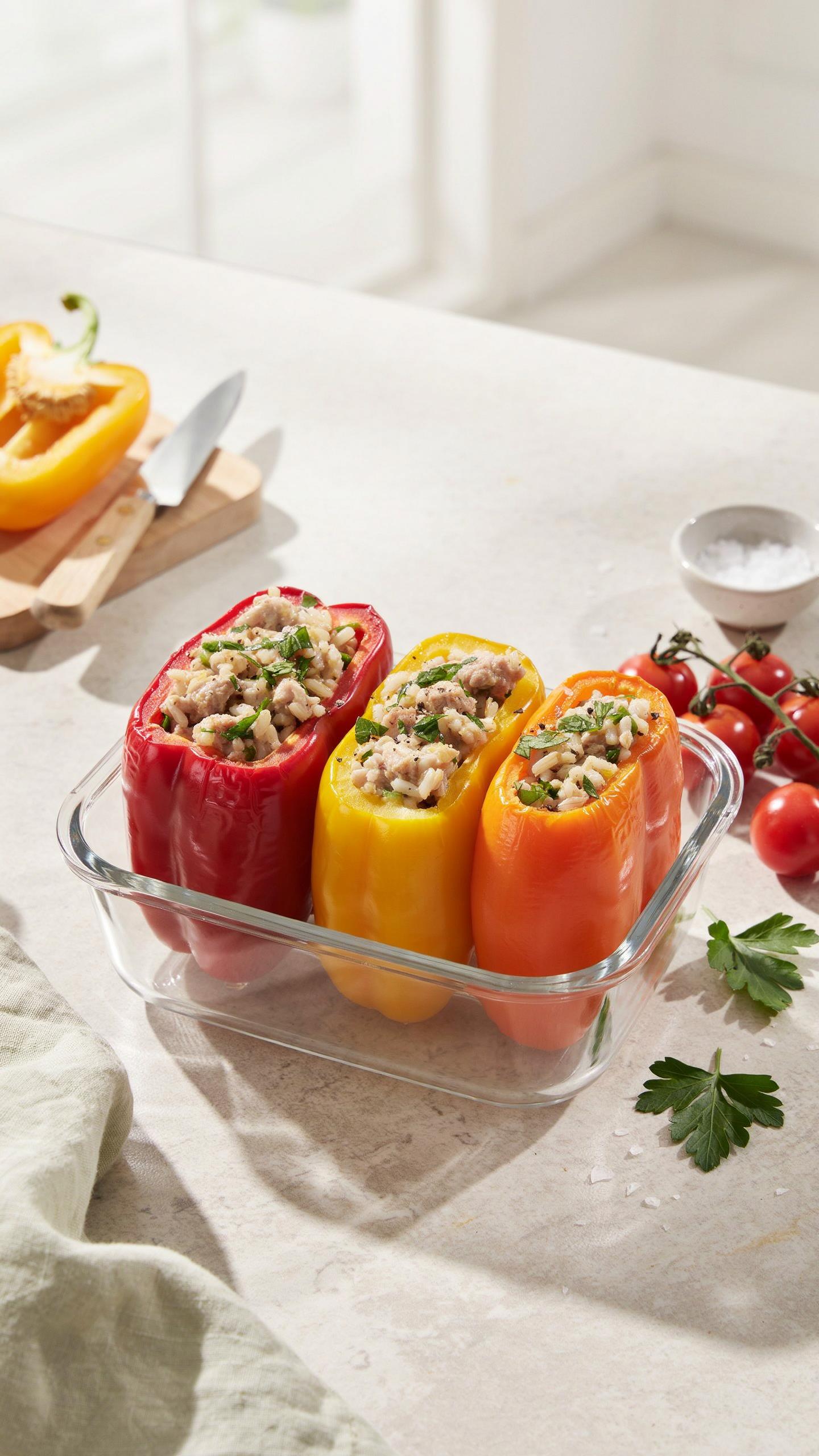
How To Cool And Store Without Losing Quality
You want to believe your stuffed peppers stay good for a week because that fits the meal prep fantasy. The real mechanism is thermodynamics: bacteria reproduce fastest between 40°F and 140°F, so your job is moving through that danger zone fast. Cool your finished peppers to room temperature first, then transfer to an airtight container and refrigerate within two hours of cooking. This isn’t precaution theater—it’s the difference between safe food and bacterial colonies.
Ground turkey stuffed peppers hold their texture in the fridge for four days maximum. After day four, the turkey begins oxidizing, the pepper skin softens past edibility, and moisture migrates out of the meat into the rice. Store them in shallow containers rather than deep ones so heat leaves the center faster. Check the container for condensation pooling at the top—if present, your peppers are sweating and degrading, which means you waited too long to refrigerate or your container traps steam.
Freezing That Actually Preserves The Dish
Most freezing advice fails because people freeze the peppers whole and assembled. The problem: ice crystals rupture cell walls in the turkey, the pepper skin becomes papery, and the rice becomes mealy when thawed. Freeze components separately instead. Cook the turkey mixture and let it cool completely, then freeze it flat in a bag or shallow container. Freeze the raw pepper halves separately in a freezer bag with minimal air contact.
This two-stage approach lets you thaw strategically. Pull the turkey mixture from the freezer and reheat it gently in a skillet over medium heat—it takes seven to ten minutes to warm through without drying out. Meanwhile, roast the thawed pepper halves at 375°F for twelve minutes to soften them before stuffing. Reassemble and serve. The texture stays closer to fresh because you avoid the repeated freeze-thaw cycle that destroys turkey’s fiber structure. Frozen components stay safe for two months if you exclude air and keep your freezer at zero degrees or below.
The Iterative Improvement Loop For Bell Pepper Recipes Stuffed Ground Turkey
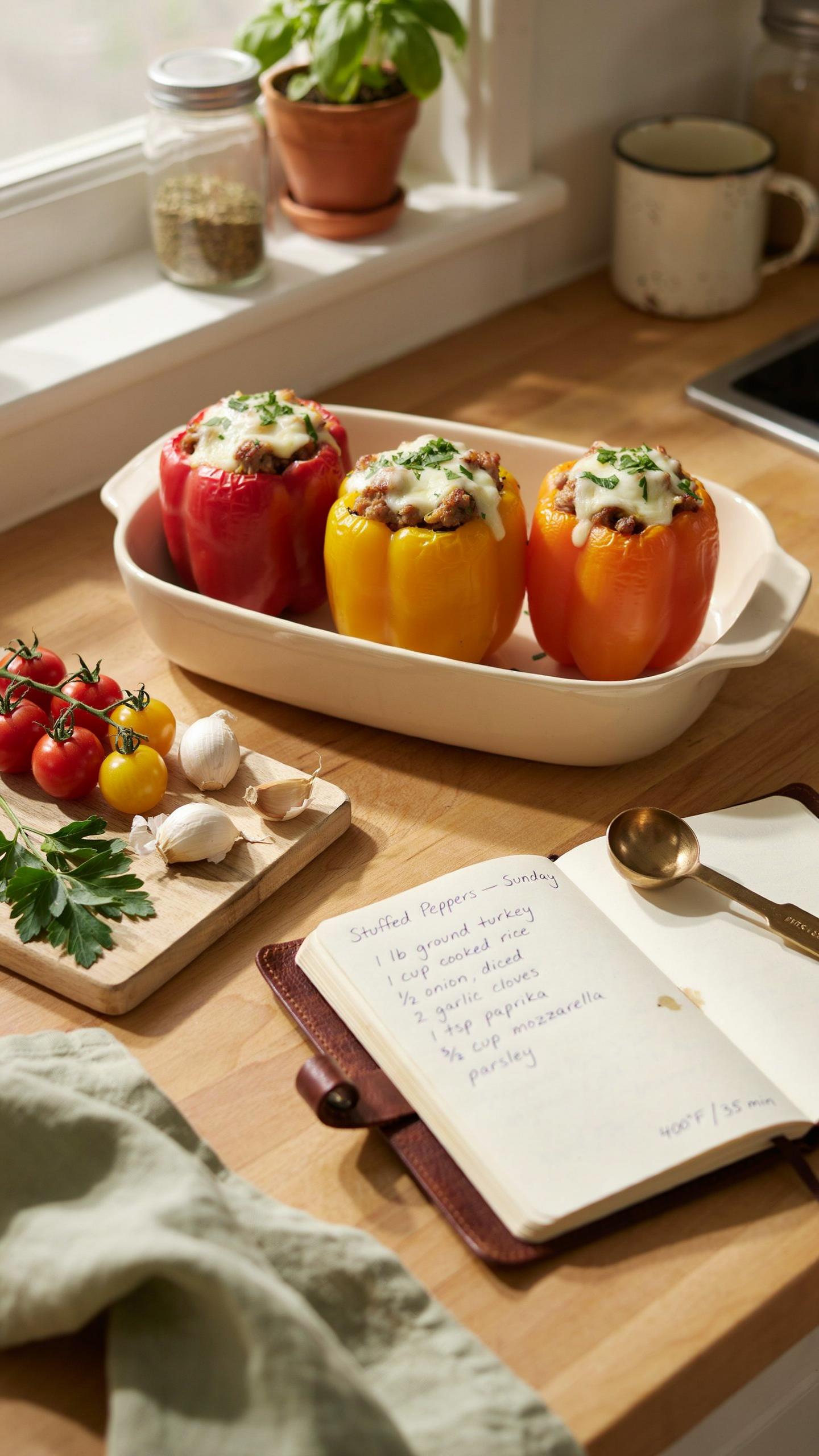
Taste And Time Drive The Adjustments
You want permission to skip this part because you think one recipe is enough. It isn’t. The mechanism here comes straight from systems thinking: feedback loops accelerate optimization when you measure the right variables. With stuffed peppers, your two variables are taste deviation and prep time per batch. After your first cook, you’ll notice specific failures: peppers too firm, filling too dry, seasoning flat, assembly taking forty minutes instead twenty. These aren’t flaws in the recipe. They’re data points.
Document what failed in your first batch before you forget. Write down prep time by step, not total time. Note which pepper size you used and how many minutes they roasted before filling. Taste the filling cold, not hot, because your palate reads salt differently at temperature. On round two, change one variable only. If filling was dry, add two tablespoons more tomato sauce or broth. If peppers stayed tough, roast them five minutes longer before stuffing. This isolates cause from noise. Don’t adjust seasoning and texture and timing simultaneously or you’ll never know what actually worked.
Process Refinement Compounds Across Batches
Most meal prep advice ignores this entirely. The real leverage isn’t in the single recipe, it’s in the system that produces the recipe. Each batch teaches you something measurable about your equipment, your ingredient sourcing, and your actual available time. A convection oven cooks hotter than conventional, so your roast time drops by three to five minutes. Ground turkey from one butcher has different fat content than another, changing how much liquid the filling absorbs during storage. Your pepper supplier rotates varieties seasonally, altering wall thickness and roast behavior.
After four batches, you’ll have a documented protocol: pepper size matters, soak time for prepped peppers before cooking, exact browning point for turkey, optimal liquid ratio for your freezer method. Track the actual numbers. If your protocol says “roast at 375 for 22 minutes,” that’s more useful than “until done.” Once you have that baseline, future tweaks happen in days instead weeks. When you cook batch five, you already know the system. You’re only adjusting for variables that actually changed.
The real obstacle isnt the recipe its your resistance to elegant simplicity
You’ve read enough. Your body doesn’t need another meal plan—it needs you to stop overthinking protein prep. Ground turkey stuffed peppers work because they demand nothing fancy. Chop, stuff, bake, refrigerate. Today, buy the peppers. Tomorrow, you’ll wonder why you wasted years on complicated nonsense when the answer was this obvious all along.