
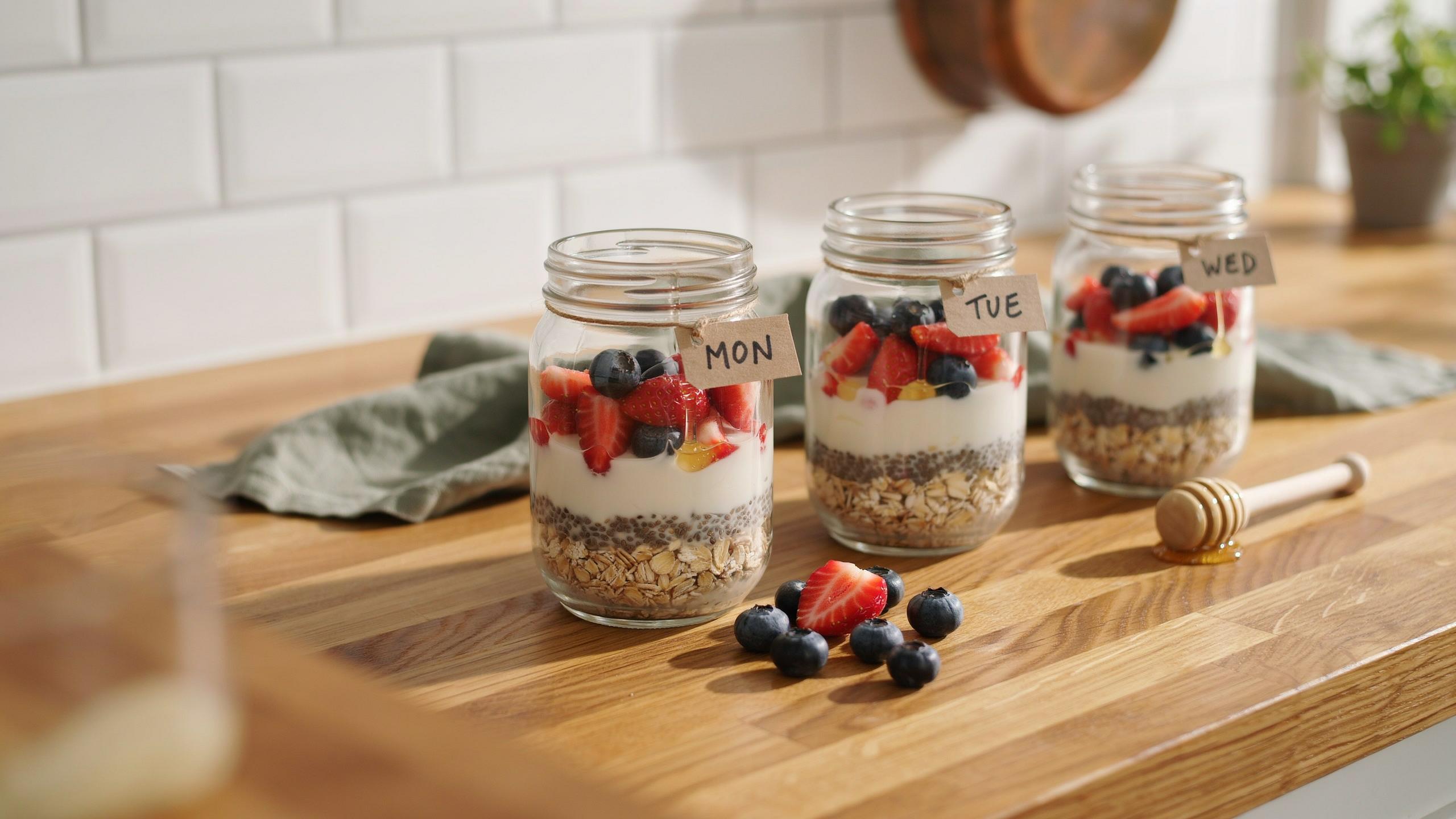
The Bio Optimization Protocol Overnight Oats With Greek Yogurt
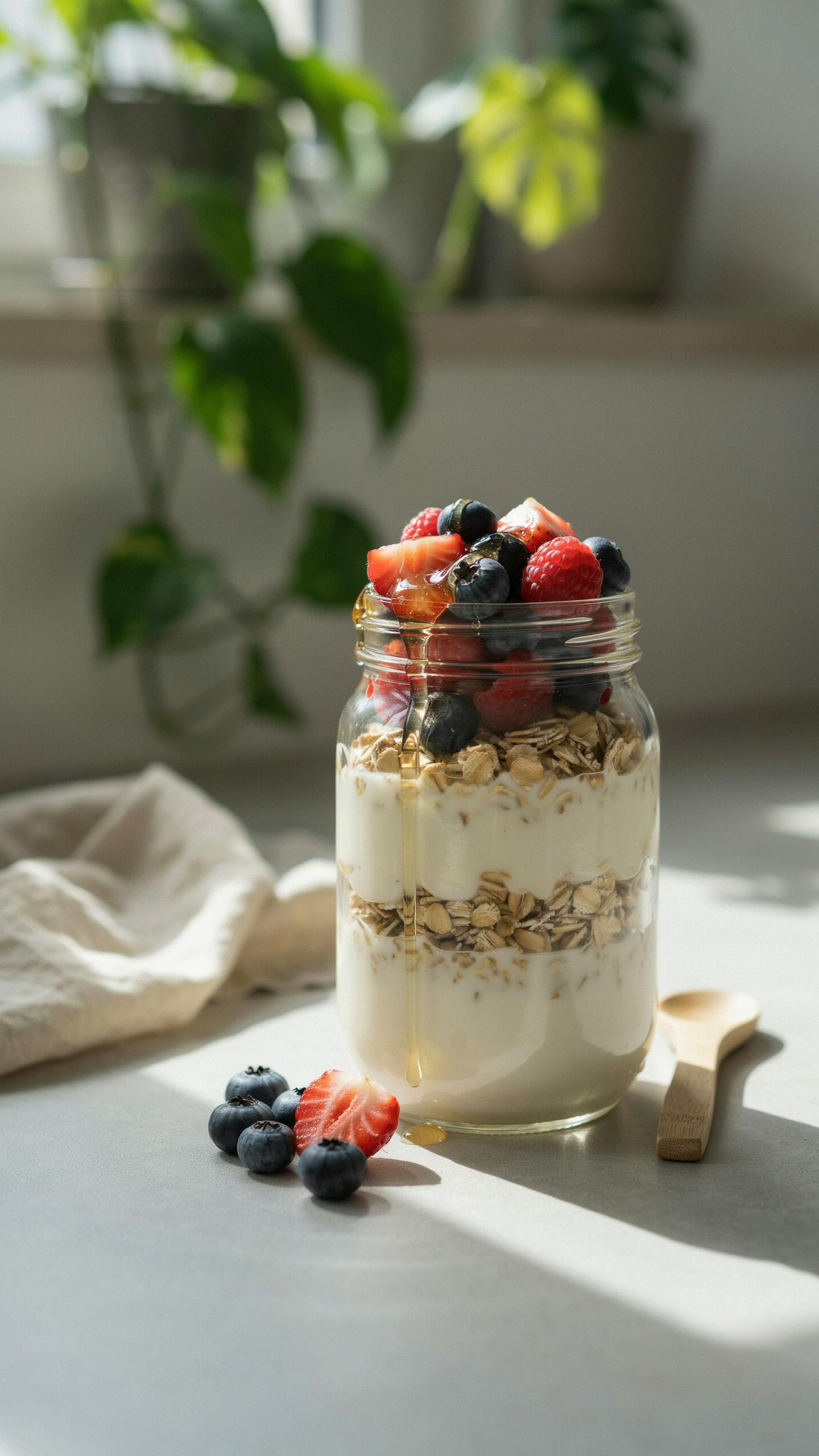
Why Your Brain Runs On Protein Timing
You want to feel sharp without crashing. That’s not weakness, it’s biology. Neurotransmitters like dopamine and serotonin depend on amino acid availability. Greek yogurt overnight oats work because they create a stable protein delivery system that keeps your prefrontal cortex fed for hours. Most breakfast advice ignores timing completely. You don’t need carbs to spike then crash. You need a sustained signal.

Greek yogurt contains casein protein, which digests slowly and releases amino acids over six to eight hours. Oats add complex carbs that don’t spike insulin aggressively. The combination isn’t trendy. It’s biochemistry. When you mix them the night before, the oats absorb liquid and soften, which actually speeds protein absorption by reducing stomach load. Your body spends less energy breaking down texture and more energy using the nutrients.
Fuel Density Versus Nutrient Density
Common advice treats calories and nutrients as separate problems. They’re not. Economics teaches us opportunity cost: every calorie spent on empty food is a calorie not available for tissue repair, hormone production, and cognitive function. Greek yogurt overnight oats reverse that math entirely. A single prepared jar delivers 20 to 25 grams of protein, 30 to 40 grams of carbs, and fiber in roughly 300 calories. Most breakfast foods bloat your calorie budget while starving your nutrient needs.

A standard bowl of cereal with milk gives you calories and little else. Greek yogurt overnight oats pack micronutrients, satiety, and sustained energy into the same calorie window. The protein fills the satiety sensors in your hypothalamus faster than carbs alone. You stop hunting for snacks by 10 AM because your body registered actual fuel, not just volume. Prep the containers Sunday night and portion individual jars so you grab and go, eliminating the friction that kills consistency.
Misconceptions Why Your Protein Overnight Oats Arent Working
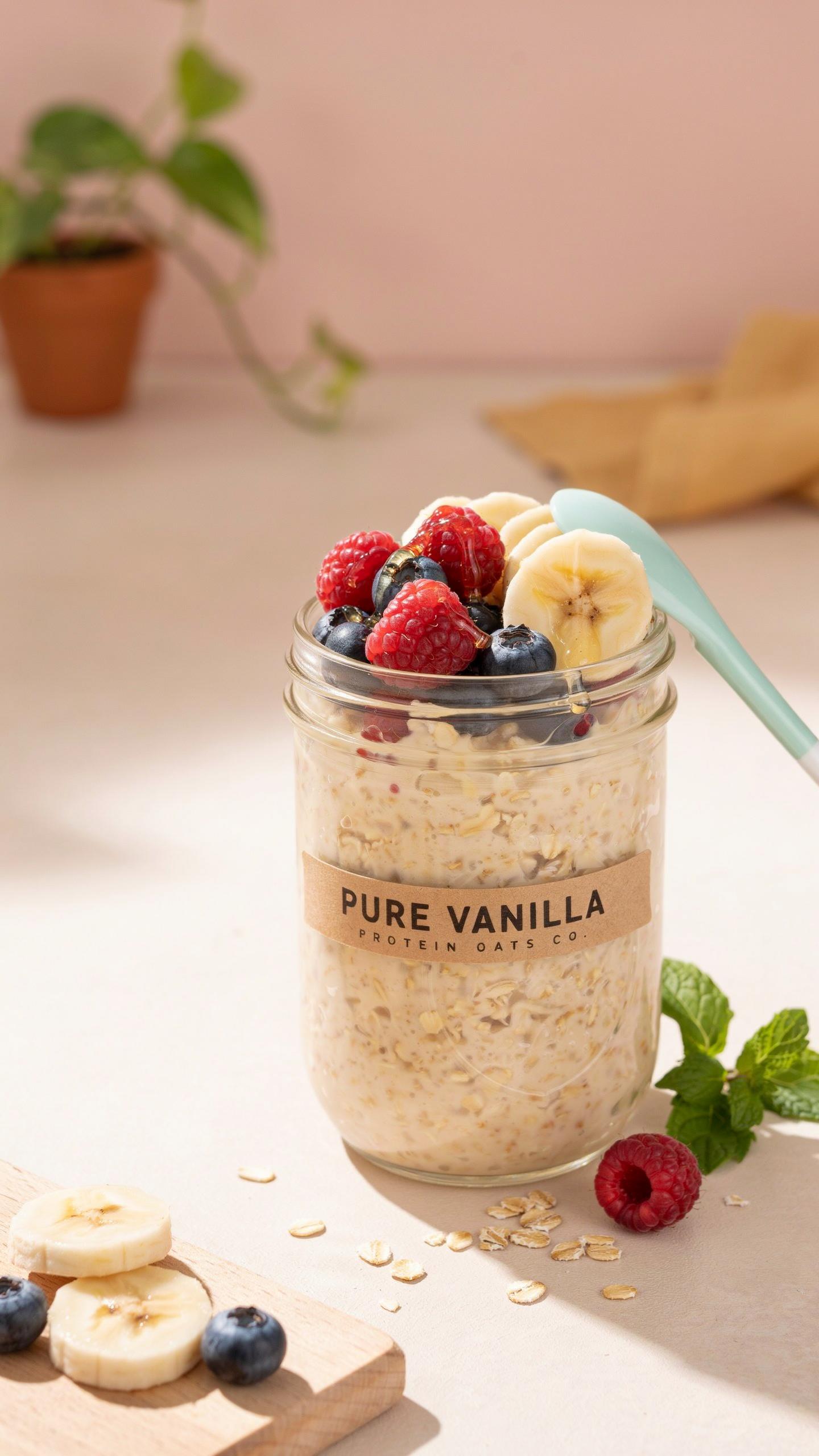
The Sweetness Trap
You want to believe your overnight oats taste good because you deserve it. The mechanism is simple: sugar suppresses protein synthesis. A Greek yogurt overnight oats base already contains lactose from the yogurt and natural sugars from oats and milk. Add honey, brown sugar, or sweetened granola, and you’ve created an environment where your body prioritizes glucose processing over muscle protein adaptation. The sweetness also masks the actual taste of the yogurt, forcing you to add more next time.
The fix isn’t eliminating sweetness. It’s shifting the timing and source. Add vanilla extract, cinnamon, or cocoa powder to the base the night before. These compounds trigger sweetness perception without raising blood glucose. Reserve fruit or honey as a topping added at eating time, not during prep. This preserves the protein-to-carb ratio that makes overnight oats work for body composition, not just convenience.
Protein Math That Actually Matters
Most overnight oats recipes recommend one container of Greek yogurt per serving. That sounds right until you calculate the actual protein load. A standard 150-gram container of Greek yogurt provides roughly 20 grams of protein. One cup of dry oats contributes another 10 grams. Half a cup of milk adds 4 grams. You’re looking at 34 grams of protein per serving if you prep the standard way, which is insufficient for most adults seeking muscle maintenance or growth during a caloric deficit.
The protocol is explicit: use 200 grams of Greek yogurt, not 150. This adds 13 additional grams of protein per serving, bringing your total to 47 grams. Reduce the milk to one-third cup to maintain texture without diluting protein density. Prep five jars at once. Measure everything on a scale, not by sight. The difference between 150 and 200 grams of yogurt changes your entire macronutrient outcome and determines whether overnight oats actually support your stated goal.
The Macro Alchemy Method Greek Yogurt Overnight Oats Healthy
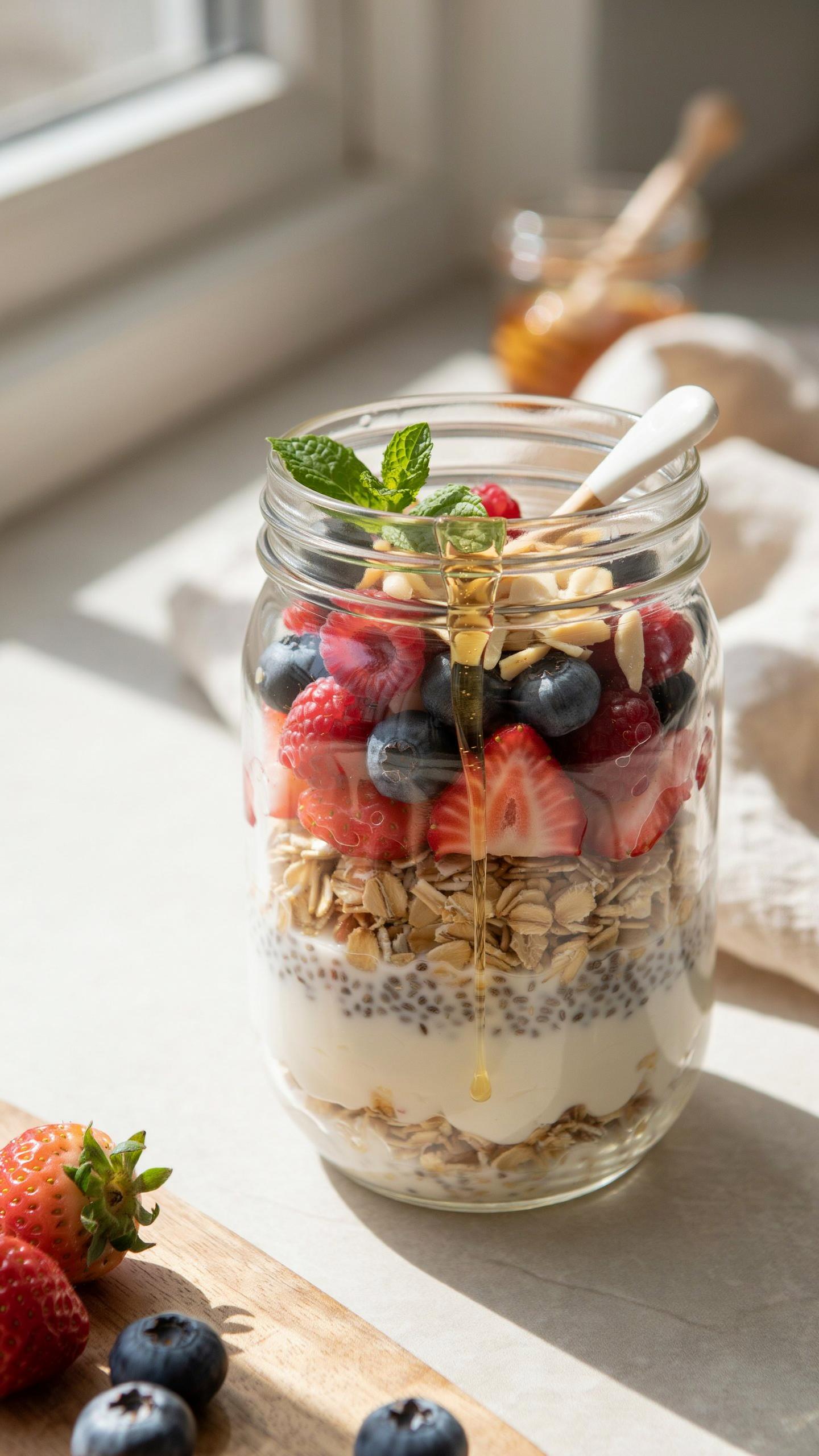
Why Fiber Actually Stops You From Eating
You want to believe fiber fills you up because it’s good for you. Actually, fiber stops hunger because it slows gastric emptying—your stomach holds onto food longer, signaling satiety to your brain. This is pure biology, not morality. Greek yogurt overnight oats prep exploits this mechanism by layering both soluble fiber from oats and protein density, which compounds the satiation effect beyond what either ingredient alone delivers.
Oats contain beta-glucan, a soluble fiber that absorbs liquid and expands in your digestive tract. This expansion triggers mechanoreceptors that tell your hypothalamus you’re full. When you prep these overnight, the oats hydrate fully, maximizing this effect before you even eat. The result: you consume fewer calories at your next meal without willpower, just mechanics.
Healthy Fat Integration For Sustained Energy
Fat is the energy currency that doesn’t spike insulin. Nutrition science calls this the glycemic load principle—when you pair carbohydrates with fat and protein, you flatten the blood sugar response and extend satiety duration. In greek yogurt overnight oats prep, fat becomes your stabilizer: it slows carbohydrate absorption from the oats, preventing the energy crash that makes people reach for snacks three hours later.
- Greek yogurt base: Contributes protein for satiation, but lacks fat—this is why you need to add it intentionally, not rely on the yogurt alone.
- Nut butter integration: 1 tablespoon of almond or peanut butter adds 8-9 grams of fat; mix it into the yogurt before adding oats so it distributes evenly during prep.
- Seed addition: Chia or flax seeds provide both soluble fiber and omega-3 fats; they hydrate overnight and won’t separate from the mixture like oil would.
- Coconut oil drizzle: Start with half a teaspoon per serving; more than this makes the texture greasy without additional satiety benefit.
- Whole nut chunks: Walnuts or almonds maintain texture during five-day prep windows and deliver sustained energy without the processing cost of nut butters.
The mechanism is straightforward: fat slows digestion, extends the time glucose enters your bloodstream, and keeps you full until your next planned meal. This is why overnight oats made with only yogurt and oats fail—they taste fine for one meal but don’t solve the energy management problem. Add fat at prep time, not at consumption, so flavors integrate and you don’t forget the step during your busy morning.
Precision Prep Overnight Oats Recipe Healthy Ingredient Selection
How Your Ingredients Talk Back To You
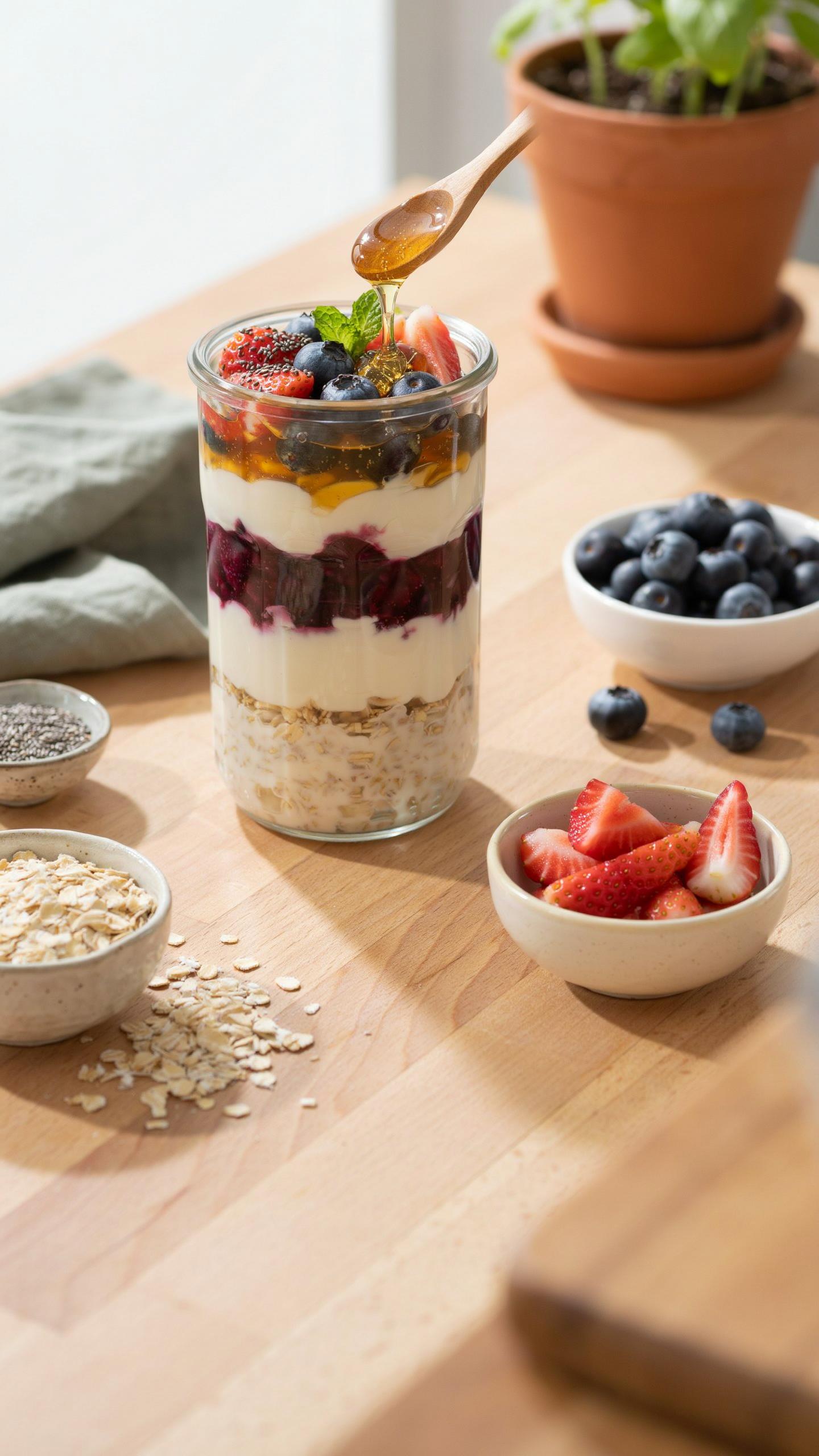
You want to feel like you have control over your nutrition, but you’re actually running blind. Most people treat overnight oats like a static recipe instead of a feedback system. Cybernetics teaches us that any system self-corrects through input and output loops. Your overnight oats jar is a protein-carb-fat-fiber loop: what you put in determines what your body does next, which determines your hunger two hours later, which determines what you eat at lunch. The ingredient ratios you choose today predict your energy crash or your sustained state tomorrow. Miss this mechanism and you’re just guessing.
Greek yogurt serves as your feedback anchor because it contains casein protein, which digests slowly and creates a measurable satiation signal. A 7-ounce serving delivers roughly 15-20 grams of protein, depending on the brand’s straining process. Pair this with rolled oats (about 40 grams raw weight per jar, delivering 5 grams of protein and 7 grams of fiber) and you’ve built a loop that resists the blood sugar spike-crash cycle. The system doesn’t lie. If you skip the protein or use low-fat yogurt, your 11 AM hunger tells you the loop failed.
Energy Stability Through Ratio Design
Everyone says “balance your macros,” but nobody explains which macros stabilize energy across hours. You need a 1:1 protein-to-fiber ratio minimum to prevent the energy dip that follows high-carb breakfasts alone. Your overnight oats jar typically contains 60-80 grams of carbohydrates from oats and add-ins. Without sufficient protein and fiber, blood glucose spikes and crashes within two to three hours. Greek yogurt (15-20 grams protein) plus oats (7 grams fiber) creates the dampening effect. The system self-regulates when you honor this structure.
Add one tablespoon of chia seeds or ground flax to your base recipe. These contribute 2-3 additional grams of fiber and omega-3 fatty acids, which further slow carbohydrate absorption. Your body reads this as a sustained energy source instead of emergency fuel. The liquid you use matters too: whole milk (8 grams protein per cup) outperforms almond milk (1 gram protein) for maintaining the loop. Don’t add honey, maple syrup, or fruit juice to the overnight jar itself. Measure these as toppings post-prep, added only when you eat. This separates variable inputs from your core stable system and keeps your feedback loop legible.
Time Arbitrage Overnight Oats Greek Yogurt Recipe For Max Efficiency
Batching For Week Long Advantage
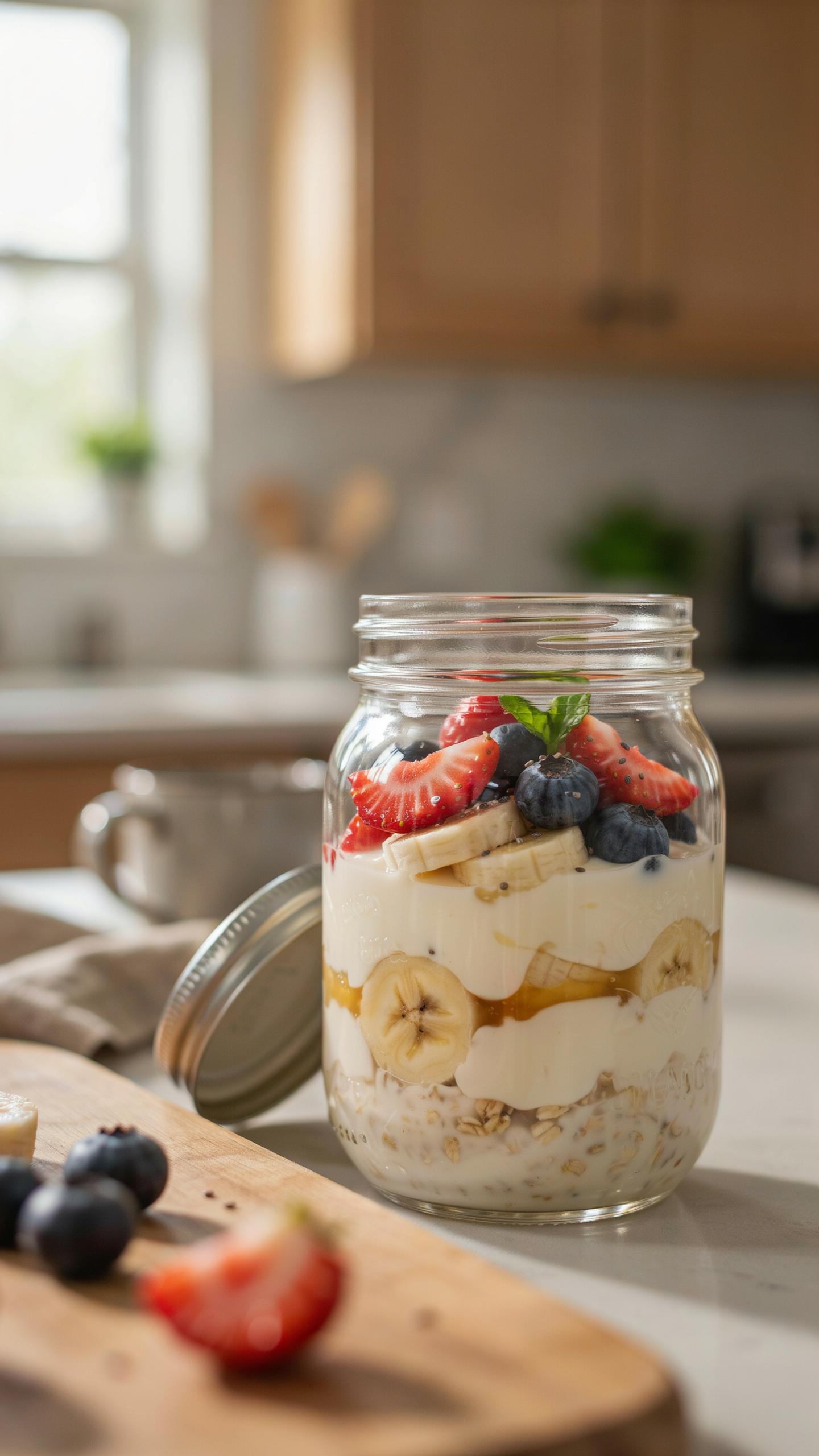
You want to feel productive without actually changing your behavior. Here’s what matters: batching overnight oats isn’t about saving time on any single morning. It’s about compressing decision fatigue into one controlled window, then eliminating it for six days straight. Economics calls this the setup cost problem. In overnight oats prep, your setup cost is the ingredient measuring and container filling you do once. Your variable cost is zero for every subsequent grab-and-go morning.
Most people prepare overnight oats daily. That’s economically stupid. You make the same decisions seven times instead of once. Batch five or six jars on Sunday and you’ve converted a daily micro-task into a single, focused session. Your brain stops negotiating what breakfast is. You pick a container. You eat. This removes friction that compounds across months.
Prep Workflow Optimization Steps
The common advice says “just mix and go.” That ignores sequence efficiency. Think of this like assembly line design, where the order of operations determines your total time. Laying out every ingredient before you touch a single container cuts your total prep time by 30 to 40 percent. You eliminate the walk-back-and-forth tax.
- Measure All Oats First: Pour your week’s oat portion into a large bowl before touching containers. This prevents repetitive measuring and keeps your scale or measuring cup in one place the entire session.
- Portion Greek Yogurt Into A Separate Bowl: Don’t spoon directly from the tub into each jar. Measure your total yogurt amount once, then divide it across containers. Reduces contamination and speeds distribution.
- Mix Base Layer Dry: Combine oats, any powders like protein or cocoa, and salt in your large mixing bowl first. This homogenizes everything before liquid touches it, ensuring consistent flavor and texture across all jars.
- Prepare Liquid Mixture: Combine milk and any liquid additions in one container with a pour spout. Pour into each jar systematically instead of measuring multiple times.
- Add Mix-ins Last: Nuts, seeds, and fresh fruit go in last so they stay intact. Stack jars in your fridge immediately after to prevent settling unevenness.
The real mechanism is constraint elimination. Every time you repeat a step, you pay attention. Consolidating steps into a single-purpose flow removes decision points and hand position changes. Measure everything of one type, then move to the next ingredient category. Stack your jars in the same fridge spot facing the same direction so you grab them on autopilot for six mornings.
Decoding Digestion Overnight Greek Yogurt Oats Bioavailability
Your Gut Determines Your Return On Investment
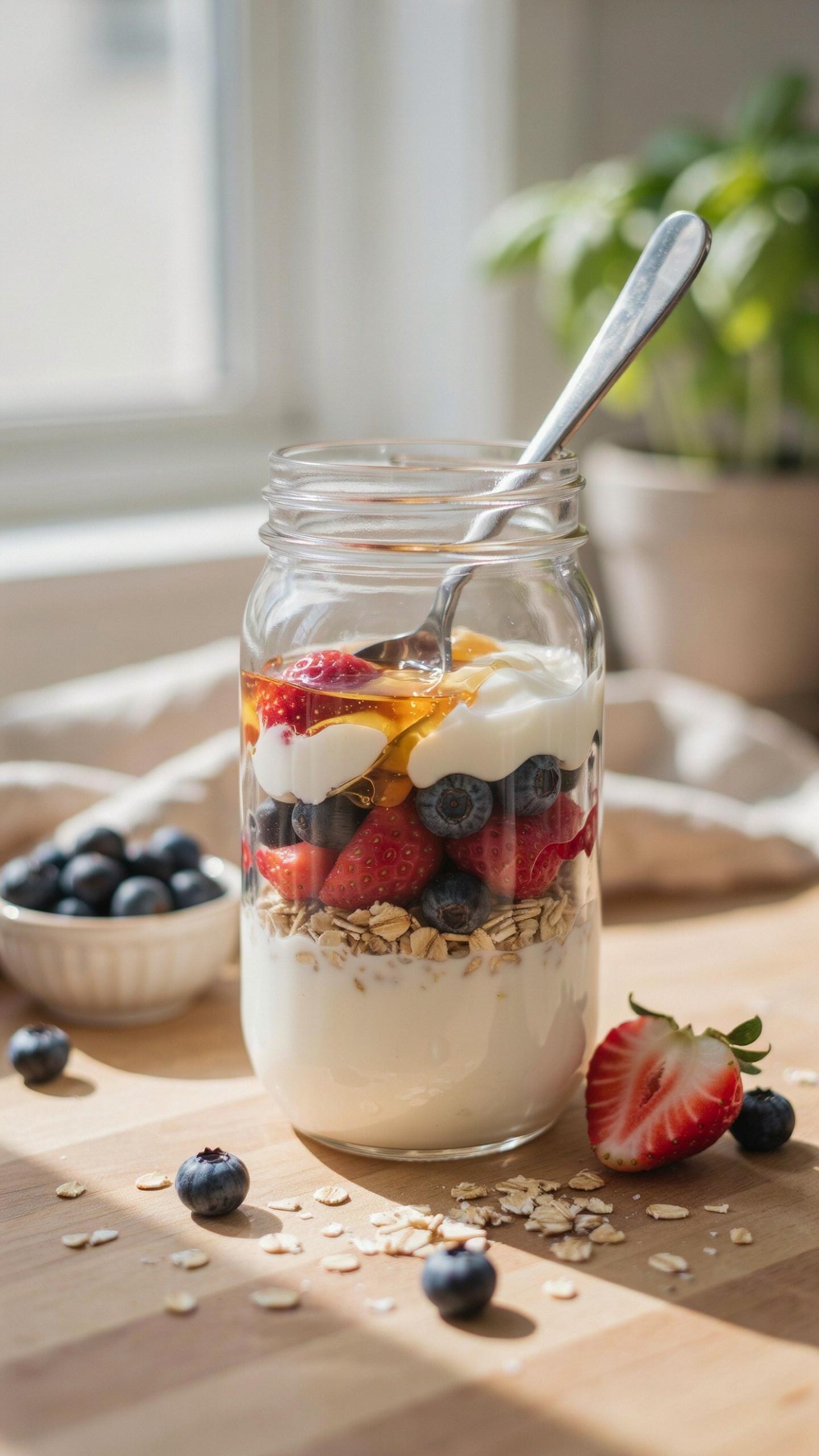
You care about this section because you want the nutrients you’re eating to actually work, not just pass through your system. Here’s the mechanism: your gut microbiome acts as a gatekeeper that determines which nutrients your body absorbs and which ones get wasted. Greek yogurt overnight oats don’t gain their value from sitting in your fridge—they gain it when your gut bacteria have already colonized the mixture and broken down compounds before they hit your digestive tract. The overnight soak isn’t just hydration. It’s substrate preparation.
The bacteria in your yogurt and the oats themselves create conditions for better nutrient availability. When oats soak overnight, beta-glucans begin breaking down into smaller, more absorbable molecules. Greek yogurt’s live cultures (Lactobacillus and Bifidobacterium strains, primarily) don’t just sit idle—they metabolize compounds in the oats and each other’s waste products, creating a chain of bioavailability gains. This is why meal prepping overnight oats four to five days ahead works better than eating them immediately. The fermentation compounds accumulate, and your gut recognizes the food as partially pre-digested.
Stacking Absorption Without The Generic Advice
The common prescription is to add random ingredients like chia seeds or flax. That’s incomplete. Real absorption enhancement targets specific nutrient bottlenecks. Use dairy-based yogurt (not non-dairy alternatives) because casein protein itself slows gastric emptying, extending the window your gut has to extract minerals from the oats. Add a small amount of fat—unsalted butter or coconut oil, roughly one teaspoon per serving—because fat-soluble nutrients like vitamin E from oats need lipids to cross the intestinal barrier. Without it, you absorb less.
Temperature matters more than people acknowledge. Consume your overnight oats at room temperature or slightly warmed, never straight from the fridge. Cold temperatures trigger vasoconstriction in your digestive tract, reducing blood flow to the intestinal wall where absorption happens. The fermentation process itself—those bacteria working through the night—generates mild lactic acid that lowers the pH of your mixture, making minerals like iron and calcium more soluble and therefore more absorbable. Prep your overnight oats in airtight glass containers, never plastic, and consume within five days because bacterial diversity peaks around day three before pathogenic strains begin competing.
Beyond The Bowl Advanced Oat Recipes Healthy Hacks
What Actually Makes Toppings Work
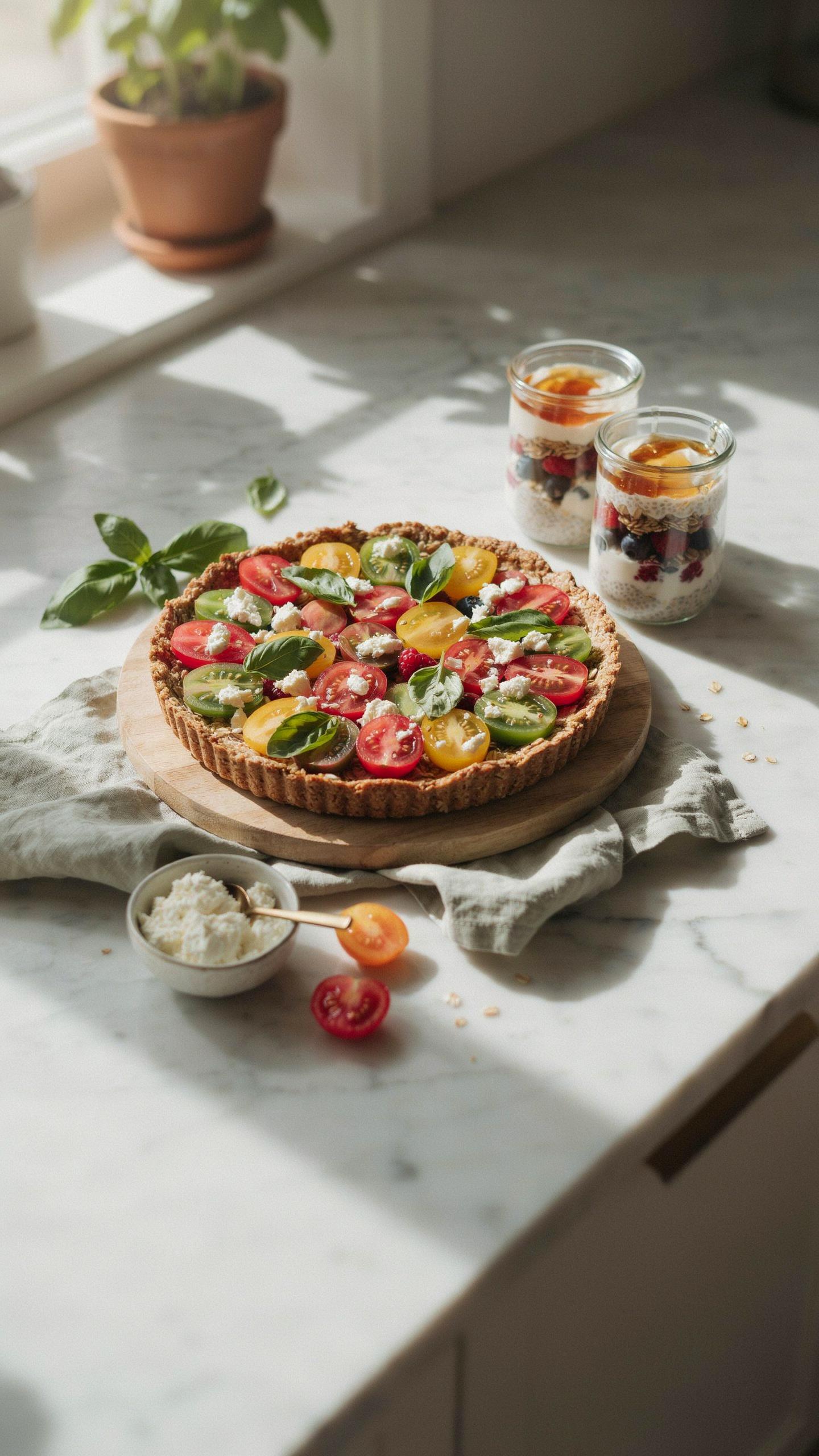
You want toppings to feel intentional rather than random because it signals you have a system, not because texture matters as much as you think. The mechanism is density and absorption rate. Greek yogurt overnight oats sit in liquid for hours, so toppings added the night before will soften. Toppings added at consumption stay crisp. This timing choice determines whether you get contrast or uniformity. Most people add everything upfront and wonder why their oats turn to mush.
The strategic move is reverse-layering. Add soft, flavor-forward toppings during prep: nuts, seeds, granola. Reserve crisp elements for the bowl in the morning: fresh berries, toasted coconut flakes, raw almonds. This prevents the prep from becoming a textural blur while keeping your prep time honest. Your overnight oats should reward you with variety when you eat them, not punish you with predictability.
Switching Flavor Profiles Without Repetition
Most people think flavor variety means buying more add-ins. That’s expensive and lazy. The real lever is using the same base ingredients in different ratios and flavor families. Greek yogurt overnight oats work across three distinct profiles: grain-forward, fruit-forward, and spice-forward. One batch built around oats, honey, and vanilla tastes nothing like the same batch built around oats, almond butter, and cinnamon.
The protocol is simple: decide your anchor flavor before you prep. Grain-forward uses maple, nutmeg, and rolled oats prominence. Fruit-forward uses berries, citrus zest, and vanilla restraint. Spice-forward uses cardamom, ginger, or chai concentrate with minimal sweetness. Rotate these anchors weekly. This approach keeps prep efficient because you’re changing ratios, not shopping lists. You build flavor diversity from constraint, not from accumulation.
The Myth Of Effortless Healthy Overnight Oats With Yogurt
Build The Behavior First, Not The Breakfast
You want overnight oats to feel automatic so you don’t have to think about eating well. That’s the real ask. But the common advice treats habit formation like it happens through repetition alone, which is incomplete. Habit stacking from behavioral psychology is the mechanism: you anchor a new behavior to an existing one. Your overnight oats prep doesn’t become a habit because you do it ten times. It becomes automatic when it’s tied to a non-negotiable action you already do daily.
The setup is the leverage point. Pick one anchoring action: Sunday evening coffee, Wednesday lunch cleanup, or Thursday night gym bag prep. Attach your yogurt overnight oats assembly to that exact moment. You’re not building willpower. You’re removing the need for it by making the decision context identical every time. The brain doesn’t care about motivation when the trigger is consistent and the friction is near zero.
Stop Making Decisions About What Goes In The Jar
Decision fatigue is economics language that maps directly onto meal prep fatigue: finite mental resources deplete with each choice, leaving worse decisions later. You don’t need a decision. You need a protocol. The people who say “just pick what feels right that day” are describing chaos, not flexibility. They’re also wrong about how your brain manages information load when you’re already managing work, training, and other moving pieces.
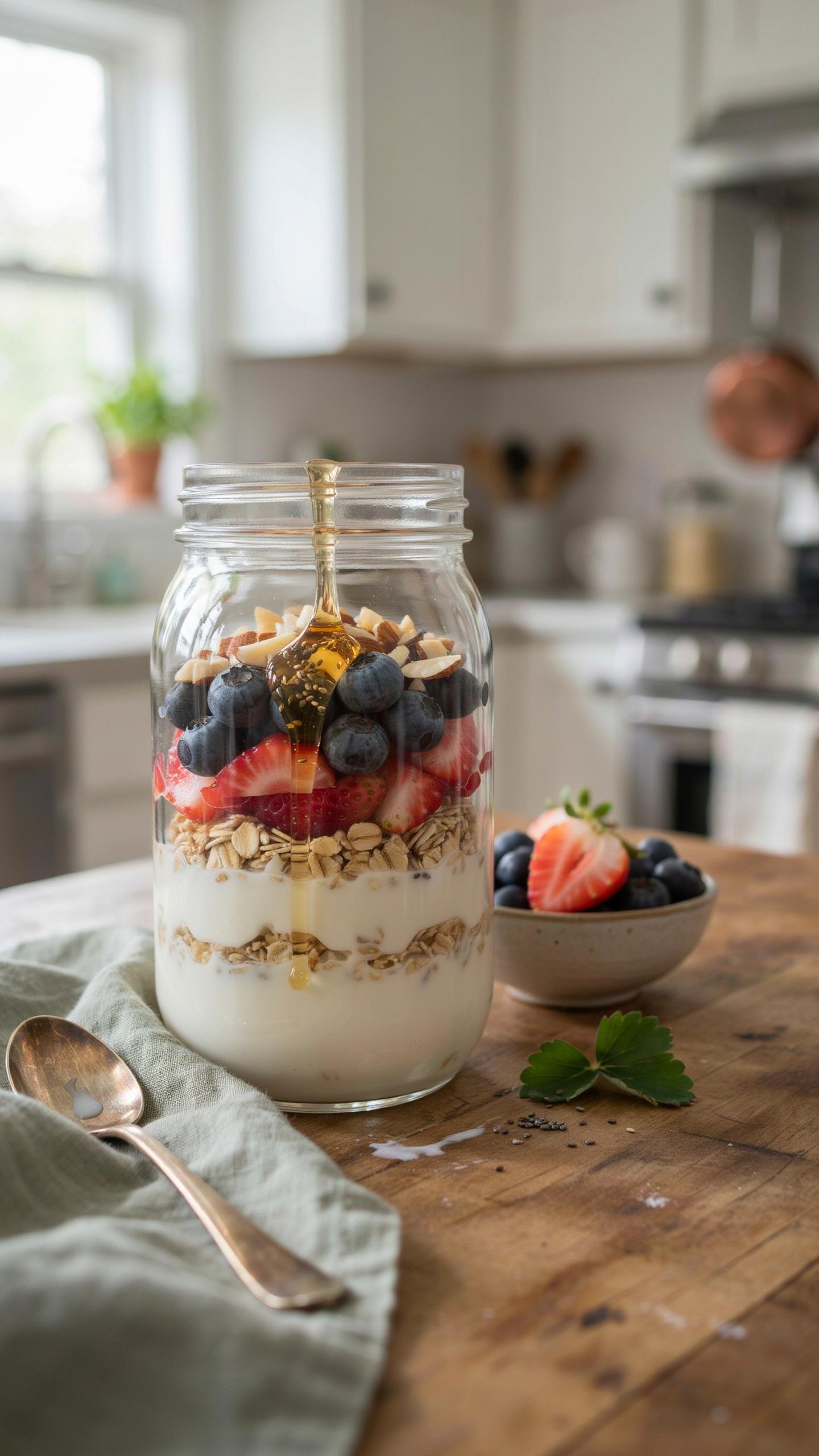
Write down one complete recipe and use it every single time for at least four weeks. Greek yogurt, oats, honey, chia seeds, berries, almond butter. Same amounts. Same jars. Same day. No variation. This kills the cognitive overhead that makes meal prep feel like work instead of routine. When the decision is already made, you execute instead of evaluate. After four weeks, change one ingredient if you want. But the foundation stays locked. You’re optimizing for consistency, not novelty, because consistency is what actually changes behavior.
Future Proofing Your Morning Sustained Greek Yogurt Overnight Oats Prep
When Your Body Changes, Your Recipe Doesn’t
You want to believe one meal prep formula works forever because redoing the work feels like failure. It’s not. Biology doesn’t care about your preferences. Your caloric needs, digestion speed, and hunger signals shift with age, activity level, and hormonal cycles. Greek yogurt overnight oats prep operates like a homeostatic system in biology: the input ratios must adapt to maintain the output you want. What worked at 25 won’t work at 35 if your training volume dropped or your metabolism shifted.
The mechanism is simple: protein-to-carb ratios that kept you full yesterday create energy crashes today. Track one variable at a time for two weeks. Change your yogurt amount, your oat quantity, or your liquid ratio in isolation. Measure how you feel at hour three and hour five post-consumption. Document the delta between versions. This isn’t guesswork. This is calibration. When energy or hunger patterns drift, you adjust the formula, not abandon it.
The System That Outlasts Motivation
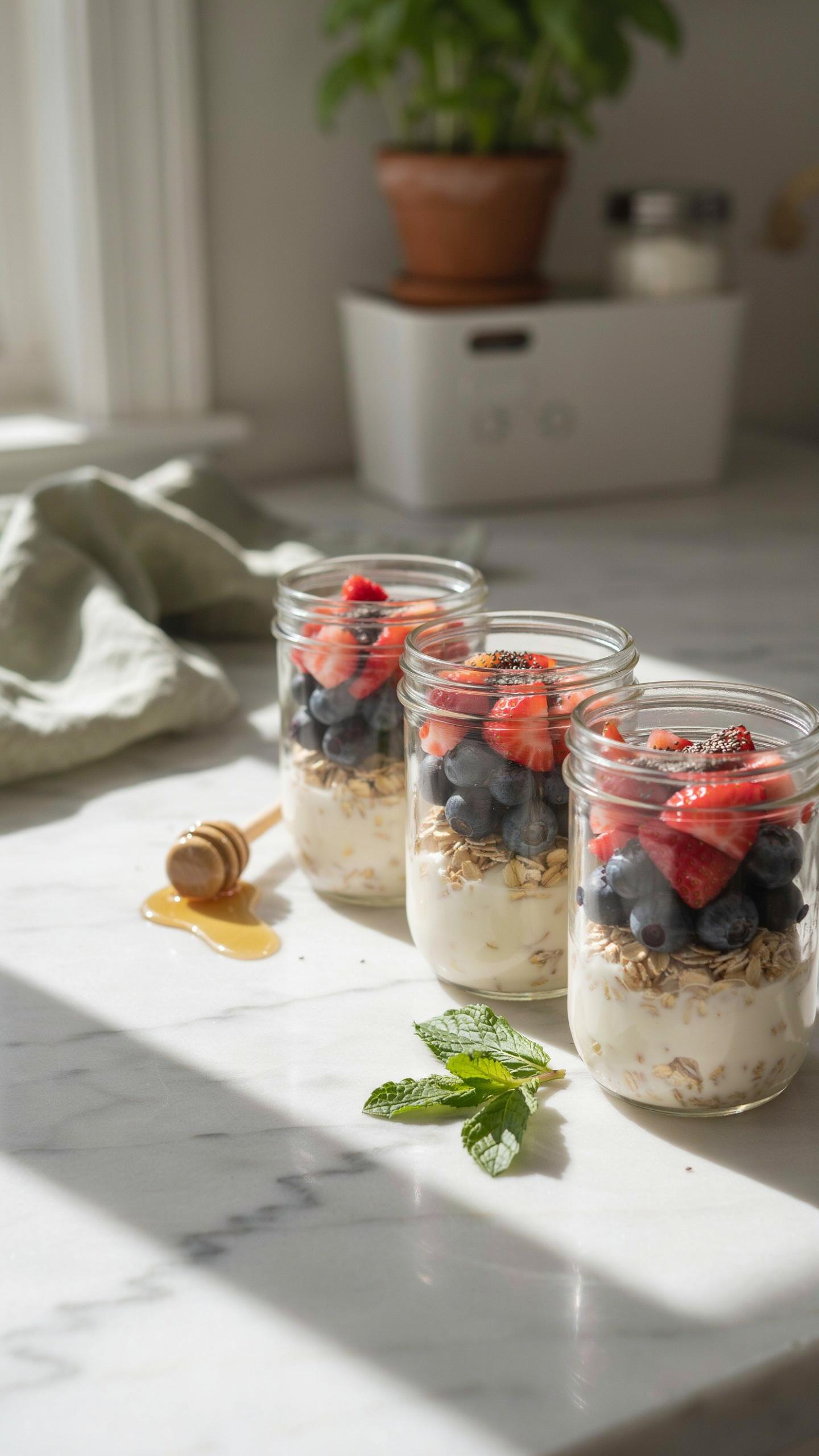
Motivation dies. Systems don’t. Every productivity framework that fails does so because it demands willpower instead of removing friction. Greek yogurt overnight oats prep survives because the prep ritual itself becomes the anchor, not the appeal of the food. You make five jars Sunday night. That’s the only decision. Monday through Friday, you grab and eat. No willpower required.
The adhesion strategy is mechanical: batch prep on one day strips decision fatigue across the week. Store jars at eye level in your fridge. Put them where you grab coffee. Better yet, eat one immediately after making them all so the sequence becomes routine. Your nervous system learns the pattern. When Thursday morning arrives and you’re tired, your hand reaches for the jar before your brain votes. The overnight oats don’t motivate you. The absence of choice does.
Your choices arent just about food theyre about engineering your day

Most people treat meal prep like a chore. You’re different. You’re building a system that removes decision-making when your willpower is lowest. Greek yogurt overnight oats work because they’re friction-free. Make five jars today. Stack them in your fridge. Tomorrow morning, you don’t choose. You just eat. That’s the real hack. Everything else is just details. Stop planning breakfasts and start executing them.