
Deconstructing The Cottage Cheese Salad Myth
What Everyone Gets Wrong About Protein Lunches
You want to look like you have your life together. That’s the real reason you’re interested in meal prep. The mechanism most people miss is that high-protein lunches don’t fail because of the food itself. They fail because people treat protein as an isolated variable instead of understanding satiety as a system. You can hit 30 grams of protein and still feel hollow two hours later if the meal lacks structure.

The consensus advice says “add protein, feel full.” That’s incomplete. Protein alone doesn’t create satiation without the right ratio of volume, fiber, and fat working together. Cottage cheese has the protein, but without deliberate vegetable mass and a fat source, your body registers the meal as incomplete. You’ll chase snacks by 3 PM because your brain didn’t receive the satiety signal it needed to send.
Why Standard Meal Prep Advice Breaks Down
The advice is lazy and it costs you money and hunger. Most cottage cheese salad guidance focuses on throwing ingredients together, then assumes the protein number on the label determines the outcome. In behavioral economics, there’s a concept called “effort justification”—people undervalue solutions that seem too simple. This blinds them to why their prep fails: they’re not engineering the meal, they’re assembling it.

Conventional approaches ignore the order in which you consume the components and the texture contrast required to maintain engagement across multiple meals. A cottage cheese salad prepped Monday tastes like disappointment by Wednesday because the vegetables have surrendered their structure to moisture. The real protocol accounts for ingredient stability over time and builds the salad in layers that prevent degradation. This is the difference between a meal that sustains you and one that teaches you meal prep doesn’t work.
The High Protein Imperative Cottage Cheeses Unseen Advantage

Why Cottage Cheese Protein Actually Gets Used
You care about this because you want the protein to count, not just sit in your stomach while you wonder if you’re wasting money. The real mechanism comes from biology: cottage cheese contains casein protein, which your body digests slowly and steadily. This isn’t marketing. Casein forms a gel in your stomach, releasing amino acids over hours instead of minutes like whey does. For a lunch that needs to hold you until dinner, this matters more than the total gram count.
Most people fixate on protein quantity without understanding absorption timing. Your muscles don’t build from eating 30 grams of protein in one sitting. They build from consistent amino acid availability throughout the day. Cottage cheese salad meal prep wins here because casein keeps your bloodstream supplied with amino acids long after lunch ends. Pair it with vegetables that add fiber, and you’ve engineered a delivery system, not just a meal.
Satiety Signals That Stop You From Snacking
Nobody talks about this because satiety science doesn’t fit on a label. Your brain tracks fullness through multiple channels: stomach stretch, nutrient density, and hormonal signaling from fat and protein. Cottage cheese activates all three simultaneously. The curds create physical volume. The casein triggers CCK release, a hormone that directly signals fullness to your brain. Fat content reinforces the signal.
The mistake people make is treating satiety like a single variable. They add low-calorie volume and wonder why they’re hungry an hour later. A cottage cheese salad with olive oil dressing, vegetables, and a pinch of salt creates genuine fullness that persists. Your body recognizes the protein and fat combination as substantial nutrition, not just filler. Make this the non-negotiable foundation of your lunch prep, and you stop reaching for snacks at three o’clock.
The Decision Elimination Protocol For Cottage Cheese Salad
Pick Your Five Ingredients Once
You’re hoping a system will make meal prep feel effortless. It won’t. What actually works is removing the decision entirely. Borrowing from constraint-based design in product development, your ingredient list functions like a technical specification: it defines what gets built and eliminates everything else. Most people treat salad prep like a menu, choosing differently each time. That’s friction disguised as variety.
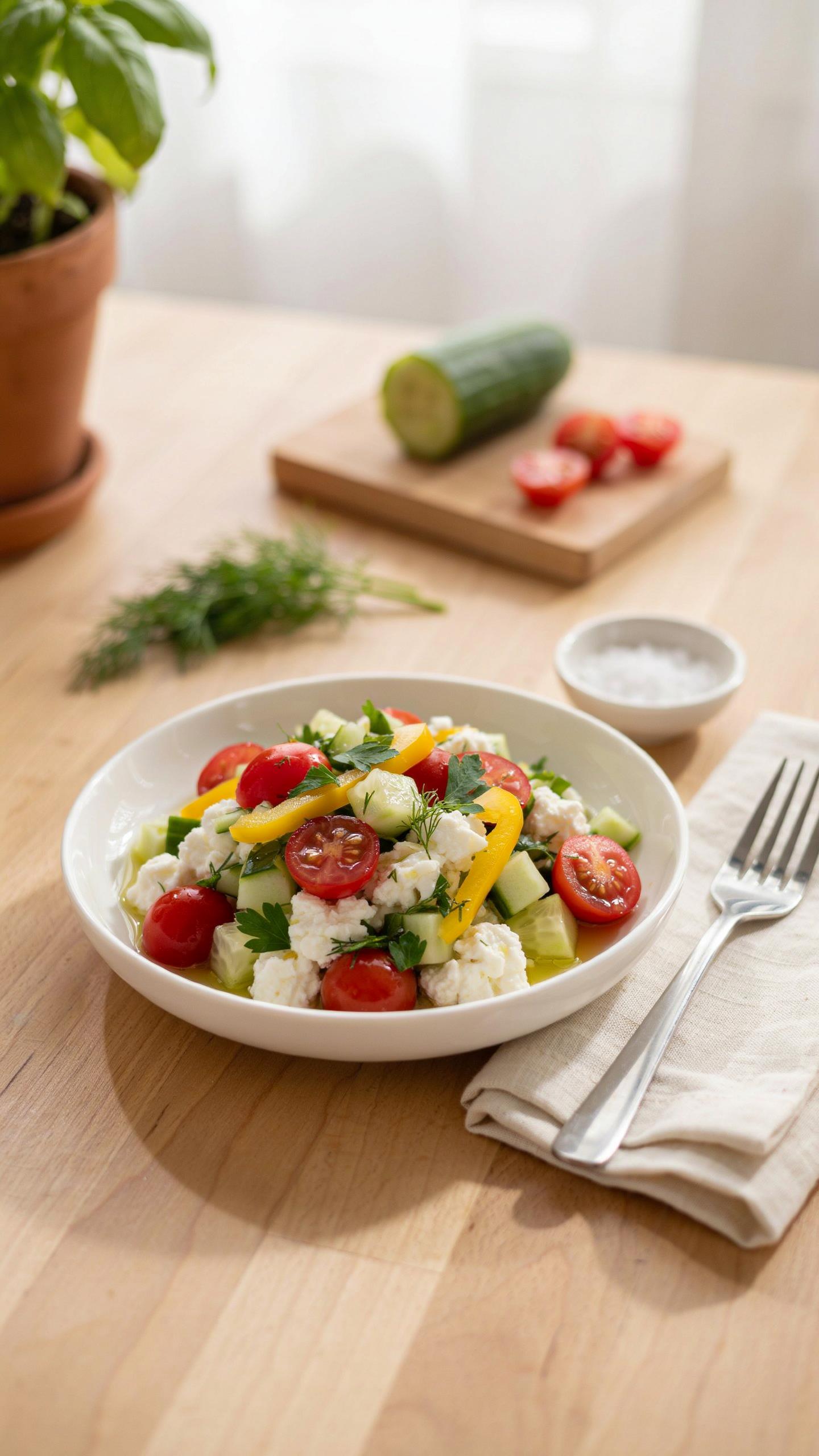
Pick five core ingredients and commit to them for four weeks. Cottage cheese, spinach, cucumber, cherry tomatoes, olive oil. Write them down. Buy only these. The cognitive load drops immediately because your brain stops negotiating with itself at the store. You’re not choosing better ingredients. You’re choosing to stop choosing. That’s the mechanism that actually saves time.
Prep In Order Of Shelf Life
Common advice says prep your protein first. Wrong. Shelf life determines sequence. Cottage cheese lasts fourteen to twenty-one days unopened, seven to ten days opened. Leafy greens wilt in three to five days. Wet vegetables like tomatoes and cucumbers break down faster than firm produce. Start with greens, then move to harder vegetables, then portion cottage cheese last.
This isn’t optimization theater. It’s the difference between edible salads on day five and a container of brown slime. Wash and spin greens dry first. Chop cucumbers and store them in airtight containers with paper towels to absorb excess moisture. Portion cottage cheese into individual containers on day three or four, after the greens have already taken the humidity hit. Your containers stay fresh for the full week when you work backward from spoilage risk, not from what sounds logical.
Loaded Cottage Cheese Salad The Micronutrient Multiplier
Vegetables That Earn Their Container Space
You want to feel like you’re eating something “healthy,” but that’s not why you’re adding vegetables to cottage cheese. The real reason: micronutrient density determines how long you stay satiated and how stable your energy stays through the afternoon. Think of vegetables as bioavailability carriers—in nutritional biochemistry, a carrier is the mechanism that transports nutrients your body can actually use. Raw spinach doesn’t just add volume; it carries folate, magnesium, and iron in forms your digestive system processes efficiently.
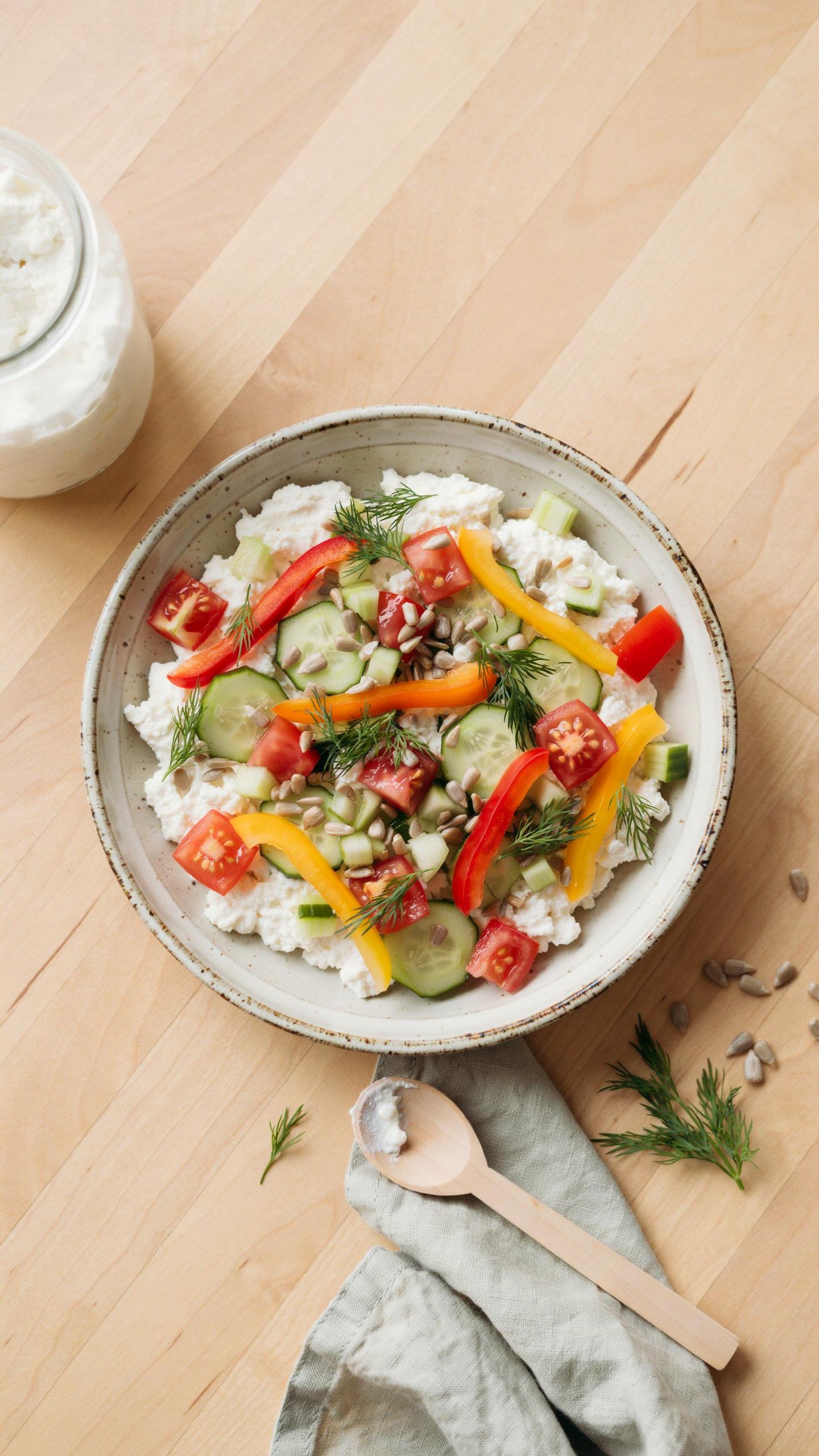
Most people throw in iceberg lettuce and call it a salad. That’s filler logic. You need vegetables with nutrient concentration: raw cruciferous options like broccoli or cauliflower, leafy greens with mineral load, and colored vegetables that signal polyphenol content. Bell peppers, grated beets, shredded carrots, and cherry tomatoes work because they’re nutrient-dense, not mushy after two days in a container, and they don’t compete with cottage cheese’s mild profile. The mechanism is simple: higher micronutrient density means your blood sugar doesn’t spike and crash, which means you don’t raid the break room at three o’clock.
Flavor Stacking Without Monotony
The common advice says “rotate your dressings.” That’s lazy. Dressing rotation only masks the real problem: you’re eating the same base every day, so your palate adapts and stops registering satisfaction. You need flavor profiles that work in opposition without canceling each other out.
Build three distinct salads you rotate through the week: one with acid-forward profiles (lime, cilantro, jalapeño), one with umami-salt anchors (miso, soy, sesame), and one with herb-led complexity (dill, parsley, lemon). Each profile hits different taste receptors, so your mouth stays engaged. Store dressing separately until you eat—this prevents the cottage cheese from breaking down and the vegetables from turning into paste. A loaded cottage cheese salad stays palatable through day three only if the components maintain structural integrity and flavor contrast.
Cheese Salad Recipes Beyond The Basic Scoop
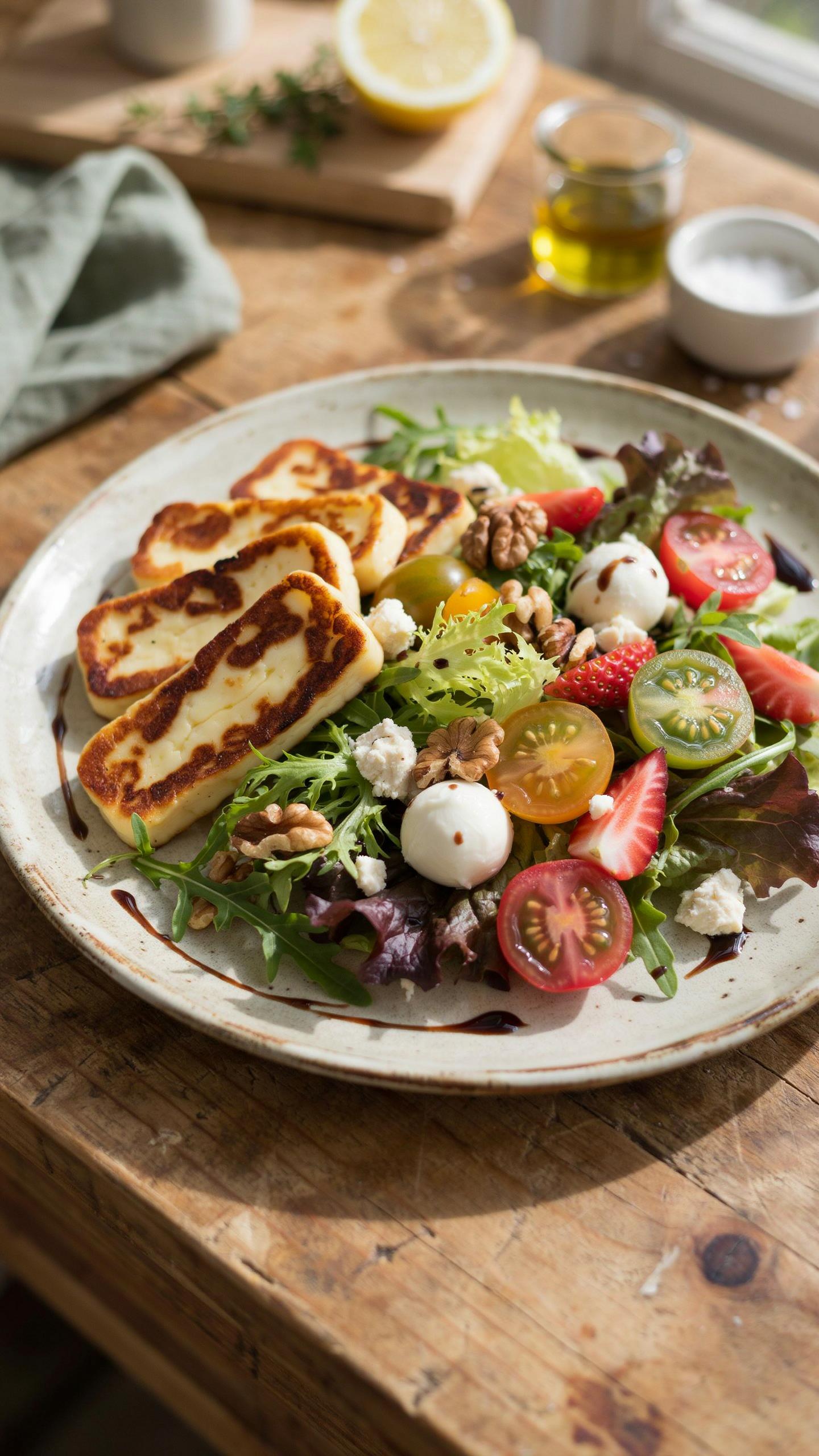
Flavor Combinations That Stick
You want to feel like you’re eating something interesting instead of protein slop. The mechanism is simple: your brain doesn’t register satisfaction from repetition, it registers it from novelty within familiarity. Cottage cheese is the familiar anchor. Everything else is the novelty lever you pull.
Most people treat cottage cheese salads like a blank canvas disaster. They dump random vegetables on top and call it a meal. The real play is building around acid and umami anchors. Lemon juice with feta, or balsamic with sun-dried tomato, or lime with cilantro and jalapeño. These aren’t fancy additions. They’re flavor compounds that make your brain say “this is food” instead of “this is fuel I’m choking down.”
Texture Layering For Actual Enjoyment
Texture contrast is borrowed from gastronomy, where chefs use the principle of opposition to prevent sensory adaptation. Your mouth adapts to one texture in about eight seconds. Introduce a new texture and you reset the clock. Cottage cheese is creamy and uniform. That’s a liability.
Add crunch: raw almonds, pepitas, croutons, chopped celery. Add chew: dried cranberries, raisins, chewy whole grains like farro or barley. The creamy base gets interrupted by each bite. Your brain stays engaged instead of zone-locking on the spoon. Build your prep containers with these layers separated until you eat. Mix them during the meal, not during prep. This single step is why your homemade version tastes fresher than week-old leftovers that sat integrated in a container.
The Adaptation Reflex For Cottage Cheese Salads
Your Brain Treats Repetition As Safety
You want this to work because you’re tired of deciding what to eat. Evolutionary biology calls this pattern recognition, and your nervous system treats familiar food combinations as low-threat stimuli. When you eat the same cottage cheese salad three times a week, your brain stops scanning for danger and starts automating the behavior. This is the adaptation reflex: your body learns the meal is safe, digestible, and predictable, so it stops wasting cognitive resources on evaluation.
The mechanism is straightforward. Repeated exposure to the same protein source, vegetables, and dressing sequence teaches your gut microbiome what enzymes to prepare. Your appetite hormones stabilize because your body predicts nutrient timing. You stop experiencing the spike-and-crash cycle that comes with novel meals. After two weeks of the same cottage cheese salad formula, your energy levels plateau at a higher baseline because your digestive system isn’t overworking.
Decision Fatigue Kills Consistency Faster Than Taste Does
Behavioral economics proves that every food choice depletes the same mental resource you use for work, relationships, and strategy. Most meal prep advice ignores this: people quit cottage cheese salads because they get bored, but the real killer is decision fatigue. You have finite willpower per day. Spending it on lunch variations means you have less for the work that actually moves you forward. The cost of cognitive load isn’t measured in calories; it’s measured in executive function depletion.
The protocol is this: build one cottage cheese salad formula and repeat it Monday through Wednesday without modification. Thursday through Friday, build a second formula and repeat that. No rotating menus. No “variety for motivation.” The friction between intention and action collapses when the meal is identical every time. You prep once, you eat six times. Your brain knows what’s coming. Your gut knows what’s coming. You keep your willpower for decisions that matter.
Cottage Cheese Recipes Healthy Debunking The Bland Myth
Build Flavor Through Layering, Not Seasoning Salt
You want to believe cottage cheese tastes bad because then you’re off the hook—you tried, it failed, move on. The real problem is simpler: you’re treating seasoning like a single action instead of a system. Flavor in cottage cheese works like layering in architecture. You need base notes, middle notes, and top notes. Salt alone collapses this structure.
The mechanism is this: cottage cheese’s bland reputation comes from people adding one seasoning at the end and calling it done. You need to build flavor before the salad even exists. Toast your spices in a dry pan first. This releases their oils and compounds. Then add them to your dressing base so they integrate with acid and fat. This is nonnegotiable if you want the salad to taste intentional.
- Black pepper and cumin: Toast together for 90 seconds, then grind. These create a savory foundation that anchors lighter vegetables without overpowering cottage cheese.
- Fresh dill and tarragon: Add after toasting spices to your vinegar base. These herbs brighten the salad and cut through richness without needing extra salt.
- Garlic powder and onion powder: Toast in the same pan as whole spices, not added raw. This eliminates the sharp bite and creates depth instead of harshness.
- Smoked paprika: Use sparingly, around 1/4 teaspoon per serving. It adds complexity and visual appeal without salt dependency, triggering a flavor expectation your palate believes.
- Lemon zest: Grate fresh, add it to the dressing just before assembly. Zest carries more volatile oils than juice alone and delivers brightness that makes cottage cheese taste intentional, not accidental.
The order matters because timing determines how compounds bind to fat and develop in your mouth. Don’t mix everything into cottage cheese raw. Build your dressing separately, let it sit for five minutes, then fold in the cottage cheese last. This prevents flavor diffusion and keeps your salad sharp through day three of meal prep.
Fat Content: Why Low Fat Cottage Cheese Fails You
The conventional wisdom says low fat cottage cheese is better for you because it has fewer calories. This is biochemically incomplete and misses how your body processes food. Fat in cottage cheese isn’t a liability—it’s the delivery mechanism for every flavor compound you just built. Remove fat and you’ve removed the vehicle. Your taste buds notice this immediately.
Low fat cottage cheese also changes the texture in ways that break down faster during storage. The proteins in full fat cottage cheese maintain their structure longer because fat creates a protective barrier around them. By day three of meal prep, your low fat version separates into liquid and solids. Full fat stays cohesive. This isn’t about preference. It’s protein stability. Use full fat or 4 percent cottage cheese. Accept the calorie difference by adjusting your other meals. The salad won’t work otherwise.
Meal Prep Strategy From Chaos To Consistent Cottage Cheese
The Container That Keeps It Actually Fresh
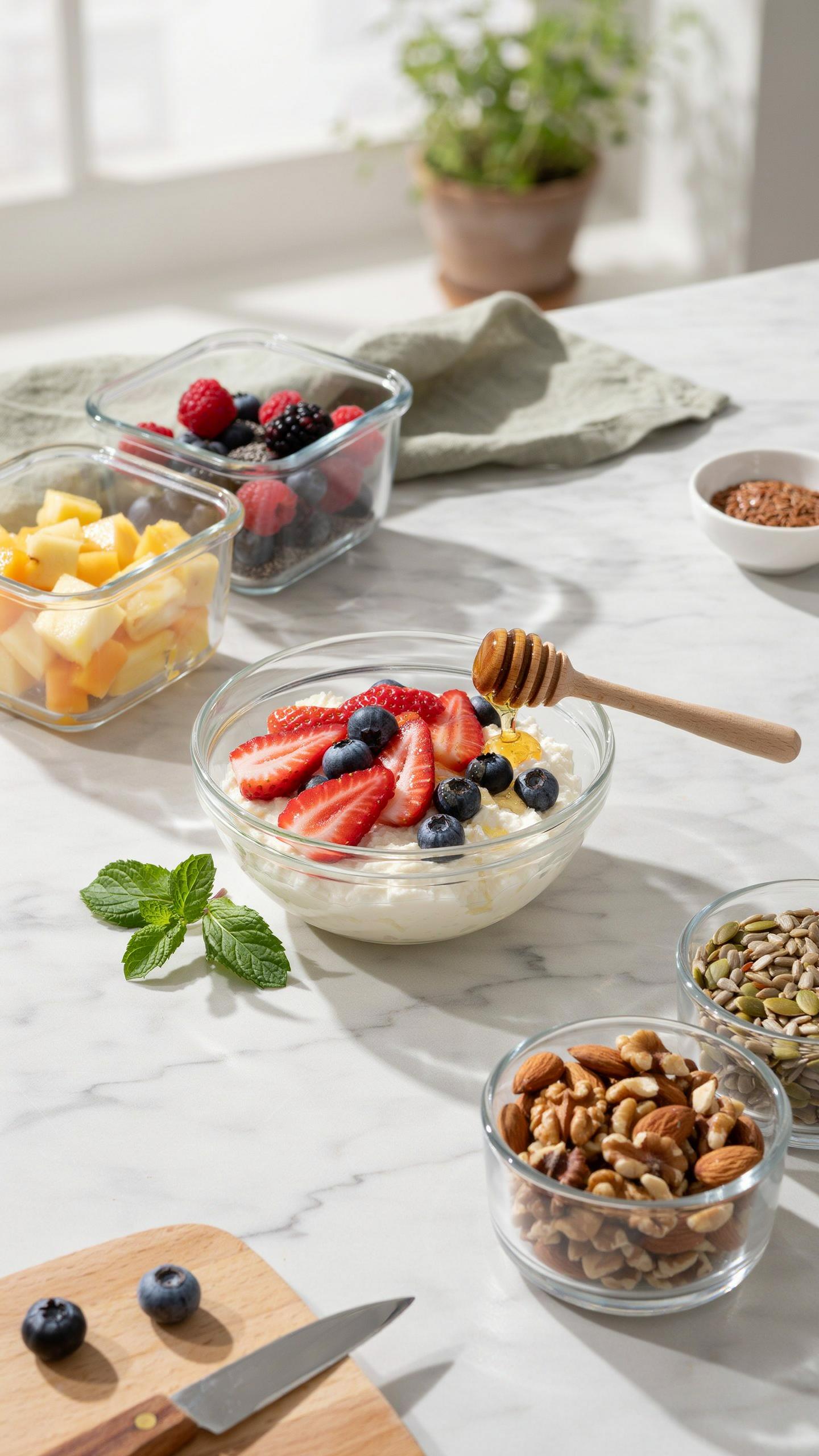
You want to believe meal prep is just about cooking once and eating all week. It’s not. Your real fear is spending time on something that spoils by Wednesday. Container choice determines whether cottage cheese stays stable or separates into whey soup. Glass containers with airtight seals outperform plastic because they don’t retain odor, don’t leach into dairy products, and allow you to see separation before you eat it. The seal matters more than the material.
Cottage cheese releases liquid over time. Perforated inserts or raised bases inside containers let whey drain away from the curds without requiring you to pour it off manually each morning. This separation preserves texture and prevents the salad from becoming soggy. Choose 32-ounce containers for single meals. Smaller containers force you to prep more often. Larger containers create surface area exposure and increase oxidation. Buy containers in sets of 10 to 14 so you never run out mid-week and never reuse containers while others sit dirty.
Weekly Rotation That Kills The Repetition Excuse
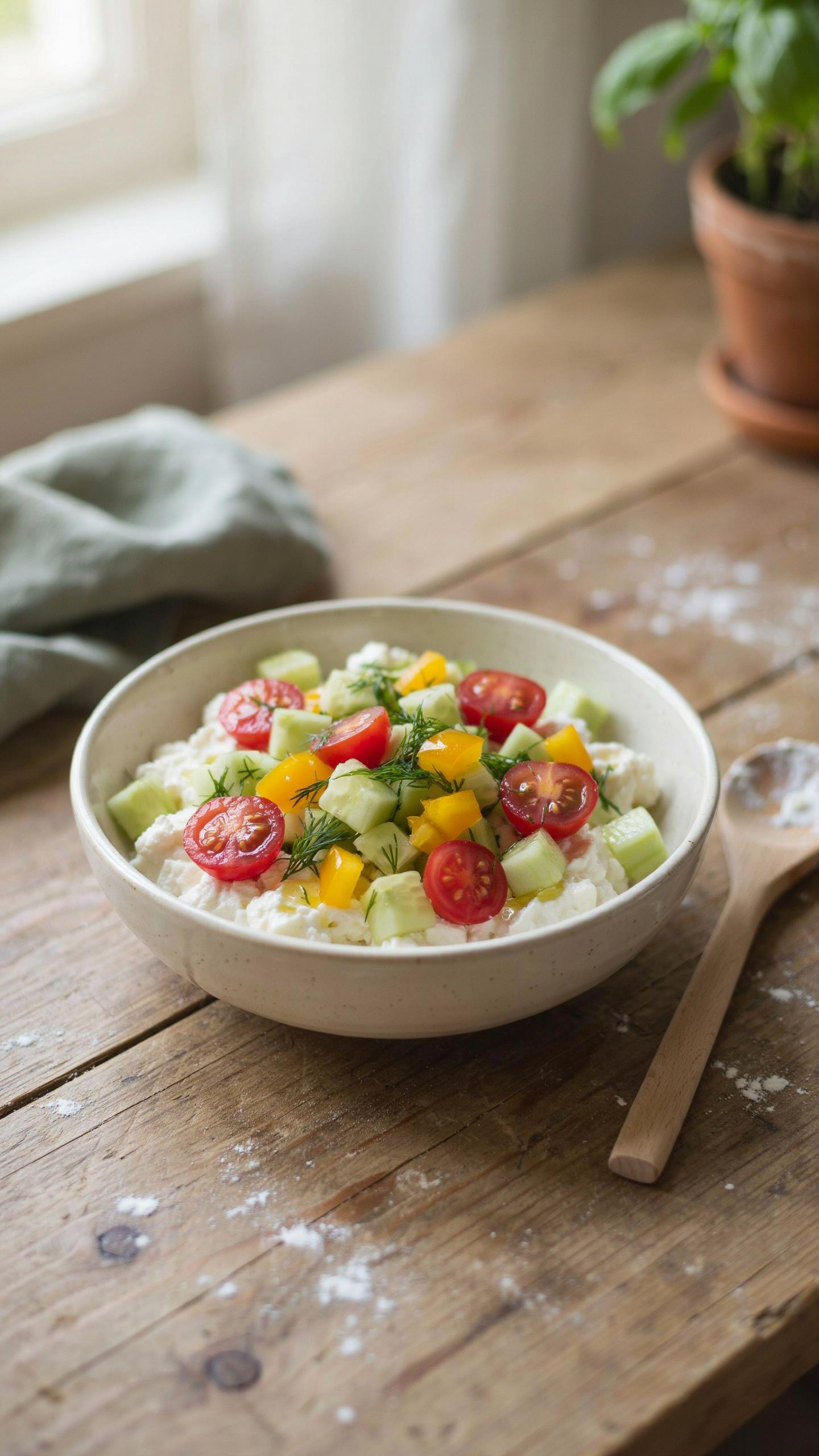
The psychology of boredom comes from economics. Scarcity of options makes you value what you have. Abundance of identical meals makes you reject them. You prep three cottage cheese salad variations instead of one, then rotate them on a three-day cycle. Day one is herb-forward with dill and chives. Day two shifts to garlic-forward with black pepper and lemon. Day three goes vegetable-heavy with cucumber, tomato, and red onion. Then the cycle restarts.
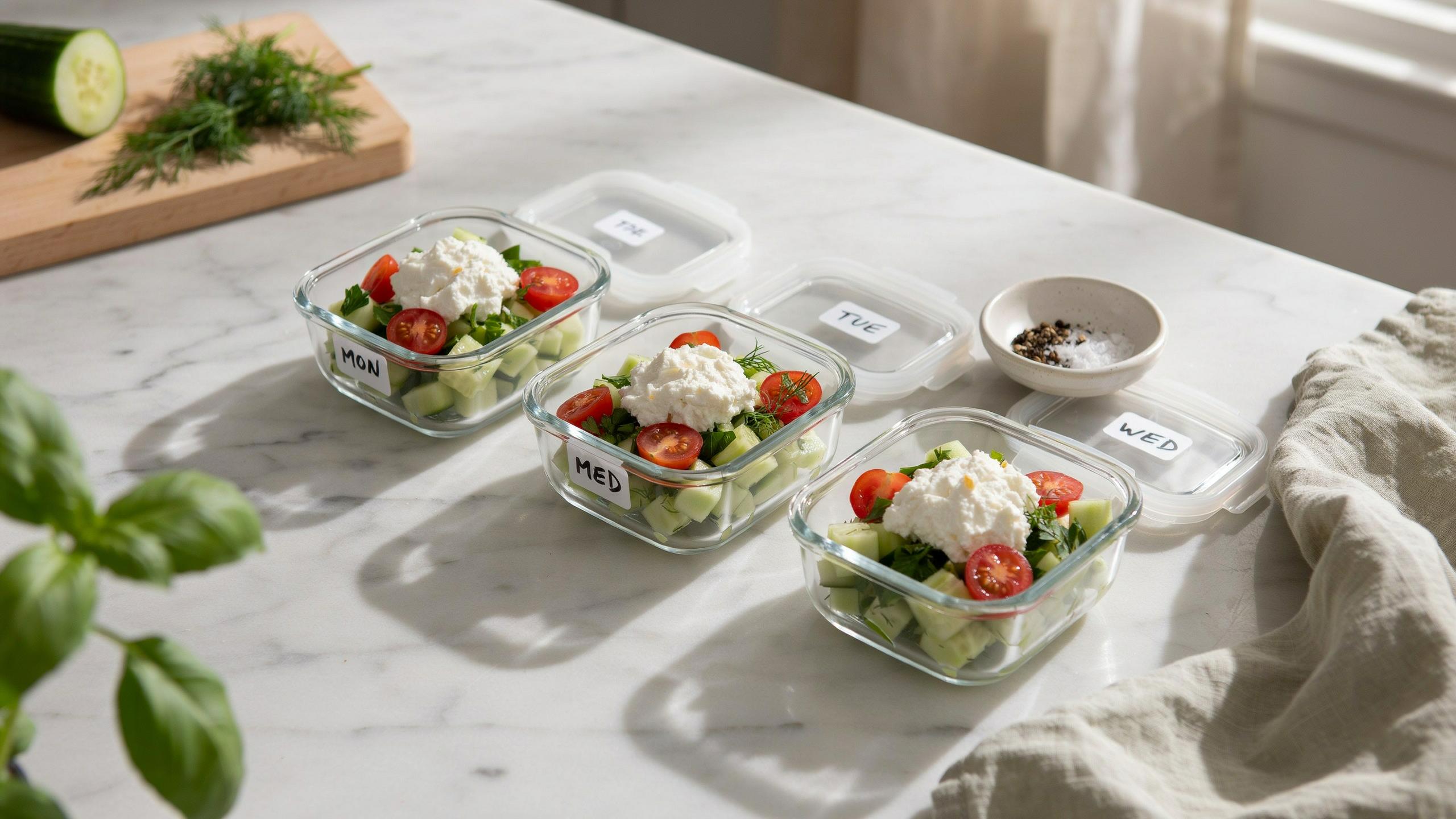
The rotation doesn’t require you to shop differently or prep entirely different meals. You’re rotating flavor profiles within the same base: cottage cheese, salt, and raw vegetables. Store each variation in separate containers labeled by day or flavor profile. This removes the decision friction every morning and prevents the psychological fatigue that kills meal prep consistency. Your prep time stays the same. Your compliance rate climbs because your brain stops flagging the meal as monotonous.
Cottage Cheese Salad Recipes The Unsung Staples
Where To Source Ingredients Without Losing Your Mind
You want to believe one grocery store has everything, same quality every time. It doesn’t. Sourcing is supply chain management applied to your kitchen, and consistency dies the moment you assume inventory never changes. The real mechanism: cottage cheese varies wildly by brand and production batch because milk sources, pasteurization temps, and curd size aren’t standardized across manufacturers. Whey content fluctuates. Fat ratios shift. One carton works perfectly in your salad; the next tastes thin and grainy.
Test one brand for two weeks before committing. Buy from stores with high turnover, not convenience shops where product sits. Check the production date on the lid, not the sell-by date. For vegetables, source from farmers markets or produce sections that rotate stock daily. Leafy greens oxidize fast. Radishes last longer. Cucumbers lose crispness within days. Build relationships with produce staff who know when shipments arrive. Your salad’s texture hinges on ingredient age, not recipe complexity.
Shelf Life Strategy For Real Deployments
The generic advice says prep salads in mason jars with dressing on bottom. Wrong framework. Think in terms of osmotic pressure instead. Liquid migrates toward denser matter over time, turning greens into wet pulp regardless of jar position. The mechanism that actually works: isolate components by water content, not by layer stacking. Cottage cheese sits highest because it’s already processed dairy. Raw vegetables go below, sealed in separate containers. Dressing stays in its own vessel until assembly.
Cottage cheese lasts seven days unopened in standard refrigeration at 38 to 40 degrees Fahrenheit. Once opened, use within four days maximum. Pre-cut vegetables lose quality after day three. Whole vegetables last until day five. Keep salad components in airtight containers, never stacked. Build your salad the night before eating, not five days ahead. The compact protocol: prep raw components Sunday through Wednesday. Add cottage cheese and dressing the evening before consumption. This extends utility without sacrificing texture or protein stability.
Beyond The Lunchbox Maximizing Your Cottage Cheese Investment
What Cottage Cheese Actually Does Outside The Bowl
You want permission to feel smart about spending money on food that doesn’t look like much. Here’s the mechanism: cottage cheese is a leverage point in your kitchen because it’s a shelf-stable protein source that doesn’t require cooking. Most people waste 40 percent of their prep work by cooking chicken they’ll use in three separate meals. Cottage cheese skips that step entirely. You prep once, deploy across multiple meal types without reheating or texture degradation.
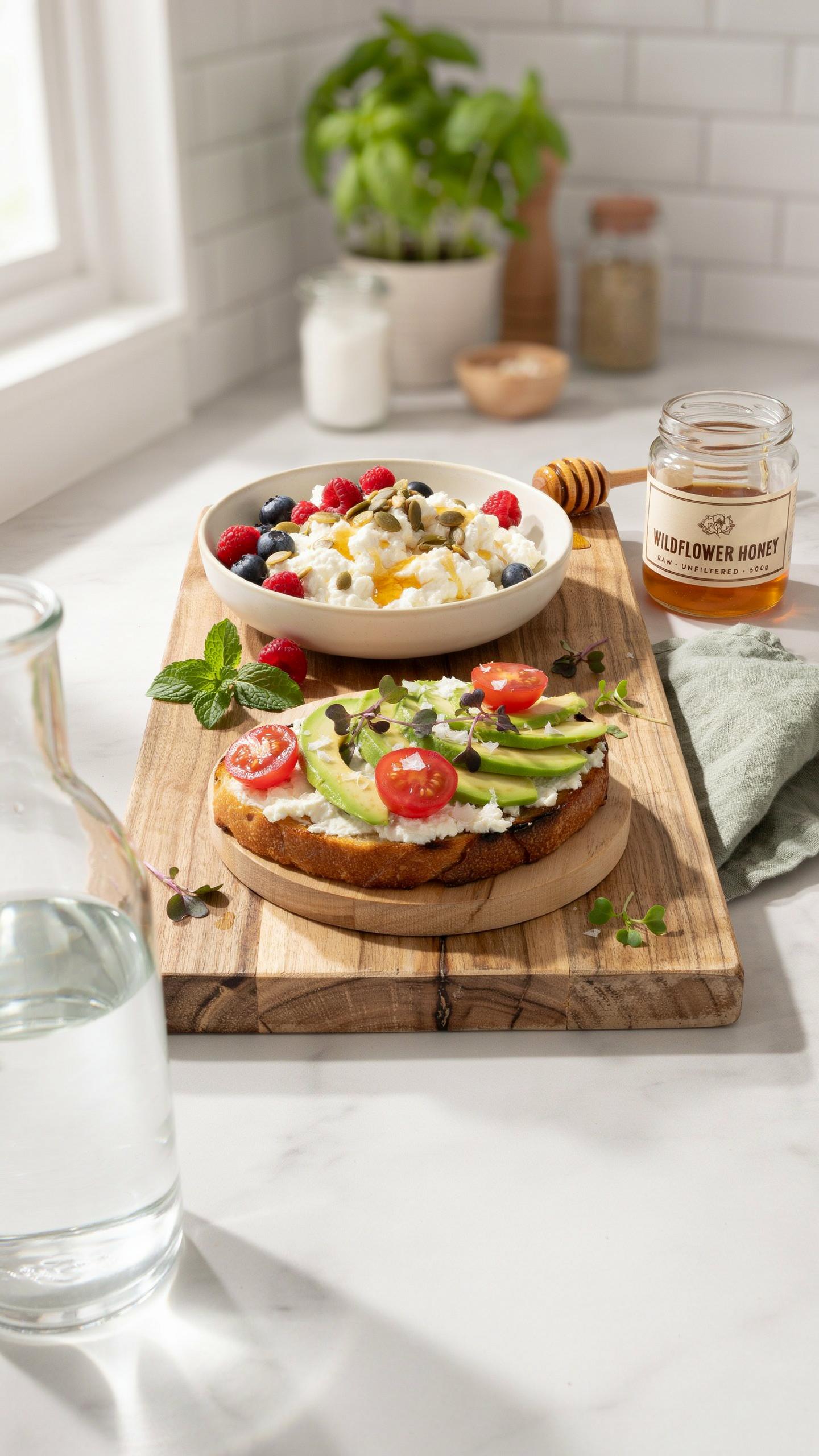
Mix cottage cheese into scrambled eggs the morning after your salad prep. It adds richness without calories and keeps eggs from drying out. Blend it into smoothies as a protein base, stir it into grain bowls cold, use it as a base for dips with olive oil and herbs, or layer it into breakfast parfaits with fruit. The same container fuels five different eating contexts. This is the actual leverage. One prep decision compounds across your week.
Feeding Multiple People Without Multiplying Work
Scaling cottage cheese prep follows the principle of economies of scale from manufacturing: fixed costs drop per unit as volume increases. Your prep time doesn’t double when you prep for four people instead of one. You’re still washing bowls and chopping vegetables once. The actual labor curve is flat.
Buy cottage cheese in bulk from wholesale suppliers if you cook for a family of four or more regularly. A 32-ounce container costs less per ounce than smaller versions. Prep salads in full sheet pans instead of individual containers. Mix one base, divide into four or five portions, then customize each one with different proteins or toppings. Label containers with names and dates. This takes 15 minutes longer than single-person prep but feeds four for a week. Store everything in the coldest part of your refrigerator where temperature stays most stable.
The true obstacle isnt a lack of recipes its the illusion that more options create more freedom

Pick one cottage cheese salad recipe. Make it Sunday. Eat it all week. That’s the move. The paralysis you feel scrolling through ten variations? That’s the enemy, not the lack of choice. Your body doesn’t care if you’re bored. Your muscles care about protein and consistency. Stop optimizing the meal and start optimizing the habit. One recipe, executed without thought, beats ten recipes executed never.