
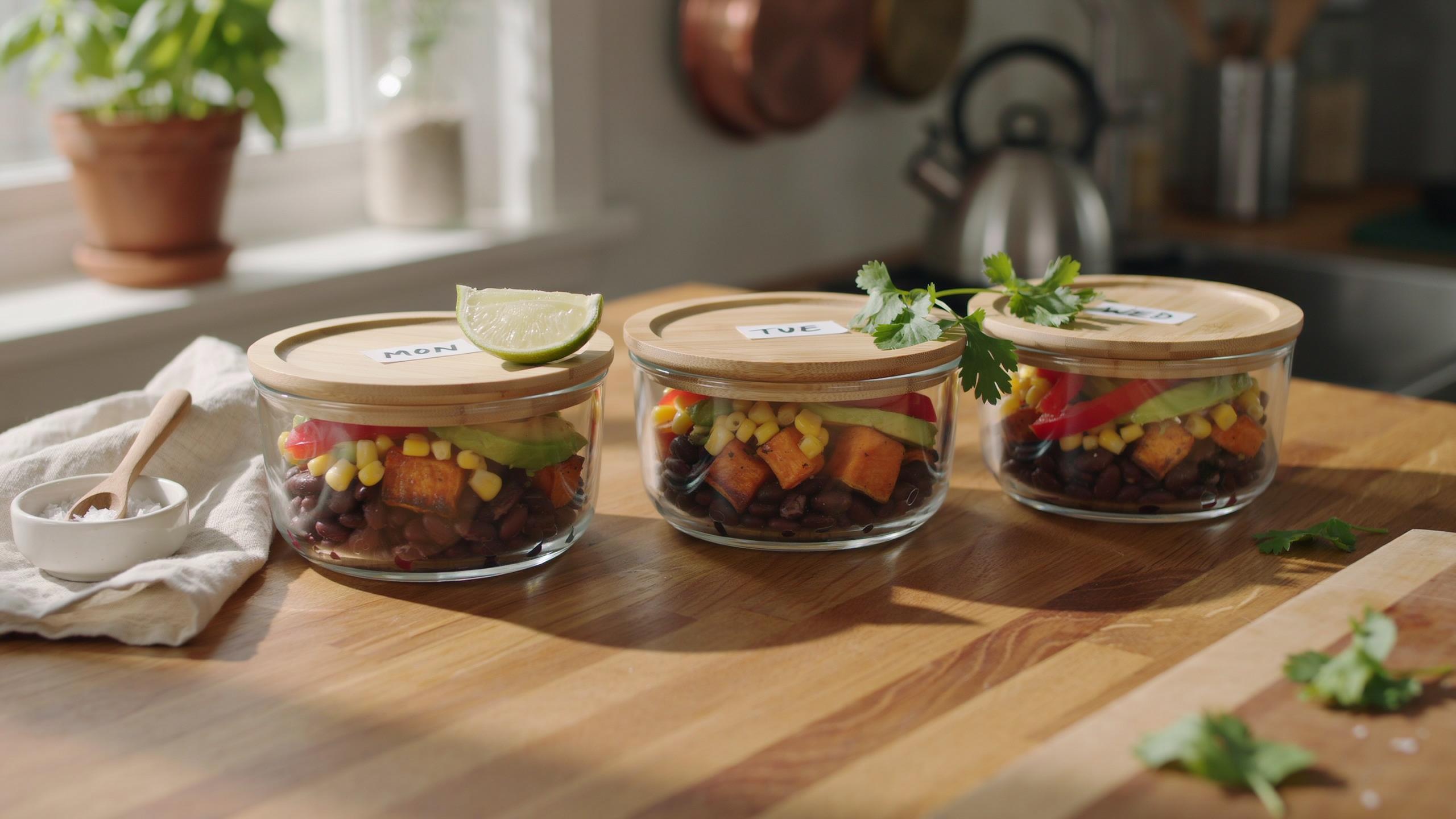
The Black Bean Blueprint Beyond Basic Protein
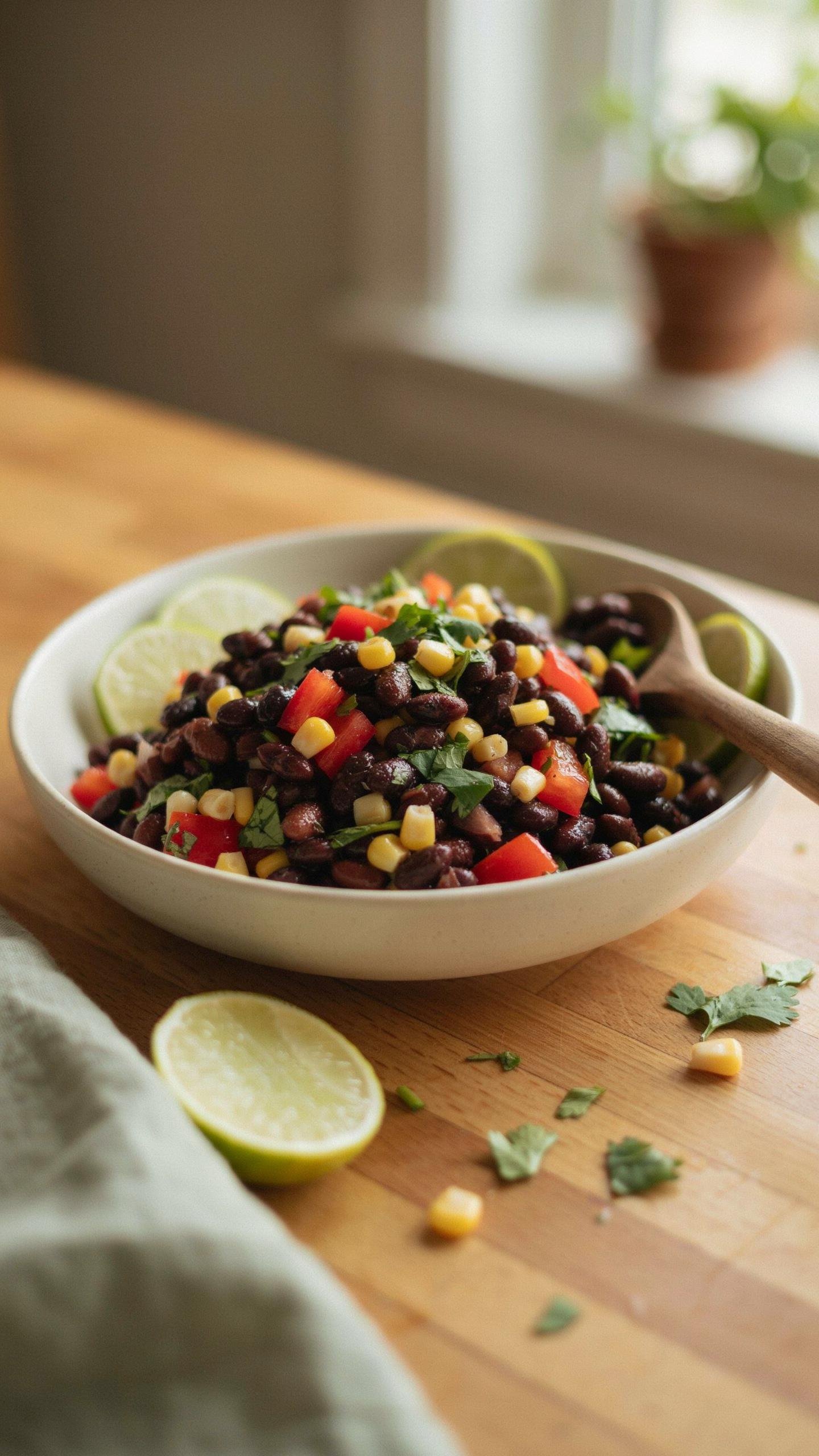
Nutrient Density Over Calorie Counting
You want the math to be simple because simple feels like control. It isn’t. Black beans deliver 15 grams of protein per cooked cup, but that’s not why they work for vegetarian meal prep. The mechanism is nutrient density, not calorie density. One cup of black beans provides manganese, folate, and molybdenum—minerals most people consume nowhere near adequate amounts of. You’re not eating beans for protein alone. You’re eating them because they pack multiple micronutrients your body actually needs per unit of food.

The calorie-first approach misses the real advantage. Black beans contain resistant starch, a carbohydrate that behaves differently than regular starch during digestion. Your body doesn’t absorb all its calories the same way. This matters because resistant starch reaches your colon intact, feeding beneficial bacteria and improving insulin sensitivity. Track nutrients first, calories second. Cook your black beans until tender but not mushy, then cool them to room temperature before storing. Cooling increases resistant starch formation naturally.
Fiber’s Overlooked Metabolic Advantage
Fiber is borrowed from digestive biology, and the term that matters here is throughput. Black beans contain roughly 15 grams of fiber per cooked cup, but most meal prep advice treats fiber like a side effect rather than a metabolic engine. The real mechanism is that fiber slows gastric emptying, which means your blood sugar stays stable longer and hunger signals take hours to return. One gram of fiber doesn’t equal one gram of caloric dead weight. Your body works harder to process it, and your appetite hormones respond accordingly.

The common position is that high-fiber meals make you feel full. That’s incomplete. High-fiber meals change how fast glucose enters your bloodstream, which changes when you get hungry again. This is why black bean meal prep outperforms similar-calorie carb sources for satiety. Soak dried beans overnight, then cook them in fresh water with a pinch of salt. Salt doesn’t prevent fiber intake. It helps beans cook evenly and actually increases their digestibility by reducing oligosaccharides, the compounds that cause digestive distress.
The Canned Black Bean Recipes Healthy Myth Speed Vs Substance
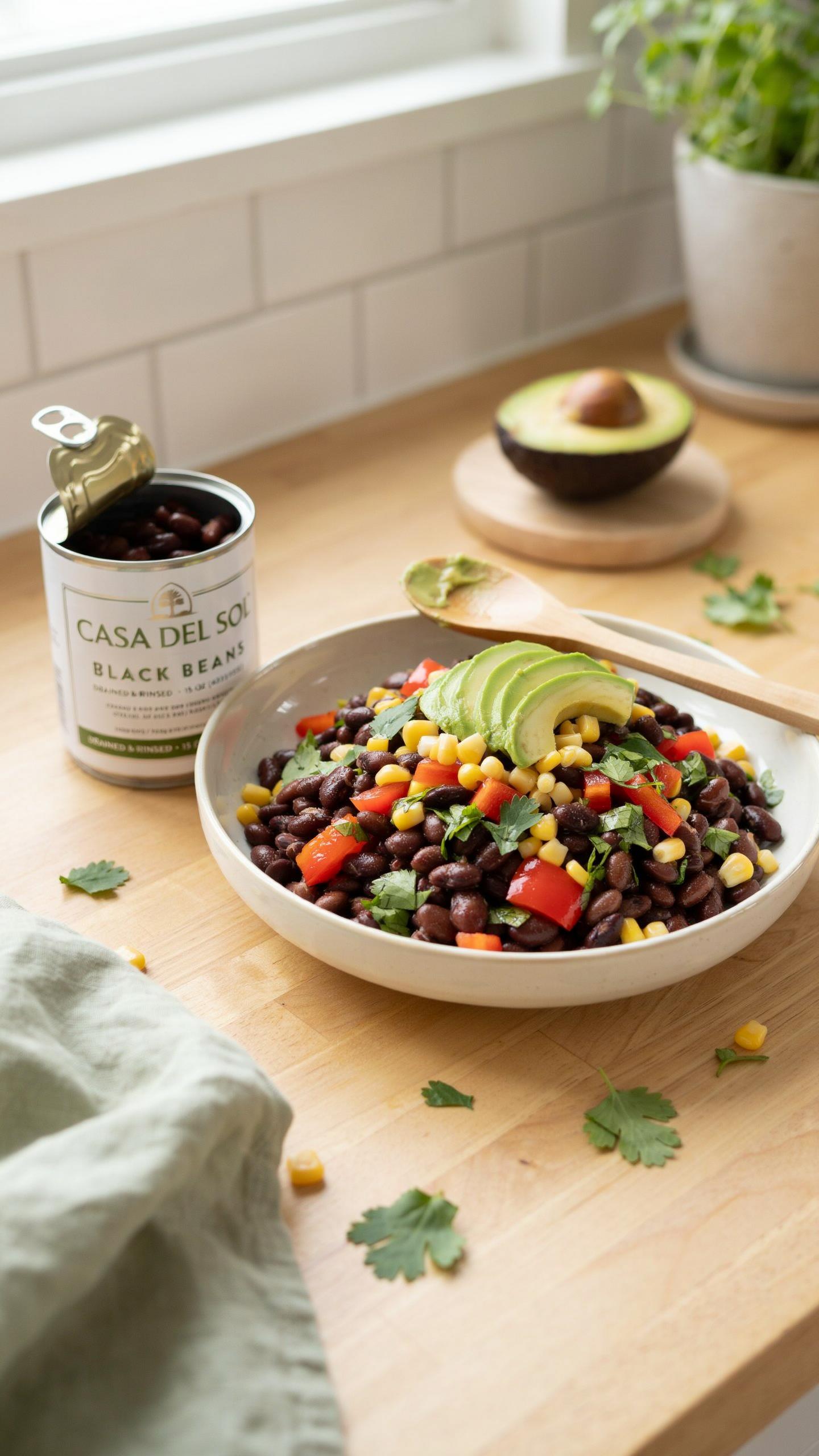
Rethinking Convenience: Strategic Soaking Vs. Can
You want canned beans because you think speed equals consistency. Wrong. Canned beans trade control for time, and you lose the mechanism that actually builds protein density: the enzymatic breakdown that happens during soaking. Soaking isn’t just softening. It activates phytase, the enzyme that breaks down phytic acid, which otherwise binds minerals and reduces bioavailability. Canned beans skip this step almost entirely because the high-heat processing denatures the enzyme before it finishes working.
Strategic soaking takes eight to twelve hours but costs nothing and gives you beans with better mineral absorption, lower gas production, and texture you actually control. The real trade-off isn’t time versus convenience. It’s nutrient density versus packaging convenience. If you meal prep Sunday through Thursday, soak Saturday night. If you actually need speed on specific days, keep one can as backup, not as your system. Soaking before cooking is the non-negotiable step that separates meal prep from meal management.
Flavor Extraction: Unlocking Hidden Depth
Canned beans taste like salt water because they are salt water. The common advice says “rinse and drain,” which removes flavor and sodium but also removes the starch that helps bind your dishes together. The real mechanism is osmosis: beans absorb the liquid they cook in, so the composition of that liquid determines the final taste and texture. Flavor extraction happens during cooking, not after.
Cook soaked beans in stock instead of water, and add aromatics early: onion, garlic, bay leaf, and dried chile go in at the start, not at the end. The long cooking time pulls tannins and compounds from these additions directly into the bean proteins. This takes forty-five minutes to an hour on medium heat. The result tastes nothing like canned. You get beans that hold structure, absorb seasonings, and contribute actual flavor to your meal prep containers instead of requiring sauce to taste like anything.
The Versatility Vector Healthy Meals With Black Beans
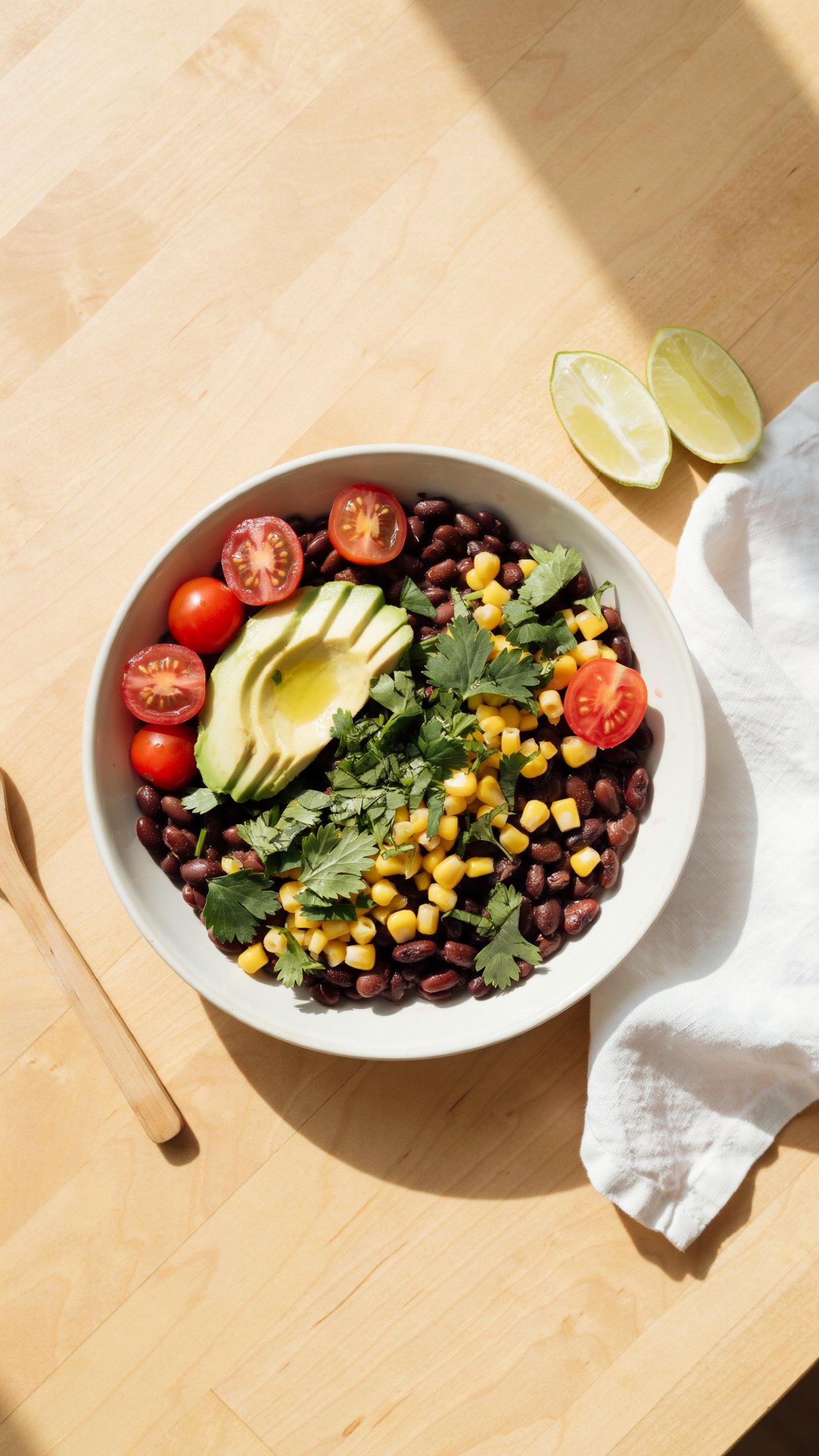
Stacking Macros For Sustained Energy
You want to feel full without the energy crash. That’s the real problem nobody states. The mechanism here comes from biochemistry: nutrient timing and macronutrient ratios determine how fast glucose enters your bloodstream. Black beans deliver incomplete protein and fiber, but alone they create a blood sugar spike followed by a crash. You need to engineer the meal composition itself.
Pair black beans with a fat source and a low-glycemic carbohydrate in every prep container. Fat slows digestion. Fiber slows glucose absorption. Protein triggers satiety hormones. Black beans provide fiber and plant protein, but you must add fat deliberately—olive oil, seeds, nuts, or an egg if you eat them. This ratio prevents the energy valley that kills meal prep adherence. One cup cooked black beans plus two tablespoons olive oil plus one cup raw vegetables gives you the sustained energy you’re actually after, not the temporary fullness.
Texture Alchemy: From Mash To Whole
The common advice here is wrong: most guides treat texture as decoration. It’s not. Texture controls how your body processes the meal. When you mash black beans, you increase surface area and break down cell walls, which accelerates digestion and blood sugar response. When you keep them whole, you preserve fiber structure and slow nutrient absorption. Choose texture based on your goal, not your preference.
Store whole beans in one container and prepare a second batch mashed or partially mashed for different meal contexts. Whole beans work for grain bowls and salads where you need separation and visual distinction. Mashed beans work for spreads, wraps, or when you want quick absorption post-workout. This isn’t flexibility for its own sake. It’s a protocol: sort your prep batches by intended digestion rate, then match each container to the time of day you’ll eat it.
The Dan Koe Black Bean Protocol From Prep To Plate
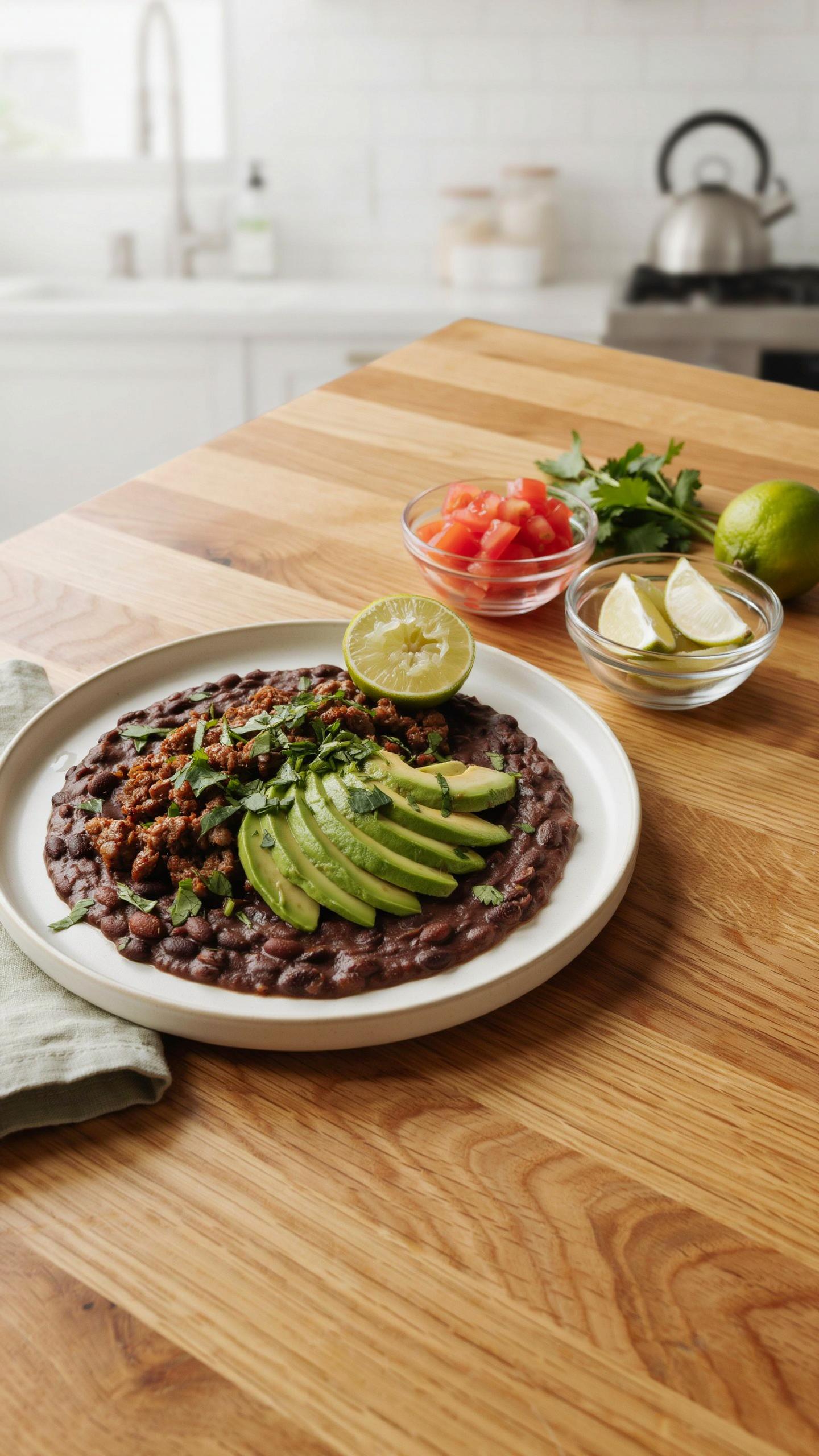
Batch Cooking As Leverage
You want meal prep to feel effortless so you can stop thinking about food and focus on what matters. That’s not laziness, that’s economics. Batch cooking operates on the principle of diminishing effort per unit output, borrowed from manufacturing. You’re not cooking beans five times a week, you’re cooking them once and extracting five meals. The math is brutal: one three-hour session beats five thirty-minute sessions because setup, cleanup, and decision fatigue don’t scale linearly with portion size.
Cook two to three pounds of dried black beans in a single pot. This yields roughly eight to twelve servings depending on portion size. Store them in glass containers with their cooking liquid in the refrigerator for up to five days, or freeze individual portions for three months. The liquid preserves texture and adds back moisture when you reheat. This single action eliminates the most frequent excuse people cite for abandoning meal prep: time scarcity.
Flavor Foundation First
Most people add seasoning at the end and wonder why their meal tastes flat. Wrong sequence. The beans themselves need salt during cooking, not after. This isn’t a detail, it’s the foundation. Salt penetrates the bean structure while they soften, which changes how the legume absorbs and distributes flavor throughout every bite. Add salt only at the end and you get seasoned water surrounding unseasoned beans.
Combine half an onion, three garlic cloves, one bay leaf, and one teaspoon of salt per pound of dried beans before cooking. Simmer for ninety minutes to two hours until beans are tender but not mushy. Remove solids before storing. This creates a seasoned liquid base that makes every container taste intentional from day one. Skip this step and you’re eating neutral beans that require flavor addition every single time you eat them.
Healthy Bean Burritos Bowls Deconstructing The Fast Food Trap
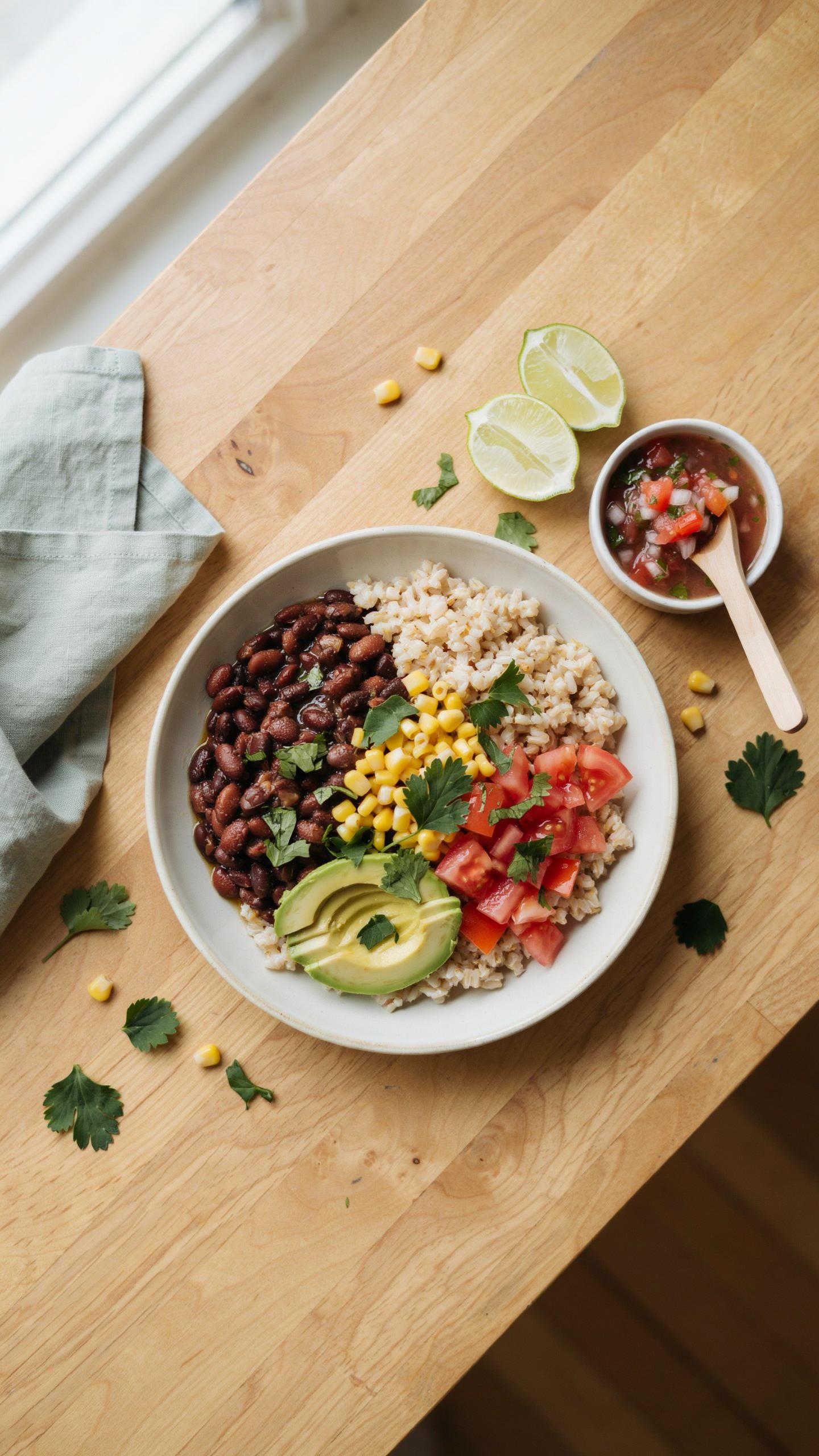
The Assembly Line Method
You want the speed of fast food without the guilt or the metabolic damage. The real mechanism here comes from manufacturing: standardized work stations reduce decision fatigue and cutting time. Treat your black bean bowl prep like a factory floor, not a cooking project. You’re not “making dinner.” You’re running a component system where each element gets prepped once, then combined infinitely.
- Protein base: Cook black beans in bulk every 7 days. One large batch yields 8-10 servings. Store in airtight containers, lasts 5 days refrigerated or freeze for 3 months.
- Grain station: Cook rice, quinoa, or farro in advance. Keep separate from beans to prevent sogginess. Portion into containers so you grab and go without measuring.
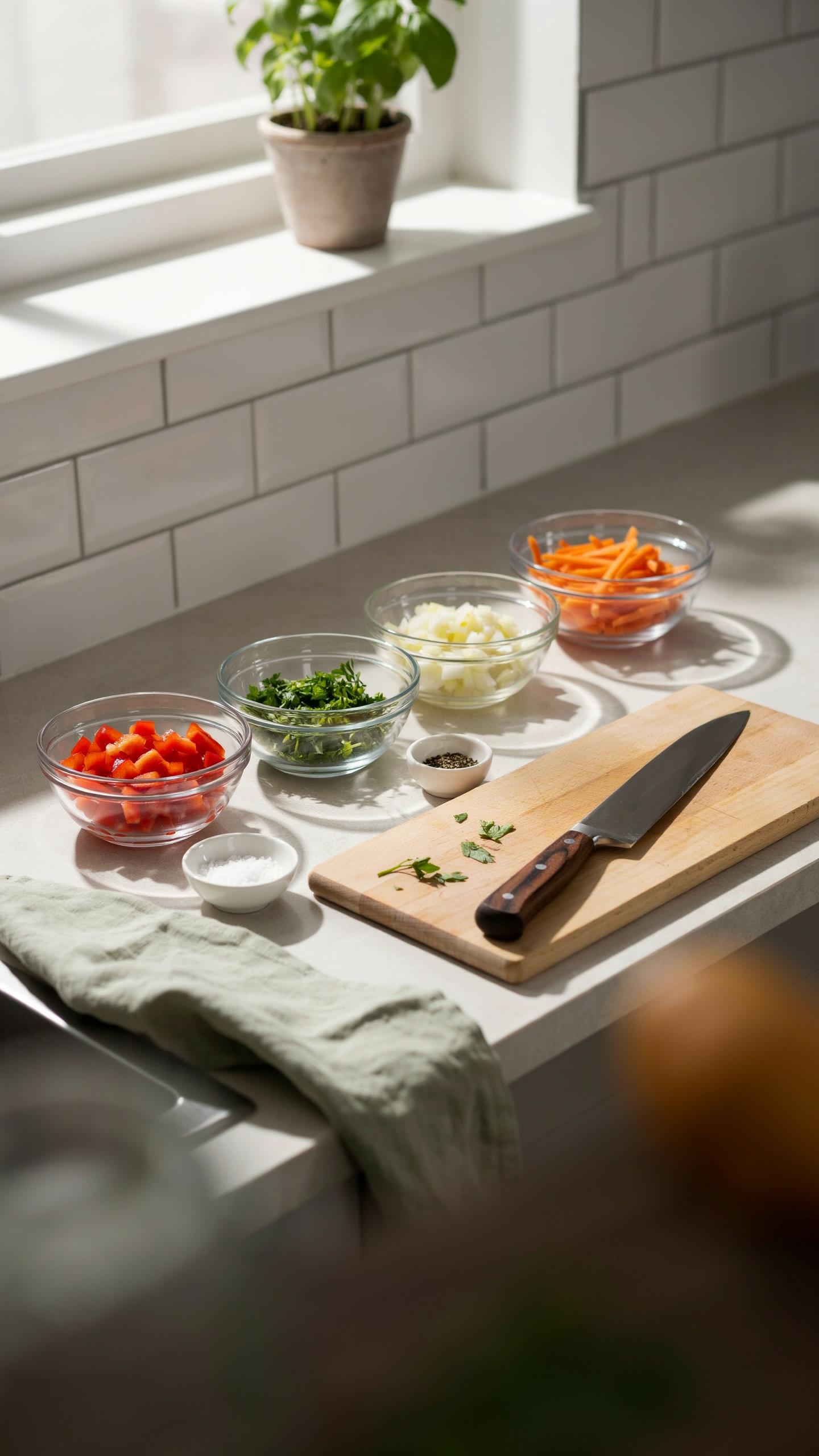
- Raw vegetable prep: Dice peppers, tomatoes, and onions Sunday evening. Store in separate containers with paper towels to absorb moisture and extend shelf life to 4-5 days.
- Sauce batch: Mix lime juice, olive oil, garlic, and cumin in a mason jar. Make enough for 10 bowls. This one component changes flavor profile without changing any base ingredient.
- Burrito wrapper staging: Keep tortillas in the freezer, thaw one the night before. Cold tortillas crack. Room temperature ones roll clean without tearing or splitting at the seams.
The time savings appears when you stop cooking fresh each night. You’re assembling, not creating. This shifts preparation from 45 minutes to 5 minutes per meal. The psychological shift matters more than people admit: you’ll actually eat the prep because friction drops below the threshold where you reach for takeout instead.
The Boredom Rotation Strategy
People abandon meal prep not because it’s tedious to make, but because eating the same thing twice becomes psychologically intolerable around day four. You don’t need different recipes. You need controlled variation inside the same structure. Think of your bowl as a template with swappable variables, not a fixed dish.
Change one element every meal while keeping two constant. If Monday uses cilantro lime sauce with peppers and onions, Wednesday uses chipotle mayo with jalapeños and red onion. Friday uses lime cumin with black olives and avocado. Same bean base. Same grain. Completely different eating experience. Your palate resets because the flavor profile shifted, even though nutritionally it’s still the same protein-to-carb ratio.
The mechanism works because novelty triggers dopamine release independent of actual caloric or nutritional content. Your brain stops filing the meal into “boring repetition” and starts filing it into “variety.” This prevents the decision fatigue that kills most prep systems by week three. Rotate your sauce, your vegetable accent, and your topping every 2-3 meals. Keep the heavy lifting constant.
Black Bean Recipes The Economic Leverage Of Legumes
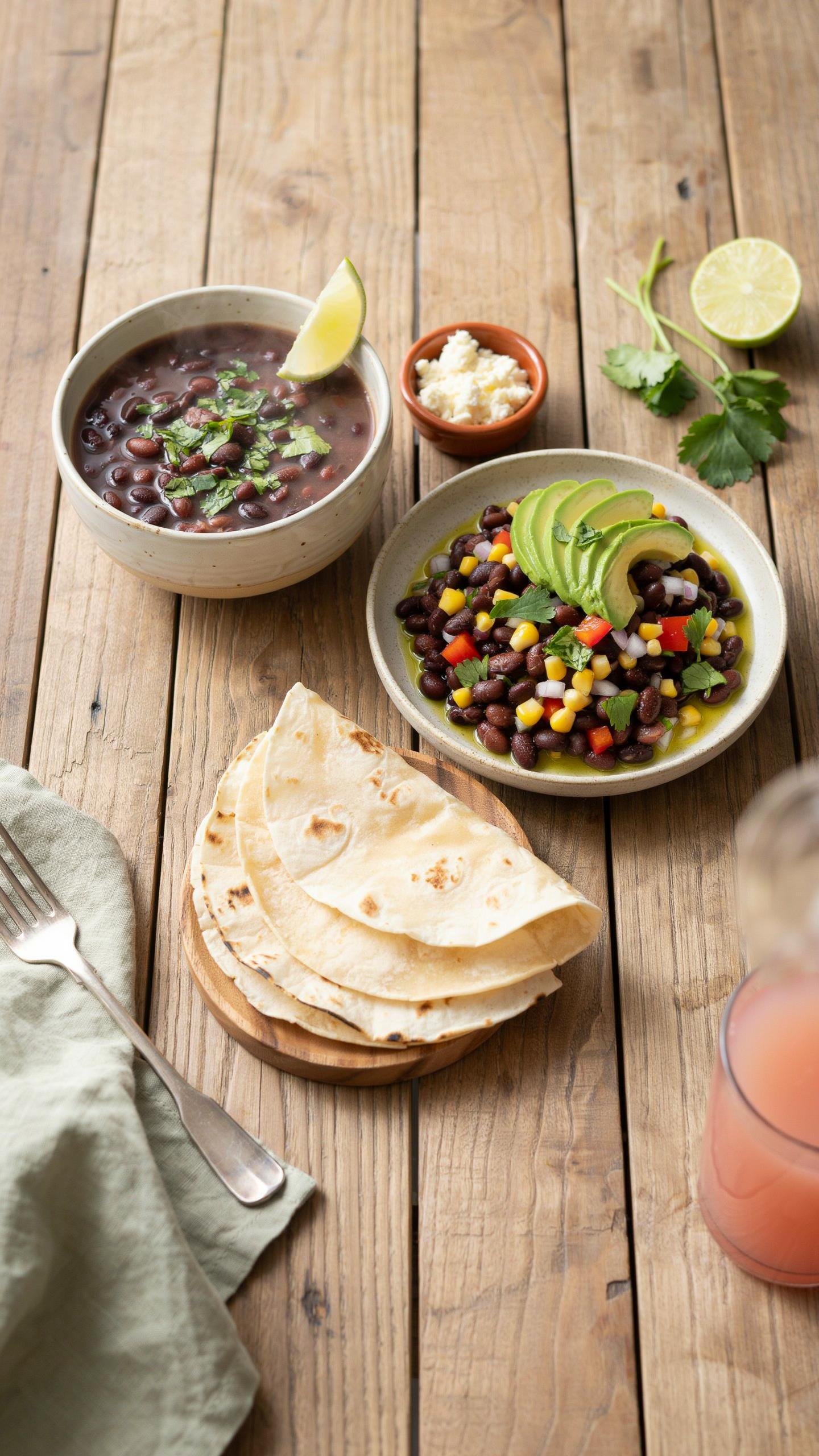
The Math Behind Your Protein Dollar
You want to eat well without feeling broke. Here’s what everyone misses: black beans operate under the economics principle of cost basis arbitrage. You’re not paying for the protein. You’re paying for the caloric density and the shelf life that lets you defer the purchase decision.
One pound of dried black beans costs under two dollars and yields roughly 1,500 calories and 50 grams of protein when cooked. That’s about 1.3 cents per gram of protein. Ground turkey at grocery store prices runs 8 to 12 cents per gram. The math isn’t subtle. The leverage compounds when you factor in zero waste, zero spoilage risk, and zero time spent managing inventory rotation like you do with animal proteins.
Sourcing And Storage Without The Theater
Buying black beans in bulk doesn’t require membership clubs or complicated supply chain hacking. Restaurant supply stores, ethnic markets, and online wholesalers sell 25 pound bags for 20 to 30 dollars. That single purchase covers roughly four months of consistent meal prep for one person. Store dried beans in airtight containers in a cool, dry place. They stay viable for years, not weeks.
The real lever isn’t finding the cheapest source. It’s eliminating the friction of frequent purchases. When you buy once per quarter instead of weekly, you remove decision fatigue, transportation costs, and the psychological drag of repetitive shopping. Cooked beans freeze for up to six months without texture degradation. Batch cook 10 pounds at once, portion into containers, freeze, and pull what you need. This single protocol cuts your meal prep time by 70 percent across the month.
Meal Prep Black Beans The Iterative Improvement Loop
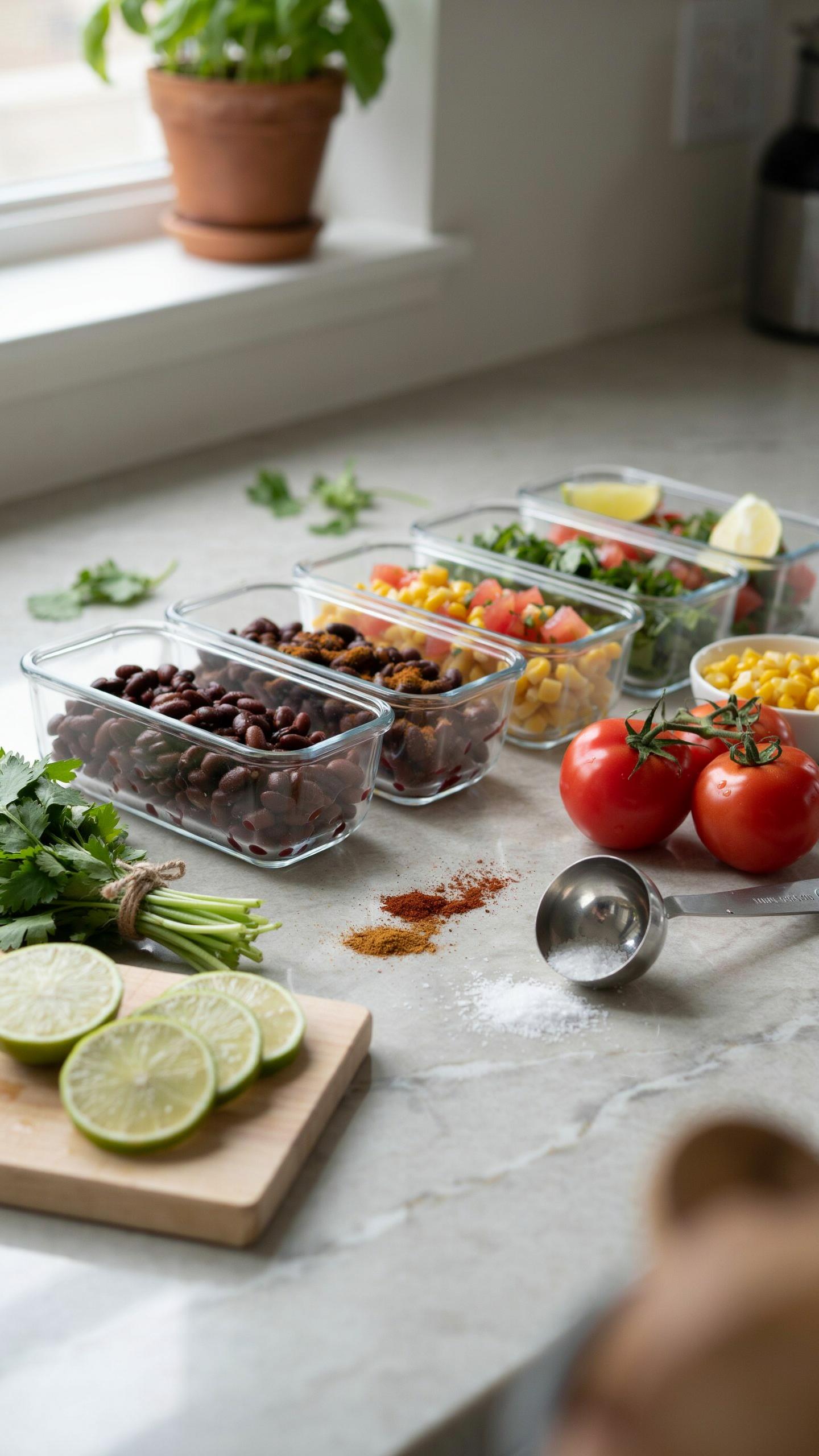
Taste Testing Beats Guessing
You’re hoping a system exists that removes the work from meal prep, so you can eat protein without thinking. It doesn’t. Cybernetics, the study of feedback and control systems, reveals the real mechanism: a feedback loop requires observation, measurement, and adjustment. Cook a batch. Taste it. Record what changed. Cook the next batch different. This cycle tightens your seasoning accuracy faster than following someone else’s recipe.
Most people season black beans once and eat them for a week. That’s not optimization, that’s surrender. The feedback loop works because your palate calibrates against your own baseline. If you added too much cumin last time, you notice immediately. If the salt concentration was off, your mouth tells you the exact direction to move. Document these tiny shifts in acid, salt, garlic, and heat. After three to five batches, your black bean base becomes bulletproof.
Simple Formula, Repeated Daily
Minimum viable product doesn’t mean boring. It means: one base recipe that works, zero variation until you master it, then one controlled change per batch. Cook black beans with salt, garlic, and cumin. That’s the MVP. Eat from it for five days. On day six, test a single variable: lime juice or smoked paprika or jalapeño. This removes decision fatigue and makes feedback obvious. You know exactly what changed the outcome because nothing else did.
The scalability comes from repetition, not complexity. A 10-liter pot of the same recipe yields twenty meals. Your grocery list stays two pages. Your prep time stays under an hour. Your muscle memory builds fast because you’re doing the same motions repeatedly. When you finally add a second variable months later, you’re not learning to cook black beans anymore. You’re iterating on a known system that already works.
The Micro Habit Of Meal Prep Bean Recipes
Anchor Prep To An Existing Task
You want meal prep to feel automatic so you stop thinking about whether to do it. The real mechanism here is behavioral anchoring, borrowed from habit stacking in psychology: you attach a new behavior to an existing one so the trigger already exists. Don’t build black bean prep as a standalone Sunday project. Attach it to something you already do without friction, like laundry day or your grocery return trip. The existing habit becomes the cue. Your brain stops treating bean prep as optional.
Pick one recurring task that happens at the same time weekly. Cook beans immediately after that task ends, before the window closes. If you grocery shop Saturdays at 3pm, beans go into the pot at 3:45pm. No decision required. The cognitive load vanishes. Within three weeks, the pairing becomes automatic. You stop asking yourself if you have time.
Remove The Setup Tax Upfront
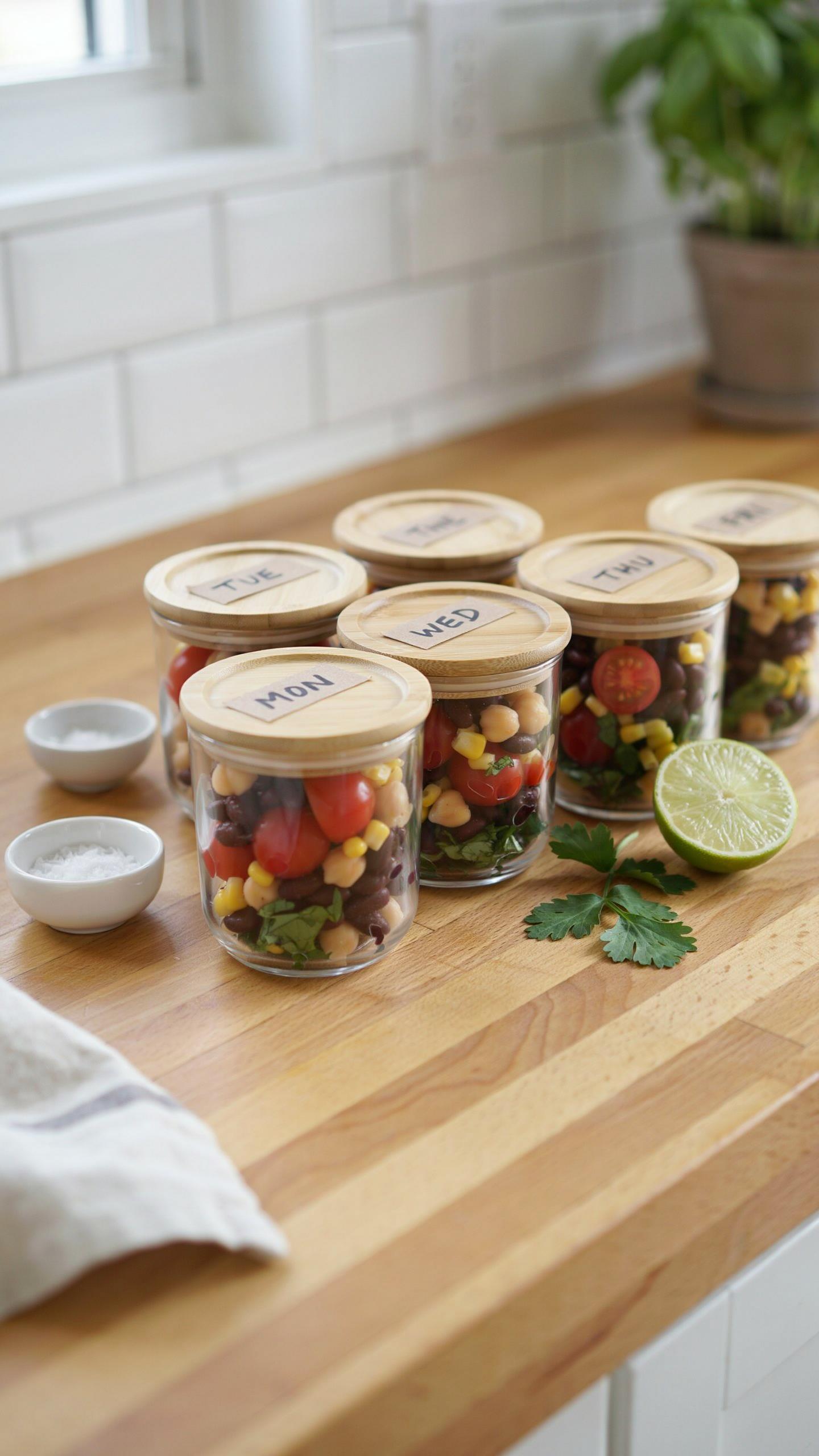
Most meal prep advice skips the friction that kills consistency: setup and cleanup still feel like separate events. You can’t eliminate either, but you can compress both into a single unbroken work session by pre staging everything the night before. Lay out your pots, strainers, storage containers, and dry beans on the counter. Fill water pitchers. Label containers with dates. When prep day arrives, you walk to a staged system, not an empty kitchen.
The setup tax when removed shifts your psychology. You’re not starting from zero. You’re resuming an interrupted task. This rewires the resistance. Beans take two hours total—most of that is passive cooking time. Active work is twenty minutes of hands-on labor. But if setup and cleanup feel like separate friction points, you mentally calculate five hours. Pre staging collapses that gap. You batch the friction into one evening, clearing the path for actual prep.
Canned Black Bean Recipes The Emergency Rations Principle
Your Pantry Becomes Your Insurance Policy
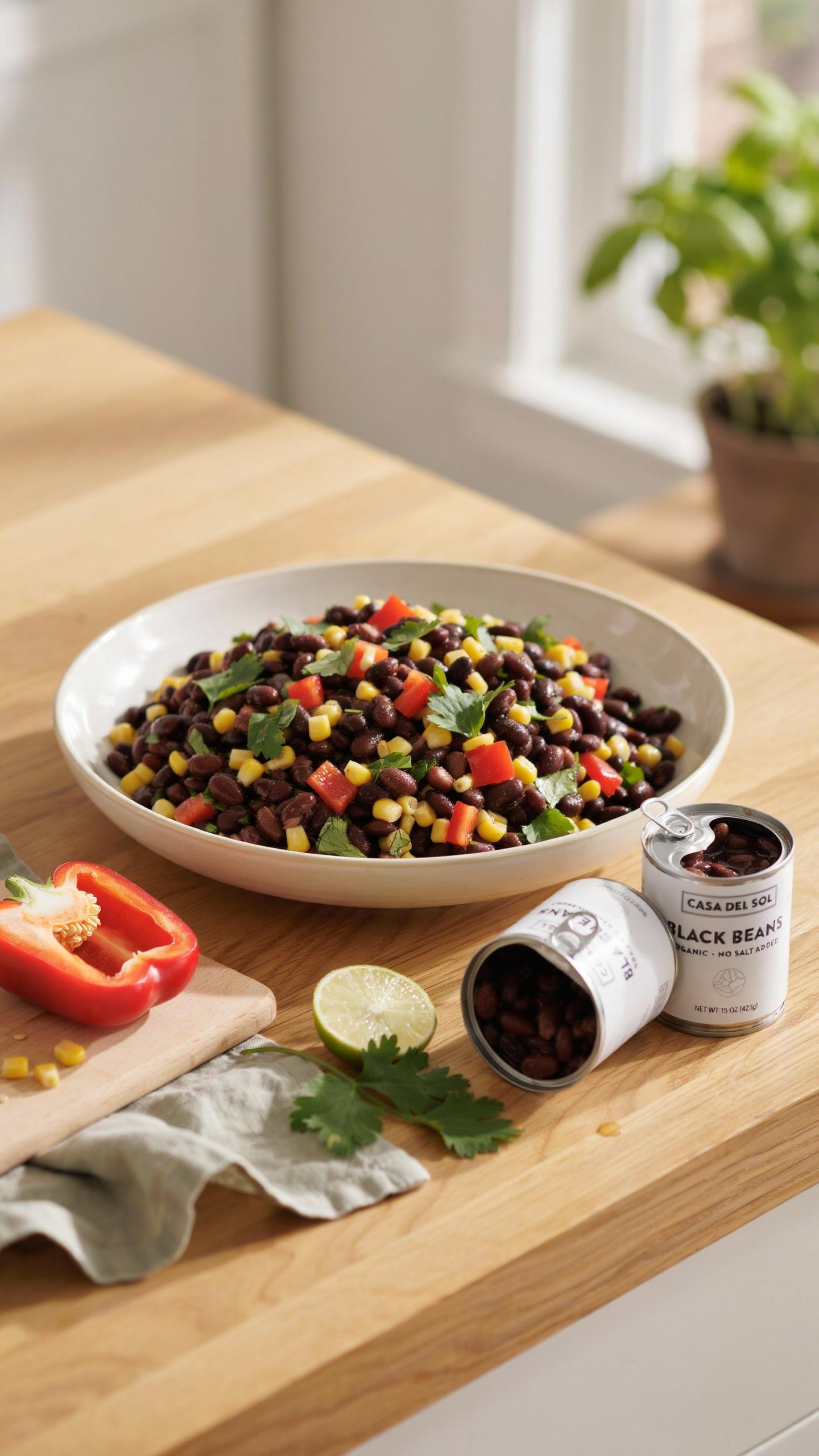
You want canned black beans on hand because you’re terrified of the moment you commit to meal prep and then skip it. Here’s the mechanism: canned beans remove the friction between intention and execution. Military logistics call this “supply chain resilience”—the ability to deploy resources without planning delays. A full pantry of canned black beans is your supply line. When motivation fails or life fractures your schedule, the beans don’t care. They’re already cooked, already shelf-stable, already waiting. You open a can instead of ordering takeout or abandoning protein targets entirely.
The real advantage isn’t convenience. It’s that canned beans collapse the time gap between hunger and eating. Fresh beans demand soaking and cooking hours you won’t spend on Tuesday at 8 PM. Canned beans go from shelf to plate in fifteen minutes. That speed creates compliance. Compliance creates results. Stock your pantry like you’re preparing for a supply shortage, not like you’re being cute about it.
Minimal Input, Immediate Output
Everyone says to combine canned beans with rice and call it done. That’s incomplete. What they miss is the transformation principle: canned beans are a platform, not a meal. They’re neutral enough to anchor anything you need in that moment. A can of black beans plus salsa plus an egg becomes breakfast. The same can plus olive oil and garlic becomes a side. Same can plus lime juice and cilantro becomes a cold protein base for tomorrow. The mechanism is adaptability without waste. You’re not cooking eight different things. You’re repurposing one ingredient across contexts.
This works because canned beans hold their structure and flavor through reheating and recombination. Drain them, rinse them if you want less sodium, and they’re ready to move. Pair them with whatever protein gap exists in your day. The speed matters more than the complexity. A can opener and five minutes should produce a complete protein source every single time.
The only thing holding you back from culinary mastery isnt your diet its your failure to implement a system
Black bean meal prep works because you stop deciding and start executing. One decision made Sunday compounds into six days of protein-dense meals. Pick your container size today. Cook one batch this weekend. Don’t wait for perfect. Watch your body change when systems replace motivation. People don’t fail diets. They fail at repetition.