
The Myth Of Fresh Why Your Quick Breakfast Isnt
The Real Cost Of Making Breakfast Daily
You want to believe that cracking eggs into a pan each morning makes you disciplined. It doesn’t. It makes you inefficient. Here’s the mechanism: every morning decision you make depletes your cognitive bandwidth before work even starts. You’re not just cooking eggs. You’re deciding whether to cook eggs, what temperature to use, whether you have time, what to pair them with. By the time you eat, you’ve already burned decision capital you needed elsewhere.

Prepping scrambled eggs on Sunday takes forty minutes once. Making them fresh daily costs you five to eight minutes times five days, plus the mental tax of deciding whether you’re actually going to do it each morning. That’s fifty minutes of time plus the friction tax. The math doesn’t care about your feelings about freshness. You’re paying the price of perceived control while getting less actual control over your week.
Eggs Don’t Degrade In Ways That Matter
Nutrient loss in stored scrambled eggs is real but functionally irrelevant to your breakfast. Refrigerated eggs held at proper temperature lose minimal amounts of B vitamins and choline over three to five days. The degradation curve flattens fast. What actually breaks down isn’t nutrition—it’s texture and water content if you reheat carelessly, which is a technique problem, not a storage problem.

The common advice to always eat fresh eggs frames this wrong. Your body can’t tell the difference between a B vitamin you consumed three hours ago versus three days ago if the total amount stays the same. What matters is that you actually eat the eggs instead of skipping breakfast because you didn’t have time to cook. Store your prepped eggs in airtight containers at 40 degrees or below, and reheat gently on low heat or in a microwave for thirty seconds, and you preserve both the nutrition and the palatability.
The High Protein Breakfast Advantage Beyond Basic Scrambled Eggs
Why Protein Stabilizes Your Morning
You want to feel sharp and in control until lunch, not dependent on coffee hits and snack runs. Here’s the mechanism: protein slows gastric emptying, the rate at which food leaves your stomach. This is basic physiology, not marketing. Eggs contain all nine essential amino acids, which your body uses to build neurotransmitters and stabilize blood glucose. A prep container of scrambled eggs isn’t fuel. It’s a governor on your blood sugar swings.
Most breakfast advice ignores the actual problem. You don’t need more calories. You need slower glucose absorption. When you pair eggs with their fat content, you create a buffer between digestion and blood sugar spike. Meal prepping scrambled eggs removes the choice component entirely. You grab the container. Your metabolic stability follows.
Stop The Midday Energy Collapse
The crash isn’t random. It’s the predictable result of morning carbs without protein. When you eat toast or cereal alone, insulin spikes, then crashes two hours later, leaving you depleted and reaching for more carbs. Scrambled eggs reverse this pattern through protein’s thermic effect, the energy cost your body pays to digest them. Eggs demand more work to break down than carbs do, extending satiety and keeping energy output steady.
Pre-portioned scrambled eggs eliminate the variable that kills consistency: decision fatigue around 10 AM when hunger hits. You don’t decide what to eat. The container is already there. Your blood glucose stays linear instead of oscillating. This is the difference between willpower and design. Meal prep removes willpower from the equation entirely.
The Cold Start Method For Meal Prep Scrambled Eggs
Cook Then Cool Fast
You want to believe meal prepping scrambled eggs is effortless so you don’t have to think about breakfast. It isn’t. The real mechanism here borrows from thermodynamics: rapid heat transfer determines texture retention. Cook your eggs at medium heat, not high. High heat denies you control and accelerates moisture loss before cooling can stop it.
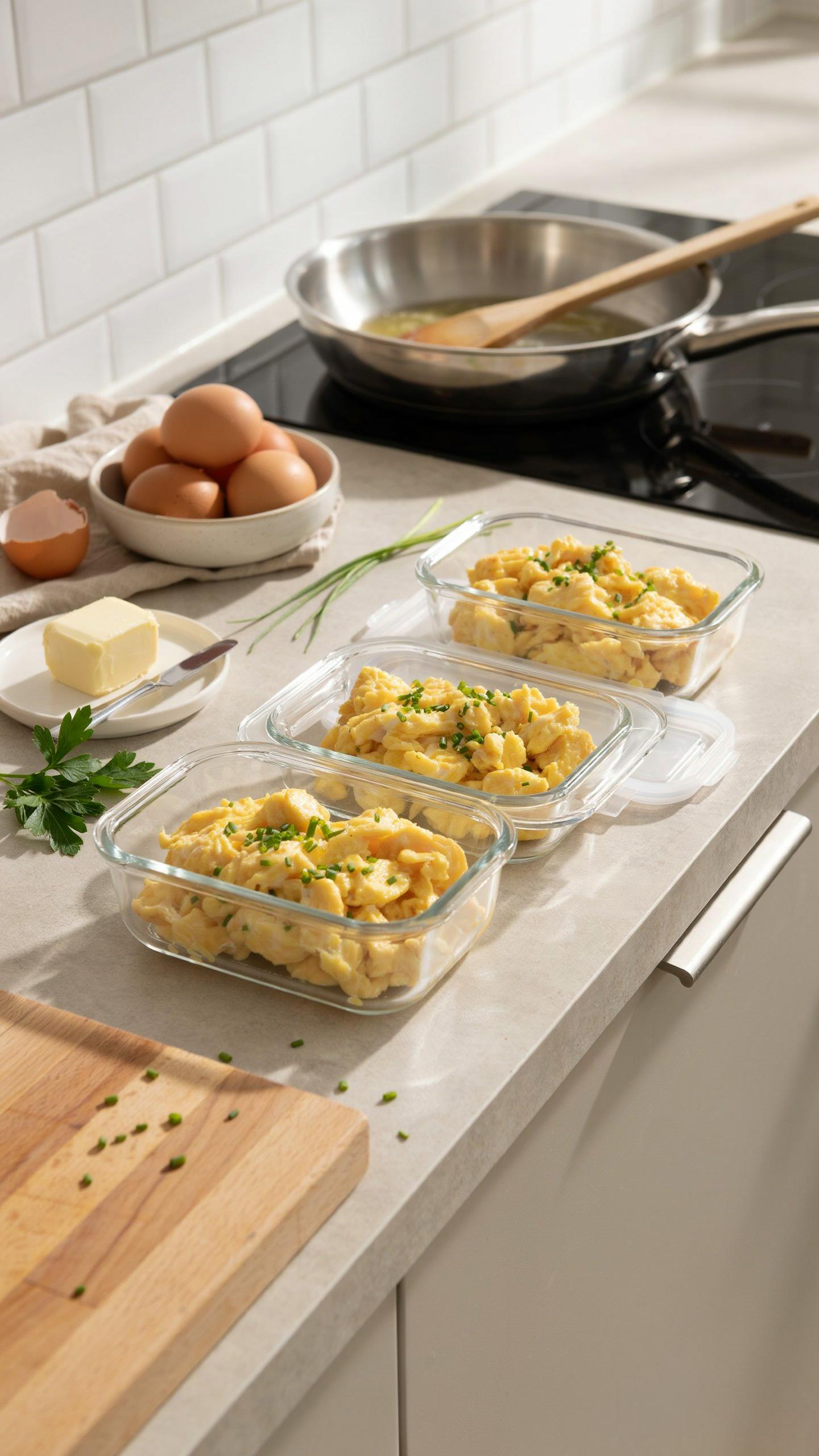
The moment eggs finish cooking, move them to a shallow metal pan or spread them on a sheet tray. Metal conducts heat away faster than ceramic or glass. Spread thickness matters. Thin layers cool in minutes. Thick clumps trap heat and continue cooking internally, turning rubbery by Wednesday. Cold water running under the pan accelerates the process without shocking the structure. Stop cooling when the pan feels neutral to touch, not stone cold.
Glass Containers And Five Day Storage
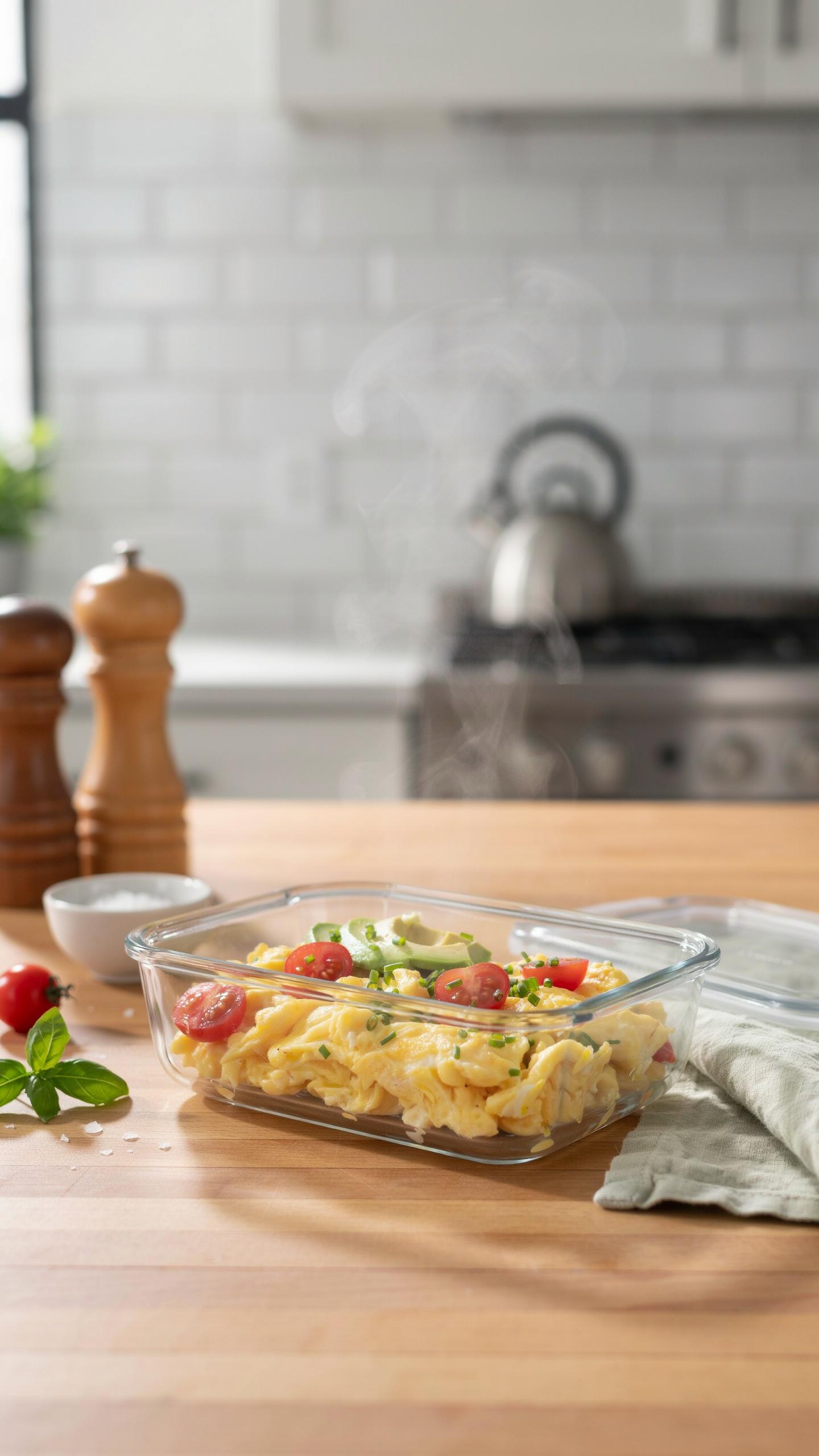
Common advice says scrambled eggs last three days. That’s incomplete. They last five days in airtight glass containers kept at 40 degrees Fahrenheit or below, but texture degrades predictably starting day three. Use glass because it doesn’t retain odors and lets you see moisture buildup, which signals spoilage or improper cooling.
Pack eggs in single-layer portions rather than one large container. You reheat smaller portions faster and prevent temperature fluctuation from repeated opening. Reheat in a 300-degree oven for three minutes or microwave covered with a damp paper towel for 60 seconds. The damp paper replaces evaporated moisture without overcooking. Write the prep date on tape stuck to the container bottom so you track age without guessing.
Flavor Forensics Reheating Mealprep Eggs For Optimal Taste
The Microwave Protocol
You’re worried reheated eggs taste like rubber because you’ve been nuking them at full power like an animal. Here’s the mechanism: eggs denature protein at 140°F, but they continue to tighten and expel moisture above 160°F. Microwaves heat unevenly, creating hot spots that spike past 180°F in seconds while centers stay cool. This gradient is why your eggs become dense and watery simultaneously.
Use 30% power for three to four minutes, stirring every 45 seconds. Low power heats more gradually, letting carryover cooking distribute through the egg mass instead of concentrating in one spot. Your container matters too: ceramic or glass conducts and releases heat slower than plastic, reducing shock to the protein structure. Stop when the eggs still look slightly underdone at the edges. They’ll finish cooking in the bowl after you pull them out.
The Stovetop Reversal
Stovetop reheating works because butter or oil acts as a temperature buffer, the same principle thermal engineers call heat capacity in systems. Eggs cooked three days ago have already lost some moisture and fat to oxidation. Adding a teaspoon of butter to a nonstick pan over medium heat before adding your prepped eggs doesn’t just add flavor—it replaces the lipid layer your eggs lost, restoring mouthfeel.
Heat the pan first, add butter, then add eggs. Break them into pieces as they warm, which takes two to three minutes. Don’t stir constantly like you’re scrambling fresh eggs. Instead, push them gently every 20 seconds, letting the butter coat them between movements. Stir mealprep eggs slowly or you’ll keep shocking cold centers into dense clumps.
The Minimalists Batch Protocol Maximize Efficiency

One Pan, Multiple Servings
You want this section to work because you’re afraid you’ll waste time. The real mechanism here is thermal mass. You’re not cooking five separate batches. You’re cooking one large mass of eggs that holds heat better and cooks more evenly than small portions. A 12-inch nonstick pan with 8-10 eggs reaches equilibrium faster than repeatedly heating and cooling a smaller surface. The eggs spend less total time over heat, which means less rubber texture and fewer broken curds.
Most people scale their technique linearly and wonder why batch cooking feels harder. They use the same low heat they’d use for two eggs, which extends cook time to 8-10 minutes. Use medium heat with a larger mass. Stir every 20-30 seconds. The pan distributes heat across more volume at once, so the total energy input stays lower while the time drops to 5-6 minutes. Batch once. Cool in a shallow pan, not a bowl. Shallow pans transfer heat away faster, which stops carryover cooking and prevents the mushy stage.
Cutting Your Cleanup In Half
The friction of meal prep isn’t the cooking. The friction is the aftermath. One nonstick pan with a silicone spatula replaces two or three traditional pans and wooden spoons. Nonstick surfaces cost you nothing in performance here because eggs don’t need a sear. They need uniform heat and ease of movement. The spatula matters more than people admit. Rubber or silicone won’t scrape the nonstick coating like metal will. Let the pan cool for one minute, then run hot water and a cloth across it immediately. Dried egg yolk hardens into a cleanup tax you can’t recover.
Bowl preparation looks smart until you factor in rinsing. Use one bowl to whisk. Use the same bowl to store mixed eggs overnight before cooking. This cuts your post-meal wash count by 40 percent. One pan, one bowl, one spatula, one cloth. That’s the stack. The real reduction comes from eliminating the temptation to use multiple tools. Every additional item is another decision, another rinse, another place for yolk to harden and cling.
Healthy Scrambled Eggs With Spinach The Nutrient Multiplier
Why Spinach Matters More Than You Think
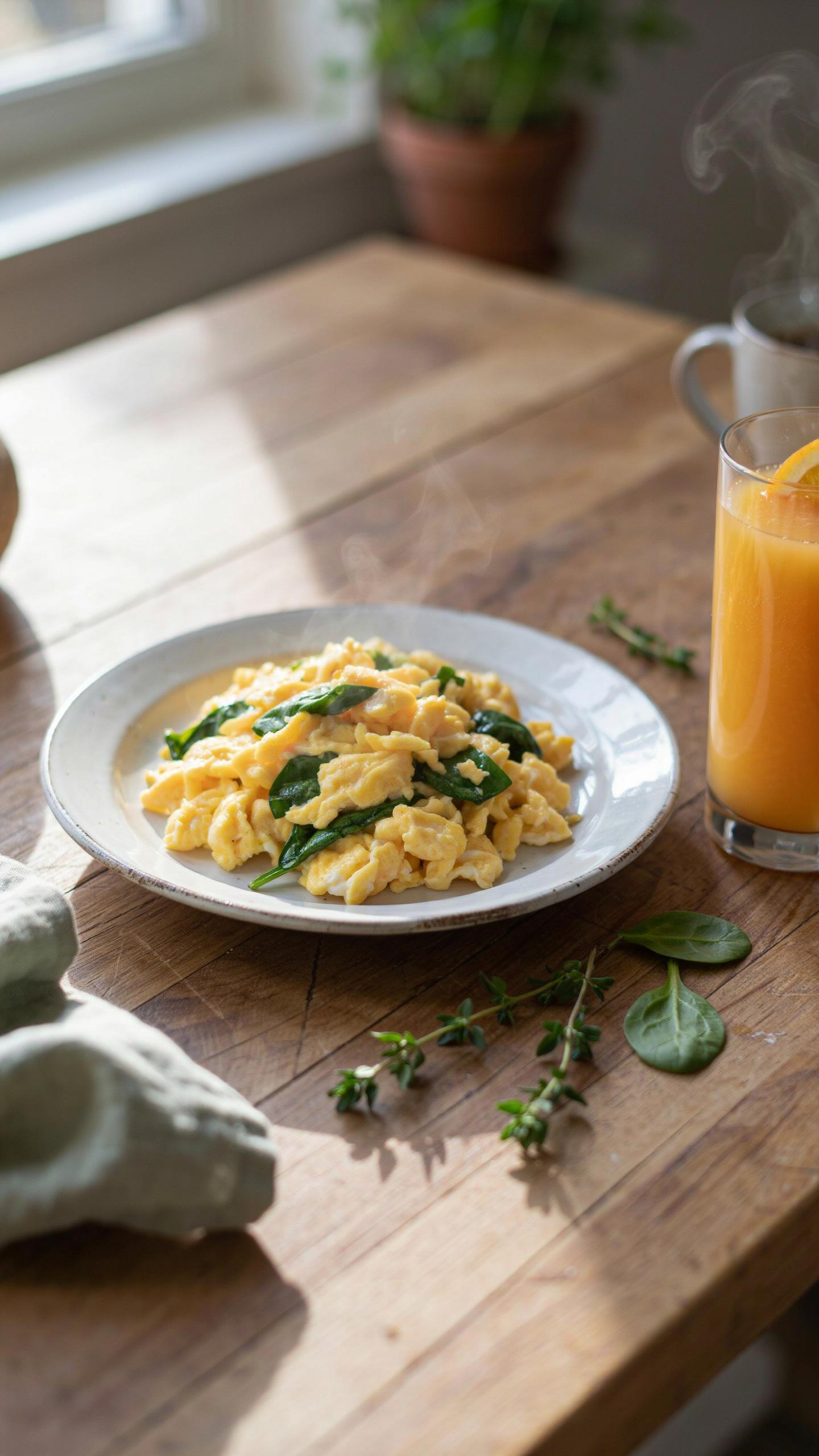
You want to feel full longer without adding calories, which spinach delivers on. But the real mechanism is bioavailability. Spinach contains oxalates that bind minerals, yet cooking spinach with eggs solves this because fat from the yolks increases absorption of fat-soluble vitamins like A, D, E, and K. You’re not just adding vegetables for appearance. You’re chemically enhancing what your body actually extracts from the meal.
One cup of raw spinach wilts down to roughly two tablespoons when cooked, so the volume fear is misplaced. Add spinach directly to the pan before whisking in eggs, allowing it to release moisture and soften. This prevents the watery texture people complain about. The spinach integrates into the eggs rather than existing as a separate component. Cook it for 30-40 seconds before adding beaten eggs.
Nutrient Stack That Actually Works
Scrambled eggs alone contain complete protein and choline, but they lack the micronutrient density that keeps blood sugar stable through your morning. You need additions that address the gaps without creating prep complexity.
- Feta cheese: Adds calcium and sodium for satiety signals; one ounce per serving prevents the eggs from tasting bland without requiring salt adjustment.
- Mushrooms: Contain ergothioneine and selenium; sauté them first to remove water content so eggs cook evenly without becoming rubbery.
- Bell peppers: Provide vitamin C which enhances iron absorption from eggs; dice them small so they cook in under two minutes.
- Turmeric: One quarter teaspoon delivers curcumin, a compound that reduces inflammation; adds color and tastes neutral in eggs.
- Black pepper: Activates curcumin absorption by up to 2000 percent; always pair it with turmeric for the mechanism to function.
The common advice treats these as optional garnishes. They’re not. These additions create measurable changes in how your body processes the meal. Layer mushrooms and peppers into the pan with spinach, then add eggs. Dust turmeric and black pepper into the beaten egg mixture before it hits heat. This timing ensures even distribution and prevents clumping of spices.
Economic Leverage The Scrambled Egg Meal Prep ROI
What You Actually Pay For Breakfast
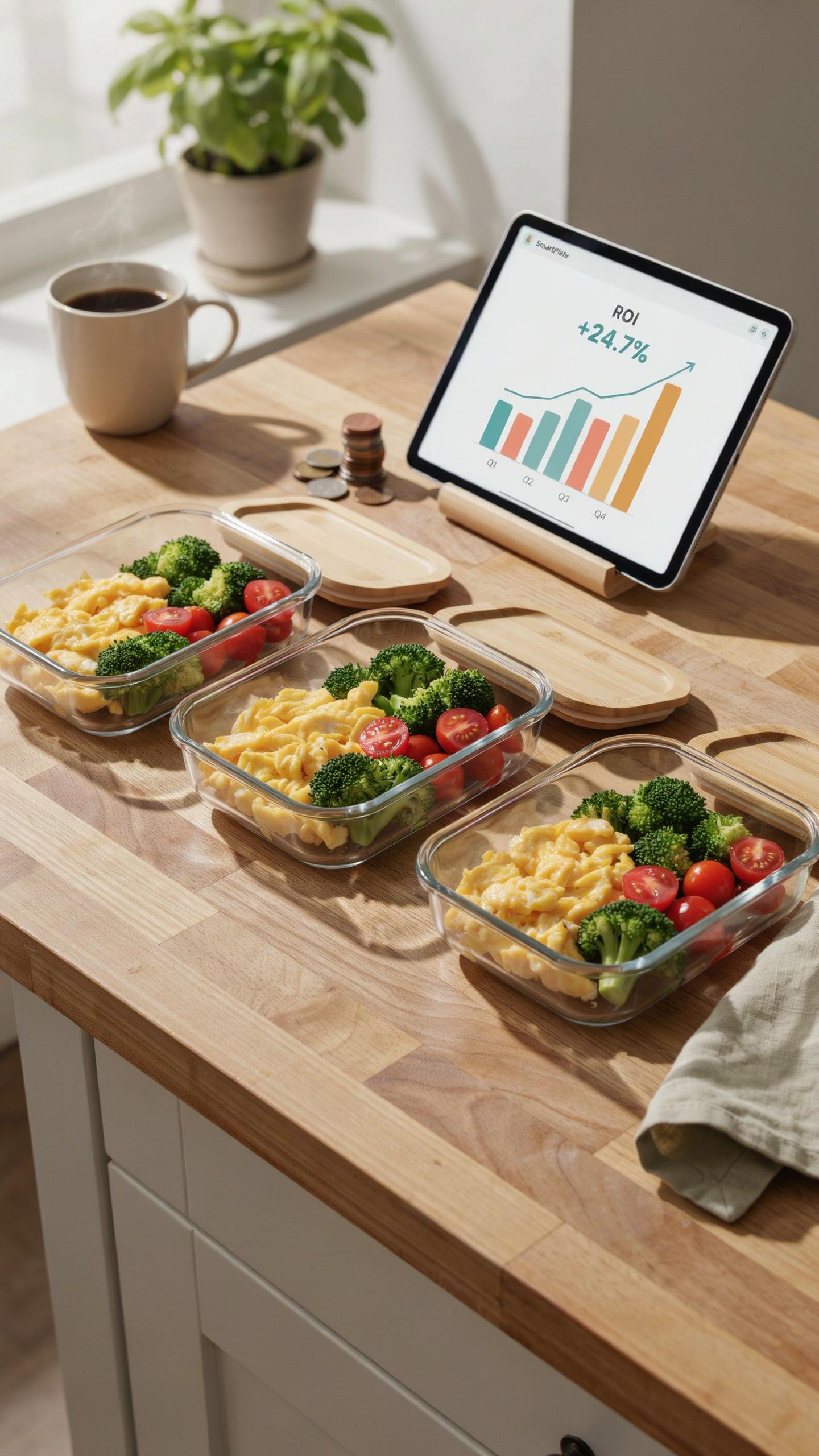
You’re doing the math wrong, and that’s why you keep buying breakfast. A coffeehouse scrambled egg sandwich runs 12 to 18 dollars. A single prepared batch of scrambled eggs costs roughly 1.50 to 2 dollars per serving. The gap isn’t about being cheap. It’s about recognizing you’re paying for convenience theater, not better food. You’re paying someone else to own the friction.
Eggs themselves cost 25 to 40 cents per serving depending on quality and source. Add butter, salt, and the container. You land at 1.50 to 2 dollars total. Scale this across five servings prepped in one session, and you’re spending 7.50 to 10 dollars versus 60 to 90 dollars buying the same thing daily. That’s an 80 percent reduction in direct cost. The real leverage isn’t savings. It’s redeployment of capital toward things that actually matter to your life.
The Time Arbitrage Nobody Calculates
In economics, we call this opportunity cost: the value of what you give up by choosing one option. Buying breakfast daily eats fifteen to twenty minutes per transaction. Prepping scrambled eggs in bulk takes forty-five minutes once per week, yielding five meals. You trade one hour of focused work for five hours of reclaimed morning time. That’s a five-to-one return on time investment.
Most people ignore this because time saved doesn’t feel like money until you price it. If your hourly rate is thirty dollars, that’s 150 dollars in reclaimed time weekly. If it’s sixty dollars, you’re looking at 300 dollars. The mechanism is simple: eliminate daily decision friction by batching the work. Buy your eggs Sunday. Cook them Sunday. Eat them Monday through Friday. No negotiation, no decision loop, no transaction overhead.
The Adaptation Principle Evolving Your Egg Scramble
Why Your Brain Rejects Repetition
You’re worried that eating the same scrambled eggs every Monday through Friday will bore you into abandonment. That’s not weakness, it’s neurobiology. Your brain runs on novelty the way a car runs on gas. Evolutionary pressure didn’t reward our ancestors for eating the same meal twice. It rewarded them for detecting new food sources. Your palate is literally wired to seek variation because monotony meant starvation risk in ancestral environments.
The mechanism is dopamine habituation. The reward signal your brain fires when you eat something drops sharply after three to five exposures to the same stimulus. You don’t need motivation tricks or discipline. You need a system that introduces controlled variation before your brain checks out. This isn’t about willpower. It’s about preventing the neurochemical shutdown that kills compliance.
Strategic Ingredient Rotation
People say “just add different things to your eggs.” That’s incomplete. You need to map ingredient swaps like mutations in a system, keeping the core protocol intact while the variables shift. The eggs, temperature, and cooking method stay locked. Everything else moves. This is how you bypass boredom without rebuilding the meal from scratch every morning.
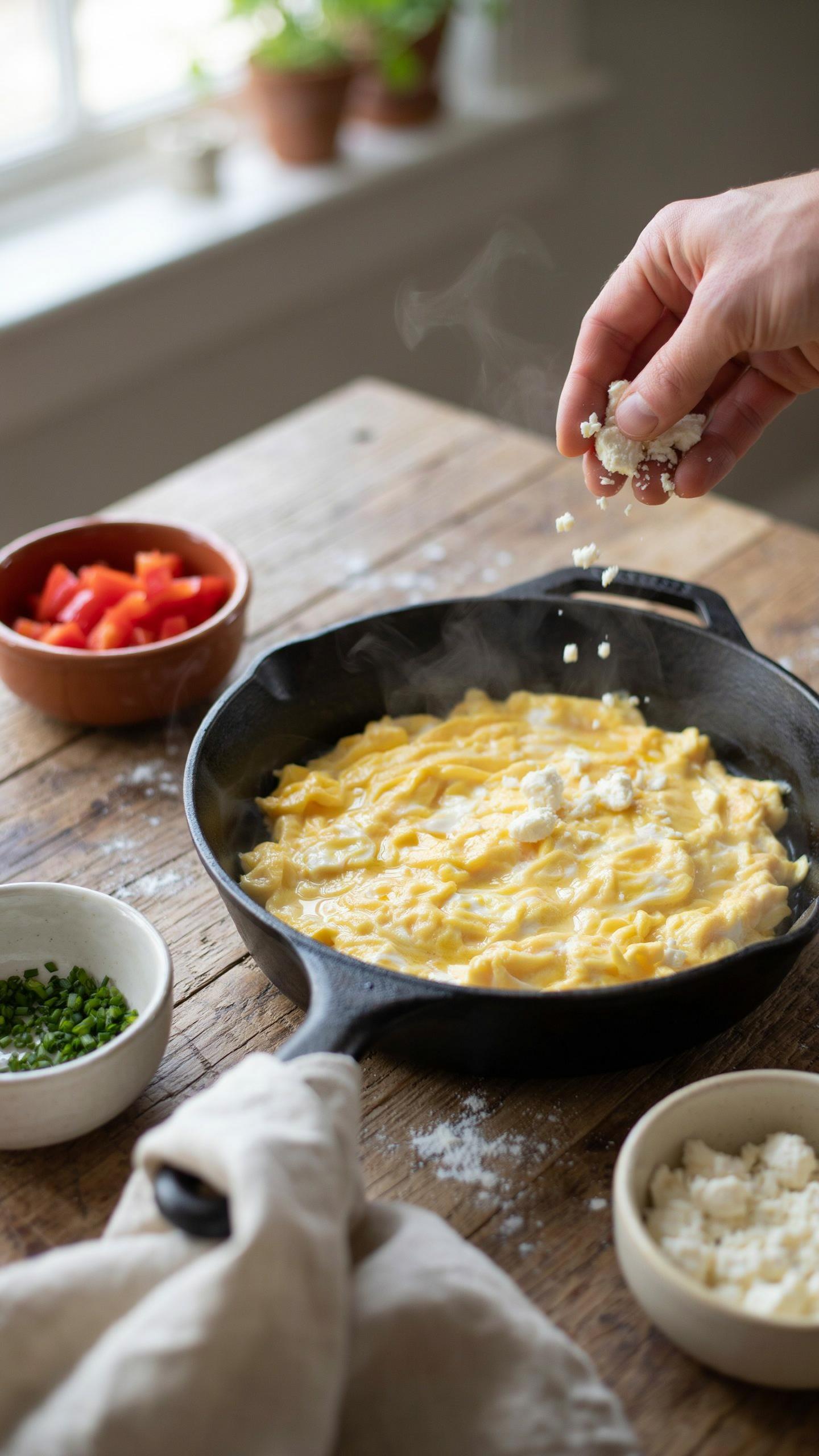
Create three to four ingredient clusters you rotate on a seven-day cycle. One cluster pairs eggs with cheese and herbs. Another combines eggs with diced vegetables and a starch. A third adds protein additions like smoked salmon or leftover meat. A fourth experiments with spice profiles. Rotate through them so no cluster repeats within ten days. The base meal stays familiar enough to prep without thinking. The details change enough to keep your brain engaged and your compliance rate high.
Beyond The Pan Creative Make Ahead Egg Breakfast Applications
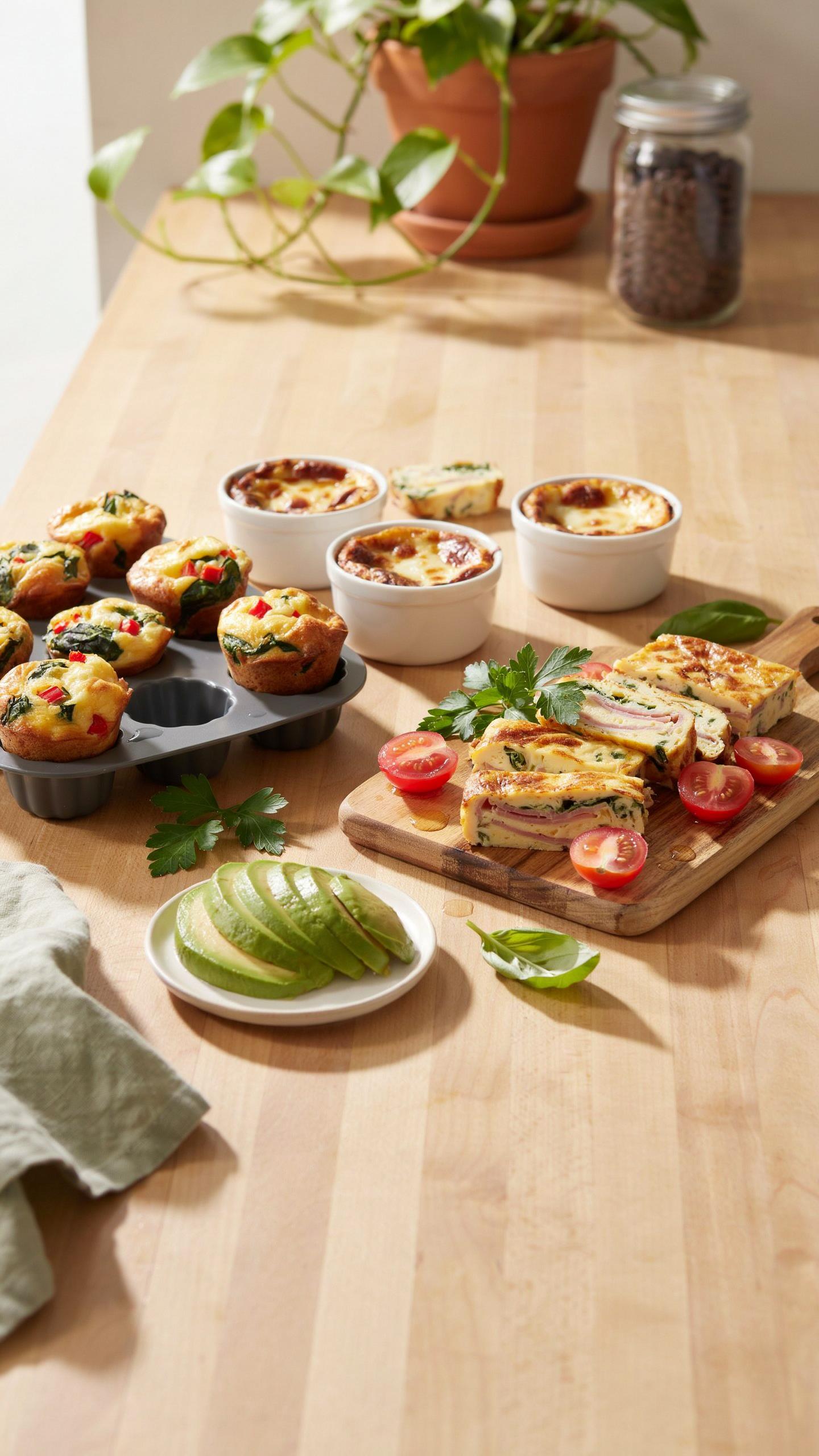
Wraps And Bowls That Actually Survive Transport
You want breakfast to feel intentional, not like you’re eating leftovers. That’s the real motive here. The mechanism is container design. A burrito or bowl constrains the eggs and prevents them from drying out faster than they would on a plate. Moisture loss happens through surface area exposure. Wrap eggs in a tortilla or bury them under rice and salsa, and you’ve reduced exposed surface dramatically. The eggs stay palatable for four to five days instead of three.
Build burritos with eggs as the base, not the star. Add black beans, cheese, salsa, and avocado before wrapping. Breakfast bowls work the same way: rice or hash on bottom, eggs in the middle, sauce and toppings last. The layering order matters because it protects the eggs from air and extends shelf life. Wrap burritos individually in foil, then store in containers. Bowls need tight lids. Both should be portioned into single servings before refrigerating so you’re not reheating an entire batch.
Grab And Eat Without Reheating
Most people reheat scrambled eggs and wonder why they taste rubbery. Don’t do that. Instead, build cold applications that taste better than reheated versions. Egg salad sandwiches, chopped eggs mixed into Greek yogurt with herbs, or eggs crumbled over grain bowls all work at fridge temperature. Scrambled eggs can be eaten cold without texture loss if you prepare them intentionally.
Cold egg preparations actually improve over two to three days because flavors meld. Mix chopped scrambled eggs with mayo, mustard, and fresh herbs, then portion into containers. You eat straight from the container or on toast without heating. The fat content in the eggs prevents them from drying out in cold storage the way they do on a plate. This is your fastest weekday option because there’s no reheating step at all.
Mastering The Egg Scramble Meal Prep Workflow
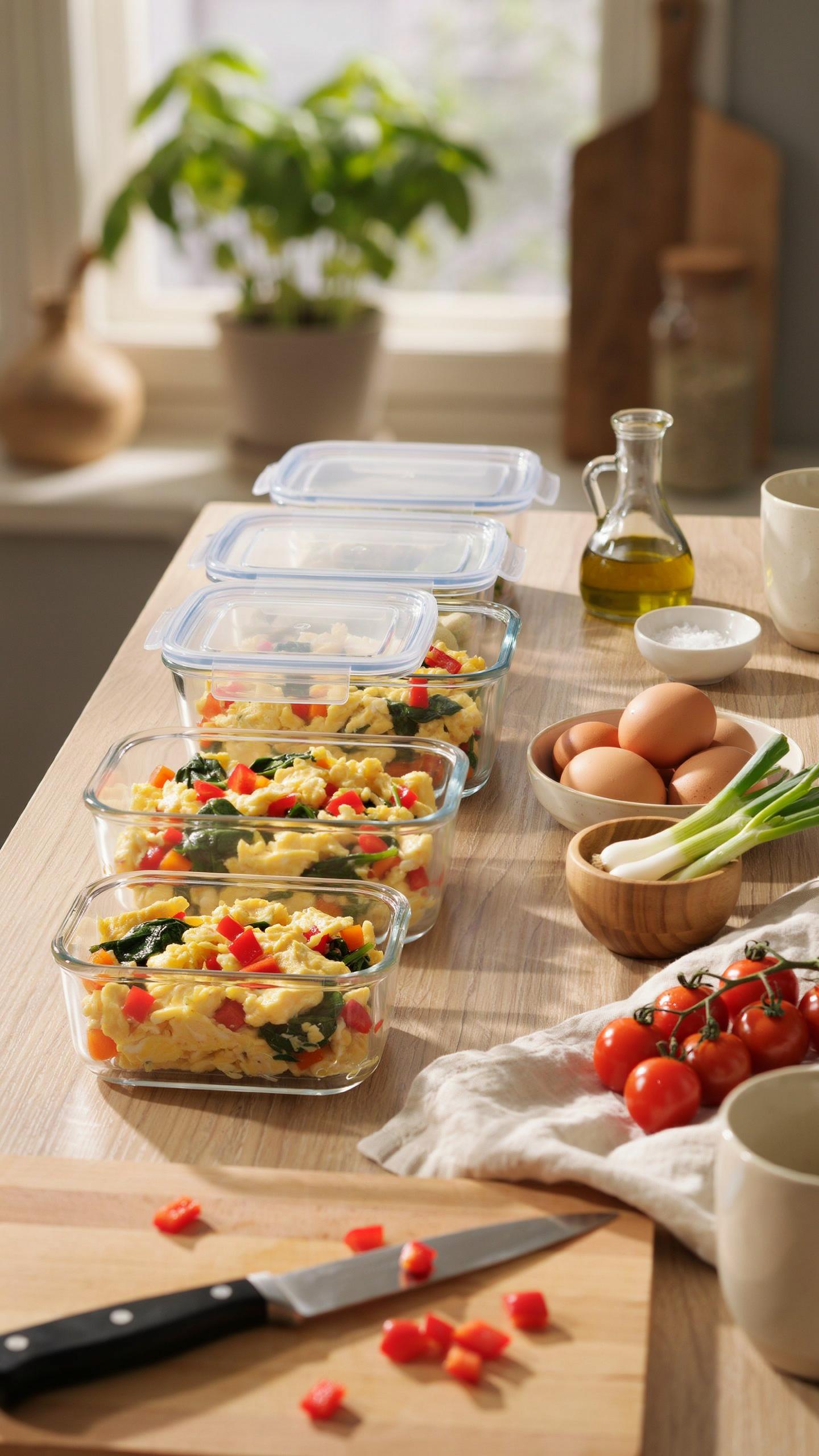
When To Prep And How To Anchor It
You want this to feel effortless so you don’t bail on the system by Wednesday. The real mechanism here comes from operations management: batch processing requires a fixed time window, not motivation. Sunday evening between 6 and 8 PM works because you’re already in shutdown mode, your kitchen is clean, and you won’t interrupt yourself with work emails. Prep eggs on the same day every week so your brain stops treating it as a decision.
Cook all eggs in a single session, portion immediately into containers, and refrigerate within two hours of completion. Temperature control matters because bacteria growth accelerates between 40 and 140 degrees Fahrenheit. Your containers hit the fridge before they enter the danger zone. Set a phone alarm for the end of your prep window so you don’t let cooked eggs sit at room temperature while you finish other tasks.
Fixing The Three Failures Nobody Diagnoses
Most people blame the eggs when the real problem is storage or reheating protocol. Rubbery eggs in a microwave aren’t a cooking failure at 6 AM, they’re a storage failure from Sunday. Eggs release moisture as they cool and sit. That moisture concentrates in the container and steams the eggs into rubber when reheated. The solution sounds stupid because it is: use paper towels to absorb excess moisture before sealing containers, then reheat at 50 percent power for 45 to 60 seconds instead of full blast.
The second failure is container size mismatch. Too much empty space means more oxygen contact and faster moisture loss. Use containers that fit your portion size with minimal air gap. The third failure is temperature shock: pulling eggs straight from the fridge into a hot pan or microwave creates uneven heating and further texture breakdown. Remove containers five minutes before reheating to let them reach closer to room temperature, then proceed with low-power reheating or stovetop warming in a pan over medium heat.
The real obstacle isnt time its your resistance to disciplined simplicity

You already know scrambled egg meal prep works. You’ve read the science. You understand the protein, the cost, the convenience. What you’re actually resisting is the boring consistency it requires. You want transformation without the mundane repetition. That’s the lie. Buy a dozen eggs today and cook eight tomorrow morning. One action. One week of non-negotiable breakfasts. The person who wins isn’t smarter than you, they’re just willing to be bored while you’re still deciding.