
The Cognitive Load Protocol

When Lunch Becomes A Decision Tax
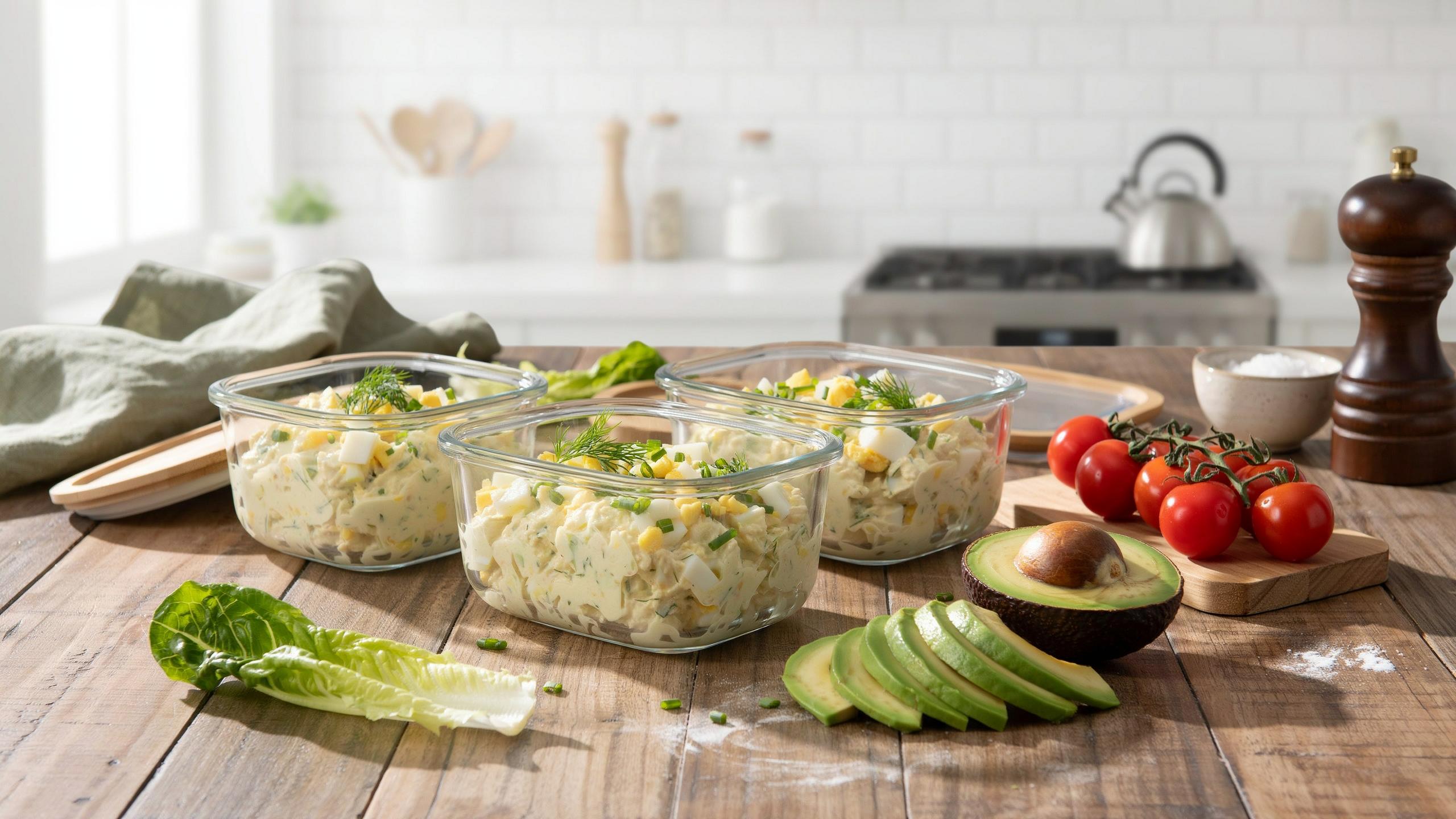
You’re hoping meal prep solves willpower. It doesn’t. What it solves is the hidden tax lunch extracts from your mental bandwidth every single day. Decision fatigue is real neurology, not motivational theater. Your brain allocates finite glucose and attention to choices. By noon, you’ve already spent both on emails, Slack, and decisions that don’t matter. Adding “what do I eat” to that stack guarantees you pick wrong or pick nothing, then waste an hour hunting food instead of working. Egg salad meal prep removes the choice entirely.

The mechanism is brutal and simple: your prefrontal cortex deteriorates across the day. Studies confirm decision quality drops after sustained cognitive load. Most people respond by building willpower systems. That’s backwards. The real move is eliminating the decision before fatigue hits. When you walk to the fridge and grab the same egg salad container you prepped Sunday, your brain spends zero cycles on the choice. That conserved energy flows into afternoon work, not into rationalizing why you deserve Chipotle.
Batching Decisions Like Manufacturing Logistics
Cognitive psychology calls this “decision batching,” but you recognize it from supply chain thinking: consolidate similar tasks into a single production run to minimize setup costs. Sunday egg salad prep is your setup. You boil eggs, chop, mix, portion, and store once. You don’t repeat that process five separate times across the week. The mental friction of repeating a decision multiplies fatigue faster than making it once and executing five times.

One session of prep work costs far less cognitive energy than five separate lunch decisions spread across weekdays. You anchor the entire week’s protein to a single completed action. Each morning, your decision load stays flat instead of spiking at noon when your brain has the least resources left. Container it, grab it, eat it. No variance. No negotiation with yourself. That compressed cognitive footprint is why egg salad meal prep works where motivation fails: you’ve simply removed the point where failure happens.
Beyond Basic Egg Salad Meal Prep The Protein Imperative
Why Protein Sustains Your Energy
You’re reading this because you’re tired of the afternoon crash, and you think meal prep is the answer. It’s not. The crash happens because your lunch doesn’t contain enough protein to stabilize blood glucose. Protein slows carbohydrate digestion, which prevents the insulin spike and subsequent drop that leaves you useless by 2 PM. Most people add a tablespoon of mayo to eggs and call it nutrition. That’s not meal prep, that’s self-sabotage.
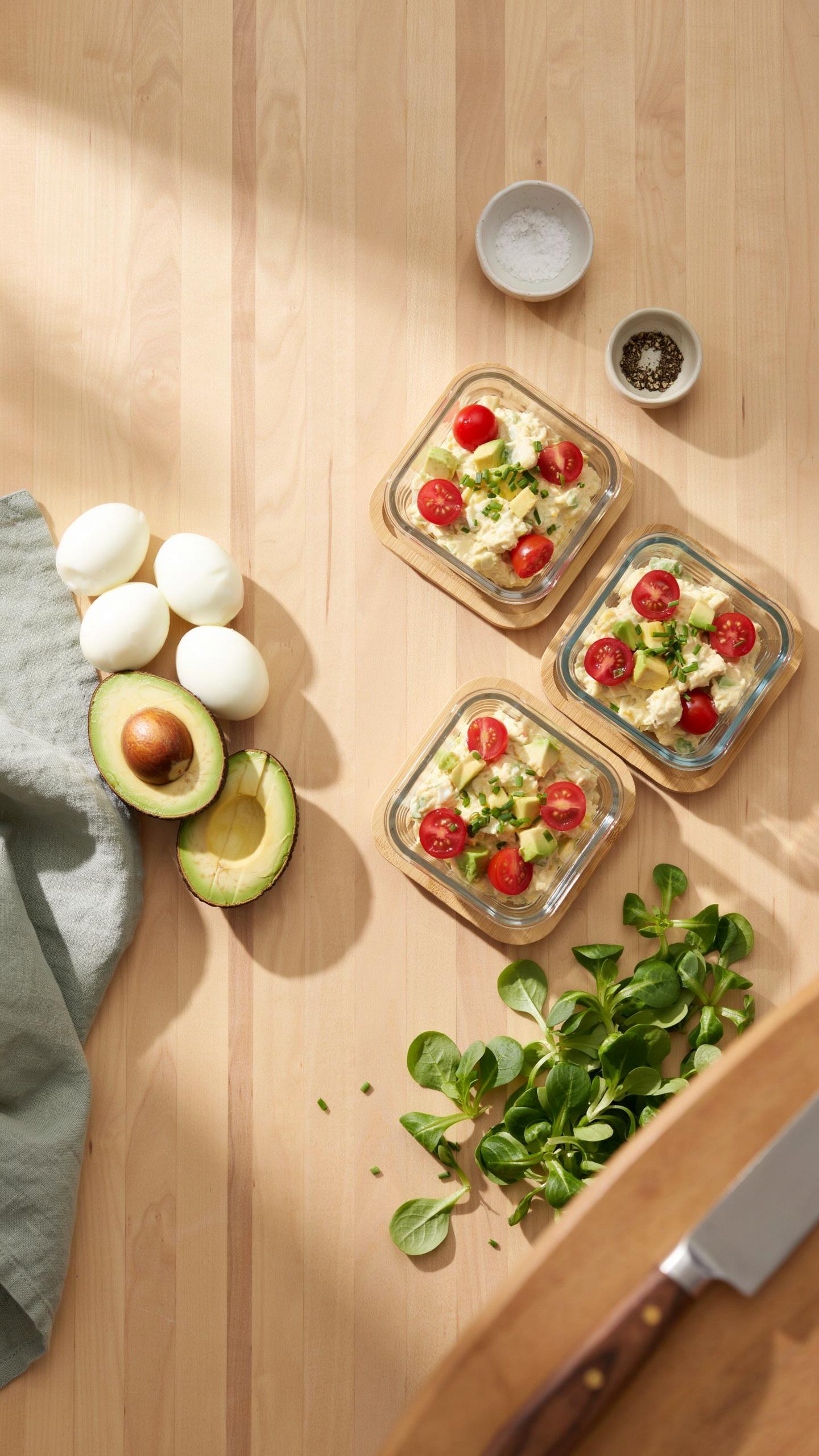
Eggs already contain all nine essential amino acids. Six large eggs deliver roughly 36 grams of protein, which is why egg salad works as a base. But the ratio matters. When you mix protein-rich eggs with mayo and filler vegetables, you dilute the protein density per bite. Your body needs consistent amino acid availability throughout the afternoon to maintain stable energy and cognitive function. This isn’t theory, it’s biochemistry.
Calculate Your Real Protein Target
The fitness industry peddles the “one gram per pound of body weight” rule like gospel. For most people doing office work and light activity, this is excessive and wasteful. Biology doesn’t work on rounded numbers. Your actual requirement depends on three variables: your body weight, your activity level, and your meal frequency.
Start here: multiply your body weight in pounds by 0.8 to 1.0. That’s your daily baseline in grams. Divide that by the number of meals you eat. If you weigh 180 pounds and eat three meals, you need roughly 48 to 60 grams of protein per meal. Protein requirements aren’t mysterious. Calculate your number, then build your egg salad batch to hit it exactly.
The Unconventional Egg Salad Recipe Taste Without Compromise
Bold Flavors Build Compliance
You’re worried bland food will kill your streak. The real mechanism is palatability—your brain won’t repeat what doesn’t reward it, no matter how efficient the macros are. Most egg salad recipes use mayo, celery, and nothing else because they’re safe. That’s the problem. Safety breeds abandonment.
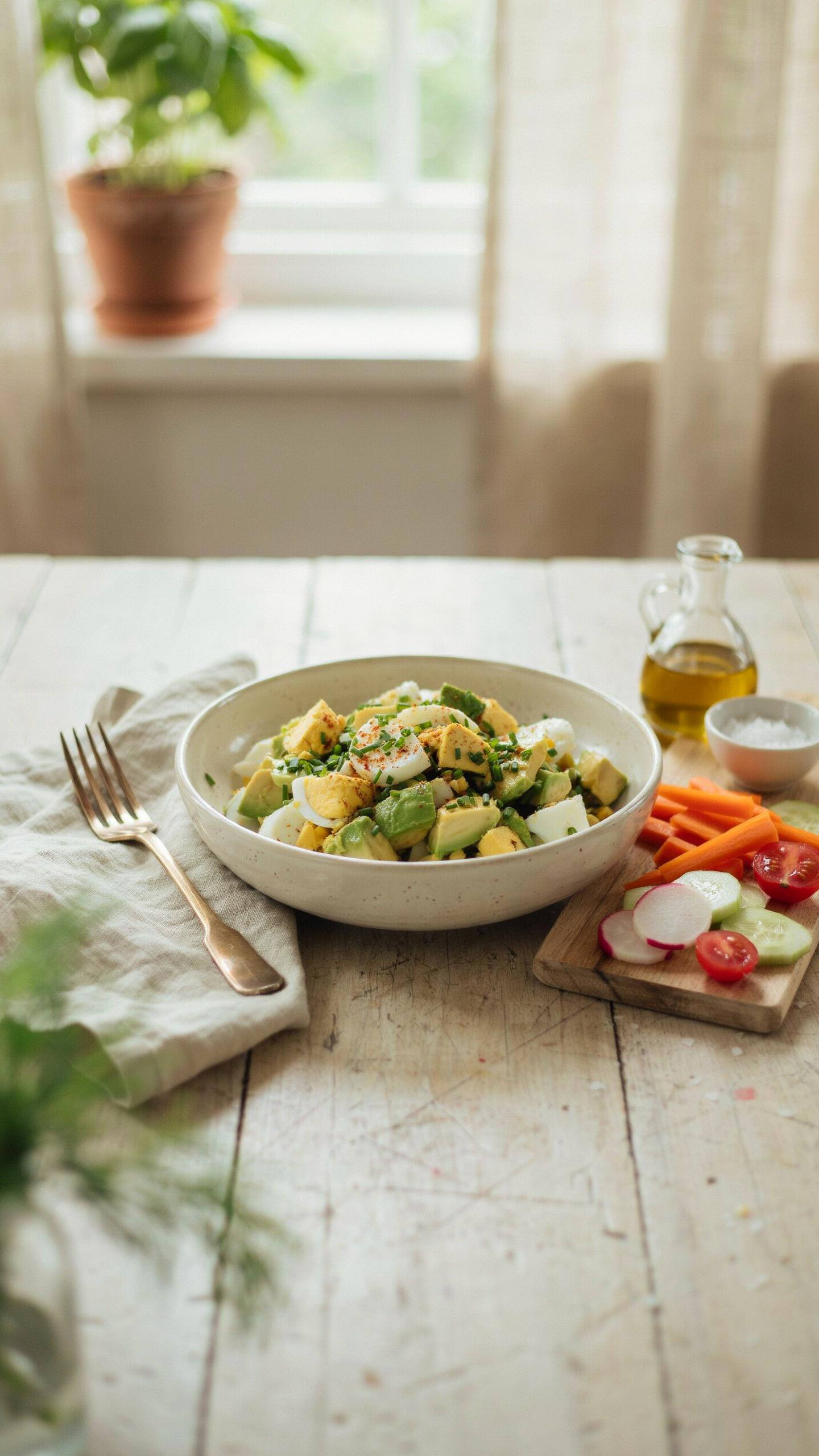
The fix is aggressive seasoning from day one. Use whole grain mustard, not yellow. Add anchovy paste or fish sauce in small amounts—two teaspoons transforms the entire salad without tasting fishy. Include fresh dill, not dried. The difference in consumption compliance between mediocre and actually good egg salad runs 60 to 70 percent over eight weeks. One tastes like punishment. The other tastes like lunch.
Source Fat And Flavor Together
Quality fat isn’t about paying more. It’s about choosing fats that carry flavor compounds, not just calories. Mayo made from seed oil tastes flat and oxidizes faster. Whole egg mayo made with avocado oil or quality olive oil holds its structure longer and tastes distinctly better after four days in the fridge.
Buy pastured eggs when you can—the yolk color and richness are visibly different. Use fresh lemon juice, not bottled. Add capers or finely minced red onion for acid and crunch. The mechanism works through flavor intensity: bold ingredients mask the oxidation that kills most meal prep after day four. Your salad stays appetizing through Wednesday because the base ingredients have enough presence to remain interesting.
The Best Healthy Egg Salad Recipe Debunking Health Halos
What “Healthy” Actually Means Here
You want to believe egg salad is a health food because it lets you eat something that tastes indulgent without the guilt. The mechanism is simple: protein gets marketed as a moral achievement, so you stop examining what else is in the bowl. Eggs deliver real protein, yes, but the recipe you’re following probably doesn’t. Most versions bury mayo, sweetened relish, and processed additions that flip the nutritional profile from “lean lunch” to “calorie bomb with protein branding.”
The marketing works because nobody questions the carrier. Eggs are genuine. Protein is real. So the entire dish inherits that credibility even when the other ingredients contradict it. Your job is to reverse-engineer what you’re actually eating instead of adopting the health halo someone else constructed. Start by weighing the mayo. Most people eyeball it and use triple what they think they are.
Where Sugar Hides In Plain Sight
Common recipes don’t fail by accident, they fail by design. The relish, the sweet pickle juice, the honey mustard all serve a function: they make the salad taste better with less actual seasoning work. That’s not a flaw in your cooking, that’s processed food logic sneaking into your kitchen. A standard tablespoon of relish contains 3 to 4 grams of sugar. Most recipes call for 2 to 3 tablespoons without mentioning it.
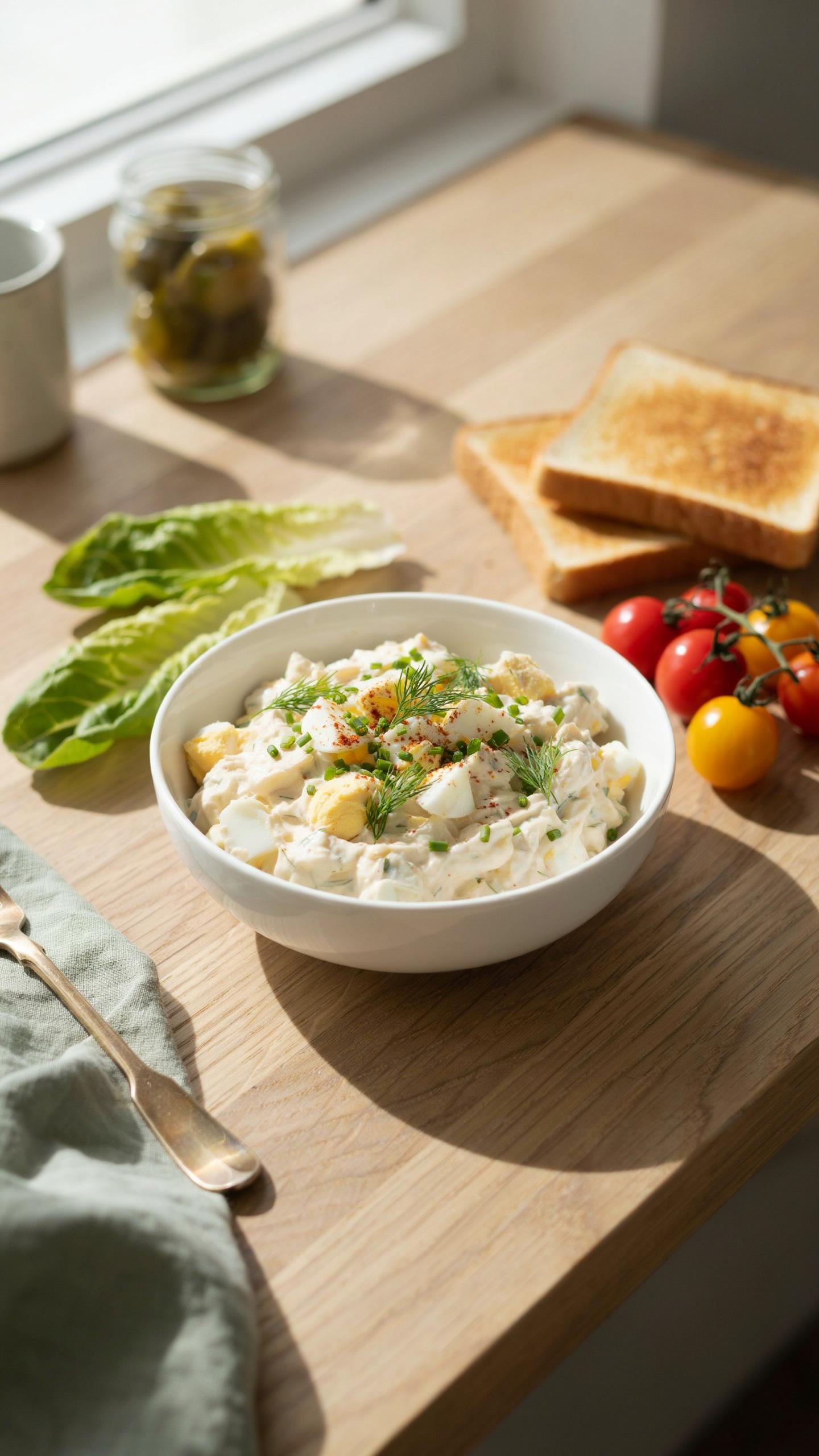
The real problem isn’t the individual ingredient, it’s the cumulative effect you never calculate. Sugar in relish plus sugar in store-bought mayo plus sugar in mustard equals a lunch with more carbs than the protein justifies. Replace relish with fresh diced celery and onion. Use plain Dijon mustard and full-fat mayo with no additives. Season with salt, pepper, and paprika. You cut sugar from 8 to 10 grams down to under 1 gram and keep the taste intact because the eggs and mayo provide richness that compensates for the removed sweetness.
Egg Salad Ideas Strategic Variation Not Randomness
The Swap System
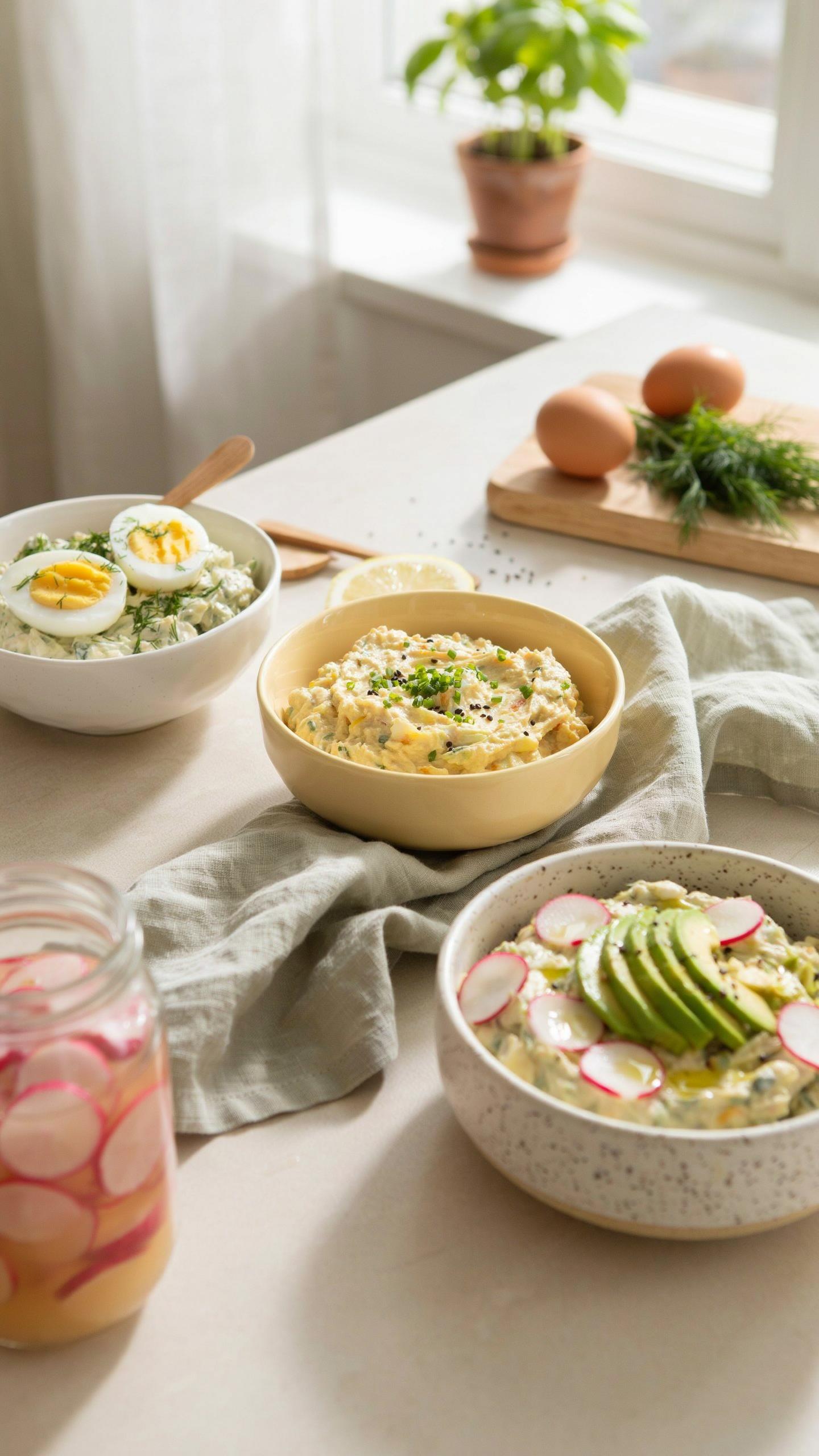
You want variation because eating the same thing twice bores you into quitting, and quitting kills the protein intake you actually need. The mechanism is simple: you’re not reinventing recipes each week. You’re rotating defined ingredient categories on a fixed schedule. Think of it like supply chain management. In logistics, you don’t scramble for new routes every day. You design three or four routes and cycle through them. Same applies here. Pick your base (mayo, Greek yogurt, or vinegar-based). Pick your vegetables (celery, red onion, pickle). Pick your texture add-in (nuts, seeds, or both). Pick your seasoning profile (dill, paprika, or curry). Rotate one category per week while keeping the others locked. You hit different flavor territory without decision fatigue. The eggs stay consistent. The prep time stays consistent. Only the experience changes.
This removes the trap of “what should I make today.” Your predetermined swaps live in a document you glance at, not something you invent. Mayo-based dill with almonds week one. Yogurt-based curry with sunflower seeds week two. Vinegar-based paprika with walnuts week three. Then repeat. You’re not randomizing. You’re systematizing variation so your brain stays engaged and your body keeps getting its protein without drama.
Decision Constraints Beat Open Choice
The advice to “try new combinations” is useless. Open choice paralyzes you. You end up buying ingredients you never use and defaulting to the same boring thing anyway. The real mechanism comes from constraints. Constraints force creativity within bounds. Set yourself three predetermined variations. Write them down. You now have zero decisions to make on prep day. You know Tuesday’s batch uses red onion, celery, and tarragon. Wednesday’s uses dill and pickle juice with pecans. The constraint kills the paralysis. You execute instead of deliberate. Execution compounds. Deliberation compounds nothing.
Stop here: actually write these three variations down before next week’s prep. Not vague ideas. Exact ingredient lists. Exact proportions if you know them. Put them in your phone. When Sunday comes, you open your phone and build batch one, batch two, batch three without thinking. The friction disappears. The consistency stays. The protein gets eaten.
The Healthier Egg Salad Sandwich Ditching The Bread Dogma
What You’re Actually Solving For
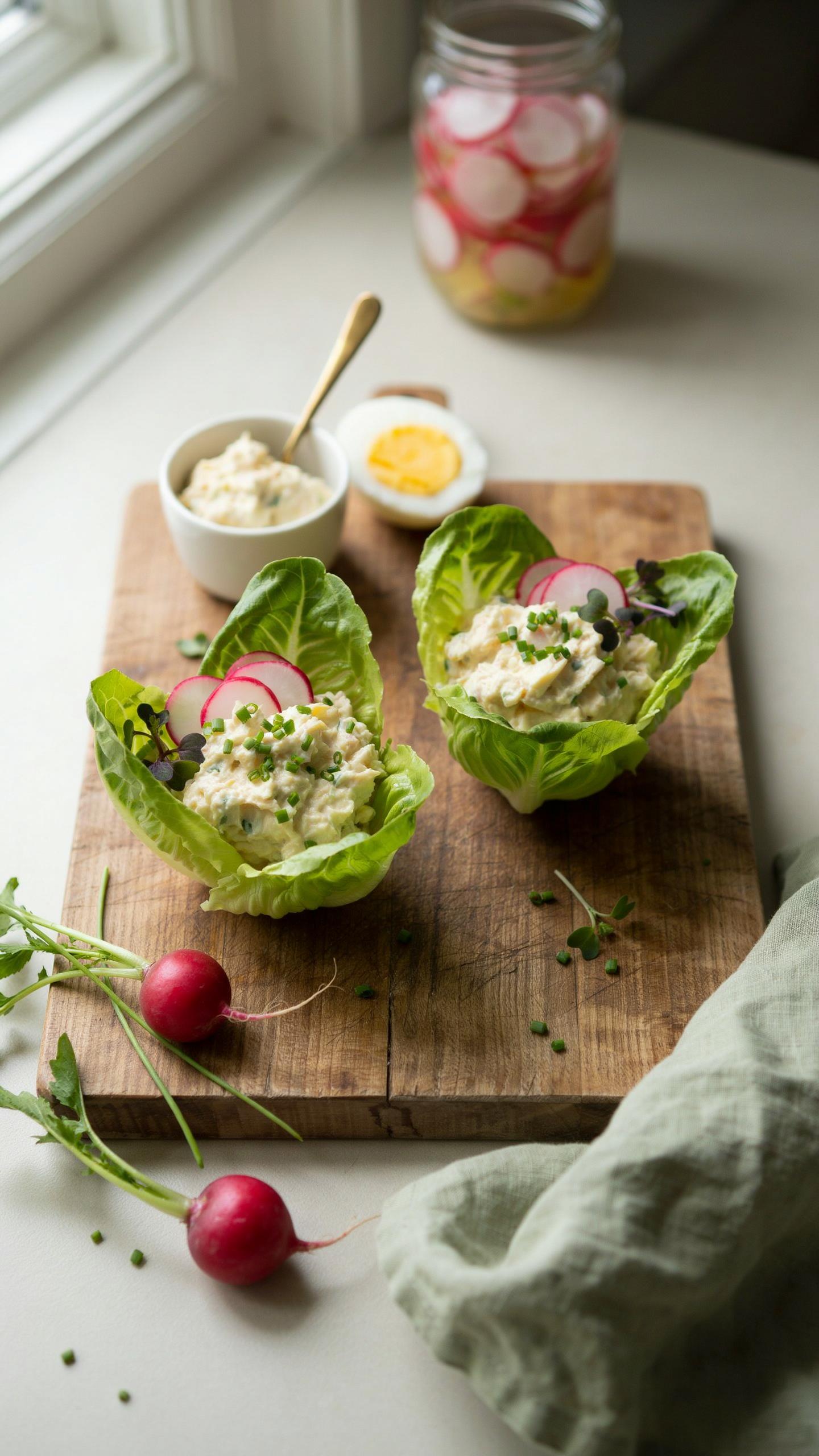
You want permission to skip the bread without feeling like you’re missing a meal. Here’s what actually matters: the delivery mechanism determines how your body processes the nutrients and how long you stay full. Bread is just one container. It’s not mandatory. The egg salad itself—protein, fat, micronutrients—works in other contexts. The question isn’t whether to use bread. It’s what vehicle maximizes nutrient absorption and meal satisfaction without adding empty calories or blood sugar spikes.
Lettuce wraps, crackers, celery, and cucumber slices all function as platforms. Each has different structural properties and different effects on digestion speed. Romaine holds the salad without falling apart and adds fiber. Rice cakes provide crunch but lack fiber. Whole grain crackers deliver both structure and satiety through their density. The mechanism is simple: choose vessels with either high fiber content or high structural integrity, ideally both. This keeps your meal price the same while improving the actual output.
Satiety Stacking Without The Bread Weight
Biology teaches us about load bearing, and your digestive system runs the same principle: pair dense fats with fiber to extend fullness time. Most egg salad recipes use mayo—pure fat, zero fiber. That creates a satiety crash two hours later. Adding fiber-rich vehicles solves this, but you need the fat pairings deliberate and calibrated.
Mix your egg salad with avocado instead of extra mayo. Avocado provides 3 grams of fiber per half, plus fat that slows gastric emptying. Pair this with a low-glycemic vehicle like celery or cucumber. The fiber hits your gut, the fat extends digestion time, and protein keeps amino acids steady. Satiety: four to five hours, not two. Serve on a bed of mixed greens with your egg salad spooned on top, or pack greens separately and assemble at lunch. The protocol is: one egg salad base, one fat source with fiber, one vehicle with structure, one timing strategy.
Easy Healthy Egg Salad The Efficiency Framework
Batch Cooking Strategies That Actually Work
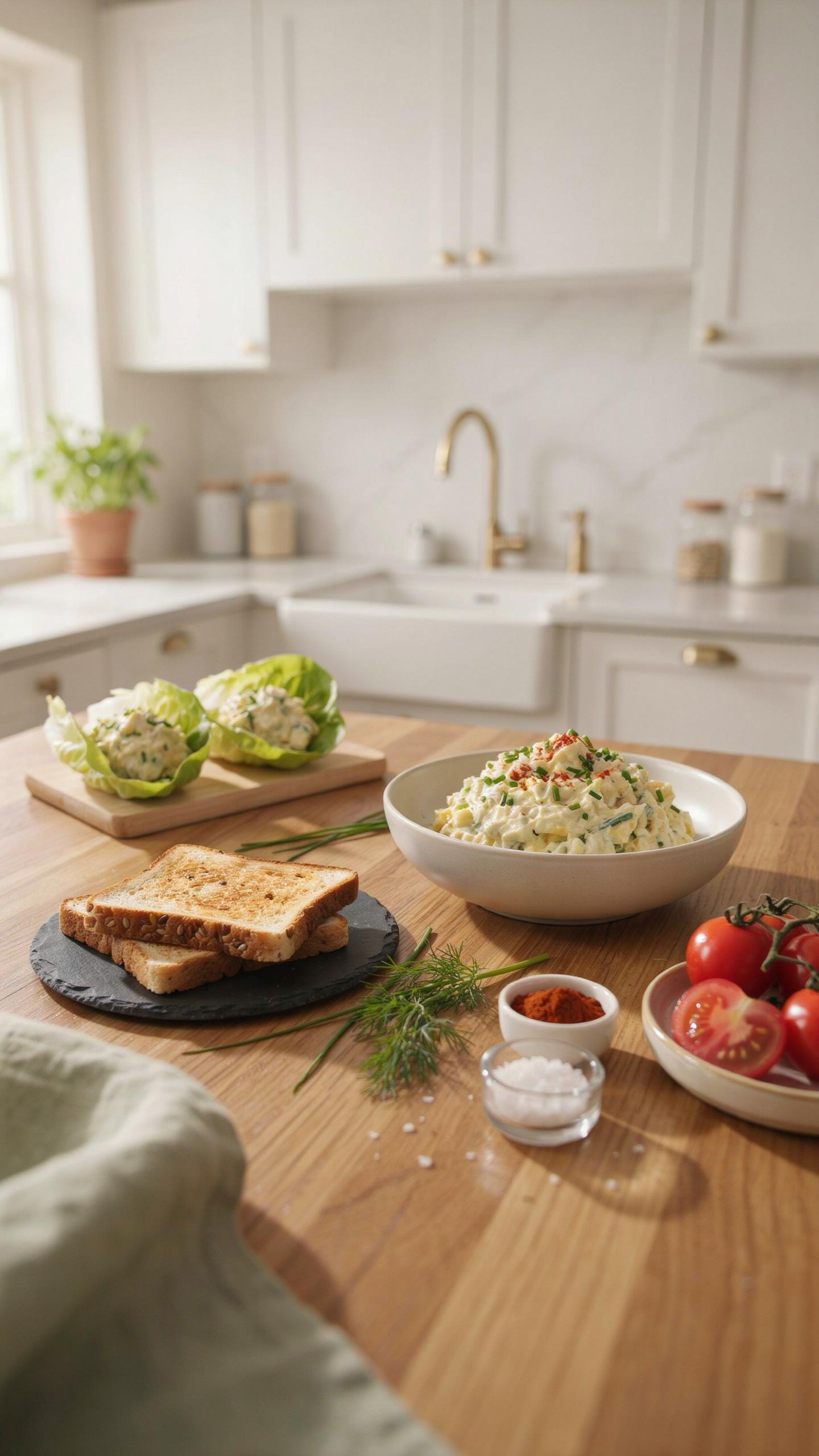
You want meal prep to feel effortless because you’re terrified it won’t stick, and you’re right to fear that—most people abandon systems that demand willpower every single day. The mechanism is borrowed from manufacturing: throughput. You don’t cook five egg salads. You cook one large batch with identical inputs, then portion it. Hard boil 18 eggs instead of three. Mix one massive bowl. Portion into containers once. This compresses decision fatigue and hands-on time into a single block.
The math is simple. Boiling eggs takes the same 12 to 14 minutes whether you cook six or 24. Chopping mayo, celery, and seasonings takes one session. Cleaning happens once. You frontload the cognitive and physical load, then extraction becomes automatic. Most meal prep guides gloss over this because they assume you already think in systems. You don’t, so here’s the breakdown:
- Cook 18 to 24 eggs at once: Batch size increases throughput without proportional time investment. One boil cycle feeds five to seven days of lunches depending on portion size.
- Mix all ingredients in a single large bowl: Combine cooled eggs, mayo, diced celery, mustard, salt, and pepper in one operation. This prevents repetition and reduces contamination risk from multiple mixing events.
- Portion immediately after mixing: Divide into five to seven containers while the salad is still fresh. Sealed containers at rest deteriorate slower than one large exposed bowl.
- Use a kitchen scale, not estimates: Weigh eggs before boiling and measure mayo by weight, not tablespoons. Consistency across batches removes guesswork and prevents over-mayoed or dry batches.
- Cook on Sunday morning or your lowest-friction day: Pick the day you’re home longest with fewest interruptions. Consistency of timing builds automaticity faster than optimal timing with friction.
The real win is this: batch cooking collapses the number of decisions you make about lunch from 35 decisions across five days down to one decision on prep day. Your willpower stays intact because you’re not choosing every morning whether to do it. You already did it.
The Container And Cold Chain Reality
Storage isn’t about buying the right container. Storage is about managing oxygen exposure and temperature consistency. The consensus advice—”airtight containers in the fridge”—is incomplete because it ignores the mechanism that degrades egg salad: oxidation and bacterial growth accelerate together when temperature fluctuates.
Use glass containers with locking lids, not plastic. Plastic absorbs oil and develops micro-scratches where bacteria colonize. Glass seals tighter and doesn’t degrade. Fill containers to the brim to minimize air space. Use one container per day of consumption, not one large shared container, because each opening introduces oxygen and temperature swing. Store on the coldest shelf of your refrigerator, usually the back of the bottom shelf where temperature holds steadiest. Egg salad stays safe for four to five days at 40 degrees Fahrenheit or below. Don’t push six days expecting quality. The mayo emulsion breaks down, cellulose fibers soften, and you’re eating deteriorated product. Mark containers with the date mixed, not the date to eat by. This trains your eye to check age automatically. If you prep on Sunday for Monday through Friday, your Friday lunch is at maximum safe time. This is why weekly batches beat bi-weekly ones—egg salad degrades visibly and texturally by day six.
Protein Packed Egg Salad Fueling Peak Performance
Blood Sugar Stability Beats Energy Crashes
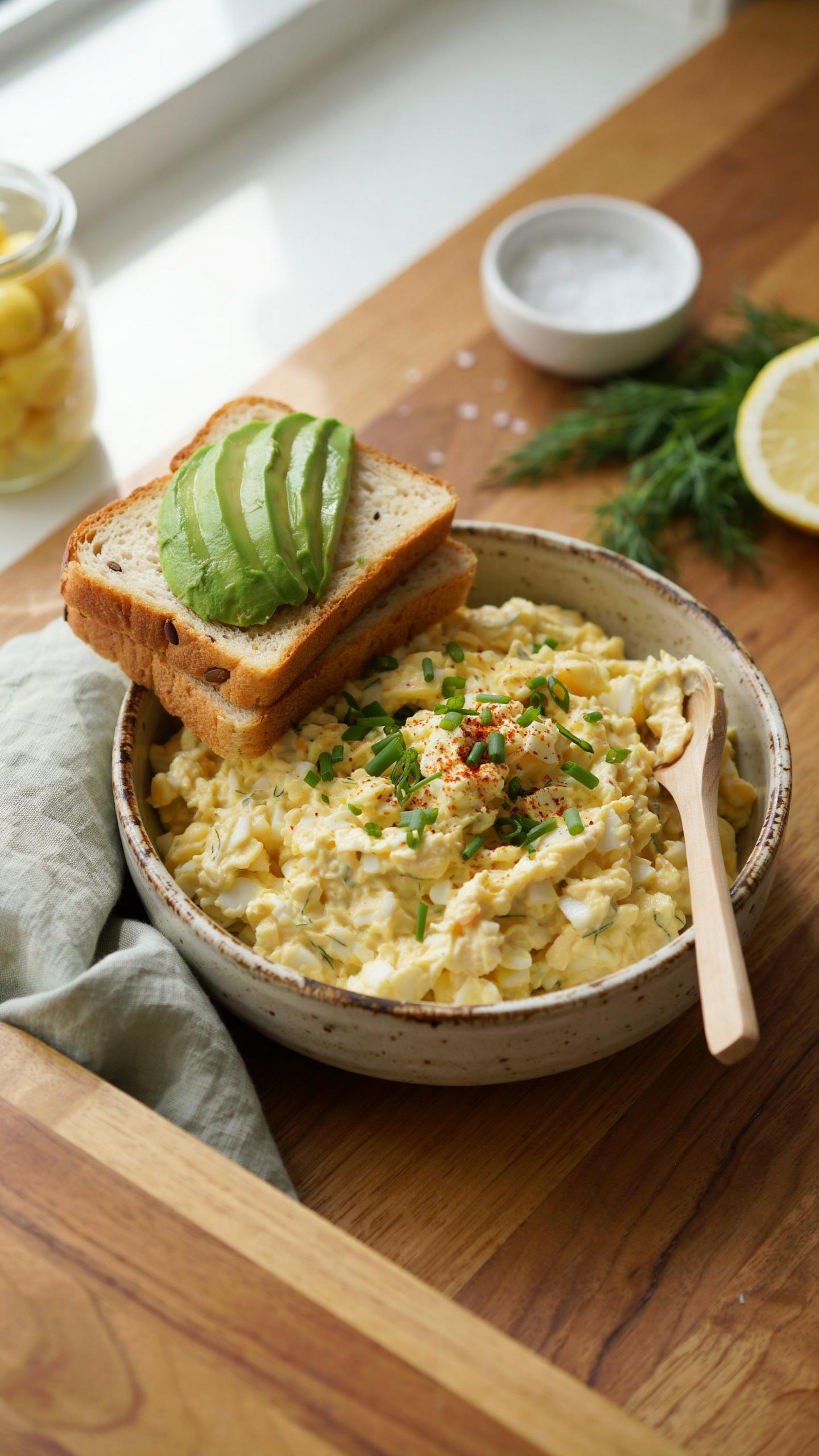
You want to feel sharp at 3pm instead of hitting the wall. Here’s what actually happens: egg salad’s macronutrient ratio functions like a glucose buffer in metabolic terms. The protein and fat slow carbohydrate absorption, flattening your blood sugar curve instead of spiking it. A spike followed by a crash kills focus. Stable glucose keeps your brain resourced for hours.
Most meal prep advice treats protein as interchangeable. It’s not. Eggs deliver complete amino acids plus choline, which your brain uses directly. The fat in yolks slows digestion further. When you eat egg salad with whole grain bread or vegetables, you’re engineering a sustained release system. The macronutrient ratio matters more than the total calories.
Mental Output Scales With Fuel Timing
Stable nutrition compounds cognitive performance over weeks, not hours. Your prefrontal cortex burns glucose constantly. When that supply stays consistent, decision-making stays sharp. When it crashes, you rationalize poorly and lose two hours to fog. Egg salad meal prep removes the guessing game entirely.
The mechanism is simple: pack your lunch the night before, eat it at the same time daily, and your brain stops fighting for fuel. Consistency beats optimization. One egg salad lunch builds nothing. Thirty consecutive days builds a measurable difference in focus, problem-solving speed, and emotional regulation. Store containers at 40 degrees or colder, consume within three days, eat at midday before mental fatigue compounds.
The real obstacle Your inability to commit to a repeatable system

You don’t need a perfect egg salad recipe. You need to stop treating meal prep like a hobby and start treating it like infrastructure. Pick one formula, buy the same ingredients every Sunday, and execute it without thinking. The protein follows the system, not the other way around. Stop waiting for motivation to show up. Make one batch today, eat it for three days, and watch what consistency actually builds. Your lunch problem isn’t solved by better technique. It’s solved by refusing to negotiate with yourself.