
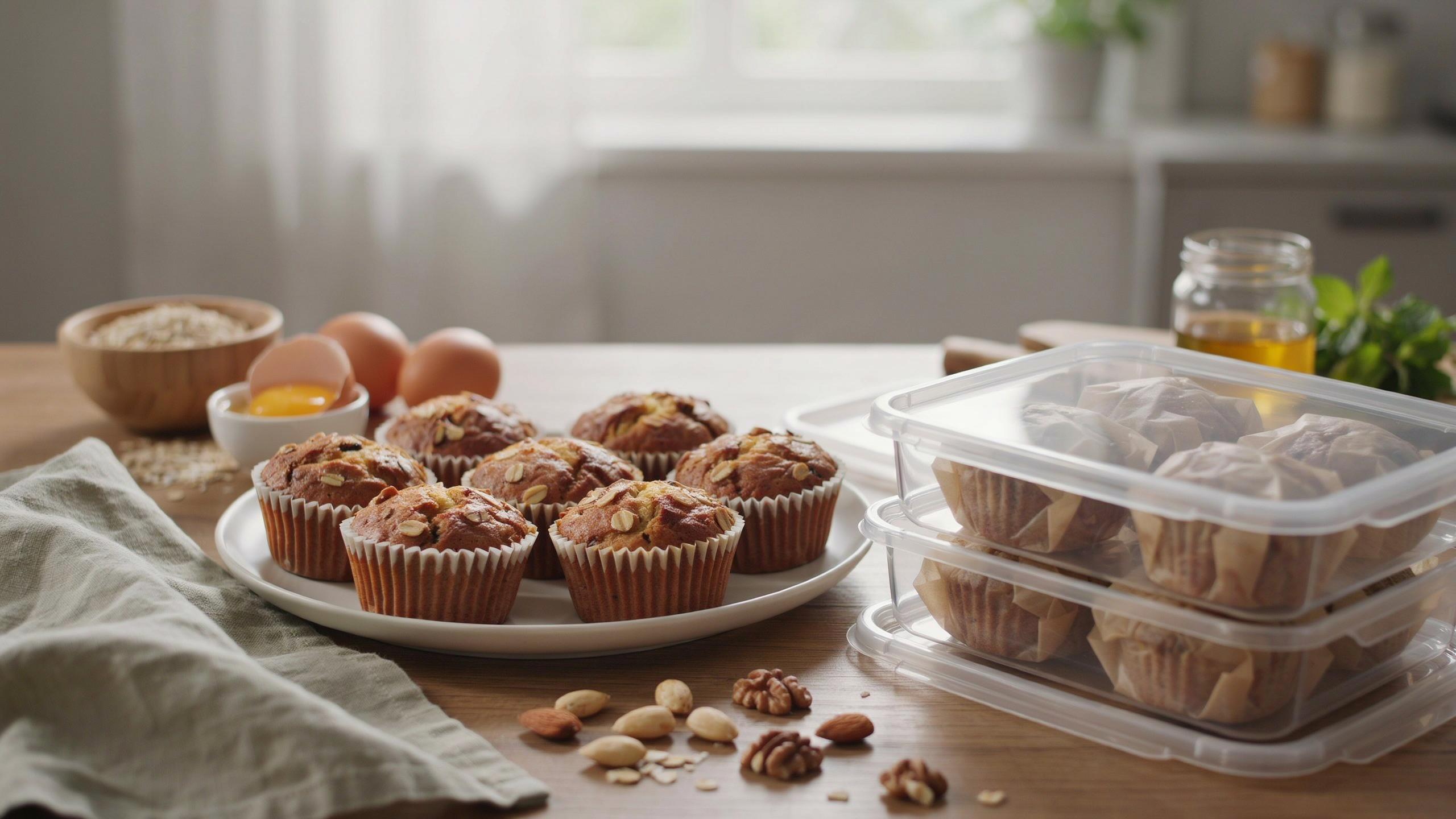
The Protein Paradox Why Your Healthy Protein Muffins Are Failing

Where Most Recipes Collapse
You want to believe a muffin with 20 grams of protein can replace a meal. The real issue: most formulas confuse protein content with actual satiety. Borrowing from nutritional biochemistry, think of protein as a satiety signal—your body needs the right amino acid profile and volume to register fullness. Generic recipes just pile in isolate powder without adjusting the fat and fiber ratios that make protein work.

The mechanism is straightforward. Whey isolate absorbs liquid differently than whole eggs. Casein creates a different crumb structure than plant-based powders. Most home recipes ignore this entirely, then blame the result on “bad ingredients.” They add 25 grams of protein but keep the same flour amount. The muffin becomes dense, dry, or crumbly because the protein source changed the hydration math nobody bothered to recalculate.
Sugar Masquerading As Nutrition
Most “high protein” muffin recipes fail the actual test: they contain as much added sugar as conventional muffins while tasting worse. The reason is crude—recipes swap regular flour for protein powder without reducing sweeteners, then wonder why the texture fails. Maple syrup, agave, and honey all deliver quick glycemic spikes identical to refined sugar, just with better marketing.

The trap deepens when recipes use sugar alcohols without understanding their effect. Erythritol and xylitol don’t trigger insulin, but they absorb moisture from the crumb structure differently than sucrose does. A formula that works with coconut sugar fails completely with erythritol at the same ratios. Effective high protein muffins reduce total sugar below 8 grams per muffin and stabilize the structure through fat and egg ratios, not through sweetener type alone.
The Metabolic Muffin Method Fueling With Purpose
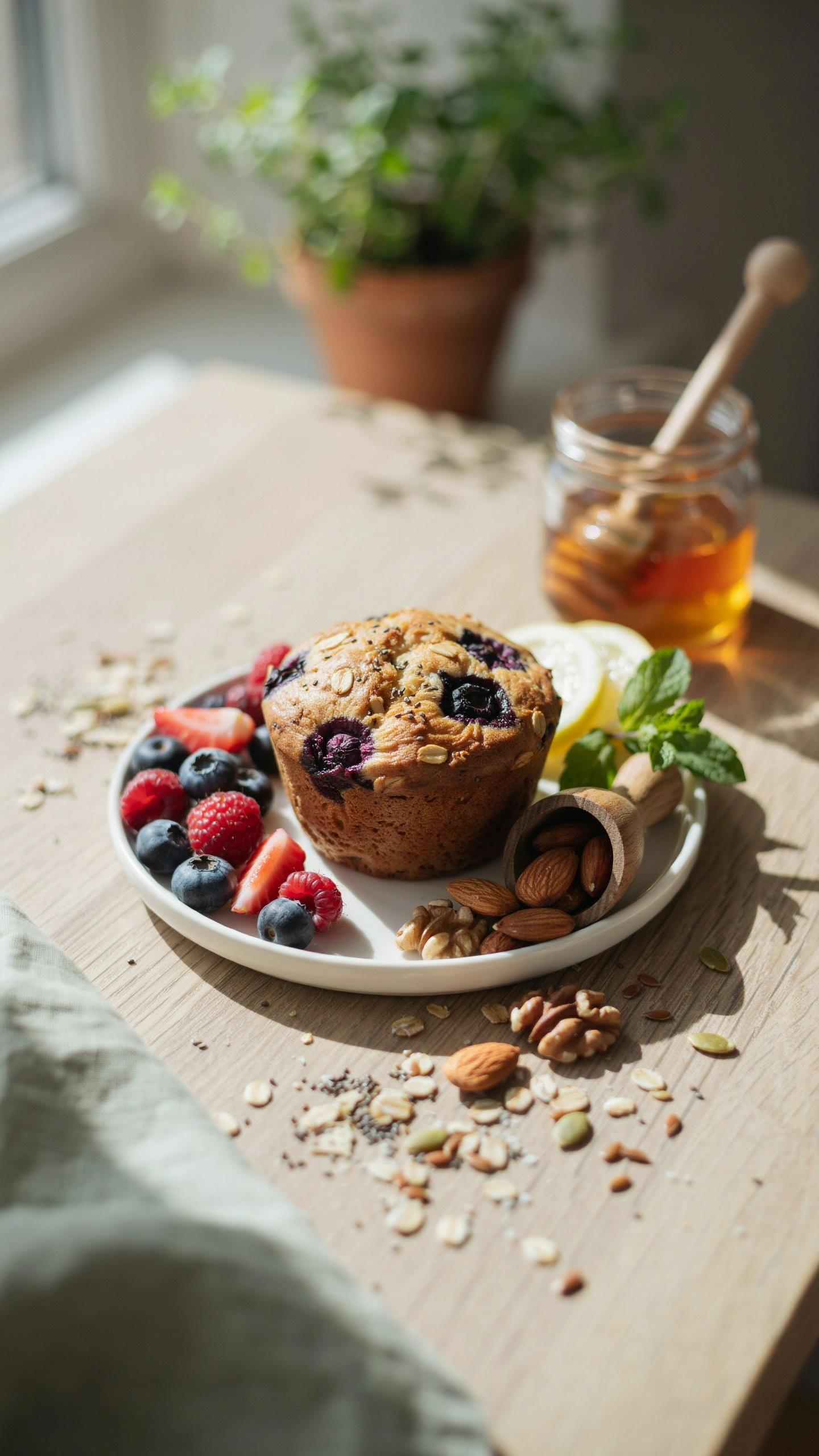
Stable Blood Sugar Beats The Crash Cycle
You want to feel sharp all afternoon without the 3pm collapse that kills your productivity. The mechanism is simple: blood glucose stability determines whether your muffin becomes fuel or a debt you pay back in fatigue. Refined carbs spike insulin fast, then drop you hard. Protein, fiber, and fat slow digestion and flatten the glucose curve. A muffin engineered for this actually works as a snack instead of a performance killer disguised as breakfast.
The difference lives in ingredient selection, not willpower. Swap refined flour for almond flour or oat flour, which contain fiber that decelerates carbohydrate absorption. Add whole eggs or egg whites for protein structure. Include a fat source like coconut oil or nut butter. These three elements work together to create a muffin that releases energy over hours instead of minutes, leaving your blood sugar steady and your hunger manageable until the next meal.
Protein, Carbs, And Fat In The Right Proportion
Nutritional biochemistry offers a useful frame here: think of macronutrient ratios as a load bearing structure where each component carries specific weight. Protein is the steel, carbs are the concrete, and fat is the binding agent that holds everything together. Most muffin recipes fail because they stack carbs without structural support, creating something that tastes good but metabolically collapses fast.
The working ratio for a meal prep muffin is roughly 25-35% calories from protein, 40-50% from carbs, and 20-30% from fat. A typical high protein muffin around 200-250 calories should land 8-12 grams of protein, 25-35 grams of carbs, and 6-10 grams of fat. This isn’t arbitrary. Protein preserves muscle and extends satiety. Carbs fuel your brain and muscles without excess. Fat slows everything down so you stay full longer. Hit these ranges consistently and you stop hunting for snacks at 11am.
Ingredient Alchemy Real Protein Packed Muffins
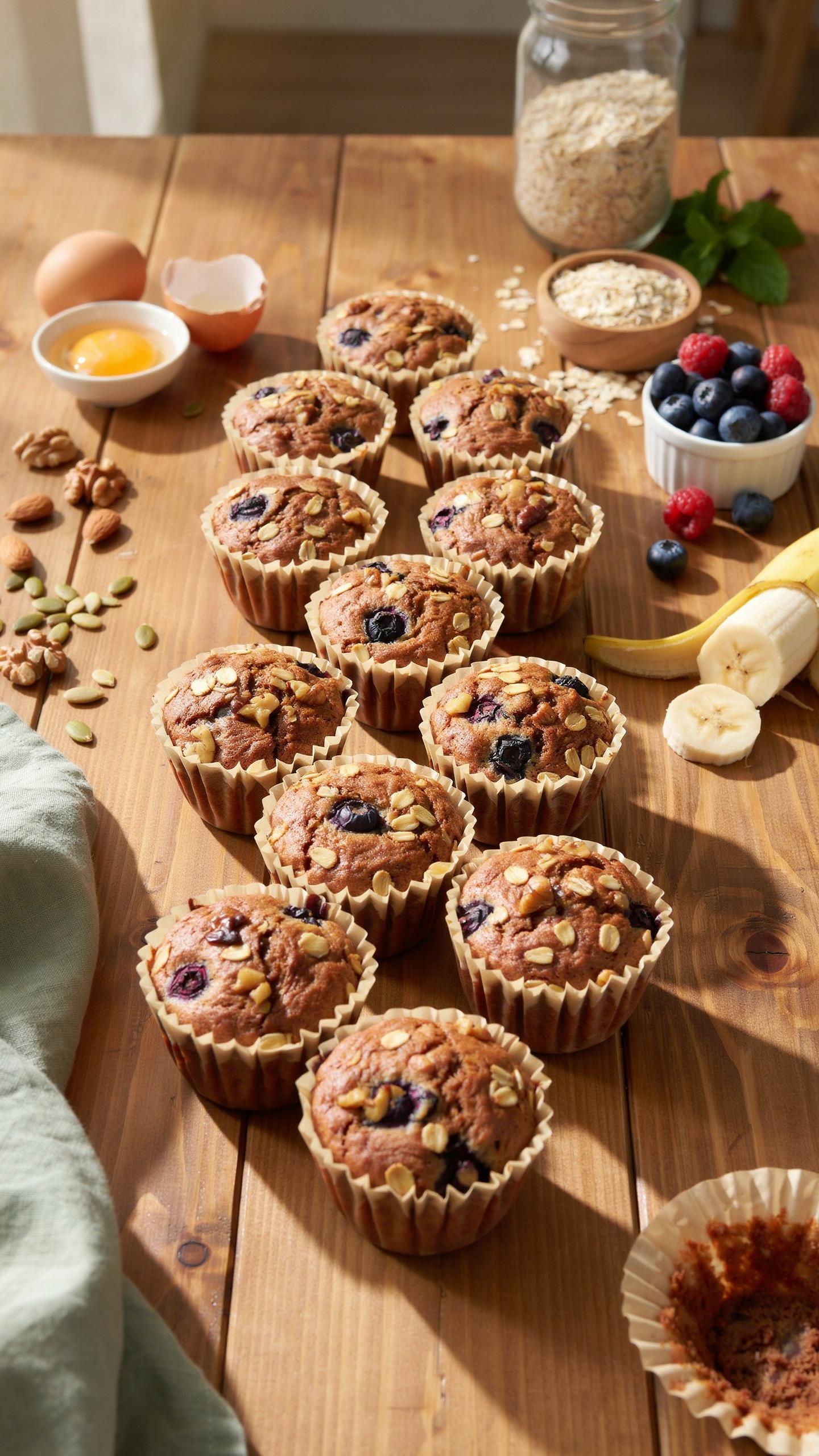
Whole Food Protein Sources Beyond Protein Powder
You want the shortcut that doesn’t exist. You think protein powder is the only way to hit your macros without turning muffins into chalky hockey pucks. The mechanism is simple: whole food proteins carry cofactors that powder strips away, meaning they digest slower and keep you full longer. Eggs, Greek yogurt, and cottage cheese aren’t just protein vehicles. They’re structural ingredients that actually improve crumb texture while delivering complete amino acid profiles your body recognizes immediately.
Greek yogurt adds moisture and tang without requiring extra liquid adjustment. One cup delivers 20 grams of protein while the fat content prevents the dense, dry crumb that kills most high-protein bakes. Cottage cheese works differently. Blend it smooth first, then use it as your wet base. It contributes casein protein, which breaks down slower than whey, extending satiety between meals. Eggs remain the gold standard. Two eggs give you six grams of protein plus lecithin, a natural emulsifier that binds your dry and wet ingredients without additives.
Fiber And Fat Integration For Satiety
Biology calls it “gastric emptying rate.” In muffin terms, it’s how long your body actually takes to process what you ate before hunger returns. Most high-protein muffin recipes fail here because they strip fat to cut calories, then wonder why people eat three muffins instead of one. Fat and fiber work together. They’re not enemies of protein timing. They’re the mechanism that makes protein work.
Almond flour and coconut flour both deliver fiber and fat simultaneously. Use almond flour as 20-30 percent of your dry mix. It adds 3 grams of fiber per quarter cup while keeping the muffin moist from its natural oil content. Coconut flour is denser, so limit it to 10-15 percent or your batter becomes too thick. Ground flaxseed or chia seed adds both omega-3 fats and soluble fiber. Two tablespoons contribute 5 grams of fiber and slow digestion enough that your blood sugar stays stable for hours. Add your fats deliberately. A tablespoon of coconut oil or butter per six muffins is your baseline, adjustable upward if your crumb feels dry during the first test batch.
The Bioavailability Blueprint Maximizing Protein Uptake
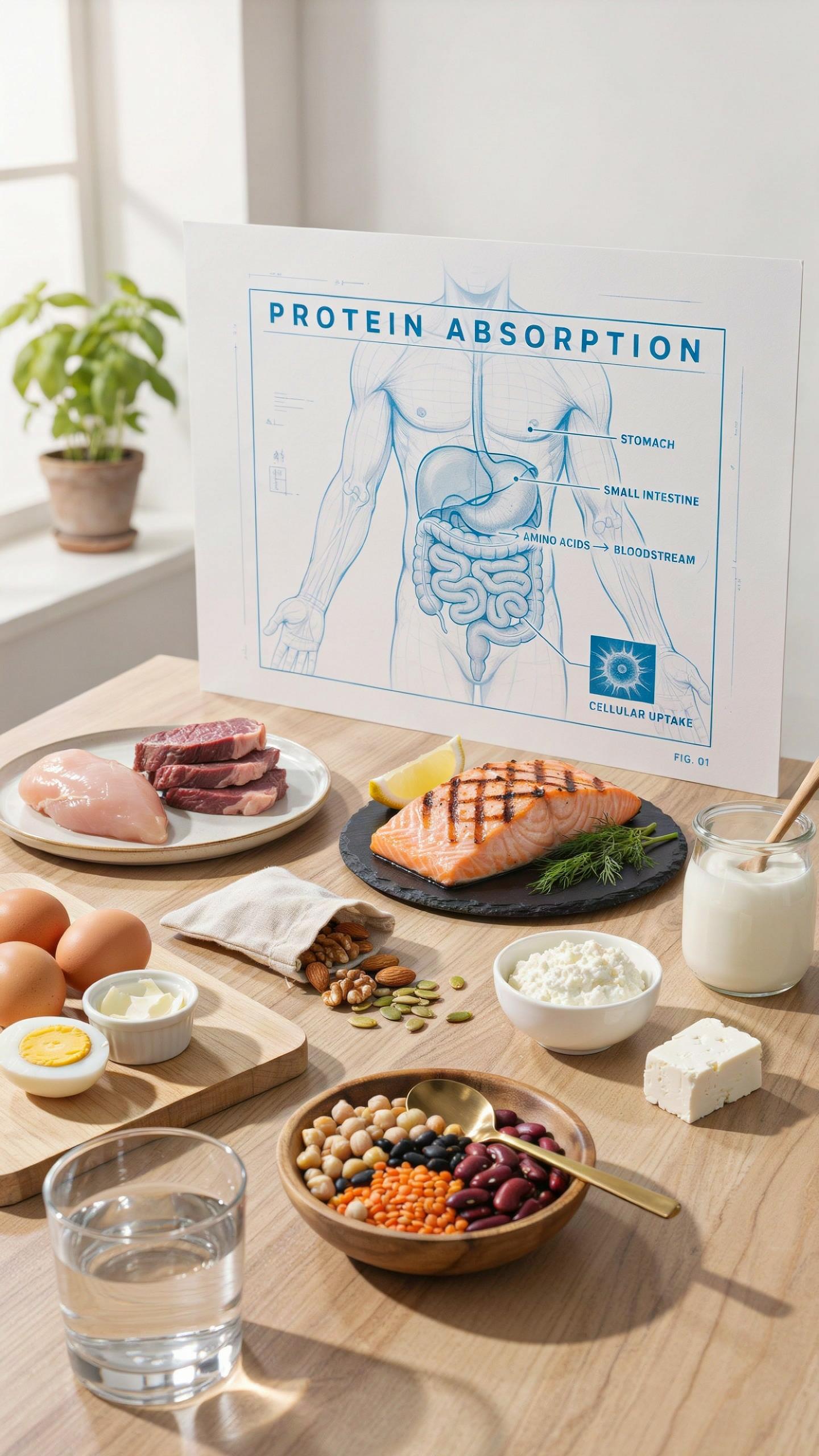
Enzyme Activation For Protein Breakdown
You want the protein number on the label to match what your body actually uses. It won’t, unless you understand how digestion actually works. Borrowing from biochemistry, think of protease enzymes as the rate-limiting substrate in a reaction: they’re the bottleneck determining how much protein your muffin actually delivers to muscle tissue. Your stomach acid and pancreatic enzymes need sufficient time and the right pH to break peptide bonds. Skip this, and you’re eating expensive carbs with protein that passes through undigested.
Muffin density matters more than protein powder choice here. Dense, moist muffins slow gastric emptying, which extends the window where proteases access the protein structure. Dry, crumbly muffins move through too fast. The mechanism is straightforward: add moisture through Greek yogurt, applesauce, or oil to increase contact time between enzymes and protein, not to make the muffin taste better. Measure density by texture, not feel. A properly engineered muffin stays intact for at least four hours in your digestive tract.
Nutrient Timing Around Protein Intake
Protein absorption doesn’t happen in isolation, and pretending it does is why generic meal prep advice fails. Carbohydrates and fats actually influence how quickly and completely your body processes amino acids. High carbohydrate content spikes insulin, which accelerates amino acid uptake into muscle cells through GLUT4 transporters. This is tactical, not accidental.
Your high protein muffin needs 20 to 30 grams of carbs per serving to optimize this mechanism. Pair it with fat to slow digestion further, which prevents blood sugar spikes while maintaining sustained amino acid delivery. The protocol: keep carbs between 20 to 30 grams, fat between 8 to 12 grams, and protein at 15 to 25 grams per muffin. Eat the muffin within two hours post-workout for maximum muscle protein synthesis response, or as a standalone snack to prevent muscle breakdown during fasting periods.
Healthy Sweets Recipes Ditching The Dessert Trap
Sweeteners That Earn Their Place
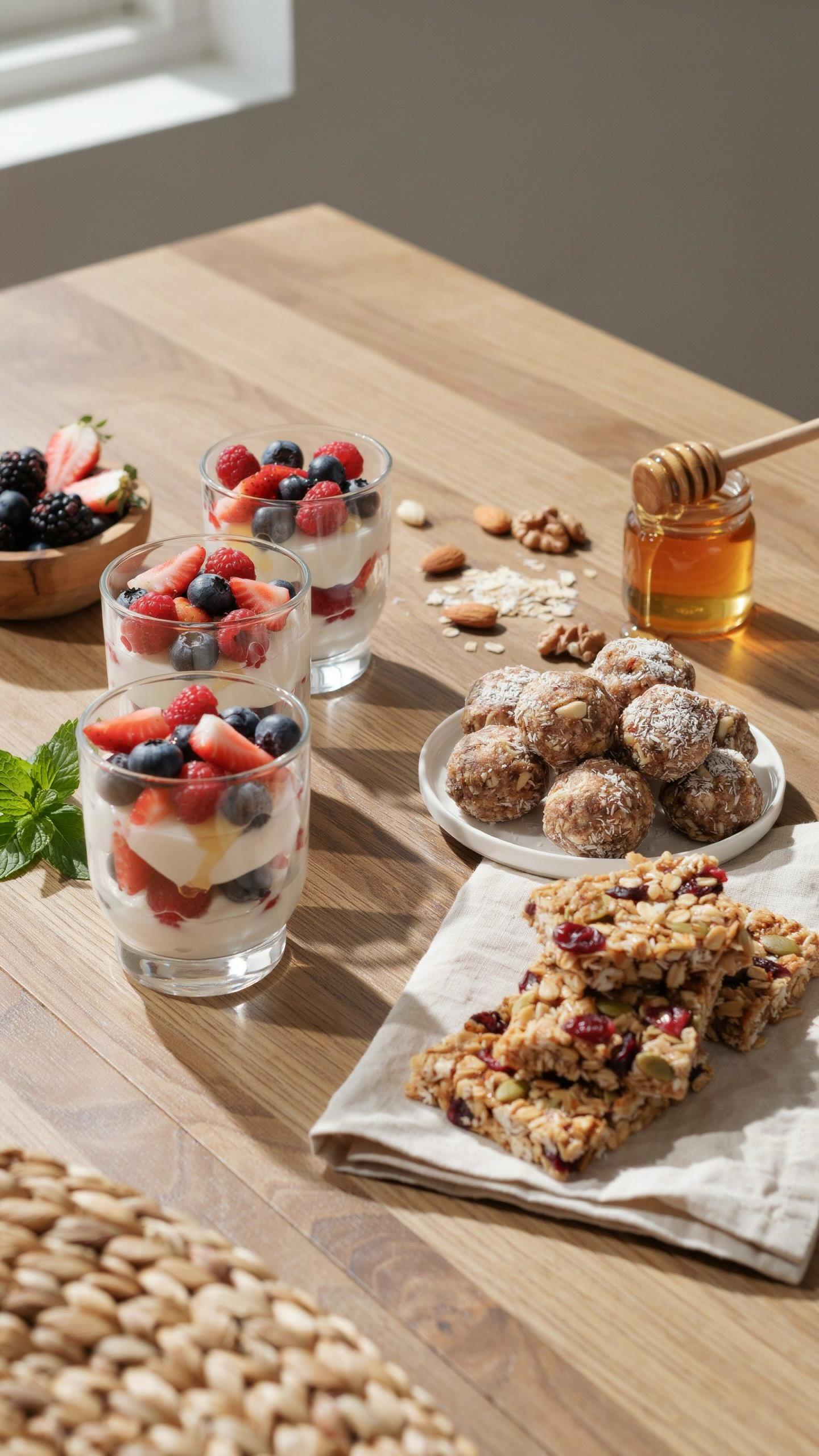
You want the moral permission to eat something sweet without the guilt. Here’s the real mechanism: your body doesn’t care about your narrative. It cares about the metabolic load. Sweeteners work like currency in a supply-and-demand system. Some spike blood glucose and insulin hard. Others don’t. The ones that don’t create the metabolic slack you need to stay in a calorie deficit while muffins taste like dessert instead of protein powder cardboard.
Stevia and monk fruit extract don’t trigger insulin spikes because your body can’t metabolize them into glucose. Erythritol and allulose are sugar alcohols your digestive system processes differently than sucrose, creating lower glycemic impact. None of this is marketing spin. It’s biochemistry. When you’re meal prepping protein muffins, these sweeteners let you hit macros without blood sugar volatility that sabotages appetite control later. Use them as your baseline. Skip the “natural” honey narrative. It’s still fructose.
Taste Design Without The Rebound
The common advice fails here. “Use vanilla extract and cinnamon” is lazy. You’ll get bored by day three and blow through the entire batch. Real flavor satisfaction works through contrast and complexity, not monotone sweetness. Espresso powder deepens chocolate notes without adding sweetness. Citrus zest creates brightness that makes your brain register the muffin as distinct. Almond extract adds depth that reads as richer than it tastes. These components activate different taste receptors, which creates the perception of satisfaction faster than dumping more sweetener ever will.
You hit actual satiation when flavor variety engages your palate instead of just your reward pathway. Build muffins with two or three complementary flavor layers rather than one dominant note. Cocoa plus sea salt. Banana plus cardamom. Berry plus lemon zest. When your brain detects complexity, you eat less volume and feel satisfied longer. Prep five muffins with one flavor, then five with another. This stops the sensory adaptation that makes cravings return by Thursday.
The Prep Ahead Protocol Strategic Meal Management

Batch Baking Efficiency For Healthy Muffin Recipes Protein
You want to feel productive without actually changing your behavior. That’s why batch baking appeals to you. But the real mechanism is constraint stacking: you eliminate decision friction by front loading work, which is borrowed from manufacturing’s principle of setup cost reduction. One setup cost pays for twelve muffins instead of one.
The math is brutal and simple. Mixing one batch takes fifteen minutes. Mixing twelve individual batches takes three hours of repeated setup, ingredient retrieval, and cleanup. You halve your per unit time investment by batching. Most people acknowledge this but still bake two at a time because the friction of planning feels harder than the friction of repetition.
- Oven space utilization: Stack muffin tins on two racks simultaneously to bake twelve to twenty four muffins per cycle. Most home ovens fit two standard twelve cup tins without heat circulation issues. Rotate racks halfway through baking for even browning.
- Ingredient pre portioning: Measure dry ingredients into labeled containers the night before. Mix wet ingredients in a separate batch bowl. This eliminates mid bake scrambling and keeps your workspace organized during the actual mixing phase.
- Cooling station setup: Arrange wire racks in advance before baking starts. Muffins cool faster on racks than in tins because air circulates underneath. Faster cooling prevents condensation that traps moisture and degrades texture during storage.
- Timing block scheduling: Designate a single two hour window weekly for all muffin production. Your body adapts to the rhythm. Repetition kills decision making and turns the process into automatic execution.
- Double batch ratios: Write recipes in double or triple quantities before you start. Scaling ingredients on the fly introduces arithmetic errors. Pre written ratios eliminate math mistakes that ruin texture or macros.
The output precision depends entirely on removing variables during execution. You don’t batch bake to save time on Tuesday. You batch bake to own Wednesday through Friday without thinking about it.
Storage Solutions For Freshness And Convenience
Muffins are fundamentally a moisture management problem. Everyone says to use airtight containers. That’s incomplete. Airtight works against you if moisture is already trapped inside the muffin as it cools. Warm muffins release steam. Sealing that steam inside creates condensation on the container lid, which drips back onto the muffin and makes it soggy within hours.
Cool muffins completely on open racks first. This takes thirty to forty minutes. Only then do they enter airtight storage. Room temperature muffins last four to five days in sealed containers. Refrigeration extends this to seven to ten days but accelerates starch crystallization, which makes texture grainy. Frozen muffins stay viable for up to three months in freezer bags if you remove excess air before sealing.
Beyond The Snack Protein Muffins Breakfast Reinvention
Fuel First, Then Strategy
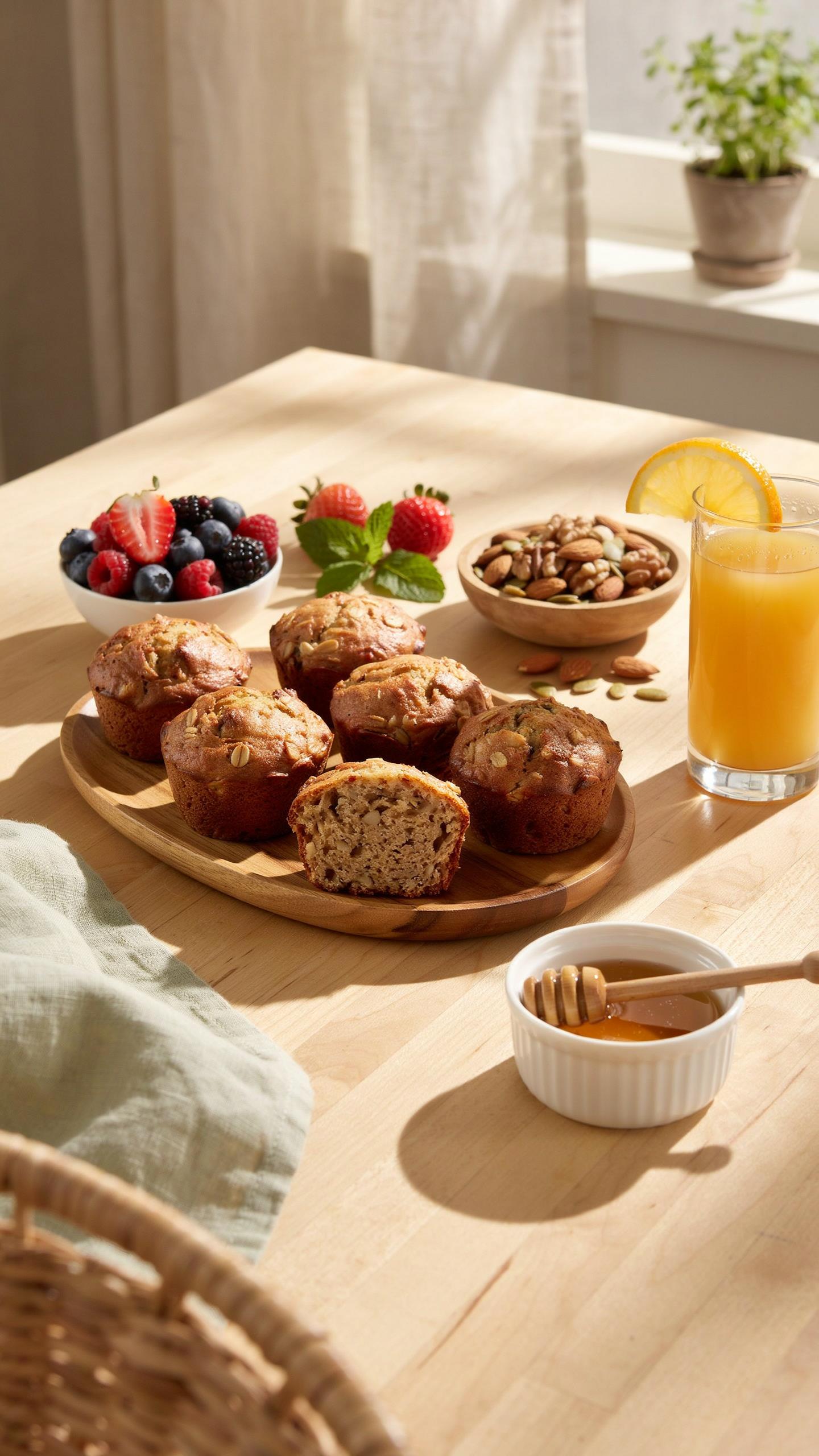
You want breakfast to feel effortless so you can stop thinking about food and start thinking about what matters. The mechanism is simple: most people treat breakfast as an isolated event instead of the first domino in a metabolic chain. A protein muffin isn’t just a snack that happens to have protein. It’s a blood sugar stabilizer that determines whether you’re sharp or foggy for the next four hours.
The difference between a protein muffin breakfast and a carb-heavy one is measurable in sustained energy, not motivation. You eat the muffin, your insulin doesn’t spike, your cortisol doesn’t crash, and you don’t hit 11 AM starving. Pair your muffin with fat or another protein source at breakfast. An egg, Greek yogurt, or a handful of nuts takes your 20-gram muffin from a snack to a legitimate meal. That combination is what prevents the 10 AM energy collapse that sends people to the vending machine.
Eating The Same Thing Daily Breaks Your Brain
Boredom isn’t just psychological. It’s a signal that your nervous system craves novel stimuli, and ignoring it tanks adherence faster than willpower ever could. This is pattern recognition from neuroscience: your brain gets less dopamine from repetition, so you unconsciously abandon the routine. Make four to six muffin recipes and rotate them weekly. Chocolate chip one week, blueberry the next, savory herb the following. Same macro targets. Different sensory input.
The rotation solves two problems at once. You stick with the routine because it doesn’t feel like punishment, and you avoid nutrient gaps that come from eating one food source for months. Most people batch one recipe and burn out by week three. They blame discipline. The actual problem is they bored their own brain into rebellion. Prep two different recipes every Sunday, alternate them daily, and you’ve outsourced motivation to the muffin itself.
The Anti Recipe Crafting Your Own High Protein Muffins

Building The Ratio Foundation
You want to feel smart by deviating from recipes. That’s not insight, that’s ego. Here’s what matters: protein muffins operate like a chemical equation. Protein powder absorbs moisture differently than flour, so you can’t just swap one for the other without collapsing the structure. The base ratio is roughly 1 part protein powder to 2 parts flour by weight. This compensates for protein’s hygroscopic nature, which pulls water from the batter and leaves you with dense, dry muffins if you ignore it.
Everything else chains off this foundation. Wet ingredients should be 10 to 15 percent heavier than dry ingredients by total weight. Fat content matters because protein powder lacks the binding properties of gluten. Add one tablespoon of coconut oil or butter per 40 grams of protein powder to prevent crumbling. The egg-to-flour ratio stays constant: roughly one egg per 50 grams of flour equivalent. Sweetener volume depends on your powder’s existing sweetness, so taste the raw batter before baking.
Failure Points Most People Miss
Everyone blames their oven when the real problem is ingredient temperature and timing. Cold eggs and room-temperature protein powder create uneven hydration in the batter. Pull your eggs out 20 minutes before mixing and let protein powder sit in the bowl uncovered to absorb ambient humidity. Overmixing the batter is the second killer. Protein powder activates gluten development faster than regular flour, so you get a tough, rubbery crumb if you stir past 30 seconds after combining wet and dry.
Underproofing is the third silent fail. Muffins need 55 to 65 degrees Fahrenheit ambient temperature to proof properly before baking. If your kitchen is cold, let batter sit 15 minutes in the tin before the oven, not after mixing. Don’t top them immediately either. Add toppings only in the last two minutes before baking, or they’ll sink into the batter and create dense pockets. Use the toothpick test: if it comes out completely clean, you’ve baked an extra 90 seconds and lost moisture.
Long Term Leverage Sustainable Healthy Protein Muffin Recipes
The Three Recipe Formula That Sticks
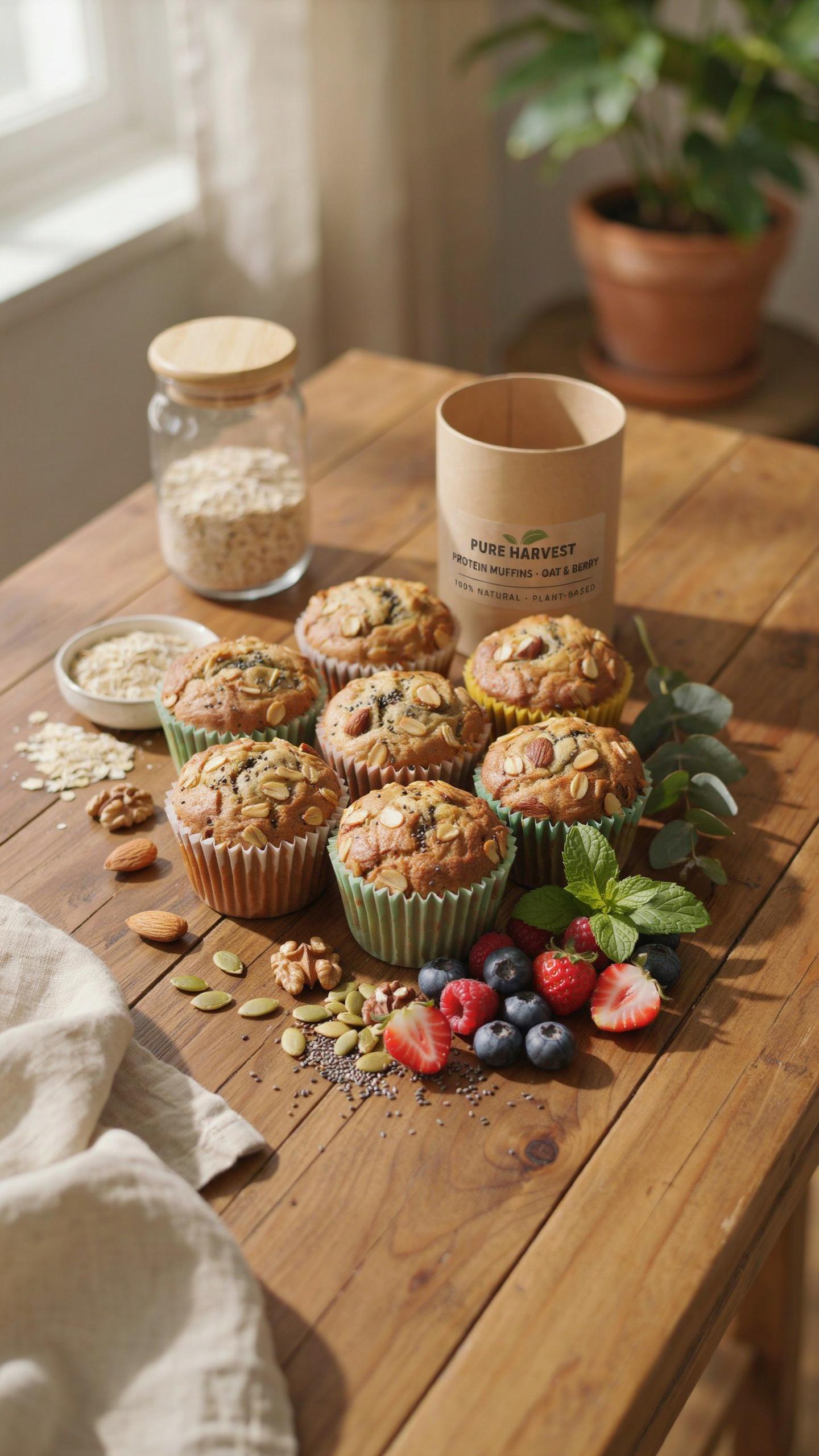
You want to feel like you’ve figured something out without actually having to think about it every week. The mechanism is simple: rotation beats perfection. Your brain doesn’t need infinite options. It needs three solid recipes you can execute without consulting notes, then cycle through them based on what’s available. This removes decision fatigue and makes meal prep automatic instead of aspirational.
Pick one recipe built around eggs and cottage cheese as your protein base. Pick one with protein powder as the anchor. Pick one with Greek yogurt. Master each one so thoroughly you can adjust ratios by feel. This isn’t about creativity. It’s about removing the friction between intention and execution. When friction disappears, consistency becomes inevitable.
Seasonal Swaps Without Recipe Rebuilding
Most advice says change your recipes seasonally, which is friction disguised as wisdom. What actually works is keeping your formula static while swapping one or two ingredients. Spring and summer offer fresh berries that reduce added sugar needs. Fall and winter push you toward dried fruit and spices that store longer. The protein base never changes. The mixing method never changes. Only the flavor profile shifts.
This approach uses inventory economics from supply chain management: you keep core inputs constant while adjusting peripheral inputs to match what’s cheapest and most available. When blueberries cost three times as much in January, swap to frozen or dried versions without touching your protein ratios or bake time. Your muffin structure stays identical while your seasonal ingredient cost drops by half.
Your real obstacle isnt knowledge its the default environment that primes you for suboptimal choices

You already know protein muffins beat gas station donuts. The problem is your kitchen doesn’t make the better choice frictionless. Bake a batch Sunday. Store them where you see them first. When hunger hits at 3pm, you grab what’s visible, not what requires willpower. Environment shapes behavior faster than discipline ever will. Stop fighting your surroundings and redesign them instead.