
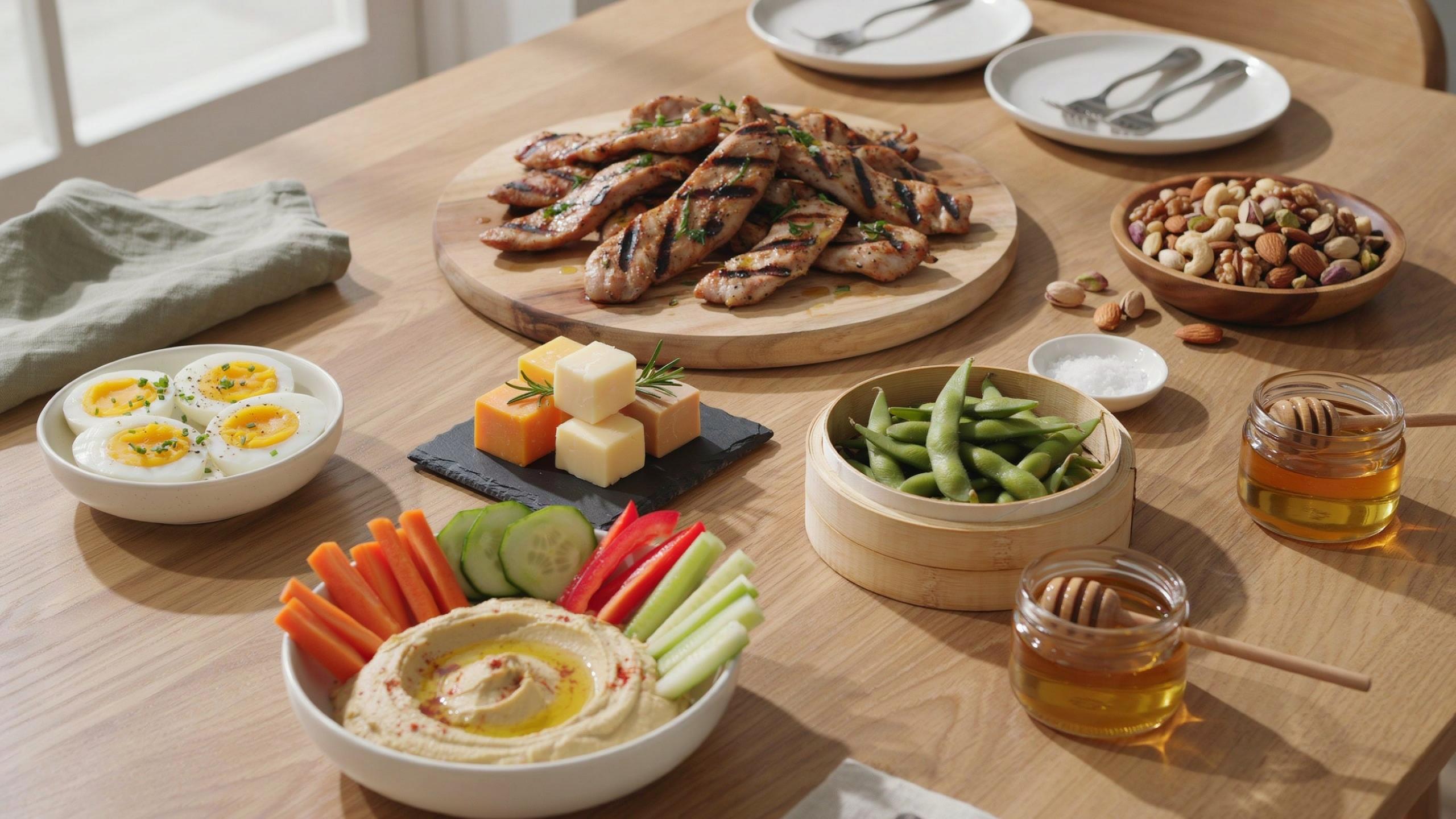
The Effortless Illusion Why Most Platters Fail
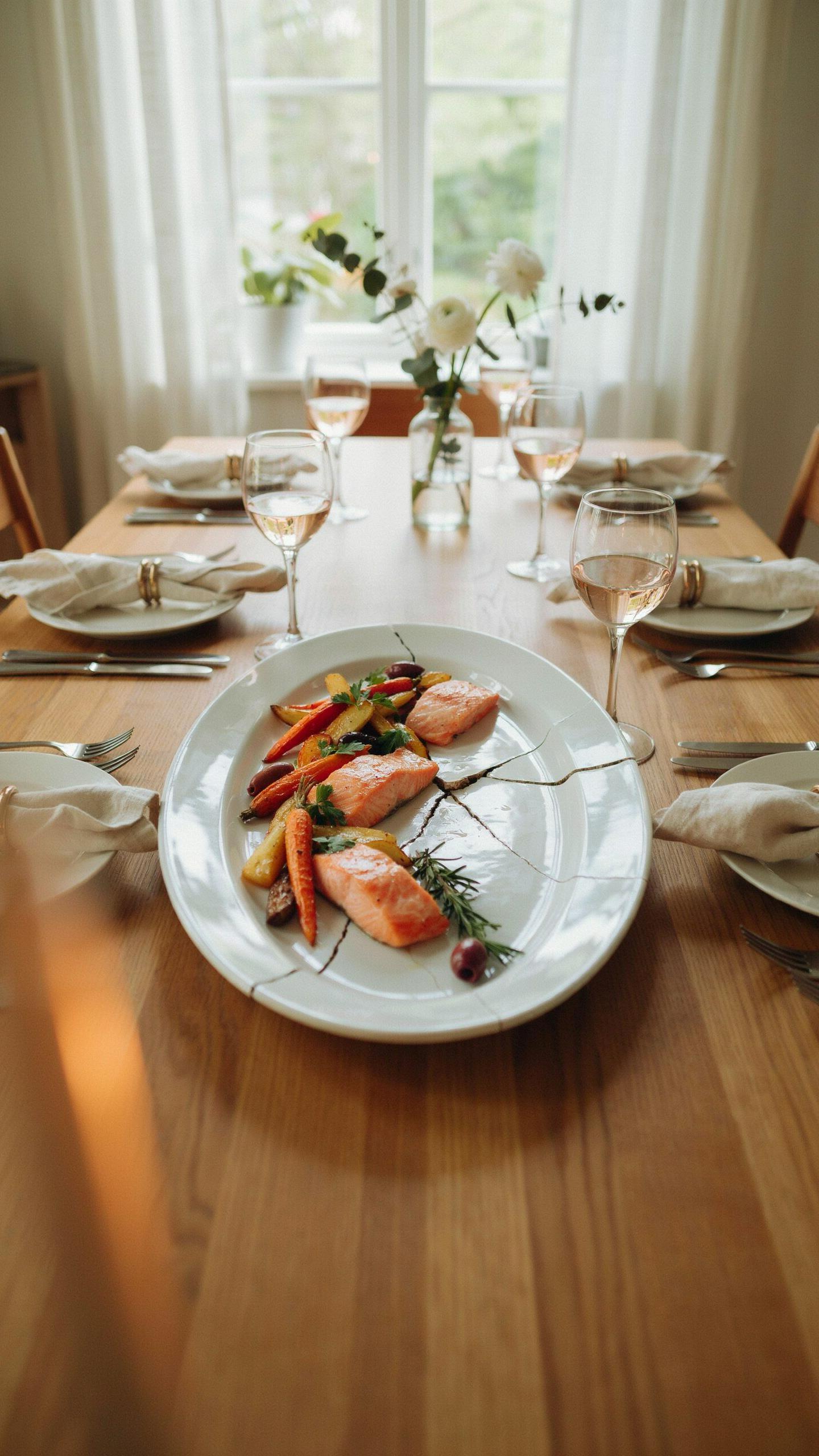
What Actually Kills Your Platter
You want guests to think you threw this together in 20 minutes. That’s the real thing driving your interest here—the appearance of ease masking competence. The mechanism killing most platters is ingredient sequencing: people prep components in the wrong order, which forces them to either refrigerate finished items (proteins dry out), leave them at room temperature (safety issue), or plate last-minute (defeats the meal prep purpose entirely).

Most advice tells you to just “prep ahead” and “arrange nicely.” That misses the point. Your platter fails because you’re treating it like a static display when it’s actually a thermal and temporal problem. Proteins shed moisture over time. Crackers absorb humidity. Spreads separate. You need a system that accounts for these physics, not one that pretends they don’t exist.
The Gap Between Looking Good And Tasting Right
Guest expectations split into two tracks that rarely sync: visual appeal and actual eating experience. A platter can photograph well and taste like it’s been sitting for three hours because most people plate everything at once, then wonder why the cheese sweats and the cured meat oxidizes. You optimize for one, you sabotage the other.

The solution is component staging, not simultaneous plating. Prep proteins and cheeses separately in sealed containers. Assemble the platter structure one hour before service. Add high-moisture items (fresh vegetables, certain proteins) 20 to 30 minutes before guests arrive. This keeps your labor front-loaded during meal prep but your quality preserved at service time. The platter stays functionally fresh because you built timing into the system from the start.
The Protein Imperative Fueling Beyond Flavor

Why Satiety And Mental Performance Actually Work
You want people to stay longer, eat less total, and think you’re a better host. That’s the real reason protein matters here. From a biological standpoint, protein triggers satiety through the release of peptide YY and cholecystokinin, hormones that signal fullness to your brain faster than carbs or fat do. This means guests actually feel satisfied on smaller portions, which saves you money and prevents the awkward overeating spiral that kills conversation quality.
Protein also stabilizes blood glucose, which directly impacts cognitive function and mood. When your guests’ blood sugar spikes and crashes from carb-heavy snacks, their focus fractures and energy flatlines by hour two. Protein maintains steady glucose, keeping minds sharp and conversation engaged throughout the event. This isn’t psychology. It’s biochemistry. Your platter becomes the infrastructure for better guest experience because you’re literally keeping their brains operating at baseline performance.
The Real Cost Of Relying On Carbs Alone
Most advice says “just add protein to your platter” like it’s interchangeable with anything else. It’s not. A platter stacked with crackers, chips, and fruit triggers rapid insulin spikes followed by energy crashes. Guests then eat more to chase that energy back up, consuming 40 to 60 percent more total calories while feeling less satisfied. You’ve created a metabolic trap disguised as hospitality.
Protein sources require digestion work your body must perform. This thermic effect means protein burns calories during digestion itself, creating actual satiety, not just temporary fullness. When you build your platter around hard cheeses, cured meats, nuts, and Greek yogurt as anchors instead of fillers, guests self-regulate their intake naturally. They eat what they need, not what the carb-driven hedonic feedback loop pushes them toward. The protocol: Make protein 50 to 60 percent of your platter’s caloric density by volume.
The Alpha Hosts Strategy Pre Emptive Platter Strikes

Reading The Room Before It Fills
You want people to think you’re effortless. That’s the real motive here, and it’s why most hosts fail at platter timing. Military strategists call this reconnaissance: you gather intelligence before engagement. With platters, reconnaissance means understanding guest arrival patterns and hunger states before a single person walks through your door.
Most advice tells you to “set out food when guests arrive.” That’s lazy. The mechanism is this: guests who arrive hungry make poor food choices and eat frantically. Guests who find food already deployed make deliberate choices and eat at a social pace. You control which version of your guests shows up by controlling when protein hits the table.
Spacing And Velocity Control
Deploy your platter 15 minutes before the first expected guest, not when the first guest arrives. This creates a buffer where early arrivals graze slowly while waiting for others, establishing a calm eating rhythm before the room fills. The platter should sit at waist height on a side table, not on the main dining surface. Position creates behavior: side tables invite grazing. Center tables invite competition.
Protein density matters tactically here. A platter with 40 grams of protein per serving holds guests longer than carbohydrate-forward options. Hard cheeses, cured meats, nuts, and Greek yogurt dips don’t trigger the same blood sugar spike-and-crash that sends people searching for more food every 20 minutes. Strategic protein deployment extends your platter’s effective window from 45 minutes to over two hours.
The Minimum Viable Delicious Protocol For Protein Snacks
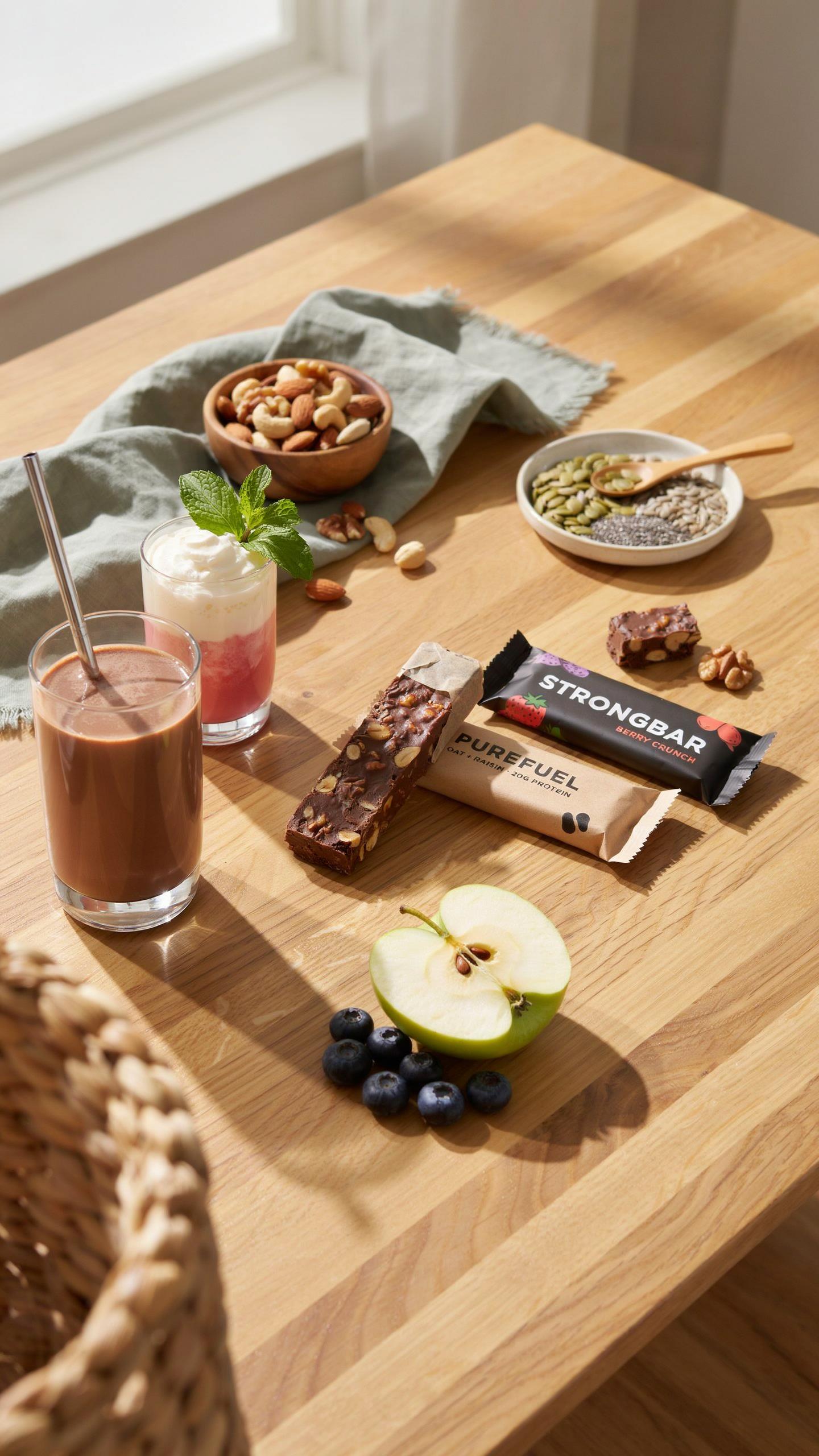
Stack Protein First, Everything Else Second
You want your guests to think you’re effortless. That’s the real reason you care about this section. The mechanism is simple: protein dominates satiety and taste perception, so it becomes your anchor. Build around it instead of treating it as a side player. This inverts how most people approach snack boards, which start with aesthetics and backfill protein like an afterthought.
Aim for 10 to 15 grams of protein per serving across your platter. Hard cheeses, cured meats, Greek yogurt, and nuts hit this target without requiring cooking or temperature control. The math is mechanical: protein triggers fullness faster than carbs or fat alone, which means your guests eat less total volume while feeling satisfied. That’s the entire efficiency gain.
Contrast Creates Compliance
Taste synergy is borrowed from cooking chemistry, but the principle maps directly to snack boards: flavor contrast prevents palate fatigue and extends eating time without boredom. Pair salty with sweet, soft with hard, savory with bright. This isn’t decoration. Contrast keeps people reaching back to the board instead of abandoning it after three bites.
Combine aged cheddar with dried apricots, prosciutto with honeycomb, almonds with sea salt and dark chocolate. The textural and flavor shifts fire different taste receptors, which resets your palate between bites. Stock your platter so no two adjacent items taste identical. When protein and supporting ingredients work together chemically, guests consume more protein naturally because they’re chasing flavor combinations, not fighting monotony.
Deciphering Healthy Plate Portions For Impact

The Hand Rule For Protein Density
You want your guests to think you’re disciplined without feeling like you’re policing their intake. That’s the real reason this section matters. The mechanism is visual anchoring. Your hand becomes the portion standard because it travels with you and stays consistent across every platter you build.
A palm-sized serving of protein runs roughly 25 to 30 grams. That’s one chicken breast, a fist of Greek yogurt, or about 4 ounces of cheese cubed. Stack this visual across your platter so guests see the pattern. They’ll self-regulate without instructions because the eye trusts what it sees repeated.
Spacing Kills The Overconsumption Trap
Most people space platters too tight, cramming items together so guests graze without tracking what they’re actually eating. That’s the oversight nobody names. Borrowed from portion control research in food psychology, you’re applying negative space as friction. Distance between components forces conscious selection instead of mindless accumulation.
Leave inch gaps between protein clusters, vegetables, and spreads. This breaks the visual field into discrete zones. Guests slow down, evaluate choices, and stop piling without feeling restricted. Prep your platter on a surface that’s 40 percent empty space, not 20. That one variable changes guest behavior without a single word spoken.
The Set And Forget Meal Prep Method For High Protein Snack Board
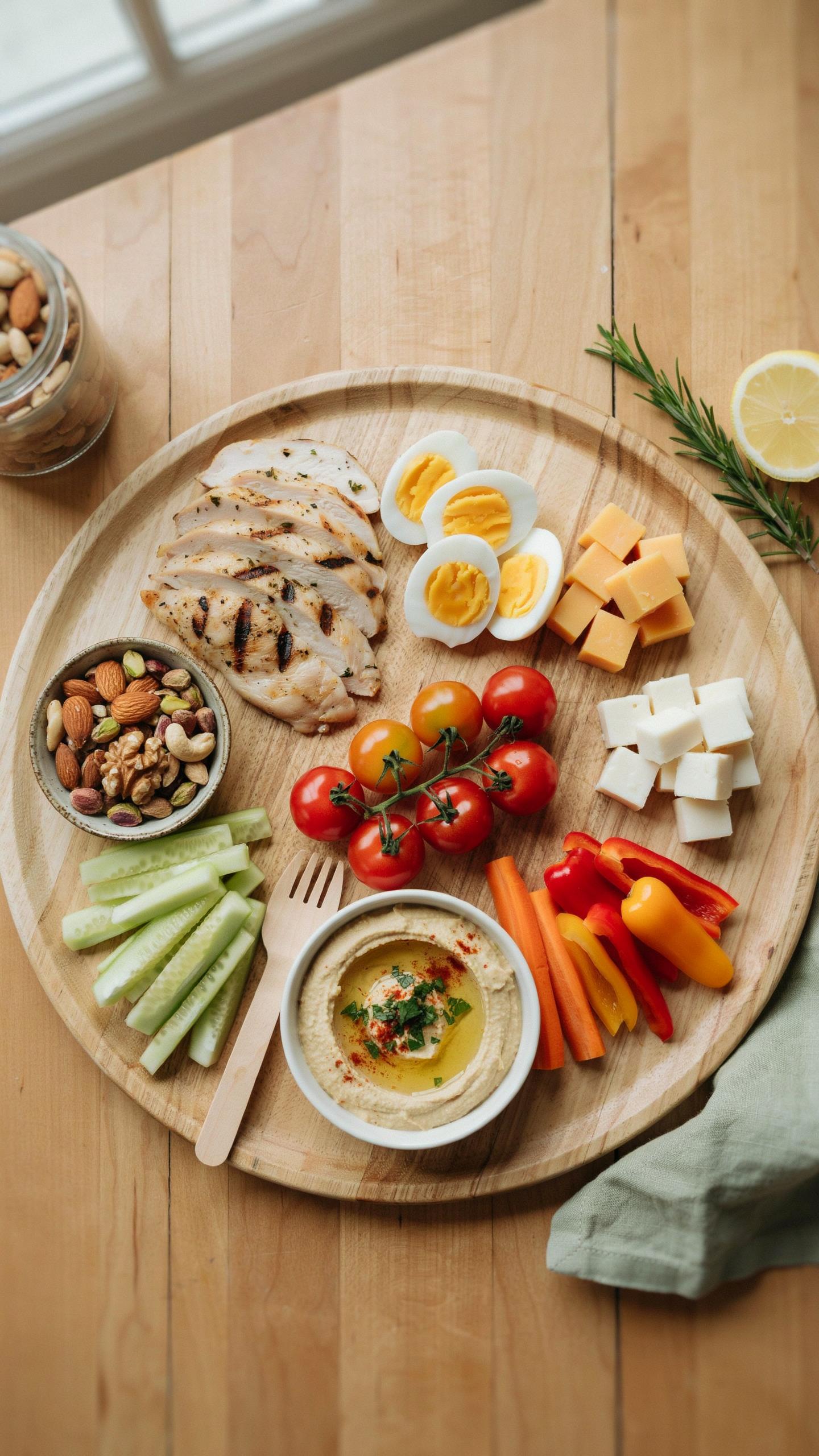
Batch Preparation For Consistent Quality
You want this to look effortless when guests arrive, which means you’re actually afraid of the execution failing in front of them. Here’s the mechanism: batching identical components removes decision fatigue and creates reproducible output. Cook all protein at once. Chop all vegetables at once. Assemble all boards at once. This isn’t efficiency theater—it’s manufacturing consistency through constraint.
The real error most people make is prepping components across multiple days, which introduces variables like oxidation, texture drift, and forgotten steps. Dedicate a single three-hour block. Hard boil a dozen eggs. Grill three pounds of chicken breast. Cube all cheese. Slice all cured meats. The repetition locks in your timing and prevents half-finished boards. Quality doesn’t emerge from spreading work thin across a week.
Proper Storage Keeps Components From Degrading
Biology teaches us that decomposition accelerates with temperature and oxygen exposure. Apply that directly: your high protein snack platter’s shelf life depends entirely on controlling both. Room temperature protein degrades visibly within four hours. Refrigerated components stay functional for three to five days depending on type, but only when sealed properly.
Store proteins in airtight containers on the lowest shelf where temperature stays coldest. Vegetables go in separate sealed containers to prevent moisture transfer. Pre-assembled boards fail because cut surfaces oxidize and soften. Assemble two to four hours before guests arrive, not the night before. This timing gap is the difference between crisp vegetables and limp presentation. Build each board from cold components in under ten minutes using components stored at forty degrees Fahrenheit or below.
Curating Protein Platter Ideas Beyond The Basic
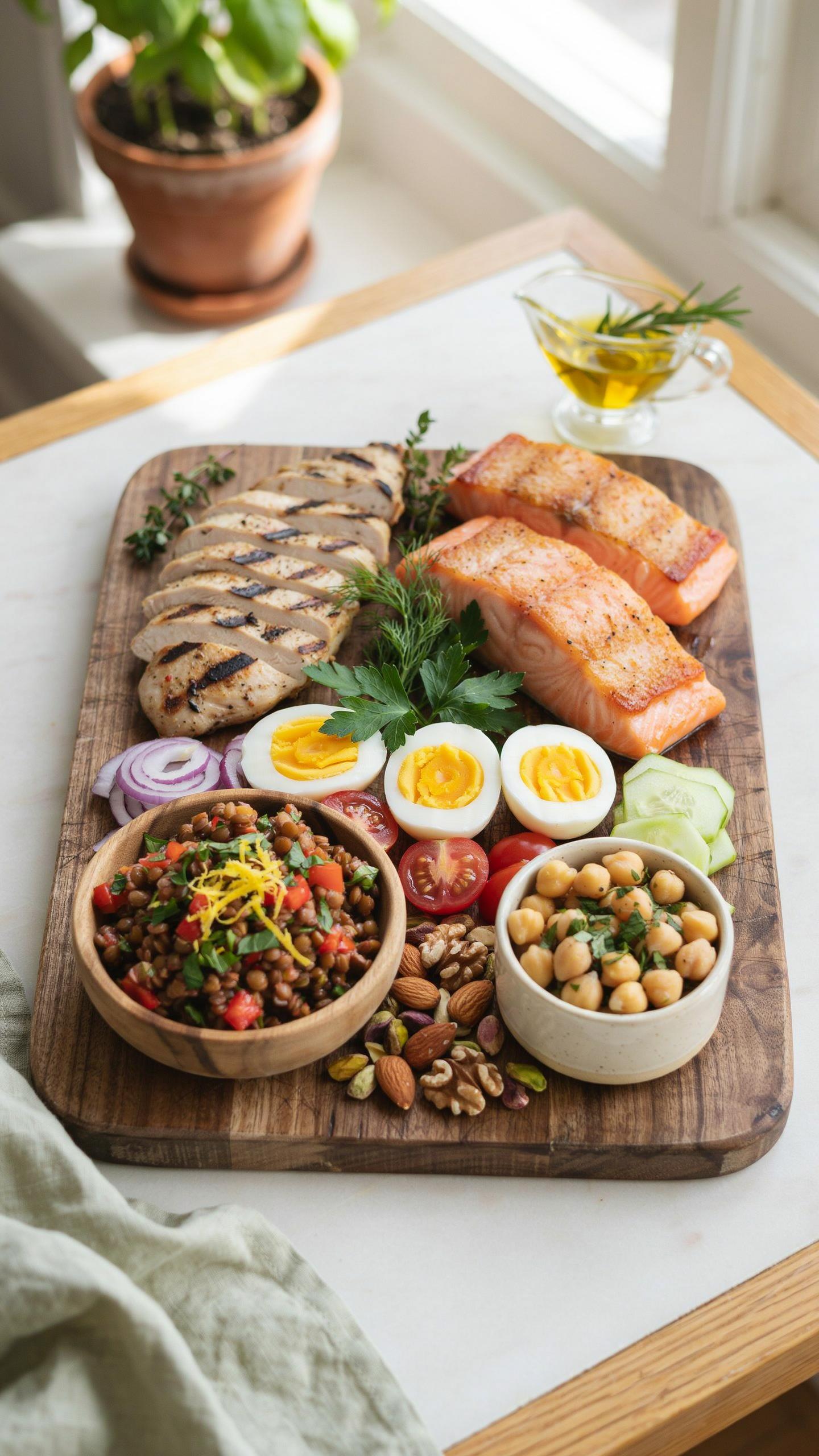
Proteins Nobody Else Is Using
You want your platter to signal that you know something your guests don’t. That’s the real reason you’re reading this section. The mechanism is scarcity signaling: when people encounter a protein source they’ve never seen on a platter before, their brain registers exclusivity before it registers taste. Smoked trout, beef bresaola, and duck prosciutto aren’t exotic. They’re just overlooked because most people default to chicken and cheese.
Canned fish works here because it solves a prep problem while staying uncommon. Tinned mackerel, sardines, and anchovies deliver eight to ten grams of protein per two-ounce serving, require zero cooking, and taste intentional rather than lazy when arranged properly. Beef jerky made from quality cuts beats commodity versions. Roasted chickpeas seasoned aggressively become a textural protein vehicle that satisfies the crunch instinct without relying on nuts everyone already stocks.
Visual Contrast Drives Consumption
Color and texture aren’t decoration. They’re neurological triggers that determine how much your guests actually eat from the platter. This is sensory marketing applied to food design: your eye processes visual variety as abundance, which increases consumption speed and satisfaction. A monochrome platter signals scarcity. A contrasted one signals abundance even at identical portion sizes.
Layer white cheeses against deep red cured meats. Place pale smoked fish next to charred roasted chickpeas. Add green herbs, purple grapes, and raw vegetables cut into deliberate shapes rather than thrown on randomly. The textural mix matters equally: creamy elements, crispy elements, chewy elements, and dense elements should all occupy space on the same platter. Arrange by color families rather than protein type, which forces visual scanning and keeps people engaged longer at the table.
The Scarcity Principle Of Healthy Snack Boards
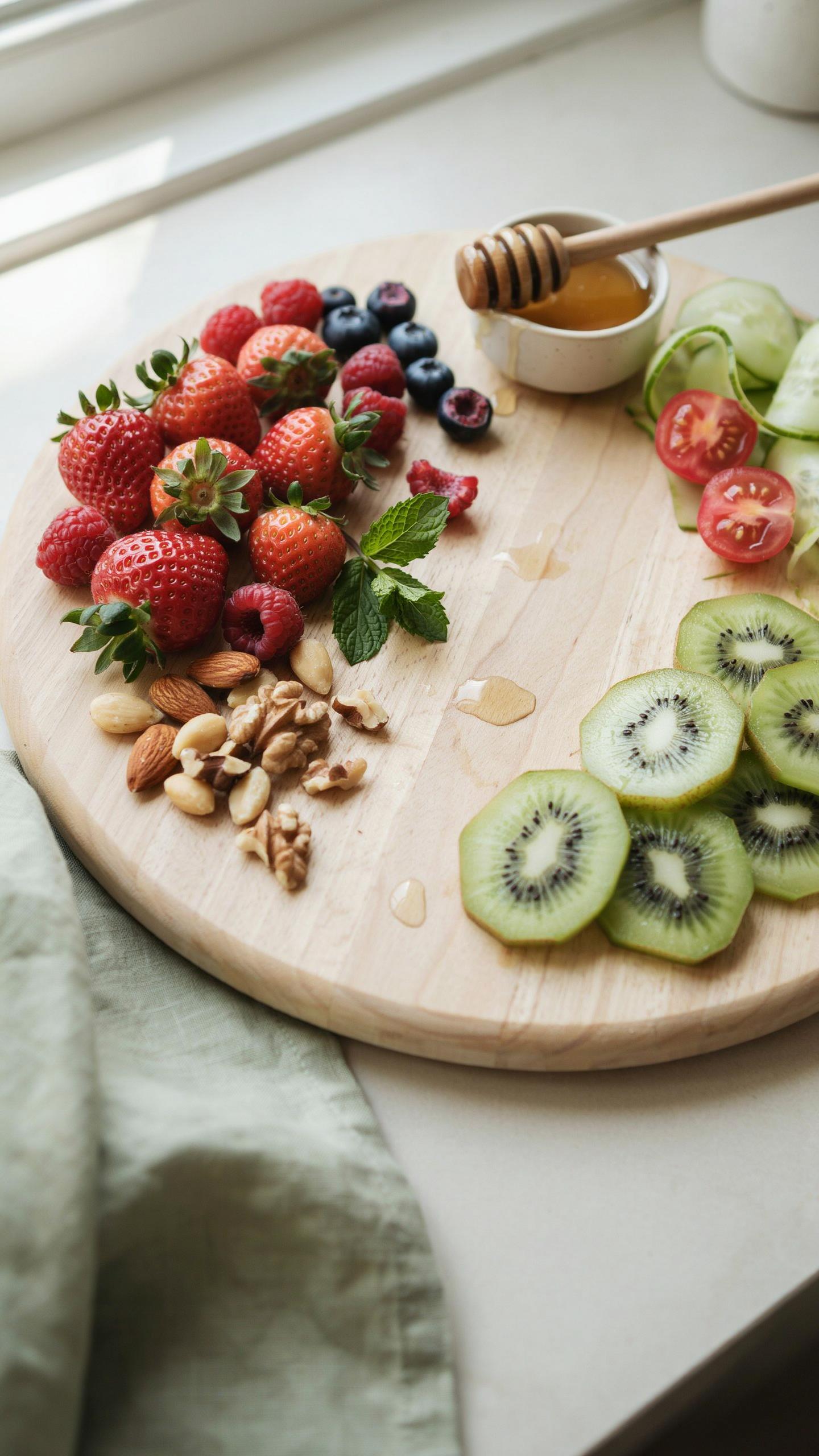
When Limited Supply Creates Demand
You want people to think your snack board is exclusive, worth their attention, worth their hunger. That’s the real driver here. Behavioral economics calls this the scarcity principle: demand rises when supply appears constrained. On a protein board, this translates directly. If you prep 40 items spread across 18 square feet, guests graze passively. If you prep 12 premium items concentrated in one tight arrangement, they compete for access.
The mechanism is simple. Visible abundance reads as “free for everyone, take what you want.” Visible constraint reads as “this is curated, this matters.” You’re not actually withholding food. You’re controlling the visual signal that tells the brain whether something deserves priority. Smaller boards with higher protein density per inch force guests to make real choices. Real choices create perceived value. Perceived value drives consumption patterns and memory formation about your event.
Density Creates The Illusion Of Rarity
The presentation principle borrowed from luxury retail states this clearly: perceived scarcity requires strategic spacing and visual clarity. Each item must be distinct and countable, not buried. A high protein snack board achieves this through density without crowding. Hard cheeses cut into precise portions, pepperoni arranged in overlapping fans, almonds clustered in one corner, beef jerky stacked vertically. Every element occupies a defined zone with clear boundaries.
This isn’t about cramming more food onto the board. It’s about making each item visually discrete and finite. When a guest can count the remaining beef sticks or see exactly how many cheese cubes remain, scarcity triggers. They register abundance as limited supply, not infinite refilling. The protein concentration stays high because protein items take up less visual space than carbs, which means you can create genuine density without waste. Prep to a specific board size. Fill it completely. Never top it up mid-event.
Optimizing Healthy Snack Plates For Adults
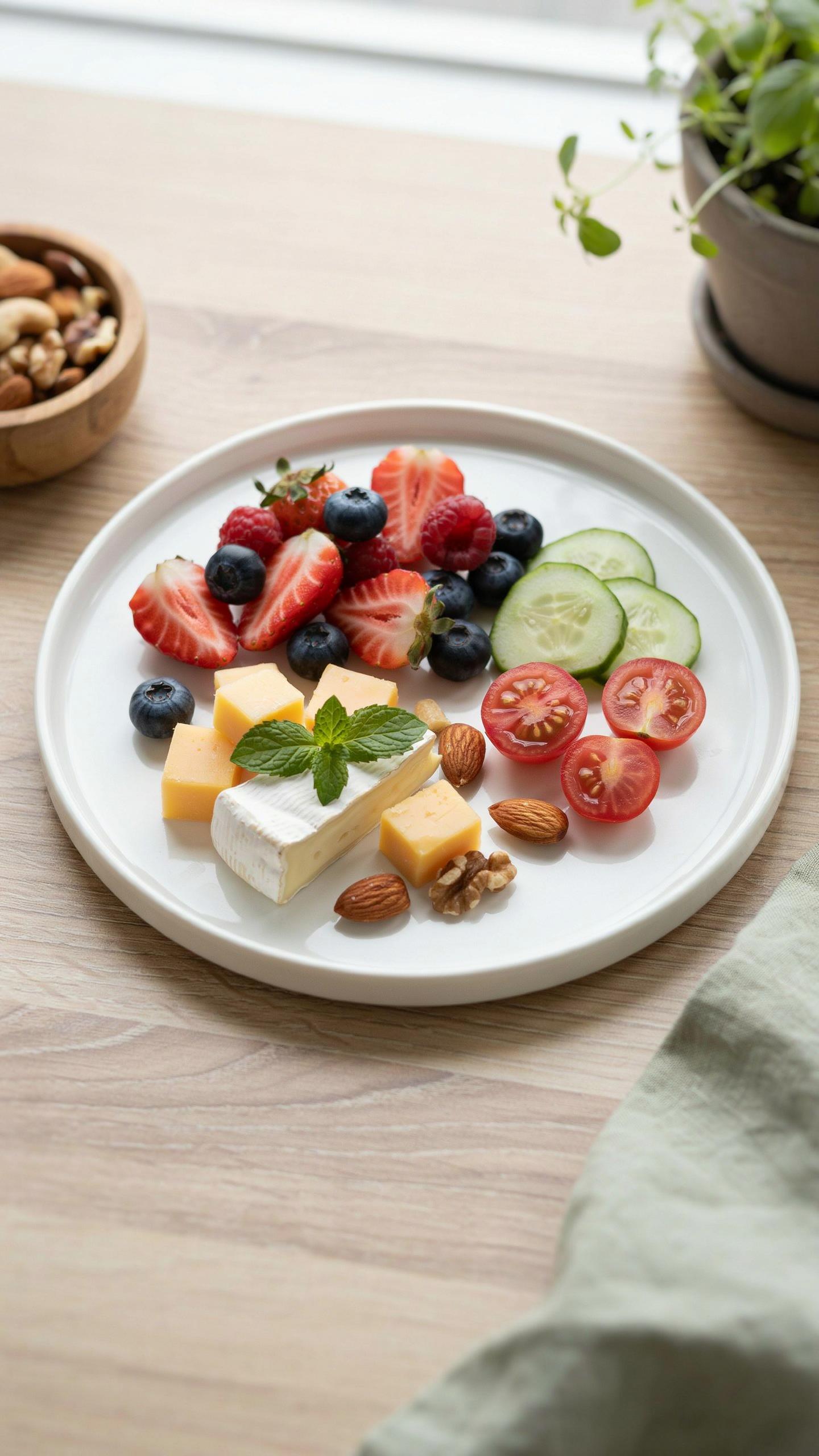
Meet People Where Their Protein Actually Is
You care about this because you want guests to eat what you made instead of picking around it. The mechanism is simple: people don’t optimize for protein intake. They optimize for what they already like. You’re not changing anyone’s taste. You’re offering protein-dense versions of foods they already reach for. This removes friction. Almonds instead of cashews. Greek yogurt instead of sour cream. Jerky instead of chips. Same social eating experience, different nutritional outcome.
- High protein dairy: Greek yogurt, cottage cheese, and hard cheeses deliver 15-30g protein per serving while fitting familiar snacking patterns people already accept.
- Nuts and seeds: Almonds, pumpkin seeds, and peanuts provide 6-10g protein per ounce and work for both solo snacking and platter texture variety.
- Cured meats and fish: Salami, prosciutto, and smoked salmon offer 7-15g protein per serving and double as visual anchors that draw eyes to the platter.
- Egg-based options: Hard boiled eggs and deviled eggs deliver complete amino acid profiles at 6-8g protein each and feel less corporate than protein bars.
- Legume-based items: Roasted chickpeas and edamame provide 7-12g protein per serving and appeal to guests avoiding animal products without requiring separate prep.
The real work isn’t customization. It’s reducing decision paralysis. When you offer five options instead of twenty, people eat more and complain less. Stack proteins in obvious categories. Your guests see the pattern immediately.
The Logistics Of Moving Food Without It Falling Apart
People think meal prep fails because of spoilage or taste. Wrong. It fails because distribution logistics break down before the platter reaches the table. Treat this like inventory management: everything needs a containment layer, a transport method, and a final assembly point. Separation prevents cross-contamination and soggy crackers. Temperature control prevents dairy from sweating and cured meats from drying out.
Use compartmentalized containers for transport. Cheeses go in sealed boxes. Nuts stay in bags until platter assembly. Proteins that release moisture sit on paper towels with airflow above them, not sealed. The actual serving platter gets assembled thirty minutes before guests arrive, not the night before. This timing prevents humidity from degrading texture and prevents warm items from warming cold items. Stack components vertically where possible, not horizontally stacked. Your hand motion during setup becomes your system: each item has one designated spot, placed in the same order every time.
Leveraging Leftovers The Unseen Advantage Of Healthy Snack Plate
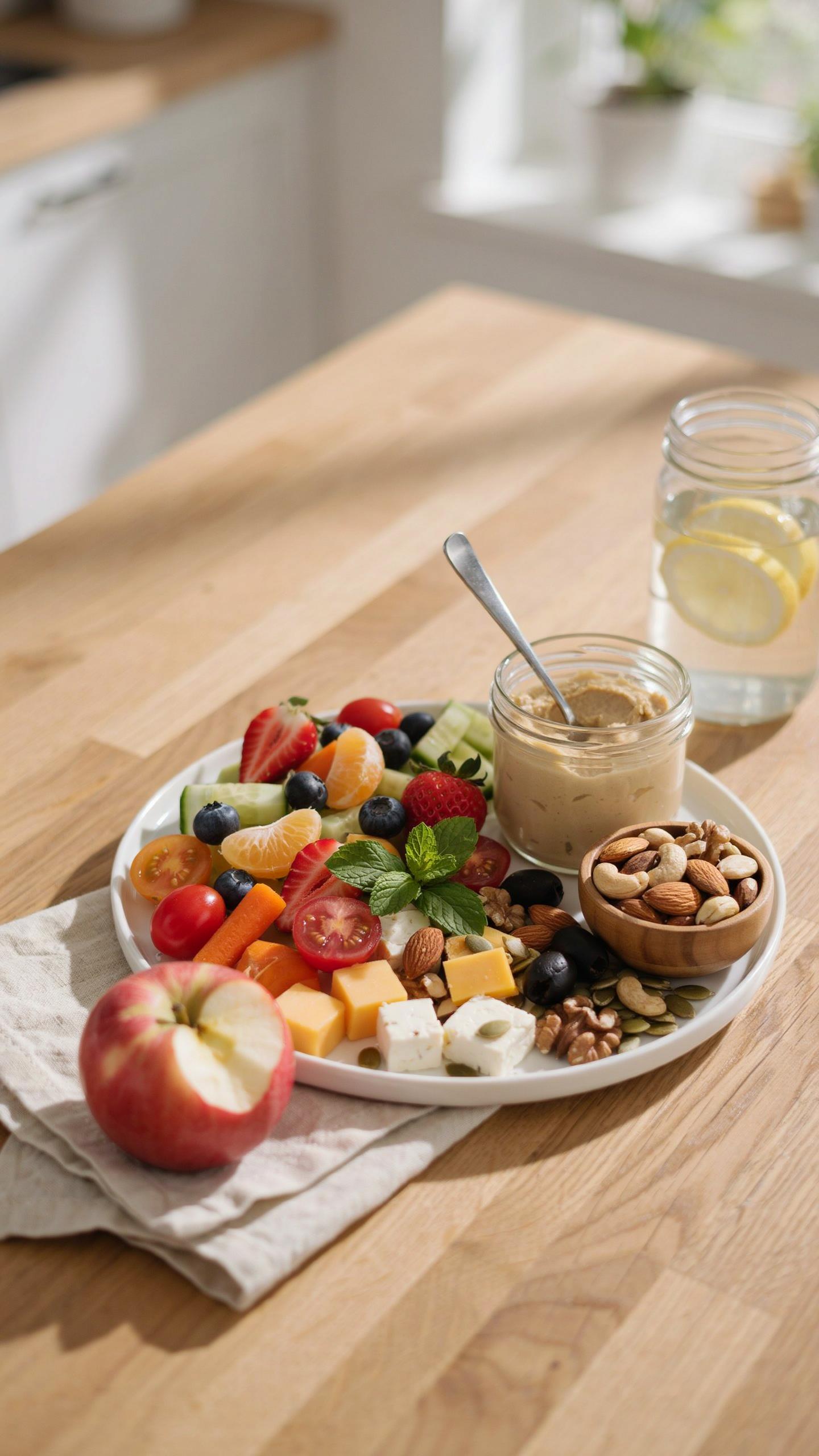
Repurposing Components For Personal Gain
You want this section because you hate throwing food away and it makes you feel resourceful. The real mechanism is this: protein snack platters create inventory. Unused components become raw material for your next meal rather than waste. Economics calls this “input substitution”—swapping expensive finished goods for salvaged components. Your leftover hard-boiled eggs, cheese cubes, and nuts don’t disappear. They become tomorrow’s lunch foundation or quick breakfast protein.
Most people discard platter remnants because they don’t track what’s left. Build a simple protocol instead: photograph the platter before serving, note what remains, then assign those components to a specific meal within 24 hours. Hard-boiled eggs go into egg salad. Leftover nuts layer into Greek yogurt. Cubed cheese becomes an omelet filling. The platter isn’t an event that ends. It’s a prep session that generates leverage.
Minimizing Waste By Maximizing Resourcefulness
The common advice here is generic: “save your leftovers.” That’s incomplete. The real play is buying components that survive repurposing across multiple formats without flavor degradation. Not all proteins behave the same way. Rotisserie chicken dries out. Hard-boiled eggs stay stable for five days. Beef jerky holds indefinitely. Cured meats and nuts never degrade. Choose components with extended utility windows.
Track your actual waste for one week during platter service. Measure what guests actually consumed versus what you prepared. Most people overestimate consumption by 30 to 40 percent. Use that data to adjust portion sizes downward on your next platter. Smaller platters mean fewer leftovers to reposition. When you do have remainder, portion them immediately into containers labeled with tomorrow’s meal type. Execution beats intention every time.
Your real enemy isnt lack of time its the illusion of needing more options

You don’t need fifteen variations of a snack platter. You need one formula you execute so well your guests think you spent all day on it. Pick your proteins, your textures, your colors. Repeat it. Master it. The moment you stop chasing variety and start building systems, you become the person everyone wants at their table. Build your one platter template today and stop overthinking tomorrow.