
The Protein Paradox Why Your High Protein Soup Is Failing You
You’re Buying The Wrong Story
You want to believe that dumping protein powder into broth counts as meal prep. It doesn’t. The real issue: most people confuse protein count on a label with protein that actually works in your body. You read “30g protein” and assume you’re covered. The mechanism is simpler than that. Your digestive system doesn’t care what the nutrition label says. It cares about amino acid profile, how fast the protein denatures in heat, and whether your stomach can break it down efficiently before you digest the whole bowl.
Broth-based soups destroy protein quality through temperature and time. When you simmer chicken or beef protein at 180 to 212 degrees Fahrenheit for extended periods, you’re breaking peptide bonds faster than your body can reassemble them. The protein doesn’t disappear from the bowl, but it fragments into smaller, less useful chains. You’re eating denatured protein that your digestive system processes differently than intact protein. This is why high-protein soup meal prep fails: the method itself undermines the goal.
Bioavailability Is What Actually Matters
Borrowing from nutritional biochemistry, think of protein bioavailability as the delivery mechanism of a supply chain. Your body doesn’t value raw ingredient quantity. It values what gets absorbed through your intestinal wall into your bloodstream. A 30-gram bowl of boiled protein powder delivers maybe 22 grams of usable amino acids. The same 30 grams of whole egg added to a low-heat soup delivers closer to 28 grams because the protein structure remains largely intact.
The mistake most meal prep guides make: they focus entirely on grams and ignore form. Whole sources beat isolated sources in soup because they resist heat damage and contain cofactors that improve absorption. When you cook a bowl of soup at a simmer versus a rolling boil, you change bioavailability by roughly 10 to 15 percent. The mechanism is straightforward. Keep your soup temperature between 160 and 180 degrees Fahrenheit for the final 20 minutes of cooking. Add your primary protein source in the last 15 minutes of prep.
Deconstructing Density Real High Protein Soup Strategies
Protein Sources That Actually Work In Broth
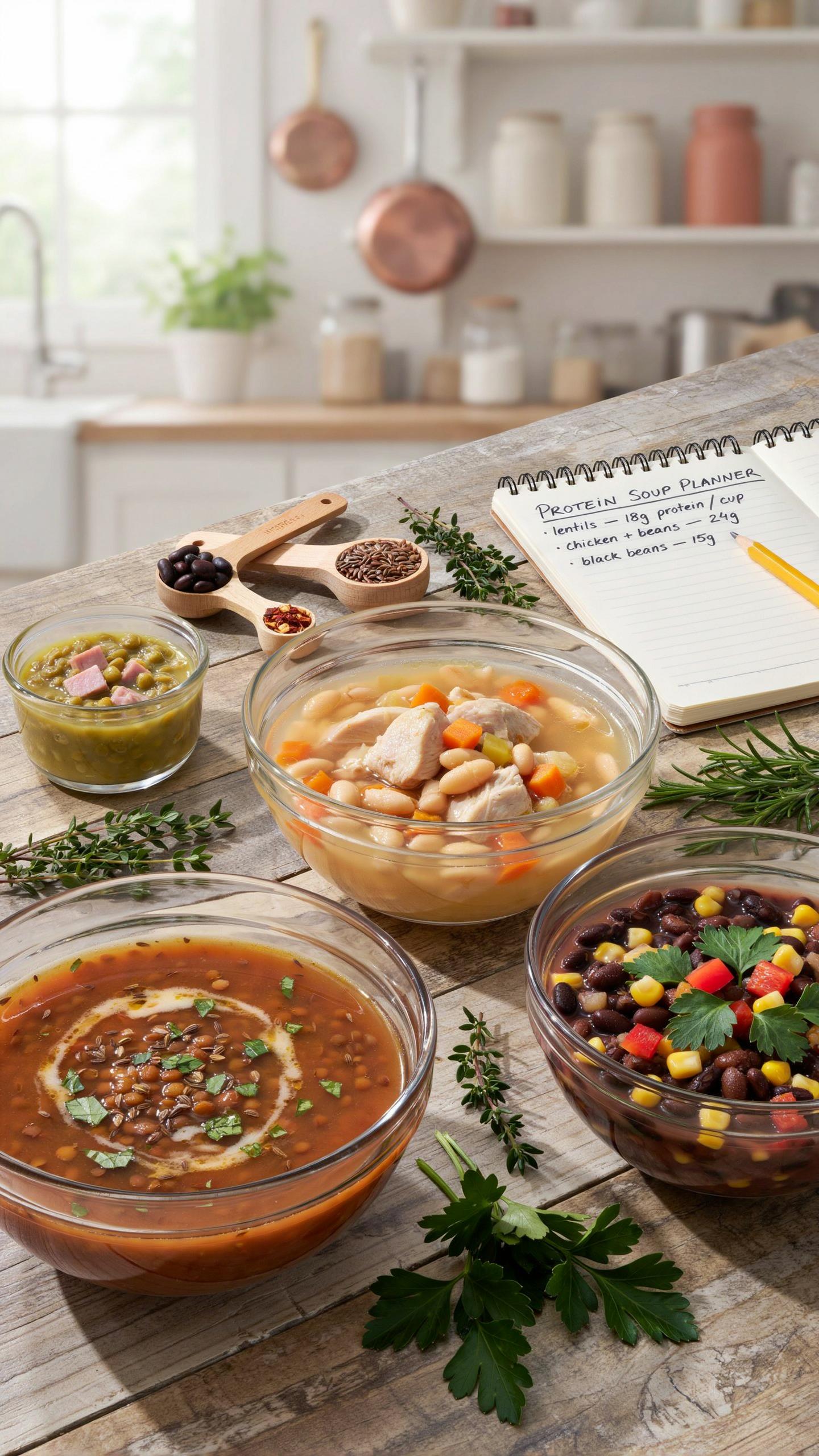
You want to believe a single soup formula exists that tastes good and delivers 40 grams of protein without tasting like cardboard. It doesn’t. The mechanism is simple: protein sources behave differently in liquid environments, and most people pick sources that either dissolve into mush or remain rubbery after days of storage.
Chicken thighs outperform chicken breasts in soup because thighs contain collagen that breaks down into gelatin during cooking, creating mouthfeel while staying tender through five reheats. Ground turkey and lean ground beef work when you brown them first, which creates a Maillard reaction that holds texture through the week. Lentils and split peas add 9 to 18 grams of protein per cooked cup but require pre-soaking to prevent bloating. White beans and cannellini beans dissolve slightly at the edges, thickening broth naturally while delivering 15 grams of protein per cup. The real play is combining a meat source with one legume source. This cuts prep time because legumes simmer while meat cooks, and the combination hits 30 to 40 grams per bowl without relying on protein powder or Greek yogurt swirls that separate during storage.
Nutrient Absorption Depends On Fat And Acid
Biology teaches us about bioavailability, the degree to which your body actually absorbs and uses a nutrient. High protein soup meal prep fails when cooks strip fat to cut calories, then wonder why they feel worse on lunch four than lunch one. Fat carries fat-soluble vitamins and slows gastric emptying, which means your body spends more time extracting amino acids and minerals from the broth.
Add 1 to 2 tablespoons of olive oil or rendered chicken fat per quart of soup. This isn’t decoration. Cook your legumes and vegetables in broth that contains 15 to 20 percent fat by weight, and your intestines absorb iron from spinach and magnesium from leafy greens at rates that matter. Acid from tomato paste or lemon juice activates enzyme production in your stomach and lowers the pH of the soup, which further enables mineral absorption. Fat soluble vitamins require fat. A bowl of protein soup without fat is just expensive chicken water that leaves you hungry two hours later.
The Kinetic Kitchen Method Efficient Meal Prep Soups
Cook Once, Eat Five Times
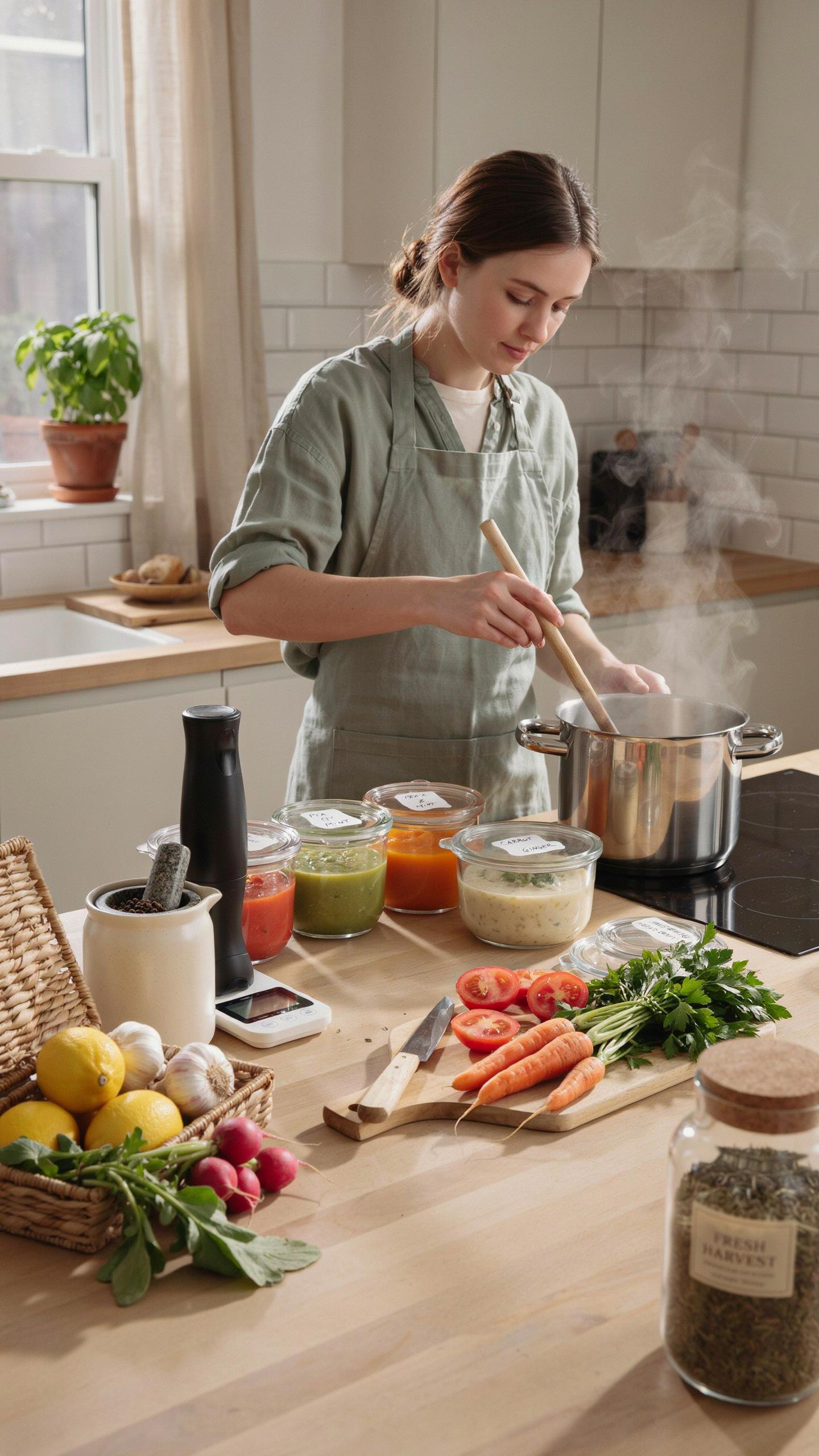
You want to believe meal prep saves time. What you’re really after is permission to stop thinking about lunch. Here’s the mechanism: batch cooking high protein soup works because you collapse decision fatigue into a single 90-minute window. You’re not cooking daily. You’re cooking once, portion once, reheating five times. The math compounds in your favor immediately.
The standard approach—simmer everything together for hours—wastes energy and destroys protein texture. Instead, build your soup in layers. Brown your protein source first, building fond and Maillard compounds that anchor flavor. Remove it. Sauté aromatics and vegetables in that fat, extracting their umami. Add stock last, return protein, then simmer only long enough to marry flavors without breaking down what you paid for. This takes 45 minutes maximum.
Stacking Proteins For Satiety
Protein synergy isn’t metaphorical. It’s thermodynamic. When you combine plant and animal proteins in a single bowl, you trigger greater satiety signaling than either alone. Your body recognizes the amino acid profile as complete, firing different satiety hormones than it would from chicken broth with beans. This is why your lunch actually holds you until 3 PM instead of collapsing at 2.
Stop making protein soup that tastes like protein broth. Layer a base protein—chicken thighs, ground beef, or lentils—with a secondary protein source: bone broth adds collagen and gelatin for mouthfeel, while white beans or chickpeas add carbohydrate and fiber that slow digestion. The combination fills your stomach and stabilizes blood sugar simultaneously. Cook them separately if needed. Add them together at the end. This is the only way the portions stay balanced across five containers.
Beyond The Bowl Protein Soup Recipes For Peak Performance
Flavor Combinations That Actually Work
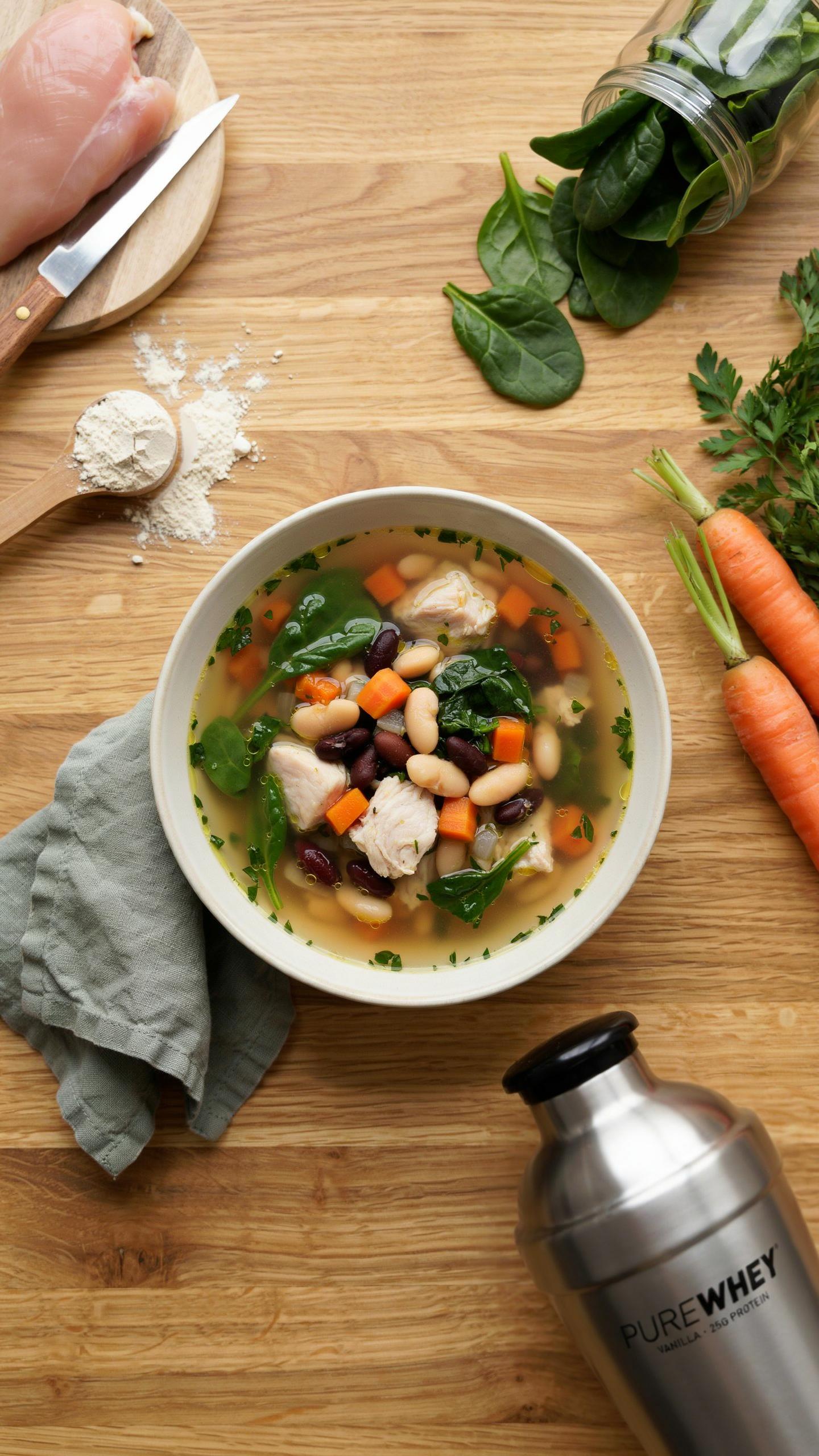
You want to feel smart about your lunch choice. The mechanism is contrast: your palate adapts to repetition, so soup fails not from bad ingredients but from sameness. Borrowing from culinary chemistry, flavor compounds operate on the principle of tension and release. Acidic elements cut fat, heat opens receptors, umami anchors the whole structure. A white bean and miso base with charred poblano, lime, and crispy bacon hits all four registers. The acid wakes you up, the umami stays, the fat satisfies. Add the acid last so it doesn’t cook away.
This is why generic chicken noodle fails as meal prep: it teaches your brain to ignore it by day three. Build soups on opposing tastes instead of building toward a single note. Thai-style coconut chicken with turmeric and fish sauce hits warm, savory, and funky at once. A lentil soup with cumin, tomato paste, and fresh cilantro creates earthiness, depth, and brightness simultaneously. Your body tracks nutritional density partly through flavor complexity, so these combinations signal fullness faster than plain broths do. Rotate between three core combinations every two weeks to keep the adaptation reset.
Adjusting Recipes For Your Actual Constraints
The standard advice says “just add or remove ingredients.” That’s incomplete. Your constraint isn’t flexibility, it’s protein consistency and texture stability across storage. Take a vegan high-protein soup: tofu breaks down in four days, but tempeh holds structure because its density resists water absorption. Swap one for the other and your macros stay the same but your texture degrades differently. For dairy-free, coconut milk separates on reheating unless emulsified with a roux or potato starch first. That’s not optional if you want five days of usable meals.
Nut allergies require protein density from somewhere else, so shift toward legumes and add hemp seeds for complete amino acids rather than relying on single sources. High-sodium constraints mean cooking your own broth and skipping processed chicken stock entirely. Low-FODMAP diets eliminate garlic and onion, so build umami through bone broth simmered long, miso paste, and nutritional yeast instead. The protocol: identify your constraint, identify where that ingredient provided specific function (protein, emulsification, flavor, texture), then find the mechanism-level replacement rather than just deleting it. A soup missing its binding agent won’t hold through microwave reheating, no matter how much protein you crammed in.
The Bio Optimization Blueprint Healthy Low Carb High Protein Soups
Macros That Actually Sustain Energy
You want to feel sharp at 2 PM instead of fighting your eyelids, which means you need to stop trusting the standard American lunch model. Borrowed from biochemistry, think of macronutrient balance as metabolic homeostasis: your body resists extreme swings in blood glucose and amino acid availability. When soup contains protein, fat, and minimal refined carbs in proper ratios, you sidestep the insulin spike that kills afternoon focus.
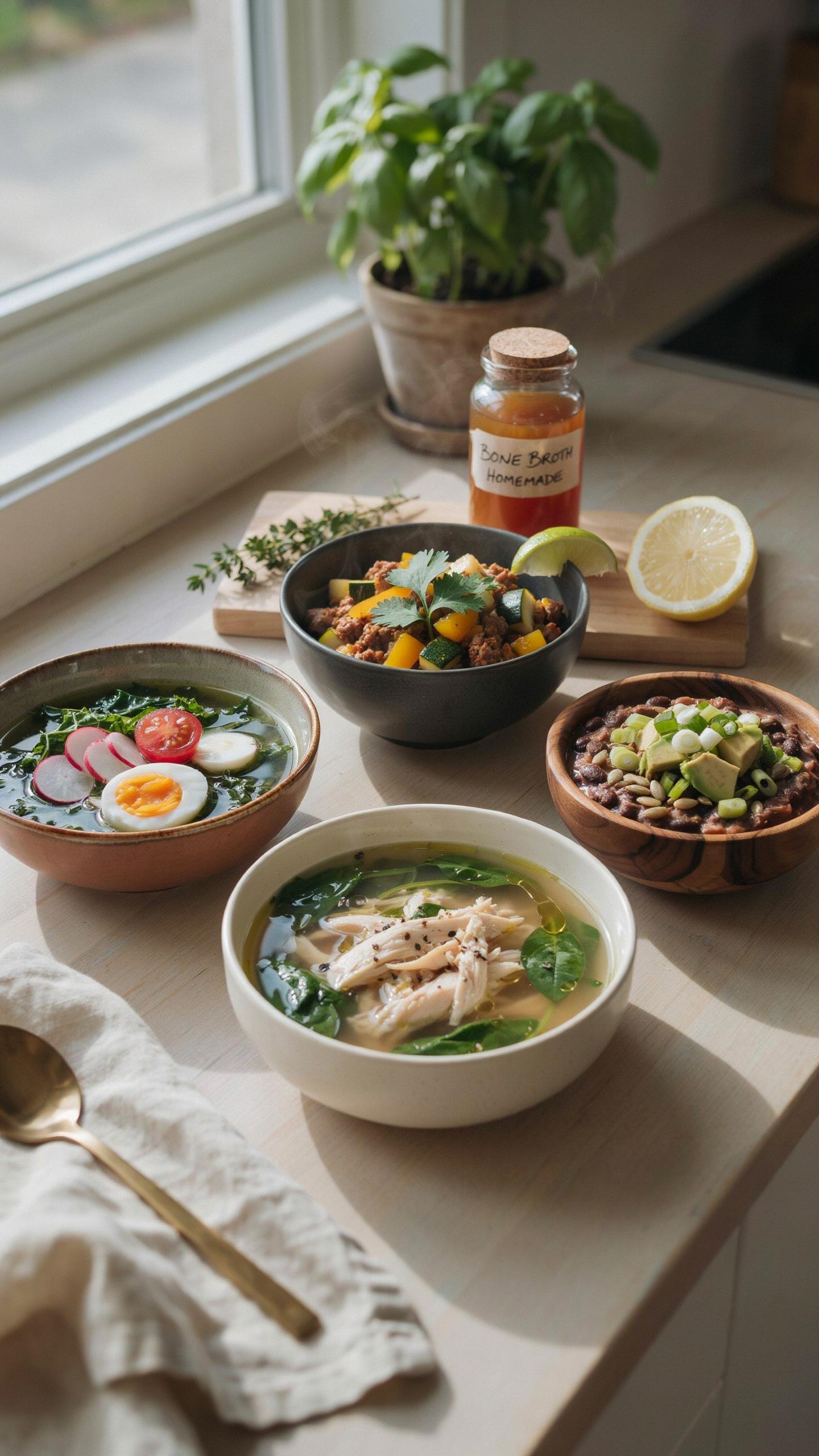
The mechanism is straightforward. Protein slows gastric emptying, fat extends satiety signaling, and low carb density prevents glucose crashes. A typical high protein soup hitting 25-35 grams of protein per serving, 8-12 grams of fat, and under 10 grams of net carbs creates sustained energy because amino acids and ketone bodies fuel your brain without the blood sugar volatility that processed lunch options guarantee. Build your soup base on bone broth or collagen peptides, add fatty cuts of meat or fish, then load vegetables that don’t spike insulin.
Carbs Without The Crash
Most people’s advice here is lazy: they say avoid carbs entirely. That fails in practice because zero carb soups taste flat and your body actually needs glucose for certain functions. The real play is carb selection, not carb elimination. Choose vegetables that deliver fiber density, which mechanically slows glucose absorption and keeps blood sugar stable even when carbs are present.
Root vegetables like carrots and parsnips deliver carbs bundled with fiber, slowing intestinal absorption compared to isolated starches. Leafy greens and cruciferous vegetables add volume and micronutrients with minimal carb impact. The protocol: measure vegetable carbs, keep total net carbs under 12-15 grams per serving by prioritizing fiber sources, and pair any higher carb ingredients with protein and fat in the same spoonful. Your digestive system processes mixed meals differently than single macronutrients, which is why soup’s combined structure works mechanically in your favor.
The Culinary Algorithm Engineering Your Protein Soups
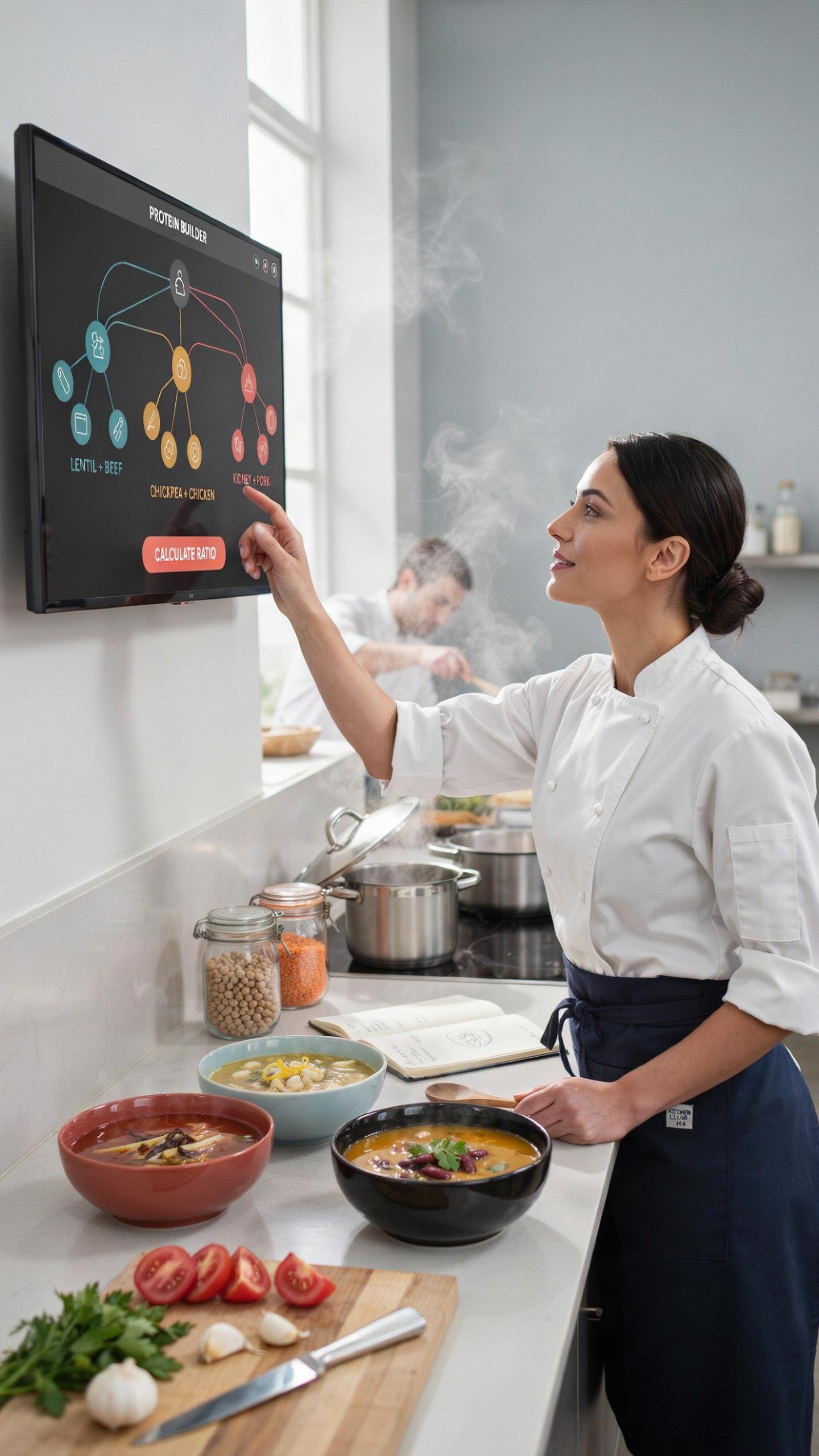
Your Soup Is A Closed Loop
You want this to work without thinking about it every Sunday. That’s the real ask here. Systems thinking treats soup as a feedback loop: you cook it, eat it, measure how you feel at 3pm, then adjust. Protein creates satiety signals. Fat slows digestion. Sodium holds water. These three variables feed back into your next batch. Most people ignore the loop and cook the same soup twice, wondering why hunger still hits at 2pm.
The mechanism is simple. Your body sends hunger signals based on stomach stretch, blood glucose stability, and amino acid availability. Protein soup addresses all three at once. High protein (25-35g per serving) triggers mechanoreceptors in your stomach wall. The amino acids suppress ghrelin, the hormone that makes you want to eat. The broth base adds volume without calories, so you feel full longer. When you track whether you actually stayed full, you’re not guessing. You’re collecting data that tells you what to change next time.
Satiety Engineering Through Macronutrient Density
Control theory, borrowed from engineering, teaches regulation through feedback and adjustment. Your appetite is a system you regulate by managing inputs. Most meal prep advice says “add more protein” without naming the real mechanism: protein alone doesn’t hold satiety. You need the right ratio of protein to fat to fiber to achieve stable blood glucose and sustained fullness.
Here’s what most people get wrong. They make chicken and vegetable broth, hit 30g protein, and wonder why they’re hungry two hours later. The missing piece is fat. Fat delays gastric emptying, which means food stays in your stomach longer, triggering longer satiety signals. A high protein soup needs 8-12g fat per serving minimum. This comes from bone broth rendered with fat, added olive oil, or cream. Without it, your glucose spikes and crashes. With it, your hunger stays suppressed for four to five hours, which is the actual goal of meal prep lunch.
The Un Recipe Intuitive Protein Soup Creation
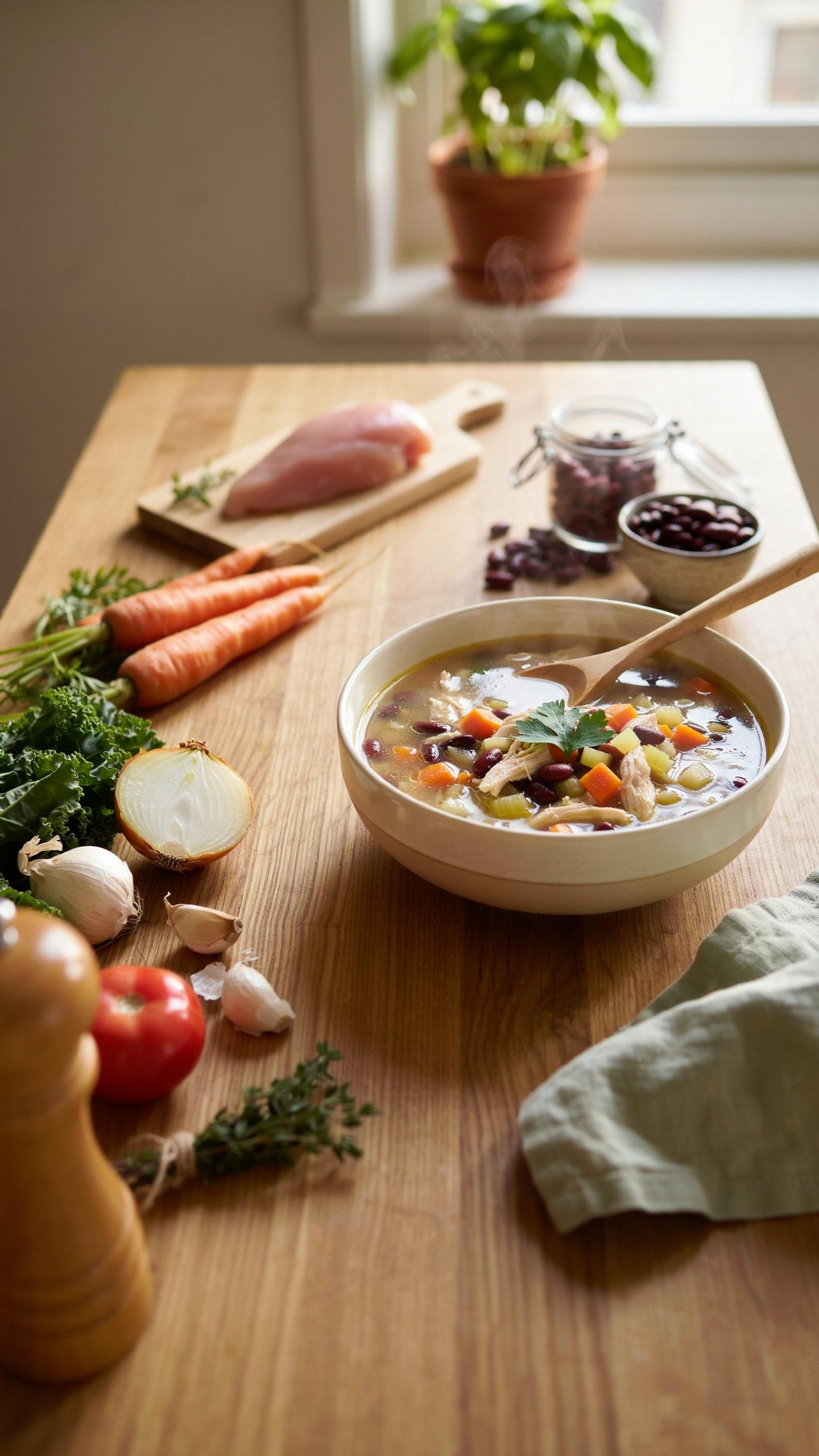
Building Flavor Profiles From Scratch
You want a framework so you never waste a batch. The real mechanism here is layering, borrowed from cooking chemistry: you build flavor density the same way a circuit builds electrical potential. Start with fat and aromatics hitting heat together, then add protein, then liquid, then acid. This order matters because it controls how flavors dissolve and bond. Most people dump everything in at once and wonder why their soup tastes flat.
The base layer takes five minutes. Heat fat (oil, butter, ghee) in your pot. Add onion, garlic, and whatever vegetable scraps you have. Cook until the onion loses color and the kitchen smells sharp. This isn’t browning for show. You’re volatilizing compounds that become your flavor foundation. Once that hits, add your protein source and let it warm through. Only then add broth or water. This sequencing is non-negotiable if you want soup that tastes intentional instead of like hot sadness.
Ingredient Substitution Mastery
The common advice says swap anything for anything and it’ll work the same. It won’t. Proteins swap cleanly because they all denature and firm up. Liquids swap if you understand their flavor weight: bone broth is heavier than chicken broth, which is heavier than vegetable broth. You can’t just swap volume for volume without adjusting salt and acid to compensate. The mechanism is osmotic pressure. Your ingredients pull flavors into and out of each other based on density and mineral content.
Your substitution rule: swap within density classes only. If you’re using beef broth, swap for mushroom broth (both earthy and deep). If you’re using chicken broth, swap for vegetable or seafood. With proteins, chicken swaps for turkey or pork. Beef swaps for lamb or venison. Fish needs its own category. For vegetables, keep the ratio of onion and aromatics constant, but change your secondary vegetables freely. Add your acid last and taste as you go. This is how you scale a recipe from one batch to fifty without reinventing the formula each time.
Strategic Stockpiling Mastering Meal Prep Soups For The Week
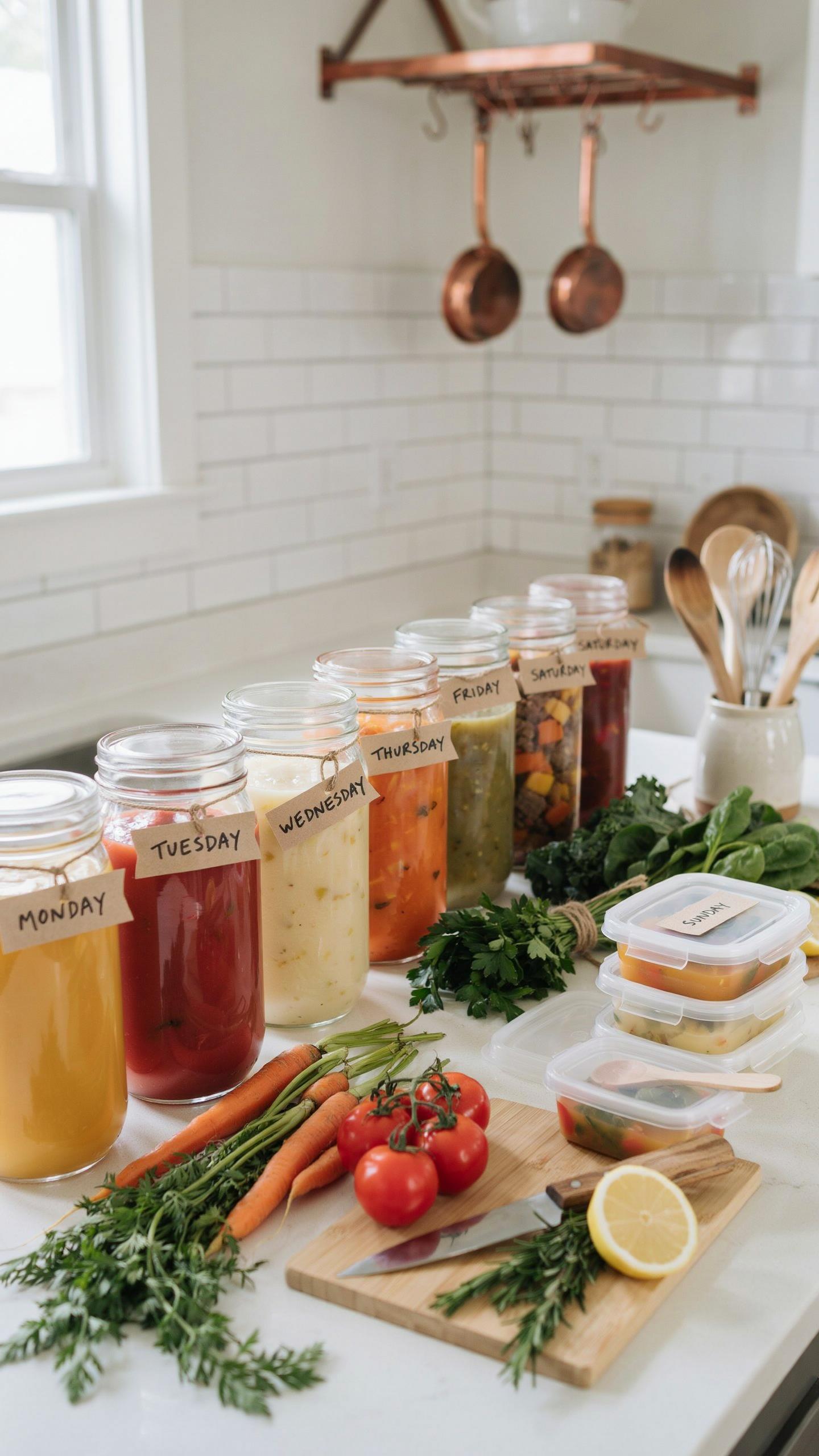
Keep Soup Fresh Without Freezer Burn
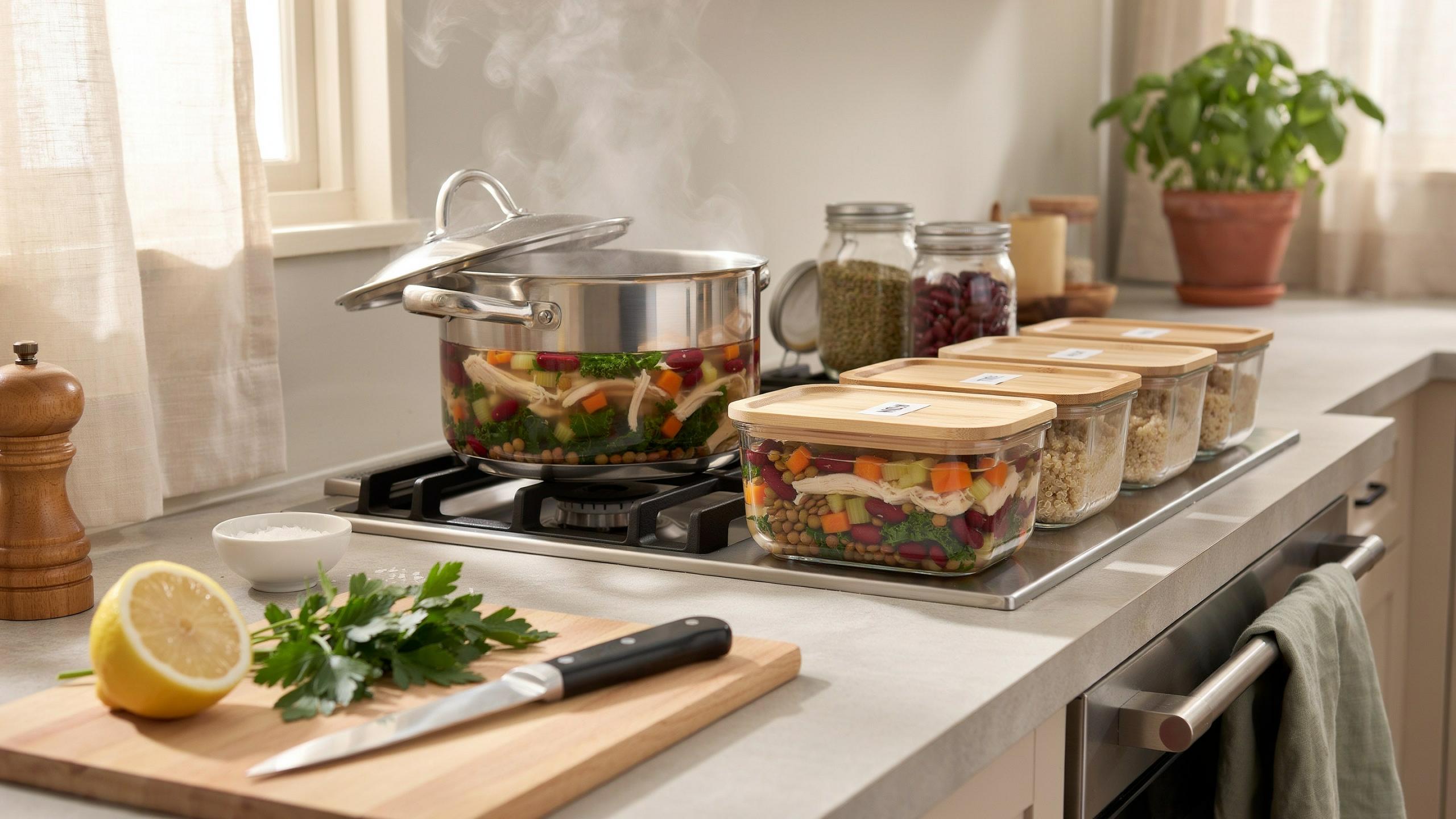
You’re afraid your meal prep fails because you don’t know how long soup actually lasts. The mechanism is simple: protein denatures at different rates depending on temperature stability and oxygen exposure. Glass containers with airtight seals beat plastic because they don’t leach chemicals into acidic broths and they maintain temperature consistency better. Room temperature soup deteriorates within two hours. Refrigerated soup at 40 degrees Fahrenheit stays safe for four to five days because bacterial growth slows dramatically at that temperature. Frozen soup at zero degrees or below halts bacterial multiplication entirely and lasts three months, though ice crystals will form on the surface from water evaporation over time. Your best move is dividing soup into individual glass containers immediately after it cools, then refrigerating what you’ll eat within five days and freezing the rest.
The container itself matters more than most people admit. Freezer-safe glass with locking lids prevents freezer burn because they minimize air contact. Leave half an inch of headspace when freezing because soup expands as it freezes and will crack a full container. Label everything with the date you prepared it. Soups with high protein content from bones, meat, or legumes freeze better than vegetable-only broths because fat and collagen protect the structure during the freeze thaw cycle. Stack containers flat in the freezer for the first 24 hours until they’re solid, then stand them upright to save space.
Heating Soup Without Destroying The Protein
Everyone reheats soup wrong, and it costs you the nutritional edge you built into the recipe. The issue is temperature velocity, not final temperature. Protein breaks down fastest when you subject it to rapid heat spikes, which happens with microwave reheating. Microwaves heat unevenly and create hot spots that can reach 190 degrees Fahrenheit while other portions stay at 140. Your protein bonds destabilize faster under those conditions. Stovetop reheating over medium heat takes longer but distributes warmth gradually and maintains the collagen structure intact. Transfer frozen soup to the refrigerator the night before and reheat it gently, stirring occasionally.
The protocol is specific. Thaw frozen soup in the refrigerator overnight. Pour soup into a pot on medium heat, stirring every minute. Bring it to 165 degrees Fahrenheit internal temperature for food safety but remove it from heat immediately once it hits that mark. Don’t let it boil. High-protein soups with bones or slow-cooked meat lose their tender texture and absorb less flavor once the protein structure collapses from prolonged heat. Use a kitchen thermometer to verify the temperature rather than guessing when steam rises. This takes eight to twelve minutes for a full container and preserves the texture you spent hours creating during initial preparation.
The Anti Bland Doctrine Flavor Innovation In Protein Soup Recipes
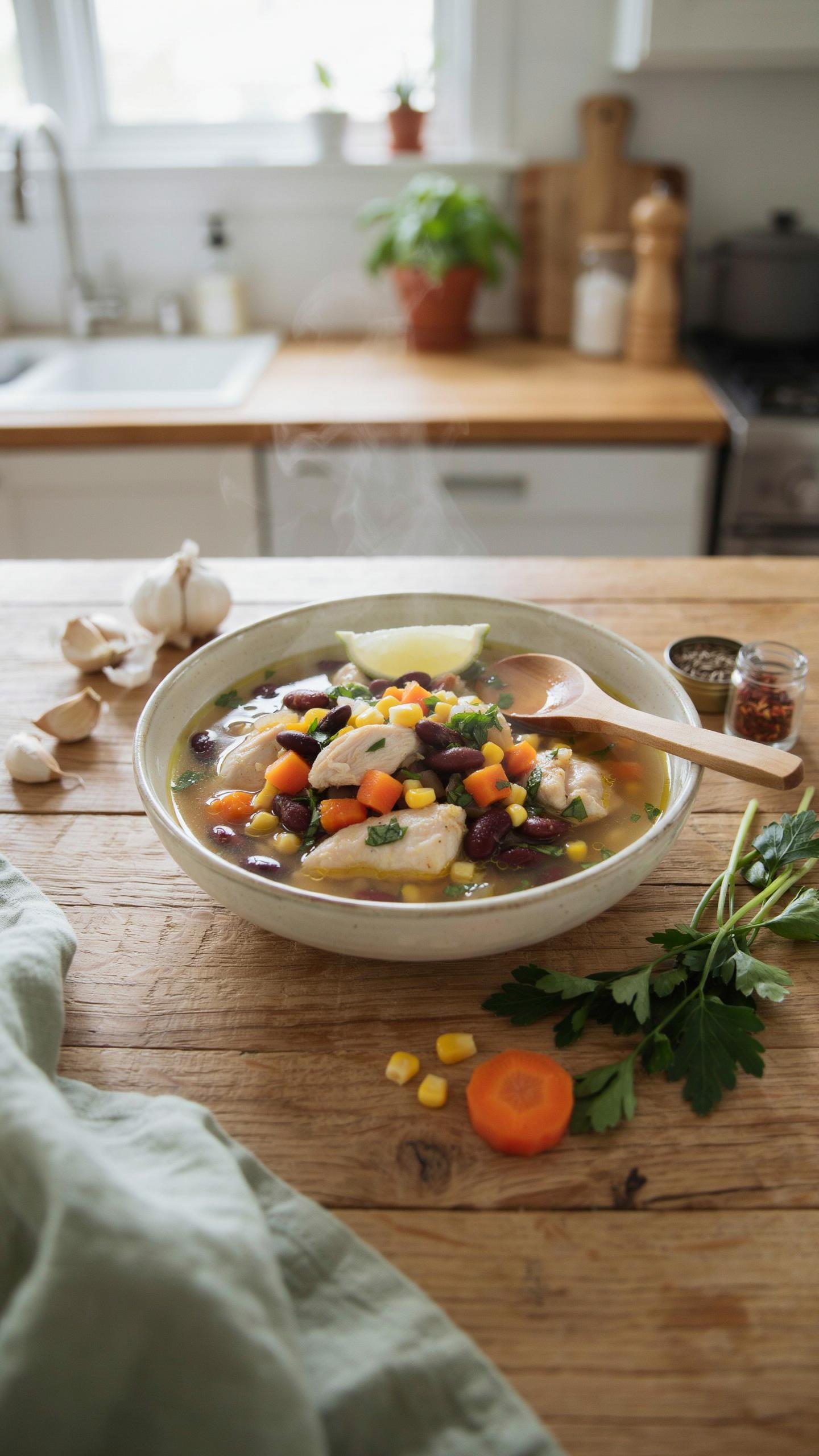
Herbs And Spices For Impact
You want people to notice you eat well. That’s the real reason you care about flavor in meal prep. Most advice stops at “add salt and pepper,” which is why most protein soups taste like punishment. The mechanism is simple: dried herbs and spices concentrate flavor compounds through dehydration, meaning a teaspoon delivers what fresh herbs need a tablespoon to match. Temperature matters too—heat releases volatile oils that make seasoning actually register on your palate instead of just sitting there.
- Smoked paprika: Adds depth without heat. One teaspoon transforms chicken broth from flat to intentional, mimicking char flavor that doesn’t require actual charring.
- Cumin: Hits low frequency notes in your mouth. Use half a teaspoon per quart of soup—it grounds protein flavors and prevents that isolated, thin taste.
- Cayenne pepper: Precision tool, not a blanket. Quarter teaspoon doses give you pacing control. Too much masks everything; too little does nothing.
- Garlic powder: Different animal from fresh garlic. It concentrates and sweetens, providing consistent flavor across batch sizes where fresh cloves vary wildly.
- Dried oregano or thyme: Survives long cooking without turning bitter. Add during the simmer phase, not at the end, so oils infuse into the broth itself.
The error people make is treating spice as decoration. You’re not seasoning soup. You’re building a flavor architecture that makes protein and vegetables worth eating five times. Toast dried spices in the pan before adding liquid—this activates their oils and prevents that raw, dusty taste that ruins batch cooking.
Umami Bombs And Texture Contrast
Umami is food chemistry’s concept of the fifth taste, triggered by glutamates and nucleotides your tongue recognizes as protein-rich or aged. In soup meal prep, umami isn’t luxury—it’s the mechanism that keeps reheated broth from tasting like sadness. Most protein soups fail here because they skip the compounds that make your brain register “this is worth eating.”
Fish sauce, soy sauce, miso paste, and tomato paste aren’t optional add-ons. Each delivers glutamates that make broth taste intentionally built instead of just hot. One tablespoon of miso paste transforms a chicken soup from bland to craveable. Texture contrast works in tandem: when soup is uniform (liquid broth plus soft protein), your mouth gets bored. Crunchy seeds, crispy chickpeas, or al-dente pasta added per serving prevent that monotony and make you actually want to finish the bowl instead of forcing it down.
The timing mechanic separates good meal prep from bad. You layer umami into the broth during cooking, but you add textural elements individually. This keeps croutons or nuts from going soggy across five days of storage. Build your protein soup with a neutral, umami-rich base. Portion out protein and vegetables. Add texture on the day you eat it. This single protocol change is why some people actually stick to protein soup meal prep and others abandon it by Wednesday.
Vegetable Soup With Chicken A Case Study In Efficiency
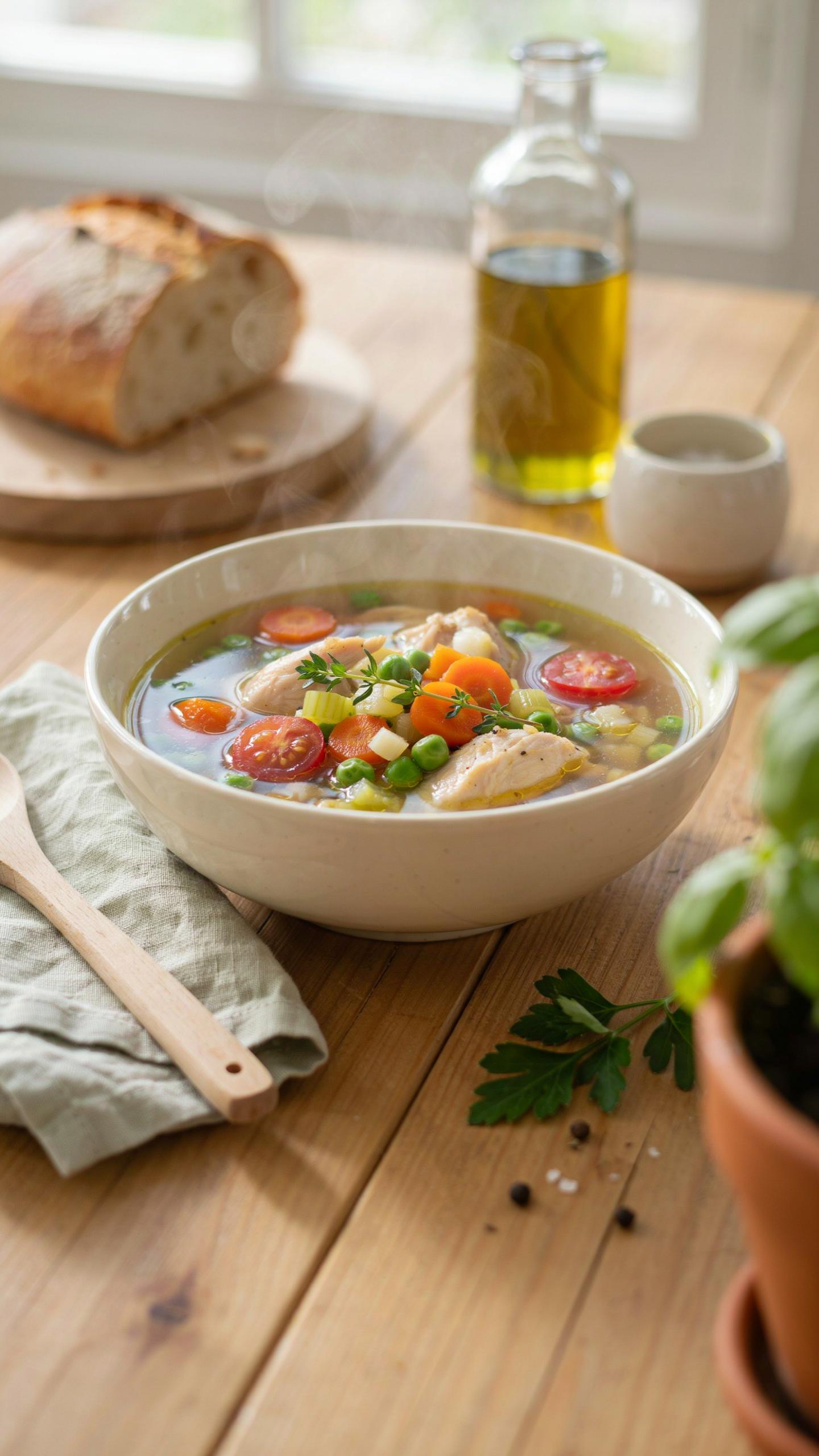
How Chicken Becomes Your Protein Anchor
You want to believe chicken is just chicken, but you’re really asking if you can trust five days of the same lunch without losing your mind. The mechanism is simple: chicken’s flavor flatness is its feature, not a bug. It absorbs whatever you cook it with, so the soup’s seasoning does the work. This eliminates the variable that kills meal prep compliance—boredom from repetition.
Poach chicken breasts whole in salted broth for 12 to 15 minutes at a gentle simmer. This method locks in moisture and gives you 31 grams of protein per 100 grams. Shred it after cooling, or cut into chunks. Never boil aggressively; that dries the meat and wastes your time rebuilding flavor. Store the cooked chicken separately, then add it to portioned soup on assembly day so it doesn’t absorb excess sodium from sitting in broth all week.
Vegetable Strategy For Weekly Stability
Pick vegetables that hold texture through five days of refrigeration, not ones that collapse into mush. This isn’t nutrition theater—it’s about the difference between eating your meal prep and abandoning it by Wednesday. Carrots, celery, and onions form the base and keep their structure. Zucchini softens but stays intact. Spinach wilts by day three, so add it fresh on eating days instead.
Dice vegetables to roughly the same size so they cook evenly and you don’t have the frustration of biting into an undercooked carrot chunk. Add harder vegetables first—carrots need 8 minutes before spinach needs 30 seconds. Layer your pot: sauté aromatics, add broth, then vegetables by cook time. This protocol prevents the texture degradation that makes leftovers feel like punishment.
The real obstacle isnt finding the right recipe its believing convenience inherently sacrifices quality

Most people treat meal prep like a punishment they deserve. They think shortcuts mean mediocrity. They’re wrong. A high protein soup you actually enjoy eating beats a “perfect” meal you force down your throat every single time. The shift happens when you stop optimizing for perfection and start optimizing for consistency. Pick one soup recipe today. Make it this weekend. Eat it for three days straight. You’ll prove to yourself that boring and effective beats exciting and abandoned.