
Beyond The Bento The Strategic Advantage Of Cold Lunches
Time Arbitrage: Reclaiming Your Lunch Hour
You want your lunch break back. That’s the real reason you’re reading this. Most people treat lunch as a interruption to work instead of an asset you control. Economics calls this opportunity cost: the value of what you give up when you choose one thing over another. With cold lunch meal prep, you’re trading 90 minutes of weekly cooking for five hours of reclaimed time during your workweek. That’s the mechanism.
The math is brutal if you ignore it. A microwave lunch at work means heating time, waiting, restless scrolling, then eating in fragments between Slack messages. A cold lunch sits ready. You open your container, eat intentionally for twenty minutes, and return focused. No thermal lag, no decision fatigue, no standing in a break room watching a timer. The cognitive load drops to zero because the decision was made on Sunday, not at noon on Wednesday.
Protein Stability At Temperature
Protein doesn’t break down faster when cold. That’s the misconception everyone carries forward. Biochemistry shows the opposite: lower temperatures slow enzymatic degradation. Bacterial growth accelerates in the danger zone between 40°F and 140°F. Keep your cold lunch below 40°F in a real cooler or insulated bag with an ice pack, and your protein stays intact from prep to consumption.
Most advice stops there and calls it food safety. That misses the real advantage. Cold temperatures preserve the amino acid profile you paid for. Cooked chicken breast, Greek yogurt, cottage cheese, canned fish—they all retain their protein quality when held cold. You’re not just avoiding spoilage. You’re locking in the exact nutritional payload you calculated during prep. Prepare your cold lunch Sunday evening, store it at 38°F, and consume it Wednesday at full potency.
The Anabolic Arsenal High Protein Cold Lunch Ideas
Proteins That Don’t Need Heat
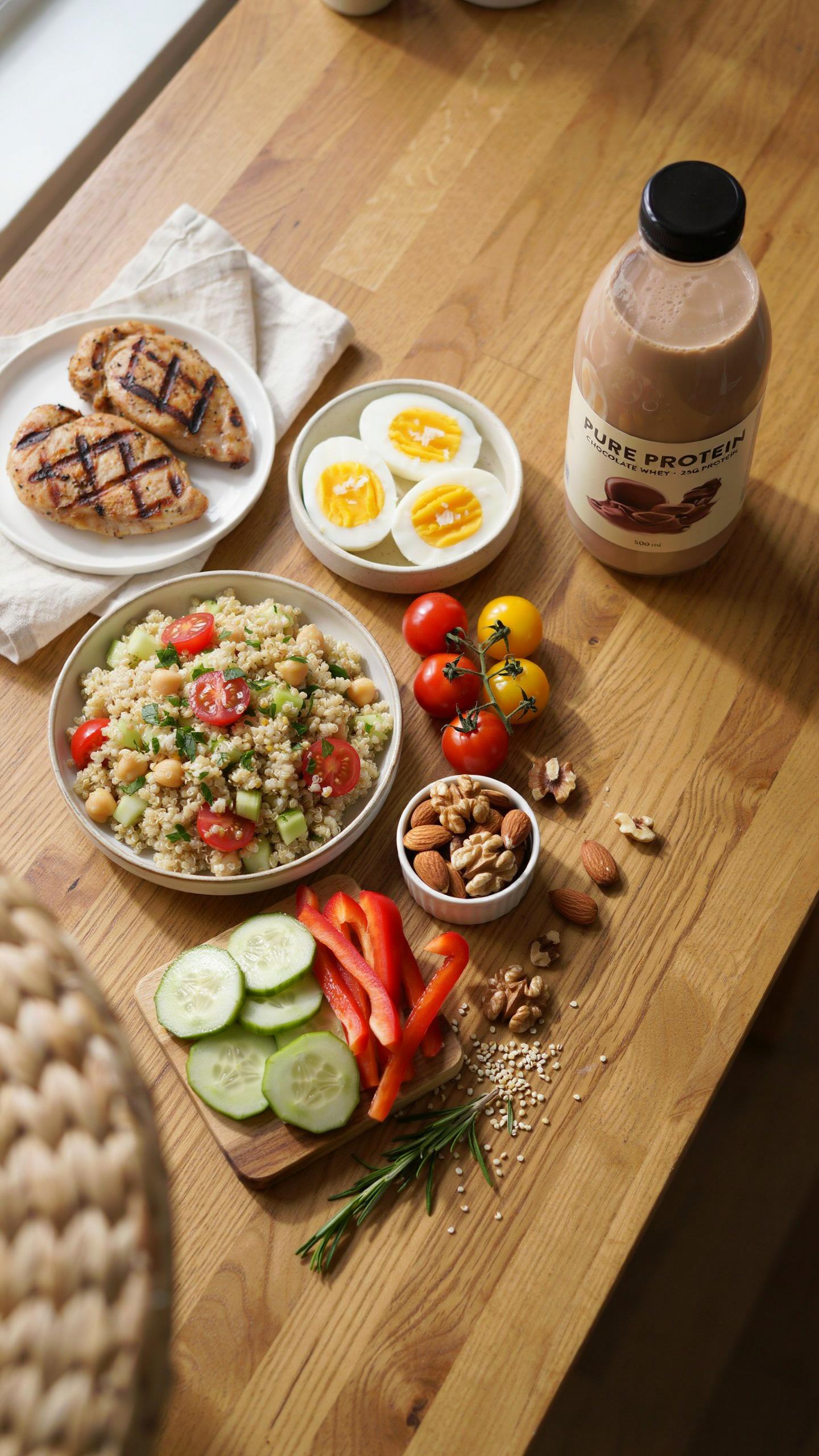
You want the muscle-building payoff without looking like you microwave your lunch at your desk. Here’s the mechanism: proteins denature (a biology term for structural breakdown) during cooking, but cold exposure doesn’t reverse that. The amino acids stay intact. Cold proteins simply don’t require reheating to remain bioavailable. You’re paying for convenience and social optics by meal prepping cold.
Grilled chicken breast, canned tuna, rotisserie turkey, and Greek yogurt all maintain their protein profile cold. The muscle-building amino acids remain stable. Pack them in containers and eat them five days later without degradation. Temperature doesn’t matter once protein is cooked. This eliminates the microwave dependency entirely while keeping your intake consistent.
Unconventional Proteins That Travel Well
Most people default to chicken and tuna because that’s what they see others eat, not because they’re the only options. Cottage cheese, hard-boiled eggs, deli roast beef, and canned salmon deliver protein just as effectively. The real advantage isn’t novelty. It’s texture variation and meal fatigue prevention, which directly impacts adherence.
Cottage cheese provides 28 grams of protein per cup and needs no refrigeration for several hours once packed properly. Hard-boiled eggs travel better than fresh eggs and deliver complete amino acid profiles. Canned salmon offers omega-3s that chicken doesn’t. Deli roast beef changes the flavor profile without extra cooking labor. Rotate these throughout your week to eliminate the monotony that kills meal prep momentum.
The Perishable Payload Protocol Engineering Longevity

How Temperature Gradients Determine Shelf Life
You want your lunch to survive eight hours without degrading because you’re tired of throwing money away and eating sad protein by noon. This is a physics problem, not a willpower problem. Temperature gradient is the enemy—the difference between your cold source and ambient air determines bacterial growth rate exponentially, not linearly.
Insulation works by creating dead air space that resists heat transfer. A basic cooler bag filled with a frozen water bottle or ice pack maintains a temperature zone around 40 degrees Fahrenheit for roughly four to six hours depending on external heat and insulation thickness. The mechanism is simple: frozen mass absorbs ambient heat energy before it reaches your food. Without active refrigeration, this window is non-negotiable. Your job is to maximize it by minimizing air exchange and choosing dense insulation materials. Double-walled construction beats single-wall every time because the air gap between layers moves heat transfer speed from fast to slow.
The Container Barrier Against Oxidation And Moisture
Most people think container choice is aesthetic. It’s structural. Glass doesn’t absorb flavors or bacterial residue like plastic does, but glass transfers temperature faster than plastic—it conducts heat where plastic insulates it. Stainless steel sits between them: slower heat transfer than glass, no flavor ghosting, and it survives impact damage that shatters glass and cracks plastic.
Sealed containers prevent moisture loss and cross-contamination. Protein breaks down faster when exposed to oxygen. Dressings separate from solids faster in open or loosely sealed containers. The real move is layering: dense proteins on bottom, vegetables and grains above them, dressing in a separate compartment you add at consumption. This keeps structural integrity intact and prevents the lunch from becoming a soggy paste by hour five. Choose opaque containers for your insulated bag so you’re not storing your lunch in direct sunlight during transport.
Cold High Protein Lunches The Flavor Spectrum
Why Acid Matters More Than You Think
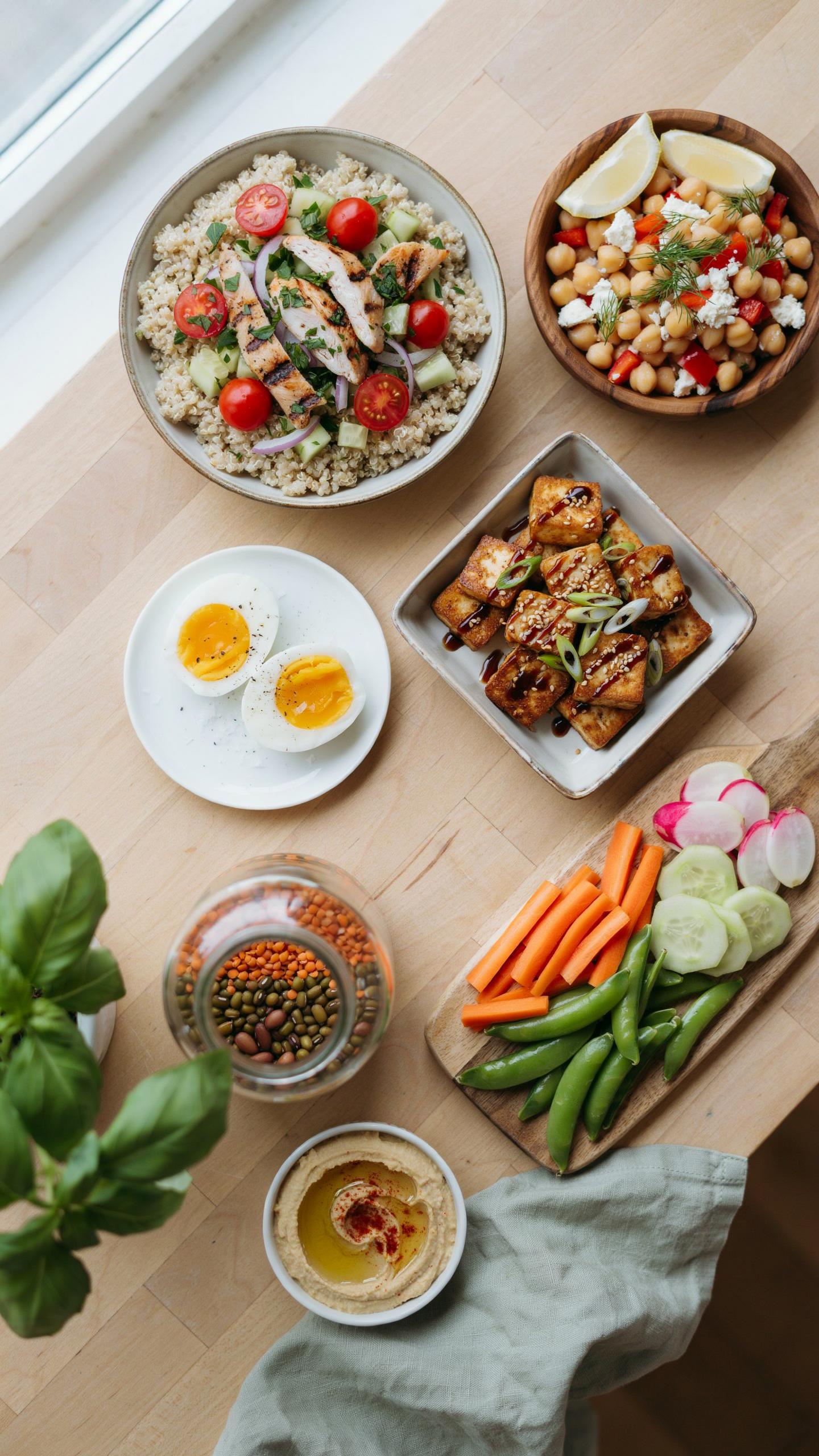
You want your cold lunch to taste fresh instead of like leftovers. The mechanism is simple: acid breaks down protein fibers and prevents oxidation that flattens flavor over time. Vinegar, citrus, and fermented elements aren’t garnishes. They’re preservatives that keep your meal tasting intentional on day four.
Acid-forward dressings work because they lower the pH of your container. This slows bacterial growth and masks the stale notes that emerge when protein sits undressed. Lemon juice on chicken, rice vinegar on turkey, or lime on fish all accomplish the same thing. Apply dressing immediately after cooking, not right before eating. The acid does work while everything cools.
Layers Beat Uniformity
Texture contrast is borrowed from mechanical engineering, where load distribution across multiple materials prevents failure. In cold lunch terms, load means flavor fatigue. One uniform texture numbs your palate by bite three. Protein alone is boring. Protein plus raw vegetable plus cooked grain plus something crunchy creates engagement.
Build your container in this order: dense protein on bottom, grains or legumes second, soft vegetables third, raw vegetables and textured elements on top. Keep raw and cooked separated until you eat. This prevents sogginess and ensures each bite has multiple sensations fighting for attention. The crunch activates different receptors than the tender protein. Your brain stays engaged instead of sliding into autopilot.
The Weekly Prep Matrix Cold Lunch Prep For The Week
Cook Your Proteins And Carbs In Bulk
You want to believe meal prep saves time, but you’re really after permission to stop thinking about food decisions every single day. Here’s the mechanism: batch cooking exploits economics of scale from manufacturing. You run one heating cycle instead of five. Chicken breast, ground turkey, and canned tuna cook in volume. Rice, potatoes, and oats absorb seasoning uniformly when prepared together. Cook proteins to 165 degrees Fahrenheit internal temperature, verified with a meat thermometer. Store them in airtight containers immediately after cooling to prevent bacterial growth.
One prep session replaces five separate cooking events. Dedicate two to three hours on one day, usually Sunday or Monday. Roast three to four pounds of protein in a single oven run at 375 degrees Fahrenheit. Boil five cups of rice or ten pounds of potatoes simultaneously. Cool everything to room temperature before storing. This approach removes the friction that kills consistency. You don’t prep because you feel motivated. You prep because the infrastructure is already built.
Separate Components Until Assembly Time
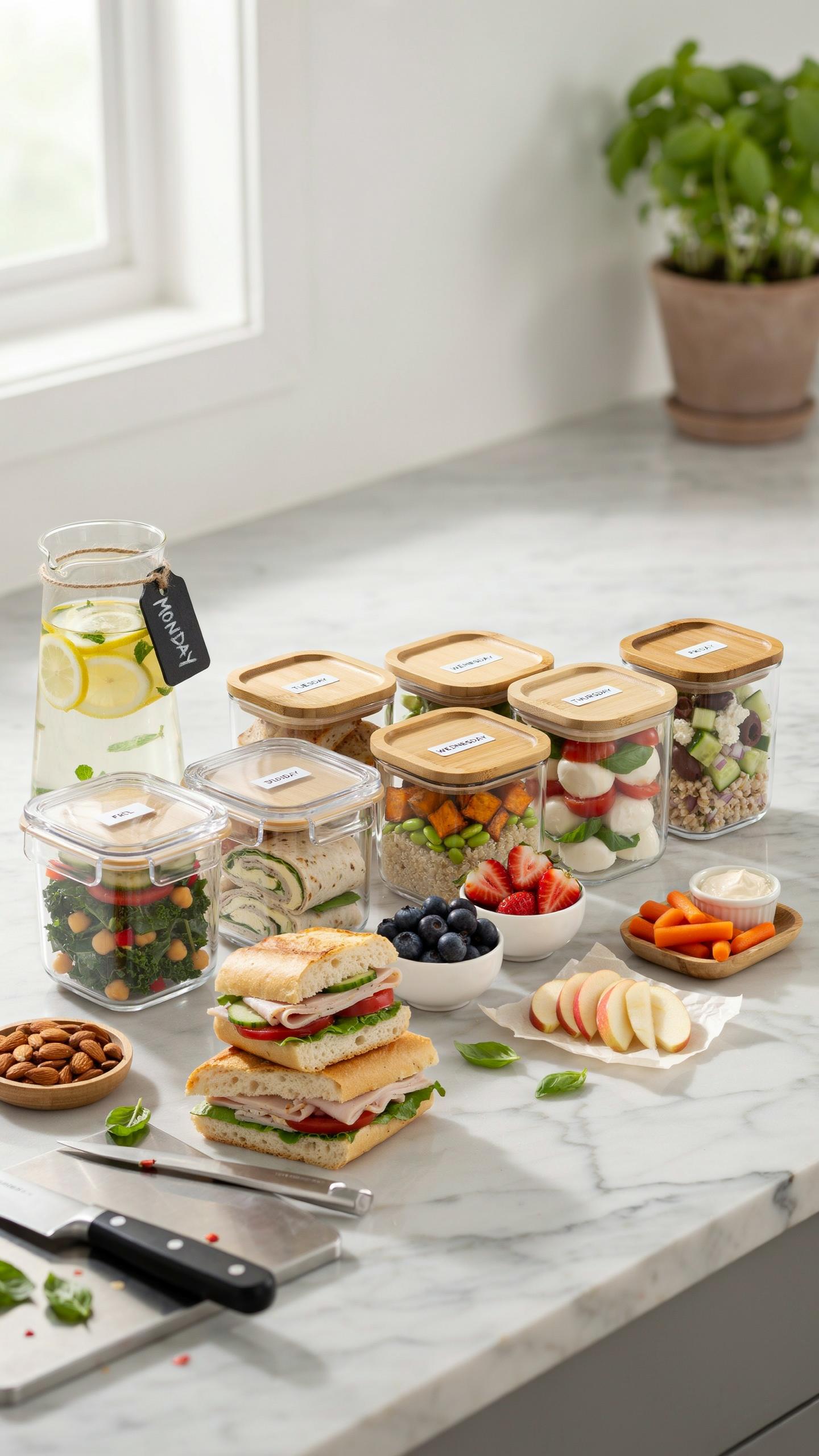
The real error most people make is mixing everything together immediately, which guarantees soggy vegetables and oxidized proteins by Wednesday. Industrial food preservation uses separation of components as a primary strategy. Keep proteins, vegetables, grains, and dressings in distinct containers until you assemble the meal. Moisture migrates between foods. Oil saturates bread. Acid softens vegetables. These are chemical processes, not opinions.
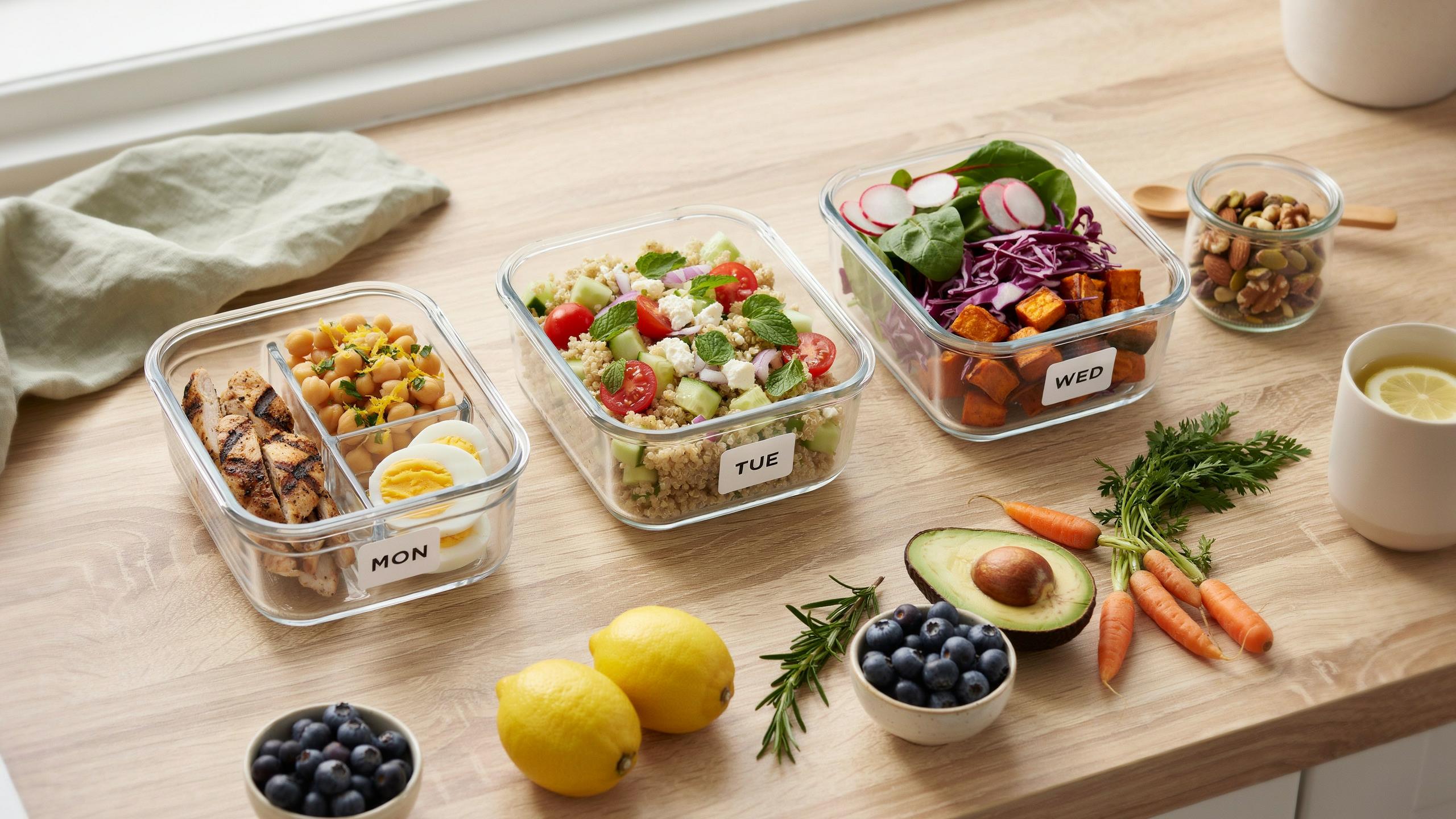
Invest in a set of four to six identical glass containers with tight-sealing lids. Store proteins on the bottom with their own container. Stack grains separately. Place raw or lightly steamed vegetables in a third. Keep dressings and sauces in small portions in sealed jars. Assemble the night before eating, or thirty minutes before lunch. This single protocol extends shelf life from three days to five days without quality loss. The mechanism is simple: you control moisture and chemical reaction timing instead of leaving it to chance.
Easy Cold Lunches For Work High Protein The 5 Minute Assembly
Components That Stack Without Collapse
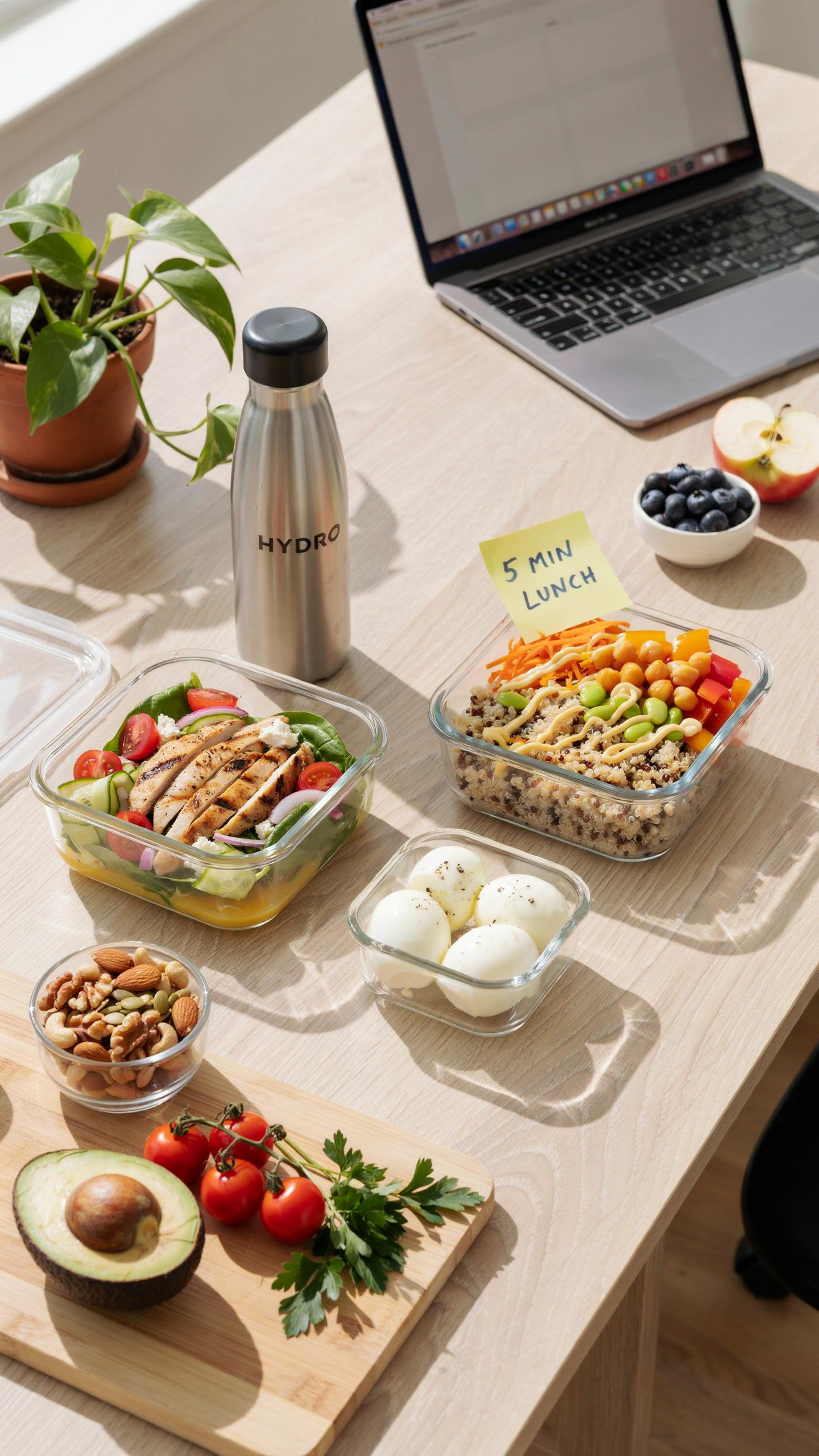
You want to feel productive at lunch without thinking about it. The mechanism is compression tolerance: foods that maintain structure under weight and time without becoming soggy or separated. This isn’t about stacking ingredients randomly. It’s about understanding load bearing in a container.
The order matters. Dense proteins and grains anchor the bottom. Vegetables with high water content go in the middle. Lighter elements sit on top. This prevents the lunch from compressing into paste by noon. You’re using gravity as a tool, not fighting it.
- Grains and starches: Rice, quinoa, farro, and lentils form the structural base. They absorb liquid without disintegrating and provide sustained energy alongside protein.
- Dense proteins: Chicken breast, ground turkey, canned tuna, tofu, and hard-boiled eggs don’t degrade under pressure and anchor the container’s weight.
- Structured vegetables: Broccoli, cauliflower, snap peas, and carrots resist sogginess. They maintain texture for four to five days refrigerated.
- Crisp additions: Nuts, seeds, and raw vegetables go last to prevent moisture transfer. They stay crunchy when separated from wet components by time or container design.
- Spreadable proteins: Greek yogurt, cottage cheese, and nut butters work as binders between layers, adding protein density without requiring heat.
The five-minute assembly works because you’re not cooking or mixing. You’re positioning. One container, one spoon, components in order. The lunch builds itself as you eat, staying fresh because nothing touched until you opened it.
Dressings That Don’t Ruin Everything
Most advice says “pack dressing separately” then ignores why dressings destroy cold lunches in the first place. The real problem is osmotic pressure. Water from dressing migrates into grains and vegetables, turning them into mush within hours. The solution isn’t separation. It’s fat.
Fat creates a barrier. Olive oil, tahini, and creamy dressings don’t penetrate like vinaigrettes. You portion these into small containers or squeeze bottles the night before, then apply them at lunch. Vinegar-based dressings stay in sealed packets or bottles. The key shift: treat dressings as toppings you control, not components already mixed in.
Pre-portion a week’s worth into four-ounce containers or small squeeze bottles. Label them by day. Store them in the same meal prep session as your proteins and grains. This takes five extra minutes on Sunday and removes the decision from your weekday lunch. You grab the container and bottle, eat according to your preference, and the lunch stays intact. The mechanism is simple: you add moisture only when you eat, not six hours before.
Healthy High Protein Meals Beyond The Salad Trap
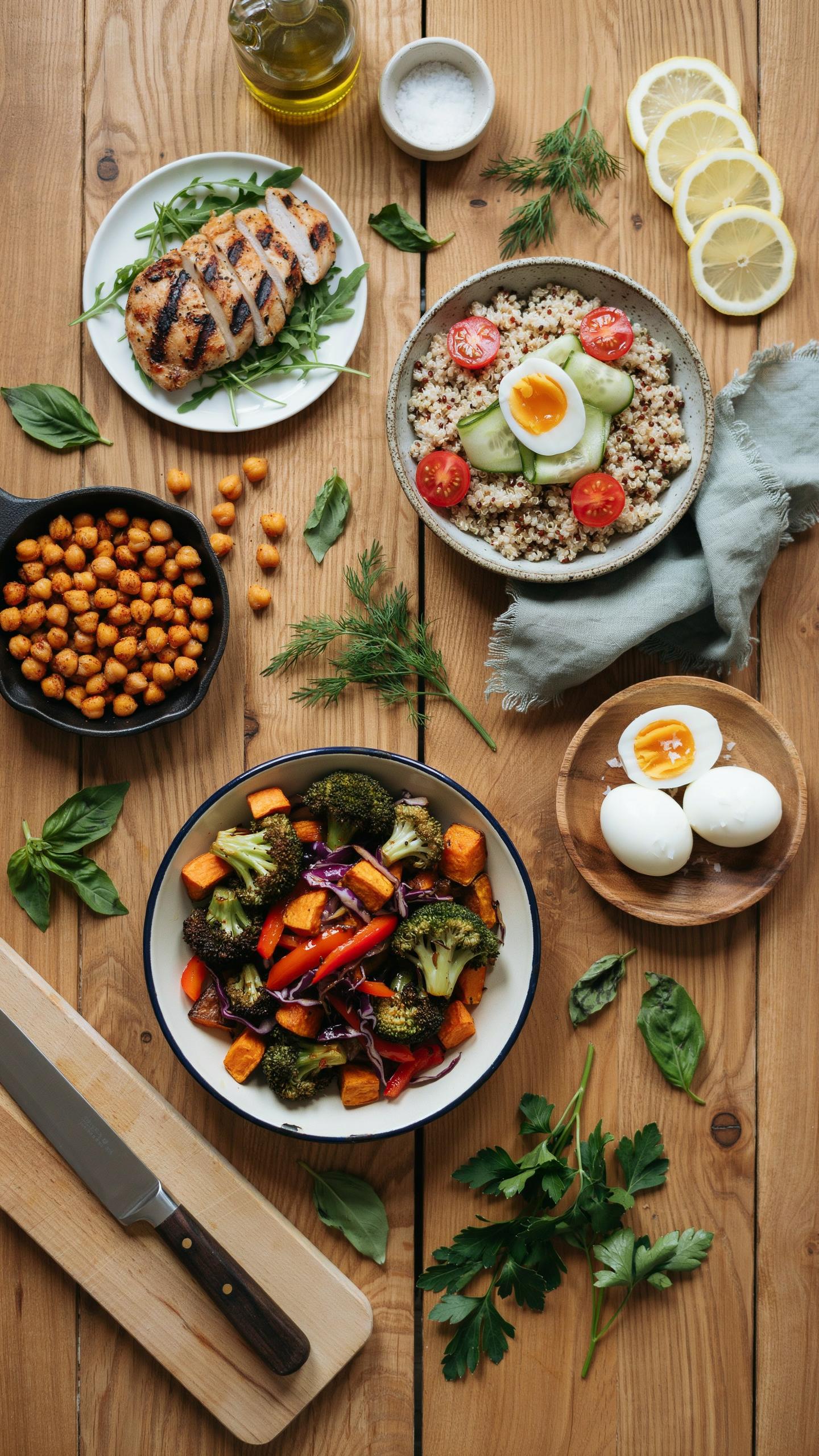
Grain Bowls: Nutrient Density Without Heat
You want salad to feel like a real meal because you’re tired of looking like you’re on a diet at lunch. The mechanism that makes grain bowls work where salads fail is thermal mass. In thermodynamics, thermal mass is an object’s ability to absorb and retain heat. With cold grain bowls, you’re inverting this: you’re choosing ingredients with actual density and satiety that hold their structure and protein content without requiring microwave reheating. Cooked grains, legumes, and cold proteins don’t degrade when stored. They actually improve as flavors marry overnight.
The common advice is to build salads with “more protein.” That’s incomplete. A salad is still a salad, structurally speaking. A grain bowl is a different category. Start with a base of farro, quinoa, or white beans. Layer in a cold protein source like rotisserie chicken, canned tuna, or cottage cheese. Add raw vegetables for texture contrast, then dress it the night before so everything absorbs flavor without becoming soggy. You’re building a self-contained structure that doesn’t require a microwave to taste intentional.
Deconstructed Wraps And Sushi Bowls
The wrap category fails because people treat it as a delivery mechanism rather than a container that needs structural integrity when cold. Sushi bowls solve this by abandoning the wrap format entirely but keeping the flavor profile that makes wraps feel intentional and craveable. You get the same ingredients, better texture, and zero structural collapse after four hours in a lunch bag.
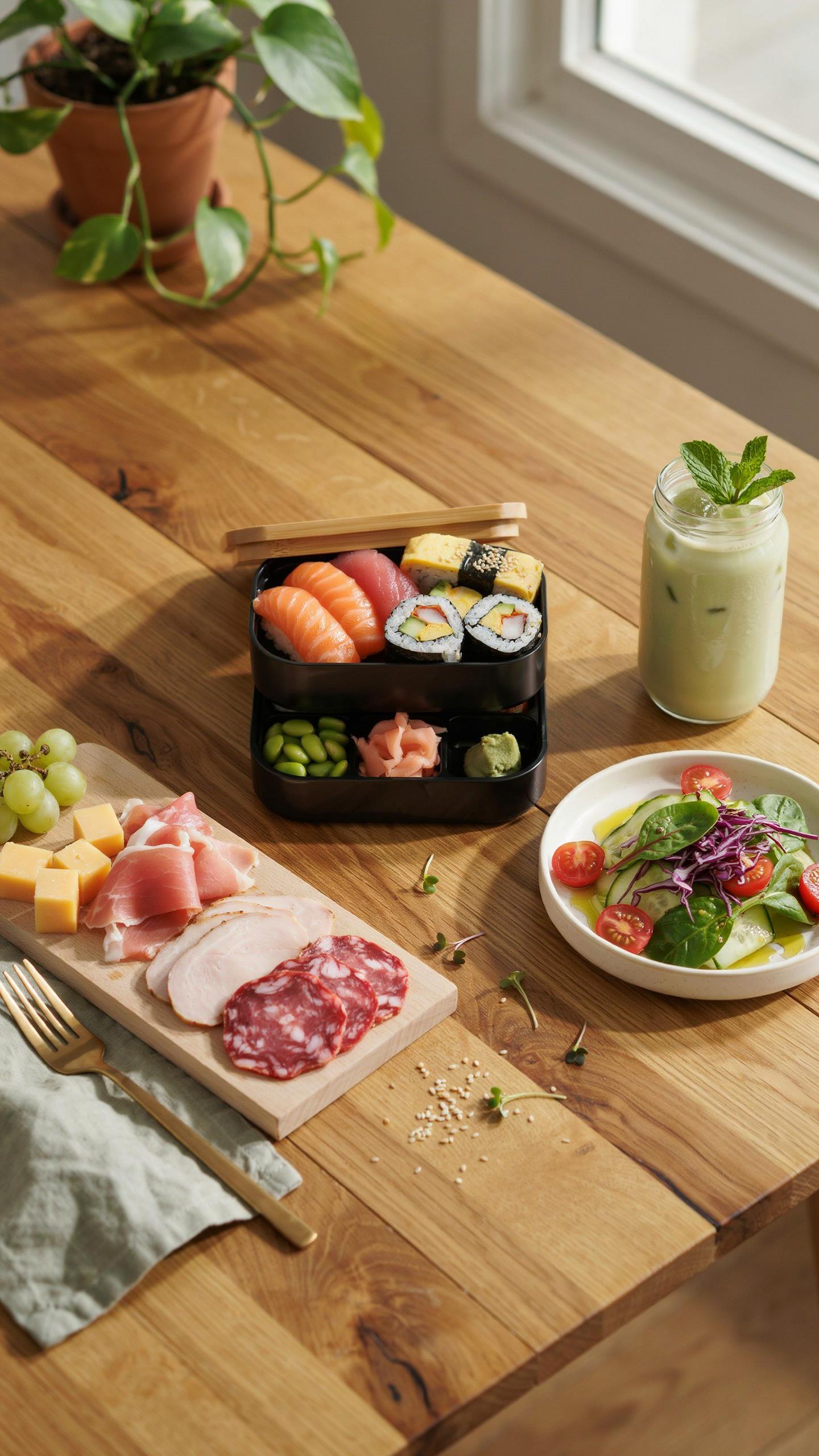
Layer sushi rice or cauliflower rice as your base, then add cooked salmon or hard-boiled eggs, cucumber, avocado, and nori strips. Prepare a small container of low-sodium soy sauce or spicy mayo to mix in right before eating. The key is keeping wet ingredients separate until consumption. This method gives you 30 to 40 grams of protein, holds cold for eight hours, and doesn’t require you to eat a disintegrating wrap at your desk.
High Protein Summer Meals Cold Beat The Heat Boost Your Gains
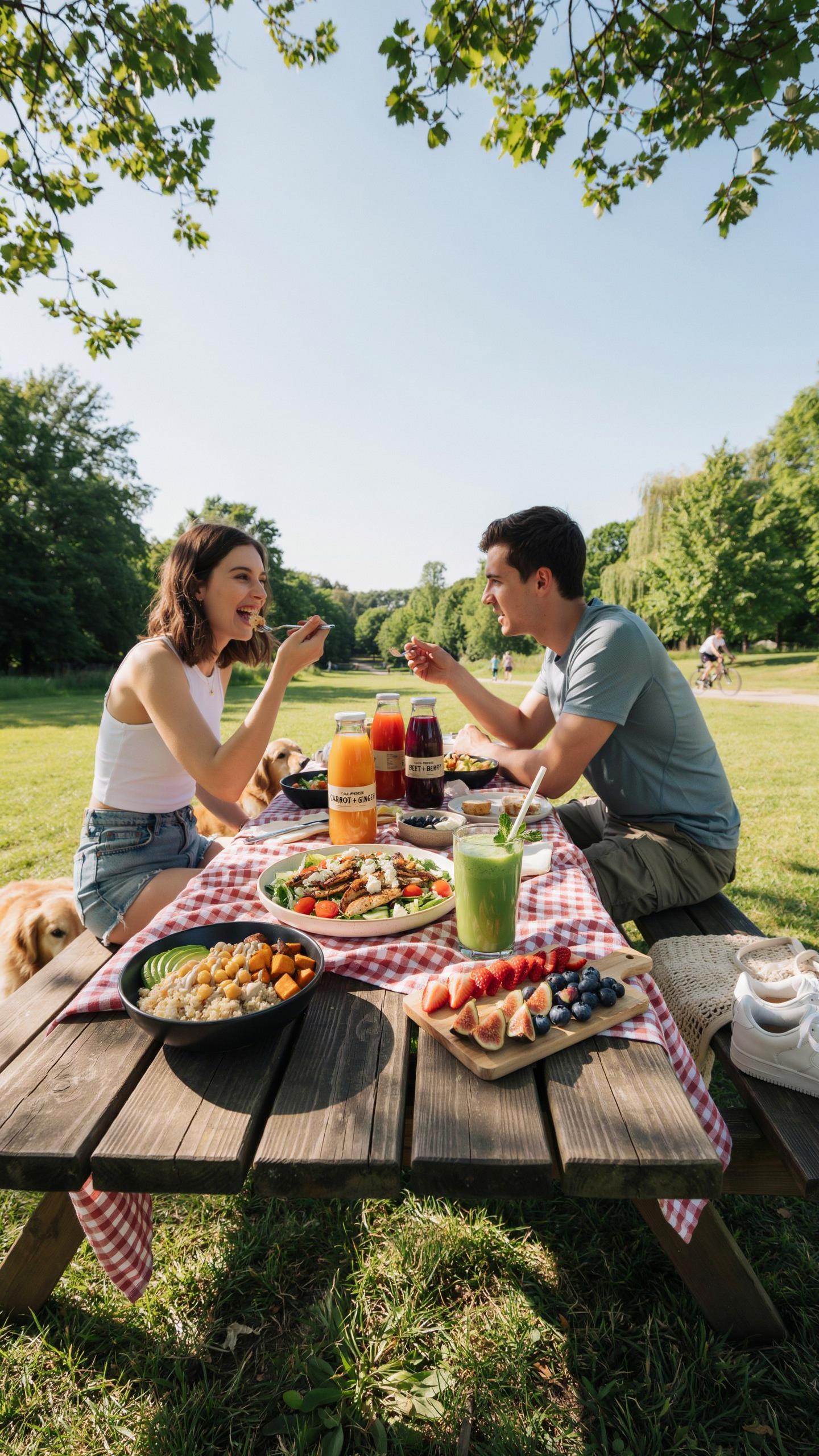
Water Content Is Your Actual Leverage
You want summer meals to feel light so you don’t sabotage your diet halfway through the day. Here’s what matters: water-dense foods regulate core temperature and extend satiety without adding calories that derail your surplus or deficit. This is osmotic pressure at work. High protein cold lunches survive summer because they exploit the same mechanism: you’re not fighting your body’s heat response, you’re using it. Cucumbers, tomatoes, and lettuce aren’t filler. They’re infrastructure.
Most meal prep guides ignore this entirely and just pile protein on a plate. That’s why people abandon their lunch by 2 PM in July. Chicken breast alone gets dense and salty in heat. Add 40 percent of your meal’s volume as raw vegetables with high water content, and the whole thing becomes palatable and thermally stable. Greek yogurt, cottage cheese, and mozzarella hold hydration better than hard cheeses. Pair them with greens and you’ve built a meal that doesn’t degrade in a lunch bag.
Acid Shifts Flavor Perception In Heat
Temperature dulls taste receptors, which means your brain registers salt and sweetness first and everything else fades. Vinegar and citrus solve this without adding calories. Lemon juice, lime, and white vinegar trigger taste perception through a different pathway than salt alone, so your lunch stays interesting even as it warms. This is straight neurology, not opinion.
Build dressings around acid first, then fat for satiety. A simple 3-to-1 ratio of olive oil to vinegar with mustard and garlic works across all proteins. Chicken, tuna, hard-boiled eggs, and lean ground turkey all benefit from this approach. Make the dressing the night before and store it separately. Mix it into your cold lunch right before eating. This prevents sogginess and keeps flavor intensity consistent from day one through day five of your prep cycle.
Mastering The Cold Meal Prep Workflow Your Efficiency Multiplier
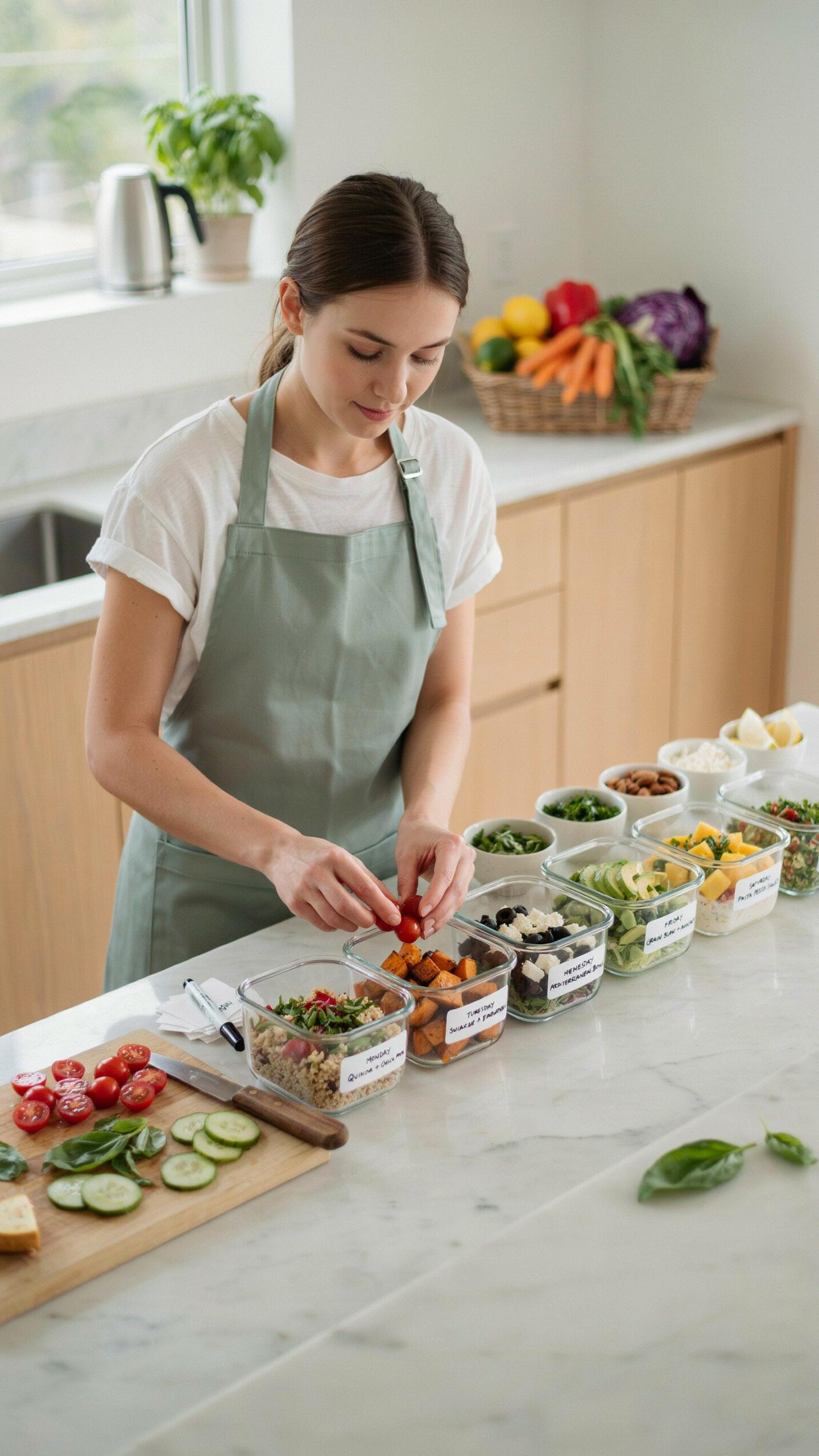
Set Your Station Before You Cook
You want this section because you’re tired of wasting prep time and looking for the productivity hack that will make you feel organized. There isn’t one. The real mechanism is borrowed from manufacturing: constraint-driven workflow optimization. Your kitchen is a production line. Every extra step you take to find a bowl, locate the cutting board, or hunt for storage containers is waste that compounds across batches.
Arrange everything within arm’s reach before you start. Proteins on one side. Cutting surfaces in the middle. Storage containers stacked and ready on the other side. The goal is to move protein from fridge to board to container without walking. This reduces prep time by 20 to 30 percent because you eliminate the friction between tasks. Your brain doesn’t context-switch. Your hands don’t stop moving.
The Two Day Rotation System
Most meal prep advice tells you to cook five days’ worth at once. That’s incomplete because it ignores bacterial growth rates at refrigeration temperatures and the texture degradation of proteins stored too long in moisture. The real answer is the two-day rule: prepare enough protein and fresh components for two to three days, then repeat the process midweek.
This system works because you’re never storing prepped chicken, tuna, or eggs longer than 48 to 72 hours at 40 degrees Fahrenheit. Proteins stay firm. Vegetables don’t leach into dressings. You avoid the stale, oxidized taste that kills people’s compliance by Thursday. Prep Monday and Thursday. Buy smaller quantities. Your cost per meal stays the same but your consistency rate goes up because the food actually tastes good.
The real obstacle isnt the lack of a microwave its your lack of imagination and strategic foresight
You already know protein matters. You already know cold food exists. What you’re missing is the decision to stop treating meal prep like a chore and start treating it like a competitive advantage. Your competitors eat whatever’s convenient. You eat what you planned. Pick one protein today, one vegetable today, one carb today, and build your first cold lunch container right now. The difference between people who stay lean and people who don’t isn’t willpower. It’s a full fridge that makes the right choice obvious.