
The Mason Jar Salad Deception Convenience Over Competence
Why Convenience Fails When You Stop Paying Attention
You want to believe meal prep works because you’re terrified of being undisciplined. Here’s the mechanism: most people treat mason jar salads as a set-it-and-forget-it system. They build it once, assume the structure holds, then open it five days later to find wilted greens and separated dressing. The jar isn’t the problem. Entropy is. Your greens degrade faster than you calculated, and dressing migrates through layers regardless of stacking order. The salad wasn’t designed wrong. Your protocol was.
The real failure happens between day two and day three. Moisture from the dressing wicks upward into vegetables through osmosis. Croutons absorb liquid and turn to paste. Cheese oxidizes. You packed it thinking layering solved everything. It doesn’t. You need active maintenance: specific vegetables that hold, exact moisture levels, and dressing formulas that don’t break down greens through chemical action. Most prep guides skip this because it’s harder to write about than “just layer it.”
The Hidden Cost Of Buying Into Generic Health
The supplement and prepared-food industry sells convenience as health. They’re selling different things. A mass-produced “high protein salad kit” sits in cold storage for days, loses micronutrient density, and relies on preservatives to maintain shelf life. You pay premium prices for degraded food. The mechanism is supply chain economics: corporations optimize for distribution speed and appearance retention, not nutritional integrity or actual protein bioavailability.
Your mason jar approach only wins if you build it differently. You control ingredient freshness, protein source quality, and the exact chemical environment inside the jar. Store-bought assumes you’ll eat it within a window they define, not when you actually need it. Real meal prep means understanding which vegetables release water, which proteins oxidize fastest, and which dressing bases stabilize rather than destroy what you’re protecting. The jar is just the container. The system is what separates results from performance theater.
High Protein Salad Jars The Macro Precision Protocol
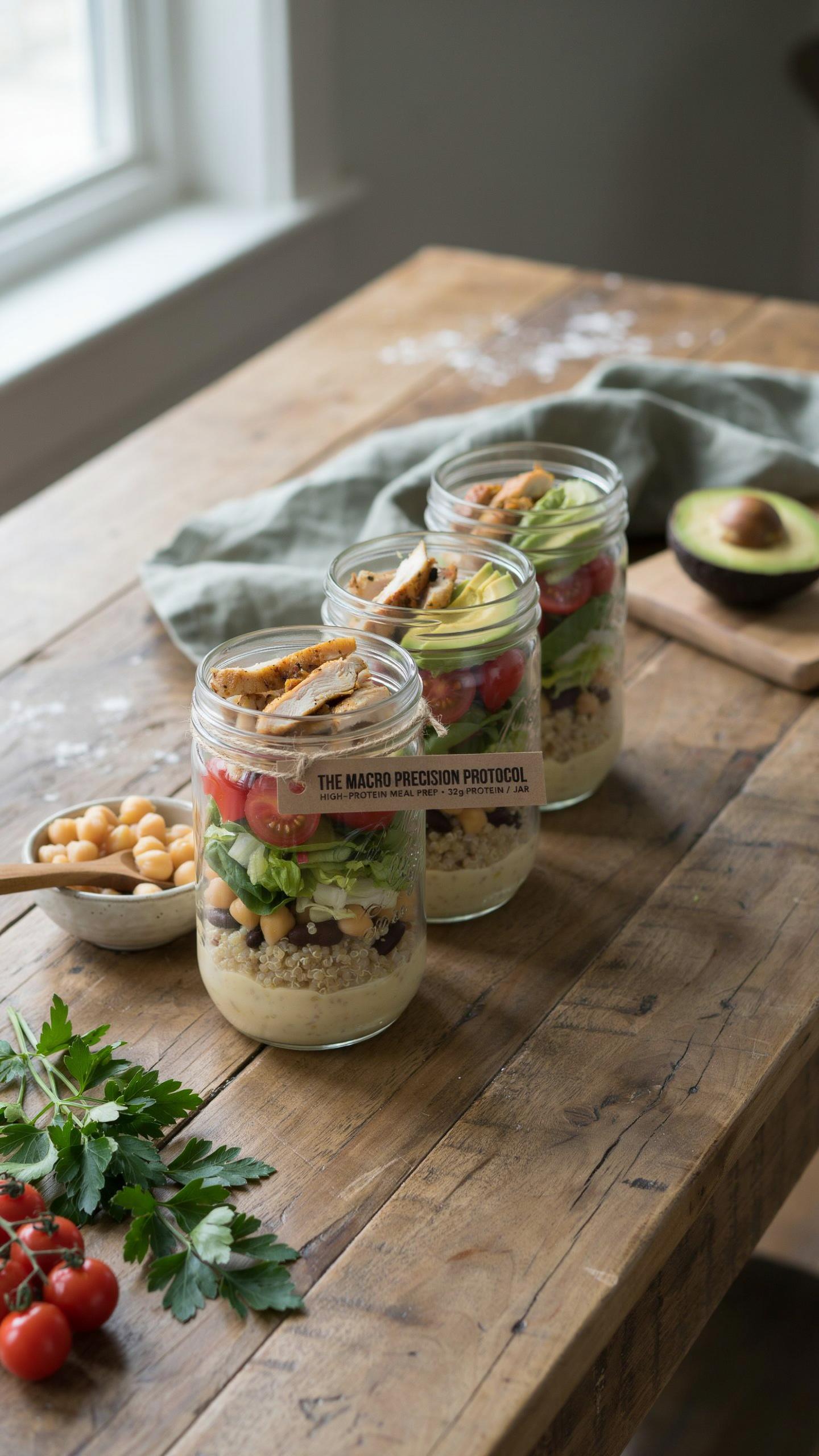
How Much Protein You Actually Need
You want a number that feels scientific so you stop second-guessing yourself. Here’s the mechanism: protein requirement scales with body composition and activity level, not body weight alone. A sedentary 200-pound person needs less daily protein than a 180-pound person training five days a week. Start with 0.7 to 1 gram per pound of lean body mass, then adjust based on hunger and recovery. Most people undershoot because they conflate total weight with muscle.
Your mason jar salad becomes a delivery system for hitting that target consistently. If you need 130 grams daily and eat three meals, aim for 40 to 50 grams per jar. This removes the friction of calculating at every meal. Protein sources in jars—grilled chicken, hard-boiled eggs, cottage cheese, canned fish—stay stable for five days refrigerated. Layer protein first, at the bottom, to prevent it from absorbing excess dressing and drying out.
Energy Stability Without The Crash
Most advice says balance your macros equally. That’s incomplete. Biochemistry matters more than ratio math: fats slow gastric emptying, carbs spike glucose, protein triggers satiety signals. A salad with zero carbs leaves you depleted by 3 PM. A jar loaded with carbs and no fat spikes insulin then crashes it.
Your protocol: aim for 25 to 35 grams of fat and 30 to 50 grams of carbs per jar, adjusted to your training window. Pre-workout jars trend higher carb. Post-workout jars trend higher protein with moderate carbs. Use whole food sources only: olive oil, avocado, nuts for fat; sweet potato, chickpeas, berries for carbs. Sustained energy means no midday energy collapse and no reaching for processed snacks that sabotage your protein goal.
The Stratification Method Engineering Your Jar Salads Recipes
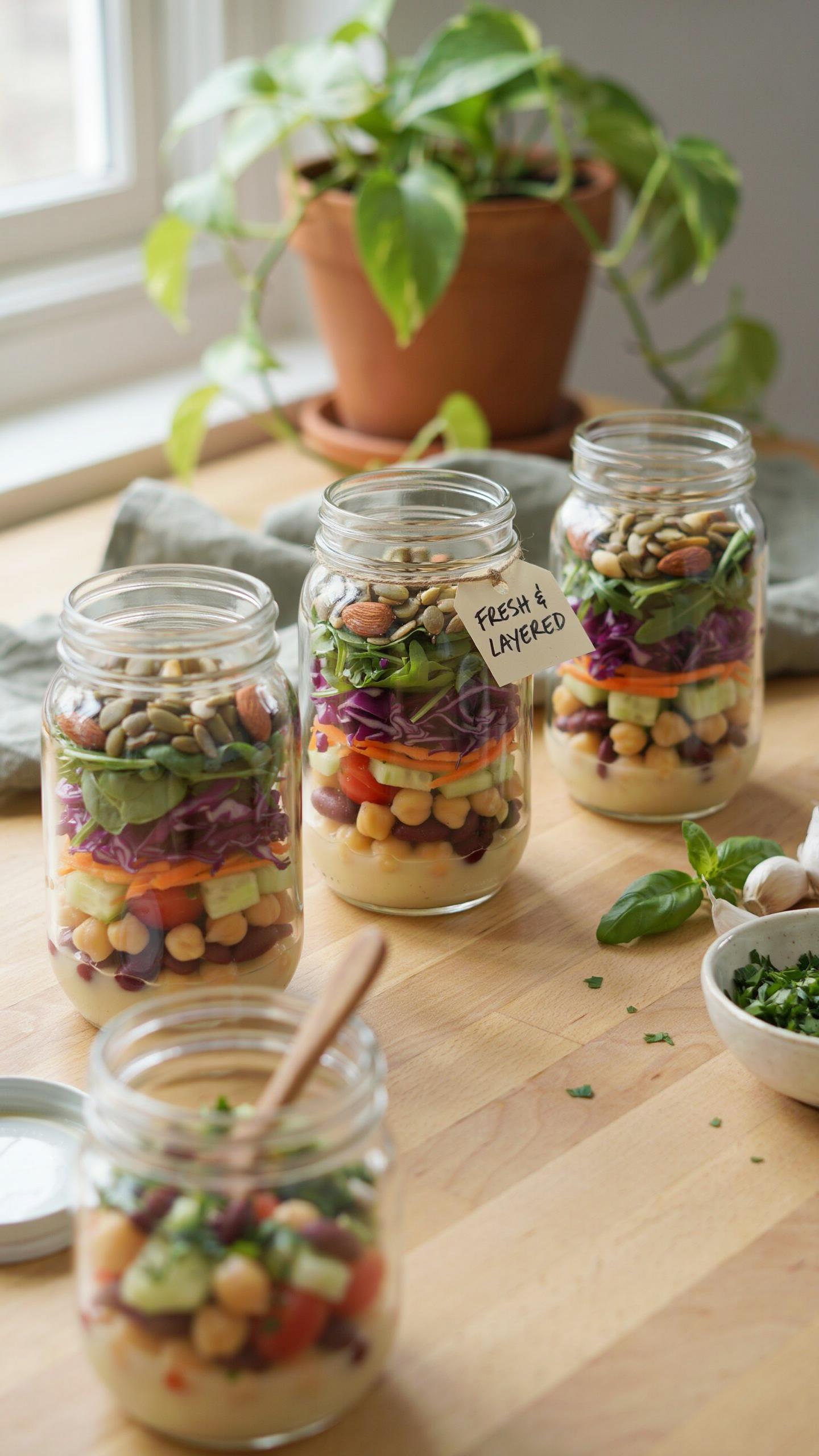
Why Layer Order Matters More Than Ingredients
You want your salad to still taste good on day four. That’s the real reason you’re reading this. Most advice says “just put dressing on bottom” and leaves you with soggy greens by Wednesday. The mechanism is osmosis, borrowed from chemistry: water moves across a semipermeable membrane from lower solute concentration to higher. Your lettuce cells are that membrane. Dressing creates high solute concentration at the bottom, pulling water out of leaves above it. The barrier between dressing and greens determines how fast this happens.
Vinegar-based dressings move water slower than creamy ones because acidity preserves cell structure. Oil creates a partial water barrier that slows osmosis further. Most people stack dressing against greens directly and wonder why texture dies. You need a physical interruption layer. That layer is how you buy days of freshness. Place hardy vegetables or grains between dressing and delicate greens. This forces water to travel through denser cell structures first, which takes time. The gap matters more than the dressing formula.
Building From Dense To Delicate
Start at the bottom with components that have rigid cell walls and low water content.
- Dressing (1/4 cup): Oil-based or vinegar-based liquids. Stay under 1/4 cup to avoid pooling at the jar bottom.
- Grains or legumes (1/2 to 3/4 cup): Cooked chickpeas, lentils, farro, or quinoa absorb some liquid and create structural barriers. These don’t soften from dressing contact.
- Hard vegetables (1/2 to 3/4 cup): Carrots, beets, radishes, celery. These have thick cell walls and shed water slowly. Chop uniform sizes to pack efficiently.
- Protein layer (3/4 to 1 cup): Grilled chicken, hard-boiled eggs, tofu, canned tuna. Position between vegetables and greens to protect delicate leaves.
- Greens (2 to 2.5 cups): Leafy spinach, arugula, or romaine on top. They stay furthest from dressing and retain crispness the longest.
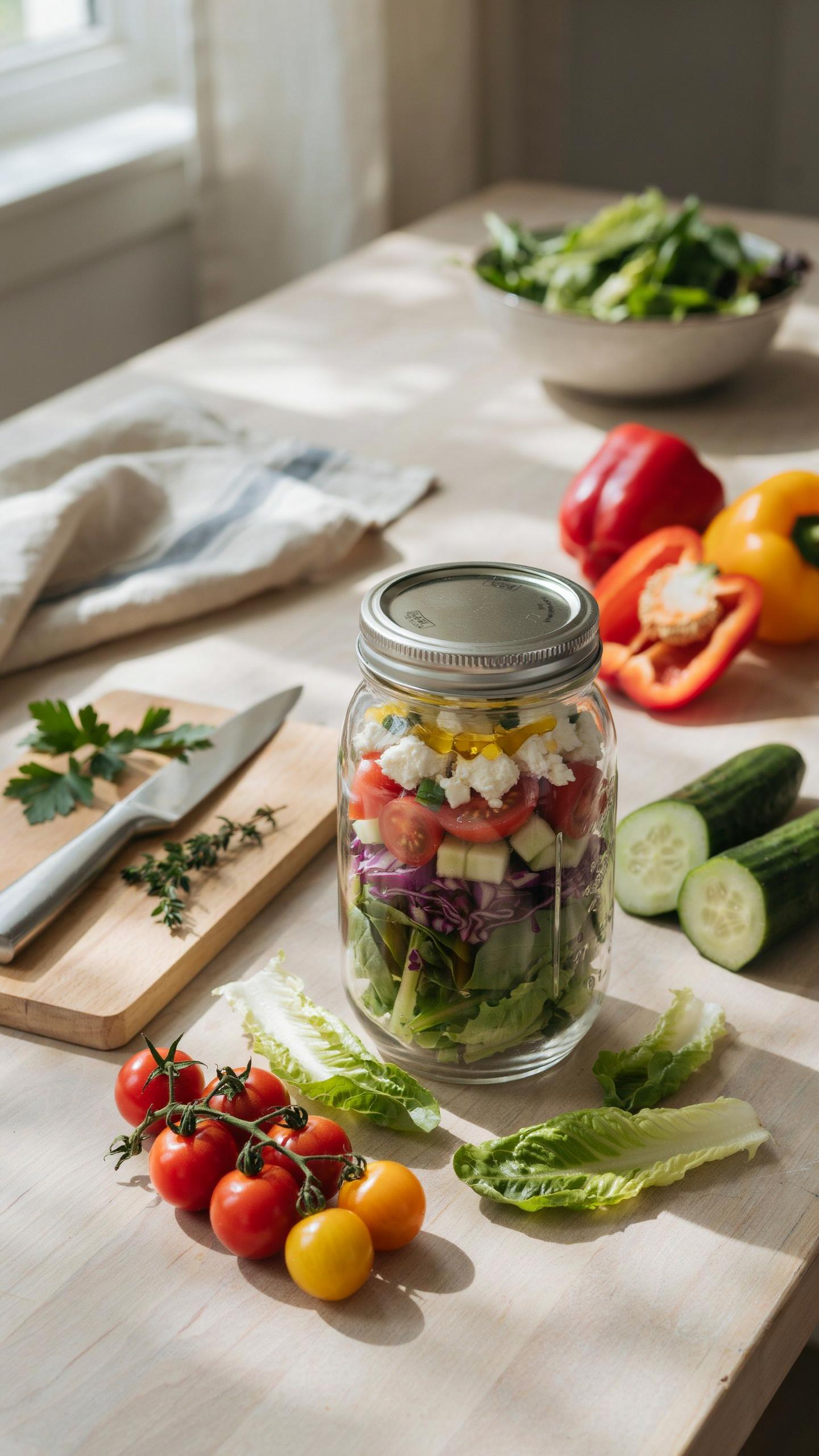
This order works because density increases water retention. Grains and cooked legumes have already lost their water content during cooking, so they won’t absorb more. Hard vegetables have thick waxy cuticles that resist osmosis. Protein sits in the middle as a buffer zone. Leafy greens stay isolated at the top where they encounter only air and other leaves until you shake the jar. Pack the jar tight enough that layers don’t mix when sealed, but not so tight that you crush anything. Fill to one inch below the rim. Screw the lid on and store upside down in the refrigerator if you want maximum shelf life, or store right-side up if you plan to eat within three days.
Beyond The Greens High Protein Mason Jar Meals
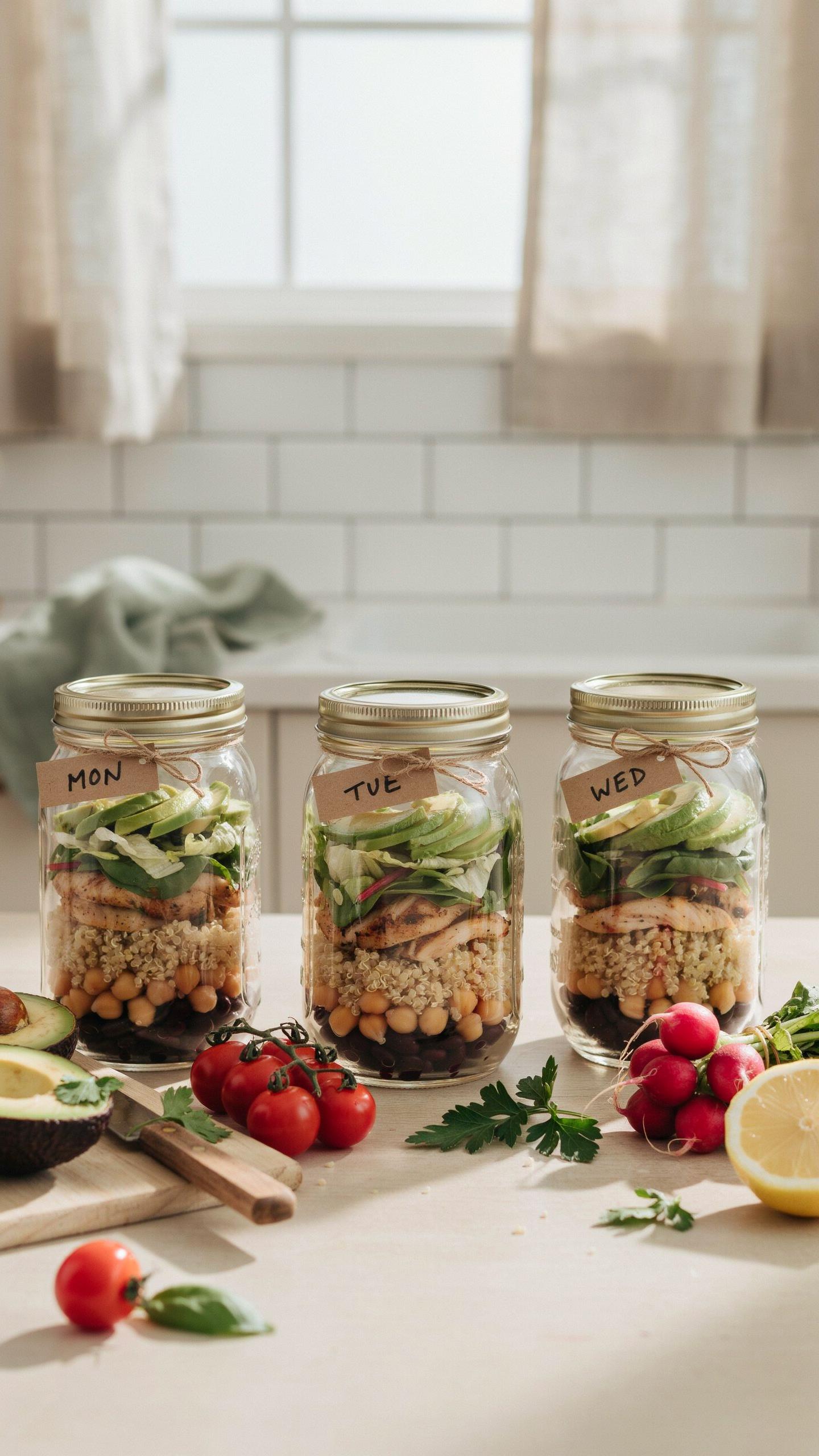
Stacking Multiple Protein Sources
You want to believe one protein source covers your bases. It doesn’t. The mechanism here is amino acid profile complementarity—borrowed from nutritional biochemistry, where complete protein isn’t a binary state but a spectrum of bioavailability. Combining proteins with different amino acid ratios increases the total usable amino acids your body absorbs. Cottage cheese alone lacks certain branched-chain amino acids that Greek yogurt provides. Chicken breast lacks the lysine density that legumes deliver. Stack them intentionally.
Layer a base of cottage cheese, add grilled chicken chunks, then finish with hemp seeds or white beans. This isn’t redundancy—it’s deliberate gaps filled. The cottage cheese provides casein protein that digests slowly. The chicken adds fast-digesting whey-like amino acids. The legumes or seeds contribute lysine and fiber your body needs for protein synthesis. Each component does metabolic work the others can’t. Don’t treat protein variety as optional.
Nutrient Density Beyond Protein Grams
Most meal prep advice stops at protein totals. That’s incomplete. Real nutrient density means the micronutrients travel with your macros—and they either support protein utilization or they don’t. Vitamin B6, zinc, and magnesium are cofactors your body needs to actually build muscle from that 40-gram protein jar. A jar with 40 grams of protein but zero B vitamins performs worse than 35 grams paired with nutrient-dense vegetables and seeds. The math isn’t calories or grams.
Build your jar around this protocol: protein foundation, then micronutrient-dense vegetables (spinach, red cabbage, bell peppers for vitamin C), then micronutrient-dense fats (pumpkin seeds for magnesium and zinc, tahini for B6). The oil-based dressing should contain lemon juice or vinegar to enhance mineral absorption from the vegetables. This isn’t seasoning preference—it’s absorption science applied to meal prep. Your protein only works if the jar contains the minerals and vitamins that activate it.
The Feedback Loop Refining Your Lunch In A Jar Recipes
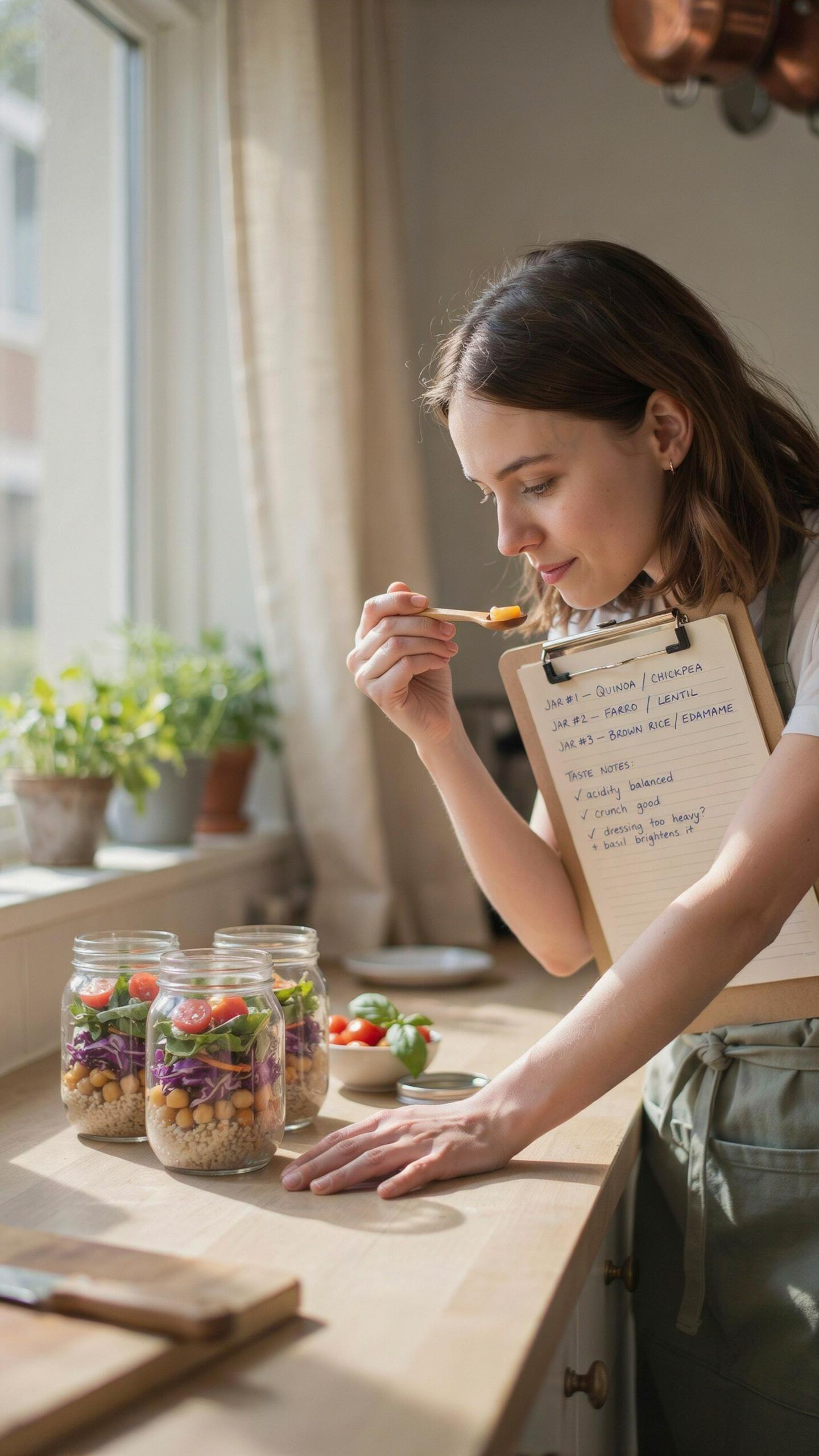
Watch Your Body, Not Your Willpower
You’re tracking this because you want proof that your system works before you commit to it for months. That’s the real question underneath. Cybernetics teaches us feedback loops: you measure output, compare it to your intended result, then adjust the input. Your body is the output. Protein intake, satiation levels, energy crashes, and digestion speed are measurable signals. Most people skip this step and just assume their jar lunch “feels right.”
Track three variables for two weeks: how full you feel two hours after eating, your energy dip timing, and your afternoon hunger. These aren’t feelings to ignore. They’re data points. If you’re hungry again at 2 PM after eating a jar with 30 grams of protein, your protein target isn’t 30. Your body told you. Adjust upward by 5 to 10 grams and test again for another week.
The Numbers Tell You What To Change
Generic advice says “eat what works for you.” That’s useless because it assumes you already know. You don’t. Iteration requires specific, measurable inputs and outputs. Track your jar composition by weight: total protein grams, fiber grams, dressing amount in milliliters, and prep date. Then track one outcome metric: hours until hunger returns.
After three weeks of data, patterns emerge. You’ll see that 35 grams of protein with 8 grams of fiber keeps you full until 3 PM, but 32 grams drops you to 2 PM hunger. You’ll notice that jars prepared more than four days in advance lose crunch in the greens, which affects satiation signals even though macros stay identical. Once you identify the threshold, you stop guessing and start executing. Adjust your prep batch size and protein ratio based on what your log reveals, not what sounds reasonable.
Mason Jar Salad Unpacking The Shelf Life Myth
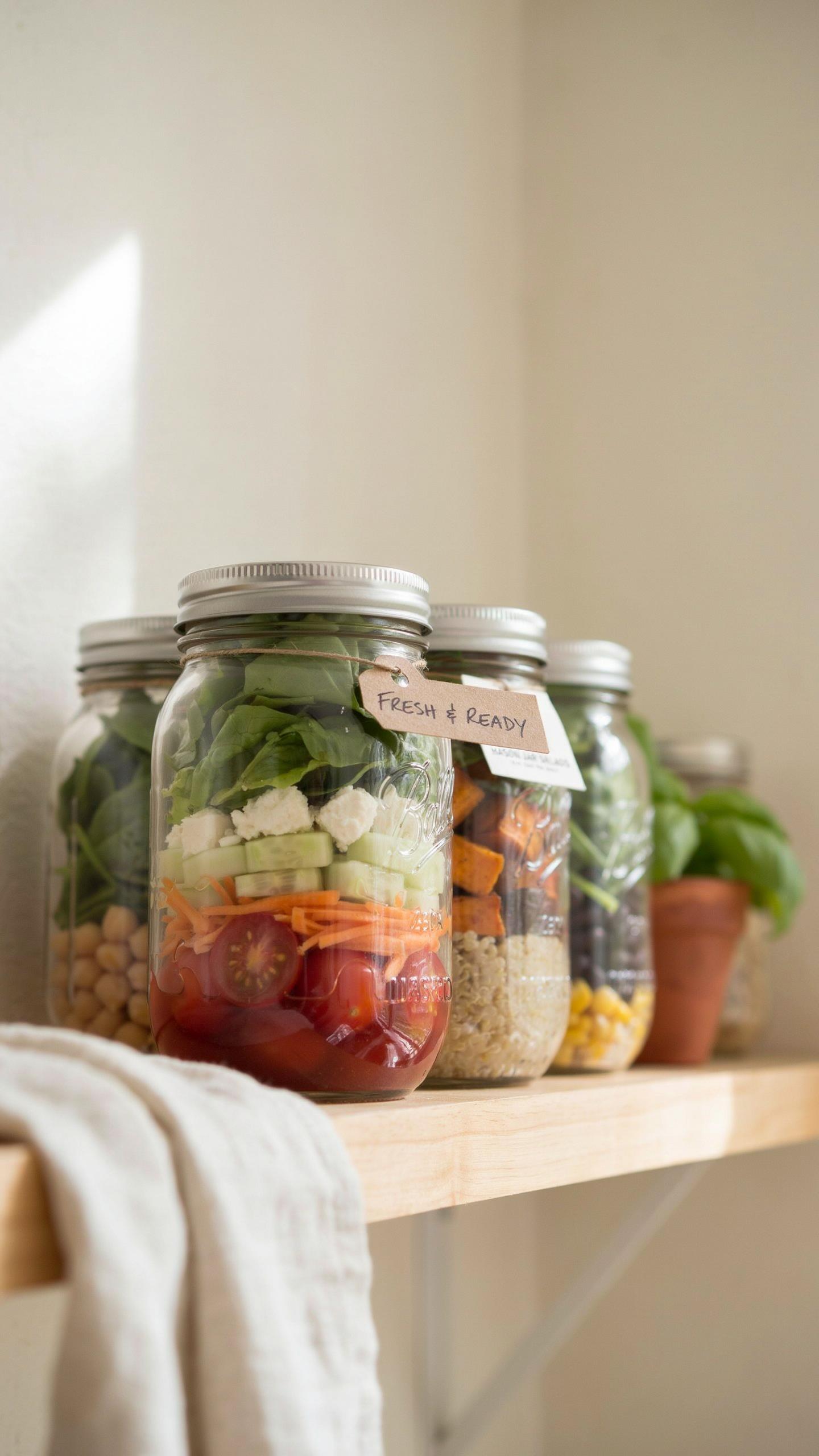
Why Your Greens Actually Wilt
You want to believe mason jars solve meal prep forever. They don’t. Here’s the real mechanism: bacteria and ethylene gas, not time itself, determine how long your salad stays edible. Ethylene is a plant hormone that triggers ripening and decay. Dressing accelerates bacterial growth by raising moisture levels. Leafy greens in a wet environment become mush within days, not weeks. The jar isn’t a time machine. It’s a container that either slows decay or speeds it up based on what you layer inside.
The common advice tells you to separate wet from dry ingredients. That’s incomplete. You need to understand moisture control as a biological problem, not a storage problem. Water touching greens creates an anaerobic environment where bacteria thrive. Acid in dressing lowers pH and slows microbial growth, but only if it doesn’t pool at the bottom touching your lettuce. Five days is the realistic maximum for a proper mason jar salad. Most failures happen because people skip the layering protocol entirely and wonder why everything spoils.
Layering Protocol Determines Actual Shelf Life
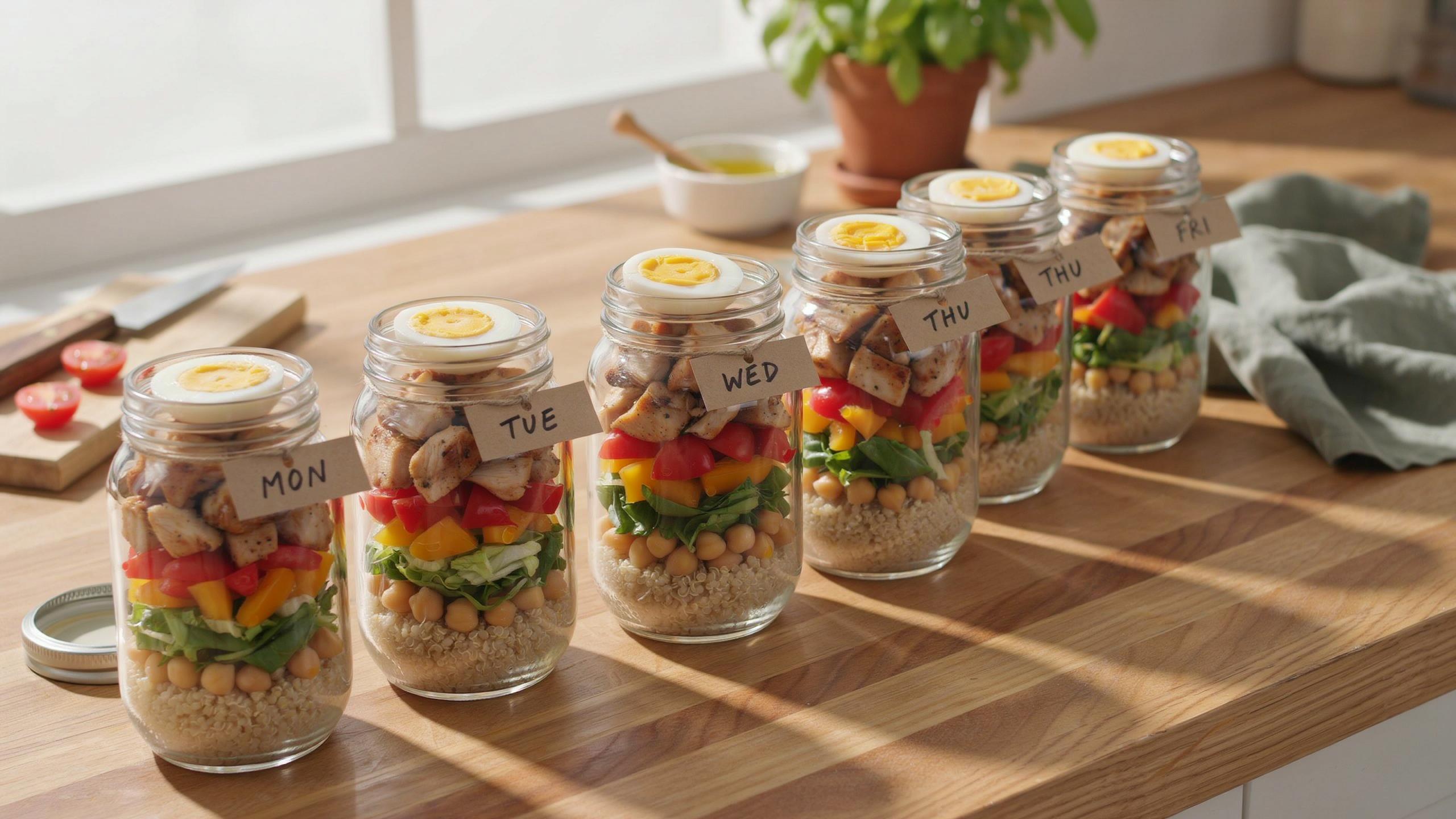
Layering isn’t decoration. It’s a preservation strategy. Start with dressing at the bottom. Add dense vegetables next: carrots, cucumbers, bell peppers, radishes. These act as a barrier between dressing and greens. Follow with grains or proteins. Then leafy greens on top, furthest from moisture. This sequence prevents cross-contamination of wet and dry zones. Proteins like chickpeas or hard-boiled eggs sit safely in the middle, never touching raw greens directly.
The sequence controls both bacterial growth and texture degradation. When greens rest against dressing, they breakdown within thirty-six hours. When separated by structure, they stay crisp for five days. Close the jar immediately after assembly. Trapped oxygen accelerates oxidation and browning. No air exchange equals slower decay. Store at forty degrees Fahrenheit minimum, ideally thirty-eight. Temperature directly correlates with bacterial reproduction rates. One degree warmer doubles bacterial growth speed.
The Anti Recipe Crafting Your Signature Salad Jar Recipe
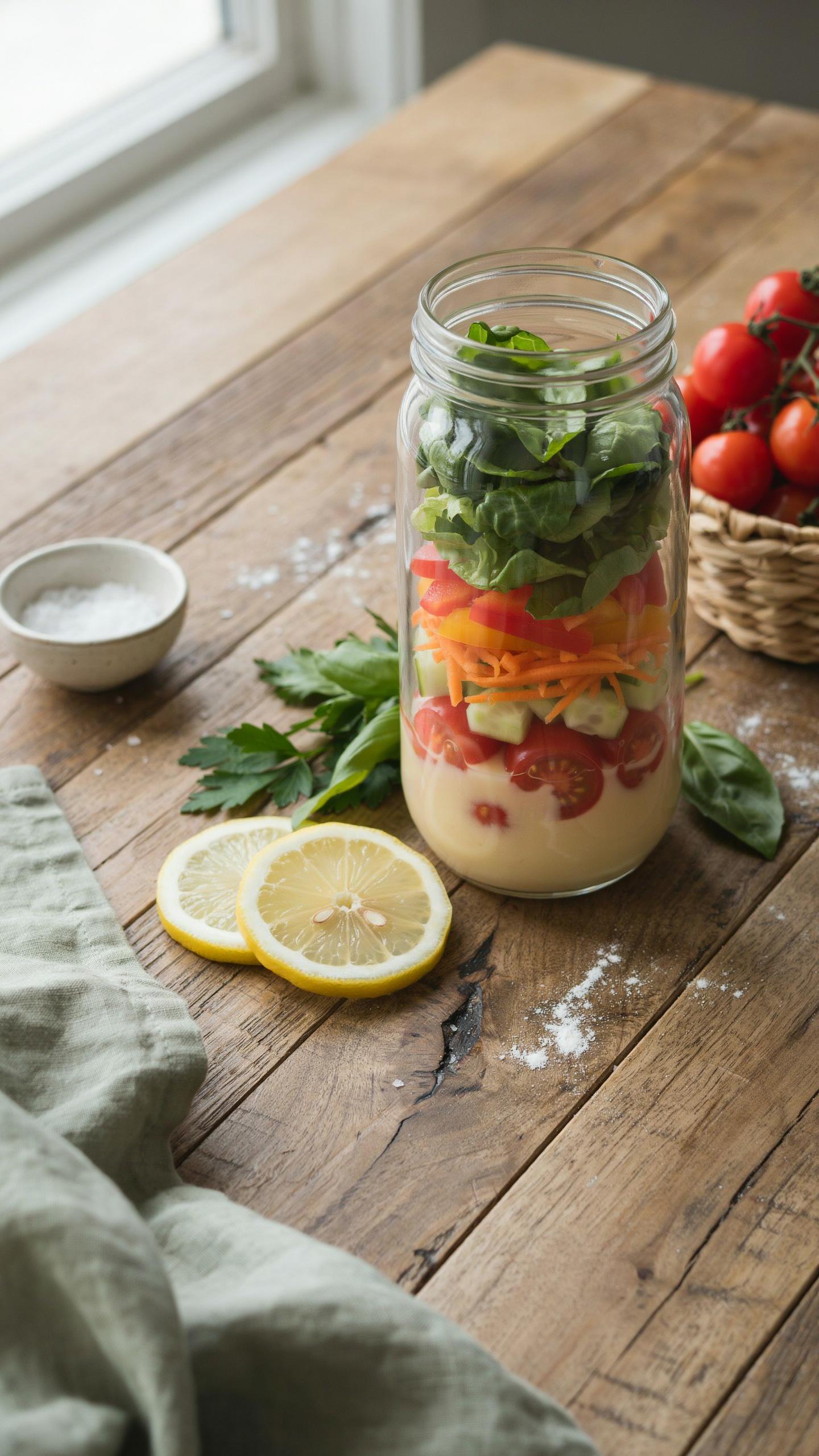
Stop Following Salad Formulas
You want permission to skip the “perfect ratio” because you think it means you’re doing it right. Here’s the mechanism: recipes exist to solve a problem for someone else. The moment you treat a salad jar like a formula, you’ve already lost. Formulas assume constraints that don’t apply to your schedule, your protein sources, or your actual preferences. Break the recipe into its working parts instead.
Every salad jar performs one function: keep wet ingredients from soaking dry ones until you eat it. That’s the system. The protein, the greens, the dressing—each has a role in delaying degradation. Once you see this, recipes become irrelevant. You’re not following steps. You’re stacking components with clear mechanical purposes.
Stack By Function, Not Tradition
Traditional salad structure borrowed from kitchen hierarchy—the way classical French cooking organized mise en place by prep order. Apply that same logic backward. Your jar’s function is preservation through layering, so invert the timeline. What touches the dressing first degrades fastest. What stays dry longest survives best.
This means: dressing hits the bottom. Then dense vegetables that can handle moisture—carrots, cucumbers, bell peppers. Then your protein. Then delicate greens on top. The sequence isn’t tradition. It’s physics. Heavy, sturdy items buffer soft ones. You’re not making a salad. You’re engineering a shelf life. Adjust the stack based on your ingredients’ actual moisture tolerance, not what you’ve seen online.
Jar Lunch Ideas The Strategic Advantage
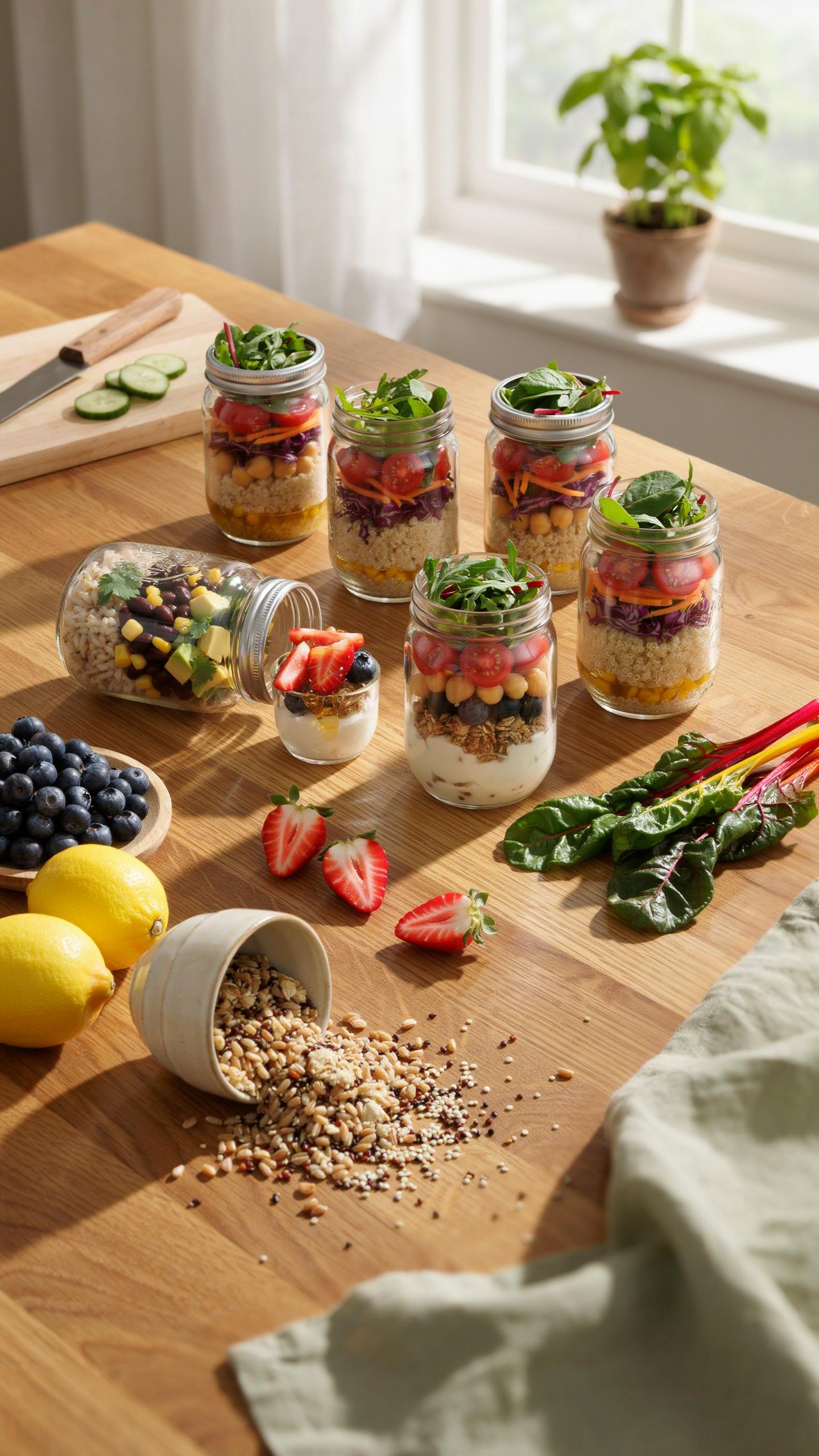
The Real Cost Of Daily Food Decisions
You’re not actually worried about saving time. You’re afraid of wasting willpower on something that shouldn’t require any. Meal prep solves this by removing the decision entirely. Economics calls this “decision fatigue arbitrage”—you spend cognitive energy once during prep, then spend zero during the week. Most people frame this as convenience. That misses the point. You’re not reclaiming minutes. You’re reclaiming mental bandwidth for decisions that actually matter.
A mason jar salad done right means no decision at lunch. You grab the jar. You eat. That’s the transaction. This isn’t about efficiency theater. This is about removing friction at the exact moment you’re most depleted. Your brain doesn’t have to negotiate with hunger or negotiate with what’s available. The jar already negotiated for you, seven days prior, when you had full cognitive capacity.
The Information Problem For Leaders
Most people describe meal prep as boring repetition. That’s wrong. It’s actually the opposite of boring because you’re not thinking about it. But busy people face a real problem: the decision overhead of food planning still consumes space in your working memory. You think about lunch options throughout the morning. You debate restaurants at 11:45 AM. You second-guess your choices. Mason jar prep eliminates these background processes entirely.
Build your jars on Sunday with a repeatable structure. Same protein source each week if possible. Same base vegetables. Same dressing ratio. This isn’t laziness. This is pattern recognition that frees your brain. You know what you’re eating before the week starts. No surprises. No mental load. The jars sit in your fridge as a visual reminder of decisions already made. This is how you think like someone without a thousand open tabs.
The real obstacle isnt finding the right recipe its your unwillingness to impose a system on chaos
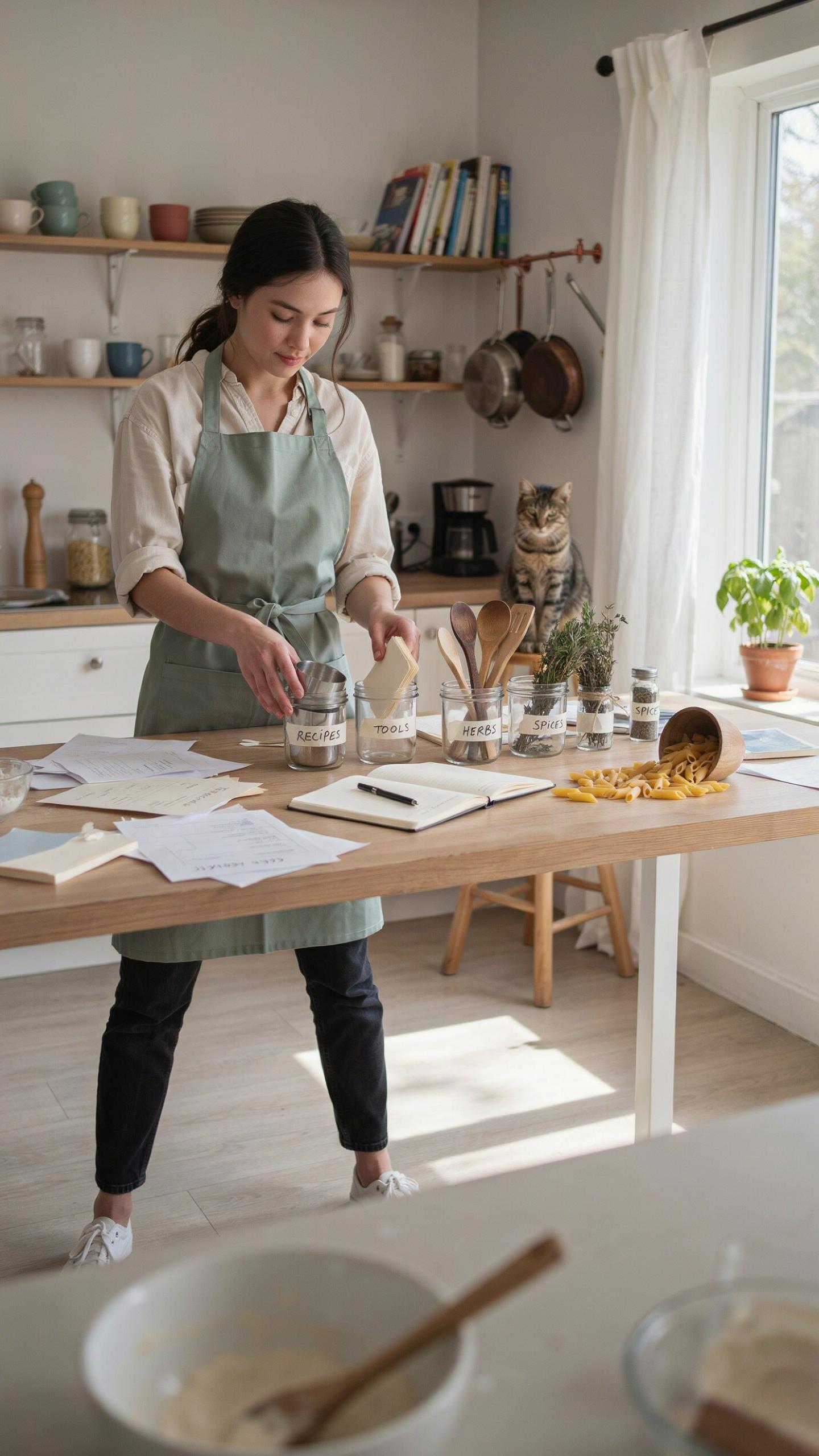
You already know protein matters. You already know mason jars work. What you don’t know is that you’ll never execute this until Sunday becomes non-negotiable. Pick one day. Buy your containers today. Commit to three jars minimum next week. The difference between people who actually get lean and everyone else isn’t willpower or genetics. It’s the person who decided that their meal prep system matters more than their comfort. Stop waiting for motivation. Build the ritual instead.