
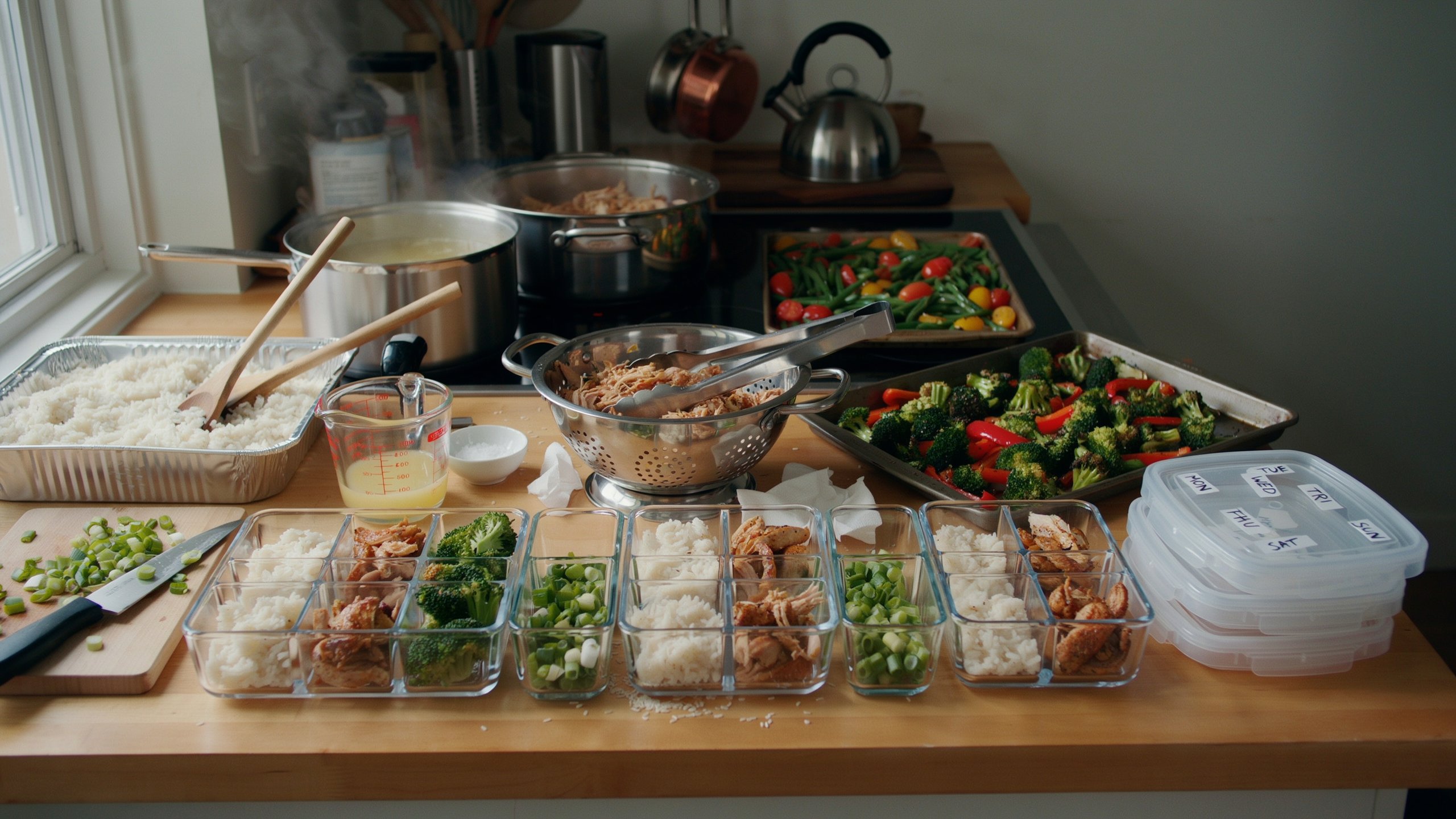
The Decision Fatigue Trap: Why Easy Isn’t Enough

The Real Cost Of Daily Food Choices
You want to believe willpower scales. It doesn’t. Every food decision you make burns glucose and depletes your prefrontal cortex’s ability to decide again tomorrow. This is decision fatigue, borrowed from cognitive psychology, and your protein intake is its most predictable victim.

Most people think the problem is motivation. Wrong. The problem is that you make food choices when you’re hungry, tired, or both. At that moment, the path of least resistance wins. A protein bar from the gas station beats a meal you haven’t prepared. Your brain doesn’t care about macros when it’s running on fumes. You’ll choose convenience over consistency every single time, and you’ll feel guilty about it afterward.
Friction Is The Actual Lever
Meal prep removes the decision entirely. You don’t choose between chicken and pizza at 6 PM because the chicken is already portioned in your fridge. This isn’t motivation. This is architecture.
One Sunday session creates a five-to-six-day buffer where protein consumption becomes automatic, not optional. You eliminate the moment where choice happens. That’s the mechanism. The meal sits there. You eat it. No negotiation. Your protein target stops being aspirational and becomes inevitable. This is why people who prep actually hit their numbers. Not because they’re more disciplined. Because they engineered discipline out of the equation.
High Protein Meal Prep: The Anti Diet Protocol
Abundance Over Scarcity
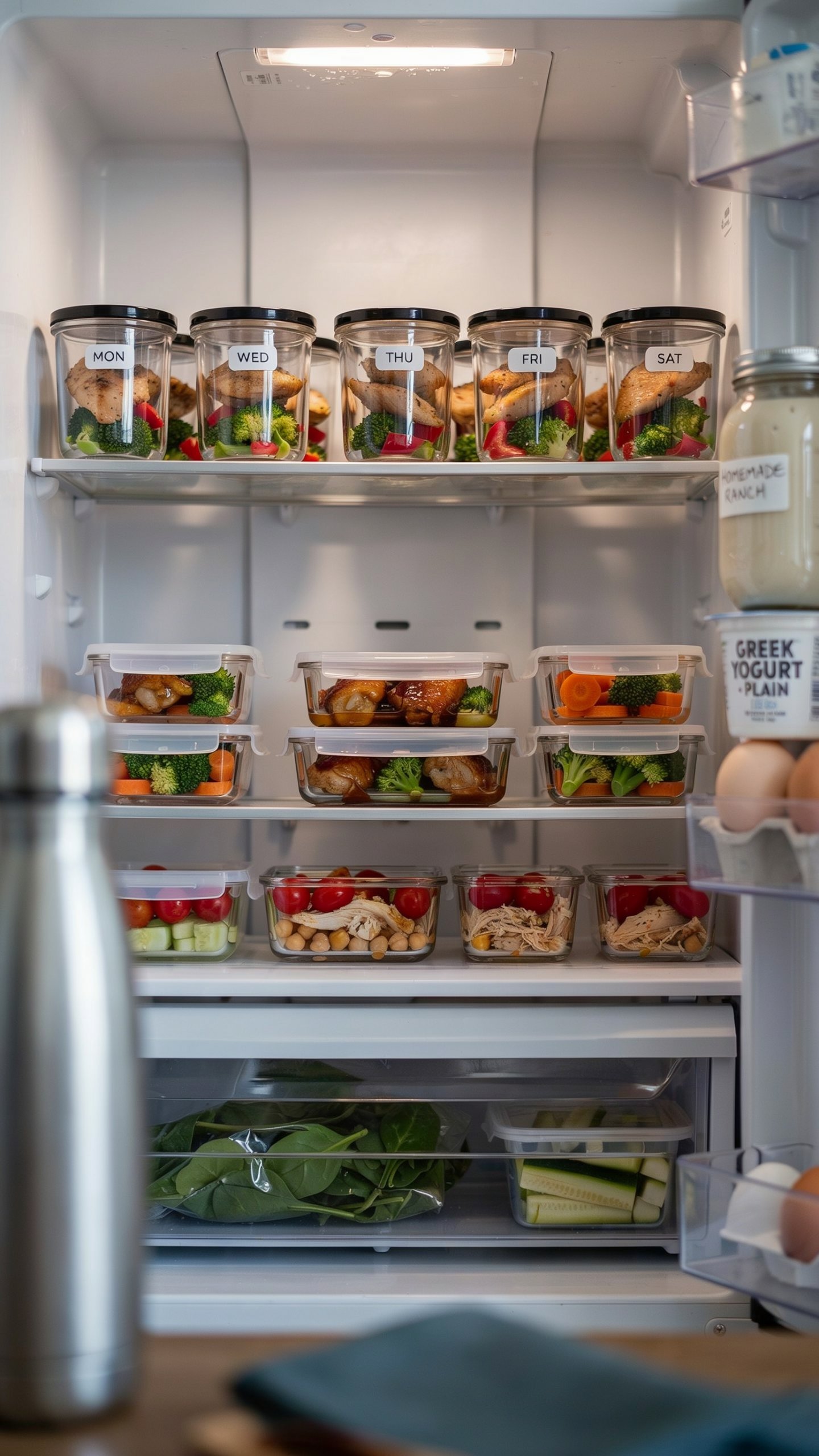
You want this to work because you’re tired of the willpower game. Here’s the mechanism: restriction depletes decision capital. Every meal choice you make costs mental energy. Abundant preparation removes the choice entirely. You don’t debate what to eat when the food sits prepared in front of you. The calories stay the same. The protein target stays the same. The difference is you’ve moved from a scarcity mindset (what can I not eat) to a surplus mindset (here’s what I’m eating).
Most diet advice inverts this. It piles on rules, counts macros obsessively, frames eating as deprivation with rewards. You end up white-knuckling through the week, then bingeing on weekends. High protein meal prep works the opposite direction. You’re not restricting. You’re designing your default. You’re building infrastructure so compliance becomes automatic, not heroic.
Your Default Is Your Destiny
Economics calls this the concept of “stock” versus “flow.” Stock is what you have. Flow is what moves through. Your weekly meal prep is the stock. It sits there. It doesn’t deplete or degrade significantly over seven days when stored correctly. The flow is your daily eating. When the stock is high protein, abundant, and frictionless, the flow follows. You eat more protein not because you decided to, but because you decided once, and now the decision executes itself.
The mistake most people make is treating meal prep as a chore they complete. It’s actually the opposite. It’s an investment in a system that makes the rest of the week effortless. You prep Sunday. You win Monday through Friday without thinking. The default wins because it requires zero willpower at point of consumption. You’ve already made the call. You’re just executing it.
Mastering The Weekly Meal Prep Workflow
The Bottleneck Isn’t Time, It’s Sequence
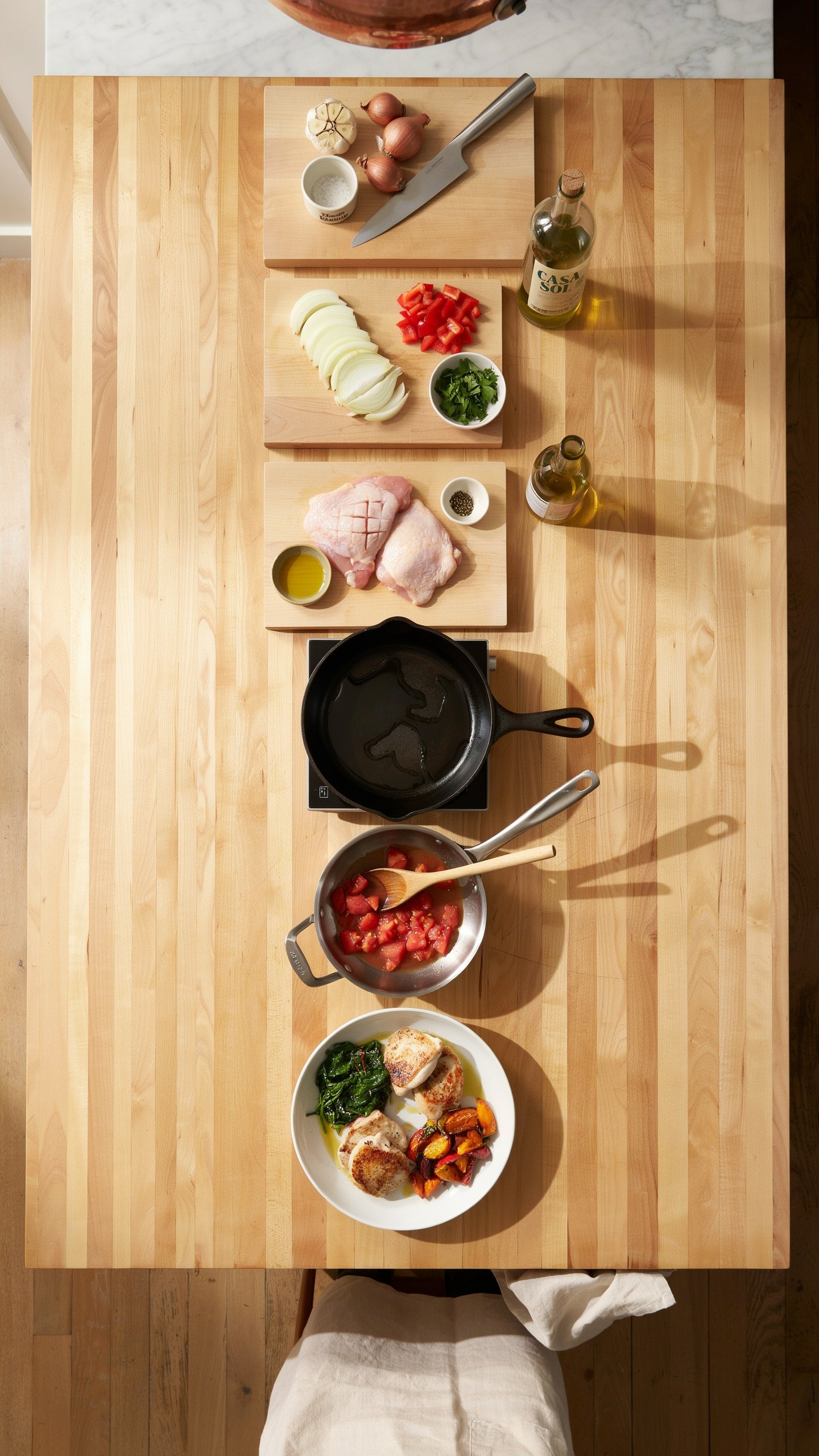
You think you need more time on Sunday. You don’t. You need to stop treating meal prep like cooking and start treating it like manufacturing. That’s the real mechanism here—borrowed from industrial engineering, the concept of throughput. Throughput means output per unit of time. Most people optimize for activity (chopping, stirring, plating) instead of output (cooked protein portions ready to eat). They jump between tasks, waste heat cycles, and repeat steps. That kills throughput.
The actual win comes from batching identical operations in sequence, not in parallel. Cook all your chicken at once in the oven while your rice cooker runs and your ground turkey simmers on the stovetop. Then portion everything cold. This isn’t about going faster. It’s about eliminating task-switching. Your oven stays on one temperature. Your attention stays on one thing at a time. Your kitchen doesn’t turn into controlled chaos.
Ingredient Selection And Cold Storage Protocol
You need to buy proteins that tolerate a full week of refrigeration without texture collapse or spoilage. Here’s what actually works based on how proteins behave under cold storage stress:
- Chicken breast: Cook at 165°F internal temp, store in airtight containers. Stays firm and safe for seven days. The low fat content prevents rancidity.
- Ground turkey or beef: Brown completely, drain excess fat, cool before storage. Reaches safe storage life on day six if kept at 40°F or below. Fat oxidation is your clock.
- Eggs (hard boiled): Peel after cooling, store in sealed containers. Lasts the full week without quality loss. The shell provides no additional protection once cracked.
- Greek yogurt: Buy plain, portion into containers with airtight lids. Probiotics keep it stable longer than most dairy. Flavored versions separate and weep liquid faster.
- Canned fish (tuna, salmon): Store unopened in the pantry, open and portion Sunday only. Minimizes oxidation. Drain liquid completely before storage to prevent bacterial growth acceleration.
Your containers control spoilage rate more than time does. Use glass with airtight seals, not plastic wrap or loose lids. Cold air circulation matters less than moisture retention and oxygen exclusion. Label everything with the prep date. Store on the middle shelf where temperature is most stable, not on the door where fluctuations happen every time it opens.
Protein Dense Recipes: Beyond Chicken & Broccoli
The Proteins Nobody Talks About
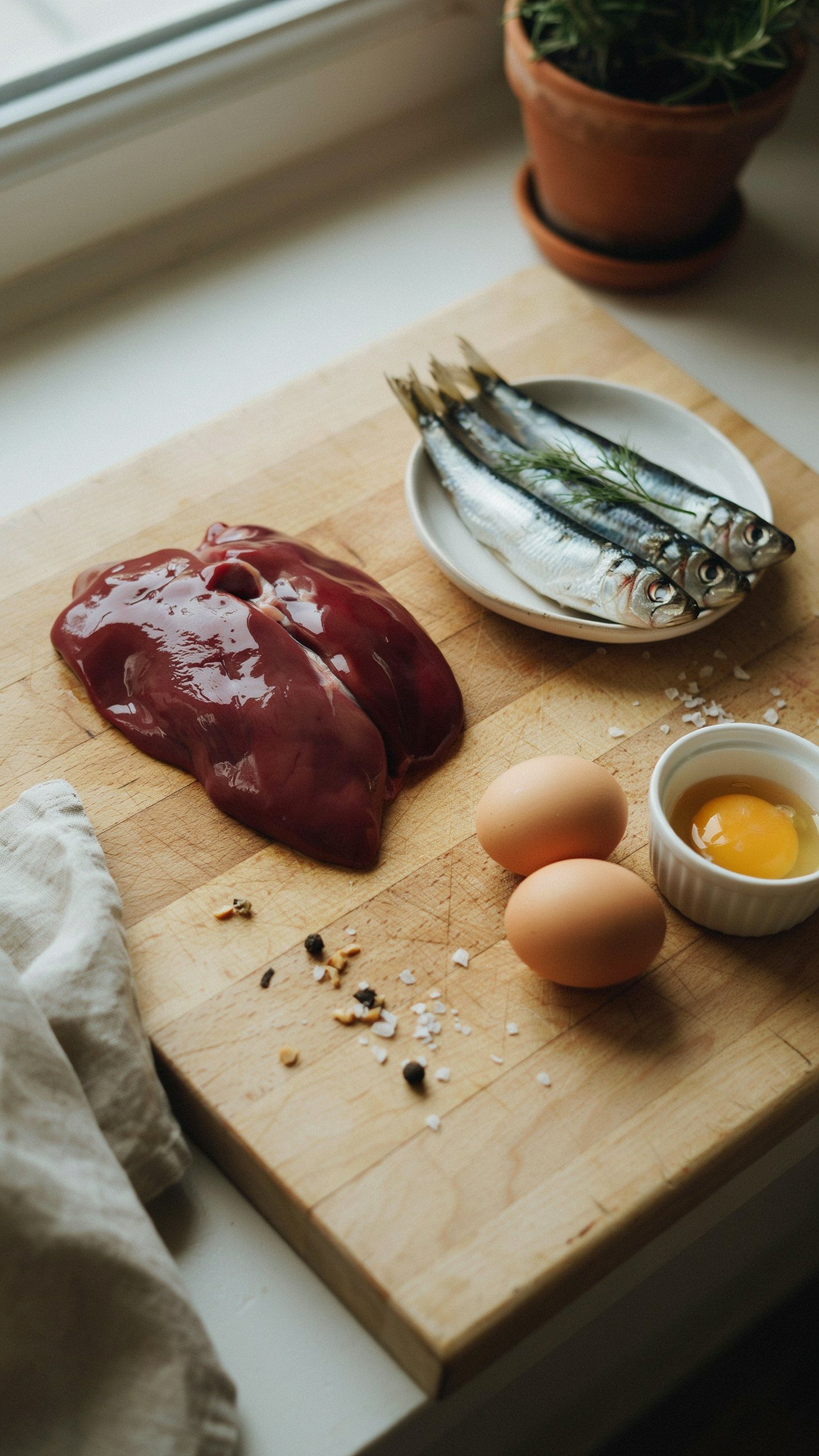
You want to look like you have your life together, and chicken breast feels like the responsible choice. Here’s the mechanism: most people optimize for what they’ve seen work, not what actually works better. Beef liver contains 36 grams of protein per 100 grams, plus iron, B vitamins, and choline your brain needs. Ground beef at 80/20 ratio delivers 20 grams per serving with fat that makes you feel full longer. Canned sardines pack 25 grams of protein per can, cost almost nothing, and require zero cooking. Cottage cheese hits 28 grams per cup and digests slowly, extending satiation across your work hours.
The reason you haven’t built these into rotation is friction, not superiority. Beef liver tastes like iron if you don’t know how to cook it, so most people stop there. Ground beef requires browning and seasoning every session, adding 15 minutes. Sardines smell, so social anxiety kills the option. Cottage cheese feels like a diet food, not a meal. Your job this week is to build one recipe around each that removes the friction point. Make liver with caramelized onions and balsamic vinegar. Season ground beef with cumin, paprika, and garlic before you store it. Mix sardines into rice with lemon and herbs. Layer cottage cheese with nuts and berries in a glass. One session. Four proteins. Different stimulus on your body.
Flavor Systems That Rotate Weekly
Taste fatigue kills more meal prep plans than hunger does, yet everyone ignores it. Think of flavor like military logistics: you need supply lines that can sustain operations without collapse. A flavor system is the base template (acid, salt, fat, aromatics) that changes weekly to hit different receptors. Week one: Mediterranean (lemon, garlic, olive oil, oregano). Week two: Asian (soy, ginger, sesame oil, rice vinegar). Week three: Mexican (lime, cilantro, cumin, jalapeño). Week four: Indian (curry powder, coconut milk, turmeric, ginger). Your protein stays consistent. Your containers stay consistent. Your nervous system gets novelty without extra work.
Build your system by choosing one acid, one oil, one core spice, and one aromatic for each week. Apply it to three different proteins, three different starches, across five days. This isn’t creativity. It’s a repeatable protocol. On Sunday, you roast chicken with Mediterranean herbs, grill beef with Asian flavors, and sauté ground turkey with Mexican seasoning. Your palate stays engaged. Your adherence climbs. Your body gets varied micronutrients from different flavor compounds. On prep day, list your four weekly systems before you cook anything.
The “Minimum Viable Effort” Meal Prep System
Pick Your Three Proteins And Stop
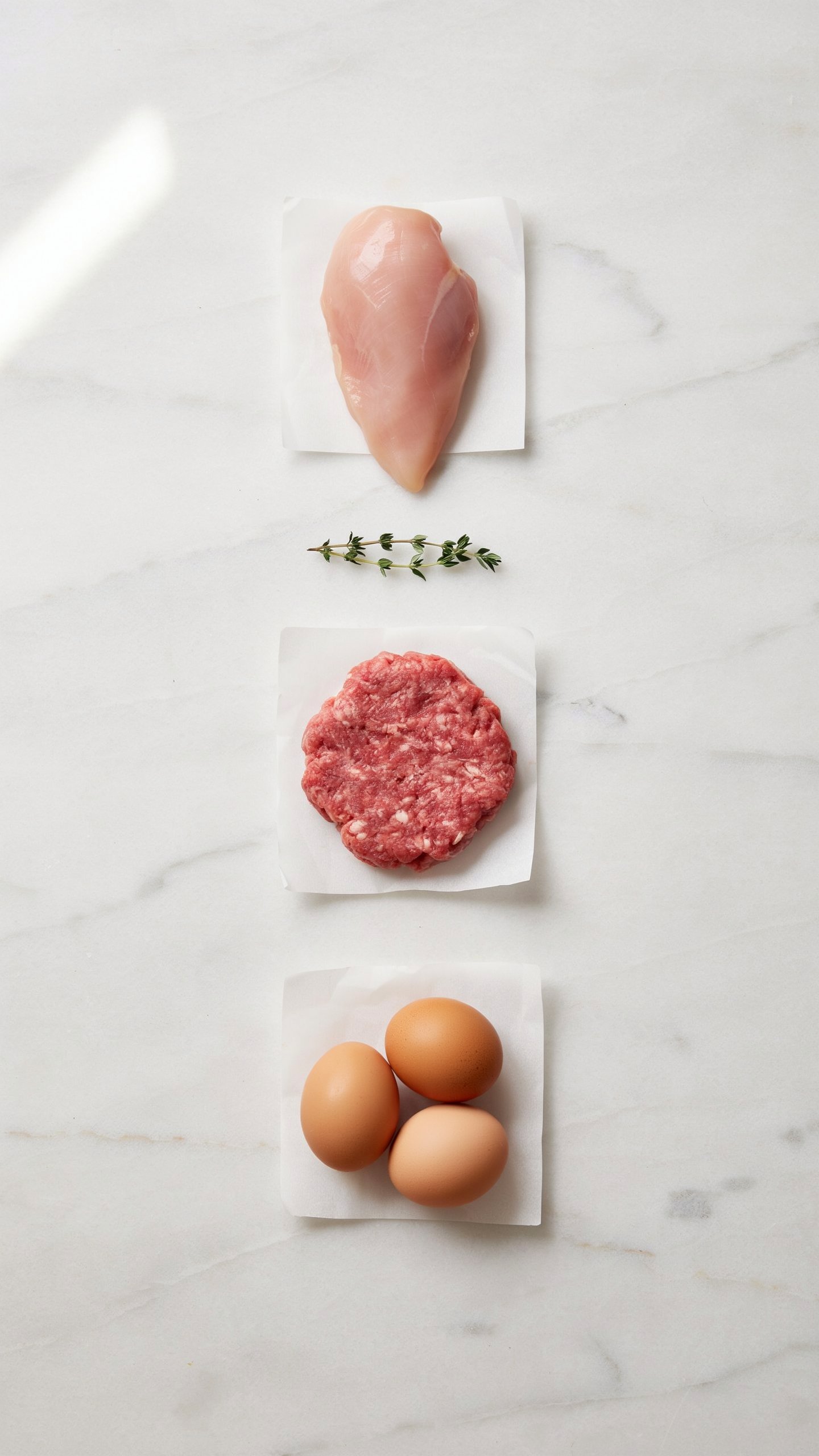
You want to feel like you’re optimizing when really you’re just afraid of making a wrong choice. The mechanism is simple: constraint forces execution. Pick chicken breast, ground beef, and eggs. That’s it. These three scale across every meal, require no special equipment, and cost the least per gram of protein. Rotating between three removes decision fatigue while hitting 25-40g protein per serving without thinking.
The reason most people fail meal prep isn’t that they lack discipline. It’s that they overcomplicate the protein selection and never actually cook. Chicken takes 25 minutes in bulk. Ground beef takes 20. Eggs take 10. Cook all three on Sunday. Label them. You’ve eliminated the friction that kills consistency. The real work isn’t cooking multiple dishes. It’s picking one method and repeating it until it becomes invisible.
Batch Cook By Temperature, Not By Meal
Think like an engineer designing a production line: group processes by their constraints, not by their output. Cook all proteins at the same temperature and time window, not by what you’ll eat them in. Bake chicken and ground beef together at 375°F for 25 minutes. Boil a dozen eggs. This takes 90 minutes of active hands-on time, not eight hours of varied cooking.
Most meal prep advice tells you to build complete meals. Wrong. Build protein blocks first. Carbs and vegetables fill in around them based on what you’re doing that day. Store proteins separately in glass containers. They last 4-5 days refrigerated. This separation is what actually makes the system work. You’re not locked into a meal structure. You’re building from stock components that adapt to hunger, schedule, and appetite.
Meal Prep To Get Lean: The Caloric Deficit Enforcer
Precision Portioning And Calorie Control
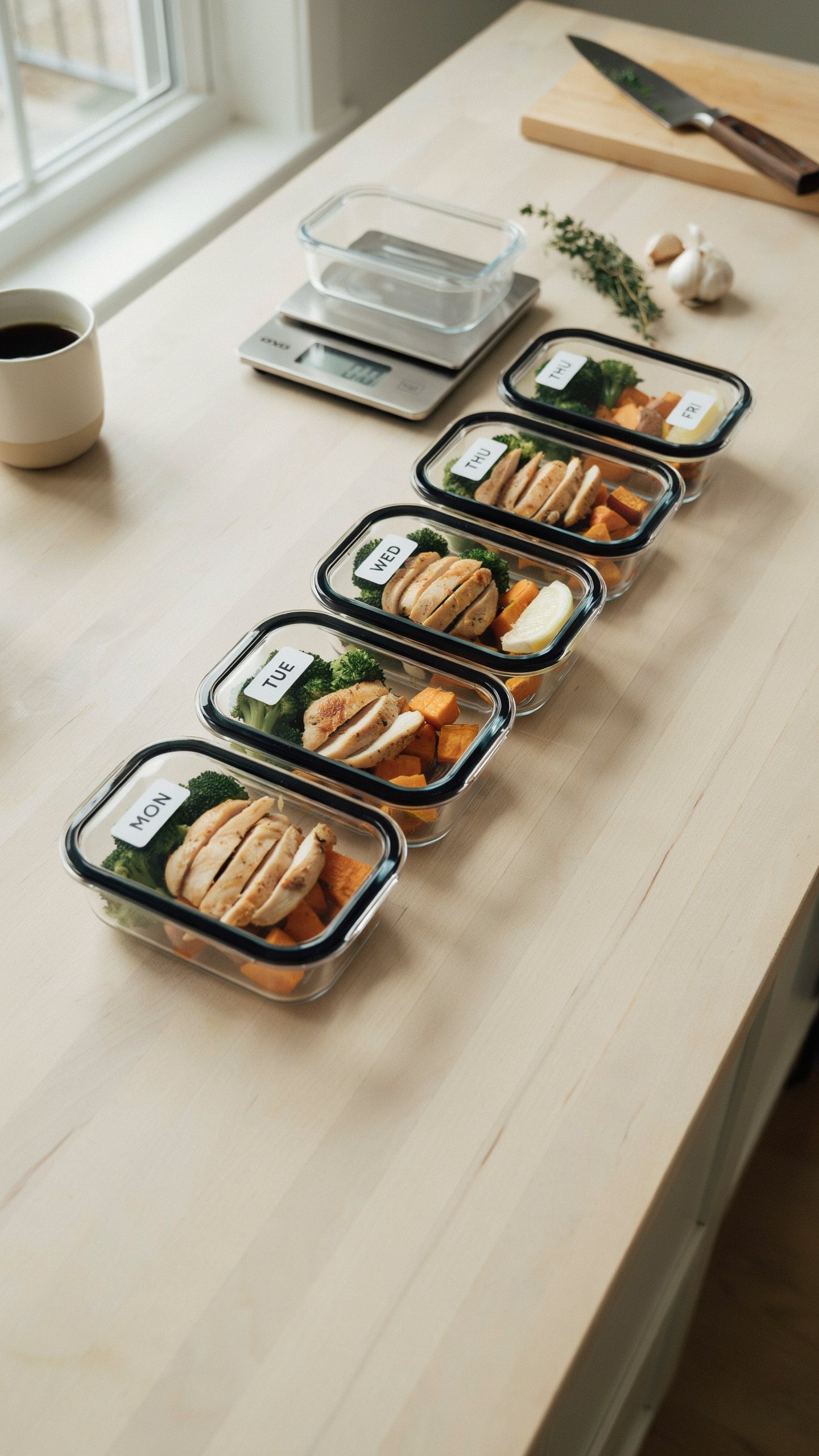
You want meal prep to solve the willpower problem. Here’s the reality: you can’t out-discipline a bad system. The mechanism is removal of decision. When portions are pre-measured and containers are filled Sunday night, your brain stops negotiating Wednesday afternoon. You don’t debate whether to eat more. The portion exists. You eat it. Done.
Calorie math is straightforward. Weigh your protein source raw. Chicken breast loses roughly 25 percent mass when cooked. Ground beef loses about 20 percent. Fish varies by type but averages 15 to 20 percent. Measure your carbs and fats by weight before cooking. Use a digital scale. Track the total calories per container once, then replicate the formula across all containers. Consistency in portioning means consistency in results.
High Protein Satiety As A Fat Loss Lever
Biology names this the thermic effect of protein. It’s thermodynamics applied to nutrition. Your body burns calories digesting protein at a rate of 20 to 30 percent of the calories consumed. Carbs burn 5 to 10 percent. Fat burns 0 to 3 percent. When you meal prep with protein first, you engineer a metabolic advantage into every meal.
Satiety is the real lever. High protein meals keep you full longer because protein triggers cholecystokinin and glucagon-like peptide-1 hormones. These suppress hunger signals. When you prep four to five meals with 40 to 50 grams of protein each, you eliminate snacking between meals. Fewer decisions means fewer calories eaten. The deficit becomes automatic, not aspirational. Prep your protein portions first. Everything else follows.
Evolutionary Advantage: Why Our Brains Crave Predictability
Scarcity Rewires Your Decision Making
You want this section to feel profound so you can justify the time you spend thinking about meal prep instead of doing it. Here’s what actually matters: evolutionary biology calls this the scarcity mindset, and it’s the exact operating system your brain runs on when food decisions aren’t locked down. Your ancestors didn’t waste cognitive energy on “what’s for dinner” because meals were unpredictable and scarce. Today, that same ancient wiring triggers decision fatigue the moment uncertainty enters the food equation.
When you remove the decision, you remove the activation energy tax on your brain. Meal prep doesn’t just save time in the kitchen—it deactivates a survival mechanism that consumes mental resources all day long. The abundance mindset your brain enters when meals are predetermined isn’t luxury. It’s metabolic efficiency. Your prefrontal cortex can redirect that freed-up processing power to actual problems that demand cognition. This is why people who prep meals report sharper focus: they’re not running scarcity protocols on repeat.
Routine Locks In The Prefrontal Cortex
The prefrontal cortex is the conscious decision-making part of your brain, and routine is what keeps it online instead of defaulting to autopilot. When you batch prep your protein for the week, you’re not just cooking—you’re installing a neural pathway that conserves executive function. Studies on habit formation show that consistent, repeated actions migrate from conscious processing to automatic execution. Your brain literally stops burning glucose on decisions it’s already made.
High protein meal prep accelerates this by creating a fixed protocol: same day, same recipes, same portions. Your brain treats Sunday meal prep as a non-negotiable anchor point. By Wednesday, when hunger hits, your prefrontal cortex doesn’t engage. You eat what you prepped because the decision was made five days ago. This isn’t willpower. It’s architecture. The routine removes temptation from the decision loop entirely, which is exponentially more powerful than relying on discipline to override it every single time you’re hungry.
Weekly Meal Prep Ideas: From Monotony To Mastery
Build A Framework, Not A Menu
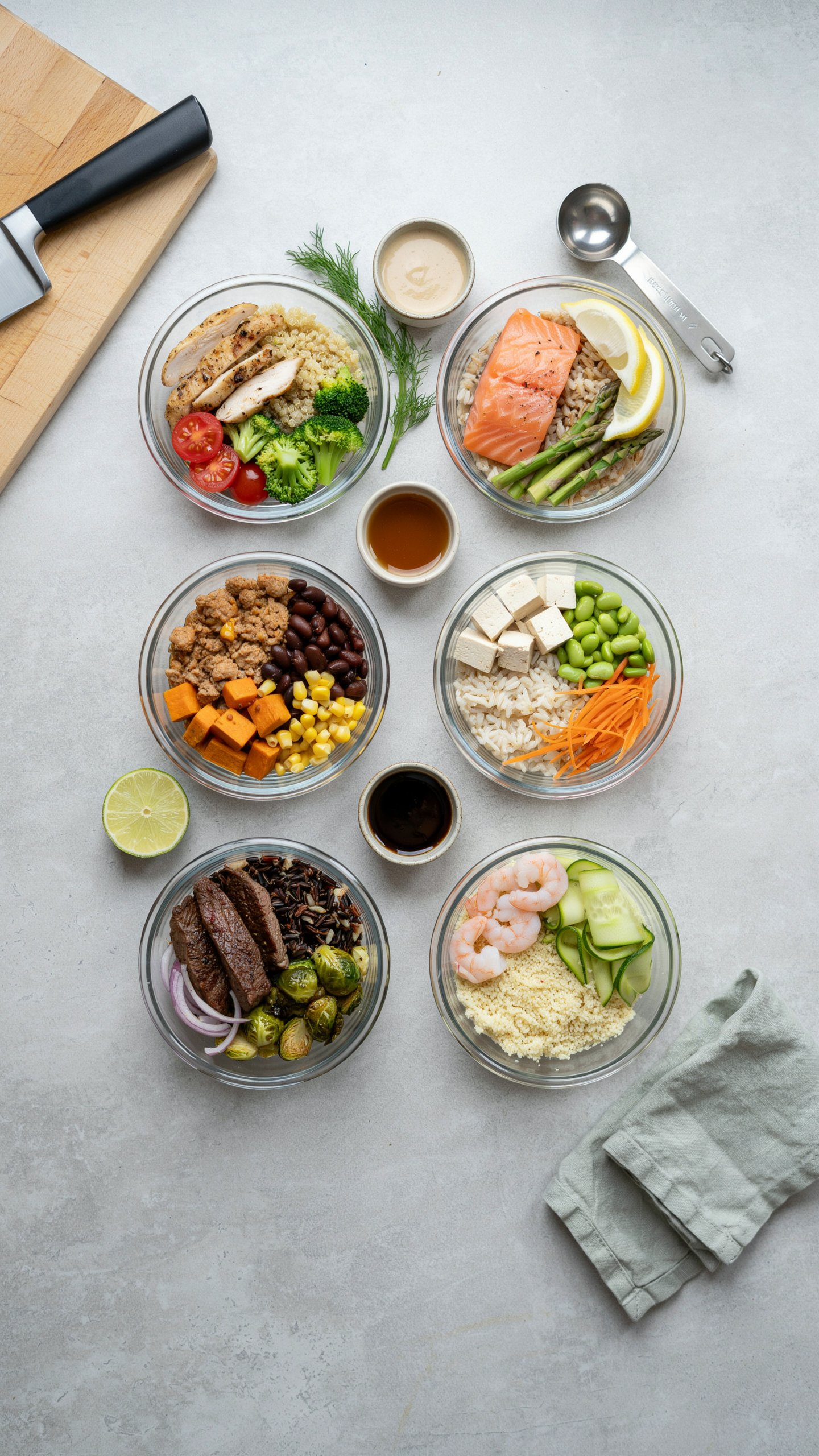
You want permission to stop thinking about food every Sunday. That’s the real driver. The mechanism is simple: a framework eliminates decision fatigue by giving you rules before you cook. Think of it like a system in economics where constraints actually increase output. You set parameters (protein source, carb type, vegetable category, sauce base) and rotate within them. This isn’t about variety for its own sake. It’s about sustainable repetition with enough variance to stick.
Most people treat meal prep as picking random recipes. That fails because you rebuild the entire meal structure every week. Instead, lock in three protein sources you tolerate eating four times each. Pick two carbs. Choose three vegetables. Build two sauces. Now you have 36 different combinations without cooking 36 different meals. You prep once and eat intelligently for seven days.
Recognize When You’re Done
Meal prep burnout doesn’t happen because cooking is hard. It happens because you set expectations you can’t maintain. The common advice says “keep it fun” or “experiment with flavors.” That’s useless. What actually works is knowing when a formula stops serving you and switching it without guilt. Track which meals you finish and which you leave half-eaten. That data tells you what to keep and what to drop.
Most people prep the same seven meals every week for months, then crash. The fix isn’t motivation. It’s strategic rotation on a schedule. Prep the same framework for four weeks. In week five, change one variable: swap chicken for ground beef, or brown rice for sweet potato. One variable. Not the entire system. This keeps your brain engaged without multiplying your workload. You notice the difference, anticipate it, and stay consistent instead of quitting.
Meal Prep Bowls: Engineering Portability & Satisfaction
Texture And Freshness Work Against Each Other
You want your meal to look the same on day one and day five. That’s the real problem nobody admits, and it’s why most meal prep fails. Salad goes brown. Protein dries out. The mechanism here borrows from food science: moisture migration. Water moves from wet components toward dry ones, turning crisp vegetables into pulp and lean meat into jerky.
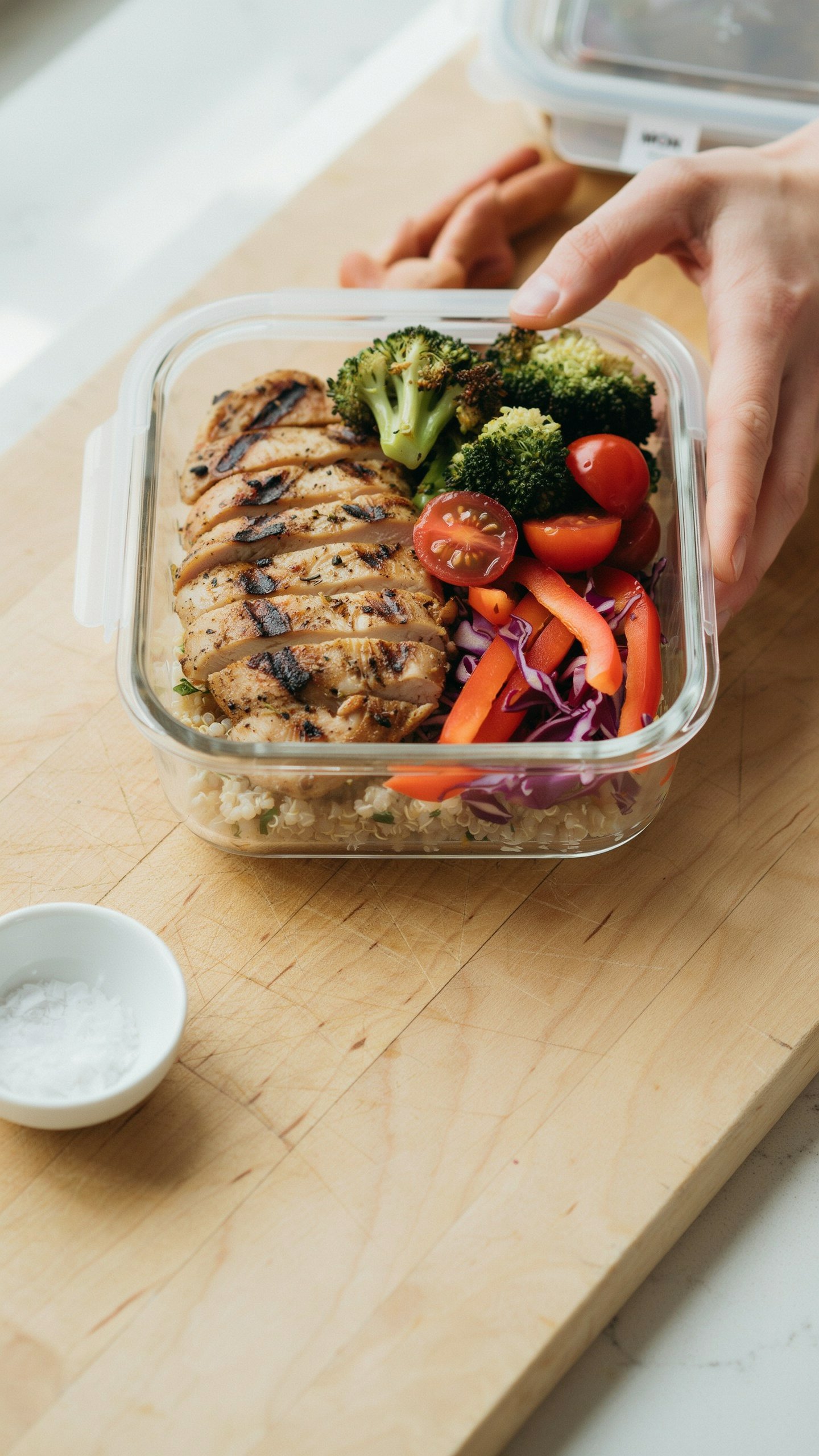
The solution isn’t fighting this process. It’s compartmentalizing it. Stack your bowl in layers: protein at the bottom, dense vegetables next, then greens on top. Keep dressing separate until you eat. This isn’t aesthetic. It’s a barrier system that slows degradation by preventing premature osmotic exchange. Your lettuce stays crisp because it never touches the marinade until consumption.
Container Choice For Meal Longevity
- Glass with snap lids: Superior oxygen barrier compared to plastic, though heavier. Glass doesn’t absorb oils or odors, resetting completely between uses. Best for meals with dressing or marinades.
- Polypropylene food-grade plastic: Lower density means lighter to carry. Withstands temperature swings without warping. Acceptable for dry proteins and vegetables, but absorbs flavors over time with repeated use.
- Compartmentalized trays: Separate chambers prevent flavor bleeding and texture transfer. Eliminates the need for external containers or bags. Trade-off is bulk, but reduces decision fatigue during the week.
- Silicone lids over disposable containers: Reusable seal that cuts plastic waste while maintaining air-tight closure. Works well for short-term storage up to five days when paired with glass bowls.
- Bento-style stackable boxes: Multiple tiers let you prep more meals in less horizontal space. Each tier seals independently, controlling moisture zones. Efficient for bulk prep sessions, though assembly takes extra minutes.
The actual metric that matters is oxygen transmission rate, not brand reputation. Containers with poor seals introduce ambient air throughout the week, accelerating oxidation of fats and proteins. Check the lid seal before buying. Press it down and listen for the pop when you open it. That sound means an actual seal. Stack your containers vertically in the fridge, not horizontally, to prevent cross-contamination from condensation dripping down from above.
Beyond The Kitchen: High Protein Meal Prep As A Life Skill

Discipline Compounds Across Domains
You want to believe meal prep discipline proves you’re serious about self-improvement. Here’s the actual mechanism: constraint forces clarity. When you limit yourself to a four-hour prep window and fixed ingredients, you eliminate decision fatigue in that domain. Your brain recovers bandwidth. That recovered capacity transfers directly to work, writing, or any skill requiring sustained focus. The discipline isn’t magical. It’s resource reallocation. You freed up mental RAM by making one system automatic, and that RAM goes somewhere else.
This transfers because the underlying skill isn’t cooking. It’s systems thinking. You map inputs to outputs, eliminate waste, optimize sequence. You build a repeatable protocol instead of winging it daily. Engineers call this standardization. Manufacturers call it process control. You call it making chicken and rice on Sunday. The cognitive pattern is identical. Someone who can design a meal prep system can design a content calendar, a sales funnel, a training program. The domain changes. The constraint-to-clarity mechanism doesn’t.
The Physical And Cognitive Return On Investment
Ignore the generic claim that meal prep saves time. That’s true but useless. What matters is what you do with the time recovered and how your body responds to consistent protein intake. Steady protein consumption stabilizes blood glucose and neurotransmitter production. Your prefrontal cortex doesn’t crash at 3 PM. Your decision-making holds. Over months, this compounds into measurable cognitive performance: faster problem-solving, sharper focus, reduced mental fog. The ROI appears as work output, not as a feeling.
The long-term payoff extends beyond the week you prepped. You build a system you can deploy for years. A system that requires zero willpower once installed. Other people spend energy deciding what to eat three times daily. You spent four hours once and extracted yourself from that game permanently. That’s not a meal prep skill. That’s operational leverage. The mechanism is this: automate one non-negotiable input, then measure whether your output in other domains actually improves. If it does, you’ve found your foundation. If it doesn’t, your prep was expensive theater. Most people never check.
Your biggest obstacle isn’t the food on your plate, it’s the decision fatigue in your mind.
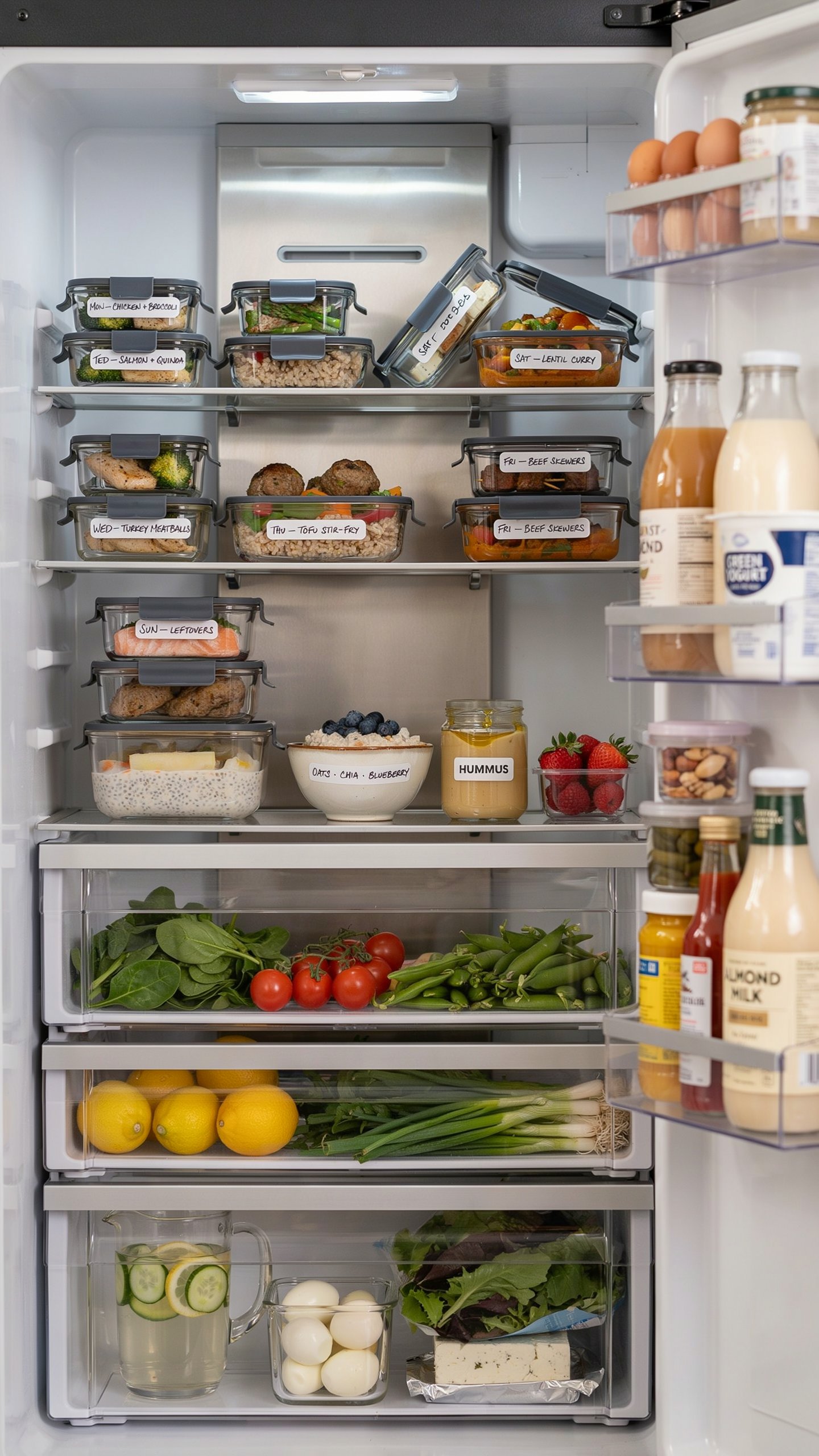
Most people fail at meal prep because they treat Sunday like a cooking marathon instead of a system install. You’re not building willpower. You’re building autopilot. Pick three proteins, three carbs, three vegetables. Cook them once. Eat them six days straight. The mental bandwidth you free up? That’s where your discipline actually lives. Stop optimizing recipes and start optimizing your brain.