
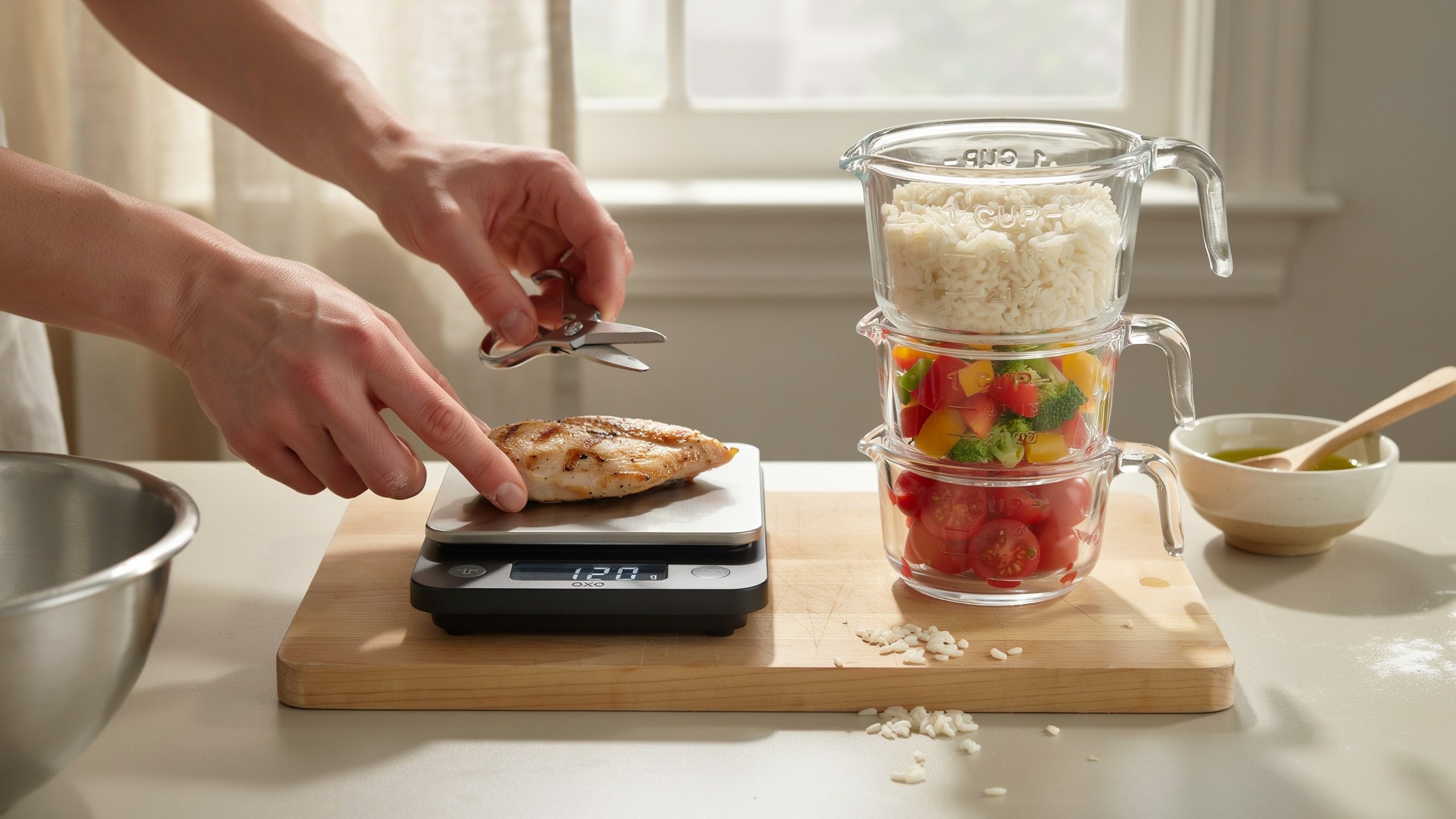
Beyond The Macro Myth: Why Generic High Protein Meal Prep Portions Fail You
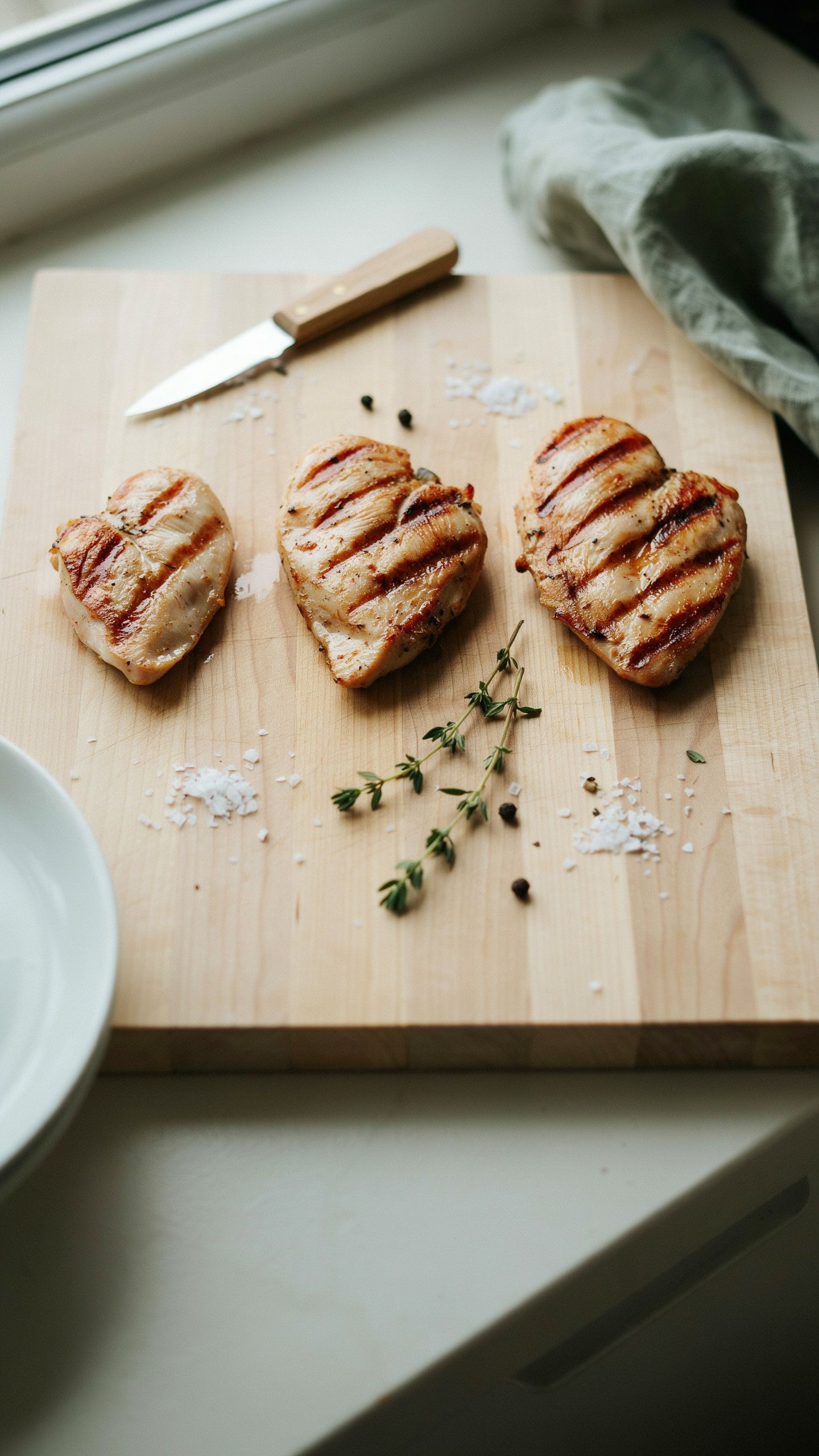
The Illusion Of Universal Portion Sizes
You’re looking for a magic number because you want permission to stop thinking. The fitness industry sold you the myth that 0.8 to 1 gram of protein per pound of bodyweight is law, but this is consensus laziness masquerading as science. The actual mechanism is simpler: portion sizes are determined by your training stimulus, not your weight.

A 200-pound sedentary person and a 200-pound Olympic lifter need radically different protein amounts because muscle protein synthesis responds to mechanical tension, not mass alone. Generic recommendations ignore the variable that matters most: what you actually did in the gym. Your prep portions should track workout intensity and frequency, not a formula that treats all bodies as identical input machines.
Your Body: A Unique Protein Processing Plant
Biology teaches us about enzyme saturation: a system reaches maximum efficiency at a specific substrate concentration, then adding more produces zero additional effect. Your amino acid absorption window works the same way. You can’t absorb 100 grams of protein in one meal because your intestinal capacity caps out around 25 to 40 grams per sitting, depending on meal composition and digestion speed.

The real variable isn’t total daily protein, it’s distribution across meals. Your muscle fibers only trigger growth signals when you exceed your individual amino acid threshold per feeding, which depends on training age, age itself, and whether you trained that muscle group today. Stop portioning based on what works for Instagram fitness accounts and start measuring against your actual recovery demands and digestive limits.
The Metabolic Leverage Protocol: Optimizing Protein For Your Unique Engine

Find Your Satiety Threshold, Not The Generic Number
You want the magic number because you think it’ll solve the willpower problem. It won’t. The mechanism that matters is satiety signaling, the feedback loop between your stomach stretch receptors and your brain’s appetite centers. Most people default to 0.8 to 1 gram per pound of bodyweight because it’s easy to repeat, not because it’s calibrated to how your specific body responds to fullness.
Your satiety threshold is the protein amount that makes you genuinely uninterested in eating again for hours, not the amount a calculator spits out. Start by eating 30 grams of protein at breakfast for three days, then jump to 40 grams for three days. Track when your next craving hits. The point where you stop thinking about food is your threshold, not a formula. This becomes your baseline for meal prep portioning because it’s the only number that actually sticks to your behavior.
Stack Protein Timing Into Energy Architecture
Protein spread across the day beats protein loaded into one meal, but not for the reasons people cite. The actual mechanism is amino acid availability to your muscles and the steady glucose-stabilizing effect of consistent protein intake. Load protein early, especially after sleep, when your cortisol spike creates a protein synthesis window your body won’t waste.
Distribute 30 to 40 grams across breakfast, lunch, and dinner, then add 15 to 20 grams in a snack between lunch and dinner if you train in the afternoon or evening. This pattern keeps your blood amino acid levels elevated without forcing your body into protein oxidation during energy dips. When you meal prep portions this way, you’re not just hitting macros, you’re engineering sustained performance by matching protein delivery to when your body can actually use it.
Signal Driven Eating: Re Calibrating Your Hunger For Healthy Meal Prep

The Hunger You Actually Feel
You want permission to eat less and still feel in control. Here’s the mechanism: your body sends two distinct signals you’re treating as one. Appetite is a habit loop triggered by time, environment, and emotion. Hunger is a biological need for fuel. Meal prep ruins most people’s results because they portion based on old appetite patterns, not current hunger. You eat the same amount you always did, just organized differently.
The fix is simple. Stop eating on a schedule for three days. Instead, eat only when your stomach physically signals empty. You’ll notice the real hunger window is narrower than you thought. Your appetite for a 3 PM snack disappears when you’re not standing in the break room at 3 PM. This resets your baseline. Now your portions can match actual need instead of ritual.
Protein Satiety As A Control Variable
Biology calls this homeostatic regulation, and it applies directly to meal prep portions. Protein signals fullness faster than carbs or fat because it triggers cholecystokinin and peptide YY, the hormones that tell your brain to stop eating. Most meal prep advice ignores this. You’re told to hit a number, not to use protein as a dial that controls how much food you need to feel satisfied.
Here’s what changes: increase protein density, decrease total volume. A 4 ounce chicken breast with rice fills you less than a 6 ounce chicken breast alone. The second option has higher protein per calorie, so your satiety signal fires sooner. You stop eating earlier. Your portions naturally compress because your body is actually satisfied, not because you’re white knuckling through hunger. Track this for one week: note your protein gram intake and when you feel full. You’ll see the correlation.
The Dynamic Adaptation Model For Meal Prep For The Week
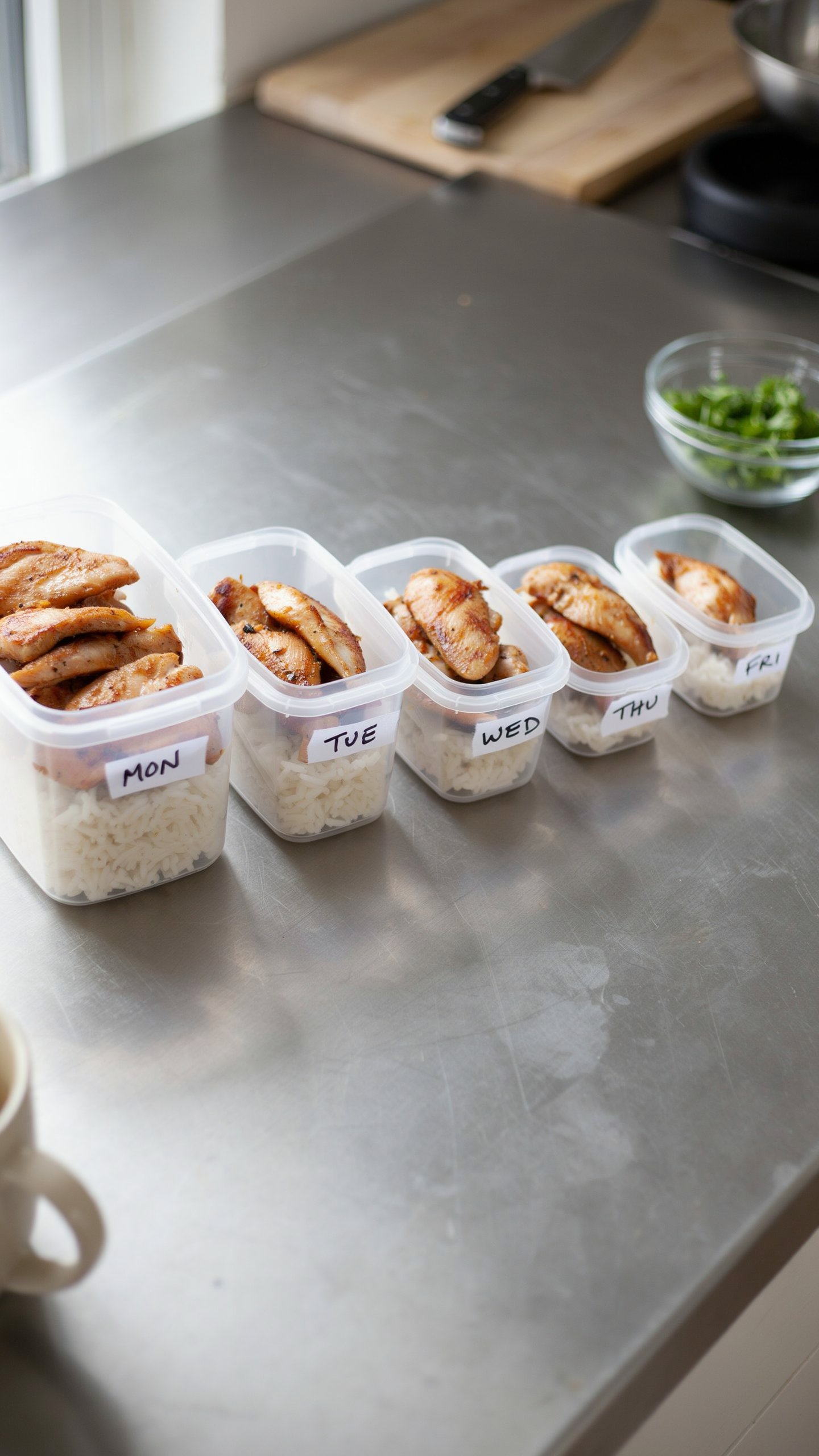
Your Protein Intake Isn’t Fixed
You want meal prep to feel predictable because unpredictability triggers decision fatigue and you lose control. That’s the real reason static portion guides frustrate you. But here’s what evolutionary biology reveals: protein requirements aren’t a constant—they’re a variable that tracks with your metabolic state and environmental pressure, exactly like how organisms adjust nutrient storage based on resource scarcity. Your ancestors didn’t eat the same protein portions year-round. They adapted intake to hunting success, season, and physical demand.
Your current protein need depends on your baseline metabolism, muscle mass, and how hard your body has worked recently. A sedentary week demands less protein synthesis than a high-volume training week. The standard “one gram per pound of bodyweight” advice skips this entirely. It’s a ceiling, not a formula. Track your actual performance, recovery speed, and hunger signals across two to three weeks of the same training stimulus, then adjust portions up or down by ten to fifteen percent based on what you observe, not what a calculator told you.
Stress And Activity Drive The Real Adjustment
Weekly stress levels and training intensity determine whether your current portions are surplus, maintenance, or deficit for protein synthesis. Psychological stress elevates cortisol and increases protein breakdown, which means a high-stress work week paired with moderate training requires more total protein than the same training load during a low-stress week. Most people ignore this and wonder why their physique stalls despite hitting macros. The mechanism is straightforward: your nervous system prioritizes survival hormones over muscle building when threat levels rise, so protein partitioning shifts away from muscle tissue.
Start with your baseline portions tied to your average weekly activity. Then apply a simple rule: if you log more than one high-intensity training session beyond your normal pattern, or if your sleep drops below six hours for more than two consecutive nights, add fifteen to twenty percent more protein to that day’s meals. If you take a deload week or drop training volume by half, reduce portions by the same margin. This isn’t guesswork. You measure weekly training volume and sleep, then scale portions accordingly. The adjustment takes thirty seconds and compounds into visible results within four weeks.
Protein Foods That Deliver: Quality Over Quantity In Easy Nutritional Meals
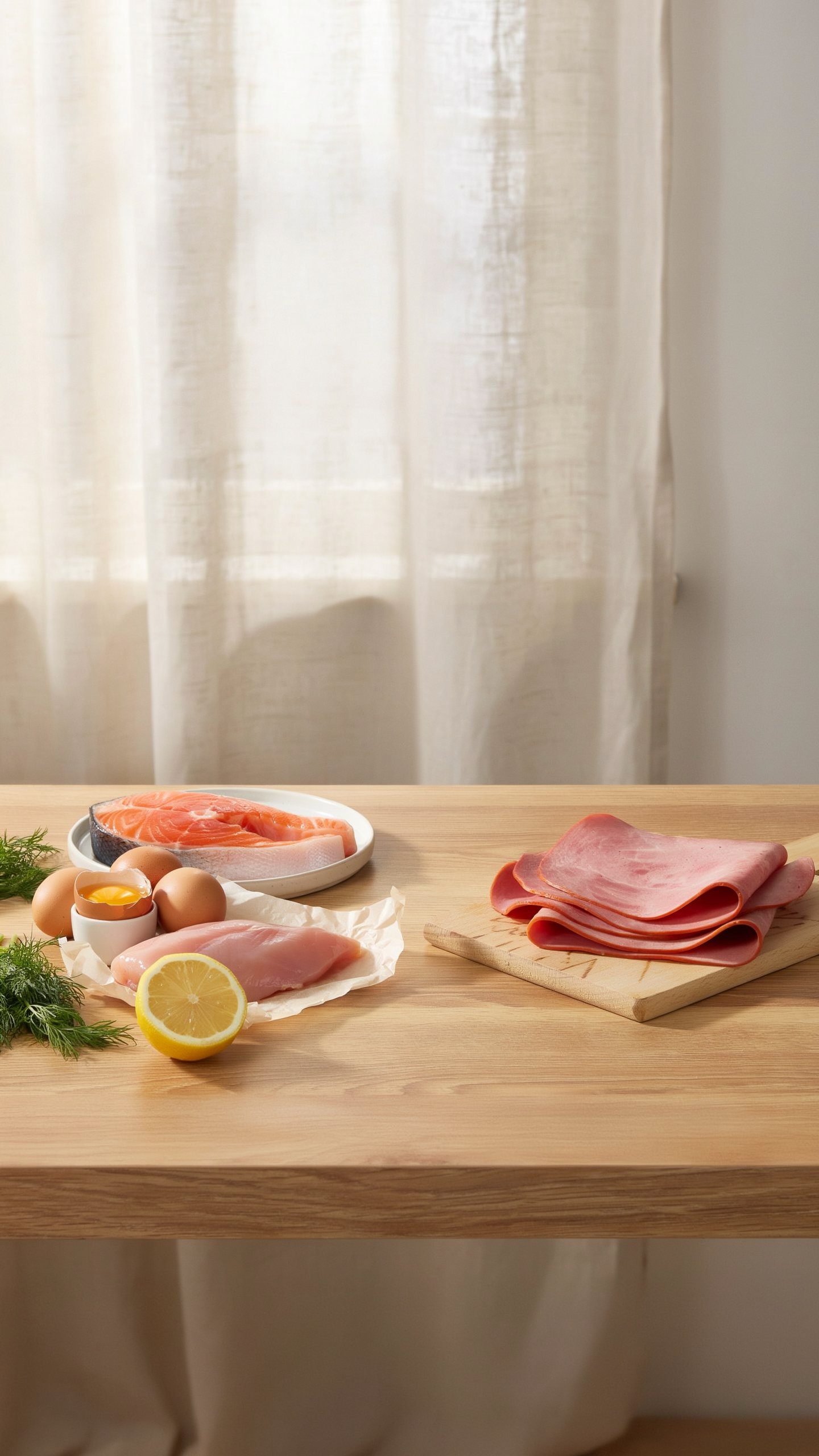
Bioavailability Wins The Absorption Game
You care about this because you’re spending money and effort on food that might not actually be building muscle. Here’s the mechanism: bioavailability is how much of the protein your body can actually use after digestion. Think of it like yield in manufacturing—you can pour in raw materials, but only a percentage converts to finished product. Animal proteins (beef, chicken, fish, eggs, dairy) sit at 90-98% bioavailability. Plant proteins alone max out around 70-80% because they contain compounds that inhibit absorption. The difference compounds over months of meal prep.
Leucine content matters more than total grams. Leucine triggers muscle protein synthesis, the actual mechanism that builds tissue. Whey protein isolate contains 11% leucine by weight. Beef contains about 8%. Eggs hover around 9%. When you’re portioning, prioritize sources where leucine density matches your training stimulus. A 30-gram serving of whey after training beats a 40-gram serving of incomplete plant protein for the specific goal of muscle building. Measure what actually works for your adaptation, not what sounds impressive on a label.
Escape The Chicken Trap
Most meal preppers lock into chicken because it’s cheap and lean, then wonder why their results plateau. Here’s what people miss: repetition kills adherence faster than difficulty does. Rotation prevents decision fatigue and keeps you consistent long enough to see results.
- Beef (80/20 ground or chuck): Higher iron bioavailability than chicken. Contains creatine naturally. Costs less per pound than lean cuts while delivering more micronutrients.
- Salmon and fatty fish: Omega-3 reduces inflammation from training. Vitamin D supports hormone production. 25 grams protein per 100g serves dual purposes simultaneously.
- Greek yogurt: 20 grams protein per 7-ounce container. Casein protein digests slowly, useful for portions eaten before bed. Probiotic benefit is secondary but real.
- Eggs whole and yolks: Choline supports cognitive function. Lutein protects vision. Complete amino acid profile. Cost per gram rivals chicken when bought in bulk.
- Cottage cheese: 14 grams protein per half cup. Casein-dominant. Mixes into overnight oats or eaten plain. Shelf life beats Greek yogurt by days.
Rotate these five sources across your week. Prep two proteins instead of one. Your nervous system adapts to monotony the same way muscles adapt to the same lift—it stops responding. Cycling forces your palate to stay engaged, which means you actually finish your portions instead of abandoning prep halfway through the month.
The Strategic Batching System For High Protein Meal Prep
Cook Once, Portion Strategically
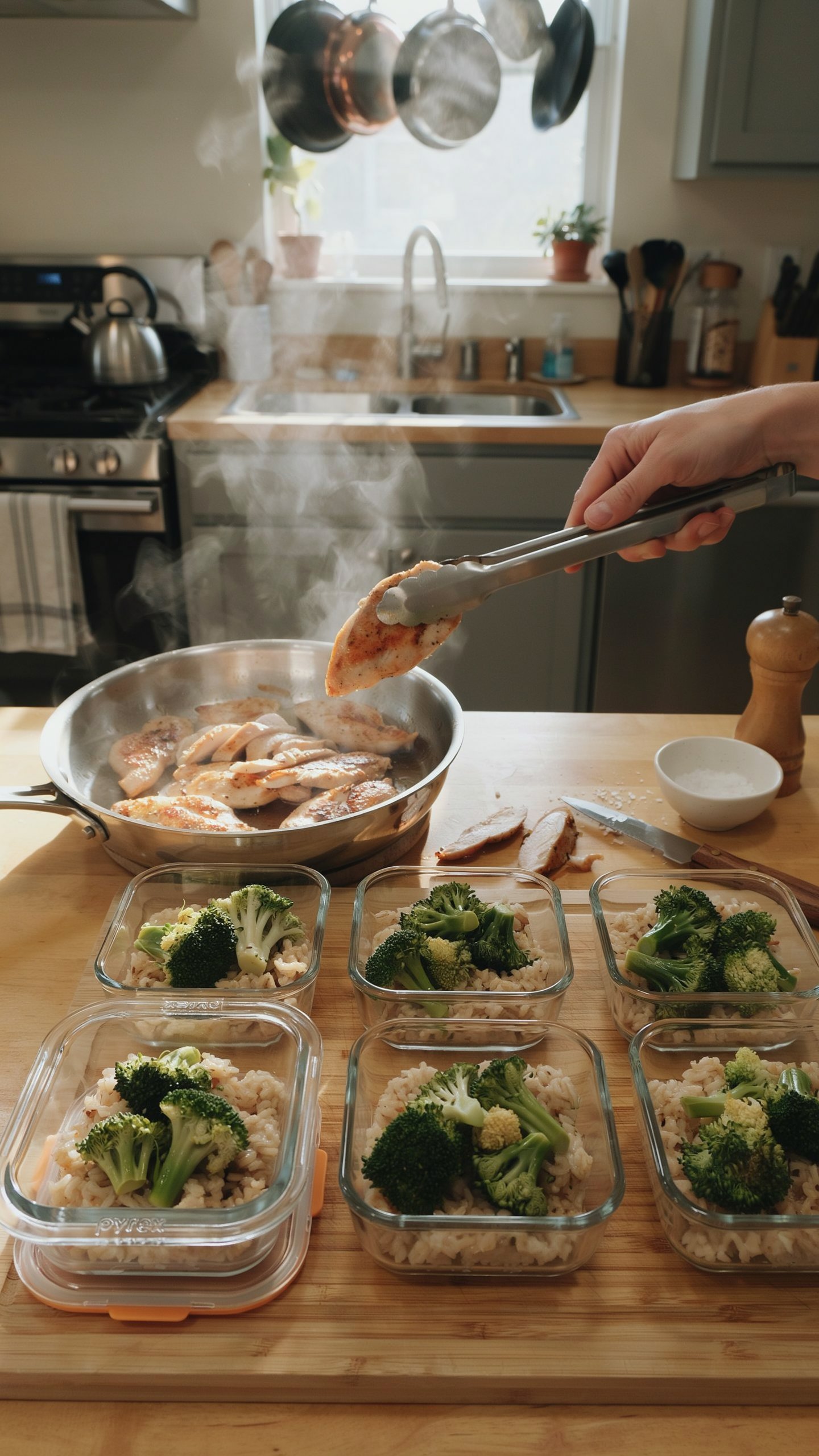
You want this system to work so you never miss a protein target. The real mechanism is batch cooking vs batch portioning, and most people conflate them into one step when they’re separate operations. Batch cooking means preparing all your protein sources at once. Batch portioning means dividing that cooked protein into meal-sized units. Separating these saves time because you’re not making portion decisions while your food is still hot and your attention is fragmented.
Cook all chicken breasts together. Cook all ground beef together. Cook all eggs together. Then, once everything cools, portion into containers based on your target grams per meal. This removes the bottleneck of decision-making during the cooking phase. You move faster because your hands and mind both know exactly what comes next. One operation at a time beats multitasking every time.
Reduce Choices Before You Start Prep
Decision fatigue isn’t motivational weakness. It’s a measurable cognitive load that degrades execution. Economics calls this the “choice architecture” problem, and your meal prep portions are exactly where it applies. If you show up to prep day without knowing your portion sizes, you’ll waste thirty minutes eyeballing containers and second-guessing amounts. The fix is brutal simplicity: establish three protein portion sizes before you touch any food.
Define these now: maintenance portion (usually 25-30g protein), lean day portion (35-40g), and surplus day portion (45-50g). Write them down. Measure containers to match. Label them. When you’re mid-prep, grab the right container and fill it. No math. No hesitation. No standing there holding a piece of chicken wondering if it fits. This single decision upfront eliminates a hundred micro-decisions on prep day. The protocol is: lock portions before batch day arrives.
Aesthetic & Appeal: Elevating Your Meal Prep Photography
Why Your Containers Matter More Than Your Macros
You want people to think you’re disciplined. That’s the real reason you care about how your meals look. But here’s the mechanism: humans eat with their eyes first. In behavioral economics, this is called the “visual anchoring effect” where the appearance of food directly influences satiation signals sent to your brain before you taste anything. A meal that looks scattered and low-effort triggers abandonment. A meal that looks intentional triggers commitment.
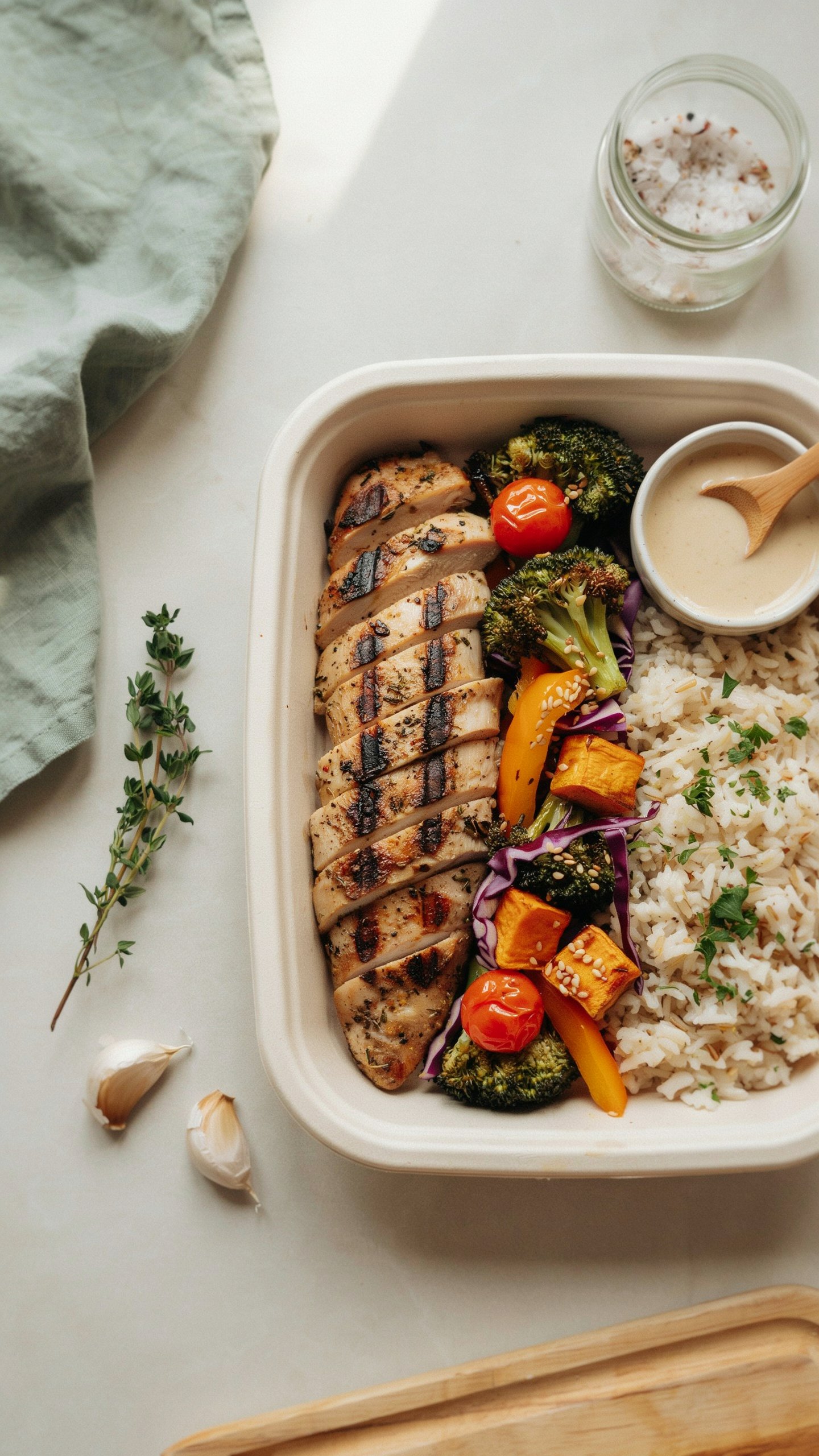
The container itself is your first design decision. Clear glass or translucent plastic lets you stack proteins, carbs, and fats in visible layers. This isn’t decoration. It’s a visual contract you sign with yourself each time you open the fridge. The portion sizes become undeniable. You can’t lie about how much chicken you prepped when it’s stacked three inches high in front of you. Flat, opaque containers hide portions. That’s why they fail.
Strategic Composition For The Frame
Stop treating meal prep like a cafeteria line. The best presentations use the rule of thirds from photography: divide your container into three zones and place your largest protein mass off-center, not in the middle. Your eye needs a focal point to register the meal as intentional rather than thrown together.
Placement creates perceived portion discipline. A four-ounce chicken breast positioned against the edge of a standard container reads as substantial. The same four ounces scattered in the center reads as sparse. Use the container geometry to your advantage. Bright proteins against darker grains create contrast. Stack vegetables vertically to add height. Height signifies abundance and care. Document the actual portions you’re prepping by photographing from directly above before eating. This creates accountability and gives you a visual reference for consistency across future batches.
The Iterative Optimization Loop: Refining Your Meal Prep Plans

Track What Actually Happens To Your Body
You want to believe your plan is working without doing the work to verify it. That’s the real barrier here. Feedback loops in systems theory demand measurement. In meal prep, your measurement is simple: bodyweight, strength levels, and how you feel during workouts. You track these weekly, not daily. Daily noise ruins decisions.
Record your portions, protein intake, and one performance metric each week. After four weeks, you have data. Not intuition. Not hope. The mechanism works like this: you prep with specific grams per meal, you measure outcomes, you identify the pattern. If strength stalls at 160 grams daily but climbs at 180 grams, you now know your threshold. You stop guessing.
Adjust One Variable At A Time
The common mistake is changing protein amount, meal frequency, and carb timing simultaneously, then wondering why nothing worked. That’s not optimization. That’s chaos. Pick one variable: either total daily protein, or portion size per meal, or prep day frequency. Change it for two weeks. Measure the result. Lock it in or revert.
Your portion sizes drive compliance more than macros do. If 40 grams of protein per meal works for your schedule but 50 grams makes prep unsustainable, stick with 40 grams. A sustainable 160 grams daily beats a abandoned 200 grams plan. Document what you changed and what shifted. This becomes your personal protocol.
Escaping The Gimmick Trap: Sustainable High Protein Habits
The Real Cost Of Perfection
You want a system that works without thinking about it because you’re afraid that any deviation means failure. That’s not how bodies work. The mechanism here is simple: rigid protocols collapse under real life. You miss a meal prep day, forget a container, travel for work, and suddenly the whole thing breaks. The athletes and lifters who maintain high protein intake for years don’t follow perfect systems. They follow principles that flex.
The difference between a three-week protocol and a three-year habit is adaptability. Most meal prep advice locks you into specific portion sizes, specific foods, specific timing. When the system breaks, people assume they broke it. They didn’t. The system was brittle. Real adherence comes from understanding why you’re hitting a protein target, not memorizing what 35 grams of chicken breast looks like in every scenario.
Building The Skill, Not The Habit
Intuitive eating for protein isn’t woo talk or surrender to cravings. It’s a learned skill that transfers across contexts. Borrowing from perceptual psychology, your brain calibrates to stimulus through repeated exposure and feedback. With protein portions, that means training your visual cortex and hunger signals to recognize adequacy without a scale. After six weeks of consistent tracking and plating, your hand becomes a measuring device.
Start by weighing and logging everything for four weeks minimum. Write down portions, hunger level before and after, and energy two hours later. Your nervous system collects data points. Then start reducing the scale use while keeping the log. When you plate chicken, estimate the weight. Check the scale once weekly instead of daily. The gap between estimate and actual shrinks as your calibration improves. Eventually, you’ll know a proper portion the moment it hits your plate because your brain has processed enough examples to recognize the pattern without external verification.
The real obstacle isn’t the food; it’s your obedience to outdated rules.
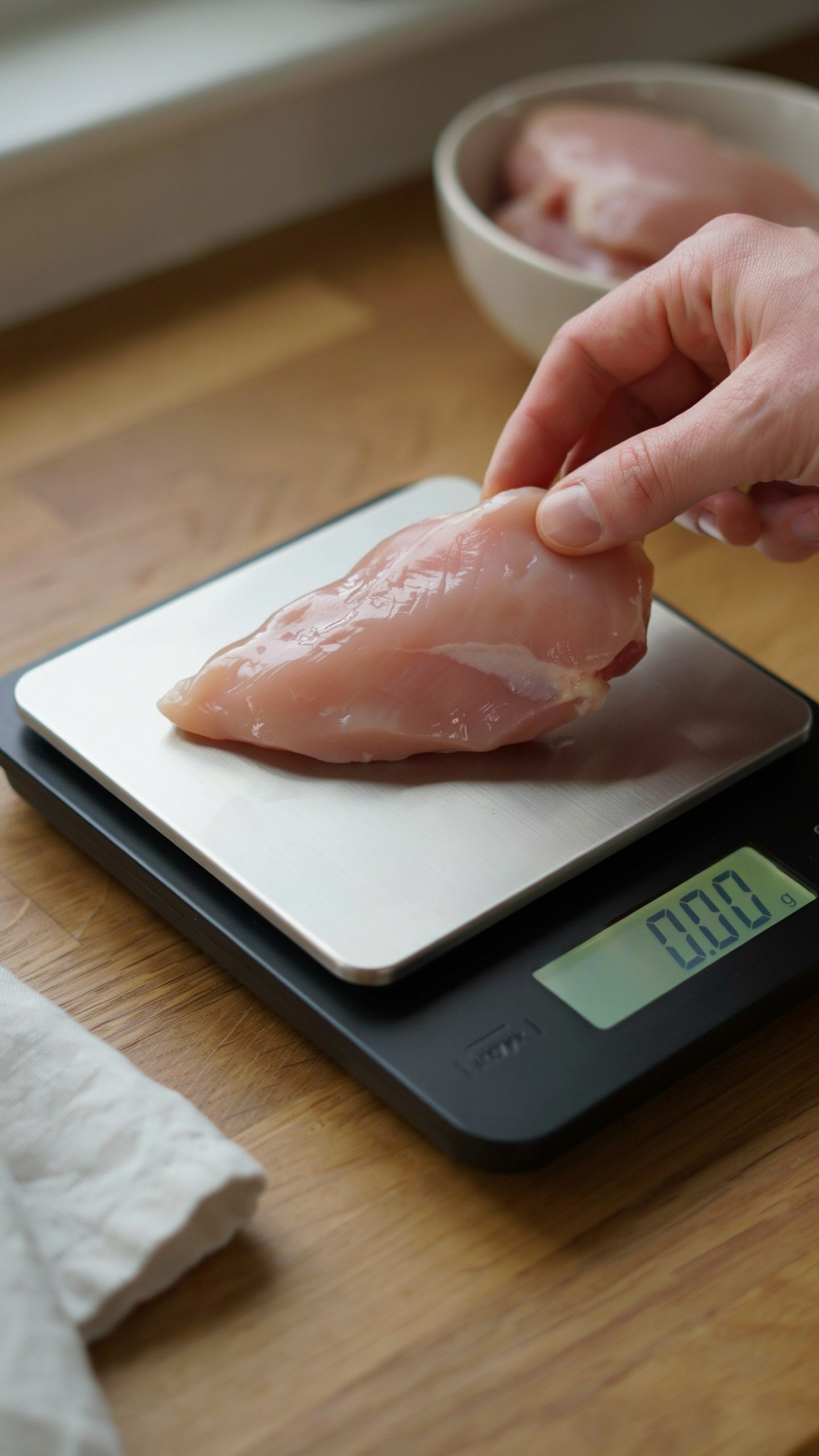
You’ve been told macros matter more than portions. You’ve been told meal prep takes hours. You’ve been told consistency beats optimization. All lies designed for the masses. High protein meal prep portions work because you stop guessing and start measuring. Pick one day this week. Weigh your chicken. Write down the number. Do it three times. That single action breaks the spell every mediocre fitness influencer cast on you. Measurement beats motivation every single time.