
The High Protein Sushi Bowl Deconstruction Protocol
What You’re Actually Optimizing For
You want the status of eating healthy without the friction of cooking. The mechanism that actually matters is macronutrient density per minute of prep time. Think in terms of systems engineering: you’re building a stack with four load-bearing layers that must support each other. Protein anchors satiety. Carbs fuel recovery. Fat enables nutrient absorption. Fiber manages digestion speed. Stack them wrong and you eat again two hours later, defeating the entire purpose of meal prep.
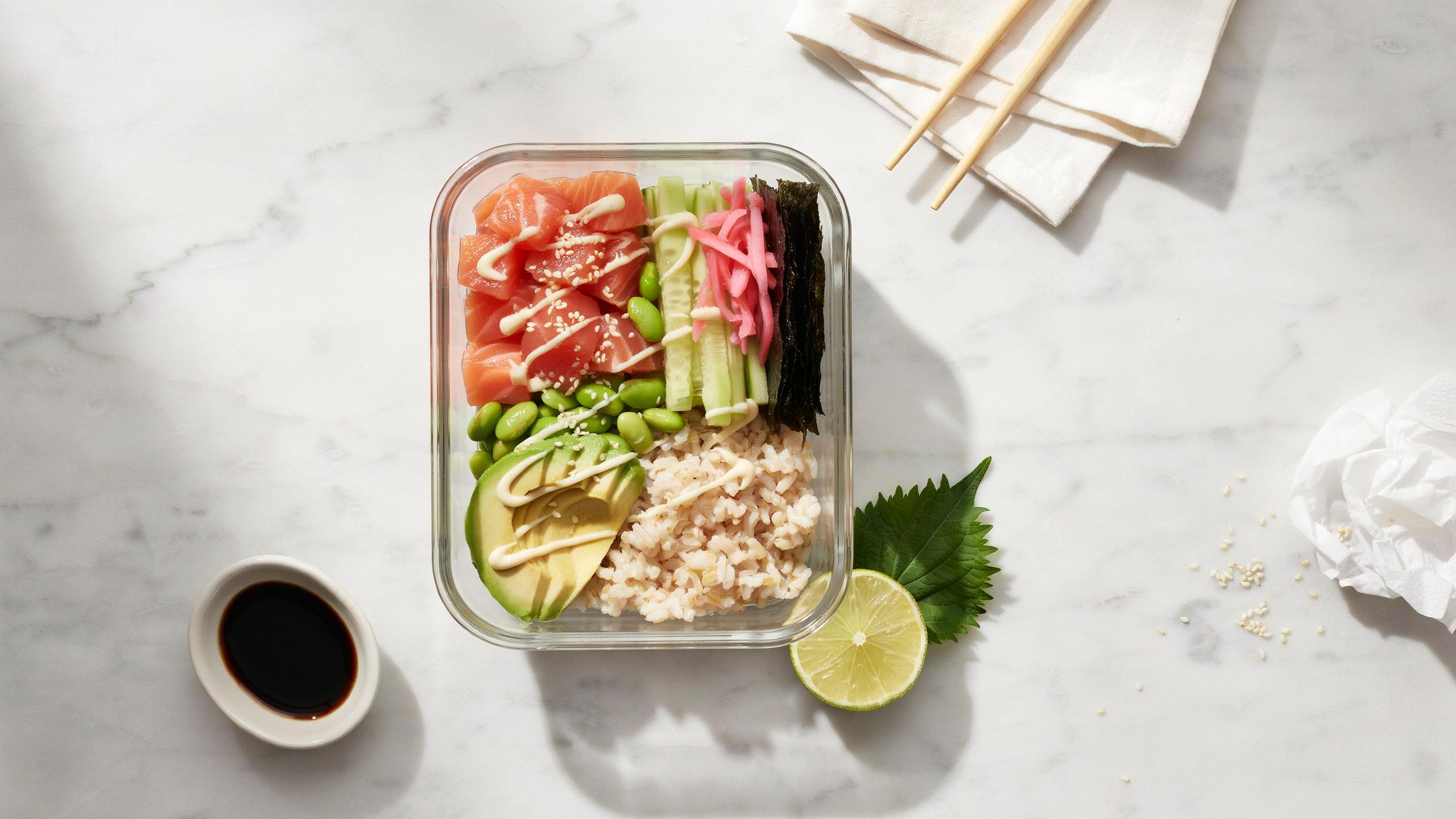
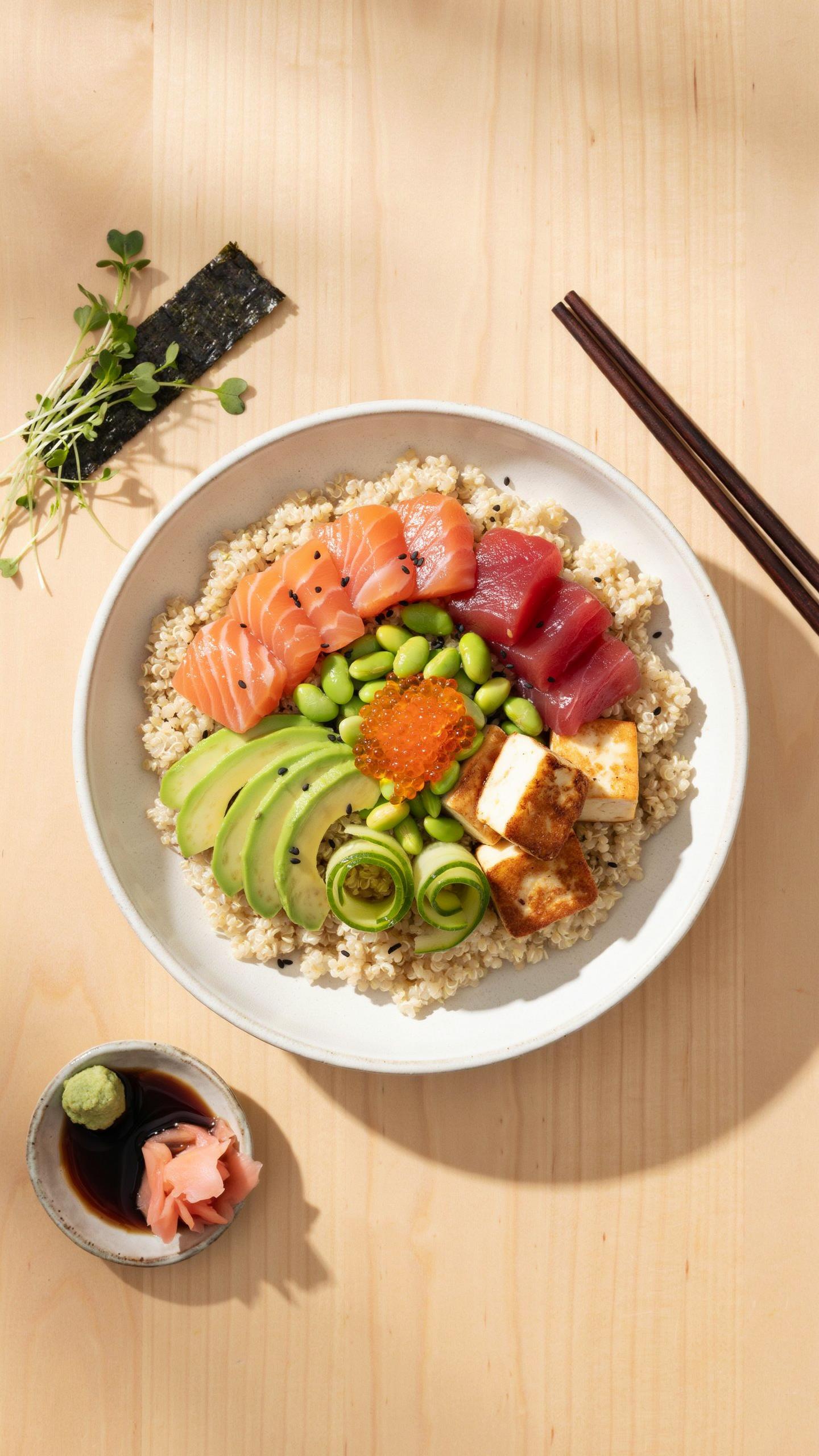
The sushi bowl format exists because it separates concerns. You prep each component independently on a schedule that matches its shelf life, then combine them on demand. This isn’t fusion cooking. It’s applied logistics. A deconstructed sushi roll gives you protein variety (fish, tofu, egg), carb control (rice ratios), and texture contrast without the labor tax of rolling. The common advice treats this as a recipe. It’s not. It’s an assembly system.
Preparation Layers, Not Steps
Most meal prep guides mix everything together at once, which destroys texture and accelerates spoilage. Separate cooking from chopping from assembly. Cook proteins at full intensity to lock in moisture and flavor. Chop vegetables last to preserve fiber structure and enzyme activity. Assemble only what you’ll eat within 48 hours. This sequencing extends shelf life and maintains quality across multiple meals without waste.
Proteins need heat: salmon, tuna, shrimp, or tofu. Cook to target doneness, cool completely before storage. Rice cooks once, portions into containers. Vegetables prep fresh or lightly blanched depending on type. Nori, seeds, and sauces stay separate until service. You’re building a just-in-time system, not a finished product. Store each component in its own container. Combine only when eating.
Beyond Salmon Underrated Protein Sushi Bowl Powerhouses
The Protein Swap That Saves Money
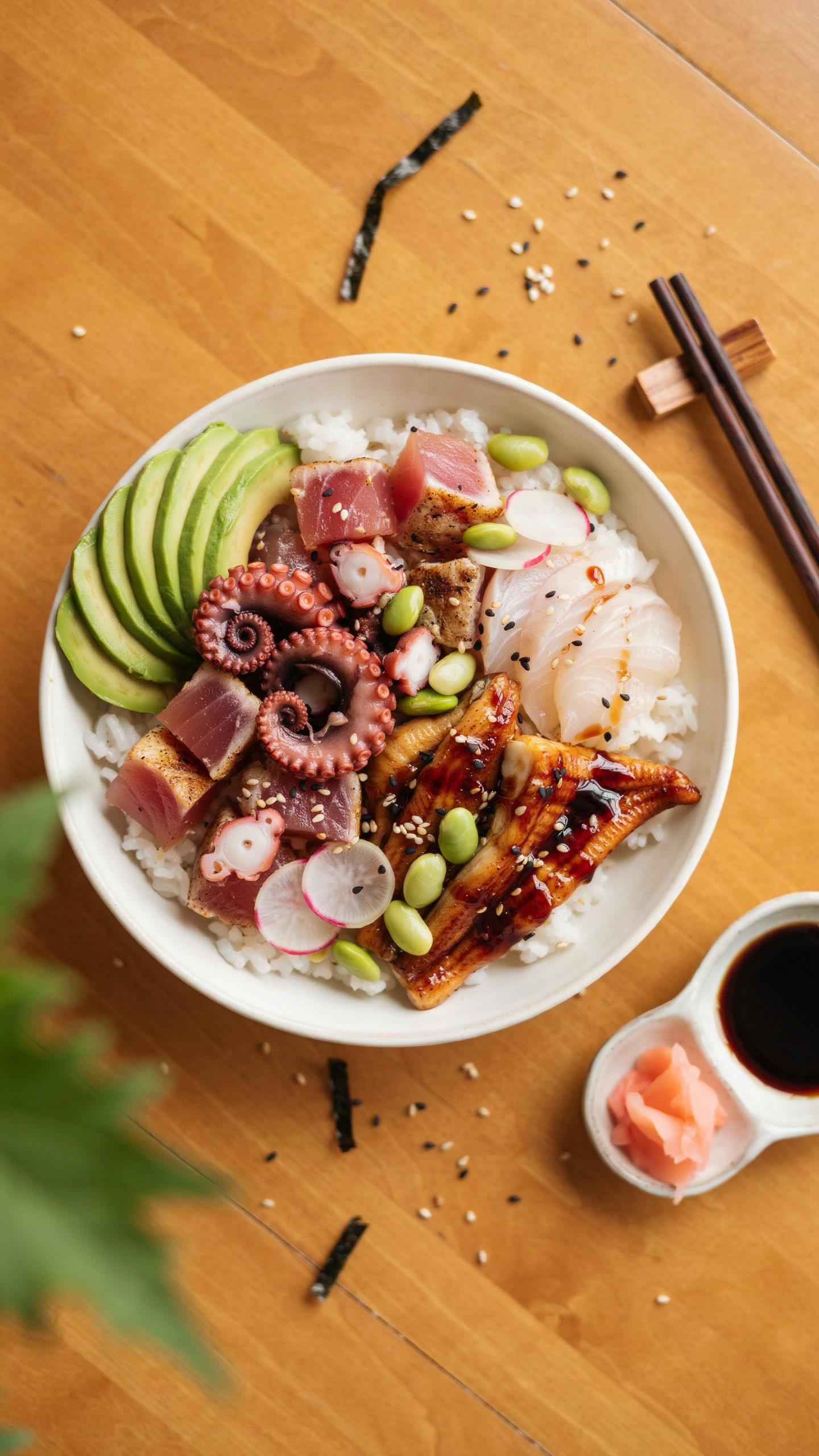
You want salmon because status. Everyone knows salmon is the “healthy” choice, so you feel safe picking it. But this is backwards thinking. Chicken, shrimp, and tofu deliver identical amino acid profiles at a fraction of the cost, and they prep faster. The mechanism is simple: amino acids don’t know their source. Your body breaks down protein into the same building blocks regardless of whether it came from a premium fish or a chicken breast you bought on sale.
Rotisserie chicken works best for meal prep because it’s already cooked and shreds in ninety seconds. Shrimp cooks in a pan in under four minutes at high heat, so you batch prep five days’ worth on Sunday. Tofu requires pressing for fifteen minutes to remove water, then pan-frying in neutral oil until edges brown. None of these require special technique. The real advantage: you spend two hours prepping instead of standing at the fish counter.
Plant Protein That Actually Delivers
The common advice says plant-based proteins are “incomplete” and you need to combine them strategically. This is outdated. Legumes and edamame contain all nine essential amino acids, just in different ratios than animal protein. When you eat them across multiple meals over a day, your body gets the full spectrum. The mechanism is protein synthesis doesn’t care about timing within a meal, only total amino acid availability.
Canned black beans and chickpeas require zero cooking and contain eight to ten grams of protein per half-cup serving. Frozen edamame defrosts in three minutes or microwaves in four. The cost per gram of protein sits 40 percent below chicken. Layer them under rice, add a fried egg or tempeh, and you hit forty grams of protein per bowl without touching animal products. Prep legumes in bulk Sunday: drain canned beans, season with salt and olive oil, store in glass containers for five days.
Carb Control The Rice Vs No Rice Sushi Bowl Debate
White Rice Vs. Brown Rice
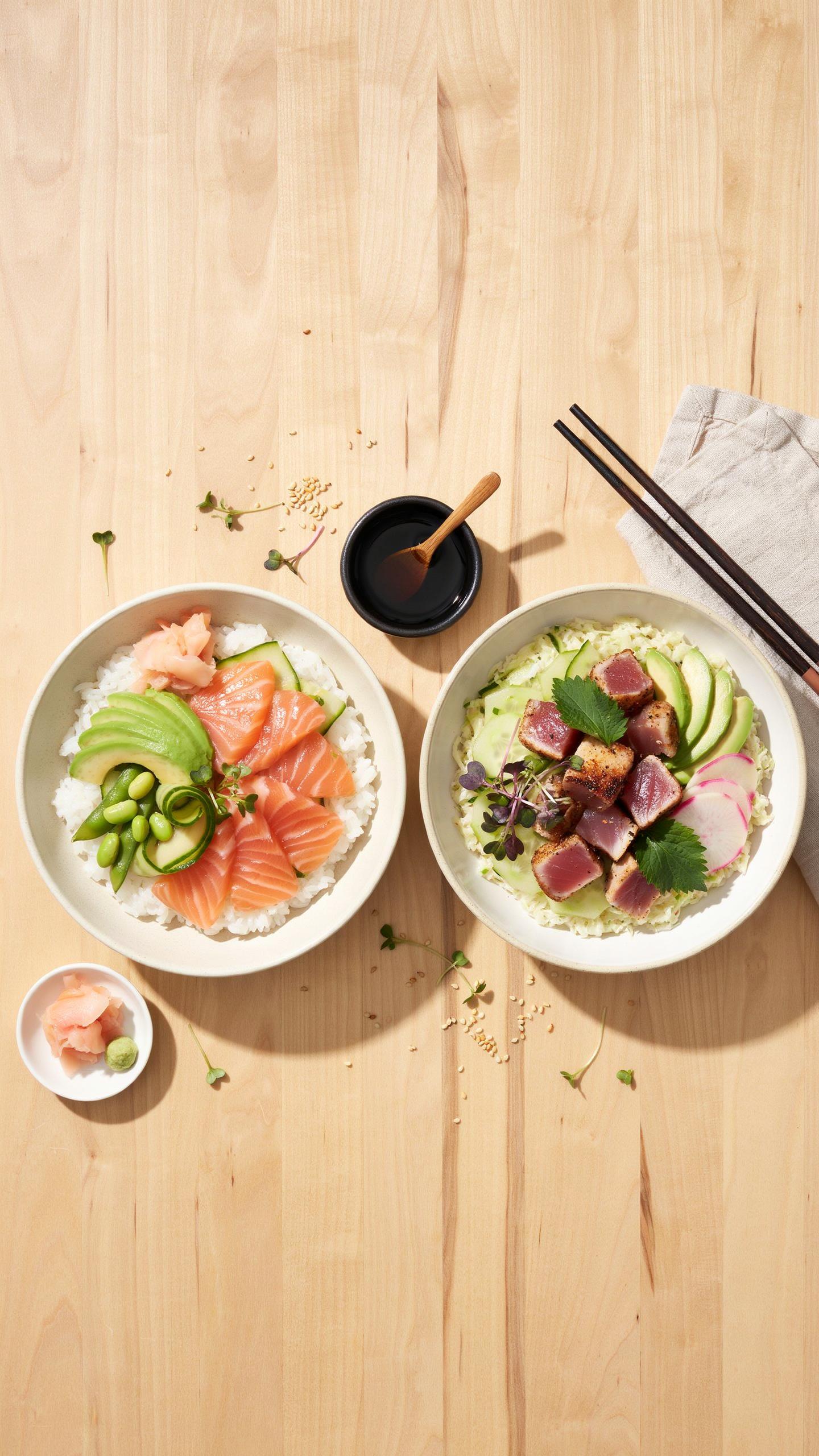
You want to believe one carb source is objectively superior, so you don’t have to think about your actual goals. Here’s the mechanism: glycemic response is biology, not morality. White rice spikes blood glucose faster than brown rice because milling removes the bran layer that slows digestion. Brown rice contains more fiber, which blunts the insulin spike. Neither is “bad.” The choice depends on meal timing and your protein-to-carb ratio in that specific bowl.
White rice digests in roughly 20 to 30 minutes post-meal. Brown rice takes 45 to 60 minutes. If you eat your sushi bowl immediately before training, white rice delivers faster glucose availability to muscles. If you eat it at lunch with no immediate workout, brown rice’s slower release prevents the mid-afternoon energy crash. Both contain similar calories per cooked cup, so this isn’t about volume. It’s about matching carb speed to your activity window.
Quinoa And Cauliflower Rice
The low-carb alternative movement sold a narrative that carbs are optional. They’re not optional if you’re building muscle and training hard, but they are flexible if your primary goal is fat loss. Quinoa contains 39 grams of carbs per cooked cup and all nine essential amino acids, making it a rare plant-based complete protein. Cauliflower rice contains 5 grams of carbs per cup and zero protein. They solve different problems, not the same one.
Use quinoa if you want carbs plus extra protein density in a single ingredient. Use cauliflower rice as a filler to add volume without significantly raising total carb intake, or as a 50/50 blend with white rice to cut calories while maintaining texture. Neither replaces the primary carb source in your sushi bowl. Your decision tree: if maintaining muscle on a cut, blend cauliflower rice with regular rice. If building, use quinoa or stick with white or brown rice depending on your training schedule.
The Umami Equation Building Flavor In Your Healthy Sushi Bowl
Cut The Sauce, Keep The Taste
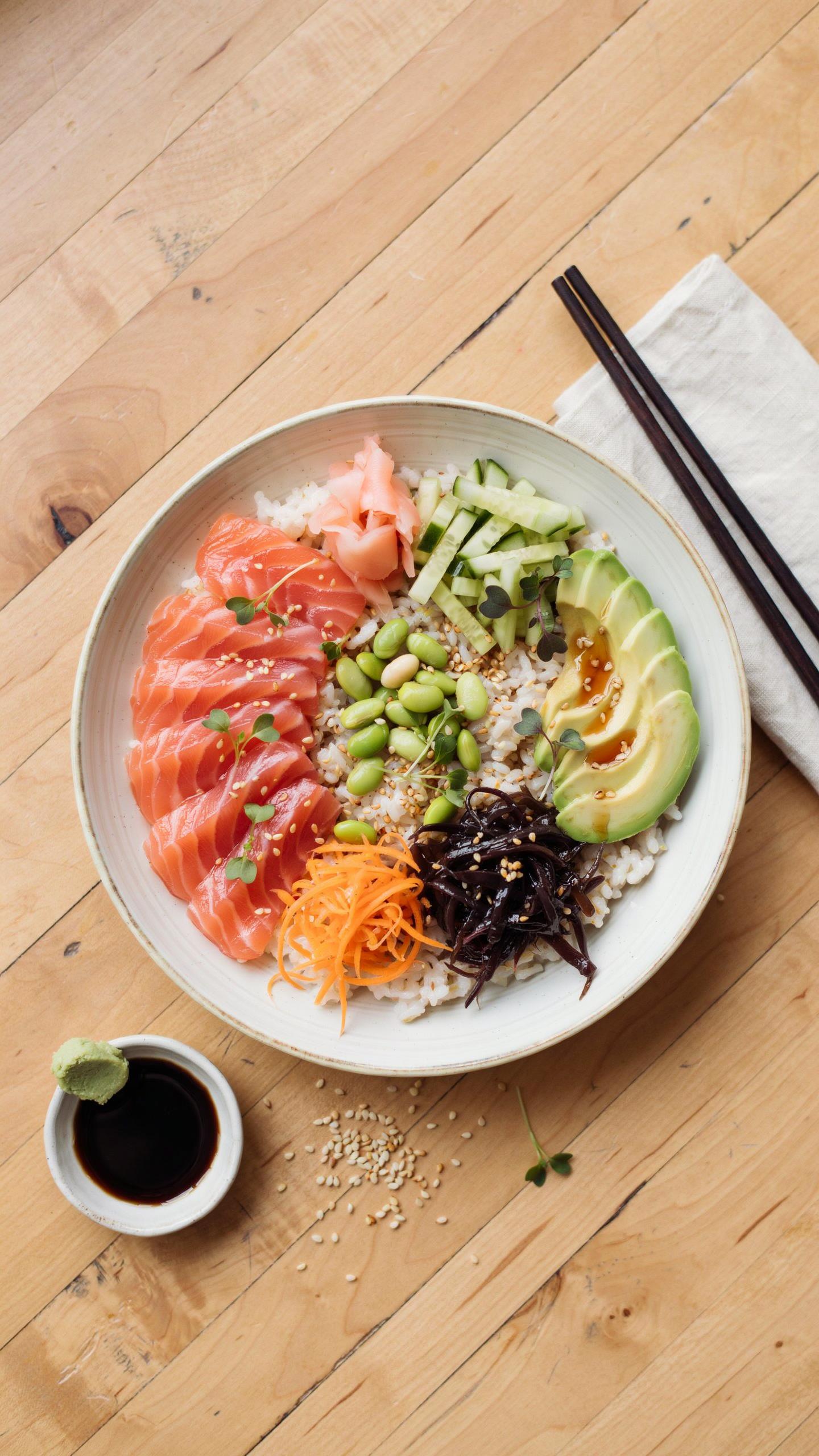
You want your bowl to taste restaurant-quality without the 300 calories hiding in bottled sauces. Here’s the mechanism: umami receptors on your tongue don’t care about volume. They care about glutamates and nucleotides. One tablespoon of the right combination beats three tablespoons of mediocrity. Most people oversauce because they don’t understand this basic biology.
Start with soy sauce as your base. Two tablespoons per bowl. Add rice vinegar (one tablespoon) to cut through fat and wake up your palate. Mix in one teaspoon of sesame oil for lipid-carried flavor compounds. That’s it. No mirin, no mayo-based garbage, no sriracha padding. The protein (salmon, tuna, tofu) already carries fat and glutamates. Your sauce amplifies what’s there, not replaces it. This combination delivers satiation signals faster because real umami triggers faster satiety than sugar-loaded alternatives.
Fermentation Does The Heavy Lifting
Fermented foods are biology’s flavor shortcut, not a trend. Miso, soy sauce, and kombucha contain pre-broken amino acids and organic acids that your taste receptors register as depth. When you add miso paste to your sauce base instead of relying on salt alone, you’re borrowing thousands of hours of bacterial work that already happened in a jar.
Add one teaspoon of white miso to your sauce mixture. It dissolves into soy and vinegar and adds savory notes that make your bowl taste finished without added calories. The fermentation process converts soy proteins into free amino acids like glutamate. You consume the end product of someone else’s fermentation instead of creating new flavor from nothing. Ginger pickled for three days works the same way. Two tablespoons of pickled ginger adds brightness and aids protein digestion simultaneously. Fermented foods accelerate both flavor and the metabolic process that follows eating.
Topping Tiers Maximizing Nutrition Per Bite
The Fat Layer That Actually Matters
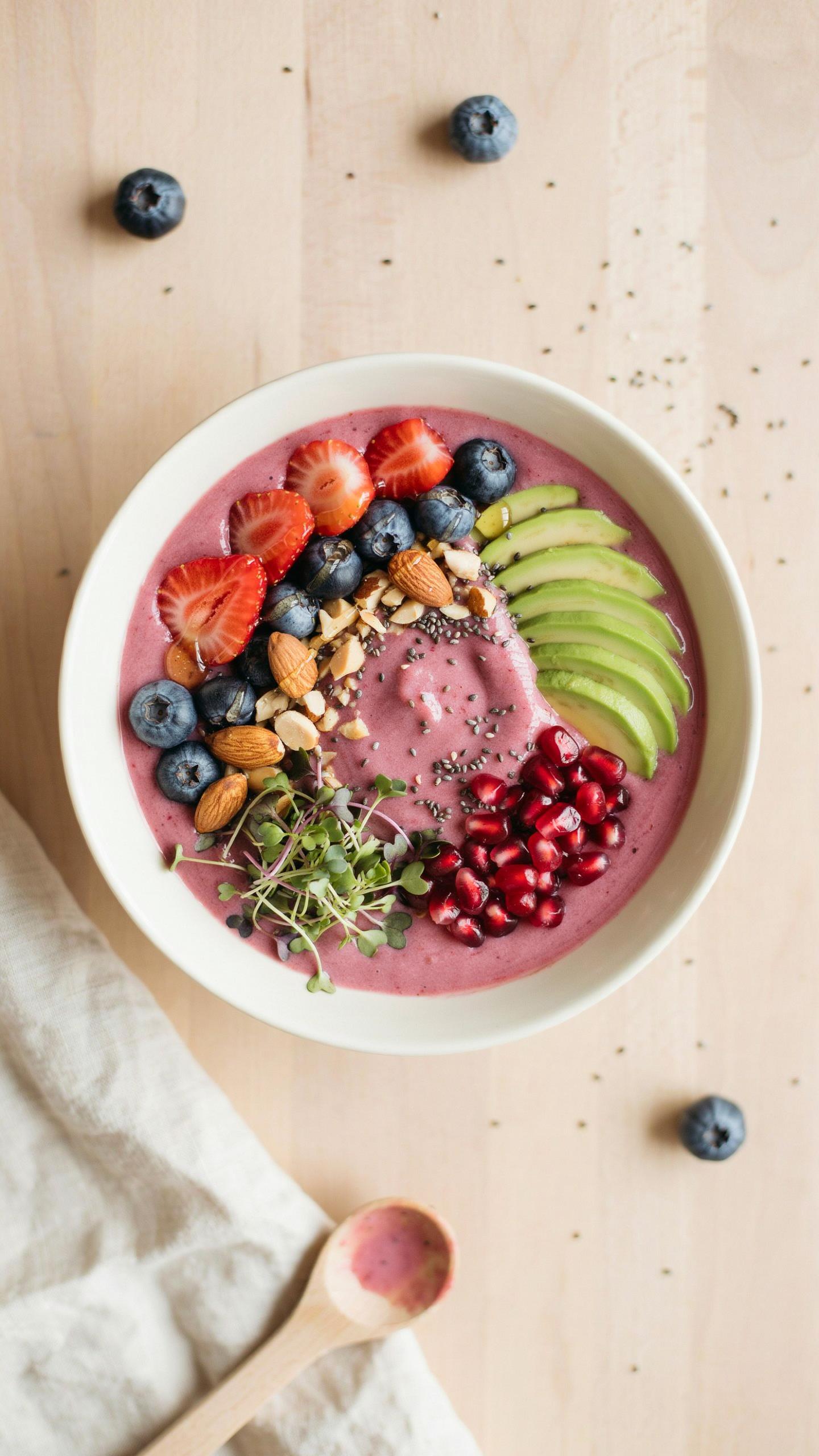
You want to feel smart about your food choices without actually changing your behavior. The mechanism here comes from biochemistry: fat-soluble vitamins like A, D, E, and K require dietary fat to absorb into your bloodstream. Without it, you’re eating expensive decoration. Avocado, nuts, and seeds aren’t toppings you add for texture. They’re delivery vehicles for nutrient absorption.
Most meal preppers treat fats as optional garnish. They’re not. A sushi bowl with raw fish, rice, and vegetables absorbs roughly 3 to 5 percent of its fat-soluble nutrients without a fat source present. Add one ounce of avocado or a tablespoon of sesame seeds, and you move that number dramatically upward. The fat density in these toppings also slows gastric emptying, which means you stay full longer and your blood sugar rises slower. Layer the toppings strategically: place the fat source directly against the protein and vegetables, not floating on top.
Density That Compounds Over Time
Microgreens and sprouts pack more phytonutrients per gram than mature vegetables by a measurable margin. This isn’t marketing. A single tablespoon of broccoli sprouts contains sulforaphane levels equivalent to a full cup of mature broccoli. You’re compressing nutritional output into minimal volume and weight, which matters for meal prep containers and satiety without bloat.
Sprouts do require one practical shift: add them last, right before eating. They wilt quickly in moisture and lose their textural value. Store them separately in your prep container or in a sealed bag within the main bowl. This single protocol change means you get the full nutritional and textural benefit across five days of eating the same bowl composition without degradation.
The One Touch Sushi Bowl Meal Prep System
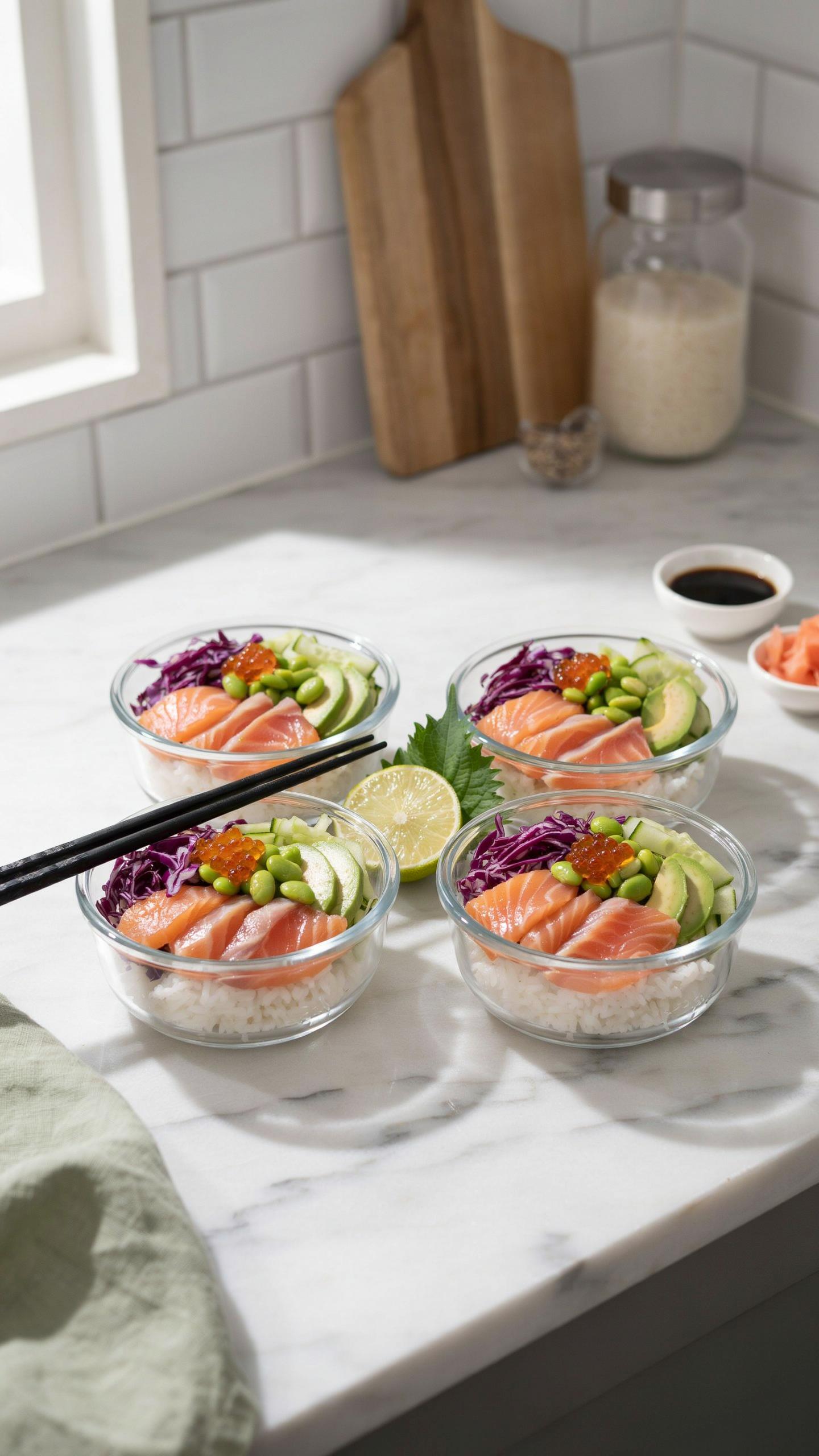
Cook Once, Eat All Week
You want the feeling of control without the daily cooking tax. Here’s the mechanism: batch cooking collapses decision fatigue and eliminates the friction point where most people abandon meal prep entirely. Cook protein once on Sunday, portion it, refrigerate it. That’s the entire system.
Salmon, chicken breast, and tofu are your three options. Bake salmon at 400°F for 12-14 minutes until it flakes at the thickest point. Grill chicken breast to 165°F internal temperature, then slice it. Press and pan-fry tofu until the exterior firms. Each protein stores five days refrigerated in airtight containers. You’re not cooking seven meals. You’re cooking one meal seven times.
Prep Vegetables Before Hunger Hits
The common advice says to chop vegetables fresh daily. That’s wrong. Pre-chopped vegetables oxidize slightly, yes, but they stay edible and nutritious for three to four days. The real cost of daily chopping is the 15 minutes you won’t have when you’re tired at 6 PM. Eliminate that decision point entirely.
Cucumber, avocado, carrot, and pickled ginger need no cooking. Slice them Sunday evening into storage containers. Nori sheets stay crisp in a sealed bag. Edamame you steam for five minutes, chill, and portion. Rice you cook once, store in the fridge, and portion into bowls. When you assemble a bowl, you’re executing a sequence, not problem-solving. That execution takes four minutes maximum.
Container Strategy The Military Logistics Of Lunch Meal Prep
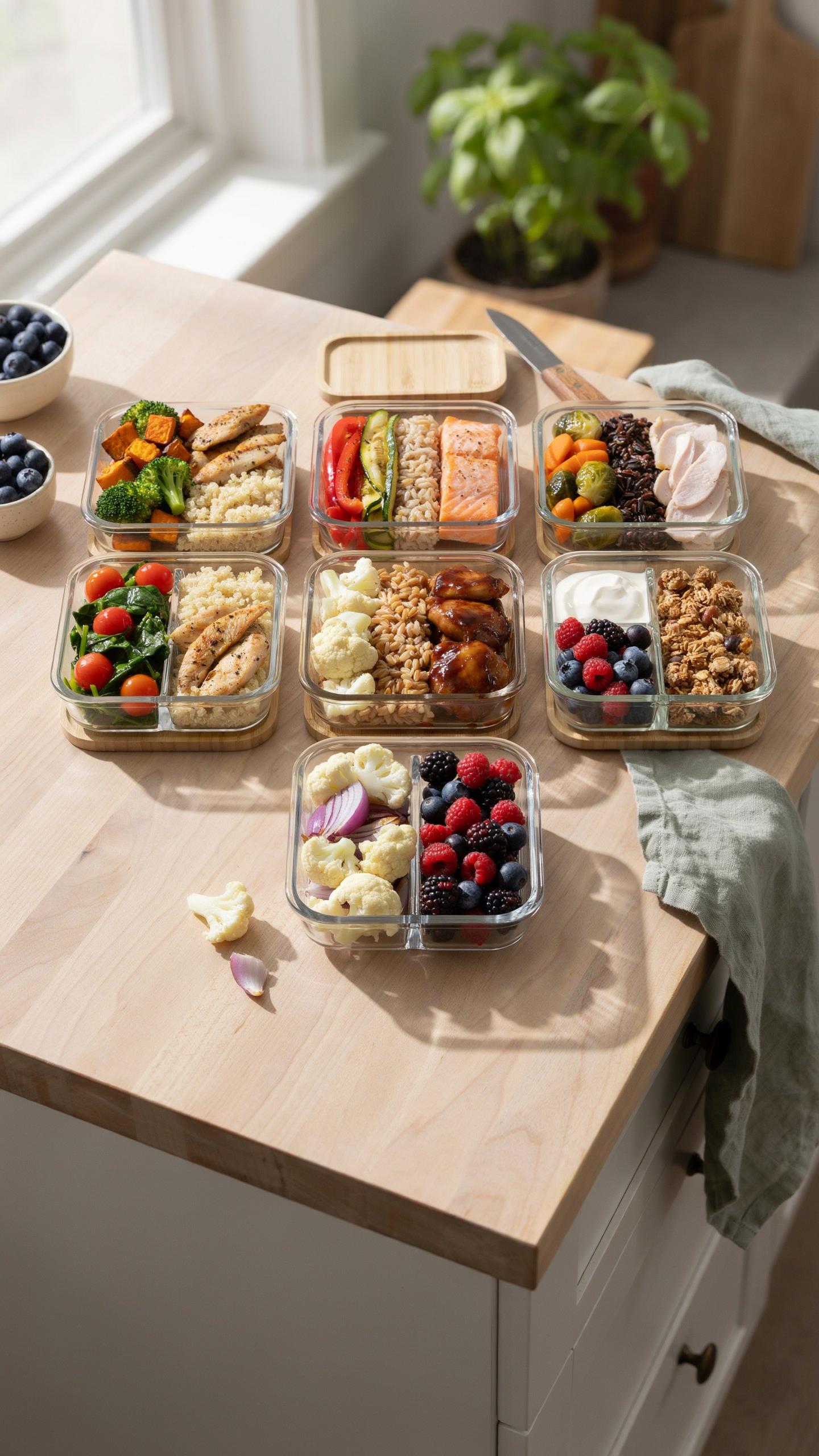
Compartmentalize For Freshness, Not Aesthetics
You want your meal to look Instagram-worthy when you open it on Wednesday. That’s not why compartments matter. Military logistics compartmentalizes supply chains to prevent cascade failure: if one unit fails, the rest survives intact. Your sushi bowl uses the same principle. Rice absorbs moisture from raw fish and vegetables. Nori loses crispness when exposed to humidity. Sauce seeps into everything. Separate compartments aren’t decoration. They’re a containment strategy that keeps each component at its intended texture and temperature for five days instead of two.
The mechanism is simple: moisture migrates. Rice placed directly against raw salmon will turn soggy by day three. A divider forces moisture to travel through air instead of direct contact, slowing the transfer rate significantly. Store rice in the base compartment, protein in a sealed section, vegetables in another, sauce and nori in their own spaces. This isn’t fussy. It’s the difference between eating your meal as designed and eating a degraded version that tastes like regret.
One Container Type, Repeated
Most people waste time shopping for different container sizes and shapes. Wrong move. Pick one container model and buy six identical units. Standardization eliminates friction at two critical points: assembly and storage. When every container is the same, you develop muscle memory. You pack faster. You stack efficiently in the refrigerator. You don’t waste mental energy deciding which container fits where.
The best containers for sushi bowls are rectangular with four fixed compartments. Glass holds up better than plastic for five-day cycles because it doesn’t retain odors or staining from fish oils. Plastic lids work fine. Buy the same brand and model in bulk. Consistency in your equipment directly reduces the time you spend on prep day. You move through assembly like a line worker, not a chef. This is how you actually sustain meal prep instead of abandoning it after two weeks.
The Sushi Bowl Recipe Renegade No Cook Assembly
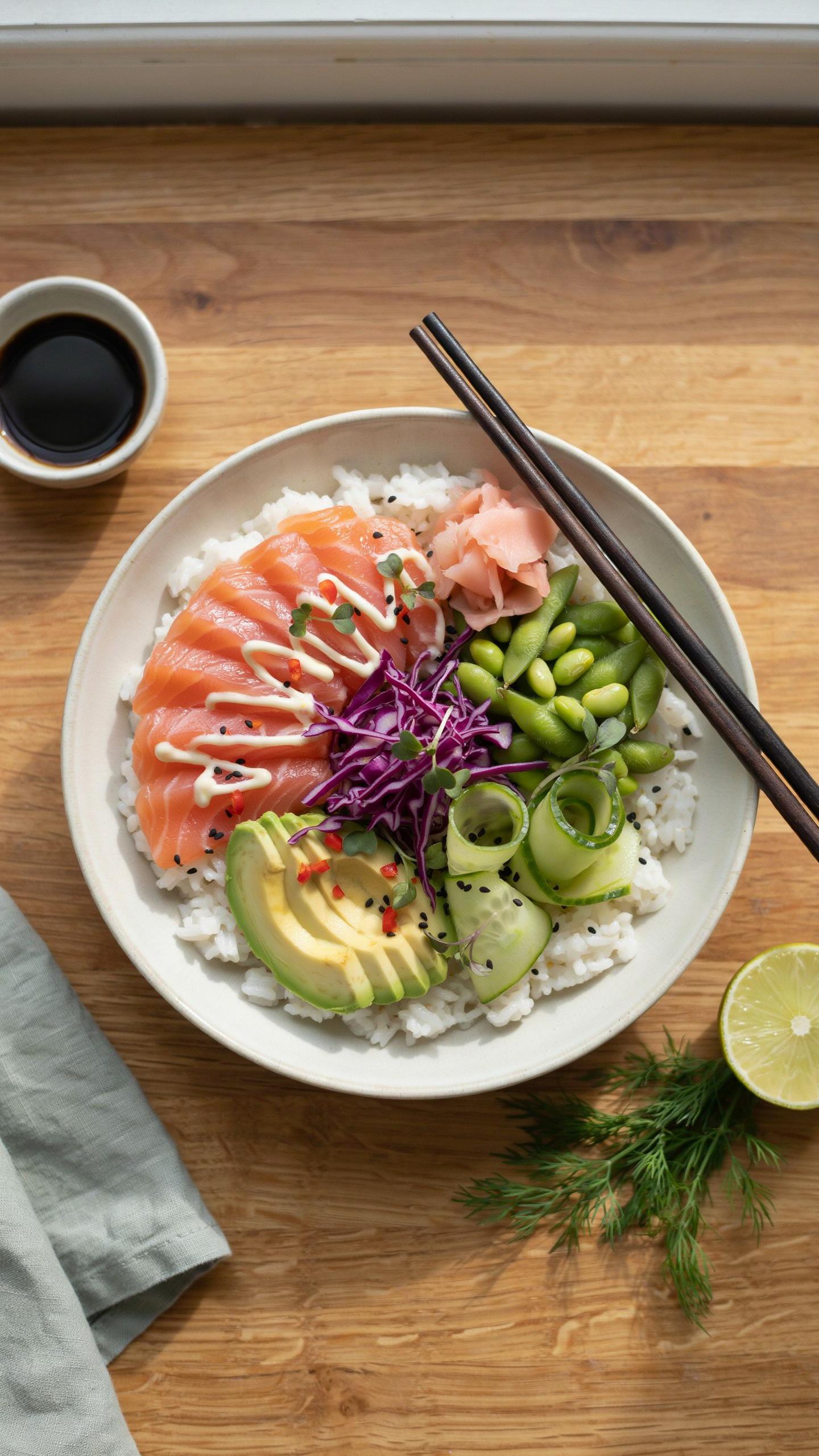
Canned Fish And Pre Cooked Grains Beat Fresh Every Time
You want this section because you’re terrified of wasting money on fish that spoils before you eat it. Here’s the mechanism: canned fish operates like inventory in supply chain logistics. You stock it. It doesn’t degrade. You use it when demand hits, not when freshness expires. Canned tuna, salmon, and mackerel contain identical protein to fresh counterparts. The only difference is texture and sodium content, which you control by draining and rinsing the can thoroughly under cold water for sixty seconds.
Pre cooked grains follow the same logic. Brown rice, quinoa, and sushi rice sold in microwaveable packets or bulk bins have already undergone the hydration and heat process. You reheat or eat cold. Zero cooking time required. This removes the primary failure point most people face: undercooked rice or rice that absorbs too much water and turns mushy. Buy in bulk from Asian markets where turnover is high, then portion into containers immediately after purchase. This locks in both cost efficiency and shelf stability.
Raw Vegetables Preserve What Cooking Destroys
The nutrient density argument is backward. Most meal prep guides tell you to cook vegetables to soften them for “better digestion.” That’s incomplete. Raw vegetables retain vitamin C, folate, and certain phytonutrients that heat degrades. Cooking also concentrates anti nutrients like oxalates, which matters if you prep the same bowl five times weekly. Shredded cabbage, grated carrot, sliced cucumber, and thinly cut radish deliver crunch, volume, and micronutrient load without a single minute on heat.
The practical constraint is prep time on day one, not execution. Slice your vegetables immediately after purchasing, then store them in separate containers with a damp paper towel at the base. They stay crisp for five to seven days. Layer them into your sushi bowl last, right before eating, so they don’t absorb moisture from the rice and canned fish. Assemble everything else cold. This method cuts actual cooking time to zero while maximizing the nutrient profile that makes a high protein sushi bowl worth repeating.
Cost Benefit Analysis The Economic Case For At Home Sushi Bowls
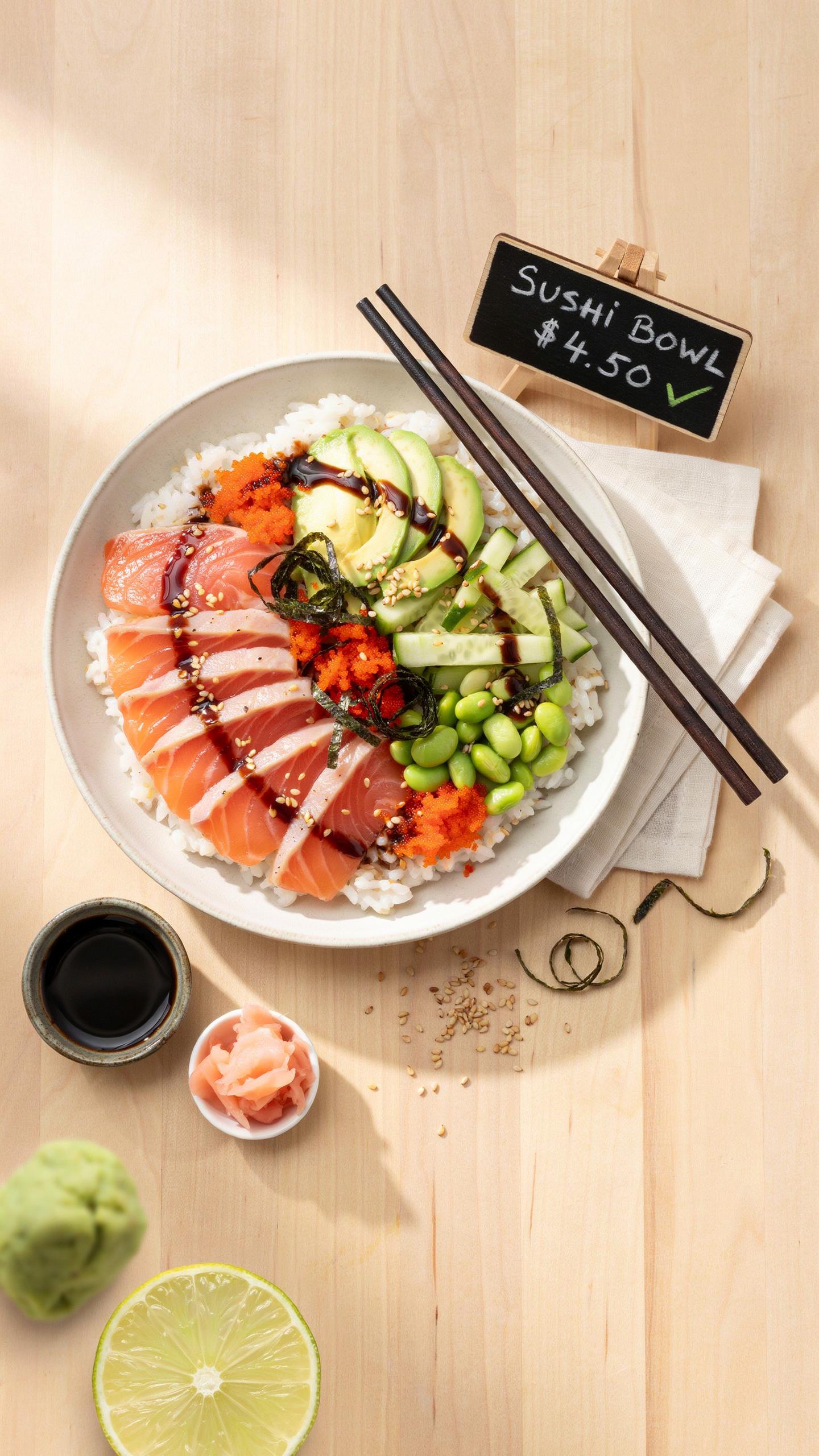
The Math On Your Money
You care about this because you want permission to stop feeling guilty about spending on convenience. Here’s the mechanism: takeout sushi bowls run 14 to 18 dollars per serving in most markets. Homemade bowls cost 5 to 7 dollars per serving when you buy sushi-grade fish, nori, rice, and proteins in bulk. That’s a 60 to 65 percent reduction per bowl. Over 20 bowls per month, you pocket 140 to 220 dollars.
The gap widens when you account for markup psychology. Restaurants price sushi high because consumers accept it. They’re not paying more for better fish. They’re paying for convenience tax and perceived status. At home, you control every input: fish quality, protein type, rice seasoning, and portion size. You get superior macros and lower cost simultaneously, which takeout never offers.
Time Investment Returns The Real Yield
Economics teaches opportunity cost: what you give up by choosing one action over another. Meal prep time is your capital input. A 90-minute Sunday prep session yields 15 to 20 bowls. That’s 4.5 to 6 minutes of labor per meal. Takeout requires 15 to 25 minutes round trip: drive, order, wait, return. You recover 10 to 20 minutes per bowl. Over a month, that’s 3 to 6 hours of reclaimed time.
The real return compounds when you factor automation. Your first prep takes longer because you’re learning sequences. By session three, you’ve optimized knife angle, rice temperature, and container strategy. You hit the 90-minute mark faster each time. By month two, you’re down to 75 minutes for the same output. Batch the same bowl ten times in a row, and your hands solve the problem without cognitive load.
Advanced Sushi Bowls The Art Of Iterative Improvement
Track What Actually Works
You want to believe one perfect recipe exists so you never have to think again. The mechanism is feedback loops: you need measurable data on what you actually eat, not what you planned to eat. Without tracking preferences, you’re guessing. You’ll repeat failures and miss patterns that separate bowls you finish from bowls you force down.
Start with these trackable variables:
- Protein source satisfaction: Rate salmon, tuna, tofu, shrimp on how full you feel two hours post-meal on a 1-5 scale.
- Rice temperature preference: Log whether you prefer warm, room temperature, or chilled rice and note energy crashes after eating each version.
- Vegetable volume tolerance: Document which vegetables you actually finish versus which you leave in the bowl to identify texture or flavor rejections.
- Sauce viscosity impact: Track how much sauce you use and whether thicker or thinner consistency affects how often you remake the bowl.
- Carb timing effects: Note whether eating your bowl before or after training changes hunger levels or performance the next day.
- Cost per preparation: Record ingredient costs weekly to catch price fluctuations and identify which swaps maintain protein while dropping expense.
After four weeks of tracking, patterns emerge that reveal your actual preferences, not theoretical ones. You’ll see which proteins keep you satisfied longest, which rice temperatures prevent afternoon crashes, and which vegetable ratios you consistently finish. This data becomes your formula. Stop changing bowls randomly. Build on what works.
Balance The Three Variables
The common advice says hit your macros and call it done. That’s incomplete because it ignores the ratio problem. You can hit 40g protein, 50g carbs, 15g fat and still make a bowl that sabotages you. The mechanism is metabolic load: changing the proportion of each macronutrient changes how your body processes the entire meal, independent of total calories.
A bowl with 40g protein from salmon, 20g carbs from rice, and 20g fat from avocado and oil hits different than 40g protein from tofu, 70g carbs from rice, and 5g fat from edamame. Your digestion speed, satiety duration, and blood sugar response all shift. Start with a baseline ratio: 35 to 40 percent protein, 40 to 45 percent carbohydrate, 20 to 25 percent fat by calories. Shift each variable up or down by 5 percent weekly based on your tracking data. If you’re still hungry three hours after eating, increase protein or fat by 5 percent. If you feel sluggish, increase carbs slightly. Test one variable at a time. Document everything. Only lock in a ratio once you’ve sustained it for two weeks without hunger crashes or energy drops.
Your biggest obstacle isnt the recipe its your adherence to complexity

Most people fail at meal prep because they treat it like cooking, not like assembly. You don’t need ten ingredients or fancy techniques. Rice, protein, vegetables, sauce. That’s it. Pick three proteins you actually eat. Buy them Sunday. Cook them once. Stop waiting for the perfect plan and make a mediocre bowl today instead. Your consistency beats everyone else’s optimization.