
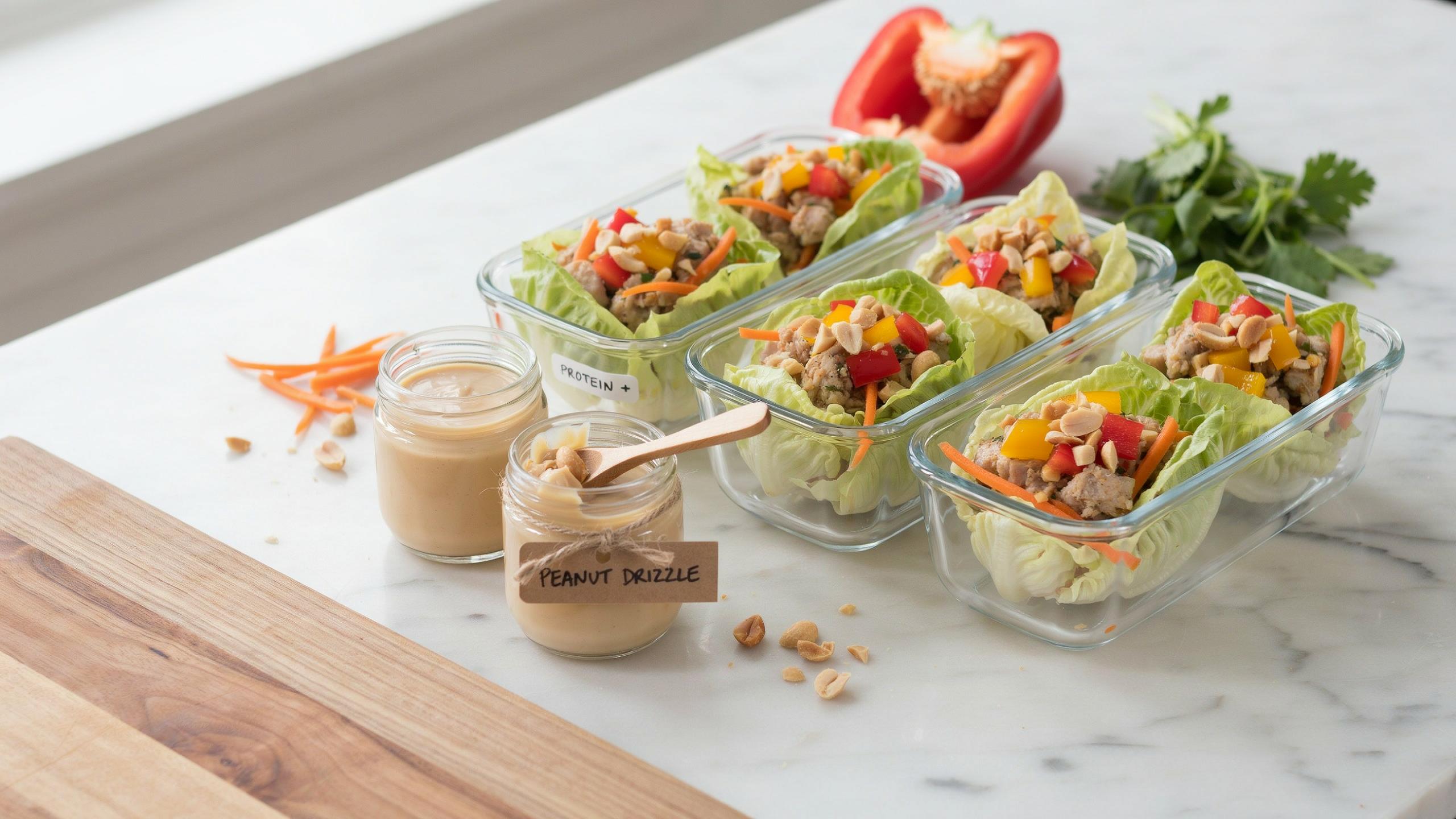
The Myth Of Easy Lettuce Wrap Meal Prep
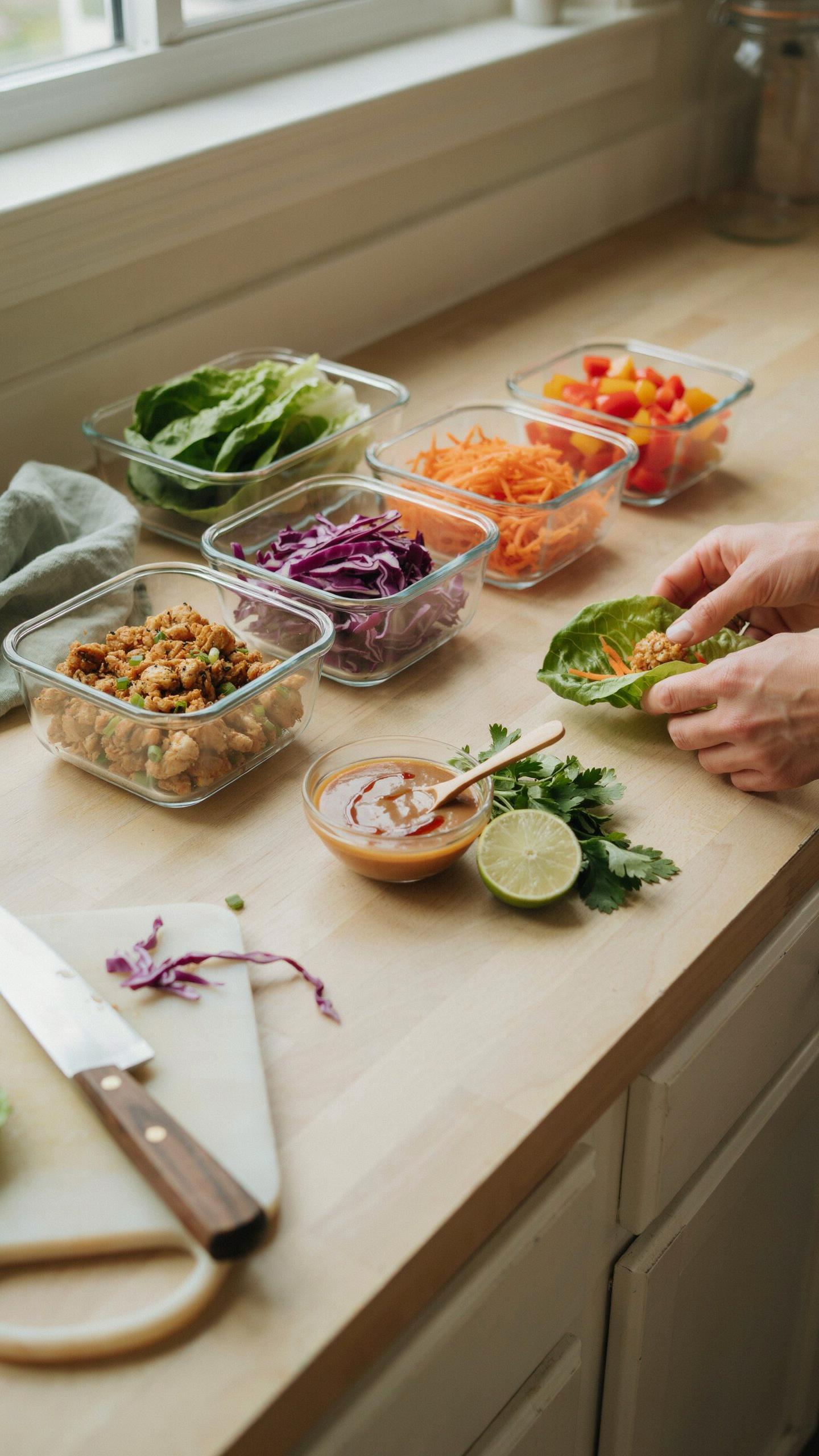
Why Most Methods Fail You
You want to believe lettuce wrap meal prep is easy because admitting it requires real planning feels like failure. The truth is simpler: most guides skip the actual failure point, which happens between days three and five when your lettuce oxidizes and your fillings separate. They tell you to prep on Sunday and eat all week. That doesn’t account for moisture migration, where proteins release liquid that soaks into everything else. By Wednesday, your wrap is a soggy mess. The mechanism is basic chemistry: cut vegetables and cooked proteins release water. Sealed containers trap that moisture. Time kills texture.

People default to assembly-line prepping because it looks efficient. You cook chicken, chop lettuce, portion toppings into containers, stack them in the fridge. What fails is the timing assumption. You can’t batch-prep lettuce wraps seven days out. The lettuce degrades. The fillings oxidize. Your proteins dry out or absorb off-flavors from neighboring ingredients. The real cost isn’t time on Sunday. It’s the meal you throw away on Friday because it tastes like nothing.
The Hidden Cost Of Taking Shortcuts
Economics calls this the “bullwhip effect”: small changes in consumer demand create massive swings upstream. Apply that to lettuce wrap prep, and you get this: saving thirty minutes on Sunday by prepping everything at once costs you the entire meal’s quality by Wednesday, forcing you to buy lunch instead. You’ve inverted the equation. The convenience method creates waste, not efficiency.

Most people don’t measure this because they don’t track what they throw away or replace mid-week. They just notice lettuce wraps stop tasting good and assume the concept is flawed. It isn’t. The prep method is. The protocol that actually works requires you to prep in tranches: proteins two to three days ahead, fresh greens the night before, assembly components separate until the moment you eat. This takes more touches but extends your window. Your Wednesday meal tastes as good as your Monday one. That’s the real mechanism: separate storage timelines for separate ingredients based on their degradation rate.
Deconstructing The Protein Source Beyond Basic Chicken Lettuce Wraps
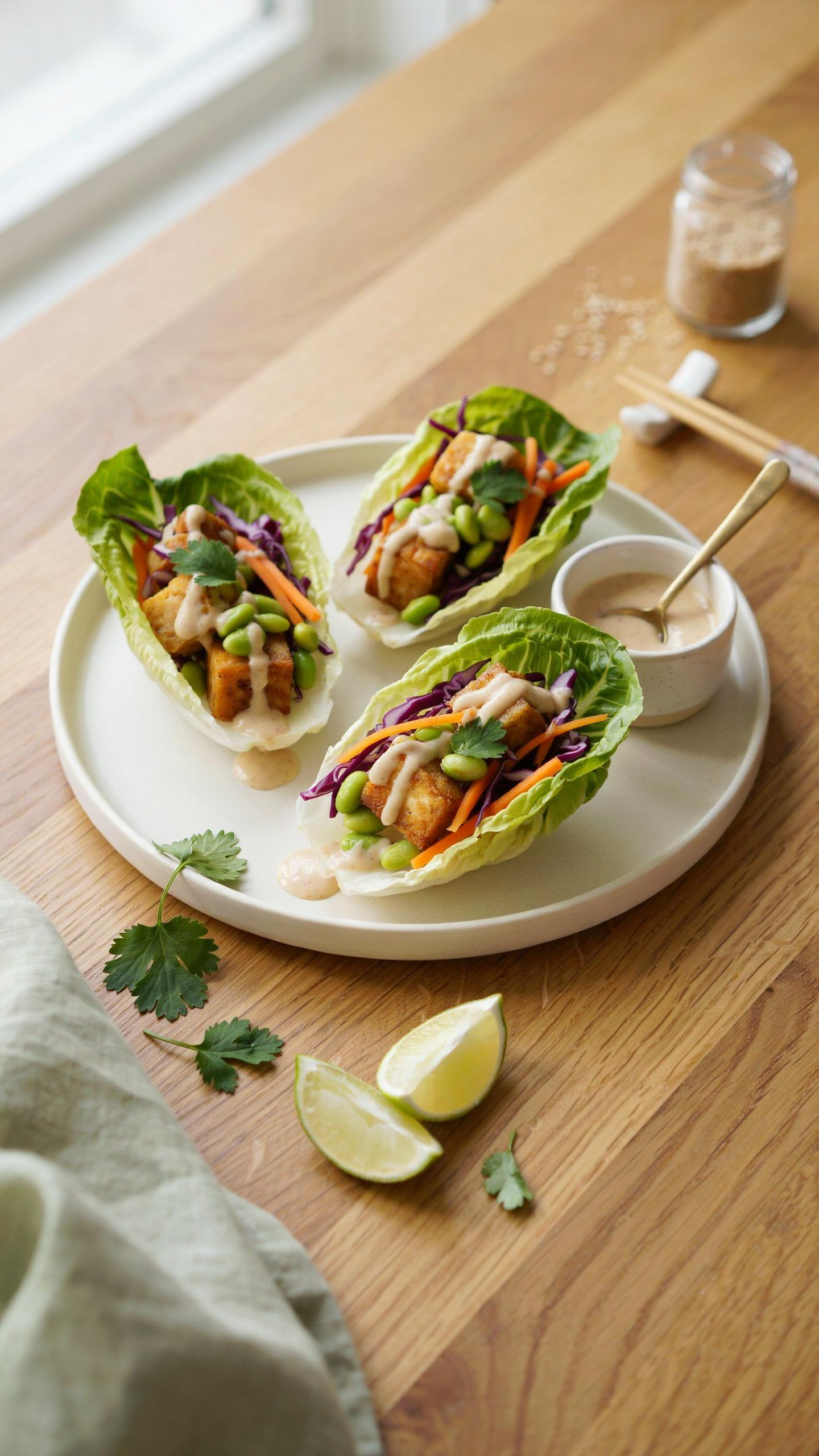
Which Proteins Actually Hold Up During Storage
You want chicken because it’s cheap and you’ve heard it’s lean. That’s backwards thinking. The real reason to choose your protein carefully is texture degradation during storage—proteins break down differently depending on their structure and fat content, and most people don’t account for this until their meal is already ruined by day four.
Ground turkey absorbs moisture and turns grainy by day three. Shredded chicken breast dries out unless you add fat intentionally. The mechanism here borrows from food science: protein denaturation accelerates when exposed to air and temperature fluctuation. Ground beef with 15 to 20 percent fat maintains moisture and doesn’t oxidize as fast. Canned tuna in oil survives five days without texture loss because the oil barrier slows oxygen exposure. If you’re prepping for a full work week, choose proteins with natural fat content or add it deliberately through your marinade.
Marinade Chemistry For Flavor Penetration
Marinades don’t just taste good—they alter protein structure to hold moisture. Acid breaks down collagen and myofibril bundles, salt triggers moisture absorption through osmosis, and oil creates a hydrophobic barrier against air exposure. Most advice says to marinate for flavor. That’s incomplete.
The acid component (vinegar, citrus, yogurt) needs three to six hours minimum to penetrate past the surface. Salt works faster—thirty minutes activates the osmotic pump that pulls moisture into the protein. Oil applied last prevents flavor loss and oxidation during storage. Mix these in sequence: acid first to denature, salt second to hydrate, oil last to seal. Combine two tablespoons vinegar, one tablespoon salt per pound of protein, then coat with oil. This protocol stabilizes your protein for a five-day shelf life instead of three.
The Kinetic Wrap Method Assembly Line Efficiency For Easy Lettuce Wraps
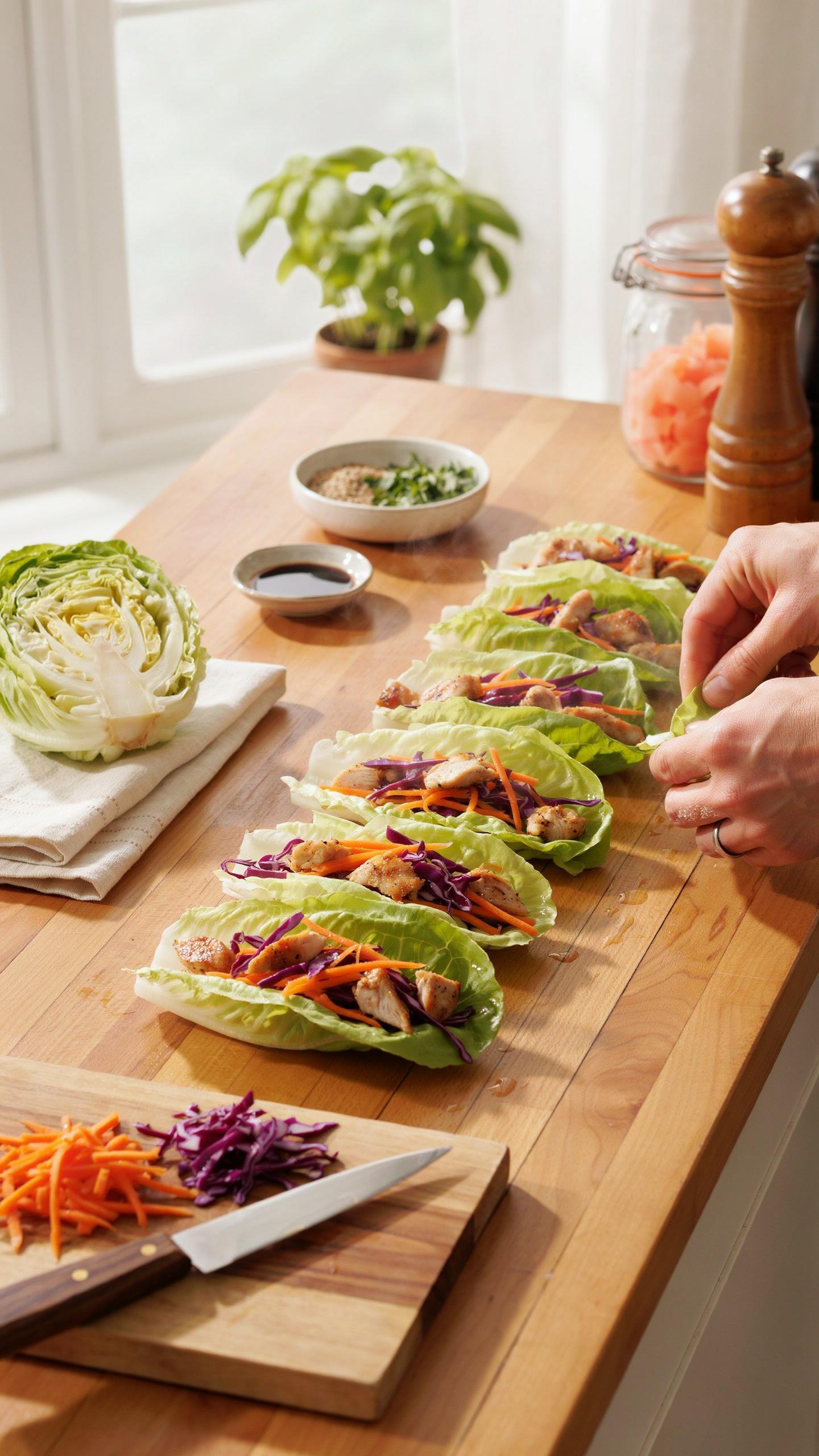
Separate Your Components First
You want to believe prep time doesn’t matter because you’re “committed,” but minutes compound into hours you’ll never get back. The real mechanism here is batching: manufacturing uses it to eliminate context switching, and lettuce wrap prep works the same way. Your brain burns energy every time it shifts tasks. Separate proteins, vegetables, and sauce into isolated containers before you touch a single lettuce leaf.
Cook all protein in one session. Slice all vegetables in one session. Prepare sauce in one batch. This isn’t organization theater—it’s friction reduction. When each component sits ready and waiting, assembly moves at machine pace instead of stuttering stop-and-start. You eliminate the decision fatigue and the hunt for what’s next.
The Four Step Assembly Line
Most people treat wrap assembly like cooking: grab ingredients, build one wrap, repeat. That wastes motion. You batch the same action across all wraps instead.
- Lay all lettuce leaves flat in a row: Use butter lettuce, romaine, or iceberg as your base. Arrange them parallel on a clean surface so you’re not hunting for leaves mid-build.
- Distribute protein across every leaf first: Place your measured protein portion on each leaf before touching vegetables. This locks your portions and prevents overstuffing.
- Add vegetables in the same order every time: Slice vegetables go down first to act as a moisture barrier. Bulk vegetables follow. Consistency speeds your hands.
- Sauce and roll in the final pass: Apply sauce to each wrap, then roll and secure with a toothpick. Do all saucing before any rolling to maintain assembly line rhythm.
- Pack immediately into containers: Roll wraps directly into meal prep containers while your system is still hot. This prevents the lettuce from wilting during the transition between assembly and storage.
The speed gain comes from neural automation. Your hands learn the pattern and execute without thought. Each wrap takes 45 to 90 seconds on first attempt. By wrap six or seven, your time drops to 30 seconds per wrap because your brain stops deciding and starts flowing. Time your assembly—if you’re still over two minutes per wrap after ten wraps, you’re overcomplicating the build.
Preventing The Sog Factor Mastering Lettuce Wraps Healthy Prep

Choose The Right Lettuce Variety
You care about this because soggy wraps feel like wasted effort, and wasted effort kills consistency. The mechanism is simple: lettuce cell structure determines water retention. Butter lettuce and romaine have thicker cell walls that resist breakdown. Iceberg collapses under moisture. Radicchio holds structural integrity longer than most varieties. Red leaf lettuce sits in the middle. Pick varieties with visible rib density—those ribs are cellulose scaffolding that keeps the leaf rigid when exposed to wet ingredients.
The dehydration step everyone skips is where the real control happens. After washing, spin the lettuce dry completely, then lay leaves flat on paper towels for ten minutes before storing. This removes surface moisture that accelerates decomposition. Store in breathable containers, not sealed plastic. Air circulation prevents the microclimate that breeds decay. Temperature matters too—lettuce stored at 34 to 38 degrees Fahrenheit lasts longer than warmer fridges. Most people store wraps in sealed plastic and wonder why they disintegrate by day three.
Strategic Layering Stops The Breakdown
The actual problem isn’t the lettuce—it’s osmosis. Wet proteins and sauces transfer moisture into the leaf through cell membrane pressure, the same principle that governs how salt preserves meat. You reverse this by creating a moisture barrier. Place your protein directly against the lettuce. Turkey, chicken, or tofu acts as the shield. Then layer your vegetables. Put denser items like shredded carrots or radishes next to the protein. Save wet components like salsa or tahini for the outside fold or consume them separately.
Oil-based dressings protect better than water-based ones. Olive oil or almond butter creates a hydrophobic layer that slows water absorption into the leaf tissue. This is why many Mediterranean lettuce wraps stay intact longer than Asian-style wraps with soy-based sauces. Pack your protein and vegetables in a sealed container, then assemble wraps fresh or add the final layer of sauce immediately before eating. The wraps stay viable for four to five days when components stay separated. Assembly takes ninety seconds.
Flavor Engineering Why Your Asian Chicken Lettuce Wraps Fall Flat
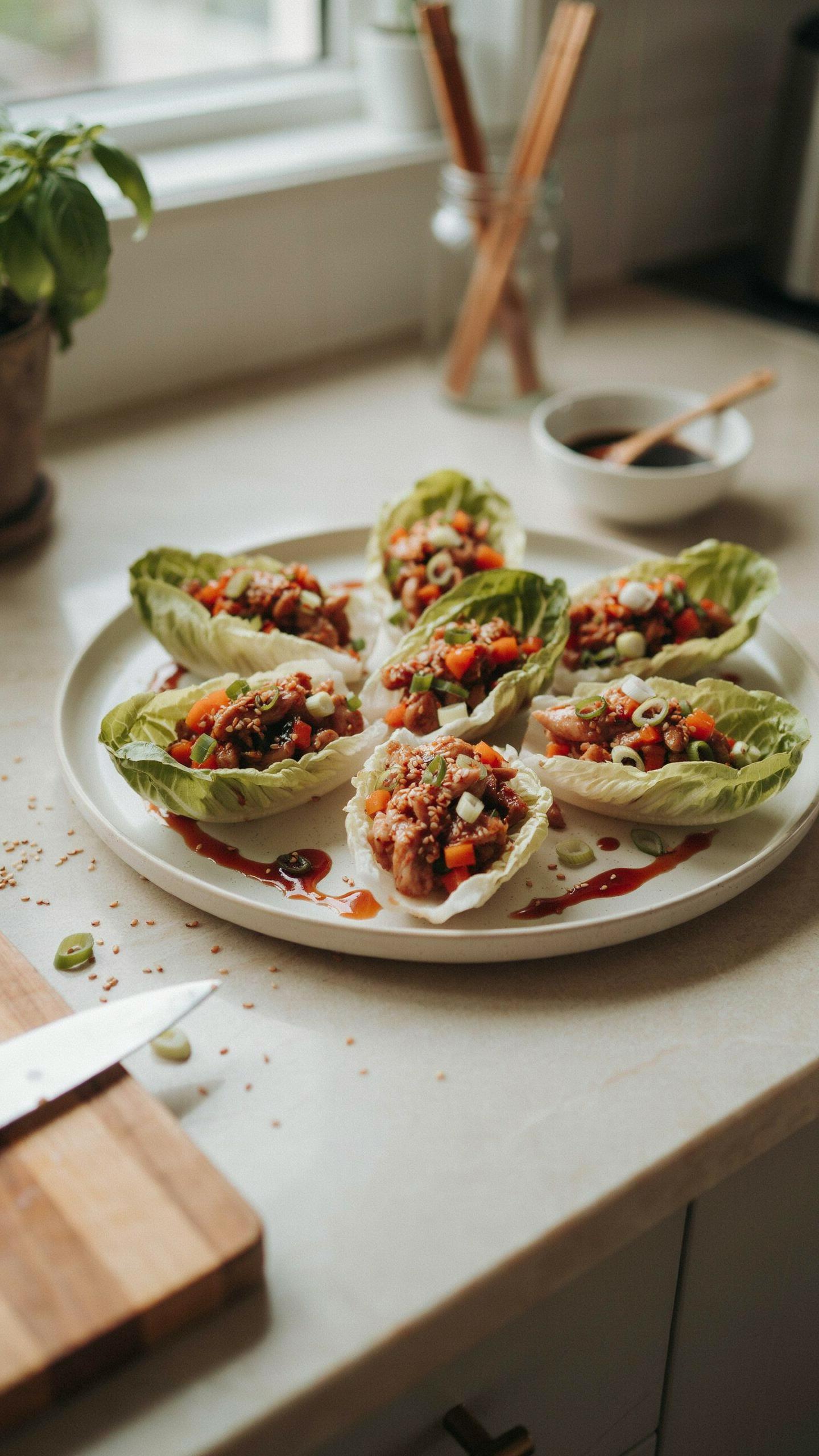
Umami Bombs For Depth
You want your meal prep to taste good enough that you actually eat it instead of defaulting to takeout. That’s the real problem here, and it comes down to one missing ingredient: umami, the fifth taste that makes food feel complete rather than flat.
Umami is a glutamate response, borrowed directly from neurobiology. Your lettuce wrap needs umami compounds the same way a structure needs a load-bearing wall. Without it, everything else feels hollow. Most home cooks skip this entirely and wonder why their chicken wraps taste generic compared to restaurant versions.
Soy sauce, fish sauce, miso paste, and dried mushrooms are umami delivery systems. A single tablespoon of soy sauce mixed into your chicken marinade or sauce base does more work than doubling your protein powder ever will. The mechanism is simple: glutamates and nucleotides trigger specific taste receptors that signal satiation and satisfaction to your brain.
The common advice here is weak. People say “add more seasoning” or “taste as you go.” That’s not a strategy, that’s flailing. You need to layer umami sources into your prep process at specific points. Marinate your chicken in soy sauce and ginger for at least four hours, or overnight. Toast your mushrooms before rehydrating them. This creates depth that survives storage in your container for three to four days.
Balancing The Five Core Tastes
Generic lettuce wraps fail because they chase one flavor note and ignore contrast, which is what actually makes food memorable.
The five tastes are salt, sweet, sour, bitter, and umami. Your wrap needs all five working together, not one dominating. Salt from soy sauce. Sweet from a touch of honey or rice vinegar. Sour from lime juice or rice vinegar. Bitter from a small amount of sesame oil or fresh cilantro. Umami locked in from the prep step above.
Most people nail salt and sweet then stop. They skip sour entirely, or add it at the end as an afterthought. This is the mistake. Sour (acid) is what makes flavors pop and prevents everything from tasting one-dimensional. A half-ounce of rice vinegar or lime juice per batch of sauce doesn’t just add flavor, it forces every other taste to register more clearly on your palate.
Build your sauce in this order during prep: combine your umami base first (soy sauce, fish sauce, miso), then add your heat (sriracha, chili paste), then your acid (lime or rice vinegar), then a tiny pinch of bitter (sesame oil), then your sweet element last (honey or a quarter-teaspoon of sugar). This sequence matters because acid breaks down compounds and opens taste receptors for what comes before it. The acid comes second to last, not first. Store this sauce separate from your cooked chicken and lettuce, then combine everything fresh when you eat, or no more than two hours before.
The Micronutrient Dividend Low Carb Lunch High Impact Fuel

Stack Micronutrients, Not Fillers
You want to feel full at 2 PM without the energy crash that kills your afternoon. Here’s what nobody admits: most people build lettuce wraps wrong because they confuse volume with satiety. The mechanism is simple. Micronutrients trigger satiety hormones faster than empty calories ever will. Protein alone doesn’t cut it. You need the mineral density and phytonutrient load that turns a wrap into sustained fuel instead of a temporary stomach fill.
Build density by layering. Skip the bread-adjacent fillers like processed deli meat or mayo-soaked slaw. Instead, stack dark leafy greens under your protein, add fermented vegetables for gut bacteria signaling, and use seeds or nuts for mineral content. The lettuce wrap becomes a nutrient-delivery system, not a carb delivery system pretending to be healthy. This is the difference between eating lunch and fueling your body.
What Actually Keeps You Full Until Dinner
The conventional wisdom says fiber fills you up. It’s incomplete. Nutrient density, especially minerals like magnesium and zinc, signals fullness at the neurological level faster than bulk alone. Your wrap needs magnesium-rich greens, zinc from seeds, and potassium from vegetables to trigger the cascade that stops hunger signals before they start.
Layer your prep strategically: butter lettuce or romaine as the base for mineral content, ground turkey or beef for bioavailable protein and B vitamins, sliced bell peppers and cucumber for chromium and hydration, pumpkin seeds for zinc, and a small amount of tahini for mineral density. Avoid mayonnaise-heavy dressings and processed toppings that spike insulin without contributing micronutrients. The wrap that keeps you full works because it communicates satiety to your brain through multiple nutrient channels simultaneously.
Scaling Your System From Single Serve To Weekly Turkey Lettuce Wraps
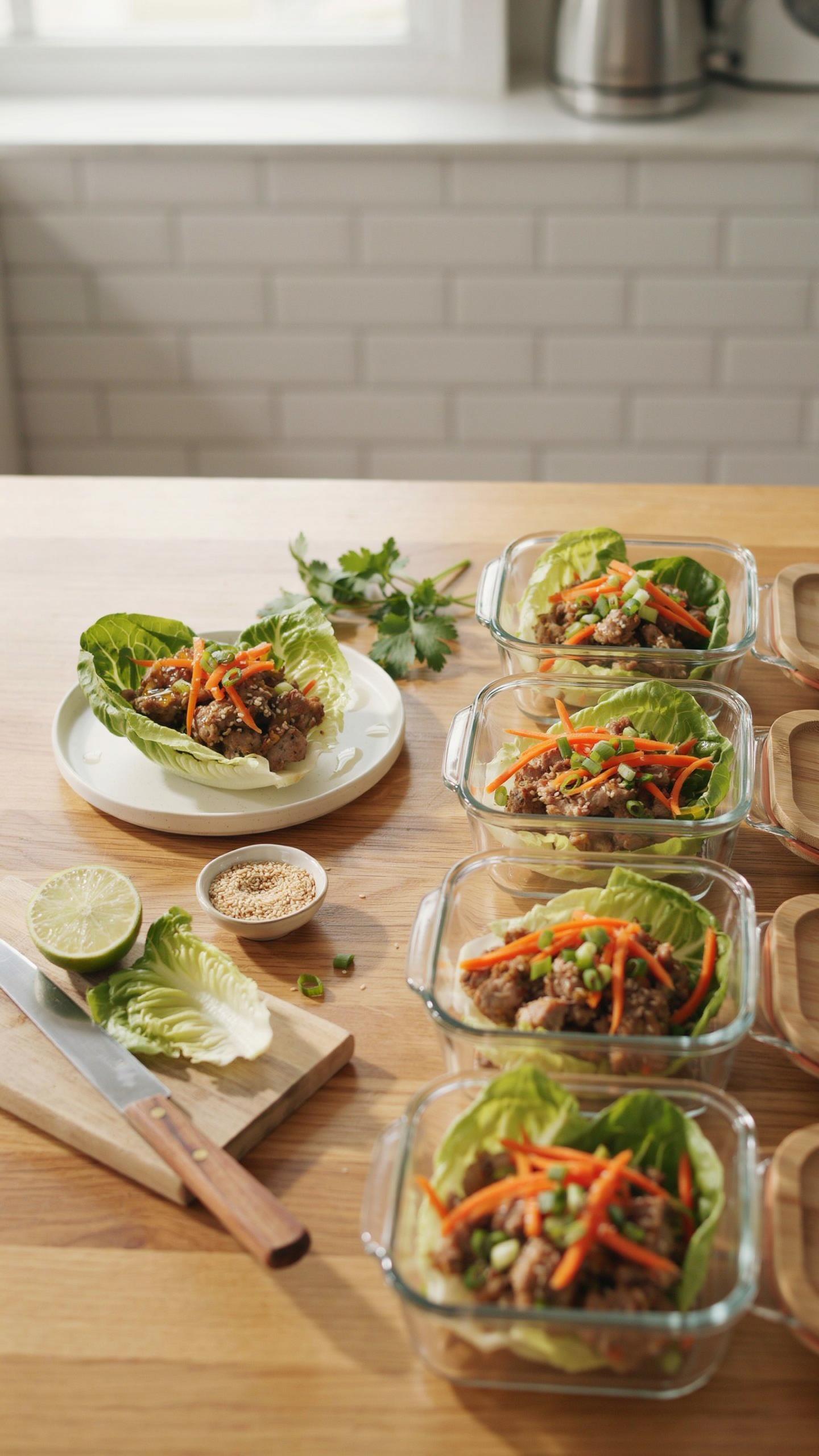
Cook Core Components Once, Assemble Many Times
You’re afraid that meal prep takes too long. The real problem is you’re cooking and assembling simultaneously instead of treating them as separate operations. Borrow from manufacturing: batch processing means you run one task at scale before moving to the next. Cook all turkey, all vegetables, all sauce in isolation. Assembly happens once at the end.
- Ground turkey: Brown 2-3 pounds in one large skillet on medium-high heat. Drain fat, season with salt and ginger. Portion into containers while still warm to lock in moisture.
- Shredded vegetables: Slice cabbage and carrots in bulk using a mandoline or food processor. Keep raw and dry. These hold texture better than cooked versions over five days.
- Sauce base: Combine soy sauce, sesame oil, rice vinegar, and garlic in a single batch. Store separately from other components to prevent sogginess before assembly.
- Butter lettuce leaves: Wash and dry thoroughly using a salad spinner. Separate leaves and layer them flat between paper towels in a sealed container.
- Protein toppings: Cook nuts or seeds dry in a pan if adding them. Store in airtight containers away from moisture to preserve crunch.
The gain comes from doing one task five times instead of five tasks once. You move faster. Your hands remember the motion. Mistakes drop. Cook turkey Monday evening, prep vegetables Tuesday morning, assemble all wraps Wednesday after work, eat them Thursday through Sunday.
Container Strategy Determines Actual Shelf Life
Most people buy containers and hope. They don’t actually extend shelf life. The mechanism is oxygen exposure and moisture migration. Glass containers with airtight seals reduce both. Separate wet components from dry ones until eating time, or you get soggy lettuce and watery turkey by day three.
Store cooked turkey and sauce in separate glass containers. Keep raw vegetables in their own sealed container with a paper towel layer on the bottom to absorb condensation. Lettuce leaves go in a container lined with paper towels, leaves stacked flat with towels between each layer. This setup gives you five days of usable wraps instead of three. On day five, turkey stays safe but textures start degrading. Vegetables lose crispness. Eat by this point. If you need six or seven days, freeze half the batch after day three in a freezer container, thaw the night before, and eat immediately.
The Anti Boredom Algorithm Infinite Lettuce Wrap Recipes Combinations
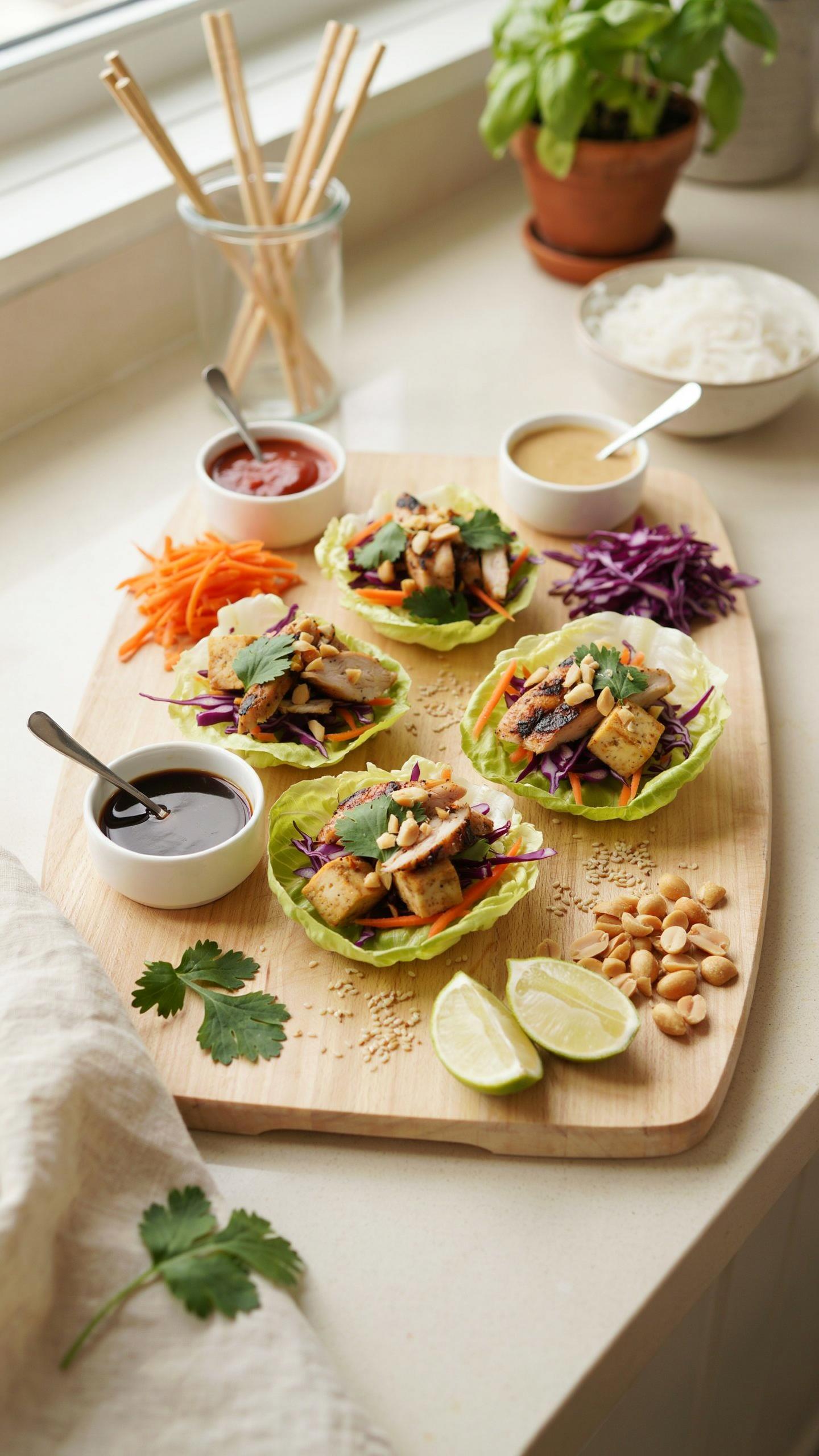
Build Your Component Matrix
You want infinite recipes without the mental load of reinventing dinner every Sunday. Here’s the mechanism: treat your lettuce wrap like a computer program. Each protein, sauce, and vegetable is a variable. Swap one variable while holding others constant, and you get a new output. This scales infinitely because you’re not memorizing recipes—you’re combining components. Your brain actually works this way already. You’re just formalizing it so meal prep doesn’t collapse under repetition.
The matrix approach eliminates decision fatigue. Start with three proteins (ground turkey, canned tuna, rotisserie chicken), three sauces (sriracha mayo, lime vinaigrette, peanut sauce), and three vegetable medleys (Asian-style shredded cabbage with carrot, Mediterranean cucumber and tomato mix, Italian herb zucchini blend). Rotate them independently. You generate nine combinations with minimal prep work. Add a fourth option to any category, and you hit sixteen new variations. The work scales sublinearly while variety scales exponentially.
Rotation Logic For Compounding Freshness
Mathematics offers permutation logic here—the tool for calculating how many unique sequences you can build from a fixed set. Every time you add one more protein option, you don’t add one more meal. You multiply the total combinations across all categories. This is why three proteins times four sauces times five vegetable blends creates 60 unique wraps. Most people cycle through the same four wraps and call it variety. That’s linear thinking applied to an exponential system.
The rotation protocol works like this: assign each component a number. Protein one, two, three. Sauce A, B, C, D. Vegetable blend alpha, beta, gamma, delta, epsilon. On Monday prep, use 1-A-alpha. Tuesday, 1-B-beta. Wednesday, 2-C-gamma. You’re cycling through systematically so no two consecutive meals repeat. You create novelty by design, not by accident. After week four, you start the sequence over, but your taste receptors have reset enough that the repetition doesn’t register as boredom.
Your Unspoken Motive Why High Protein Lettuce Wrap Meal Prep Matters
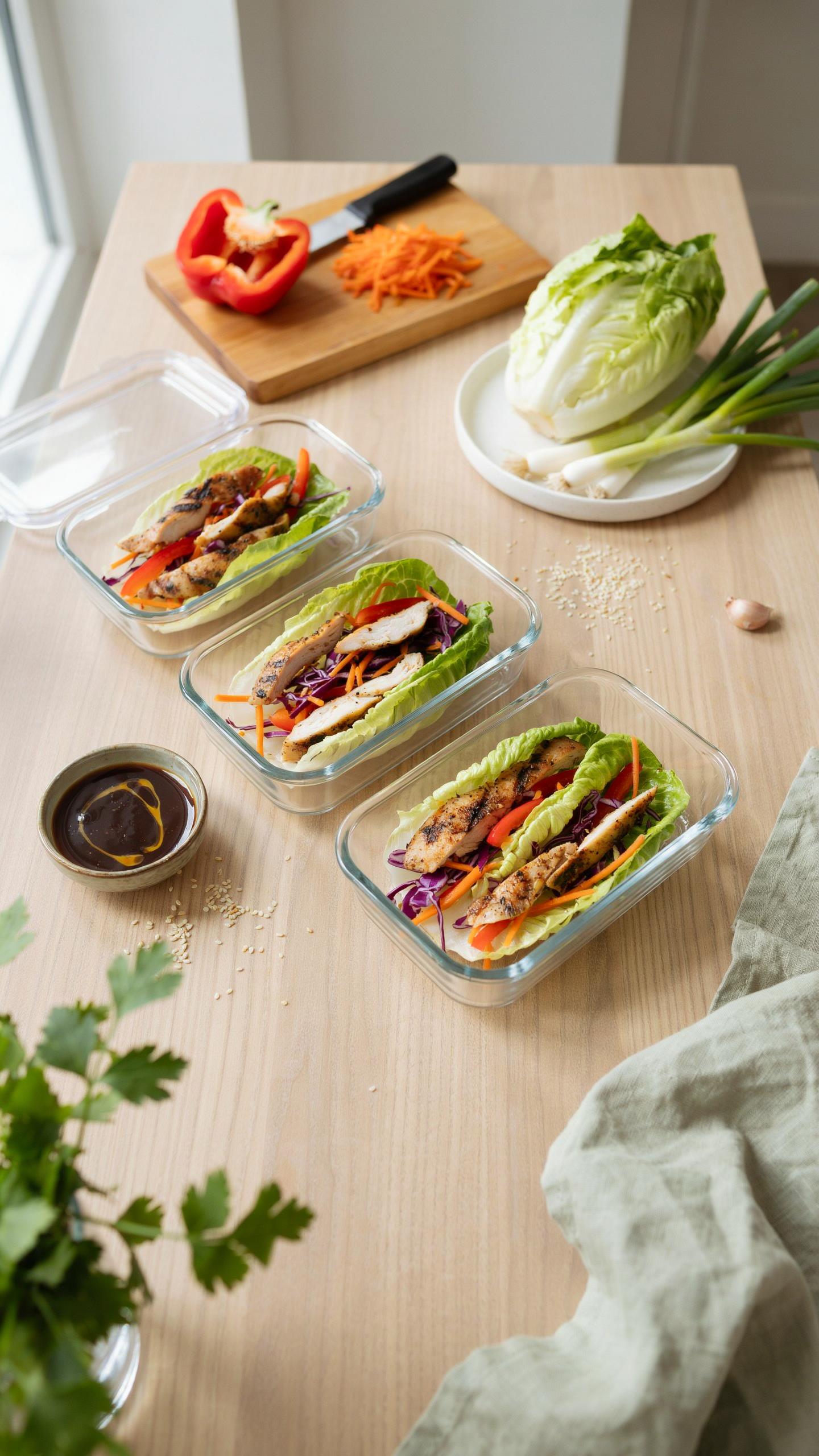
Decision Fatigue Collapses Your Protein Goals
You don’t actually care about lettuce wraps. You care about not thinking about food decisions at 6 PM when your willpower is depleted. The mechanism is simple: every food choice you make burns glucose and depletes your prefrontal cortex’s ability to resist the next bad option. High protein lettuce wrap meal prep eliminates the decision entirely. You prepare once, eat the same thing five times, and redirect that mental energy to work or relationships where it matters.
Most people frame meal prep as a time-saver. That’s incomplete. Time isn’t the constraint. Bandwidth is. When you remove the daily question of what protein to eat and how to prepare it, you stop the cascade of micro-decisions that lead to convenience foods or skipped meals. You eat consistently without negotiating with yourself. The cognitive load vanishes. Your protein intake stops fluctuating based on your emotional state.
The Compounding Returns Of Consistent Nutrition
Compound interest applies to your body’s adaptation, not just your investments. Think in terms of biology’s homeostasis: your system stabilizes around what you feed it regularly. Inconsistent protein intake forces your body into constant recalibration. Consistent protein from prepped lettuce wraps trains your metabolism, appetite hormones, and muscle protein synthesis to operate at a predictable baseline. You get stronger without the plateaus caused by nutritional chaos.
Stable nutrition compounds. A 30-gram protein meal eaten five times weekly for 12 weeks creates metabolic patterns that shift your resting energy expenditure and muscle retention upward. Skip three meals and eat heavily the next day, and you’ve reset the adaptation clock. Lettuce wrap meal prep removes the variance. Your body stops guessing. Performance metrics climb without you changing anything else. Prepare your wraps on Sunday. Eat them Tuesday through Saturday. Track your lifts. You’ll see the difference in week four.
Your real obstacle is not a lack of ingredients but a failure to implement robust repeatable systems for sustained efficiency

You already know lettuce wraps work. You’ve seen the macros. What you lack is the Sunday ritual that turns knowledge into action. Pick one day this week. Buy five pounds of ground turkey, five heads of romaine, and your three favorite toppings. Prep it all in two hours. Then repeat it. Systems beat motivation every single time, and high protein lettuce wrap meal prep only works if you actually do it.