
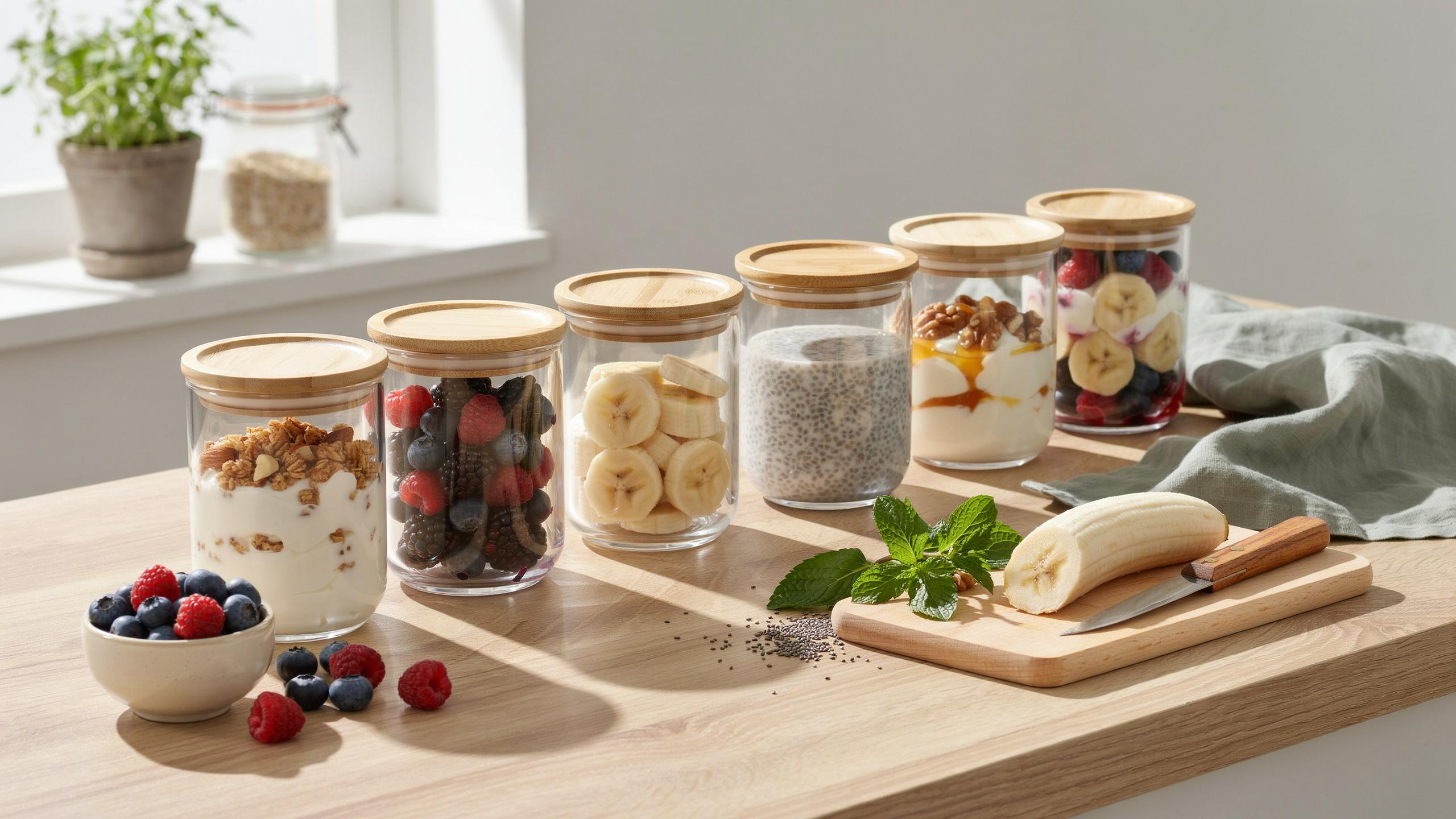
The Illusion Of High Protein Fruit
What Fruit Actually Delivers
You want fruit in your snack because it feels virtuous and tastes better than a protein shake. That’s the real mechanism at work. Here’s the problem: fruit contains almost no protein. An apple has 0.3 grams. A banana has 1.1 grams. A cup of berries has around 1.5 grams. This isn’t a nutritional bonus you’re getting from fruit. It’s background noise.

The marketing around “high protein fruit snacks” works because people conflate fiber and micronutrients with protein. Fiber is valuable. Vitamins matter. But neither builds muscle or keeps you satiated. When someone says they want a “high protein fruit snack,” they’re actually asking for a yogurt or nut butter vehicle that happens to include fruit as a garnish. The fruit isn’t doing the protein work. Stop expecting it to.
Why Most Fruit And Yogurt Combos Fall Short
The standard advice is to pair fruit with Greek yogurt and call it complete. That’s incomplete. A typical serving of Greek yogurt is 150 grams and delivers 15 to 20 grams of protein. Most people then add 100 to 150 grams of fruit, which adds almost nothing to the protein count but significantly increases the sugar load. The math breaks down.

Here’s what actually happens when you meal prep these: the yogurt separates from the fruit within hours, the fruit oxidizes and breaks down, and the texture becomes grainy or watery by day three. The structural problem isn’t solved by better containers. It’s solved by recognizing that wet fruit mixed with cultured dairy is inherently unstable for multi-day storage. Your snack strategy needs to account for this reality or you’re wasting prep time.
Beyond The Buzz Real Protein Density

Which Fruits Actually Deliver Protein
You want to believe fruit is a protein source because it feels cleaner than admitting you need dairy or powder to hit your targets. Here’s the mechanism: fruits contain protein, but the density is so low that relying on fruit alone creates a math problem you can’t solve. Guava leads at roughly 4g per cup. Most others sit between 1-2g. The gap between perceived and actual is where your meal prep fails.
Berries, stone fruits, melons, and tropical options all deliver trace protein alongside fiber and micronutrients. That’s their real value. But naming them “protein sources” is marketing. They’re carbohydrate vehicles with minimal protein content. Pairing them with yogurt, cottage cheese, or Greek yogurt is where the protein density actually climbs. The fruit provides volume, taste, and micronutrients. The dairy provides the macronutrient load you need.
The Math Behind Each Serving
Common advice says “add protein powder to yogurt and fruit” without explaining why the ratio matters or how to verify you’ve hit your target. This is the mistake. You need a simple formula: divide total grams of protein by total grams of the final mixture, then multiply by 100 to get percentage. Aim for 15-20% protein by weight in your final prep.
A 200g serving of Greek yogurt plus 100g mixed berries plus 20g granola gives you roughly 20-25g protein total across 320g. That’s 6-8% protein density, which is low. Adding 15g whey powder pushes it to roughly 35-40g protein across 335g, hitting that 10-12% range. This is why portion control and component selection determine success, not ingredient type. Calculate, measure, verify. Don’t guess.
The Dan Koe Ratio Optimal Fruit To Protein Synthesis
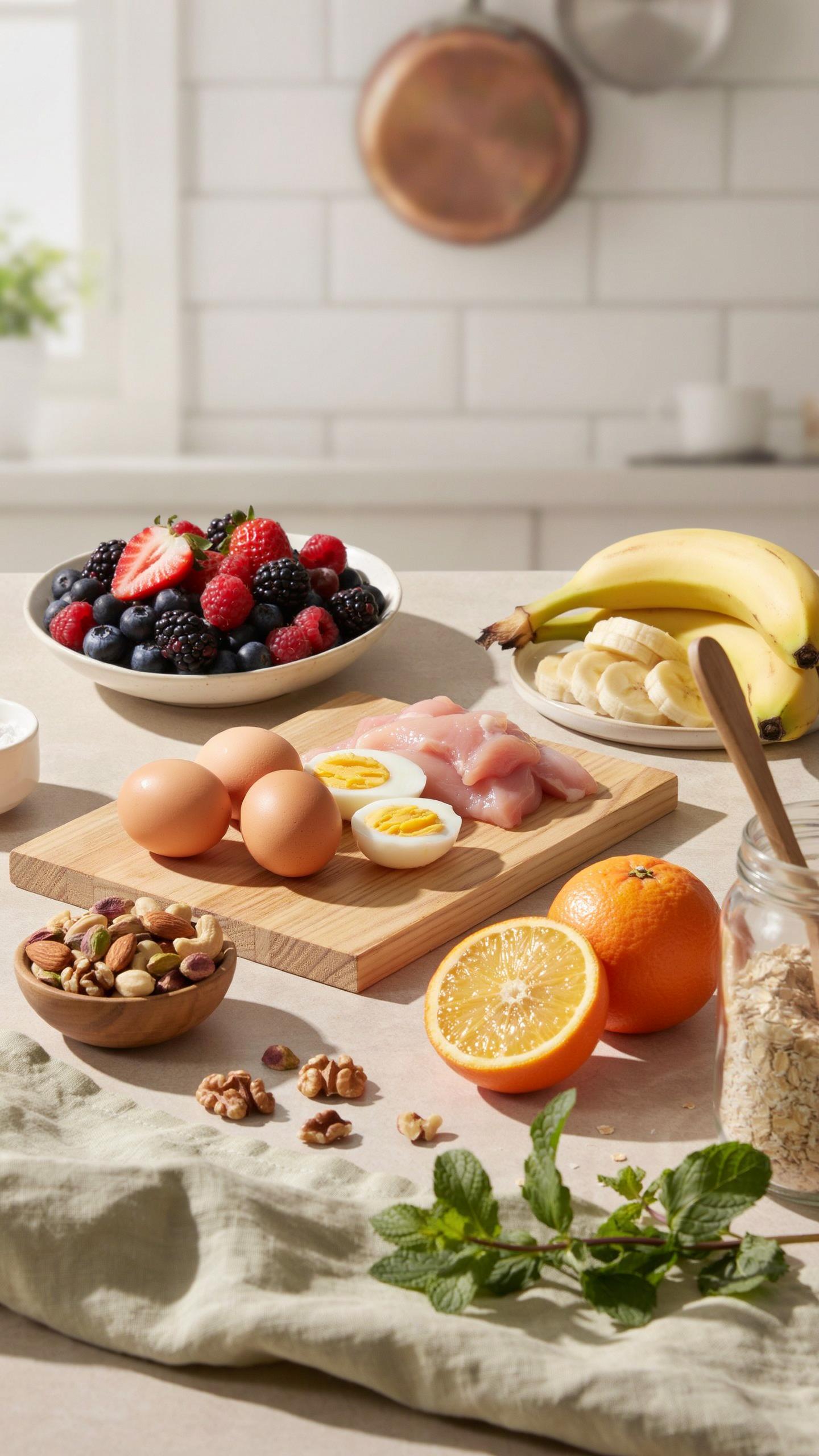
Macros And Energy Without The Crash
You want to feel full longer without the afternoon energy collapse that makes you look weak in front of people who matter. That’s not vanity—it’s biology. Think of macronutrient ratios like load distribution in engineering: weight in the wrong place collapses the structure. Fruit alone spikes insulin and crashes hard. Protein alone leaves you unsatisfied. The mechanism is substrate availability: your body needs both glucose from fruit and amino acids from protein to sustain steady energy production without triggering the parasympathetic nervous system’s rest signal.
A 1:1 to 1:1.5 ratio of protein to fruit by weight works in practice. Thirty grams of yogurt or cottage cheese paired with a half cup of berries creates stable blood glucose and extends satiety. The protein triggers glucagon release, which counteracts the fruit’s glucose spike. Your neurons stay alert. Your hunger stays suppressed for three to four hours instead of ninety minutes. This isn’t theoretical—it’s how your endocrine system actually responds to food combinations.
The Blood Sugar Mechanism
Everything you’ve heard about fruit being “healthy sugar” misses the real problem: speed of absorption. Fructose and glucose from fruit enter the bloodstream fast without fiber or fat to slow them down. Your pancreas floods you with insulin. Blood sugar crashes. You eat again. This cycle wastes time and destroys the entire point of meal prep. The solution isn’t to avoid fruit—it’s to interrupt the absorption rate by embedding it in protein and fat structures that delay gastric emptying.
Protein denatures and slows carbohydrate digestion through a direct mechanical process. When you combine Greek yogurt with berries, the casein and whey proteins literally coat the fruit particles, requiring your stomach to work longer before glucose enters your bloodstream. Pair this with a fat source like nuts or chia seeds, and you’ve extended the glucose release window from thirty minutes to ninety minutes. Your prep strategy becomes: measure fruit first, then add protein at double the fruit’s weight, then add minimal fat if you’re tracking calories. The ratio matters more than the absolute amounts.
The Stacking Method Engineering Your Snack Fruit Mix Ideas
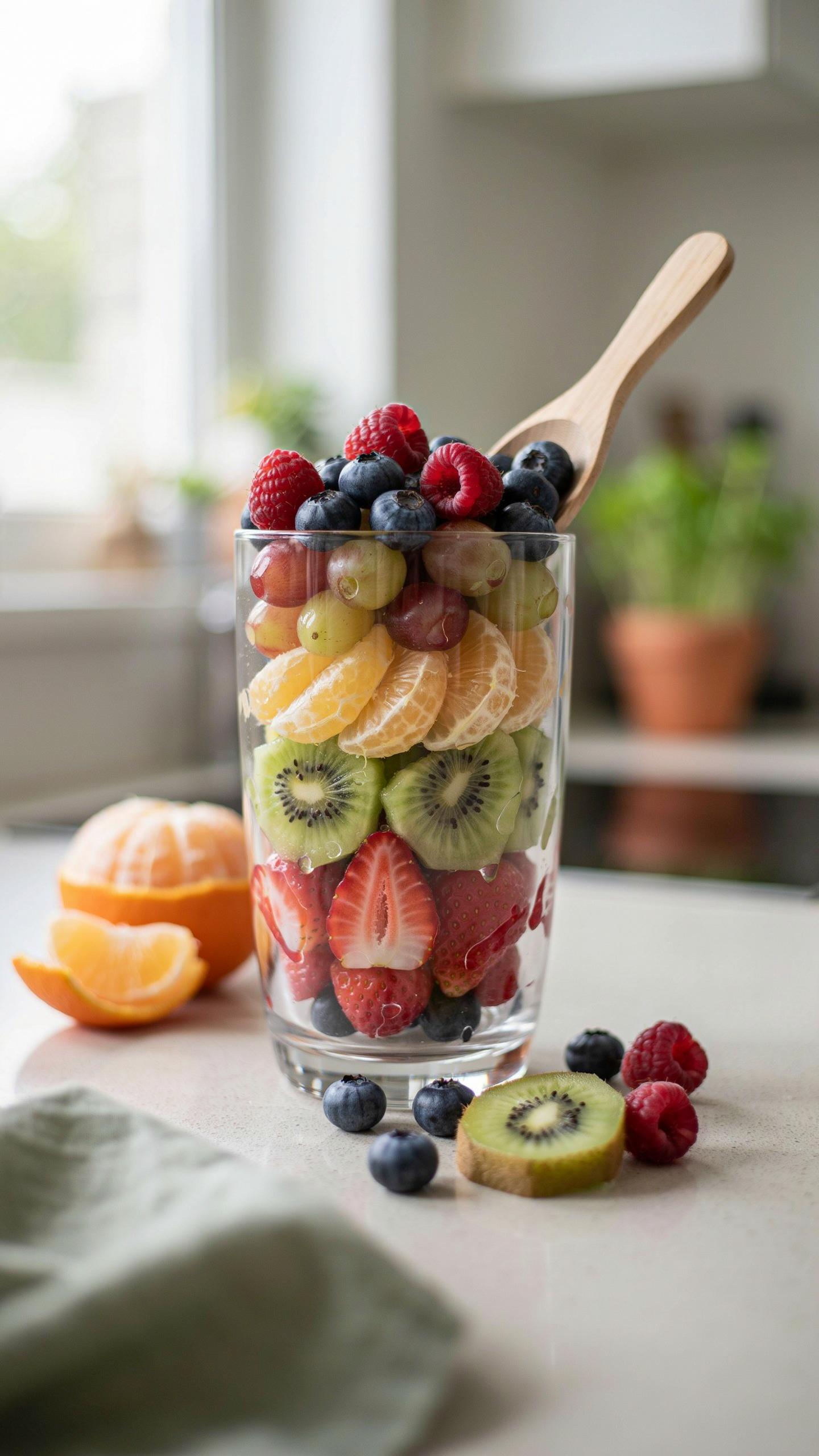
Why Layer Matters For Your Digestion
You want the snack to actually work—to deliver protein when your body needs it, not disappear into your bloodstream in twelve minutes. Borrowing from biochemistry, think of your snack as a separation process: you’re controlling the rate at which each macronutrient enters your system. Fruit sugars spike fast. Protein and fat slow that spike. The order you stack them determines how your body processes the entire thing. When you pair fiber-rich fruit with Greek yogurt or protein powder first, the fruit’s glucose absorption rate drops measurably because protein and fat create mechanical drag in your digestive tract. This isn’t theory. This is how your gut actually works. You control the sequence, you control the metabolic outcome.
Most meal prep advice says “just mix everything together.” That’s lazy and wrong. A better approach: place denser components like yogurt or cottage cheese as your base layer. Add fruit on top or fold it in last. This simple order shift means the protein coats your stomach lining first, delaying gastric emptying just enough to prevent the blood sugar spike that kills sustained energy. The texture separation also preserves fruit integrity during storage, which ties directly into the next mechanism.
Moisture Control Keeps Everything Edible
Water is your enemy in a sealed container. Wet fruit accelerates yogurt breakdown and mold growth. The mechanism here is osmosis: when fruit and yogurt sit together, water molecules migrate, creating a soggy, separated mess within 48 hours. Dense fruits like berries shed less liquid than soft fruits like peaches or melon. If you use soft fruits, you have a choice: prep them separately in another container, or prep them no more than 24 hours before eating. Hard fruits like apple or pear work better for longer storage windows of 3 to 4 days.
Add acid strategically. A squeeze of lemon juice or lime juice lowers pH and slows bacterial growth while preventing enzymatic browning in cut fruit. Store yogurt and fruit in separate compartments if your container allows it, combining them right before eating. This single protocol step extends usable shelf life from two days to four days without changing any ingredient. Your storage container design matters too: shallow, wide containers allow better air circulation than deep ones, reducing condensation buildup that accelerates spoilage.
The Jar Prep Meals Protocol Efficiency In Action
One Container Cuts Your Decision Load
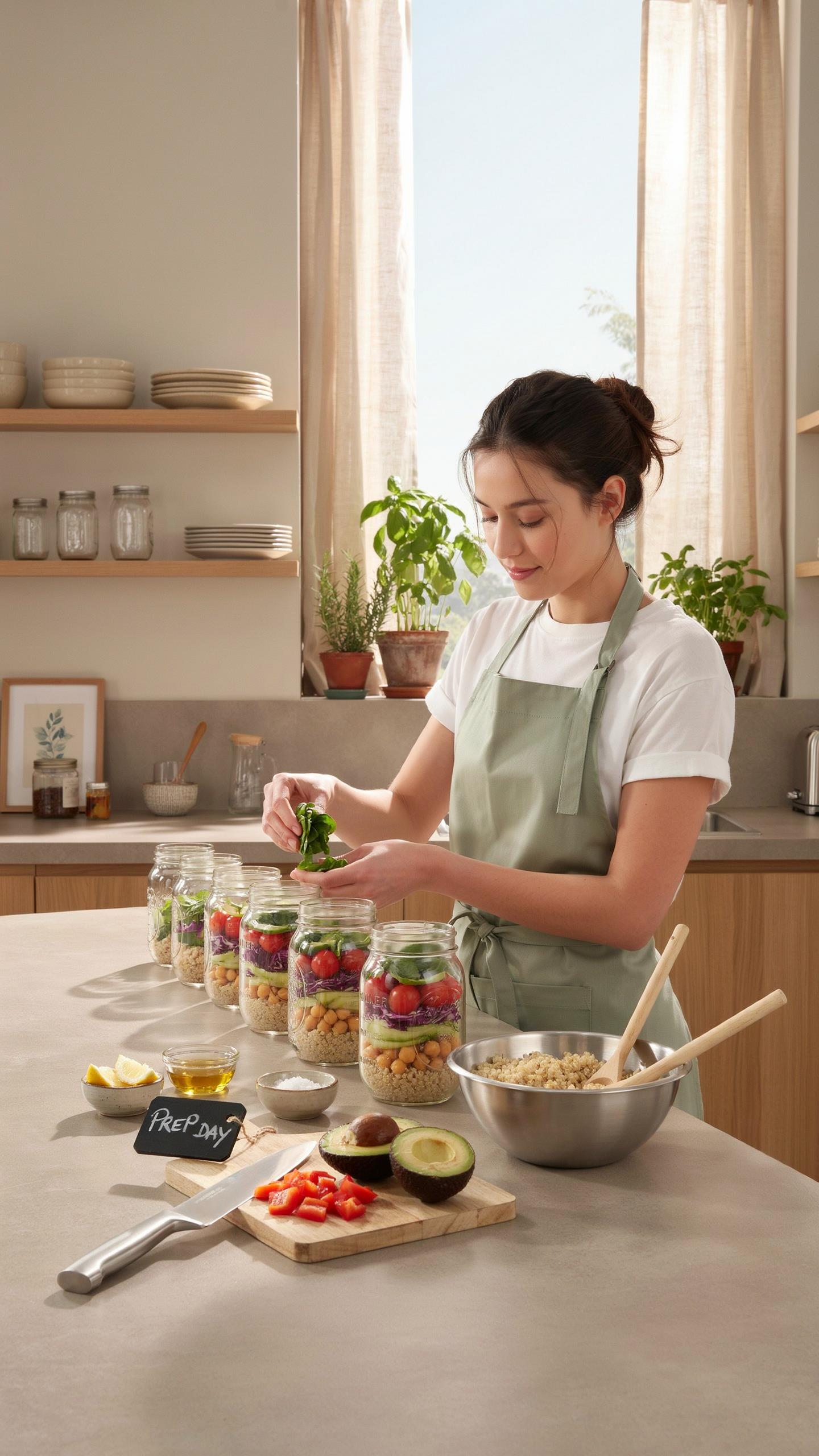
You want to feel organized without actually organizing anything. The real mechanism here is cognitive load reduction. Glass jars with tight seals eliminate the friction between “I have ingredients” and “I eat protein.” One container holds your entire snack. No mixing, no assembly, no choosing between three Tupperware options at 3 PM.
Standard mason jars or wide-mouth containers work because they stack vertically in your fridge and let you see exactly what you have left. You grab one jar instead of hunting through five separate containers. Layering fruit, yogurt, and granola in a single jar means you prep once and eat from the same vessel throughout the week. The jar becomes both storage and serving device.
Batch One Day, Eat All Week
Batching operates like inventory management in operations. You’re creating stock to draw down predictably. Sunday becomes your production day. You prepare eight to ten jars simultaneously using the same cutting board, the same bowl, the same yogurt container.
- Cut fruit in volume: Slice all berries, dice all melon, chop all stone fruit at once rather than piece by piece. Stack the cut fruit in one large bowl before portioning.
- Portion yogurt by ounce: Use a kitchen scale or measuring cup to distribute Greek yogurt evenly across jars. Consistency in portions means consistent macros and consistent fullness signals.
- Layer strategically: Place granola or nuts at the jar bottom, yogurt in the middle, fresh fruit on top. This order keeps granola crisp and prevents soggy texture through the week.
- Seal immediately after filling: Tight-sealed lids create an anaerobic environment that slows breakdown. Sealed jars last five to seven days. Unsealed containers last two to three.
- Label with dates: Write the prep date on each lid with a marker. You know exactly which jar to grab first and when to stop eating from that batch.
Batching in one session reduces decision fatigue across seven days. You make the yogurt choice once, the fruit choice once, the portion choice once. Then you execute the same physical motion ten times. Your brain stops working after the first jar.
The Micronutrient Multiplier Beyond Just Protein

Your Gut Is Running Feedback Loops You’re Ignoring
You think protein is the variable that matters. It’s not. You want the shortcut to muscle and satiety without admitting that your digestive system is either working for you or against you. Cybernetics calls this a feedback loop: your gut sends signals that either amplify nutrient absorption or tank it. High protein fruit snack meal prep without understanding this loop leaves you paying for nutrition you never actually absorb.
When you combine protein with specific fruit choices and timing, you create either a reinforcing cycle or a degrading one. Greek yogurt with berries triggers different gut bacteria responses than yogurt with dried mango. The fiber in the fruit either feeds beneficial bacteria that improve mineral absorption, or it causes fermentation that blocks nutrient uptake entirely. Your prep decision today determines whether your digestive system runs hot or stalls tomorrow. The mechanism isn’t mysterious: fiber type and protein ratio dictate which bacteria colonies dominate, which enzymes activate, which nutrients your small intestine actually pulls across its lining.
Absorption Rate Beats Nutrient Volume Every Time
Nutrient optimization isn’t about cramming more micronutrients into your snack. Common advice stops at “add antioxidants.” That’s incomplete. Cybernetics teaches us about system efficiency: input means nothing without output. Your absorption rate is the actual output you need to measure. A snack with 20 grams of protein and poor nutrient bioavailability delivers less than one with 15 grams and optimized absorption pathways.
The synergy between specific fruits and yogurt types directly controls how much your body actually uses. Vitamin C in citrus and berries activates iron absorption from yogurt’s whey. Calcium in yogurt blocks certain tannins in unripe fruit. Lactose in regular yogurt feeds different bacteria than lactose-free variants. Your meal prep choice either stacks these mechanisms together or works against them. To optimize, match your fruit’s nutrient profile to your yogurt’s active compounds, then consume within two hours of prep to prevent bacterial fermentation that traps micronutrients.
Debunking The Sweet Tooth Myth Retraining Taste Fruit And Protein Diet

Why Your Brain Actually Wants Sugar
You want to believe your sweet tooth is permanent because admitting it’s changeable means you have to change it. The truth is biochemical, not character-based. Your brain releases dopamine in anticipation of sugar, not just during consumption. Repeated exposure to high-sugar foods trains your reward circuitry to crave the spike. This isn’t weakness. It’s your nervous system doing exactly what it evolved to do: seek calorie-dense fuel. The mechanism is identical to how a thermostat adjusts to temperature—biology, not willpower.
High protein fruit snack meal prep interrupts this feedback loop by replacing the dopamine timing. When you pair fruit with Greek yogurt or cottage cheese, protein slows sugar absorption, flattening the blood glucose spike. Your brain stops getting the dramatic reward signal it learned to anticipate. Within two to three weeks of consistent pairing, your nervous system recalibrates. The craving doesn’t disappear. It redirects toward the new stimulus pattern. You stop wanting candy because the texture and taste profile of berries with protein becomes what triggers your reward response instead.
Resetting Your Palate In Practical Steps
The generic advice says “eat more whole foods” and leaves you hanging. That doesn’t work because taste preference isn’t about knowledge. It’s about repeated sensory experience overwriting old neural patterns. Start by eating the same high-protein fruit snack every day for five days straight—same fruit, same yogurt brand, same time. Monotony is the accelerant here. Your brain stops filtering it as novel and begins encoding it as normal. After five days, rotate to a different pairing. The reset happens faster each cycle.
The second mechanism is texture contrast. Most people fail at this step. Granola, nuts, or seeds mixed into yogurt fruit bowls create oral sensation variety that keeps your brain engaged without sugar spikes. Pack these components separately and combine them minutes before eating. Stale granola triggers the reward pathway less effectively than crispy granola does. You’re not fighting cravings by force. You’re replacing the sensory input your mouth expects. Once your palate recognizes fruit with protein as satisfying, you’ve won the game.
The Cost Benefit Fallacy Of Cheap Snacks
What You’re Really Paying For
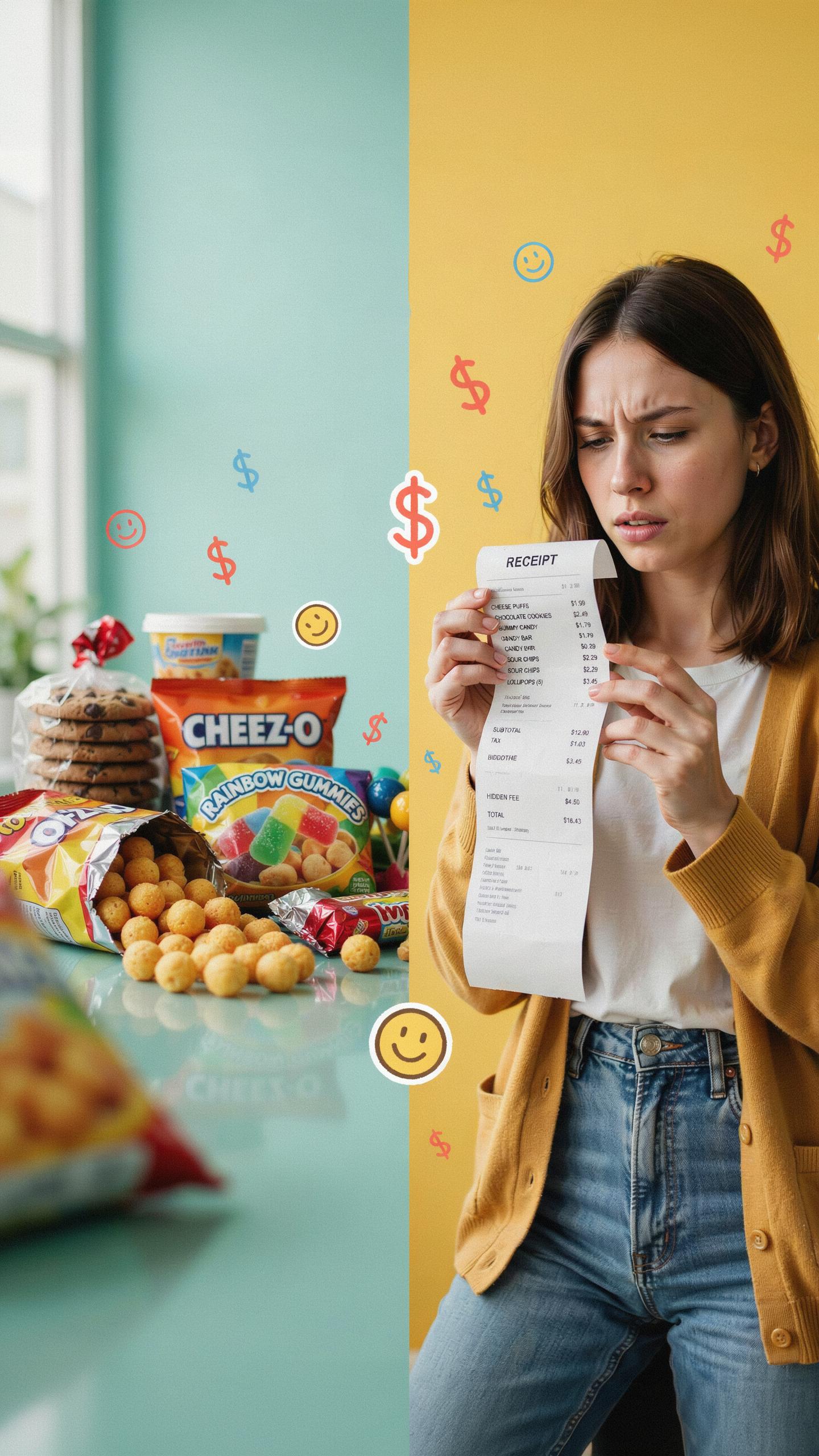
You want to believe a dollar snack bar is a win. It’s not. You’re outsourcing your metabolic health to food science designed to maximize shelf life and profit margins, not your performance. The mechanism is simple: nutrient-poor foods force your body to work harder to extract what it needs, while your blood sugar spikes and crashes, triggering cravings that make you eat more. You end up consuming triple the calories to satisfy the same satiation signal.
A high protein fruit and yogurt snack works on the opposite principle. Protein and fiber slow digestion. Your body gets stable energy. You eat less total food. The cheap snack costs two dollars today and compounds into metabolic dysfunction that costs you focus, energy, and years. Meal prepping protein snacks front-loads the time cost but eliminates the daily decision tax and the hidden cost of poor choices stacking up.
Building The Long Term Equation
Economics calls this discounting future value. You discount what happens tomorrow so heavily that you pick the worse option today. High protein fruit snacks demand you reverse that calculation. A prepared Greek yogurt and berry snack takes fifteen minutes to assemble for five days. The cheap alternative takes no prep time but erodes your insulin sensitivity, increases inflammation, and makes your next meal feel urgent instead of optional.
Track this concretely: measure your hunger level two hours after eating a cheap snack versus a prepped protein snack. Notice when you reach for food again. Notice how much you eat at the next meal. The metabolic longevity play isn’t aspirational. It’s arithmetic. Prepping five snacks on Sunday means five days of stable energy that compounds into weeks of better decisions, which compounds into a body that doesn’t need the shortcut foods at all.
Long Term Leverage The Compounding Effect Fruit Meal Prep Ideas
Small Decisions Stack Into System
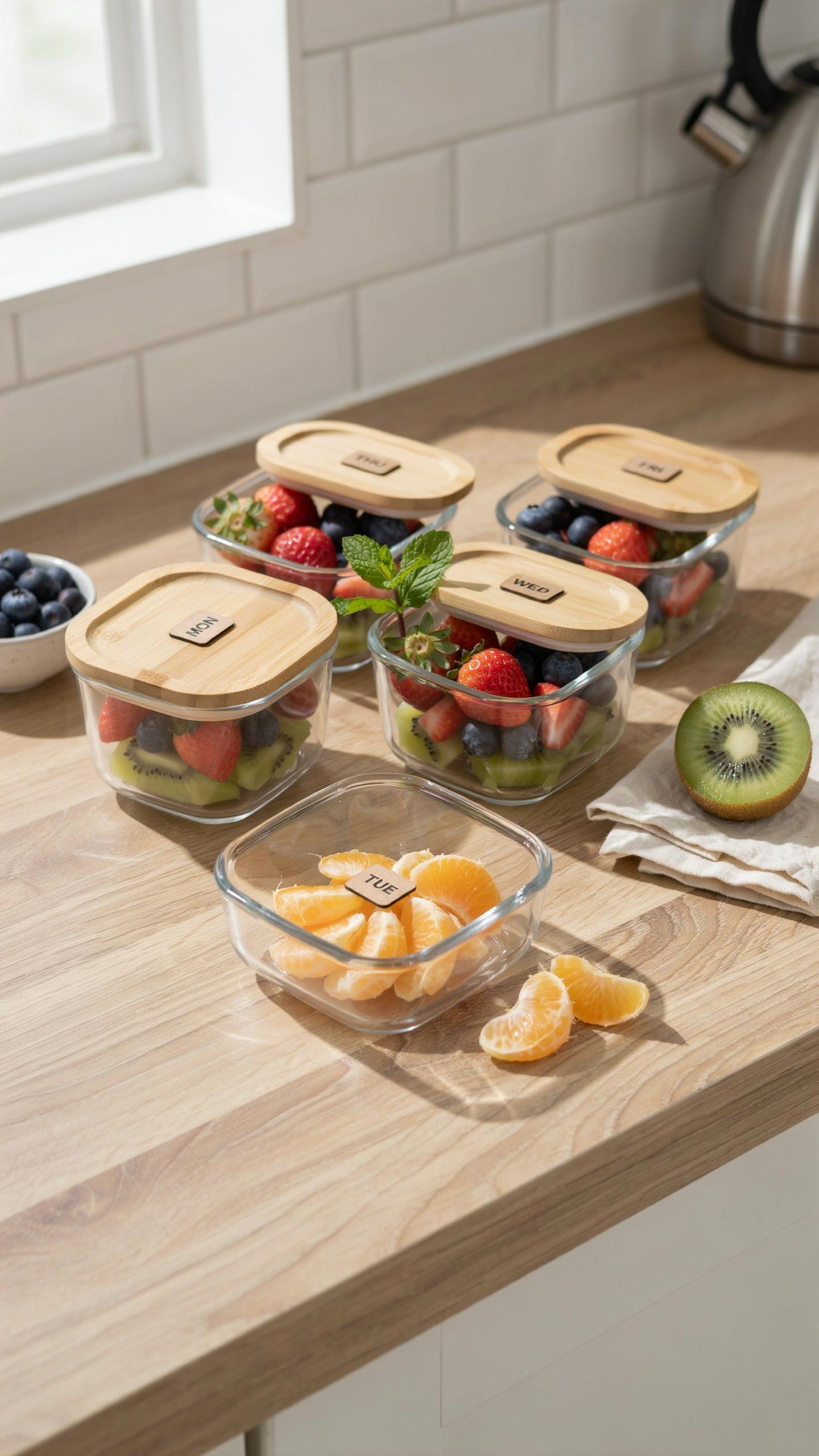
You want to believe one perfect snack choice changes everything. It doesn’t. What actually works is borrowed from compound interest in finance: marginal gains repeat over time until they become structural. High protein fruit snack meal prep works the same way. You’re not fixing your metabolism with a single Greek yogurt bowl. You’re building it through consistent execution that compounds into measurable body composition shifts over months.
Most people sabotage this by treating meal prep as a one-time event instead of a weekly non negotiable. You prep once, feel virtuous for three days, then revert to convenience foods when friction returns. The mechanism that separates people who change is simple: they remove the decision. When high protein fruit snacks sit in your fridge portioned and ready, you eat them. When they don’t, you don’t. There’s no willpower involved. Willpower is a myth told by people who haven’t engineered their environment yet.
The Metabolic Feedback Loop
Your metabolism doesn’t respond to intention. It responds to input. Consistent protein intake from fruit paired with yogurt creates a measurable shift in satiety hormones and muscle protein synthesis that accumulates with repetition. After four weeks of daily high protein fruit snacks, your body literally requires less total food to feel full because you’ve trained your hunger signals through consistent nutrient density.
The feedback loop works like this: stable blood sugar from fruit fiber plus sustained protein absorption from yogurt equals predictable energy levels. Predictable energy eliminates the afternoon crash that drives snack binges. No binges means caloric consistency. Caloric consistency over twelve weeks produces visible changes. Document your energy, cravings, and how your clothes fit every two weeks. You’ll notice the compounding effect before the scale moves. That’s when you lock in the protocol permanently instead of abandoning it.
The real obstacle isnt finding time its your addiction to complexity

You don’t need a system. You need three ingredients and a container. Buy Greek yogurt, grab whatever fruit sits in your fridge, portion it today for the next three days. That’s high protein fruit snack meal prep. The barrier between you and consistency isn’t knowledge, it’s the belief that simple won’t work. Stop waiting for the perfect plan. Buy the yogurt today and prove yourself wrong.