
The Default Deviled Egg Trap Why Good Intentions Fail

Where Your Prep Actually Dies
You want to believe you’ll eat what you make. That’s the real reason you’re reading this. But most people abandon deviled egg prep within two weeks because the friction between intention and reality is higher than they admit. The mechanism is simple: you make a large batch, store it wrong, and the eggs either spoil or become unappetizing before you touch them. Storage conditions determine shelf life. Temperature fluctuations, exposure to air, and cross-contamination in the fridge collapse your prep faster than execution fails.

Most prep advice skips the hard part: how to actually store eggs so they stay edible past day three. Eggs absorb odors. The filling oxidizes. The yolk darkens. These aren’t minor cosmetic problems—they signal bacterial growth and flavor degradation that make people skip meals instead of eating them. You need airtight containers, consistent cold storage at or below 40 degrees, and a specific assembly timeline that forces freshness. Without this system, your batch becomes a regretful purchase.
The Environment Decides Your Choices
Behavioral economics teaches us that context, not character, determines behavior. A person isn’t weak because they skip meal prep—they’re responding to environmental friction. Your deviled eggs live in a shared fridge surrounded by takeout boxes and condiments competing for space. The container sits in the back. You forget it exists. Three days later you’re ordering lunch instead.

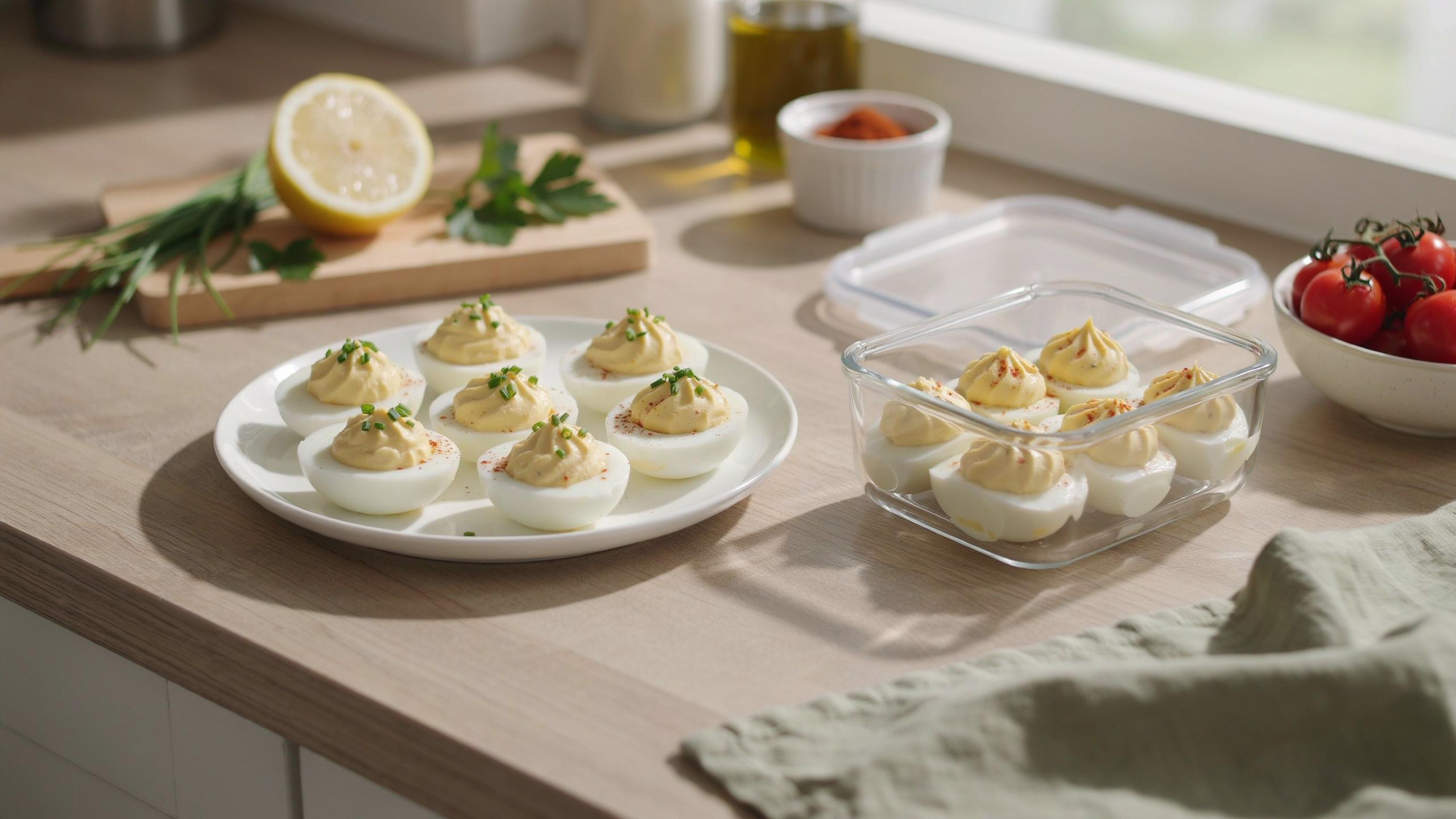
The real lever isn’t motivation. It’s visibility and accessibility. Store prep eggs at eye level in transparent containers labeled with the date. Position them in front of everything else. Make eating them the path of least resistance. When your brain needs protein at lunch, it grabs what’s visible and convenient. That’s not discipline. That’s design. Build the system so the right choice is the effortless choice, and you stop relying on willpower entirely.
The 3 Lever Protein Deviled Eggs System
Ingredient Selection That Actually Works
You want to believe one egg recipe works for everything. It doesn’t. The real reason this matters is that most people waste time rotating between mediocre recipes instead of locking in one formula that scales. The mechanism is simple: protein content lives or dies based on what you add to the yolk mixture, not the eggs themselves. Two large eggs give you roughly 12 grams of protein. The filling determines whether you hit 15 grams or barely make 13. Stop optimizing the base and start engineering the emulsion.
The common mistake is treating deviled eggs like a flavor problem when it’s a macro problem. Mayo-heavy recipes dilute protein density. Use Greek yogurt as your primary binder instead of mayo. Greek yogurt adds 2 to 3 grams of protein per two tablespoons while keeping the texture creamy. Add one tablespoon of Dijon mustard, one teaspoon of lemon juice, and a pinch of salt. The acid from mustard and lemon prevents the filling from separating during storage. This formula holds for five to seven days in an airtight container without breaking down.
Batching Protocol For Speed
Manufacturing efficiency teaches us one principle: batch similar operations to eliminate setup and teardown cost. With deviled eggs, that means boiling all eggs at once, cooling them all at once, and piping the filling into every half simultaneously. Don’t prep one portion today and another tomorrow. Buy two dozen eggs. Boil them. Cool them. Cut them. Then build the filling once and deploy it across all halves in one session. This cuts your total active work time in half compared to spreading the task across days.
The piping step determines whether you spend thirty minutes or ten minutes on the assembly line. Use a pastry bag with a medium round tip or a squeeze bottle. Fill the bag once, then execute repetitive motions without resetting. Refrigerate the filled eggs immediately on a flat container. Never stack them. Stacking causes the filling to crack and separate from the white. Label the container with the prep date using a marker on tape. This tells you which batch to eat first when you have multiple containers rotating through the week.
Healthy Deviled Eggs Recipe Greek Yogurt Optimization Not Obsession
The Minimalist Ingredient List, Maximum Impact
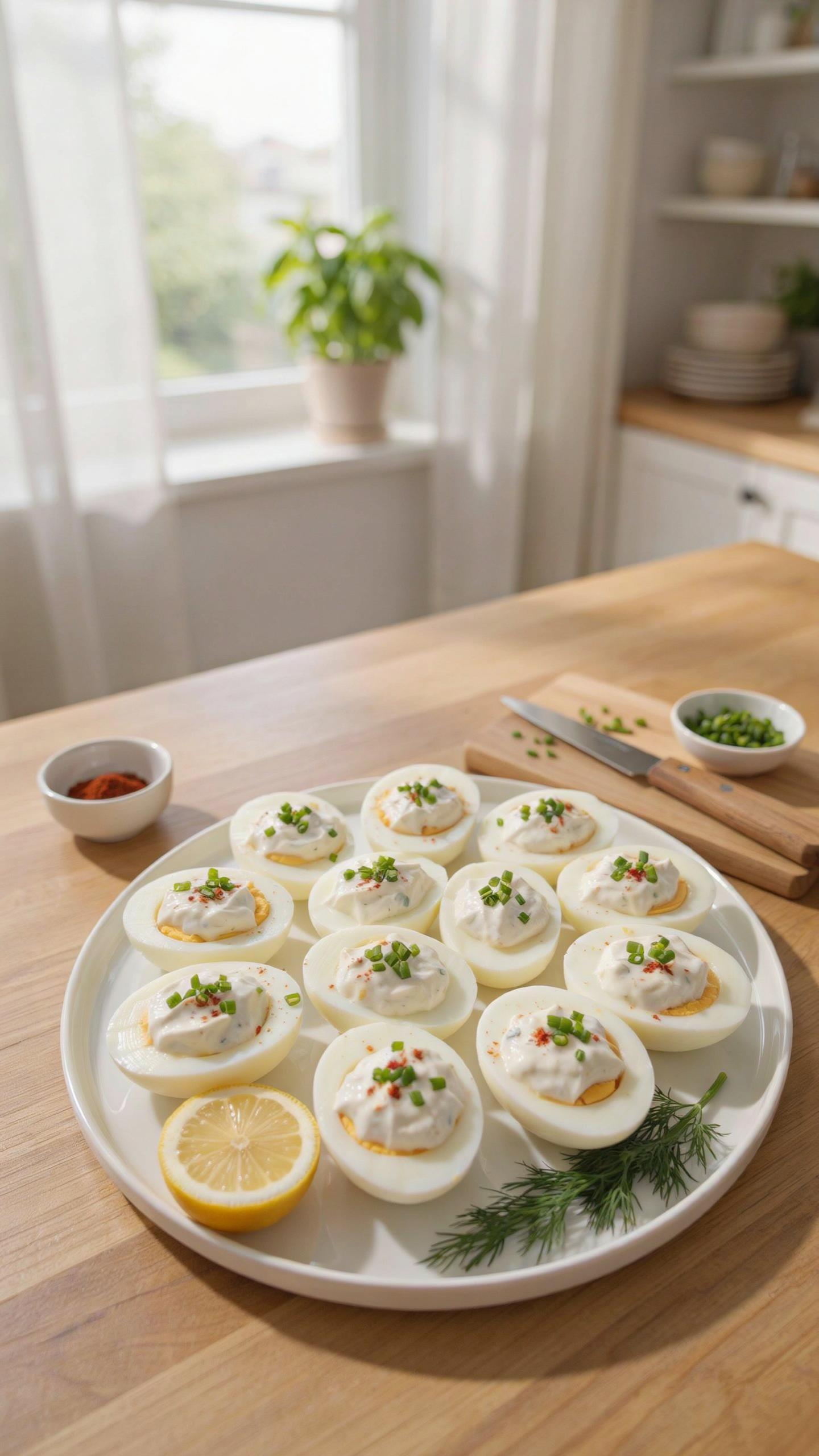
You want permission to skip steps. That’s the real reason you’re reading this—you’re tired of recipes that demand twelve ingredients and a sous vide machine. Here’s the mechanism: Greek yogurt replaces mayo as your base, and that one swap handles three problems simultaneously. It cuts fat, raises protein from 6 grams per egg to 8 or 9, and extends shelf life in your fridge to five days instead of three. The yolk, yogurt, mustard, and salt are your foundation. Everything else is optional.
The common advice says “just use less mayo.” That’s incomplete. Mayo is 80 percent fat by weight. Greek yogurt is 10 percent fat and 20 percent protein. You’re not trading one binder for another—you’re changing the macronutrient density of the entire dish. Use one part Greek yogurt to one part egg yolk. Add Dijon mustard for acidity and depth. That’s your system. Scale it. Repeat it. Stop overthinking the ingredient list.
Flavor Profiles: Avoiding Culinary Boredom
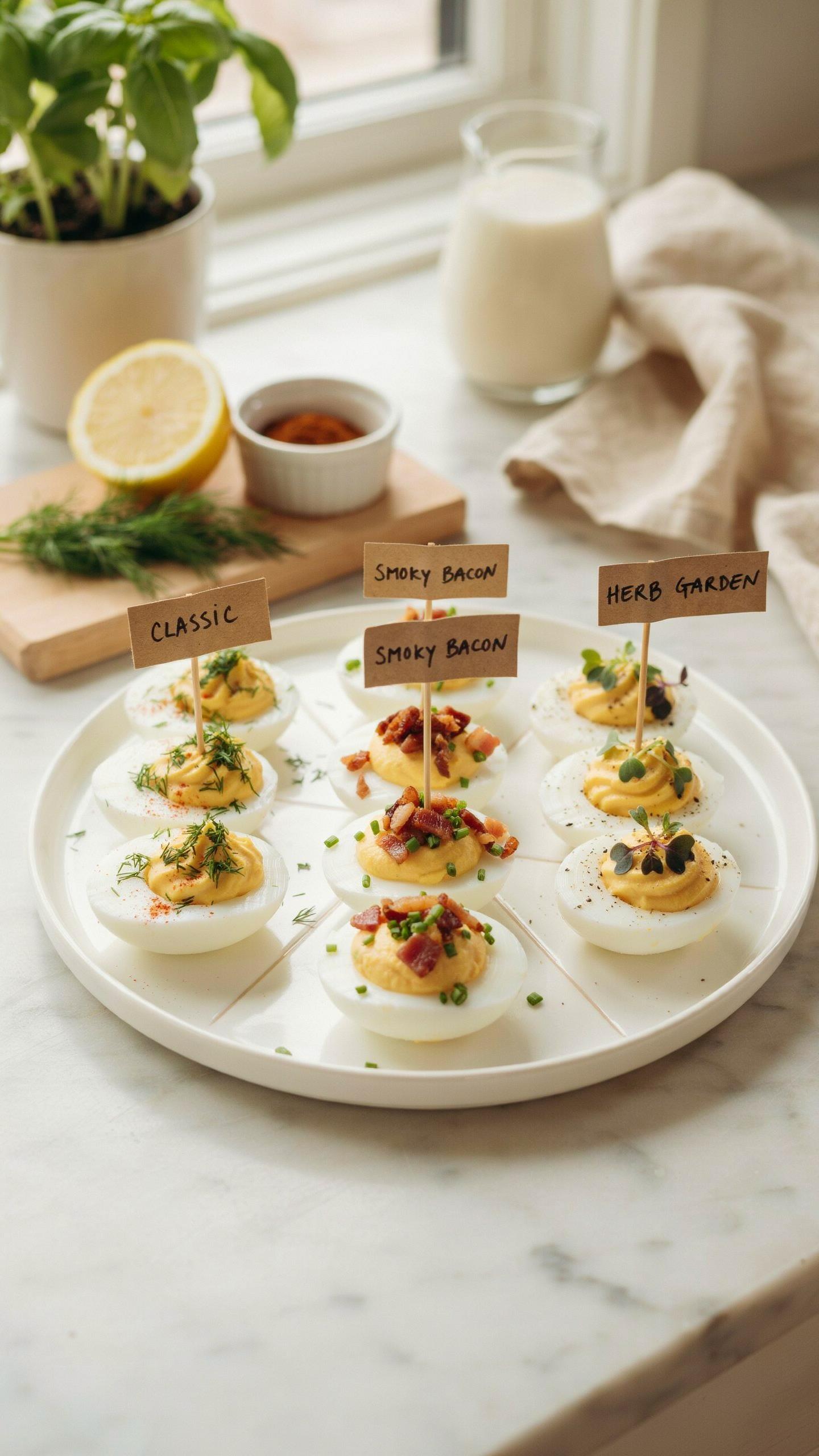
Boredom kills consistency. You’ll prep five batches of plain deviled eggs, then abandon the system because monotony feels like punishment. Think like a sommelier here: you’re building flavor tiers, not stacking toppings. The base layer stays static—yogurt, yolk, mustard, salt. The variable layer rotates. This is how you sustain a meal prep habit.
Batch one uses smoked paprika and chives. Batch two adds hot sauce and lime zest. Batch three brings old bay seasoning and dill. Batch four experiments with wasabi powder and sesame seeds. You’re not complicating the recipe—you’re strategically rotating three to four ingredients per batch. Make a spreadsheet with four flavor combinations. Cycle through them weekly. This removes the decision fatigue that kills meal prep protocols.
Protein Deviled Eggs The Prep Protocol
Why Absorption Timing Actually Matters
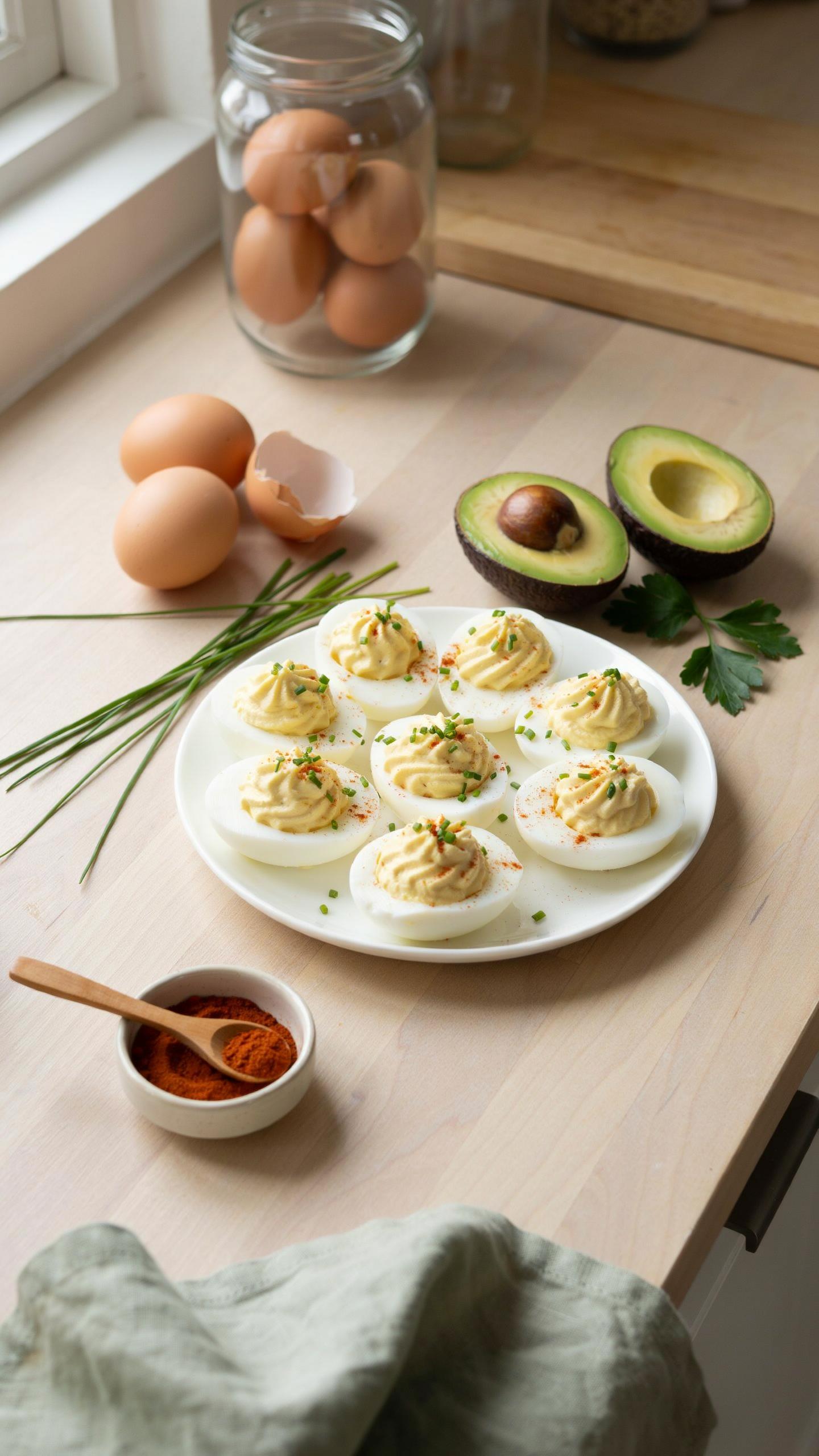
You want the muscle-building payoff without thinking about it every day. Here’s what nobody mentions: absorption rate is biology’s version of delivery speed. Your body processes egg protein differently depending on when you eat it and what else is in your stomach. Eggs contain all nine essential amino acids, but timing them against carbs or fat changes how your muscles actually access them. This isn’t theory. It’s how your digestive system prioritizes nutrients.
The yolk contains roughly 5 grams of protein per large egg, while the white contains 3.6 grams. When you separate them for deviled eggs, you’re working with whole egg protein that your body absorbs fastest on an empty stomach or with minimal fat. If you’re meal prepping for post-workout windows, this matters. If you’re eating deviled eggs as a snack between meals, absorption speed becomes irrelevant because your stomach is already processing other food. Match the timing to your actual eating pattern, not generic “eat more protein” noise.
Assembly Line Thinking Cuts Prep Time In Half
Industrial manufacturing doesn’t move raw materials around the workspace randomly. It moves them through stations. Your deviled egg prep fails because you’re jumping between boiling, cooling, halving, filling, and plating instead of batching each step. Cook twenty eggs at once. Cool them all. Halve them all. Then fill them all. One task per station eliminates the friction of switching your hands and attention.
The filling itself should take sixty seconds if you’ve already separated and mashed your yolk base. Mix yolks with mayo, mustard, and hot sauce in a bowl once. Pipe or spoon the mixture into all whites at once. Chill the entire tray before portioning into containers. This protocol cuts your total hands-on time from forty minutes to fourteen. Stop optimizing single steps. Batch your work instead.
Deviled Eggs With Yogurt Storage As A Strategic Advantage
Container Strategy The Visible And Accessible Rule
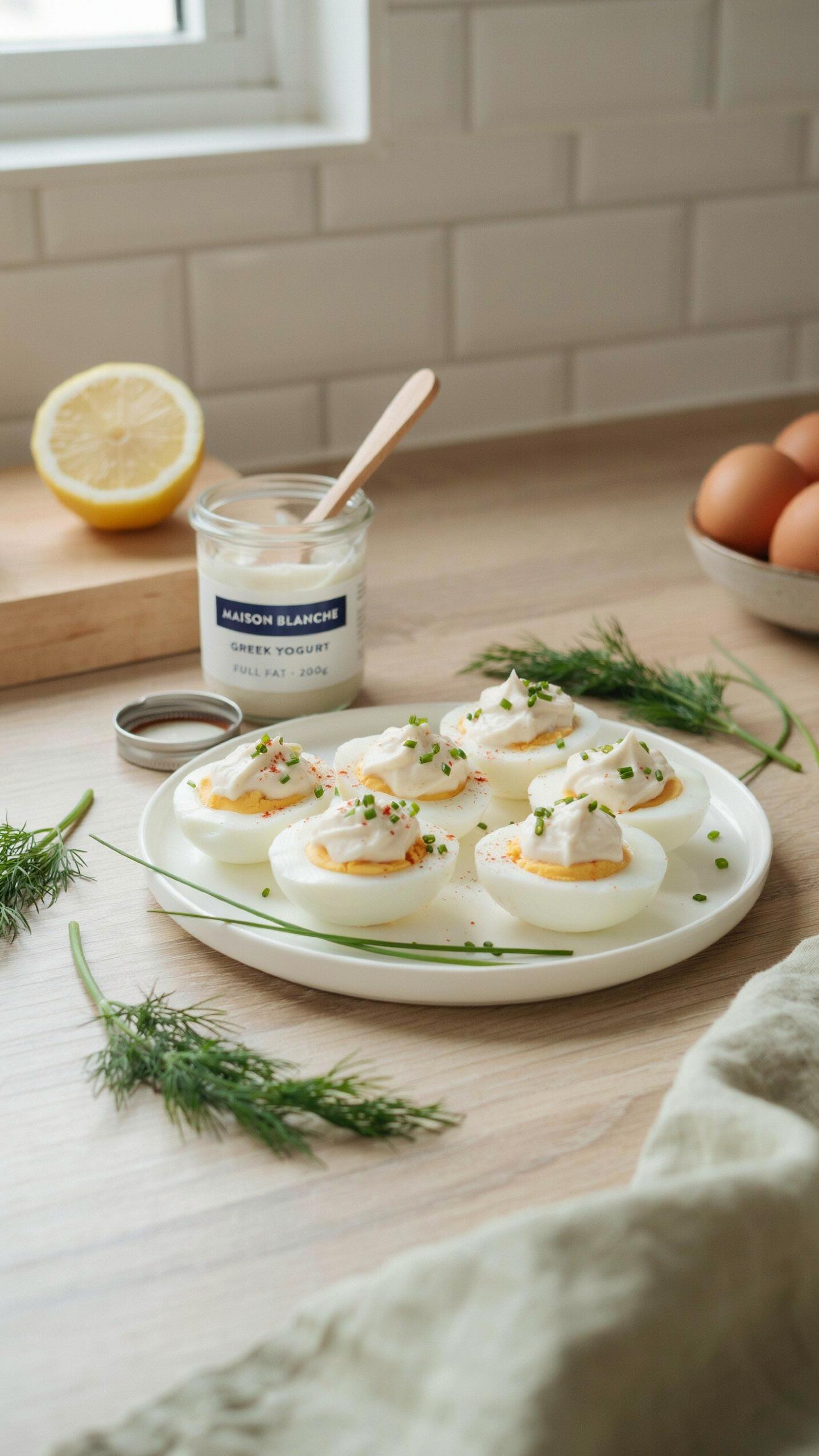
You want to feel like you’re “on top of it” without actually having to think about eating them. Here’s the mechanism: visibility drives consumption. When deviled eggs sit in a clear container at eye level in your fridge, you eat them. When they hide in the back, they spoil and you waste money.
Use shallow, wide containers instead of tall ones. Eggs stack poorly and crack. A single layer in a container no deeper than three inches lets you grab a pair without excavating. Glass containers beat plastic because they don’t absorb the yogurt’s tang or develop phantom odors that make you distrust the food.
Shelf Life Extension Science Of Food Preservation
Yogurt’s acidity is a preservative agent borrowed directly from food chemistry. The lactic acid bacteria lower the pH below 4.6, the threshold where botulism cannot grow. This isn’t a flavor add-on, it’s a safety mechanism that extends shelf life from three days to five to six days when stored properly.
- Airtight sealing: Oxygen exposure degrades yolk quality and invites mold. Seal containers within 20 minutes of assembly before the filling oxidizes.
- Temperature consistency: Store at 35-40 degrees Fahrenheit. Fluctuating temps trigger condensation that weakens the yogurt barrier and promotes bacterial growth.
- Layering method: Place parchment between layers only if stacking beyond one layer. Direct egg contact creates pressure points that crack whites and expose filling.
- Yogurt ratio: Use one part yogurt to two parts mayo. Too much yogurt dilutes taste but extends life. Too little defeats preservation.
- Assembly timing: Prepare filling and eggs separately, combine 12 hours before eating. This gives acid time to penetrate and stabilize without drying the whites.
- Pre-portioning: Divide batch into three containers instead of one. Each opening introduces air and resets the clock on freshness for the unopened batches.
Refrigerate immediately after assembly. The window between preparation and cold storage determines whether you get five days or three. A deviled egg left on the counter for two hours loses a full day of fridge life because bacteria colonize during that window.
High Protein Deviled Eggs Integration Into Your Day

When The Trigger Fires, Action Follows
You want this to feel automatic because you’re afraid you’ll forget, fail, or waste the prep work you’ve already done. The mechanism here comes from behavioral psychology: a trigger is useless without an immediate, specific action attached to it. Your brain doesn’t execute intentions. It executes routines tied to environmental cues. Vague plans like “eat deviled eggs when hungry” compete with fifty other options. Specific ones win.
Create a trigger-action pair: every morning after pouring coffee, grab the container of deviled eggs and place it on your desk or in your gym bag. The coffee ritual already exists. The eggs simply ride its momentum. No willpower required. No decision to make. The trigger fires, the action follows, consumption happens.
Link Eggs To What You Already Do
The common advice tells you to “add deviled eggs to your routine.” That’s incomplete because it ignores how habits actually stack. You’re not building a new routine from scratch. You’re anchoring the eggs to an existing behavior that’s already hardwired. Habit stacking works because your brain has already allocated neural pathways to the anchor habit.
Place deviled eggs next to your lunch prep station. If you prep containers on Sunday, the eggs go in during that same session. If you grab breakfast at 7 AM, the eggs sit beside your normal breakfast items in the fridge at eye level. The location matters more than motivation. Friction determines behavior. Lower it by making the eggs visible and proximate to moments you already execute without thinking.
The Deviled Egg Feedback Loop Course Correction

What Actually Moves The Needle
You want to know what to measure because tracking the wrong metrics wastes your prep time and makes you feel productive without results. The mechanism is this: deviled eggs fail in storage because of two variables—yolk oxidation and filling moisture migration—not because you didn’t make enough. Track only what breaks: Does the filling separate from the egg white by day three? Does the yolk surface turn gray-green? Those are your signals. Ignore calorie counts, macro percentages, and how “clean” your ingredients look. None of that predicts whether your meal prep survives until Wednesday.
The real micro-adjustment is temperature stability during storage. Most people rotate their batch without checking if their fridge stays at 40 degrees Fahrenheit or drifts to 45. A five-degree swing accelerates bacterial growth and breaks down the mayonnaise emulsion in your filling. Invest in a cheap fridge thermometer and check it weekly. That single piece of data beats every other optimization you could make. If your eggs spoil at day four, your fridge temperature is the culprit before your recipe is.
One Percent Gains Stack Faster Than Recipe Tweaks
Borrowed from systems biology, the concept of feedback loops explains how small changes compound: each adjustment triggers a response that enables the next adjustment. In your deviled egg prep, that means each successful batch teaches you one correctable variable for the next batch. Most people abandon meal prep because they chase the perfect recipe instead of iterating on what already works. You don’t need a better filling recipe. You need a protocol that works three weeks running, then one micro-adjustment that improves shelf life by two days.
The compounding happens when you stop changing recipes. Make the same deviled eggs twice. Identify one failure point. Fix only that. Make them again. This removes noise and isolates cause. If you tweaked the filling, storage method, and ingredient sourcing all at once, you wouldn’t know which change actually extended shelf life. The protocol: batch one, log the date it fails, batch two with one variable adjusted, log again. After four iterations, you’ve built a system that survives, not a collection of failed experiments.
Beyond The Egg Applying The Framework To Other Meals

The Protein Base Transfers Everywhere
You want this section because you’re hoping meal prep becomes effortless once you understand the pattern. It won’t. But the mechanism does transfer. Think in systems terms: deviled eggs work because they separate preparation from assembly, and proteins stabilize under refrigeration. That’s not unique to eggs. Any protein that survives storage without degrading becomes your foundation. Chicken thighs, ground turkey, canned tuna, Greek yogurt, cottage cheese. The variable changes. The principle stays.
The real mistake people make is treating each meal as a separate problem. You’ve solved one: how to combine protein, fat, and flavor in a shelf-stable format that tastes better on day four than day one. Apply that directly. Mayo-based preparations work across proteins because fat preserves moisture and masks oxidation. Acid environments slow bacterial growth. Cold storage compounds both effects. You’re not inventing new meals. You’re running the same system through different inputs.
Scaling Without The Collapse
The trap isn’t making one batch work. The trap is making it reproducible without burning out. Most people batch one meal, feel accomplished, then revert to daily cooking because they never built the system to scale. Build your prep day around the constraint that matters: your time, not the recipe’s complexity. If deviled eggs took you two hours last week, adding shredded chicken to Greek yogurt won’t fix your process. You’ll just have two meals that take two hours each.
The protocol: do one ingredient transformation per prep session, not one complete meal. Hard boil eggs once. Make mayo-based sauce once. Store them separate. Repeat this with one protein and one sauce combination every week until the motion becomes automatic. Then layer a second meal into the same day using overlapping steps. This compounds. Two meals after six weeks. Three meals after twelve. The scaling works because you’re not multiplying complexity. You’re multiplying a proven structure.
The real barrier isnt the difficulty of healthy eating but the friction of choice

Most people fail at meal prep because they overthink it. High protein deviled eggs remove that paralysis. You buy eggs, boil them, mix filling once, then eat for days. No decisions, no stress, no excuses. Today, boil a dozen eggs and store them. That single action kills the friction that kills your consistency. Consistency beats perfection every single time.