
The Myth Of Effortless Grilled Chicken Why Most Meal Preppers Fail
Bland Chicken, Dry Chicken, Dead Inside
You want to believe meal prep is simple because that makes you feel like you’re ahead of people who don’t do it. The mechanism is this: most people treat grilled chicken like a utility, not food. They season it once, cook it once, eat it five times. The chicken doesn’t fail. Your palate does.
Blandness comes from underestimating salt timing. Most preppers salt chicken before cooking, which draws moisture out during the cook. Dryness happens because people cook to a target temperature without accounting for carryover cooking, then refrigerate immediately, locking in the loss. Repetition kills adherence because your brain stops registering food after day three of identical chicken and sides.
Decision Fatigue Disguised As Motivation
Economics calls this “decision fatigue,” and your meal prep lunch is ground zero for it. You make one decision poorly on Sunday, and you pay it every single day at lunch. A bland chicken breast isn’t just boring. It’s a daily reminder that your plan didn’t work, which makes skipping the meal and buying takeout the path of least resistance.

The hidden cost isn’t time or money. It’s cognitive load. Every time you open the fridge and see the same sad container, your brain spends energy deciding whether to eat it or throw it away. That friction compounds. Most people don’t fail at consistency. They fail at the design of the system itself. You need three distinct flavor profiles rotating through your prep, not one.
The Strategic Sourcing Protocol Choosing Your Bird For Maximum Impact

Pasture Raised Versus Conventional: The Real Trade Off
You want pasture-raised chicken because it sounds better, not because you understand what you’re actually paying for. The mechanism is simple: diet determines fatty acid ratios. Pasture-raised birds eat insects, seeds, and grass, which shifts their omega-3 to omega-6 balance closer to what your body handles better. Conventional birds eat corn and soy, which skews omega-6 high. For meal prep, this matters because the fat profile affects how the chicken stores and reheats without drying out.
Pasture-raised costs 40-60% more per pound. Conventional chicken works fine if you’re disciplined about storage and reheating method. The practical choice depends on your budget, not ideology. If you can’t afford pasture-raised consistently, conventional chicken with proper moisture retention during storage beats skipping meal prep entirely. Buy what fits your cash flow, then optimize the cooking and storage protocol instead.
Thighs And Drumsticks Beat Breast For Actual Results
The fitness consensus pushes chicken breast because it’s lowest in total fat, but that’s backward nutrition logic for meal prep. Thighs stay moist through reheating because their higher fat content insulates the protein. Breast dries out by day three in most containers, forcing you to add sauces that pile on calories you didn’t budget for. Dark meat gives you 3-4 more days of acceptable texture without intervention.
Breast works if you nail the cooking method: poach at lower temperature rather than grill hard, then store in broth instead of air. That’s friction. Thighs and drumsticks eliminate the friction entirely. Cook them once, store them dry, reheat to acceptable texture every single time. For a meal prep system you’ll actually stick to, pick the cut that forgives your storage mistakes, not the cut that forces perfection.
The Thermodynamic Efficiency Principle For Grilled Chicken
Heat Transfer Optimization For Juicy Chicken
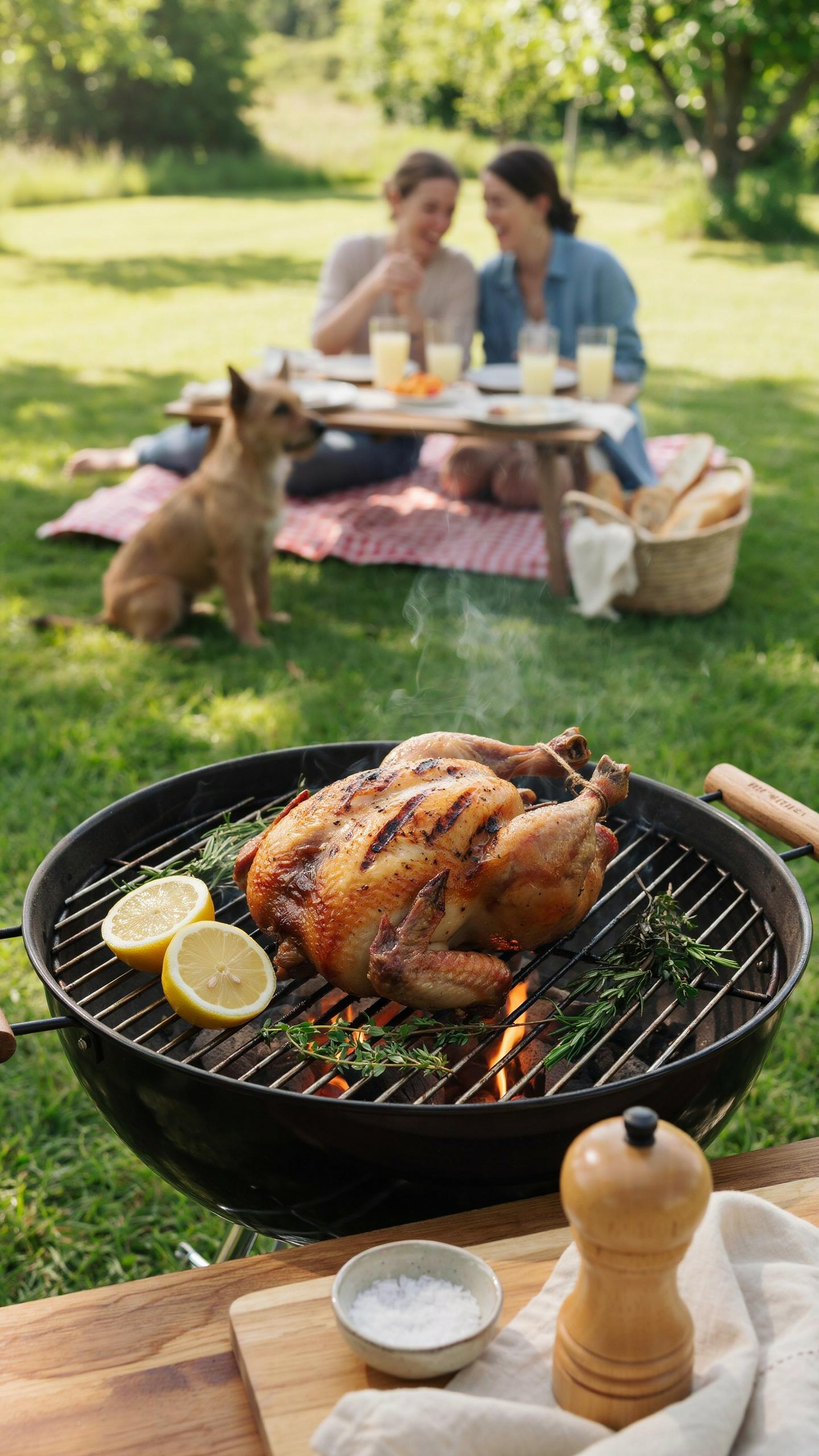
You want this section to validate that science backs your meal prep choices. Here’s the mechanism: heat transfer speed determines whether protein denatures evenly or locks moisture inside the muscle fiber. Physics calls this thermal conductivity. With grilled chicken, you’re racing against the Maillard reaction. It happens fast, and once the surface temperature exceeds 300 degrees Fahrenheit, browning accelerates while the interior lags behind. That lag is where tenderness lives.
Common advice says “just use a meat thermometer.” Wrong. Temperature tells you when to stop, not how to avoid drying out. The real lever is surface-area-to-mass ratio and grill temperature consistency. A 6-ounce chicken breast cooks faster than a 12-ounce one because heat penetrates shorter distances. Lower grill heat (around 375-400 degrees) forces slower cooking, letting the interior warm through before the exterior crusts over. Thicker cuts need lower temps or you burn the outside while undercooking the center.
Energy Expenditure Versus Culinary Output
Economics calls this input-to-output ratio. Grilled chicken meal prep trades labor hours for caloric density per dollar spent. You’re optimizing energy return on energy invested, and most people measure only the wrong variables. They count macros but ignore the actual effort friction that kills consistency. A single batch of poorly grilled chicken that turns dry wastes your prep time entirely. You get zero nutritional benefit from food you won’t eat.
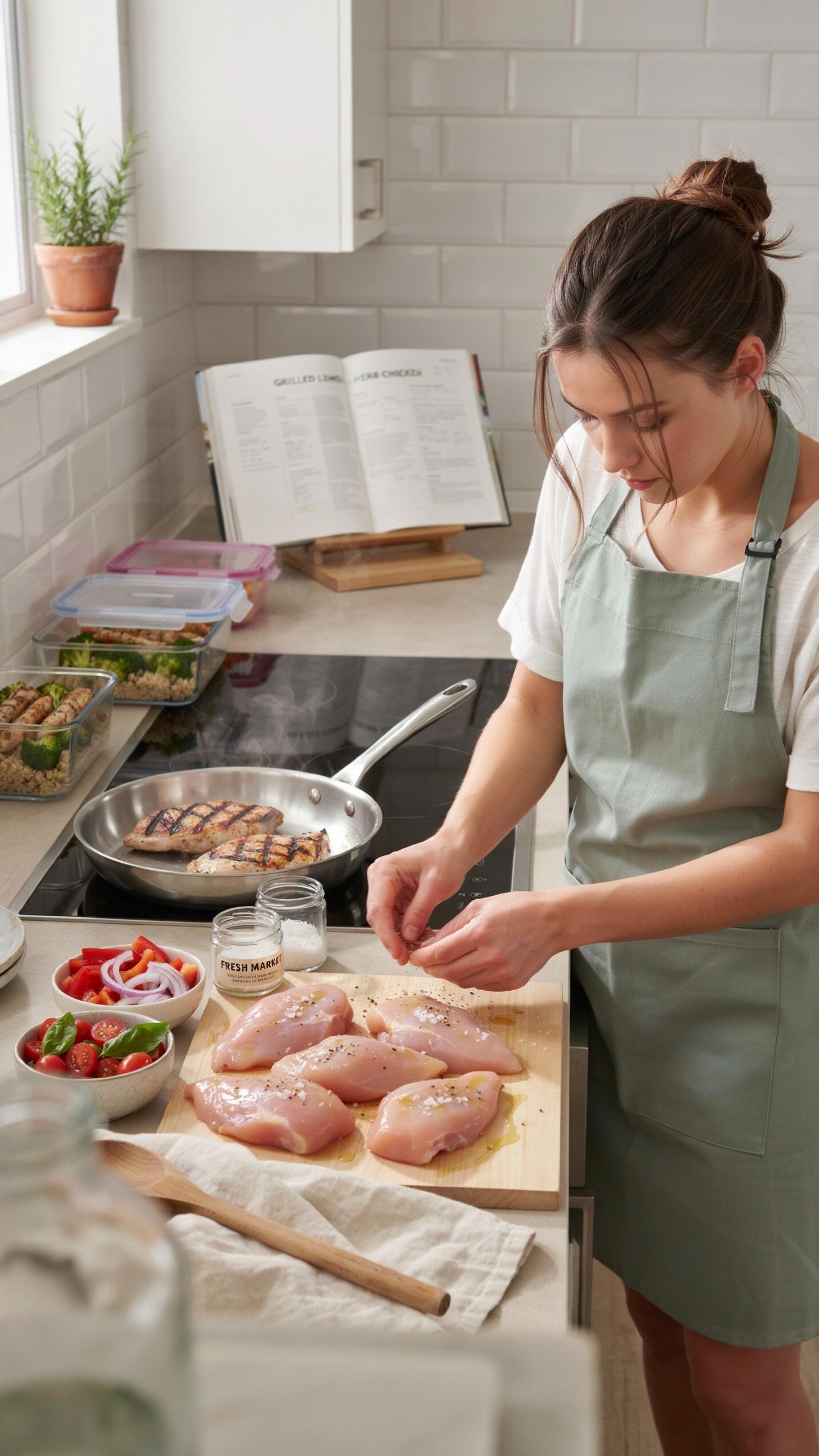
The protocol that works: grill chicken on medium-high heat for 6-7 minutes per side on a 6-ounce breast, pulling it at 165 degrees internal temperature, then resting it for 3 minutes before slicing. Rest matters because carryover cooking stops, and juices redistribute instead of bleeding onto the container. That 3-minute window is where you reclaim the moisture physics tried to steal. Skip the rest and you lose 15-20 percent of the edible water content. That’s not minor.
Grilled Chicken Breast Marinade The Flavor Compound Method
Acid, Fat, And Umami Ratios
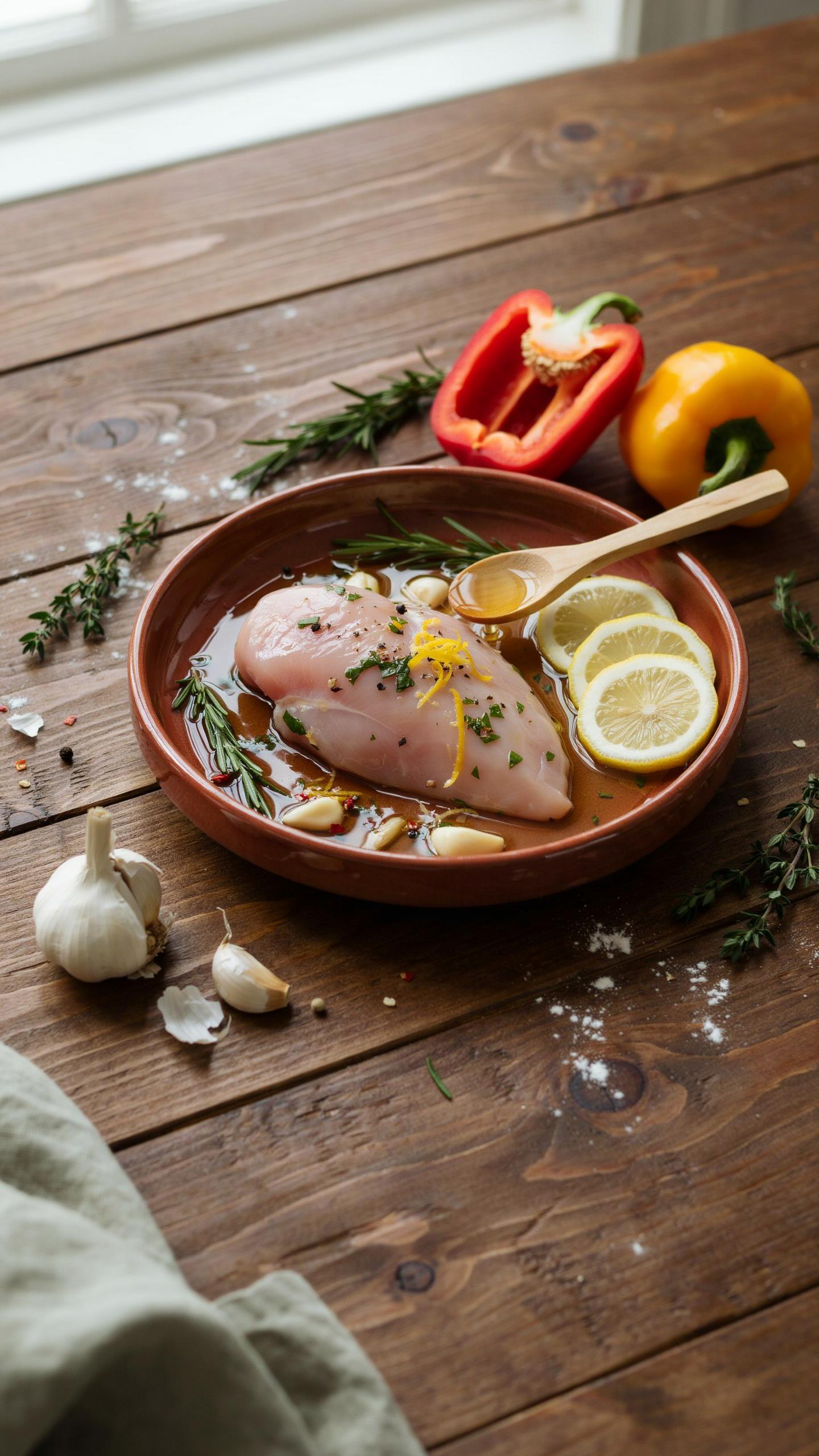
You want the marinade to taste good so people think you’re disciplined. The real mechanism is that acid denatures protein fibers, fat carries flavor compounds, and umami triggers satiety signals in your brain. This is borrowed from food chemistry: think of marinade as a delivery system for flavor molecules, the same way a solvent carries a suspended material through space.
The standard advice—equal parts acid and oil—misses the point. You need ratios that match your protein’s density and your cooking method. For chicken breast, use 1 part acid to 2 parts fat, plus concentrated umami. Acid alone over-softens the meat and wastes time. The fat percentage determines how deep the flavor penetrates before heat seals the surface. Umami from soy sauce, miso, or tomato paste keeps the brain from detecting blandness even when marinading time is short.
Pre Batching Marinades For Weekly Variety
Batch your marinades on Sunday, not your protein. This separates the prep work from the cooking decision and removes the friction that kills consistency. Most people marinate chicken and oil together, which creates oxidation problems and forces them to use everything within two days.
Keep three mason jars of finished marinade in your fridge: one acid-forward for quick 4-hour marinating, one fat-rich for overnight depth, one umami-heavy for reusing across multiple batches. Each jar lasts 10-14 days. On cooking day, you pull chicken from the freezer, thaw it in the marinade jar itself (the liquid accelerates thawing), and grill within 2-4 hours. The mechanism is simple: separate preparation from execution so the decision to cook never requires extra work.
Grilling Chicken Breast Master The Char Avoid The Rubber
The Two Heat Zones You Actually Need
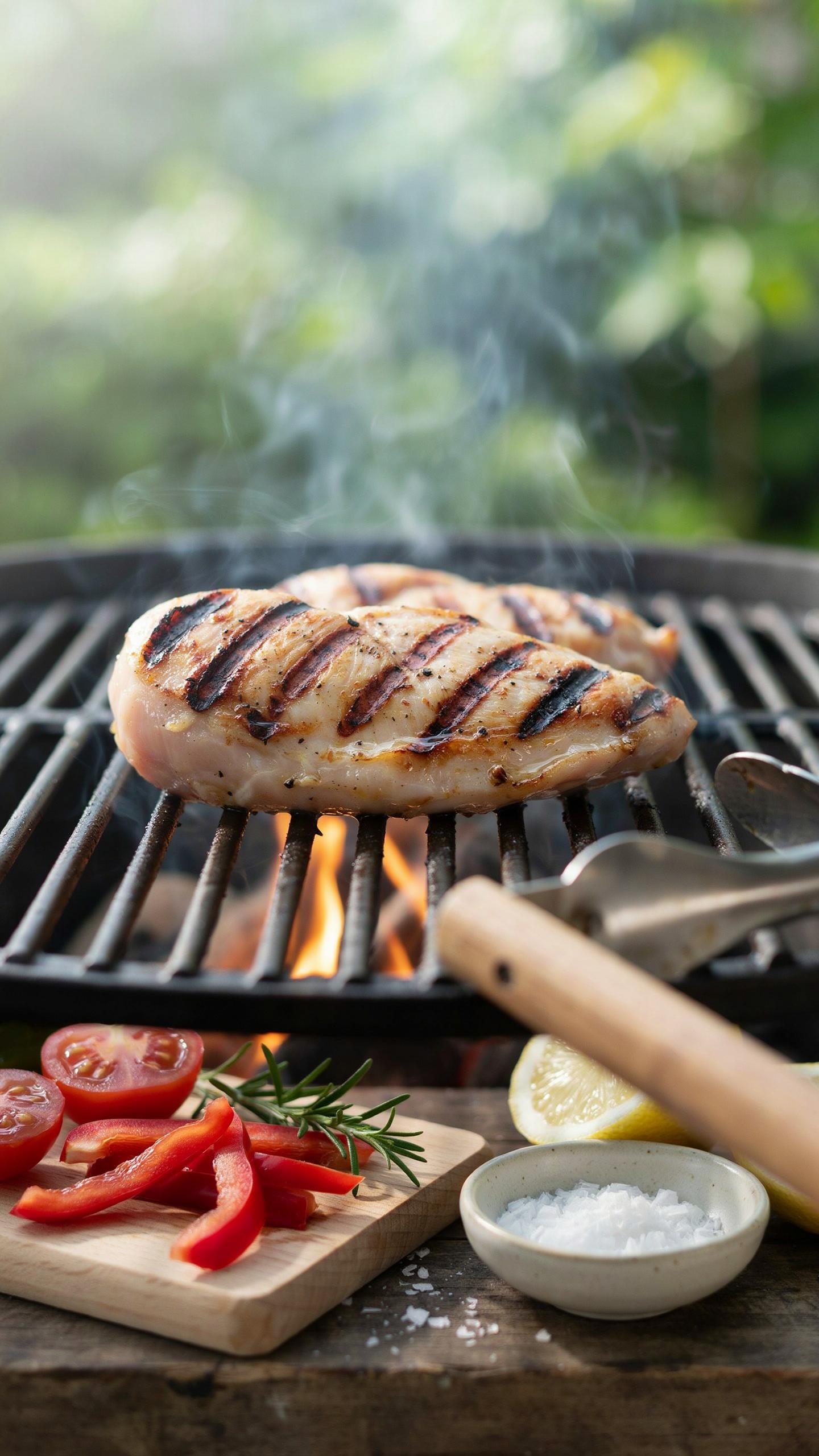
You want that sear without drying out the meat, and that desire is actually fear dressed up as taste preference. The mechanism is simple: direct heat creates the Maillard reaction on the surface, but it also accelerates moisture loss if you stay there too long. Think of it like supply chain management in manufacturing—you need two stations, not one.
Set up your grill with a hot side and a cool side. Sear the chicken directly over flame for two minutes per side to build crust and color. Move it to indirect heat (the cool zone with no flame below) to finish cooking through without charring the outside or drying the interior. This two-stage process is non-negotiable for meal prep because you’re cooking multiple breasts and consistency matters more than improvisation.
The Temperature Window That Changes Everything
Everyone says “cook to 165 degrees” and calls it done. That’s incomplete. The real issue is carryover cooking—the internal temperature keeps rising five to ten degrees after you pull the chicken off heat, even as it sits.
Cook your chicken to 160 degrees internal temperature, measured at the thickest point. Pull it immediately. Let it rest for five minutes uncovered on a clean plate. The residual heat brings it to 165 degrees safely while the muscle fibers relax and reabsorb moisture instead of expelling it. This matters in meal prep because you’re eating these breasts days later, and overcooked chicken becomes inedible by Wednesday. Temperature precision here directly controls whether your meals stay edible through the week.
The Stackable Nutrition System Grilled Chicken Veggies Sides
Complementary Macros Strategic Vegetable Pairings
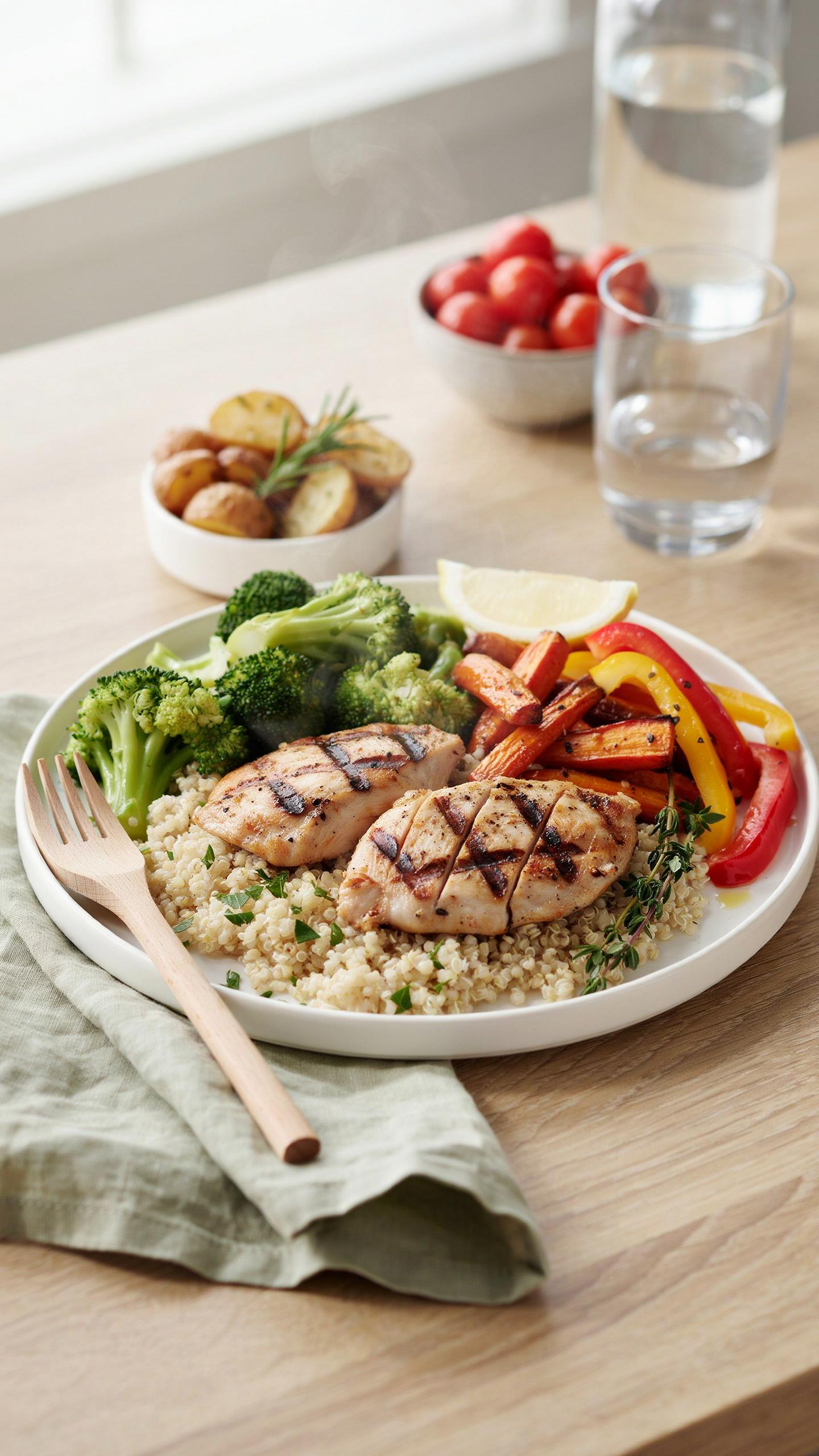
You care about this because you want proof that meal prep isn’t boring repetition. The real mechanism is nutrient density stacking: vegetables aren’t filler—they’re macro modulators that change how your body processes protein. Think of it like load balancing in systems engineering. Your grilled chicken provides the load (protein). Vegetables provide the distribution network (fiber, micronutrients, water volume) that determines whether that protein gets used efficiently or stored as excess.
The common advice says “eat your vegetables.” That’s incomplete. High-protein lunches need vegetables that don’t compete with protein absorption. Leafy greens, cruciferous vegetables like broccoli and cauliflower, and low-starch options like zucchini and bell peppers create zero glycemic interference. They add volume and satiety without triggering insulin spikes that would blunt your protein utilization window. Pair these with your grilled chicken. Save starchy vegetables for post-workout or high-activity days when you need carb replenishment.
Batch Cooking Grains And Starches For Versatility
Your first paragraph starts here. Rice, quinoa, and sweet potatoes are the foundation of meal prep that actually scales. Cook them once on Sunday in volume—5 pounds of rice, 3 pounds of sweet potatoes, 2 pounds of quinoa. This isn’t motivation. This is elimination of daily decisions that waste time. You prepare the starch component outside the meal assembly window. It sits in the fridge, portioned and ready.
- Brown Rice: Neutral flavor, absorbs seasoning, pairs with any protein. Cook at a 1:2 ratio (rice to water) for consistent texture across batches.
- White Rice: Faster digestion, lighter option. Use for post-workout meals when you need carbs to spike glycogen without fiber interference.
- Quinoa: Complete protein, higher micronutrient density. Cook 1:2 ratio. Allows you to reduce total chicken portion size on lower-calorie days.
- Sweet Potatoes: Vitamin A, resistant starch when cooled. Roast whole or cubed at 400 degrees for 25-30 minutes. Stores for 5 days refrigerated.
- Oats: Affordable, shelf-stable prep option for breakfast containers. Cook steel-cut oats in bulk, portion into containers, reheat with chicken for unconventional high-protein breakfasts.
The starch component determines how many meals you can assemble and how quickly you move through them. Batch cooking removes the variable that kills most meal prep systems: the decision fatigue of cooking separate components daily. You cook once. You portion once. Assembly becomes mechanical. This is where grilled chicken meal prep stops being aspirational and becomes routine.
Chicken Meal Prep Bowls Assembly Line Automation For Your Week
Containers That Actually Preserve Chicken
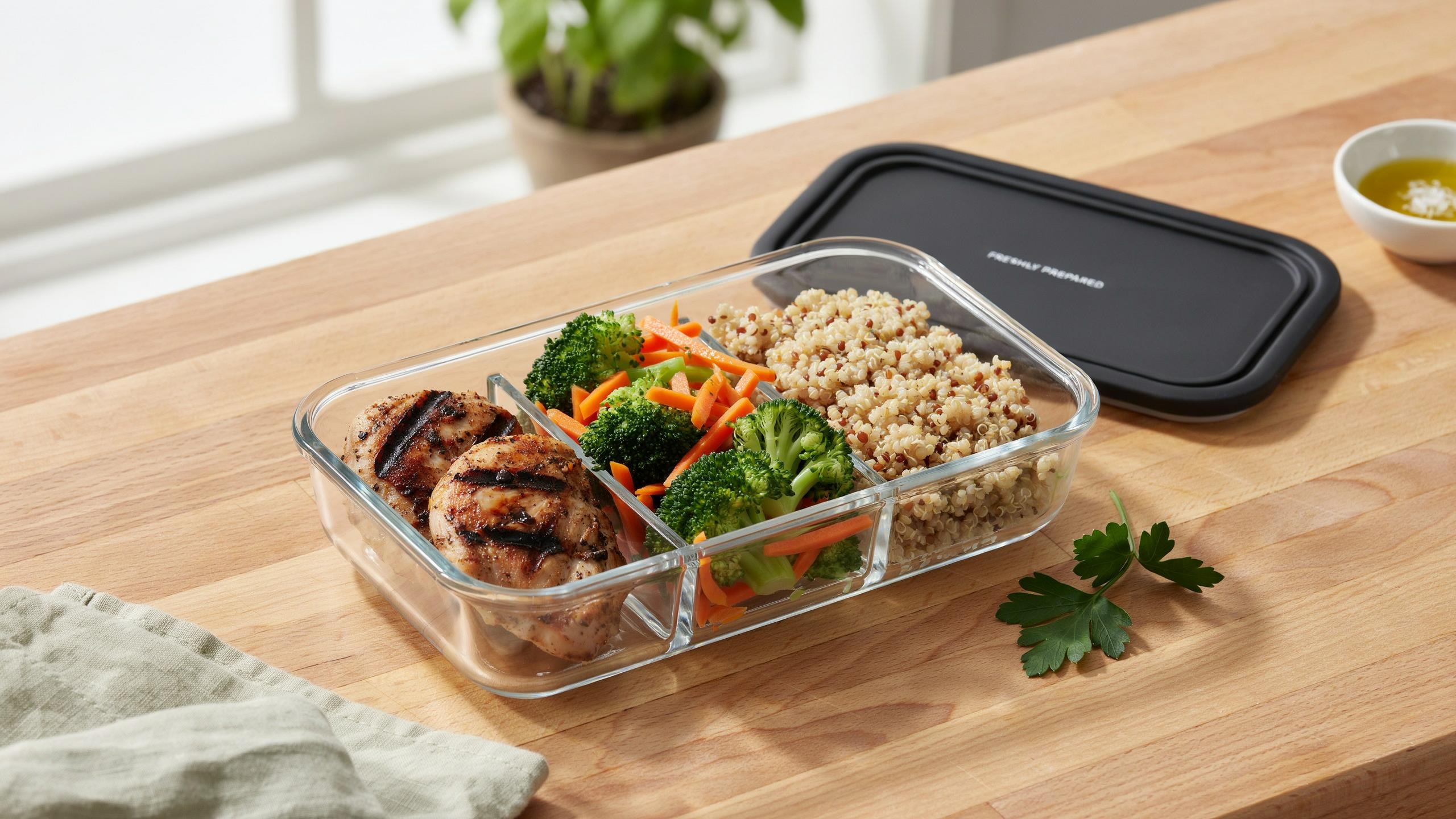
You want to believe a sealed container keeps food fresh all week. It doesn’t. The real mechanism is oxygen exclusion combined with temperature stability, not the container’s marketing claims. Glass containers with tight-sealing lids outperform plastic because glass doesn’t absorb oils from the chicken, doesn’t off-gas compounds into the food, and maintains a true seal without degradation. Silicone seals on glass fail less frequently than plastic hinges that wear after 20 cycles. The container material itself is irrelevant if the seal compromises.
Moisture management separates containers that preserve chicken from containers that just hold it. Grilled chicken releases moisture as it cools and sits. Paper towels placed on the bottom absorb this condensation before it pools and accelerates bacterial growth. Replace these towels before packing the bowl into storage. Stack containers vertically in your refrigerator at 40 degrees or below, never against the back wall where temperature fluctuates. The container’s depth matters more than its width, because shallow bowls expose more surface area to air every time you open the fridge.
The One Touch Plating Method
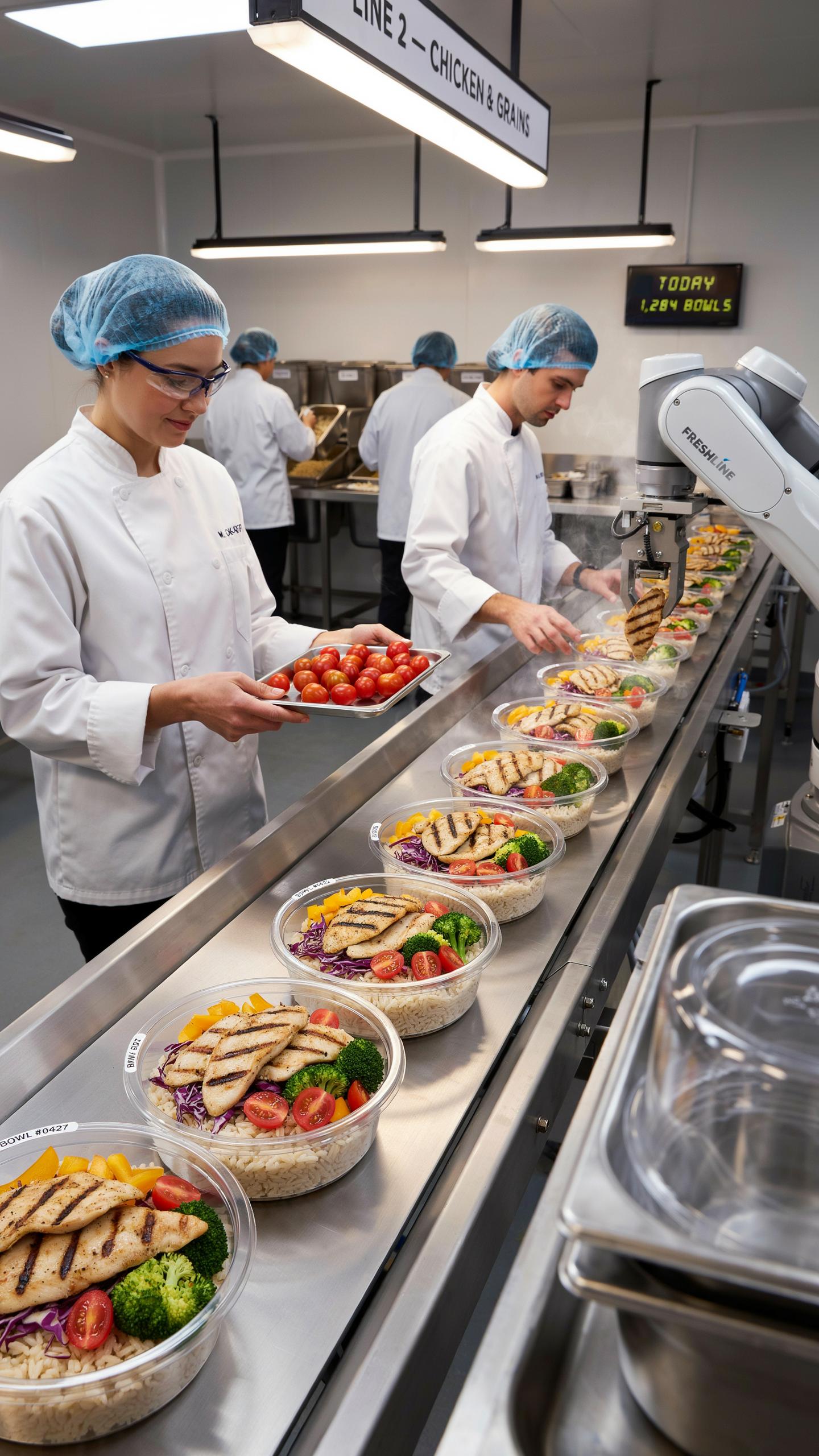
Most people plate meal prep in stages. Season, grill, cool, chop, portion, pack. That’s five separate decisions where contamination or oxidation happens between steps. The one-touch method borrows from manufacturing’s concept of batch processing, where you complete one stage fully before moving to the next, but you execute all plating decisions in a single session. Cook all chicken. While it rests, prep all sides. While sides cool slightly, grab all containers. Pack all bowls in sequence without stopping between them.
This works because you eliminate decision fatigue and temperature loss. Chicken packed warm stays moist longer than chicken cooled completely and reheated from cold. Your hands stay in one mode rather than switching between cooking and packing tasks. Grab your grilled chicken directly from the cooling rack into the container, then add your cold or room-temperature sides immediately after. Move the sealed container straight to the refrigerator. No extra handling means no extra air exposure.
Grilled Chicken Recipes Breaking The Monotony Barrier
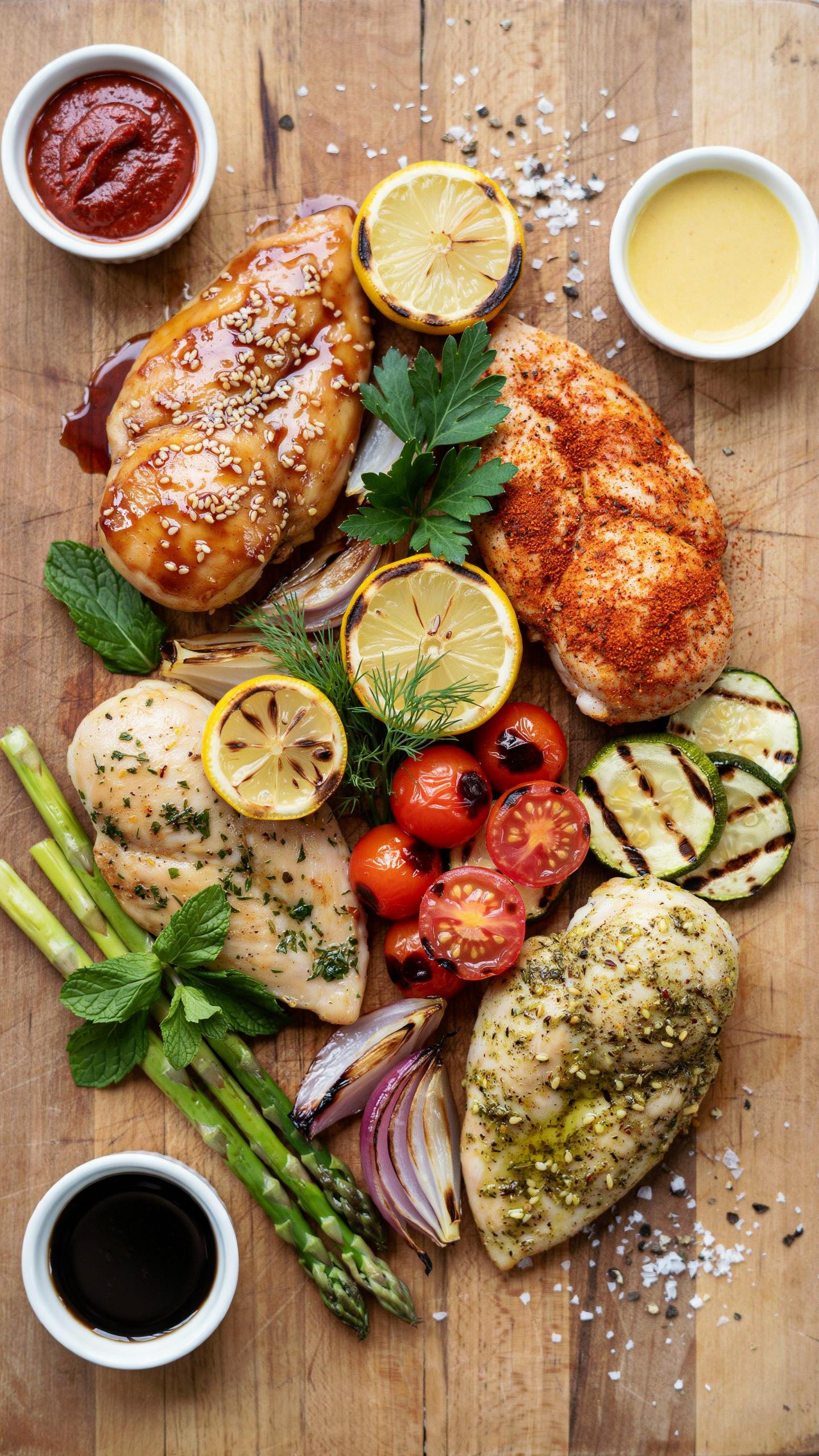
Three Marinades, Nine Permutations
You’re scared of eating the same thing twice because you think repetition signals failure. It doesn’t. The real mechanism is this: your palate adapts to flavor faster than your body adapts to protein. One base recipe with three distinct marinades creates nine different eating experiences across your week without touching your prep time. The math is simple. The psychology is simpler.
A soy-ginger marinade pulls umami and heat. A lime-cilantro blend reads fresh without adding calories. A balsamic-rosemary option delivers depth without complexity in the kitchen. Each works on the same grilled chicken breast for twelve to eighteen hours. You rotate these three marinades across three batches of chicken. Nine meals. Three recipes. Zero decision fatigue on day five when your willpower tanks.
Shredded, Diced, Whole Breast
Texture controls satiety more than people admit. Neuroscience calls this “orosensory stimulation.” The mouth needs variation to signal fullness to the brain. A whole grilled chicken breast goes into a salad and reads as a meal. The same chicken shredded into a grain bowl feels different despite identical macros. Diced chicken mixed into a pasta carries a third distinct eating experience.
Your prep method changes nothing about the chicken itself. The knife work happens once, all at the same session. Shredding takes five minutes per batch with two forks. Dicing takes eight minutes with a chef’s knife. Whole breasts need no prep beyond cooling. Store these three forms separately in the same containers. Rotate formats day to day. Your brain stays engaged. Compliance stays high.
The Recalibration Loop Learning From Your Meal Prep Data
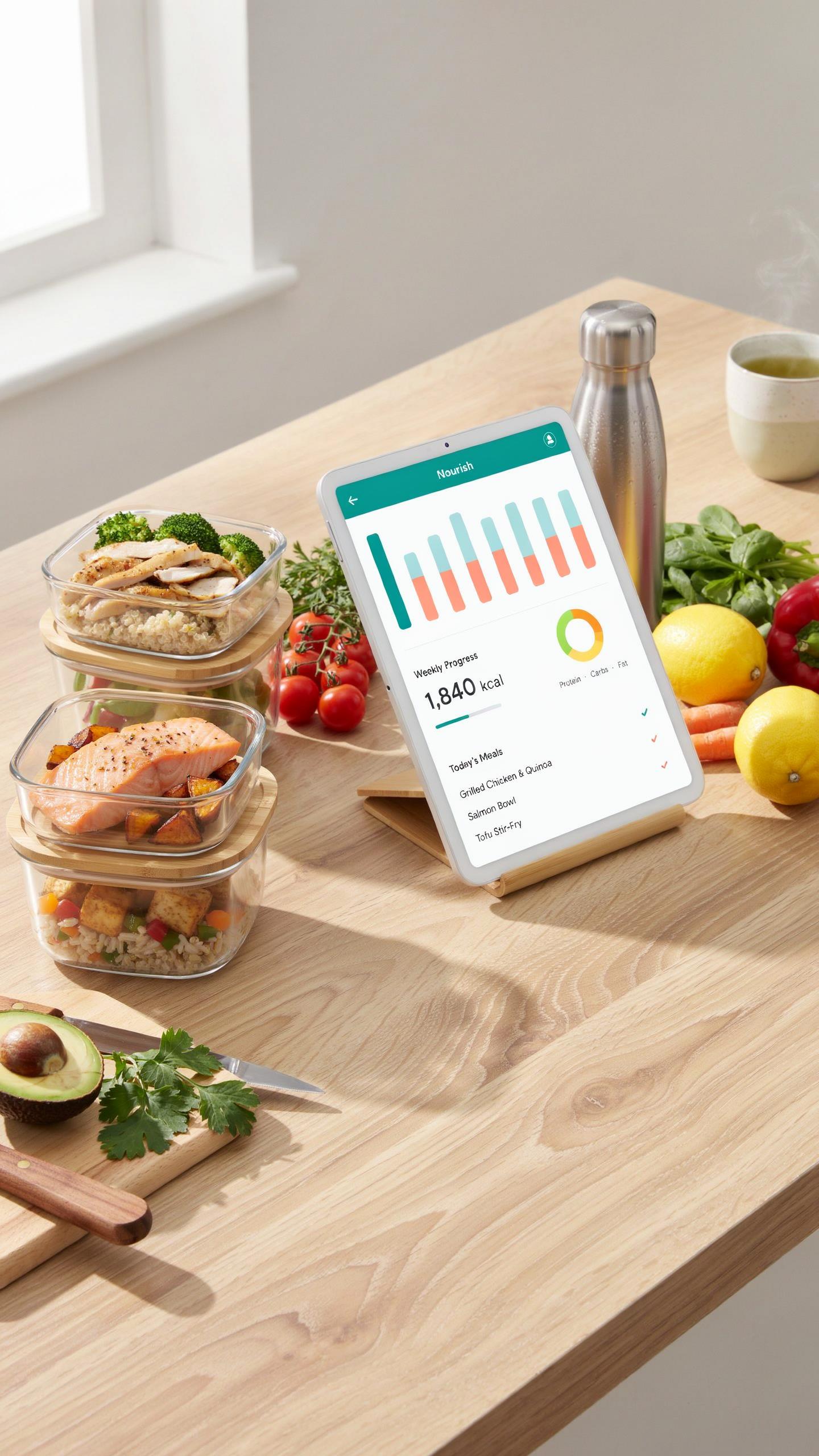
What Your Hunger Tells You That Your Calories Don’t
You track macros because you want proof the system works. But satiety is the real signal you’re ignoring. Hunger doesn’t lie the way numbers do. Your body sends three separate messages after eating prepped chicken: fullness, sustained energy, and whether you’ll crave different food in four hours. Most people never separate these signals because they’re too busy hitting protein targets. The mechanism is simple: protein alone doesn’t keep you full. Satiety comes from the interaction between protein volume, meal timing, fat content, and whether you actually chewed the food instead of inhaling it.
Energy crashes and flavor fatigue are early warnings that your prep strategy has an expiration date. A chicken breast with rice tastes fine on day one. By day four, your brain starts rejecting it before your stomach gets the signal. This isn’t weakness. Your taste receptors habituate to repetition, and your body demands variety to stay metabolically engaged. Track when energy dips, when you start eyeing snacks, and when you begin swapping out meals for takeout. Those timestamps reveal which recipes and seasoning combinations you can actually sustain versus which ones you’ll abandon by Wednesday.
Adjusting The Recipe Before You Abandon The System
Stop prepping the same five chicken recipes and expecting different results. The data you collected tells you exactly what to change next week. If you hit satiety on days one and two but hunger returns hard on day three, your fat ratio is too low or your portion size drifted. If energy crashes mid-afternoon, the carb-to-protein balance needs adjustment. If you’re skipping meals because flavor fatigue set in, you need a rotation system, not motivation. The real work isn’t in the prep itself. It’s in running a single variable change per cycle, then measuring the outcome against your tracked hunger and energy notes.
Document one change at a time. Swap the seasoning blend while keeping protein and carbs identical. Then run that version for a full prep cycle and record how it affects when hunger returns and how long energy stays stable. This is iteration. After three to four prep cycles, you’ll have mapped the exact ratios and flavors your body responds to best. That baseline becomes your default, and everything you prep after that works because it’s built on data from your body, not someone else’s generic macro split. Your next prep batch launches with one small adjustment based on what the last one taught you.
The real obstacle isnt what you eat but the decision fatigue that prevents you from eating it

You already know protein matters. You already know grilled chicken works. The gap between knowing and doing lives in your kitchen on Sunday night. Buy three chicken breasts today. Grill them. Split them into containers. One decision made removes fifty future decisions. The person who wins isn’t smarter about nutrition. They’re just fewer decisions away from actually following through.