
The Cognitive Offload Protocol Easy Shredded Chicken
Why Your Brain Is Already Full
You’re hoping meal prep will fix your discipline problem. It won’t. What it actually fixes is decision fatigue. Your brain burns through willpower on trivial choices before noon. Every “what should I eat” question depletes the same mental resource you need for work, relationships, and actual decisions that matter. Shredded chicken meal prep removes the question entirely.

Cognitive psychology calls this decision load. The mechanism is simple: each choice consumes glucose and attention. You can’t rebuild willpower through motivation. You rebuild it by eliminating decisions at the source. Cook once, eat five times. The math is brutally efficient. You’re not becoming disciplined. You’re becoming lazy in the exact way that works.
Batch Cooking As Your Decision Architecture
The common advice says meal prep saves time. That’s incomplete thinking. Meal prep saves time, sure, but the real leverage is architectural. You’re not optimizing food production. You’re redesigning your decision environment so the default action is the right one.

Batch cooking works because you make one complex decision under controlled conditions, then let that decision repeat automatically. Sunday afternoon, you boil three pounds of chicken, shred it, portion it, and refrigerate. For the next five days, you’re not deciding. You’re executing. Your brain’s resources concentrate on work instead of scattering across meal choices. The protocol: pick a batch day, stick to it, measure portions before they hit containers so portion control becomes passive, not active.
Shredded Chicken As A Resource The Healthy Meals With Shredded Chicken Advantage
The Protein To Effort Ratio That Actually Matters
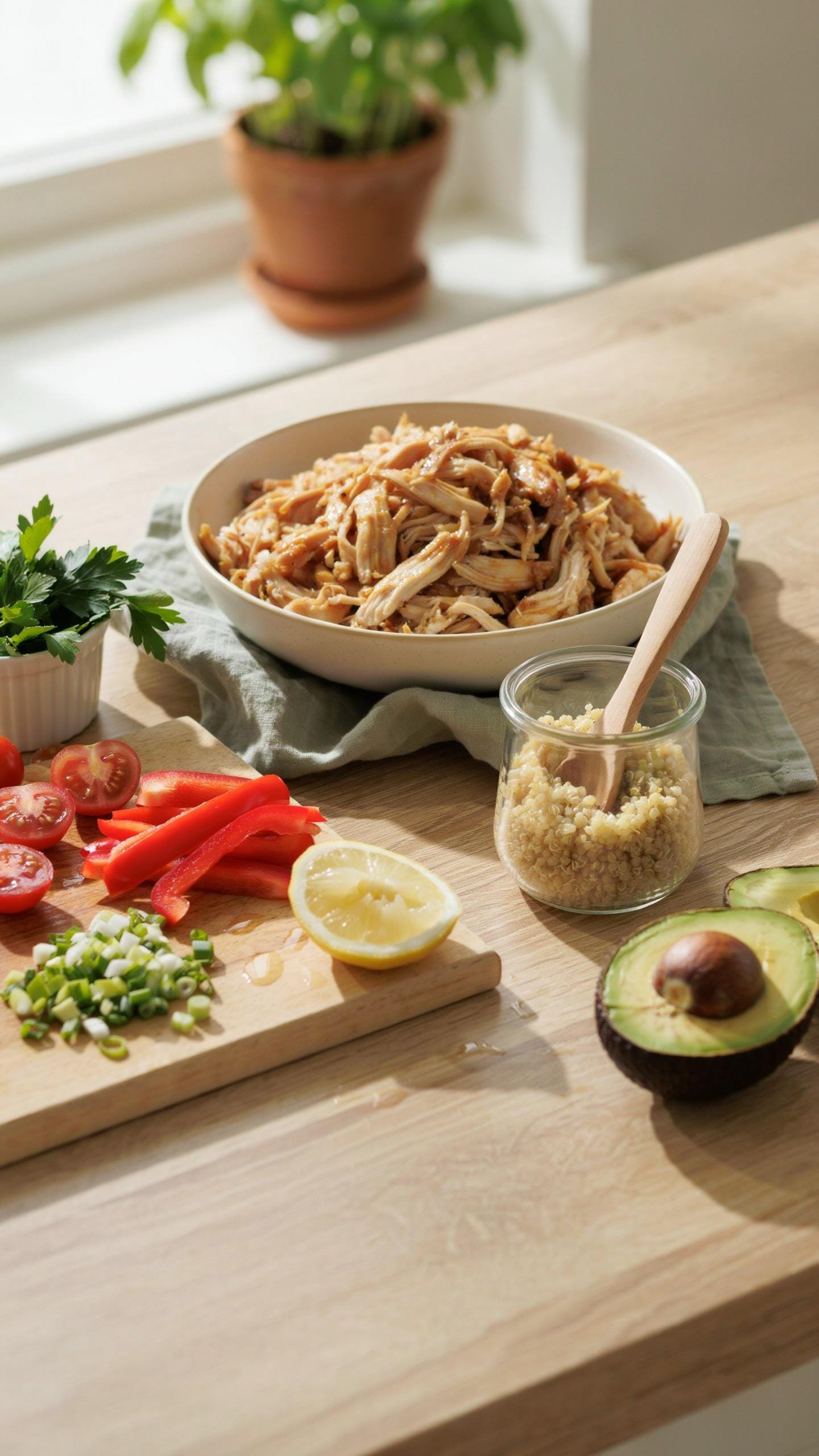
You want to believe meal prep is about being healthy. It’s not. It’s about extracting maximum nutritional output from minimum time spent cooking. Think of this as leverage in thermodynamics: you’re converting raw energy (your effort) into usable protein (your meals) with the highest possible efficiency. A single batch of shredded chicken converts four to six hours of passive cooking into ten to fifteen individual protein servings. No other single-ingredient protein source scales this way without active intervention.
The mechanism is simple. Whole chicken breasts or thighs cook uniformly in bulk. One oven session yields thirty to forty ounces of cooked protein that stores for four days refrigerated or indefinitely frozen. Compare this to grilling individual chicken breasts daily or buying pre-shredded chicken at 40 percent markup. You spend ninety minutes once per week instead of fifteen minutes five times per week. The math removes the friction that kills consistency.
One Ingredient, Infinite Applications
Forget the lie that versatility comes from having many options. It comes from having one foundational element that adapts to any flavor profile without changing its structure. Shredded chicken is biochemically neutral. It absorbs seasoning, sauce, and fat equally well whether you’re building a Tex-Mex bowl, an Asian stir-fry, or a Mediterranean grain plate. This isn’t flexibility by accident. It’s flexibility by design.
The real advantage sits here: you control the flavor at assembly, not at cooking. This decouples two separate decisions that most people fuse together. You cook once with minimal seasoning. You season five different ways across five different meals. This separation is what makes shredded chicken meal prep sustainable. You’re not trapped into eating the same thing five times. You’re working with a blank canvas that takes direction from whatever sauce, grain, or vegetable you pair it with on any given day.
The Healthy Dinner With Shredded Chicken Matrix Beyond Basic Salads
Building Flavor Without Relying On Sauce
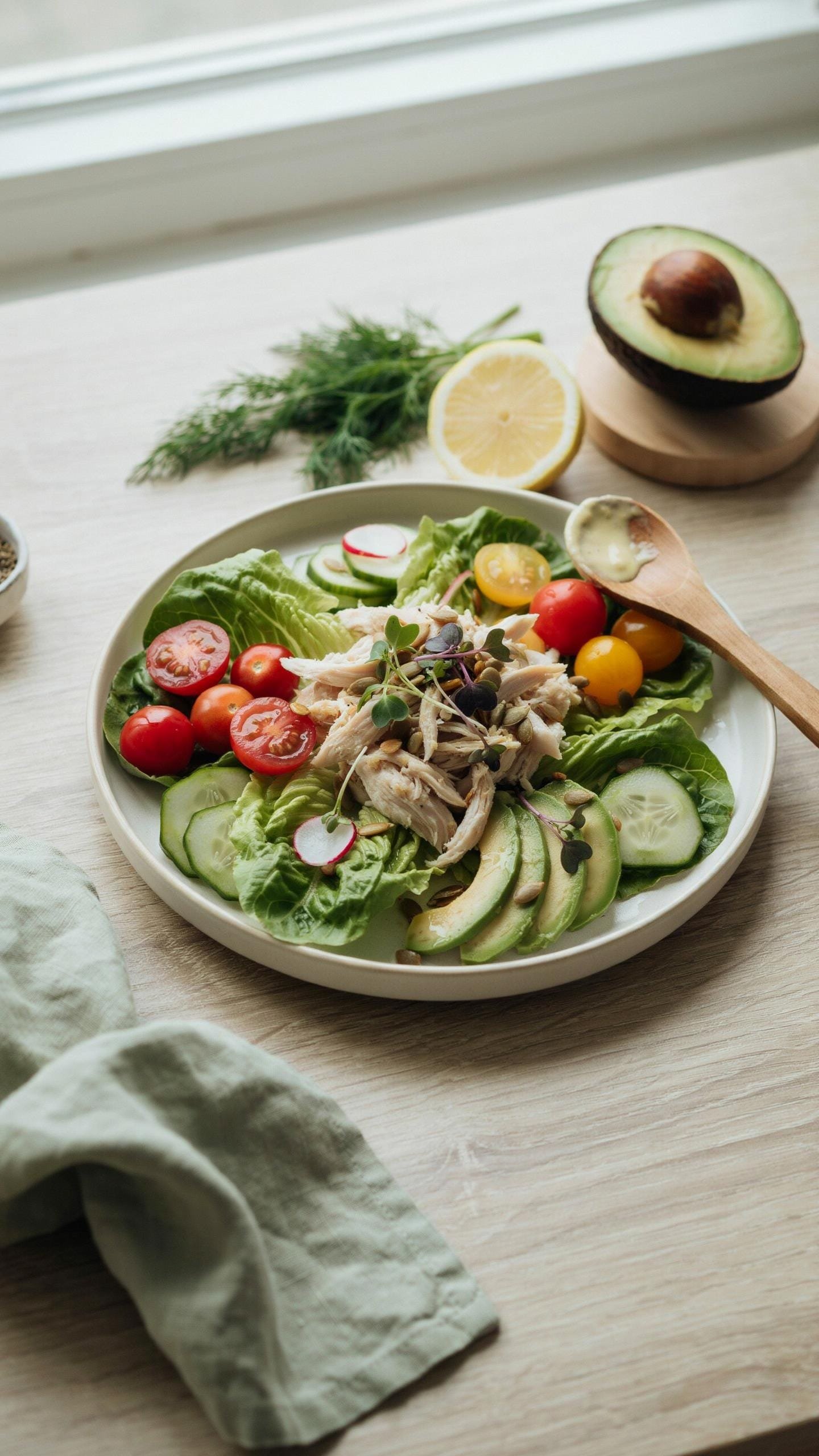
You want shredded chicken to feel like a choice, not a compromise. The real mechanism here is contrast: your brain registers a meal as satisfying when textures and temperatures push against each other, not when everything tastes vaguely the same. Most people drown shredded chicken in sauce because they haven’t engineered the base layers correctly. The chicken itself should land somewhere between neutral and slightly seasoned so it can adapt to different flavor directions throughout the week.
Salt the chicken aggressively before cooking, then let it cool completely before shredding. This creates a platform that accepts acid, heat, and fat without fighting back. A acidic component cuts through richness. Heat builds complexity. Fat carries flavor. You’re not creating five identical meals; you’re creating five different flavor equations using the same protein as the constant variable.
Cooking Global Cuisines With One Protein Base
Think about this like supply chain economics: you’re reducing SKU complexity while maintaining market variety. Shredded chicken moves across cultures because it absorbs the dominant flavors of its environment. Moroccan tagine needs warm spices and dried fruit. Thai curry needs coconut and fish sauce. Mexican street food needs lime and cilantro. The protein stays static while the supporting cast changes completely.
The mechanism works because shredded texture speeds up flavor absorption compared to whole pieces. The increased surface area means faster osmosis of seasonings and sauces into the meat itself. Cook your chicken plain, then architect each meal around regional flavor components you already have on hand. This isn’t fusion cooking. This is recognizing that cultures solved flavor problems long before meal prep existed, and shredded chicken is just the vehicle.
Strategic Stockpiling Your Meal Prep With Shredded Chicken Arsenal
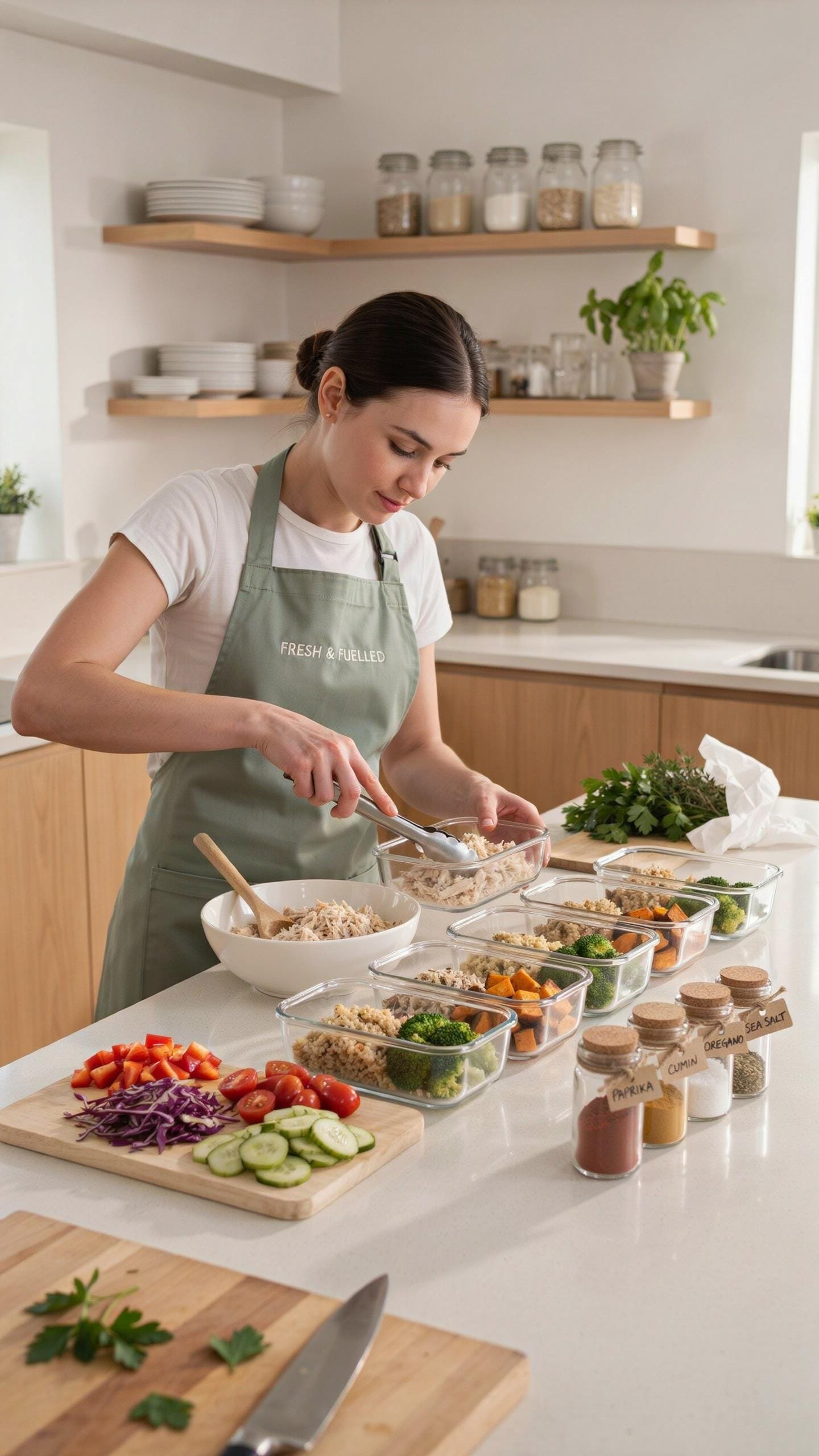
Containers That Actually Preserve Quality
You want containers that won’t fail you midweek because failing feels like wasted effort. The mechanism is simple: oxygen exposure degrades chicken faster than time does, so your container choice directly controls how long your prep stays edible. Glass containers with airtight seals outperform plastic because glass doesn’t absorb odors or oils, and the seal doesn’t degrade after repeated temperature swings. Plastic containers get porous, leak air, and transfer flavors across meals.
- Glass containers with silicone or snap lids: Best option for refrigerator storage. Lids maintain airtight seals through multiple open-close cycles. Won’t warp from reheating.
- Vacuum-seal bags: Top choice for freezer stockpiling. Remove air manually before sealing to prevent freezer burn. Stack flat to save space.
- Stainless steel containers: Durable alternative if glass breaks often in your workflow. Harder to see contents without opening, so label clearly.
- Portion-controlled compartment trays: Useful only if you’re eating the same five meals. Rigid plastic degrades faster than alternatives but works short-term.
- Food-grade plastic wrap over containers: Secondary barrier for glass containers. Reduces air contact further when combined with airtight lids.
Portion size matters more than container type because oversized containers mean more headspace and faster oxidation. Shredded chicken meal prep with shredded chicken meal prep requires containers sized to your actual consumption window, not your storage capacity.
Freeze And Thaw Without Texture Loss
Most people thaw chicken at room temperature or in warm water, then wonder why it turns mushy. The biology here is critical: ice crystals form during freezing, and fast thawing ruptures cell walls as those crystals melt unevenly. Slow thawing in the refrigerator lets moisture redistribute gradually, keeping chicken fibers intact. This takes 24 hours minimum but preserves the texture you prepped for.
The protocol is straightforward: freeze shredded chicken in single-layer portions first, then stack after solid. Transfer to the refrigerator the night before you need it. Never refreeze thawed chicken unless you cook it again immediately. If you need chicken faster, submerge sealed bags in cold water for four to six hours, changing water halfway through. Hot water accelerates thawing but denatures protein and creates the texture problem you’re trying to avoid. Cold water thawing takes longer but maintains structural integrity for every meal that week.
The Shredded Chicken Breast Recipes Blueprint Deconstructing Flavor

The Four Pillars That Matter
You want to believe flavor complexity comes from exotic ingredients or technique. It doesn’t. The mechanism is chemistry, not creativity. Four variables control how your shredded chicken tastes: acidity breaks down proteins and brightens perception, fat carries flavor compounds and triggers satiety, salt enhances every other taste and preserves moisture, heat creates texture contrast and Maillard reactions. Master these four and you stop chasing recipes.
Every meal-prep failure traces back to neglecting one of these variables. You either under-salt and produce bland chicken nobody finishes, oversalt and destroy its texture, skip acid and end up with dense protein, or ignore fat and create something your brain registers as incomplete. The ratio matters less than understanding which variable is missing when a batch fails. Taste one bite, identify the gap, adjust the next batch.
Templates That Eliminate Guessing
Recipe templates are leverage borrowed from software engineering, where developers don’t rewrite code for each project but modify existing frameworks. Your shredded chicken operates the same way. One base formula produces dozens of meals through variable swaps: start with properly seasoned and shredded chicken, then layer three components in this order: acidic element, fat element, heat element.
Build from these three slots. Acid examples: lime juice, vinegar, yogurt, tomato. Fat examples: olive oil, mayo, tahini, avocado. Heat examples: cayenne, jalapeño, hot sauce, black pepper. Pick one from each category and you have a complete flavor profile. Change the acid and you have a new meal. This removes the paralysis of “what should I make” and turns meal prep into a mechanical process that takes eight minutes to execute once your chicken is shredded.
Reverse Engineering Time How To Make Shredded Chicken Efficiently
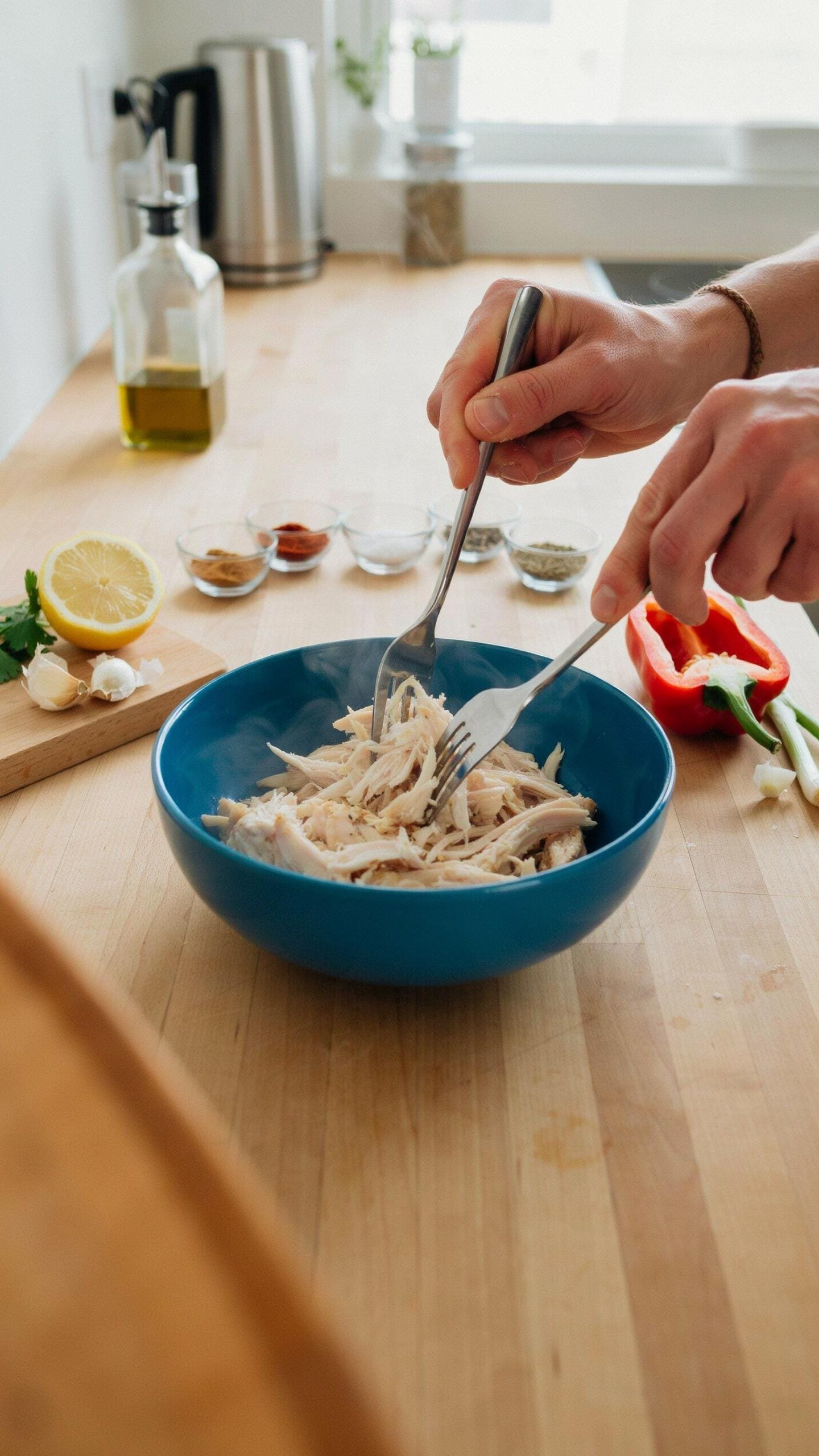
Pressure Cooker Vs. Oven: Speed And Texture
You want to believe one method is objectively superior so you can stop thinking about this decision. The mechanism is heat transfer: a pressure cooker uses steam under pressure to cook chicken 70 percent faster than an oven, but an oven gives you better texture control because heat moves slower and more evenly through the meat. Pressure cookers reach 250°F internally while ovens max at 212°F in the meat itself, which means fiber breakdown happens faster. Speed trades texture for convenience.
The practical choice depends on your constraint. Pressure cooker wins if time is your bottleneck: 15 minutes at pressure versus 45 minutes in a 375°F oven. Oven wins if you’re cooking large batches and texture consistency matters for your five different meals. Neither method produces bad chicken. Pick pressure cooker for volume during a tight week, pick oven when you have breathing room and want chicken that shreds cleanly without turning stringy.
Shredding Techniques For Volume
Most people shred chicken by hand or with two forks because that’s what they’ve seen. Hand shredding works but it’s a time tax you’re paying unnecessarily. The real lever is tool selection based on fiber direction and moisture content: stand mixers with paddle attachments demolish warm chicken in under two minutes, while hand shredding takes 8 to 12 minutes per batch. The stand mixer’s mechanical advantage is the mechanism. Warm chicken fibers separate easier than cold chicken because collagen hasn’t re-solidified yet.
For maximum throughput, cool the chicken just enough to handle safely (roughly 3 to 5 minutes after cooking), then load it into a stand mixer at medium speed for 90 seconds. Two forks works as a backup method if you lack equipment, but you’re choosing friction over efficiency. This single protocol change cuts shredding time in half while producing uniform texture across all five meals. The faster your shredding phase completes, the faster your entire prep day closes.
The Slow Cooker BBQ Chicken Feedback Loop

How Your System Learns What Works
You want to believe meal prep is set-it-and-forget-it, but that’s denial dressed up as convenience. Cybernetics—the study of self-regulating systems—teaches us that feedback is the actual engine of control. Your shredded chicken prep has a feedback loop: you cook it, you eat it, you observe what happens, then you adjust the next batch. Most people skip step three and four, which is why they stay mediocre. The mechanism works like this: slow cooker temperature, liquid ratio, and cooking time create an output. That output either meets your standard or it doesn’t. You measure against that standard, then recalibrate.
Each cook teaches your system something. Chicken cooked at 190°F for eight hours produces different fiber structure than 210°F for six hours. The moisture content shifts. The ability to shred cleanly shifts. The texture when reheated shifts. You don’t guess about these variables on your fifth batch—you’ve already run the experiment. Write down: exact temperature setting, cook time, starting weight, final weight, and how the meat performed when you ate it three days later. This data becomes your operating manual, not someone else’s blog post.
Dialing In Consistency Through Iteration
The common advice here is trash: “just use your slow cooker and it’ll work out.” That’s not a protocol, that’s hope. Real consistency demands you lock down the input variables that matter and measure the output that proves it. Start with one baseline: 2 pounds of chicken thighs, 1 cup BBQ sauce, 0.5 cup water, on low for seven hours. Cook it. Shred it immediately after. Weigh the shredded meat. Portion it into your containers. Eat it across the week and note: did it dry out by day four? Did the sauce separate? Did it shred easily or fight you?
Once you have one batch that works, your next batch is a controlled test. Change one variable. Lower the heat by ten degrees or add 0.25 cup water. This is not overthinking—this is the difference between meal prep that works and meal prep that wastes your money. The feedback loop closes when you stop accepting randomness. Document three batches minimum before you claim you’ve “dialed it in.” After that, your slow cooker becomes predictable, not a lottery.
The What To Make With Shredded Chicken Healthy Expansion Pack
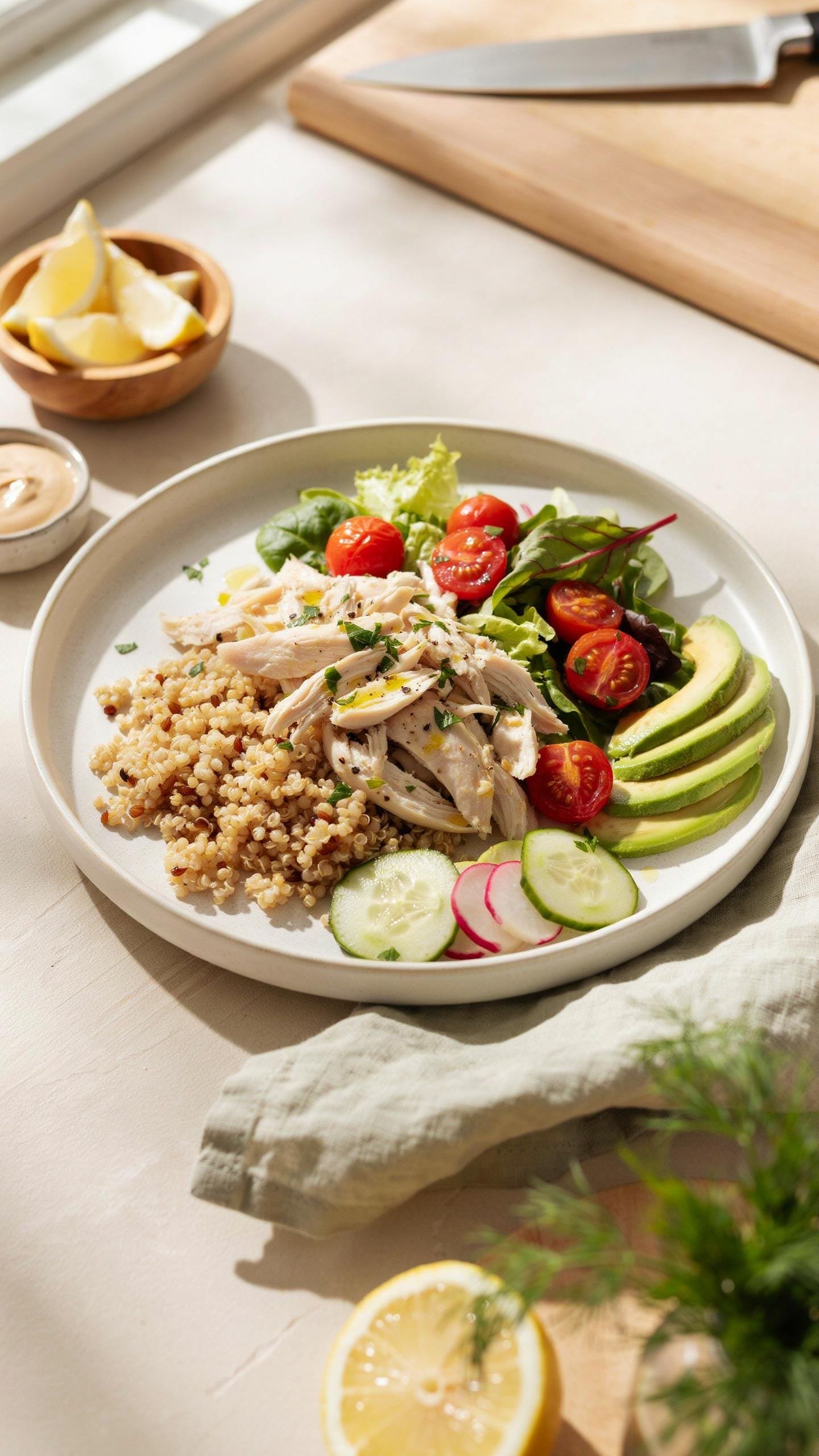
Vegetables That Stack Micronutrients
You want to believe that any vegetable paired with shredded chicken makes it “healthy.” That’s denial. The mechanism is simple: vegetables vary wildly in nutrient density. Some pack ten times the micronutrients per calorie than others. Pairing shredded chicken with high-density vegetables means you’re extracting more biological value per meal without inflating portions or calories.
Cruciferous vegetables like broccoli and cauliflower deliver sulforaphane and folate. Leafy greens like spinach and kale provide iron and magnesium in concentrated doses. Peppers contribute vitamin C and carotenoids. Root vegetables like sweet potatoes add fiber and potassium. The pairing rule: choose vegetables that require you to chew. They signal satiety faster and deliver nutrients your body actually needs.
Sauces And Marinades That Actually Vary Taste
Most people rotate three sauces and call it variety. That’s lazy, not strategic. The real leverage is understanding that taste perception follows flavor compound distribution. Acid, fat, heat, and umami are the load-bearing walls. Change the ratio, and you change the meal without changing the protein.
- Lemon herb: Acid plus aromatic oils from fresh herbs cuts through richness and preps your digestive system for the protein load.
- Soy ginger: Umami from soy plus heat from ginger creates a flavor profile that mimics restaurant-quality depth on a basic ingredient.
- Buffalo hot sauce and Greek yogurt: Capsaicin from hot sauce paired with fat from yogurt creates sustained satiety while masking repetition.
- Peanut sauce: Ground peanuts deliver fat and umami that transform plain chicken into a dish that feels indulgent without excess calories.
- Tahini lime: Sesame fat plus citric acid creates a nutty, bright contrast that resets palate fatigue across multiple meals.
Batch your sauces separately from your shredded chicken. This single protocol step eliminates texture degradation and keeps each sauce tasting intentional instead of stale. Apply sauce the night before consumption, or store it separately and combine at eating time. The constraint forces you to think about meal composition instead of defaulting to the same ratio every time.
The Anti Boredom Protocol Healthy Recipes With Shredded Chicken
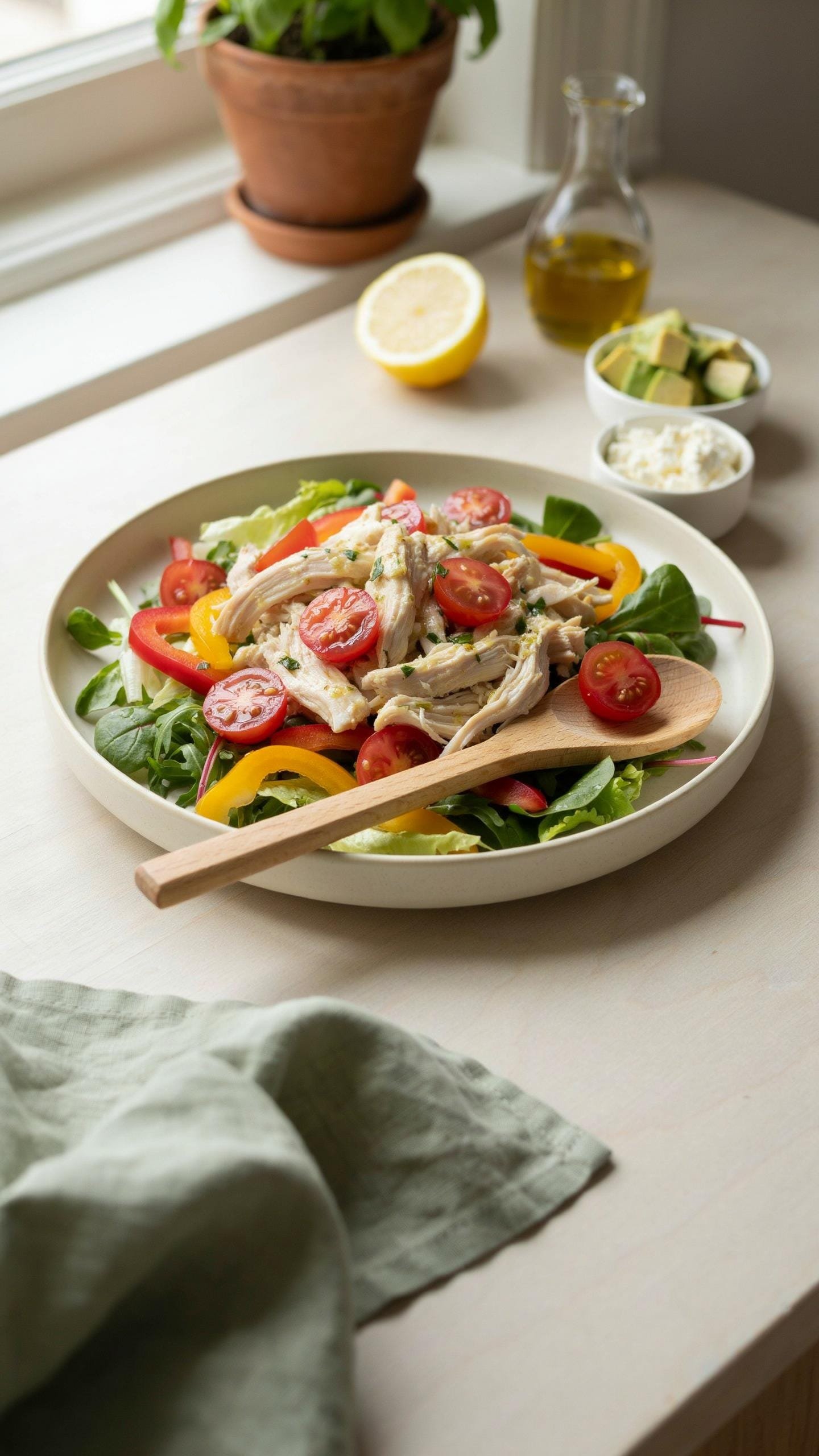
Rotate Your Five Meals On Schedule
You’re afraid that eating the same thing five days straight will break your commitment. Here’s what actually happens: your brain stops registering the food as rewarding after day two, which tanks compliance faster than any willpower deficit. This is sensory adaptation—the same mechanism that makes a song unlistenable after overplay. Your taste buds literally stop firing at the same stimulus. The solution isn’t willpower. It’s mechanical rotation.
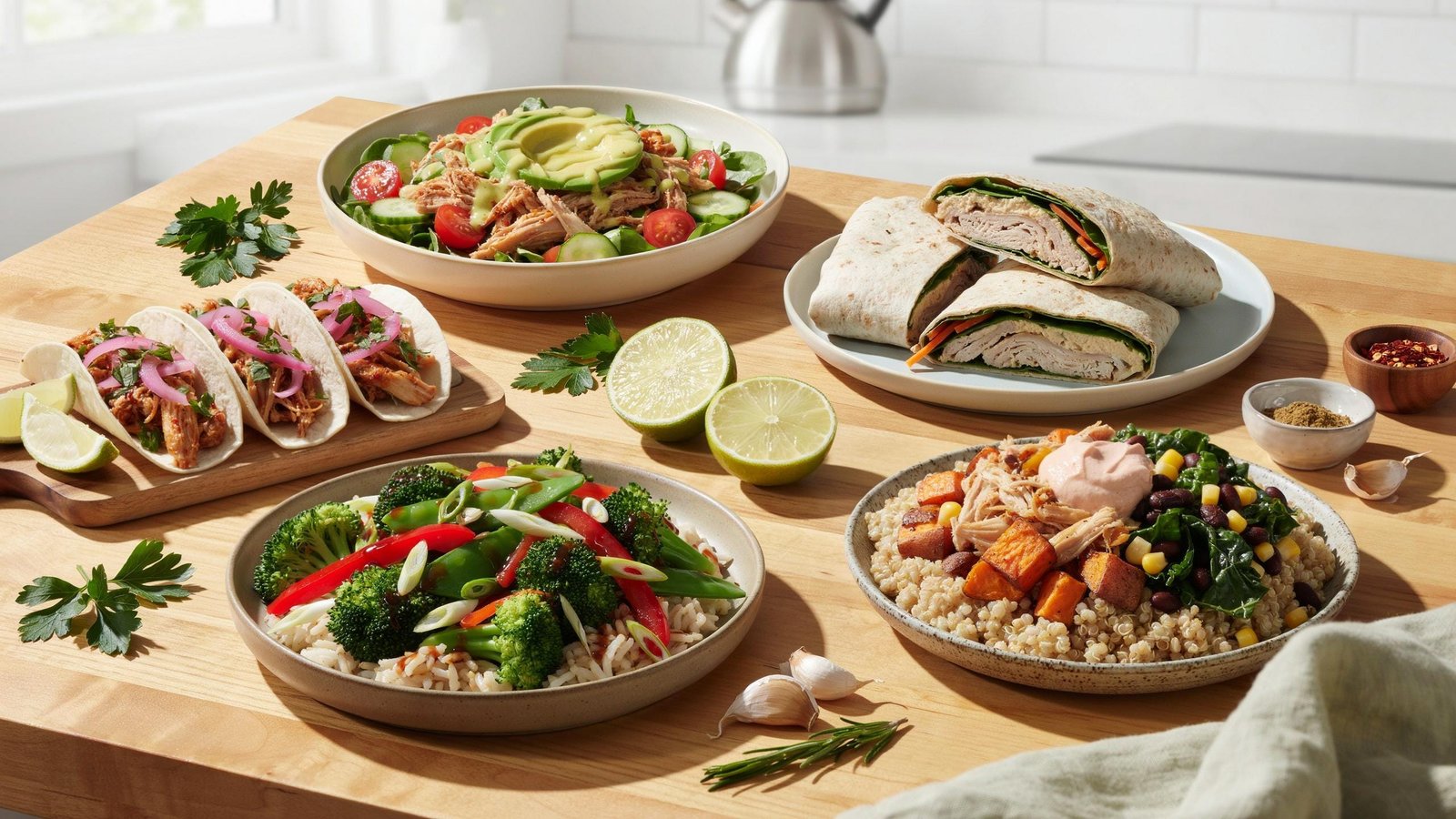
Design a five-day cycle where each meal occupies a fixed slot. Monday is teriyaki bowls. Tuesday is chicken tacos. Wednesday is Caesar wraps. Thursday is curry. Friday is tomato-based pasta. Repeat the cycle the following week. This removes the decision and the monotony simultaneously. Your brain expects variation because you’ve built it into the system. Compliance stays high because you’re not fighting adaptation—you’re working with it.
Seasonal Swaps Keep The Base Intact
Forget the advice about “keeping recipes fresh.” That’s lazy and it’s why people fail. Real adaptation means changing only the variable inputs—the produce—while keeping your core protein and method the same. Winter demands root vegetables and heavier fats. Summer demands acid-forward dressings and raw components. Spring and fall sit in the middle.
In winter, use butternut squash, Brussels sprouts, and root vegetables with your shredded chicken. In summer, build around fresh herbs, citrus, and lighter oils. Spring works with asparagus and peas. Fall pulls from mushrooms and apples. You’re not relearning five different recipes each season. You’re swapping what surrounds the same shredded chicken foundation. This keeps prep time flat while shifting what hits your palate week to week.
Your plate is a microcosm of your discipline
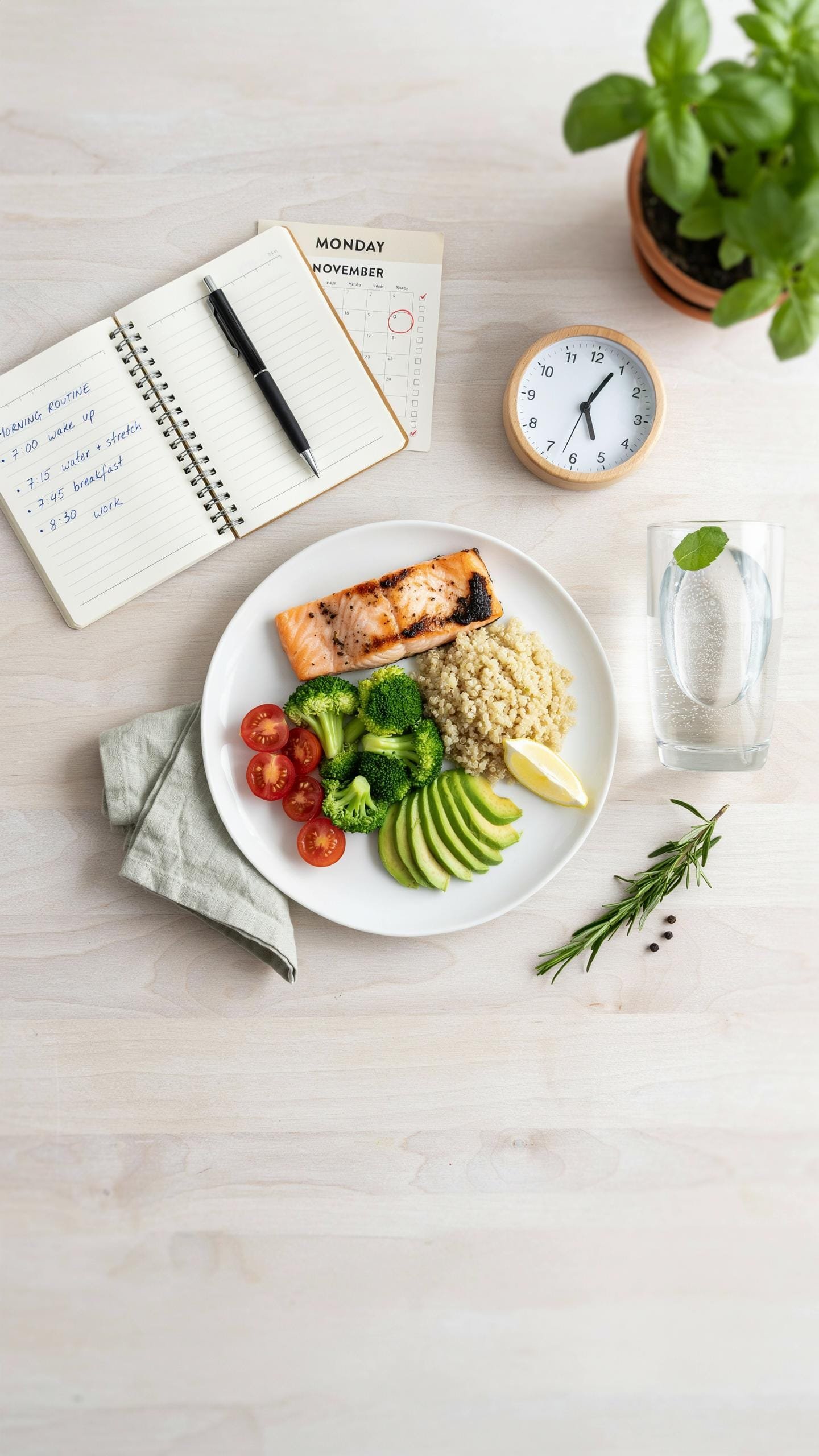
Most people fail at meal prep because they treat it like a chore instead of a system. You don’t build shredded chicken meal prep to save time. You build it to remove decisions. Every Sunday you cook becomes proof you follow through on what matters. Pick one protein, one cooking method, one day this week. Cook it. That’s the entire game. Discipline isn’t motivation. It’s the meals you prepare when you don’t feel like it.