
The Myth Of Time Saving Meal Prep Why You Still Fail

Your Brain Stops Caring After Day Three
You want meal prep to solve your discipline problem without requiring discipline. That’s the real reason you’re reading this. But here’s the mechanism: dopamine isn’t static. It drops when your brain encounters the same stimulus repeatedly without novelty. Neuroscience calls this habituation. With chicken meatballs, you hit it hard because the texture, temperature, and flavor profile remain identical across every meal. Your reward system adapts and stops firing. By Wednesday, eating becomes a chore again.
The standard advice says “just push through.” That’s lazy. The actual solution is building variance into your prep without building complexity. Change your sauce every two days. Rotate your side vegetable. Pair meatballs with different grains or skip grains entirely. This isn’t about willpower. It’s about preventing your neurochemistry from tuning out the meal before your macros even register.
Flavor Fatigue Kills Compliance Before Hunger Does
Most people blame boredom for abandonment. They’re describing the wrong problem. Flavor fatigue is a sensory adaptation response where repeated exposure to identical taste compounds reduces your palate’s sensitivity to them. Your mouth literally stops detecting the seasoning levels you found satisfying on day one. You eat more, taste less, and assume meal prep doesn’t work for you.
The fix isn’t “add more seasoning to one batch.” That’s arithmetic, not strategy. Build your meatballs with a neutral base: garlic, salt, breadcrumb binder, minimal herbs. Prepare your sauce separately. This lets you use the same protein with marinara on Monday, teriyaki reduction on Wednesday, and chimichurri on Friday. Your taste receptors reset between flavor profiles. Compliance stays intact because your brain never enters the adaptation loop.
Chicken Meatballs The Unsung Hero Of High Protein
Protein Density Vs. Caloric Cost
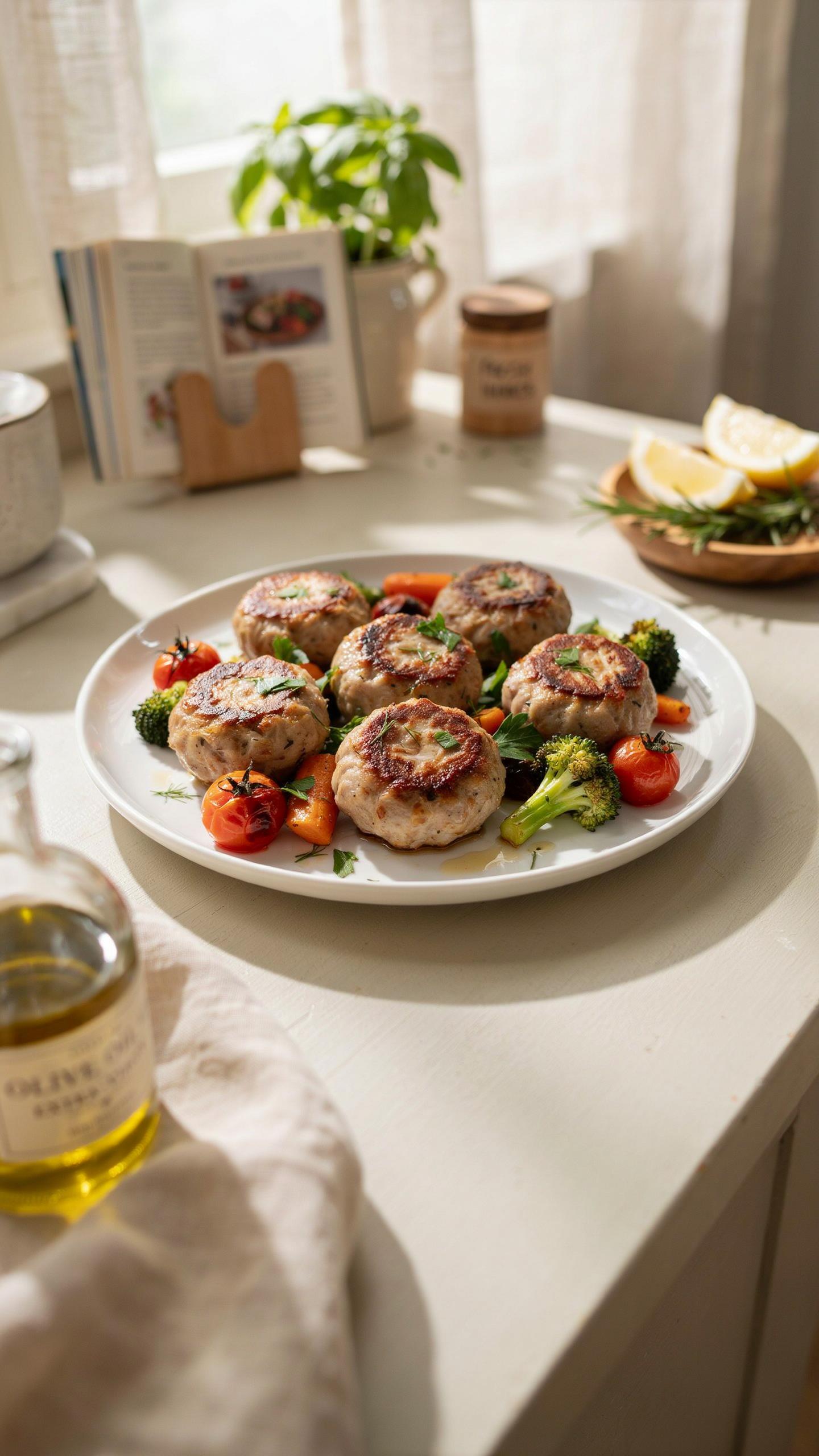
You want results without feeling deprived, and meatballs solve that equation better than chicken breast alone. Using thermodynamics as the lens: chicken meatballs create superior energy efficiency because binding agents and fat distribute satiety signals across fewer total calories than lean meat requires. A four-ounce meatball delivers 20 grams of protein at roughly 180 calories. Ground chicken breast at the same weight hits 28 grams of protein but lands around 140 calories, which sounds better until you realize the binding agents in meatballs (egg, breadcrumb, milk fat) activate gastric stretch receptors faster. You feel full sooner on meatballs, which means you stop eating earlier, which means your actual caloric intake per meal drops despite the math suggesting otherwise.
The practical mechanism: meatballs force adherence because they’re self-portion-controlled. You make them uniform by weight, refrigerate or freeze them, and grab the exact number you planned. Chicken breast requires slicing, measuring, and constant vigilance to avoid eating past satiety because the texture doesn’t trigger early fullness signals. Meatballs eliminate the willpower tax. Prep twelve meatballs at 180 calories each, and you have 2,160 calories of pre-portioned dinner ready. You cannot accidentally double-serve a meatball the way you can with sliced breast.
Beyond The Basic Meatball Dinner
Common advice frames meatballs as a bored person’s meal. That’s incomplete. Meatballs integrate into cuisines because their neutral matrix absorbs flavor profiles without structural compromise. Swedish sauce, marinara, teriyaki, butter garlic, curry—each pairing requires zero adjustment to the meatball itself. You batch-cook one base recipe, then divide the output across four different sauces and side configurations. One prep session yields four distinct dinners your brain registers as separate meals.
This multiplier effect compounds across your week. Make 48 meatballs on Sunday. Freeze 24, cook 24 for immediate meals. Monday night: marinara with zucchini noodles. Tuesday: Thai coconut sauce with rice. Wednesday: Swedish cream sauce with egg noodles. Thursday: buffalo sauce with cauliflower. Same protein source, four different experiences, zero recipe redundancy fatigue. Store finished meatballs in individual containers with sauce, grab one container, heat for six minutes, and eat. The mechanism isn’t novelty—it’s architectural efficiency disguised as variety.
The Culinary Leverage Protocol Maximizing Flavor Return

Why Fat And Acid Matter Most
You want your meatballs to taste expensive without spending more money. Here’s what actually works: borrow from chemistry. Emulsification is the mechanism. Fat carries flavor compounds. Acid brightens them. Ground chicken is lean, which means it needs both to avoid tasting like cardboard.
Most recipes tell you to add breadcrumbs and milk. That’s incomplete. The milk creates a paste that holds moisture, but it doesn’t solve the flavor problem. Add grated Parmesan and lemon zest to your ground chicken base. The fat in the cheese carries savory notes. The acid in the zest cuts through the richness and makes everything taste sharper. This combination works because you’re not masking the chicken—you’re amplifying its existing taste profile.
Building Heat Without Burning Your Palate
Strategic spice doesn’t mean dumping cayenne into the mix. It means layering heat at different intensities so every bite registers flavor before it registers pain. Toast your spices dry in a pan for sixty seconds before grinding them. This wakes up the oils inside them and makes them hit harder with less volume.
Combine black pepper, garlic powder, and a small amount of smoked paprika into your wet ingredients. Let these sit for five minutes before forming meatballs so the flavors distribute evenly. If you want deeper heat, add it to the sauce, not the meatball itself. The meatball is your protein delivery system. The sauce is where you build complexity and adjust heat on the fly. This separation gives you control.
The Behavioral Economics Of Chicken Meatball Meal Prep
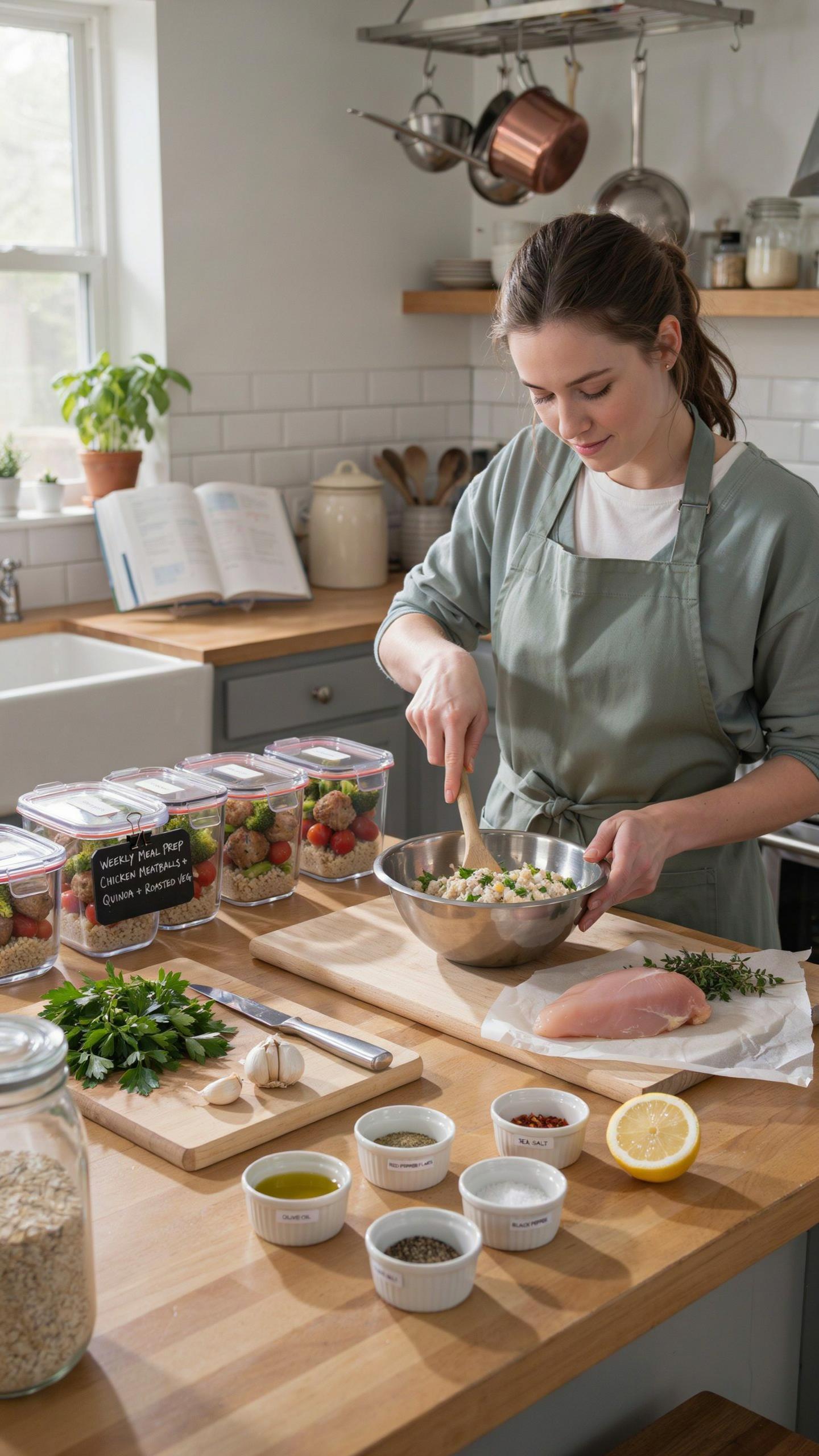
How Your Environment Decides If You Eat Them
You think you fail at meal prep because you lack discipline. You don’t. You fail because your environment makes the wrong choice easier than the right one. Behavioral economics calls this choice architecture, and it’s the single most predictive variable in whether prepped meatballs get consumed or rot in your fridge. The mechanism is friction. Every barrier between hunger and eating determines compliance.
Most people prep meatballs then store them in opaque containers on the back shelf. Then they open the fridge at 6 PM, see nothing convenient, and order takeout. The meatballs were never the problem. The visibility and accessibility were. Store prepped meatballs at eye level in clear containers. Put them forward. Make them the first thing you grab when opening the fridge. This single design choice changes whether you eat them or forget they exist.
The Commitment Device That Actually Works
Pre-commitment sounds obvious until you realize most people do it wrong. Telling yourself you’ll eat meatballs three times weekly isn’t pre-commitment, it’s wishful thinking. Real pre-commitment removes the decision from the moment you’re hungry. You bind your future self before present-self appetite disrupts the plan.
The tactic is specificity with accountability. Not “I’ll eat meatballs for dinner,” but “Monday, Wednesday, Friday, 6:30 PM, meatballs with rice in container three.” Then you block that time on your calendar like it’s a meeting you can’t cancel. The calendar is your commitment device. It transfers the decision from willpower territory into scheduling territory. Willpower depletes. Calendars don’t. Schedule your meatball dinners and treat them as non-negotiable.
Beyond Basic Elevated Chicken Meatball Recipes
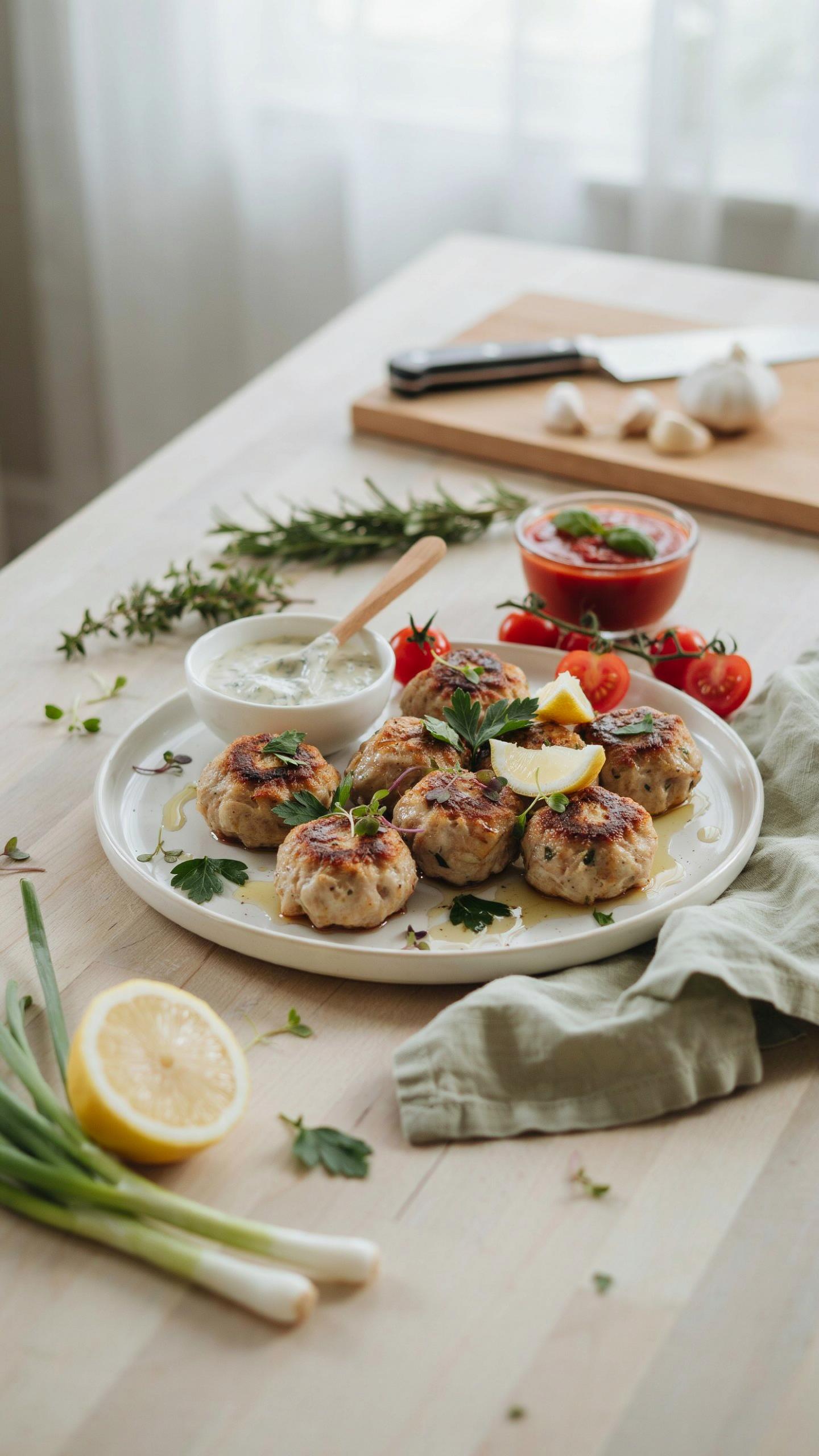
The Umami Shortcut
You want people to think you know something they don’t. That’s the real reason you’re reading about teriyaki chicken meatballs instead of just making regular ones. Here’s the mechanism: umami is the fifth taste, triggered by glutamates and nucleotides like inosinate. Soy sauce contains both. Mirin adds sweetness that masks chicken’s leanness. Together, they create a flavor density that makes protein taste indulgent without adding fat. This is chemistry, not magic.
The formula is straightforward. Mix ground chicken with panko, egg, and soy sauce before baking. Coat finished meatballs in a glaze of soy sauce, mirin, and rice vinegar reduced over medium heat for three minutes. The reduction concentrates umami compounds and creates a sticky surface that holds flavor. One batch yields eight meals. The glaze stays stable refrigerated for five days.
Flavor Profiles That Actually Vary
Generic advice says to “experiment with spices.” That wastes your time. Real variation comes from swapping the sauce base, not the seasoning. Mediterranean versions swap soy for tomato paste and add oregano and garlic. Asian profiles keep soy but shift the acid from vinegar to lime and add ginger. Middle Eastern meatballs use yogurt, cumin, and cinnamon as the binding sauce.
Each profile changes the meal’s macronutrient absorption and satiety curve. Tomato-based sauces pair with olive oil, shifting the fat ratio higher. Yogurt-based sauces reduce overall fat while increasing digestive enzymes. Soy-based sauces maintain stability with minimal added liquid. Pick your sauce first. The meatballs themselves barely change. Scale one recipe, rotate three sauces, and you’ve solved monotony without multiplying prep work.
The Trader Joes Chicken Meatball Meals Deception
What You’re Actually Paying For
You buy pre-made chicken meatballs because you think you’re saving time, but what you’re really buying is permission to not think about dinner. That’s the real product. Here’s the mechanism: convenience pricing works backward from your desperation, not forward from ingredient cost. A box of Trader Joe’s chicken meatballs costs roughly 2-3x what you’d spend buying ground chicken and breadcrumbs separately. You’re not paying for chicken. You’re paying for the decision to already be made.
The math exposes itself fast. Ground chicken runs about 5-7 dollars per pound. Breadcrumbs, eggs, and seasonings cost pennies per serving. A homemade batch of twenty meatballs costs under eight dollars total. The same quantity from a prepared source runs fifteen to twenty dollars. The gap isn’t inflation. It’s extraction. They extract value by removing your friction, then charge you for the removal.
The Health Label Trap
Common advice says pre-packaged foods are unhealthy because they contain preservatives and sodium. That’s incomplete. The real problem is opacity masquerading as convenience. You cannot see what went into a frozen meatball the way you can see what goes into yours. Sodium content tells one story. The binding agents, fillers, and source of the chicken tell another. Most commercial chicken meatballs use mechanically separated chicken or chicken byproducts, not breast meat. You’re eating a different product entirely, one engineered for shelf stability, not nutrition.
The illusion collapses when you read ingredients versus nutrition facts. A serving shows 300 calories and 20 grams of protein. That looks clean on paper. But those numbers hide what’s actually in there: modified food starch, soy lecithin, sodium phosphate. Your homemade version uses ground chicken, breadcrumbs, egg, salt, and seasoning. Same protein output. Different actual food. Build your meatballs once on Sunday, portion them into five containers, and you’ve eliminated the decision cost entirely without the hidden ingredient cost.
The Anti Bland Sides Pairing Chicken Meatballs With Purpose
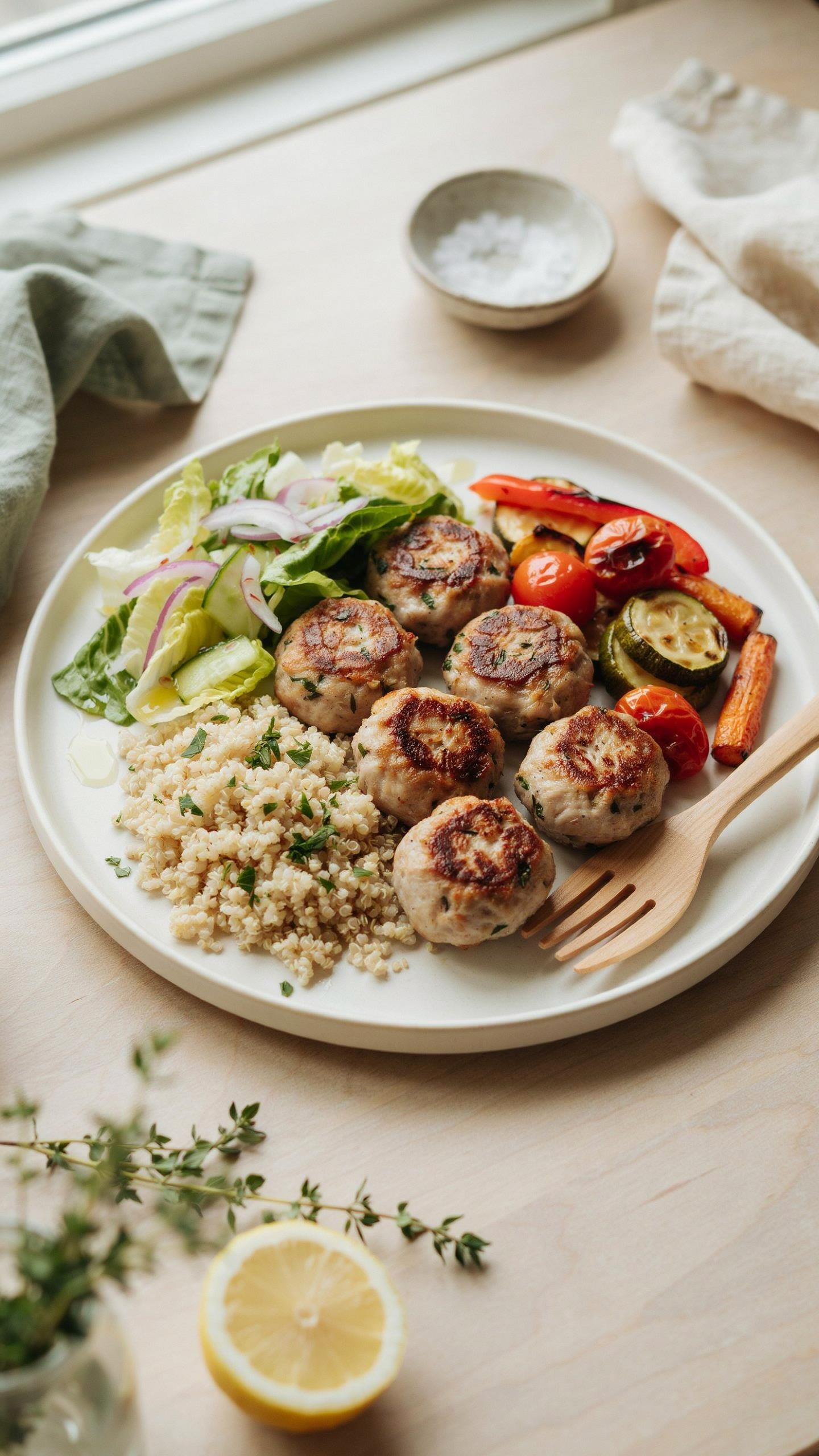
Texture Contrast Wins Every Time
You want sides that don’t disappear on your plate because you’re scared the meal looks boring. Here’s what actually matters: texture contrast is borrowed from basic physics. In physics, opposing forces create stability. On your plate, soft meatballs demand something that pushes back. Creamy rice alone fails. Add a crunchy vegetable or a crisp grain and the meal registers as intentional, not lazy. Your mouth needs the break.
The meatball itself is dense and uniform. Pair it against something with actual structure. Roasted broccoli, charred snap peas, or crispy chickpeas force your palate to work. This isn’t preference. This is mechanics. When you introduce textural variety, the entire meal feels more complete with fewer total calories because satisfaction comes from engagement, not volume. Your brain registers “complete dinner” faster.
Meatballs And Rice: Stop Doing It Wrong
Everyone treats rice as a filler. That’s the mistake. Rice isn’t filler. Rice is a carrier for flavor concentration. Use a 2 to 1 liquid to rice ratio, but replace half the water with low sodium chicken broth. This single change makes the rice absorb actual taste instead of diluting your meatball’s seasoning into blandness.
Cook the rice dry first, then add liquid. This step toasts the grains and develops nutty depth. You’re not boiling rice into submission. You’re building it. When the meatballs sit on properly constructed rice, the grain soaks up the drippings instead of working against them. Layer your meatball meal prep so the bottom containers get rice, then meatballs on top, sauce separate. By day three the rice has pulled the flavors down and the whole container tastes better than day one.
Optimizing Your Chicken Meatballs Meal Prep Workflow
The Setup That Actually Works
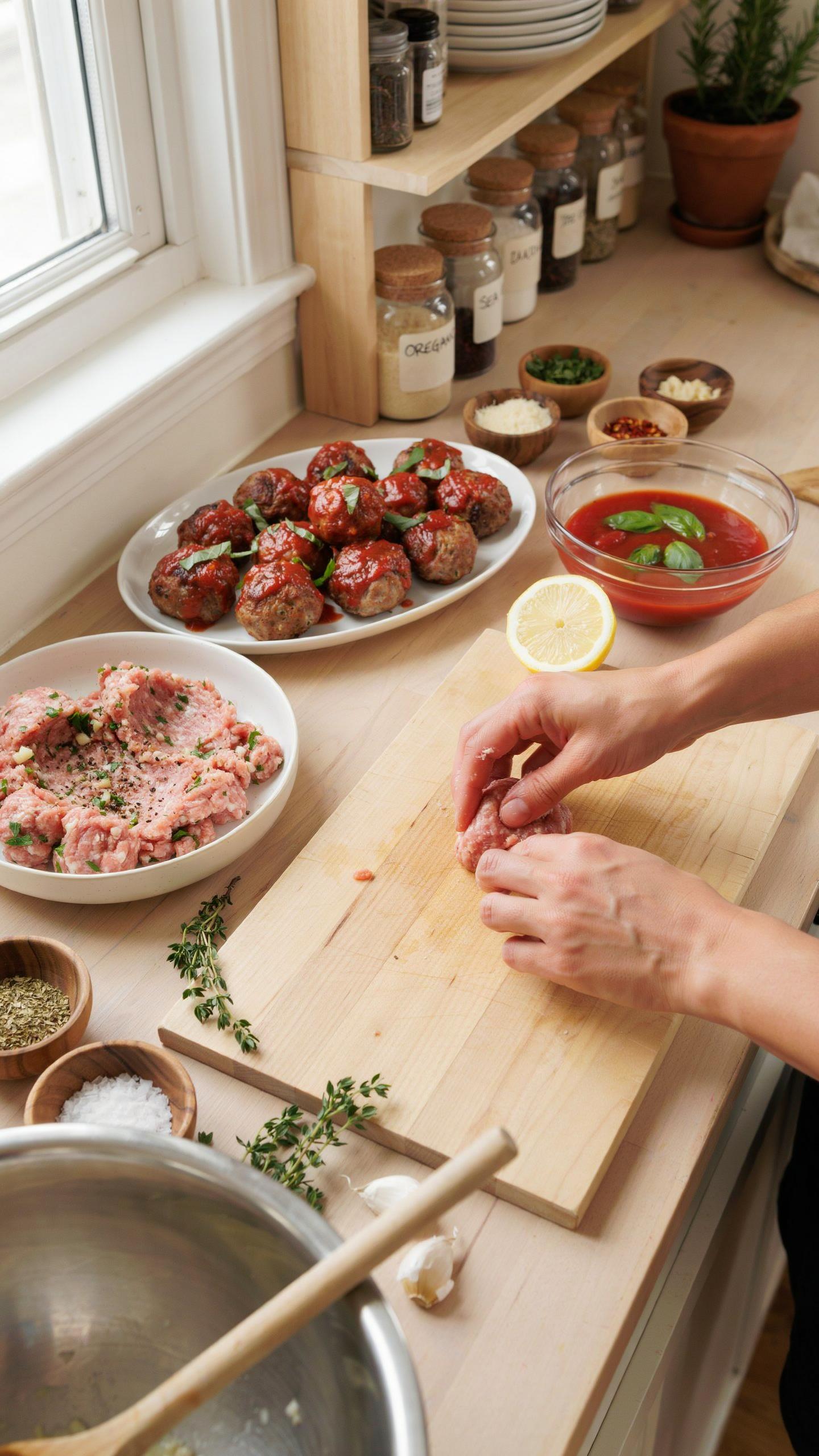
You want this to feel effortless because you’re afraid that if it doesn’t, you’ll quit in week two. Here’s the mechanism: batch cooking runs on constraint, not motivation. You remove decisions by front-loading them once, then executing the same sequence every prep day. Ground chicken, binder, seasoning, oven. No variation. No thinking.
Most people sabotage themselves by treating meatball prep like cooking, when it’s actually assembly. You’re combining four components in fixed ratios, portioning, and applying heat. Buy ground chicken in bulk, measure your binder (breadcrumbs and egg), season one batch completely, then roll. Physics calls this a work simplification strategy: you minimize motion waste by grouping identical tasks. One person seasons twenty meatballs in five minutes. The same person seasoning meatballs individually takes twice as long because they reset their focus each time.
The Container System That Preserves Quality
Ground chicken loses moisture and develops off-flavors faster than whole proteins because surface area increases bacterial colonization risk. Storage isn’t about containers looking neat. It’s about controlling oxygen exposure and temperature stability.
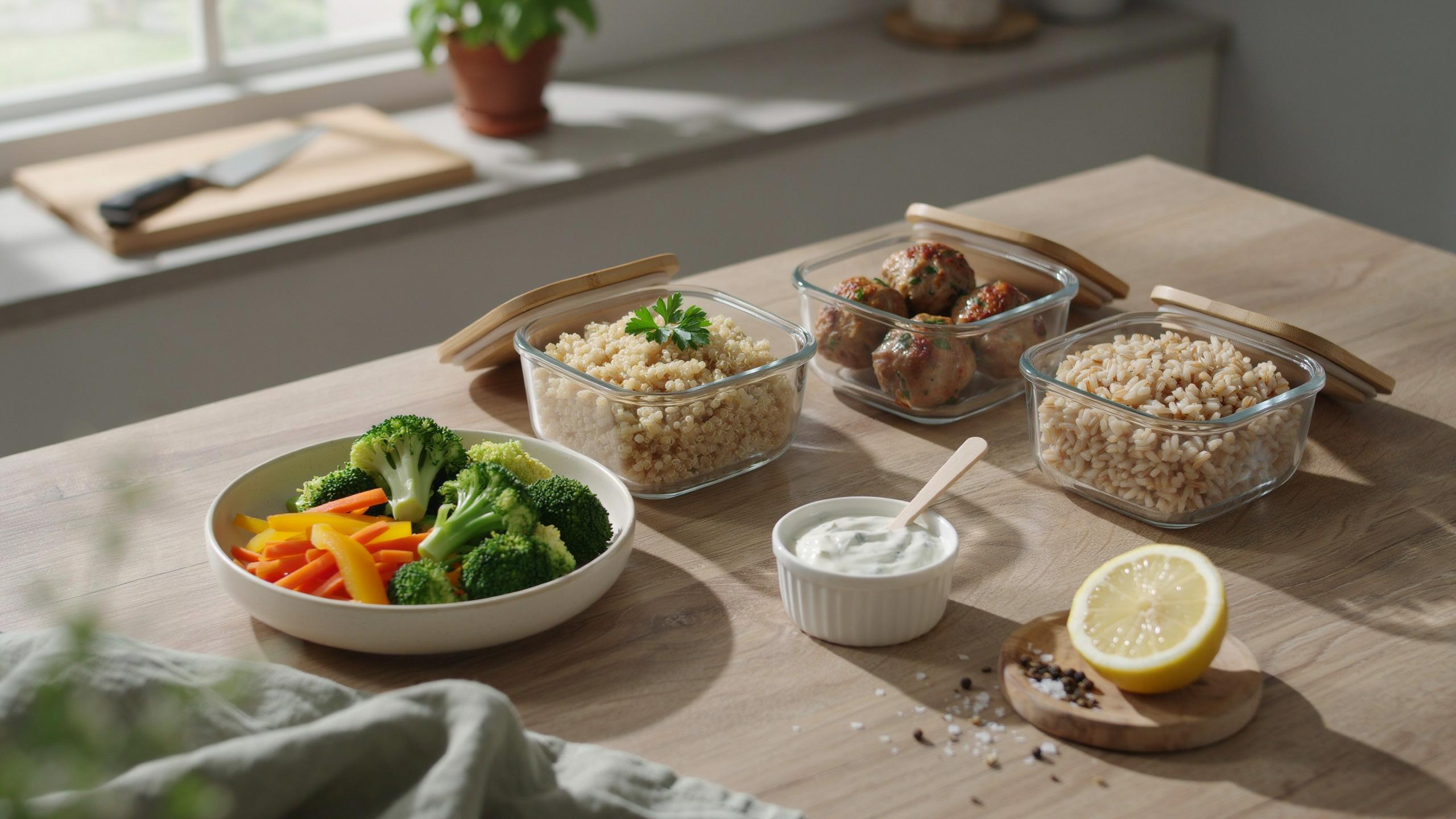
- Glass Containers with Airtight Lids: Borosilicate glass doesn’t absorb odors or degrade over time. Silicone seals create oxygen barriers that prevent oxidation. Stack efficiently in the fridge.
- Parchment Layering: Separate meatball layers with parchment to prevent sticking and allow airflow. This cuts prep time when reheating portions.
- Vacuum Seal Bags for Freezing: Remove air completely before freezing to prevent freezer burn. Meatballs maintain quality for eight weeks instead of three.
- Shallow vs Deep Containers: Shallow containers cool faster and distribute temperature evenly. Deep containers create temperature gradients that spoil the bottom layer first.
- Labeling System: Date and count meatballs per container. This prevents guessing and ensures FIFO rotation without waste.
Cool meatballs to room temperature before sealing to avoid condensation that breeds mold. Store cooked meatballs at 40 degrees Fahrenheit or below. Consume within four days from the refrigerator, or freeze immediately for longer preservation.
The Protein Payload Principle
How Much Protein Per Serving Actually Matters
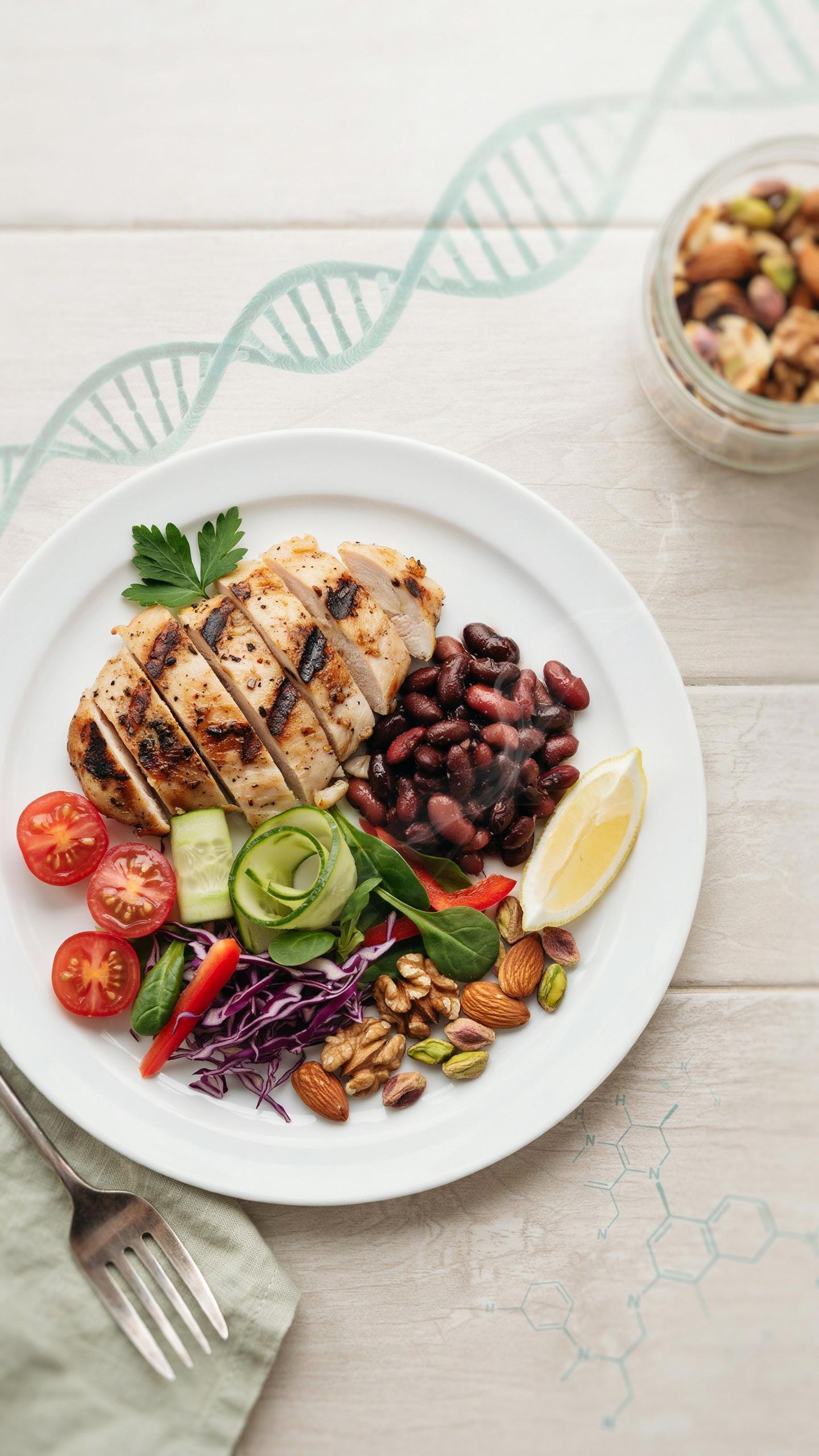
You want the number because you think hitting a target means results are guaranteed. They’re not. But the calculation itself reveals the real constraint: your meatballs need to deliver protein density without becoming dry, dense, or unpalatable. Borrow from thermodynamics here—protein is the system’s energy input, but the container (the meatball itself) must remain stable. Most people aim for 25 to 35 grams of protein per serving. A standard four-ounce meatball made from 93/7 ground chicken with added egg binder and breadcrumbs lands around 28 grams. That’s not arbitrary. It’s the threshold where you get satiation without textural collapse.
The mistake people make is chasing protein percentage rather than absolute grams. “High protein” marketing has rotted this. Your body doesn’t care about ratios during a meal—it cares about the total amount hitting your stomach. Four meatballs at seven grams each beats two meatballs at fourteen grams each because portion volume triggers fullness faster. Track total grams per serving, not percentages. Scale your recipe down if you’re overshooting 35 grams, scale it up if you’re under 24 grams. The serving size itself becomes the control variable, not some imaginary ideal ratio.
Energy Stability Through The Day
Macronutrient balance isn’t about being “balanced”—it’s about preventing the energy crash that kills meal prep compliance. Protein without fat absorbs fast and leaves you hungry in two hours. Protein without carbs tanks your workout performance the next day. The mechanism is straightforward: protein triggers satiety, fat slows digestion, carbs replenish glycogen. A 28-gram protein meatball needs roughly 8 to 12 grams of fat (from ground chicken, egg, olive oil) and 12 to 18 grams of carbs from breadcrumbs or oats to sustain energy through dinner and into evening.
Most meal prep guides skip the carb component entirely. That’s incomplete. Your muscles need glycogen restoration after work or training. A meatball made purely from chicken meat with minimal binder leaves you flat by 8 PM. Add half a cup of cooked rice or quinoa to your serving, or bake the meatballs with a modest amount of whole wheat breadcrumb base. The carbs don’t dilute the protein—they anchor it. Without them, your body burns muscle tissue for energy instead of preserving it. Build your weekly batches with this ratio locked in, and compliance stops being a willpower game.
Reframing Chicken Meatball Ideas The Infinite Game
The Adaptation Layer
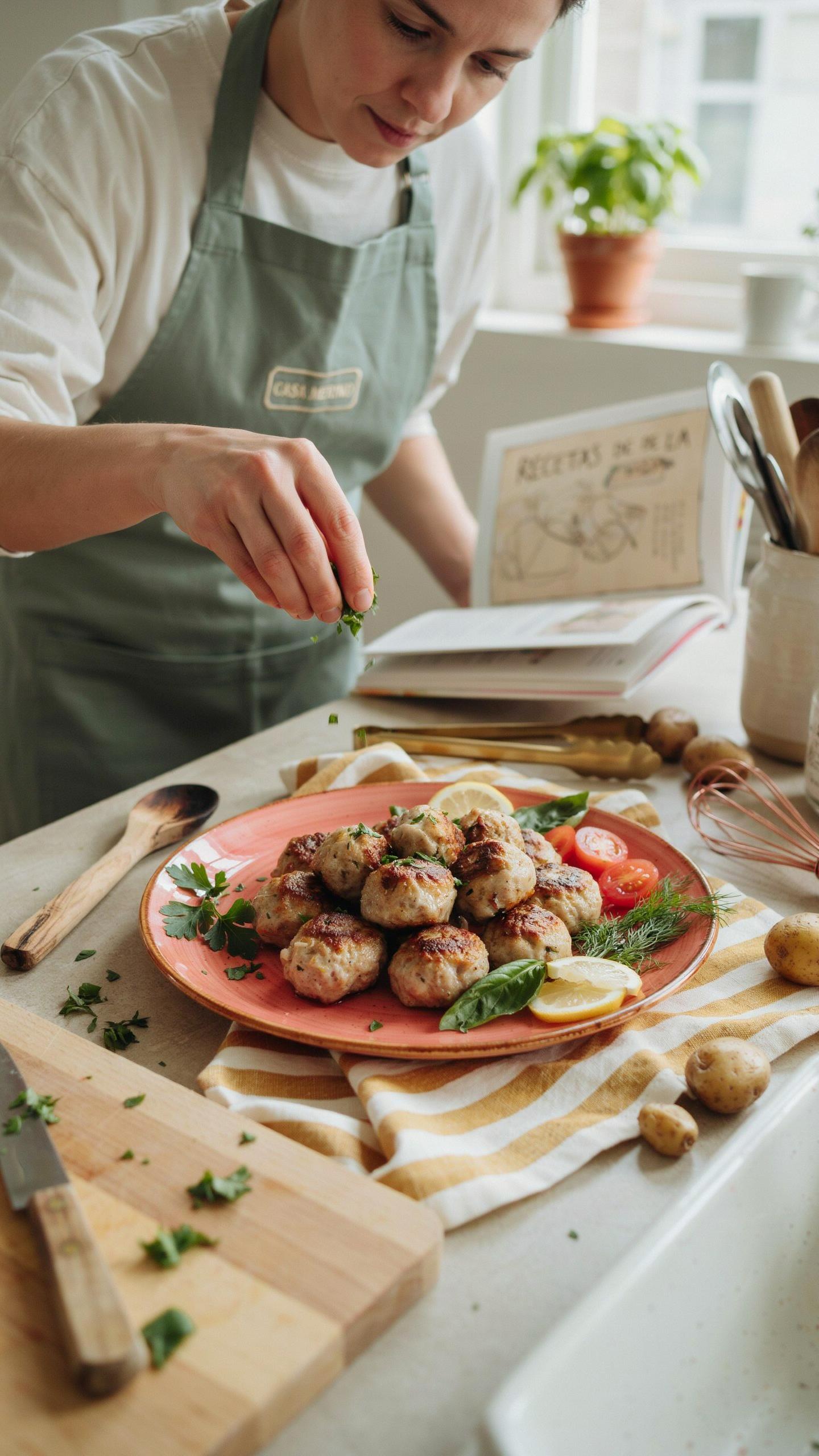
You want a system that doesn’t collapse when life happens. You’re actually afraid of abandoning meal prep the moment the routine breaks, so you need permission to modify without guilt. Biology calls this homeostasis: the body maintains stability through constant micro-adjustments to external pressure. Chicken meatball prep works the same way. You don’t lock into one recipe. You build a framework that survives schedule shifts, ingredient availability changes, and appetite swings.
The real mechanism is constraint-based iteration. Set three fixed variables: protein target, cook method, and batch size. Everything else adapts. Ground chicken percentage varies. Binding agents swap. Sauce rotates. Your prep day changes from rigid execution to guided experimentation within known boundaries. This is why people quit meal prep. They treat the recipe like dogma instead of a starting point that earns the right to evolve.
Evolution Without Reinvention
Iteration doesn’t mean scrapping what works and starting over every week. It means small, deliberate changes that compound into culinary range without losing efficiency. You track what actually sticks in your mouth, not what sounds good in theory. After three successful prep sessions with one base recipe, introduce one variable change: different herb blend, adjusted cook temperature, new vegetable filler. Document the result. Keep the winners. Kill the failures fast.
The mechanism compounds because each iteration produces data. You learn what texture survives reheating, which flavor combinations hold across five days, what moisture level keeps meatballs from drying out in the fridge. This becomes your personal baseline, not someone else’s formula copied off the internet. After four months of controlled variation, you own the skill. After a year, you build variations that work specifically for your palate and schedule, not the generic version everyone else is making.
Your biggest obstacle isnt time management its your flawed psychology around consistent selfprovisioning

You skip meal prep because you’ve internalized the lie that discipline means suffering. Chicken meatball meal prep destroys that myth. You make a batch once. You eat better all week. Your body responds. Your energy lifts. You prove to yourself you can keep a promise. Today, buy ground chicken and make one tray. Not ten. One. Watch what happens when you actually follow through on something small.
The person who preps wins not because they have more time, but because they stopped negotiating with themselves.