
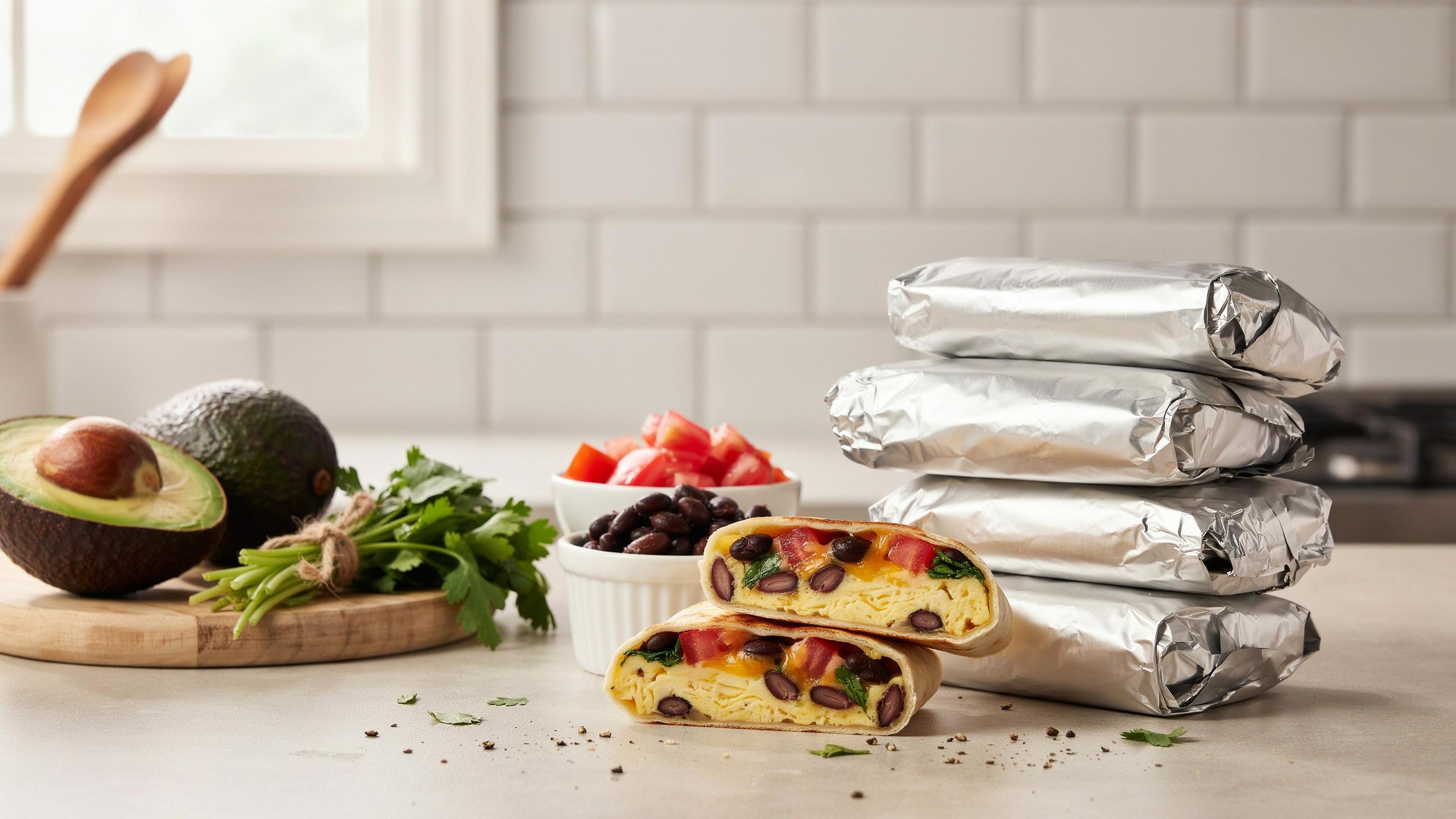
Beyond Convenience The High Protein Meal Prep Burrito Mandate
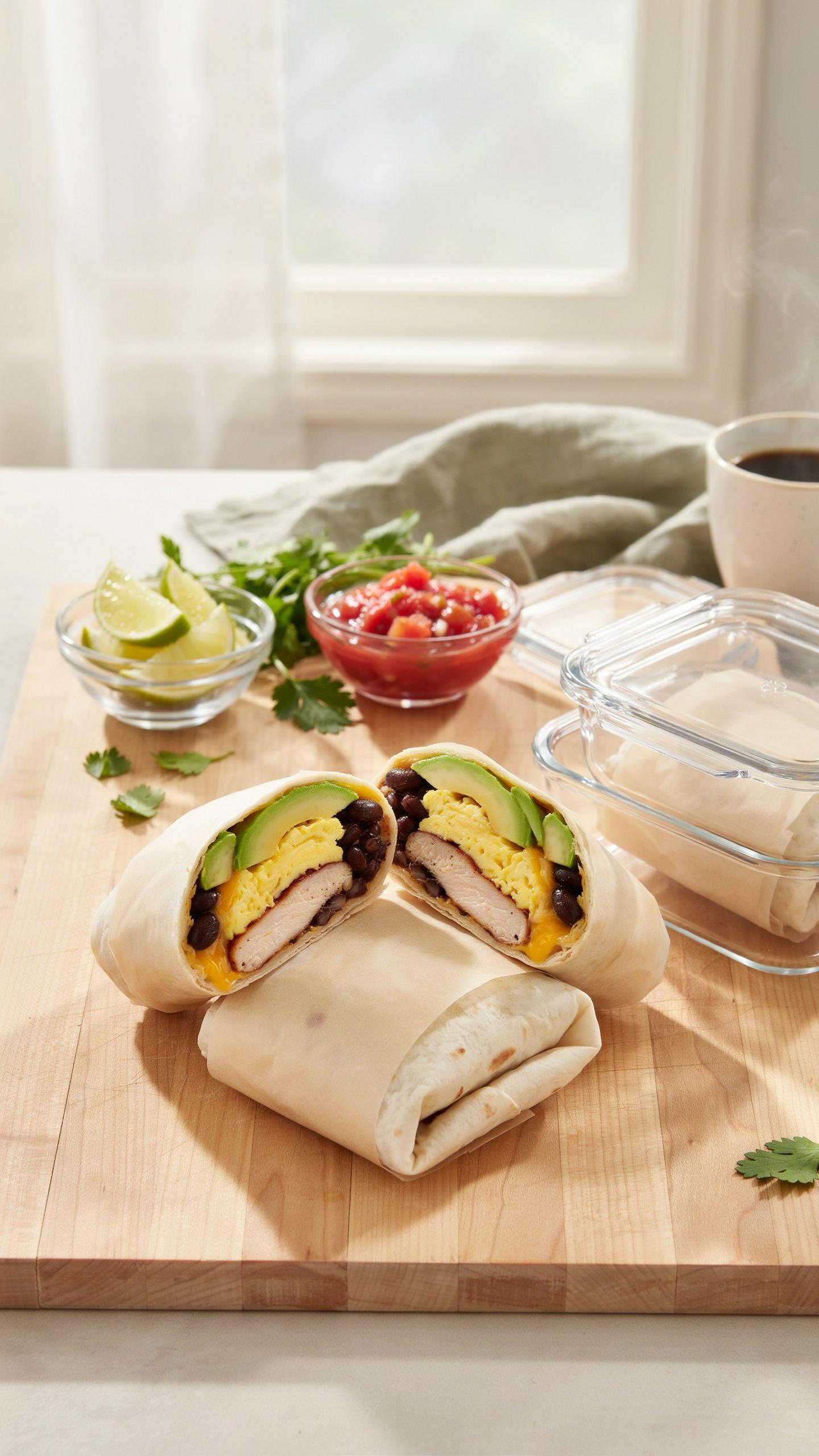
Why Most Meal Prep Fails Long Term
You’re not doing this for convenience. You’re doing this because you’re terrified of losing control over your body composition, and you know that willpower alone won’t survive a Tuesday at 3pm. The real mechanism behind meal prep failure isn’t laziness—it’s decision fatigue layered on top of poor incentive alignment. You prep on Sunday, hit Wednesday strong, then the system breaks because you never solved for what happens when the burrito sits in the freezer and your brain offers you a faster alternative.
Most people treat meal prep as a willpower project instead of a logistics problem. They make burritos, freeze them, then rely on motivation to reheat instead of eat. That’s backwards. The burritos fail because the cost of access remains too high—finding it in the freezer, heating it, eating it—compared to ordering something hot and ready. You need to remove friction from the reheated burrito pathway, not just from the prep work. Stack your freezer so the burritos are visible, label them with the day they need to be eaten, and keep them at eye level. The system works only when eating the prep becomes the path of least resistance.
Strategic Fuel Deployment, Not Just Prep
Treat this like military logistics, not meal prep hobby. In supply chain management, the term “just-in-time inventory” means delivering resources exactly when needed, no sooner, no later—minimizing waste and holding costs. Your high protein burritos should follow the same principle: prepared in quantity, frozen strategically, and deployed on a schedule that matches your actual protein intake targets for the week, not based on what sounds good.
The shift from “prep” to deployment means you’re not making burritos to have them available—you’re making them to hit a specific macronutrient target on specific days. If you need 150 grams of protein Tuesday through Friday, you build your burrito batch around that math. Calculate backwards from your weekly protein goal, divide by the number of burritos, lock in the protein content per burrito using real weights and verified nutrition data, then execute. This transforms burrito making from a vague wellness act into a fuel delivery system with measurable outcomes. Your freezer becomes a protein distribution depot, not a collection of generic food items.
The Macro Optimization Protocol For High Protein Burritos
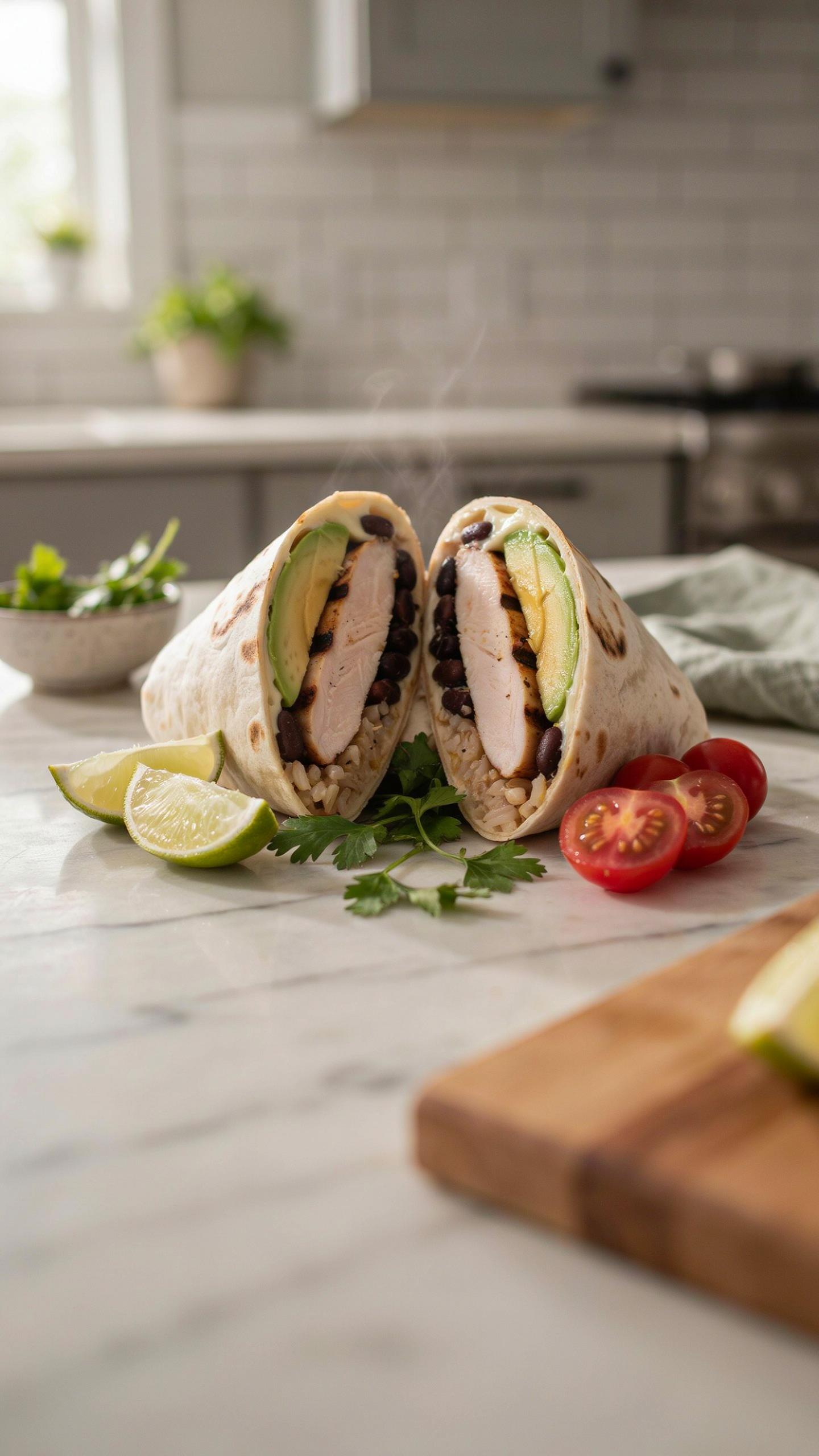
How Much Protein You Actually Need
You want to know the exact number because hitting it makes you feel in control. Here’s the mechanism: your body can synthesize roughly 0.7 to 1 gram of protein per pound of bodyweight daily, depending on training intensity and age. This isn’t theoretical—it’s the ceiling where additional protein stops driving muscle protein synthesis. Most people vastly overestimate their needs and waste money on excess.
Calculate your requirement by bodyweight first, then adjust down by 20 percent if you’re sedentary. A 180-pound person doing moderate resistance training needs 126 to 162 grams daily, not the 250 grams gym culture preaches. One high-protein burrito should contain 35 to 50 grams of protein and represent one primary meal, not a supplement to three other protein sources. Dial this in before you build your recipe.
Energy Distribution Without The Crash
Biology calls this the glycemic response—your blood sugar’s trajectory after eating determines your next three hours. Map this onto burritos: refined carbs spike fast and drop faster, leaving you depleted by 2 PM. Protein slows glucose absorption, fat extends satiety, and complex carbs provide the steadiest fuel curve.
Your burrito should contain 300 to 400 calories of carbs from beans and rice, 150 to 200 calories from fat via cheese or oil, and 140 to 200 calories from protein. This ratio keeps energy stable across four to five hours between meals. Frozen burritos maintain this ratio perfectly because the composition doesn’t shift during thaw cycles—you get identical macros every time.
Engineering Your Protein Burrito Ingredients As Inputs
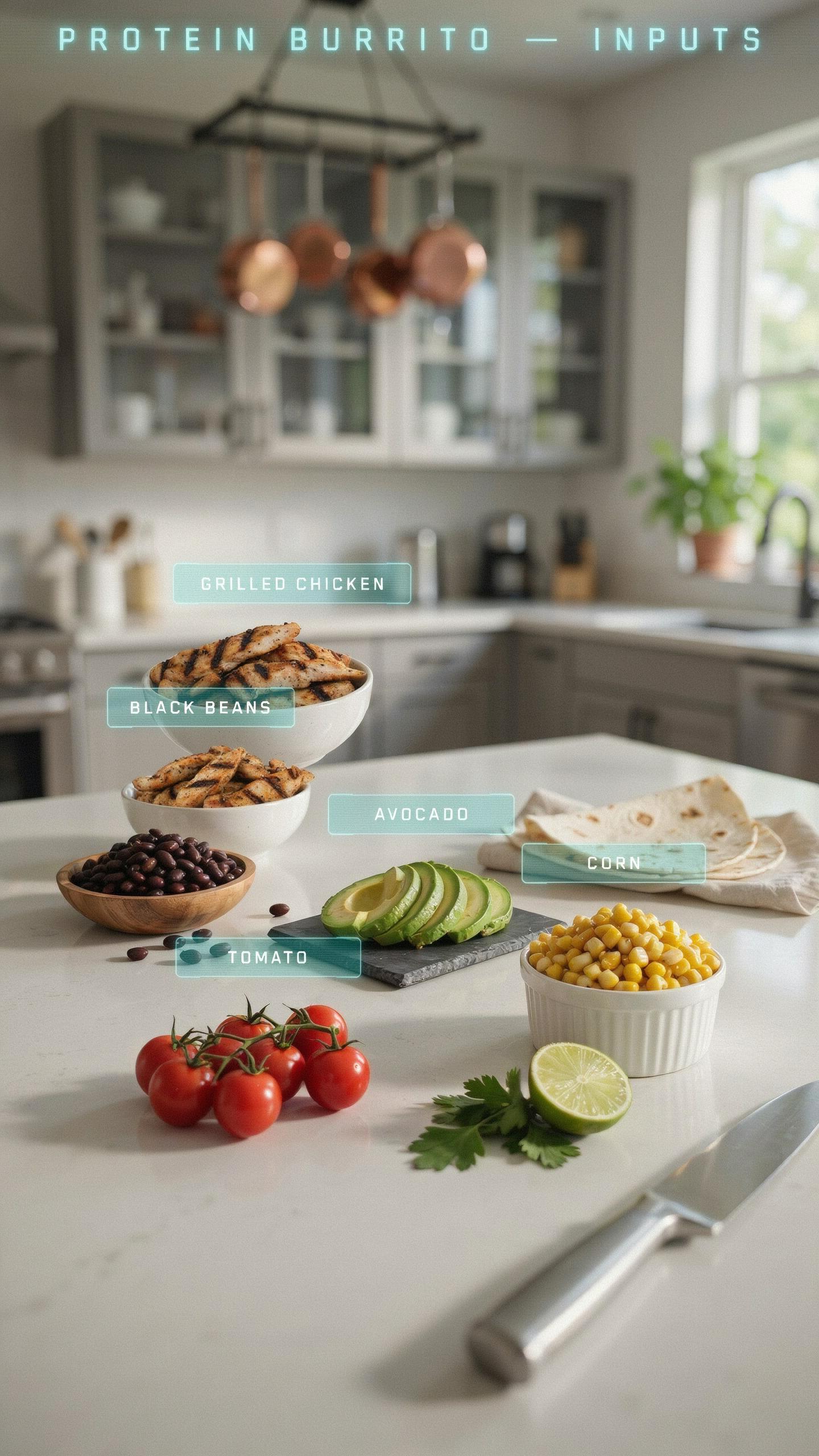
Protein Sources That Actually Work
You want to feel like you’re optimizing something. The real mechanism is this: protein bioavailability determines how much amino acid your body extracts from each gram you eat, and most people pick protein sources based on habit, not efficiency.
Chicken breast, ground turkey, and canned tuna dominate burrito prep because they deliver 25-30 grams of protein per 100 grams of food with minimal fat and zero carbs to steal tortilla real estate. Eggs work too at 6 grams per egg, but you need volume to hit targets. Lean ground beef (93/7 or leaner) sits between chicken and standard ground beef, offering slightly better satiety signals without excess saturated fat that slows digestion in a frozen application.
Cook protein thoroughly before freezing. Undercooked or improperly cooled protein creates bacterial risk during thaw cycles. Season aggressively before cooking because freezing dulls flavor perception by roughly 30 percent when thawed.
Fillers And Binders That Build Density
Most meal prep advice treats rice and beans as filler. They’re actually your leverage point for texture stability through freeze-thaw cycles.
Black beans and pinto beans contribute fiber that holds moisture, preventing the burrito from becoming a wet brick when thawed. White rice, brown rice, and Spanish rice absorb and redistribute protein moisture evenly. The combination matters: beans bind liquid, rice distributes it. Corn adds carbs and slight natural sweetness without competing with savory protein. Skip refried beans in freezer burritos because their paste texture breaks down unpredictably across multiple thaw events. Freeze your fillers in the same proportion you’d eat them fresh, then let the freezing process consolidate texture.
The Thermodynamics Of Freezing Preserving High Protein Meal Prep Burritos
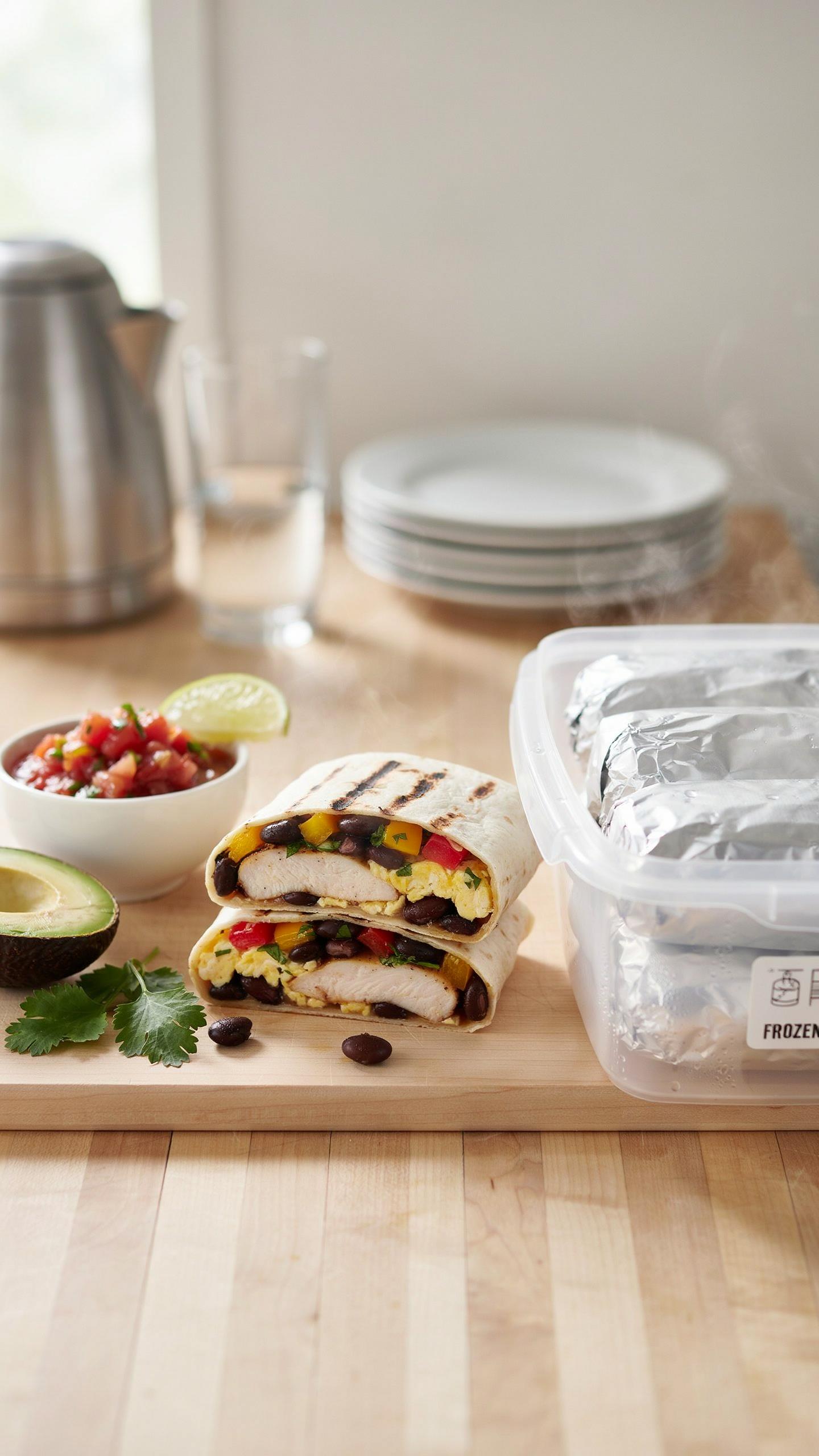
How Cells Break Down In The Cold
You want to know this so your expensive protein doesn’t turn into mush the moment you thaw it. Here’s what actually happens: freezing is a biological problem, not a temperature problem. When water inside muscle fibers freezes, it expands and punctures the cell membrane. The protein itself doesn’t break down, but the structural integrity that holds moisture inside the cells gets destroyed. That’s why thawed burritos can feel mushy or leak liquid.
The mechanism that matters is ice formation speed. Slow freezing creates large ice crystals that cause maximum cellular damage. Fast freezing creates small crystals that cause minimal rupture. Your burrito’s filling needs to reach freezing temperature within two to four hours to preserve texture. This is why burritos sitting in a standard freezer overnight perform worse than those blast-frozen in under an hour. Wrapping in foil and spacing them apart on a sheet pan accelerates this process.
Controlling Ice Crystal Size
Physics treats freezing as a heat transfer problem, and your burrito is the same: you’re managing how quickly thermal energy leaves the system. Large ice crystals form when freezing happens slowly because water molecules have time to migrate and consolidate. Small crystals form under rapid temperature drops because molecules don’t have time to organize. The difference determines whether your chicken and beans stay intact or turn into a wet paste.
Temperature consistency prevents recrystallization, which degrades texture over storage. Once burritos are solid, keep them at zero Fahrenheit or below without temperature fluctuation. Every thaw-refreeze cycle grows existing ice crystals and accelerates deterioration. Stable freezer conditions protect protein structure better than any wrapping method. Store burritos away from the door where temperature swings are largest, and keep them in airtight containers to prevent freezer burn, which dehydrates the filling and hardens the tortilla.
Assembly Line Efficiency Building Your Protein Burrito Batch
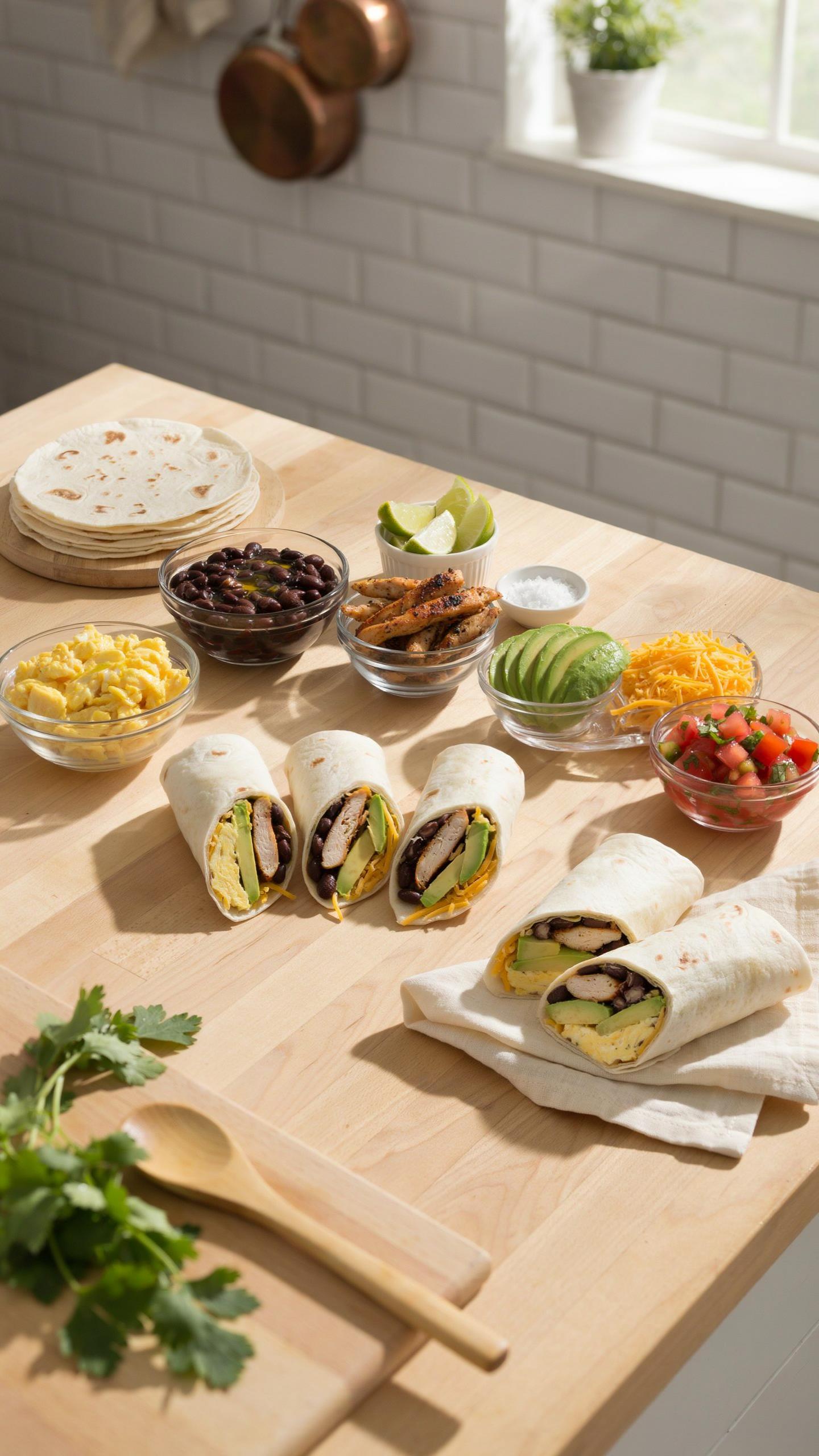
Prep Your Station Before You Touch Anything
You want to feel productive without actually wasting four hours. The mechanism is simple: preparation time kills momentum. When you batch cook, every second spent searching for an ingredient or cleaning a surface compounds across twenty burritos. Set up your workspace first, completely, before you start cooking anything.
Arrange your cooked proteins, grains, and fillings in separate containers in the order you’ll use them. Position your tortillas, cutting board, and sealable bags within arm’s reach. Clean and dry your work surface. This removes friction from the assembly process itself. You’re not multitasking between cooking and organizing, which destroys speed and introduces errors like underfilled burritos or inconsistent portions.
The Mechanical Sequence That Actually Works
Assembly line logic applies here: you move through one repeatable action at maximum efficiency, not bounce between tasks. This comes from manufacturing, where a single operator performs the same motion thousands of times because task switching destroys throughput.
- Layer the tortilla first: Place your tortilla flat, then add your grain base. This stabilizes the foundation and prevents shifting during wrapping.
- Protein in the center: Distribute your measured protein down the middle third. This creates the structural core that holds the burrito together when rolled.
- Add dense fillings next: Layer beans, cheese, and vegetables. Place denser items closer to the protein so weight distributes evenly.
- Finish with spreads and garnish: Add sour cream, salsa, or hot sauce last. These prevent the tortilla from becoming soggy before freezing if applied earlier.
- Fold and seal immediately: Complete the wrap, seal it in your bag, and move to the next tortilla. No pausing between burritos breaks your rhythm.
Execute the same sequence twenty times without variation. Your hands learn the motion. Your speed increases. You stop making mistakes. When you freeze immediately after sealing, you lock in texture and prevent condensation from degrading the burrito before it reaches your freezer.
Defrosting Reheating The High Protein Burrito Revival
The Thaw That Stops Bacteria Cold
You’re worried you’ll poison yourself or waste protein you paid for. Here’s what actually matters: bacteria multiply fastest in the temperature danger zone between 40°F and 140°F. This is basic microbiology. Your frozen burrito sits outside that zone entirely. The moment you thaw it wrong, you move it directly into the kill zone where pathogens accelerate.
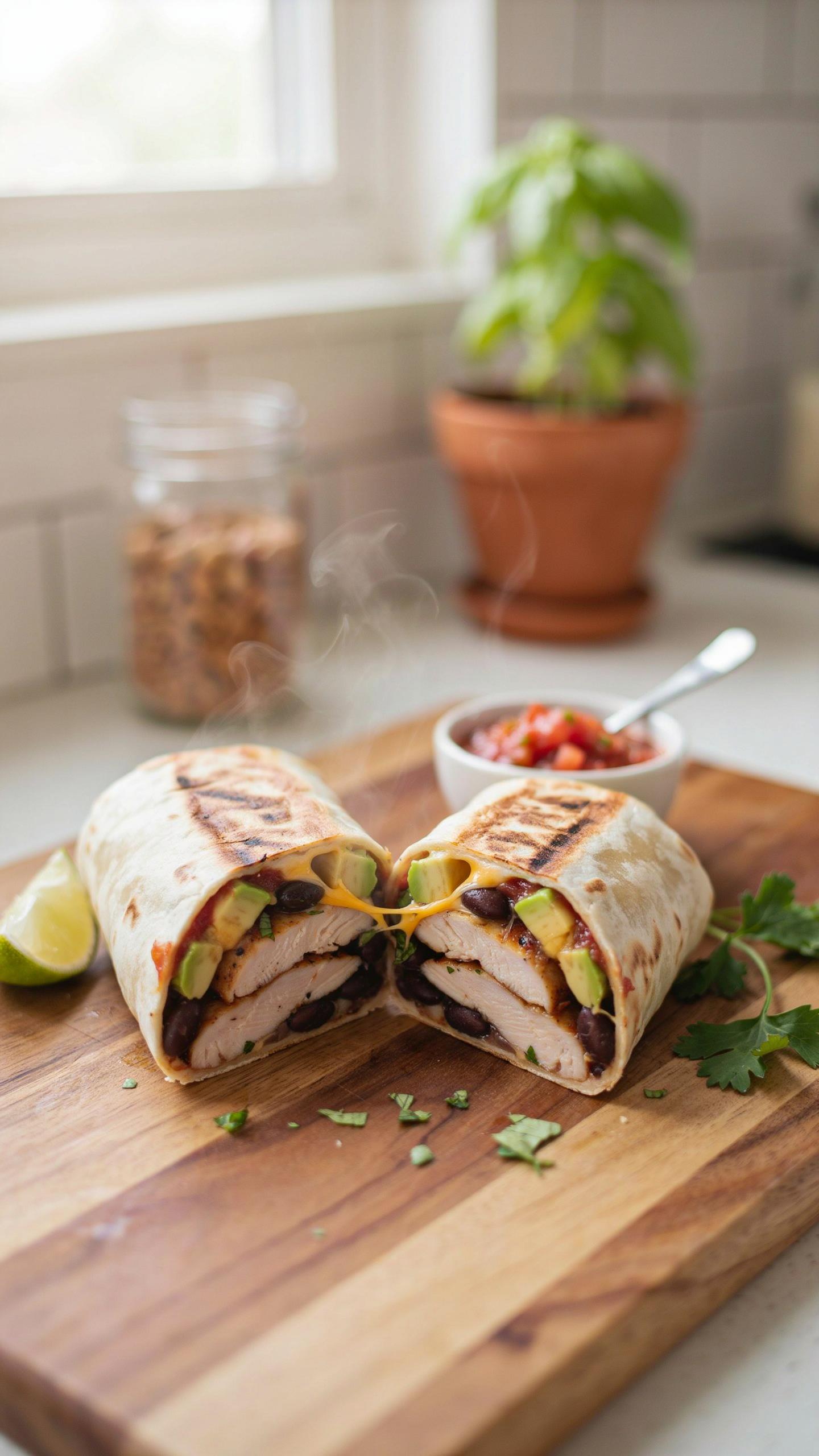
Thaw burritos in the refrigerator overnight, never on the counter. Eight to twelve hours at 40°F keeps bacterial load at baseline while ice crystals gradually melt. If you’re short on time, submerge the wrapped burrito in cold water and change the water every thirty minutes. This cuts thaw time to two hours while maintaining food safety. Both methods work because they reject the temperature danger zone entirely.
Texture Revival Without The Rubbery Trap
The real problem isn’t heat. It’s moisture redistribution. When you freeze a burrito, water inside the filling crystallizes and migrates outward during thaw. Reheating without accounting for this leaves you with a tortilla that’s either soggy or leather.
Wrap the thawed burrito loosely in a damp paper towel and microwave at 50% power for three to four minutes, rotating halfway through. The damp towel moderates heat and reintroduces moisture evenly. For better texture, use a skillet on medium heat for two to three minutes per side. This gives you direct control over crust firmness while the interior warms through convection, not microwave radiation blasting. Let it rest thirty seconds before eating. The protein stays intact, the tortilla stays pliable, and the filling heats to proper temperature without degrading.
Beyond Chicken Burritos Diversifying Your High Protein Meal Prep
When Protein Sources Actually Matter
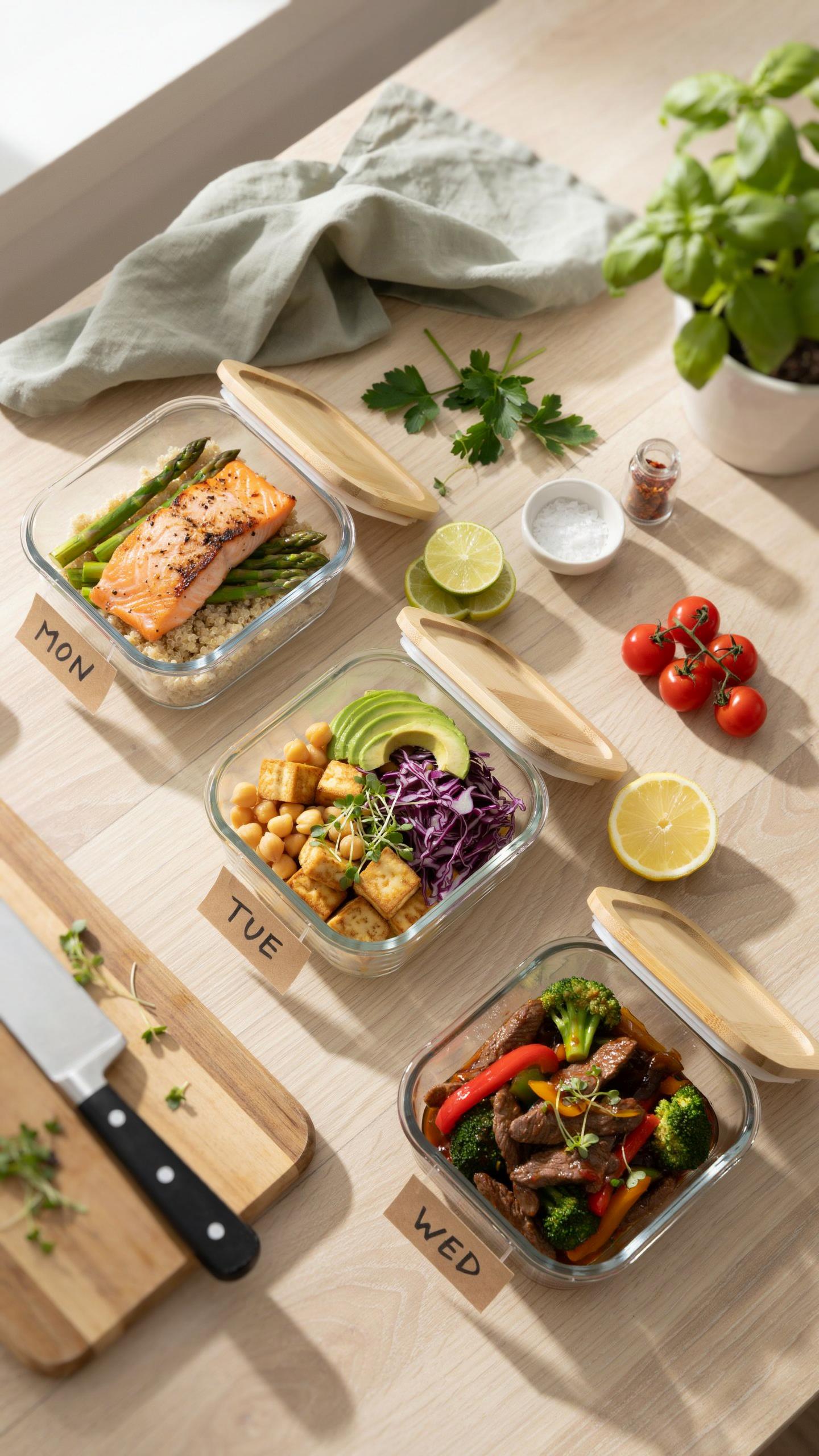
You want variety because eating the same thing daily feels like failure, but that’s not the real mechanism at work. Protein digestibility and amino acid profile vary wildly between sources. Ground turkey absorbs faster than beef. Fish contains omega-3s that reduce inflammation from meal prep storage. Eggs pack choline your brain needs. The goal isn’t novelty for its own sake—it’s matching protein source to your actual recovery needs and freezer lifespan.
Different proteins freeze and reheat differently because of fat and water content. Lean ground turkey stays drier after thawing. Ground beef retains moisture better, preventing the rubber texture people blame on freezing. Pork shoulder and chicken thighs occupy the middle ground. The practical move: rotate proteins based on how long you’re storing burritos, not based on what sounds interesting that week.
Flexible Recipes For Real Constraints
Most “adaptable” burrito advice ignores the actual constraint that matters—protein density per burrito stays the same whether you’re eating vegan, keto, or omnivore. The economics of meal prep demand you hit a specific calorie and macro target per serving. Replace animal protein with beans or tofu and you’re adding carbs or changing the fat ratio. You’re not just swapping ingredients; you’re rebalancing the entire formula.
Gluten-free wraps work fine, but corn tortillas stay pliable after freezing better than most flour alternatives. Dairy-free needs accountability: cashew cream splits in ice, so cottage cheese substitutes matter more than the label suggests. Build around your actual constraint first, then adjust seasoning and fillings. The burrito shell, rice base, and protein ratio stay locked. Everything else adjusts within that frame.
The High Protein Diet Integrating Burritos Into Your Life System
Measure What Actually Matters
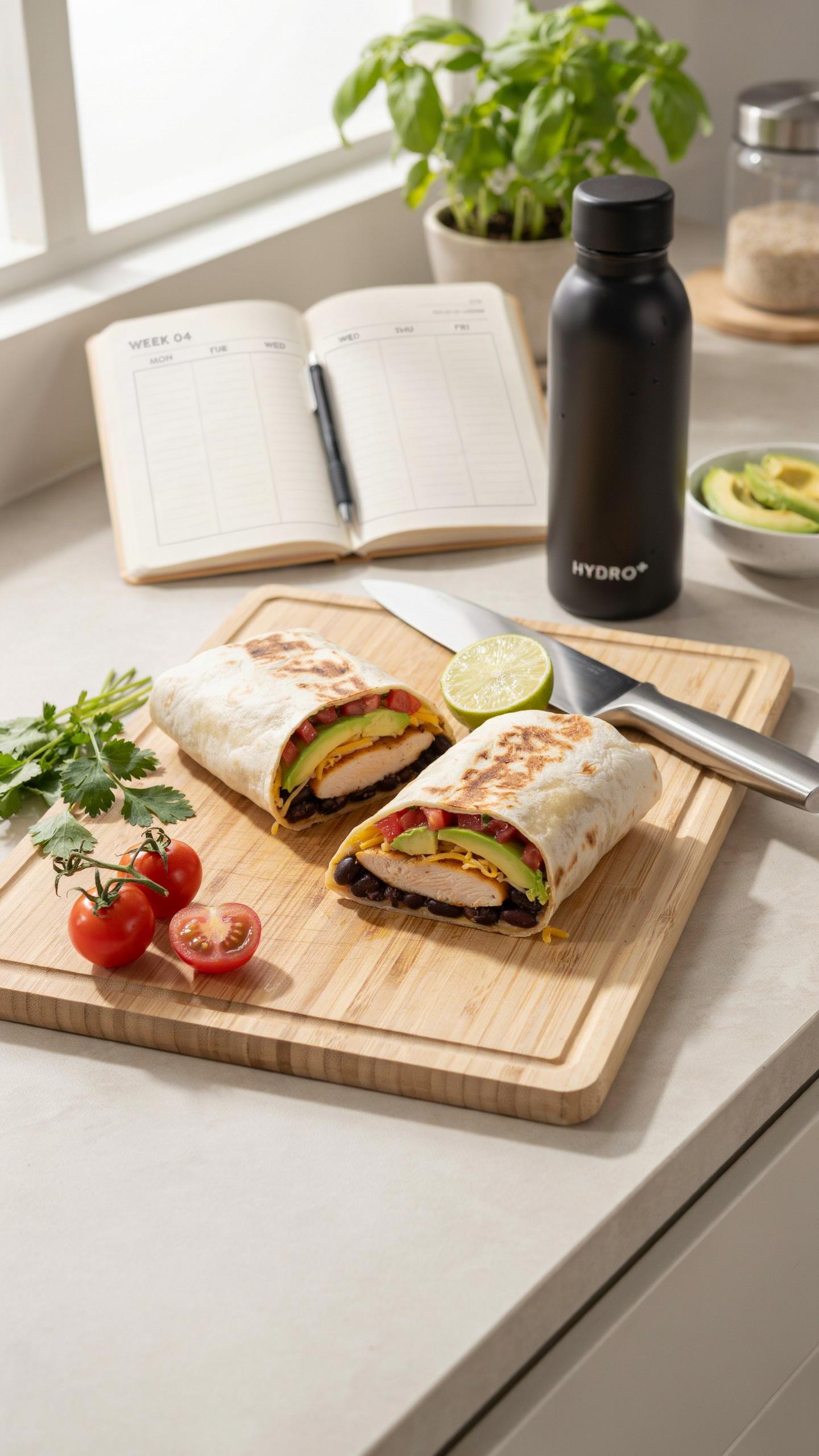
You want proof that this works because you’re tired of spinning your wheels on diets that disappear after two weeks. The real mechanism is simple: you can’t optimize what you don’t track. Protein intake is invisible until you measure it. Most people guess, fail, then blame willpower. Burritos solve this because they’re discrete, countable units. One burrito equals one known protein dose. Stack four in your freezer, you know exactly what you’re eating.
Track protein grams daily, not calories. Use a basic app or spreadsheet. Record what you actually consumed, not what you planned to consume. After two weeks, patterns emerge. You’ll notice which prep days stick and which ones derail. The burrito freezes become your data points. When you measure, you stop negotiating with yourself about whether you hit your target. The number either proves you did or it doesn’t.
Automate The Decision Away
The common advice is to “stay disciplined” and “make better choices.” Wrong. Discipline fails because choice is finite. Every decision you make depletes your capacity for the next one. Economics calls this “decision fatigue,” and it applies directly to meal prep: fewer burrito varieties means fewer times you choose poorly. Build a system where the hard choice happens once, during prep, not six times during the week.
Prep one burrito template. Same protein source, same carb base, same ratio every time. Rotate vegetables for nutrients, not for novelty. When hunger hits at 2 PM, you don’t decide whether to eat the burrito or something else. The burrito is already there. You eat it. Consistency beats optimization. The frozen burrito in your bag removes the friction point where most people fail.
The real obstacle isnt the food its your system for consistently consuming it

Most people fail at high protein burrito meal prep because they cook five burritos on Sunday and lose interest by Wednesday. You need a trigger, not motivation. Pick one day this week. Make three burritos. Freeze them. Eat one tomorrow for lunch. The system wins when you remove the decision. Your body doesn’t care about perfect macros if you never actually eat them.