
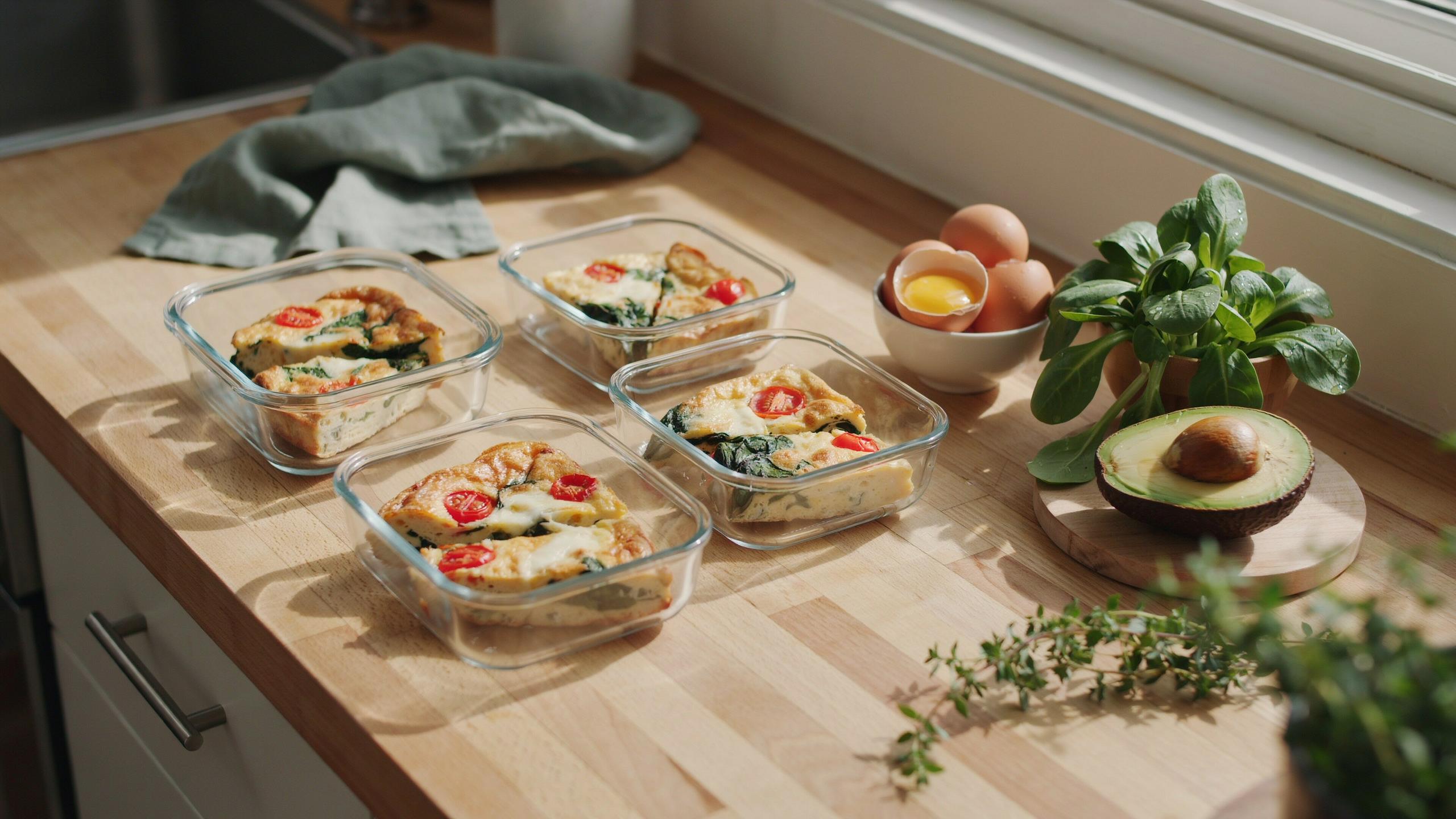
Beyond Convenience The Real ROI Of Frittata Meal Prep
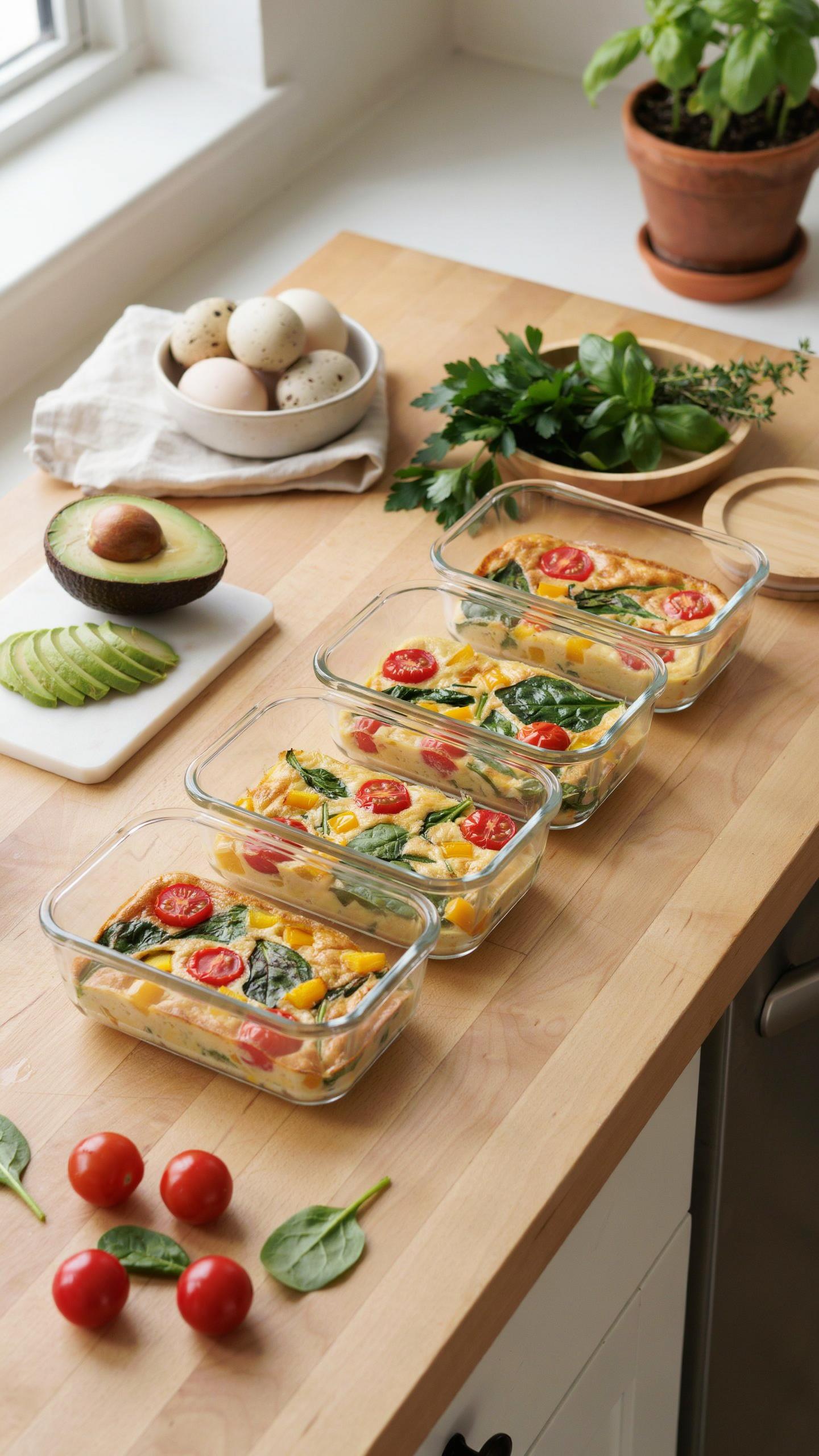
The Five Minutes You’re Actually Buying Back
You don’t care about convenience. You care about the decision fatigue it removes. Every morning without a plan costs you a choice. Frittata meal prep operates on the economics principle of sunk cost recovery. You pay the time investment upfront on Sunday, then extract marginal gains throughout the week. One frittata yields four to six servings. You spend ninety minutes cooking once instead of fifteen minutes four times, but you eliminate the cognitive load of deciding what to eat when your willpower is lowest.

The math compounds. Morning decisions drain glucose from your prefrontal cortex before work even starts. A ready frittata slice takes sixty seconds to plate. No mental negotiation. No defaulting to cereal because you’re tired. Across five weekdays, that’s roughly twenty-five minutes of decision-making you reclaim. Add the eliminated shopping trips for emergency breakfast items and you’ve freed an hour. That hour doesn’t feel large, but it compounds into weeks where your energy for actual work doesn’t tank by 10am because your blood sugar didn’t crash an hour after eating refined carbs.
Protein Density Without The Hunger Rebound
Forget the marketing about protein. The real mechanism is satiety engineering. A frittata built on eggs, cheese, and vegetables delivers eight to twelve grams of protein per serving alongside fiber and fat. That combination triggers hormonal signals your brain registers as fuel, not just calories. Protein requires more energy to digest than carbs or fat, meaning your body burns calories processing the meal itself. More critically, protein and fat together slow gastric emptying. Your stomach empties slower. Blood sugar rises gradually. You stay full until lunch instead of hunting for snacks by ten thirty.

Most breakfast advice is incomplete here. Oatmeal with fruit sounds nutritious but delivers a protein hit that doesn’t sustain. Your body processes it, glucose spikes, then crashes. A frittata with spinach and feta doesn’t spike. It plateaus. You maintain energy without the hunger rebound. The mechanism is straightforward: construct meals where protein and fat comprise at least sixty percent of calories, and your appetite hormones stabilize for hours. A single frittata slice with a handful of berries becomes a complete meal, not a starter course that leaves you ravenous.
The Set It And Forget It Frittata Method
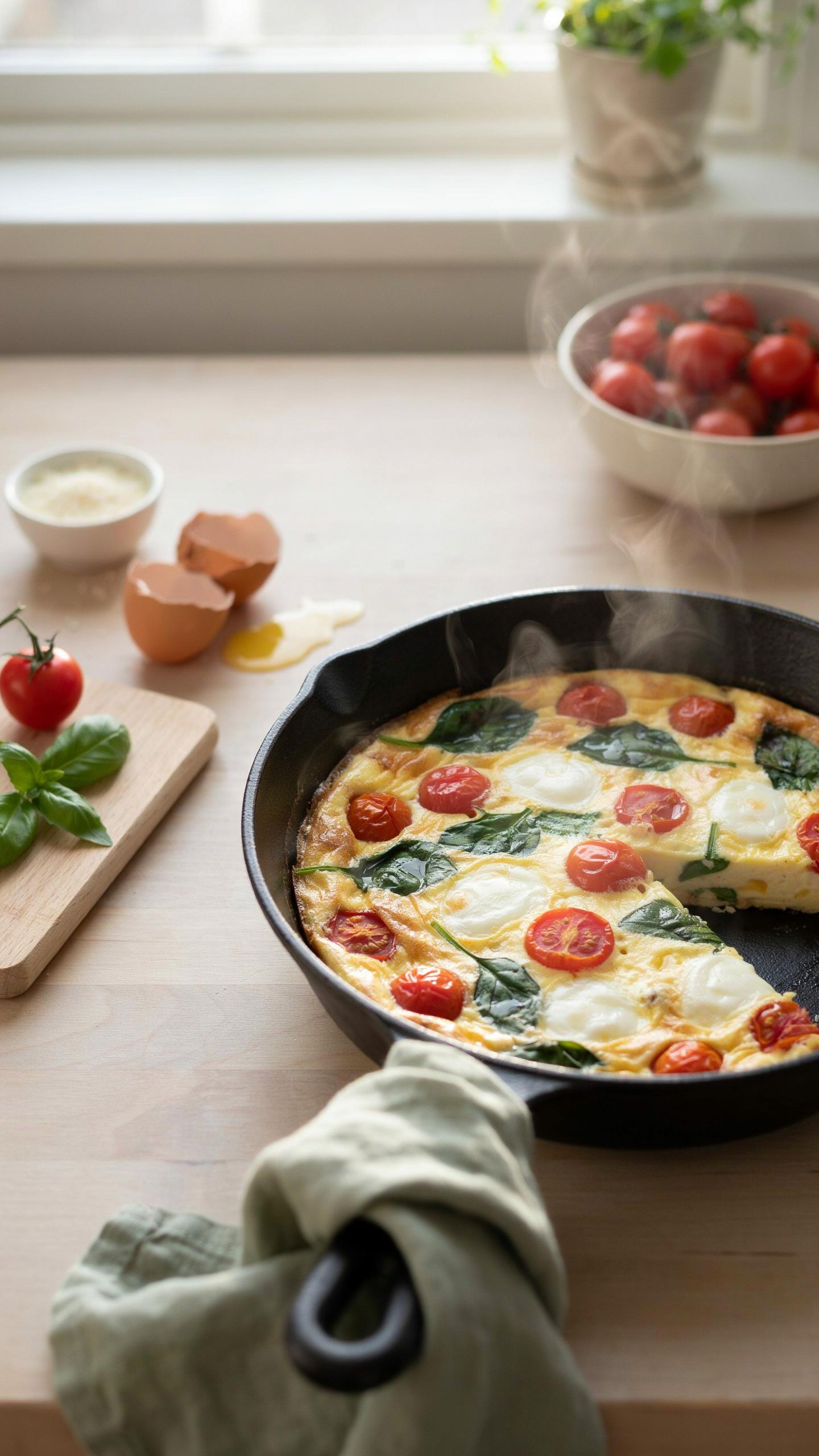
Fewer Ingredients, More Protein
You want meal prep to feel effortless because you’re afraid it won’t stick. The mechanism is constraint: limit your ingredient decisions and you remove the friction that kills consistency. Most people load frittatas with eight to twelve ingredients, then wonder why they never repeat the recipe.
A high-protein frittata needs exactly three component categories: eggs (your base), one protein source, and one vegetable. Eggs provide six grams of protein per large egg. A second protein like ground meat or smoked salmon adds another eight to fifteen grams per serving. The vegetable is filler and micronutrients, not the star. Stop treating it like it is.
True Passive Cooking Beats Active Time
The oven is leverage. You apply heat once and walk away for twenty-five to thirty-five minutes while the frittata sets. This isn’t passive in the motivational sense, it’s passive in the physics sense: the heat source does work without your intervention. Your job ends the moment you set the timer.
The common advice says to start frittatas on the stovetop then finish under the broiler. That’s wrong. Oven-only baking at 375 degrees Fahrenheit produces even, predictable results without monitoring. Pour your mixed eggs into a greased cast iron or oven-safe skillet, add your protein and vegetable, slide it in, and leave. No flipping, no babysitting, no burnt edges while you wait for the center to cook.
Vegetable Frittata Unlocking Flavor Through Strategic Layering
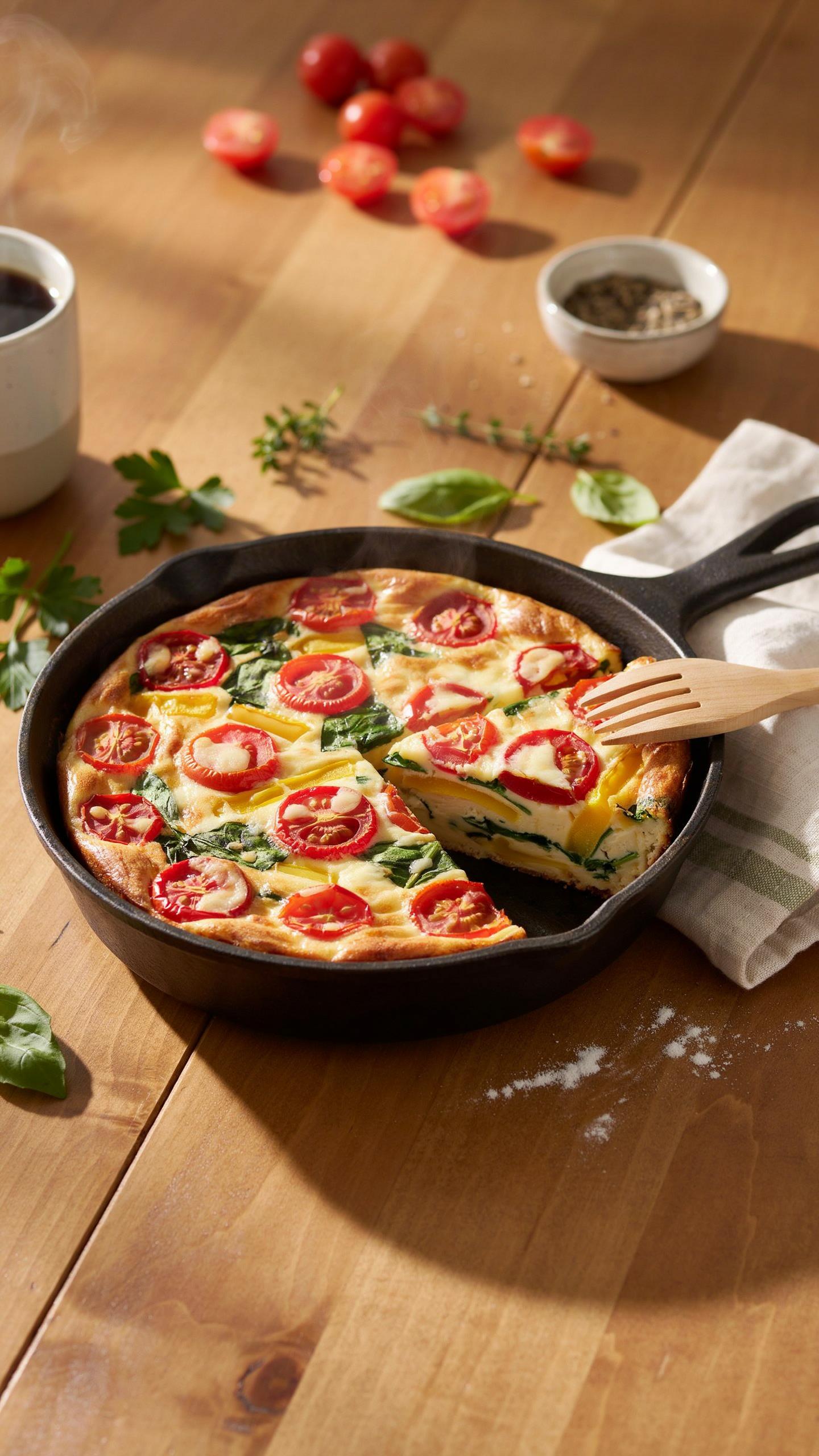
Build Complexity With Few Ingredients
You want to look like you know what you’re doing without spending an hour prepping. The mechanism is contrast through opposing flavor compounds, borrowed from basic chemistry. You’re not making a vegetable soup where everything merges into brown liquid. You’re stacking ingredients that push against each other and stay distinct through cooking.
Most people throw in whatever vegetables are in the fridge and wonder why the frittata tastes like steamed sadness. The real move is picking vegetables that belong to different flavor families and letting them stay separate in the pan. Caramelized onions, sharp aged cheddar, fresh herbs added after cooking, and roasted garlic create four distinct flavor moments in one bite.
Maintain Texture Contrast And Prevent Mush
Overcooking the entire frittata is the standard mistake people make. Cook the proteins and custard base until they set, then pull it out. The vegetables inside already softened during prep, and continuing to heat them breaks them down into paste. Your frittata should have some give, some resistance, some snap.
Strategy here is layering based on cook time. Dense vegetables like broccoli and Brussels sprouts go in raw and cook through in the oven. Softer items like spinach and zucchini go in partially cooked so they stay intact. Delicate additions like fresh herbs and crispy bacon bits go on top after baking. This creates the texture variation that makes people actually want to eat this for five days straight.
Protein Beyond Eggs Elevating Your Breakfast Frittata
The Meat And Cheese Advantage
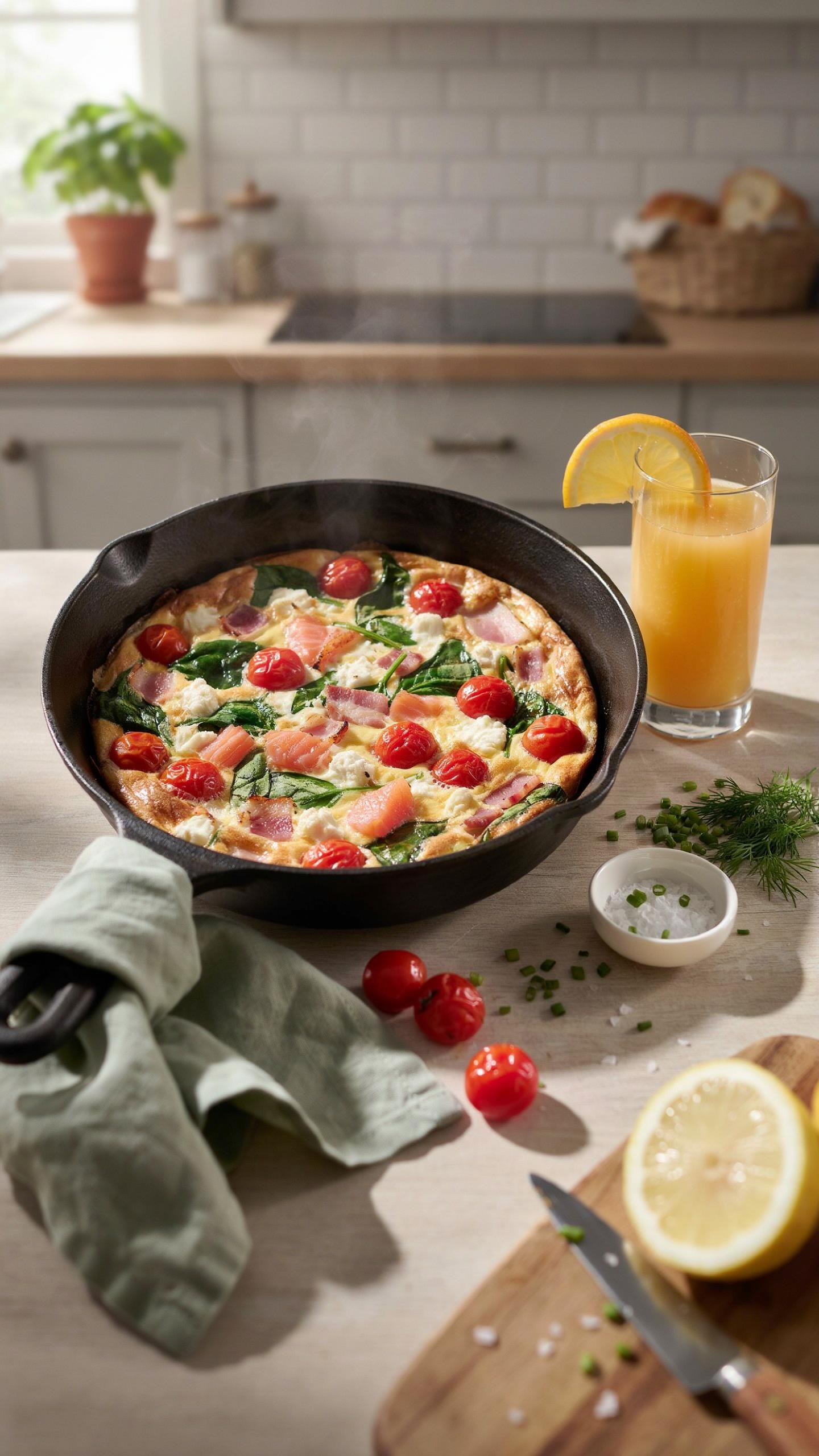
You want to believe eggs alone cut it because that’s simpler. They don’t. Think of a frittata like a biological system: eggs are the base substrate, but you need cofactors to maximize protein density and saturation. Cured meats like prosciutto and pancetta deliver 7-8g protein per ounce while adding fat that slows digestion. Aged cheeses like Gruyère and Pecorino pack 7-8g per ounce too, plus they don’t separate or weep during cooking the way fresh cheeses do.
The mechanism is straightforward. Each egg delivers roughly 6g protein. A standard eight-egg frittata hits 48g protein total. Adding 3 ounces of diced Italian sausage or smoked salmon pushes that to 68-72g protein across six servings, landing 11-12g per serving instead of 8g. Cook these proteins first to render fat and drive off moisture, then fold them in cold. This prevents them from drying out during the 20-25 minute bake time.
Macros That Actually Stick
The common advice says “eat balanced macros” without explaining the metabolic reason why. Nutrition science calls this the thermic effect of protein: your body burns 20-30% of protein calories just digesting it, versus 5-10% for carbs. When you build a frittata with 12-15g protein per serving plus 10-12g fat and minimal refined carbs, you create a meal that suppresses hunger hormones for 4-5 hours, not two.
The build works like this: eight eggs plus three ounces protein source plus one ounce cheese equals roughly 70-75g protein, 35-40g fat, and under 5g net carbs per frittata. Divide by six servings. Each portion delivers 12g protein, 6-7g fat, under 1g carbs. Add vegetables like spinach, peppers, or broccoli for micronutrients without spiking carbs. The fat content matters because fat slows gastric emptying, meaning the protein digests slower and keeps you satiated longer than a high-protein, low-fat meal would.
The Muffin Tin Frittata Protocol Scalable Systems
Assembly Line Efficiency Beats Single Batches
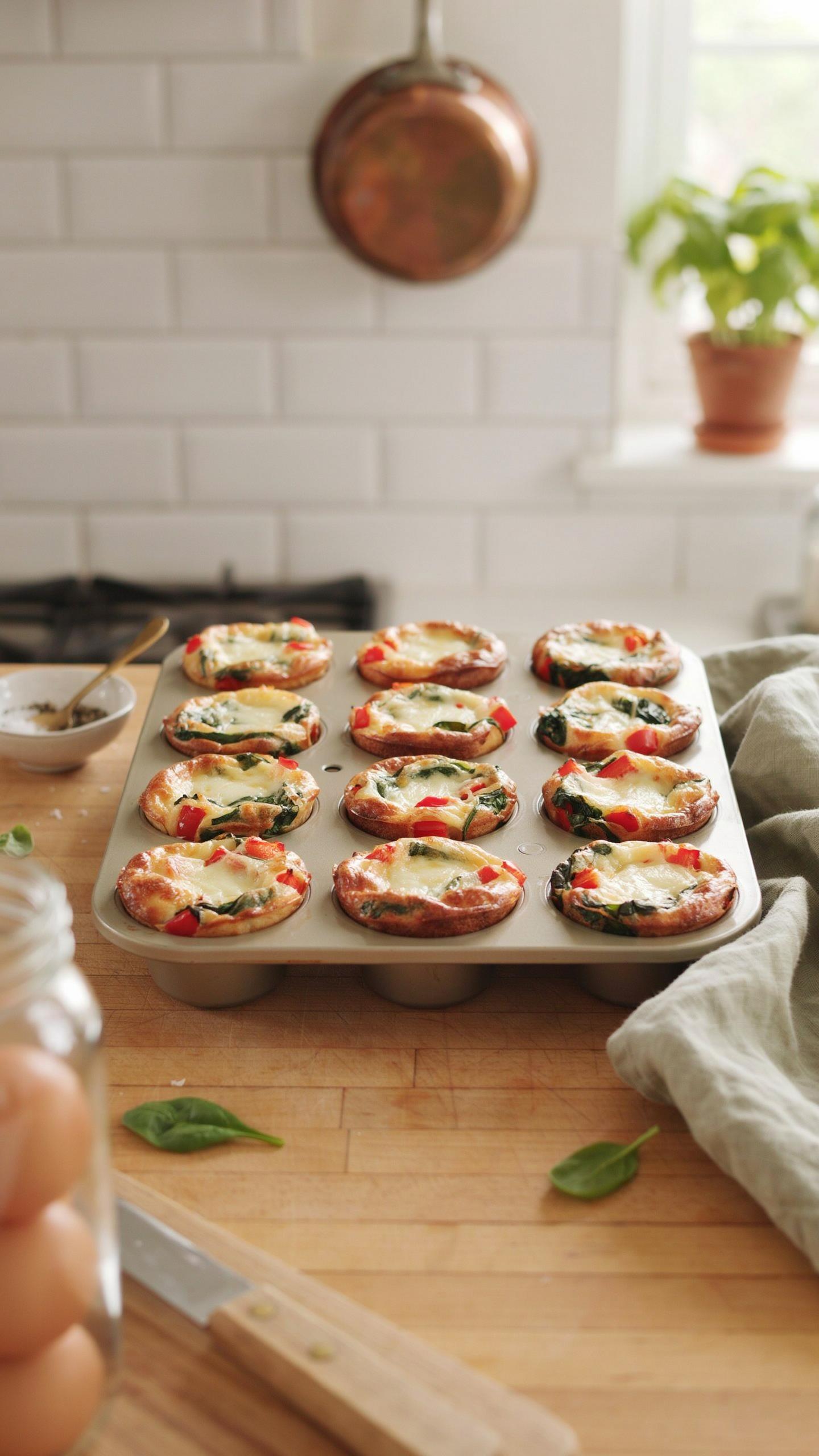
You want to feel like you have your life together without actually spending three hours on Sunday. That’s the real draw here. Cybernetics teaches us that feedback loops and constraint optimization produce exponential efficiency gains. In frittata prep, your constraint is oven space and your feedback loop is portion uniformity. Muffin tin frittatas force a system: each cup holds the same volume, each cooks identically, each yields one portion. No guessing, no waste, no variation.
Most people treat frittata prep like baking—they make one large pan and cut it into uneven pieces. Wrong move. The muffin tin method removes human error from portion control and cooking time. You prep ingredients once, distribute to twelve cups using the same ratio, then run one oven cycle. Every frittata finishes at the same moment with the same protein density.
- Mise en place at station one: Combine eggs, dairy, and seasonings in one large bowl. This single mixing step feeds your entire week’s production without repetition.
- Protein distribution at station two: Place diced meat, cheese, and vegetables into each cup before liquid. Consistency matters more than perfection here.
- Liquid pour at station three: Distribute egg mixture evenly across all cups using a measuring cup or ladle. Same volume per cup eliminates cook time variation.
- Single oven cycle: Bake all twelve cups simultaneously at 375 degrees for 18 to 22 minutes. Parallel processing beats sequential batching.
- Cool on the counter first: Let frittatas rest five minutes in tins before removal. This sets the structure and prevents breakage during storage.
The system scales because you don’t add complexity. Double the batch means double the mise en place bowl and another muffin tin in the same oven. You’re not creating new steps, just repeating existing ones.
Storage And Reheating Without Degradation
Frittatas hold their protein integrity better than scrambled eggs or omelets during storage because the custard matrix sets firm. Room temperature storage is worthless—bacteria colonize eggs quickly above 40 degrees. Refrigeration at 35 to 40 degrees halts bacterial growth and keeps the frittata tender for up to five days. Freeze beyond that window if you prep more than a week out.
Cold frittatas don’t need reheating if you eat them directly from the fridge. The texture stays firm and the taste remains clean. If you want warmth, reheat in a 300-degree oven for six to eight minutes or microwave for 45 to 60 seconds on 50 percent power. Microwaving at full power creates rubbery edges and overcooked centers. The low-power cycle distributes heat gradually and maintains the custard’s integrity. Stack reheated frittatas on a plate with parchment between each one to prevent sticking and allow residual heat to distribute evenly.
Frittata Recipe Easy Debunking The Complex Cooking Myth
Tools You Actually Need
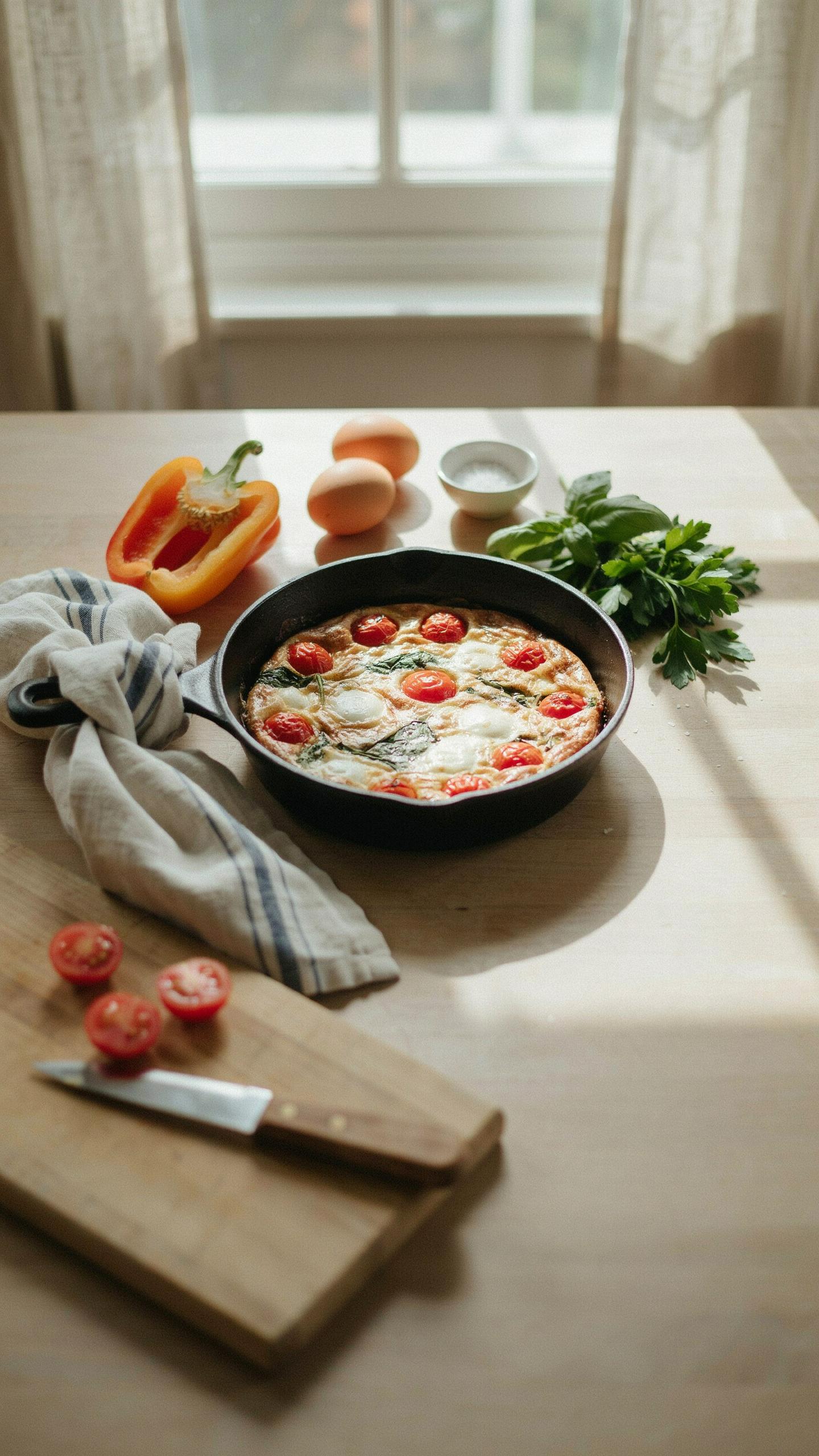
You want permission to skip the fancy equipment aisle. Here’s the truth: frittata meal prep doesn’t require a $300 nonstick collection or a culinary degree. You need one oven-safe skillet, one bowl, one whisk. That’s the barrier to entry. The mechanism is friction reduction, borrowed from systems design. Remove unnecessary tools and you remove the reason to delay starting.
An 10 to 12 inch oven-safe skillet in cast iron or stainless steel handles every frittata you’ll make. A standard mixing bowl and whisk beat eggs into uniform texture. A rubber spatula scrapes the pan clean for the next batch. Everything else is noise. Your oven already works. Your stovetop already works. You don’t need a dedicated frittata pan or silicone molds or a stand mixer.
Preventing Rubbery Texture And Dryness
The common advice is vague: “don’t overcook it.” Wrong. That’s incomplete because it ignores the two mechanisms that actually kill texture. Overcooking causes protein denaturation. Uneven heat causes moisture loss in hot spots while cold spots stay wet. You prevent both simultaneously through temperature control and timing.
Start on medium heat for two minutes. This sets the bottom layer without blasting the eggs. Transfer to a 375-degree oven for 12 to 15 minutes depending on your oven’s accuracy. The carryover cooking continues for another 30 seconds after you pull it out. Pull it at slight undercook, let residual heat finish the job, and the protein stays moist. Test doneness by tilting the pan—if the center jiggles slightly, you’re done. That slight jiggle solidifies in the pan’s residual heat.
Customizing Your Frittata A Bio Individual Approach
Meeting Your Actual Dietary Constraints
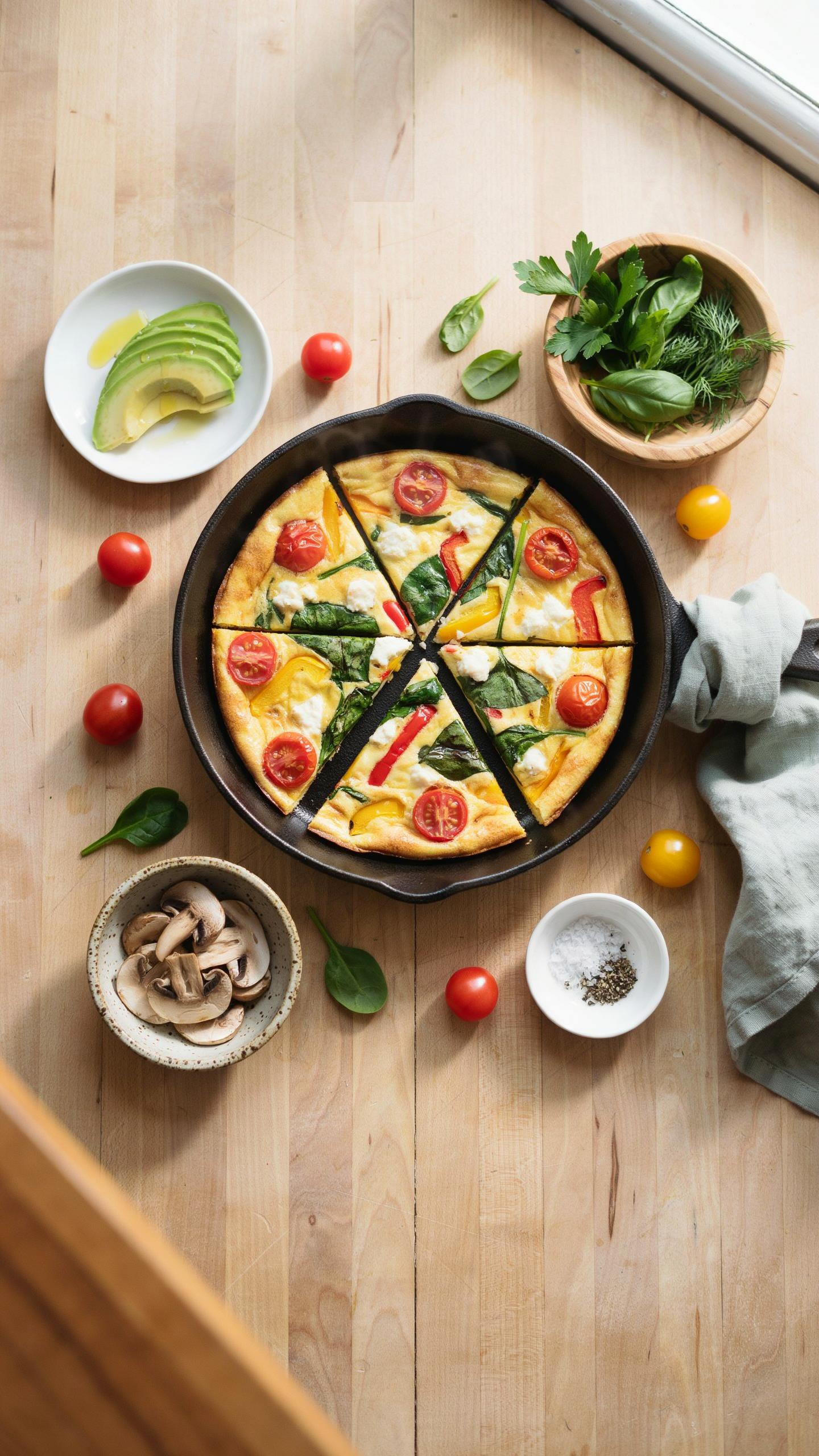
You want permission to eat what works for your body without feeling like you’re missing out. The mechanism is simple: frittata’s structural flexibility lets you swap components without compromising protein density or cook time. Keto removes the carb-heavy vegetables and adds fat. Paleo eliminates dairy entirely. Vegetarian maintains protein through eggs and legumes. Each diet works because you’re not fighting the frittata format—you’re just changing inputs while keeping the output constant.
Keto frittatas work best when you increase egg yolks, add cheese, and use high-fat vegetables like spinach cooked in butter. Paleo versions substitute dairy-free cream or bone broth for milk, use clarified butter instead of regular oil, and focus on meat and vegetable combinations. Vegetarian frittatas gain protein density through Greek yogurt, cottage cheese, and legumes like white beans. The cook time stays the same across all variations because you’re still working with eggs as the binding structure—it’s the supporting ingredients that shift.
Rotating Ingredients To Prevent Palate Collapse
Most meal prep advice pretends you’ll eat the same thing seven times without your brain rejecting it by day three. You won’t. Psychology calls this hedonic adaptation—the neural system’s tendency to return to baseline satisfaction regardless of stimulus quality. Applied to frittata meal prep, it means one unchanging recipe becomes invisible food by Wednesday. Rotation isn’t optional if you want consistency past the midweek mark.
Build three frittata templates, each with different protein and vegetable combinations. Rotate them weekly. Example: Week one uses bacon, cheddar, and broccoli. Week two pivots to sausage, mozzarella, and zucchini. Week three shifts to ham, feta, and spinach. Each version maintains the same macros and cook protocol but delivers novelty at the sensory level. When you return to the first template after three weeks, it tastes new again. Prep all three versions in the same session to avoid cooking fatigue.
From Prep To Plate Mastering Your Egg Cup Meal Prep
Cool Properly Before You Store
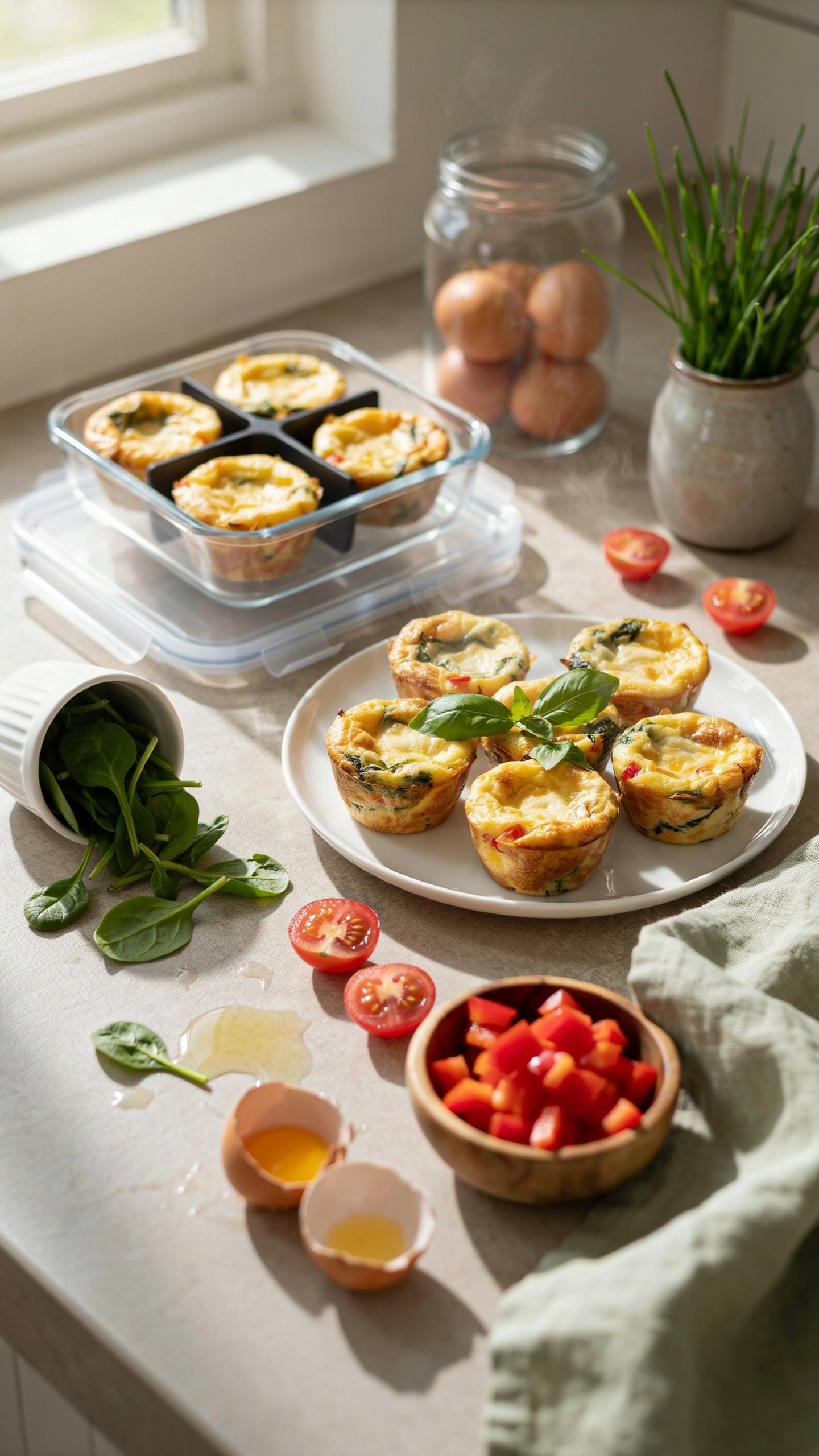
You want to believe that shoving a hot frittata straight into the fridge saves time. It doesn’t. Hot food releases steam, which condenses on the container lid and drips back onto the surface, making it soggy and breeding ground for bacteria growth. Let the frittata cool to room temperature on the counter for one to two hours, then refrigerate.
Container choice matters more than most people admit. Glass containers with tight-fitting lids prevent moisture loss and odor absorption better than plastic. Stack frittata portions vertically or cut them into wedges and layer parchment paper between each piece to prevent sticking. Store in the coldest part of your fridge, not the door. Temperature stability determines how long your prep actually lasts.
Reheat Without Ruining The Texture
The oven is the only method worth using. A microwave creates steam pockets that turn your frittata rubbery. Preheat to 350 degrees Fahrenheit, place the frittata wedge on a baking sheet, cover loosely with foil, and heat for eight to ten minutes. The loose foil allows controlled moisture escape without drying the interior.
Alternatively, use a skillet on medium-low heat with a lid. This takes five to seven minutes and gives you direct control over the final texture. You’re essentially resteaming the frittata gently rather than blasting it. The mechanism is thermal recovery without secondary cooking. Check the internal temperature reaches 165 degrees Fahrenheit to confirm food safety, then eat immediately. Don’t reheat more than once.
Your biggest obstacle isnt discipline its a poorly designed system

Most people fail at frittata meal prep because they treat it like a chore instead of a lever. You’re not trying to build willpower. You’re trying to eliminate the decision. Buy eggs and vegetables today. Make one frittata tonight. That’s it. The system works because you remove friction, not because you suddenly become disciplined. A frittata in your fridge beats motivation every single time.