
The Winter Fuel Imperative Beyond Basic Sustenance

Why Standard Meal Prep Breaks Down When Temperature Drops
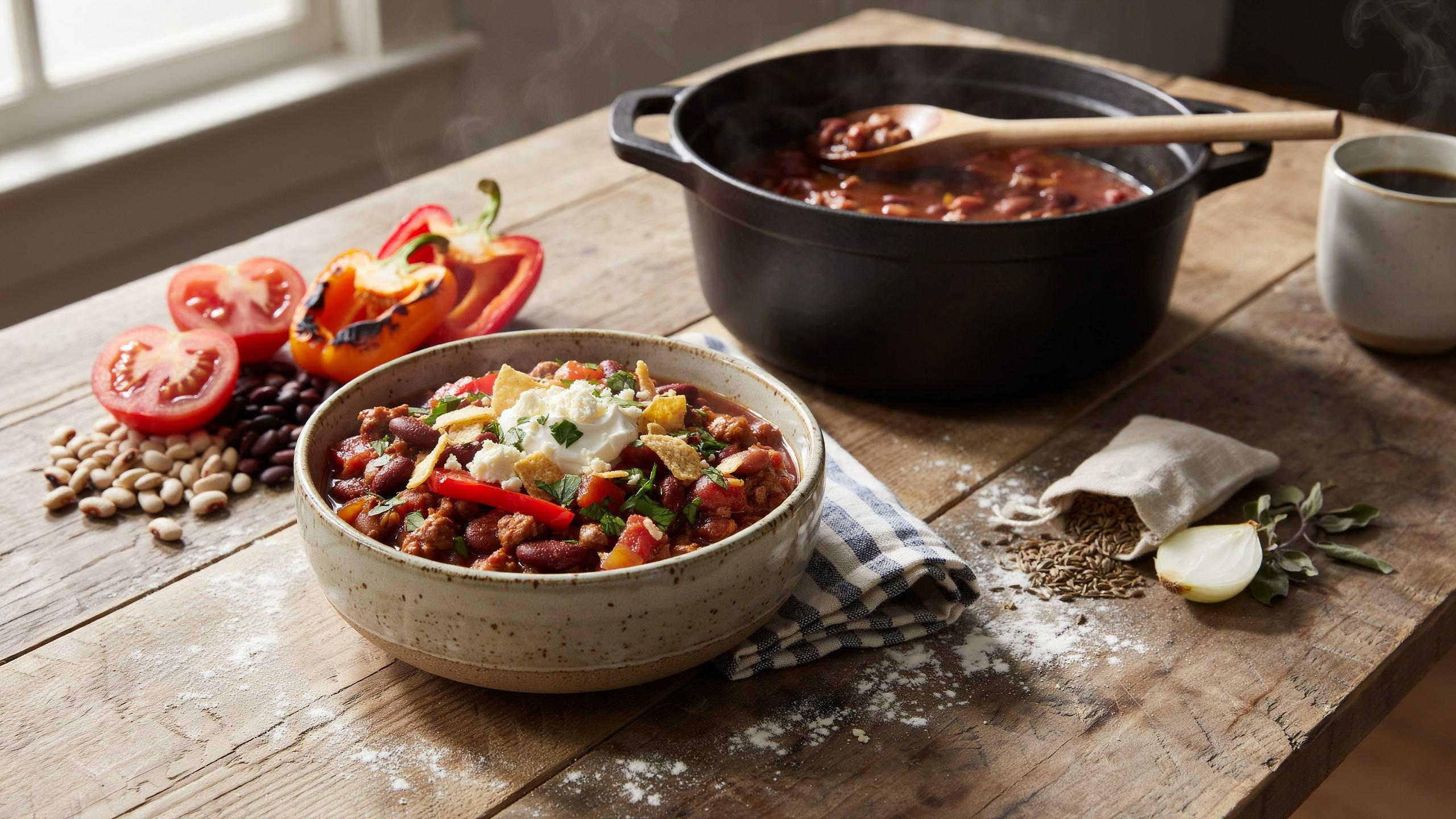
You’re hoping meal prep will solve the decision fatigue problem, but winter exposes a gap nobody admits: generic meal prep fails because it ignores thermodynamic reality. Your body burns more calories in cold. Standard portions designed for moderate seasons don’t match winter’s energy demand. Most meal prep advice treats nutrition like a static input. Winter changes the equation. Turkey chili addresses this because it’s thermally dense and requires minimal reheating friction.
The common approach is to meal prep lighter, then add snacks as needed. This is backwards. You end up grazing constantly, spiking cortisol, and eating more total calories while feeling unsatisfied. Winter meal prep should front-load caloric density at the point of consumption, not fragment it across the day. Chili’s structure forces this. One container. One meal. No decision cascade.
Chili As Concentrated Energy Reserve
Think of chili like a battery in an electrical grid, not just food on a plate. The mechanism is caloric density plus digestive workload. Turkey chili combines protein, fat from ground turkey, beans for fiber and carbs, and tomato base for mineral content. This combination triggers sustained satiety because your body spends energy metabolizing it. You’re not just eating calories. You’re eating a system that keeps you stable for 4 to 6 hours without hunger signals interrupting focus or depleting willpower.

Winter weeks demand containers you can reheat in sixty seconds without degradation. Chili improves over time because flavors consolidate, and the thermal shock of reheating doesn’t break down the structure like it does with lighter preparations. Make your first batch on day one, portion it into five containers, and rotate them through your freezer. Consistency compounds.
The Unoptimized Turkey Chili Your Current Problem
Where Your Recipe Actually Fails
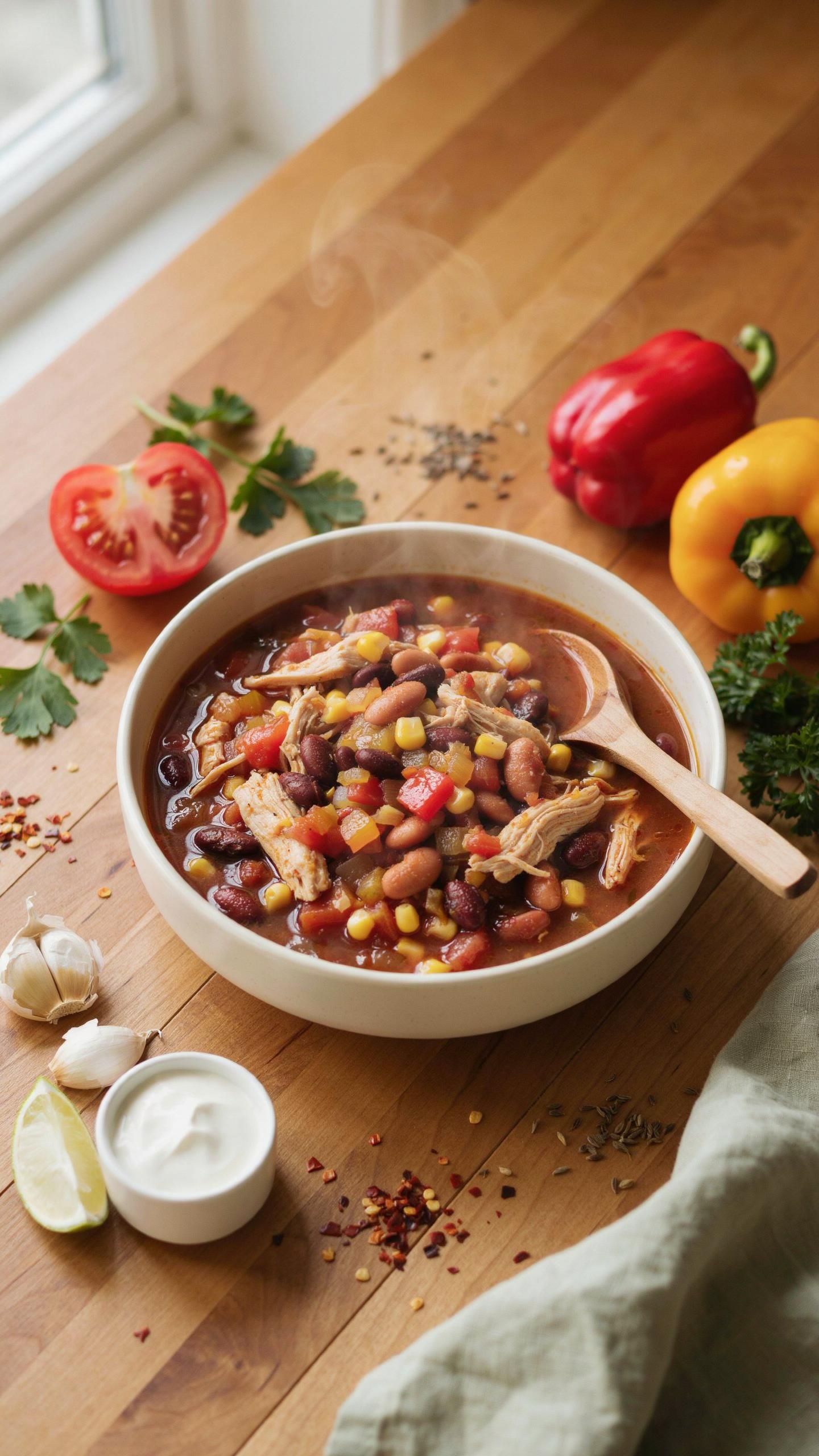
You’re making turkey chili because you believe it signals discipline, but you’re sabotaging it before the first simmer. Most recipes treat chili as a dump-and-wait operation: brown meat, toss in beans and tomatoes, let time do the work. This fails because chili is a reduction problem, not a cooking problem. The mechanism is simple: without layered browning and spice blooming at different stages, you’re boiling rather than building. Your turkey renders fat that goes unused. Your spices never activate.
The first mistake everyone makes is underseasoning at the start then overcompensating at the end. Turkey chili demands salt early to draw out moisture and create surface area for browning. The second mistake is treating dried chiles and spice powder the same way. They’re not. Dried chiles need fat and heat to release their complexity. Ground spices need it too, but at lower temperatures. Skip the blooming step and you’re eating dusty meat soup, not chili. Your meal prep fails before Wednesday.
When Healthy Becomes Inedible
The consensus on healthy chili is wrong. Food writers confuse “fewer calories” with “tastes good,” then wonder why people abandon meal prep. They strip fat, overload vegetables, and call it progress. What actually happens: you lose the mouthfeel that makes chili satisfying enough to eat from the same container five times. Fat carries flavor and extends satiation. Vegetables add texture but water down intensity when they dominate the ratio.
The real issue is that most turkey chili recipes optimize for speed or appearance instead of the one thing that matters: whether you’ll actually eat it when you’re tired. You build cravings through concentration, not through nutrient density. Ground turkey already lacks the fat marbling that makes beef chili self-lubricating. Don’t compound that by adding bell peppers and zucchini that absorb your sauce. The protocol: use turkey thighs instead of breast, render the fat deliberately, build your spice layer first, then add vegetables last and sparingly. Your chili stays dense enough to survive five days in a container.
The Protein Power Play Why High Protein Chili Matters

Winter Energy Without The Crash
You want to feel full without the 3pm collapse that sends you back to the kitchen. Here’s what actually happens: protein digestion requires your body to burn calories just to break it down, a mechanism called the thermic effect of food. In winter, when you’re moving less and eating more, high protein chili becomes your metabolic ballast. It stabilizes blood sugar during the hours when you’re least active and most tempted to eat garbage. Protein also triggers satiety signals faster than carbs alone, meaning you eat less volume while feeling more satisfied for longer stretches.
Turkey delivers lean protein without the fat load that makes you sluggish. A single batch of high protein chili, portioned correctly, eliminates the decision fatigue that derails meal prep plans in week two. You’re not wondering what to eat because the answer is already there, already measured, already working for you biologically.
Stack Protein Into Every Layer
The common advice is just use more turkey, which is incomplete. You’re not maximizing density, you’re just adding weight. Real protein stacking means hitting chili from multiple angles at once. Ground turkey provides your baseline, but beans, tomato paste, and bone broth each contribute distinct protein sources that compound. Tomato paste is 35 percent protein by dry weight. Kidney beans add seven grams per half cup. Bone broth contributes collagen based proteins that support joint recovery during cold weather training sessions. You’re not making chili, you’re engineering a delivery system for overlapping protein architectures that your digestive system processes differently, keeping you full longer.
When you batch cook, measure your turkey weight before browning, add your beans by count, not feel, and use tomato paste as a structural ingredient, not a flavoring. This removes guesswork and locks in protein density across every container. Your thermic effect stays consistent week to week because the formula doesn’t drift.
The Flavor Layering Protocol For Turkey Chili Meal Prep
Where Depth Actually Comes From
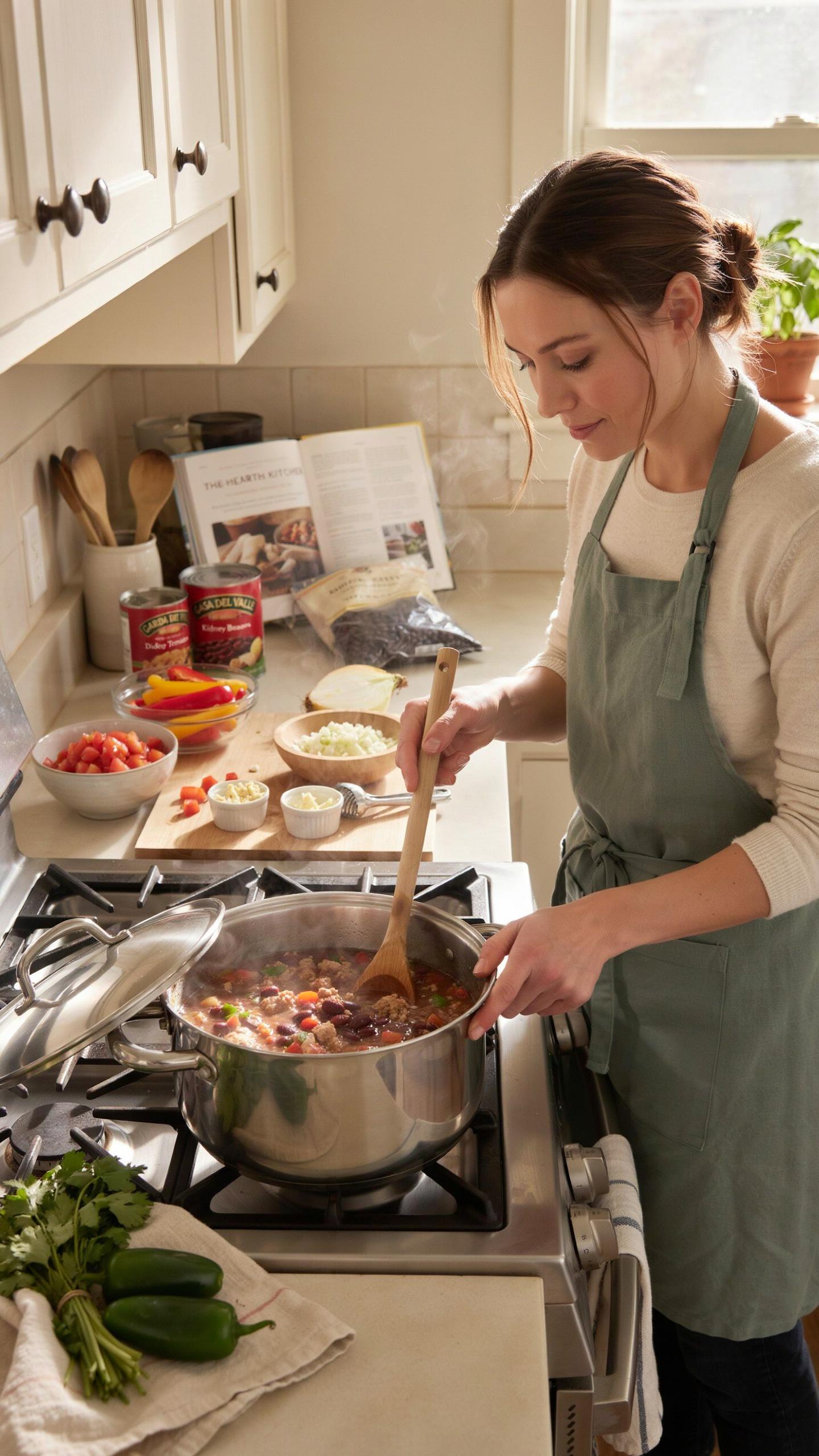
You want people to think you’re the kind of person who makes complex food. That’s the real driver here. The mechanism is simple: flavor compounds don’t stack linearly. They interact. Chemistry borrowed from cooking teaches us about flavor matrices, much like how an electrical circuit requires different components at different stages to produce current. Turkey chili fails when people dump everything in at once and expect depth. You build it in phases.
Start with fat. Toast your spices in oil or rendered turkey fat before adding meat. This blooms the aromatics and breaks down fat-soluble flavor compounds that remain inert in liquid. Next, brown the turkey hard. Browning creates new flavor molecules through the Maillard reaction that wouldn’t exist without that step. Then add your acid and umami layers separately: tomato paste first (caramelized in the pan), then broth, then final acidic elements like vinegar or lime juice near the end. Each layer locks in and amplifies what came before.
The Math Behind Heat And Salt
Most spice ratio advice is garbage because it treats chili like a fixed formula instead of a variable system. Your spice load depends on three factors: cook time, liquid volume, and whether you’re using fresh or dried peppers. The general rule that works: one tablespoon of chili powder per pound of turkey assumes a 90-minute simmer. Shorter cook time means less spice extraction, so you increase the load by 20 percent. Longer cook time means you dial it back or your chili tastes charred.
Salt is the amplifier nobody talks about. It doesn’t just make things salty when used correctly. Salt suppresses bitterness and sharpens bright flavors. Add it in two phases: half your target amount when you brown the meat, the other half in the last fifteen minutes. This prevents the meat from seizing while ensuring proper seasoning distribution. Taste at minute 70 of a 90-minute simmer. If it tastes flat, it’s salt. If it tastes bitter, it’s cook time or too much chili powder. Don’t guess at the end.
The Crockpot Advantage Effortless Healthy Chili Recipe
Low And Slow Temperature Control
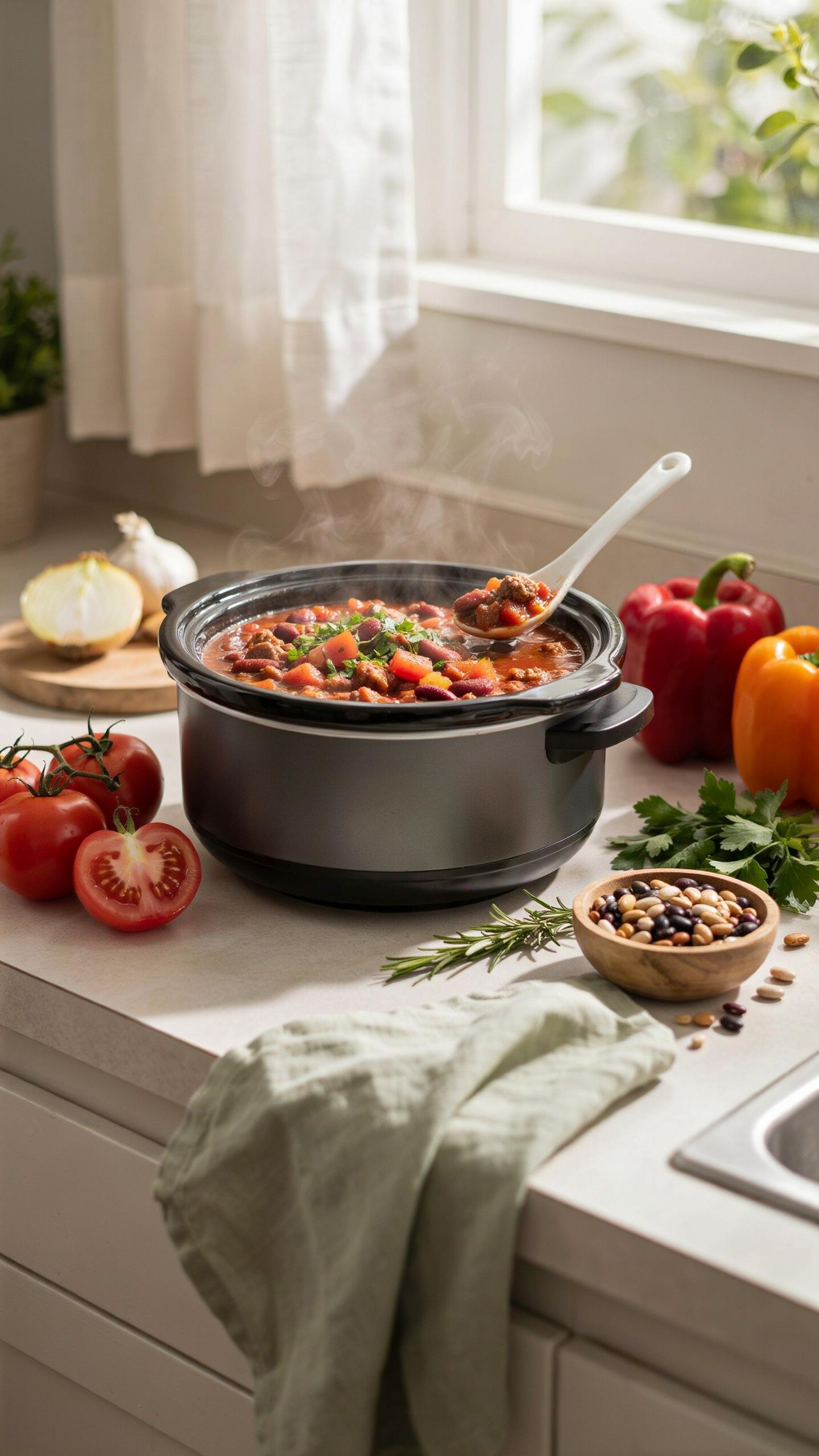
You want this section because you’re afraid batch cooking will taste like punishment. Here’s the mechanism: slow cookers work through sustained, even heat distribution. Ground turkey doesn’t dry out at 200 degrees the way it does in a hot pan. The collagen in beans breaks down gradually, releasing gelatin that thickens the sauce naturally without flour or cornstarch. Temperature consistency beats speed every time in chili.
Most recipes tell you to brown the meat first. Skip that step. Raw ground turkey in a crockpot releases moisture that seasons the entire pot as it cooks. Add tomato paste, beans, and spices directly. Let it run for six to eight hours on low. The browning happens through the Maillard reaction during the slow cooking phase, just slower and more evenly distributed.
Dump And Walk Away Setup
The actual work here takes twelve minutes. Measure your ingredients into the crockpot the night before. Seal it. Place the entire insert in the refrigerator overnight. In the morning, slide the cold insert into the heating base and turn it on. Cold-start cooking adds roughly one hour to total time but eliminates any morning friction. You’ve removed the decision-making from the moment when you’re most likely to skip it.
The payoff isn’t just convenience. A crockpot running while you work generates no cleanup during prep. No pan sits in the sink. No stovetop steam. No active attention required during cooking. When you return home, dinner is ready to portion into containers immediately. This matters because the cognitive load of “I still need to cook” disappears entirely.
Beyond Beans The Optimal Turkey Bean Chili Blend
The Bean Selection That Actually Matters
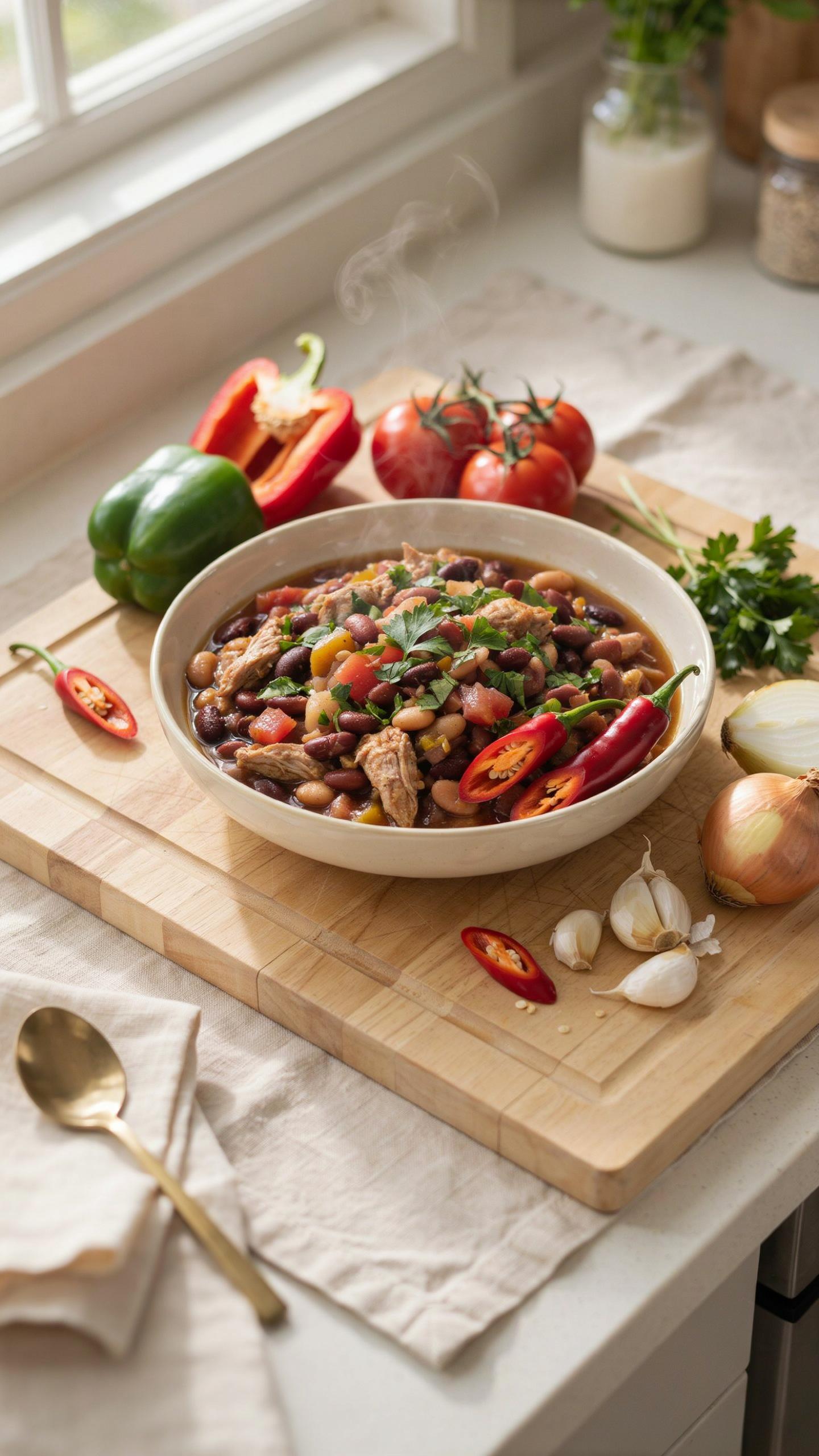
You want to sound like you know what you’re doing when someone asks about your chili recipe. That’s the real reason you care about bean variety. Here’s what actually moves the needle: bean density determines how much liquid your chili absorbs during the multi-day reheating cycle that defines meal prep.
Kidney beans hold their structure through repeated heating because of their firm cell walls. Pinto beans break down faster, thickening your chili naturally as starches leach into the broth. Black beans sit between them but add earthy flavor that masks off-notes from turkey fat oxidation. For a four to five day meal prep window, use kidney beans as your base and add pinto beans at a 60/40 ratio to control texture degradation without turning your chili into soup by day four.
What Actually Kills A Turkey Chili
Everyone says “don’t overload the beans.” That’s incomplete advice. The real failure happens when canned beans replace dried beans without adjusting your liquid ratios. Canned beans already absorb water during the canning process, so they leach less liquid than dried beans do. If you dump a standard can amount into a turkey chili recipe written for dried beans, your chili becomes watery and thin.
The second killer is mixing bean types randomly without understanding their starch release rates. When high-starch beans like pintos dominate, your chili thickens too fast and becomes paste-like by day three. When low-starch beans like kidneys dominate alone, you get a thin broth that separates in storage. Add beans in stages during the cook to control starch release, never all at once at the beginning.
The Strategic Freeze Mastering High Protein Meal Prep
How Cold Storage Preserves Texture And Flavor
You want frozen chili to taste like you made it yesterday, not six weeks ago. That’s the real motive here: control. The mechanism is simple biology. Freezing halts bacterial growth and slows enzymatic degradation, but temperature stability matters more than most people realize. Fluctuating freezer temperatures cause ice crystal formation that ruptures cell walls in the meat and breaks down the emulsion in your sauce. Steady cold at 0°F or below preserves both.
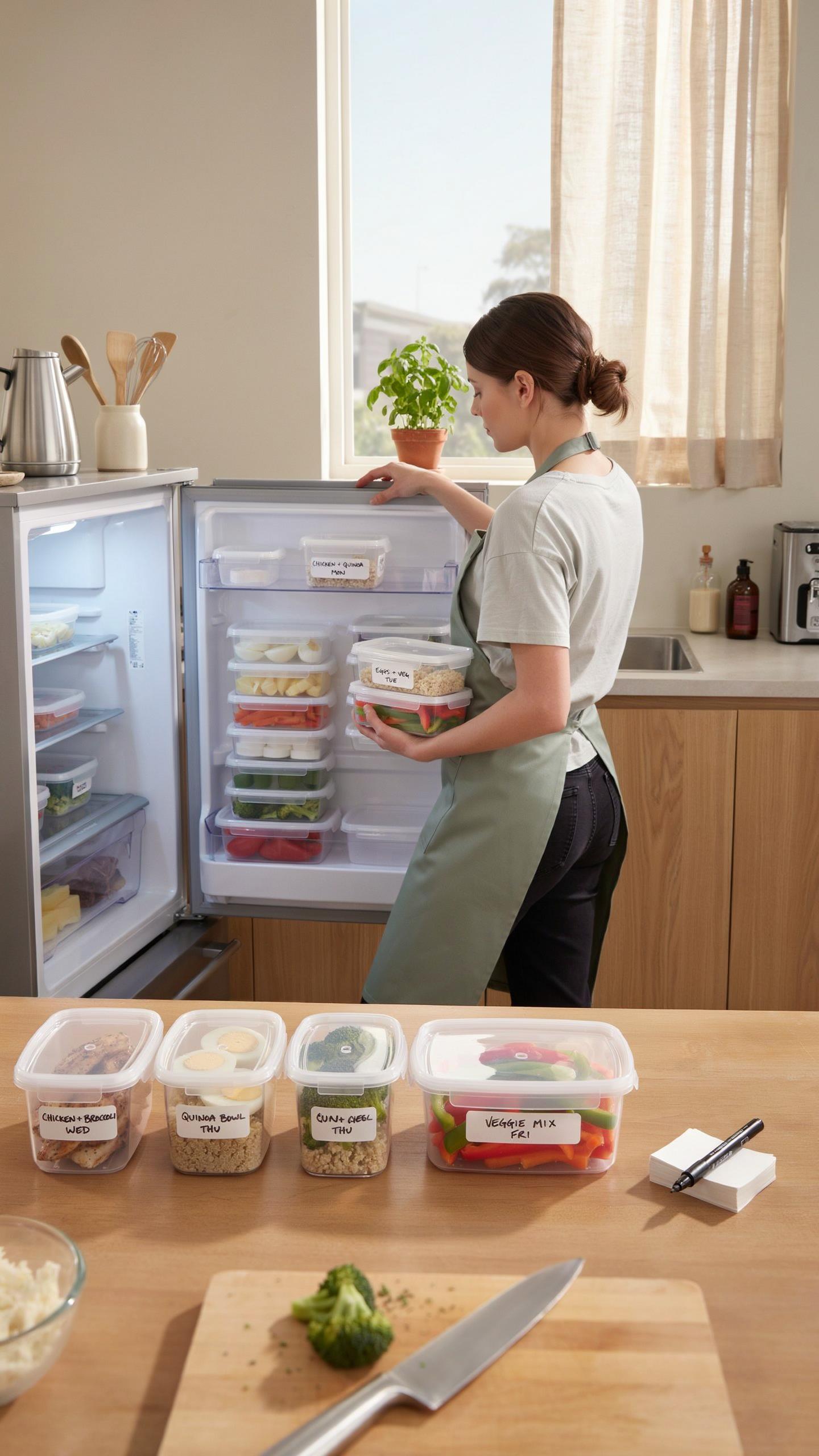
Container choice determines how well your chili survives the freeze. Glass containers with air-tight lids work better than plastic because they don’t absorb the oils from turkey fat or allow freezer burn to penetrate as easily. Cool your chili to room temperature before freezing, then leave a half-inch of headspace to account for expansion. This prevents the lid from cracking and keeps your chili sealed. Batch your portions into meal-sized containers rather than one large block, so you thaw only what you eat that week.
Thawing Without Breaking The Sauce
Everyone says to thaw in the refrigerator overnight. That’s incomplete advice. Refrigerator thawing works, but it’s slow and unnecessary for meal prep timing. The real variable is avoiding temperature shock. Your chili’s emulsion breaks when it goes from frozen solid to heat too fast. Thaw in the refrigerator for 12 to 24 hours if you have the time. If you don’t, thaw in a cold water bath by submerging the sealed container for 2 to 4 hours, changing the water every 30 minutes.
Once thawed, reheat low and slow on the stovetop or in a 300°F oven rather than the microwave. The microwave creates hot spots that separate the sauce from the meat and evaporate moisture unevenly. Add a splash of broth or water while reheating to restore the sauce consistency that froze solid. Reheat only until the chili reaches 165°F throughout, then eat it. This is the difference between chili that tastes fresh and chili that tastes like storage.
The Adaptation Cycle For Turkey Chili
Why Your Recipe Fails Without Pressure
You want permission to stop changing your recipe. That’s the real reason you’re reading this. But evolution doesn’t work that way, and neither does turkey chili. Borrowed from evolutionary biology, natural selection favors recipes that adapt to their environment. Your kitchen environment changes with seasons, ingredient availability, and what your body actually tolerates. A static recipe is a dead recipe.
Most turkey chili guides tell you to “find what works and stick with it.” That’s incomplete advice masking laziness. Your first batch succeeds partly by accident. The second batch teaches you what actually happened. By batch six, you’re finally cooking with intention instead of hope. The adaptation cycle means you’re testing one variable per week, measuring the outcome, then holding what works while adjusting what doesn’t.
Small Tests Beat Guessing
Nobody tells you this directly: most home cooks never actually taste their chili objectively. They make it, eat it warm with fresh toppings, then assume it’s the recipe working when it’s really the novelty. Meal prep turkey chili lives in your fridge for five days. That’s where the real test happens. A small test means cooking half a batch with one variable changed, then eating it across three days to measure how it performs under realistic conditions.
Change one element at a time. Swap ground turkey sourcing one week. Adjust your bean to broth ratio the next week. Track which change moved the needle on texture, flavor retention, or satiation through day four and five. After four weeks of single-variable tests, you’ll own a recipe that actually works across the full lifespan of your meal prep, not just on day one.
The Tactical Reheat Preserving Turkey Chili Quality
How Heat Transfer Kills Your Batch
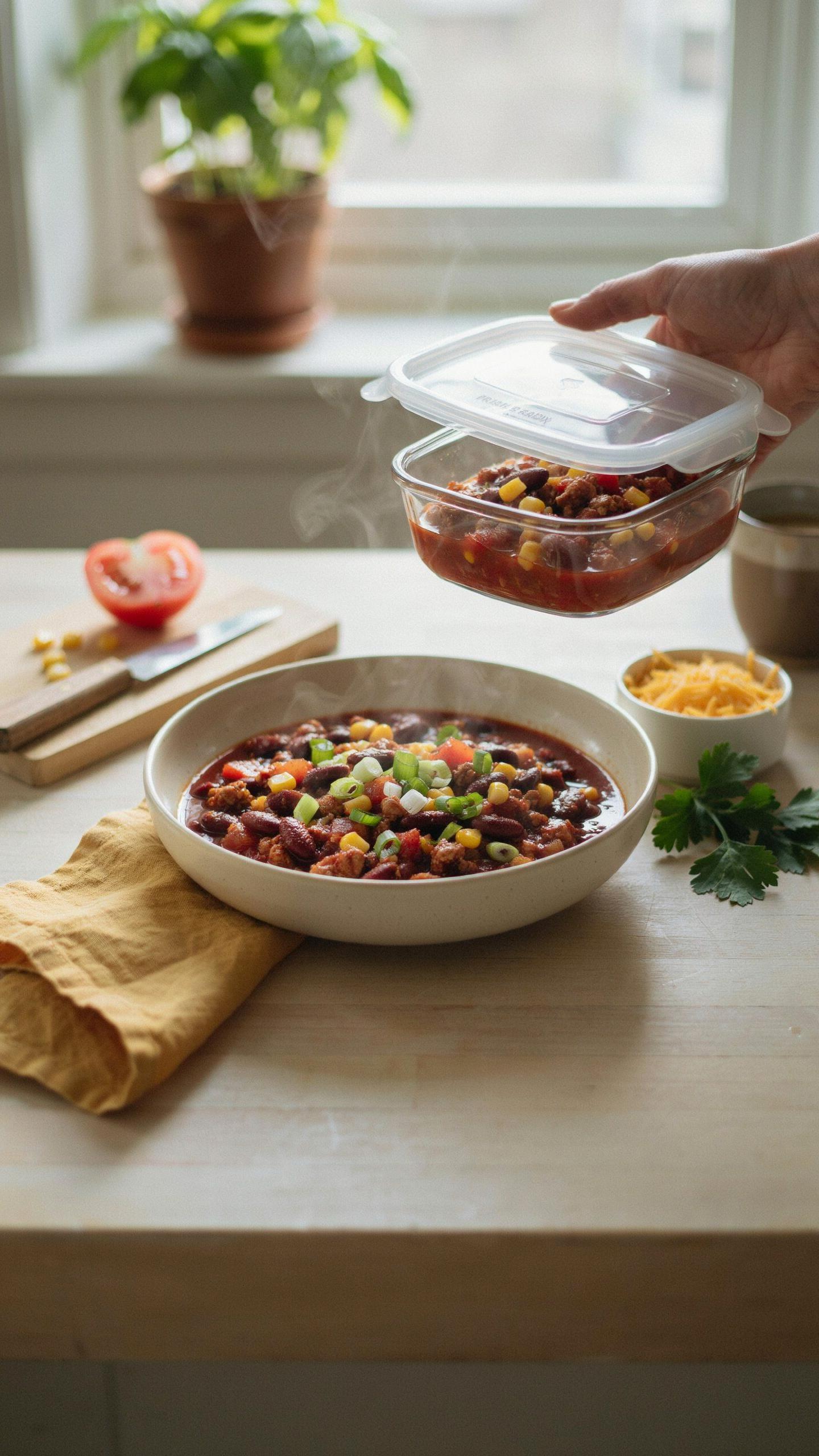
You care about this because reheating fails silently. You walk away thinking your meal prep worked, then bite into rubber. The mechanism is moisture loss under high heat. Thermodynamics teaches us that rapid temperature change creates uneven energy distribution. In turkey chili, this means the meat fibers contract faster than liquid can redistribute, squeezing out water and leaving behind dense protein. Low and slow reheating reverses this. Never use high heat or microwaves set above 50 percent power for more than two minutes at a time.
The stovetop beats every other method because you control energy input precisely. Medium-low heat with a lid traps steam and allows the chili to warm through evenly over five to seven minutes. Add a quarter cup of water or broth before reheating if your batch looks dense. Stir occasionally to distribute heat and prevent hot spots from forming on the bottom. This takes longer than nuking it, but your turkey stays tender instead of becoming a chew toy.
Protecting Meat Fiber Structure
The common advice is wrong. People say add cheese or sour cream to mask dryness, but that’s damage control masking the real problem. You prevent dryness before it happens by understanding how turkey meat behaves in storage. Ground turkey is lean, which means it has low fat content to buffer moisture loss. Reheating at high temperatures denatures the proteins too quickly, causing them to squeeze out remaining water.
Store your chili with at least a half-inch of liquid covering the meat. This creates a moisture barrier during reheating. When you reheat, keep the lid on until the chili reaches 165 degrees internally, then remove it for the last minute if you want surface texture. Temperature check with a thermometer at the center of the pot, not the edges. The meat stays protected as long as you never exceed medium heat and keep stirring.
The Minimalists Arsenal Essential Tools For Turkey Chili Meal Prep
What You Actually Need To Buy
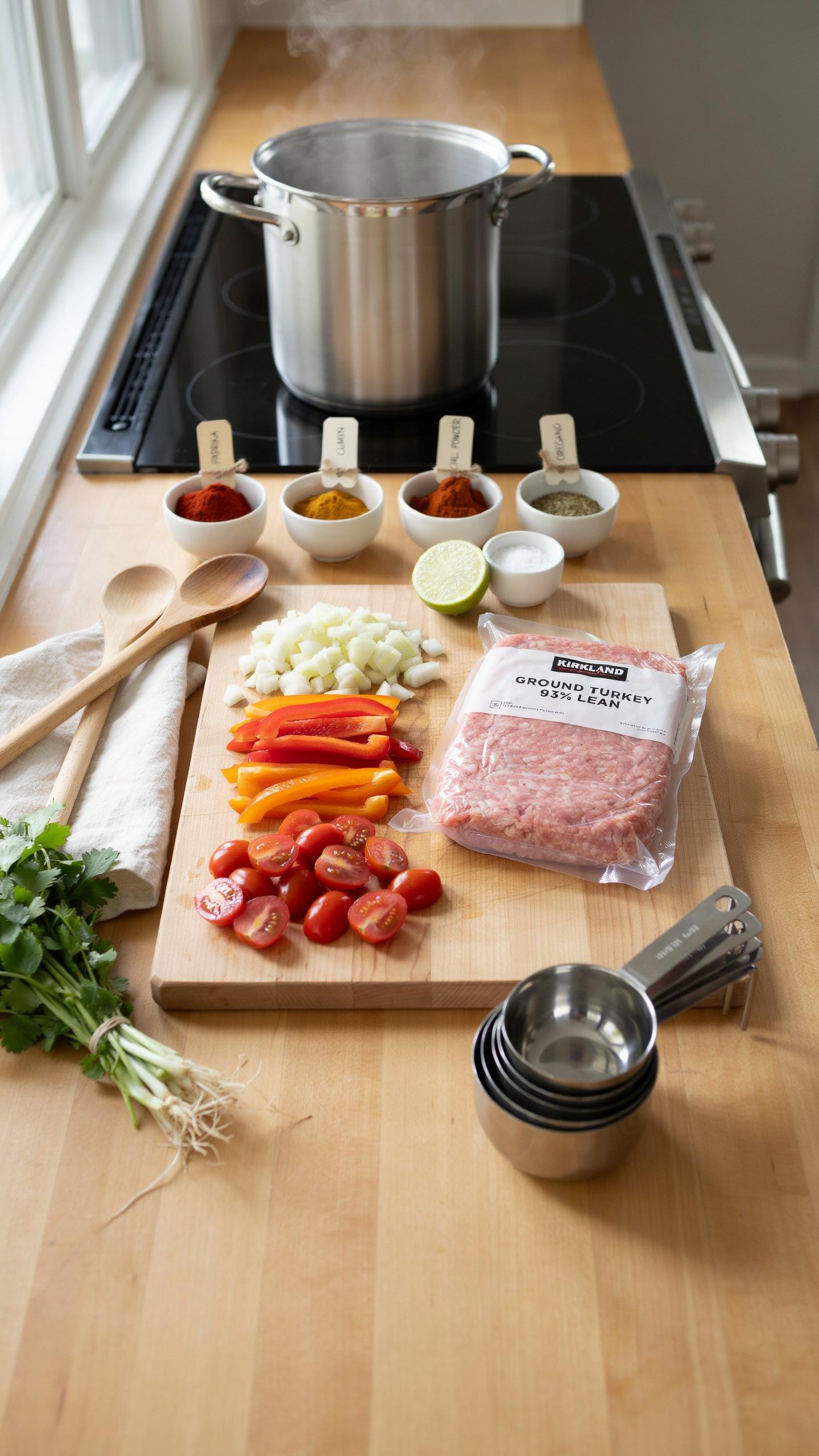
You want permission to buy kitchen gadgets without feeling wasteful. Here’s the mechanism: most prep fails because people own the wrong tools, not too few tools. The constraint forces better decisions. A Dutch oven isn’t luxury—it’s the difference between even browning and burnt spots that wreck flavor.
- Dutch oven (5.5 to 7 quart): Distributes heat evenly across ground turkey and vegetables. Cast iron or enameled versions both work. Browning happens faster and flavor concentrates better than in regular pots.
- Sharp chef’s knife (8 inch): Minces onions and garlic without crushing cell walls. Crushing releases bitter compounds. A dull knife forces pressure that damages texture before you start cooking.
- Large cutting board: Separates raw ingredients from prepared ones. Prevents cross-contamination and keeps your workspace organized so prep moves faster without doubling back.
- Wooden spoon: Scrapes fond from the pot bottom during browning. Metal damages seasoning on cast iron. Wood won’t conduct heat into your hand during long stirring sessions.
- Measuring cups and spoons: Consistency matters across batches. Eyeballing spices creates variance week to week. Controlled measurements let you dial in flavor once, then replicate it.
These five items handle every stage of turkey chili prep. Skip them and you compensate with time—stirring more often, cleaning burnt spots, redoing batches. That’s not efficiency. That’s pretending constraints don’t exist.
What To Leave Behind
Most kitchen tools promise speed but create friction instead. The food processor for onions sounds smart until you realize it releases too much juice and waters down your base. Pre-packaged spice blends marketed for chili contain filler and salt ratios designed for shelf stability, not flavor. Slow cookers marketed for chili cooking miss the browning stage where flavor actually builds.
None of these tools make turkey chili meal prep faster. They make it easier to pretend you’re cooking while you’re just heating. A pressure cooker won’t fix weak browning. A meat thermometer becomes another step when you should focus on the visual and textural cues that tell you when turkey hits the right stage. Strip your toolkit down to what changes the outcome. Everything else is overhead.
The real obstacle isnt the recipe its your resistance to disciplined execution

You already know turkey chili works. You know batch cooking saves time and money. You know consistency beats perfection. The gap between knowing and doing lives in one place: your willingness to show up on Sunday with containers and ingredients instead of scrolling. Stop waiting for motivation. Buy the turkey tomorrow. The only difference between people who actually meal prep and people who talk about it is they started before they felt ready.