
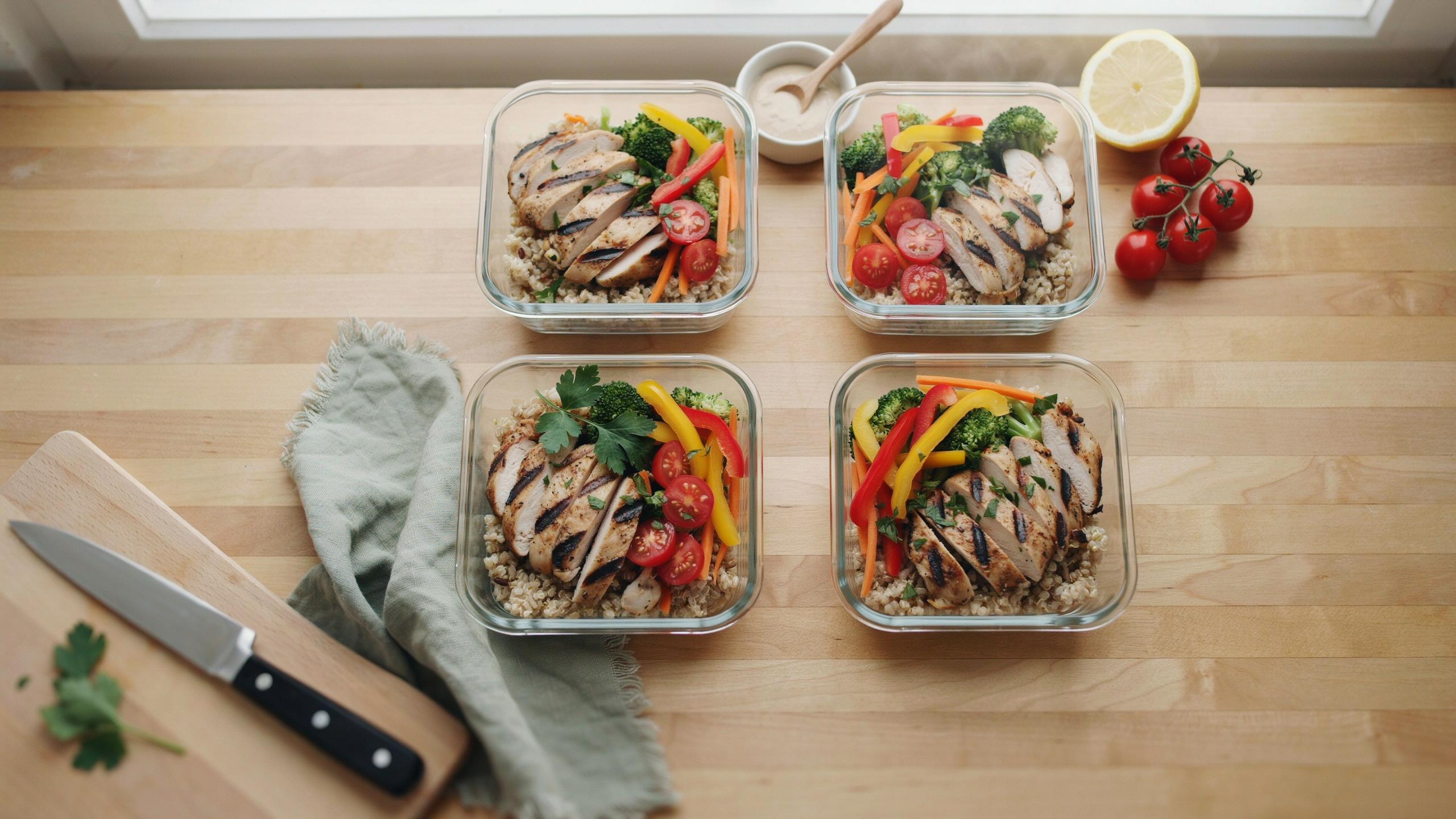
The Chicken Bowl Meal Prep Lie Efficiency Isnt The Point
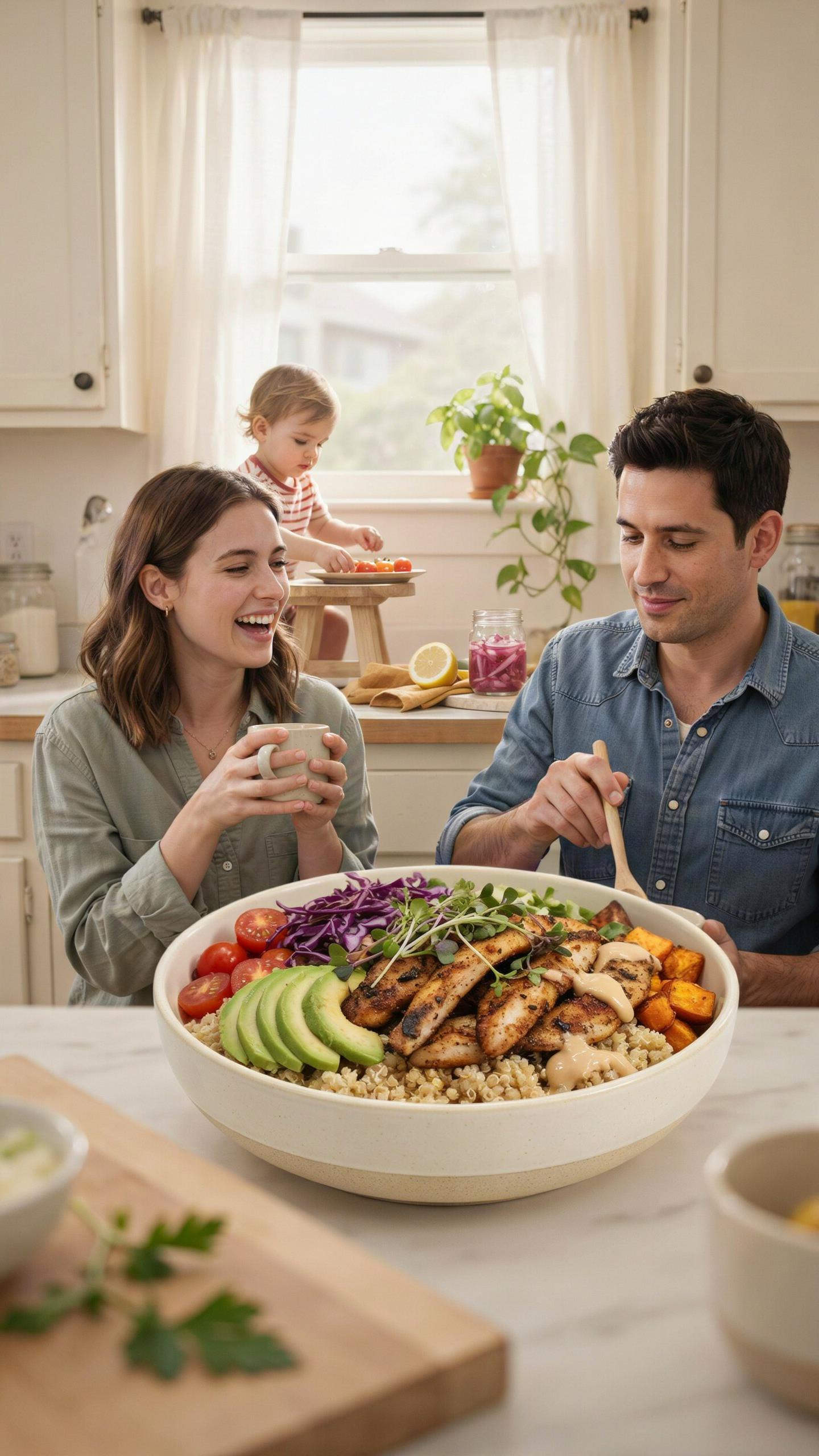
Decision Fatigue Silent Killer Of Progress
You want chicken bowl meal prep to save time, but that’s not why it actually works. The real mechanism is borrowed from cognitive psychology: decision fatigue. Every food choice you make depletes the same mental resource. By removing decisions, you preserve willpower for things that matter. Your brain treats “what should I eat today” the same as “should I start that project” at the neurological level. When you’ve already decided what you’re eating Sunday through Wednesday, you stop bleeding cognitive energy on the trivial.
Most meal prep advice focuses on portion control or nutrition tracking. Wrong angle. The point is that each pre-packed bowl is a decision already made and locked in. You walk to your fridge, grab container three, eat it. No thought required. No browsing options. No justification. This is why meal prep actually changes behavior when other systems fail. You’re not being more disciplined. You’re being smarter about where you spend your discipline budget.
Willpower Drain Outsourced To Your Fridge
Willpower doesn’t scale. You have roughly the same amount on Monday as Friday, but every choice depletes it slightly. The second mechanism: chicken bowl meal prep externalizes the willpower requirement to your preparation phase, not your eating phase. You spend focused effort once, on Sunday. Then you spend nothing, every weekday. This is resource allocation, not motivation.
When you make five bowls at once, you activate a different mental state than when you decide at 6 PM what to cook. The Sunday version is project mode. You have full cognitive resources. The 6 PM version is survival mode. Your willpower is already spent on work decisions, social friction, and email. By then, you’ll pick whatever requires zero friction: usually something worse than your prepared bowl. The fridge does the enforcing now, not your character.
The Biological Engineering Protocol Crafting Your Fuel Inputs
Macronutrient Ratios Engineering Your Energy
You want this to work without thinking about it constantly. The mechanism is simple: macronutrient ratios function like load distribution in structural engineering. Unbalanced loads fail. A chicken bowl without intentional protein, carbohydrate, and fat ratios becomes a blood sugar spike followed by a crash, killing your output for hours. Most people treat macros as arbitrary percentages. Wrong. Your ratios depend on your activity level and meal timing.
Chicken provides protein density, but the real work happens in pairing it with the right carbohydrate source and fat quantity. Brown rice, quinoa, or farro deliver sustained energy. Olive oil or avocado stabilizes nutrient absorption and satiety. The standard 40 percent carbs, 30 percent protein, 30 percent fat works for moderate activity. For high output days, push protein to 35 percent and carbs to 45 percent. For sedentary recovery days, reverse it. Build the ratio first, then portion the bowl.
Micronutrient Density Hidden Performance Levers
Micronutrients determine whether your body actually uses the macronutrients you consume. This isn’t motivation talk. Iron, magnesium, B vitamins, and zinc directly impact energy production at the cellular level. A chicken bowl built on chicken, white rice, and iceberg lettuce is calorically sufficient but nutritionally bankrupt. You feel full and depleted simultaneously.
Roasted broccoli, spinach, and bell peppers transform the bowl’s micronutrient profile. Broccoli delivers sulforaphane and vitamin K. Spinach provides bioavailable iron and folate. Bell peppers add vitamin C, which increases iron absorption from both the chicken and greens. The practical protocol: one protein source, one grain, two to three vegetable colors minimum per bowl. This structure guarantees nutrient diversity without overthinking ingredient selection.
Your Culinary Supply Chain Sourcing For Predictable Performance
Who You Actually Buy From Matters More Than Price
You want cheap chicken because you think it scales your prep operation. It doesn’t. Economics calls this “supply elasticity” and chicken bowl meal prep lives or dies by it. A supplier whose inventory fluctuates teaches you nothing about your actual capacity. You end up adjusting recipes, skipping weeks, or buying retail when wholesale runs out. Pick one protein source and lock it in for three months minimum.
Most people source from whoever has the lowest per-pound cost that week. That’s backwards. You need a distributor or butcher who maintains consistent quality, volume, and delivery. They exist at every price point. Restaurant supply companies, local meat processors, and ethnic markets all work. The mechanism is simple: consistency in inputs means predictability in output. Your meal prep stops being a guess and becomes a system you can actually scale.
Minimize Steps Between Source And Prep
Batch acquisition sounds like buying in bulk. It’s actually about geometry. Fewer touchpoints between supplier and your prep surface means fewer contamination vectors, shorter storage time, and lower complexity. This is supply chain optimization, borrowed from manufacturing, and it applies directly: fewer handoffs reduce failure points in chicken bowl meal prep.
Order Monday for Wednesday delivery. Store in one location. Move to prep station once. This eliminates the chaos of multiple pickups, storage spread across your kitchen, and the decision fatigue that kills consistency. Set a standing order with your supplier. Same quantity, same delivery day, same time. You prep the same day or next morning. This rhythm turns meal prep from a chaotic scramble into a repeatable protocol you actually execute.
Deconstructing The Chicken Rice Bowls Beyond Basic Nutrition
Protein Primacy: Muscle And Satiety Engine
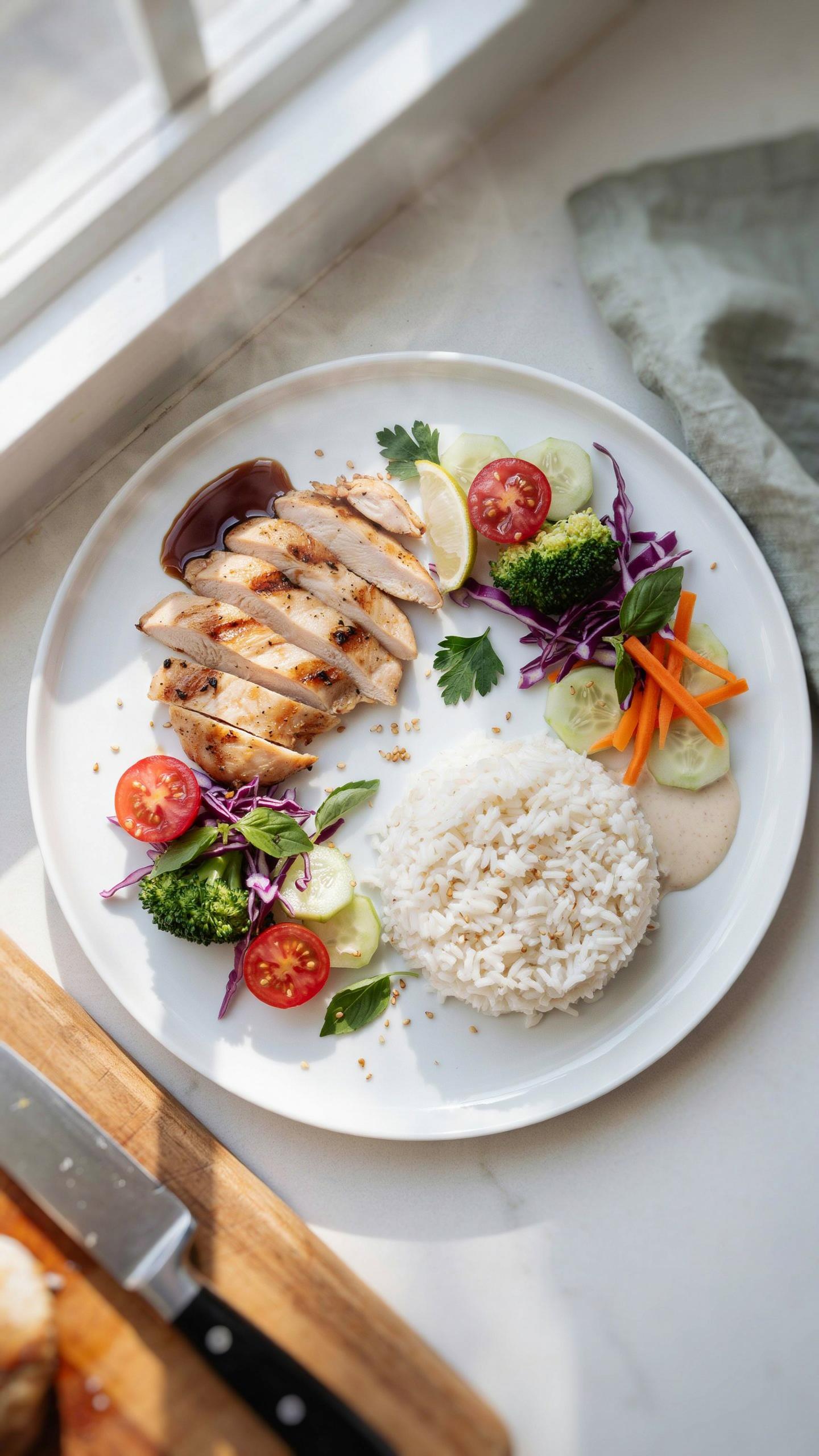
You care about this section because you want proof that chicken bowl meal prep won’t leave you hungry at 3 PM. Here’s the mechanism: protein triggers satiety through biology, not willpower. When you eat chicken, amino acids activate CCK and GLP-1 receptors in your gut. These hormones signal fullness to your brain faster than carbs or fat alone. A chicken bowl with 30-40 grams of protein per serving suppresses appetite for 4-5 hours because the protein literally changes your neurochemistry, not because you’re “disciplined.”
Muscle tissue maintenance requires amino acid availability. Chicken provides all nine essential amino acids in a single source, meaning your body doesn’t need to hunt elsewhere for the building blocks it needs. This is why chicken-based meal prep works for strength goals: you’re not guessing whether you’re hitting your amino acid profile. You eat the bowl and the protein does the work. Portion chicken at 150-180 grams per bowl for satiety that holds through lunch or an afternoon work block.
Grain As Fuel: The Glycemic Release Rate
Energy systems in exercise physiology use the concept of fuel substrate timing. Grains work the same way: they’re not just carbs, they’re controlled energy release. White rice spikes blood glucose quickly and refills muscle glycogen fast after training. Brown rice and oats release glucose slower, maintaining steady energy for desk work or light activity. The common advice treats all grains the same. That’s wrong. Pick the grain based on what comes after you eat, not based on generic “health” claims about fiber.
A 1-cup serving of cooked grain (measured after cooking) in your bowl provides 40-50 grams of carbohydrate. This amount sustains cognitive function for 2-3 hours without the blood sugar crash that comes from refined carbs eaten alone. Pair the grain with protein and you extend that window to 4 hours. Cook your grains in bulk on prep day, portion them cold into containers, and measure them by cooked volume. This removes guesswork from your macros and eliminates the excuse that meal prep is complicated.
The Flavor Matrix Avoiding Bland Repetition In Food Meal Prep Ideas
How Flavor Profiles Actually Work
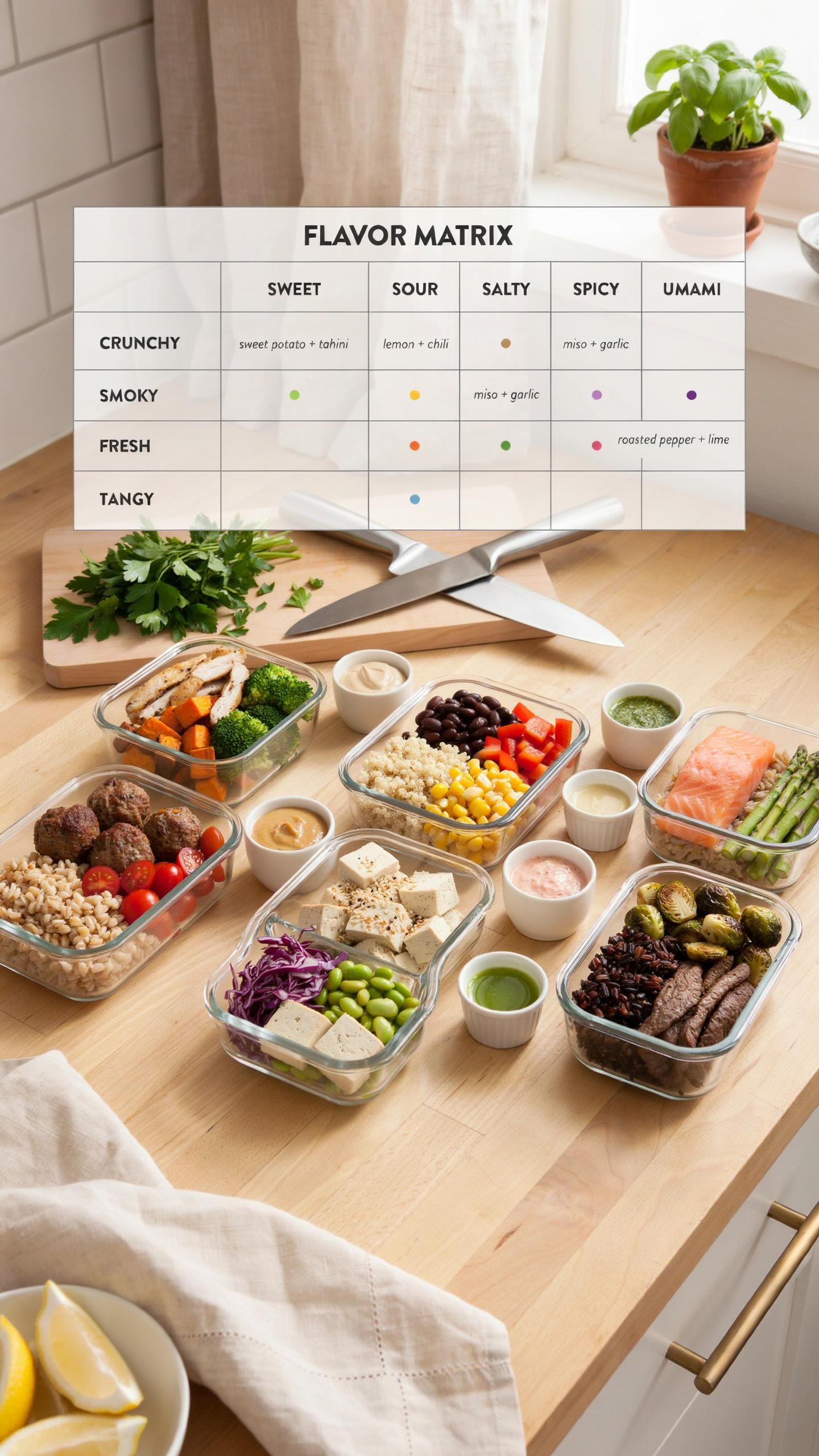
You’re scared of eating the same bowl five times and losing your mind. That’s not weakness, that’s signal. The real mechanism is contrast. Your palate doesn’t register flavors in isolation—it registers them relative to what came before. Eating identical seasoning profiles trains your taste receptors to tune them out. This is sensory adaptation, borrowed from neurobiology. You need deliberate tension between components, not just variety for its own sake.
Most meal prep advice says “just add different sauces.” That’s incomplete. The sauce is one lever. You also control acid, salt, heat, and umami independently. A lime-cilantro bowl and a soy-ginger bowl use the same chicken and rice base but fire different neural pathways because the acid source changes and umami density shifts. The structure stays consistent for prep efficiency. The signal changes so your brain stays engaged.
Your Spice Arsenal
You already know salt and pepper exist. What you’re missing is the layering system. Heat, depth, and brightness are three separate dials. Most people max one and ignore the others. Cumin gives warmth and earthiness. Cayenne gives bite without complexity. Lime juice gives brightness and cuts through richness. You’re not building flavor through volume—you’re building it through positioning.
- Cumin and coriander: Warm, earthy base layer that survives repeated meals without fatiguing your palate. Works across Mediterranean, Mexican, and Indian applications without signaling one cuisine.
- Smoked paprika: Adds depth and perceived richness without heat. Pairs with chicken more effectively than most cooks realize because it mimics char flavor your brain expects from grilled meat.
- Cayenne and black pepper: Two forms of heat that register differently. Black pepper burns slowly. Cayenne hits front-loaded. Use black pepper for baseline, cayenne for intentional kick on rotation days.
- Lime, lemon, and rice vinegar: Acid sources that age differently in storage. Lime fades by day three. Rice vinegar stays stable. Rotate them to reset perception of the same base ingredients.
- Fish sauce and soy sauce: Umami anchors from different culinary traditions. Fish sauce works in Southeast Asian builds. Soy works in East Asian. They’re not interchangeable—they signal different flavor narratives to your brain.
The practical move: assign one spice profile per day of the week, then cycle them. Monday is cumin-lime. Tuesday is smoked paprika-lemon. Wednesday shifts to soy-ginger. Thursday goes fish sauce-lime. You’re using five core spices across four bowls. Your prep stays simple. Your brain stays engaged because the seasoning sequence breaks pattern recognition before boredom sets in.
Strategic Stacking Building Your Dinner With Chicken Ideas Arsenal
Cook Once, Assemble Endlessly
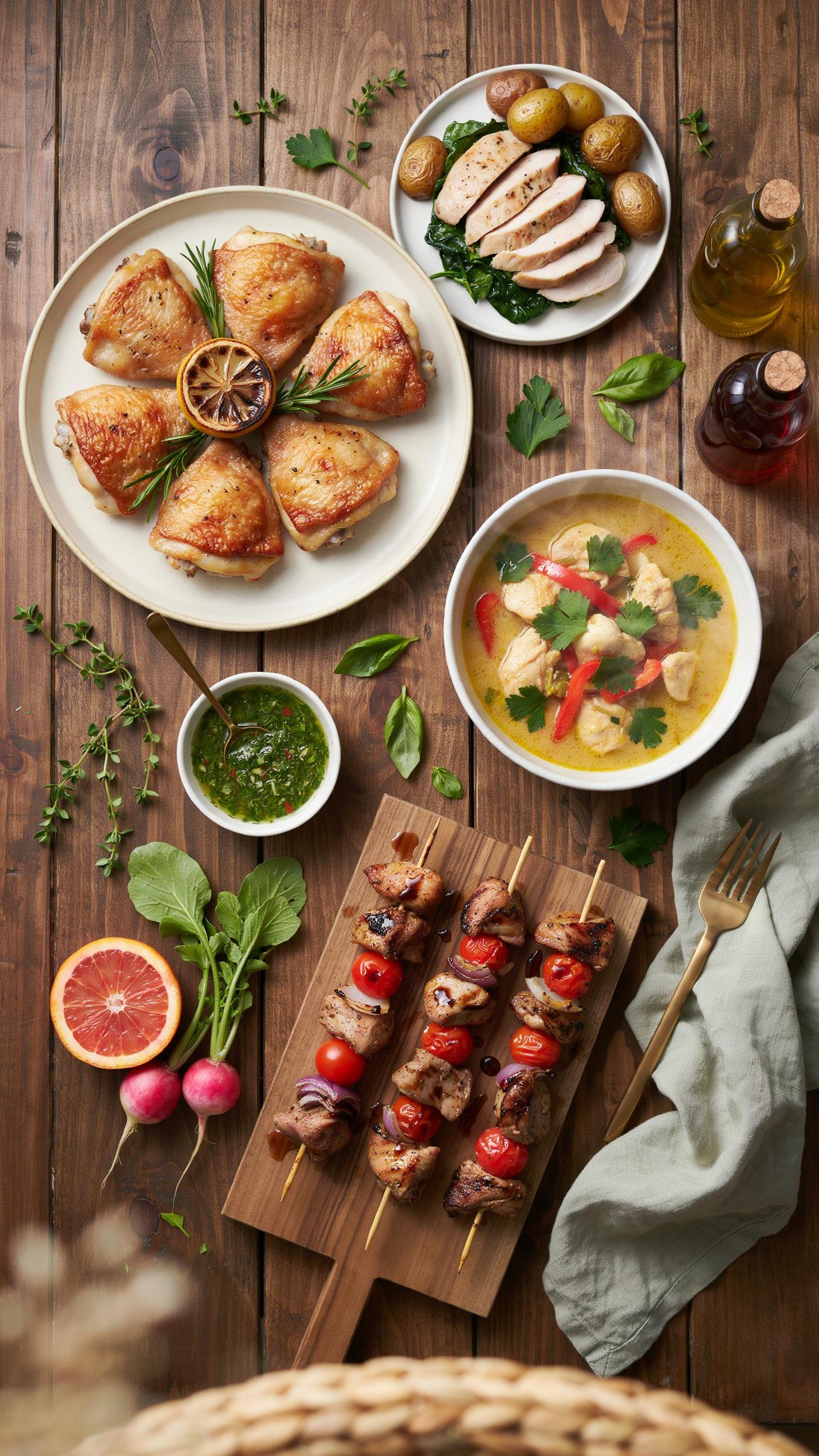
You want meal prep to feel effortless so you stop thinking about dinner and start thinking about what matters. The real mechanism is separation of concerns: cook components independently, then recombine them in different ratios throughout the week. This isn’t new. Restaurant kitchens have done this for decades. You’re borrowing their mise en place logic and applying it to your home kitchen.
The payoff is brutal efficiency. You cook chicken once. You cook grains once. You cook vegetables once. Then you build five different bowls from the same raw materials by changing proportions and toppings. One Sunday session yields dinners for the entire work week with zero repetition fatigue.
- Protein component: Cook 2 to 3 pounds of chicken breast or thigh using a single method. Bake, poach, or slow cook. Store separately for 4 to 5 days refrigerated.
- Grain component: Batch cook rice, quinoa, or farro in a large pot. Portion into containers while warm. Grains hold texture better when stored individually than when mixed with wet ingredients.
- Roasted vegetables: Cook brussels sprouts, broccoli, and carrots at 425 degrees Fahrenheit for 25 to 30 minutes. Toss with oil and salt only. Store dry to prevent sogginess.
- Fresh vegetables: Slice cucumber, tomato, or radish on day-of or day-before assembly. Store in sealed containers to limit oxidation and moisture loss.
- Sauce or dressing: Mix olive oil, vinegar, soy sauce, or tahini-based dressing separately. Keep in glass containers. Add only at final assembly to prevent texture degradation.
The assembly step is where the system proves itself. Monday you make a Mediterranean-style bowl with farro, roasted vegetables, and lemon-olive oil dressing. Wednesday you switch to a soy-ginger ratio with the same chicken and add fresh cucumber. The components don’t change. Your decision-making does.
Contrasting Textures, Not Monotony
Everyone says “vary your toppings for interest.” That’s lazy advice that misses the actual mechanism. You need textural opposition, not just variety. This principle comes from food science: humans perceive boredom when a single texture dominates sensory input. Your palate fatigues. You stop finishing the bowl.
A chicken bowl needs at least four texture registers: soft (the chicken), starchy (the grain), firm (roasted vegetables), and crisp (fresh vegetables or a crunchy topping). Without this deliberate layering, you’re eating mush disguised as a meal. The crisp element is non-negotiable. It signals freshness to your brain and anchors the entire eating experience. Add raw nuts, seeds, or fresh vegetables at the final moment before eating. Cook-ahead crunch gets soggy.
The protocol is simple: identify your textural anchor before you build the bowl. If grains are soft and chicken is tender, roasted vegetables must have char and color to read as distinct. If roasted vegetables are the star, you need a raw element that cuts against them. Every component earns its place by doing something the others don’t.
The Feedback Loop Optimizing Your Bowls Recipes For Peak Output
Track Energy, Not Calories
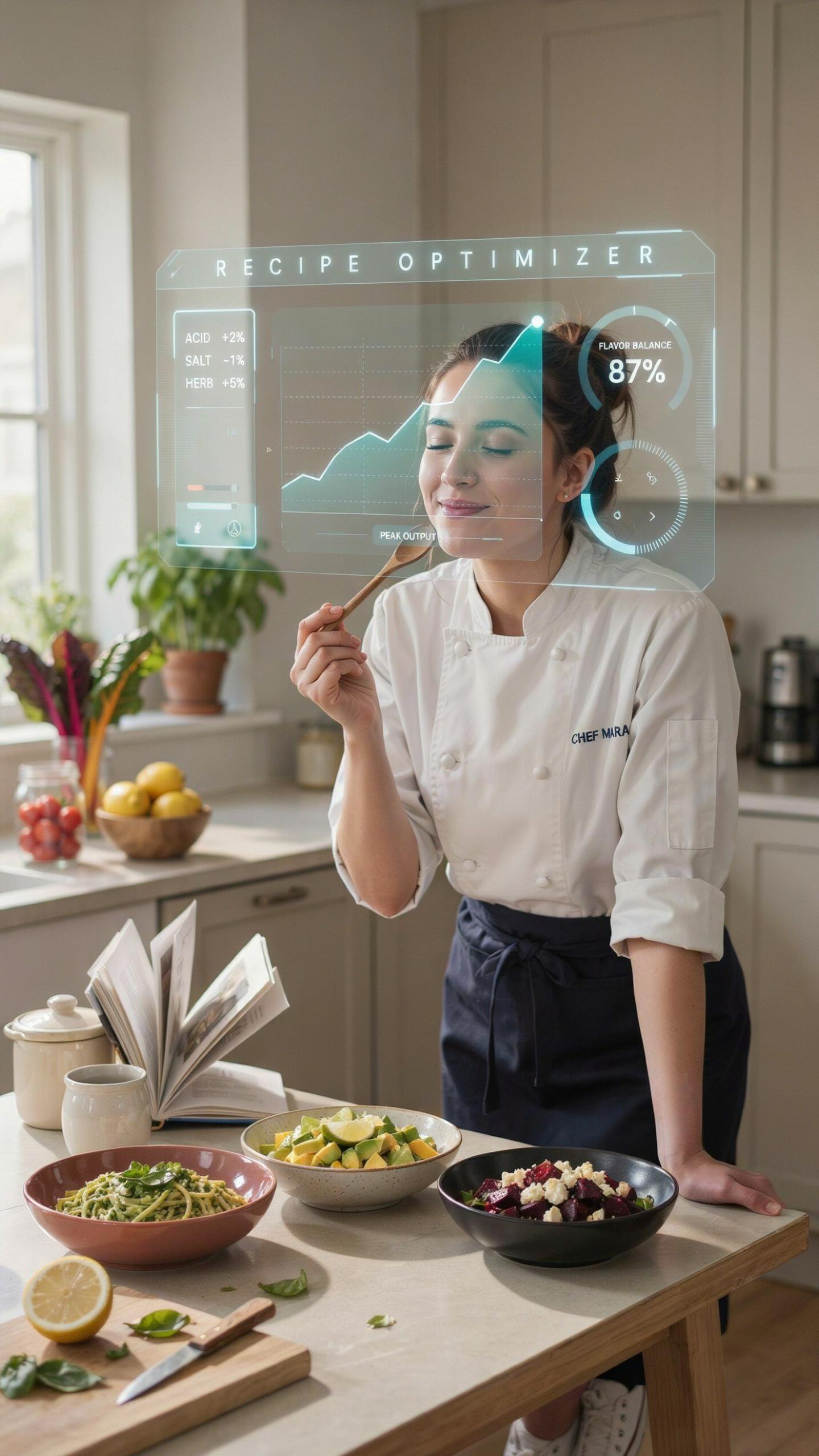
You want to know if your bowl formula actually works without admitting you’re tired and scattered most days. Cybernetics teaches us that systems self-correct through feedback, and your body is a system that signals output through energy state, not macros. Track how you feel two hours after eating, not just what went in the container.
Energy mapping means logging three data points per bowl: hunger return time, afternoon focus quality, and whether you needed caffeine by 3 PM. Do this for one week on your current recipe. The real mechanism emerges in the pattern, not the individual meal. If energy crashes at hour three consistently, your protein-to-carb ratio is wrong for your activity level, not your calorie count.
Iterate The Ratio, Not The Recipe
Most advice says rotate recipes to avoid boredom. That’s backwards and wastes your intelligence gathering. Systems theory says you optimize through iteration of variables, not through novelty. Change one element per week: swap white rice for brown, increase chicken by 30 grams, add 100 calories of olive oil to the vegetable portion. Measure the energy response to that single variable.
You’ll identify what moves the needle on your output within four weeks instead of guessing for months. When you find the ratio that holds you at stable energy for six hours, stop changing it. The goal is a bowl that works, not a bowl that feels different. Document the winning formula and use it as your baseline before any future adjustments.
Beyond The Week Sustaining The Rice Recipe Ideas Advantage
The Relapse Pattern Nobody Admits
You want this section because you’re afraid you’ll quit. Most people do quit meal prep after the initial motivation dies. The mechanism is simple: motivation is not a renewable resource, but systems are. Once you stop treating chicken bowl prep as a willpower game and start treating it as a logistics problem, relapse stops being inevitable.
The first mistake is planning only one week ahead. You prep Sunday, crush Monday through Wednesday, then Thursday hits and you’re back to takeout because you never planned for the moment your prep runs out. Build a rolling calendar instead. Every time you finish a prep cycle, you immediately schedule the next one. Not “I’ll prep again sometime.” Actual calendar blocks. This removes the decision from the motivation tier entirely.
Structuring Your Prep Environment
Friction beats discipline every time, and environment design is borrowed from industrial engineering, which teaches that the system should enforce compliance rather than relying on willpower. In your kitchen, you’re installing a “pull system” where cooking chicken bowls becomes the path of least resistance. Right now, takeout is easier than prep. You need to invert that.
Dedicate a shelf in your fridge for prepped components only. Container for rice, container for chicken, container for vegetables. Pre-cut your vegetables the day before prep day so they’re ready to portion. Keep your meal prep containers stacked and visible on eye level. Keep takeout menus in a drawer you have to open. The goal isn’t motivation. The goal is making the wrong choice require extra steps. You do this by making your environment answer the question before your brain does.
Until you master your inputs youll always be a slave to your impulses

Most people fail at meal prep because they treat it like a chore instead of a system. You don’t need perfect recipes or exotic ingredients. You need to pick one chicken bowl formula that works, then execute it every Sunday without thinking. Stop scrolling for better options. Pick your grain, your protein, your vegetables today. Build the habit first, optimize later. Your body doesn’t care about variety, it cares about consistency. Discipline is deciding once, then removing the decision forever.