
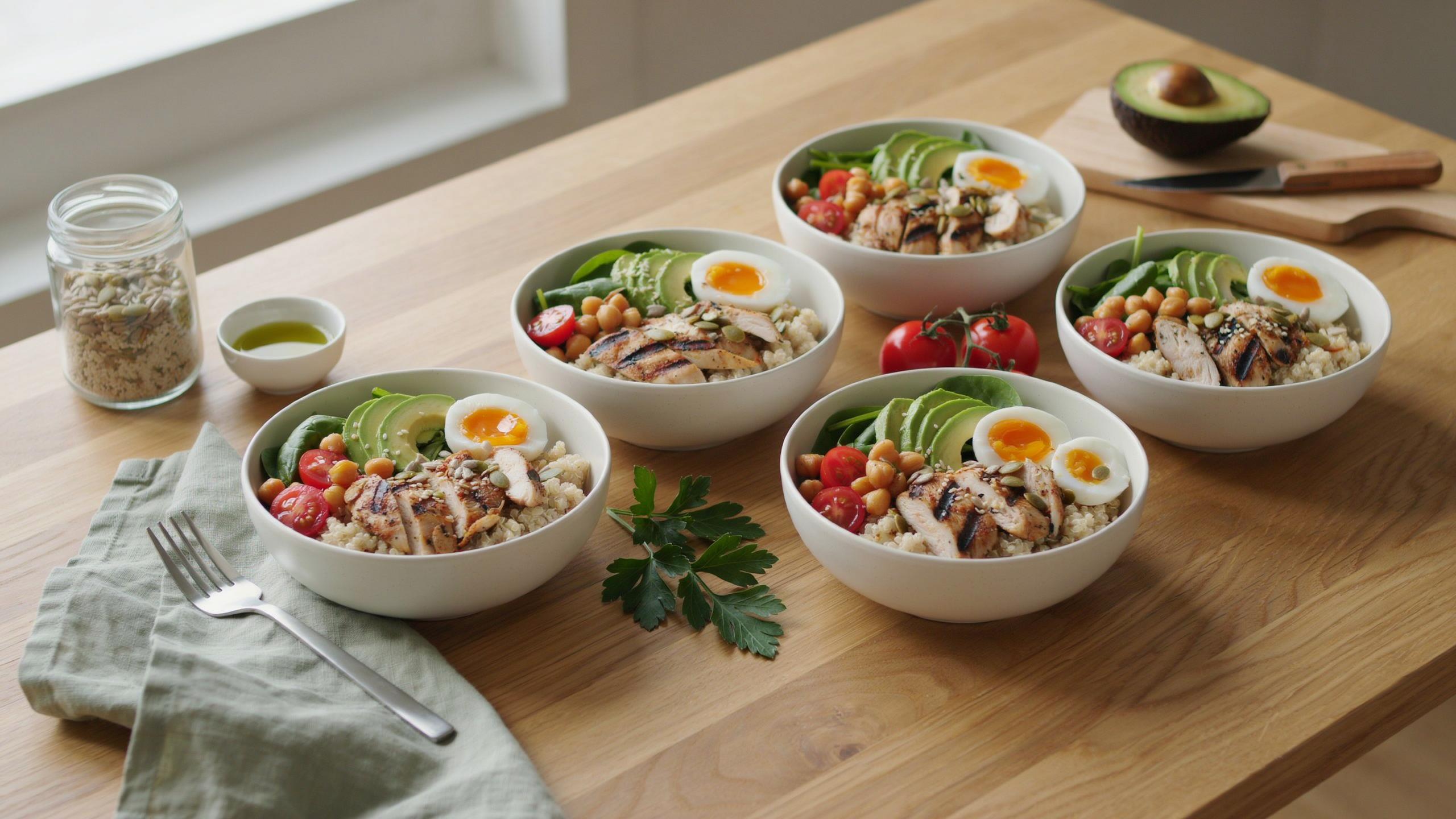
Beyond Macros The Hidden Value Of Protein Lunch Bowls
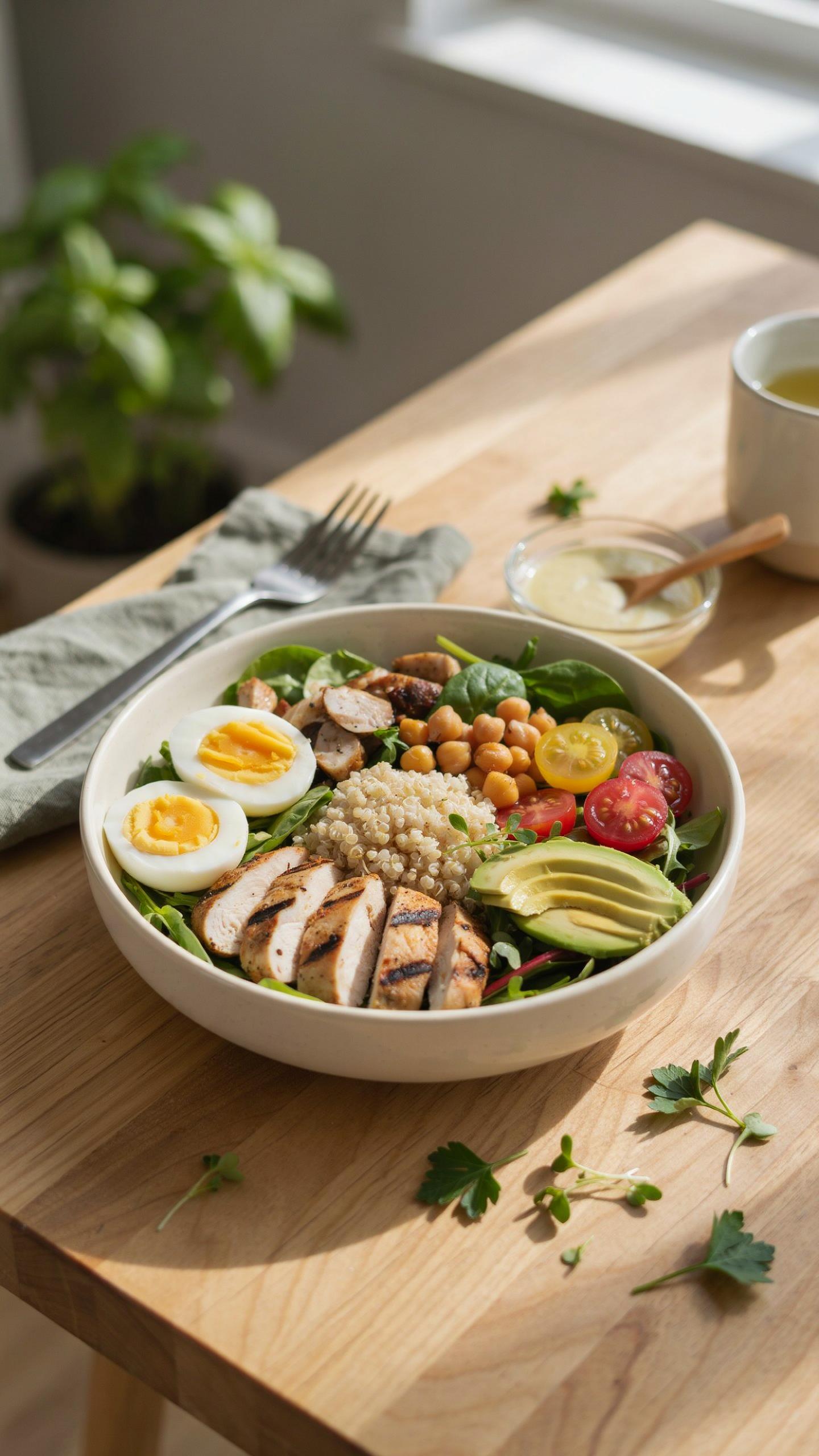
Decision Fatigue Dies When Lunch Is Non Negotiable
You want to believe willpower is infinite. It isn’t. Decision fatigue is real neurological depletion, not weakness. Every food choice your brain makes during the workday drains the same cognitive resources you need for actual output. Meal prepped protein bowls eliminate that drain entirely by removing the decision from lunch altogether.
The mechanism is borrowed from economics: opportunity cost. When you don’t prep, you spend mental energy choosing between sandwich shops, takeout apps, and vending machines. That friction doesn’t sound expensive until you realize it’s the same decision-making resource that handles your actual work. Prepped bowls move lunch from a choice to a ritual, freeing that bandwidth for what matters.
The Real Price Of Lunch Improvisation
Most people frame lunch as a break. Wrong. Lunch is a productivity anchor that determines your afternoon output. When you improvise, you either underfuel (hunger crashes at 3pm) or overfuel (heavy carbs spike and tank your focus). Prepped protein bowls lock in consistent macros, which means consistent energy, which means consistent performance.
The hidden cost of skipping prep is velocity loss, not just in that meal but in everything after it. You grab something quick, blood sugar spikes, you hit a wall, your decision-making tanks for the next four hours. One unprepared lunch compounds into lost hours of work. Protein bowls standardize your refueling so your output stays flat instead of oscillating. Prep your bowls Sunday night, portion them into five containers, and remove the variable entirely.
The Automated Fuel Protocol High Protein Power Bowl Meal Prep
Batch Preparation For Consistent Energy
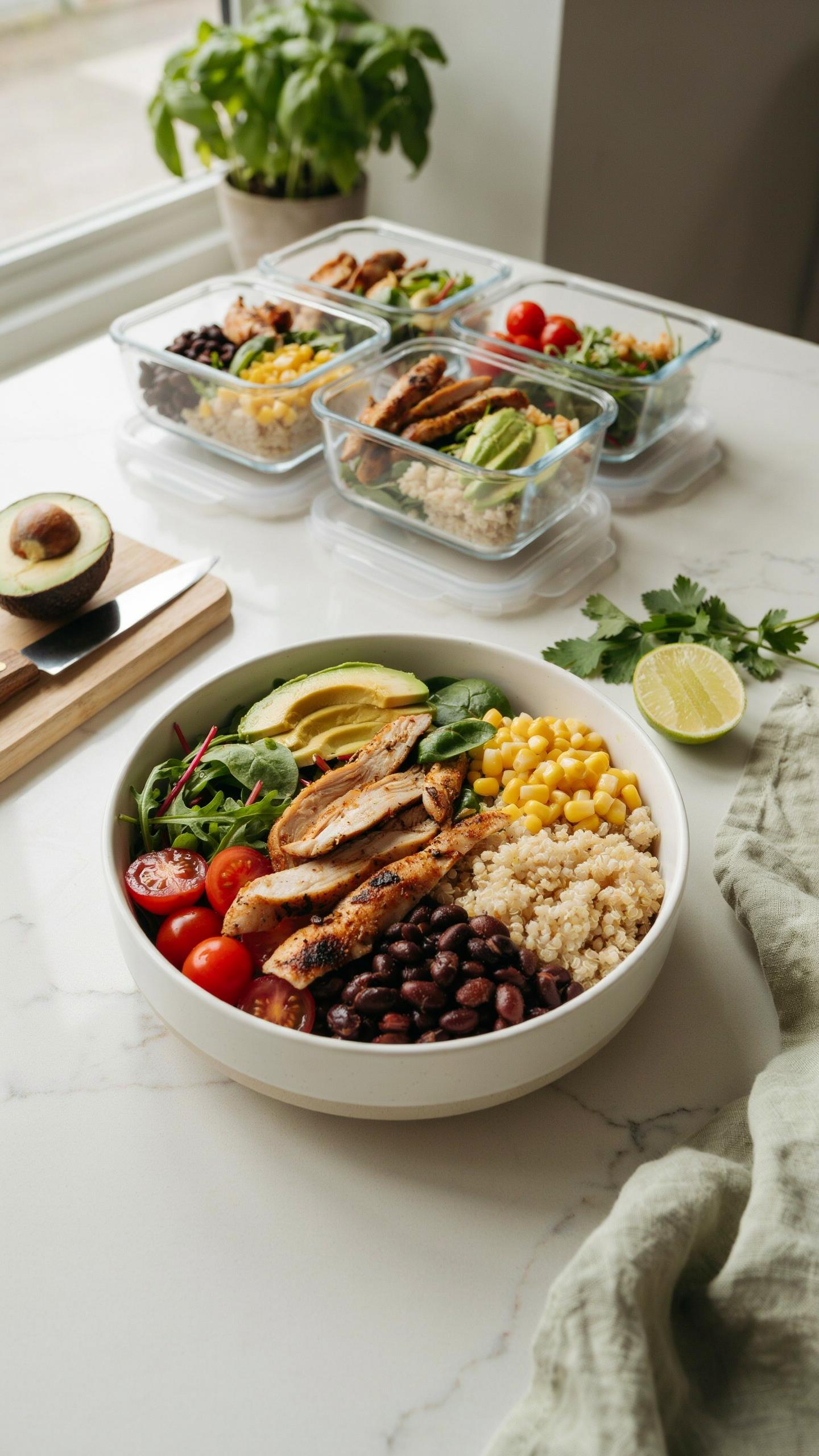
You want this because you’re tired of feeling like your energy crashes at 2 PM and you can’t figure out why. The mechanism is simple: your blood sugar swings wildly when you eat random carbs without protein. Batch prep fixes this by removing the variable. When you cook five identical bowls on Sunday, you’re not relying on willpower or motivation Wednesday afternoon. You’re relying on a system. Each bowl contains the same protein-to-carb ratio, so your energy stays flat instead of spiking and crashing.
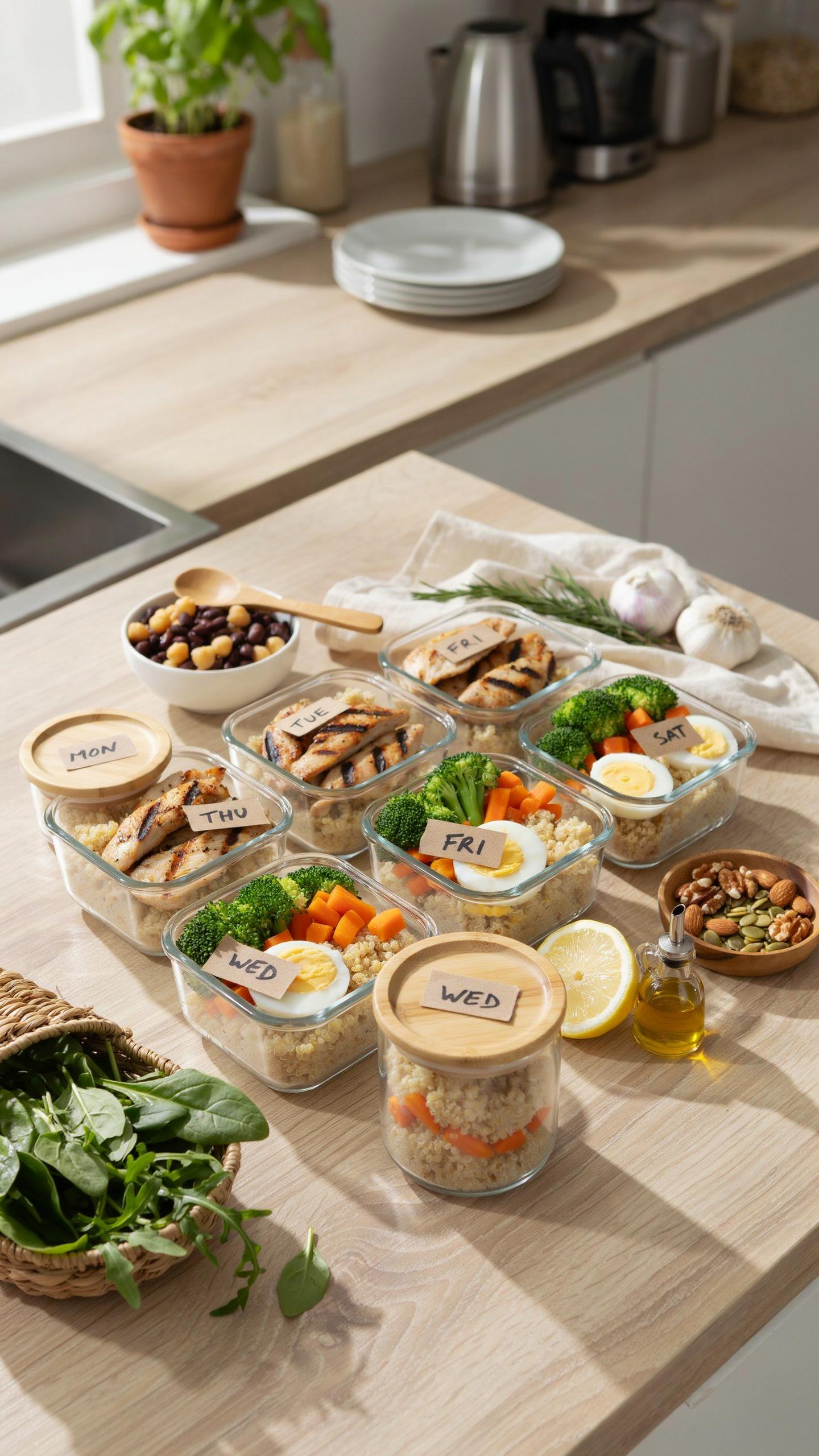
The physics principle here is momentum. Once a batch is cooked and portioned, the activation energy required to eat it drops to nearly zero. You grab a bowl from the fridge instead of ordering takeout or eating whatever’s closest. This matters because the meal decision happens once, not five times. You spend 90 minutes on Sunday preparing. You spend zero decision-making minutes Monday through Friday. The math favors prep work over daily friction.
Eliminating Daily Food Related Willpower Depletion
Everyone knows willpower is finite. What they miss is that every meal choice burns through your allocation for the day. This is why decision fatigue compounds. You choose breakfast. You choose lunch. You choose dinner. By evening, you’re too depleted to make good choices about sleep or work. High protein power bowl prep removes three of these decisions. You’ve already chosen the macros, the portions, and the timing on prep day.
The science behind this is decision fatigue. A study by Baumeister and colleagues demonstrated that each decision consumes cognitive resources. The practical application: a pre-portioned bowl with 35-40 grams of protein, specific carbs, and vegetables requires zero thought at noon. You eat it. Your afternoon productivity stays high because you didn’t spend mental currency on another food choice. Pack the bowl the night before so grabbing it becomes a one-second action, not even a decision.
Power Bowls Engineering Nutritional Certainty
Build From Interchangeable Parts
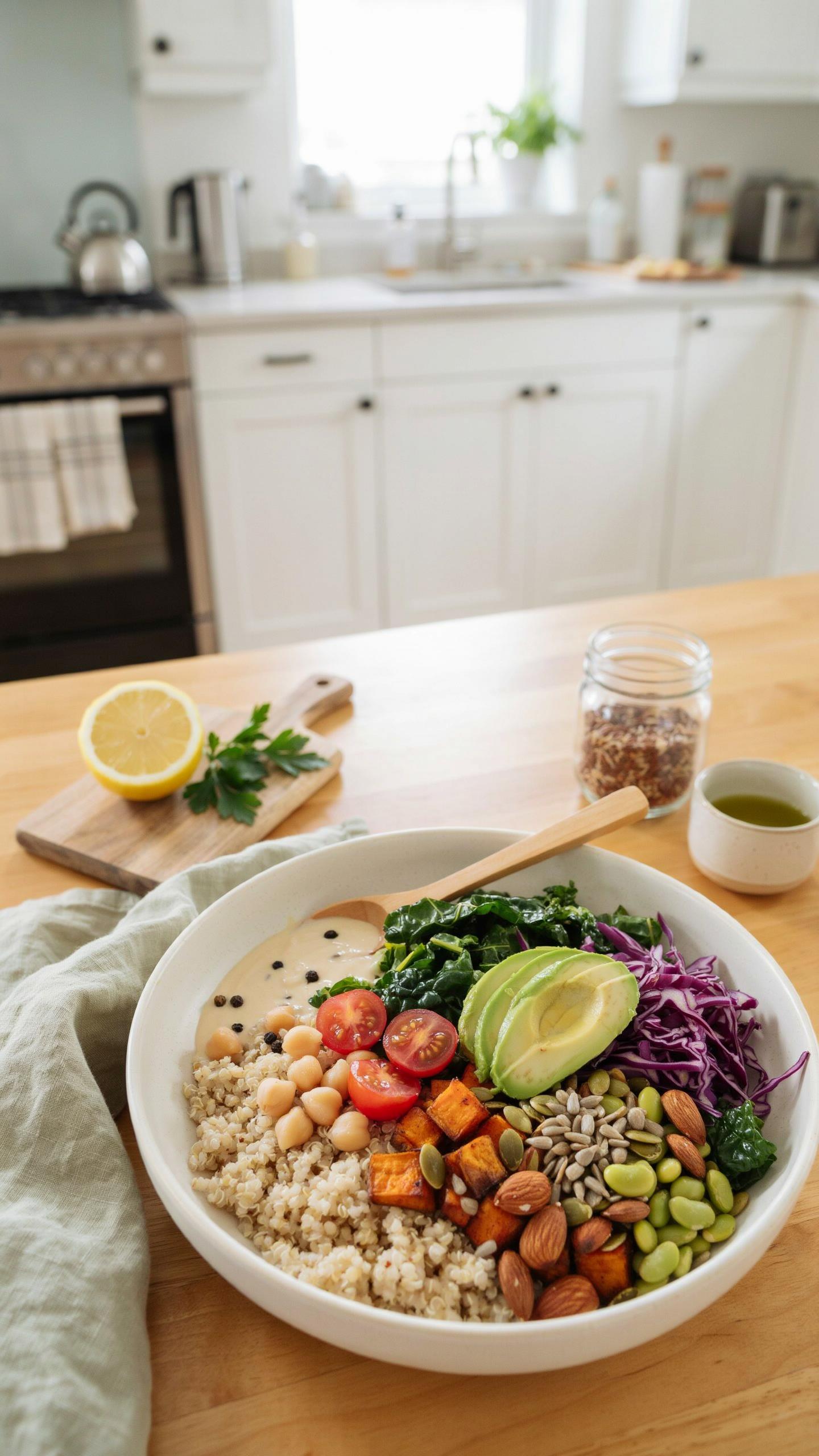
You want to believe meal prep is simple because you’re tired of thinking about food. The mechanism that actually works is treating your bowl like a machine with swappable components, not a recipe. Each position has a job. Protein goes in the protein slot. Carbs in the carb slot. Fat in the fat slot. Vegetables fill dead space. Swap out the specific foods, keep the architecture identical, and you remove decision fatigue entirely.
This modular approach comes from systems thinking in manufacturing: standardize the structure, vary the inputs. Your Monday bowl uses chicken breast and white rice. Wednesday uses ground turkey and sweet potato. Friday uses salmon and quinoa. The ratios stay locked. The template never changes. You’re not creating new meals, you’re running variations on one proven structure. The only variable is which protein, grain, and vegetable combination you grabbed from your prep containers that morning.
Portions Lock In Results Before You Eat
Pre-portioning isn’t about restriction. It’s about removing the ability to guess wrong. Most people overeat protein bowls because they eyeball portions and their eyes scale up with their appetite. Pre-portioning eliminates that gap between intention and action. You’ve already decided the portion size during prep when you’re calm and thinking clearly. When you’re hungry at lunch, you execute, not negotiate.
Measure once during prep, eat the same amount five times that week. A standard high protein bowl lands around 40-50 grams of protein, 50-70 grams of carbs, and 12-18 grams of fat. You portion these amounts into containers before they hit your fridge. When hunger hits, the container itself becomes your boundary. You finish what’s inside and you’re done. No second-guessing. No “just a little more.” The portion size was already decided by your past self who wasn’t starving.
Homemade Protein Bowls Your Personal Supply Chain
Control Your Costs Before They Control You
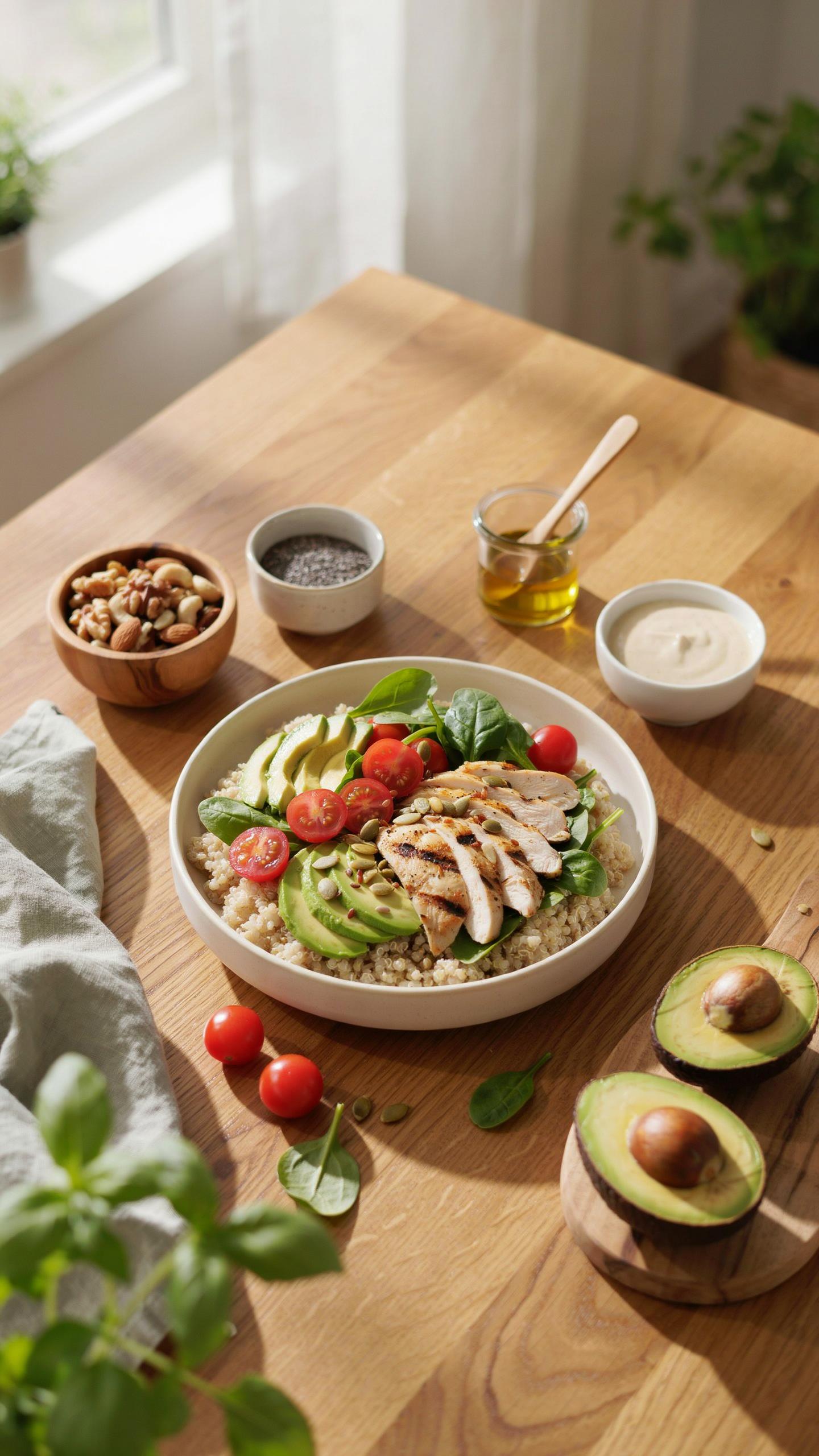
You want to believe meal prep saves money, but you’re really running from the shame of spending forty dollars on lunch without thinking. The mechanism is simple: every middleman between farm and your bowl adds markup. Restaurants stack markups. Meal prep services stack markups. When you buy ingredients and assemble them yourself, you eliminate those layers. The math stops being abstract and becomes visible on your receipt.
Buy proteins in bulk when prices dip, not when you need them. Chicken thighs cost less than breasts and hold more flavor. Eggs stay cheap because supply is stable. Canned beans beat fresh beans on both price and shelf stability. Rice and grains bought in five-pound or larger quantities cut per-serving cost by half compared to restaurant portions. You control the ingredient quality, the portion size, and the frequency of purchase.
Source Ingredients Like You Own The Operation
Supply chain thinking from manufacturing applies directly here: your bowl’s reliability depends on knowing where each component enters your system. Don’t assume quality exists in the middle of a distributor’s warehouse. Visit the source. Buy chicken from a butcher who can tell you the farm, or from a grocer with fast turnover on refrigerated cases. Frozen vegetables often exceed fresh because they’re frozen at peak ripeness, not picked early and shipped across regions.
Build relationships with specific vendors. A butcher learns your preferences and alerts you to sales. A produce manager at your grocer knows which days shipments arrive. Buying from the same sources repeatedly teaches you the real quality baseline and flags when standards slip. This isn’t nostalgia. This is inspection at the point of origin, which costs nothing but attention, and prevents the waste of bad ingredients spoiling your meal prep week.
The Minimalist Lunch Principle Healthy Bowls For Maximum Gain
Build Around Protein First, Everything Else Second
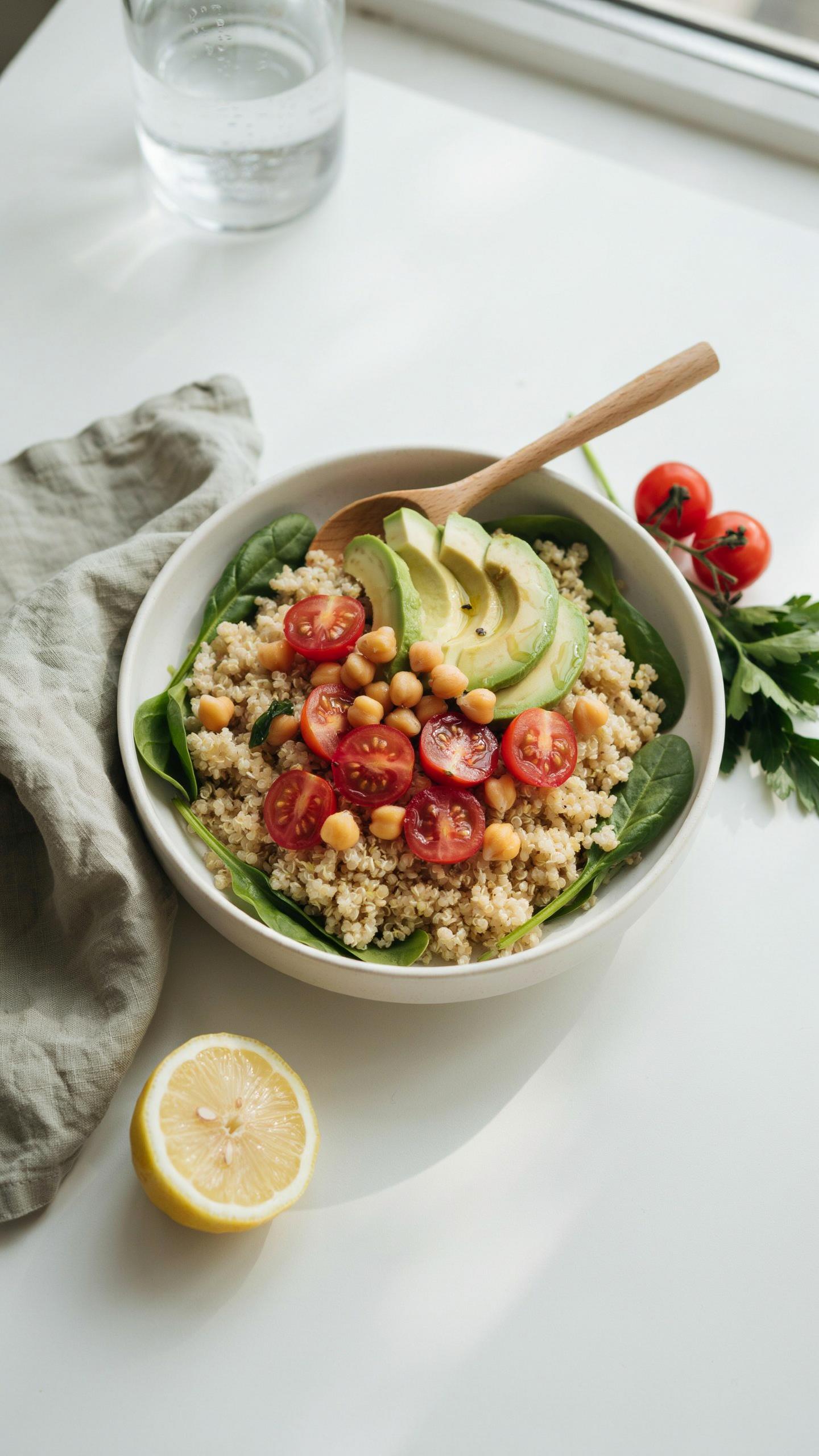
You want this to work because you’re tired of lunch being a distraction from actual work. Here’s the mechanism: protein is the constraint that forces everything else into place. In systems thinking, this is called the bottleneck principle. Your protein source becomes the bottleneck that determines bowl quality, prep time, and satiation. Pick chicken breast, ground turkey, canned tuna, or Greek yogurt first. Everything else you add either amplifies that protein’s effect or wastes space. Most people reverse this. They start with grains or vegetables and sprinkle protein on top like seasoning. That’s backwards.
The math is straightforward. Protein dictates your macros. A 150-gram chicken breast gives you roughly 45 grams of protein with minimal prep. Your bowl now has an anchor. Add a starch that won’t compete with that protein’s absorption window, then vegetables that add volume without caloric bloat. You’re not choosing ingredients randomly anymore. You’re building around a fixed point. Cook your protein in batches on Sunday. Everything else gets added the night before or morning of. This removes decision-making from the equation entirely.
Combine Ingredients That Don’t Fight Each Other
Time savings come from understanding food pairing mechanics, not from rushing. A grain plus legume plus acid works because the acid increases mineral bioavailability and the legume fills the amino acid gaps the grain leaves. Rice and beans together create a complete protein profile. Add vinegar or lemon juice and you’re not just making something taste better, you’re changing what your body actually absorbs. This synergy means you need fewer total ingredients to hit your nutritional targets. Fewer ingredients means fewer prep steps.
Most meal prep advice says “cook everything separately then combine.” That wastes time. Instead, cook your grain and protein in ways that let you build directly into the bowl. Roast vegetables while your protein finishes cooking in an adjacent oven section. Cool everything simultaneously. Store in airtight containers with your acid already mixed in. The acid preserves freshness and starts breaking down anti-nutrients while you sleep. Your Monday bowl tastes better than your Friday bowl in most meal prep systems. This one doesn’t, because the mechanics work backward through the week.
High Protein Veggie Bowls The Micronutrient Multiplier
Why Plants Matter More Than Protein Alone
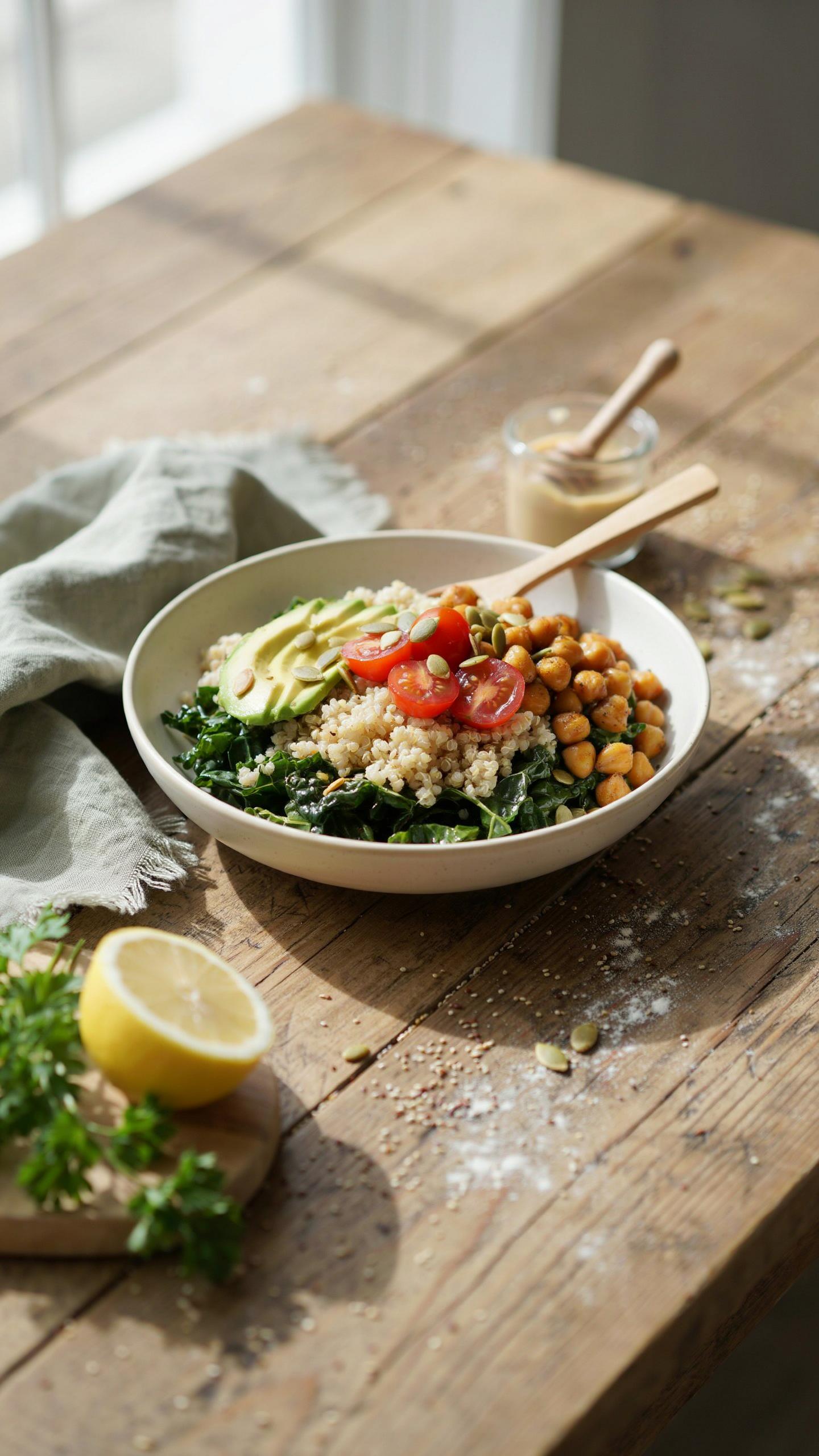
You want cognitive edge without the mental fog that comes from a carb crash. Here’s the mechanism: phytonutrients from vegetables trigger upregulation of brain-derived neurotrophic factor, which directly improves focus and memory retention. This isn’t theory. Polyphenols in cruciferous vegetables cross the blood-brain barrier and reduce neuroinflammation. You can’t get this from protein powder. The difference between a bowl that fuels your afternoon and one that leaves you flat at 3pm is the vegetable density you actually commit to, not the protein grams.
Your standard “high protein bowl” misses this entirely. Most meal prep guides talk protein and ignore the actual performance variable. Green leafy vegetables, bell peppers, and cruciferous vegetables packed into your bowl alongside lean protein aren’t side dishes—they’re the active ingredient. Layer spinach, broccoli, or kale into your prep containers first. This protects the protein from oxidation and ensures you eat them before they wilt. The vegetables determine whether you stay sharp or crash.
Fiber As Energy Stability
Biology teaches us about glycemic load, and high protein power bowl meal prep applies this principle directly through fiber content. Soluble fiber in vegetables slows carbohydrate absorption, preventing the insulin spike that kills sustained energy. Most protein-focused bowlers ignore fiber entirely and wonder why they hit a wall. The mechanism is simple: glucose enters your bloodstream gradually instead of flooding it, keeping dopamine and cortisol stable for hours.
Your prep needs fiber targets, not fiber accidents. Aim for 8 to 12 grams per bowl from vegetables and legumes combined. This means actual measurement during prep, not hoping the vegetables cover it. Bell peppers, Brussels sprouts, and beans deliver both protein and fiber efficiently. Pack them at the bottom of containers to maintain texture through the week. The containers themselves matter—glass keeps vegetables firmer than plastic, which affects how much fiber you actually eat versus what remains on your fork.
The Antifragile Fuel Framework For Best High Protein Meal Prep
Your Body Stays Stable Through Protein
You want meal prep to feel effortless so you stop thinking about food and stay lean without willpower. Here’s the mechanism: your body runs on homeostasis, a biology term meaning it maintains a narrow operating range despite external chaos. Protein anchors this stability. When you consume consistent protein amounts across meals, your blood glucose doesn’t spike and crash, your hunger hormones stay regulated, and your muscle tissue doesn’t degrade between workouts. This isn’t motivation. It’s basic physiology.
Most meal prep advice treats protein as a number to hit, not a stabilizing force. That’s incomplete. A 35-gram protein bowl at lunch doesn’t just fill you up. It prevents the 3 PM energy collapse that kills afternoon productivity and triggers overeating at night. Your body achieves homeostasis through consistent macronutrient input, not sporadic heroic efforts. The bowl is the delivery mechanism for internal equilibrium, not a weight loss hack.
Your Body Adapts Through Varied Protein Sources
Allostasis is what biology calls the process of adapting to repeated stressors by shifting your baseline. Your muscle tissue, gut bacteria, and metabolic enzymes all adapt to the protein sources you feed them repeatedly. Rotating between chicken, fish, beef, legumes, and Greek yogurt in your weekly bowls triggers different amino acid profiles and micronutrient densities. Your body doesn’t just process these sources identically. It rewires its digestive capacity and nutrient absorption based on what you consistently demand of it.
The common mistake: eating the same protein source five days a week. Your system adapts to that single stimulus and stops responding. Variety forces adaptation, which builds resilience into your nutrition system. If chicken disappears from your diet, your body has already learned to extract amino acids from other sources. Protein feeds stability, but protein diversity feeds adaptation. Rotate your bowl proteins across the week, cycling through at least three sources per seven days, so your system stays plastic enough to handle real-world disruption.
Protein Bowl Recipes The Iterative Improvement Loop
Measure What Actually Matters
You want permission to stop guessing and start winning. That’s why you care about this section. The mechanism is feedback loops from biology: your body responds to specific inputs, and you need data to see the pattern. Most people track calories and call it done. That’s incomplete. You need baseline metrics that predict your actual outcome: energy levels two hours post-meal, hunger return time, and body composition change week-over-week.
Build a simple spreadsheet. Record the bowl composition, macronutrient targets, and one outcome measure daily. After two weeks, you’ll see which protein source, carb ratio, or vegetable combination keeps you satiated longest. This isn’t motivation. This is signal detection. Adjust one variable at a time so you isolate what works. Stop adjusting when the outcome metric plateaus.
Calibrate The Taste And Ratios Together
Common advice says hit your macros and flavor follows. Wrong. Flavor drives consistency, and consistency drives results. Macronutrient ratios matter only if you actually eat the bowl. The real mechanism is palatability bias: your body craves certain textures and tastes, and fighting that creates decision fatigue that kills meal prep compliance.
Test protein sources in this order: chicken breast with acid (lemon, vinegar), ground turkey with fat (olive oil, tahini), then lean beef. For each protein, vary the carb source and vegetable pairing across three bowls. Taste each one cold after 24 hours, since that’s when staleness hits hardest. Document which combination you’d choose again. That combination becomes your baseline. Refine from there by adjusting sauce ratios or vegetable cuts, never abandoning the core flavor profile that works.
Accelerating Progress With Protein Power

Sustained Energy For Demanding Tasks
You want to feel sharp at 3pm because losing focus costs you money or status or both. The mechanism is blood glucose stability, borrowed from nutrition science. Protein slows gastric emptying, which means carbs enter your bloodstream gradually instead of spiking then crashing. A power bowl with 35-40g protein, complex carbs, and fiber creates a flat glucose curve that keeps your cognitive output steady for 4-5 hours.
Most people chase energy through caffeine or snacking. That’s treating the symptom. Your power bowl prevents the energy dip entirely by controlling the rate carbohydrates hit your system. When you prep bowls with chicken or fish, brown rice, vegetables, and a fat source like olive oil, you’re engineering a release schedule, not just eating lunch.
Recovery Optimization For Consistent Output
Muscle damage and central nervous system fatigue are real physiological events that interfere with tomorrow’s work. Protein synthesis doesn’t happen passively after you eat protein. Amino acids trigger mTOR signaling, but only when protein timing aligns with training stress or cognitive demand. A 40g protein power bowl eaten within 2-3 hours post-workout accelerates adaptation, which means you recover faster and perform better the next day.
The common advice says “just get enough protein daily.” That’s incomplete. Distribution matters. Spreading 120g across three meals instead of two creates more frequent anabolic signals than front-loading or back-loading. Prep your bowls so you can hit 35-40g per meal consistently, then monitor whether your training output increases week-to-week and your soreness drops.
The real obstacle isnt your diet its your flawed system for making daily decisions

You don’t fail at high protein power bowl meal prep because you lack discipline. You fail because you never remove the decision from the equation. When Sunday rolls around, you either prep five bowls or you don’t. There’s no willpower involved. Pick one day this week. Block two hours. Buy your proteins and vegetables. Stop deciding what to eat and start deciding once. The difference between people who stay lean and people who don’t is this: the winners eliminated the choice.