
The Cognitive Load Fallacy Why Your Protein Meal Plan Fails

Decision Fatigue Kills Consistency Before Hunger Does
You want the meal plan to make you look disciplined. The real mechanism is this: every food choice you make depletes a finite resource called decision-making capacity. By day three of a five-day prep without a locked system, you’re running on fumes. Psychology calls this ego depletion. In meal prep, it’s the difference between executing and negotiating with yourself every morning about what to eat.

Most meal prep advice assumes willpower is unlimited. It’s not. You have roughly 50 to 100 meaningful decisions per day before your judgment collapses. Add grocery shopping choices, protein source selection, seasoning decisions, and container logistics to that stack. By the time you’re supposed to stick to the plan, your brain has already spent its currency elsewhere. The plan fails not because it’s bad, but because you’ve exhausted the mental energy required to follow it.
Systemize The Variables, Not The Willpower
The common approach to this problem is motivational: “Stay committed.” That’s incomplete. The real solution is removing decisions from the equation entirely. You don’t prepare five days of meals to test your discipline. You do it to create a decision-free zone where execution becomes automatic.
Pick one protein source per prep cycle. One carbohydrate. One vegetable. One seasoning profile. This isn’t boring. It’s strategic subtraction. When you remove the cognitive tax of choice, you free up the mental bandwidth to actually execute consistently through day five. The system that requires the least thinking wins every time because humans don’t operate on willpower. They operate on systems.
The Minimalist Matrix For High Protein Meal Prep
Batch Cook Core Proteins
You want this to feel effortless so you stay consistent, but the real reason you’re reading this is to stop wasting Sunday afternoons on prep work that doesn’t scale. The mechanism is simple: cooking proteins in bulk uses the same energy expenditure whether you’re making one chicken breast or twelve. You front-load the time once, then portion it across five days.
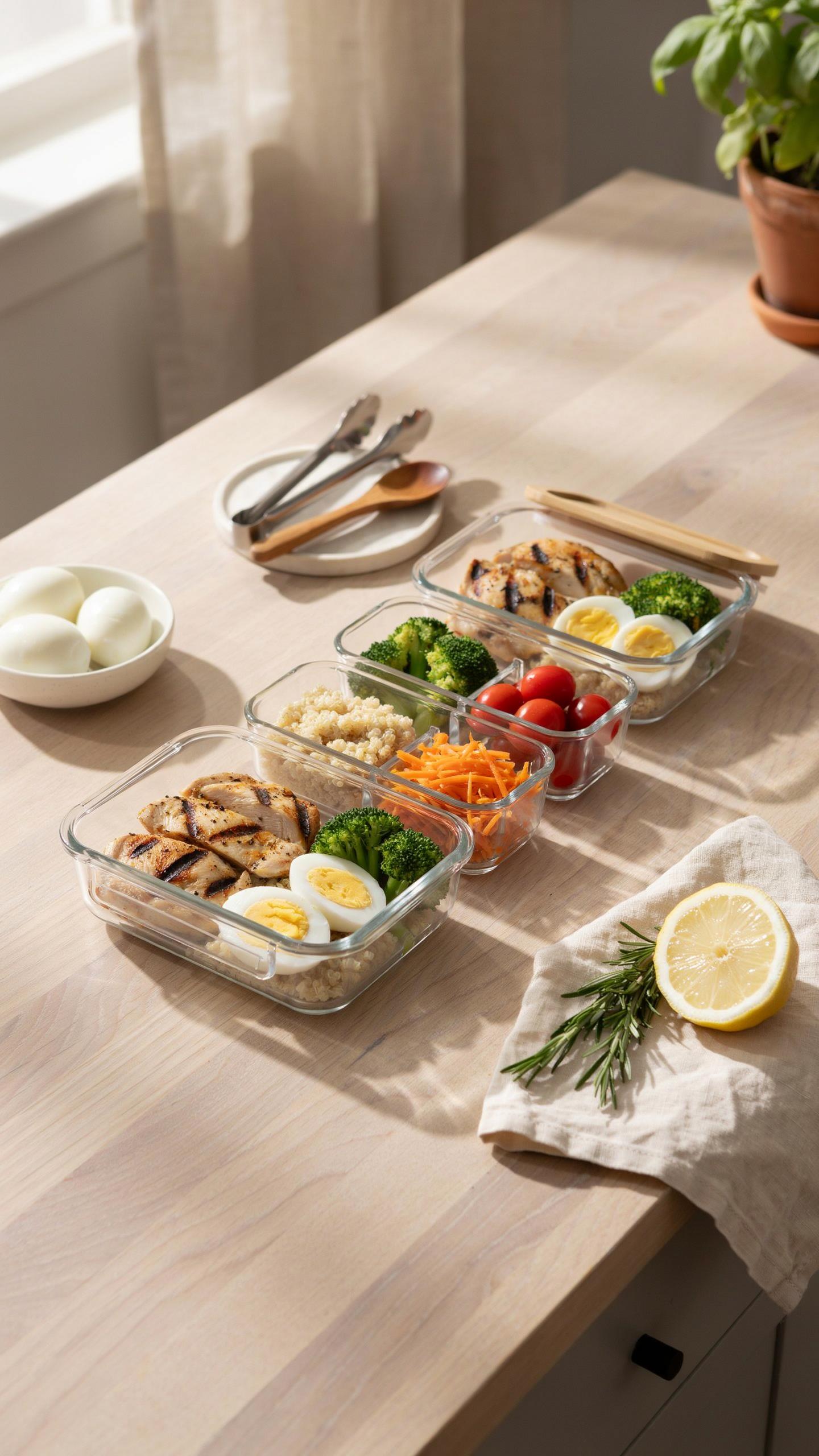
Pick three proteins maximum. Chicken breast, ground beef, and eggs cover 95 percent of your needs. Cook each protein to completion on the same day in the largest vessel you own. A sheet pan holds eight chicken breasts at 375°F for 22 minutes. A Dutch oven fits three pounds of ground beef, browned and drained, in 15 minutes. Hard boil a dozen eggs in one pot. The math is brutal: one Sunday session replaces five fragmented cooking moments during the week.
Versatile Carb And Fat Pairings
Economics calls this “optionality,” and it’s the mechanism that keeps meal prep from becoming monotony. You pair one carb source with one fat source, then rotate which protein you attach to it daily. This creates perceived variety without multiplication of effort.
Cook two carb sources: white rice and sweet potatoes. White rice absorbs flavor and stores for five days without texture degradation. Sweet potatoes add micronutrient density without requiring additional seasoning. Cook rice in bulk ratio of one part rice to two parts water, simmer covered for 18 minutes. Roast sweet potatoes whole at 400°F for 45 minutes, then cube them. For fats, keep olive oil and butter on hand. Two grams of fat per meal comes from cooking oil. The system works because you’re not reinventing every container, just rotating the protein top layer across five identical bases.
Engineering Your High Protein Meal Plan For Inevitable Success
Remove The Friction Points First
You want this to work because you’re tired of failing at consistency, and consistency requires removing every excuse your brain will manufacture on day three. In systems thinking, friction is drag. Apply it to meal prep: every extra step between intention and execution kills the protocol. You don’t need motivation. You need a setup so stupid-simple that skipping it requires more effort than doing it.
Map your prep space before you buy anything. Where do containers live? Where does protein go? Where’s your cutting board? One inefficient reach kills momentum across five days. Set timers for each task. Not for discipline. For data. You’ll discover which steps actually consume time versus which ones just feel slow. The containers you choose matter more than the recipe. Opaque, stackable, microwave-safe containers reduce decision friction every single morning.
Build Your Feedback Loop Into The System
Cybernetics teaches us that systems self-correct through feedback loops. In your case, the loop is simple: prep quality predicts whether day four’s chicken still tastes like day one’s chicken, which predicts whether you eat it or bail. Track three variables only: spoilage rate, taste consistency across the five days, and how many meals you actually consumed versus wasted. Write them down every Sunday after prep. This isn’t motivation work. This is data collection.
After four weeks of data, you’ll see the pattern. Maybe your chicken dries out by day three, so you switch to ground turkey. Maybe your rice gets stale, so you adjust water ratios. Maybe you’re prepping too much volume and it’s physically impossible to eat. The system tells you what’s broken. You don’t guess. You don’t read generic advice. You adjust the one variable that will prevent next week’s failure. Track the exact time you finish prep. Faster prep correlates with higher compliance.
Beyond The Plate Leveraging Meal Prep Plans For Time Arbitrage

Decision Fatigue Stops Here
You’re not actually looking for a meal plan. You’re looking for permission to stop thinking about food. Every morning you waste mental energy deciding what to eat is a morning you’re not deciding what matters. Economics calls this decision fatigue. Apply it to meal prep: when you remove the daily food choice, you recover roughly 15-20 minutes of cognitive bandwidth. That time becomes available for work that compounds.
Five-day meal prep works because it collapses a week of micro-decisions into one. Sunday becomes your decision day. Monday through Friday runs on autopilot. The mechanism isn’t motivation or discipline. It’s friction reduction. You’ve made the hard choice once instead of 35 times.
The Real Cost Of Daily Cooking
Everyone says meal prep saves time. What they don’t say is that daily cooking doesn’t just take time, it costs opportunity. If you cook dinner five nights weekly at 45 minutes per session, you’re spending 225 minutes. But that’s not the real number. The real cost includes planning, shopping twice weekly instead of once, temperature swings in your metabolism, and decision quality degradation at day five when you’re tired and order delivery anyway.
Five-day prep front-loads all the friction into Sunday. You buy once. You cook once. You portion once. The next five days, you retrieve and eat. No planning fatigue. No broken routines from ordering out. No marginal cost per meal. The protocol is simple: dedicate three to four hours on Sunday to all five days of protein and carbs, then execute the same sequence each day.
The Protein Foods For Dinner Deception Why Its Not About Variety
Nutrient Density Beats The Novelty Trap
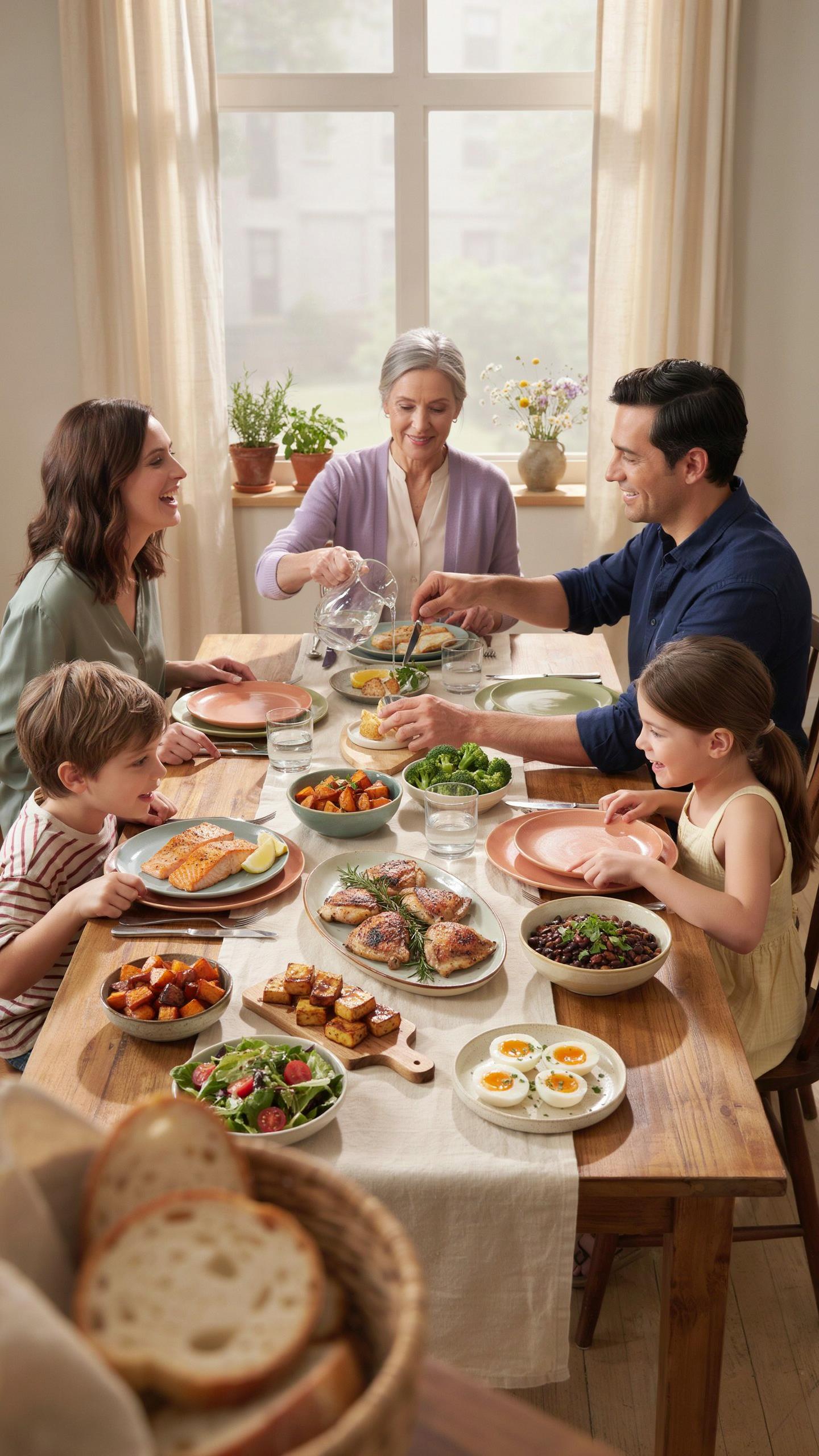
You want variety because boredom feels like failure. But the mechanism that actually matters is nutrient density per calorie, not taste variation. Most people chase new recipes when they should chase foods that deliver maximum protein, micronutrients, and satiety in minimal volume. Chicken breast, ground beef, and canned fish dominate five-day preps because they’re resource-efficient, not because they’re exciting.
The real cost of chasing novelty is prep complexity. Each new protein source demands different cooking times, temperatures, and storage protocols. Ground turkey cooks faster than beef chuck. Salmon oxidizes differently than tilapia. Five new recipes mean five new failure points. Repetition compresses your decision surface. You learn the exact weight, timing, and container life for one protein, then execute it identically across all five days.
Strategic Repetition Builds The Compliance Engine
Behavioral psychology calls this the “habit loop”: cue, routine, reward. In meal prep, repetition is the routine that removes friction. You prep the same protein Tuesday night, it becomes automatic by Friday. Your hands know the knife angle. Your timer knows the temperature. No cognitive load means no willpower tax.
The compliance engine works because constraints create reliability. Three dinners built on chicken breast, two on ground beef, and repetition across lunch blocks eliminates choice paralysis. You’re not deciding what to cook each night. You’re executing a known system. This is why people actually stick to five-day preps instead of abandoning them by day three: repetition removes the decision, and absence of decision removes the reason to quit.
Building Your Healthy Recipes For The Week With Stoic Principles
Focus On What Your Hands Control
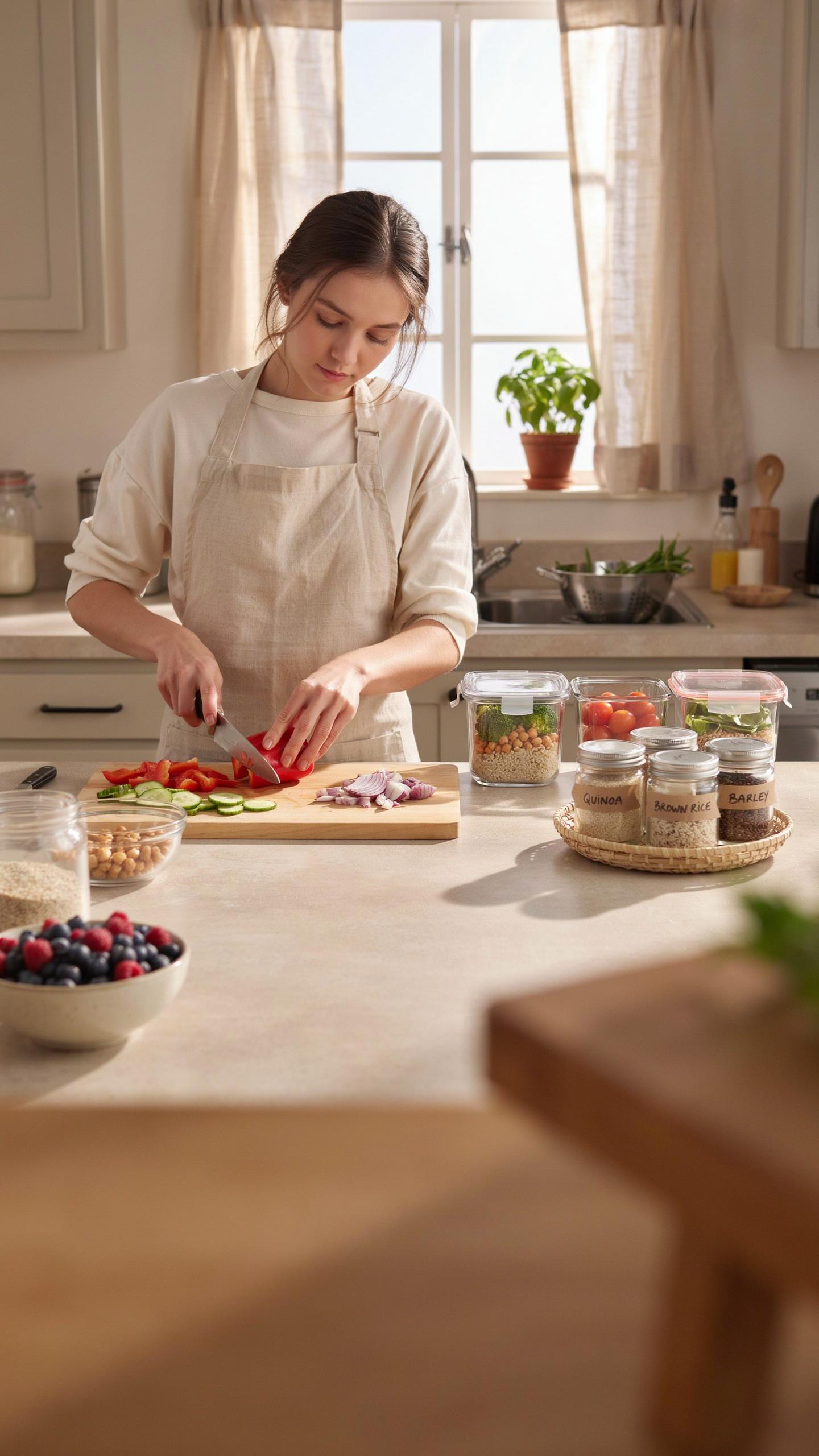
You want this to feel effortless so people think you have discipline. Here’s what actually matters: you control ingredients and process. That’s it. Everything else is noise. Stoicism calls this the “dichotomy of control”—separate what you influence from what you don’t. In meal prep, your protein sources, cooking temperature, storage containers, and prep sequence are yours. The taste preferences of others, grocery store inventory fluctuations, and how your body responds on any given day are not.
Build your five-day protocol around what you can repeat without friction. Choose proteins that don’t spoil faster than your prep window. Pick cooking methods that scale without degrading quality. Store in containers that stack efficiently. The mechanism is simple: remove variables, remove excuses. You prep the same way every time because the system leaves no room for deviation. This predictability is where discipline compounds.
Dismiss The Recipes That Don’t Scale
Most “healthy recipe” content is built for one meal, one person, one occasion. It’s decorative. High protein meal prep 5 days demands indifference to culinary theater. You don’t need complexity. You need density, stability, and speed. Skip recipes with ten ingredients and four cooking stages. Skip anything requiring fresh herbs added daily or sauces mixed at serving time. That’s theater masquerading as health.
Your actual constraint is this: preparation time divided by servings must stay below a certain threshold, or you won’t sustain it. A recipe serving four that takes ninety minutes isn’t cheaper or faster than one serving six in forty-five minutes. Calculate the real cost: minutes per gram of protein, not “difficulty level.” Choose recipes where the ingredient list reflects the protein goal, not culinary ambition. Cook chicken breast, rice, and broccoli the same way five times rather than chase variation. Repetition beats novelty every time in a prep system.
The Pre Made Meals For The Week Blueprint Your Strategic Kitchen Command Center
The Tools That Actually Matter
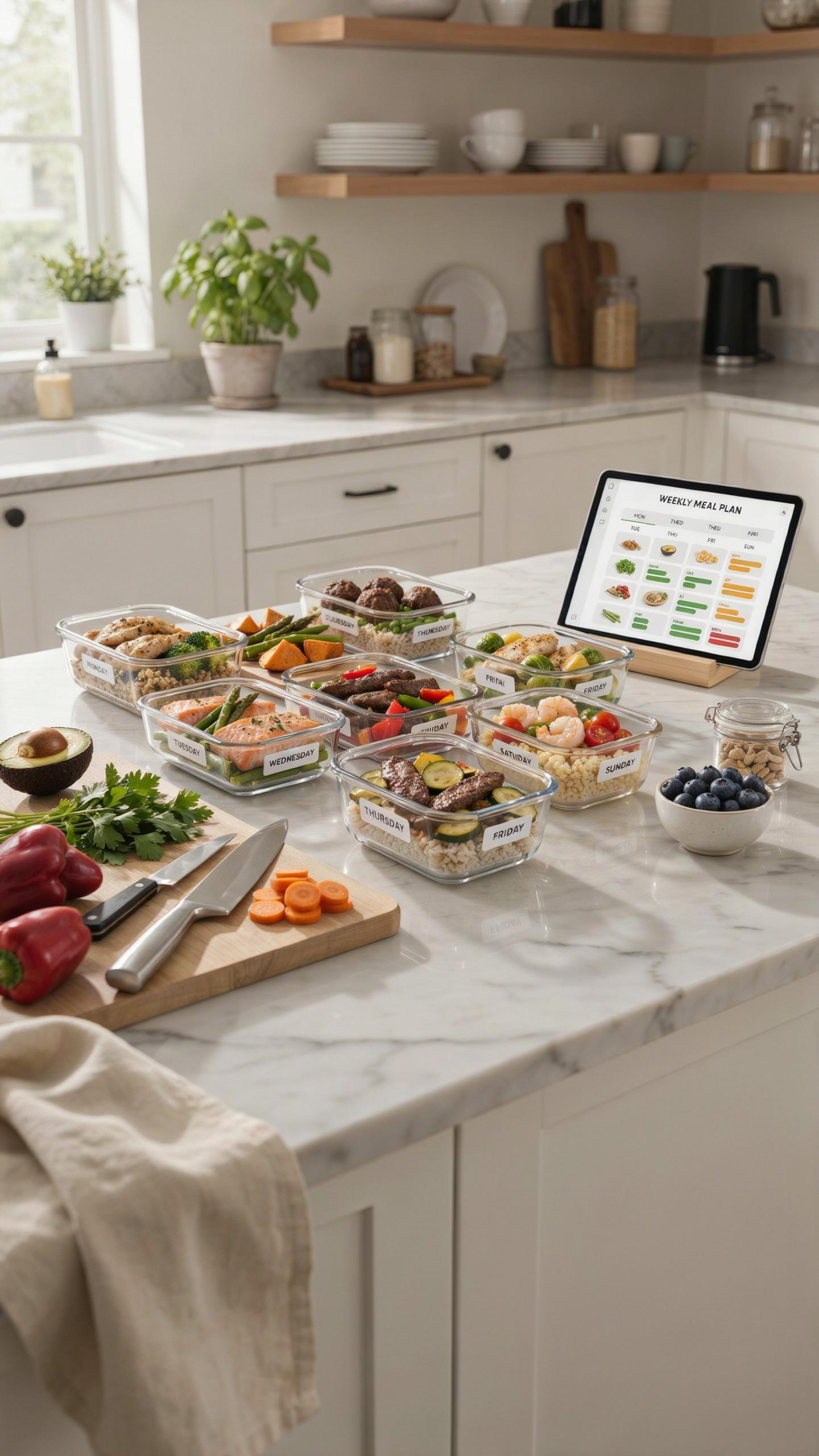
You want this to feel effortless because you think that signals you’re organized. The real mechanism is friction reduction. Cooking five days of high protein meals demands you eliminate decision points in your physical space. Every tool you don’t have costs you time. Every tool you have but don’t need costs you mental energy.
- Sheet pans (2-3, aluminum or steel): Hold 6-8 chicken breasts or equivalent protein. Metal conducts heat evenly. You need multiples to batch cook proteins simultaneously without crowding, which prevents even cooking and moisture loss.
- Large mixing bowls (2-3, stainless steel): Mix marinades, combine prepped vegetables, and portion out proteins. Stainless steel won’t absorb odors or stain. Size matters because cramped mixing creates uneven seasoning distribution.
- Sharp chef’s knife and cutting board: Dull knives slow prep and encourage dangerous hand slips. A single sharp blade and stable board handle 80 percent of prep work. Consistency beats owning ten specialty knives.
- Food scale (digital, 0.1 ounce precision): High protein dieting requires portion accuracy. Eyeballing leads to intake variance that undermines your tracking. A cheap scale eliminates guessing on protein grams per container.
- Glass storage containers with lids (6-8 units, 32-40 ounce capacity): Glass doesn’t leach chemicals under heat. Opaque lids block light, which degrades protein structure over days. One standard size across all containers eliminates stacking chaos.
These five tools create a system. You own nothing else. Anything beyond this is a distraction masquerading as optimization.
The Storage System That Stops Decay
Most people organize by meal type or day. That’s wrong. You organize by protein stability and reheating speed. Think in terms of military supply lines: rotation, density, accessibility. Your containers are ammunition.
Proteins degrade at different rates. Cooked ground beef and turkey hold five days. Cooked chicken holds four to five days but dries faster. Cooked fish holds three days maximum. Stack your containers front to back by consumption date, not by preference. Proteins you’ll eat first sit forward. Proteins nearing the five day limit sit back. You grab from the front. You prep from the back. This prevents waste and eliminates decision fatigue at meal time. Temperature consistency matters too. Keep your fridge at 35-38 degrees Fahrenheit. Below that, you risk texture damage in proteins. Above that, bacterial growth accelerates. Check your fridge temperature with an inexpensive thermometer, not guesswork.
Mastering The High Protein Meal Prep Lifecycle From Supply To Consumption

Shopping Without The Waste Trap
You want to believe one trip solves everything. The real problem: you’ll buy proteins that spoil before you cook them, or you’ll underbuy and break routine mid-week. The mechanism is inventory decay. Fresh protein has a window. Chicken breast lasts 3 days raw. Ground beef lasts 4. Fish lasts 2. You need to map your cooking schedule backward from the expiration date, not forward from your shopping day. Buy only what you’ll cook within 48 hours of arriving home.
The second layer: bulk doesn’t mean cheaper if half spoils. Calculate cost per usable portion, not total weight. Frozen proteins eliminate decay but require thawing strategy. Buy frozen chicken breasts and thaw one batch every two days instead of buying fresh for five days at once. Your grocery bill stays lower because nothing rots in the back of your fridge. The math works only if you enforce the thaw-and-use sequence before restocking.
Cooking And Portioning As A System
Most people cook all five days at once, which sounds efficient but creates a single failure point. If your schedule shifts or hunger levels change mid-week, you waste prepared meals. Instead, treat cooking as a three-phase cycle: cook two days worth on day one, repeat on day three, repeat on day five. This is batch manufacturing logic applied to food. You maintain freshness while preserving flexibility, and you catch portion miscalculations before investing five days of prep into the wrong ratio.
Portioning precision matters more than you think. Eyeballing portions guarantees protein creep by day three—portions shrink as your motivation drops. Weigh everything. Chicken breast should hit 150 grams per container for most people. Rice or grain should be 75 grams dry weight per container. Use the same containers every time so your body adapts to volume cues, not guessing. Buy a scale that costs under 30 dollars and use it for two years until the number becomes automatic in your hands.
The Unseen Benefit How Protein Meal Plans Cultivate Discipline
The Skill That Transfers Everywhere
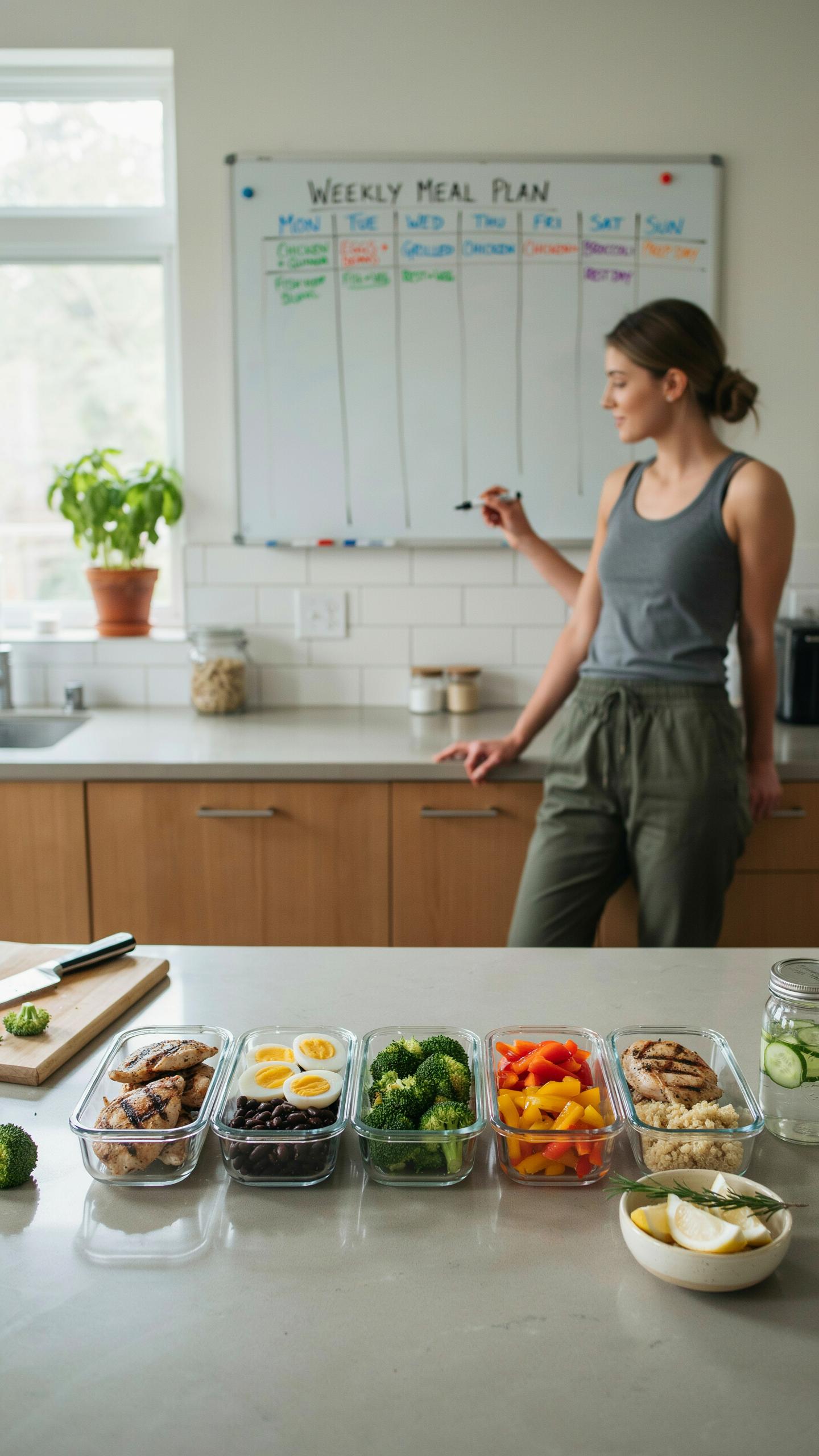
You want to believe meal prep builds discipline so you can feel productive about something controllable. Here’s what actually happens: meal prep forces you to make decisions in advance instead of in the moment. This is the core mechanism of discipline. Every time you commit to five days of protein intake before hunger hits, you’re practicing the same cognitive move required in work, relationships, and money. You’re separating the decision from the emotion.
Most people think discipline is willpower. It’s not. Discipline is removing the decision from the point of weakness. When you prep chicken and rice on Sunday, you’ve already decided what Wednesday’s lunch is. Wednesday’s hunger can’t override what Sunday’s clarity committed to. This transfers directly: you pre-commit to a gym schedule, you pre-write your work output, you pre-allocate your cash flow. The mechanism is identical. Meal prep trains this specific skill at scale.
Small Wins Build Momentum, Not Motivation
Physics calls it inertia. An object in motion stays in motion. Meal prep works the same way because you execute the same sequence five times per week. You don’t rely on motivation to hit day four or five because the system runs on its own. Motivation fades. Momentum doesn’t.
The compounding effect isn’t abstract motivation building. It’s concrete: you finish day one, you’ve locked in five servings of protein. Day two, you reach into the fridge and find exactly what you planned. No friction. Day three, the pattern feels normal, not forced. By day five, the entire week’s structure is running without mental expenditure. This frees your decision-making capacity for actual work. The protocol isn’t to “stay inspired.” It’s to eliminate the need for inspiration by removing friction from execution every single day.
The real obstacle isnt knowing what to do its consistently doing what you already know is effective

You already know high protein meal prep works. You’ve read enough. What separates people who transform their bodies from people who just read about transforming bodies is one thing: they stop planning and start cooking this Sunday. Pick one protein, three vegetables, one carb source. Spend two hours. Done. The difference between knowing and doing isn’t motivation or willpower. It’s showing up when you don’t feel like it.