
The Inefficiency Trap: Why Your 2 Hour Prep Fails
Where Your Time Actually Goes
You want to believe two hours is enough because admitting otherwise means confronting how you’ve been wasting weekends. The real problem isn’t complexity, it’s that you’re treating meal prep like a cooking project instead of a manufacturing line. Manufacturing teaches us about bottlenecks: the slowest operation in your sequence controls total output time. Most people identify the wrong bottleneck because they focus on what feels hard rather than what takes longest.
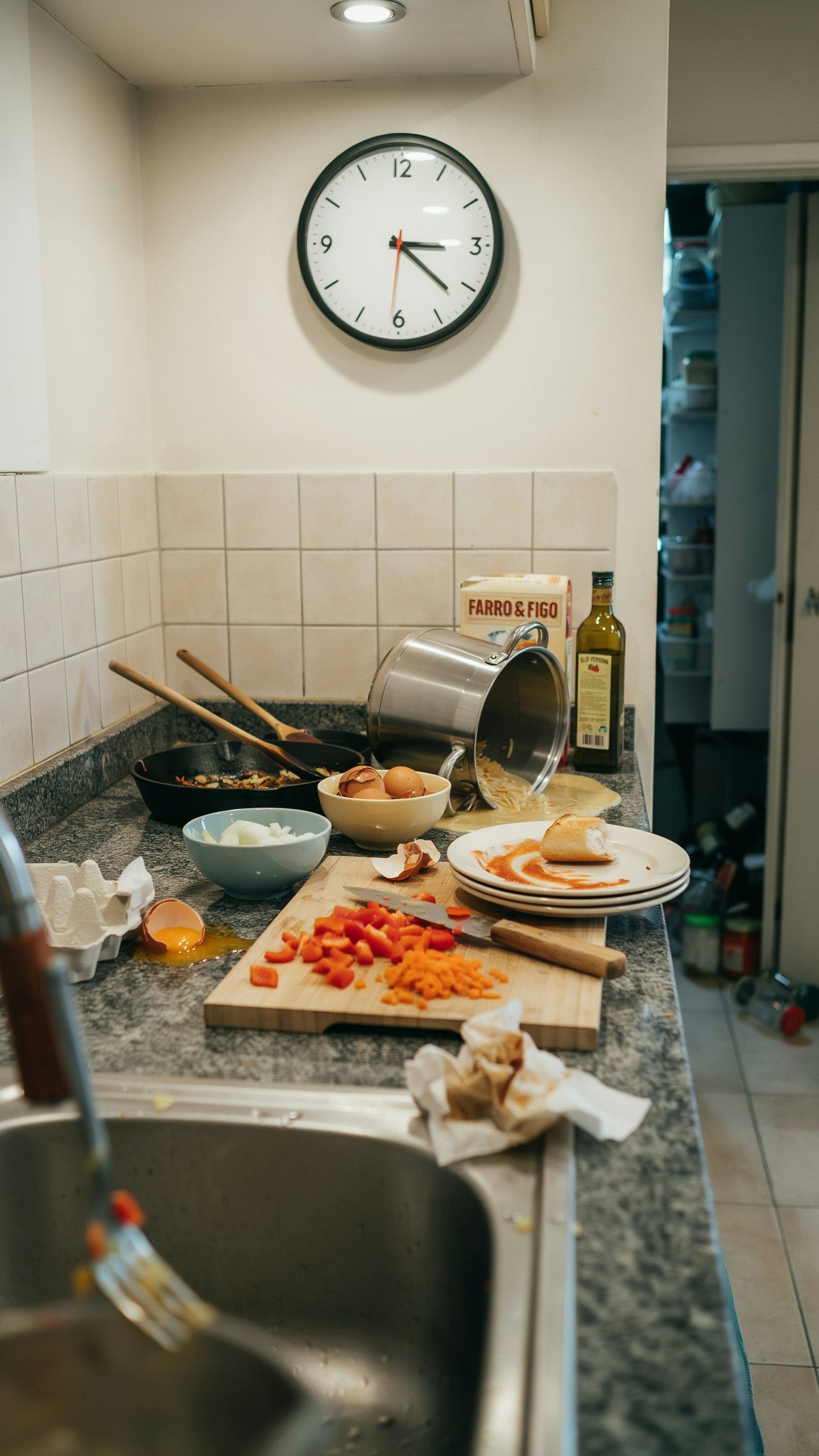
Your actual time sinks are rarely the ones you think. Cleaning as you go, switching between tasks, and handling ingredients inefficiently add forty to sixty minutes of dead time. You don’t notice because the waste is distributed across small pauses, not one visible delay. Two hours becomes impossible not because cooking takes too long, but because your process has structural gaps that bleed minutes everywhere.
What You’re Actually Doing Wrong
The common advice says to batch similar tasks, which is half correct and therefore worse than useless. Yes, batch your tasks, but most people batch wrong by grouping them by cooking method instead of by equipment used. If you dice vegetables with different knives or on different cutting boards, you’ve created friction. Equipment transitions cost more time than the actual chopping.
Real efficiency means you prep, cook, and store using the same equipment in the same location without moving. Your stove stays on for protein cooking. Your cutting board handles everything that needs dicing before it gets cleaned once. Your storage containers stack in the fridge in the order you prepped them. The mechanism is simple: eliminate tool transitions, not just task combinations.
The Minimalist’s Manifesto: Essentials For High Protein Weekly Meal Prep
Protein Sources That Don’t Require A Degree
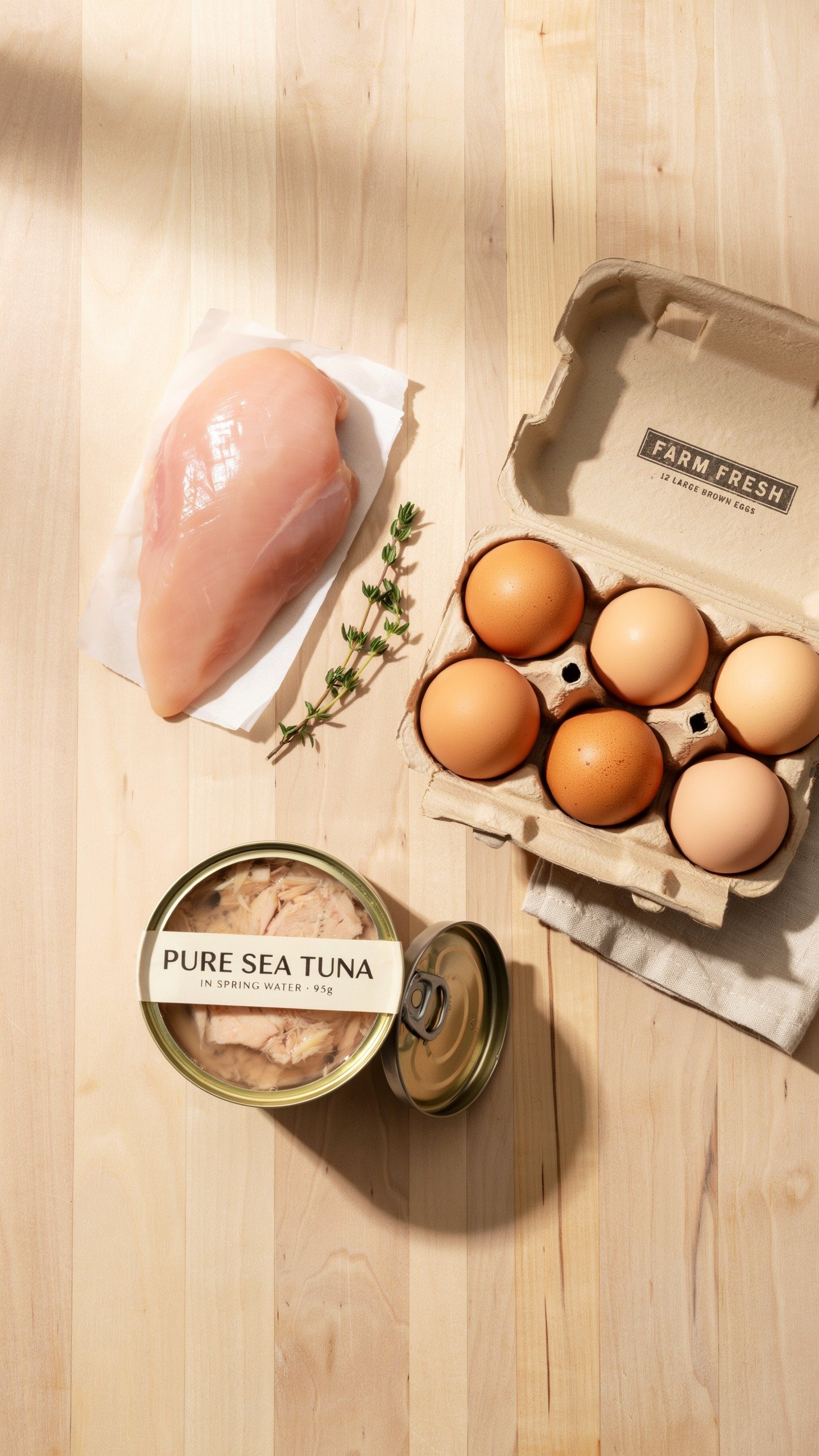
You want to believe that meal prep is about discipline, but it’s really about refusing to waste two hours on ingredients that don’t deliver. Borrowing from supply chain logistics, your “critical path” is protein density per minute of prep time. You’re not shopping for variety. You’re shopping for throughput.
- Chicken Breasts: Cook in bulk, shred in batches. 31 grams protein per 100 grams. Freezes well. No flavor means it pairs with any sauce you make later without conflicts.
- Ground Beef (90/10 or Leaner): Brown in large batches in wide pans. 22 grams protein per 100 grams cooked. Done in under 15 minutes for five pounds if you don’t stir obsessively.
- Eggs: Hard boil a dozen at once. 6 grams protein each. Zero prep time once cooked. Your fastest portable protein option for grab-and-go meals.
- Greek Yogurt (Plain, Full Fat): 10 grams protein per 100 grams. Requires no cooking. Use as a base for sauces or eat straight. Buy the large container to reduce packaging waste and trips to the store.
- Canned Tuna or Salmon: 26 grams protein per 100 grams drained. Already cooked. Use when you have 30 minutes or less. Check sodium content if that matters to your goals.
Most people waste time debating between tilapia and cod. The difference is negligible. Pick the cheapest protein at your store this week and cook five pounds of it. That decision should take 30 seconds, not 30 minutes of research.
Equipment That Doesn’t Sit In A Cabinet
The equipment question is where most people sabotage themselves with purchases instead of systems. You need one item per task. Anything else is clutter that slows you down because you’ll waste mental energy deciding which tool to use.
A large stainless steel pot for boiling, a wide 12-inch skillet for browning ground meat, and sheet pans for roasting are your workhorses. Glass or plastic containers are interchangeable for storage. Pick one and stick with it. A food scale removes guesswork on portions in under two seconds per container. A cutting board and a sharp knife are mandatory. Everything else you already own.
The actual speed-builder is having duplicates of your high-use items so you’re never washing mid-prep. Two large skillets means you brown meat in one while your protein cooks in the other. Two cutting boards mean you prep vegetables while chicken cooks. You’re not multitasking. You’re operating parallel production lines in a 12 by 12 kitchen. Cook the staple proteins first, then build around them while they cool. That’s the only protocol that fits in two hours.
The “Batch Cooking Blueprint” For Time Strapped Individuals
Cook In The Order That Minimizes Idle Time
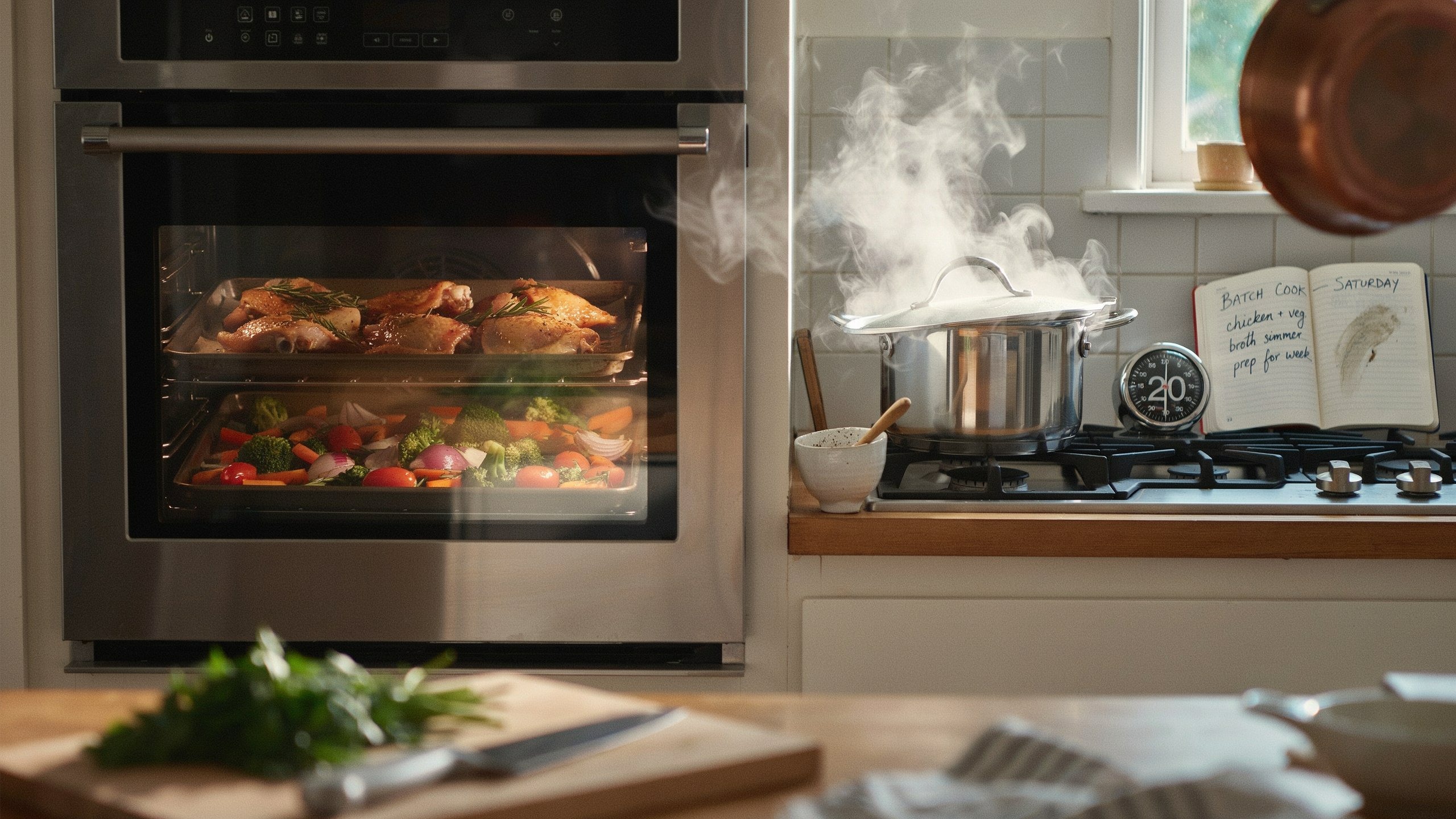
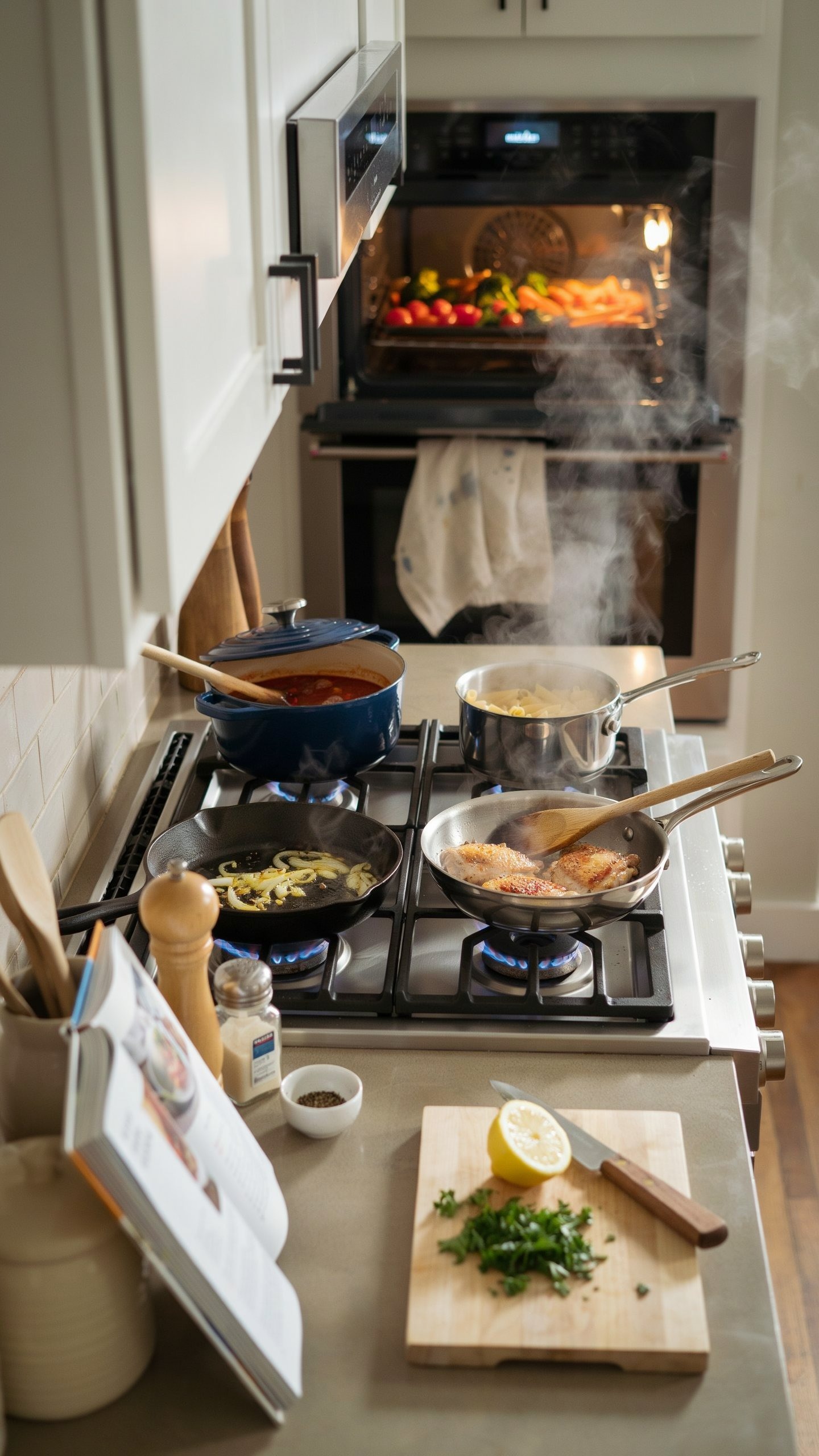
You want to believe that organization is about planning on paper. It’s not. The real game is thermal economics: your heat source stays loaded while you prep the next component. You’re not actually cooking in two hours. You’re cooking while something else cooks. Start with your longest-cooking protein first, usually a large batch of chicken breast or ground beef at high heat. While that browns and simmers, begin chopping vegetables for your second and third proteins. The oven runs a sheet pan of salmon while your stovetop handles rice or pasta. Every minute your equipment sits idle is wasted capacity.
The mechanism is simple: stagger your start times so nothing waits for heat. If chicken takes thirty minutes, start it first. If your grain needs twenty minutes, begin it fifteen minutes after proteins hit the pan. Your vegetables roast while you portion and store cooked proteins. This isn’t multitasking. This is running a kitchen like a production line where each station has its own timeline. You finish in two hours because your heat sources never stop working.
Build Your Meals From Three Reusable Components
Most meal prep advice tells you to cook five different meals. That’s backward. You actually cook three protein bases, three carbs, and then mix them. This approach sounds efficient on its surface, but people miss the real leverage: ingredient overlap. Cooking ground beef for tacos and meatballs uses the same seasoning base with minor adjustments. Roasted chicken works in Buddha bowls, wraps, and salads without modification. Rice feeds all three meals. Your total prep time drops because you’re not starting from scratch five times.
The repetition feels boring until you realize it’s freedom. You prep once and eat differently each day by changing only the vegetable or sauce pairing. Your shopping list shrinks. Your equipment needs drop. Your actual cooking time collapses because muscle memory takes over and you stop thinking about technique. The constraint of reusable components is what makes two hours possible instead of hypothetical.
Budget Friendly Recipes: Protein Without Poverty
The Proteins Nobody Talks About
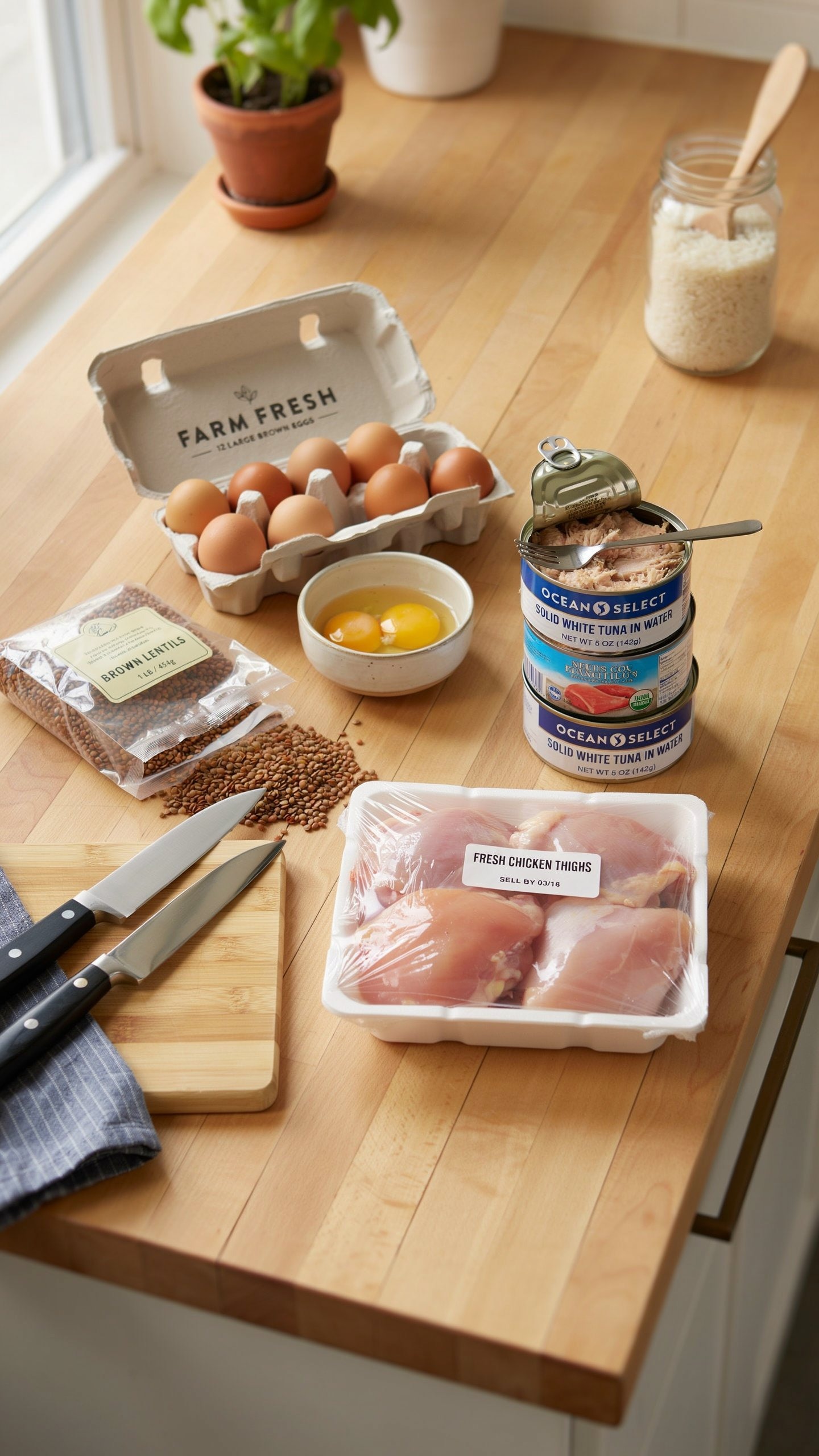
You want to look like you have your life together without actually spending money like it. Here’s the mechanism: most people default to chicken breast because it’s visible and normalized, which means it’s priced for demand. Economics calls this “price elasticity”—demand shifts price. When you shift your protein source away from consensus picks, you shift down the cost curve without sacrificing grams.
Eggs cost less per gram of protein than any animal product on the market. A dozen eggs runs three to four dollars and delivers seventy-two grams of protein. Ground beef from the clearance section, organ meats like liver, canned fish, and Greek yogurt hit different price points than retail chicken. The strategy isn’t finding cheaper protein—it’s using proteins the market hasn’t bid up yet. Buy these during off-peak hours when stores discount items nearing their sell-by date.
Shopping Mechanics That Actually Work
The common advice here is generic: make a list, stick to it, compare unit prices. That’s incomplete. The real mechanism is timing plus inventory rotation. Grocery stores follow predictable markdown cycles. Meat hits discount around closing time on Sundays and Wednesdays. You show up then, grab what’s marked down, and freeze it same day. This single behavior cuts your protein cost by twenty to thirty percent with zero quality loss.
Buy proteins in bulk only if you’ll use them within your prep window. Frozen protein sources eliminate spoilage risk and actually retain more nutrients than fresh meat sitting in your fridge for a week. Pair your protein purchases with carbs and fats on sale that same trip—coordinate your meals around what’s discounted, not the other way around. Walk the perimeter of the store first, then hit the frozen section. Never buy protein at regular price.
The “Kinetic Flow” Method For Easy High Protein Meal Prep
Station Setup Eliminates Dead Time
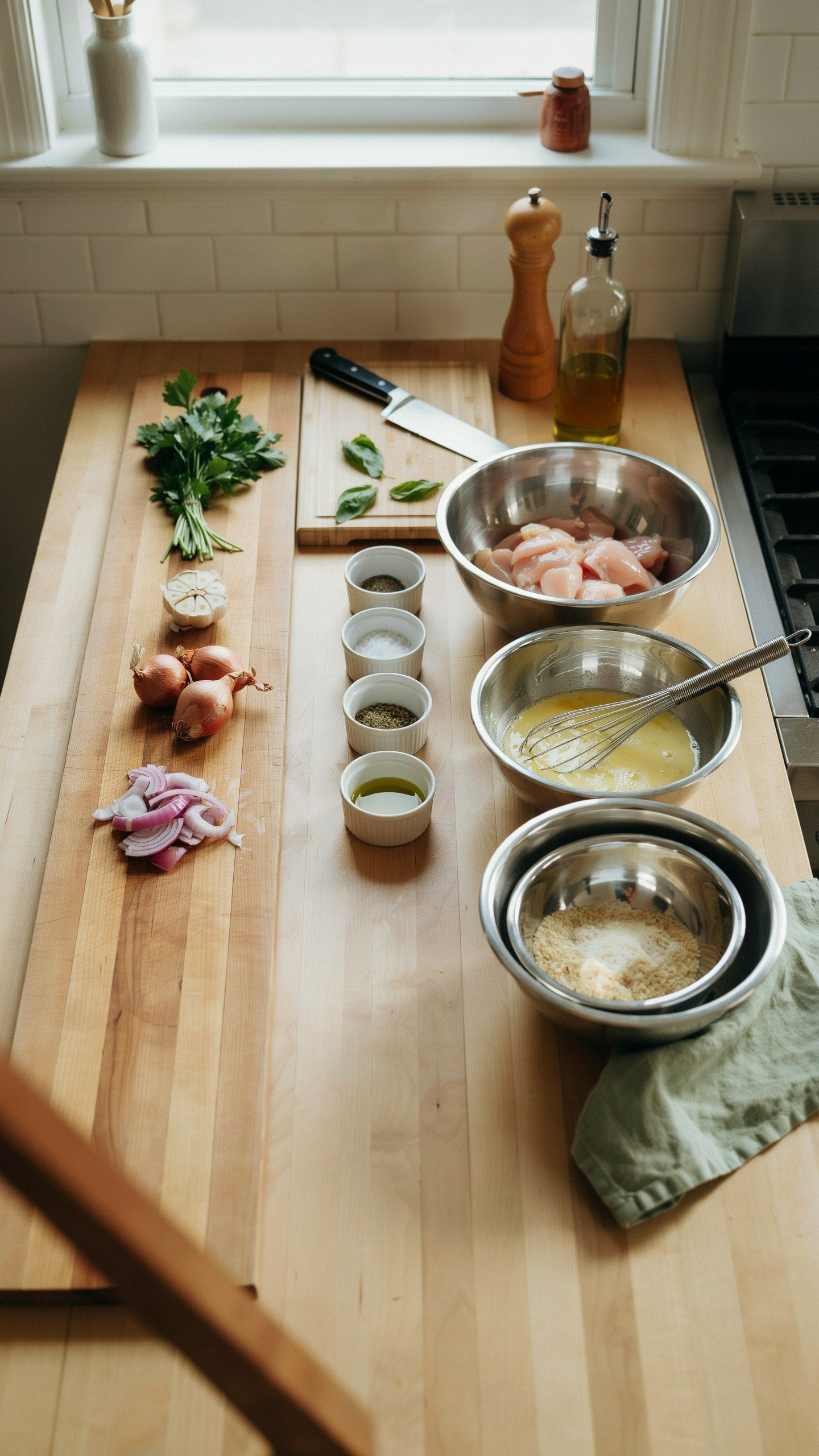
You want this to feel effortless so you’ll actually stick with it, but the real mechanism is borrowed from cybernetics: optimize for minimal transition time between tasks. Every second you spend walking, searching, or deciding is friction that compounds across two hours. Set up four stations before you touch food. Station one: raw protein and cutting board. Station two: seasoning and marinades. Station three: cooking surfaces and heat. Station four: cooling and storage. Each station contains only what that station needs. This isn’t organization theater. You’re reducing decision loops and physical movement to their theoretical minimum.
The difference between a two-hour prep and a four-hour mess is station placement. Put your protein station closest to your prep sink. Put your cooking station closest to your heat source and storage. Put storage closest to your fridge. You’re mapping the actual workflow, not arranging a kitchen. When your hands finish one task, the next station sits directly in front of you. No pivoting. No backtracking. No opening three cabinets to find a pan you used five minutes ago. The layout is the system.
Feedback Loops And Real Time Adjustments
Most people treat meal prep like assembly line work: blindly execute the plan and hope it lands. Wrong. Cybernetics teaches us that systems improve through continuous feedback, and you need feedback loops built into your two-hour window to catch problems before they compound. After your first batch of protein finishes cooking, taste it immediately. Is the seasoning right? Does the texture match what you need? Don’t cook the next three batches identically if the first one missed. Adjust temperature, salt, or cook time before batch two hits the pan.
The second feedback loop is pacing. After thirty minutes, check your progress against your remaining time. Did you finish half your protein? Are you on pace to finish everything, or is one station creating a bottleneck? If one task is taking longer than expected, that’s your signal to simplify it for future preps or redistribute the work. Cook chicken breasts in a sheet pan instead of individually if pan-searing takes too long. Use a rice cooker instead of stovetop rice if monitoring heat is your bottleneck. The system adapts based on data, not stubbornness.
Beyond Chicken And Rice: Diverse High Protein Meals Meal Prep
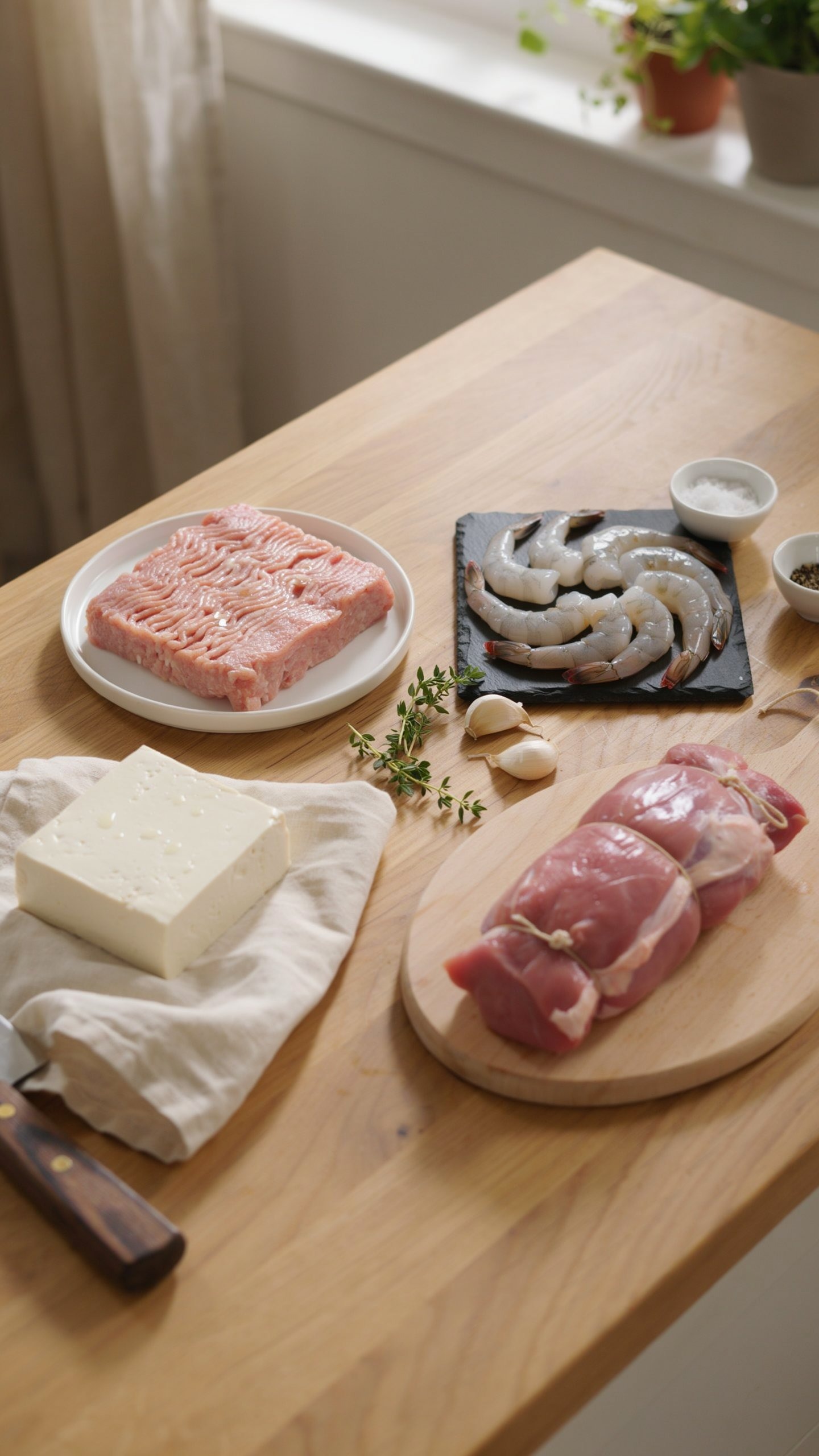
Proteins That Actually Taste Different
You want variety because you’re bored, not because you’re suddenly health-conscious. The real mechanism is that monotony kills adherence faster than any diet rule. Boredom is a compliance killer, and your brain recognizes repetition as a signal to quit.
Ground turkey costs less than chicken breast and cooks in the same time window. Canned fish—sardines, mackerel, canned tuna—requires zero cooking and delivers complete amino acid profiles. Cottage cheese and Greek yogurt hit protein targets without heat. Eggs in bulk prep mode (hard-boiled or scrambled batches) take fifteen minutes and stay stable all week. The point isn’t exotic. It’s rotating between five proteins you can source, prepare, and eat in under two hours total.
Flavor Stacking Without Complexity
Flavor pairing borrows from culinary chemistry: certain taste compounds complement each other through molecular compatibility, not sentiment. You’re not creating restaurant dishes. You’re engineering combinations that prevent your mouth from sending the quit signal to your brain.
Acid cuts through richness and resets your palate between bites. Lemon juice on ground turkey. Vinegar on cottage cheese-based bowls. Hot sauce on canned fish. Salt and acid together require no cooking and transform how you experience the same protein three days running. Garlic powder, cumin, and paprika work across proteins without overlap. Layer one acid, one spice blend, one textural element (like seeds or nuts if your budget allows), and you’ve engineered diversity in minutes, not hours.
Keto Meal Prep: High Protein, Low Carb, Zero Hassle
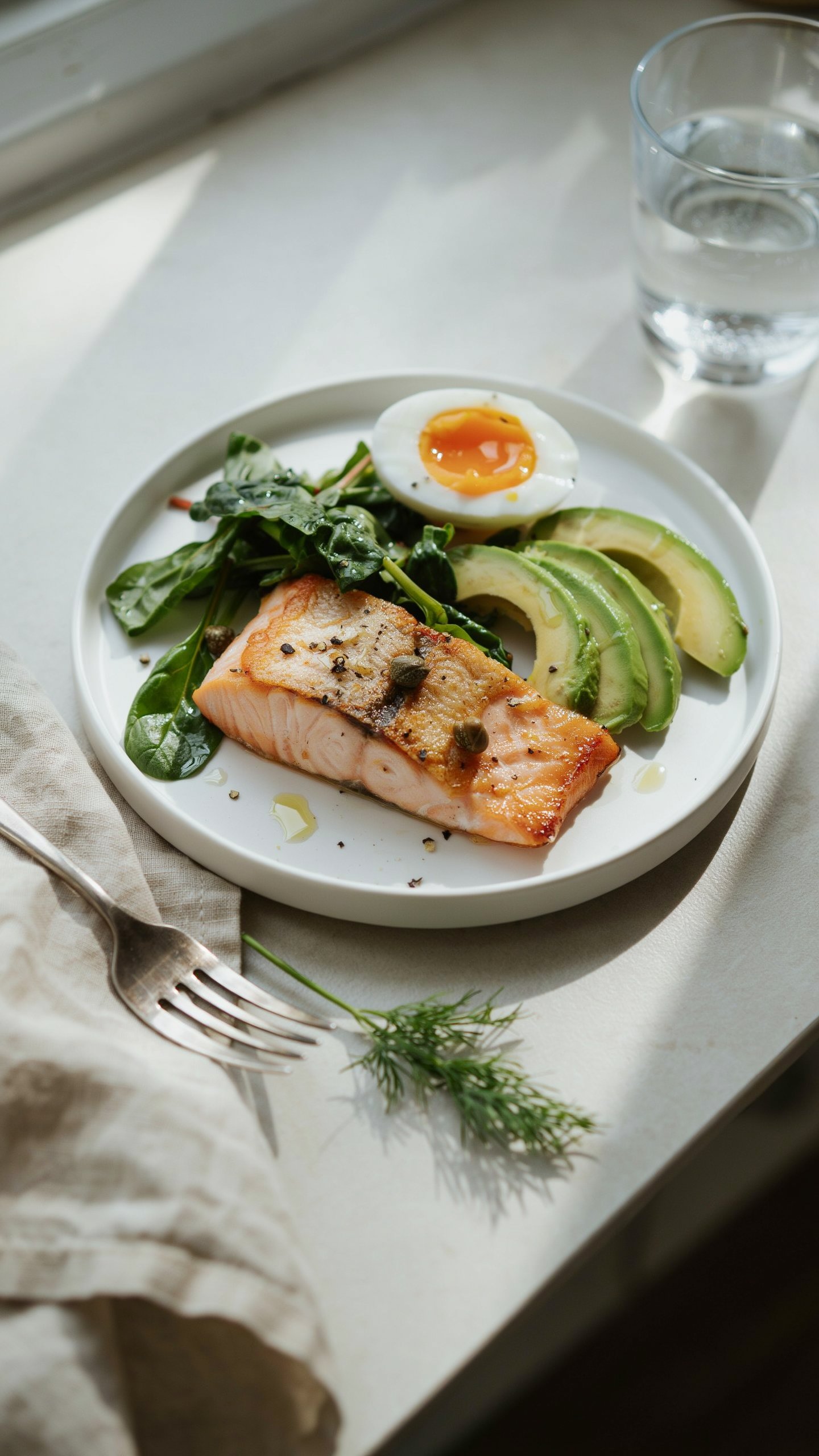
The Protein Math That Changes Everything
You want keto to work without feeling deprived, which means you’re actually afraid the diet won’t stick. Here’s what nobody says plainly: keto requires higher protein than standard low-carb because fat alone doesn’t trigger satiety the way protein does. Borrow from thermodynamics—your body expends energy digesting protein, so higher protein intake accelerates fat loss and preserves muscle during calorie restriction. This isn’t philosophical. It’s mechanical. You need 0.8 to 1 gram per pound of bodyweight on keto, not the “0.7 grams” generic advice throws around.
The two-hour window collapses when you chase arbitrary macro ratios instead of real satiety. Cook ground beef, chicken thighs, and salmon in bulk. Season aggressively. Store in glass. Protein density determines prep speed more than any other variable. A keto meal without enough protein becomes a snack you’ll eat twice, destroying your timeline and your deficit.
Actual Mistakes People Make On Keto Prep
Common advice says “focus on fat content to hit your macros,” but this is incomplete and costs you time. Fat is calorie-dense and satiating only when paired with adequate protein. Most people undershoot protein, overshoot fats, then wonder why they’re hungry three hours after eating. The mechanism is simple: protein activates fullness signals in your brain faster than any other macronutrient. Keto without enough protein is just eating butter with vegetables.
Your prep speed depends on what you actually cook. Fatty cuts like salmon skin-on and chicken thighs prep faster than lean meats because they don’t dry out. Batch cook proteins first. Roast them all at once. Then divide into containers with low-carb vegetables that need minimal cooking: spinach, broccoli, cauliflower. This sequence keeps you inside two hours because you’re not multitasking or correcting texture mistakes that slow execution.
The “Stacking & Scaling” System For Meal Prep For The Week
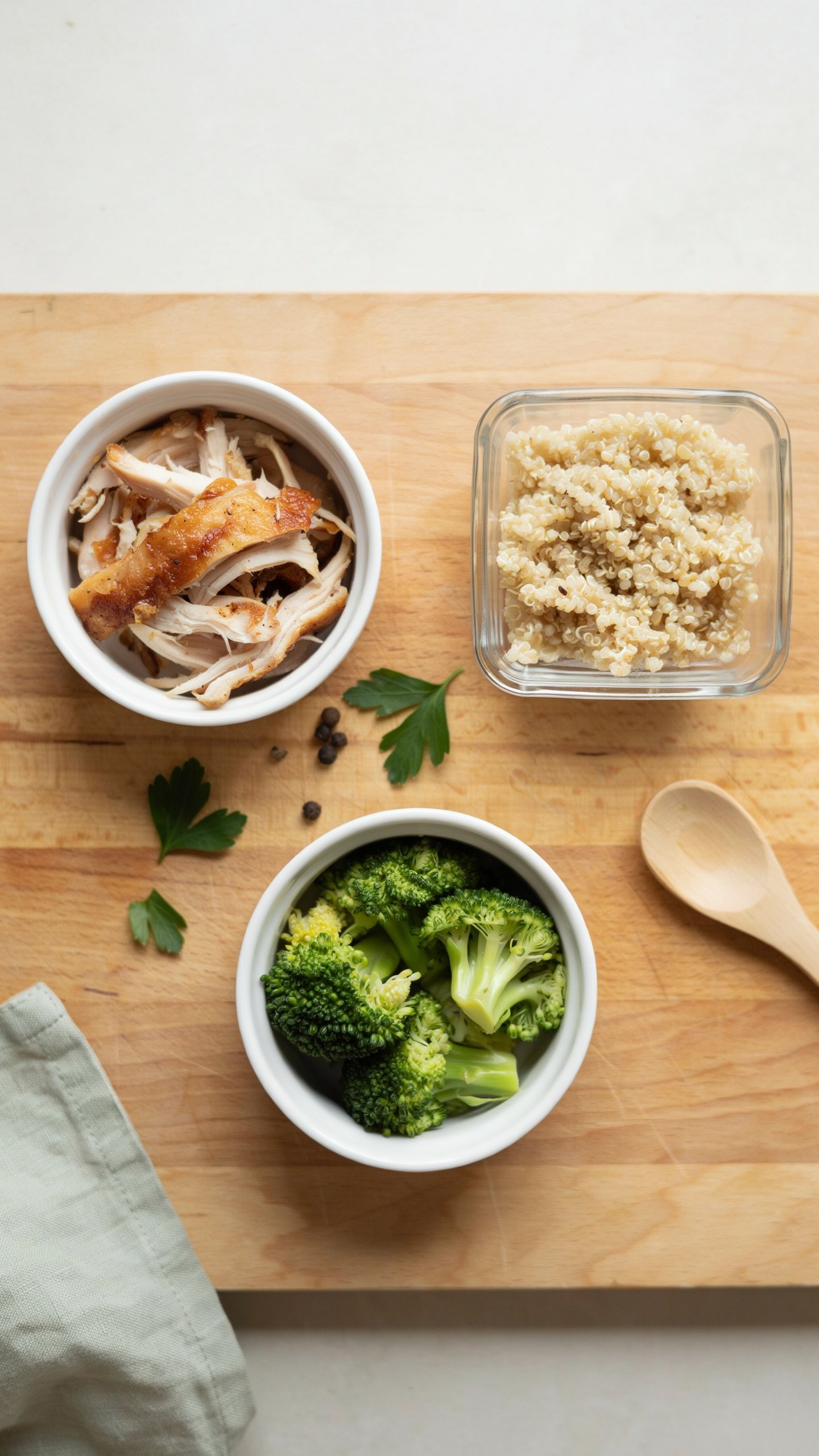
Build Components, Not Finished Meals
You want to feel like you have your life together by Sunday night. That fantasy dies the moment you realize reheating the same chicken breast five times tastes like cardboard. The real mechanism here is this: finished meals decay in appeal faster than their macros decay in the fridge. Components don’t. A grilled chicken breast, a batch of rice, and roasted broccoli stay interchangeable for five days. You mix them differently each day. Same ingredients, different combinations, zero boredom.
The constraint forces efficiency. You’re not cooking five separate dishes. You’re cooking protein once, carbs once, vegetables once. Cook chicken breasts in bulk on a sheet pan. Cook rice in a pot. Roast or steam your vegetables. Store each in its own container. This removes the assembly burden during prep and the decision fatigue during the week. Monday you build a bowl. Tuesday you build a wrap. Wednesday you build a plate. The two-hour window expands because you’re not juggling five different cooking methods in sequence.
Scale Up Without Overthinking The Math
Most people cut recipes in half and wonder why the timing falls apart. That’s because scaling isn’t linear—it’s a principle borrowed from manufacturing called throughput optimization. When you increase batch size, your per-unit cost of time decreases because setup, cleanup, and dead time stay constant. Cook for two people or twenty: you still wash one pan.
Double your protein portion. A sheet pan fits six chicken breasts as easily as three. The cook time doesn’t double. Triple your rice. One pot handles three times the volume with the same energy input and marginally longer cook time. The scaling principle is simple: use your equipment’s full capacity. Don’t cook half-full pans. Don’t leave burner space empty. Fill your containers completely, which means fewer trips, fewer decisions, and faster execution. This is how you finish high protein meal prep in two hours instead of three.
Advanced Prep: The 15 Minute Daily Assembly Line
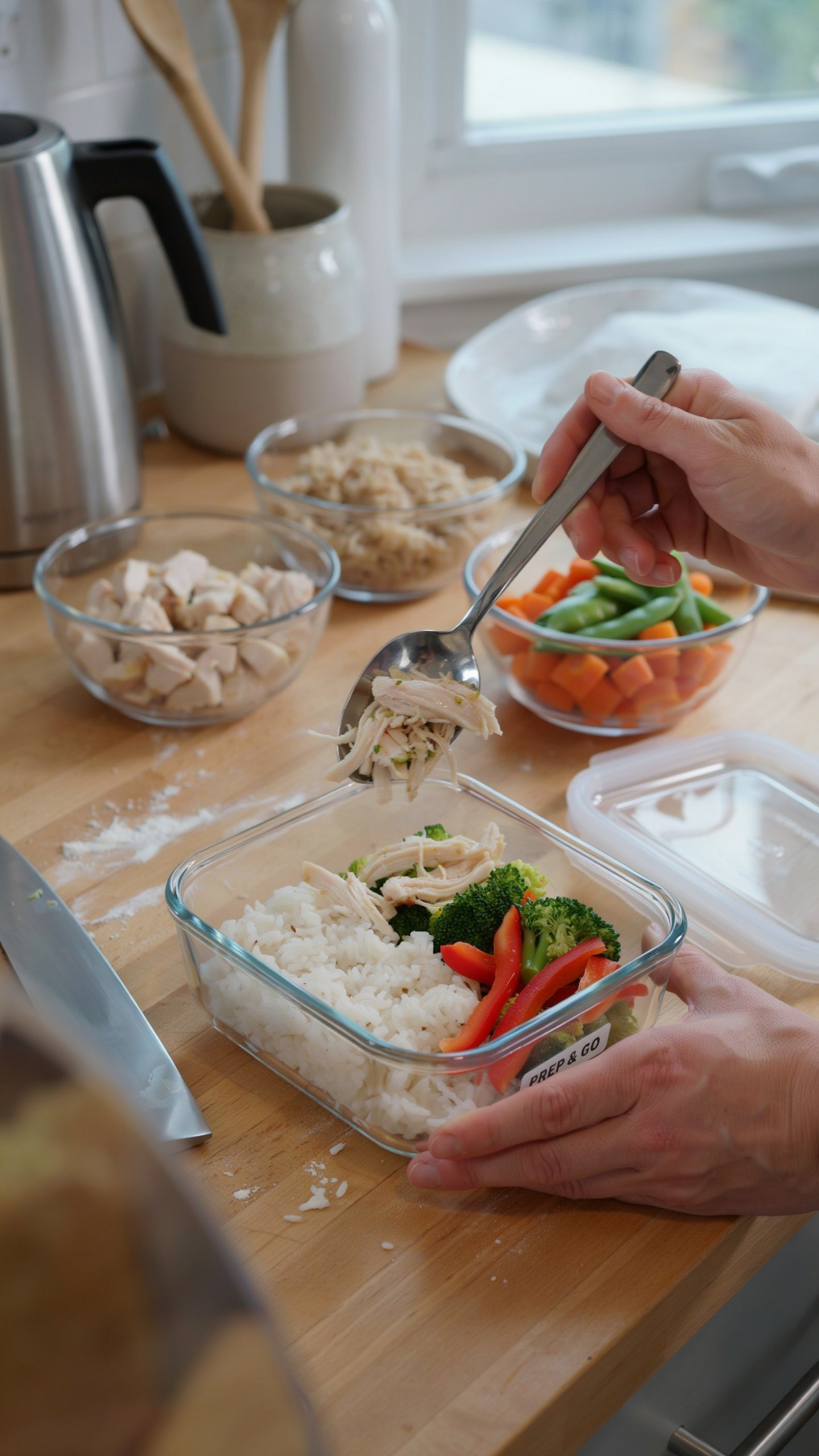
Batch Assembly From Pre Cooked Components
You want to feel like you have your life together without actually spending your Sunday in a kitchen. The real mechanism here is compartmentalization—breaking protein prep into discrete, repeatable stations instead of cooking full meals. Cook all proteins once. Cook all carbs once. Cook all vegetables once. Store separately. This isn’t meal prep. It’s ingredient prep. The difference matters because components don’t degrade at the same rate, and you control the ratio when you assemble rather than when you cook.
Your 15-minute window works because you’re not cooking anymore—you’re assembling. Grab a prepped protein portion. Add a carb portion. Add a vegetable portion. Season. Container. Done. Most people cook entire meals on Sunday and watch them turn to mush by Wednesday. You’re avoiding that by keeping components isolated until the moment before eating. The assembly line speed comes from doing the same motion repeatedly. No decision-making. No searching for ingredients. Just motion.
Maintaining Texture And Flavor Through The Week
Storage condition determines whether your meal tastes good on day seven or tastes like obligation. Most advice says “store in airtight containers” which is incomplete. Temperature, moisture, and component order matter more than the container. Proteins dry out fastest when exposed to air. Carbs absorb moisture and turn soggy. Vegetables release water and contaminate everything. Store proteins in their own container with minimal headspace. Store carbs and vegetables separately. Assemble only when eating. This prevents cross-degradation.
Flavor preservation requires one specific protocol: season proteins and vegetables right before assembly, not during cooking. Seasoning during cooking oxidizes and flattens taste. Seasoning at assembly keeps aromatics intact. This single step separates meals that taste fresh on day five from meals that taste like cardboard. For carbs, store them in breathable bags or uncovered containers to prevent moisture trap. Rice stays better uncovered than sealed. When you assemble, the salt hits everything at once, temperature rises, and flavor activates instead of retreating.
Your Personal Meal Prep Operating System
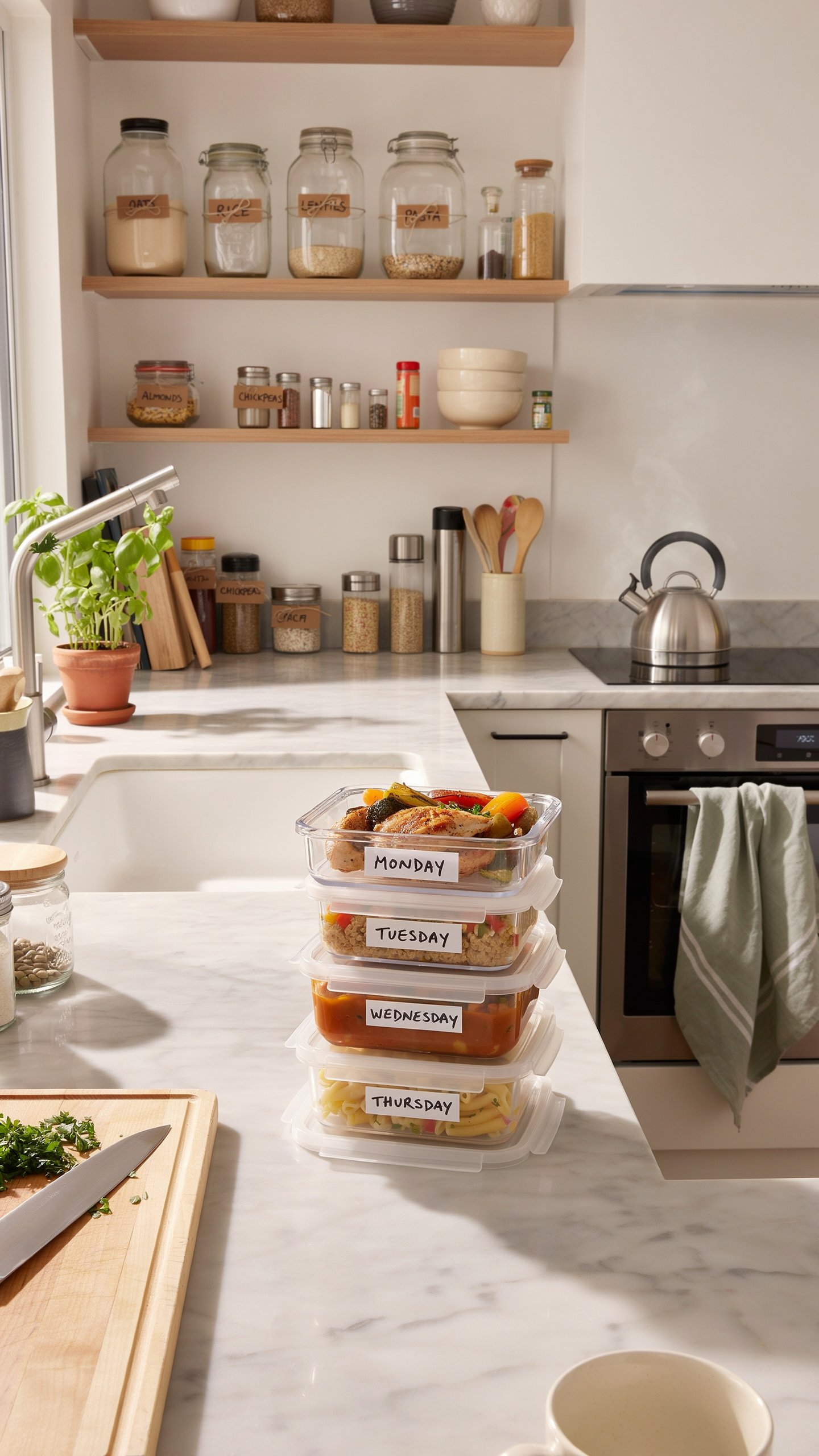
Build Around Your Actual Constraints
You want a system that makes you look disciplined without admitting you’re terrified of wasting a Sunday. Here’s the mechanism: constraint forces specificity. Instead of copying someone else’s prep routine, work backward from your real kitchen setup, storage capacity, and protein sources you’ll actually eat repeatedly.
Map your kitchen like a production line uses workflow optimization. You have limited counter space, specific equipment, and a two-hour window. Identify your bottleneck first, not your ideal setup. If you own one cutting board, that becomes your limiting factor, not your ambition. Build the system around what you have, not what you wish you had.
Calibrate Based On What Actually Sticks
Sustained efficiency dies the moment you prep foods you don’t want to eat. The common advice says prep whatever’s cheapest or most macronutrically dense. That’s incomplete. You need the intersection of three things: protein density, your genuine preference, and realistic shelf life in your fridge.
Run quarterly audits. After four weeks of prepping, track which proteins you actually finished versus what spoiled. Track which cooking methods saved time versus which created texture problems by day four. Your system evolves because you measure what fails, not because you read another article. Adjust protein sources, cooking temperatures, or portion sizes based on evidence from your own fridge, then lock that version in place for the next cycle.
The real obstacle isn’t time or recipes, but your mental addiction to complexity.
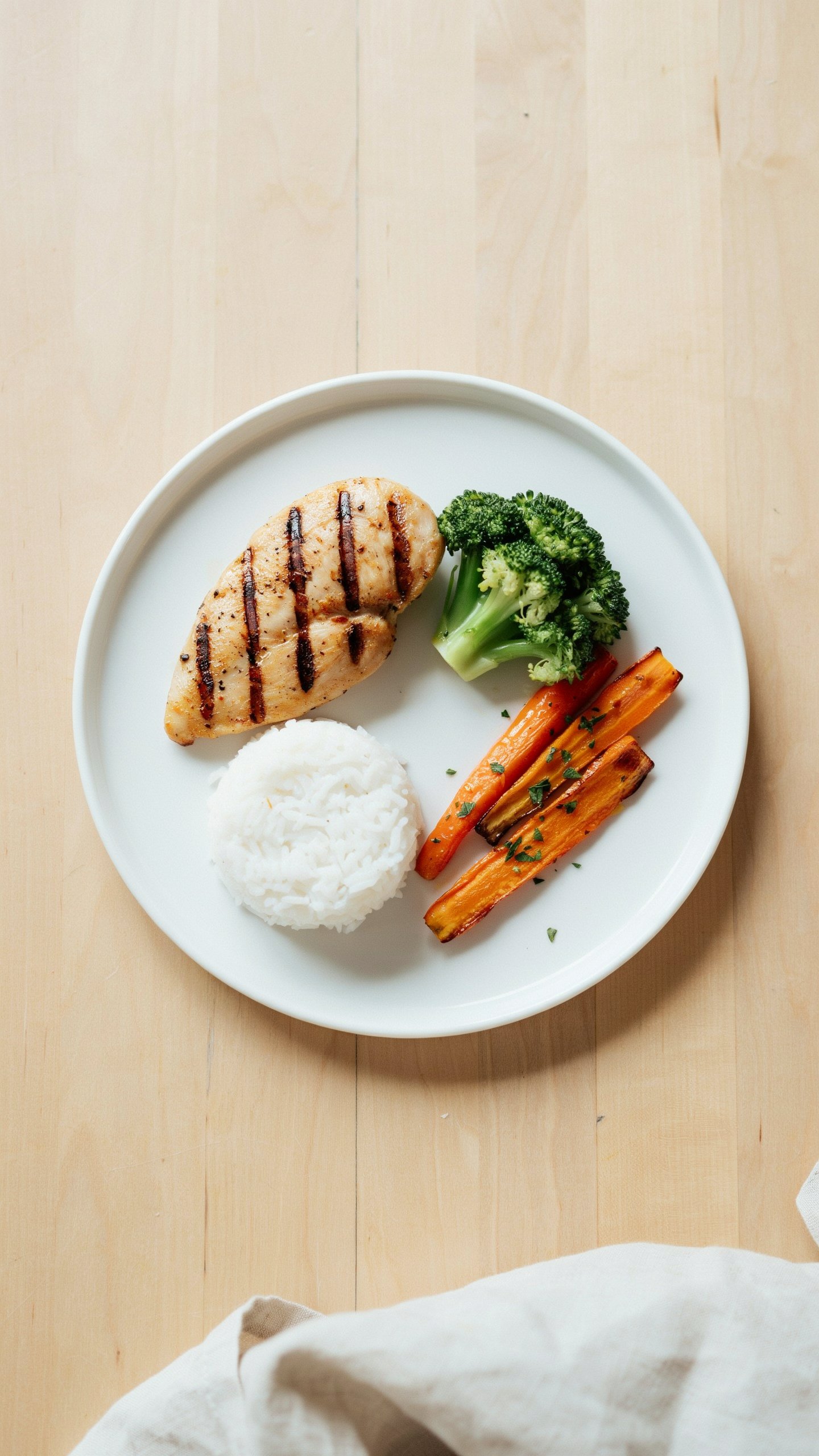
You’ve been sold the lie that meal prep demands perfection. Fancy containers, color-coded labels, Instagram-worthy plating. Stop. Pick one protein, two vegetables, one carb. Cook it. Eat it. Today, spend thirty minutes buying ingredients and one hour cooking. That’s your entire system. Your brain resists simplicity because simplicity feels like you’re missing something. You’re not. The person who executes the boring plan beats the person waiting for the perfect one every single time.